Hairstyles for Prom: Styling Guide & Cuts That Still Work After the Photos
Prom hair has to do more than look good from one angle. You may be wearing it through photos, dinner, dancing, car rides, hugs, humidity, and several hours of movement. A style that depends on untouched volume or uncomfortable pins can feel very different by the middle of the evening.
Start with your normal styling state and the parts of the hairstyle you actually care about. Someone who wants their natural curls visible has a different decision from someone whose priority is a clean neckline above a high-backed dress. Hair length matters, but so do density, shrinkage, previous chemical services, extension weight, and how comfortable you are with hair around your face.
The strongest prom hairstyle is usually the one whose construction matches the night you plan to have.
Prom Updos That Keep the Neckline Clear
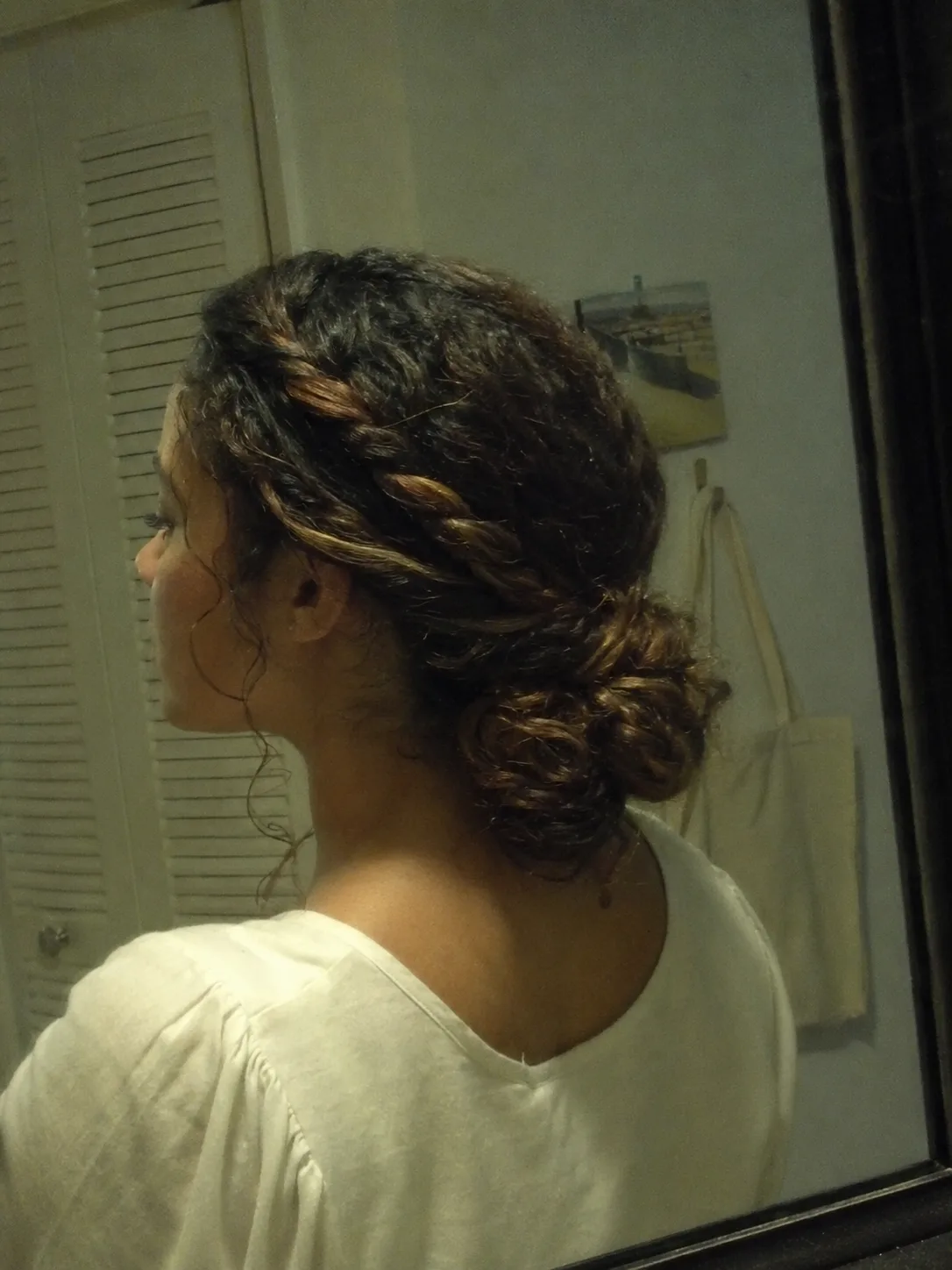
Low Chignon
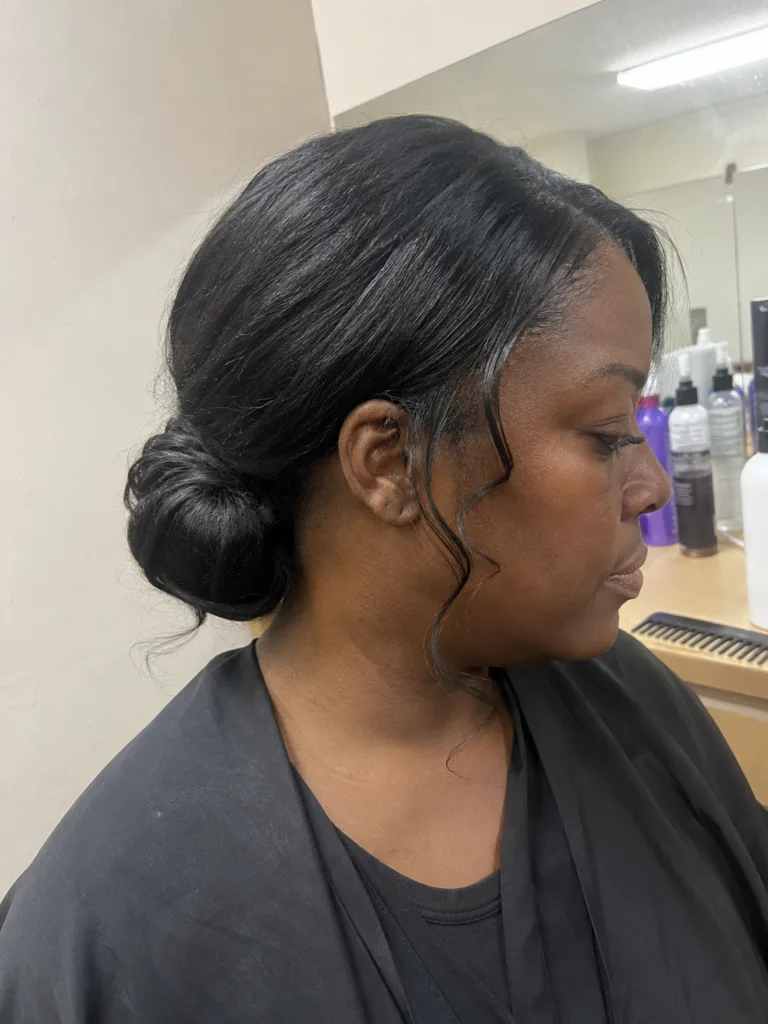
A low chignon is one of the strongest choices when the dress already carries plenty of detail. Hair is gathered near the nape and folded, twisted, or wrapped into a compact bun, keeping the shoulders and neckline visible.
The key decision is how soft you want the front. A clean center part gives the style a sharper finish, while a few deliberately released pieces soften it without changing the basic construction.
It also sits more comfortably against many car headrests than a large bun positioned directly at the back of the crown. Check the placement while sitting upright before the style is completely pinned.
French Twist
Few prom updos create as much vertical shape without requiring a large bun. The hair is directed toward the center back and rolled inward, producing a clean line that works particularly well with structured dresses, high necklines, and minimalist jewelry.
A traditional twist can look very formal, but the surface doesn’t have to be rigid. Curly or textured hair can retain some visible movement instead of being flattened into a perfectly smooth shell. The style is more salon-dependent than a simple ponytail because the internal pinning needs to support the roll without exposing hardware from the side.
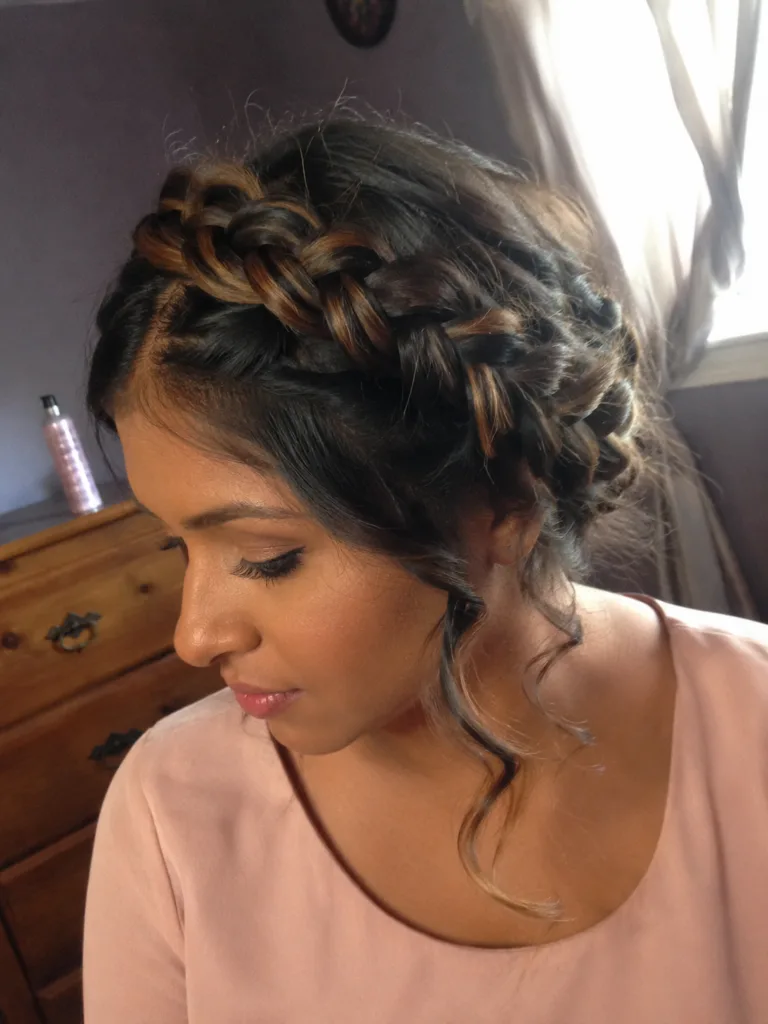
Braided Crown Updo
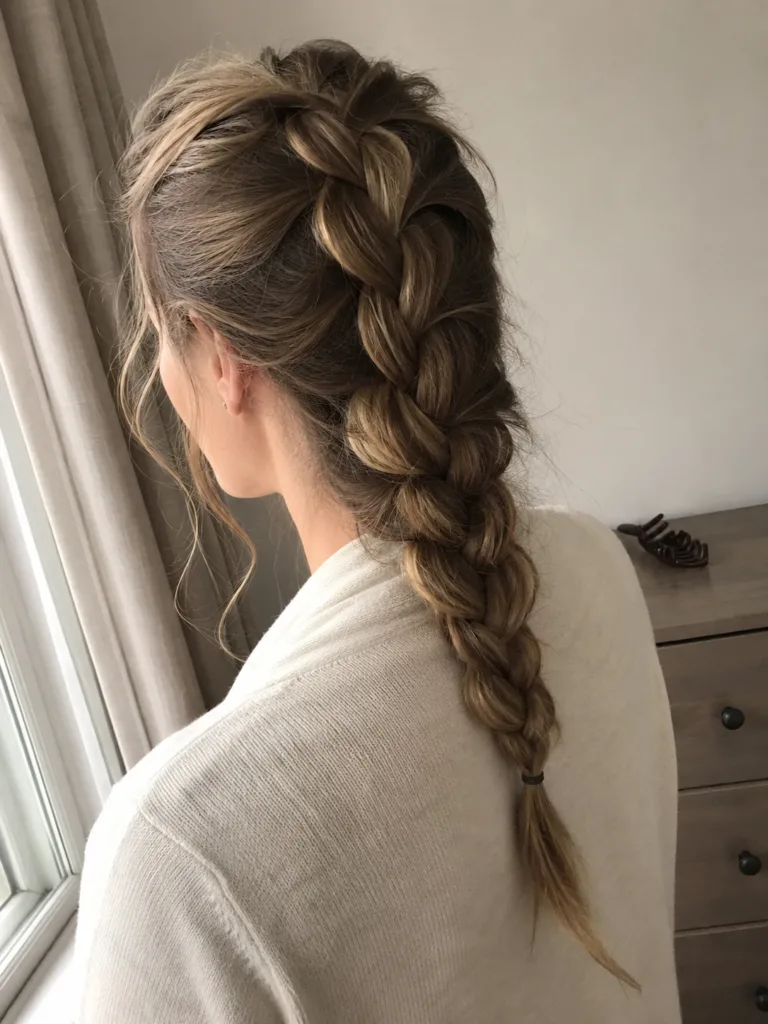
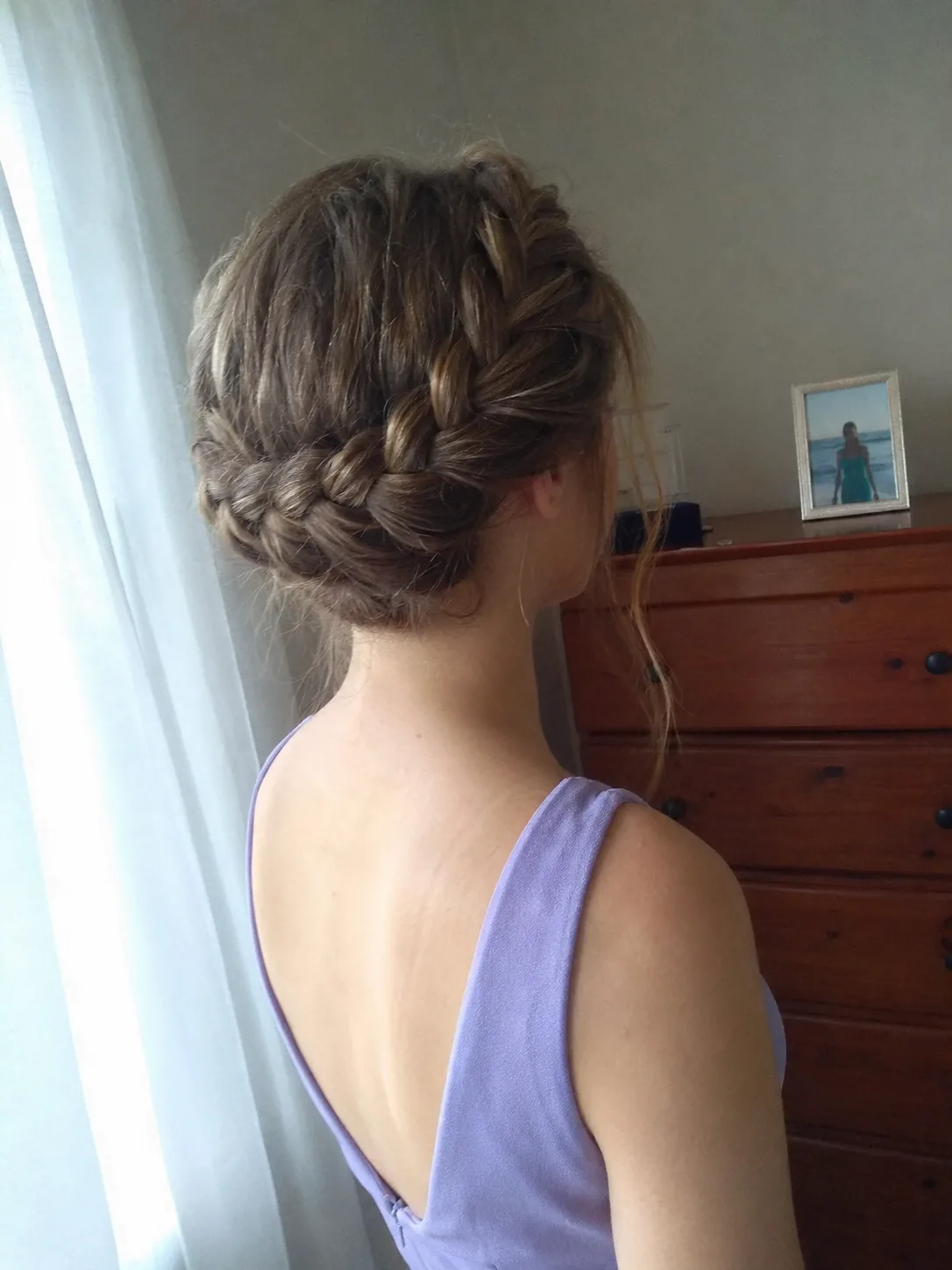
A crown braid gives the hairstyle detail from almost every viewing angle, which makes it useful for prom photos that include the back and sides of the head. One or more braids travel around the head before the ends are concealed within the updo.
This is an especially practical route for medium-to-long hair that tends to escape from a plain bun. The braid provides its own structure, so decorative pins can remain optional.
Comfort matters around the hairline. Sections near the temples and perimeter should sit securely without being pulled tighter merely to make the braid look neater. Fragile shorter hairs can be left out rather than forced into the braid.
Curly Pinned Updo
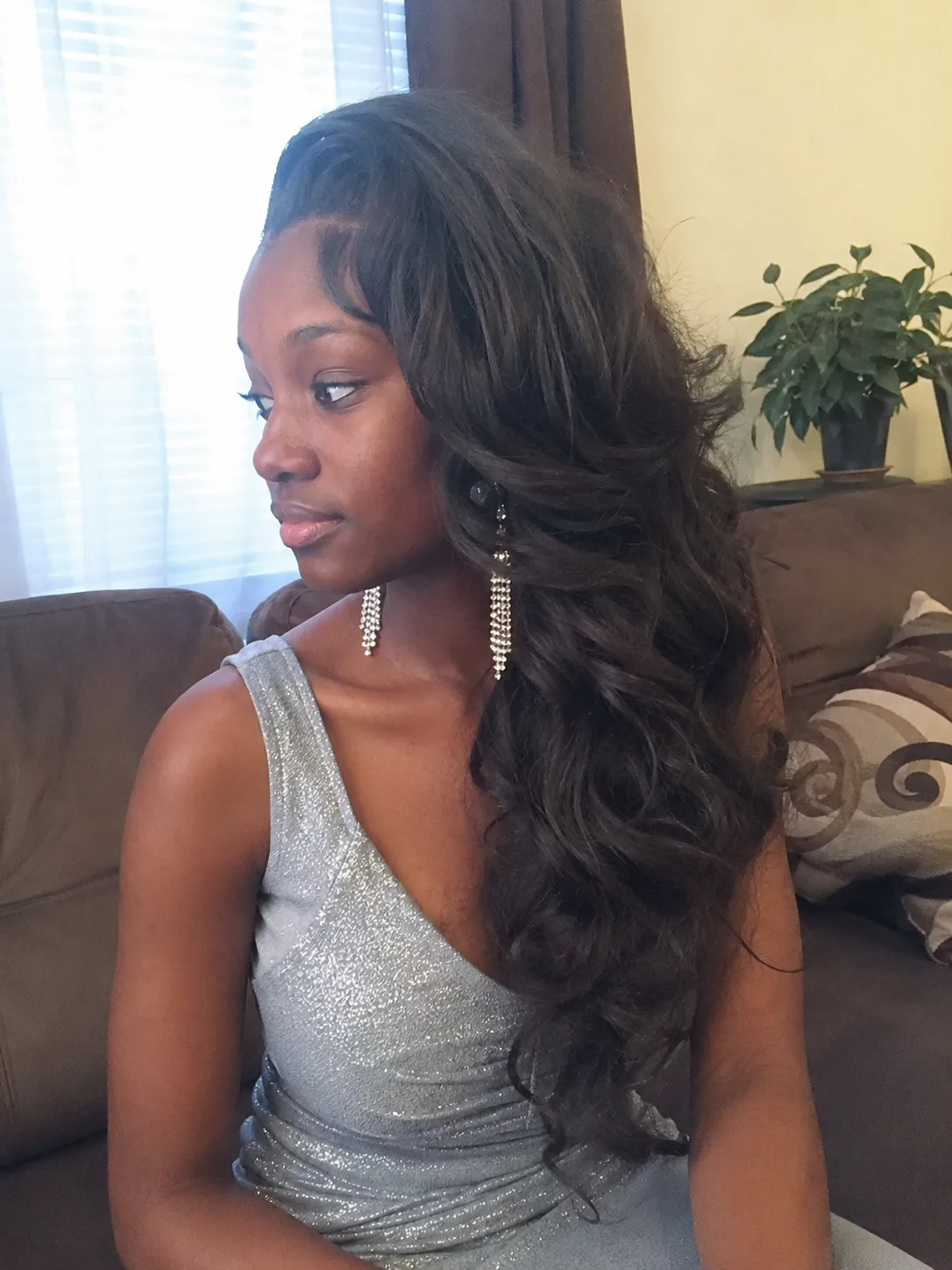
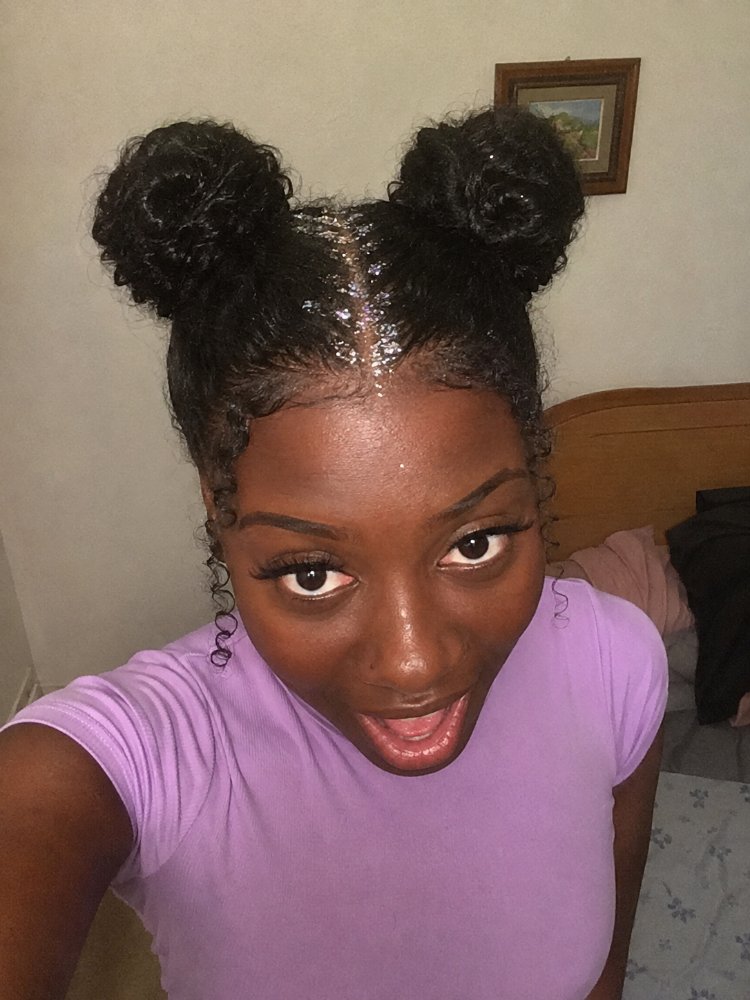
Keeping the curls visible changes the entire character of an updo. Instead of brushing everything into one smooth mass, curls or coils are arranged and pinned so individual groupings still contribute to the shape.
This works beautifully on naturally curly and coily hair, as well as hair that has been set into curls. Shrinkage affects where the finished updo sits, so judge the shape in the state you intend to wear rather than planning from stretched length alone.
The strongest version usually has a clear anchor area with softer volume built around it. Randomly pinning every curl can create bulk without a readable shape.
High Sculpted Bun
A high bun brings the eye upward and leaves the full neckline exposed. It suits dresses with dramatic shoulders, open backs, or details that deserve to remain visible.
The height also makes the style more demanding. Very long hair, extensions, braids, or dense locs can create considerably more weight at a high anchor, particularly while dancing. A compact bun positioned slightly lower is often the more practical choice when comfort matters more than maximum height.
Half-Up Styles and Ponytails With More Movement
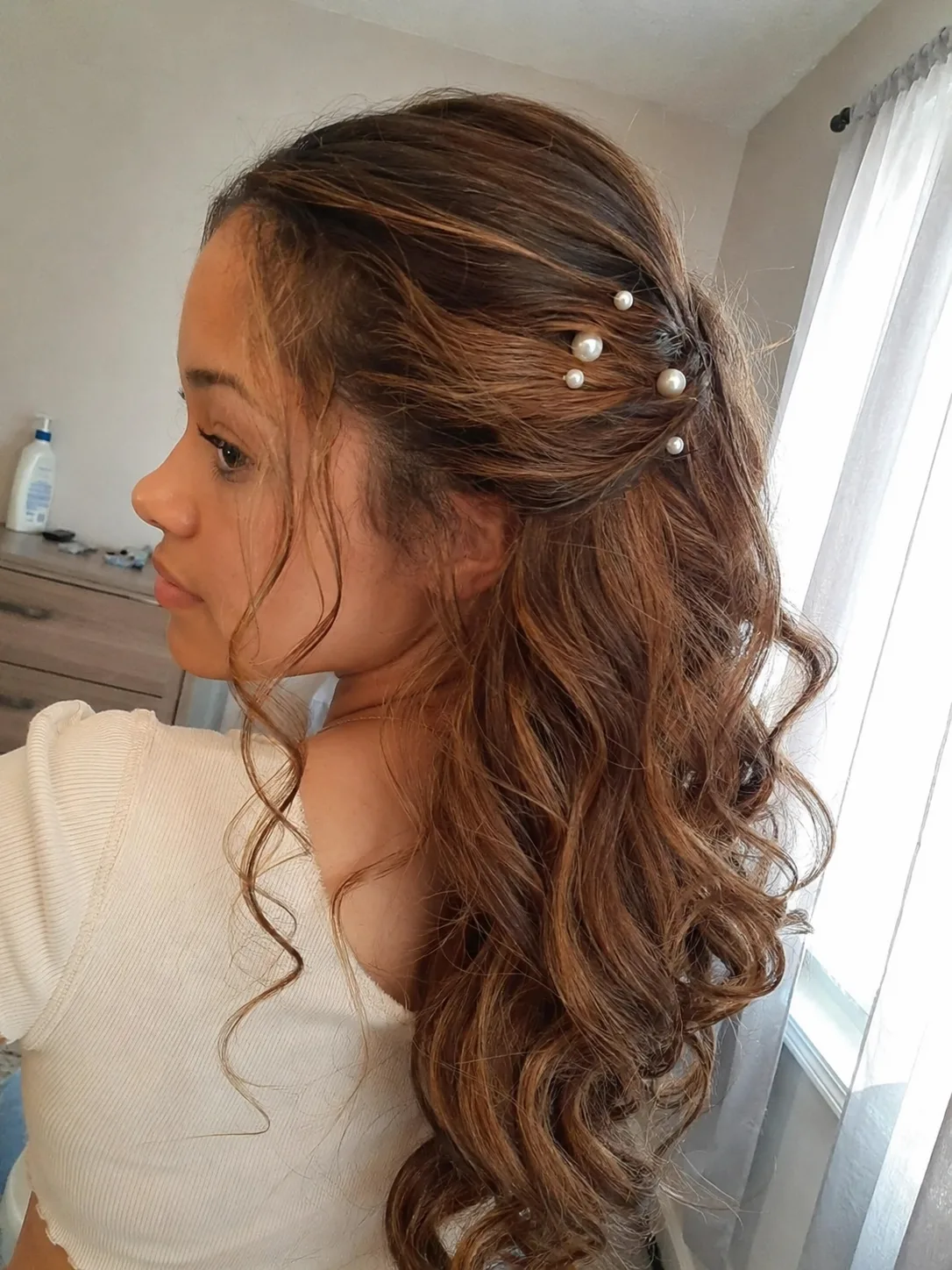
Soft Half-Up Waves
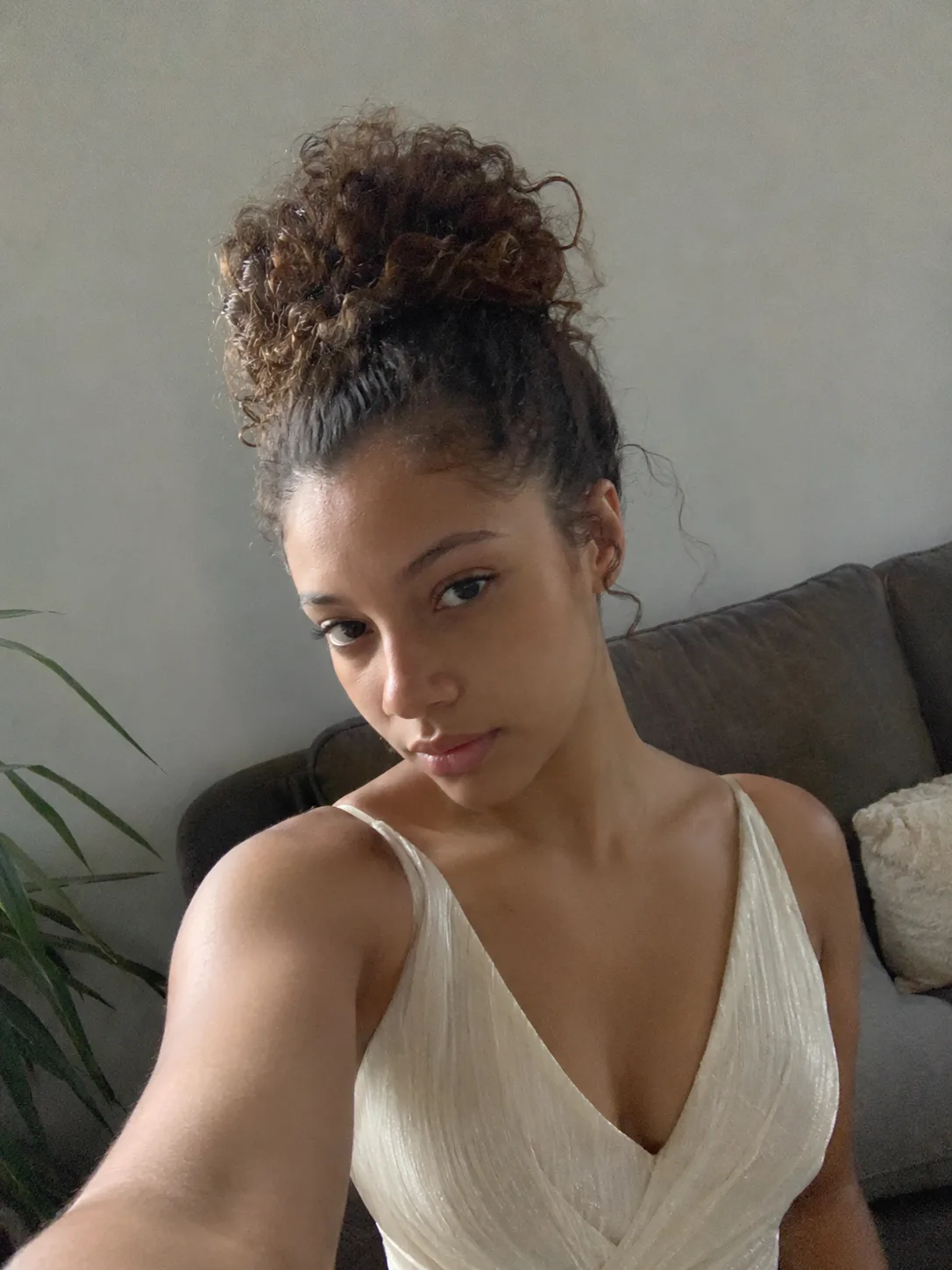
Half-up waves are an easy compromise when you want hair around the shoulders but don’t want the front falling forward all evening. The upper section is secured behind the head while the lengths stay loose.
The style looks best when the half-up section has a reason to exist: lifting the crown, exposing earrings, or clearing the face. Pulling back only two tiny strands can disappear in photographs.
Hair that quickly loses curl may benefit from a more structured wave pattern or a style that relies less heavily on untouched loose lengths.
Twisted Half-Up Curls
Instead of pulling the upper section straight backward, twist sections from the temples and secure them where they meet. That construction gives curly hair a defined frame while leaving most of the texture loose.
It’s an underrated option for naturally curly prom hair because you can preserve the curl pattern rather than building the look around straightening first. Leave enough room at the roots for the curls to sit naturally; flattening the sides too aggressively can make the loose lengths appear disproportionately wide.
Sleek High Ponytail
A high ponytail produces a stronger, more graphic shape than loose curls. The base is smoothed toward the crown, while the tail can remain straight, waved, curled, or textured.
Extra-long added hair changes the experience considerably. Length moving behind the back can catch beneath shoulders, arms, or dress details, and the extension creates more leverage at the base as you move. Choose the drama because you genuinely want it, not because an extremely long ponytail appears more formal in a reference photo.
Low Waved Ponytail
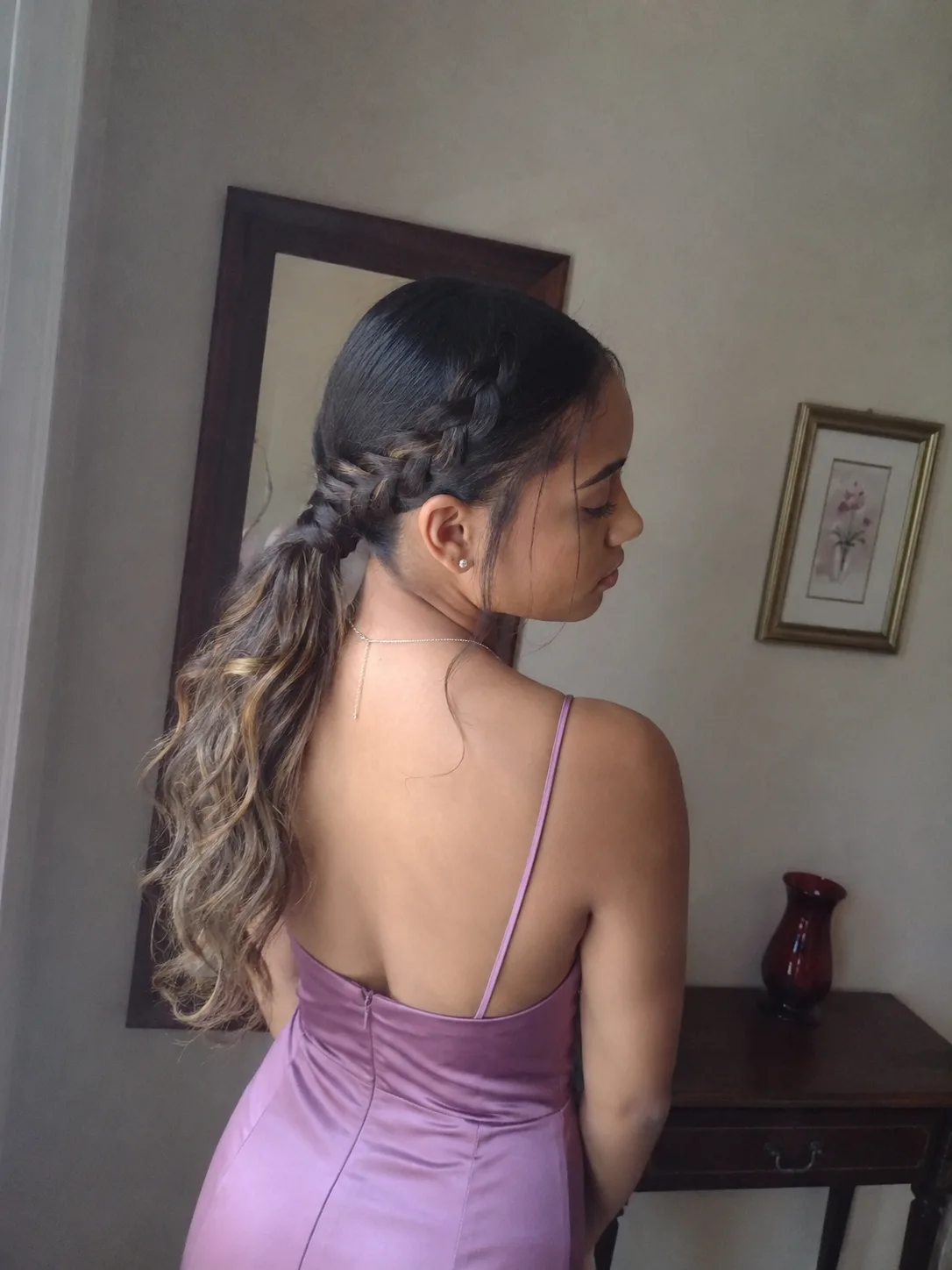
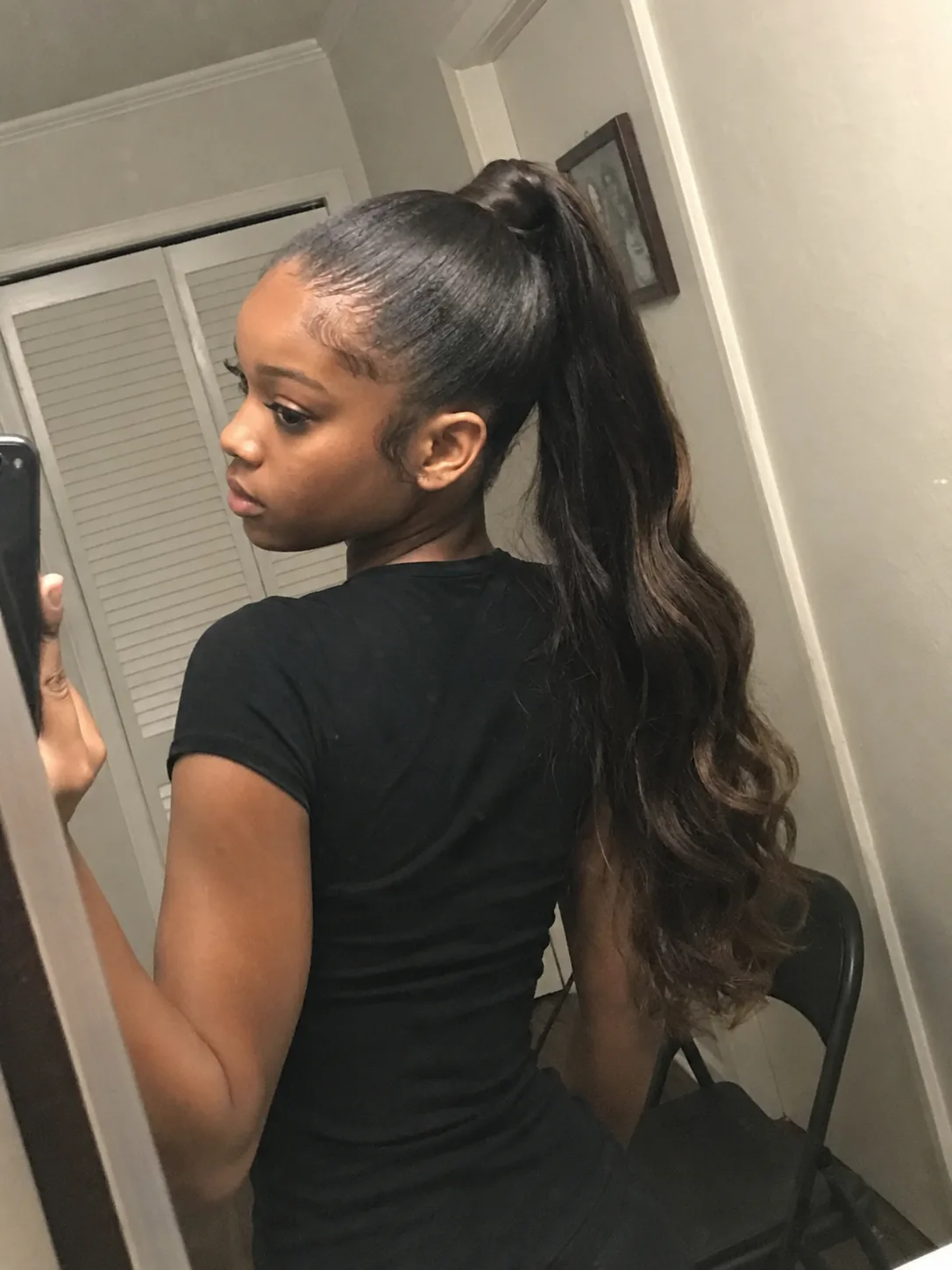
For a softer alternative, anchor the ponytail close to the nape and put the movement into the tail. This placement works well with center parts and dresses that have open backs because the hair creates one deliberate vertical line rather than spreading across both shoulders.
It is also easier to keep relatively compact than a high ponytail. Before committing, look at the back of the dress with the ponytail resting naturally; elaborate closures, bows, or beadwork may compete with the hair.
Bubble Ponytail
A bubble ponytail creates shape through a series of rounded sections down the tail. It reads more contemporary than a conventional curled ponytail and gives straight or stretched hair visible structure without relying on curls to hold all evening.
The bubbles need enough fullness to appear deliberate. Very fine strands or lower-density hair may need thoughtful shaping or added hair to create the desired scale, but added density also increases the weight at the anchor. Bigger isn’t automatically better here; proportion should match the person and the dress.
Loose Prom Hair Where the Texture Does the Work
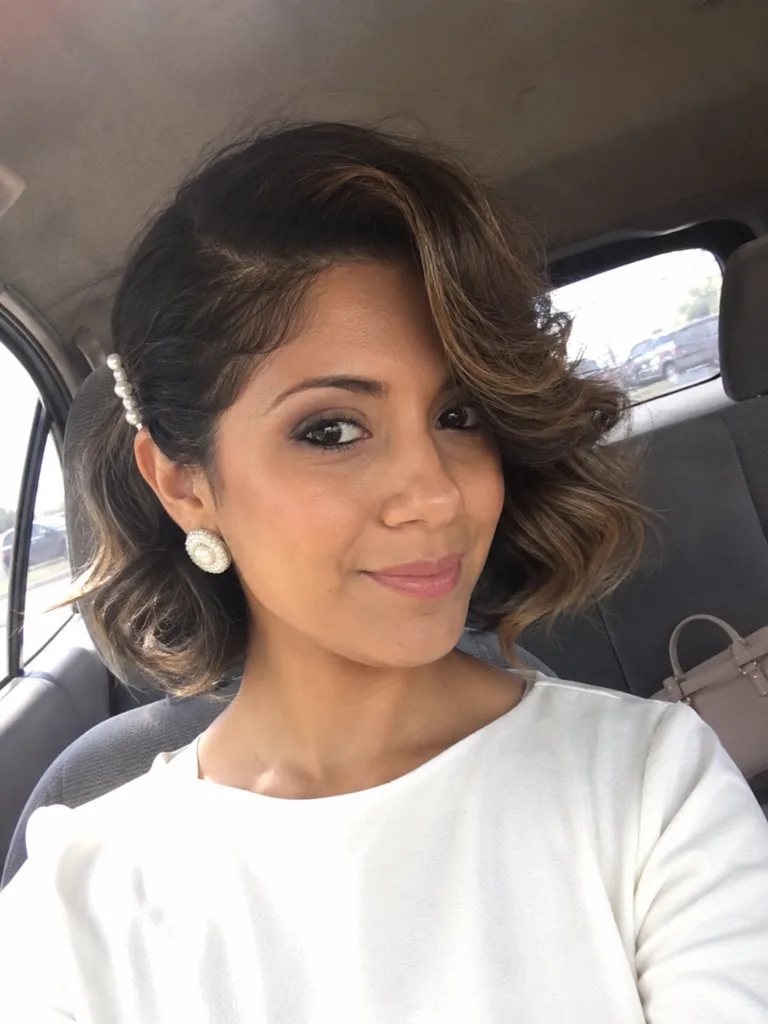
Hollywood Waves
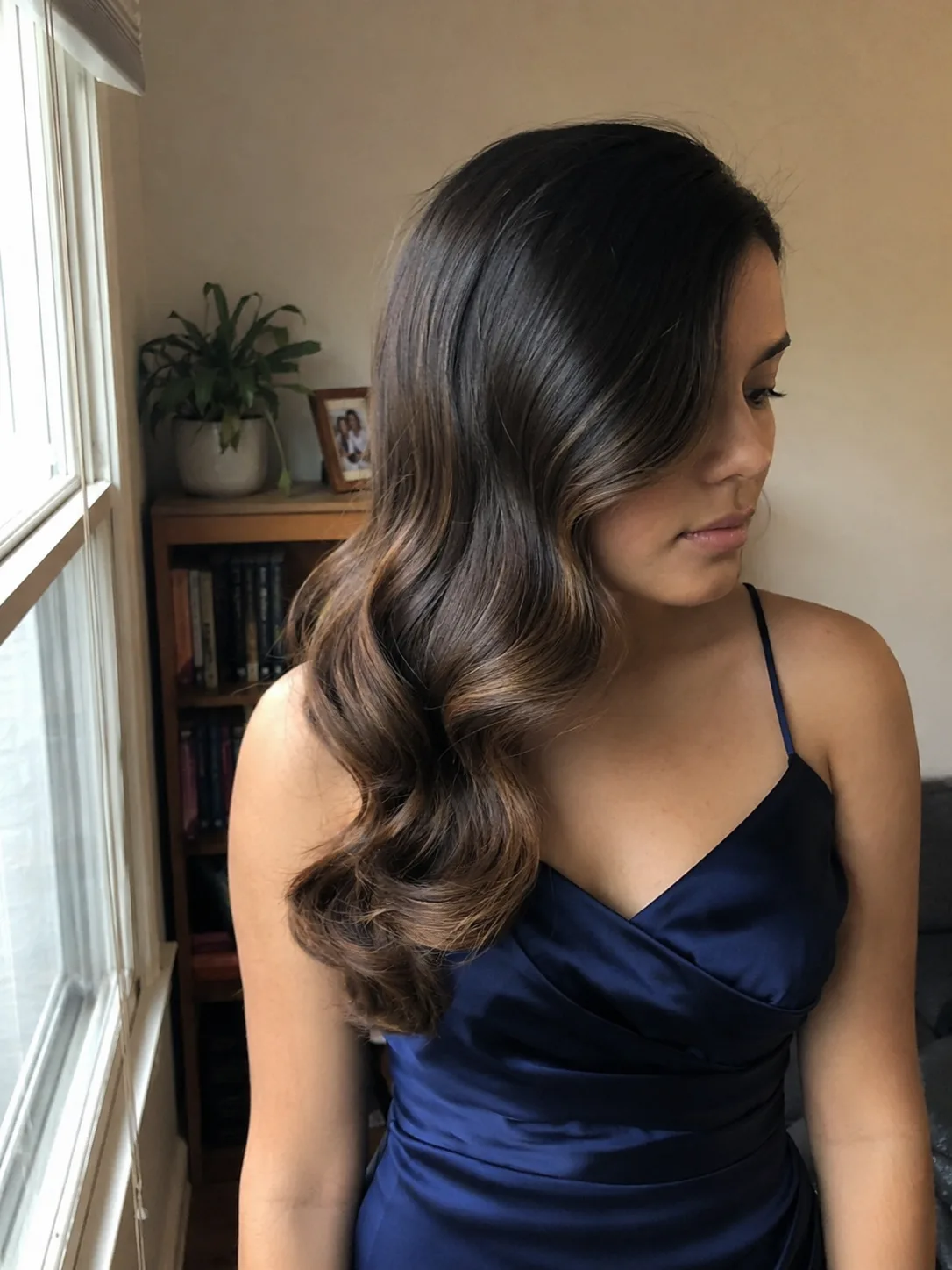
Hollywood waves are built around a continuous, sculpted wave pattern rather than separate curls. The hair typically falls heavily to one side or follows a smooth, repeating bend through the lengths.
This style earns the extra preparation when your priority is a strong red-carpet effect in photographs. It is less forgiving than casual curls because disruption to one section can interrupt the visible wave pattern. Repeated touching, dancing, wind, and humidity all matter more when the surface is part of the design.
Brushed-Out Soft Curls
Brushed-out curls create more airy movement and less rigid definition than Hollywood waves. The result works with many dress styles because the hair looks dressed for an event without becoming the most formal element in the outfit.
Volume should be judged against density and length. Removing too much weight from the haircut just to make curls look bigger can leave the lower edge thinner than expected. Healthy perimeter fullness can be more valuable than maximum expansion.
Defined Natural Curls
Natural curls don’t need to be transformed into an updo to qualify as prom hair. Defined curls worn fully down can create more visual presence than an elaborate pinned style, particularly when the haircut already has a strong rounded, layered, or elongated shape.
Plan around the actual curl pattern, shrinkage, and drying behavior. A reference image showing stretched curls may give a misleading impression of finished length on hair worn in a more shrunken state.
This choice also keeps the styling concept simple: the texture is the main feature. Earrings, neckline, and part placement can provide the formal detail around it.
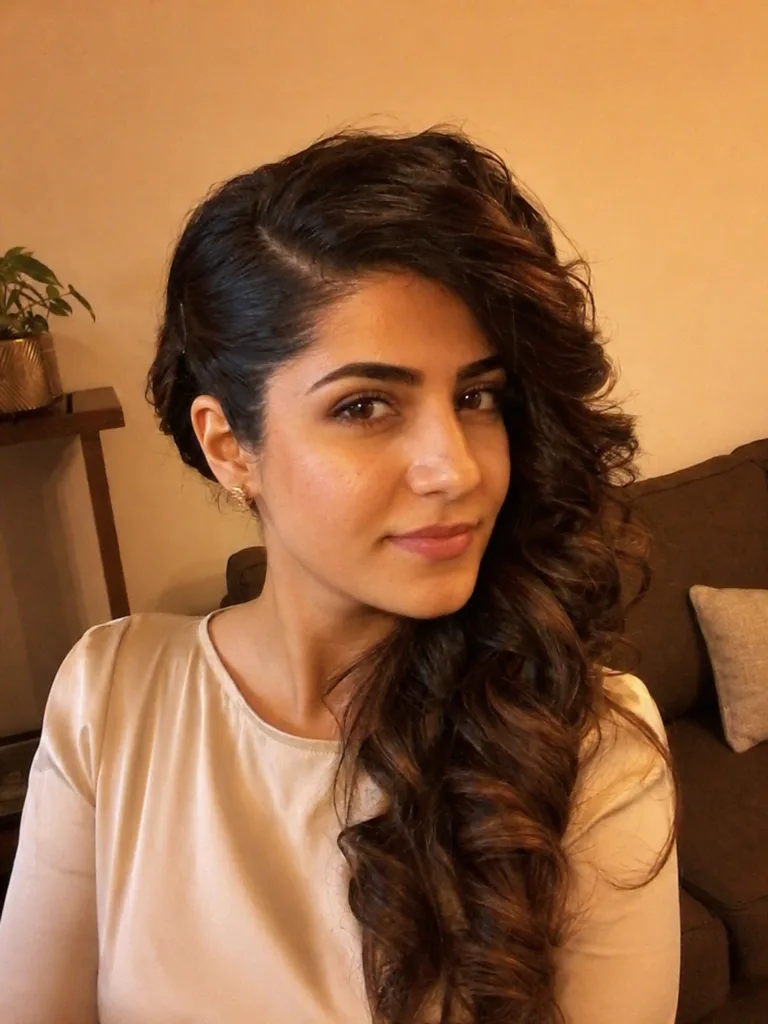
Side-Swept Curls
Moving most of the hair over one shoulder creates asymmetry without requiring a full updo. It works particularly well when you want the softness of loose curls but still need one side of the dress or neckline visible.
Secure the side discreetly enough that normal head movement doesn’t send the hair back across both shoulders. Bobby pins placed beneath the surface can provide more control than repeatedly rearranging the hair by hand.
Voluminous Blowout
A full blowout offers movement without the strong curl pattern of traditional prom hair. Hair is shaped away from the face with lift through the crown and rounded movement through the ends.
This is a stronger choice for someone who already enjoys wearing their hair smooth or stretched. Turning prom night into your first attempt at maintaining a completely unfamiliar styling state adds unnecessary variables. Hair condition and prior chemical or color services should guide how much heat manipulation is appropriate.
Braids, Locs, and Textured Prom Styles
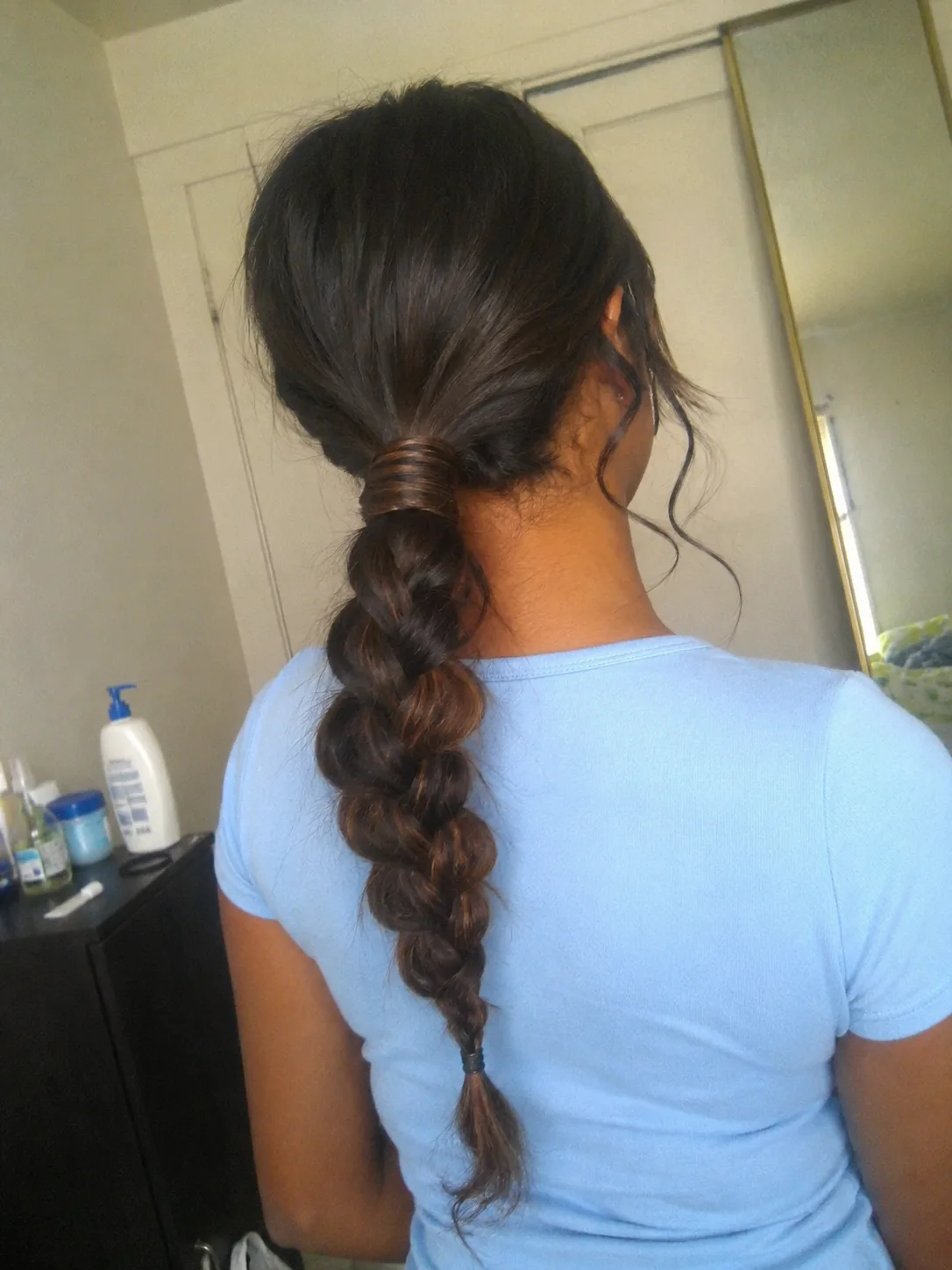
Braided Ponytail
A braided ponytail combines a controlled base with a tail that already has structure. The braid might be created from the wearer’s own hair or incorporated through an appropriate added-hair method.
Compared with an extremely long loose extension ponytail, a moderate braid is easier to manage through dancing and sitting. The construction still concentrates force at one anchor, so comfort at the base matters more than making the ponytail look exceptionally tight.
Cornrow-to-Bun Updo
Cornrows can direct the eye toward the bun while creating detail across the scalp. The pattern may travel straight back, curve toward the center, or feed into a low or higher anchor.
Here, the convergence point matters. Several braids meeting at one small area can create more concentrated tension than the final photograph suggests.
The stronger option uses section sizes and a bun weight that feel comfortable from the beginning. Scalp access should also remain practical if the style is installed well before the event.
Knotless Braids in a Formal Half-Up Style
Already wearing knotless braids? A half-up arrangement can turn the existing installation into a prom style without replacing it. Pull the upper portion into a bun, ponytail, or secured sweep while the remaining braids stay down.
This works best when the installation is still comfortable and the added hair isn’t excessively heavy. Large quantities of long braids lifted high can put substantially more load on the roots than wearing the same braids down.
Keep the front styling gentle, particularly around shorter perimeter hairs.
Loc Updo
Locs can create exceptional architectural shape because each loc provides visible structure. A low rolled arrangement, gathered crown shape, or pinned asymmetric updo can feel formal without hiding the locs themselves.
Mature or long locs also carry real weight. Very high, tightly anchored shapes may become uncomfortable long before the evening ends.
A lower or distributed updo is often the stronger prom choice when the locs are substantial. Decorative pins or cuffs can add detail, but the hairstyle should remain structurally secure without relying on accessories to hold significant weight.
Half-Up Loc Style
Leaving part of the locs down reduces the amount of hair that needs to be folded into an updo. The top section can be gathered into a bun or tied-back shape while the lower locs remain loose.
It gives you height near the face while preserving length in the photographs. Pay attention to where the loose locs meet the dress; textured fabric, sequins, and heavily embellished straps can create repeated friction during movement.
Prom Hairstyles for Shorter Hair
Sculpted Pixie
A pixie can look especially strong with formal clothes because there is very little hair competing with the neckline, earrings, or makeup. Prom styling may involve directing the fringe, defining separation through the top, or creating a smoother sculpted surface depending on the cut.
The haircut itself carries much of the result. A reference image based on a longer top or tighter perimeter can’t always be reproduced through styling alone. Plan the shape before prom rather than expecting product and pins to create missing haircut structure on the day.
Finger Waves
Finger waves turn short or cropped hair into a deliberately sculpted prom style through repeating S-shaped curves along the head. The look can be striking on a short cut because every wave remains visible.
This is much more technique-dependent than adding loose curls to longer hair. Wave placement around the hairline and temples becomes part of the overall design, so the style benefits from being planned with your actual length and growth pattern in mind.
Natural texture doesn’t exclude finger waves, but achieving a particular smooth, molded finish may involve changing the hair’s usual styling state. Decide whether that transformation fits your preferences and your hair’s current condition.
What Prom Photos Don’t Show
Reference photos are useful for choosing a direction. They rarely tell you how the hairstyle feels after several hours.
A large pinned updo may contain far more internal support than the final image reveals. Long extensions look weightless while standing still but move considerably during dancing. Loose curls photographed immediately after styling haven’t yet interacted with humidity, shoulders, dress fabric, or repeated touching.
Accessories deserve the same practical check. A comb, barrette, headband, tiara, or decorative pin should sit where it complements the hairstyle without pressing uncomfortably into the scalp. Bring the actual accessory to a trial or styling appointment whenever possible instead of assuming it will fit into a finished updo.
Hair around the front deserves special attention because it appears in almost every photo. You don’t need to pull every shorter hair into the main style. A deliberate soft perimeter is usually preferable to excessive tension just to create an unnaturally flawless edge.
Match the Hairstyle to the Dress and the Evening
Think about the whole outfit before choosing from prom hairstyles in isolation.
A high neckline often benefits from hair being lifted away from the collar. Open-back dresses give you the choice between exposing the back completely with an updo or using a ponytail as part of the back view. Large earrings are easier to see when at least one side of the hair is cleared.
The event itself also matters. Someone who expects to spend most of the night dancing may appreciate a secure updo far more than waist-length loose curls. Someone who prioritizes formal portraits may decide that structured waves are worth the extra care.
Planning Your Prom Hair Appointment
Bring reference photos that show more than one angle. A front-only picture can hide the exact feature that makes the hairstyle work: the size of the bun, the direction of the braid, the amount of extension hair, or how much of the back remains exposed.
Also arrive ready to explain what matters most. Useful consultation points include:
The styling state you normally wear.
Whether you want your natural curl or coil pattern visible.
Your dress neckline and back details.
Any veil-like accessory, tiara, comb, headband, or decorative pins.
Whether added hair is acceptable.
Areas that are fragile, sensitive, or uncomfortable under tension.
How much movement you expect during the event.
A trial becomes more valuable as construction gets more complicated. It can reveal that a bun sits directly against a headrest, a side section covers an earring you wanted visible, or an extension length feels much heavier in motion than it appeared in a photograph.
Don’t chase discomfort for the sake of security. A formal style can feel firm without persistent pulling, pain, or stinging. Redness, sores, persistent irritation, sudden shedding, or a concerning change in density deserves attention beyond normal styling adjustments and may warrant speaking with a dermatologist or another qualified healthcare professional.
Keeping Prom Hair Presentable Through the Night
The maintenance plan should match the hairstyle instead of becoming a bag full of emergency products.
Loose waves benefit most from reduced handling. Constantly running your fingers through them separates the pattern faster. A few strategically placed bobby pins can help a side-swept section stay where it belongs.
Updos need their primary anchor to be secure from the start. Adding more and more pins after the style begins shifting usually won’t fix weak initial construction.
Curly and coily styles should be planned around the weather and the definition level you actually enjoy. Some expansion during a long evening may be completely compatible with the look.
Braids, locs, extensions, and attached ponytails deserve a movement check before leaving. Turn your head, sit down, stand up, and move the hair as you would while dancing. A style that already feels heavy or painfully tight while standing still is a poor candidate for an entire event.
Related Hairstyles to Explore
- Easy prom hairstyles to do yourself
- Prom hairstyles for medium length hair
- Prom hairstyles for long hair
- Hairstyles for school
FAQs About Hairstyles for Prom
Should I wear my hair up or down for prom?
Choose based on the dress, your comfort, and how much movement you expect. An updo is particularly useful for high necklines, detailed backs, or active dancing. Wearing the hair down puts more emphasis on length and texture but also exposes it to shoulders, dress fabric, humidity, and repeated movement.
What prom hairstyles work well with naturally curly or coily hair?
Defined curls, curly pinned updos, twisted half-up styles, braided updos, and ponytails can all work without hiding natural texture. Plan from the hair’s normal shrinkage and finished styling state. The hairstyle should make use of the curl pattern instead of assuming it must first be straightened.
Can I use extensions for my prom hairstyle?
Yes. Extensions can add length, volume, or construction options to ponytails, buns, braids, and loose styles. Their weight and attachment method matter as much as their appearance. Very long or dense added hair can make a high anchor noticeably heavier during movement, so choose an amount that remains comfortable.
What should I do if my prom hairstyle starts hurting?
Persistent pulling or stinging is a reason to adjust the style rather than simply tolerate it. Remove or loosen the part causing the pressure when possible. Pain, redness, sores, persistent irritation, sudden shedding, or concerning density changes may justify professional medical assessment, particularly when symptoms continue.
Hair Texture & Upkeep Style Matcher
Select your natural hair texture and daily maintenance window to get an instant styling formula and heat safety cap.
Heat Cap: 320°F (160°C)
A versatile three-strand braid beginning at the parietal ridge, securing the top half while allowing natural wave texture to flow freely around the shoulders.
Conclusion
The most useful way to choose hairstyles for prom is to decide what should still be working several hours after the first photograph. A low chignon may beat an elaborate high bun when comfort and an open neckline matter most. Defined natural curls can be stronger than a complicated updo when texture is the feature you want people to notice. Dramatic extensions make sense when you’re happy to accept their extra movement and weight.
Take your dress, normal hair state, planned accessories, and expected activity into the decision. Then choose a hairstyle whose construction supports the evening you’re actually going to have.
Editorial Standards & Hair Health Guidance
Every style featured on Tress Atlas is curated with a focus on real-world wearability, scalp tension management, and cuticle preservation. When trying protective styles or tight updos, ensure perimeter hairline sections remain tension-free to avoid traction stress on delicate follicles. For heat styling, cap tools below 350°F (180°C) to prevent thermal keratin denaturation.
Scientific Sourcing: Practices aligned with the American Academy of Dermatology (AAD) on traction alopecia risk reduction and cosmetic trichology research on hair tensile strength.