Short Haircuts for Round Faces: Complete Styling & Placement Guide
A round face can wear far more short haircuts than the usual face-shape rules suggest. The bigger decision is where the haircut puts its width, height, and strongest lines.
A cut with volume concentrated beside the cheeks can make the face appear broader. Moving some of that volume toward the crown, keeping the sides cleaner, creating a diagonal front line, or letting the perimeter fall slightly below the fullest part of the face changes the effect. None of those choices require hiding your cheeks or forcing your hair into an artificially narrow shape.
Your natural texture matters just as much. A sleek jaw-length bob, a shrunken coily taper, and a diffused curly crop may have similar measurements on paper while creating completely different outlines. Density, strand size, shrinkage, glasses, your preferred styling state, and how often you want to reshape a short cut should all influence the choice.
Cropped Cuts That Put More Emphasis Upward
Tapered Pixie With Crown Length
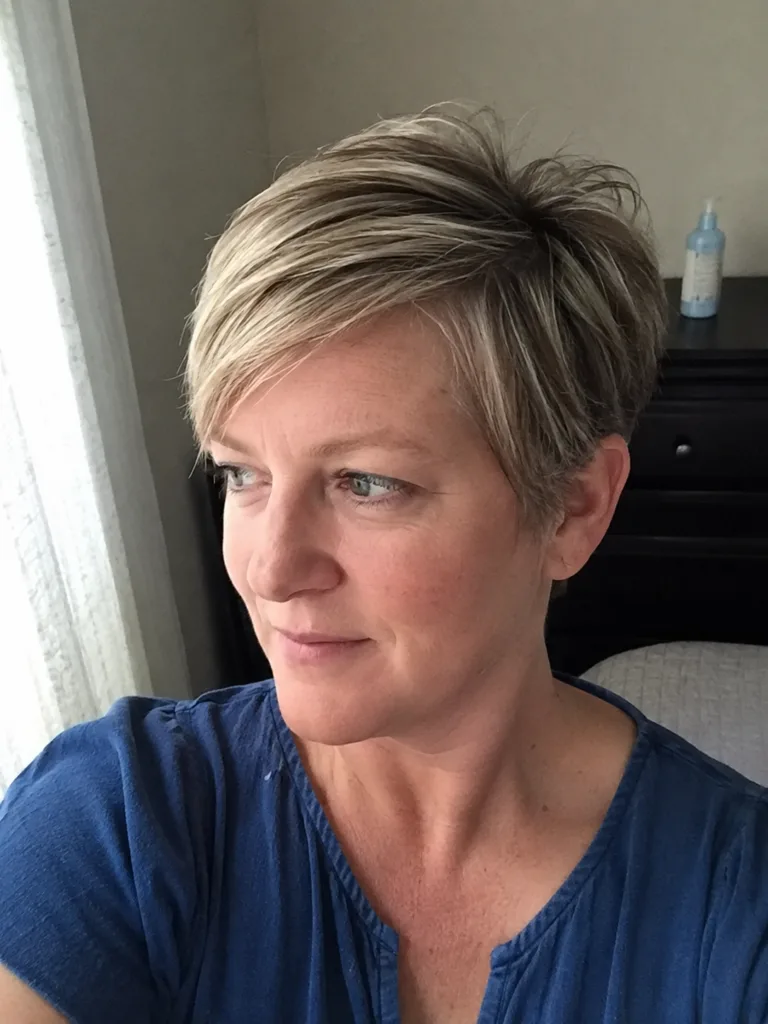
A tapered pixie is one of the strongest short-hair starting points when you want the haircut to feel light around the sides without removing all the movement from the top. Keeping more length through the crown creates vertical direction, while a closer nape and temple area prevents the widest part of the cut from sitting directly beside the cheeks. The contrast is what gives this pixie its structure. It works particularly well for someone comfortable with a visibly short neckline and regular reshaping.
Long Pixie With a Side-Swept Front
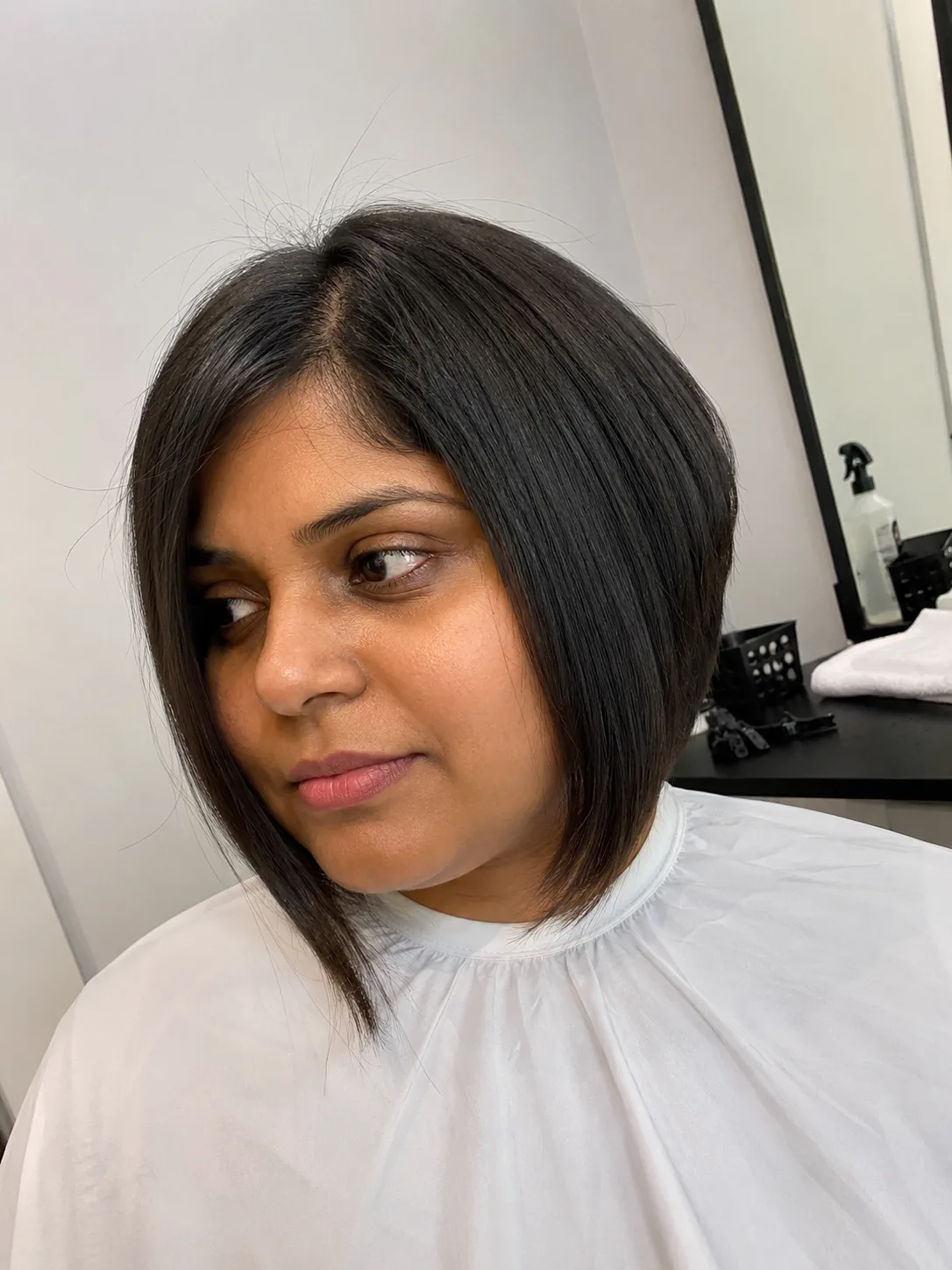
The useful feature here is the diagonal line across the forehead. A longer front section can travel across the brow and toward one cheekbone, breaking up the symmetry of a very rounded outline.
This cut also gives you more styling flexibility than a closely cropped pixie. The front can sit smooth, bend softly, or carry natural wave. Avoid making the fringe so dense that it forms a heavy horizontal block across the forehead; keeping some separation usually gives the cut more movement.
Undercut Pixie With a Longer Top
An undercut removes considerable bulk from the sides and leaves the top as the dominant part of the haircut. That makes it a more graphic choice than a classic pixie and a good option when you actively want contrast rather than softness. Straight, wavy, curly, and some coily textures can all use the basic construction, although the visible difference between the short sides and longer top changes with shrinkage. This cut is less forgiving during grow-out because the short and long sections can lose their relationship before the overall length feels especially long.
Bixie With Lift Through the Crown
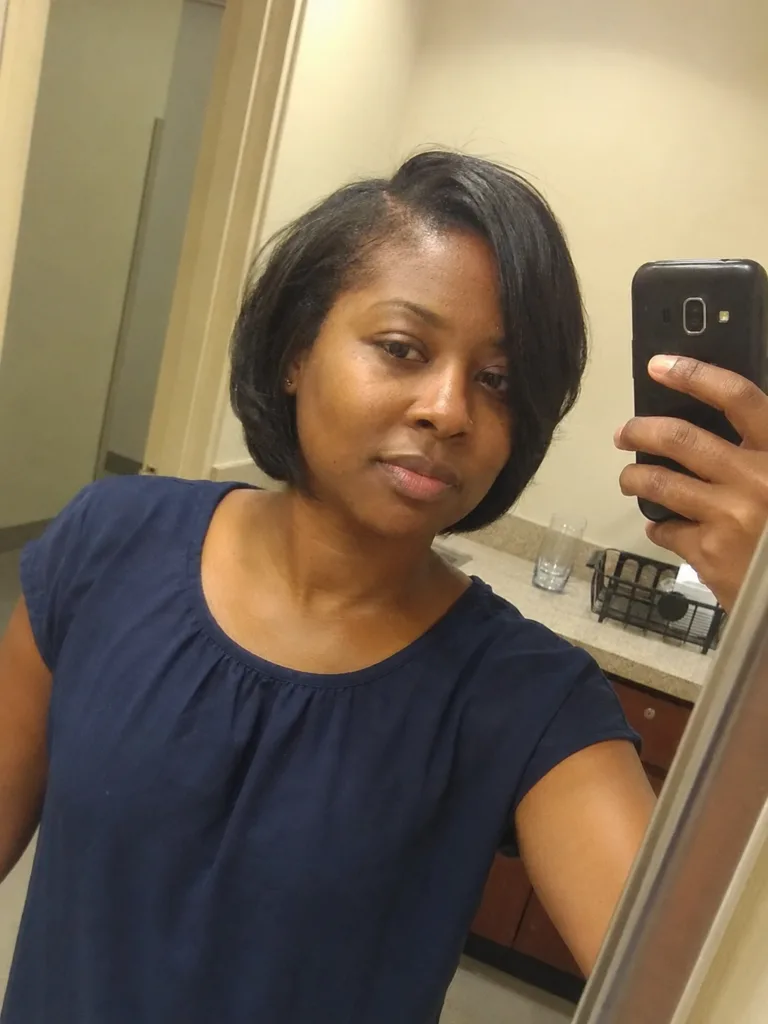
A bixie sits between a bob and a pixie, which makes it useful when a full pixie feels too exposed but a traditional bob feels too solid around the face. Length through the top and front provides movement, while shorter internal sections keep the cut from collapsing into a rounded cap.
The placement of the layers matters. Too much bulk beside the cheek area can pull the outline outward. A stronger crown and a slightly narrower lower section tend to create a clearer direction.
A bixie also asks more from styling than photographs sometimes reveal. Some versions air-dry easily because the natural texture already supports the shape; others rely on root direction, a brush, diffuser, or light styling product to keep the crown from falling flat. Choose it because you like that lived-in movement, not because you expect a miniature bob with zero styling.
Mixie With a Short Crown and Longer Nape
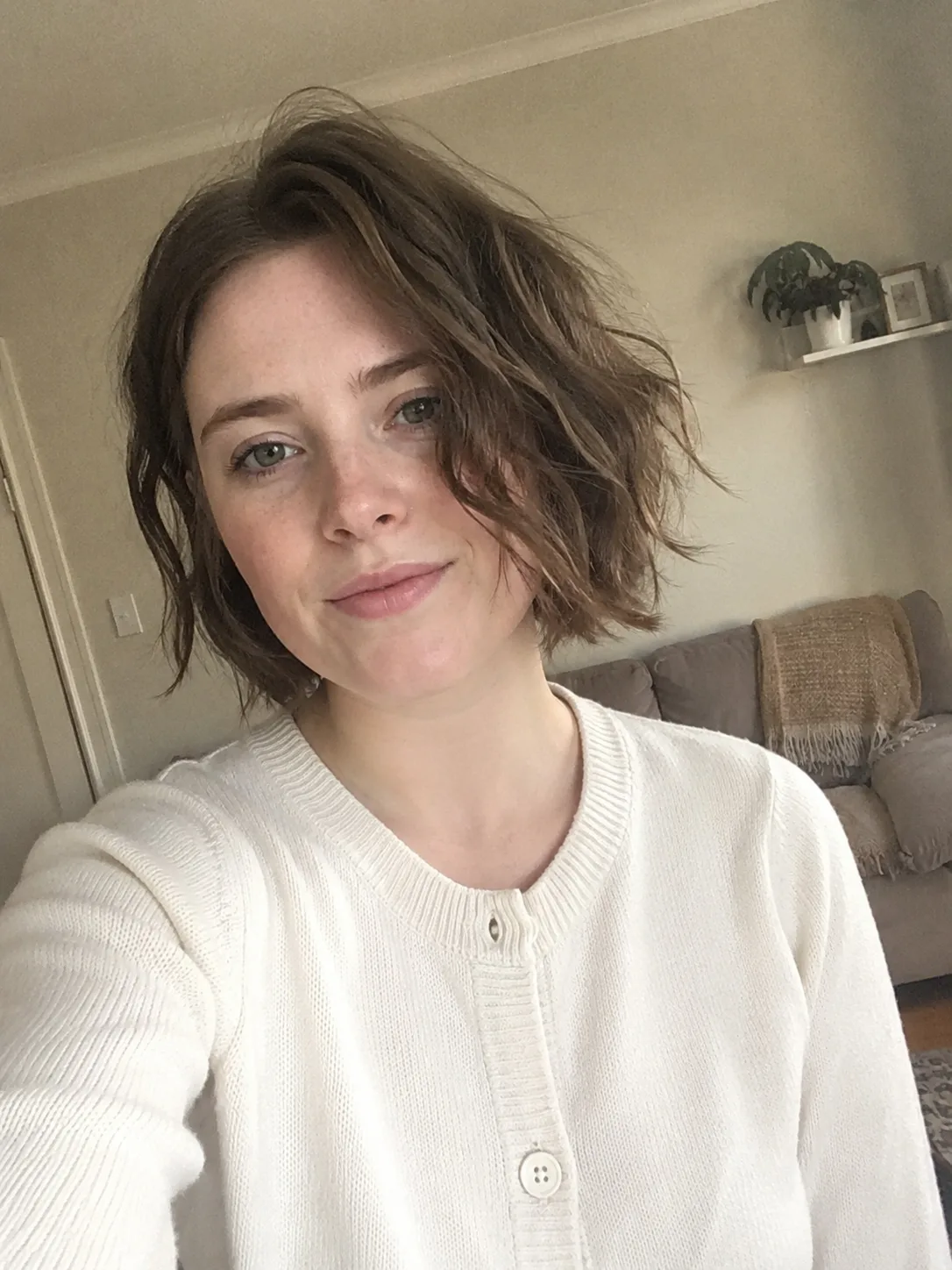
A mixie combines cropped pixie elements with a slightly longer back. The extra length at the nape draws the eye below the cheek line, while shorter side sections keep the haircut from becoming too wide through the middle.
It has a noticeably less conventional outline than a bob or classic pixie, so the decision is partly about personality. The uneven lengths also make grow-out more visible. Someone who enjoys a deliberately piecey, directional cut may find that worthwhile; a reader wanting a consistently neat perimeter will probably be happier with a bob.
Short Bobs That Change Where the Perimeter Lands
Jaw-Length Angled Bob
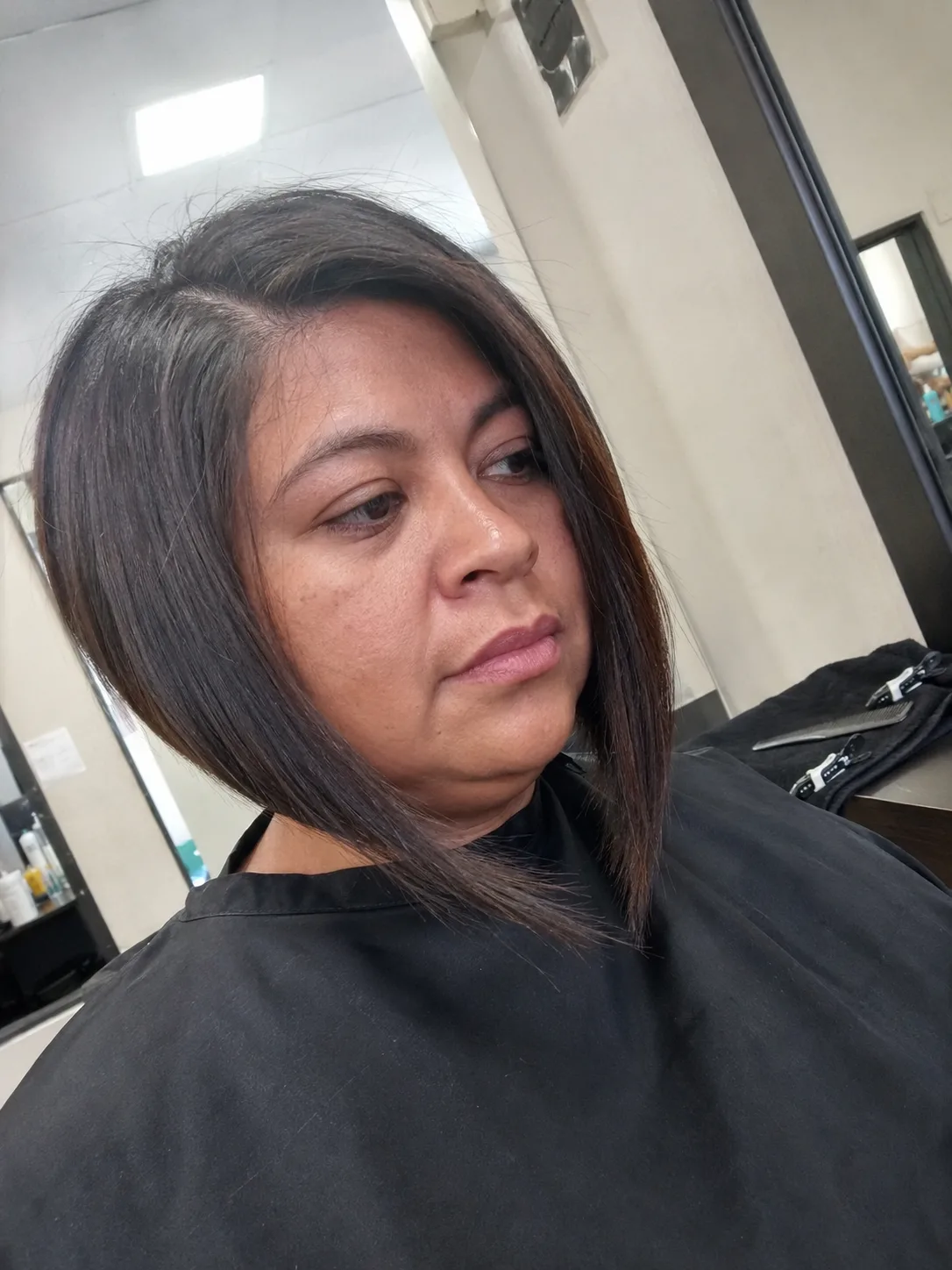
An angled bob keeps the back shorter and allows the front to travel downward toward the jaw. That forward slope creates a strong diagonal instead of a horizontal line around the face. It can look sleek and architectural on straighter hair or softer and more broken-up on wavy textures. The exact front length deserves more attention than the label “jaw-length”: placing the longest point slightly below the fullest part of your cheek can produce a very different effect from cutting it directly into that area.
Chin-Length Blunt Bob
A blunt bob gives the lower edge real visual weight. That can be especially useful for healthy fine strands or lower-density hair because a cleaner perimeter avoids the see-through effect that excessive layering can create.
Face shape doesn’t require you to abandon the blunt line. The styling decides much of the result. A little crown lift, slight movement at the front, or a perimeter sitting just below the cheek fullness can keep the bob from looking like a perfectly round frame. Very flat roots combined with a wide, curved-under side shape create a different impression.
Graduated Bob With a Higher Back
Graduation builds weight through the back of a bob while keeping the neckline shorter. Viewed from the side, the cut has a visible slope rather than one level edge.
That construction is useful when you want a compact haircut that still has lift. It is also more dependent on precise shaping than a loose textured bob because the stacked area needs to remain connected to the longer front.
The hidden issue is grow-out. As the back lengthens, the graduation begins to sit lower and the original profile softens. Someone who dislikes frequent reshaping may prefer a simpler blunt or lightly layered bob, even if the graduated version looks sharper immediately after a cut.
Asymmetrical Bob
An asymmetrical bob creates imbalance on purpose, usually by keeping one side visibly longer than the other. That directional line can work beautifully with a round face because the haircut stops tracing the face evenly from side to side. The effect can be subtle or dramatic without changing the basic concept. This is also a strong option for readers who want a short cut that looks designed even with fairly simple styling, although the difference between the two sides needs to remain obvious enough that it doesn’t read as accidental unevenness.
Micro Bob With a Clean Neckline
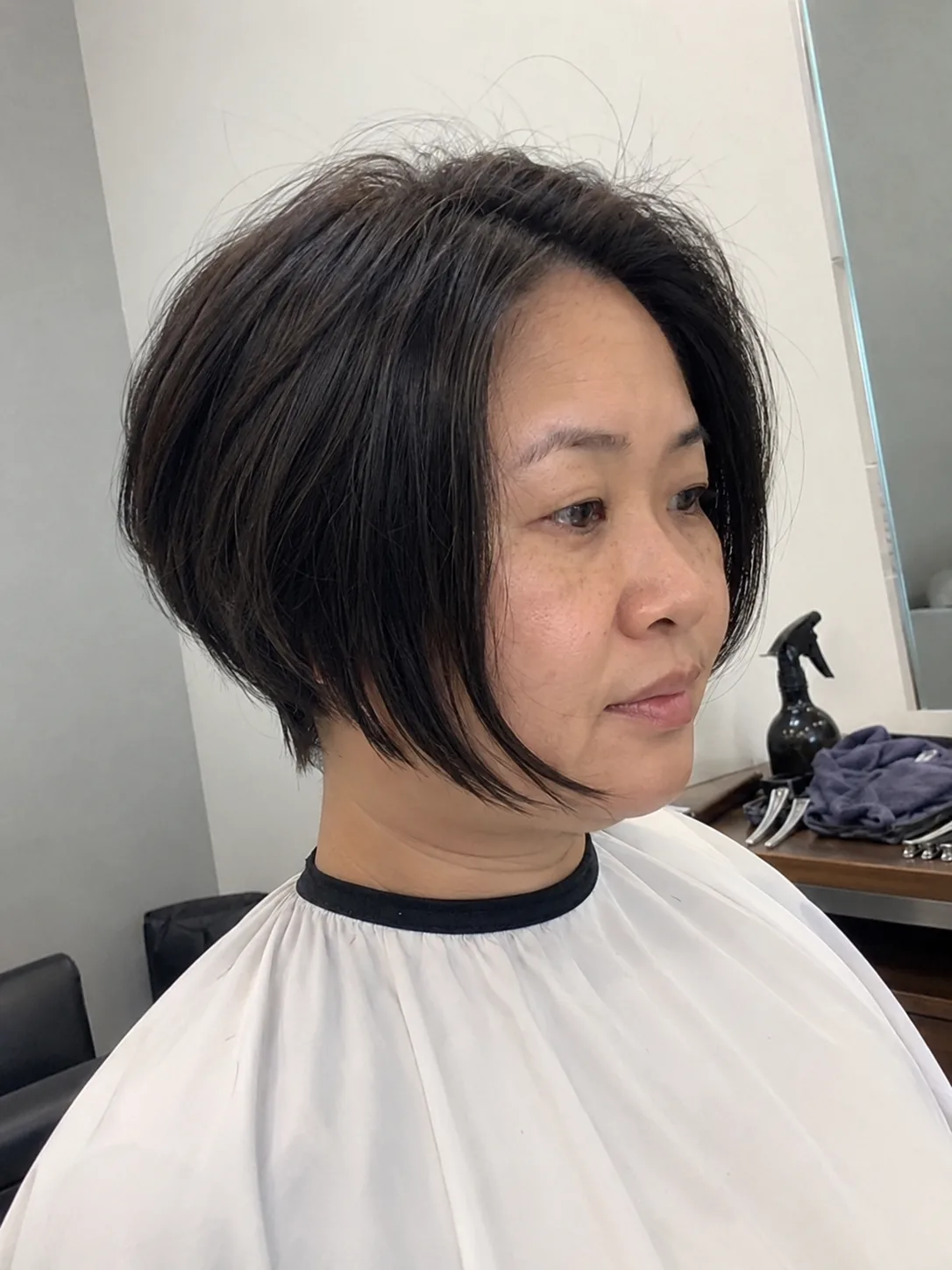
A micro bob sits higher than the conventional chin bob and exposes more of the neck. It is a bolder choice for a round face because the perimeter can land close to the cheek area, making proportion and styling more important.
The strongest versions usually have a deliberate edge: crisp and graphic, softly tucked behind the ears, or textured enough that the perimeter doesn’t form a rigid circle around the head. Ear exposure can also change how the cut interacts with glasses.
This cut makes sense when you genuinely want a small, sharp shape. Choosing it merely because you have heard that short hair should “open the face” is less useful than deciding whether you like the exposed jaw, neck, and ear area.
Layered Cuts for Movement Without Excess Side Bulk
Short Shag With a Higher Crown
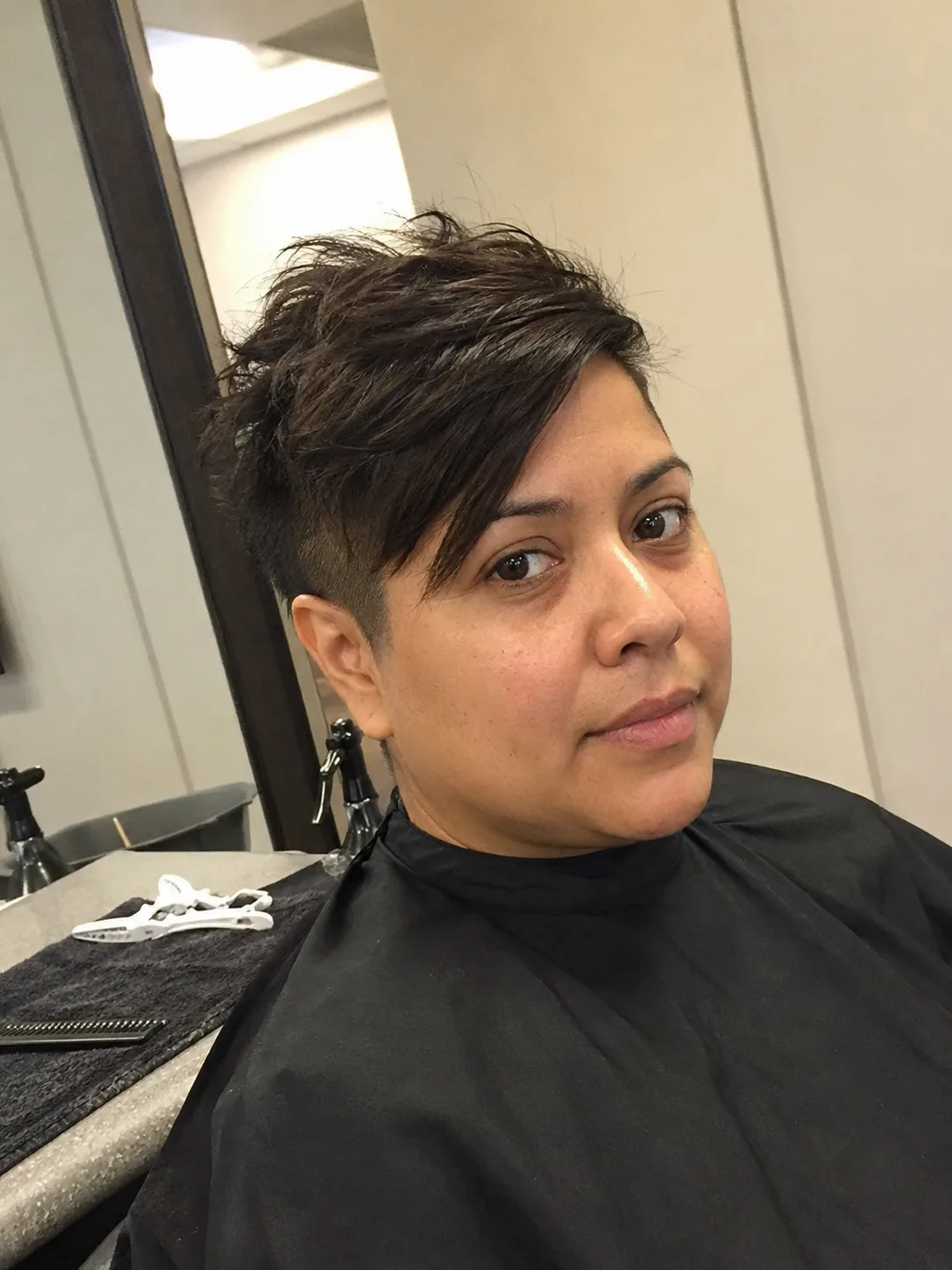
A short shag distributes length through multiple layers, so the result moves very differently from a solid bob. The most useful version for a round face keeps enough activity through the crown while preventing the widest layers from exploding directly beside the cheeks.
Wavy and curly textures can make this cut particularly expressive because each layer produces its own bend or curl grouping. Straighter hair may need more styling to reveal the separation.
A shag is a poor choice when your priority is a thick, uninterrupted perimeter. Layering removes weight by design. Fine strands can still wear a shag, but fine hair and low density aren’t the same thing; very low-density hair may show more scalp or lose too much fullness when the interior is heavily layered.
Shaggy Bob With Broken Ends
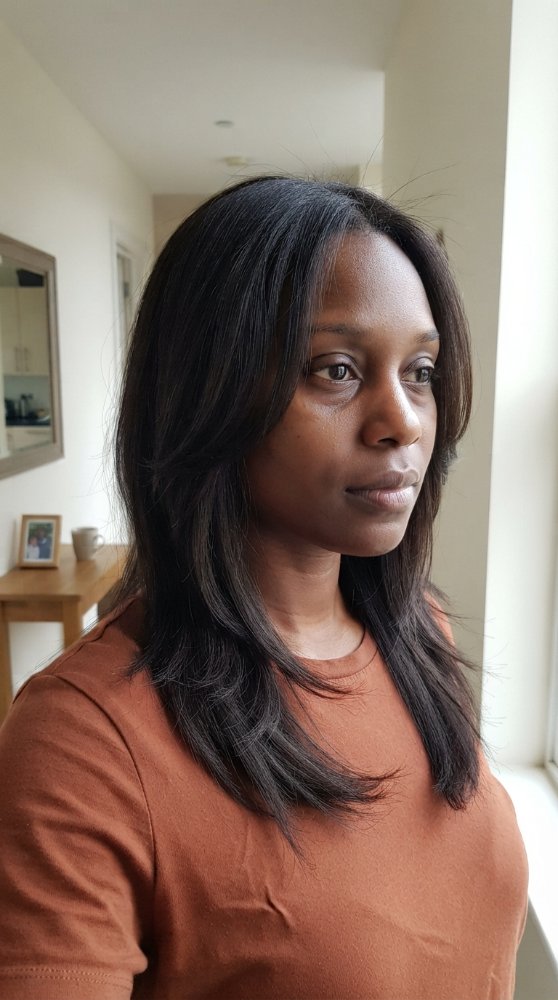
A shaggy bob keeps more lower-edge length than a true short shag while adding enough layers to stop the haircut from behaving like one solid block. It is an underrated middle ground for someone who likes bob length but dislikes a rigid geometric finish.
The broken perimeter gives waves room to move and can prevent side volume from forming one continuous curve around the cheeks. On straighter hair, piece separation usually needs more deliberate styling.
The cut should still retain a readable bottom edge. Removing too much from the interior can turn a shaggy bob into a thin-ended layered cut, which is a different result entirely.
Short Layered Bob With Crown Movement
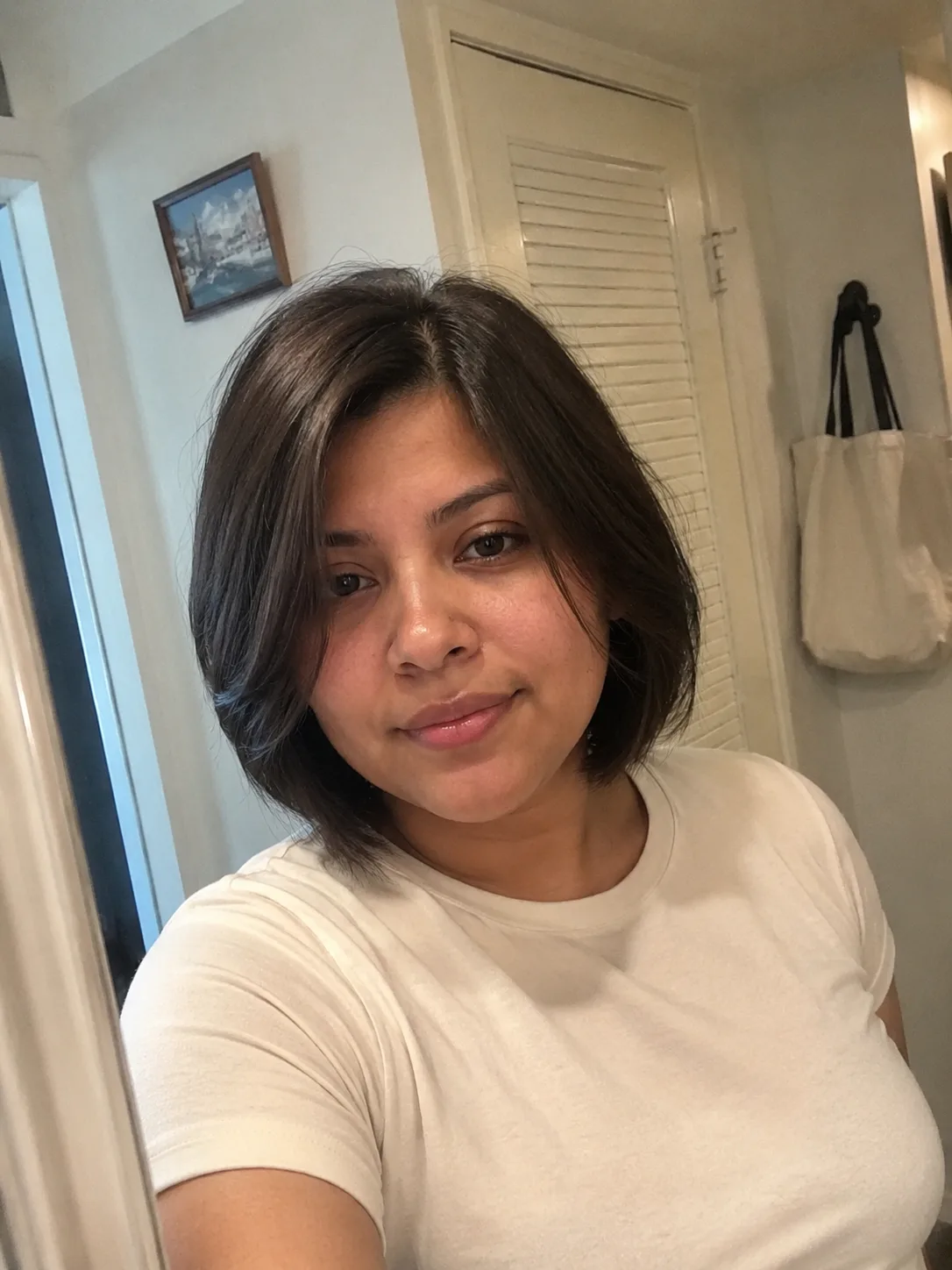
This version uses restrained layering instead of the much stronger disconnection of a shag. The point is to give the top and front enough mobility to prevent the bob from sitting flat against the scalp and then flaring outward at cheek level. It is often an easier transition for someone moving from a one-length bob because the overall shape still reads as a bob. Ask for the finished outline you want rather than simply requesting “lots of layers,” since heavier interior removal changes both the perimeter and how full the haircut appears.
Short Bob With Cheekbone-Length Front Layers
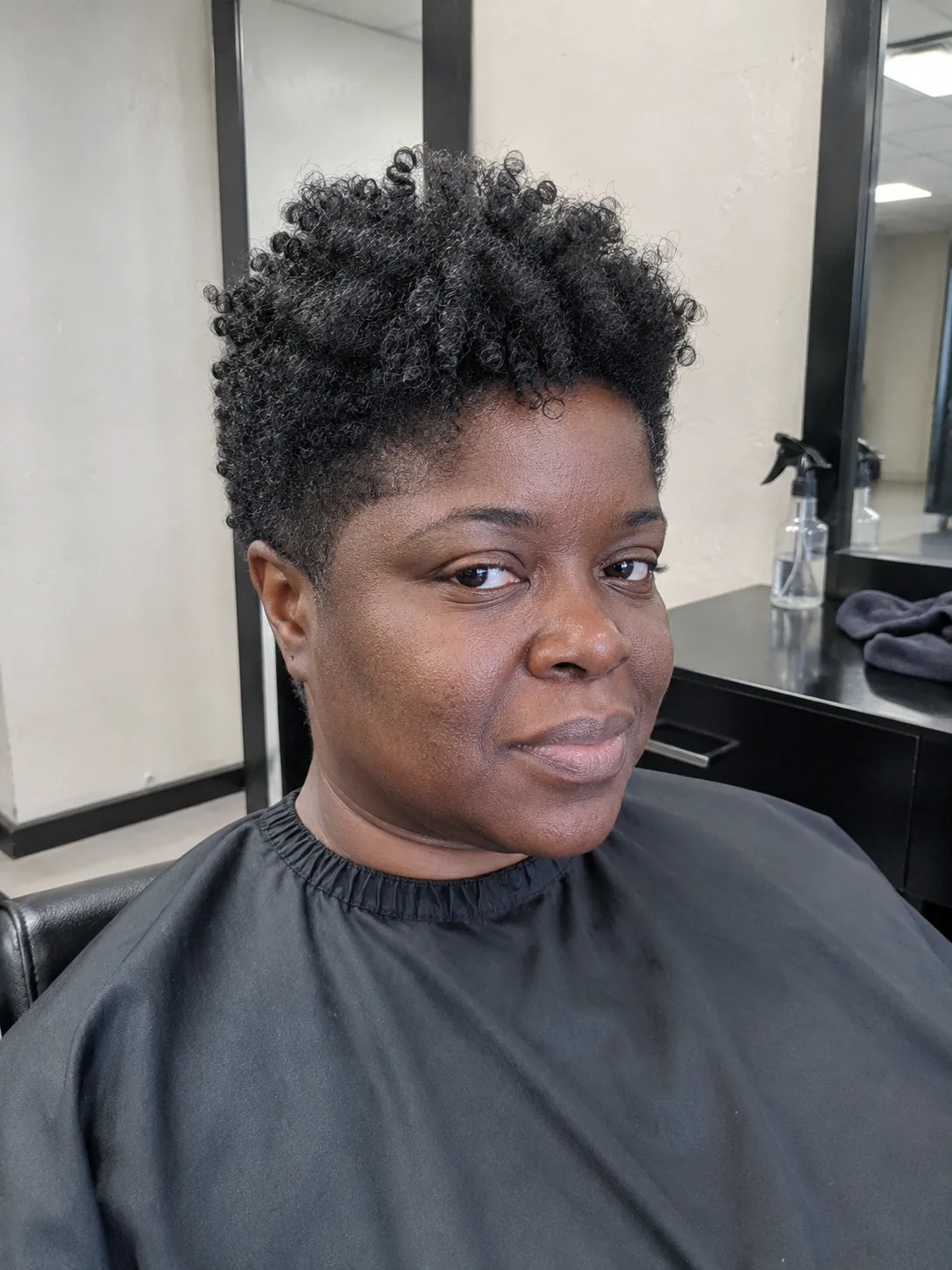
Longer face-framing pieces aren’t always necessary on short hair. Layers landing around the cheekbone can introduce a diagonal opening through the front while the main perimeter remains closer to the jaw.
This works best when the front pieces move away from the face or blend visibly into the rest of the cut. Dense sections that curl inward at the widest part of the cheeks may create more side emphasis than you intended.
The front layers also need to suit your usual styling state. A piece that reaches the cheekbone while straight can spring significantly higher on curly or coily hair, so assess the haircut in the texture and shrinkage pattern you normally wear.
Curly and Coily Short Haircuts That Use Natural Volume Well
Tapered Curly Crop
A tapered curly crop keeps the sides and nape more compact while allowing curls to remain fuller toward the top. That distribution makes the natural texture part of the shape instead of something that needs to be flattened for face-shape correction.
The top doesn’t need extreme height. Even modest length variation between the crown and sides can create enough direction to change the outline. Curl grouping and shrinkage determine how obvious that difference looks once dry.
A curl-by-curl, wet, dry, or combined cutting approach may be appropriate depending on the hair and the stylist’s method. What matters most is evaluating the result in the state you actually plan to wear.
Curly Pixie With a Longer Front
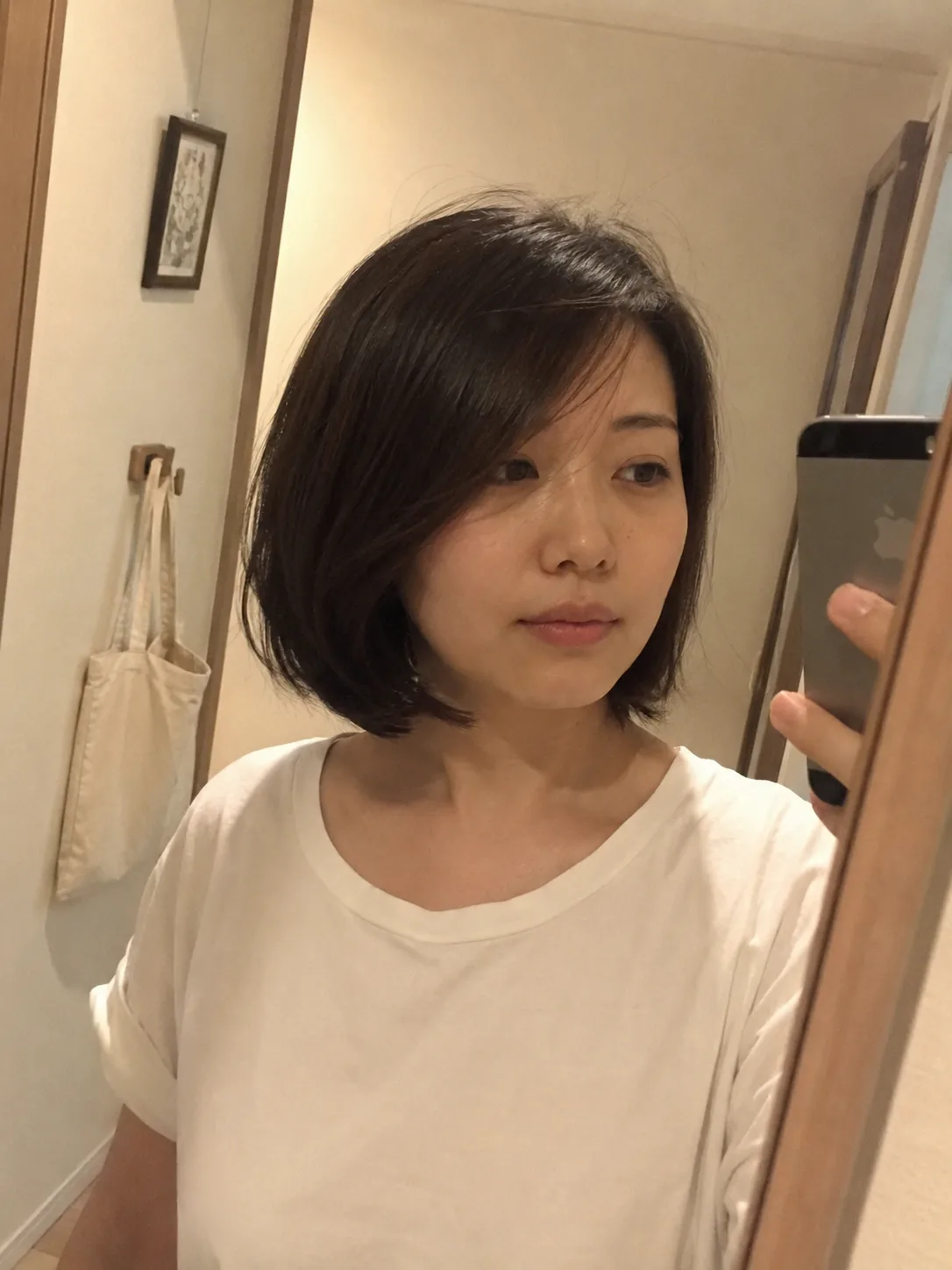
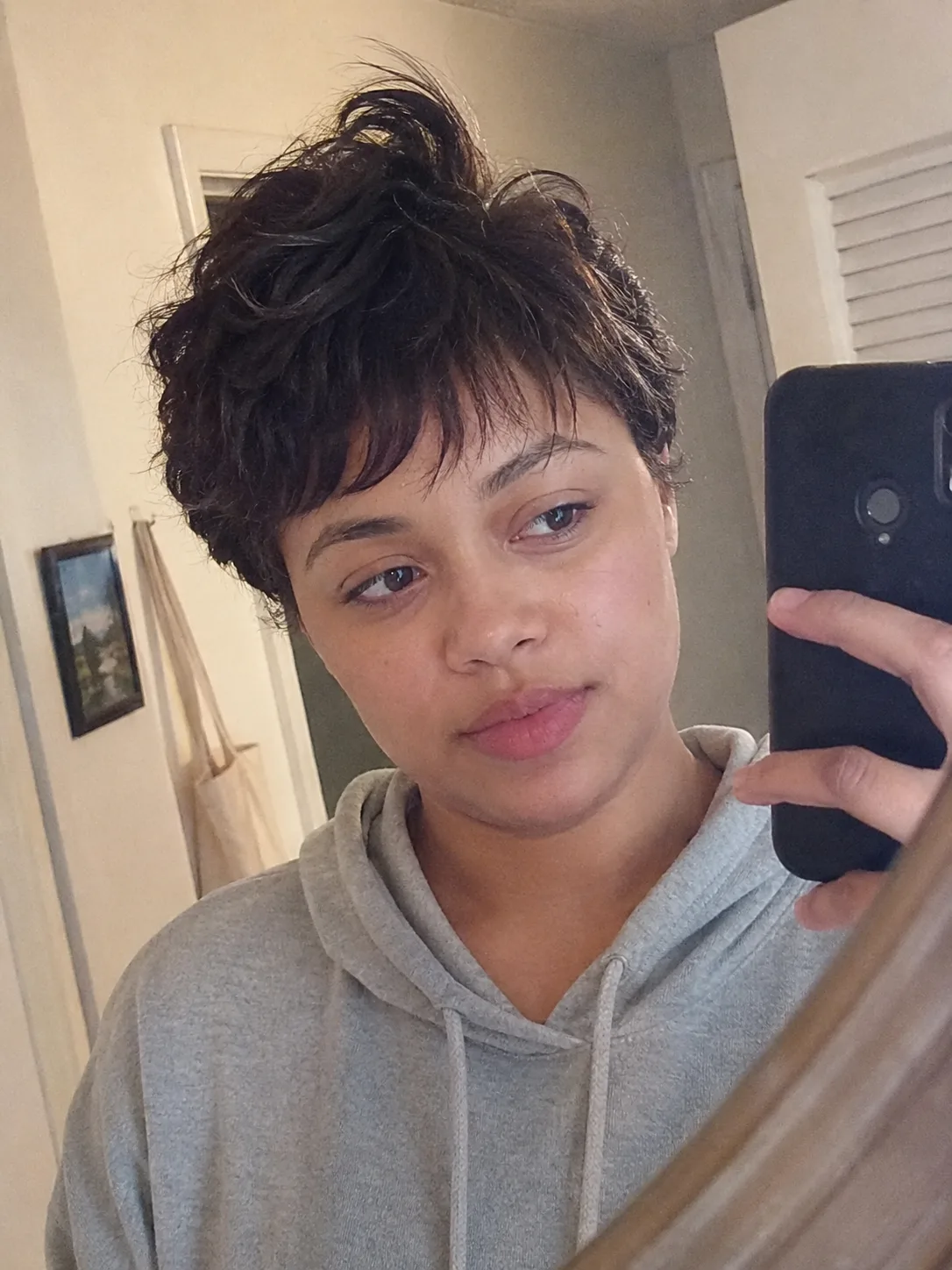
A curly pixie becomes much more versatile when the front retains enough length to form visible curl groups. Those curls can fall forward, sweep diagonally, or sit slightly above the forehead while the sides remain shorter.
This is a stronger choice than forcing naturally curly hair into a smooth pixie outline every day. The haircut can work with the curl pattern while still maintaining a cropped profile.
Shrinkage needs to be built into the plan. A front section that looks generous while stretched can sit far higher when dry. Bring reference photos that resemble your texture and usual styling state, then discuss the dry visual length rather than relying only on where wet hair reaches.
Asymmetrical Curly Bob
Curly bobs naturally create more three-dimensional width than sleek bobs, which makes asymmetry especially useful. One longer side can pull the eye diagonally while the curl volume remains intact. You don’t need to suppress the texture to create structure. This option is strongest when the unevenness is visible in the dry shape; subtle differences can disappear once curls spring, separate, and shift from wash day to wash day.
Tapered Coily Cut With a Fuller Top
A tapered coily cut can keep substantial texture on top while reducing bulk through the lower sides and nape. The contrast gives coils room to expand without making the entire haircut one uniform sphere.
The strongest consultation question is how much shrinkage you want the finished shape to display. A cut viewed stretched may look considerably different once the coils return to their normal state, so the final balance should be judged in the way you usually wear your hair.
Avoid treating the taper as a reason to push fragile edges into an extremely close outline. The perimeter should work with the existing density and hairline rather than depending on repeated tension or aggressive manipulation.
Choosing Between a Pixie, Bob, and Layered Short Cut
Face shape can narrow the options slightly, but your routine should make the final decision.
A pixie or taper is the stronger choice when you like an exposed neckline, don’t mind the shape changing noticeably as it grows, and want the option of concentrating more length at the top.
A bob makes more sense when you want a stronger perimeter, more styling versatility, or enough length to tuck sections behind the ears. Blunt, angled, graduated, and asymmetrical versions behave differently, so “short bob” is still too broad a request for a useful consultation.
A shag, shaggy bob, or layered crop works better when movement matters more than a solid lower edge. These cuts can help prevent all the volume from collecting at one horizontal level, but they also remove weight. That matters for low-density hair.
Glasses deserve consideration too. Thick temple sections can compete with the arms of your frames, while a tuckable bob or cleaner side area may sit more comfortably. Look at your neckline and wardrobe as well: a short bob that rests beautifully with an open collar can flip or bunch differently against a high coat collar.
What Reference Photos Often Hide
A short haircut photograph captures one styling moment. It rarely tells you how much root lift created the crown height, whether the model’s hair was stretched before styling, how the shape looks in humidity, or where naturally curly hair sits after full shrinkage.
Pay attention to the haircut underneath the finish. Look for the perimeter, the shortest side sections, the longest front point, where the widest part of the shape sits, and whether the volume comes from actual cutting or temporary styling.
Density also changes what you see. Fine strands can exist in high density, and low-density hair can contain coarse strands. A heavily layered inspiration photo on dense hair may lose much more visual fullness when translated directly onto lower-density hair.
The most useful salon conversation is therefore specific: show the photograph, explain how you normally wear your hair, identify what you like about the shape, and point out what you don’t want emphasized. A stylist can then discuss whether the reference depends on length, layering, styling, or a texture behavior your hair handles differently.
Maintaining a Short Haircut Without Chasing the Photo
Short cuts often lose their original outline before they feel objectively long. A pixie’s side shape softens, a graduated bob’s weight drops lower, and a taper becomes fuller around the perimeter. The right time for reshaping depends on the cut, growth, and how much change you tolerate rather than one universal calendar.
At home, preserve the feature that gives the haircut its structure. A bob may need attention at the perimeter. A pixie may depend more on root direction and separation. Curly and coily cuts usually benefit from styling methods that let the dry pattern return to the intended shape without repeatedly stretching or flattening it.
Heat isn’t required to make a short haircut flattering on a round face. Use heat according to your hair’s condition, the tool, and the finish you want. Natural curls, coils, waves, and straight textures can all create strong short shapes.
Sudden shedding, persistent scalp irritation, sores, pain, or a concerning change in density belongs outside ordinary styling troubleshooting. A dermatologist or another qualified healthcare professional can assess symptoms that appear to involve more than the haircut itself.
Related Hairstyles to Explore
FAQs
What short haircut is most flattering for a round face?
A tapered pixie with some crown length and an angled or asymmetrical bob are useful starting points because they create clear vertical or diagonal direction. The better choice depends on your texture, preferred styling effort, and how exposed you want the jaw and neck to be.
Can a round face wear a chin-length bob?
Yes. Pay attention to where the perimeter lands and where the haircut carries its width. A blunt chin bob, angled bob, or lightly layered version can all work. Small changes in front length, crown movement, and styling can alter the overall effect considerably.
Are bangs a bad idea with a round face and short hair?
No. Side-swept, separated, curly, or lightly textured fringe can work especially well because the hair doesn’t form one dense horizontal line across the forehead. A heavier straight-across fringe can also be worn when you like that graphic look; it simply creates a different proportion.
What should I ask my stylist for if I have curly or coily hair?
Discuss the dry shape you want, your normal shrinkage, where you prefer volume, and whether you usually wear your hair shrunken, stretched, or in another regular state. Ask how the proposed layers or taper will behave once your curl or coil pattern returns after styling.
Hair Texture & Upkeep Style Matcher
Select your natural hair texture and daily maintenance window to get an instant styling formula and heat safety cap.
Heat Cap: 320°F (160°C)
A versatile three-strand braid beginning at the parietal ridge, securing the top half while allowing natural wave texture to flow freely around the shoulders.
Conclusion
The most useful short haircut for a round face isn’t the one that hides the most facial width. It is the one that puts the haircut’s strongest line where you actually want the eye to travel.
Choose a pixie or taper when upward movement and an exposed neckline appeal to you. Start with a bob when perimeter strength and versatility matter more. Move toward shags and layered shapes when natural movement is worth giving up some lower-edge weight.
Before the cut, decide on three visible details: where you want the widest part of the hair to sit, where the perimeter should end, and how much styling you are willing to do to maintain the shape. Those decisions will usually take you further than a face-shape label alone.
Editorial Standards & Hair Health Guidance
Every style featured on Tress Atlas is curated with a focus on real-world wearability, scalp tension management, and cuticle preservation. When trying protective styles or tight updos, ensure perimeter hairline sections remain tension-free to avoid traction stress on delicate follicles. For heat styling, cap tools below 350°F (180°C) to prevent thermal keratin denaturation.
Scientific Sourcing: Practices aligned with the American Academy of Dermatology (AAD) on traction alopecia risk reduction and cosmetic trichology research on hair tensile strength.