Prom Hairstyles for Medium-Length Hair: Styling Guide & Cuts That Balance Style and Staying Power
Medium-length hair gives you plenty of prom options, but the most successful style depends less on how elaborate it looks in a photo and more on whether your length can support the construction. Hair around the shoulders or collarbone behaves differently from very long hair: shorter pieces may escape an updo, layers can reduce the size of a bun, and a curled-down style may shrink visually once the waves settle.
That can actually work in your favor. Medium hair is light enough for lifted half-up styles, textured twists, compact buns, and defined waves without needing an enormous amount of pinning.
Your dress neckline, natural texture, haircut, and willingness to touch up the style during the evening should narrow the choices quickly. A detailed updo keeps hair away from an open back or embellished neckline. Loose waves give more movement but will interact with shoulders, straps, and humidity. Half-up styles sit comfortably between the two.
Soft Prom Styles That Keep Most of the Length Down
Old Hollywood Waves
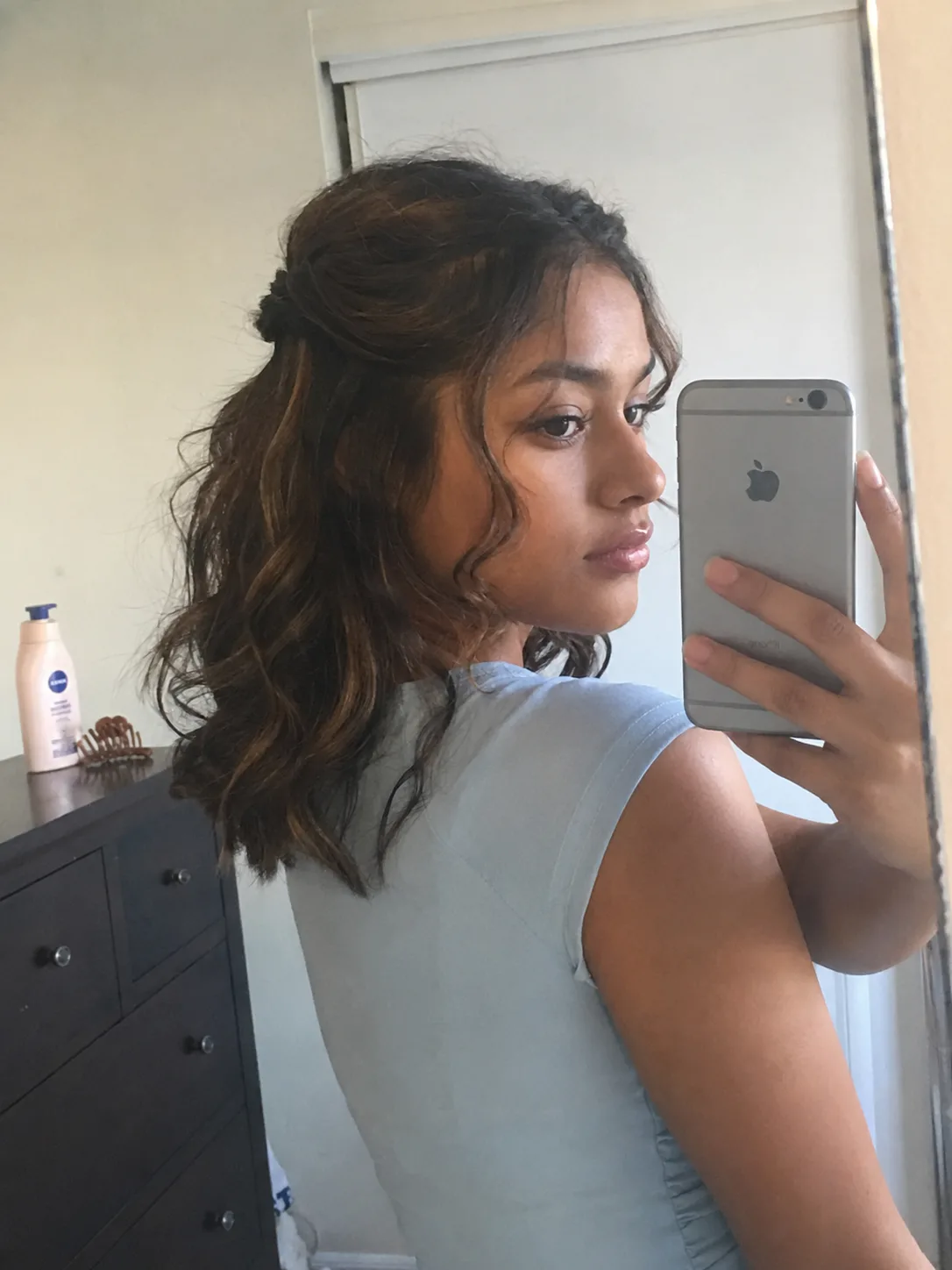
Large, directional waves are one of the strongest choices when you want medium hair to look deliberate without putting it up. The hair is usually shaped into a smooth wave pattern and arranged so the bends flow together instead of breaking into separate curls. On collarbone-length hair, that creates enough movement for drama without the very heavy curtain effect that long hair can produce.
The side you place behind the ear matters almost as much as the curl pattern. Exposing one side opens the neckline for statement earrings and prevents the hair from hiding both sides of your face in photographs.
Soft Curled Lob
A curled lob works particularly well when your haircut already has a clean perimeter. Loose bends make the ends look fuller and keep the style modern, while stronger curls can make medium hair appear considerably shorter.
This is the easier choice for someone who wants to recognize their everyday haircut in the finished prom look. It also avoids the pinning demands of a full updo.
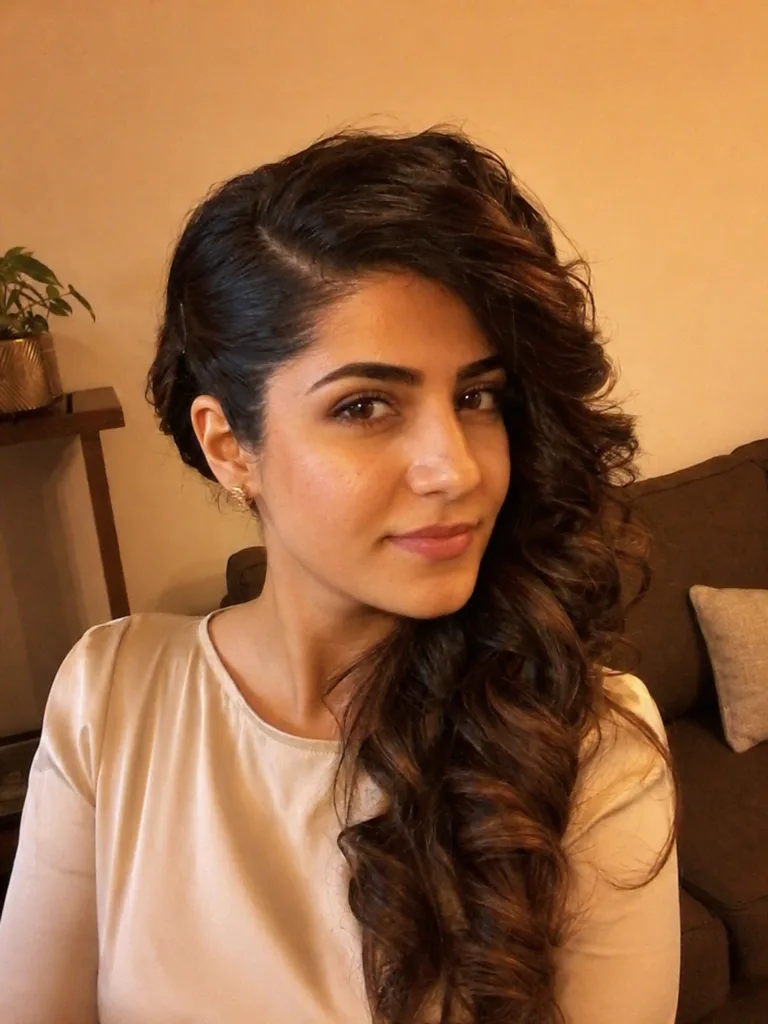
Deep Side-Part Waves
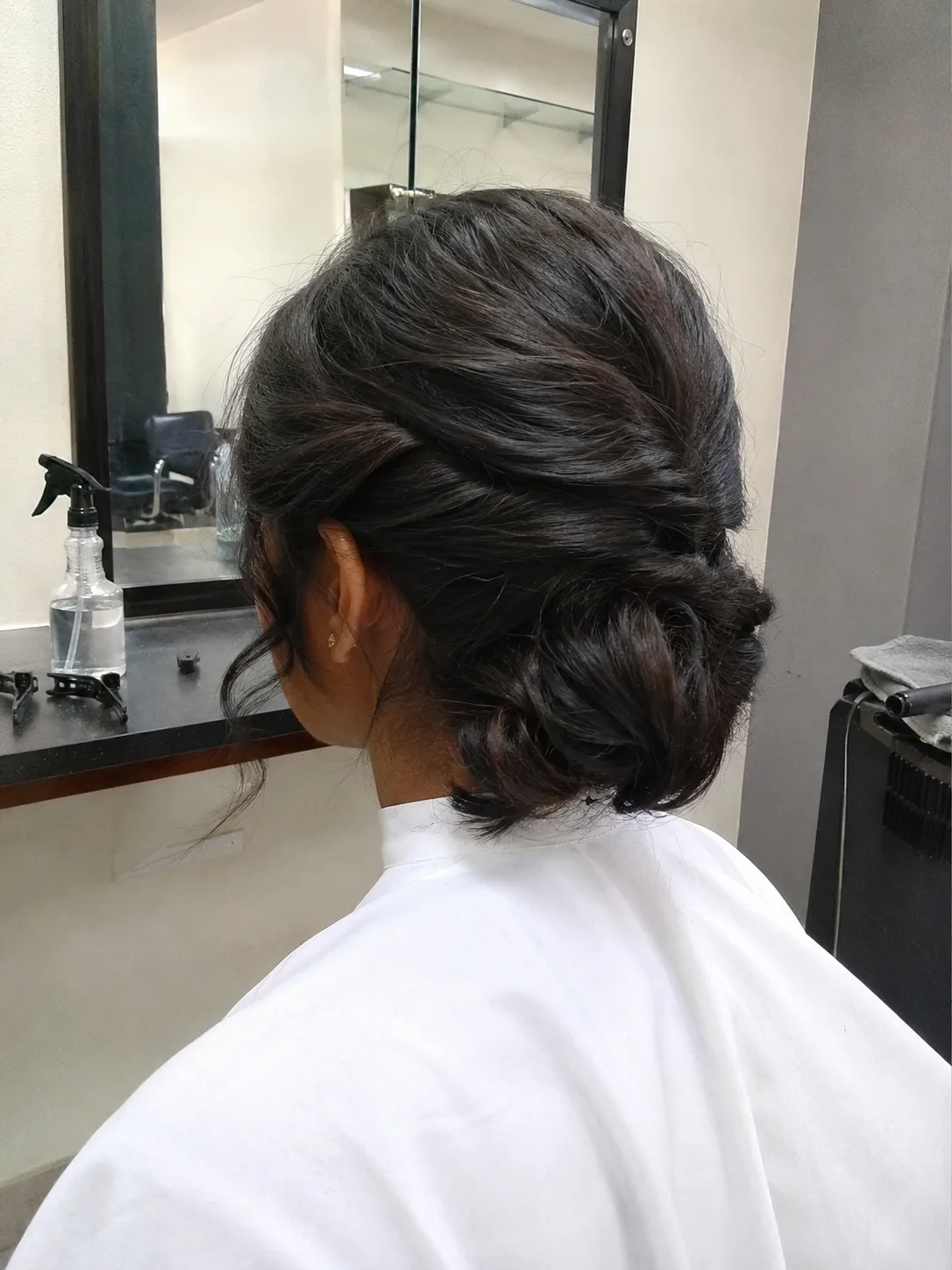
A deep side part changes where the visual weight sits, which can give medium-length waves much more presence without requiring extra length. One side falls closer to the face while the heavier side builds volume through the temple and shoulder.
The effect is especially useful with simple dresses because the hairstyle supplies asymmetry and movement.
Layered hair needs a little more planning. Shorter front layers may spring higher after curling, so the finished shape should be judged after the hair has cooled and relaxed rather than while each curl is still tightly formed.
You can tuck the lighter side behind the ear or secure it discreetly underneath. That small construction detail keeps the asymmetry visible as you move.
Brushed-Out Glam Curls
Brushed-out curls give medium hair a softer, fuller finish than individually defined ringlets. The curls are formed first and then blended so the surface reads as one mass of movement.
This style is worth choosing when volume matters more than perfect curl separation. It can also make a layered haircut look more cohesive because the ends overlap instead of sitting in isolated pieces.
Half-Up Prom Hairstyles for Medium-Length Hair
Classic Half-Up Curls With Crown Lift
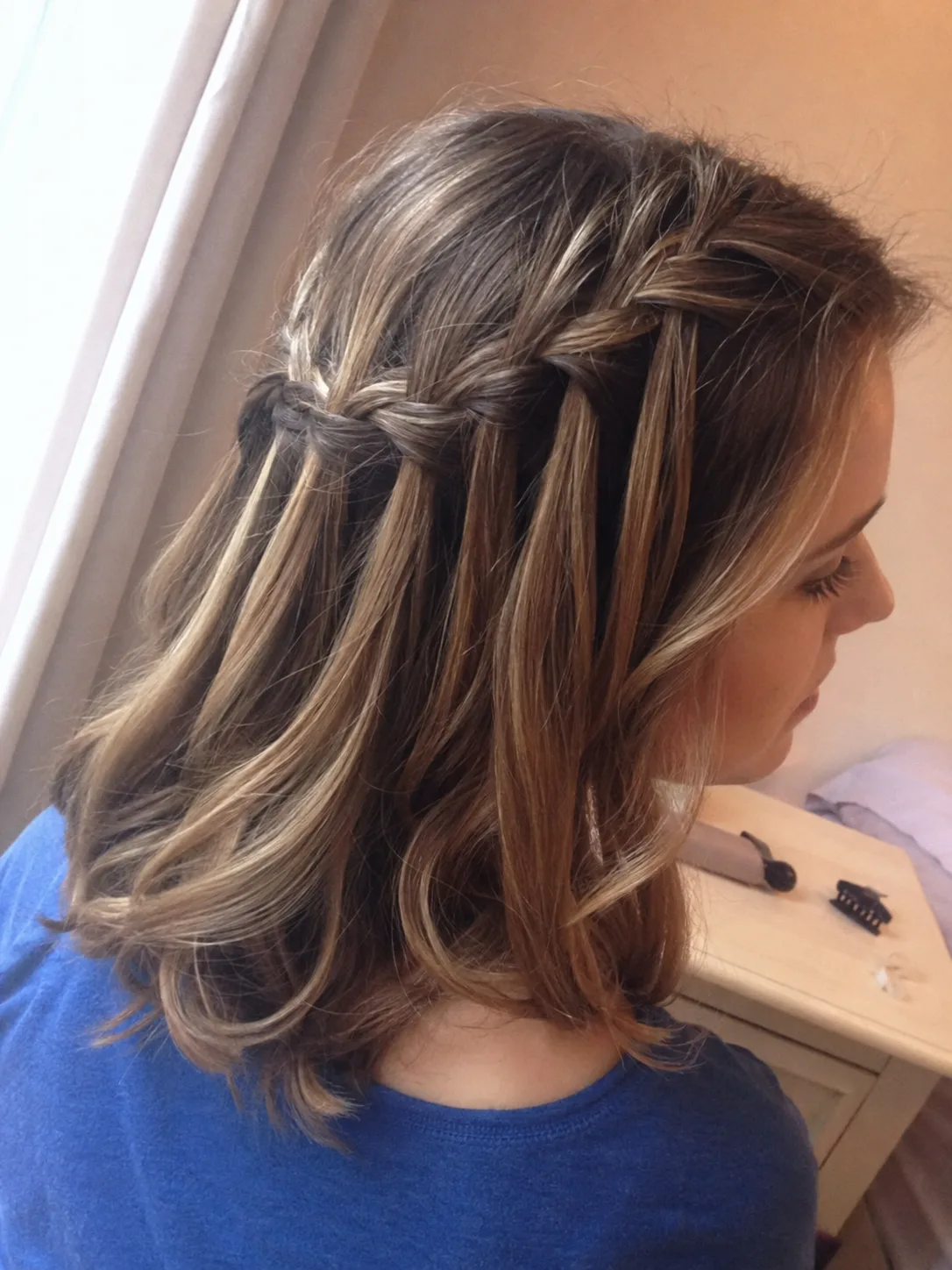
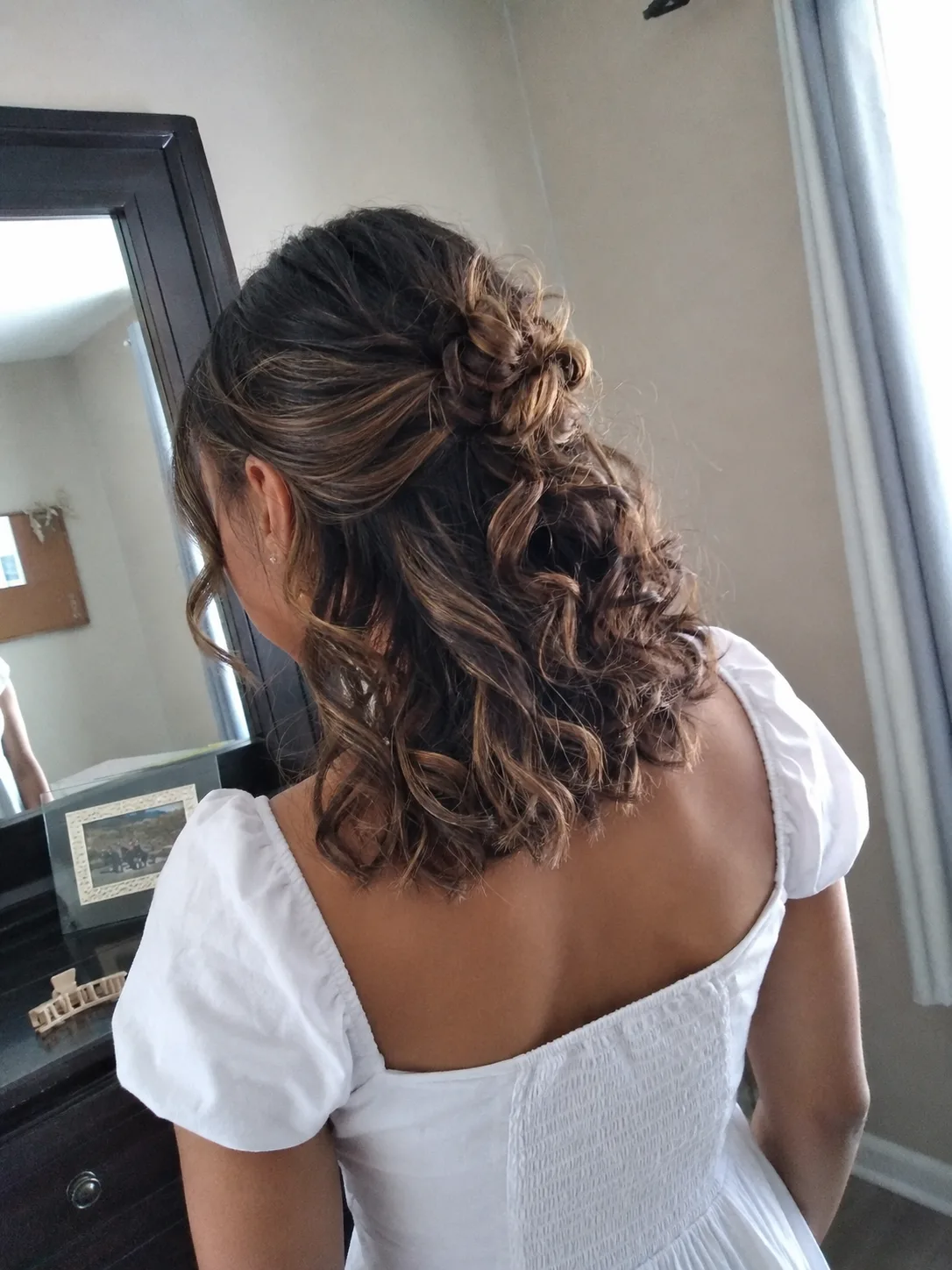
A half-up style solves one of the most common prom problems: you keep enough hair down to show your length while removing the sections most likely to fall into your face.
The crown can stay softly lifted while the sides travel backward into a small anchor. Medium-length hair usually benefits from restraint here; an oversized bump can leave too little loose hair underneath.
Finish the lower section according to your haircut. Loose curls emphasize layers, while smoother waves make the hair look longer and heavier through the ends.
Twisted Half-Up Style
Two side sections twisted toward the back create detail without using the length needed for a braid. That makes this one of the more practical formal styles for hair sitting close to the shoulders.
A slightly loose twist produces a softer effect, while a tighter, smoother twist reads more structured. The twist should still feel stable at the back instead of depending on the front hairline for tension.
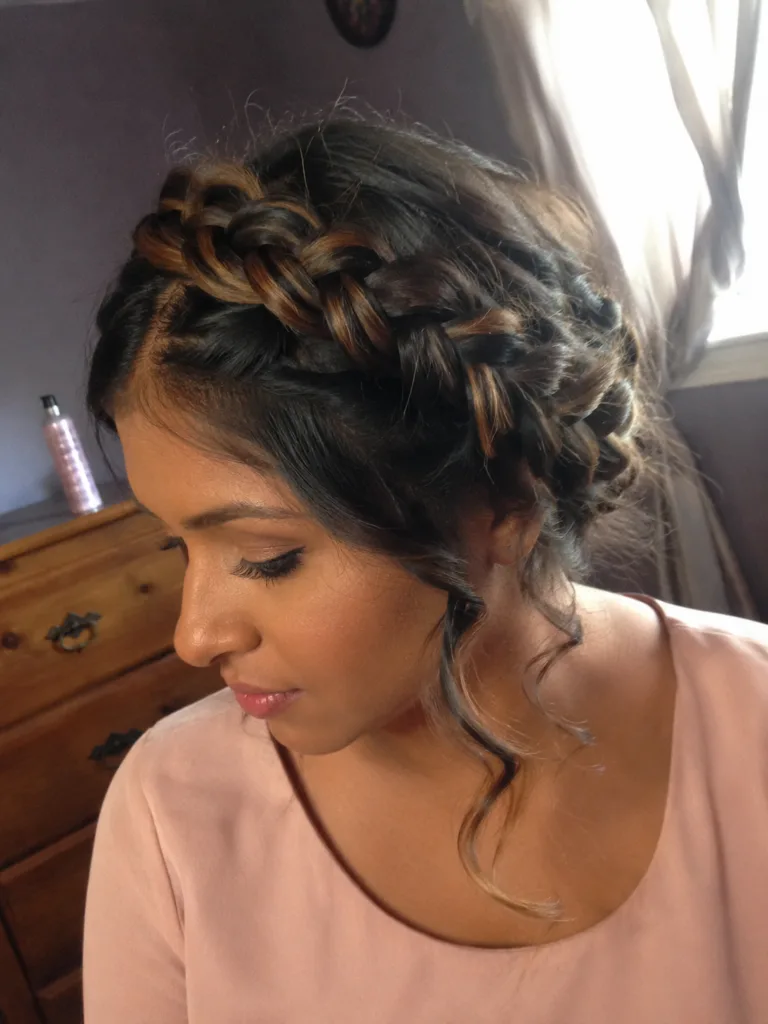
Braided Half-Up Crown
A braid across the upper back or sides of the head creates a built-in focal point, so the lower hair can stay comparatively simple. The combination works well on medium hair because the braid uses only part of your available length.
The stronger version is usually a moderate braid with visible texture rather than an extremely wide, pulled-apart braid. Over-expanding a small braid can make the construction look fragile by the end of the night.
Half-Up Bow Detail
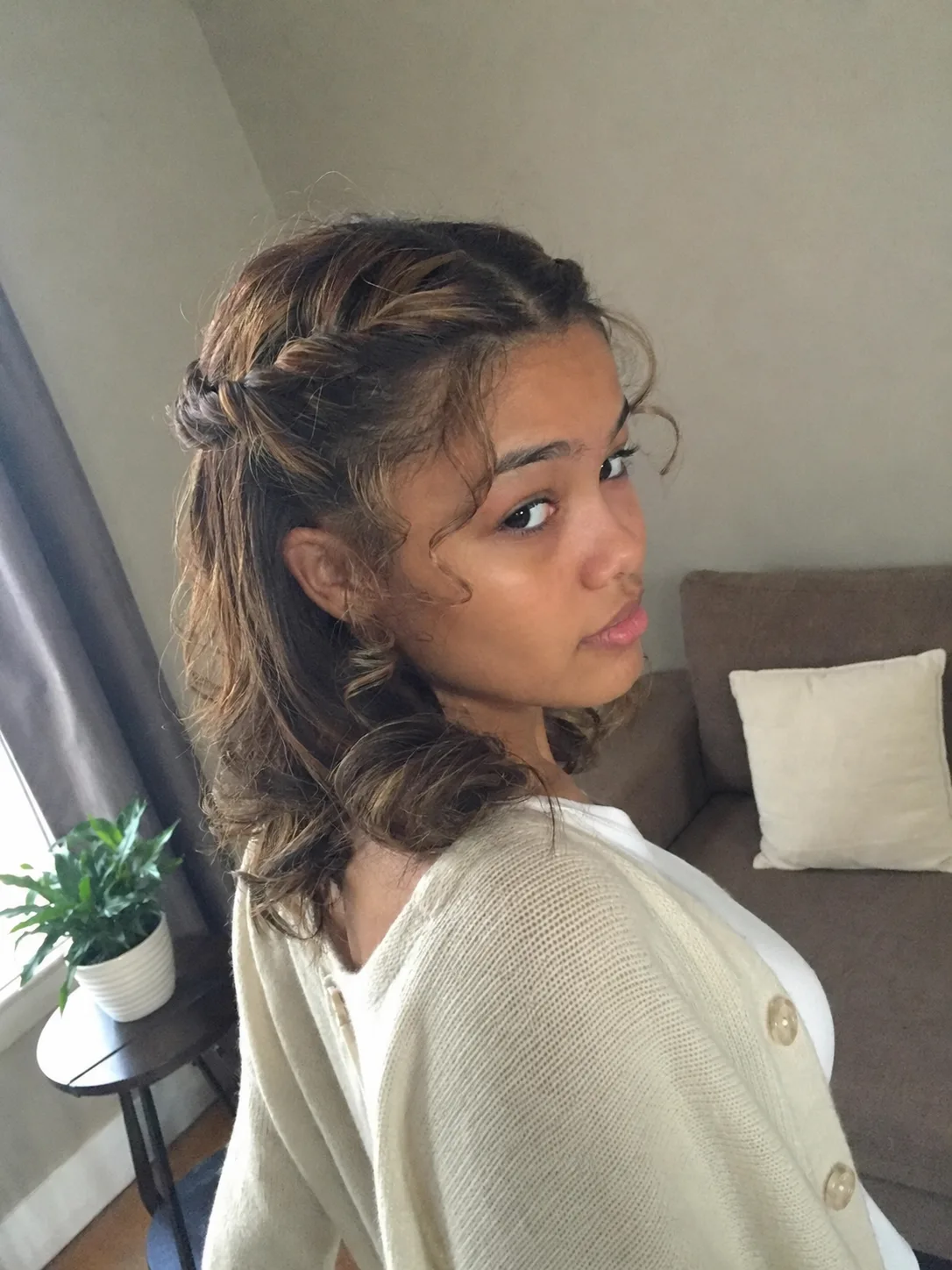
A bow-shaped section made from your own hair turns the anchor into the main feature. It works best when the hair has enough length through the sides to loop back cleanly.
Keep the rest relatively understated. Defined curls or soft waves give the bow a formal setting without competing with it.
Half-Up Style for Naturally Curly Hair
Natural curls already provide dimension, so a prom style doesn’t need to flatten them into a completely different texture. Gathering the upper section while leaving the lower curls free creates height, keeps the face visible, and lets the curl pattern remain central to the look.
Shrinkage affects where the finished hair sits. A medium-length curly cut may appear substantially shorter in its fully shrunken state than when stretched, so choose the placement while considering the state you actually plan to wear.
The crown can stay full instead of being pressed flat. Small twists or carefully placed pins can direct the side sections backward while preserving curl clusters.
Comfort also deserves attention. Pulling every short curl tightly toward one anchor can distort the shape and create unnecessary tension. Let shorter pieces remain part of the design when they don’t reach easily.
Updos That Work With Medium Length
Textured Low Bun
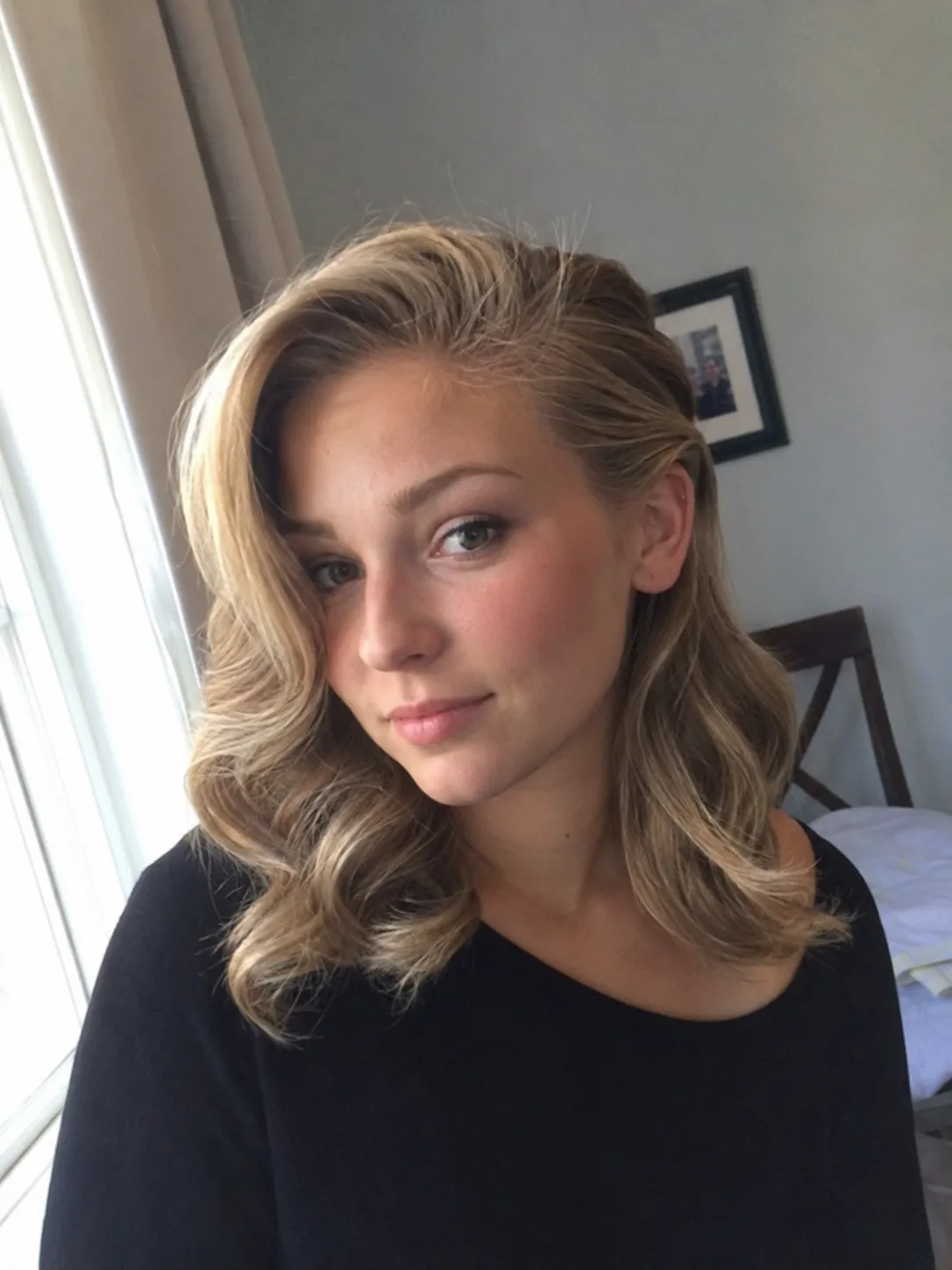
A low bun makes sense when you want hair fully off the shoulders but don’t have enough length for a large, high updo. The hair gathers near the nape, so shorter pieces have less distance to travel.
Texture is useful here. Twists, loops, and softly curved sections can build the appearance of a fuller bun without pretending the hair is longer than it is.
Sleek Low Bun
Compared with a textured bun, the sleek version puts more attention on the head shape, part, earrings, and neckline. The surface is kept smooth before the ends are folded or wrapped into a compact base.
This is a strong option with dresses that already have substantial embellishment. The hairstyle doesn’t compete for attention.
Short layers around the face can either be integrated into the smooth surface or left deliberately free. Trying to force every tiny piece into the base can require more product and pinning than the clean effect is worth.
French Twist for Medium Hair
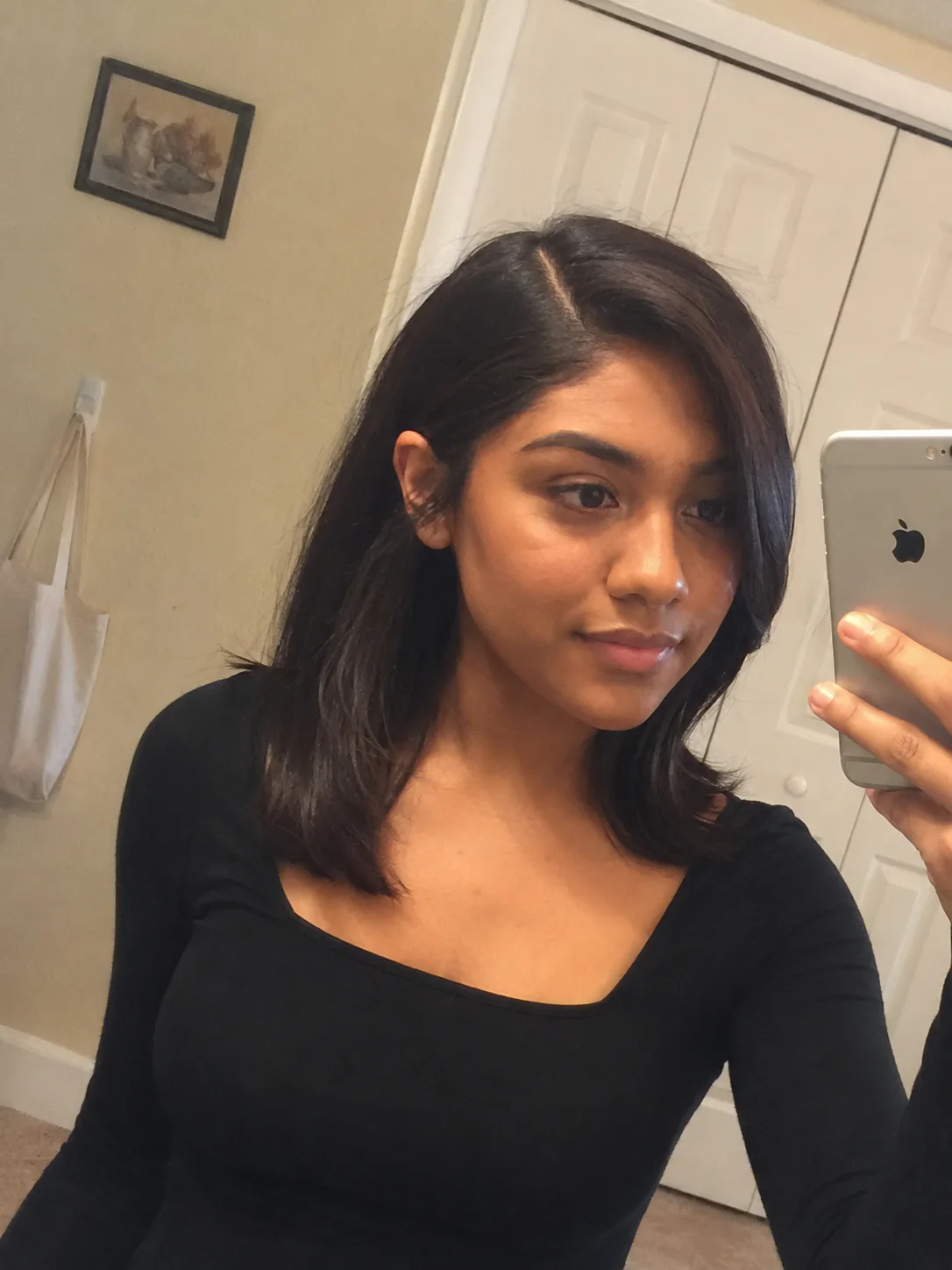
Medium length is often very well suited to a French twist because the style relies on folding and pinning the hair vertically rather than building a large bun. The resulting shape is narrow, lifted, and distinctly formal.
A neat twist gives a sharper evening look; a softer version allows more movement at the crown and around the face.
The hidden challenge is the lower perimeter. Hair near the nape needs to fold securely into the structure instead of hanging underneath it. Bobby pins should support the internal seam, not simply sit across the visible surface.
Twisted Chignon
A chignon placed low at the back can be constructed from several smaller twisted sections instead of one large coil. That makes it particularly useful for layered medium hair because shorter sections can be incorporated individually.
It also photographs with more dimension than a perfectly smooth bun. Small changes in the direction of each twist create visible texture while keeping the overall outline compact.
Rolled Updo
A rolled updo tucks the ends inward around the back of the head, producing a rounded shape without requiring a long ponytail first. It suits medium hair because the ends become part of the structure instead of needing to wrap repeatedly around a base.
This is one of the better choices when your dress has an interesting back. The hair stays above the neckline, and the horizontal roll creates detail that remains visible from behind.
Braids, Ponytails, and More Defined Prom Looks
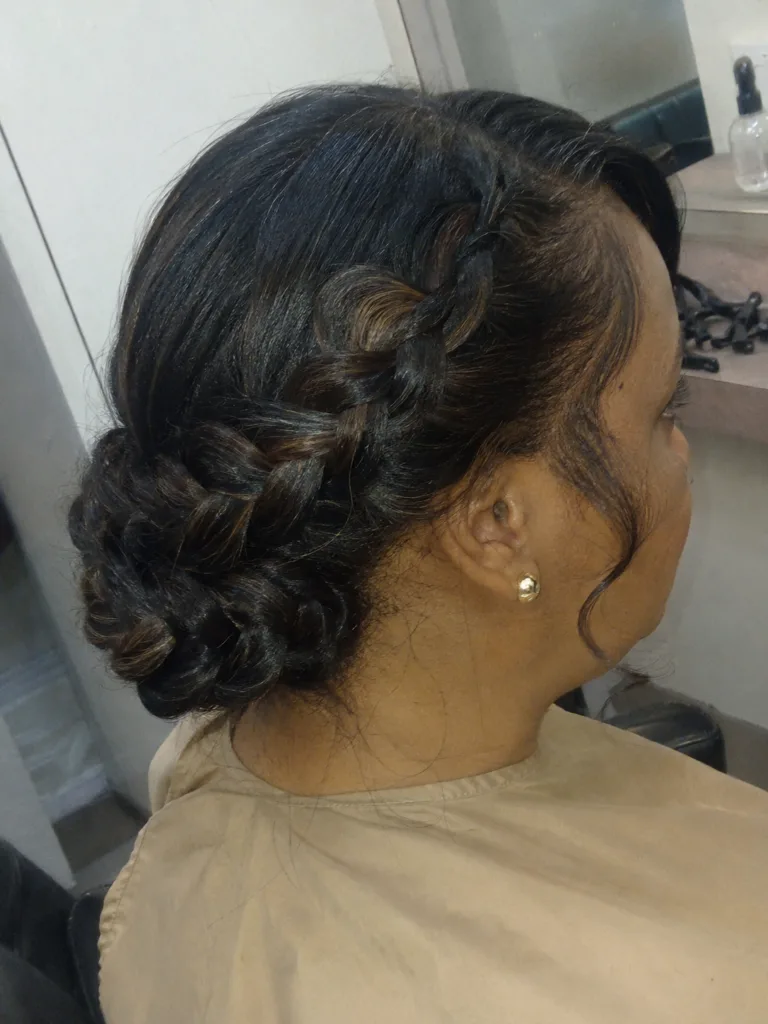
Side Braid Into a Low Bun
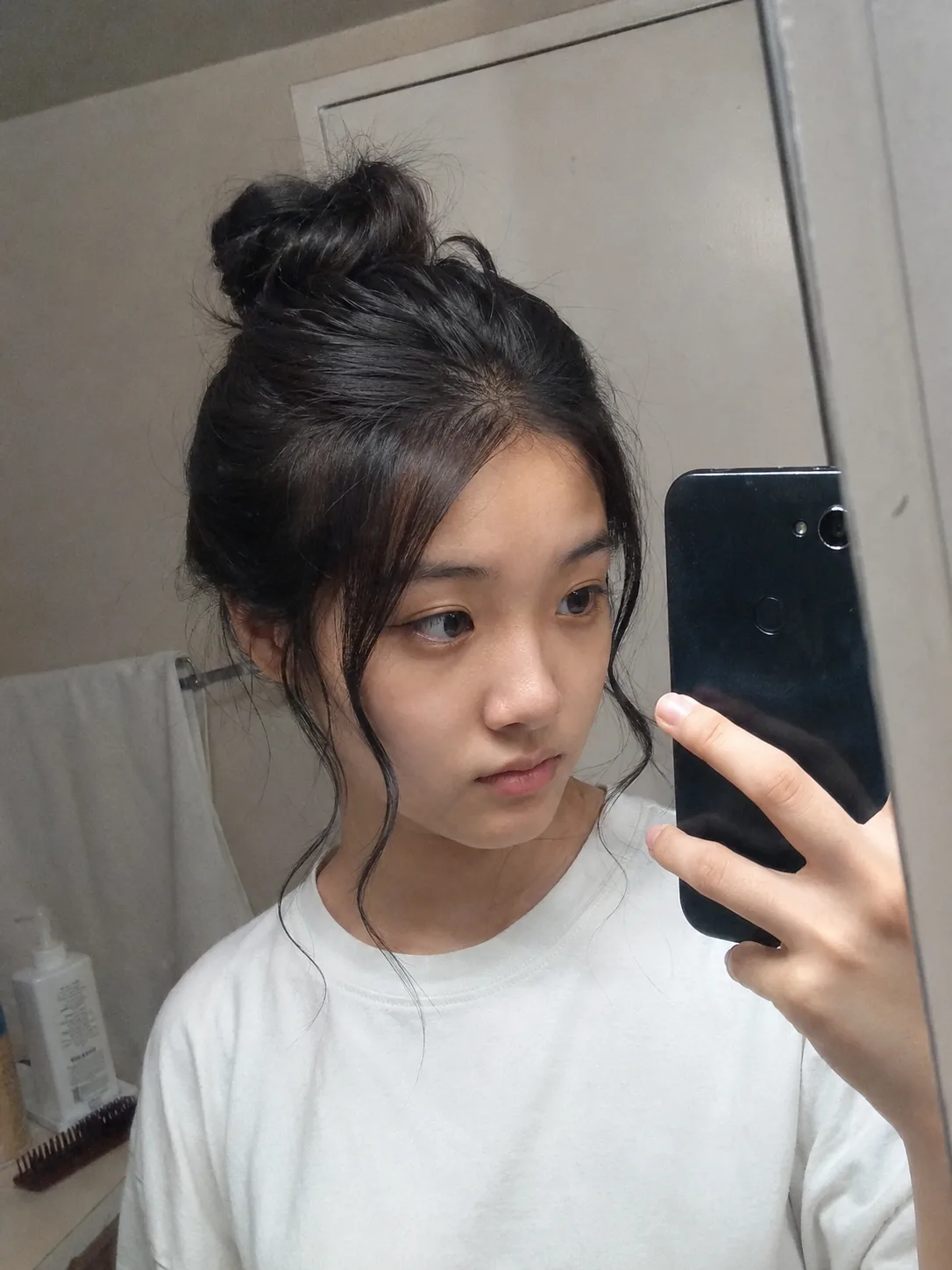
A braid beginning near one temple can travel diagonally into a low bun, giving the style an obvious direction rather than placing all the detail at the back.
That diagonal construction is useful on medium hair because the braid doesn’t need to continue all the way through the length. It becomes part of the updo instead.
The style also gives shorter front pieces somewhere purposeful to go. They can join the braid gradually instead of being swept straight backward.
Keep the bun proportional to the available hair. A compact bun paired with a clear braid usually looks more convincing than stretching the bun excessively for size.
Bubble Ponytail
A bubble ponytail creates repeated rounded sections down the tail using separate elastics. Medium hair produces fewer bubbles than very long hair, but the shorter version can look graphic and modern.
A mid-height or lower anchor generally preserves more visible tail length. Placing the ponytail extremely high uses up some of that length before the bubbles even begin.
This style is a better match for someone who prefers clean structure over loose romantic curls.
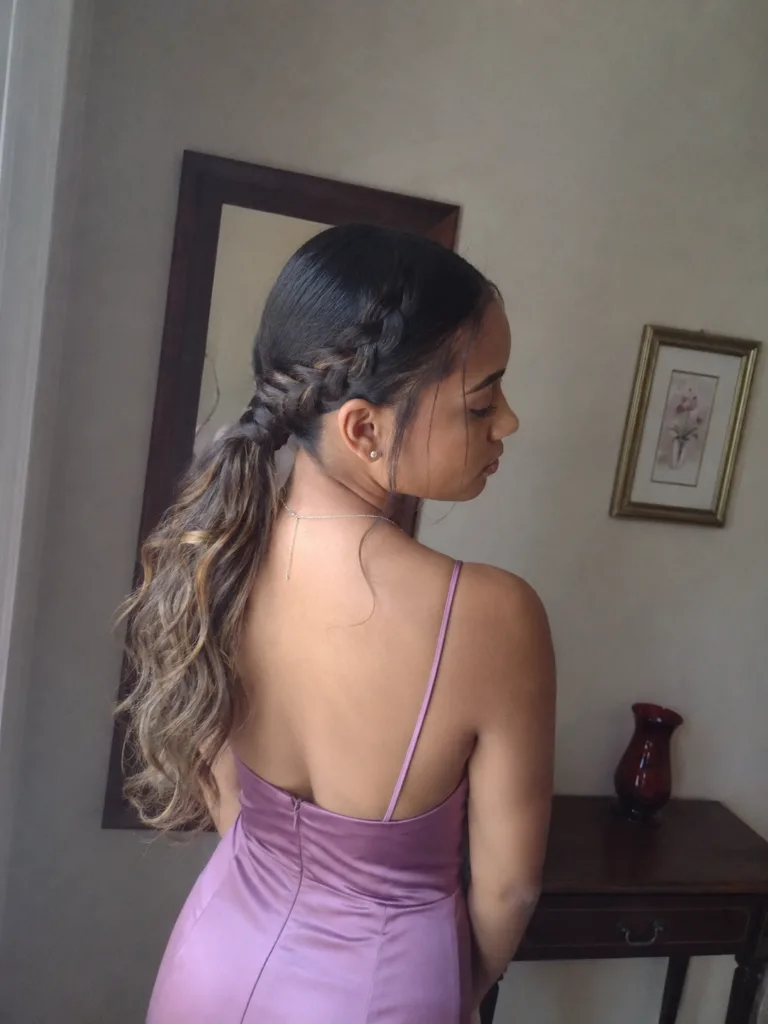
Braided Low Ponytail
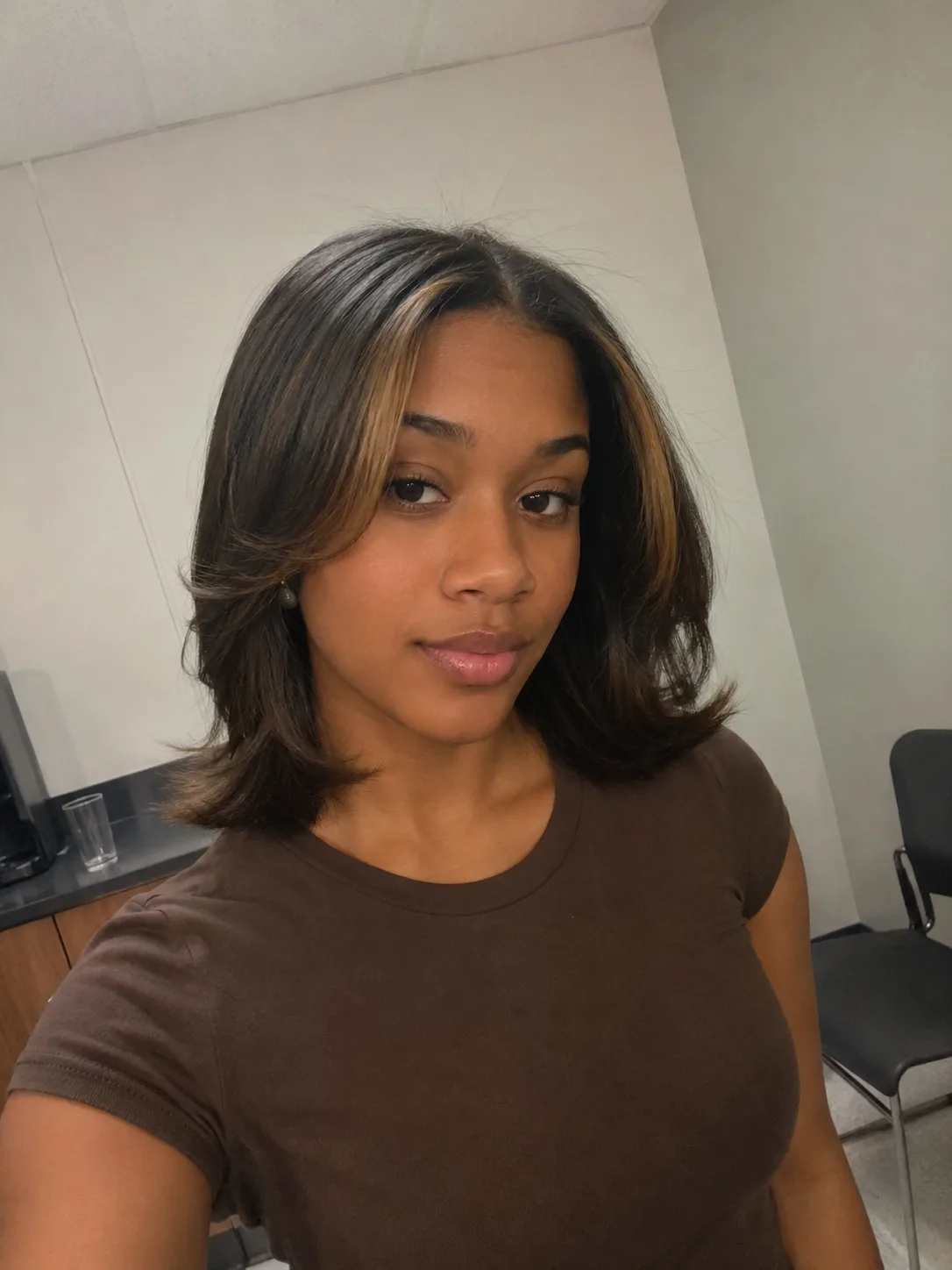
Start with a low ponytail and braid the free length to create a style that feels finished without requiring a full updo. Because the anchor sits near the nape, medium hair keeps more usable length in the braid.
This works especially well when you expect to dance or move around a lot. A contained braid has less loose hair swinging across the shoulders than a curled ponytail.
Curly High Ponytail
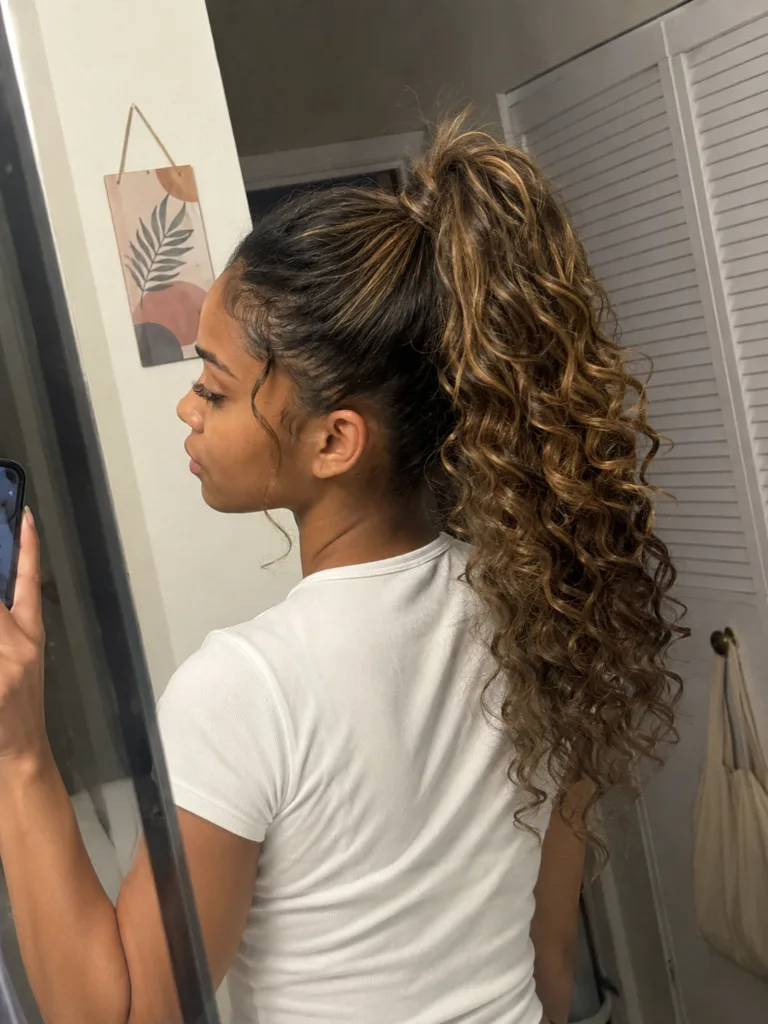
A high ponytail can make medium hair appear shorter, but that can be part of its appeal. Curling the ponytail creates volume close to the crown, giving the style more lift than length.
The base deserves careful planning. A very high anchor asks shorter nape sections to travel farther upward, and some layered cuts simply won’t reach cleanly without excessive pinning.
A slightly lower high ponytail is often the better compromise. You still get the lifted effect while keeping more of the haircut inside the style.
Leave the tail with enough movement to feel soft rather than building it into a rigid cluster of curls.
Choosing the Right Prom Style for Your Haircut
The haircut underneath the style affects the result more than many reference photos suggest. Medium hair can mean a blunt shoulder-length cut, a heavily layered lob, a curly cut with shrinkage, or hair that reaches the collarbone when straight. Those shapes won’t behave identically.
Fine hair refers to strand diameter, while low density means there are fewer strands overall. They aren’t interchangeable. Someone with fine but dense hair can still create a substantial-looking updo; someone with lower density may prefer a structure that keeps the perimeter visually strong instead of separating the hair into many tiny sections.
Layers deserve their own consideration. Short pieces around the crown can create useful volume in a loose style yet become difficult to secure inside a sleek bun. Bringing a clear photo of your haircut as it currently sits is more useful than relying only on a reference image showing much longer hair.
What Prom Photos Don’t Show
A front-facing photograph can make almost any hairstyle look effortless. Prom involves considerably more movement.
Loose curls may rest on beading, sequins, or rough fabric and gradually lose their arrangement. A low bun can meet a high dress collar. Large hair accessories may feel fine standing up but press against a car seat or headrest. Face-framing pieces can also move differently once you’re dancing rather than standing still for a photograph.
Think about the whole outfit before choosing the hairstyle. A dramatic open back often benefits from an updo. A strapless or minimal neckline leaves more space for down styles. Large earrings tend to show better when at least one side of the hair is tucked or pinned away.
Accessories should work with the structure instead of being added at the end wherever there happens to be room. Decorative pins can sit along a twist or braid. A comb needs a stable section of hair to grip. A headband changes volume around the crown and temples, so it should be tested with the finished shape.
Prom Hair Preparation and Maintenance
A formal hairstyle needs to suit your actual hair condition and styling state. Previously lightened, relaxed, heavily heat-styled, or otherwise processed hair may respond differently to tension and heat than untreated hair. More manipulation isn’t automatically better simply because the occasion is formal.
For curls and coils, decide early whether you want to wear the hair natural, stretched, or another styling state. That choice changes visible length and the construction of the style. Curly fringe and face-framing pieces can remain curly; straightening them isn’t required for a formal finish.
Before prom, test practical details that are difficult to judge from a mirror:
Sit against a chair with the hairstyle in place.
Turn your head in both directions.
Check whether earrings catch in loose sections.
Make sure pins don’t press into the scalp.
Look at the style from the side and back.
Confirm that shorter pieces stay secure without being pulled painfully tight.
A small touch-up kit can focus on the construction you actually chose. Bobby pins help with an updo, while a spare elastic makes more sense for a ponytail. Trying to carry a solution for every possible problem usually adds clutter without making the hairstyle more reliable.
Pain, persistent irritation, sores, or a concerning change in density shouldn’t be treated as a normal price for a secure formal style. Hair can be firmly arranged without relying on excessive pulling.
A Practical Prom Hair Consultation Checklist
Bring reference images that show more than one angle. The back matters for updos, while side views reveal crown height and how much hair sits around the face.
Then make the decisions that actually determine whether the reference can translate to your hair:
Decide whether you want your neckline exposed or covered.
Identify the styling state you’ll wear on prom night.
Note any short layers, fringe, or face-framing pieces you want to keep visible.
Discuss whether your own length can create the size shown in the reference.
Place any hair accessory while the shape is being planned.
Check comfort while sitting and moving, not only while standing still.
Agree on which pieces should remain loose instead of forcing every strand into the structure.
A hairstyle that works with your existing length usually looks more convincing than one designed around pretending medium hair is waist length.
Related Hairstyles to Explore
- Easy prom hairstyles to do yourself
- Hairstyles for prom
- Prom hairstyles for long hair
- Medium length layered haircuts
FAQs
Can medium-length hair be put into a full prom updo?
Yes. Low buns, French twists, rolled updos, and sectioned chignons are particularly suitable because the hair doesn’t have to travel as far as it would for a very high style. Layering determines how much pinning is needed.
What prom hairstyle works well for naturally curly medium hair?
A curly half-up style is one of the most practical starting points because it preserves the natural curl pattern while clearing hair away from the face. Textured low updos can also work well. Judge the length in the curly state you actually plan to wear because shrinkage changes where the hair sits.
Do I need extensions for a prom hairstyle?
No. Medium hair can create waves, half-up styles, French twists, low buns, braided details, and ponytails without added hair. Extensions are mainly relevant when the chosen reference depends on substantially greater length or volume. Added hair also changes weight and attachment requirements.
How can I make a medium-length prom hairstyle feel more secure?
Choose a construction that works with your haircut instead of pulling every section toward an anchor it can’t comfortably reach. Secure internal sections with pins or an appropriate elastic, test the style while turning and sitting, and keep a few useful touch-up items available during the event.
Hair Texture & Upkeep Style Matcher
Select your natural hair texture and daily maintenance window to get an instant styling formula and heat safety cap.
Heat Cap: 320°F (160°C)
A versatile three-strand braid beginning at the parietal ridge, securing the top half while allowing natural wave texture to flow freely around the shoulders.
Conclusion
The strongest prom hairstyles for medium-length hair use the length you already have as an advantage. Half-up curls give movement without constant face-framing pieces, low updos make shorter layers easier to secure, and waves let a good haircut remain part of the finished look.
Choose the construction before choosing the decorative details. Once you know whether the hair should stay down, sit half-up, or come fully off the neckline, the right prom hairstyle becomes much easier to identify.
Editorial Standards & Hair Health Guidance
Every style featured on Tress Atlas is curated with a focus on real-world wearability, scalp tension management, and cuticle preservation. When trying protective styles or tight updos, ensure perimeter hairline sections remain tension-free to avoid traction stress on delicate follicles. For heat styling, cap tools below 350°F (180°C) to prevent thermal keratin denaturation.
Scientific Sourcing: Practices aligned with the American Academy of Dermatology (AAD) on traction alopecia risk reduction and cosmetic trichology research on hair tensile strength.