Wedding Guest Hairstyles for Long Hair: Styling Guide & Cuts That Look Good Beyond the Photos
Long hair gives you plenty of options for a wedding, but the prettiest reference photo isn’t always the easiest style to wear through a ceremony, dinner, dancing, outdoor weather, and the trip home.
The main decision is how much of your length you actually want loose. Wearing it down shows off movement and color beautifully, while half-up styles keep hair away from your face without hiding the length. Ponytails offer a cleaner outline, and full updos are generally more practical when heat, wind, an elaborate neckline, or hours of dancing are part of the event.
Your normal styling state matters too. Natural curls, stretched coils, straightened hair, locs, twists, and naturally straight or wavy hair won’t behave identically simply because the finished inspiration photo has the same outline. Shrinkage, density, strand size, humidity response, and the weight of very long hair all affect the final shape.
This guide focuses on wedding guest hairstyles for long hair that are genuinely different in construction and daily behavior, so you can choose according to the event instead of picking by appearance alone.
Hair-Down and Half-Up Styles That Keep the Length Visible
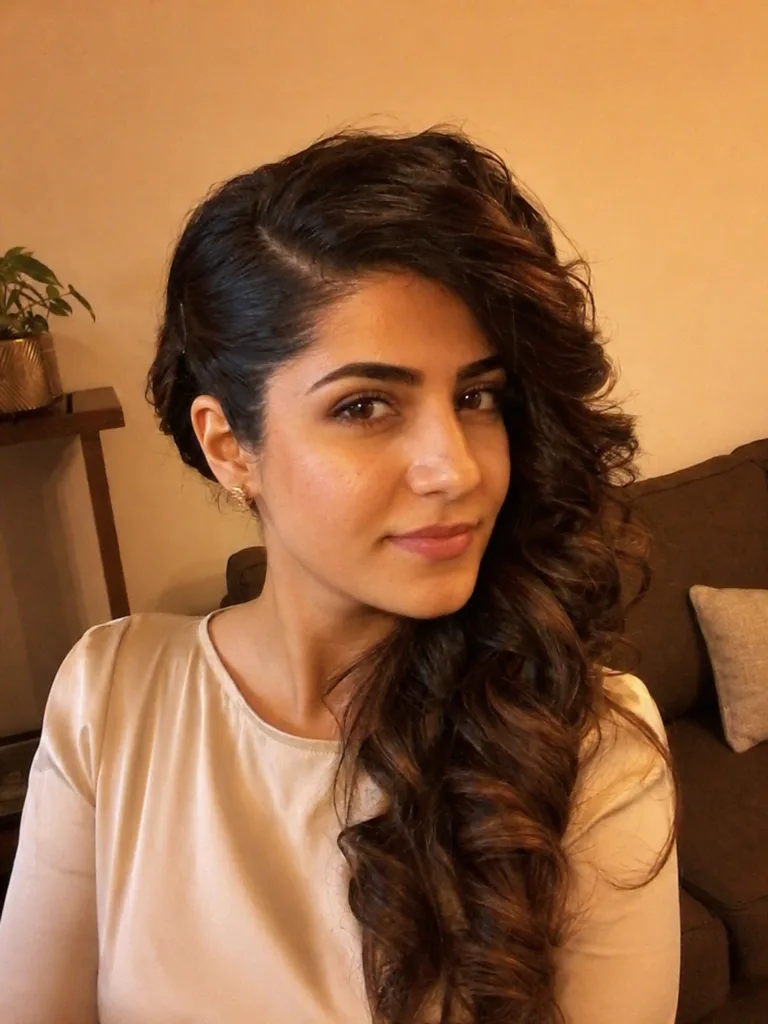
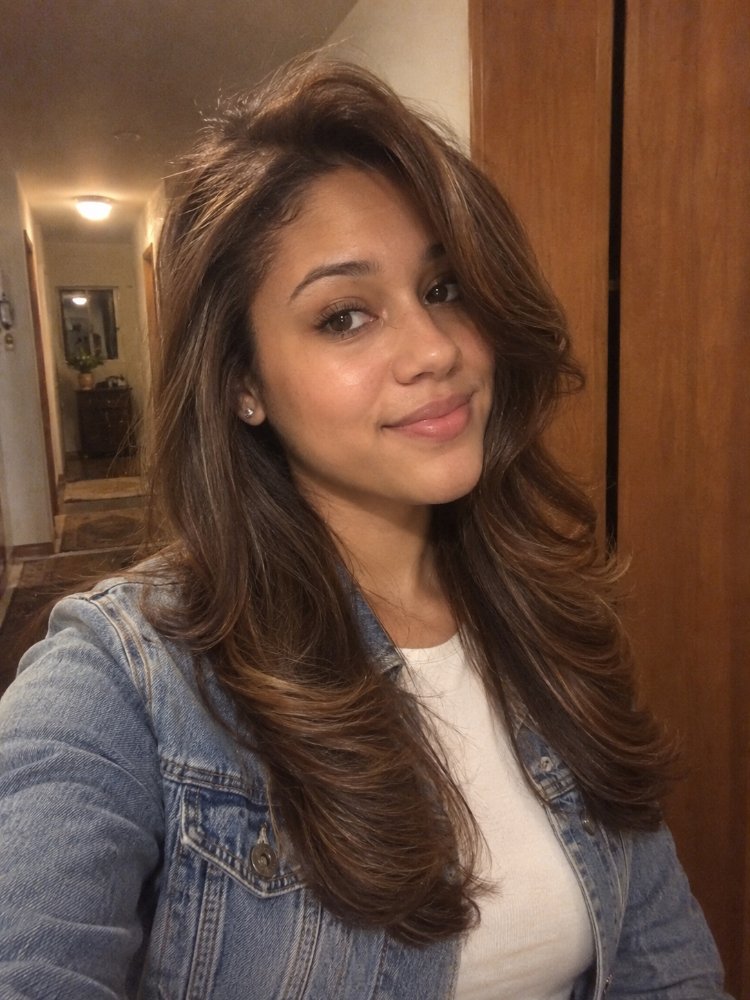
Soft Brushed Waves
Soft waves are one of the easiest ways to make long hair feel occasion-ready without changing its basic character. The shape works especially well when your haircut already has enough layering to let the lengths move instead of forming one heavy curtain.
The hidden issue is durability. Long hair can pull curl downward under its own weight, and loose waves are exposed to collars, shoulder straps, humidity, and repeated touching. A slightly more defined starting wave often ages better through an event than an ultra-loose finish that is almost straight before you leave home.
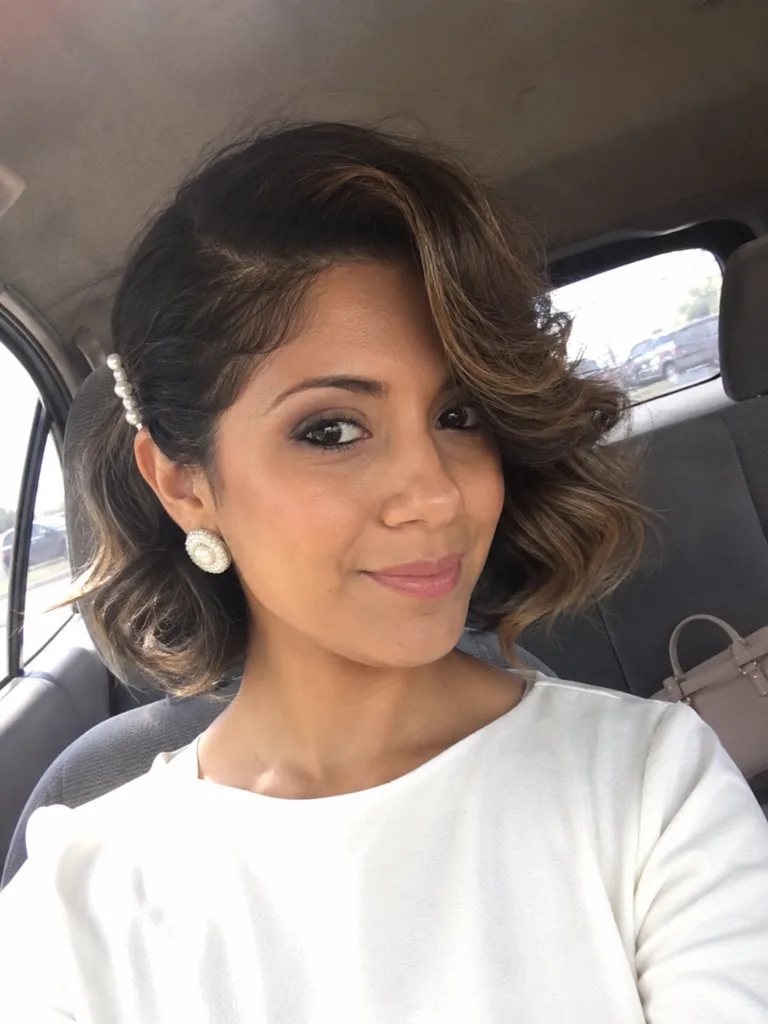
Structured Old Hollywood S-Waves
Choose S-waves when you want the hair itself to become a major part of the outfit. Compared with casual brushed waves, the sections sit in a more deliberate pattern and usually read as dressier beside simple gowns, tailored jumpsuits, and clean necklines.
Long, dense hair creates a lot of visual mass in this shape, so putting most of the length over one shoulder can keep the result from overwhelming detailed clothing.
Defined Natural Curls With One Side Pinned
Natural curls don’t need to be stretched or straightened to look formal. Defining your usual curl or coil pattern and securing one side changes the outline while leaving the bulk of the texture visible.
This is particularly useful when full loose hair tends to move forward around your face. The pinned side exposes an earring, neckline, or cheekbone without requiring a tightly controlled updo.
Shrinkage should be part of the planning. A style photographed on stretched curls may sit much lower than the same idea worn in a fully shrunken state. Build the look around the length and volume your hair actually has once dry.
Sleek Straight Lengths With the Front Tucked Back
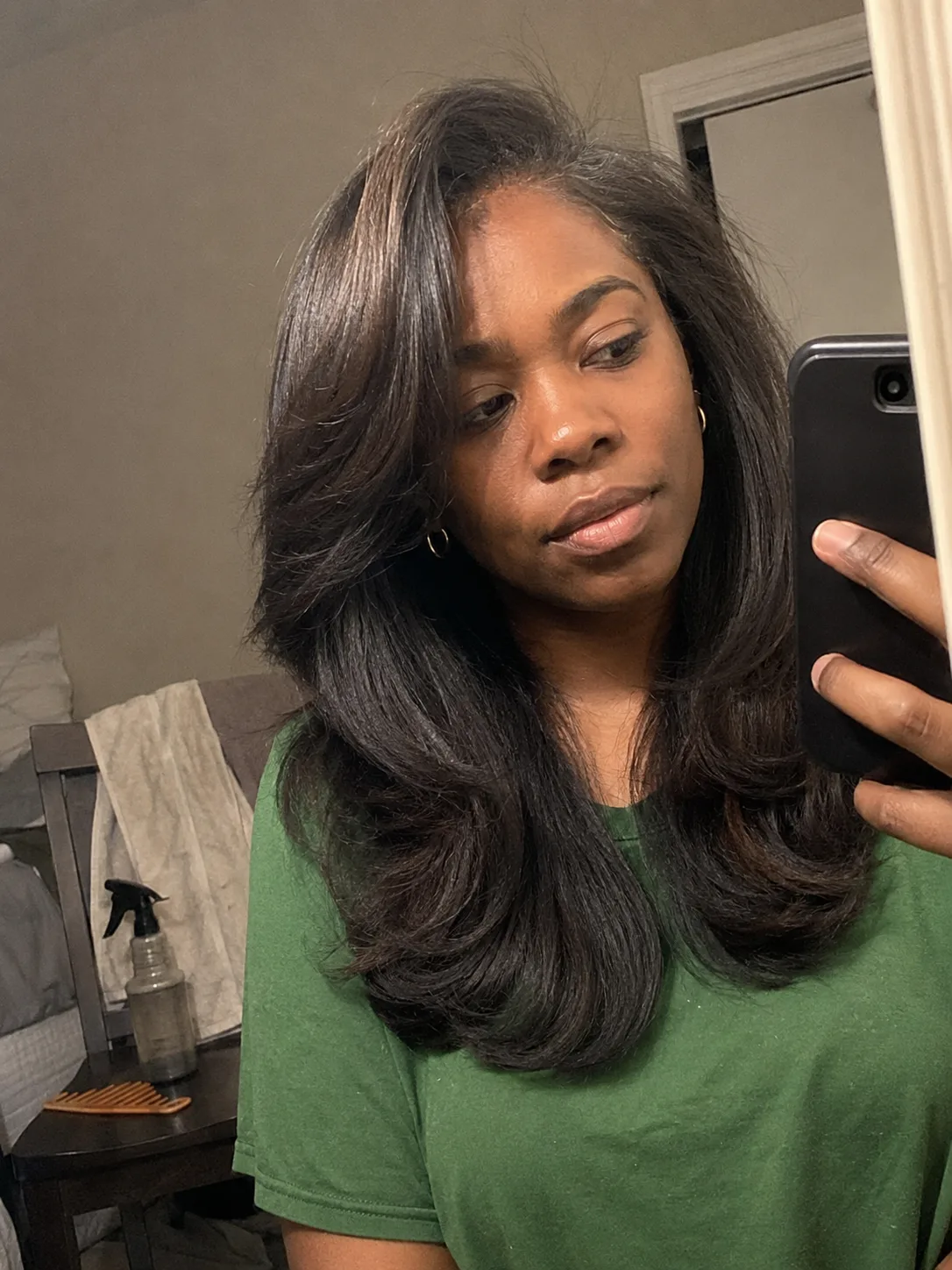
Long straight hair can look striking at a formal event when the haircut, condition of the ends, and surface finish are doing most of the work. Tucking or securing the front sections behind the ears gives it a cleaner outline than simply leaving everything loose.
This option is more exposed to movement than an updo. Hair slides over dress straps, catches beneath jackets, and returns to the face during dancing, so it suits guests who genuinely enjoy wearing their length down.
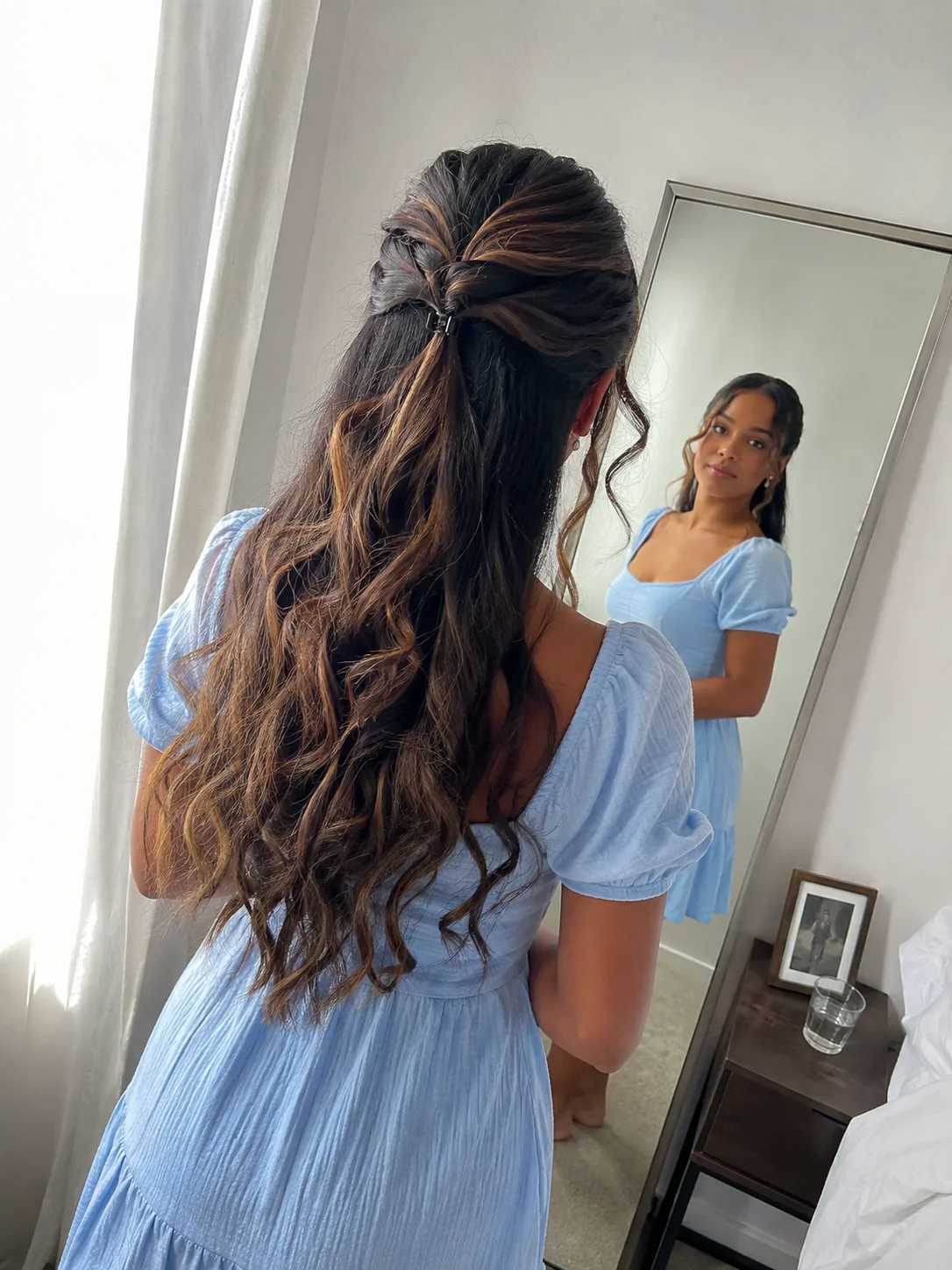
Half-Up Twisted Crown
Two front or side sections twisted toward the back create a soft crown without the visual complexity of braiding. It’s an excellent middle ground for long hair that feels too heavy completely loose but too severe in a full updo.
The twists also give you useful control over where the volume sits. Keep some lift at the crown for a softer profile, or smooth the top more closely when the dress already has dramatic sleeves, beading, or shoulder detail.
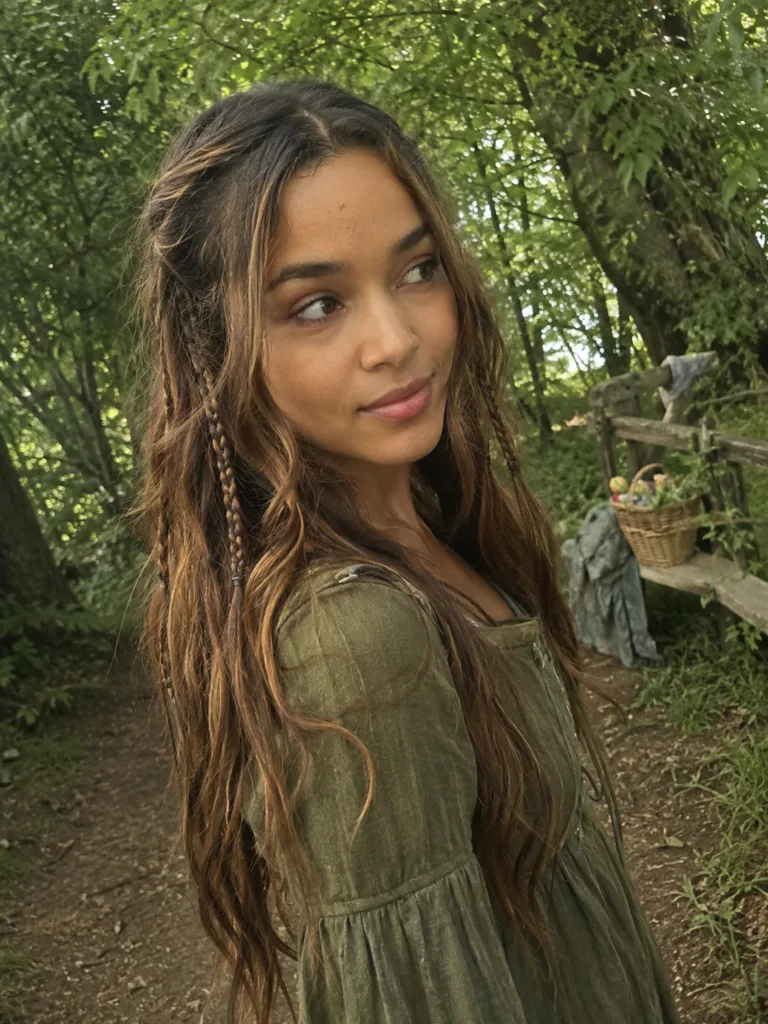
Half-Up Braided Crown
A braided half-up style gives the crown more structure than simple twists while leaving the lower lengths free. The braid can follow the side of the head and meet at the back, creating a clear dividing line between the secured crown and loose hair below.
This construction works especially well on hair with natural texture because the lower section doesn’t have to be smoothed into a different state. Defined curls, stretched coils, waves, or softly curled straight hair can all sit beneath the braid.
Pay attention to the convergence point at the back. A bulky fastening can interrupt the shape and become uncomfortable against a chair. Pins or a small elastic concealed beneath the braid usually create a cleaner base than a large visible clip.
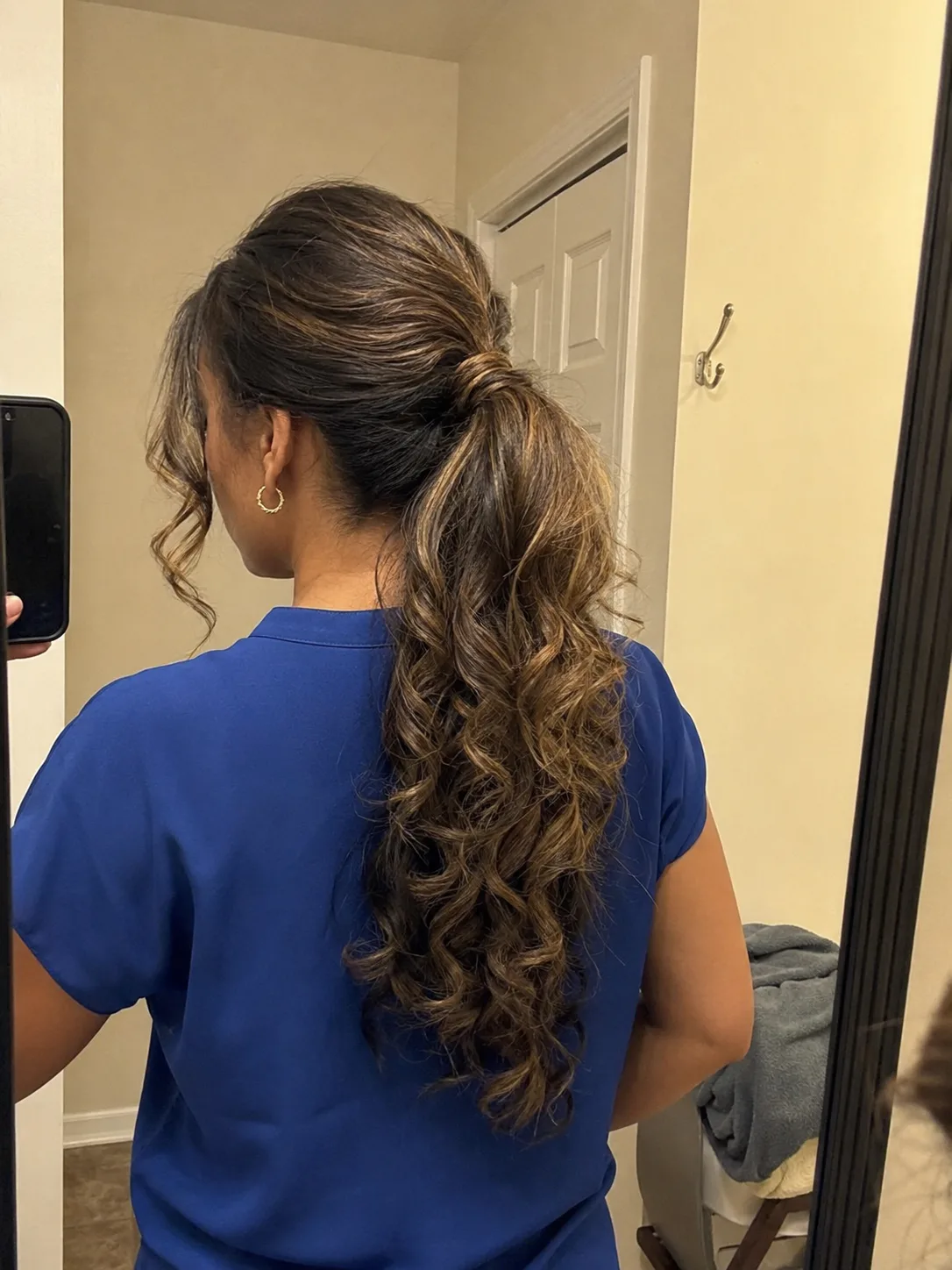
Half-Up High Ponytail
A half-up ponytail puts more lift at the crown than a twist or braid and gives long hair a youthful, energetic shape. The loose lower section keeps the overall length visible while the upper pony adds height and swing.
This is a stronger choice for a reception-heavy wedding than a very delicate half-up arrangement because the construction is simple. The anchor still needs to feel comfortable; pulling every short temple hair into a high elastic usually adds little visually.
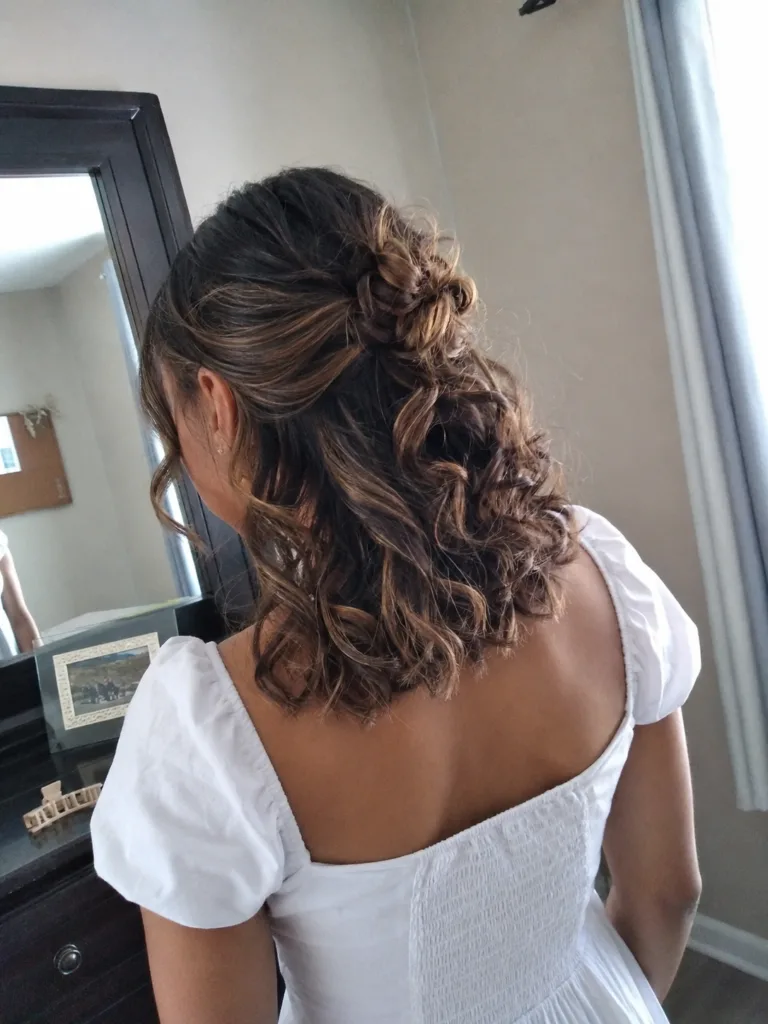
Half-Up Top Knot
A small bun made from the upper section creates a noticeably different profile from a half-up ponytail. You get height at the crown, an exposed face, and loose lengths underneath, but there’s less hair swinging from the upper anchor.
It has a more relaxed character than a classic chignon, which makes it particularly useful for garden weddings, contemporary venues, and dress codes that sit between casual and formal.
Ponytails That Feel Formal Enough for a Wedding
Sleek Low Ponytail
A low ponytail is one of the most practical wedding guest hairstyles for very long hair. It keeps the length controlled without hiding it and sits comfortably below the back of the head, where it’s less likely to compete with statement earrings or an embellished neckline.
Wrap a small section of hair around the elastic if you want the base to disappear. The tail can stay straight, softly waved, curled, or naturally textured.
High Textured Ponytail
The appeal of a high ponytail is movement. Curls, coils, waves, or set texture create volume through the tail while the lifted base opens the face and neck.
Hair length changes the mechanics, though. A very long, dense ponytail creates considerably more movement at a high anchor than a shoulder-length one. A slightly lower placement can preserve the lifted effect while feeling more stable.
You also don’t need every edge smoothed flat for the style to read as finished. Matching the crown to the character of the tail often looks more coherent than forcing naturally textured hair into two completely different finishes.
Bubble Ponytail
A bubble ponytail breaks the length into rounded sections using elastics placed down the tail. It creates a graphic shape that works particularly well with simple dresses because the hairstyle already provides plenty of visual detail.
It’s less dependent on curl retention than many wedding styles. The main work is creating even fullness from one section to the next, which makes it useful for long hair that tends to drop curls quickly.
Braided Ponytail
Instead of leaving the ponytail loose, braid the tail after establishing the anchor. This reduces loose movement and makes very long hair easier to manage around chairs, straps, food, and crowded dance floors.
A clean three-strand braid gives a restrained finish, while natural texture can be allowed to remain visible through the crown and braid. The style also photographs clearly from the back, which matters with open-back dresses.
Buns and Updos for a More Secure Finish
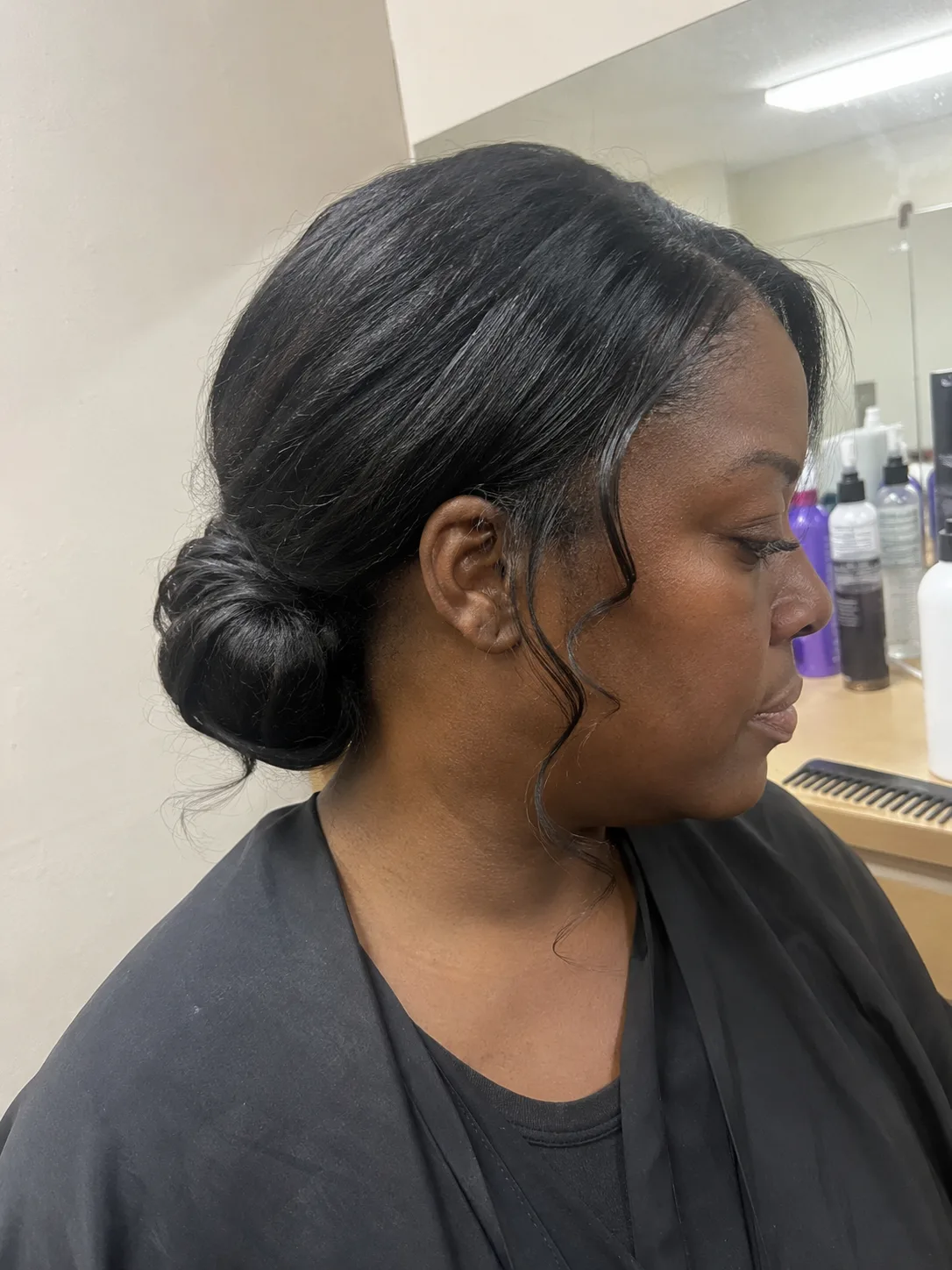
Low Chignon
A low chignon earns its place at formal weddings because it works with the natural weight of long hair instead of fighting it. The hair is gathered near the nape and folded or wrapped into a compact shape, keeping the neck and shoulders clear.
Placement changes how it interacts with clothing. A very low bun can rub against a stiff collar, while one positioned slightly above the neckline usually has more breathing room.
Long hair also gives you enough material to create a full bun without relying on excessive teasing. The challenge is controlling the ends inside the shape so they don’t gradually escape as you move.
Braided Low Bun
Braiding the ponytail before wrapping it into a bun adds visible structure and helps contain layered or slippery lengths. From the front it can look as restrained as a standard low bun, while the back has far more detail.
This is one of the stronger choices for guests who want an updo that still looks interesting without decorative accessories. The braid itself supplies the texture, so you don’t need to keep adding pins, clips, or ornamentation.
High Knotted Bun
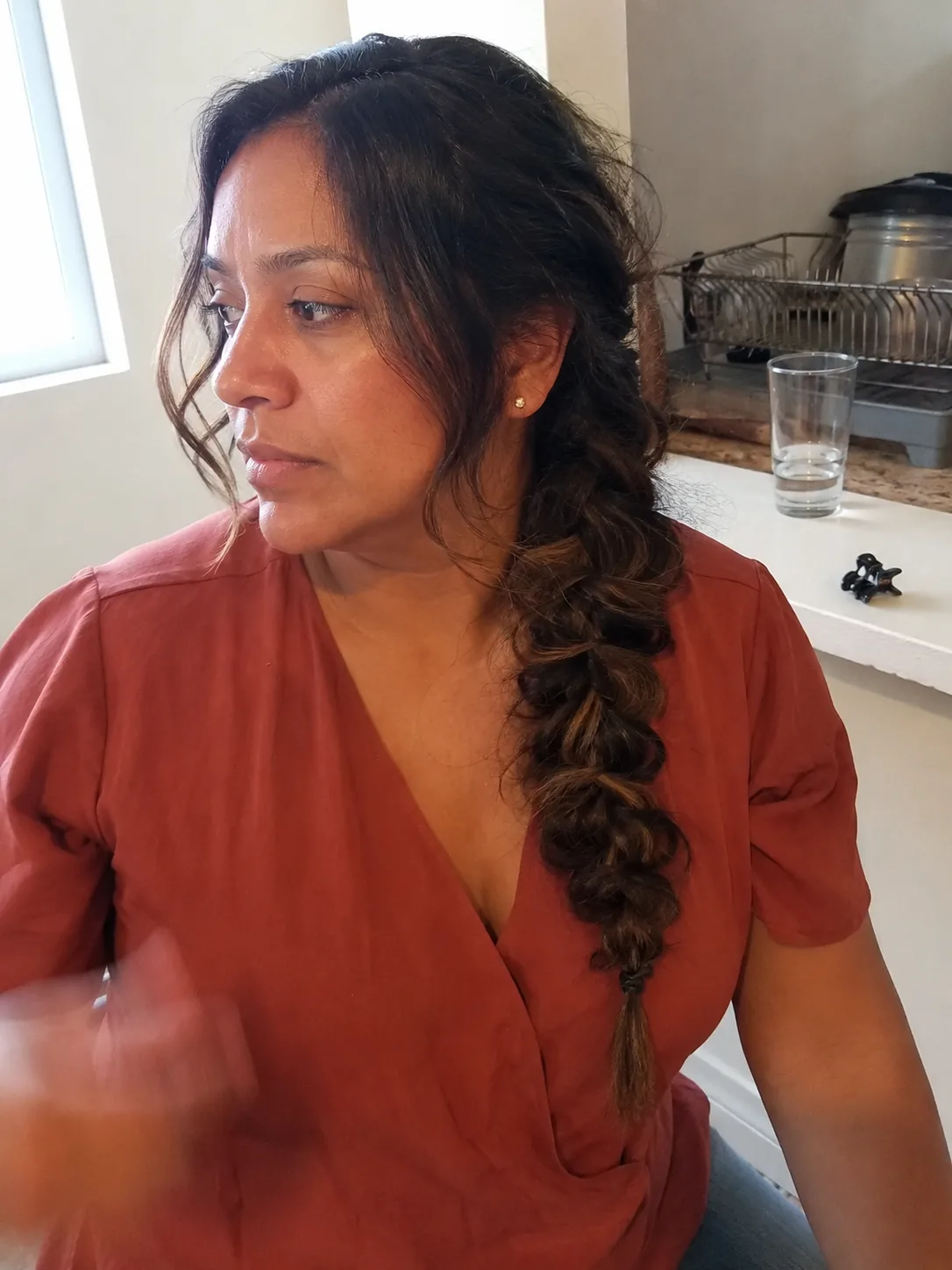
A high bun gives long hair a completely different proportion. It draws the eye upward, exposes the neck, and keeps the back of a dress unobstructed.
It’s particularly effective with high necklines, open backs, or strong shoulder details because there’s no curtain of hair competing with the garment. Very long hair can create a substantial bun naturally; spreading it too widely at the crown may make the style feel heavier than expected.
French Twist
The French twist is a better choice than a round bun when you want a narrow, vertical updo. The lengths are directed upward and folded into themselves, creating a clean column along the back of the head.
That vertical construction works beautifully with long hair, although dense lengths need enough pin support through the folded section. Hairpins should anchor the structure rather than simply sit across the surface.
The finish can be very smooth or slightly relaxed around the front. Keeping a little softness around the face often makes the style easier to pair with modern wedding outfits than an extremely rigid version.
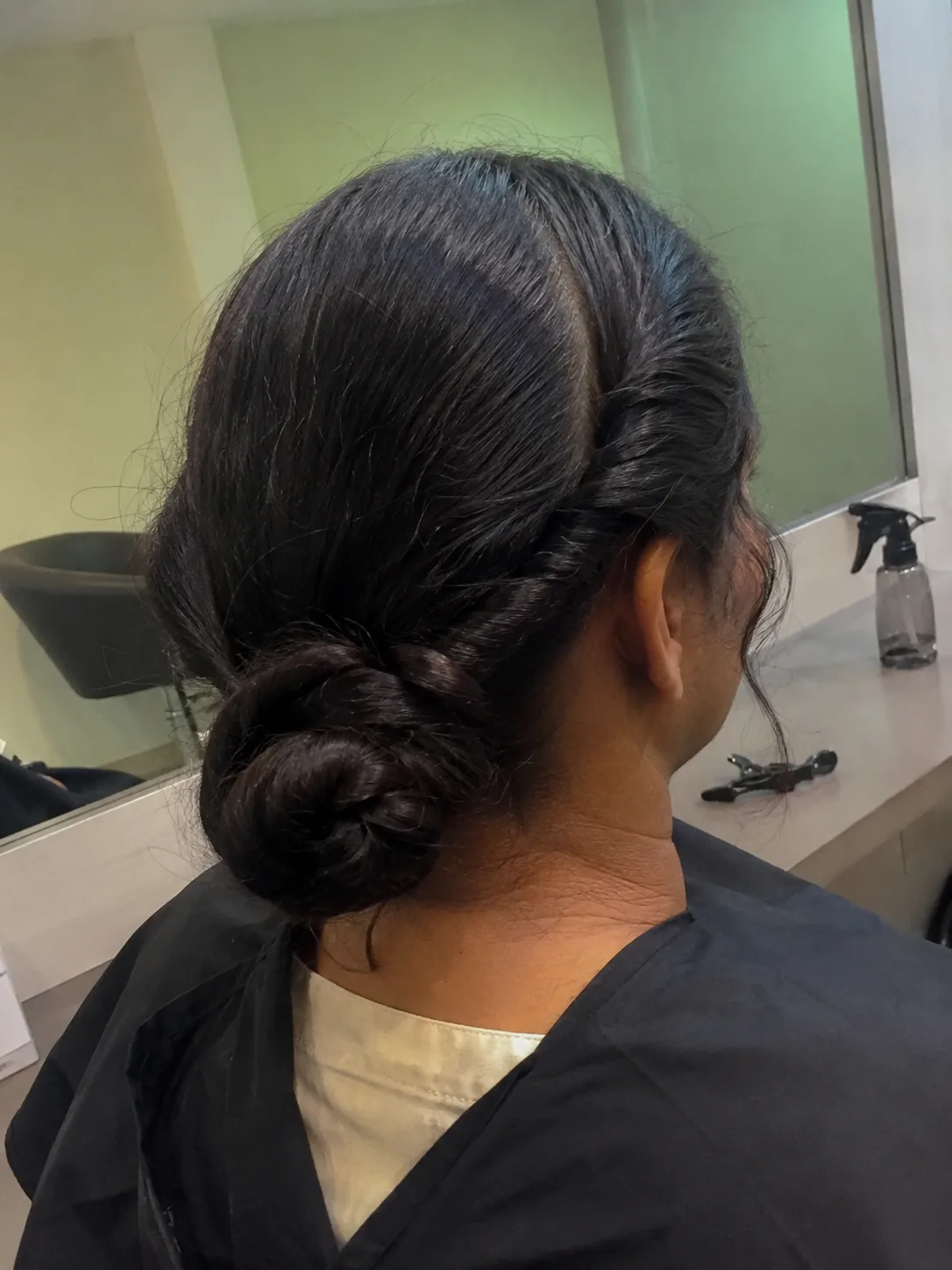
Rope-Twist Updo
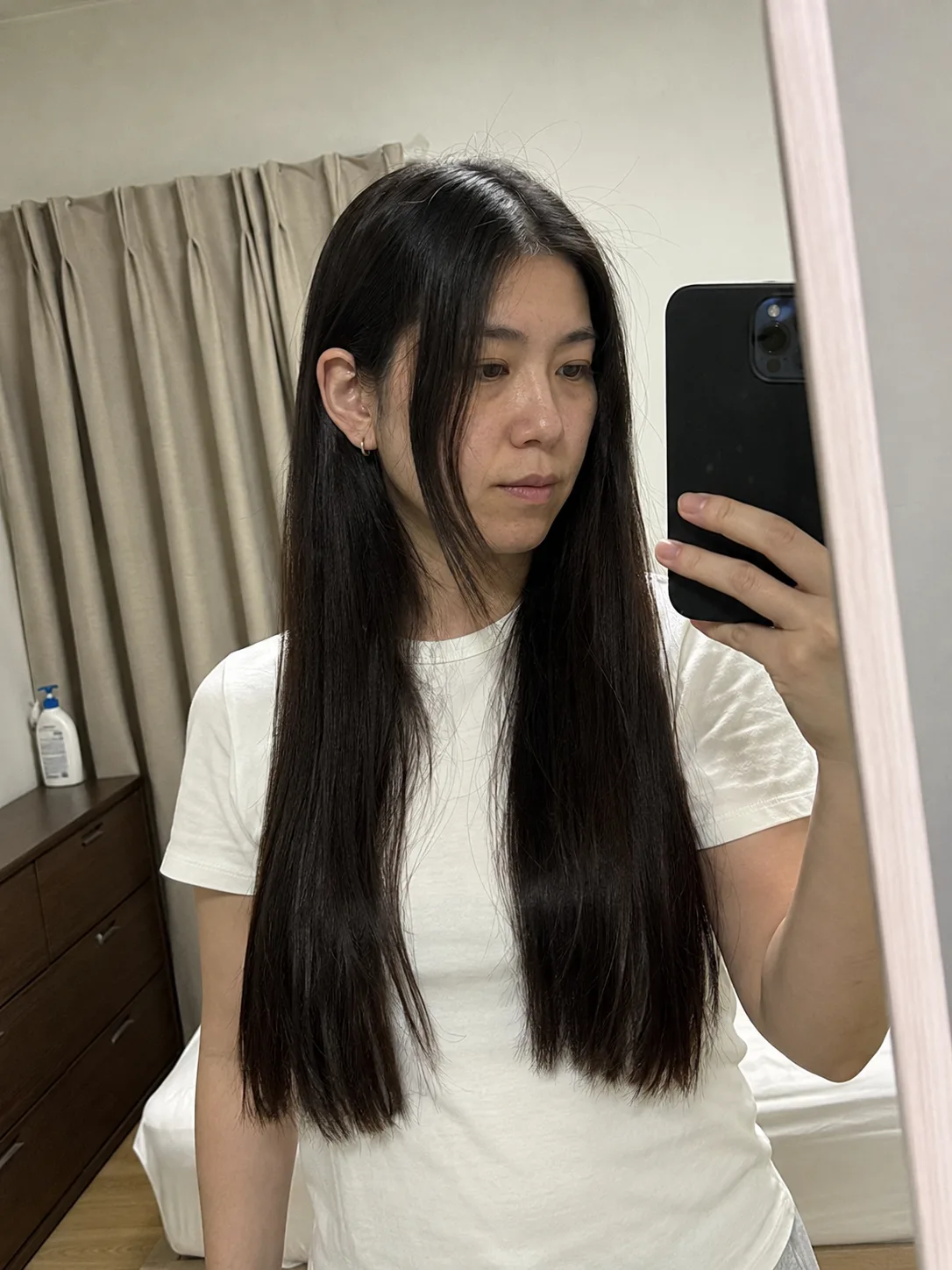
A rope-twist updo divides long hair into sections that are twisted before being pinned into place. Unlike a smooth chignon, the individual twists remain part of the design, giving the back of the style more visible dimension.
This construction is useful for wavy, curly, or stretched textured hair because every section doesn’t need to be ironed perfectly smooth first. The strongest versions let some of the hair’s natural surface remain visible.
Dutch Braid Into a Low Bun
Starting with a Dutch braid and finishing the remaining length in a low bun gives you control from crown to ends. It’s noticeably more secure than leaving the braid hanging down the back, yet more detailed than gathering everything straight into a chignon.
The braid can travel centrally or slightly to one side, but the important feature is how it feeds into the bun. That continuous construction makes the hairstyle look integrated rather than like a braid and bun assembled separately.
Long hair gives the bun plenty of material, so heavy padding usually isn’t necessary for visual impact. Keep the braid comfortably tensioned around the hairline and let shorter perimeter hairs stay out if forcing them into the pattern causes pulling.
Sculpted Twist Bun for Long Locs
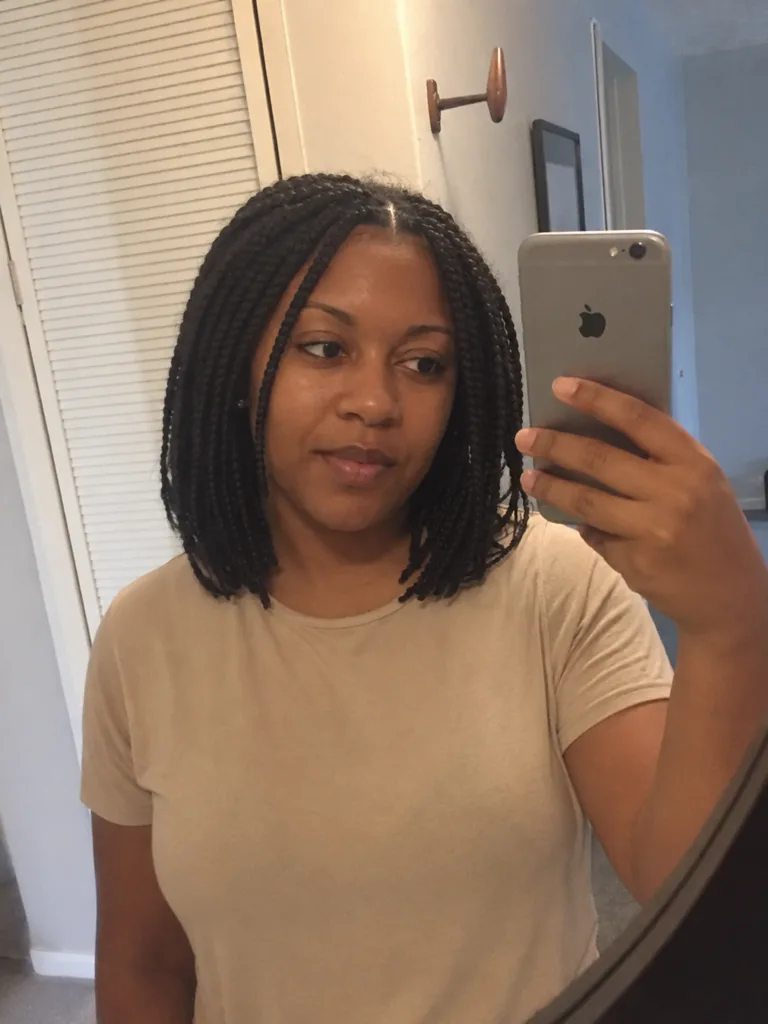
Long locs can be wrapped and folded into a sculpted low or mid-height bun that keeps most of their length off the shoulders. The finished size depends heavily on loc length, diameter, and density, so the same inspiration image can translate into a much larger or smaller shape on different heads.
This style is worth choosing when the event calls for an updo but you still want the character of the locs to remain obvious. Instead of trying to disguise their texture, the wrapped sections become the structure of the bun.
Added height concentrates more weight at the anchor. With long or mature locs, a lower placement is often the more comfortable starting point for hours of wear.
Braided Styles With More Movement
Full Crown Braid
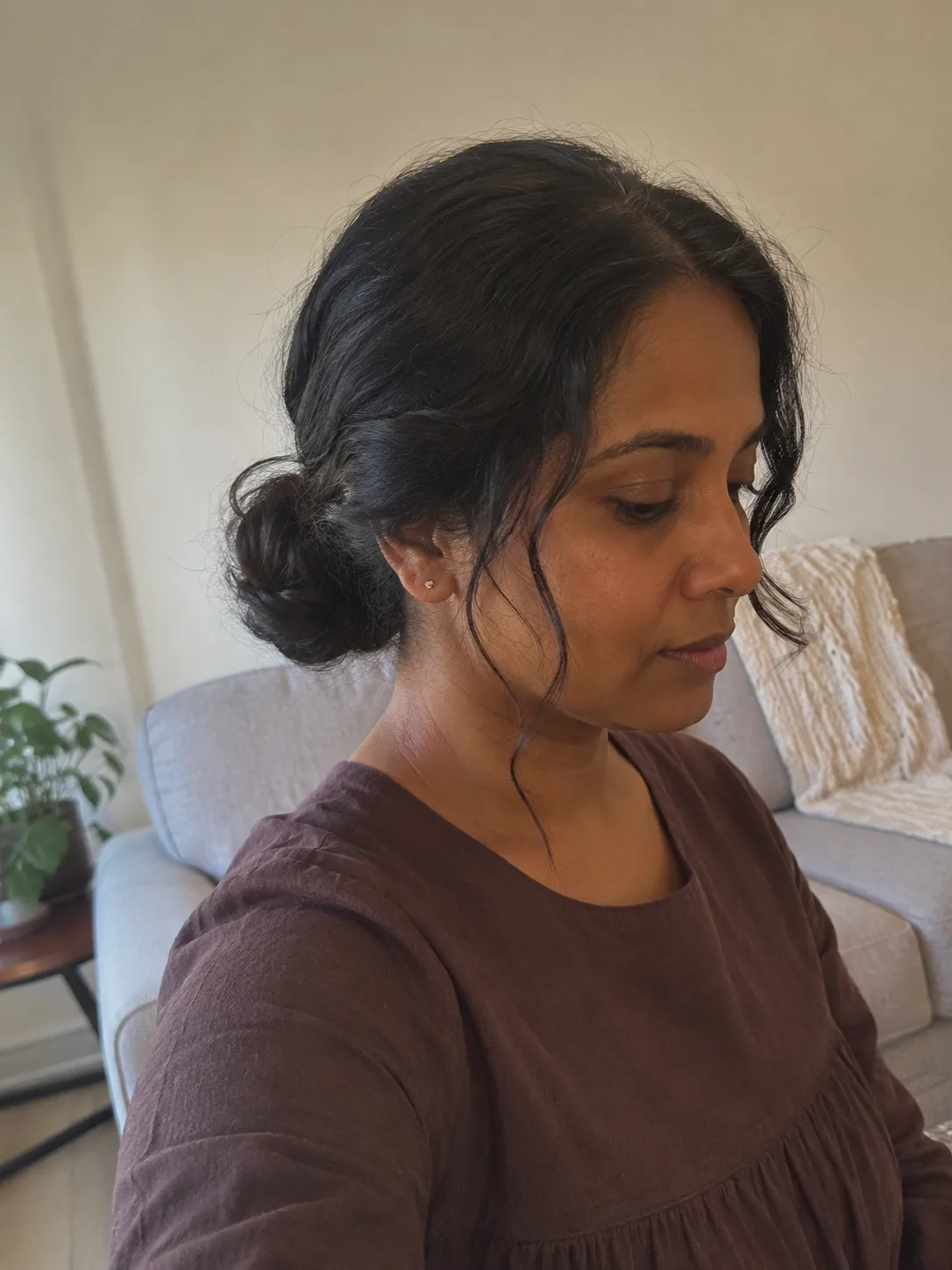
A full crown braid gathers the hair into a braid that wraps around the head, keeping the ends completely contained. That makes it much more functional than a half-up braided crown for outdoor weddings or events where loose hair would constantly move forward.
The style also leaves the neck free without creating a prominent bun at the back, which is useful with high collars or decorative backs.
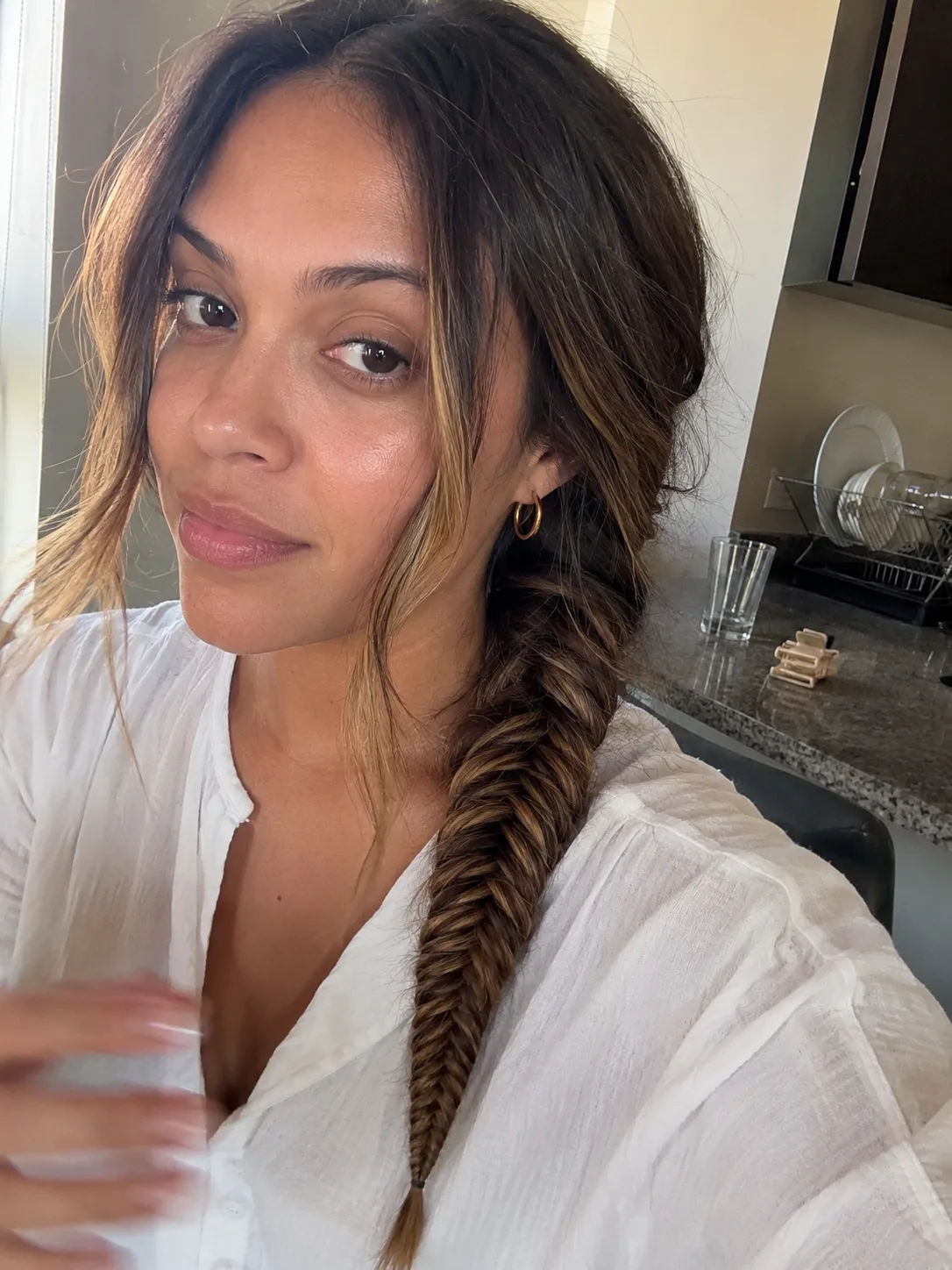
Loose Fishtail Side Braid
A fishtail braid worn over one shoulder keeps the drama of long hair while controlling most of its movement. Its woven pattern looks more intricate than a standard three-strand braid, especially when the sections are gently expanded after braiding.
This is a particularly good match for relaxed garden, beach, barn, or destination-style dress codes where a rigid updo could feel unnecessarily formal.
Mini Twists Swept Into a Half-Up Shape
Long mini twists can be gathered from the temples and crown into a half-up arrangement while the remaining twists stay loose. It’s a useful option for guests who already wear twists and don’t want to undo a complete style merely to create wedding hair.
The secured section can be twisted into a small knot or fastened flat at the back. Because the lower lengths remain free, check how they interact with the dress neckline and any shoulder bag before deciding where the upper section should sit.
Match the Hairstyle to the Dress and the Event
Hair and clothing share the same visual space. A dramatic hairstyle beside an equally elaborate neckline can make both harder to appreciate, while a simple dress can carry much more hair volume without feeling crowded.
Also think about what happens between the mirror and the reception. A low bun may touch the top of a stiff dress collar. A very high updo can press against a car headrest. Long loose curls can become trapped beneath a coat, wrap, or bag strap. None of these issues makes a hairstyle wrong, but they can make an otherwise beautiful choice irritating after several hours.
Accessories need the same practical check. Decorative combs and pins should support the design or sit securely within it rather than forcing a hairstyle to carry unnecessary extra weight. Large accessories positioned exactly where your head touches a chair can become uncomfortable surprisingly quickly.
How to Make Long Wedding Hair Last More Gracefully
Start with the styling state you actually plan to wear. Naturally curly hair should be assessed after its expected shrinkage. Pressed or straightened hair needs a plan for humidity if the event is outdoors. Fine strands and low density are different considerations: fine hair describes strand diameter, while low-density hair means fewer strands overall. One doesn’t automatically tell you how much visible fullness the other will have.
Avoid making the style tighter simply because you want stronger hold. Security comes from sound sectioning, appropriate elastics, and well-placed pins as much as from tension. A hairstyle that immediately causes pain or persistent pulling needs adjusting.
Bring only the small items that can genuinely restore the style: a few compatible pins, a spare elastic for ponytail-based looks, or a small amount of the finishing product already used on your hair. Wedding guest hair rarely needs to be rebuilt halfway through the reception; it usually needs one loose section tucked back into place.
Humidity deserves special attention with long hair because there’s more surface area to respond to moisture. Instead of trying to eliminate every change in texture, choose a style whose appearance can soften slightly without looking unfinished. Braids, twist-based updos, textured ponytails, and natural curls are generally more forgiving in that respect than a perfectly smooth sculpted surface.
A Practical Wedding-Hair Consultation Checklist
Before settling on your hairstyle, compare the inspiration photo with your actual event.
How much of your length do you want visible in photos?
Will your hair be natural, stretched, straightened, curled, braided, twisted, or loc’d?
Does your dress have an open back, high collar, detailed shoulders, or straps that may catch loose hair?
Are you attending an indoor ceremony, outdoor reception, or both?
Do you expect to dance enough that long loose hair will become annoying?
Does the style stay comfortable when you sit against a car seat or chair?
Can the chosen shape accommodate your real density, shrinkage, and haircut?
Are pins and elastics securing the structure without excessive pulling?
Does the hairstyle still look good after a little movement and softness appear?
A reference image is most useful when you look beyond the curl pattern or bun shape and study where the hair is anchored, how much length remains loose, and how the hairstyle interacts with clothing.
Related Hairstyles to Explore
- Hairstyles for long hair wedding guest
- Hairstyles for wedding guest
- Prom hairstyles for long hair
- Beach hairstyles for long hair
FAQs
Should wedding guests wear their hair up or down?
Either can work, but your event conditions should make the decision easier. Hair down emphasizes length and movement, while an updo keeps the neck, shoulders, and dress details more visible. Outdoor weather and a reception with plenty of dancing generally make contained styles more convenient.
What wedding guest hairstyle works well for naturally curly or coily long hair?
Defined curls with one side secured, half-up styles, textured ponytails, twist-based updos, and crown braids can all work without requiring the hair to be straightened. Plan the final proportions around your normal shrinkage and volume instead of copying the length shown on a differently styled texture.
Can I use extensions for a wedding guest hairstyle?
Yes, when added length or fullness serves the shape you want. Remember that extensions also change weight and anchor demands, particularly in high ponytails and buns. You don’t need extra hair simply because the inspiration photo looks full; long natural hair may already provide enough material.
What is an easy long hairstyle to fix during the reception?
A low ponytail, braided ponytail, or simple half-up style is easier to adjust than a highly sculpted updo because the construction remains visible and accessible. A spare elastic or a few bobby pins can deal with a loosened section without dismantling the entire hairstyle.
Hair Texture & Upkeep Style Matcher
Select your natural hair texture and daily maintenance window to get an instant styling formula and heat safety cap.
Heat Cap: 320°F (160°C)
A versatile three-strand braid beginning at the parietal ridge, securing the top half while allowing natural wave texture to flow freely around the shoulders.
Conclusion
The strongest wedding guest hairstyle is the one whose construction suits the event as well as the outfit. Long loose waves make sense when showing off your length is part of the look. Half-up styles provide useful control without hiding it, while low buns, braids, French twists, and contained ponytails are easier choices when movement and clothing details matter more.
Before committing, look at where the hair will sit against your shoulders, dress, chair, and accessories. That practical check usually tells you more than the front view of an inspiration photo.
Editorial Standards & Hair Health Guidance
Every style featured on Tress Atlas is curated with a focus on real-world wearability, scalp tension management, and cuticle preservation. When trying protective styles or tight updos, ensure perimeter hairline sections remain tension-free to avoid traction stress on delicate follicles. For heat styling, cap tools below 350°F (180°C) to prevent thermal keratin denaturation.
Scientific Sourcing: Practices aligned with the American Academy of Dermatology (AAD) on traction alopecia risk reduction and cosmetic trichology research on hair tensile strength.