Hairstyles for Women Over 50: The Complete Cut, Shape & Upkeep Guide
A hairstyle becomes easier to choose once you stop treating age as the main design rule. For women over 50, the more useful questions are about where you want weight, how much styling you enjoy, what your natural texture does, and how frequently you want the shape refreshed.
Hair may also change over time, but those changes aren’t identical for everyone. Fine strands are different from low density. Thinning is different from breakage. Gray describes pigment loss, not a particular texture: gray hair can be straight, wavy, curly, coily, fine, coarse, dense, or sparse.
That leaves plenty of room to choose a haircut or style based on the result you actually want. A strong bob can make the perimeter look substantial. A pixie puts more emphasis on the face and neckline. Layers create movement but can remove too much weight from hair that already has a light perimeter. Curly and coily cuts depend heavily on shrinkage and the state in which you normally wear your hair.
Here are 22 genuinely useful directions, including short cuts, medium lengths, natural textures, styling options, braids, and locs.
Short Hairstyles With a Clearer Shape
Soft Pixie Cut
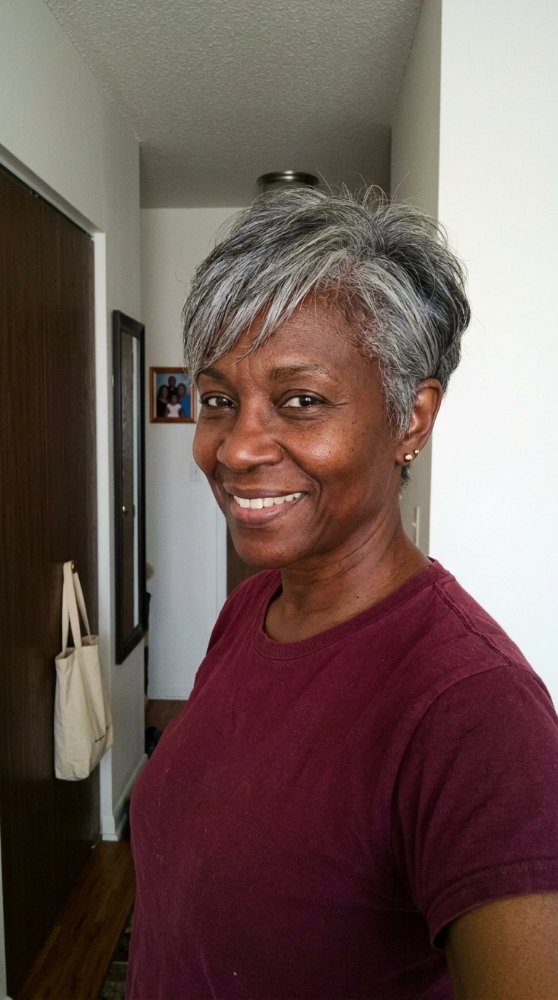
A soft pixie is one of the strongest choices when you want the haircut itself to do most of the visual work. The sides and back stay compact while enough length remains through the top to create lift, separation, or a gentle sweep.
The important decision is how exposed you want the outline to feel. Very close sides make glasses, earrings, the jawline, and neckline more noticeable. Leaving a little softness around the temples and ears creates a less severe transition.
Pixies also reveal grow-out quickly. You may spend less time handling long lengths each morning, but the haircut becomes more salon-dependent because the outline changes before the hair feels objectively long.
Long Layered Pixie
Not ready for a close crop? A longer pixie keeps more movement through the crown and front, which gives you several styling directions without returning to bob length.
The extra top length can be swept sideways, lifted away from the forehead, or allowed to follow a natural wave. It’s especially useful when you like short hair but don’t want every section to sit tightly against the head. The downside is that the longer layers can collapse when the cutting pattern removes too much support, particularly on hair with low density. Ask for a shape that preserves enough weight for the way you actually style it.
Bixie
The bixie sits between a pixie and a bob, making it an underrated option for anyone who wants a short haircut without committing to a sharply cropped outline.
Its appeal comes from contrast: the nape can stay neat while the sides and top retain enough length to tuck, bend, or move. That makes glasses easier to accommodate than with some bulky ear-length bobs because the temple area can be deliberately shaped around the frames.
A bixie needs a clear plan at the back. Without one, the neckline can become heavy while the top still looks short.
Chin-Length Blunt Bob
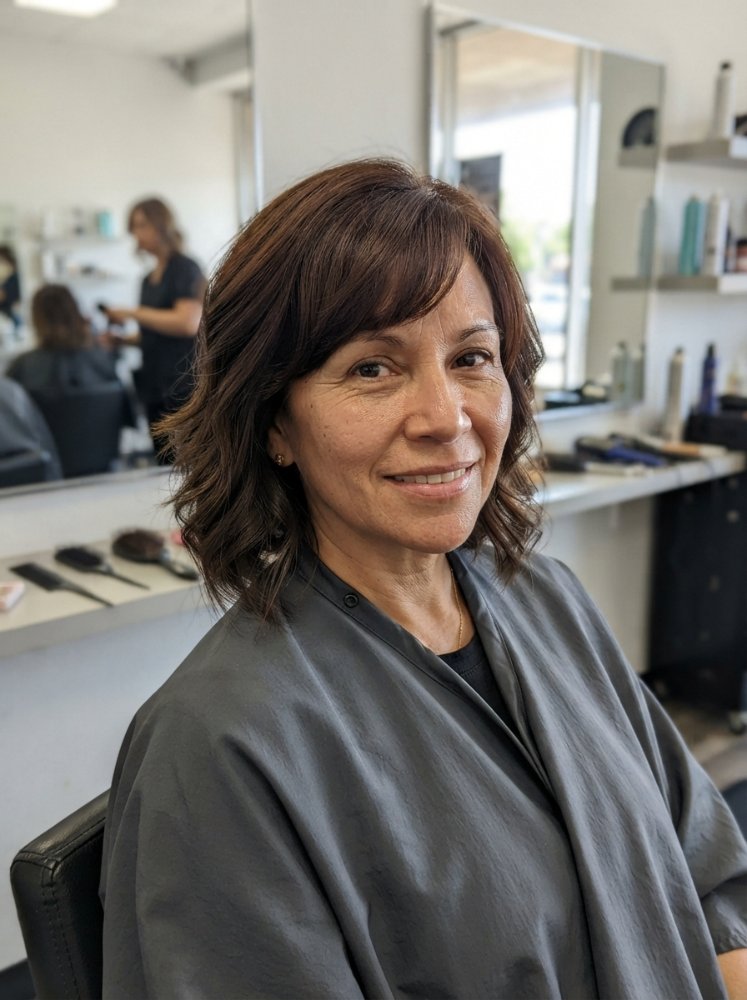
For hair with healthy ends, a blunt bob creates one of the strongest-looking lower edges in this list. Keeping the perimeter relatively solid can make the ends appear more substantial than a heavily layered cut.
That visual effect shouldn’t be confused with creating density; a haircut cannot create more follicles. It simply changes how the existing hair is distributed and where the eye sees weight.
A chin-length line also places attention around the jaw and neck. You can wear it sleek, softly bent, naturally wavy, or with controlled curl. Before choosing the exact length, check where the cut will meet your jaw, glasses, collars, and habitual tuck-behind-the-ear styling.
Graduated Bob
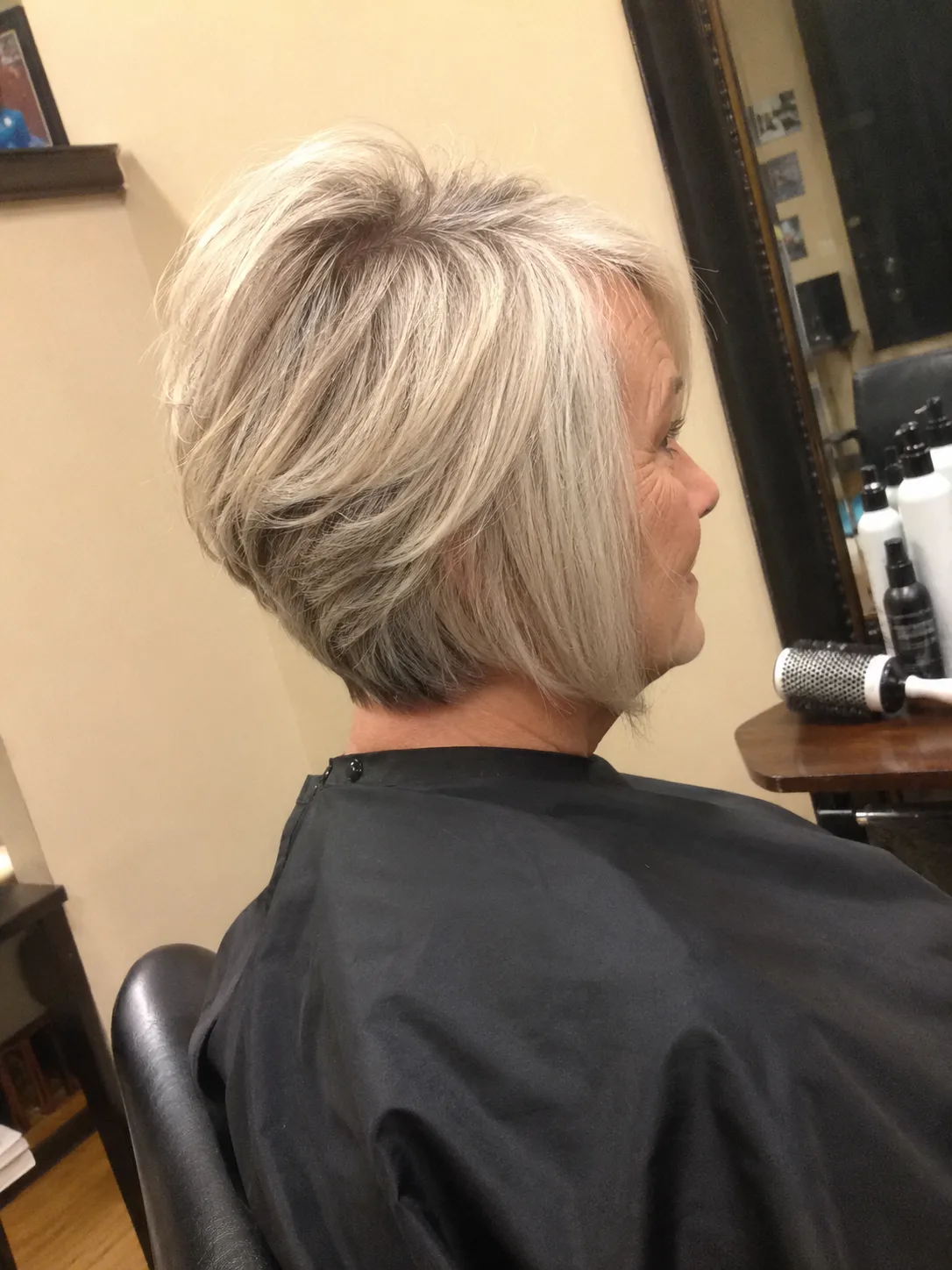
A graduated bob uses shorter length through the back to build shape, with the front remaining somewhat longer. It’s a good choice when a one-length bob feels too flat but you still want a defined perimeter.
The construction matters more than dramatic layering. Too much removal through the interior can make the lower edge look lighter than intended. A controlled graduation creates lift at the back while preserving a recognizable bob shape.
This cut is also more dependent on accurate reshaping than a loose shoulder-length style. Once the graduation grows down, the back starts to feel heavier.
Bobs and Medium-Length Cuts With More Movement
Asymmetrical Bob
An asymmetrical bob gives a familiar cut a stronger directional line. One side sits visibly longer than the other, so the haircut has movement even before you add waves or volume.
This works best when you actually want the imbalance to be seen. A tiny difference in length can look accidental; a deliberate difference reads as part of the design. Sleeker styling emphasizes the geometry, while curls or waves soften it.
Consider your everyday habits before committing. Consistently tucking the longer side behind your ear can hide the feature you chose the haircut for.
Collarbone Lob
The collarbone lob is probably the most practical default for someone who wants a meaningful change without losing the flexibility of medium-length hair.
It stays long enough for a low ponytail or simple updo while removing some of the visual drag that can come with much longer lengths. The perimeter can remain fairly strong, or a small amount of layering can be used to keep the ends from feeling blocky.
Collars matter here. A lob that lands directly where jackets and high necklines sit may flip outward or change direction during the day. Slightly adjusting the length can make everyday wear easier.
Shoulder-Length Cut With Soft Layers
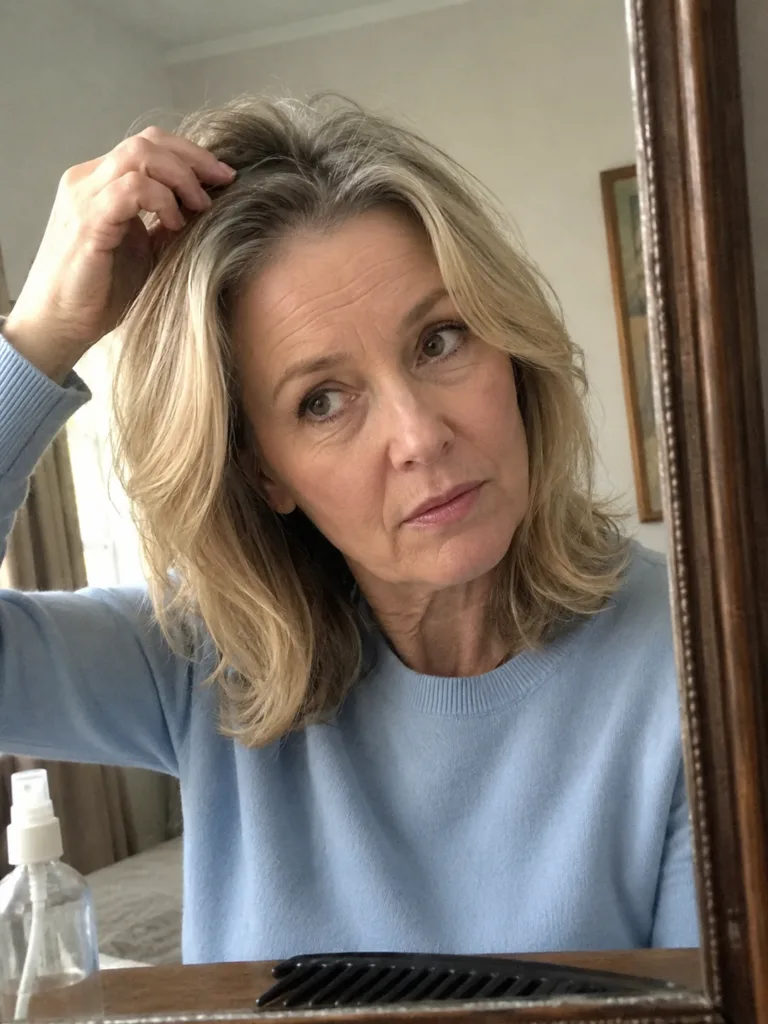
Shoulder-length hair becomes noticeably lighter and more mobile with well-placed layers, but this is a haircut where restraint can be valuable. Layering should solve a specific problem: excess bulk, lack of movement, or a shape that drops too heavily at the bottom.
Hair with lower density generally benefits from keeping more substance around the perimeter. Dense hair may tolerate greater interior removal without the ends looking weak.
This length also gives you room to change styling states. You can wear it straight, wavy, curly, tucked back, or up, so it suits someone who gets bored with a single finish.
Long Layers With Face-Framing Pieces
Keeping long hair after 50 doesn’t require defending the length or adding layers everywhere. Long layers are most successful when they improve movement while the bottom still looks healthy.
Face-framing pieces can begin high or low depending on how much softness you want around the front. The more aggressively the front is shortened, the more styling those pieces may need to sit where you expect.
Pay close attention to the ends. Hair that has become transparent through the lower lengths can look stronger after some length is removed, even when the eventual goal is still long hair.
Modern Shag
A shag earns its place here for hair that needs movement more than a pristine lower edge. Shorter layers through the crown and varying lengths around the face create a loose, broken-up shape that works especially well with natural wave and curl.
It is a poor tradeoff when your highest priority is making a light perimeter appear as full as possible. The entire point of the cut is redistribution and separation.
On the right texture, however, it can reduce the amount of effort required to manufacture volume with styling. The cut supplies much of the movement on its own.
Curly, Coily, and Natural Hairstyles
Rounded Curly Bob
A rounded curly bob should be planned around the curls you actually wear, not around the length of wet or stretched hair. Shrinkage changes where the perimeter lands, sometimes dramatically.
The rounded shape keeps fullness through the sides while controlling how far the bottom extends. It can look compact or expansive depending on density, curl grouping, and how much width you keep.
This is one of the better short-to-medium options when you want curls to remain visibly full instead of thinning the interior simply to make the hair lie flatter.
Shoulder-Length Curly Cut
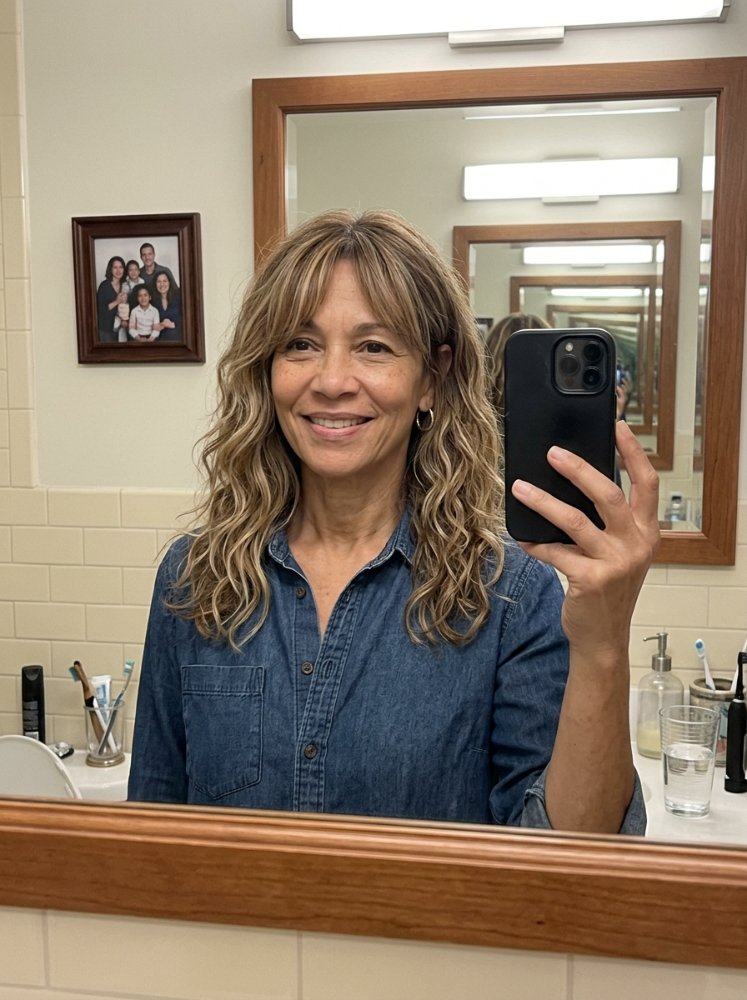
Some curly hair needs more vertical space than a bob provides. A shoulder-length curly cut allows the curl pattern to develop through a longer shape while still removing enough length to make the hair easier to arrange.
The finished state matters enormously. Someone who usually wears curls shrunken needs the shape evaluated with that shrinkage in mind; someone who routinely stretches the hair is working with a different visible length and distribution.
Layers can prevent dense curls from forming an overly heavy bottom section, but very short top layers may create more crown expansion than you want. Bring reference photos that show a similar curl behavior, not only a similar haircut outline.
Tapered Natural Cut
Shorter sides and back with greater length on top create a tapered natural style that feels structured without requiring the hair to be worn straight.
The top can be defined into coils, worn softly picked out, twisted and released, or shaped according to the natural pattern. Keeping extra length at the crown also gives you more styling range than an evenly cropped cut.
This is a strong choice when you enjoy the clarity of short hair but still want visible texture to remain a major part of the look.
Rounded Afro
A rounded Afro makes fullness the feature rather than something to flatten or disguise. The success of the shape depends on balanced cutting and on understanding how the hair sits after shrinkage.
A larger rounded profile creates more visual width and volume; a closer shape feels neater and easier to keep away from collars. Neither requires the texture to be forced into a perfectly uniform curl pattern.
Gray strands can make the surface look more dimensional because of the change in pigment, but gray itself doesn’t dictate whether the hair will become coarse, dry, or wiry. Treat the actual strand behavior you have.
Shaped Twist-Out
A twist-out becomes more haircut-led when the underlying shape is intentional. Instead of focusing only on curl definition, look at where the perimeter sits, how the crown falls, and whether the sides have enough room to expand.
A rounded or softly tapered base makes the style look cohesive even as definition loosens. That’s useful for anyone who prefers natural-hair styling but doesn’t want every wash day to depend on producing identical twists.
The twist size, product choice, drying method, and humidity all affect the finish, so a reference photo should be treated as a direction rather than an exact promise.
Styles That Change the Look Without a Major Haircut
Soft Waves With a Side-Swept Front
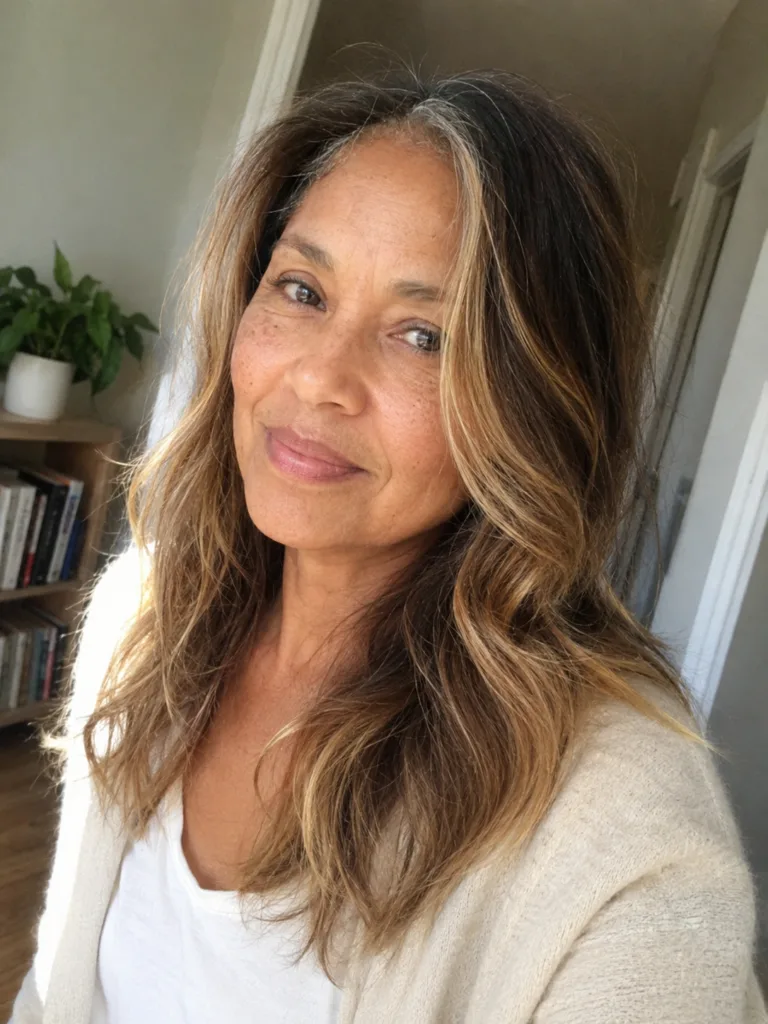
Soft waves are useful when your haircut already has a workable shape but you want more movement. The side-swept front creates direction without requiring a permanent fringe.
This styling approach works across several lengths, from a longer bob to hair well past the shoulders. Large, loose bends make the result softer; stronger wave definition creates more separation between sections.
Don’t assume every strand needs to be heat-styled to achieve it. Natural waves can be encouraged through setting and drying methods, while heat tools should be used according to the hair’s condition, previous processing, and the tool itself.
Smooth Bob With Curved-Under Ends
A bob can look completely different when the ends are directed slightly inward. The curve reinforces the lower line and gives the haircut a compact shape without adding more layers.
This finish is especially effective on chin- to shoulder-length bobs where the perimeter is already a feature. It does require more surface control than an air-dried textured bob, so it’s better for someone who doesn’t mind deliberate styling.
A strong curve can feel dated when it’s overly rigid. Keeping some movement through the roots and mid-lengths gives the shape a more relaxed finish.
Low Chignon
A low chignon is the strongest updo option here for someone who wants elegance without placing the entire style high on the crown. Hair is gathered near the nape, then twisted, folded, or wrapped into a compact bun.
It works particularly well with medium and long hair and can accommodate natural texture instead of requiring every section to be completely smooth.
Placement makes a practical difference. A very low bun may rub against a high collar, while a larger chignon can press against a headrest. Secure the style firmly enough to hold but without pulling the hairline or creating persistent discomfort.
Half-Up, Half-Down Style
A half-up style gives you a more open face without sacrificing the movement of loose hair. It’s useful when a full ponytail feels too severe or when shorter layers prevent all the hair from reaching one anchor.
The most flattering placement isn’t governed by age. It depends on where you want volume and how the loose section behaves. A crown-level anchor adds more lift, while a lower one produces a softer profile. Avoid pulling every fine hair around the temples into a tight elastic simply to make the surface perfectly smooth.
Braided, Loc’d, and Occasion-Friendly Options
Flat-Twist Crown Updo
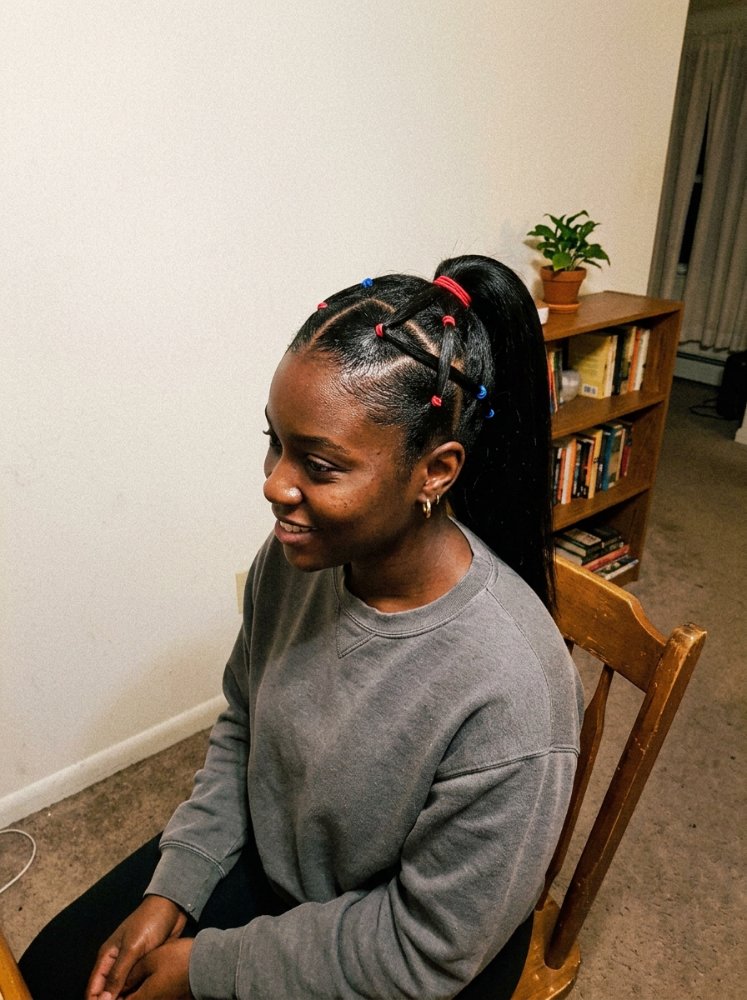
A flat-twist crown updo gives natural or stretched hair a sculpted shape while keeping much of the length secured. The twists can travel backward, around the sides, or toward a low gathering point.
Construction deserves more attention than surface neatness. Sections should follow a direction that allows the hair to sit comfortably instead of forcing several tight rows into one small area.
This can be useful for formal occasions because the shape remains visible from several angles. Leave fragile perimeter hairs out when pulling them into the twist would create unnecessary tension.
Braided Low Bun
A low bun built from braids combines a defined surface pattern with a compact finish. The braids can come from natural hair or an installed braided style, depending on your starting state.
Added hair changes the equation. More length and density create a larger bun and more weight at the anchor. That extra drama is worth it only when the base remains comfortable and the installation still gives you reasonable access to the scalp.
For an event, test how the bun sits against the clothing or headrest you’ll actually use. A beautiful back view can become awkward once a high collar occupies the same space.
Bob-Length Locs
Shortening or maintaining locs around bob length can completely change their movement. The weight sits closer to the head than with very long locs, while the perimeter becomes a much stronger part of the overall design.
Mature locs vary greatly in size, density, and weight, so the same visual length won’t behave identically from one person to another. A chin-length loc bob feels quite different from one landing at the shoulders, particularly around collars and glasses.
This is a particularly strong direction for anyone who wants locs to remain the central feature while reducing the amount of length that must be repositioned, dried, or moved out of the way.
How to Choose Among These Hairstyles
Start with the part of your current hair that bothers you most.
A weak-looking lower edge calls for a different response than excessive bulk. Hair that feels heavy and shapeless may benefit from layers or a shorter outline. Hair with low density may look better with a simpler perimeter and less aggressive interior removal. Fine strands can still be dense, so strand diameter alone shouldn’t determine the haircut.
Next, decide which styling state matters most. Curly and coily hair should be planned around the way you normally wear it. A haircut designed around stretched hair can sit very differently after shrinkage. Likewise, someone who wears their hair pressed most days has a different length and movement target from someone who usually wears a wash-and-go.
Think about the features surrounding the hair as well. Glasses arms occupy space at the temples. Hearing devices may make bulky ear-area sections inconvenient. High collars can push bobs outward. A short nape makes the neckline more visible. These details often affect daily satisfaction more than a generic face-shape rule.
Finally, be realistic about salon dependency. A pixie or graduated bob shows grow-out relatively quickly because its outline is precise. Long layers and shoulder-length shapes generally tolerate more visual change before the haircut feels completely different.
Maintenance Changes With the Construction
Short hair isn’t automatically maintenance-free. You exchange length management for shape management. A pixie takes less effort to detangle than long hair, for example, but the nape and sides can lose their intended proportions sooner.
Bobs need attention at the perimeter. Heat, friction, previous chemical processing, and everyday handling can all affect how healthy the ends look. There is no useful universal trim interval; respond to the condition of the ends and the way the haircut is losing its line.
Curly and coily cuts need enough time to dry properly in the styling state you choose. Dense roots can remain damp after the outer layers seem dry, particularly in compact styles. Products and techniques should suit your own porosity, buildup level, scalp comfort, and desired definition.
Braided, twisted, and loc’d styles need a separate comfort check. A hairstyle described as protective can still create problems when the roots are tight, added hair is heavy, scalp access is poor, or removal is rough. Persistent pain, redness, sores, sudden shedding, or a concerning change in density deserves attention from a dermatologist or another qualified healthcare professional rather than another styling adjustment.
What to Discuss at Your Next Hair Appointment
A useful consultation goes beyond showing one photograph. Explain what you normally do with your hair before work, after washing, and on days when you don’t want to style it extensively.
Also mention your usual hair state. Do you wear curls shrunken, stretched, pressed, braided, twisted, loc’d, relaxed, or in more than one state? That changes where length should fall and how a cut needs to move.
Ask practical questions:
Where will the perimeter land after my hair is styled the way I normally wear it?
Which areas are being layered, and which are staying heavier?
How will this cut grow out around the sides, crown, and neckline?
Will my glasses, hearing devices, or usual collars interfere with the shape?
Can the haircut still work on low-effort styling days?
Does my current condition or chemical history change which version is realistic?
Reference photos remain useful, but look beyond the front-facing image. Side and back views reveal far more about graduation, crown volume, curl shrinkage, and perimeter placement.
Related Hairstyles to Explore
- Hairstyles for women over 50 with fine hair
- Short hairstyles for women over 50
- Long hairstyles for women over 50
- Curly hairstyles for women over 50
FAQs
What is the easiest hairstyle to maintain for a woman over 50?
There isn’t one easiest haircut for every routine. A collarbone lob is a practical starting point because it keeps styling flexibility without the precision upkeep of a pixie. A tapered natural cut can be easier for someone who prefers short textured hair. Choose according to what kind of maintenance you want to reduce: detangling, heat styling, daily shaping, or salon reshaping.
Does short hair make women over 50 look younger?
Short hair doesn’t have a guaranteed age-changing effect. It does change proportion by exposing more of the face, jaw, ears, and neckline. A well-shaped pixie or bob can look fresh and current because the outline is deliberate, but the better reason to choose one is that you like the proportions and the upkeep suits you.
What hairstyle works well for thinning or low-density hair over 50?
A stronger perimeter, such as a blunt bob or lightly layered lob, can make the lower edge appear more substantial when the ends are healthy. Heavy interior thinning may expose more space between strands. A haircut can improve the appearance and distribution of existing hair, but it can’t create actual density. A sudden or concerning change in density should be medically assessed.
Can women over 50 wear long hair?
Absolutely. Long hair remains a reasonable choice when the ends are in good condition and the routine suits you. Long layers can add movement, but they shouldn’t be added automatically. Hair with a light perimeter may look stronger with fewer layers and some length removed from weak or transparent ends.
What works best for naturally curly or coily hair over 50?
Rounded bobs, shoulder-length curly cuts, tapered natural styles, Afros, and shaped twist-outs all work well depending on your preferred size and length. Plan the haircut around shrinkage and the state you wear most often. A cut viewed only while the hair is wet or stretched can give a misleading picture of the final length.
Should gray hair be cut or styled differently?
Gray describes the loss of pigment, not a specific texture, so the haircut should respond to the actual strand behavior you have. Some people notice changes in feel or manageability alongside graying, while others don’t. Choose the shape according to density, strand size, curl pattern, condition, and routine rather than assuming gray hair needs one particular cut.
Hair Texture & Upkeep Style Matcher
Select your natural hair texture and daily maintenance window to get an instant styling formula and heat safety cap.
Heat Cap: 320°F (160°C)
A versatile three-strand braid beginning at the parietal ridge, securing the top half while allowing natural wave texture to flow freely around the shoulders.
Conclusion
The most useful hairstyle for a woman over 50 is the one whose shape and maintenance make sense together. A soft pixie offers clarity but needs deliberate reshaping. A blunt bob protects visual weight at the perimeter. A lob gives you the widest styling range, while rounded curly cuts and tapered natural styles let texture determine the design instead of fighting it.
Choose the physical result first: more perimeter weight, less length, greater movement, fuller natural texture, or easier styling flexibility. Then make sure the haircut you love in the photograph still works with your shrinkage, density, glasses, collars, styling habits, and willingness to maintain its shape.
Editorial Standards & Hair Health Guidance
Every style featured on Tress Atlas is curated with a focus on real-world wearability, scalp tension management, and cuticle preservation. When trying protective styles or tight updos, ensure perimeter hairline sections remain tension-free to avoid traction stress on delicate follicles. For heat styling, cap tools below 350°F (180°C) to prevent thermal keratin denaturation.
Scientific Sourcing: Practices aligned with the American Academy of Dermatology (AAD) on traction alopecia risk reduction and cosmetic trichology research on hair tensile strength.