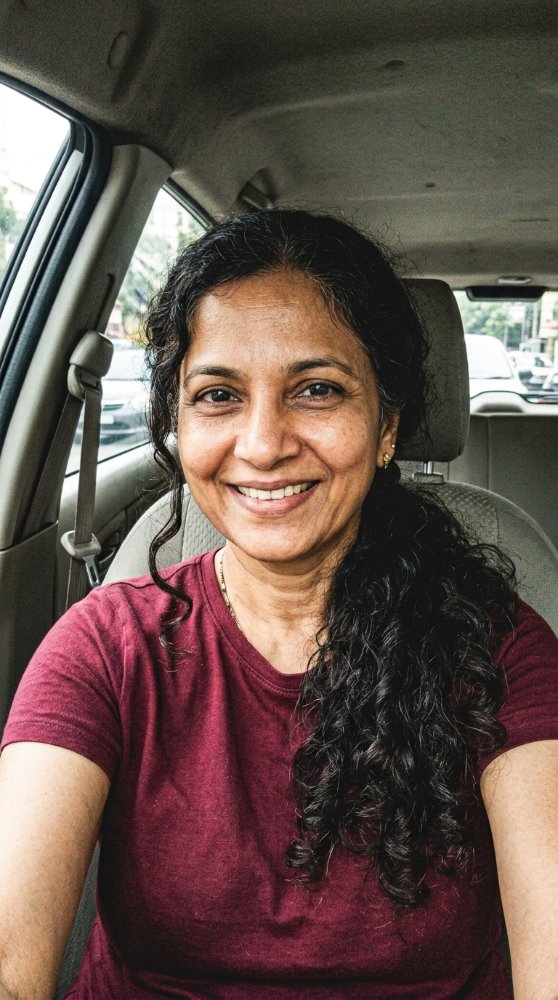
Medium-Length Hairstyles for Women Over 50: Shape, Movement, and Upkeep
Medium-length hair gives you enough length for movement, ponytails, soft updos, and layered shapes without committing to the daily handling that comes with very long hair. The real decision, especially when you’re choosing a new cut after 50, is where the weight should sit and how much styling the haircut will need to look the way it does in photographs.
A collarbone-length cut with a strong lower edge behaves very differently from a heavily layered shoulder cut. Fine strands can benefit from a substantial-looking perimeter, while dense hair may need carefully placed weight removal. Curls and coils introduce shrinkage, so the apparent length in a reference photo may have little to do with where your hair sits once dry.
Gray hair adds another consideration, but pigment loss doesn’t determine texture. Your gray strands may feel similar to the rest of your hair or behave differently depending on individual strand characteristics, previous color, condition, and routine.
Use these 22 medium-length hairstyles as starting points for a consultation rather than fixed templates. The strongest choice is the one whose shape still works after you leave the styling chair, put on your glasses, pull on a coat, air-dry your hair, or go several days without creating the exact finish shown in the inspiration photo.
Strong Perimeters for a Cleaner Medium-Length Shape
Blunt Collarbone Lob
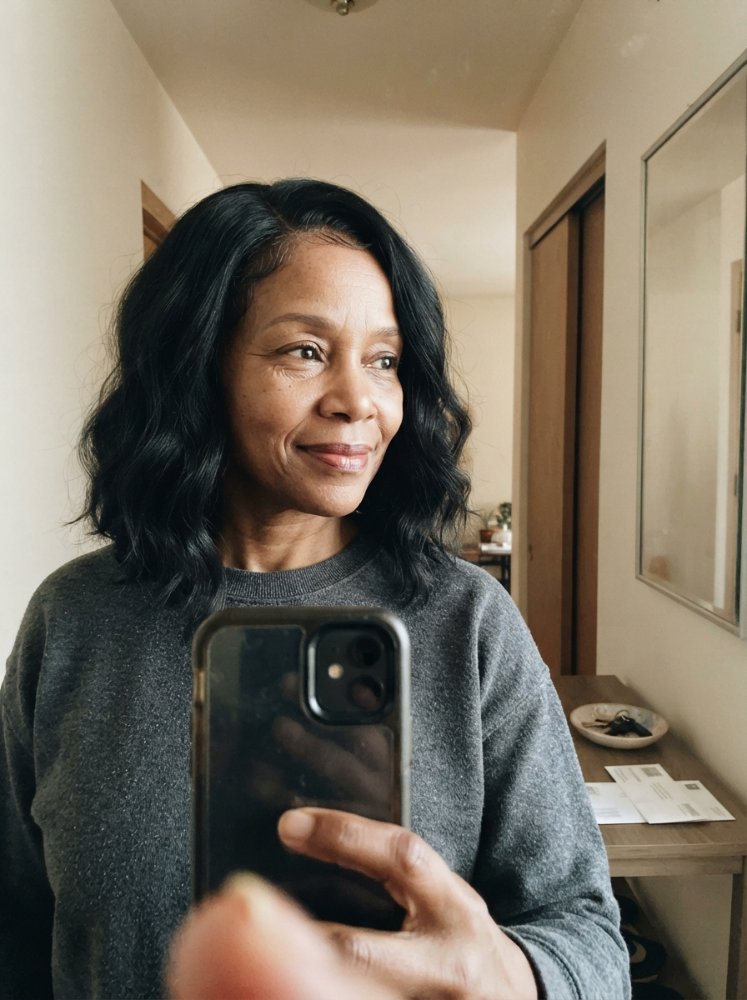
A blunt lob is one of the strongest medium-length choices when you want the bottom edge of the hair to look substantial. The hair finishes around the collarbone with relatively little visible graduation through the perimeter, producing a clean horizontal or slightly softened line.
This construction is especially useful for fine strands or ends that look sparse after too much layering. It can’t create actual density, but keeping more hair at the lower edge can make the perimeter appear fuller.
The hidden issue is clothing. A lob landing directly on a jacket or shirt collar can flip outward as you move. Going slightly above or below the point where your usual collars sit can make the haircut considerably easier to live with.
Soft U-Shaped Medium Cut
The U-shape keeps more length through the back while the sides curve gradually toward the front. It feels less severe than a straight-across perimeter and gives medium hair movement without depending on short layers.
This is a strong option when you frequently wear your hair loose but still want enough length for a ponytail. It also grows out gently because the shape isn’t built around one sharply defined line.
On straight or stretched hair, the curve is easy to see. On curls and waves, the same outline becomes softer, so the stylist needs to assess the shape in the state you normally wear.
Angled Lob
A subtle angled lob runs a little shorter at the back and longer toward the front. The change can sharpen the profile and keep the front pieces long enough to tuck behind the ears or frame the jaw and neck.
The practical version is usually a modest angle. A dramatic difference between front and back makes the haircut more dependent on precise reshaping as it grows.
Glasses matter here. Longer front sections can fall repeatedly over the arms of your frames, so bring your everyday glasses to a haircut consultation rather than judging the shape without them.
Graduated Shoulder Bob
Graduation creates stacked or slightly built-up weight through the back instead of allowing every section to fall to one length. At medium length, it can give the rear profile more lift while retaining longer pieces around the face.
This choice works best when you actually like a defined haircut shape. The outline changes more noticeably during grow-out than a long layered or U-shaped cut.
Dense hair also needs thoughtful construction. Too much stacked weight through the back can create a bulky ledge, particularly where the hair meets the shoulders.
Layers That Create Movement Without Losing the Bottom Edge
Long-Layered Shoulder Cut
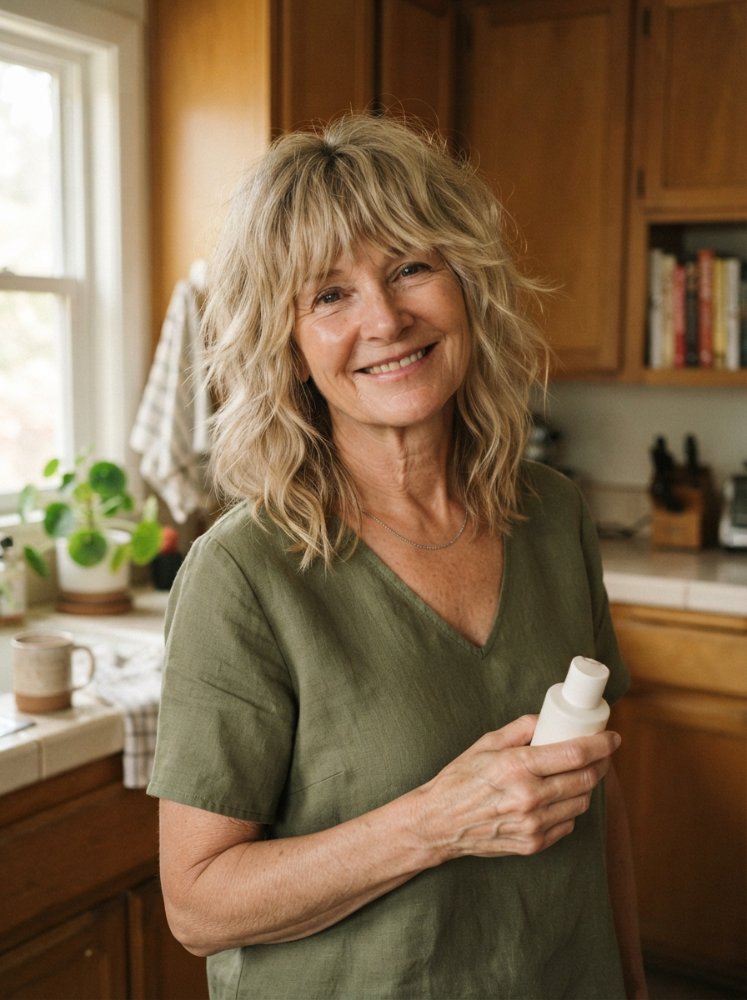
Long layers are the practical default for someone who wants movement without a dramatically layered appearance. Most of the lower perimeter remains intact while longer sections are released through the interior.
That makes the cut adaptable. It can be worn smooth, softly waved, curled, or air-dried depending on your natural texture.
Ask how short the top layer will actually be. A reference photo styled with a round brush may show airy movement that disappears when the same haircut is left to dry naturally.
Butterfly-Inspired Medium Layers
Butterfly cuts are usually associated with abundant cascading layers, but the idea can be adapted to medium hair by keeping shorter movement around the face and longer support underneath.
This version is worth the extra styling effort when you enjoy a lifted, sweeping finish. A blow-dry or set can emphasize the separation between layers far more than air-drying will.
The main risk is copying the layering from a much longer haircut onto shoulder-length hair. There simply isn’t as much vertical distance to distribute those layers, so overly short pieces can make the shape feel choppy.
Face-Framing Layers With a Full Perimeter
You don’t need layers throughout the entire head to soften medium-length hair. Keeping the back and lower edge relatively solid while adding graduated pieces around the face preserves more weight through the ends.
This is particularly useful when your concern is a transparent-looking lower perimeter rather than lack of movement everywhere. The front gets softness; the back stays substantial.
Placement should follow the features you want to emphasize and how you wear the hair, not a rigid face-shape chart. Glasses, preferred parting, curl pattern, and whether you tuck your hair behind your ears are more useful consultation details.
Side-Swept Layered Cut
Movement concentrated toward one side gives medium hair an asymmetrical feel without requiring an asymmetrical haircut. Longer front layering can move across the forehead and blend into the sides.
It works well for anyone who already prefers an off-center or side part and doesn’t want a full fringe.
A dramatic salon blowout can exaggerate the sweep, so decide whether you like the haircut underneath the styling. Without heat or setting, the front may fall much flatter.
Medium Shag
A shag shifts attention away from a heavy perimeter and toward separated layers, crown movement, and irregular texture through the ends. It has more visible structure than a classic long-layered cut.
This is a good choice when a deliberately piecey, airy shape suits your style. It’s less useful when your main goal is making a low-density perimeter appear stronger, because removing too much interior weight may expose more space between the ends.
Wavy and curly textures can make the layers come alive with relatively little manipulation. Straighter hair may need more styling to reproduce the movement seen in heavily textured reference photos.
Soft Wolf-Inspired Medium Cut
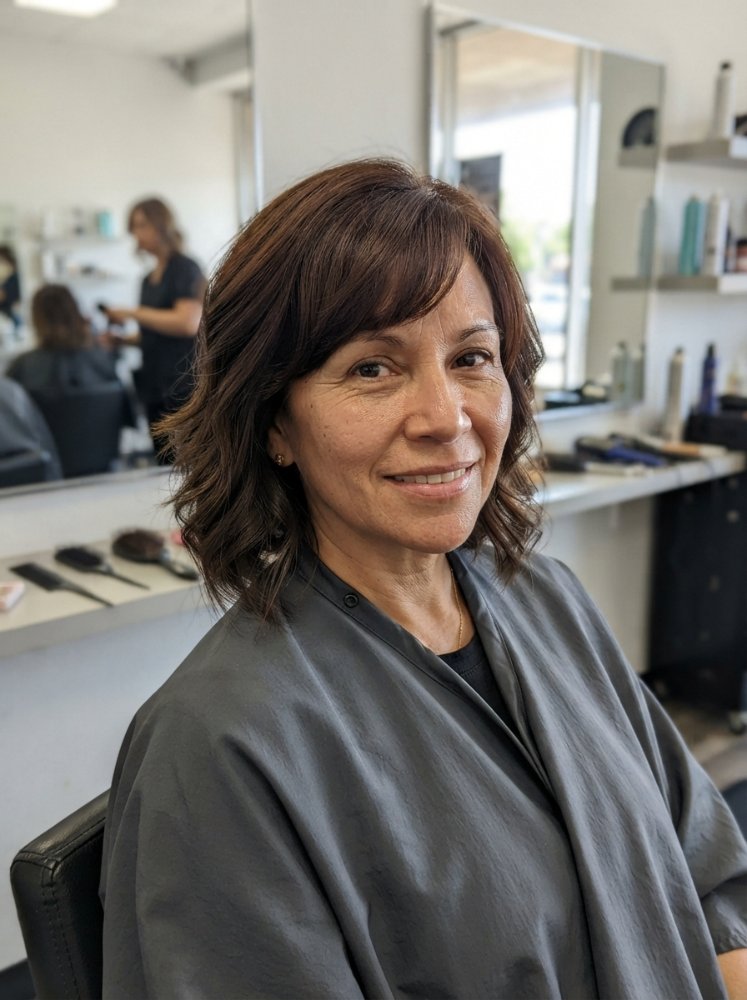
A wolf-inspired cut keeps some of the shag’s shorter upper layers but allows more weight and length through the lower half. At medium length, the difference between a balanced version and an over-layered version is significant.
Choose it for visible crown movement and a narrower, more separated lower section. Skip it when you want one dense-looking curtain of hair from roots to ends.
It also deserves a realistic grow-out discussion. Shorter crown sections can take longer to visually reconnect with the bottom when you decide you want a less layered cut later.
Fringe and Front Shape Without Turning the Haircut Into a Bangs Project
Curtain Fringe With Medium Layers
Curtain fringe divides around the center or slightly off center and blends into longer face-framing sections. On medium hair, it can make the front feel deliberately shaped without removing much overall length.
The strongest version is one that still works when it isn’t perfectly swept away from the face. Check where the shortest pieces land with your hair in its normal state.
Curly curtain fringe can remain curly. Straightening the fringe isn’t a requirement, although shrinkage needs to be considered before deciding its dry length.
Wispy Fringe With Soft Ends
A lighter fringe can change the front of a shoulder-length haircut without creating the dense visual block of a heavy bang. It pairs especially well with softly layered or lightly textured ends.
Fine strands and low density need separate consideration here. Fine hair may still be plentiful enough to support a fringe, while low density means taking a large fringe section could leave less hair available through the front and sides.
This option is more maintenance-dependent around the forehead than a fringe-free cut because oil, humidity, sleep, and glasses can alter how the shorter pieces sit.
Longer Side Fringe Blended Into Layers
A longer side fringe sits closer to cheek or jaw length and flows into the haircut instead of forming a distinct bang line. It gives you the visual effect of front shaping while remaining easier to pin or tuck away.
This is the more forgiving fringe choice when you’re uncertain about committing to shorter bangs. The grow-out simply becomes part of the surrounding layers.
Hair that naturally splits or lifts around the hairline will influence the result. Work with that direction instead of relying on a reference photo where the front has been heavily reshaped with heat.
Medium-Length Ideas for Waves, Curls, and Coils
Rounded Shoulder-Length Curly Cut
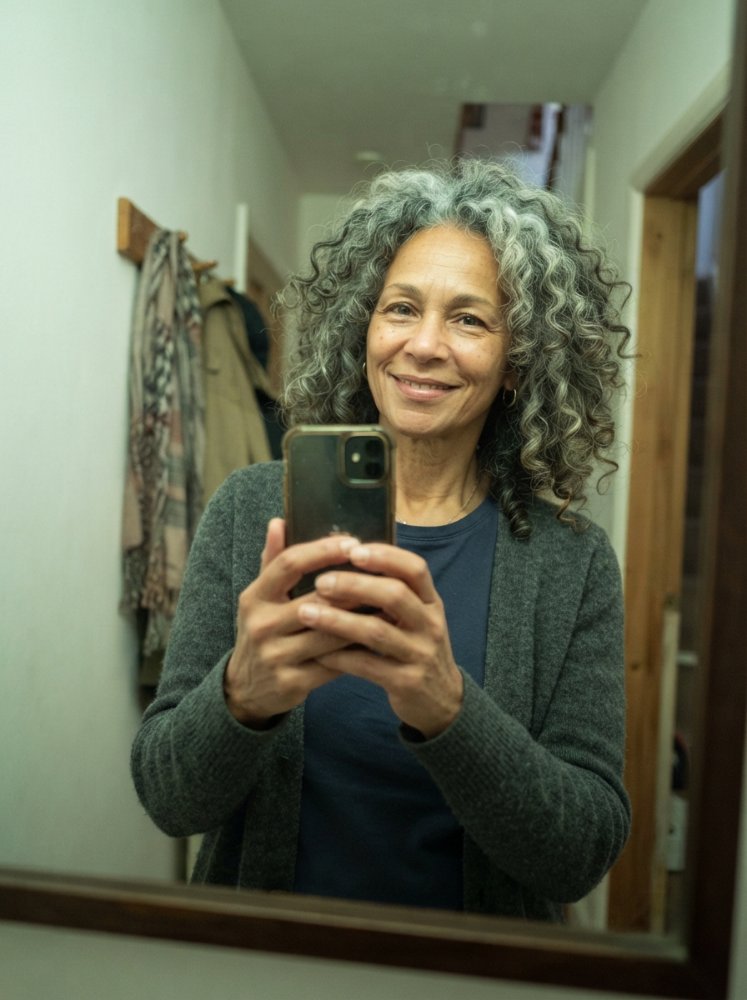
A rounded curly shape distributes fullness around the sides and crown instead of allowing all the volume to accumulate at the bottom. The result can look soft and expansive while still remaining clearly medium length.
Dry length is the important measurement. Shrinkage can move a curl well above the point where it sits when wet, and different areas of the head may shrink by different amounts.
The cut may be performed wet, dry, or through a combined method. What matters most is that the final balance is evaluated in the state you regularly wear.
Layered Curly Lob
A curly lob keeps a clearer lower boundary than a fully rounded curly cut. Strategic layering prevents the shape from becoming excessively triangular while leaving enough weight through the perimeter to define the lob.
It’s a stronger choice than aggressive layering when you want your curls to retain some visual density toward the ends.
Pay attention to the front sections. Curls sitting around the cheek, jaw, and shoulders can spring to very different lengths even when they were cut from similar wet positions.
Sculpted Medium Coily Cut
Coily hair can support an architectural medium-length shape with fullness placed deliberately at the crown, sides, or lower perimeter. The haircut should be judged according to coil grouping, shrinkage, density, and the way the hair is normally worn.
A sculpted shape is especially effective when you enjoy wearing your natural volume visibly rather than routinely stretching it.
Photos can hide just how much length is contained inside a compact coily shape. Discuss both the desired silhouette and the actual dry position of the hair before removing significant length.
Medium Layers for Stretched Natural Hair
Natural hair worn primarily stretched has different length behavior from the same hair worn in a fully shrunken state. Medium layers can create movement through a twist-out, braid-out, banded stretch, or other stretched finish while preserving useful styling length.
Tell your stylist how often you alternate between stretched and shrunken looks. A shape that appears perfectly balanced in one state can distribute volume very differently in another.
This is one of the cases where a consultation should include more than a single reference image.
Wavy Textured Lob
Wavy hair often benefits from enough length to let bends form while avoiding excessive weight that pulls the pattern flatter. A textured lob uses modest layering or end movement to keep the outline relaxed.
Don’t assume every irregular bend needs to be cut into a layer. Hair can wave differently from one wash day to the next depending on moisture, drying method, brushing, and humidity.
The strongest version leaves enough structure in the cut that it still looks deliberate on a less cooperative wave day.
Medium Cuts Built Around Density, Strand Size, and Daily Styling
Blunt Base With Minimal Interior Layers for Fine Hair
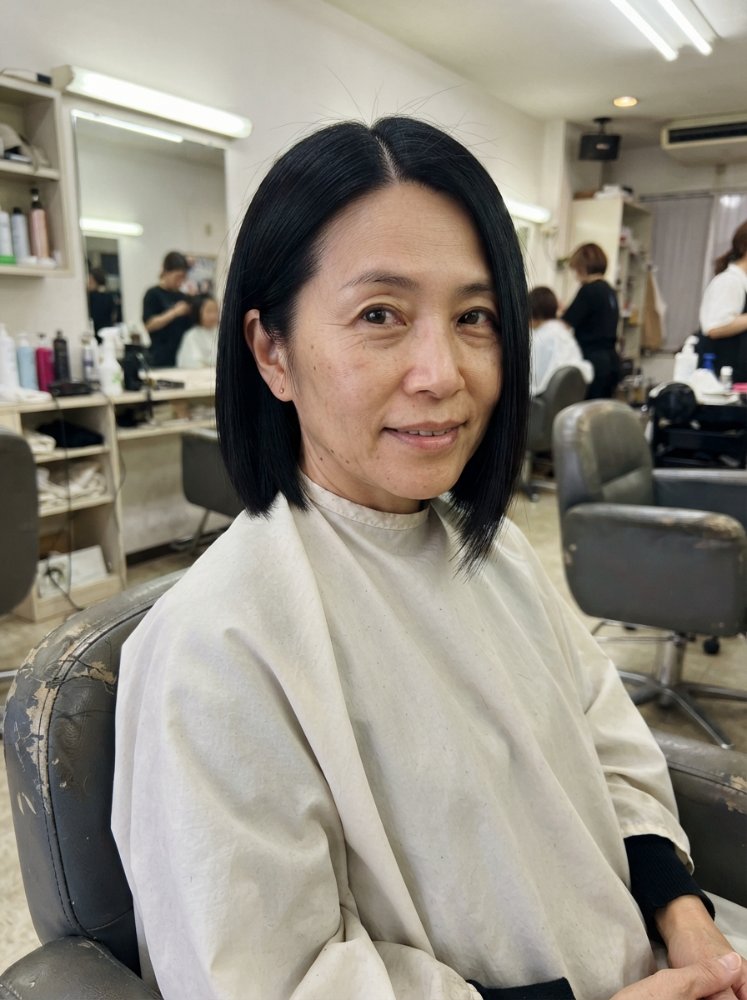
Fine hair refers to strand diameter, not the number of hairs on your head. Plenty of people have fine strands with medium or high density.
A blunt or nearly blunt base can reduce the feathery appearance that comes from repeatedly thinning fine ends. Small amounts of internal movement can still be added where the hair has enough density to support it.
This cut is particularly useful for someone who wants medium length to look substantial without relying on a voluminous blowout. Heavy razoring or excessive texturizing deserves careful discussion when your ends already separate easily.
Strong Perimeter With Selective Framing for Low-Density Hair
With low-density hair, preserving enough strands through the lower edge becomes a more important design decision. A strong perimeter combined with limited face framing can create a clearer outline without claiming to increase actual density.
Short layers everywhere are often a poor tradeoff when the lower half already looks sparse. Each removed section leaves fewer strands contributing to the edge.
Sudden or concerning changes in density are different from simply having naturally low-density hair. A dermatologist or another qualified healthcare professional can assess unexplained shedding or scalp symptoms.
Internal Layers for Dense Medium Hair
Dense medium-length hair can accumulate considerable bulk around the shoulders. Strategic internal layering removes or redistributes weight without necessarily creating a visibly shaggy surface.
This approach can make a medium cut easier to move, dry, and style while retaining a cleaner outer line.
The technique needs restraint. Removing too much hair internally can leave the surface looking disconnected or the ends unexpectedly thin. Ask where weight will be removed and how that decision will affect your natural texture once the salon finish is gone.
Sleek Shoulder-Length Cut With Controlled Layering
A sleek shoulder-length shape works particularly well when you regularly wear the hair straight, pressed, stretched, or smoothly blow-dried. The cut can be blunt, lightly graduated, or subtly layered depending on how much movement you want.
This style is more dependent on styling state than many reference photos admit. A naturally curly or wavy head of hair may look completely different once it returns to its usual pattern.
Anyone alternating between heat-styled and natural texture should plan the haircut around both states. Repeated heat isn’t required to make medium hair look finished, and the cut should still make sense on days when you choose another styling method.
What Medium-Length Photos Often Fail to Show
The photograph usually shows the moment when the cut is most controlled. Real life introduces collars, humidity, sleep, exercise, glasses, natural texture, and ordinary movement.
The shoulder zone is particularly important. Hair that lands directly on the shoulders can bend outward where it repeatedly contacts clothing. A slightly longer collarbone cut may hang past that friction point, while a shorter lob may sit above it.
Layered photos can also exaggerate movement through professional blow-drying or curling. Before requesting dramatic layers, look for reference images showing the haircut with less styling. Pay attention to where the shortest layer begins and how much hair remains at the bottom.
Curly and coily reference photos need a shrinkage check. Compare the shape, not merely the stated length. Two people with the same stretched length can have very different dry positions.
How to Choose the Right Medium-Length Cut After 50
Age alone doesn’t tell you whether you need a bob, layers, bangs, or a particular amount of volume. Start with the hair you currently have and the routine you’re willing to maintain.
Decide what you want the perimeter to do. A strong lower line creates a denser-looking edge. More layering creates separation and movement. Trying to maximize both at once can lead to disappointment, particularly when density is limited.
Name the styling state you use most. Natural curls, air-dried waves, stretched coils, pressed hair, and round-brushed straight hair can all produce different versions of the same haircut. Your usual state deserves more influence than the most glamorous reference photo.
Show the stylist your normal part. A haircut that falls beautifully from a center part can sit differently when pushed strongly to one side.
Bring your glasses. Medium front sections often land at temple, cheek, or jaw level, exactly where frames interact with the hair.
Discuss shrinkage before choosing the final length. This matters most for curls and coils, but waves can also draw the hair upward once dry.
Be specific about styling effort. Someone who enjoys using a round brush, rollers, diffuser, or hot tools can make more styling-dependent layers worthwhile. A low-manipulation routine needs a haircut that carries more of its own structure.
Maintenance: What Changes as Medium Hair Grows
Medium hair is forgiving in some shapes and demanding in others. A soft U-shape or long-layered cut can grow for a while without looking dramatically different, while a precise angled or graduated bob loses its original geometry sooner because its outline is the main feature.
Fringe also changes the maintenance equation. Shorter pieces around the forehead become noticeable as they lengthen even while the rest of the haircut still feels perfectly manageable.
Your ends should guide reshaping decisions more than a universal calendar. Tangling, uneven perimeter weight, splitting, and loss of the intended haircut shape can all signal that the cut needs attention. The interval will vary with your hair, styling habits, chemical history, and desired finish.
Gray hair doesn’t require a special haircut simply because pigment has changed. Choose the shape according to strand behavior, density, condition, and routine. Previously colored or chemically processed sections may behave differently from newer growth, which is worth considering when layers expose those areas.
Heat-styled looks also deserve a realistic plan. A sleek lob or sweeping butterfly layer can be attractive without becoming your required everyday finish. Vary your styling methods according to your hair’s condition and the result you want rather than forcing the cut into the same heat-styled shape every day.
Salon Consultation Checklist
Before the first section is cut, make sure you and your stylist agree on a few practical details:
Where you want the hair to sit when dry.
Whether preserving a strong perimeter or creating movement matters more.
The styling state you wear most frequently.
How much shrinkage or expansion your natural texture has.
Whether you routinely wear glasses, hearing devices, high collars, or tucked-behind-the-ear styles.
How much time you actually want to spend creating volume, bends, or smoothness.
Which parts of your reference photo come from the haircut and which appear to come from styling.
Whether current density or end condition makes heavy layering a poor choice.
That conversation is far more useful than asking for a hairstyle simply because it has been described as flattering for women over 50.
Related Hairstyles to Explore
- Hairstyles for women over 50 with fine hair
- Short hairstyles for women over 50
- Long hairstyles for women over 50
- Curly hairstyles for women over 50
FAQs
Is medium-length hair flattering for women over 50?
Yes. Medium length is versatile because the shape can be adjusted through the perimeter, layering, fringe, curl structure, and styling state. There isn’t one age-specific version that works for everyone. The stronger decision is to match the cut to your density, texture, features, routine, and preferred amount of maintenance.
What medium-length haircut can make thin-looking ends appear fuller?
A blunt or lightly softened perimeter often creates a more substantial-looking lower edge because more strands finish near the same area. Heavy interior layering can make sparse ends look more separated. A haircut can improve the appearance of the perimeter, but it cannot create follicles or restore lost density.
Can women over 50 wear medium-length hair with natural curls or coils?
Absolutely. Rounded curly cuts, curly lobs, sculpted coily shapes, and stretched medium layers can all work well. Shrinkage, curl grouping, density, and the styling state you normally wear should guide the final length. Curly fringe can also remain curly rather than being straightened.
What should I do if my hair density has recently changed?
A recent or concerning change deserves different attention from naturally fine strands or naturally low density. Avoid trying to solve unexplained shedding solely through a haircut. Sudden shedding, scalp pain, redness, sores, persistent irritation, or a concerning density change can warrant assessment by a dermatologist or another qualified healthcare professional.
Hair Texture & Upkeep Style Matcher
Select your natural hair texture and daily maintenance window to get an instant styling formula and heat safety cap.
Heat Cap: 320°F (160°C)
A versatile three-strand braid beginning at the parietal ridge, securing the top half while allowing natural wave texture to flow freely around the shoulders.
Conclusion
The most useful medium-length hairstyles for women over 50 aren’t defined by age rules. They’re defined by where the cut places weight, how much of the perimeter it preserves, what happens when your natural texture returns, and how much styling you want to do after the salon finish is gone.
A blunt collarbone lob is the stronger starting point when substantial-looking ends matter most. Long or butterfly-inspired layers earn their place when movement is worth additional styling. Curly and coily shapes should be planned around dry behavior and shrinkage, while low-density hair usually benefits from more selective weight removal.
Choose the shape you can picture on an ordinary day—not only the version in the reference photo.
Editorial Standards & Hair Health Guidance
Every style featured on Tress Atlas is curated with a focus on real-world wearability, scalp tension management, and cuticle preservation. When trying protective styles or tight updos, ensure perimeter hairline sections remain tension-free to avoid traction stress on delicate follicles. For heat styling, cap tools below 350°F (180°C) to prevent thermal keratin denaturation.
Scientific Sourcing: Practices aligned with the American Academy of Dermatology (AAD) on traction alopecia risk reduction and cosmetic trichology research on hair tensile strength.