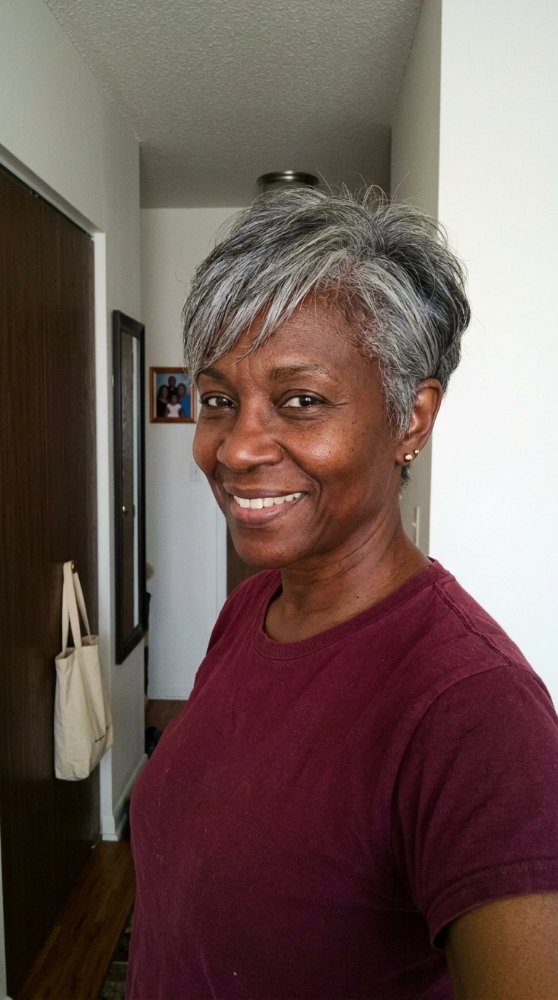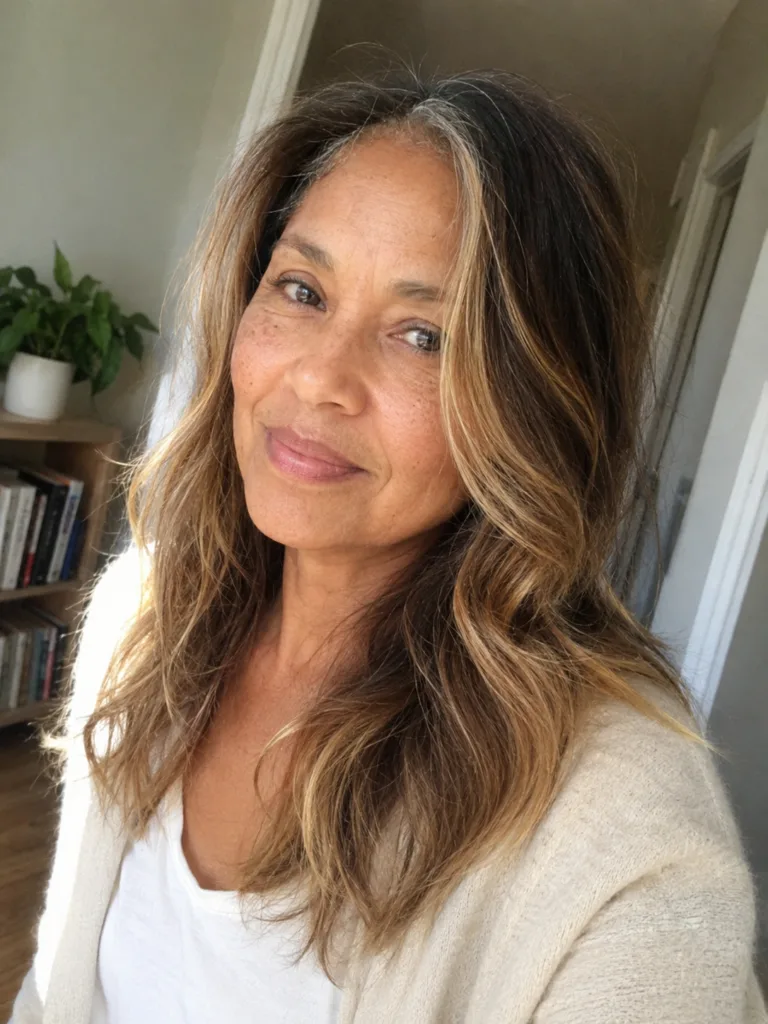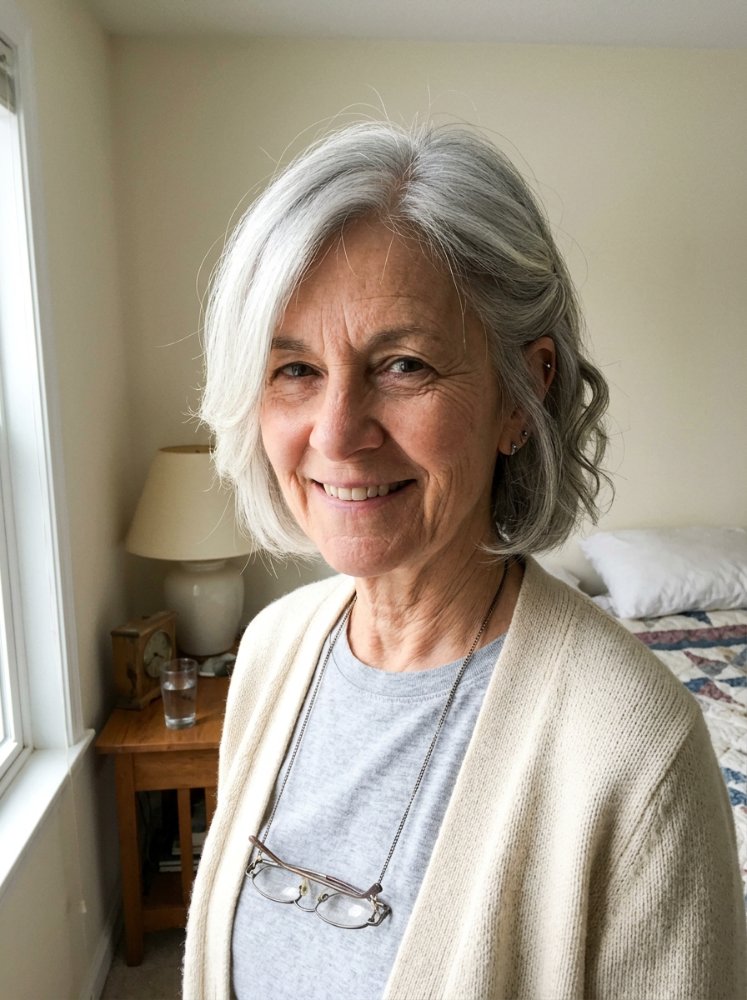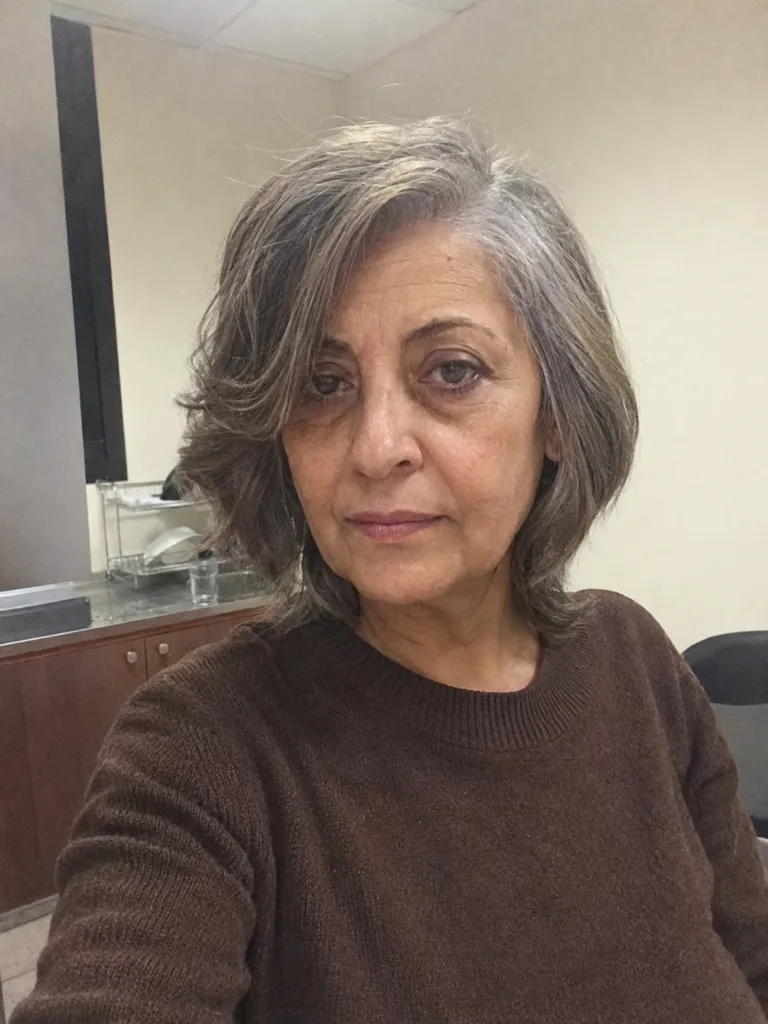
Medium-Length Hairstyles for Women Over 60: Complete Shape & Upkeep Guide
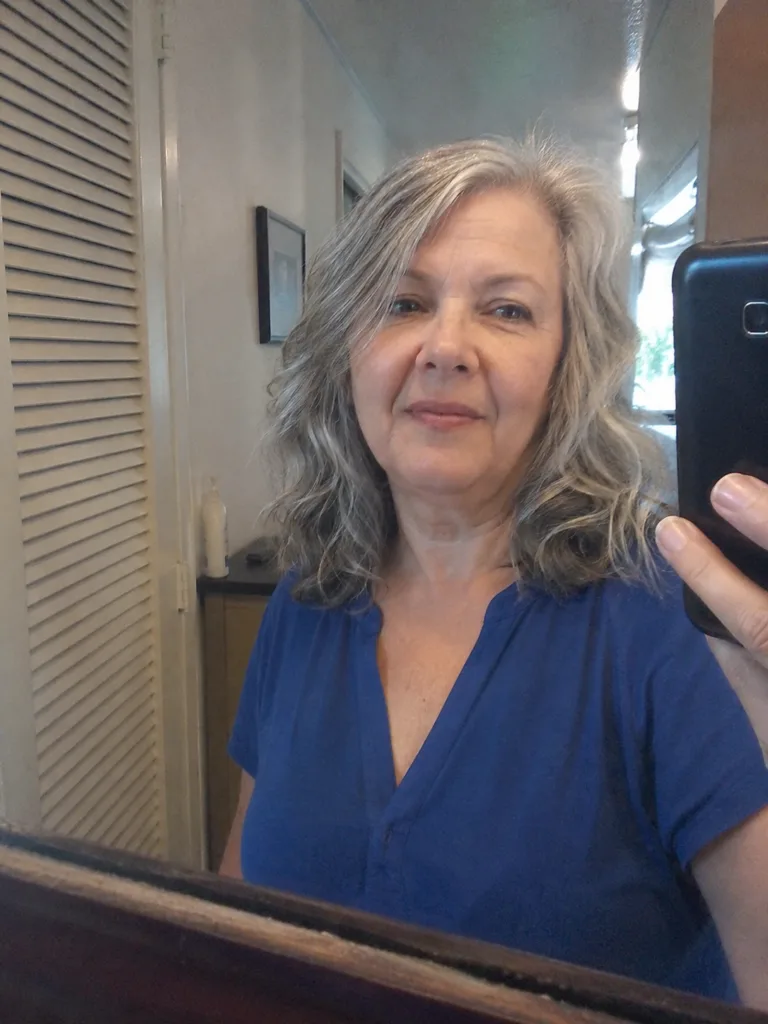
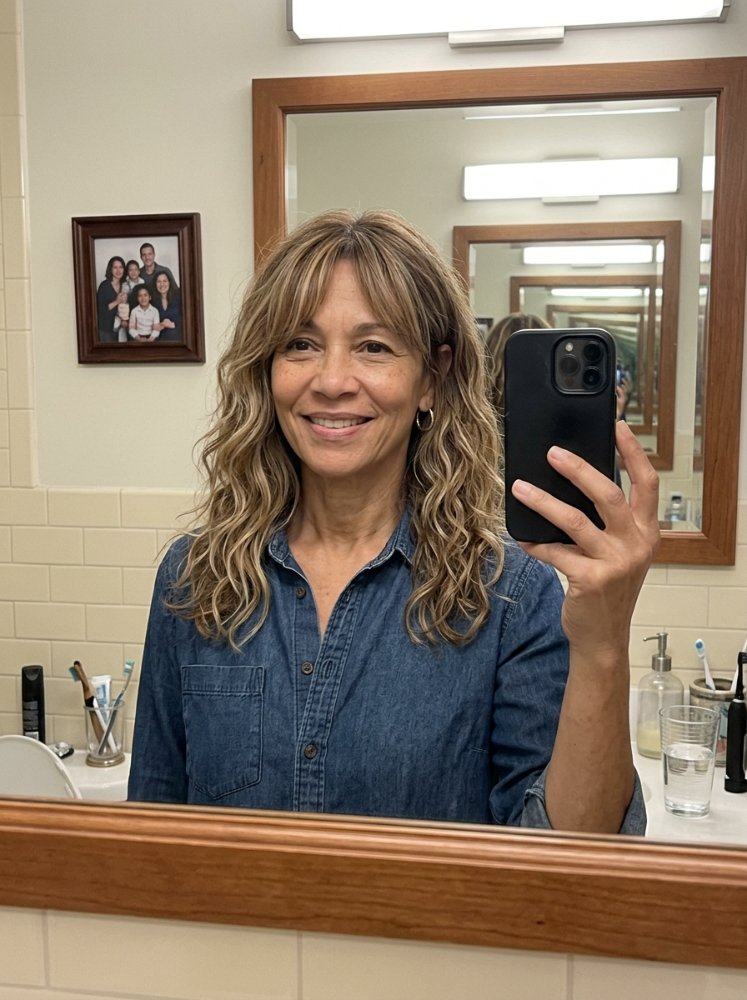
Medium-length hair gives you something shorter cuts can’t always offer: enough length to tuck, curl, pin back, or pull into a small ponytail without carrying the weight and drying demands of very long hair. The real decision, though, is less about age and more about where you want the weight to sit.
A strong perimeter can make healthy ends look more substantial. Layers create movement but remove weight from selected areas. Curls and coils need a shape designed around their worn length and shrinkage. Fringe changes the amount of daily styling around the forehead. Gray hair adds another visual dimension, but pigment loss by itself doesn’t tell you whether the strands will be fine, coarse, straight, wavy, curly, or coily.
For this guide, medium length generally means hair that falls somewhere between the lower jaw and collarbone area in its usual styling state. Curly and coily hair may have considerably more actual length when stretched. The 18 options below focus on cuts and styling approaches that create genuinely different shapes rather than small variations of the same lob.
Clean Lines and Stronger Perimeters
Blunt Collarbone Lob
A blunt lob is one of the strongest medium-length choices when the bottom edge is meant to be the feature. Most of the visible weight remains near the perimeter, giving the haircut a clean horizontal line around the collarbone. On hair with healthy ends, that can make the lower section appear more substantial than a heavily layered cut.
Fine strands and low density need separate consideration. Fine hair describes strand diameter; low density refers to how many strands are present. A blunt outline can support either, but a haircut can’t create actual density.
The main compromise is movement. A very solid perimeter doesn’t swing as freely as a layered shape, especially on dense hair. Subtle internal adjustment may make the cut easier to handle while preserving the visible edge.
Graduated Long Bob
The graduated long bob shifts some weight toward the back while leaving the front slightly longer. That forward angle gives the haircut more architecture than a straight-across lob without pushing it into short-bob territory.
This is especially useful when you like a clean neckline but don’t want to lose the front length around the jaw and neck. The difference becomes most obvious from the side.
Graduation is also more salon-dependent than a casual layered cut. As it grows, the angle softens and the back can begin to feel heavier. Choose it because you like the shape itself, not because it has been labeled universally flattering.
Soft U-Shaped Medium Cut
A U-shaped perimeter keeps more length through the middle back while the sides curve gradually shorter. Compared with a blunt lob, it feels softer and gives the hair more movement without relying on extensive layering.
It works particularly well when you want medium hair that can still be gathered into a ponytail or pinned up. Because the side sections aren’t dramatically shortened, fewer pieces tend to escape around the front.
The U shape can disappear visually on very curly hair unless it is designed around the hair’s normal curl pattern. A salon consultation should consider the shape in the state you actually wear most often.
Asymmetrical Lob
Symmetry isn’t required for a polished medium haircut. An asymmetrical lob intentionally leaves one side longer, creating a diagonal line that gives otherwise simple hair a stronger visual identity.
This is a better choice for someone who wants the haircut itself to look styled even with minimal ornamentation. Straight and softly wavy finishes make the difference in length particularly easy to see.
The asymmetry needs enough contrast to look deliberate. A tiny difference can simply resemble uneven grow-out, while a clearly designed angle reads as part of the cut.
Layers That Change Movement and Volume
Shoulder-Length Cut With Long Layers
Long layers are the practical middle ground for many women who want movement without sacrificing the usefulness of medium length. The shorter sections begin far enough down the hair that much of the perimeter remains intact.
That matters when you still want to tuck your hair behind your ears, wear a low ponytail, or use clips without constantly managing short pieces.
The strongest version of this cut is usually restrained. Excessive interior removal can expose more space in low-density hair or leave the ends looking transparent. Ask where the shortest layer will fall and how much weight will remain at the bottom before committing to a heavily feathered reference photo.
Medium Cut With Face-Framing Layers
Face-framing layers move the shortest pieces toward the front while leaving the back comparatively full. They can begin around the cheek, jaw, or lower depending on how much movement you want around the face.
Glasses deserve some thought here. A piece that repeatedly falls onto the glasses arm can become more annoying than flattering, particularly if you prefer air-drying and don’t want to reshape the front every morning.
This cut makes more sense than full layering when you want visible movement from the front but prefer to preserve weight through the back.
Medium-Length Shag
The shag deliberately spreads movement through the crown, sides, and ends. It has a lighter, more broken-up outline than a lob, making it a strong choice for hair that responds well to texture and separation.
Wavy hair can make the cut feel particularly effortless because the different layer lengths encourage bends to appear in different places. Straight hair may need more styling to reproduce the separation seen in reference images.
A shag is a poor tradeoff when your main goal is a thick-looking lower edge. The cut earns its character by removing and redistributing weight. That same construction makes the grow-out more visible once the crown layers begin losing their relationship with the perimeter.
Butterfly-Inspired Medium Layers
Butterfly-style layering is usually associated with longer hair, but a restrained medium-length version can create a similar lifted effect around the front and crown. The key is keeping enough length underneath so the haircut doesn’t collapse into a short, heavily feathered shape.
This option suits someone who enjoys styling movement into the hair with a round brush, rollers, or another shaping method. Air-dried results depend much more heavily on the hair’s natural pattern.
Because the shorter layers carry much of the visual effect, this cut asks for more styling involvement than a blunt lob. It’s worth that extra work when airy movement is the priority.
Side-Swept Layered Cut
A side-swept medium cut uses unequal visual weight around the front without requiring the permanent length difference of an asymmetrical lob. Layers support movement toward one side, creating lift near the part and a softer fall across the forehead.
The approach works well for someone who already prefers an off-center or side part and doesn’t mind occasionally redirecting the front after sleeping.
Unlike a full fringe, the longer front pieces can usually be tucked back or blended into the rest of the hair. That flexibility makes this an easier starting point when you’re interested in softness around the forehead but aren’t ready for bangs.
Fringe Changes the Routine More Than the Length
Shoulder-Length Hair With Curtain Fringe
Curtain fringe changes the front of a medium haircut dramatically while leaving most of the overall length alone. The fringe separates near the center and moves outward toward longer face-framing pieces, so it can feel less enclosed than a full straight-across bang.
Its maintenance happens right where you see it. Sweat, sleep, humidity, glasses, and natural growth can alter the fringe even when the rest of the haircut still looks fine.
A longer curtain fringe is the more forgiving choice when styling flexibility matters. It can merge into surrounding layers as it grows and is easier to move away from the face on days when you don’t want to style it precisely.
Medium Layers With Wispy Fringe
Wispy fringe creates a lighter line across the forehead than a dense bang. The effect comes from controlled sparseness at the front, not from making the entire haircut thin.
That distinction matters with low-density hair. Taking too much hair forward for a fringe can reduce the amount available to support the sides. A conservative section often makes more sense when preserving fullness elsewhere is the priority.
This style works best when you like softness rather than a bold geometric statement. It also allows the forehead to remain partly visible, which changes the feel of the haircut without hiding the entire front hairline.
Full Fringe With a Strong Shoulder-Length Perimeter
A full fringe paired with a relatively solid perimeter creates one of the most graphic looks in this guide. The haircut has two clear lines: one around the forehead and another around the shoulders.
Compared with wispy or curtain fringe, a fuller bang asks for more commitment. Cowlicks, curl pattern, growth direction, and shrinkage affect where it lands, so the desired dry position should guide the cutting plan.
Curly fringe can stay curly. Straightening it isn’t a requirement, and a cut designed for natural texture should account for how the hair contracts after drying.
Wavy, Curly, and Coily Medium-Length Shapes
Textured Wavy Lob
A wavy lob gets much of its character from the styling state rather than dramatic layering. Keeping the haircut near one length or using restrained layers gives natural bends enough room to form while maintaining a recognizable perimeter.
This is one of the easier medium options for someone whose waves already appear reliably after washing. The haircut supports what the hair wants to do instead of demanding a smooth blowout every time.
Humidity can make the finish less uniform, which isn’t necessarily a problem. A wavy lob can still look coherent with some sections bending more strongly than others.
Rounded Shoulder-Length Curly Cut
Curly hair often benefits from thinking in three dimensions. A rounded medium cut builds width and fullness around the sides while preventing the shape from becoming excessively bottom-heavy.
The salon photograph needs to match the styling state you actually use. Hair photographed stretched or freshly diffused may sit very differently after an ordinary wash-and-dry routine. Shrinkage also means the cut can have more physical length than its finished appearance suggests.
Curly hair may be shaped wet, dry, or with a combined approach. What matters most is assessing the finished balance in the state you normally wear.
Curly Shag
The curly shag pushes more movement toward the crown than the rounded curly cut. Shorter upper layers encourage lift, while longer sections preserve medium length through the lower half.
It is the stronger choice when you want a deliberately airy shape rather than uniform fullness.
The placement of the shortest curls deserves careful planning because shrinkage can turn a seemingly modest layer into a much shorter section once dry. Fringe can be incorporated, but it should be designed around the curl itself instead of being treated as a straight-hair component attached to a curly haircut.
Rounded Medium Coily Shape
With tightly coiled hair, medium length is often more useful to discuss in the worn state than by measuring where stretched strands reach. A rounded shape distributes fullness around the head and can keep the lower edge from forming a heavy triangular outline.
Density and shrinkage have a large visual effect. Dense coils can produce considerable fullness at a relatively compact worn length, while lower-density hair may benefit from preserving more internal weight.
This cut is especially strong when natural volume is part of the desired result. The shaping should be evaluated after the coils have settled into a familiar styling state, since stretching can temporarily change both length and width.
Stretched Natural Hair With Long Layers
Natural hair worn stretched creates a different medium-length experience from the same hair worn fully shrunken. Long layers can reduce bulk and create movement while still leaving enough length for twists, buns, ponytails, or other gathered styles.
The useful salon discussion is about both states. A layer that looks subtle on stretched hair may sit much higher once moisture returns and shrinkage increases.
Heat isn’t required to create every stretched finish. The specific method can be chosen according to your texture, condition, routine, and desired result rather than following one universal temperature or technique.
Shaped Medium-Length Twist-Out
A twist-out offers a styling route to medium-length volume without changing the underlying haircut every time you want a different surface pattern. Twists set the hair into defined sections, and separating them after drying creates a fuller shape with visible texture.
The haircut underneath still matters. A strong perimeter gives the twist-out more weight near the bottom, while layers create a rounder or more graduated outline.
This is an underrated option for someone who wants variety. The same medium-length hair can be worn in twists, released into a twist-out, stretched, pinned back, or gathered, provided the haircut preserves enough usable length for those states.
Choosing the Right Medium-Length Shape
Age alone doesn’t tell you which of these hairstyles will work best. Start with the behavior you want from the haircut.
A blunt or softly U-shaped perimeter is the stronger starting point when you care about a substantial-looking lower edge. Long layers make sense when movement matters more. Shags shift attention toward texture and crown volume. Curly and coily shapes need to be planned around shrinkage and the way the hair is normally worn.
Density deserves particular care. Low density means there are fewer strands overall; fine hair means the individual strands have a smaller diameter. A woman can have fine, dense hair or coarse, low-density hair. Those combinations respond differently to the same layering plan.
Your routine is just as important as the reference photo. Hair that looks smooth and lifted after extensive styling may behave differently on days when you air-dry. Fringe changes what has to be refreshed around the forehead. Short crown layers become harder to gather. A collar can push the ends of a shoulder-length cut outward during colder months.
Maintenance That Matches the Haircut
Medium length sits in an awkwardly useful zone: it is long enough to move against clothing but short enough that the perimeter can dominate the entire shape. A lob that rests directly on a jacket or coat collar may flip outward. Layered cuts can look different as the shortest pieces grow. Fringe can need attention while the rest of the haircut still feels perfectly manageable.
There isn’t one trim interval that fits every style. A geometric graduated lob shows changes sooner than a loose U-shaped cut. Split or transparent ends, the loss of a deliberate perimeter, difficulty styling the original shape, and your personal tolerance for grow-out are more useful signals than a universal calendar.
Gray hair should also be treated according to its actual texture and condition. Pigment loss doesn’t automatically make hair coarse, dry, wiry, or resistant. Base your cleansing, conditioning, heat use, and styling choices on what the strands are doing rather than their color alone.
Sudden shedding, persistent scalp irritation, sores, pain, or a concerning change in density belongs outside an ordinary haircut decision. A dermatologist or another qualified healthcare professional can assess symptoms that seem unusual or persistent.
What to Discuss Before the Cut
Bring reference photos, but use them to identify specific features rather than asking for an exact copy. Hair density, texture, growth pattern, chemical history, and styling state can change how the same construction appears.
A useful consultation should cover:
where you want the dry perimeter to land;
whether you usually wear your hair natural, stretched, heat-smoothed, curled, or in several states;
how much lower-edge weight you want to preserve;
where the shortest layers or fringe will sit when dry;
whether glasses, hearing devices, collars, or frequent upstyles affect your preferred shape;
which parts of your current routine you actually want to keep.
For curls and coils, show how the hair behaves in a familiar finished state whenever possible. For straight or wavy hair, explain whether the reference image depends on regular blow-drying, curling, or smoothing that you don’t intend to reproduce.
The strongest consultation question is simple: What will this haircut do on an ordinary day? A style that only delivers the desired effect after a routine you dislike is rarely the most useful choice. Tress Atlas’s editorial approach prioritizes real-life behavior, routine, silhouette, and maintenance over treating a haircut as a static gallery image.
Related Hairstyles to Explore
- Curly hairstyles for women over 60
- Hairstyles for women over 60 with fine hair
- Long hairstyles for women over 60
- Wash and wear haircuts for women over 60
FAQs
Are medium-length hairstyles a good choice for women over 60 with fine hair?
They can be. Fine hair refers to small strand diameter, so the best cut depends partly on density and condition. A blunt or lightly layered perimeter often preserves more visible weight than aggressive layering. Very fine hair can still be dense, so avoid assuming that fine strands always require the same haircut as low-density hair.
Which medium-length hairstyle is easiest to put in a ponytail?
A collarbone-length cut with minimal short layering is generally one of the easiest. A soft U-shaped perimeter or long-layered shoulder cut usually leaves more hair capable of reaching the elastic than a shag or heavily face-framed cut. Fringe and very short crown layers may remain outside the ponytail.
Can women over 60 wear bangs with medium-length hair?
Yes. Curtain fringe, wispy fringe, and fuller bangs all work with medium-length hair; the better choice depends on the desired visual effect and styling routine. Growth direction, curl pattern, glasses, and how much daily front-section styling you enjoy are more useful considerations than age.
What medium-length cut works well for naturally curly hair?
A rounded shoulder-length cut is a useful starting point because it distributes curl volume through the sides instead of concentrating all the weight at the bottom. A curly shag creates more lift through the crown. The chosen shape should be assessed in the styling state you normally wear because shrinkage can substantially change the dry outline.
Can medium-length natural hair be worn both stretched and shrunken?
Yes, but the haircut can look quite different between those states. Layers rise visually when the hair shrinks, and the overall width may increase as coils contract. Discuss both states before cutting so the shortest sections don’t become unexpectedly short when the hair returns to its natural pattern.
Does gray hair need a different medium-length haircut?
Gray pigment alone doesn’t determine the haircut. Some gray hair remains fine and straight; some is dense, coarse, wavy, curly, or coily. Choose the cut according to strand size, density, texture, condition, movement, and styling habits. The silver or white color may make the lines and layers more visually noticeable, but it doesn’t dictate the construction.
Hair Texture & Upkeep Style Matcher
Select your natural hair texture and daily maintenance window to get an instant styling formula and heat safety cap.
Heat Cap: 320°F (160°C)
A versatile three-strand braid beginning at the parietal ridge, securing the top half while allowing natural wave texture to flow freely around the shoulders.
Conclusion
The most useful medium-length hairstyle after 60 is the one whose weight placement matches your routine. Keep a stronger perimeter when fuller-looking ends matter. Choose long layers for movement without giving up too much usable length. Go further into shaggy layering when crown lift and separation are worth more visible grow-out. Let curly and coily shapes follow their dry behavior rather than a stretched reference image.
Before your next cut, decide where you want the perimeter to sit, how much layering you actually want to style, and which version of your hair—natural, curled, stretched, or smooth—you want the haircut to serve most often. That decision will do more for the final result than choosing a style simply because it has been labeled appropriate for a particular age.
Editorial Standards & Hair Health Guidance
Every style featured on Tress Atlas is curated with a focus on real-world wearability, scalp tension management, and cuticle preservation. When trying protective styles or tight updos, ensure perimeter hairline sections remain tension-free to avoid traction stress on delicate follicles. For heat styling, cap tools below 350°F (180°C) to prevent thermal keratin denaturation.
Scientific Sourcing: Practices aligned with the American Academy of Dermatology (AAD) on traction alopecia risk reduction and cosmetic trichology research on hair tensile strength.