Wedding Guest Hairstyles: Complete Styling Guide for Long Hair: Shape, Hold, and Real-Life Comfort
Long hair gives you plenty of options for a wedding, but more length doesn’t automatically make styling easier. The real decision is where you want that length to sit for several hours: loose over your shoulders, gathered away from your face, concentrated into a ponytail, or pinned completely off your neck.
That choice affects far more than the photograph. Loose curls can rub against a textured dress or collapse in humid air. A heavy bun may feel perfectly comfortable while you’re standing and less pleasant once you lean against a chair. A beautiful low ponytail can become trapped between your back and the seat. Outdoor wind, dancing, glasses, earrings, necklines, and the natural behavior of your hair all change which style makes sense.
For most wedding guests, the strongest choice is one that still looks intentional after it has moved a little. You shouldn’t need every curl, pin, or strand to remain untouched for the style to work.
Long Hair Left Down
Leaving your hair down makes the length part of the outfit. It works especially well with simpler necklines, open shoulders, and dresses that aren’t competing with a lot of detail at the back.
The compromise is movement. Hair repeatedly slides forward, gets caught under bag straps, brushes earrings, and sits against your clothing. Choose a loose style because you like that movement, not because it appears to require no maintenance.
Soft Brushed Waves
Soft waves are one of the easiest ways to make very long hair feel dressed for an event without turning it into an elaborate formal style. The bend is broad and relaxed, so the hair reads as flowing rather than tightly curled.
This is particularly useful when your dress or jewelry already carries plenty of detail. The hair supports the overall look instead of competing with it. A little lift through the crown can keep long lengths from visually dragging everything downward.
The hidden issue is friction. Hair that reaches well below the shoulders repeatedly moves across the back of a dress, and delicate fabrics or textured embellishments can disturb the ends. Brushed waves are more forgiving than perfectly separated curls because slight softening through the evening still suits the style.
Structured Glamour Waves
For a more formal evening wedding, structured waves create stronger repetition through the lengths. The sections follow a more deliberate wave pattern, giving the surface a smooth, sculpted appearance instead of the airy separation of casual curls.
This option asks more from your starting texture and styling routine. Hair that expands quickly in humidity may lose that precise wave pattern sooner, while naturally curly or coily hair may require more manipulation if you want a very smooth version.
Choose it when the controlled shape is worth the extra preparation. A softer wave is the more practical choice when you expect wind, heat, or a very active reception.
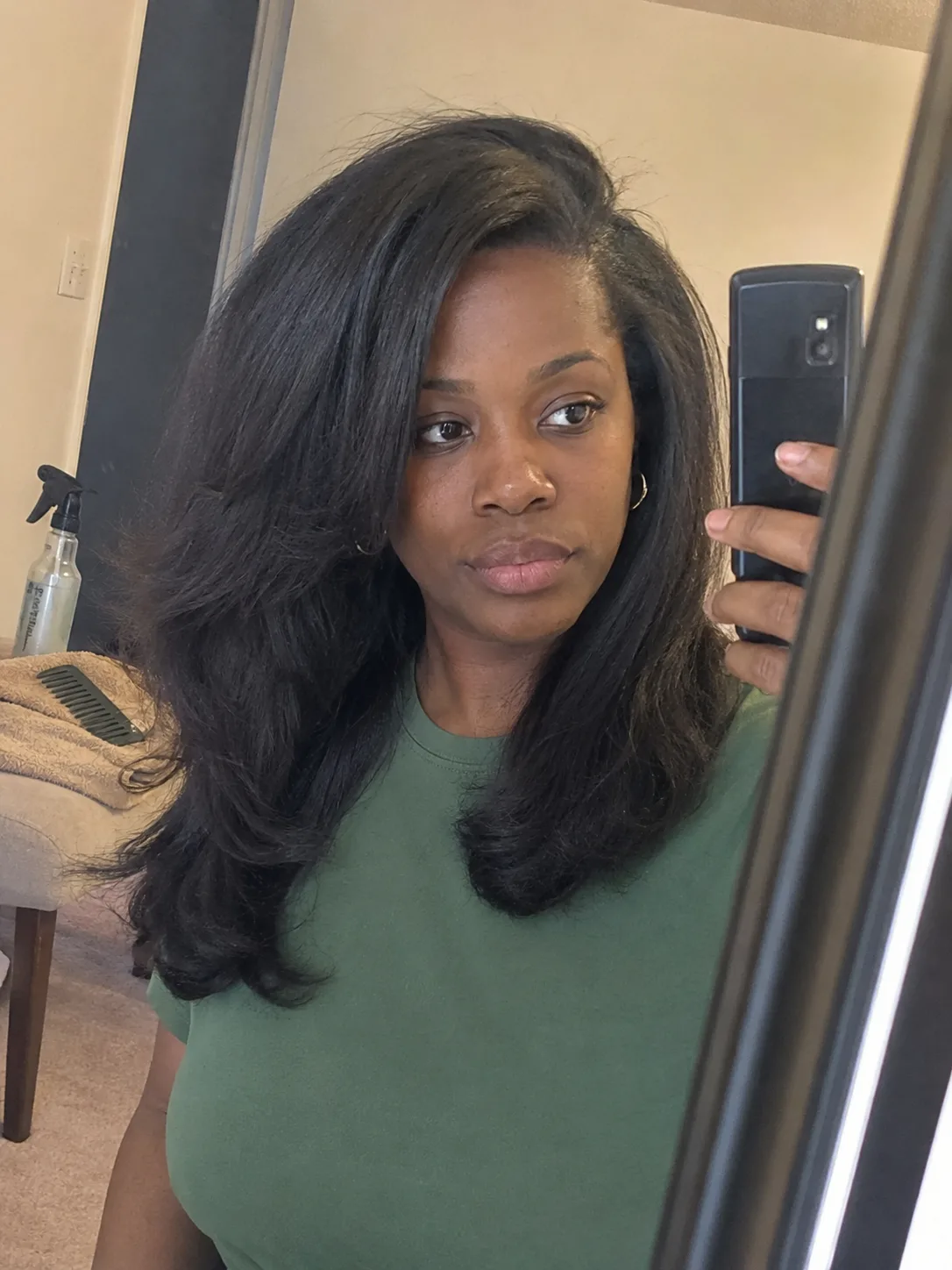
Full Blowout With Curved Ends
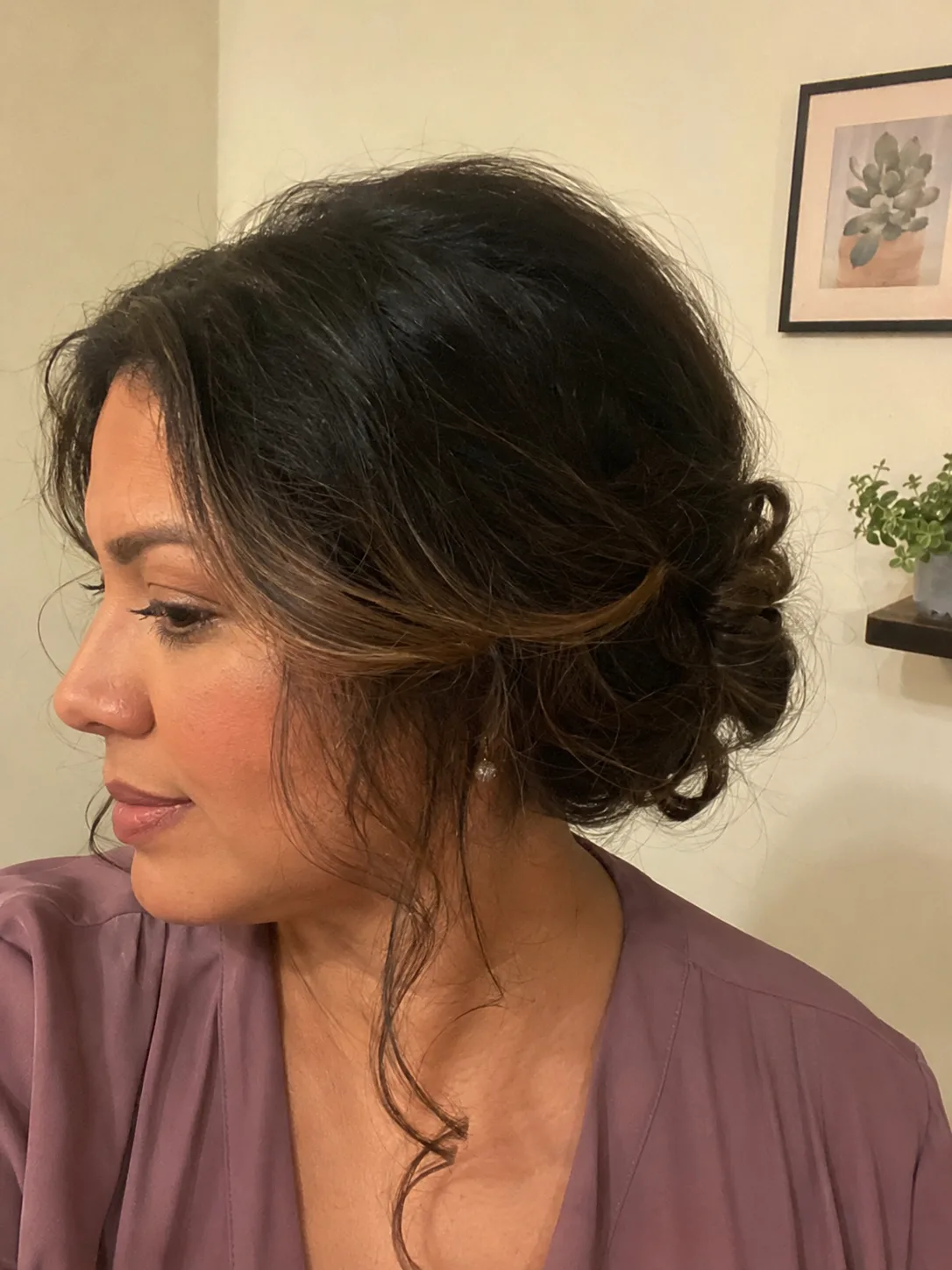
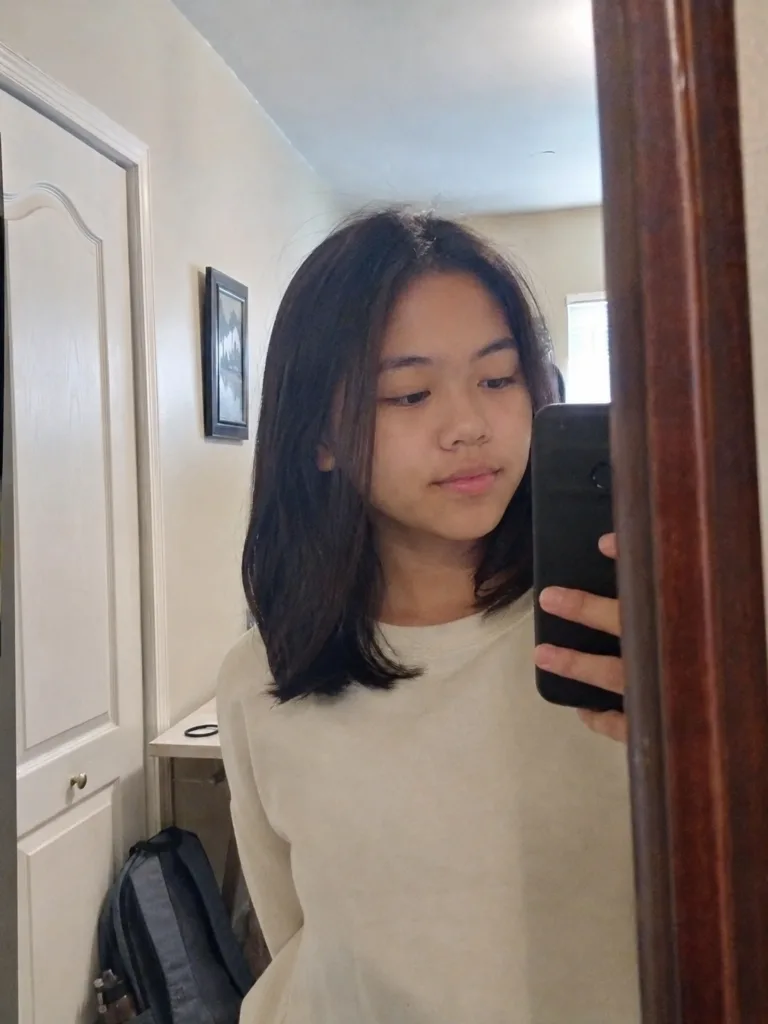
You don’t need curls to make long hair look event-ready. A full blowout with movement at the roots and curved ends gives the length a clean, fluid finish while keeping the styling relatively simple.
The haircut becomes especially visible here. Long layers can create movement through the ends, while a fuller perimeter gives the lower edge more substance. Fine strands and low density are different concerns: small-diameter strands can still be plentiful, while lower density affects how much hair contributes to the overall outline.
This style works well for someone who dislikes pins and tight anchors. It also remains easy to touch and reposition without dismantling the entire hairstyle.
Defined Natural Curls With One Side Open
Long curls or coils can remain fully textured for a wedding. Keeping one side more open creates an asymmetric frame while preserving the volume and pattern through the rest of the hair.
The useful decision is how much manipulation your curls actually need. Curl definition, shrinkage, density, and the shape of the haircut all affect the finished outline. Long natural hair may sit considerably shorter once fully dry than it appears when stretched, so judge the shape in the state you plan to wear.
This is an especially strong option when straightening would add work without improving the look you actually want.
Half-Up Styles for More Control
Half-up hairstyles solve one of the biggest problems with wearing long hair down: the front keeps moving into your face.
They also preserve most of the length, which makes them useful when you want visible curls, waves, or natural texture but need enough control for photographs, eating, and dancing.
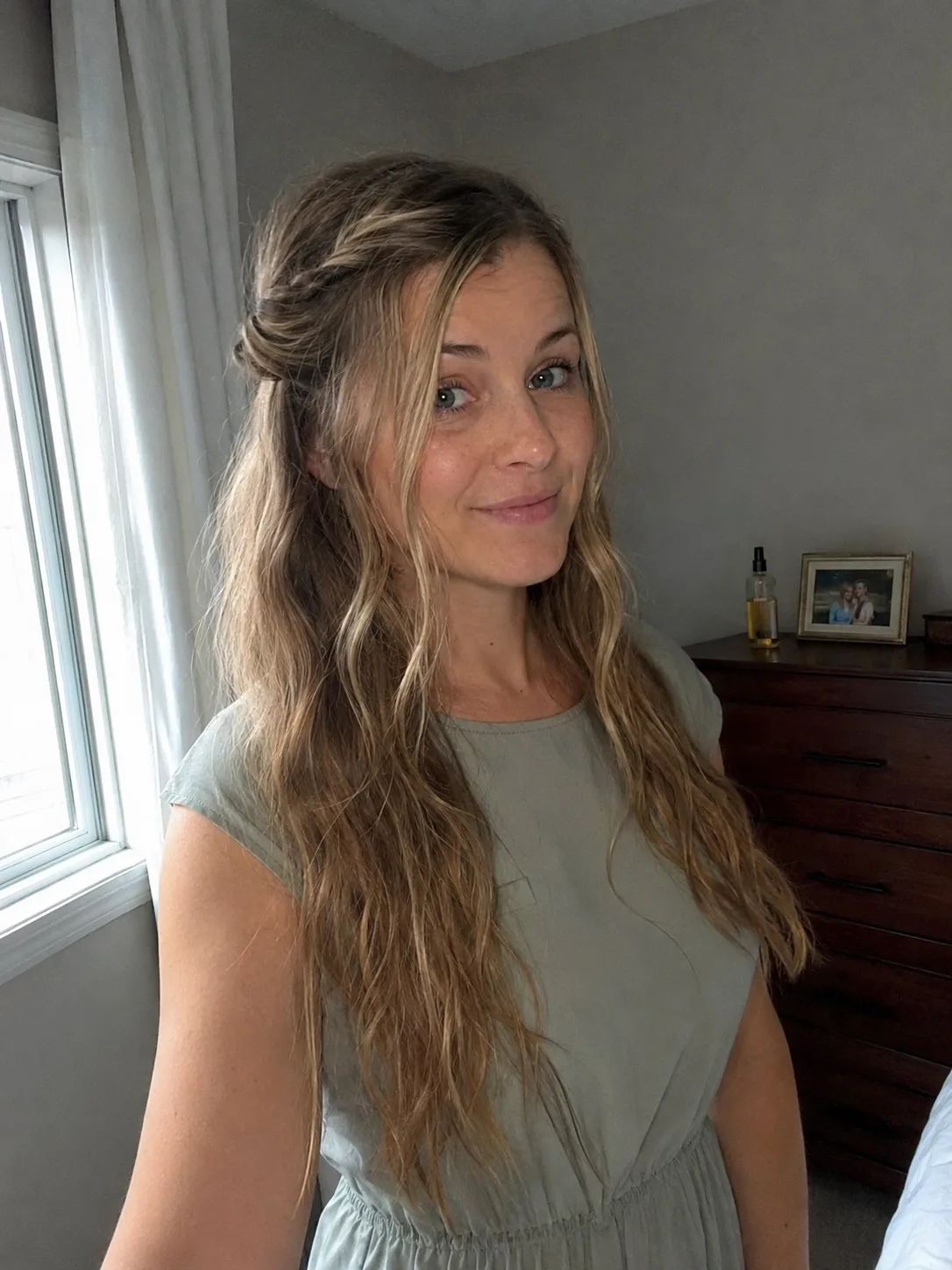
Twisted Half-Up Style
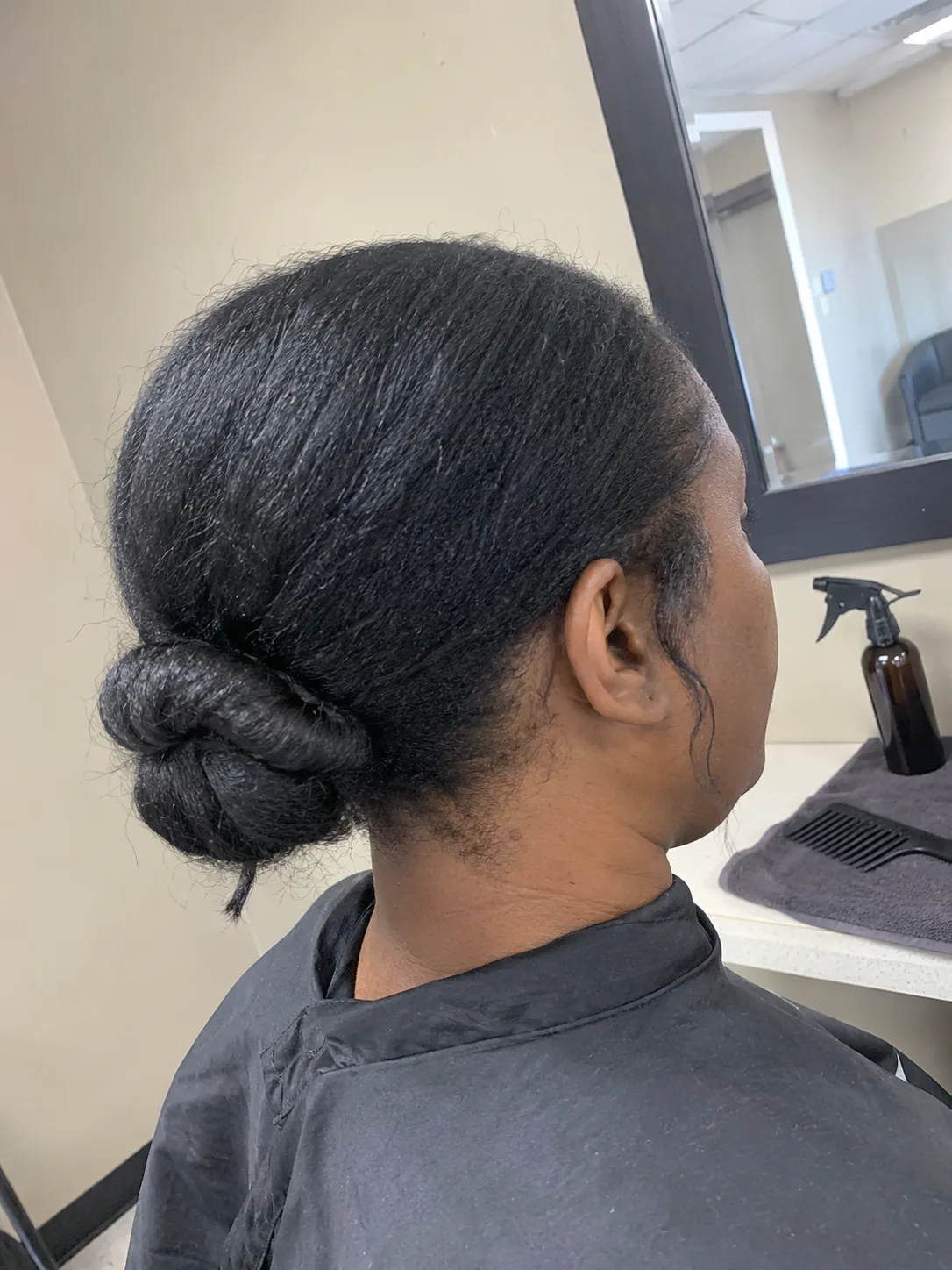
A pair of sections taken back from the temples and twisted toward the center creates a soft half-up shape with very little visual bulk.
Because the construction is simple, the lower hair can carry the interest. Loose waves make it romantic; curls give it more fullness; straighter lengths produce a cleaner finish. The twist also works without forcing every short hair around the temples into a tight anchor.
Keep the joining point proportional to your density. A very bulky fastening can overwhelm fine or lower-density hair, while dense lengths can support a more substantial twist.
Half-Up Ponytail With Crown Lift
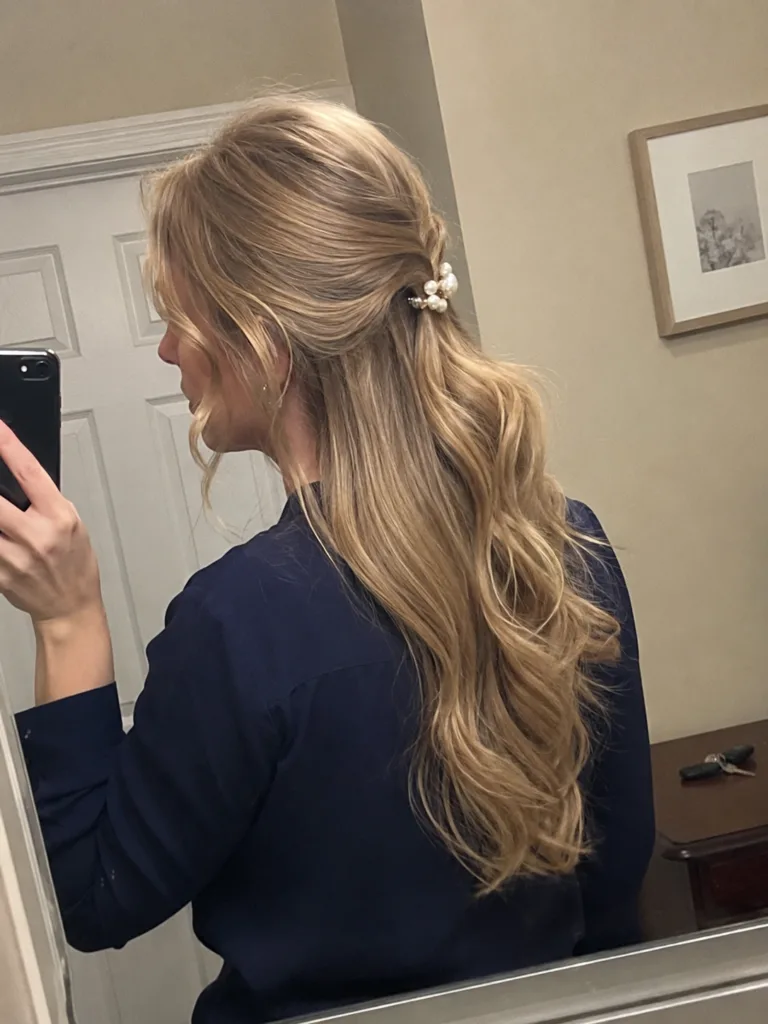
A half-up ponytail creates more height and movement than a flat barrette-style half-up look. It works especially well on long hair because the upper section falls into the lower lengths, creating the impression of one continuous cascade.
Placement changes the mood. A moderately lifted crown feels formal without turning into a very high, youthful ponytail shape.
This is one of the stronger options for dancing because the front remains controlled while the majority of the hair stays loose. Check the profile before leaving for the event; very long hair can pull the upper section flatter once gravity starts working on it.
Braided Half Crown
A braid traveling from one side toward the back gives a half-up hairstyle more texture and structure. It’s useful for outdoor weddings because the braid keeps the front sections organized even after the loose lengths have moved.
The braid can follow the hair’s existing texture instead of requiring a smooth, straight base. On curly or coily hair, preserving some fullness through the braided section often blends better with the loose hair underneath.
Avoid turning the front hairline into the anchor for the entire hairstyle. The braid should feel secure during normal head movement without pulling at the temples.
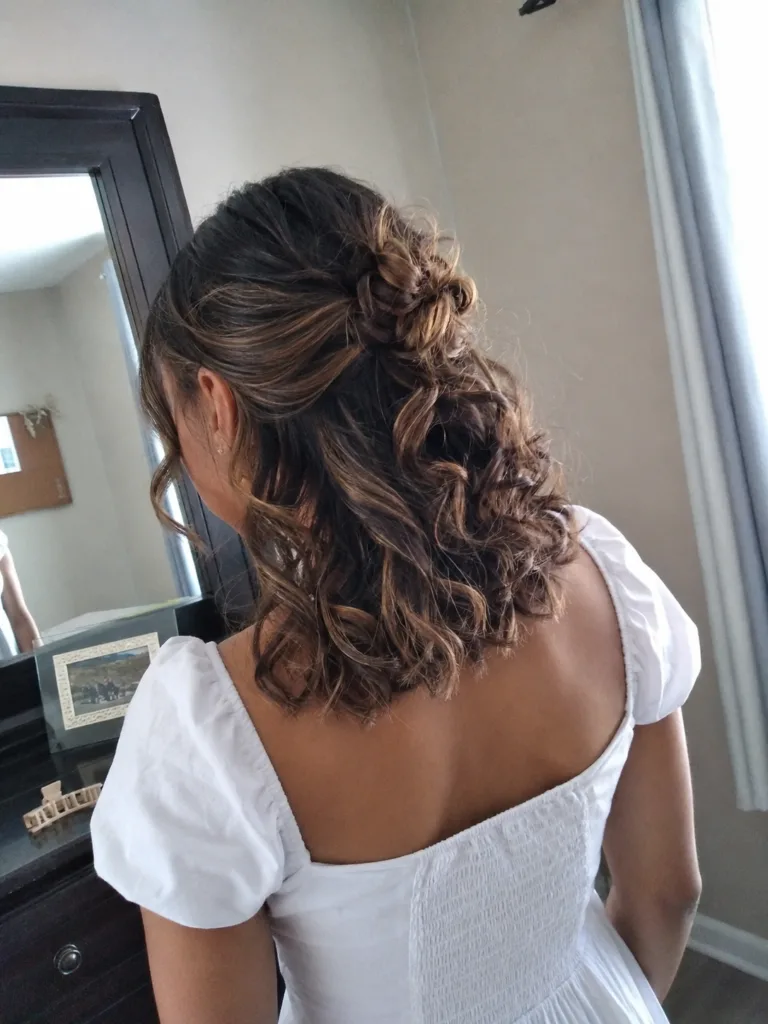
Half-Up Style With a Small Knot
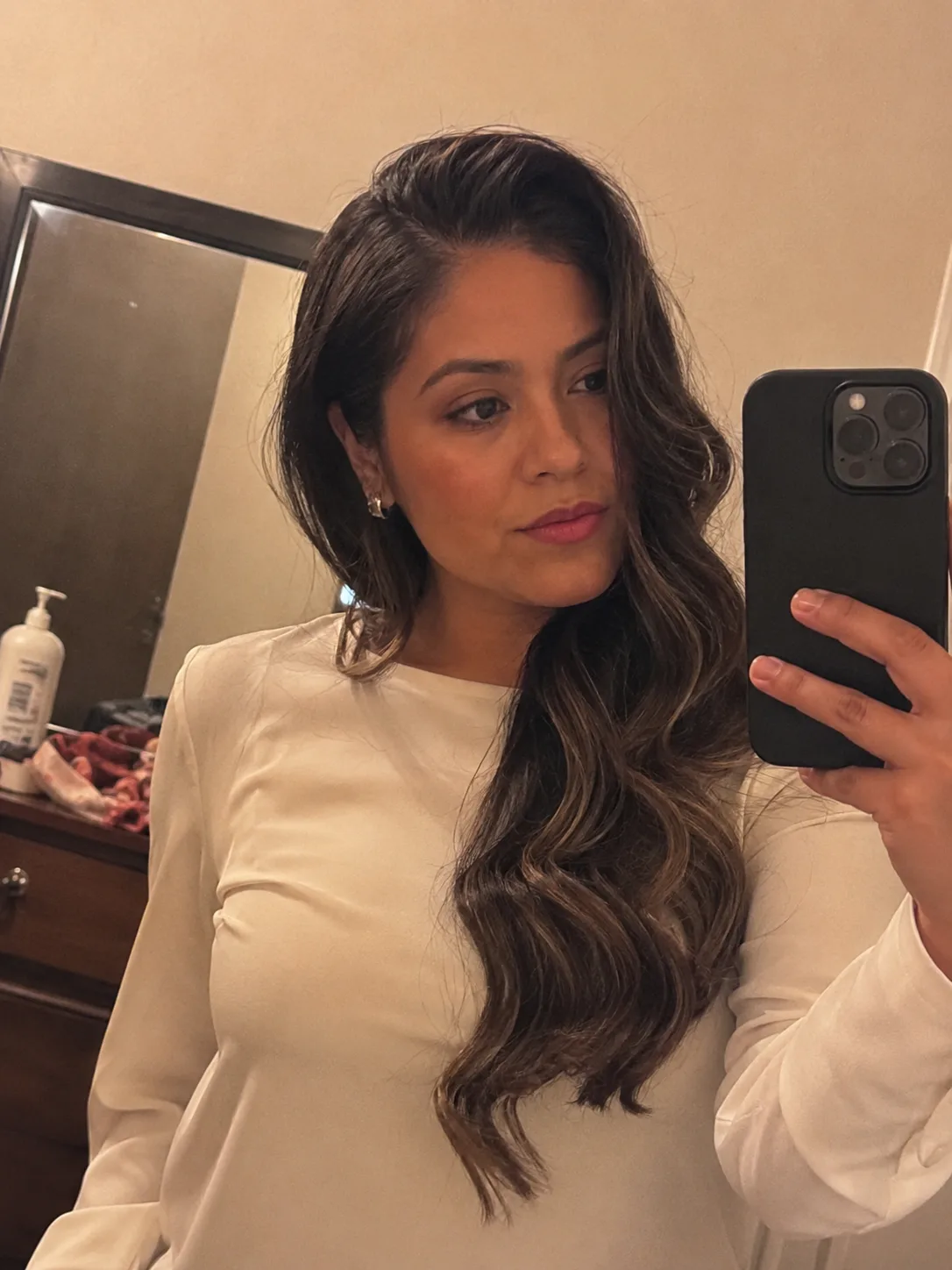
Instead of joining the upper sections with a visible ponytail, they can be wrapped into a compact knot or mini bun at the back of the head. That gives the style a clear focal point while keeping most of your long hair loose.
This is an underrated choice for thick or dense hair. Removing a portion of the length from the loose mass can make the style feel easier around the face while still showing plenty of hair from the back.
A smaller knot is usually more comfortable than trying to pack too much hair into the upper section. Let the remaining length do most of the visual work.
Ponytails and Braids That Survive a Busy Reception
Wedding guest hair doesn’t have to be delicate. Ponytails and braids make sense when the day includes outdoor photographs, travel between venues, vigorous dancing, or simply a preference for hair that stays out of the way.
They also show off long hair without requiring you to wear all of it across your back.
Low Wrapped Ponytail
A low ponytail positioned near the nape has a clean formal line and works particularly well with sleek dresses, statement earrings, and higher necklines.
Wrapping a small section of hair around a fabric-covered elastic conceals the fastening and makes the construction look more deliberate. The tail can stay straight, softly waved, curled, or naturally textured.
Very long ponytails spend much of a seated reception between your back and the chair. Bring the tail over one shoulder before leaning against a seat instead of repeatedly sitting on it.
High Flowing Ponytail
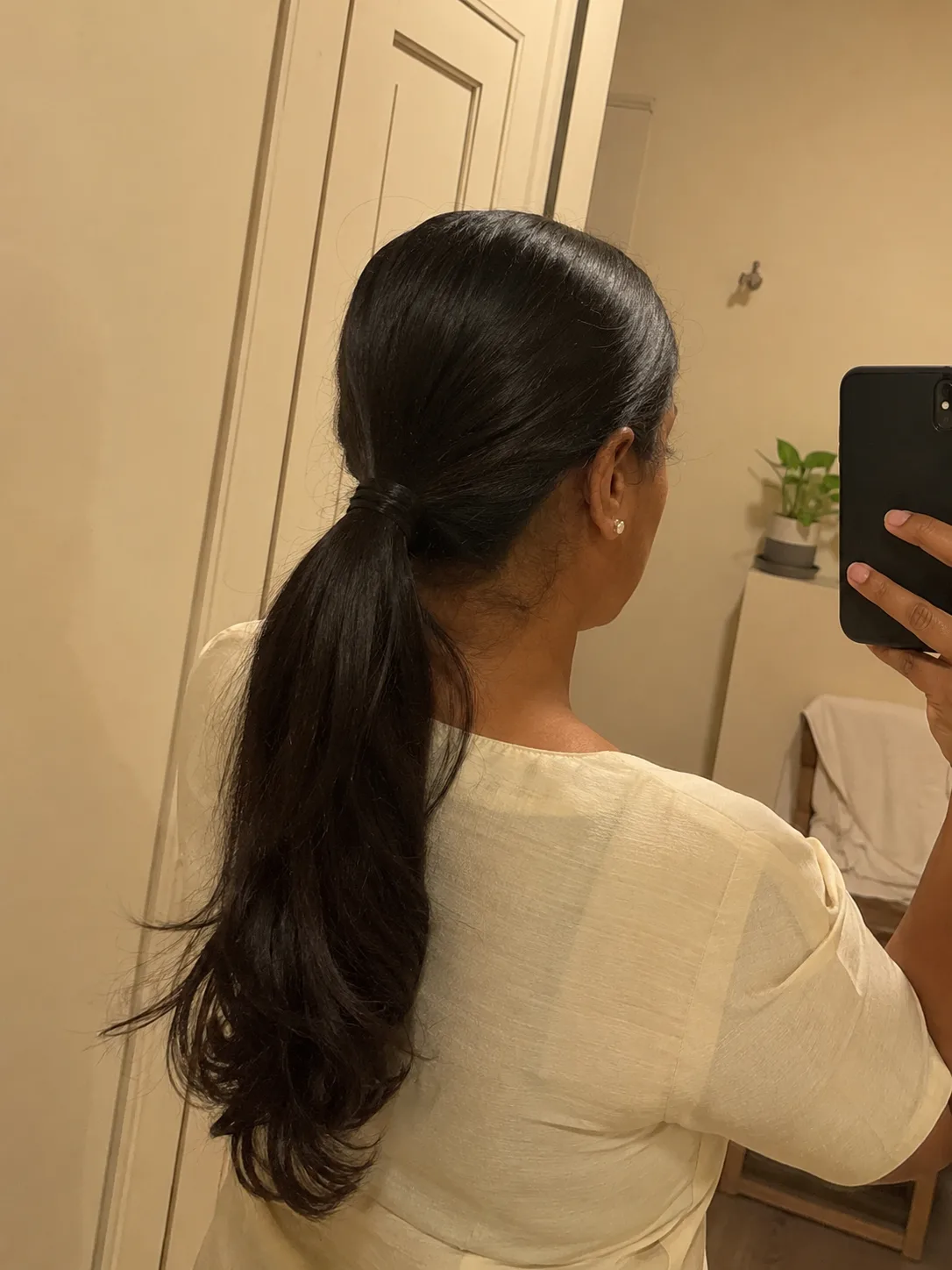
A higher ponytail changes the visual weight of long hair completely. Instead of hanging from the nape, the length starts around the crown and moves freely behind you, giving the profile more lift.
This is worth choosing when movement is part of the appeal. Waves or curls through the tail exaggerate that effect, while a smoother tail feels sharper.
Extra-long or very dense hair creates more leverage at a high anchor, particularly while dancing. The ponytail should feel stable without requiring a painfully tight elastic. If a comfortable high anchor isn’t achievable, a mid-height placement is a better trade.
Bubble Ponytail
A bubble ponytail divides the length into rounded sections using multiple elastics down the tail. The construction gives long hair a bold shape even when the base styling is straightforward.
It’s especially useful on hair where ordinary loose curls tend to disappear during an event. Once the bubbles are formed, some surface softening doesn’t destroy the basic design.
Balance matters more than making every section perfectly identical. Excessively tight elastics can create unnecessary stress along the lengths, so secure each section only as firmly as needed to maintain the shape.
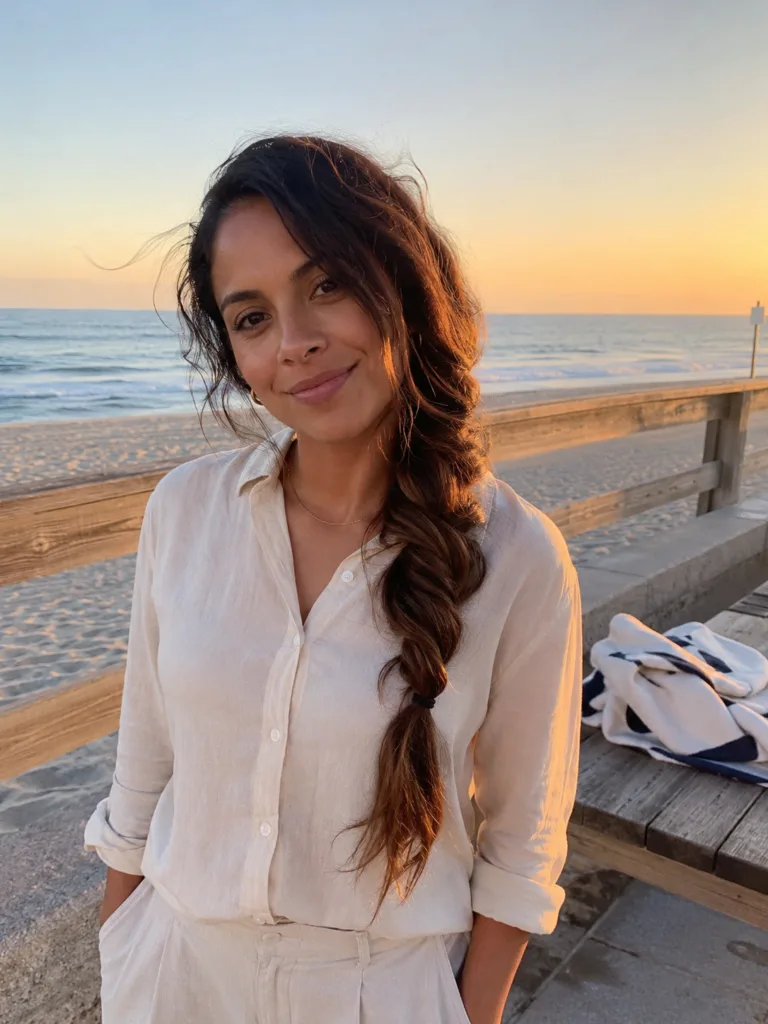
Loose Side Fishtail Braid
A side fishtail moves the entire length forward over one shoulder, making it a practical choice when your dress has a dramatic back you don’t want covered.
The finer woven pattern looks detailed even without decorative accessories. Long hair gives the braid enough length for the structure to become obvious, particularly once the sides are gently expanded.
A very deconstructed braid can become fuzzy as it rubs against your shoulder and clothing. Keep more structure through the upper portion and loosen selectively rather than pulling the entire braid apart.
Soft Rope Braid
Two sections twisted around each other create a rope braid with a cleaner, more graphic pattern than a fishtail. It’s quick visually, but it still feels deliberate enough for a semi-formal or modern wedding.
This style is particularly good when your dress has an architectural neckline or simple fabric. The braid adds texture without producing a highly intricate finish.
It also manages exceptionally long lengths well because the hair stays consolidated. Keep enough control at the base that the braid doesn’t rotate awkwardly as you move.
Updos That Keep Long Hair Off the Dress
An updo is usually the strongest choice when the dress neckline, back, or earrings deserve to stay visible. It also removes the constant friction of long hair against clothing.
The catch is weight distribution. Long hair creates a substantial bundle once all of it is pinned up. Where that bundle sits determines how comfortable the hairstyle feels.
Low Chignon
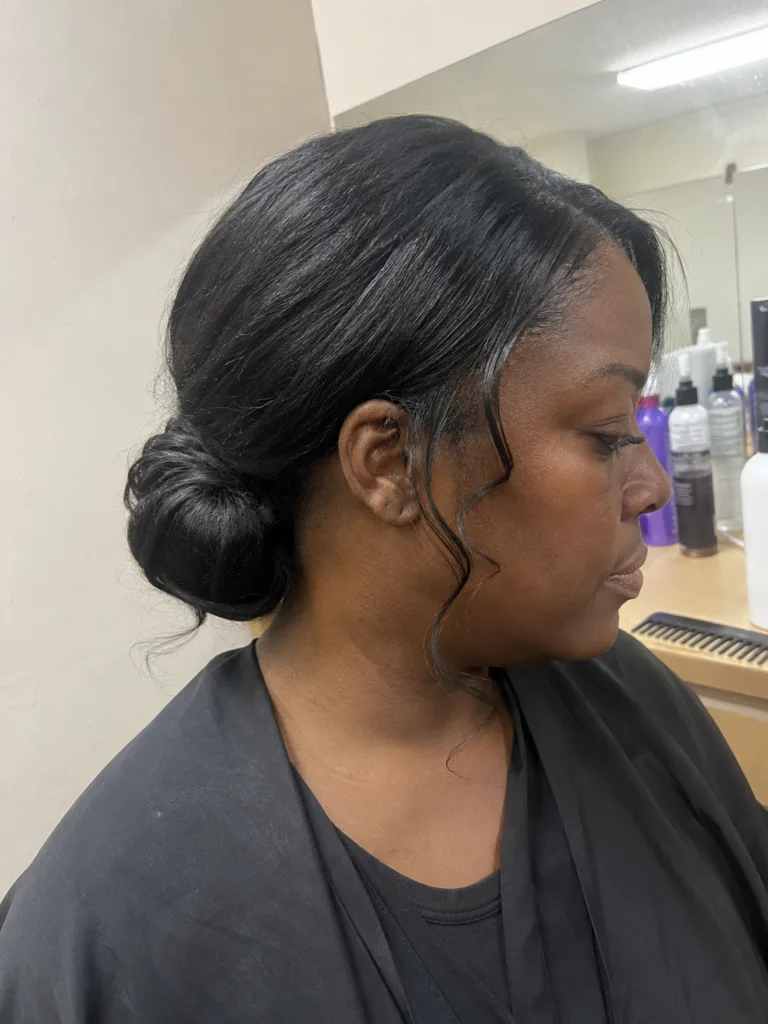
The low chignon is the practical default for a formal wedding when you want your hair fully up. The mass sits near the nape, the shape works with many necklines, and it doesn’t require extreme crown height to look finished.
Smooth the sides toward the back, establish a secure low base, then fold or wrap the lengths into the bun and pin into the foundation rather than relying on surface pins alone.
Very long hair creates more material than many reference photographs reveal. Trying to force all of that length into a tiny bun usually makes the style harder to secure. Let the chignon become slightly broader when the amount of hair requires it.
Textured Low Bun
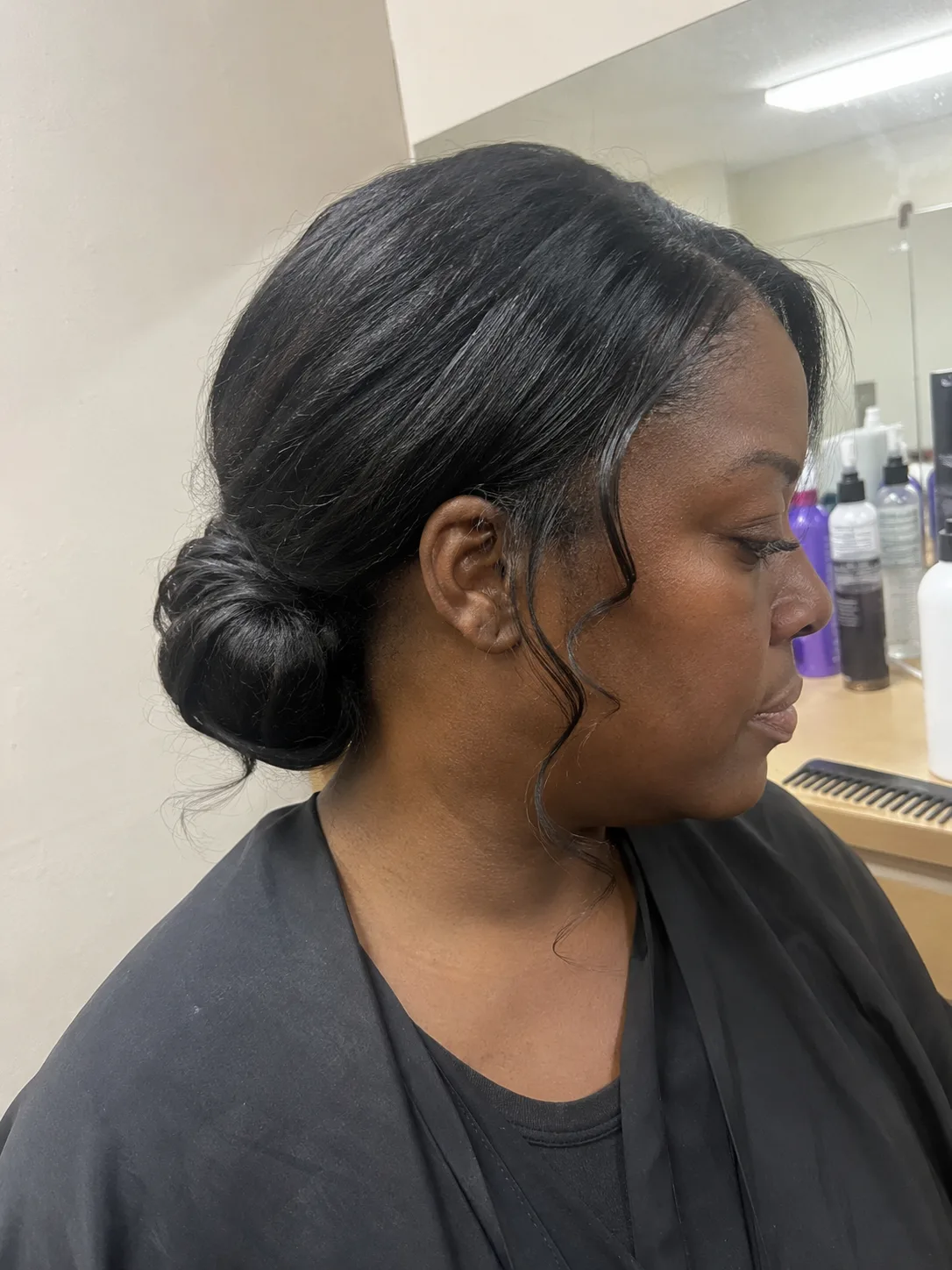
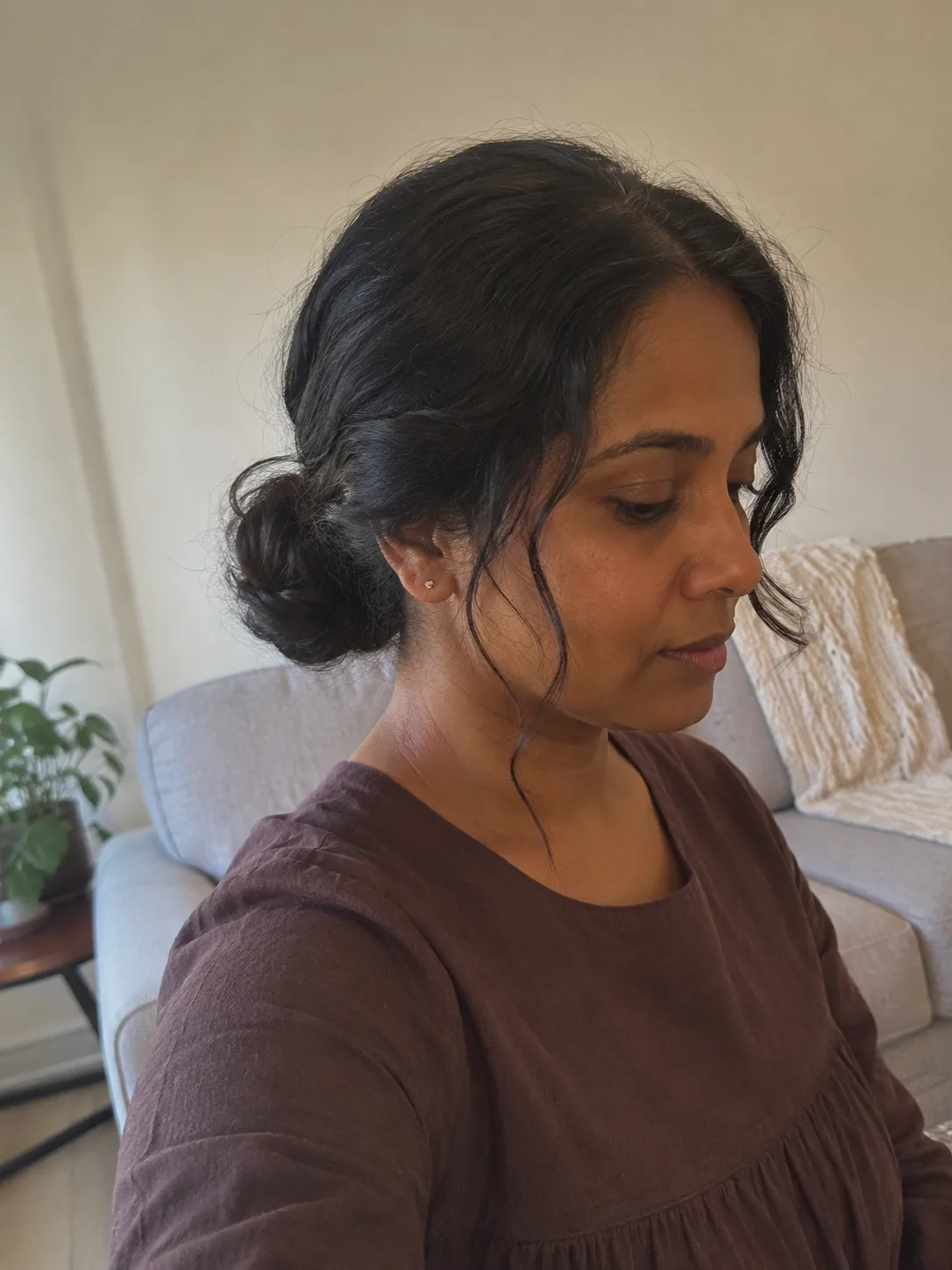
A textured bun gives long curls, waves, or deliberately bent sections somewhere to go without demanding a perfectly smooth surface.
That makes it more forgiving in real life than a glassy, highly controlled bun. A few pieces shifting through the evening won’t immediately make the style look unfinished.
The strongest version keeps the foundation stable and allows softness in selected areas. Randomly loosening every section can weaken the bun and create a shape that droops toward the neckline.
French Twist
The French twist sends the hair vertically up the back of the head instead of spreading it into a round bun. That elongated construction can make long hair feel surprisingly streamlined.
It pairs well with dresses featuring high collars, clean shoulders, or minimalist tailoring because the hairstyle adds height without covering the garment. Bobby pins should catch into the internal fold so the outside remains relatively clean.
Very long or dense hair needs enough internal space for the ends to be tucked securely. A narrow reference photo created on less hair may not translate exactly; allowing a slightly fuller roll is often the more realistic choice.
High Textured Bun
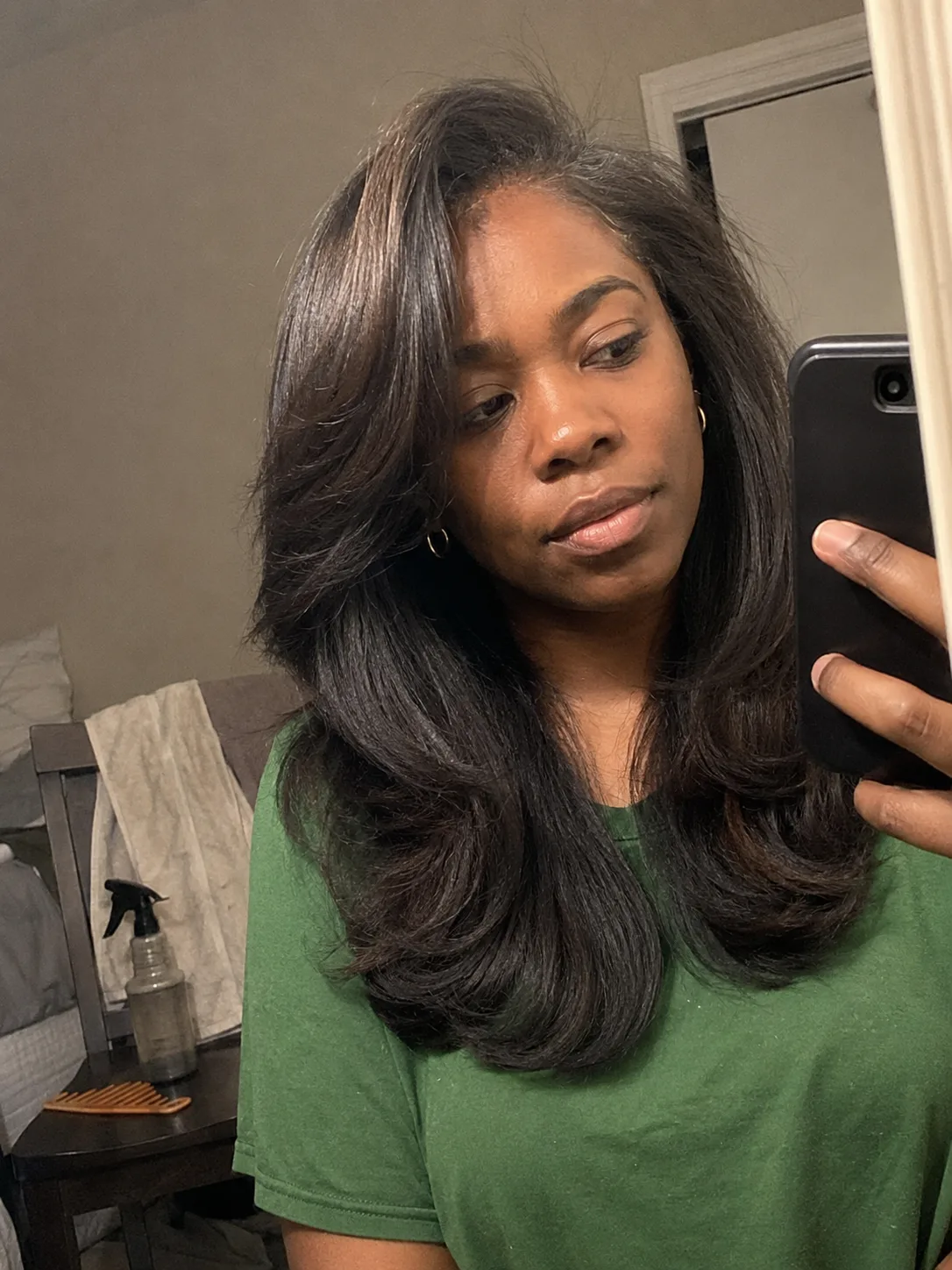
Moving all the hair above the crown keeps the neckline completely clear and gives the hairstyle a more energetic feel than a low bun.
Curls and coils work particularly well because their natural texture can contribute fullness without requiring every strand to lie flat. Long straight or wavy hair can be looped and pinned in sections to avoid creating one heavy coil around the base.
Consider the reception setup before committing to a very large bun. A high style usually avoids the back of a chair better than a mid-level one, but a wide bun can still shift when you turn your head or hug people.
Braided Crown Updo
A crown-style braid wraps the hair around the head instead of collecting it into one central bun. It gives long hair a completely different outline and keeps the length contained from every angle.
This is one of the strongest options for an outdoor wedding because the construction doesn’t depend on loose ends remaining perfectly arranged. It can be sleek or textured according to the hair you start with.
Long, dense hair creates a substantial braid, so placement deserves attention around the ears and temples. Glasses arms, statement earrings, or hearing devices need enough clear space to sit comfortably without competing with a thick braided section.
Matching the Hairstyle to the Wedding
Start with the parts of the outfit and event that your hair can interfere with.
A dress with an open or embellished back usually benefits from hair being brought forward, braided, or pinned up. High necklines can feel visually crowded with very full hair sitting directly over them. Strapless and off-the-shoulder dresses give loose styles more room.
Then consider the setting. A climate-controlled evening reception gives structured waves a better chance of retaining their precise finish than a humid outdoor ceremony. Wind favors braids, half-up styles, and securely pinned shapes. Warm weather can make a full head of dense long hair against the neck less comfortable.
Your normal hair behavior matters as well. Curly and coily hair can remain curly or coily; wedding styling doesn’t require a pressed base. Shrinkage changes apparent length and the placement of volume, so evaluate a planned style after the hair reaches its normal dry state. Chemically processed or previously lightened hair may also need gentler handling through the lengths.
Finally, check how the style works from a seated position. This sounds unglamorous, but weddings involve plenty of chairs. A low bun may press directly into a chair back. A long ponytail can get trapped behind you. A large mid-height updo can interfere with a headrest during the journey to the venue.
Planning Hair That Still Looks Good Later
A wedding hairstyle has to tolerate normal movement. Test the construction by turning your head, looking down, walking around, and sitting against a chair. Secure styles should remain comfortable during those movements.
Keep a few useful basics available if your hairstyle relies on them: spare bobby pins, a small elastic, and whatever generic finishing product suits your hair and planned surface. The point isn’t to rebuild the hairstyle during the reception. It’s to handle one escaped section or a loosened fastening without turning it into an emergency.
Avoid making the style painfully tight in pursuit of durability. Tightness and hold are different things. A well-built ponytail or updo gets much of its stability from sectioning, anchor placement, and pin direction.
Persistent pain, stinging, redness, sores, or concerning changes around the hairline deserve more attention than preserving an occasion hairstyle. Loosen or remove a style that is causing significant discomfort, and seek advice from a dermatologist or another qualified healthcare professional when symptoms are persistent or concerning.
For salon styling, bring photographs that show more than the front. A side view and back view reveal the size and placement of the style much more clearly. Also mention your normal texture, any extensions you plan to use, and the parts of your dress or accessories that need space around the neck and ears.
Related Hairstyles to Explore
- Wedding guest hairstyles for long hair
- Hairstyles for wedding guest
- Prom hairstyles for long hair
- Beach hairstyles for long hair
FAQs
What is the easiest wedding guest hairstyle for very long hair?
A low ponytail or low chignon is a strong starting point. Both control the length without requiring an elaborate pattern of curls or pins. The ponytail keeps more movement, while the chignon removes the hair from your back completely.
Can I wear my natural curls or coils to a wedding?
Yes. Long curly and coily hair can be worn loose, half-up, braided, in a ponytail, or pinned into an updo. Choose the shape in the texture and shrinkage state you actually plan to wear rather than designing the style around stretched length alone.
Should I wash my hair right before styling it for a wedding?
There isn’t one useful wash schedule for every hair type or hairstyle. Base preparation on your scalp comfort, buildup, texture, planned products, drying needs, and the style you’re creating. The important point is that the hair and scalp are comfortable and the hair is fully prepared for the chosen technique.
Can extensions be used for a wedding guest hairstyle?
Extensions can add length or fullness to ponytails, braids, and updos, but the attachment method and added weight change how the style behaves. More hair also creates a larger bun or heavier anchor. Choose an amount that works with your natural density and remains comfortable during normal movement.
Hair Texture & Upkeep Style Matcher
Select your natural hair texture and daily maintenance window to get an instant styling formula and heat safety cap.
Heat Cap: 320°F (160°C)
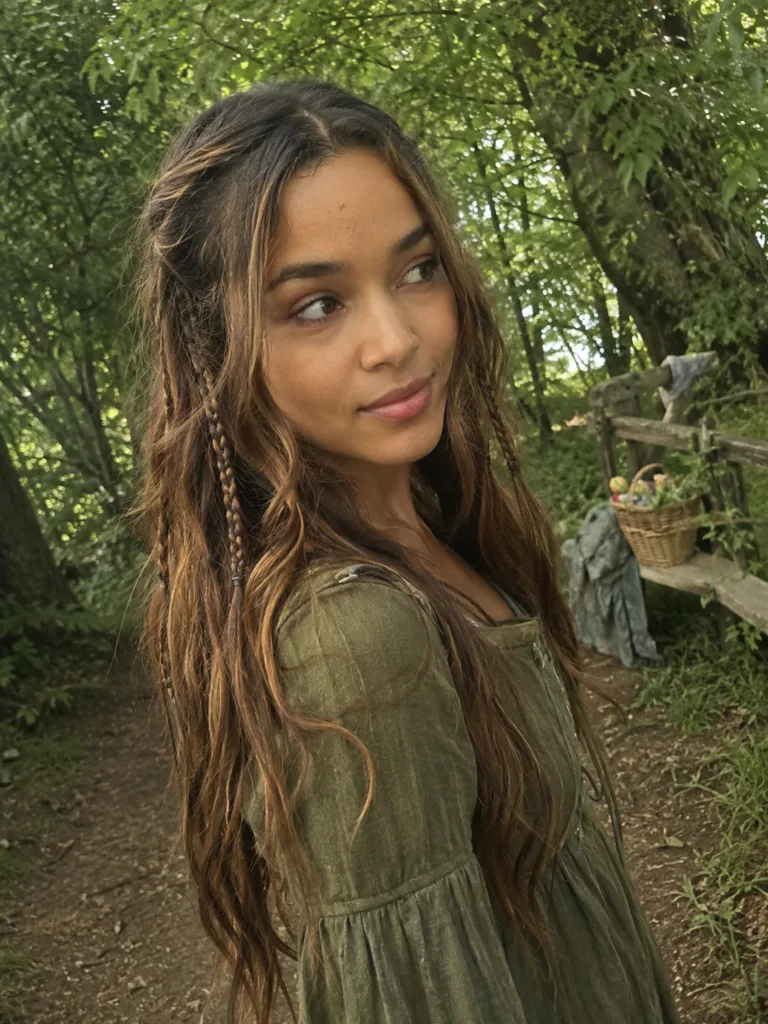
A versatile three-strand braid beginning at the parietal ridge, securing the top half while allowing natural wave texture to flow freely around the shoulders.
Conclusion
The most successful wedding guest hairstyle for long hair is usually the one that puts your length somewhere compatible with the event. Loose waves make sense when movement is part of the look. Half-up styles offer more control without hiding your length. Braids and ponytails handle an active reception well, while an updo earns its extra construction when you want the neckline and back of the outfit completely visible.
Choose the placement first, then the finish. That single decision will narrow the options far more effectively than trying to copy whichever wedding hairstyle looks prettiest in a close-up photograph.
Editorial Standards & Hair Health Guidance
Every style featured on Tress Atlas is curated with a focus on real-world wearability, scalp tension management, and cuticle preservation. When trying protective styles or tight updos, ensure perimeter hairline sections remain tension-free to avoid traction stress on delicate follicles. For heat styling, cap tools below 350°F (180°C) to prevent thermal keratin denaturation.
Scientific Sourcing: Practices aligned with the American Academy of Dermatology (AAD) on traction alopecia risk reduction and cosmetic trichology research on hair tensile strength.