Infant Hairstyles: Comfort, Hair Type, and Easy Styling Choices
An infant hairstyle has a different job from a hairstyle for an older child. It doesn’t need to stay perfectly arranged through an entire day, create a dramatic shape, or make every short strand cooperate. Comfort comes first.
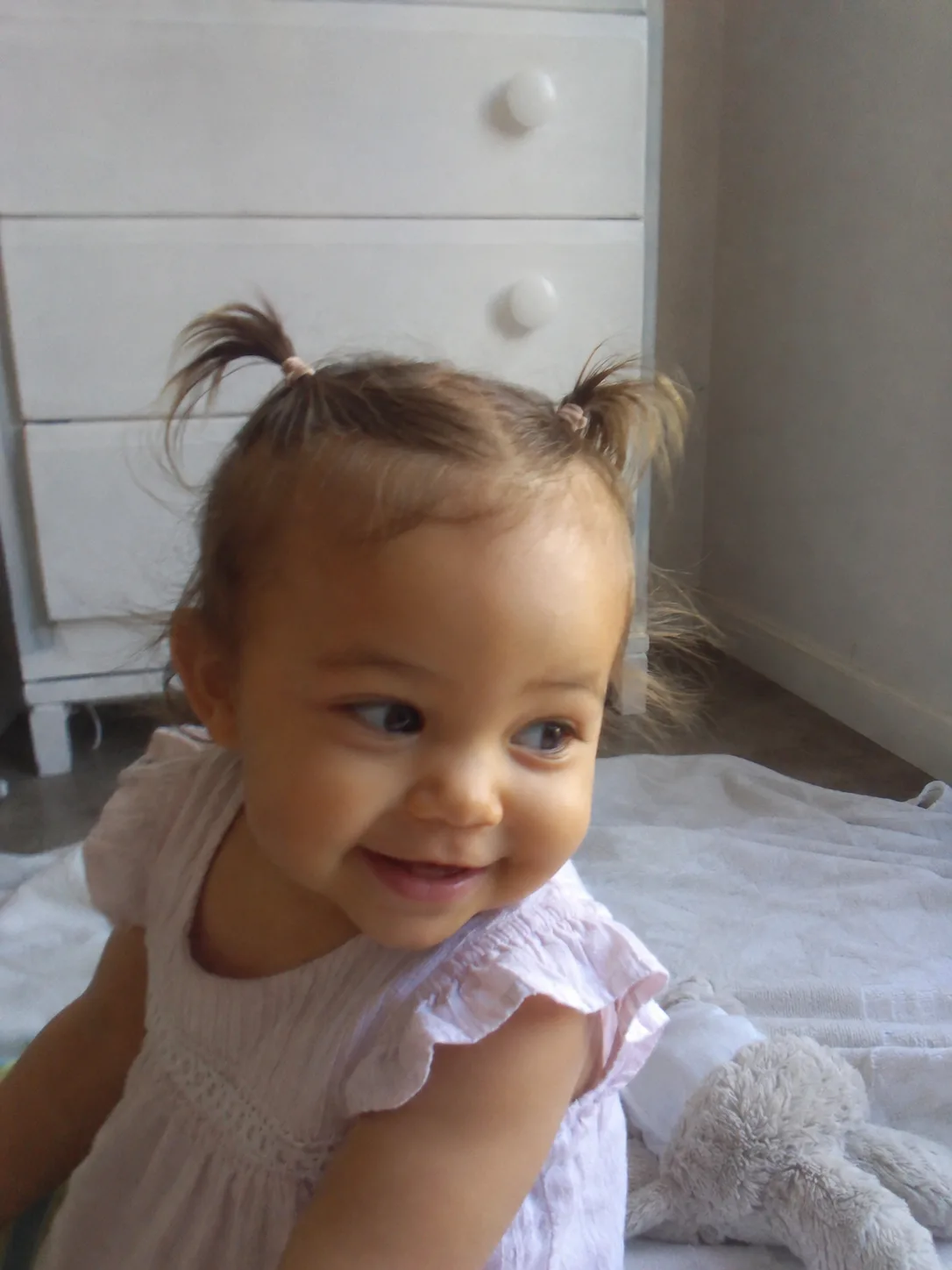
For many babies, the most practical hairstyle is simply clean, gently detangled hair left in its natural state. Babies with enough length may suit a loose top ponytail, soft puffs, or another minimal style that moves easily and comes out without a struggle. Short, fine, sparse, curly, coily, and fuller infant hair all need different handling, so the amount of hair present matters more than trying to reproduce a particular photograph.
Accessories deserve extra thought too. A tiny bow can look harmless while still being a detachable object within reach of a baby who explores with their hands and mouth. Small parts present a recognized choking hazard for children under three. (U.S. Consumer Product Safety Commission) Styling choices therefore need to work for the baby’s stage, supervision, and routine as well as the photograph.
The practical default is simple: use the least amount of tension and equipment necessary to keep the hair comfortable and manageable.
What Makes a Good Infant Hairstyle?
A good infant hairstyle should feel almost uneventful to the baby.
You shouldn’t need to pull firmly at the roots to make short hairs reach an elastic. The hairline doesn’t need to look perfectly smooth, and naturally shorter areas don’t need to be concealed. A style that relies on constant repositioning, tight fastening, or several tiny accessories creates more work without giving an infant much practical benefit.
Think about four things first:
How much hair is actually available to style
How the hair naturally curls, coils, waves, or lies
Whether the style remains comfortable during lying down, feeding, carrying, and car-seat use
How easily everything can be removed
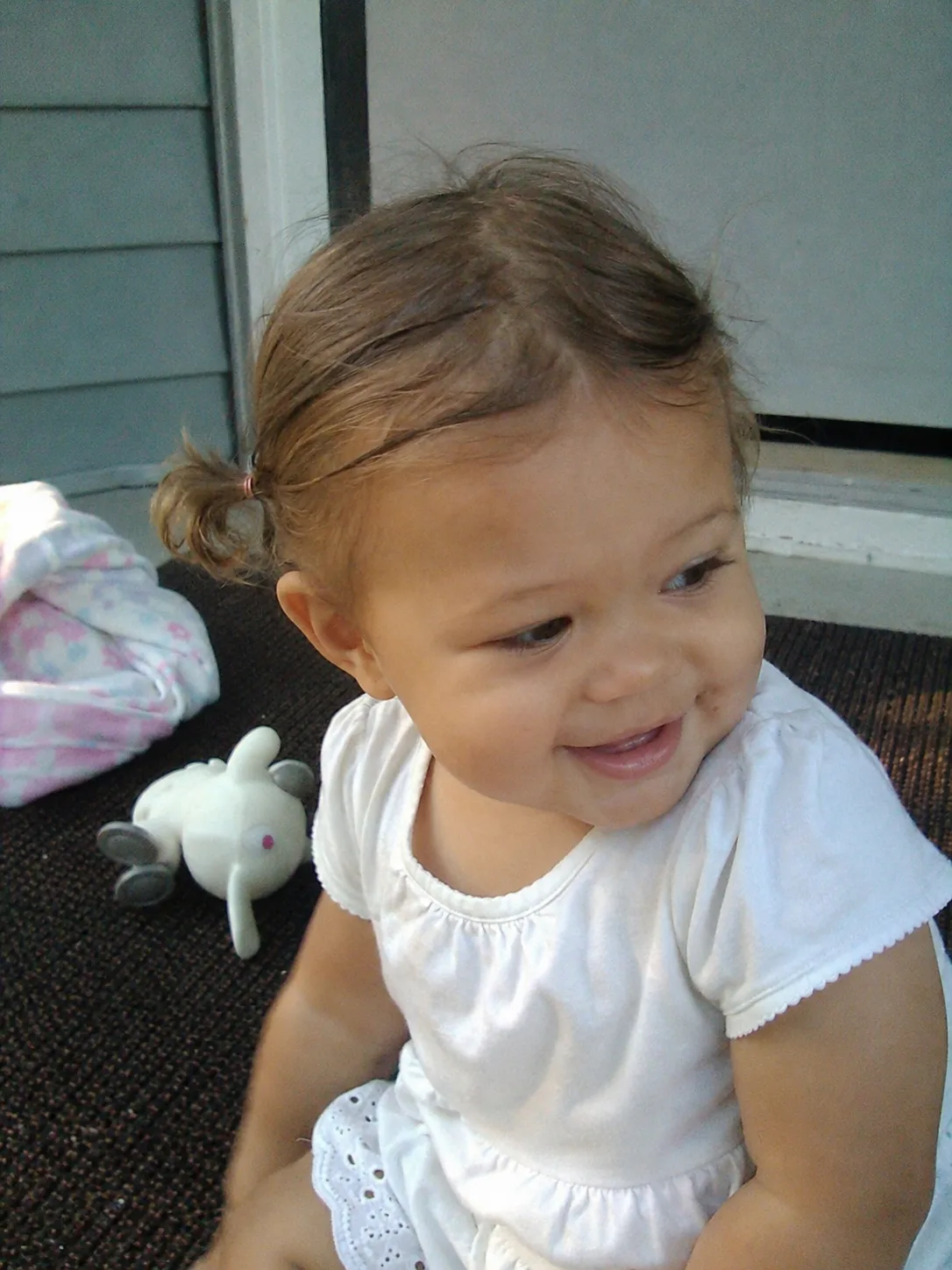
The back of the head deserves particular attention. Infants spend considerable time with their heads supported against mattresses, caregivers, seats, and other surfaces. A bulky ponytail, bow, clip, knot, or gathered section directly behind the head can press into that area. Even a style that looks comfortable while the baby is upright may be awkward once the head rests against something.
For that reason, styles concentrated high on top of the head are sometimes easier for a supervised photo or brief daytime wear than bulky styling at the back. Leaving the hair completely loose is simpler still.
You also don’t need to style around every uneven area. Hair distribution can change during infancy, and newborns and very young infants commonly experience some hair loss after birth. (HealthyChildren.org) Treat the hair that’s present gently instead of trying to disguise every difference in length or fullness.
Work With the Hair Your Baby Has Now
Infant hair changes quickly enough that buying into a fixed hair-type identity isn’t especially useful. What matters today is whether the strands are fine or more substantial, how much hair covers the scalp, how easily it tangles, and whether curls or coils contract after becoming wet.
Fine strands and low density are also different things. A baby may have many fine strands, or relatively few strands that are individually thicker. Pulling more firmly won’t make low-density hair appear genuinely fuller, and elaborate sectioning may actually expose more scalp.
Very short or sparse infant hair
Leave it alone more often.
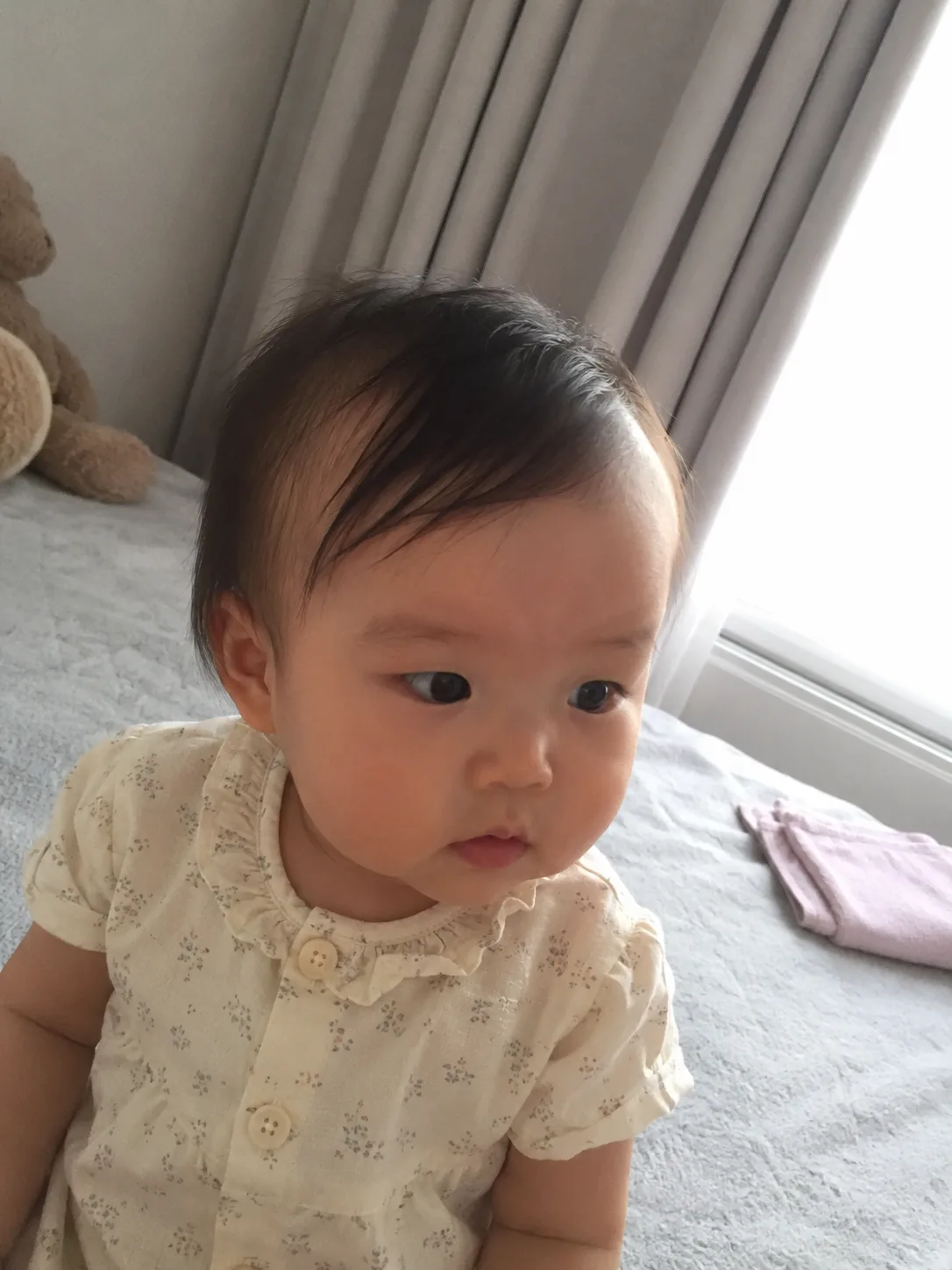
A soft brush or gentle hand-smoothing may be everything needed. A slight natural direction can be encouraged after washing without trying to create a strong part. Hair that can’t reach an elastic comfortably isn’t ready for a ponytail simply because a few longer strands can be captured.
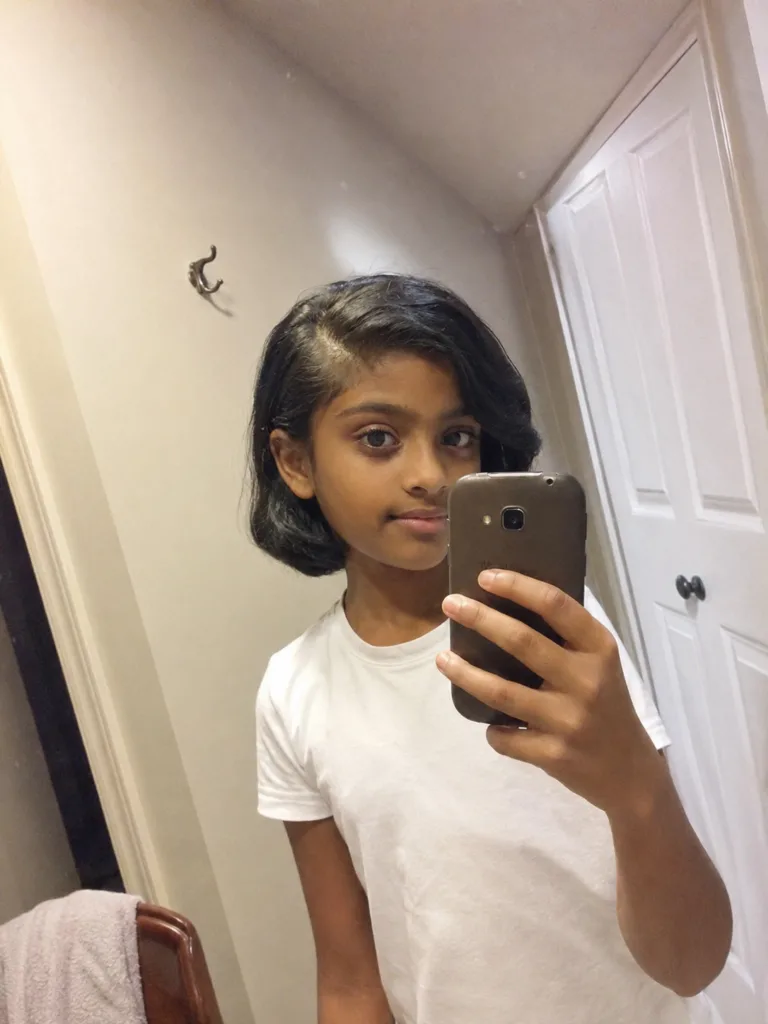
This is one area where simplicity looks better than forcing a style. A tiny ponytail under tension can make the surrounding short hairs stick out anyway, while loose hair follows the baby’s natural growth pattern.
Straight or softly wavy hair
Straight and wavy infant hair may lie close to the scalp, develop little bends where the head rests, or point in several directions as different areas grow.
Trying to flatten every section usually adds unnecessary manipulation. Gently arranging the front away from the eyes is enough when the length allows it. A loose top pony can work once the strands gather easily without pulling shorter hairs from the temples.
Wavy hair can also be allowed to air into its natural pattern. Constant brushing after it has dried may separate the wave pattern and make the surface appear fluffier.
Curly and coily infant hair
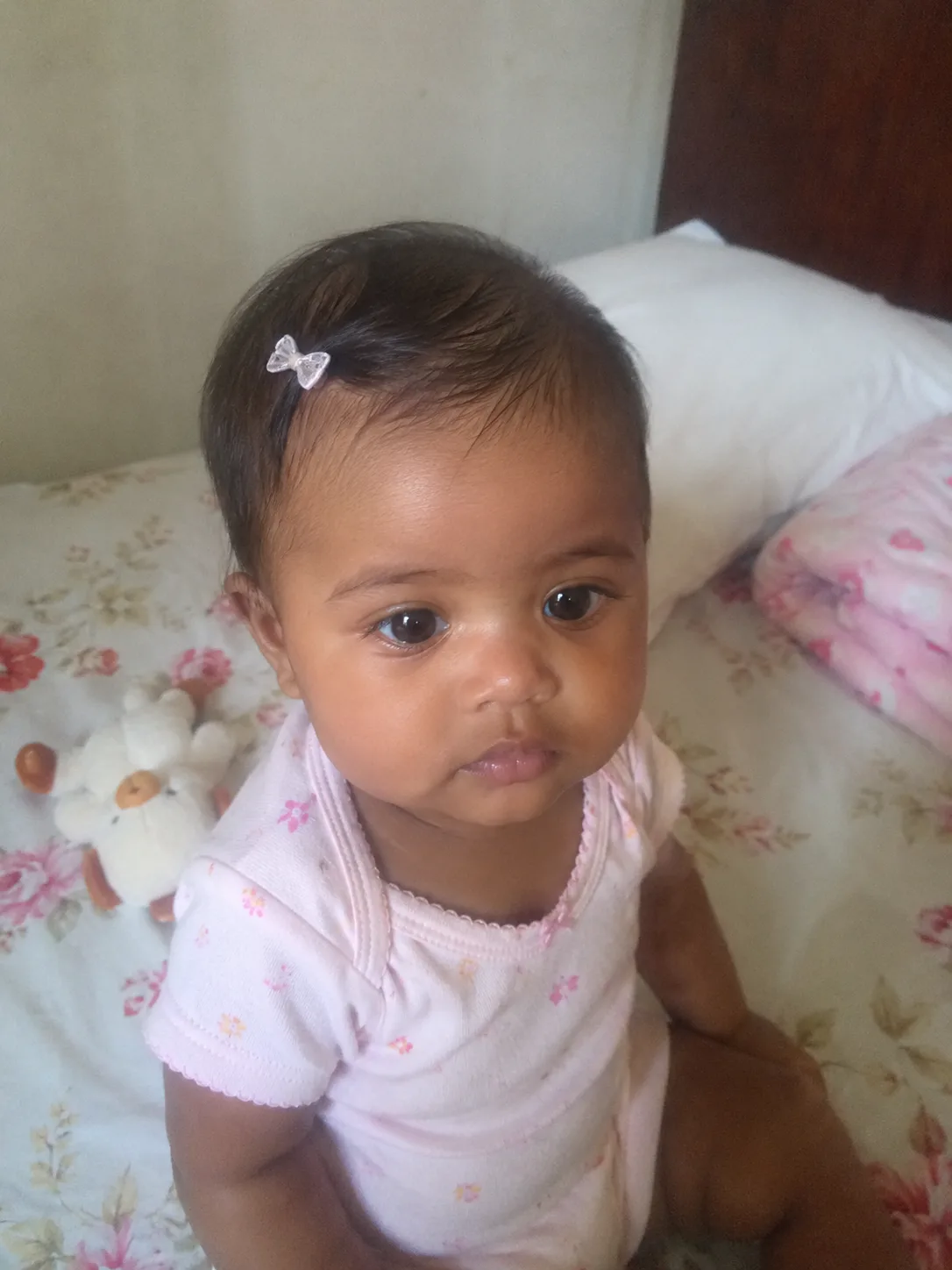
Curls and coils often look much shorter after drying because of shrinkage. Judge usable styling length in the state the hair normally occupies instead of stretching it simply to make a particular style possible.
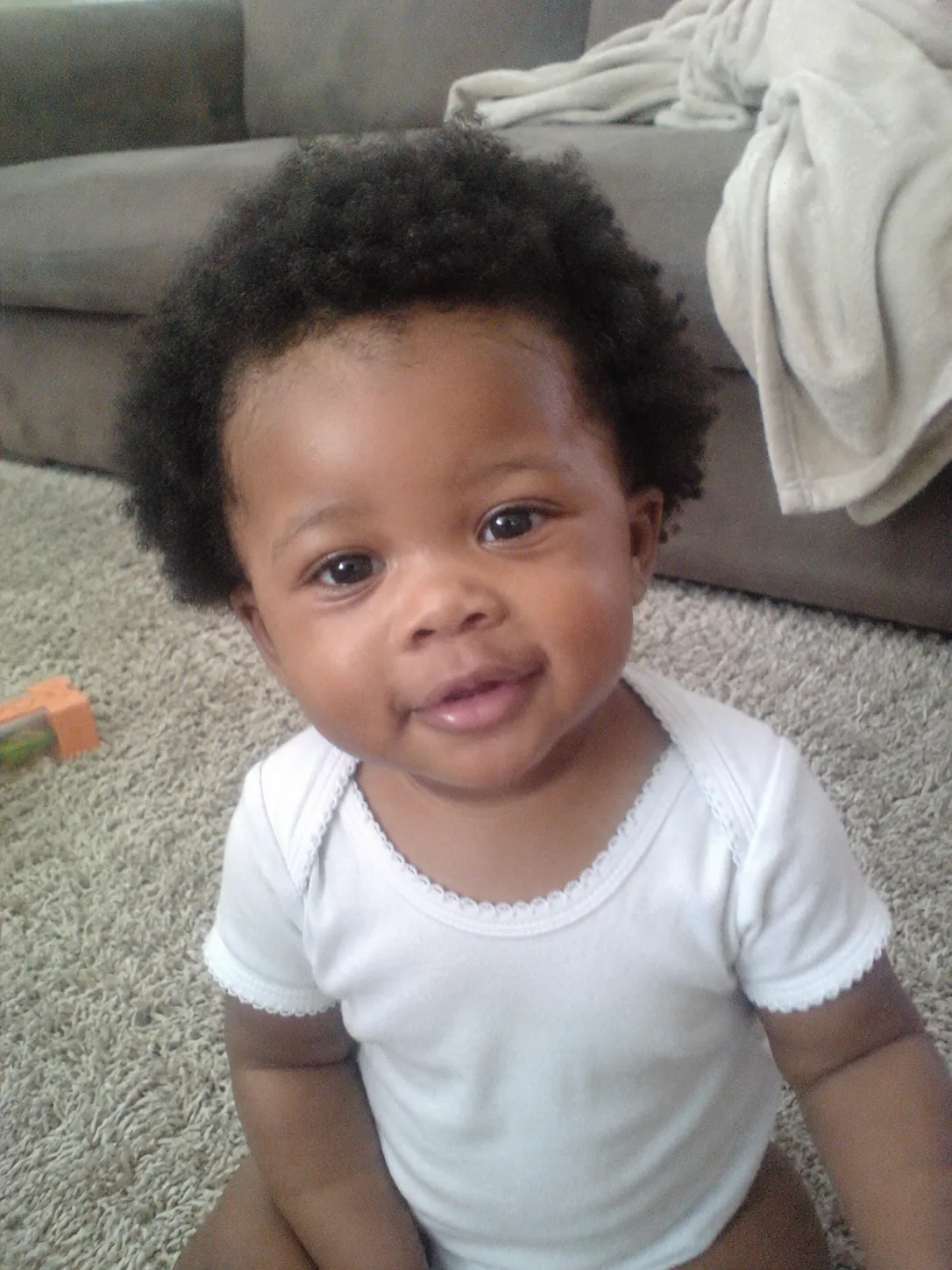
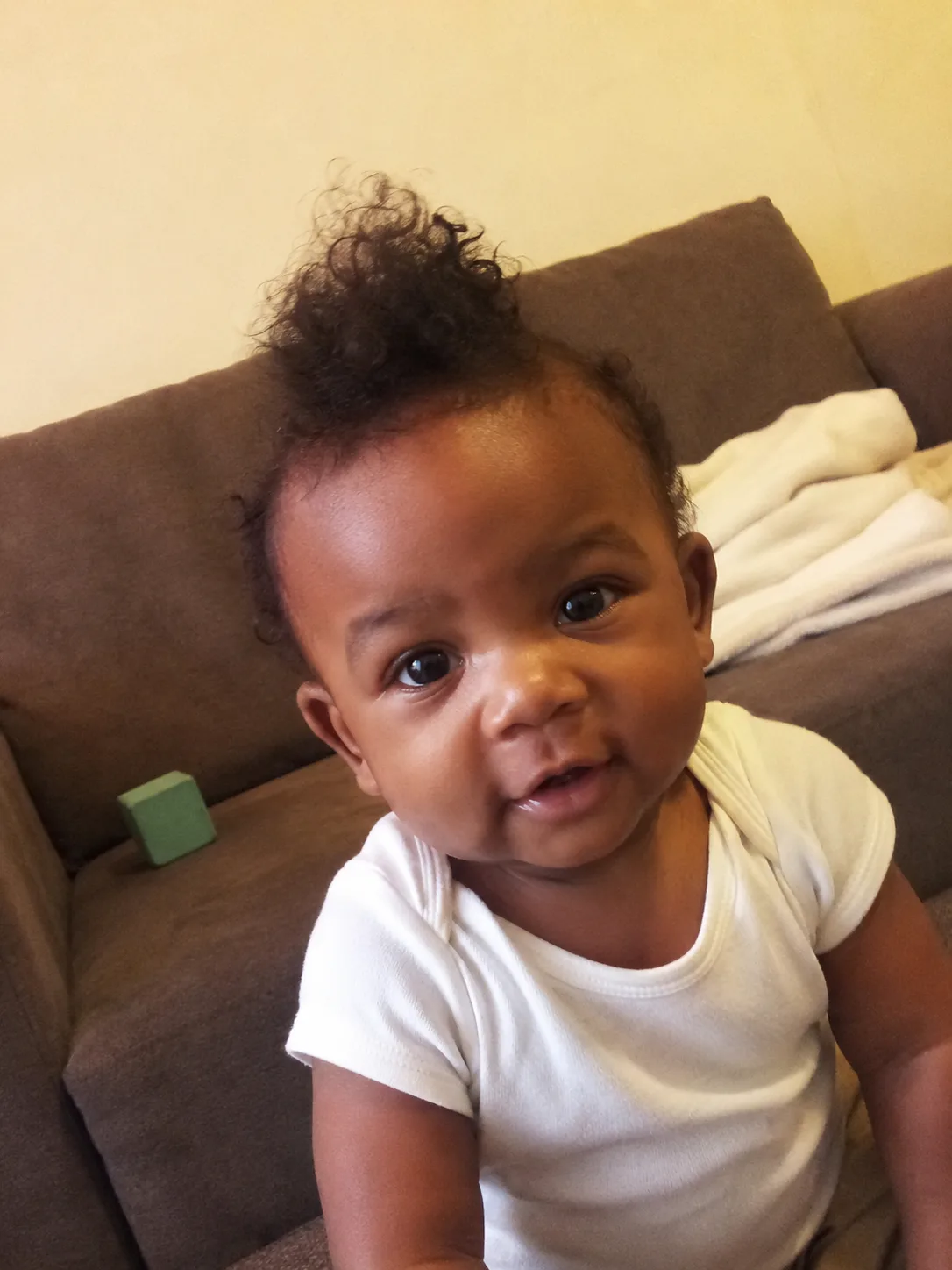
Finger detangling and gentle section-by-section handling can be easier than repeatedly brushing through the whole head. Let curls stay full where possible. A small puff doesn’t need every hairline strand incorporated, and curly fringe doesn’t need to be straightened.
Fuller coily hair may eventually offer more styling possibilities, but infancy still favors simple construction. Two comfortable puffs can be more practical than numerous tiny sections, especially when the latter require more manipulation to create and remove.
Simple Infant Hairstyles That Earn the Effort
There are plenty of elaborate baby hairstyles online. Most families need far fewer.
Natural and loose
This is the strongest everyday default for very short hair and an underrated choice for curls, coils, and waves.
After gentle detangling, arrange the hair with your fingers or a soft brush where appropriate and let its natural shape remain visible. A side direction, little curl at the front, or naturally fluffy crown can give the hair character without adding another object to the baby’s head.
Loose hair also makes the scalp easy to see and clean.
A loose top ponytail
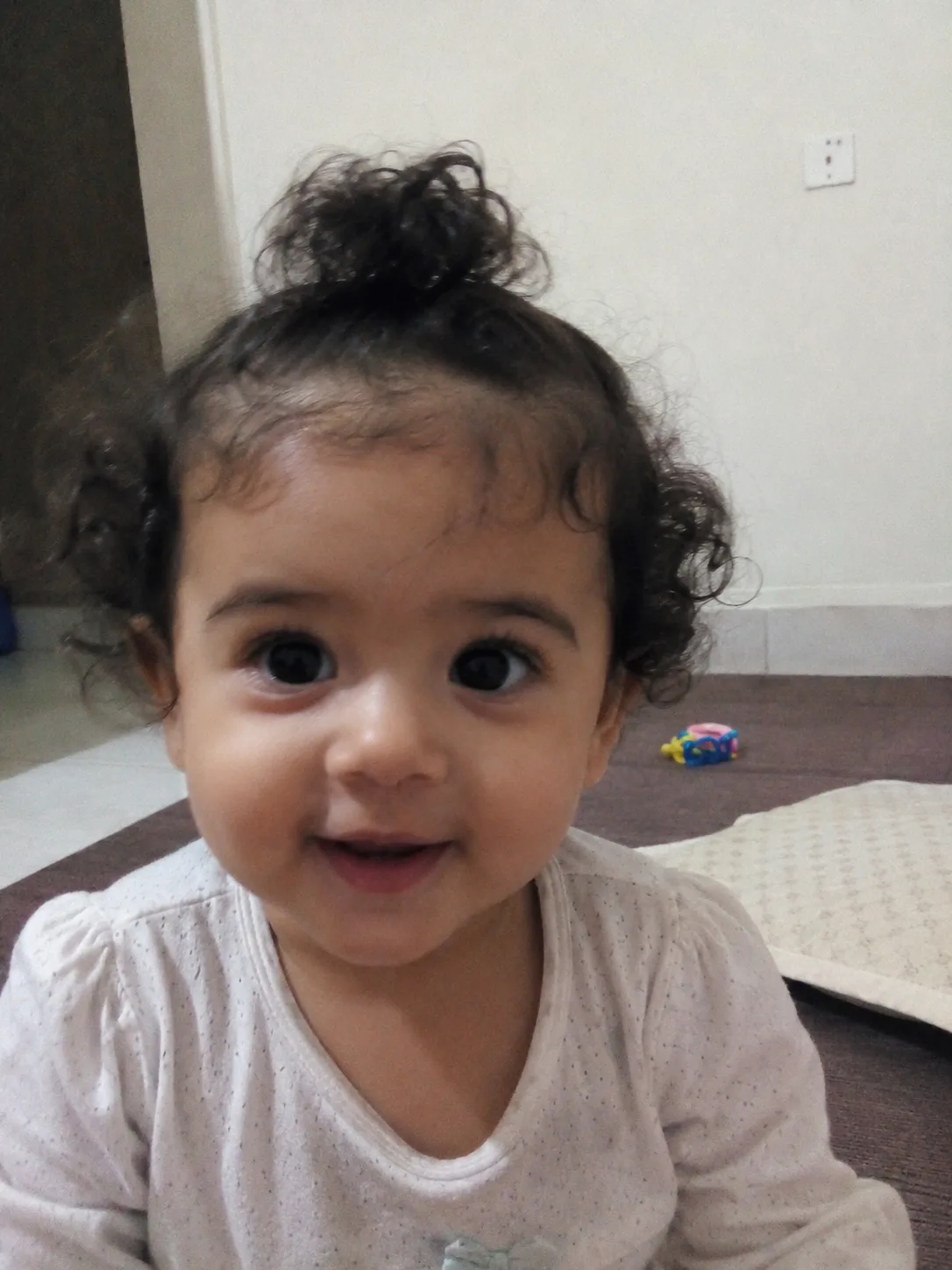
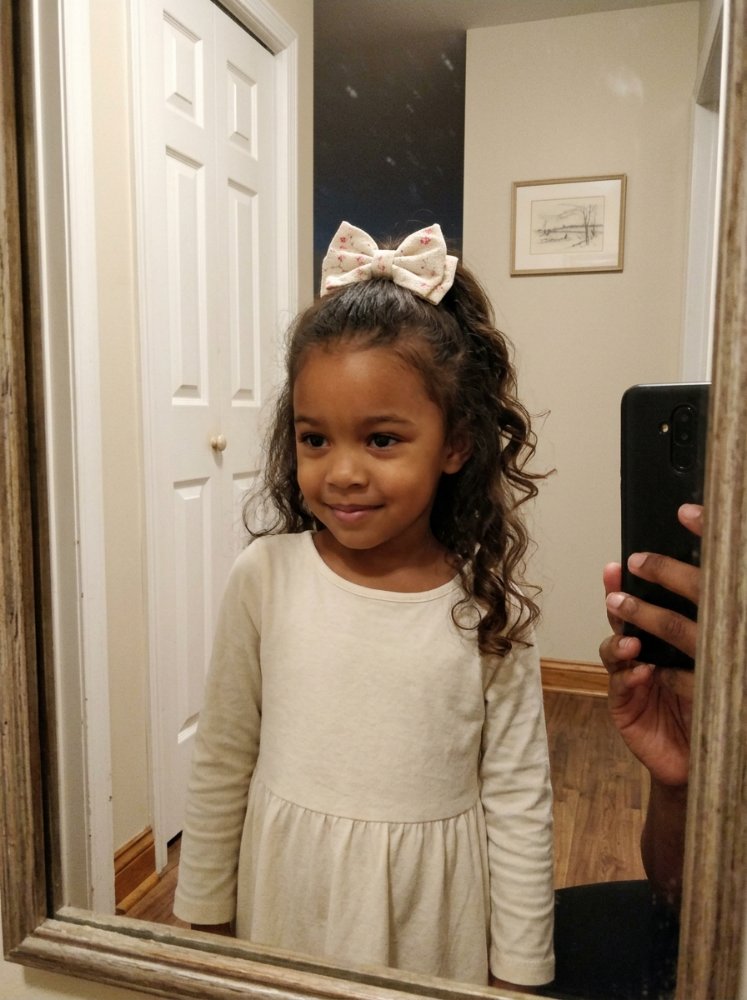
Once the hair on top reaches easily, a tiny top ponytail can keep longer strands away from the face.
The word easily matters. You shouldn’t have to stretch hair from the temples or pull tightly to make the section reach. Use a soft fastening method that can be removed without snagging. Leave naturally shorter perimeter hairs out.
Position also matters. A gathered section directly where the baby’s head presses against a surface can become uncomfortable, so check the style in the positions the baby actually spends time in.
One soft puff
Curly and coily hair with enough length may form a small puff without extensive brushing.
Keep the base loose enough that the scalp isn’t being drawn toward the elastic. The puff itself can remain fluffy; turning it into a perfectly smooth miniature adult ponytail defeats the advantage of working with the baby’s natural texture.
This is especially useful when the center or crown has more length than the surrounding hair.
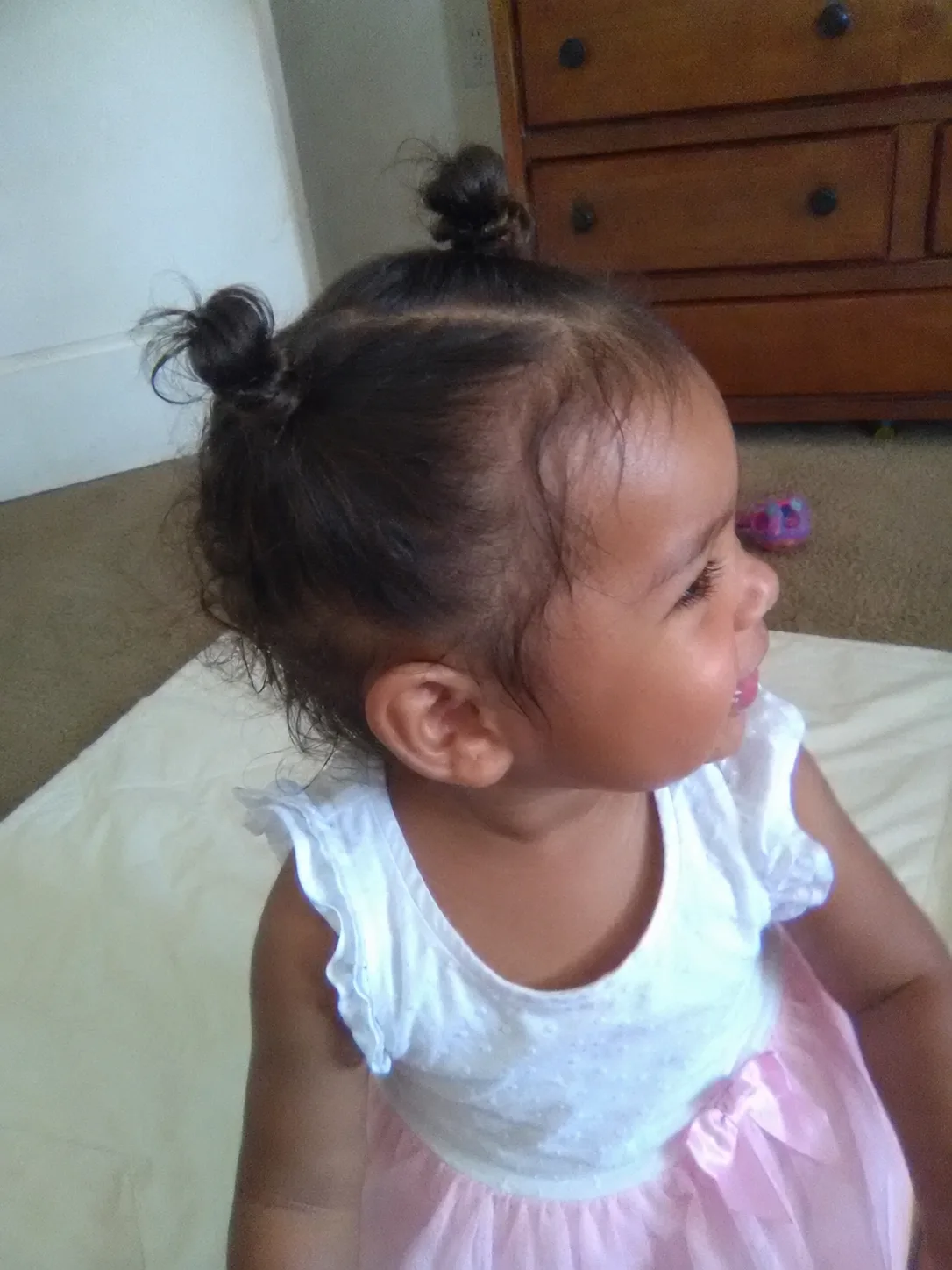
Two loose puffs
Two puffs distribute the hair into smaller sections and can work well when one central ponytail would require pulling hair too far.
Make the sections broad and uncomplicated. There’s little reason to create intricate parting for an infant unless the hair separates comfortably that way. Uneven baby growth may mean one puff looks slightly different from the other. That’s normal styling reality, not a problem that needs tighter pulling.
Gentle front sweep
Hair that’s becoming long around the forehead but remains too short elsewhere can simply be encouraged to one side.
This option requires almost no construction and avoids collecting the entire head just to deal with one longer area. Natural curls can be directed without being flattened. On straight hair, a soft brush can guide the strands while they’re manageable.
For everyday infant styling, this is often more useful than adding clips purely to keep a precise part visible.
Hair Accessories Need More Judgment Than the Hairstyle
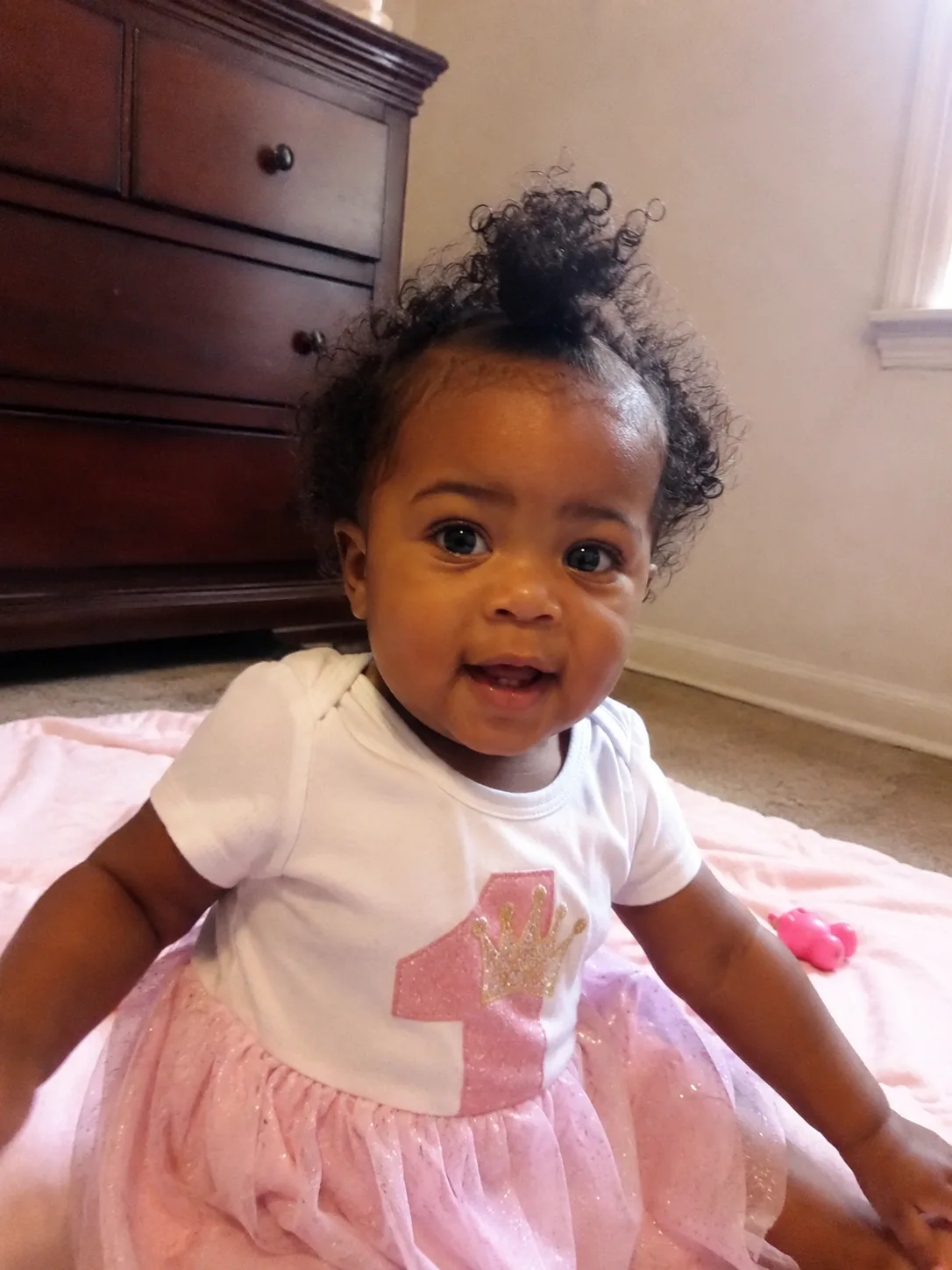
Bows, clips, elastics, and headbands can make an infant hairstyle look finished in seconds. They also introduce the part of baby hairstyling that requires the most attention.
Anything small enough to detach and reach a baby’s mouth deserves particular caution. U.S. consumer-product safety rules recognize small parts as choking, aspiration, and ingestion hazards for young children. (U.S. Consumer Product Safety Commission) An accessory designed to look delicate may therefore be a poor everyday choice even when it photographs beautifully.
A decorative piece should be secure, comfortable, and used with active supervision. Check for components that can loosen, beads or ornaments that can detach, sharp edges, rough seams, and clips that pinch when the baby rests their head.
Headbands create another practical issue: they can slide. Once a stretchy band is no longer sitting where you placed it, its appearance becomes secondary to removing it.
Remove styling accessories for sleep. Infant sleep guidance also advises keeping the head uncovered indoors; the American Academy of Pediatrics specifically advises against routine indoor hat use for infants because of overheating and head-covering concerns. (AAP Publications) A sleep hairstyle doesn’t need decoration. Loose, accessory-free hair is the simpler choice.
Elastics need care as well. Tiny rubbery fasteners can catch fine hair during removal. A fastening method isn’t suitable simply because it’s small enough for baby hair. Ease of removal matters almost as much as how well it holds.
Detangling and Styling Should Be One Gentle Routine
A hairstyle starts before the elastic comes out.
Trying to style tangled hair usually leads to more pulling because the hair won’t separate or travel where you want it to go. Deal with knots first, using a method appropriate for the baby’s texture and the amount of hair present.
For very short hair, that may require little more than gentle washing and arranging. Longer straight or wavy hair can be worked through carefully from the ends toward the roots where tangles occur. Curly and coily hair is usually easier to manipulate in manageable sections while it has enough slip to separate without aggressive pulling.
Use your fingers when they give you better control around a knot. A comb or brush should move through the hair without turning detangling into a tug-of-war.
There’s also no need to chase adult-level styling polish. Infant hair commonly includes fine new growth, shorter perimeter hairs, changing lengths, and sections that behave differently. Repeated brushing to flatten those areas adds manipulation while the effect may disappear as soon as the baby rubs their head against a caregiver’s shoulder.
Wash frequency doesn’t need to follow a universal schedule either. Scalp comfort, sweat, buildup, hair length, texture, and the baby’s routine give you more useful information than a rigid calendar.
After washing, make sure denser hair and gathered sections have an opportunity to dry properly instead of assuming the surface tells you what’s happening near the roots.
Special-Occasion Infant Hair Should Still Feel Like Infant Hair
Photos, birthdays, family gatherings, religious occasions, and other events can make a more decorative hairstyle tempting. This is where styling often becomes more complicated than the baby needs.
Start with the outfit and the baby’s position before choosing the hair.
A large bow at the back may press against a stroller or seat. A headband that stays perfect while the baby is being held may shift once they start turning their head. Several little clips also mean several little objects to keep track of.
A better special-occasion strategy is to elevate an already comfortable style:
Natural curls or coils: define the visible shape gently and leave them loose.
Longer hair on top: use one comfortable top ponytail or puff while leaving the fine perimeter alone.
Fuller hair: create two broad, loose sections instead of multiple tiny ones.
Very short hair: let the outfit carry the decorative detail. An infant doesn’t need enough hair for an elaborate hairstyle to look appropriately dressed for an occasion.
Take the photograph into account without making it the only test. Check the side and back of the style, then place the baby in their normal supported position. Anything that presses against the head, repeatedly slips, or causes immediate fussing has already failed the practical test.
Decorative accessories can be added for a closely supervised moment and removed afterward. They don’t have to become all-day styling equipment simply because they’re part of the photographs.
What to Avoid With Infant Hairstyles
The easiest styling mistakes usually come from trying to make infant hair behave like older children’s hair.
Pulling short hairs into the style
Fine hairs around the forehead and temples don’t need to reach the ponytail. Pulling harder to include them concentrates more force on hairs that may already be shorter and finer.
Let them stay out.
Very tight elastics
A ponytail or puff should hold the hair without visibly pulling the surrounding scalp. Tightness isn’t a durability feature worth pursuing on a baby.
A style that repeatedly causes obvious discomfort, leaves the scalp looking stressed, or requires force to install should be loosened or removed.
Heavy added hair
Extensions and other added-hair styling provide little practical advantage for infants while adding weight, attachment demands, removal work, and more opportunity for tension. Natural hair is the stronger default during infancy.
Numerous tiny sections
Small sections can look detailed, but they multiply parting, fastening, and takedown. They can also encourage adults to pull firmly because very short hairs are being asked to fit into miniature ponytails.
Broader, simpler sections are easier to create and undo.
Repeated heat styling
Straightening curls or smoothing infant hair with hot tools isn’t necessary to create a neat hairstyle. Work with the baby’s existing hair pattern. The limited styling payoff doesn’t justify building an infant routine around heat.
Styling over an irritated scalp
Hair styling should wait when the scalp is sore, red, broken, or persistently irritated. This article can’t determine the cause of a scalp change. Concerning or persistent symptoms, sudden shedding, or a noticeable density change are better discussed with the child’s pediatrician or another appropriate healthcare professional.
The Practical Infant Hairstyle Checklist
Before deciding that a hairstyle is finished, look beyond the mirror.
Ask whether the hair reached the style naturally. Short sections that need strong pulling are better left out. Run a finger gently around gathered areas and notice whether the base feels unnecessarily tight.
Then consider the baby’s day.
Will the back of the style sit between the head and a mattress, car-seat surface, or another support? Can the baby grab the accessory? Is there anything small that could detach? Can you remove the entire hairstyle without snagging fine strands?
A useful infant hairstyle should pass a very ordinary test: it shouldn’t interfere with being a baby.
That means lying down, turning the head, feeding, being carried, napping, playing, and getting changed all matter more than keeping every strand in the same position.
For most infants, that points toward a small group of dependable options—loose natural hair, a gentle front sweep, one loose top ponytail or puff where enough hair is present, or two broad puffs for fuller textures.
As more length develops, the styling vocabulary can grow with it. There is no advantage in getting there early by adding tighter sections, more accessories, or more manipulation.
Frequently Asked Questions
Can I put my infant’s hair in a ponytail?
Yes, once enough hair reaches the ponytail comfortably. The hair shouldn’t need strong stretching from the hairline or temples to make the style work. Keep the gathering loose, leave shorter hairs alone, and choose a position that won’t create a bulky spot where the baby’s head rests.
Very short hair is better left loose until it has enough usable length.
What hairstyles work for an infant with curly or coily hair?
Loose curls, natural coils, one soft puff, and two broad puffs are practical options depending on length and fullness. Work with shrinkage instead of stretching the hair solely to make it reach a style.
Gentle detangling matters more than creating perfectly straight parts. Fine perimeter hairs can remain outside a puff, and curly fringe can stay curly.
Is it normal for an infant’s hair to look thin or uneven?
Very young babies can lose some of the hair they had after birth, so changing fullness during early infancy isn’t unusual. (HealthyChildren.org) Hair may also differ naturally in length and distribution across the scalp.
Avoid trying to diagnose the appearance from a hairstyle alone. A sudden or concerning change, persistent scalp symptoms, or ongoing hair loss is worth discussing with the baby’s pediatrician.
Can an infant sleep with a bow or headband on?
Remove bows, headbands, clips, and other styling accessories for sleep. An accessory that shifts or contains detachable parts adds a risk with no sleep-related benefit, and small parts are a recognized choking hazard for young children. (U.S. Consumer Product Safety Commission) The American Academy of Pediatrics also advises against routine indoor head coverings such as hats for infants because of overheating and head-covering concerns. (AAP Publications)
Accessory-free hair is the practical sleep option.
Related Hairstyles to Explore
Hair Texture & Upkeep Style Matcher
Select your natural hair texture and daily maintenance window to get an instant styling formula and heat safety cap.
Heat Cap: 320°F (160°C)
A versatile three-strand braid beginning at the parietal ridge, securing the top half while allowing natural wave texture to flow freely around the shoulders.
Conclusion
The most useful infant hairstyle is usually simpler than the most eye-catching one.
Start with the hair your baby actually has: its current length, natural curl or wave pattern, fullness, and tendency to tangle. Leave very short hair loose, use puffs or ponytails only where the hair gathers without force, and save decorative accessories for situations where they can be closely supervised.
As the hair grows, more styles will become easy without needing tighter pulling or complicated construction. During infancy, comfort is the better measure of whether a hairstyle works.
Editorial Standards & Hair Health Guidance
Every style featured on Tress Atlas is curated with a focus on real-world wearability, scalp tension management, and cuticle preservation. When trying protective styles or tight updos, ensure perimeter hairline sections remain tension-free to avoid traction stress on delicate follicles. For heat styling, cap tools below 350°F (180°C) to prevent thermal keratin denaturation.
Scientific Sourcing: Practices aligned with the American Academy of Dermatology (AAD) on traction alopecia risk reduction and cosmetic trichology research on hair tensile strength.