Hairstyles for Toddlers: Styling Guide & Cuts That Put Comfort First
Toddler hair styling works better when the hairstyle fits the child, not just the photograph. A neat style that requires hard pulling, lots of tiny sections, heavy accessories, or a long sit can create more trouble than it solves.
The most practical hairstyles for toddlers leave room for movement and play. They should also make sense for the child’s current hair length, density, strand size, curl or coil pattern, and tolerance for handling. Fine strands and low-density hair are different concerns, so a style that looks sparse on one child may simply be exposing the scalp through large parts on another.
For many families, the easiest starting point is simple: use loose styles on low-effort days, puffs or ponytails when hair needs to stay out of the face, and braids or twists when fewer daily styling sessions are useful. Any secured style should feel comfortable from the beginning.
Loose Styles for the Simplest Routine
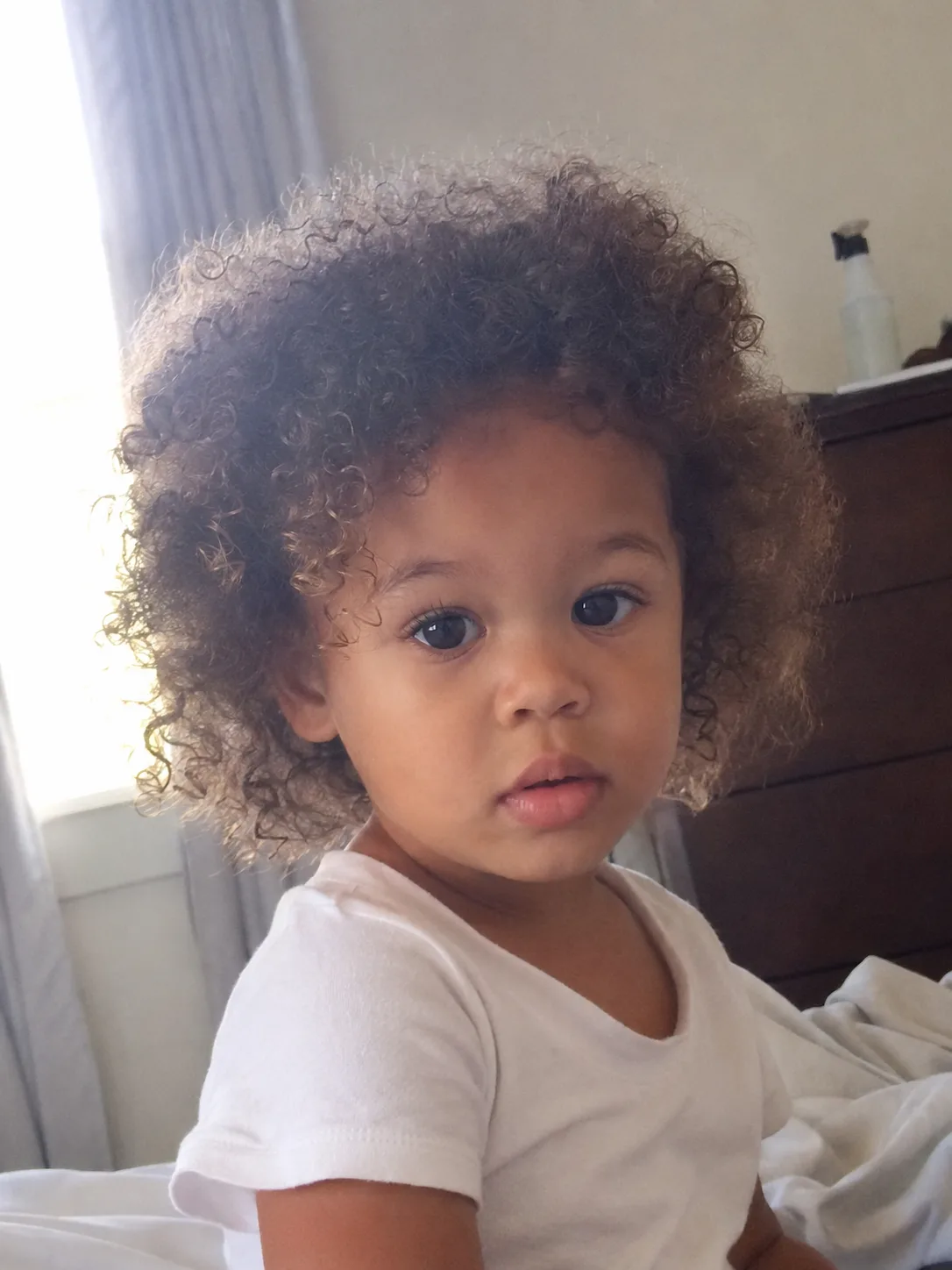
Loose Wash-and-Go Curls or Coils
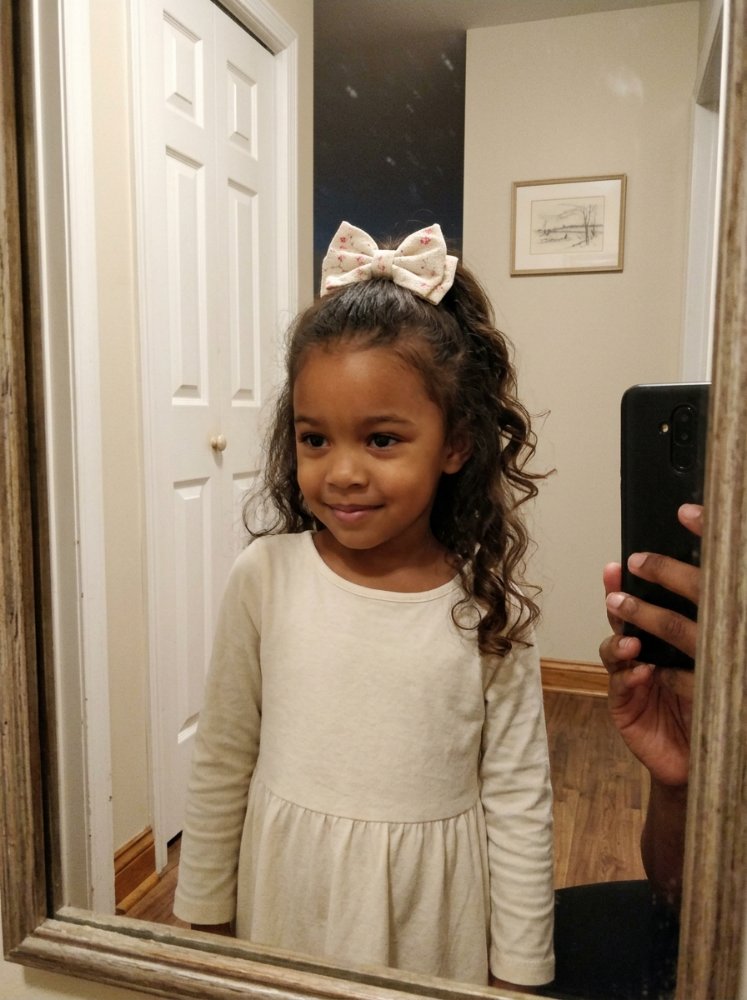
Leaving natural curls or coils loose is often the strongest choice when a toddler dislikes extended styling. The hair can be gently detangled, moisturized as needed, and allowed to settle into its natural pattern without being pulled toward an elastic or braid base.
The hidden work is detangling. Loose hair rubs against car seats, clothing, bedding, and busy little hands, so the ends may knot sooner than they would in twists or braids. A smooth pillowcase or sleep bonnet can reduce some friction when the child will comfortably keep one on.
This style also makes it easy to notice what the hair is actually doing. You can see the child’s natural shrinkage, curl grouping, density, and overall shape instead of judging those characteristics through a stretched or secured style.
Soft Rounded Afro
A rounded afro gives short to medium coily hair a clear shape without requiring ponytail tension. It works especially well when the hair naturally expands outward and the family is comfortable refreshing the shape with gentle detangling and fluffing.
The haircut matters more here than elaborate styling. Uneven ends or an awkward grow-out can make one side sit differently even when the texture is healthy. Shape the hair according to the way it is normally worn, because a stretched length can look very different after the coils shrink back into place.
Avoid repeatedly picking from the roots simply to make the hair appear larger. Gentle shaping with the fingers or an appropriate detangling tool is usually more useful than chasing maximum volume.
Twist-Out
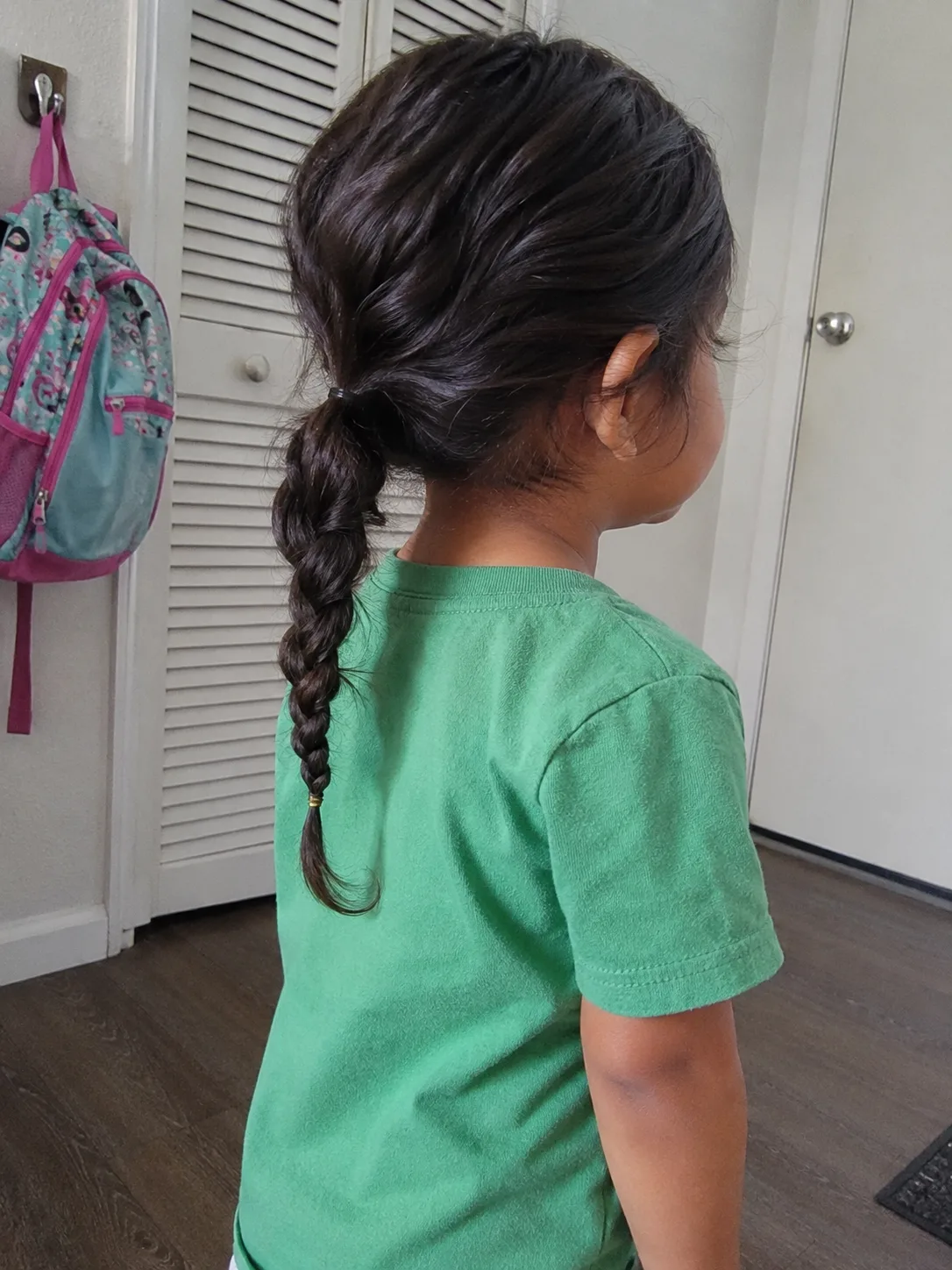
A twist-out gives loose hair more organized curl or coil definition without leaving the twists in place. Hair is first divided and twisted, then released after it has dried enough to hold the pattern.
This option earns its extra preparation when you want definition with plenty of movement. The pattern is usually more rope-like or spiral-shaped than a braid-out, and section size influences how broad or small the finished groups appear.
Toddlers who dislike repeated handling may prefer keeping the original twists instead of taking them down purely for appearance. A twist-out makes most sense when the styling process itself is comfortable.
Braid-Out
A braid-out creates a more crimped or stretched pattern than a typical two-strand twist-out. It can be useful for hair that shrinks tightly and tangles quickly when left completely loose.
Because the hair is worn out afterward, this isn’t the lowest-manipulation choice in the list. Friction from clothing and sleep still affects the ends. Choose it for the visible texture and stretch rather than expecting it to behave like a contained braided style.
Puffs, Ponytails, and Buns for Busy Days
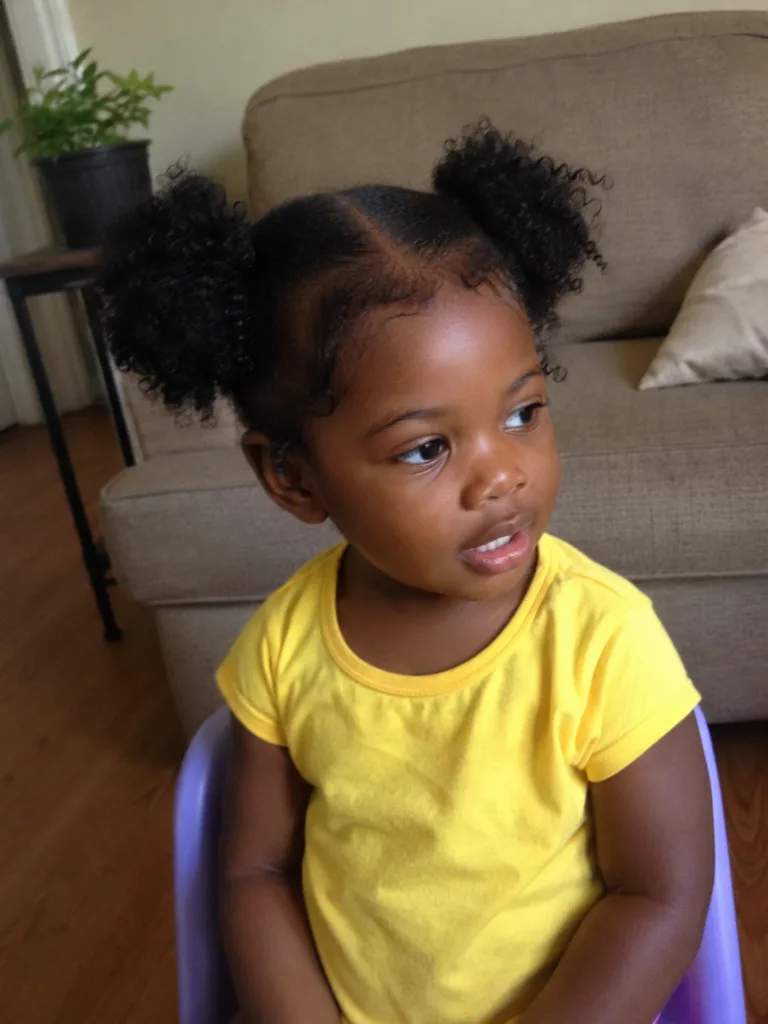
Two High Puffs
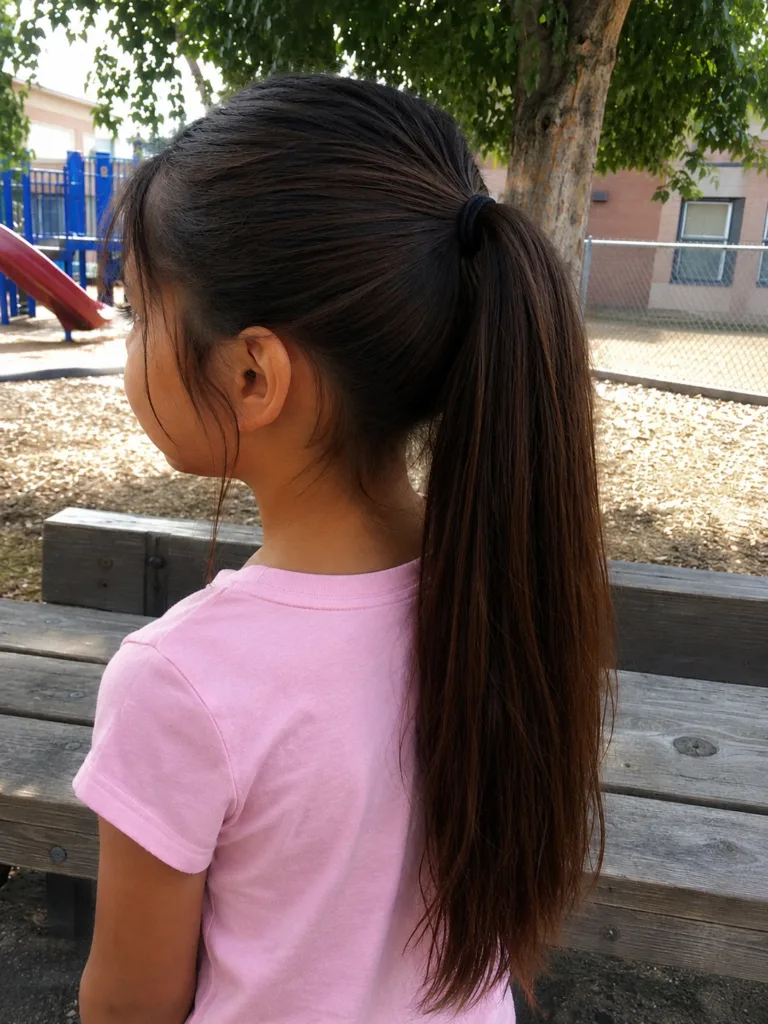
Two puffs are one of the most recognizable toddler hairstyles for curly and coily hair, and they solve a practical problem well: the hair stays largely contained without requiring lots of tiny sections.
Keep the bases broad enough that the hair isn’t being pulled hard from the temples or hairline. A soft, fabric-covered elastic can hold each puff while allowing a little flexibility.
The puffs themselves can stay fluffy. There’s rarely a practical reason to force every short edge hair into the base just to create a perfectly smooth photograph-ready finish.
Single Puff
A single puff is faster than dividing the hair into two balanced sections and works particularly well once enough length reaches the chosen anchor comfortably.
Placement changes how the style feels. A very high puff asks the lower and side sections to travel farther toward the top, while a lower puff may require less stretching from those areas. Use the position the hair reaches easily instead of making the hairline conform to a predetermined height.
This is also a useful style for seeing whether the child is comfortable with ponytail-style tension before moving to more complicated gathered looks.
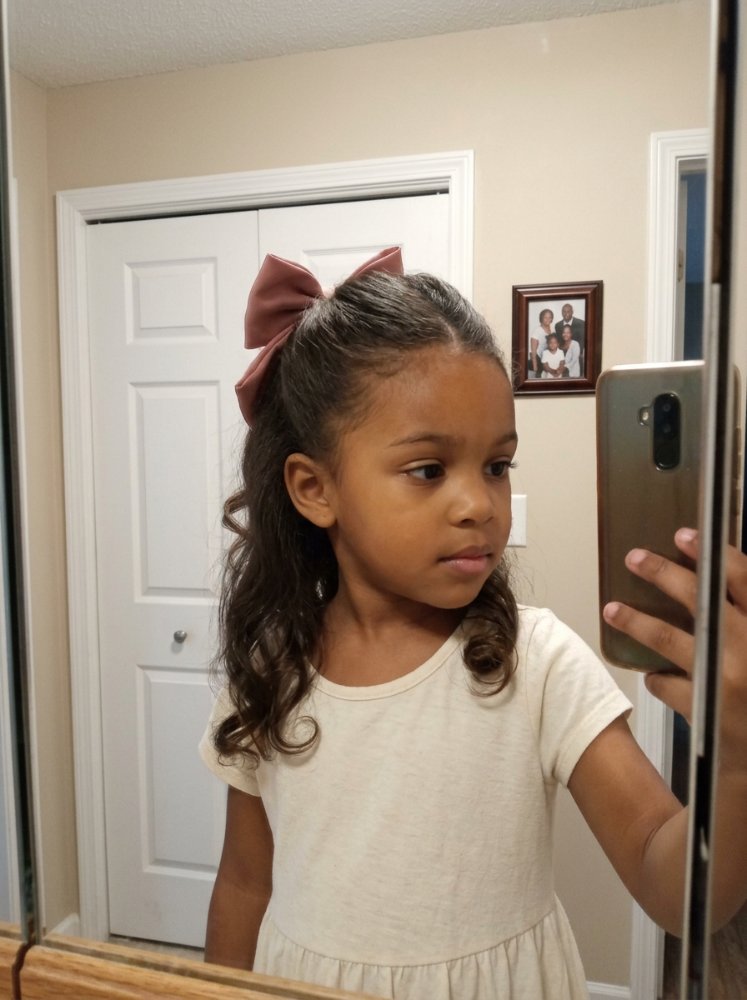
Half-Up, Half-Down Hair
Hair falling into the eyes can be handled without gathering the entire head. A half-up style secures the front and upper sections while leaving the back loose, making it a practical compromise for toddlers who like wearing their texture out.
It works across wavy, curly, and coily hair, although the visual result changes with shrinkage and density. On straighter hair, the loose section tends to fall downward; tighter curls and coils create more width.
Keep the secured section simple. One soft ponytail or a gently twisted section usually does more for everyday wear than a row of tiny elastics.
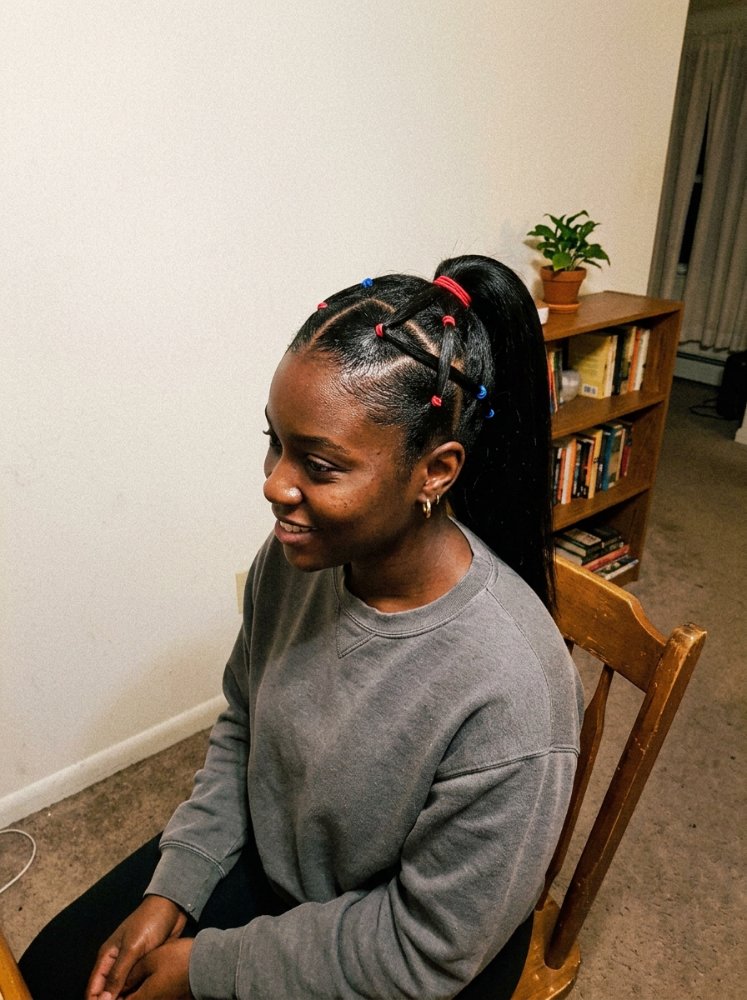
Sectioned Bubble Ponytail
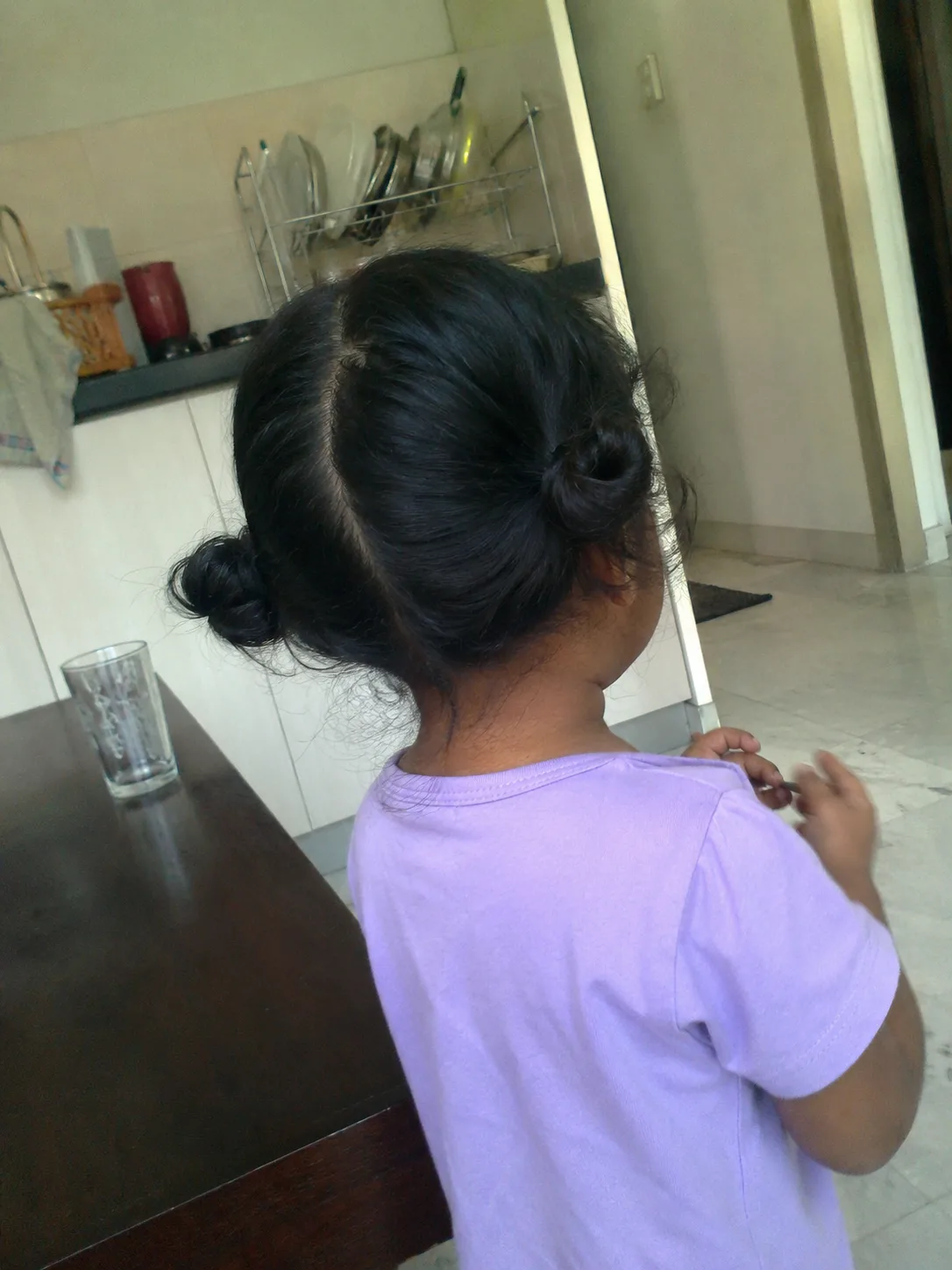
A bubble ponytail uses several soft ties along the length of one ponytail, creating rounded sections between them. That construction makes it visibly different from an ordinary ponytail and can help keep longer hair from swinging freely into the face.
This style is better suited to hair with enough length to form the sections without repeatedly tightening each elastic. The bands should sit securely but shouldn’t pinch the hair or scalp.
Because several elastics have to come out later, removal deserves as much care as styling. Take each one off gently instead of dragging it down the hair shaft.
Two Low Pigtails
Low pigtails are an underrated toddler option. They require very little architecture, work on many straight, wavy, curly, and stretched textures, and don’t place the anchors directly on the crown.
They can also be easier around hats than high puffs. The main nuisance is contact with coat collars or car-seat straps when the hair is long enough to sit against the shoulders.
Leave shorter perimeter hairs alone when they don’t reach the elastic comfortably.
Two Low Buns
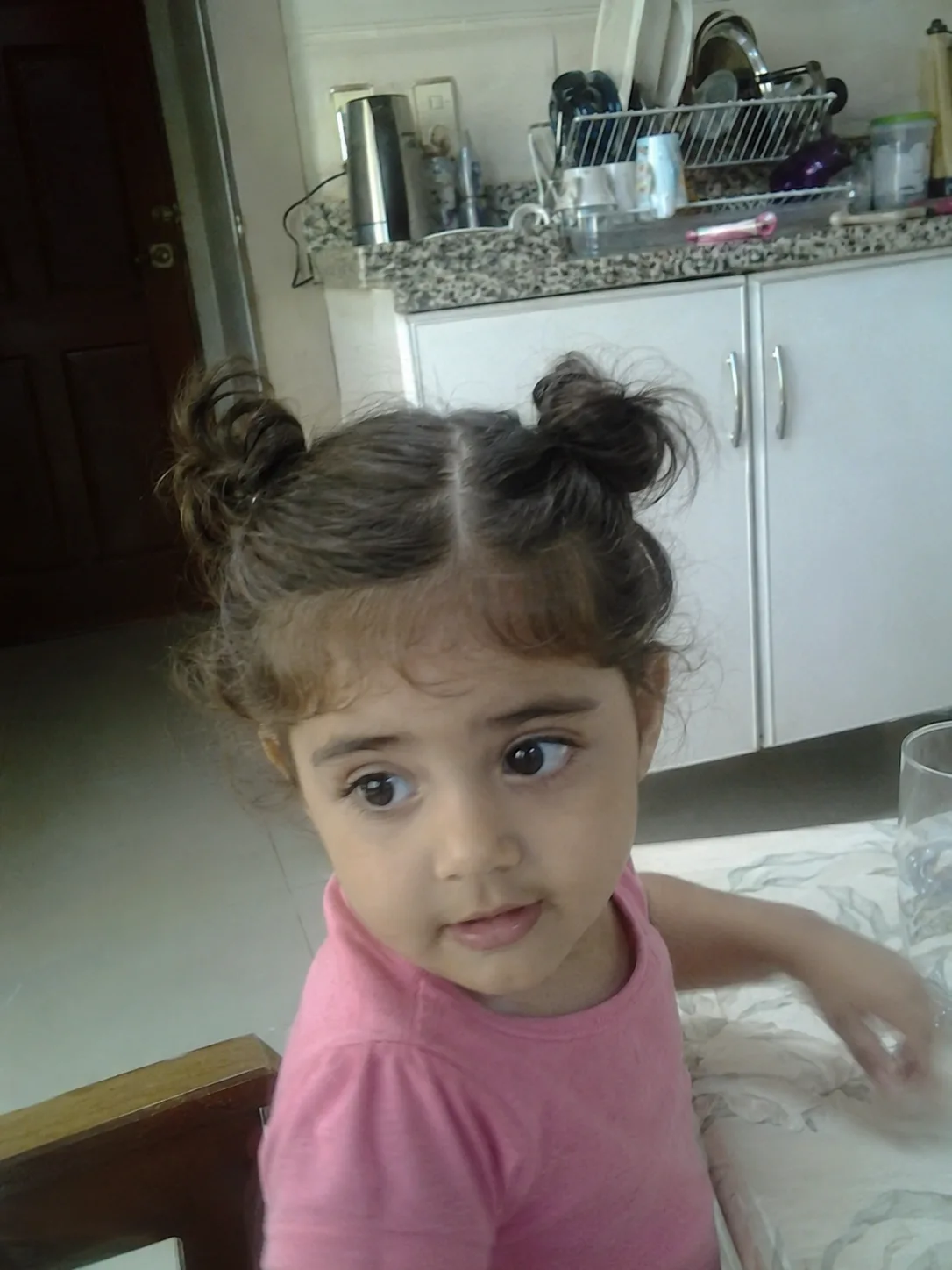
Two low buns contain more of the length than pigtails, which can be useful during active play or on days when loose ends keep tangling.
Start with two low ponytails and wrap each length gently around its base, securing the bun without winding it so tightly that the scalp moves. Longer or denser hair creates a larger bun and more weight at the anchor.
Low buns are more practical than high buns for a child who spends a lot of time leaning against a car seat or stroller headrest because the top of the head remains relatively flat.
Twisted Styles With Less Loose Hair
Chunky Two-Strand Twists
Two-strand twists are a strong middle ground between completely loose hair and a more structured braided style. They contain the ends, reduce the amount of hair that needs daily rearranging, and can be made with relatively large sections.
Chunkier sections are usually the toddler-friendly direction. They mean fewer parts to create and fewer twists to undo later. Very tiny twists increase handling and takedown work without being necessary for a neat result.
The finished twists may shrink, curl at the ends, or puff slightly as the child plays and sleeps. That softness is normal and doesn’t need constant restyling.
Flat Twists Into Loose Hair
Flat twists keep one section of hair close to the scalp while allowing the remaining hair to stay loose. A common arrangement is to twist the front away from the face and leave the back curly or coily.
This construction works well when the main issue is hair falling forward. It gives more control than a clip or headband while avoiding a whole-head installation.
The flat twist should follow a comfortable path. There’s no benefit in forcing a very small, tight row along the hairline simply because it looks crisp in a reference image.
Flat Twists Into Puffs
For a more contained version, several broad flat twists can travel toward one or two puff bases. The style combines scalp-hugging sections with the softness of loose ends.
Convergence is the part to pay attention to. Several sections meeting at one small anchor can concentrate pulling, so broad sections and a relaxed base are preferable to a tiny, tightly cinched meeting point.
This style takes more cooperation from the child than ordinary puffs. It’s worth the effort mainly when the flat twists genuinely reduce the amount of daily front-section styling.
Braided Hairstyles for Toddlers
Simple Straight-Back Cornrows
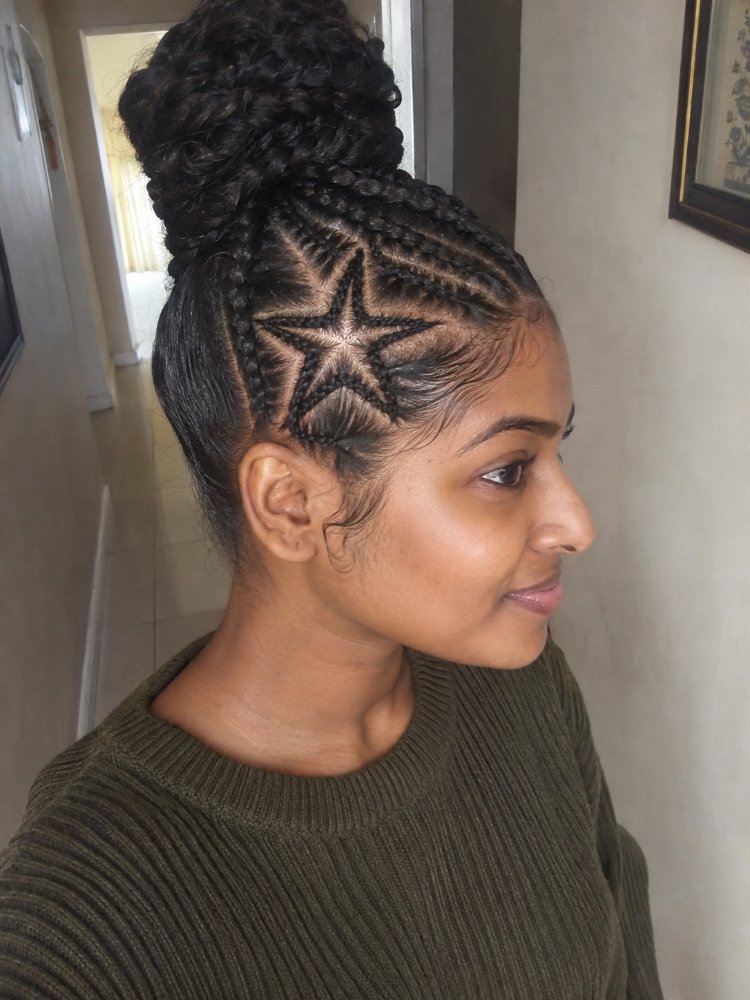
Straight-back cornrows keep the hair organized without requiring complicated patterns. For a toddler, simplicity is a strength: fewer, broader rows generally mean less sectioning and an easier takedown than an intricate design made from many tiny braids.
A braid should lie close to the scalp without making the skin look pulled or causing discomfort. Crisp parts are optional. Comfort matters more than creating an extremely tight, glassy surface.
Scalp access is another advantage of uncomplicated rows. Parts remain visible enough for gentle cleansing or checking the scalp when needed.
Braided Pigtails
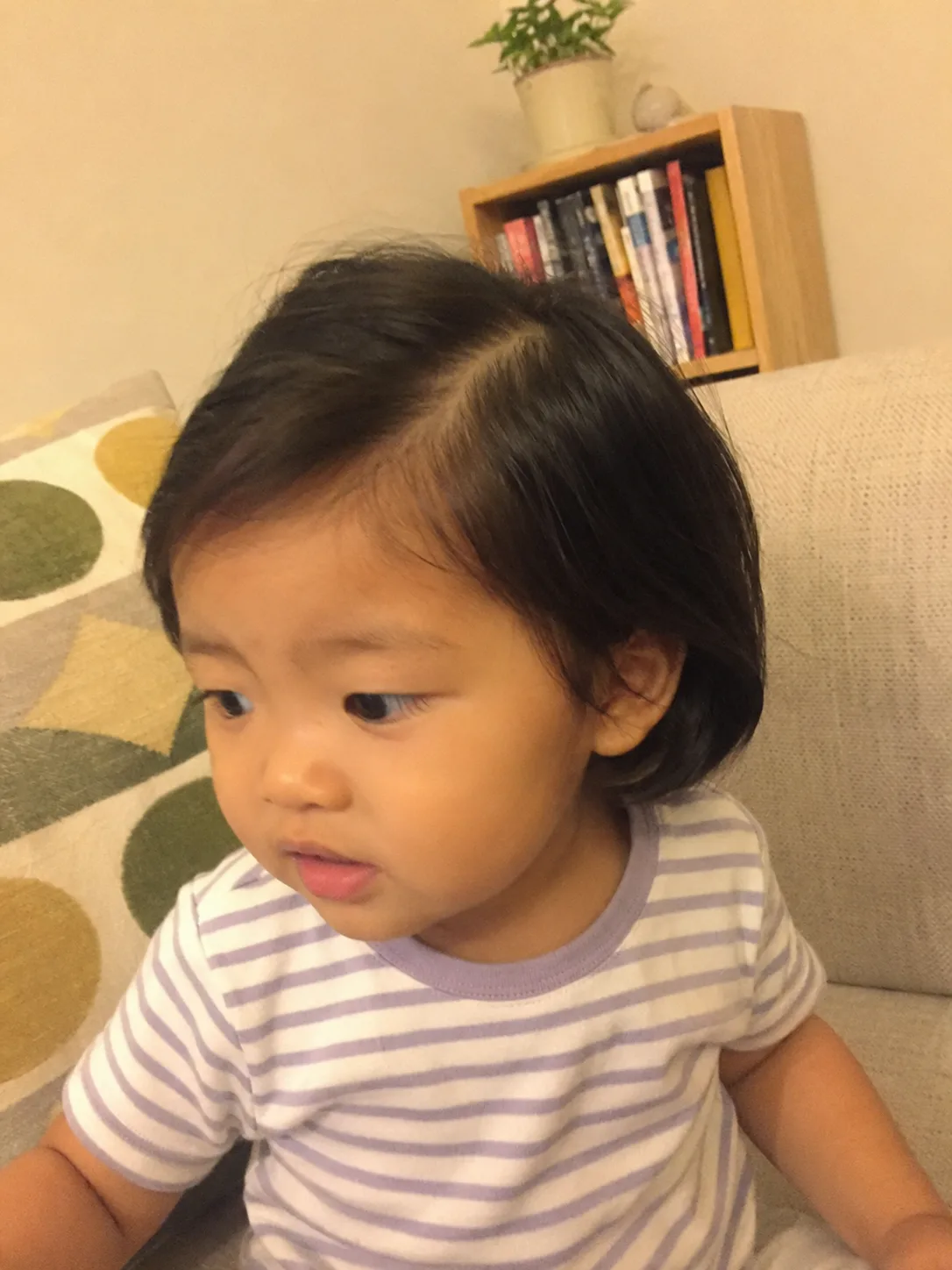
Braided pigtails start as two gathered sections, with each length finished as a regular three-strand braid. They move less than loose ponytails and keep the ends more contained during play.
This is one of the better choices for longer hair that tangles around collars or shoulders. The braid does most of the containment work, so the ponytail base doesn’t need to be exceptionally tight.
Keep bulky beads and heavy decorative additions out of the equation when they make the braid swing harder or feel cumbersome. The style already works without them.
Double French or Dutch-Style Braids
Two close-to-the-scalp braids running from the front toward the back create a flatter result than pigtail braids. Depending on the braiding method, the braid may sit more visibly on top of the hair or blend into the section.
This style is useful for active days because there’s little loose hair near the face. It also avoids the concentrated anchor of a high ponytail.
The drawback is technique. These braids require more continuous handling and coordination than two simple pigtails. A restless toddler may be better served by a faster style even if the finished braid would theoretically last longer.
Loose Braided Crown
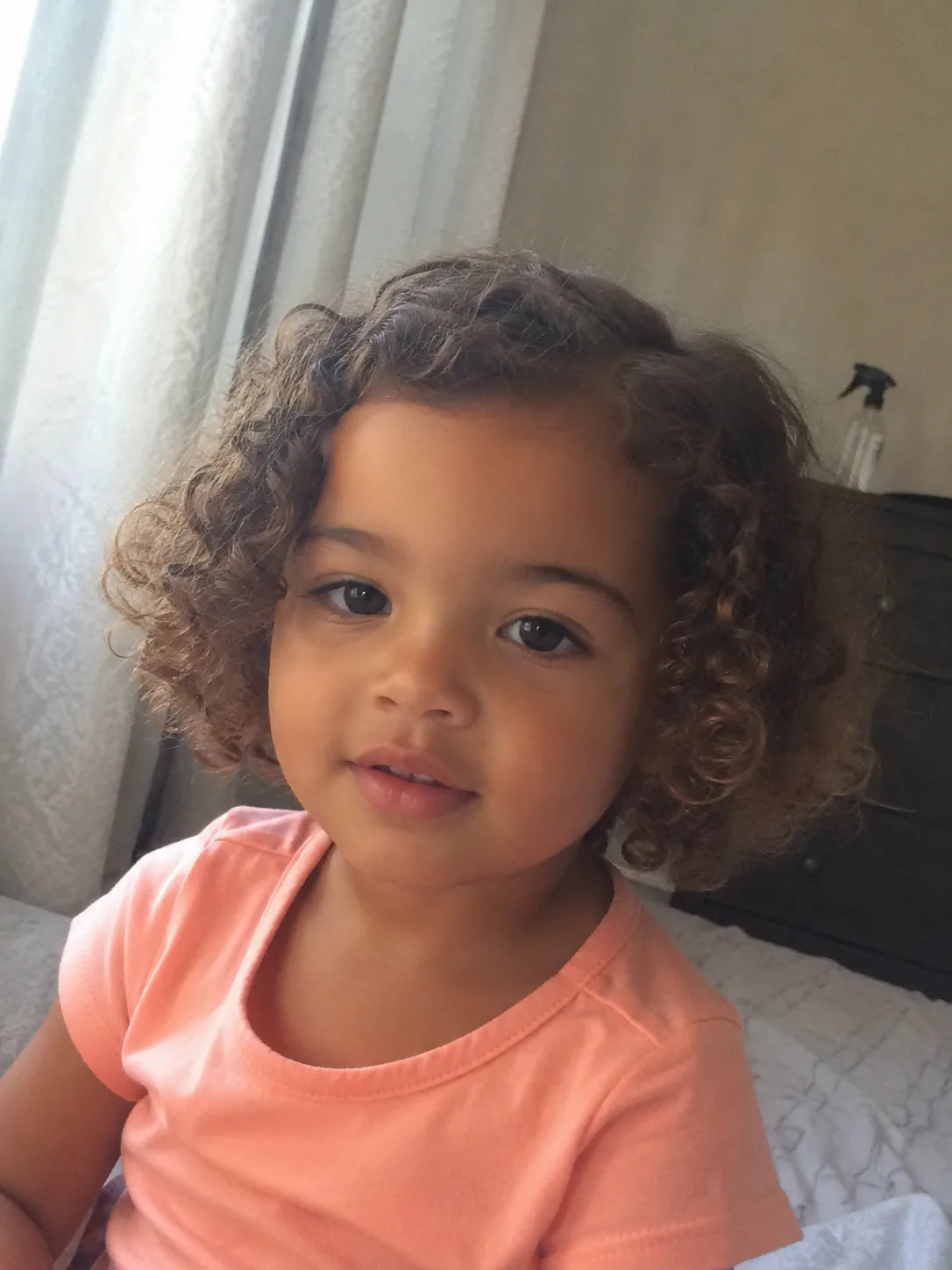
A braided crown places a braid around part of the head instead of sending every section toward a central ponytail. The effect is decorative enough for a family event while still keeping much of the hair controlled.
Comfort depends on how the braid is built. A softly pinned braid made from longer hair is different from tightly cornrowing the hairline into a circular pattern. For toddlers, the looser construction is generally the more practical direction because it avoids demanding tension around the full perimeter.
Check any pins carefully and keep sharp or easily detachable accessories away from small hands.
Haircuts That Reduce Daily Styling
Short Curly or Coily Bob
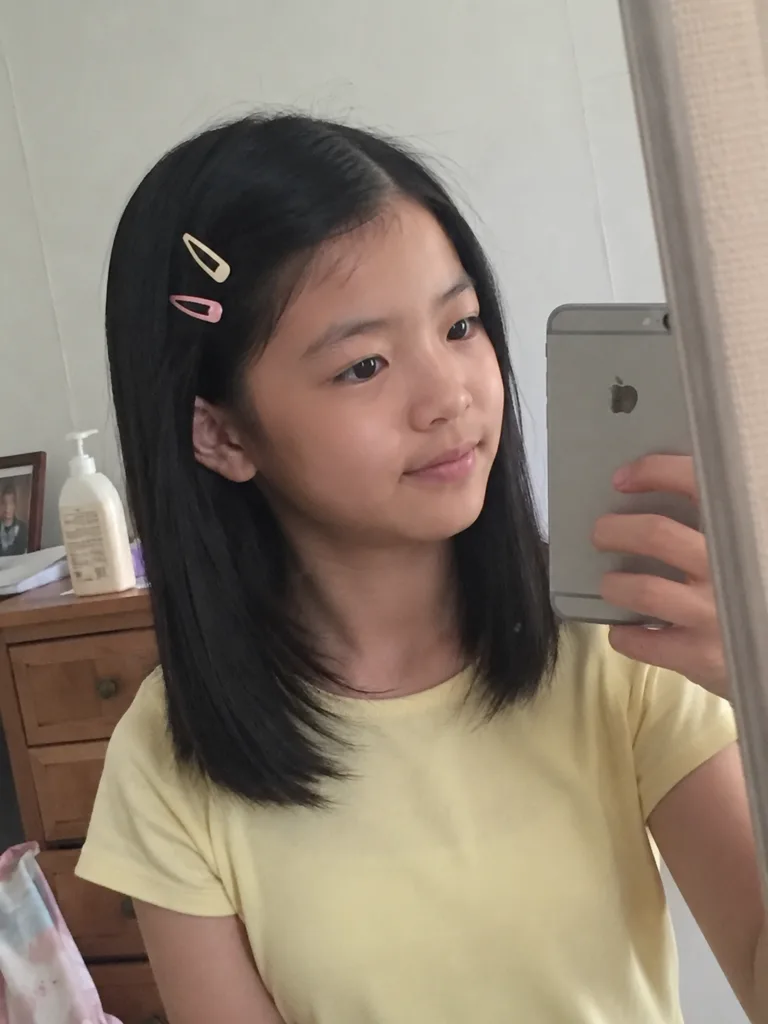
A haircut can sometimes solve the routine problem more effectively than adding another hairstyle. A short bob keeps enough length for curls or coils to show while removing some of the long ends that repeatedly knot against clothing.
The perimeter can sit around the jaw, above the shoulders, or wherever the child’s shrinkage and curl pattern create a balanced shape. Curly and coily hair should be judged in the state in which it is usually worn; wet or stretched length alone can misrepresent where the finished shape will land.
A bob also makes loose-hair days easier. There are fewer long ends to manage, and the cut itself provides the outline.
Which Toddler Hairstyles Need the Least Daily Handling?
A style that remains contained can reduce the need to completely redo the hair each morning, but more construction isn’t always more convenient. An elaborate style that takes a long time to install and remove may save less effort than a few large twists.
For a child who strongly dislikes sitting for hair styling, chunky twists, two pigtails, or loose natural hair may be more realistic than detailed braiding. Parents often gain more from reducing section count than from chasing a style that appears extremely neat for longer.
Comfort Matters More Than How Long the Style Lasts
A toddler hairstyle should feel comfortable while the child looks around, plays, lies down, and moves normally. Pulling the hair tightly so a style lasts longer is a poor tradeoff.
Watch the areas that naturally receive the most stress: the temples, hairline, and any point where several sections meet. Small perimeter hairs don’t need to be captured into every ponytail or braid.
Added hair also deserves caution. Extra length and density increase weight, and toddlers don’t need a heavy installation to achieve a finished hairstyle. Natural-hair-only styles or very lightweight constructions are often easier to manage.
Pain, persistent redness, sores, or ongoing irritation are reasons to loosen or remove the style. Sudden shedding or a concerning change in density deserves assessment by a dermatologist or another qualified healthcare professional rather than more styling experimentation.
Accessories Should Have a Job
Toddler hairstyles can look playful without being loaded with accessories. A soft headband can hold back loose hair. Fabric-covered elastics can secure puffs or ponytails. Larger clips may help control a section when they sit comfortably and are appropriate for the child’s age and level of supervision.
Small detachable decorations require more thought. Toddlers explore with their hands and mouths, so choking hazards matter as much as appearance.
Accessories also add weight. Several heavy beads at the ends of braids change how those braids swing and pull during running and play. A lighter style is usually easier for everyday wear.
A Practical Toddler Hair Routine
The routine surrounding the hairstyle matters as much as the hairstyle itself.
Detangle with patience and enough slip to reduce unnecessary pulling. Work through manageable sections instead of repeatedly brushing the entire head from roots to ends. Hair that is curly or coily often responds better to detangling while appropriately damp and conditioned than to aggressive dry brushing.
Choose cleansing frequency according to the child’s scalp, activity, buildup, and styling state rather than a rigid calendar. Braided or twisted hair still needs attention when the scalp becomes dirty or uncomfortable.
At bedtime, reduce friction where practical. A smooth pillowcase or comfortable bonnet may help with tangling, although neither replaces good detangling or fixes an overly tight hairstyle.
Takedown is part of the style, too. Remove elastics, braids, and twists patiently. Rushing through knots or dragging small bands along the hair can create breakage that gets mistaken for normal shedding.
How to Choose the Right Hairstyle for Your Toddler
Start with the child’s tolerance. A toddler who happily sits through gentle braiding has more options than one who becomes distressed after a few minutes. The second child doesn’t need a more elaborate distraction strategy; they usually need a simpler hairstyle.
Next, look at the hair in its normal state. Shrinkage changes available length. Low density changes how visible parts look. Fine strands may need gentler handling even when the child has plenty of hair overall.
Then consider the day ahead. Loose curls are perfectly reasonable for an ordinary day at home. A contained braid or twist style can be more convenient for active play. Low styles often make more sense when the child will spend considerable time against a car seat or stroller headrest.
Bring the same priorities to a salon or braider. Ask for comfortable section sizes, modest tension, manageable weight, and a style that can be removed without an unnecessarily complicated takedown.
Related Hairstyles to Explore
- Hair Styles For Toddlers
- Children Hairstyles For School
- Hairstyles for women over 40
- Pink hair color ideas
FAQs
What is the easiest hairstyle for a toddler?
Loose natural hair, two low pigtails, a single puff, or two puffs are among the simplest options, depending on texture and length. The easiest choice is the one that can be completed gently without requiring the child to sit through lots of sectioning.
Are braids okay for toddler hair?
Braids can work well when the sections are comfortable, the roots aren’t pulled tightly, and any added hair is light enough for the child. Broad, uncomplicated braids are usually more practical than intricate patterns with many tiny sections.
What hairstyles work for toddlers with short hair?
A rounded afro, short curls, small puffs when enough length reaches comfortably, flat twists at the front, or a well-shaped short haircut can all work. There’s no need to force short hairs into an elastic before they naturally reach it.
How do I keep my toddler’s hair out of their face without making it tight?
Try a half-up style, low pigtails, broad flat twists, or a soft age-appropriate headband. These options control the front without requiring every strand to be pulled toward one tight anchor.
Should toddlers sleep in ponytails or puffs?
A hairstyle that feels comfortable during the day can still become awkward when the child lies down. Large high buns or bulky anchors may press against the head. Loosening, repositioning, or taking down a secured style before sleep can make sense when the base interferes with comfortable rest.
Can I use added hair in toddler hairstyles?
Added hair introduces extra weight and more material to manage, so keep the construction light and comfortable if it is used at all. Very long or dense extensions create little practical benefit for a toddler and can make washing, drying, sleeping, and play more cumbersome.
Hair Texture & Upkeep Style Matcher
Select your natural hair texture and daily maintenance window to get an instant styling formula and heat safety cap.
Heat Cap: 320°F (160°C)
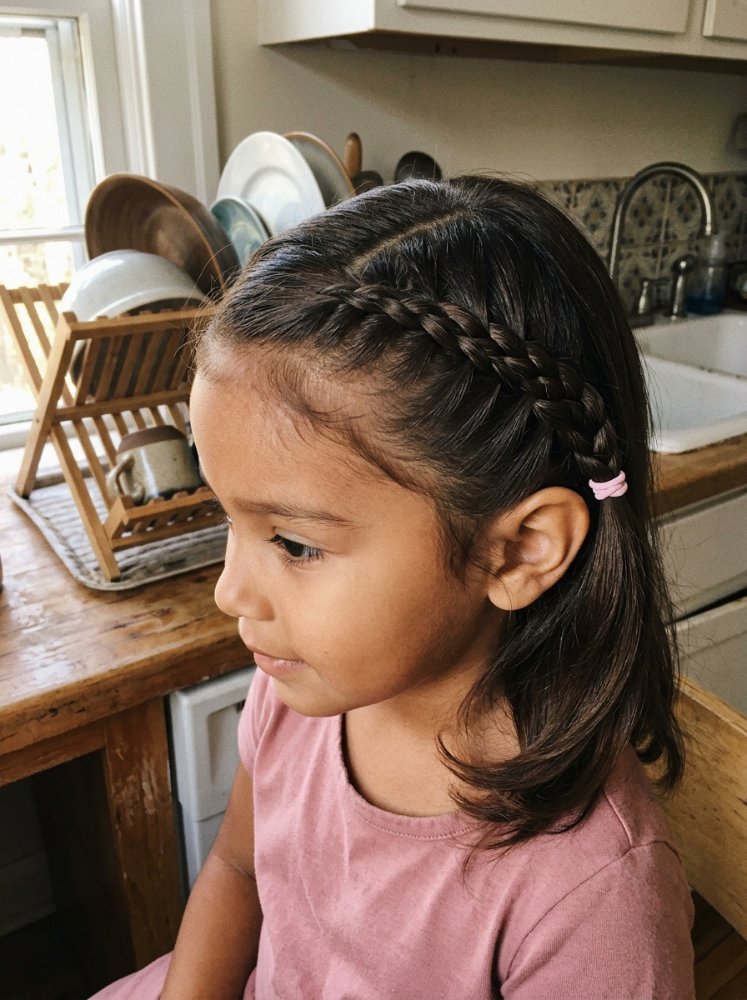
A versatile three-strand braid beginning at the parietal ridge, securing the top half while allowing natural wave texture to flow freely around the shoulders.
Conclusion
The most useful hairstyles for toddlers are usually the ones that ask the least from both the hair and the child. Loose curls, puffs, chunky twists, simple braids, and well-shaped short cuts all have a place; the better choice depends on how much handling the child tolerates and how much containment the day requires.
Choose comfort first, then decide how much styling structure is actually useful. A toddler doesn’t need a tight, elaborate finish to have neat, healthy-looking hair.
Editorial Standards & Hair Health Guidance
Every style featured on Tress Atlas is curated with a focus on real-world wearability, scalp tension management, and cuticle preservation. When trying protective styles or tight updos, ensure perimeter hairline sections remain tension-free to avoid traction stress on delicate follicles. For heat styling, cap tools below 350°F (180°C) to prevent thermal keratin denaturation.
Scientific Sourcing: Practices aligned with the American Academy of Dermatology (AAD) on traction alopecia risk reduction and cosmetic trichology research on hair tensile strength.