Cute Hairstyles for Kids: 22 Practical Ideas for School, Play, and Special Days
A hairstyle can look adorable in a photo and still be completely wrong for a child’s day. A high bun may press against a car-seat headrest. Tiny braids can turn removal into an unnecessarily long job. A loose style that works beautifully for a birthday party may become frustrating during sports or playground time.
The most useful cute hairstyles for kids balance three things: comfort, manageable construction, and a shape that suits what the child will actually be doing. Hair length matters, but so do density, strand size, curl or coil pattern, shrinkage, and whether the hair is being worn natural, stretched, pressed, braided, or otherwise styled.
Comfort deserves priority over making a hairstyle last as long as possible. Children’s edges don’t need to be pulled tightly for a neat result, and added hair isn’t necessary for most of the styles below.
This quick guide can narrow the options before you start.
Easy Hairstyles for Regular School Days
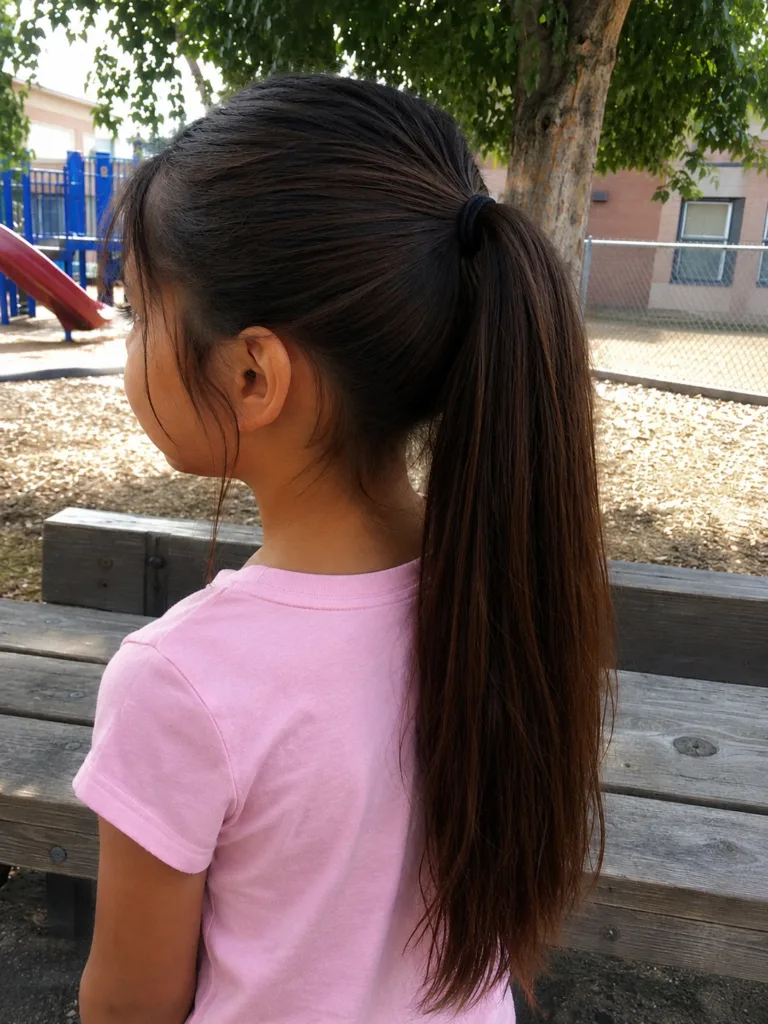
Classic Low Ponytail
The low ponytail earns its place because it asks very little from the hair. Hair gathers near the nape instead of being pulled upward toward a high anchor, and the tail stays out of the face without creating a complicated morning routine. A fabric-covered elastic is a useful finishing choice.
The look can stay sleek or retain natural texture through the ponytail. On curly or coily hair, there’s no need to straighten the length simply to make the style recognizable. Leaving the tail full creates a softer shape and avoids adding an extra styling step.
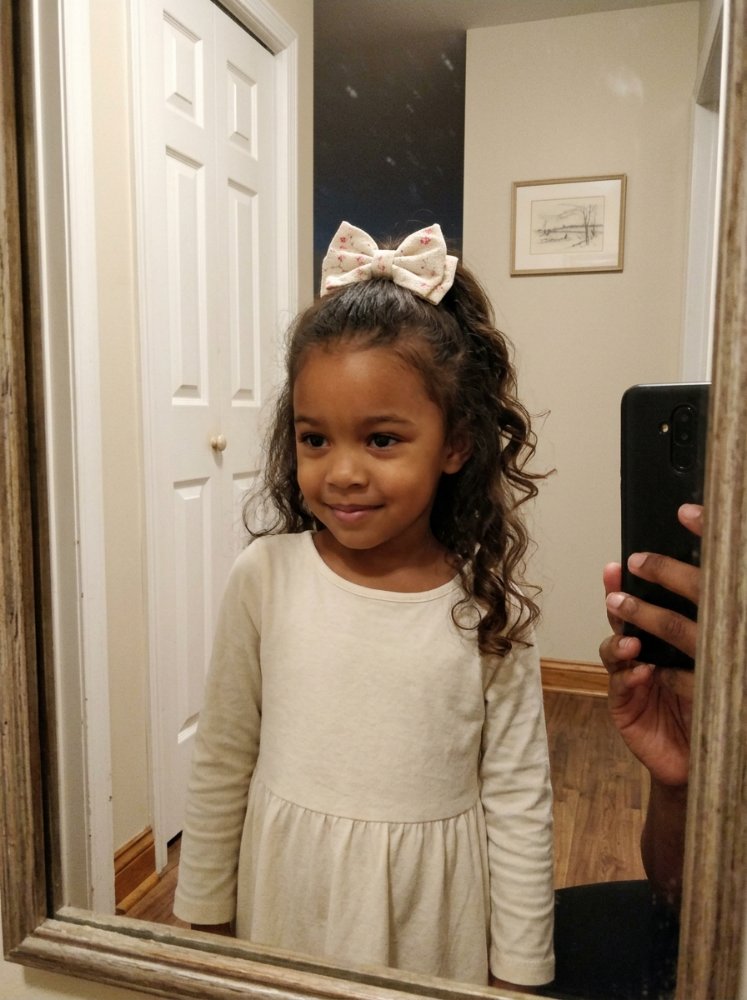
Half-Up, Half-Down Hair
This is one of the strongest choices for a child who likes wearing their hair loose but gets annoyed by strands falling forward during class or meals.
Gather the front and crown into a ponytail, small bun, braid, or twist while leaving the lower section free. The style works across straight, wavy, curly, and coily textures, although the visible length will change with shrinkage.
Because much of the hair remains loose, tangling can still develop around collars, backpack straps, and the nape. It’s better suited to an ordinary school day than a very active sports day when loose lengths would constantly move around.
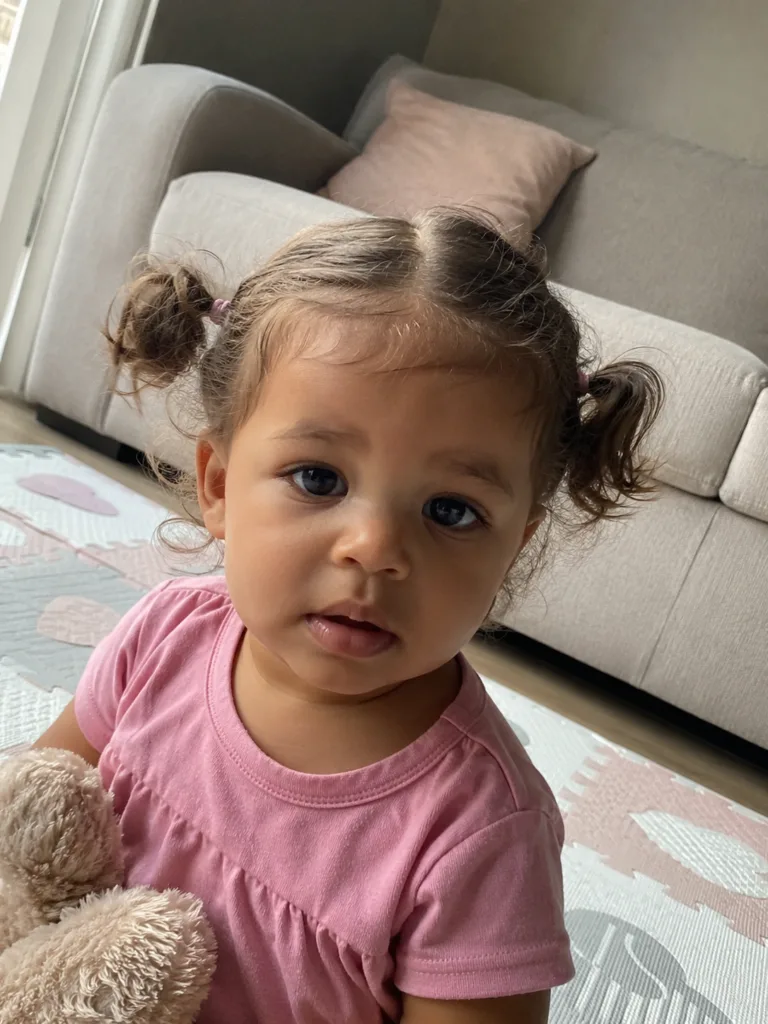
Two Low Pigtails
Two low pigtails create a youthful, balanced shape without concentrating all the hair at one point. The middle part is familiar, but a gentle side or slightly curved division can change the look without changing the basic construction. Keep the elastics comfortable and let the tails hang naturally, curl, coil, or form into small puffs.
This is especially useful for medium-length hair that won’t stay securely in one ponytail yet. Shorter pieces can join one side more easily than they can travel all the way toward a single central anchor.
Bubble Ponytail
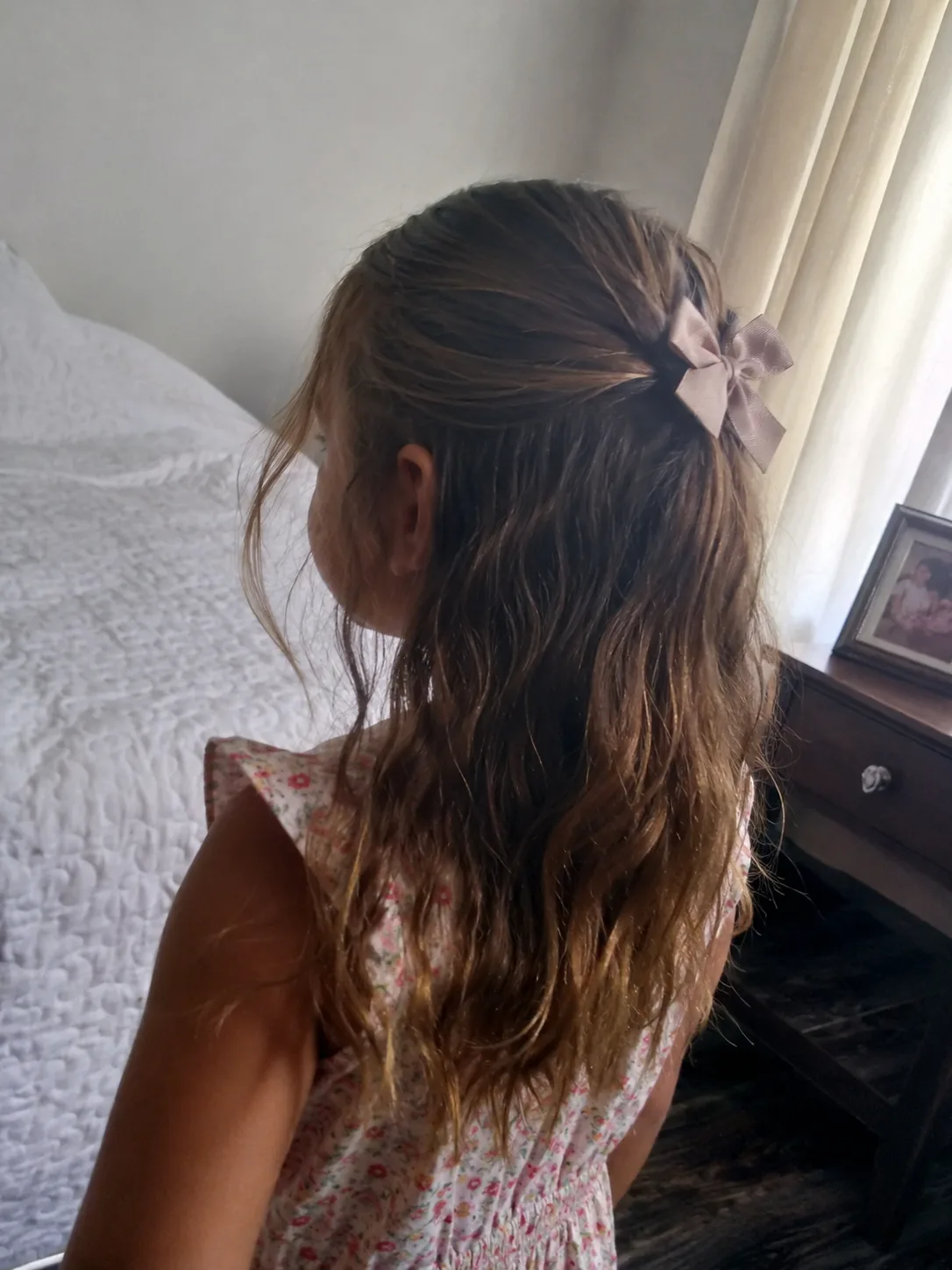
A bubble ponytail gives a basic ponytail more visual interest without requiring braiding skill.
Start with a comfortable ponytail and add elastics down the length, leaving enough space between them for each section to expand slightly. The bubbles should look rounded, not cinched so firmly that the hair between elastics is stretched under unnecessary pressure.
Longer hair displays the pattern most clearly. Medium lengths can still create a shorter version with fewer sections. Removal is straightforward, which makes this more practical than an elaborate installation when the child regularly switches hairstyles.
Simple Headband Style
Some mornings need a solution that takes almost no construction. A soft headband can hold the front away from the face while the rest of the hair remains loose.
This works particularly well with bobs, curly cuts, stretched natural hair, and lengths too short for a full ponytail. Check the area behind the ears, especially for children who wear glasses. A thick headband and glasses arms competing for the same space can become uncomfortable before the day is over.
Braids and Twists That Stay Out of the Way
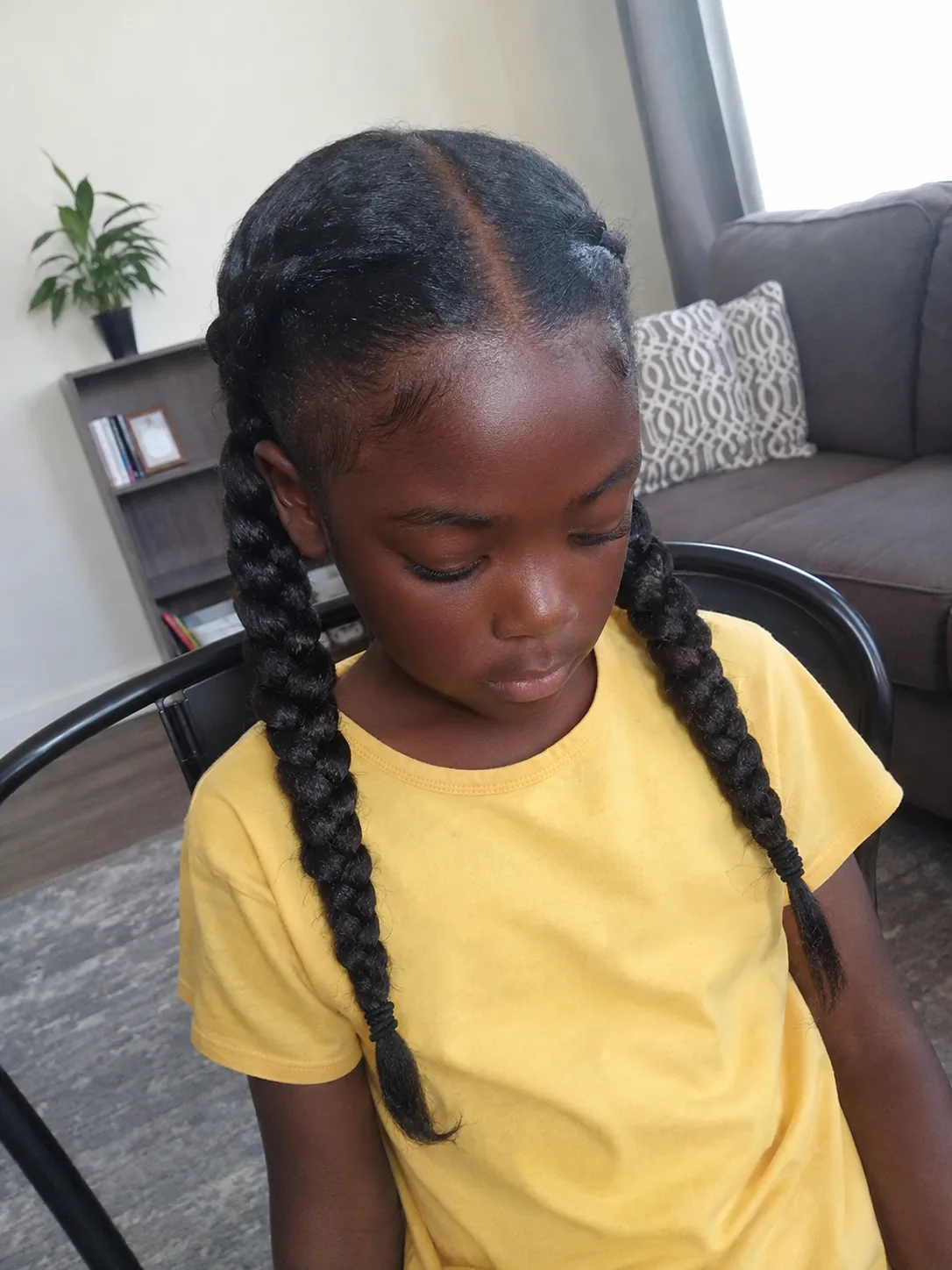
Two Pigtail Braids
Compared with loose pigtails, braided tails move less during running, playground time, and windy weather. Divide the hair into two sections, secure each side comfortably, then braid toward the ends. The braids can begin directly at the scalp as French or Dutch braids, or start as ordinary three-strand braids below the elastic.
The ordinary pigtail-braid version is the easier default when speed and uncomplicated removal matter most. It also lets you control the ponytail tension separately from the braid itself.
Two French Braids
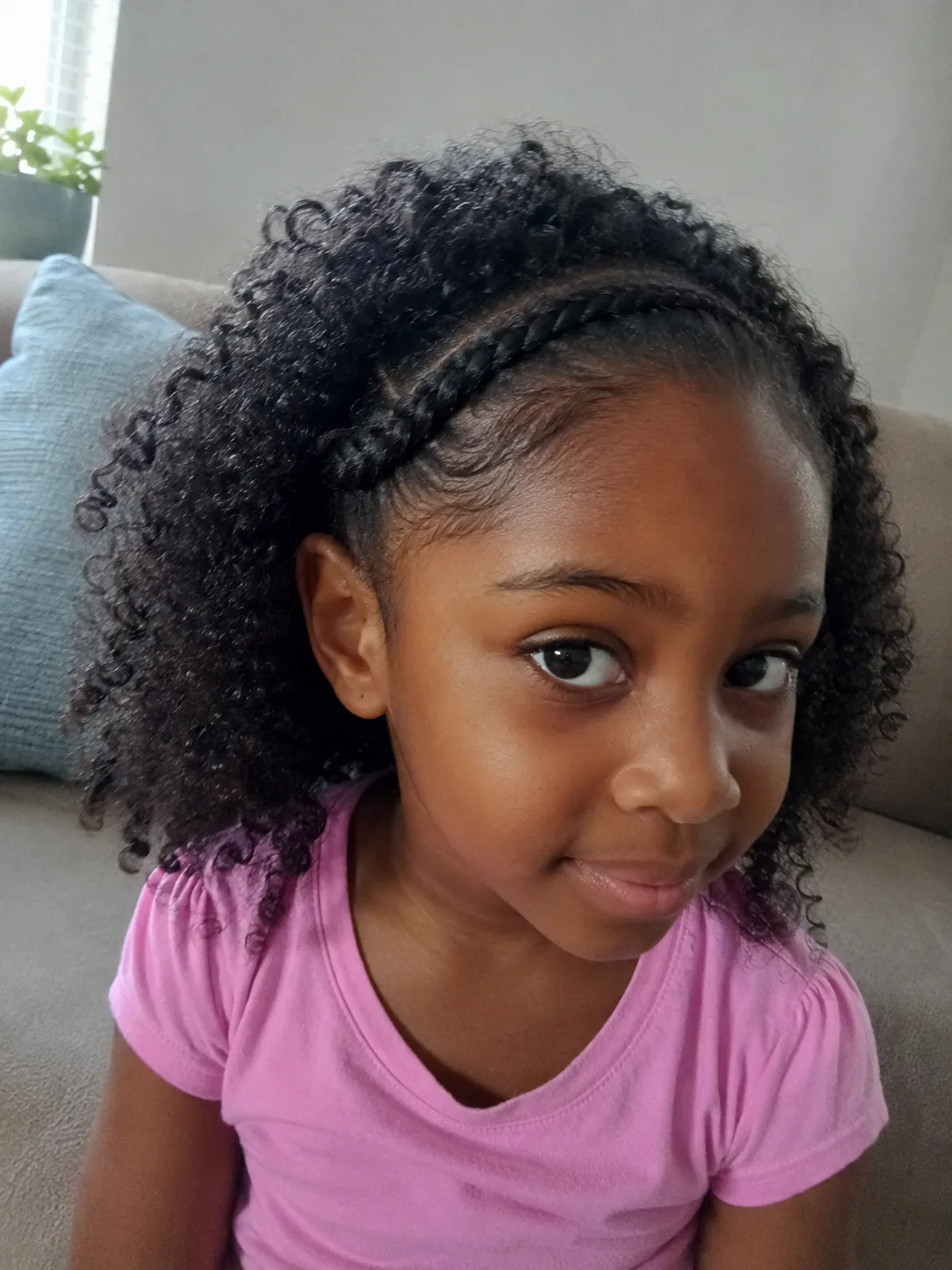
Hair that continually escapes from ordinary ponytails often behaves better in two French braids because shorter sections are incorporated gradually from the hairline toward the nape.
The real advantage is distribution. Instead of asking every strand to reach one distant ponytail anchor, the braid collects hair progressively along the scalp.
The finished style can feel secure without needing to feel tight. Watch the hairline and the area behind the ears, where small sections are easy to pull more firmly than necessary. A clean braid pattern comes from controlled sectioning and even hand placement, not painful tension.
Simple Cornrow Rows
Cornrows are useful when scalp access and controlled hair placement matter more than loose movement. A few moderately sized rows are generally easier to cleanse around and remove than an intricate design made from many tiny sections.
They also suit tightly curled and coily hair without requiring the texture to be straightened first.
Construction matters more than the label. The roots should remain comfortable during ordinary facial movement and play, and fragile hairs around the perimeter don’t need to be forced into a braid to make the outline look perfectly filled in.
Two-Strand Twists
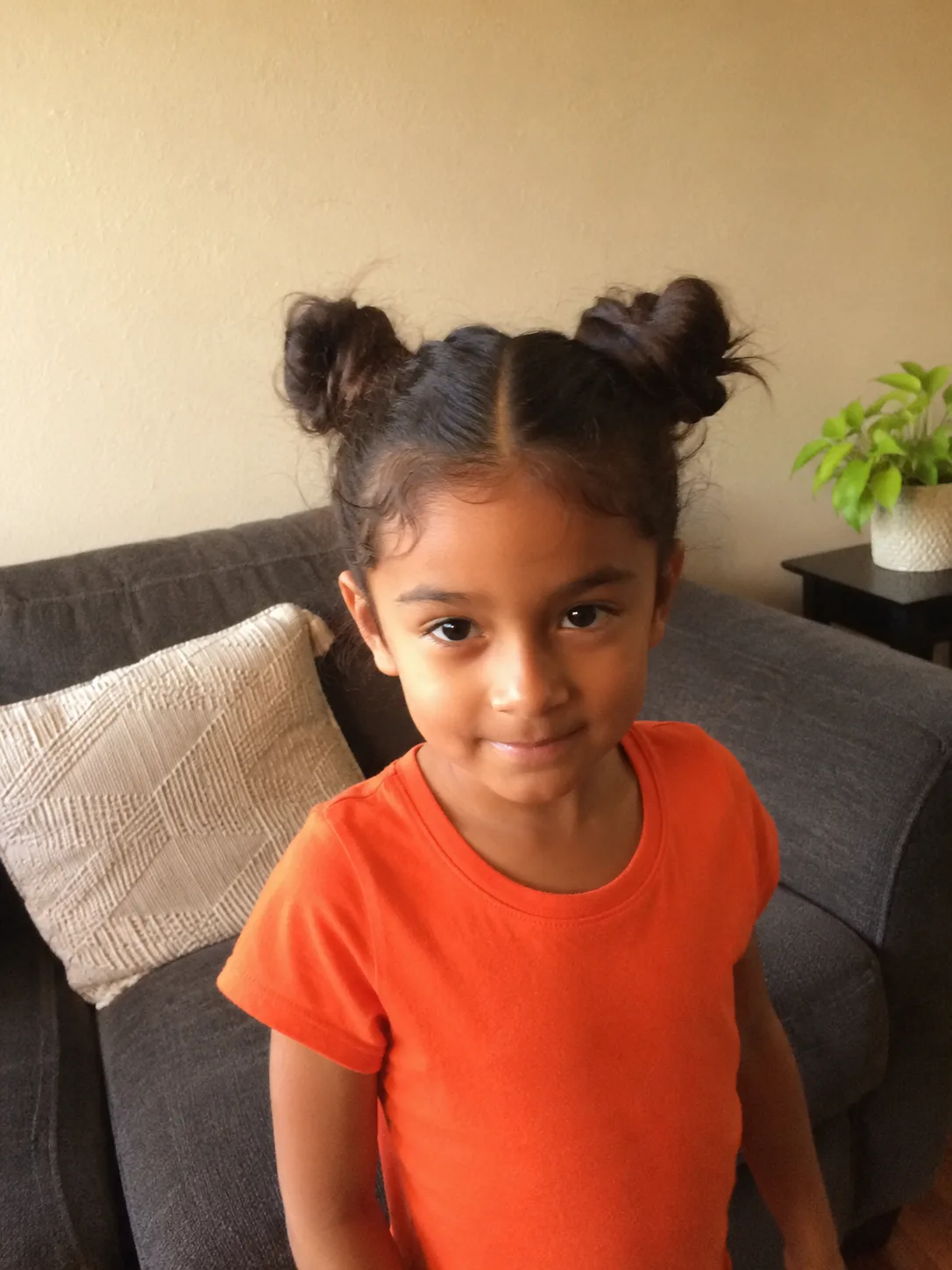
Two-strand twists are an underrated option for curly and coily hair because each section requires less construction than a three-strand braid while still keeping the hair organized.
Larger twists give a fuller appearance and make takedown simpler. Smaller twists create more individual movement but require more sectioning and more removal work later. Neither size needs extreme root tension to stay recognizable.
Twists also give you flexibility when plans change. They can hang freely, be gathered into pigtails, pulled partly back, or arranged into a loose bun without rebuilding the entire hairstyle.
Braided Ponytail
A braided ponytail works well when a loose tail becomes tangled during an active day. Gather the hair at a comfortable height, secure it with an elastic, and braid the ponytail from the base toward the end. The result has the clean outline of a ponytail with less movement through the length.
A lower or mid-height anchor is generally more convenient for sitting against a chair or car-seat headrest than a large ponytail positioned directly at the back of the crown.
Cute Styles for Curly and Coily Hair
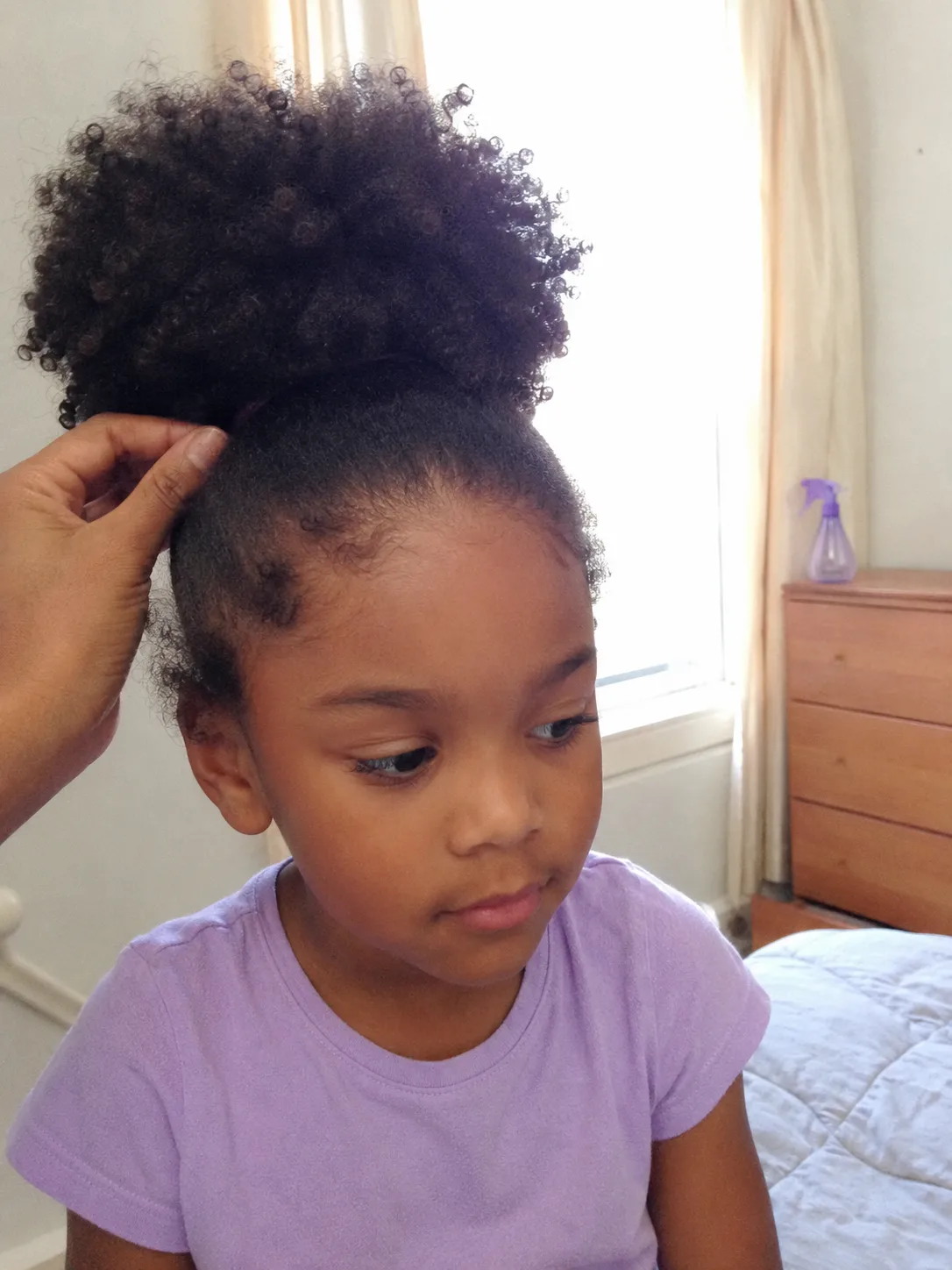
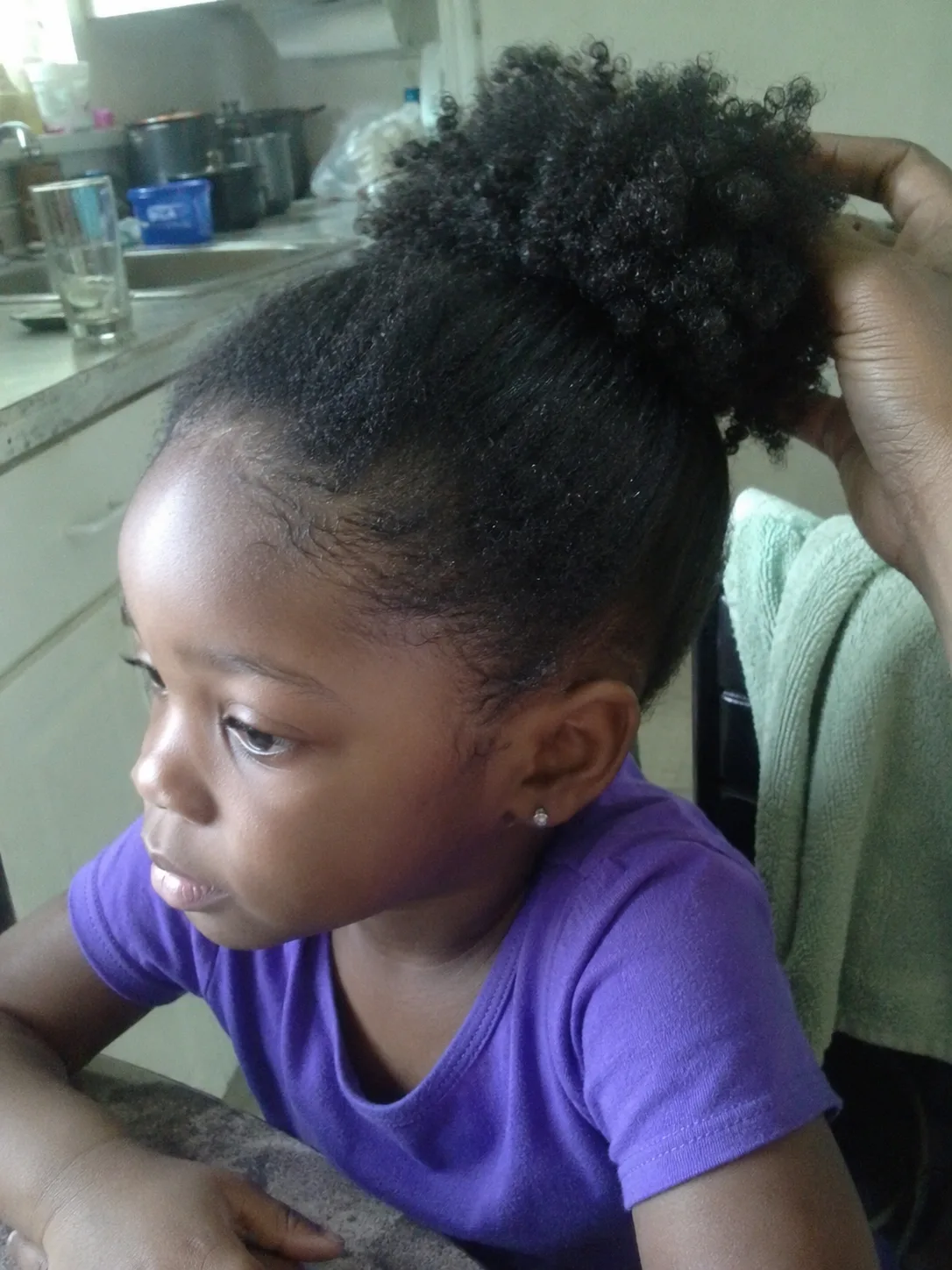
Single High Puff
A high puff lets curls and coils provide the entire visual feature. The sides are gathered upward while the texture remains full at the crown, creating a rounded shape with very little manipulation through the ends.
Hair with significant shrinkage may create a compact puff even when the stretched length is much longer. That’s part of the style rather than something that needs correcting.
Keep the base comfortable. Repeatedly tightening an elastic or band to make the puff appear smoother can turn an easy hairstyle into a poor tradeoff, particularly around delicate perimeter hairs.
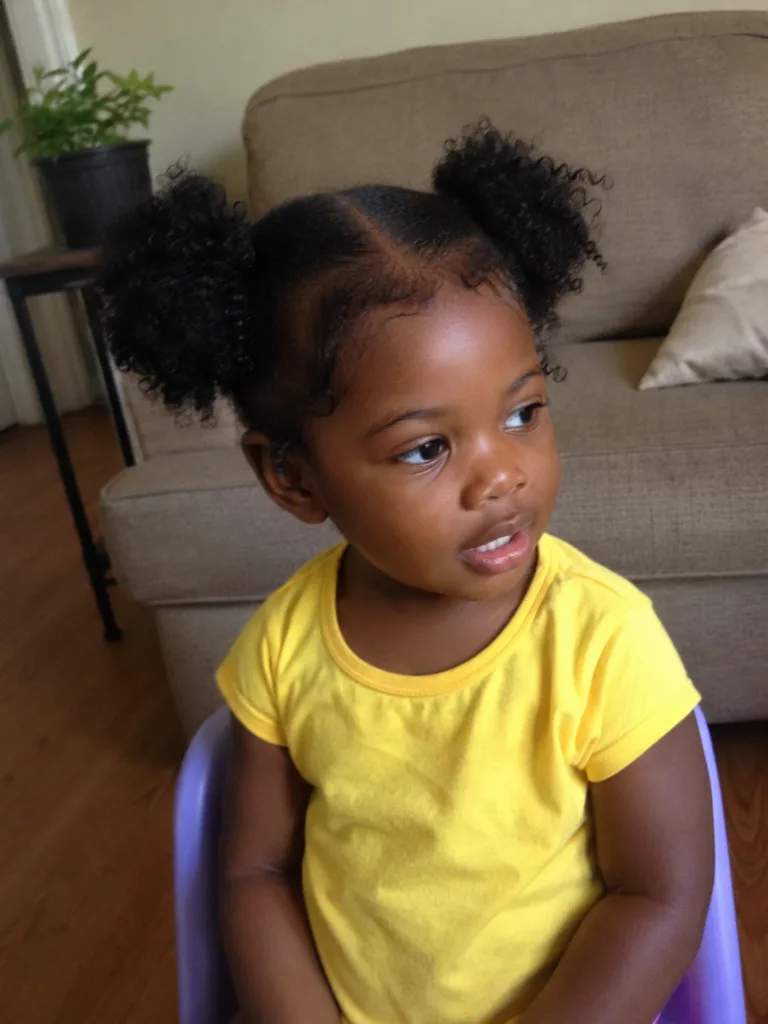
Two Afro Puffs
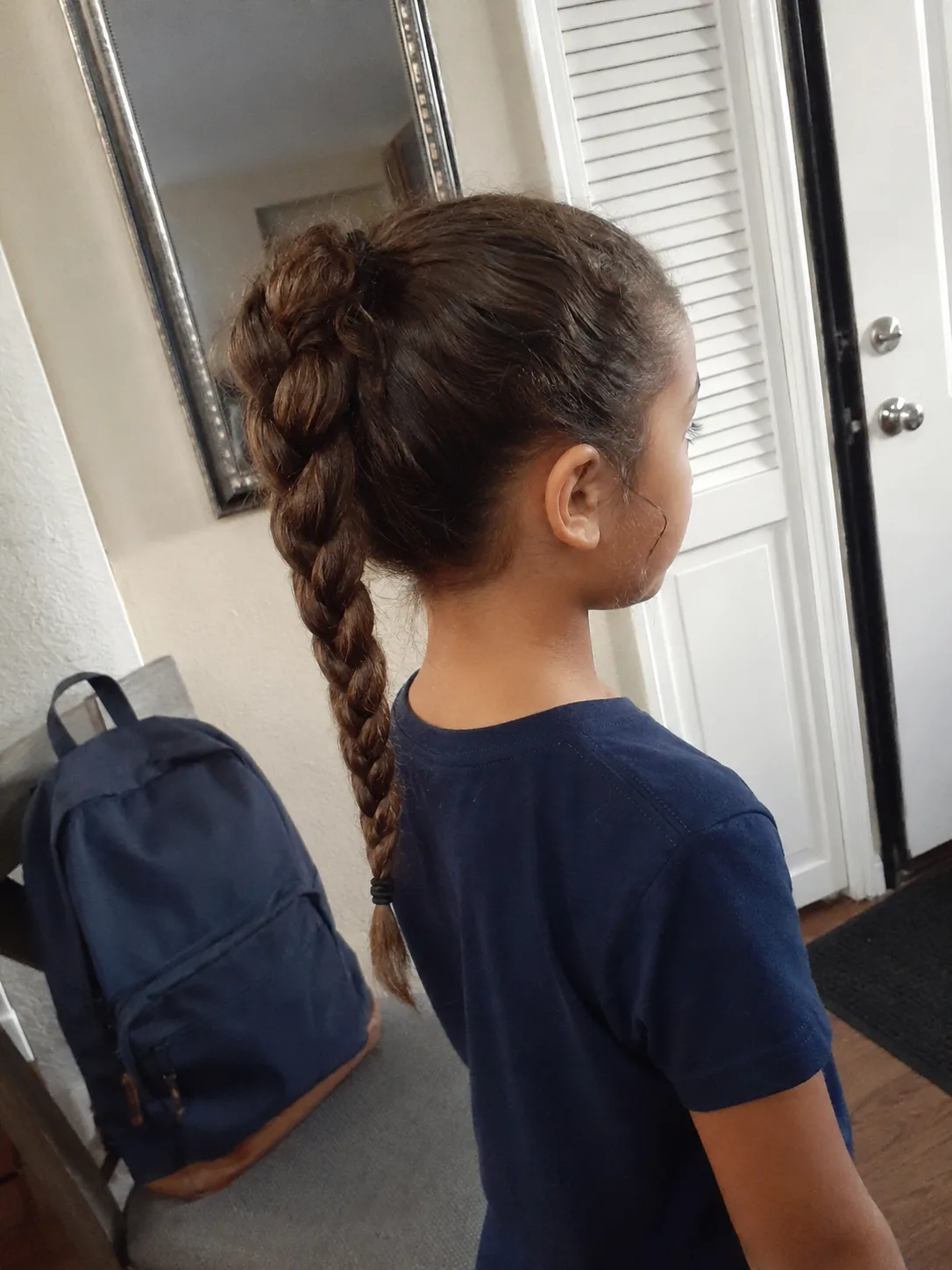
Two puffs spread the hair across two anchors and create a playful shape that works especially well with medium-length natural hair.
The part can be centered, while each side is gathered loosely enough for the curls or coils to expand. The puff itself doesn’t need to be brushed into a perfectly uniform ball; natural variation gives the style much of its character.
This option is often easier than trying to stretch every section into one high puff when shorter pieces don’t comfortably reach the center.
Defined Wash-and-Go
Some of the cutest hairstyles involve leaving the haircut and natural curl pattern visible. A wash-and-go uses curl or coil grouping as the main feature rather than tying the hair into a fixed shape.
The result depends heavily on the haircut, shrinkage, and how the hair dries. Dense roots may remain damp after the outer sections seem dry, so sufficient drying matters before adding a hat, lying down, or covering the hair for the night.
A wash-and-go is less convenient for children who strongly dislike loose hair touching their face or neck. For a child who enjoys their hair free, it removes the need for complicated sectioning and repeated accessories.
Twist-Out With the Front Pinned Back
A twist-out offers loose definition while a pinned-back front section solves the practical problem of hair falling into the eyes.
After twists are fully undone, take small front sections toward the temples and secure them gently with clips, barrettes, or bobby pins appropriate for the amount of hair. Leave the crown and back free so the texture stays visible.
This is a stronger choice for a party, family event, or calm school day than for vigorous activity. The loose hair can rub against clothing and become more tangled through the nape.
Buns, Knots, and Updos for Longer Hair
Low Bun
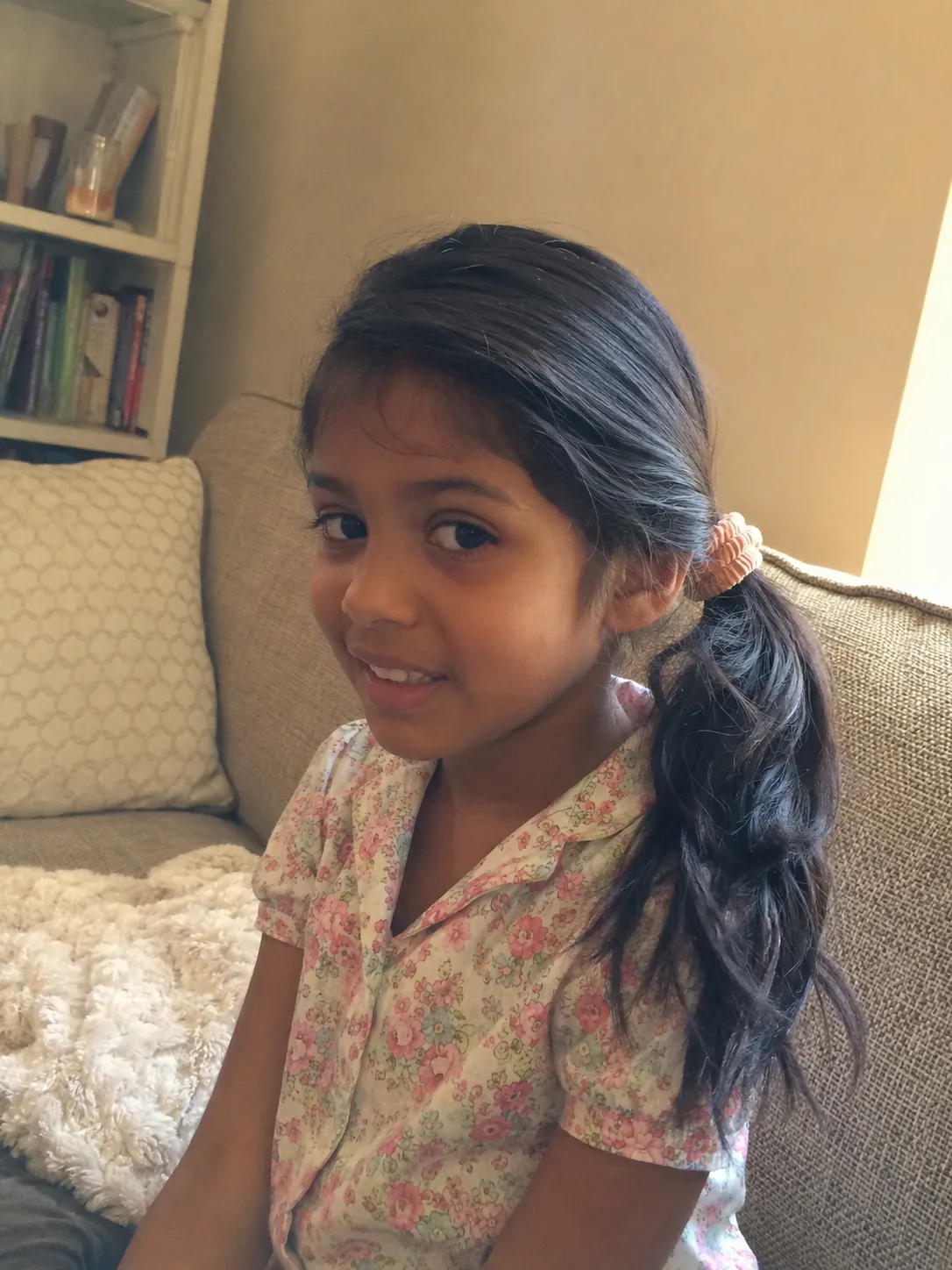
For sitting, reading, school assemblies, and other long periods in a chair, a low bun often makes more sense than a large bun placed directly against the back of the head.
Gather the hair near the nape, twist or wrap the length, and secure it without forcing the base tighter than needed. Pins should anchor the bun itself instead of scratching the scalp.
Straight, wavy, stretched, braided, and twisted hair can all form low buns. Very curly hair can also be gathered while preserving some natural fullness instead of being smoothed flat.
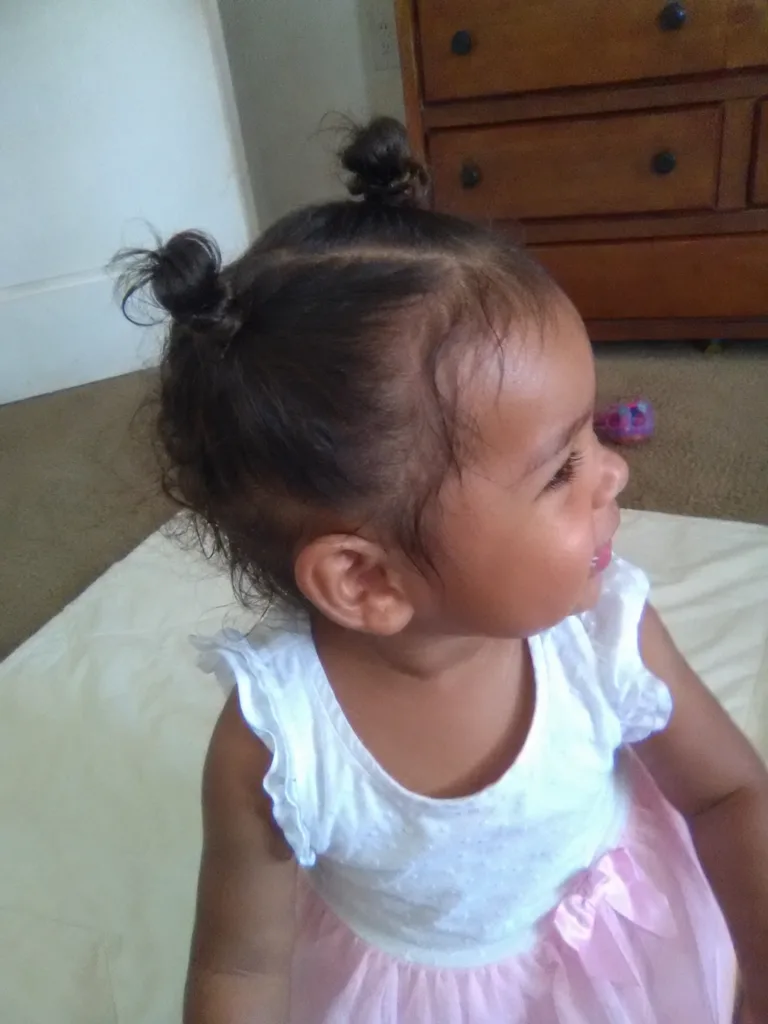
Two Mini Buns
Two mini buns have more personality than ordinary pigtails while keeping the ends tucked away.
Split the hair into two sections, create comfortable ponytail bases, then wrap each length around its own anchor. The buns can sit lower for easier contact with headrests or higher when the hairstyle is mainly for a short event.
Thick or dense hair creates larger buns with relatively little length. Fine strands can still form the style, but fine refers to strand diameter rather than how much hair is present overall; avoid tightening the base simply to make a small bun look more compact.
Braided Bun
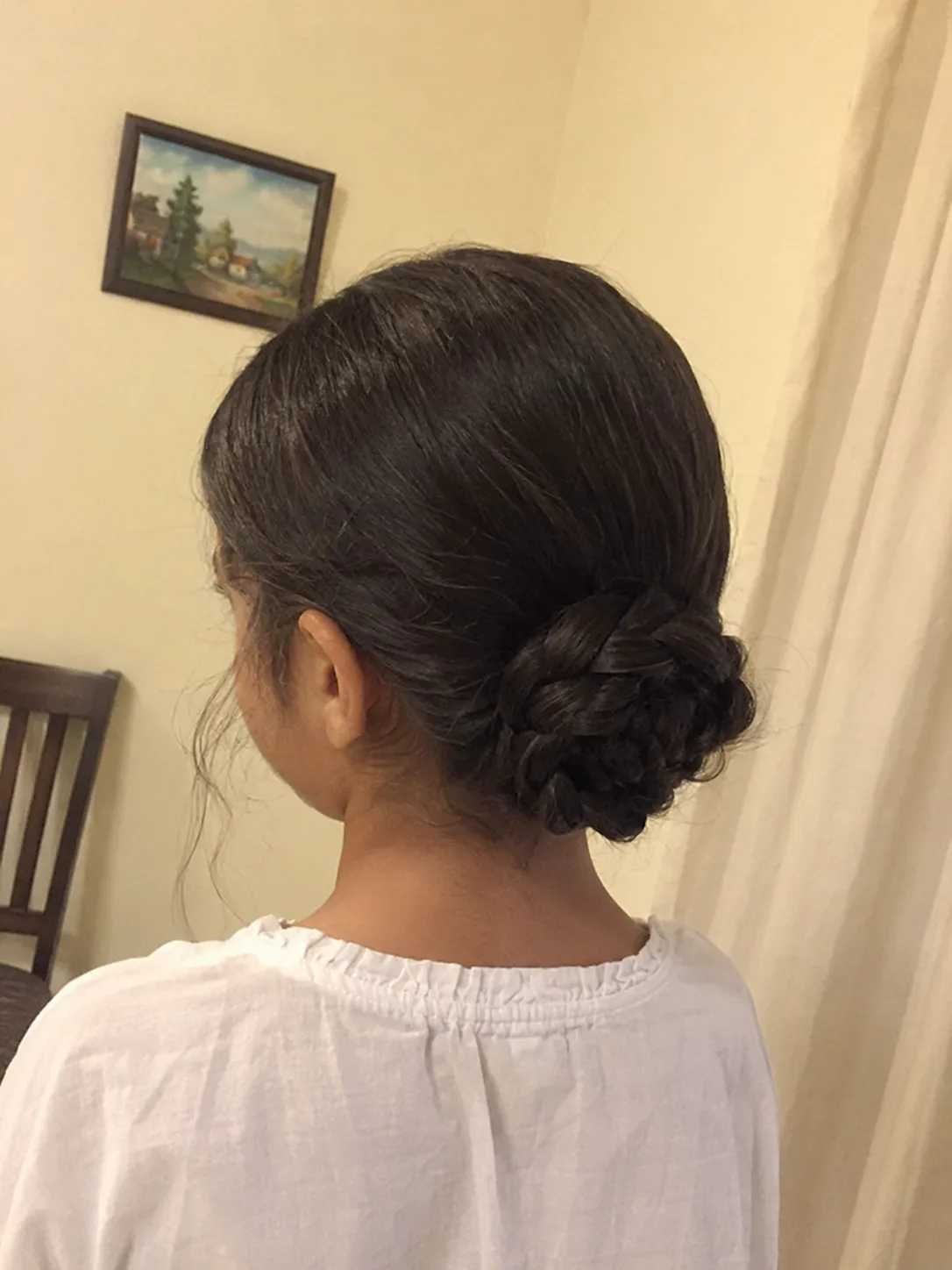
A braid changes how a bun holds together. Once the ponytail is braided, the length can be wrapped around the base with less loose hair escaping from the coil.
That makes this useful for longer hair that tends to unravel from a simple twisted bun. It also gives the bun visible pattern and texture without needing additional accessories.
Place it according to the day ahead. A high braided bun can look striking for a performance or photograph, while a low version is usually easier for travel and seated activities because it interferes less with the back of the head.
Rope-Twist Ponytail
The rope-twist ponytail gives a sleeker shape than two-strand twists all over the head while being faster to create.
Secure one ponytail, divide the tail into two sections, twist the sections individually, then wrap them around each other. The exact technique can vary according to hair texture and how readily the twist stays together.
The style shows particularly well on longer lengths because the spiral remains visible down the tail. On very slippery hair, a braid may prove easier to keep intact through a full day of movement.
Playful and Dressier Hairstyles
Braided Crown
A braided crown places the visual interest around the head instead of building height at the crown. That makes it particularly attractive for dressy occasions where a child still needs to sit comfortably.
The braid may travel around much of the perimeter or use two braids brought toward the back and pinned across one another.
Take care around the temples and hairline. Those sections don’t need to be stretched tightly into the crown. Small wisps or curls can remain free when pulling them backward would create discomfort.
Half-Up Mini Bun
A half-up mini bun gives you the charm of a bun without collecting the entire head of hair.
Gather the top section around the crown, create a small bun, and leave the lower lengths loose. Straight hair creates a cleaner contrast between the bun and flowing ends; curls and coils make the lower section fuller and softer.
This style is worth choosing when appearance matters more than all-day containment. Loose lower hair will still interact with coat collars, backpack straps, and active play, so it isn’t the most practical option for every school day.
Side Braid With Loose Hair
A single side braid can act almost like a built-in hair accessory. Braid a section near the front or temple and direct it toward the side or back while leaving most of the hair down.
The style is particularly useful when the goal is keeping one front area controlled without flattening the entire hairstyle.
Because the construction is small, removal is quick. That makes it a good option for a child who enjoys changing hairstyles frequently and doesn’t want to sit through a long takedown.
Low Ponytail With a Wrapped Base
For a dressier version of the ordinary ponytail, a small section of hair can conceal the elastic.
Create the ponytail first, leaving the base comfortable. Take a narrow section from the tail, wrap it around the elastic, and secure the end discreetly underneath. The tail can remain straight, wavy, curly, or coily.
This works especially well for ceremonies, family photos, or celebrations because the construction looks finished without needing a complex updo. Accessories can still be added, but the hairstyle doesn’t depend on a large bow or decorative clip to look complete.
What Cute Hairstyles Look Like in Real Life
A reference photo shows the front and sides for a moment. Parents usually have to manage the hairstyle for hours afterward. These everyday details can change which option is actually convenient.
How to Choose a Hairstyle Your Child Can Actually Wear
Start with the child’s tolerance, routine, and activity instead of choosing purely from the photograph. A style that requires repeated pulling, lengthy sectioning, or constant fixing probably isn’t practical for a child who dislikes sitting for hair styling.
Match the construction to the day. Loose curls can be wonderful for a birthday party. Two braids usually make more sense for a playground-heavy day. A low bun can suit a dressy event where the child will spend significant time seated.
Respect the hair’s normal state. Curly and coily hair can be styled shrunken, stretched, braided, twisted, or otherwise arranged without treating straight hair as the required starting point. Shrinkage changes visible length, so a style photographed on stretched hair may sit very differently on the same hair worn naturally.
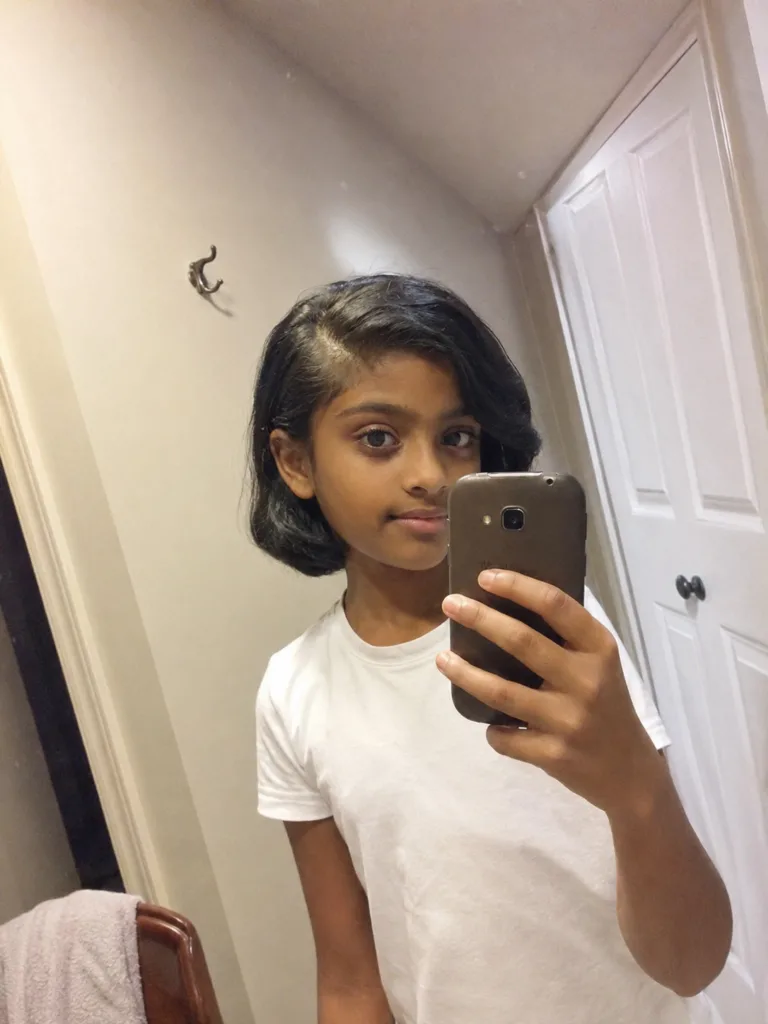
Consider the haircut. Short layers may escape from a ponytail but work easily in two sections. A bob may need only a headband or small front clips. Long one-length hair offers more braiding and bun options but also creates more loose length to detangle.
Accessories should solve a problem or support the look. A bow, clip, headband, or barrette doesn’t need to compensate for a hairstyle that’s uncomfortable underneath.
Comfort, Maintenance, and Takedown Matter
A neat hairstyle should still allow normal facial movement and comfortable play. Pain isn’t evidence that a braid, ponytail, puff, or bun has been secured properly.
With braids, twists, cornrows, and other styles that stay in place longer than a simple ponytail, pay attention to root comfort, added weight, scalp access, cleansing, drying, and removal. Children’s styles don’t need heavy added hair or extremely small sections merely to extend wear.
Nighttime friction can be reduced with a comfortable bonnet, scarf, or smooth pillowcase when the child tolerates it. These measures help limit tangling and rubbing; they can’t compensate for excessive tension at the roots.
Takedown deserves as much thought as installation. Numerous tiny elastics or very small braids create more removal work and more opportunities for snagging. Work patiently, remove accessories rather than dragging them through the strands, and detangle according to the hair’s texture and condition.
Stop and reassess a style that causes persistent pain, redness, sores, or irritation. Sudden shedding or a concerning change in density also deserves appropriate professional assessment rather than another tighter hairstyle.
Related Hairstyles to Explore
- Short Hair For Kids
- Hairstyles For Little Kids
- Quick and easy hairstyles for kids
- Cute beach hairstyles
FAQs About Cute Hairstyles for Kids
What are the easiest hairstyles for kids before school?
Low ponytails, two pigtails, half-up styles, puffs, headband styles, and simple braids are good starting points because their construction is straightforward. The easiest option depends on hair length and texture. A short curly cut may need only a headband, while longer hair may stay more manageable in a braid or ponytail.
What hairstyles work well for kids with short hair?
Headbands, front clips, small half-up sections, mini pigtails, and partial braids can work better than forcing short hair into one ponytail. A haircut with layers may have pieces that naturally fall free. Letting those sections remain out can be more comfortable than repeatedly tightening them toward an anchor they barely reach.
Are braids protective hairstyles for children?
Braids can reduce daily manipulation and keep the hair organized, but the benefit depends on how they’re installed and maintained. Comfortable root tension, sensible section size, manageable weight, scalp access, thorough drying, and careful removal all matter. A braid that hurts or places persistent pulling on the hairline is a poor protective tradeoff.
How can I make a child’s hairstyle look special without making it complicated?
Start with a simple structure and change one visible detail. A low ponytail can get a wrapped base, a half-up style can finish in a mini bun, or two braids can be paired with comfortable barrettes near the ends. Keeping the underlying construction simple makes styling and removal easier while still giving the hairstyle a dressier finish.
Hair Texture & Upkeep Style Matcher
Select your natural hair texture and daily maintenance window to get an instant styling formula and heat safety cap.
Heat Cap: 320°F (160°C)
A versatile three-strand braid beginning at the parietal ridge, securing the top half while allowing natural wave texture to flow freely around the shoulders.
Conclusion
The cutest hairstyle is much easier to appreciate when the child can forget about it once styling is finished. For everyday wear, simple ponytails, pigtails, braids, twists, and puffs are hard to beat because they combine personality with practical movement. More elaborate buns, crowns, and half-up styles make sense when an occasion justifies the extra construction.
Choose the hairstyle after considering how the hair naturally behaves, what the child will be doing, and how easily the style can be removed. Comfort is the strongest starting point; the bows, braids, curls, and finishing details can come afterward.
Editorial Standards & Hair Health Guidance
Every style featured on Tress Atlas is curated with a focus on real-world wearability, scalp tension management, and cuticle preservation. When trying protective styles or tight updos, ensure perimeter hairline sections remain tension-free to avoid traction stress on delicate follicles. For heat styling, cap tools below 350°F (180°C) to prevent thermal keratin denaturation.
Scientific Sourcing: Practices aligned with the American Academy of Dermatology (AAD) on traction alopecia risk reduction and cosmetic trichology research on hair tensile strength.