Simple Baby Hairstyles: 15 Gentle, Easy Ideas for Everyday Hair
The best simple baby hairstyles have very little to prove. They don’t need tiny, intricate parts or enough elastics to turn dressing into a project. A good style keeps hair comfortably out of the way, respects the baby’s natural texture, and comes apart without a struggle.
Age and hair development matter more than a reference photo. A young baby with short, wispy hair may need nothing beyond gentle brushing or finger shaping. An older baby or young toddler with longer curls or coils may have enough hair for puffs, twists, braids, or a loose bun. Sparse baby hair also shouldn’t be confused with thinning; babies naturally vary greatly in density and strand size.
Comfort should decide how far you go. Avoid tight edges, heavy added hair, hard accessories, and styles that require persistent pulling to stay neat. Small loose accessories can become a choking hazard, so clips, decorative bands, and similar pieces need close supervision and should be removed for sleep and unsupervised time.
This quick guide helps narrow the options before you start.
The Simplest Styles Use the Hair You Already Have
Natural Brush-and-Go Hair
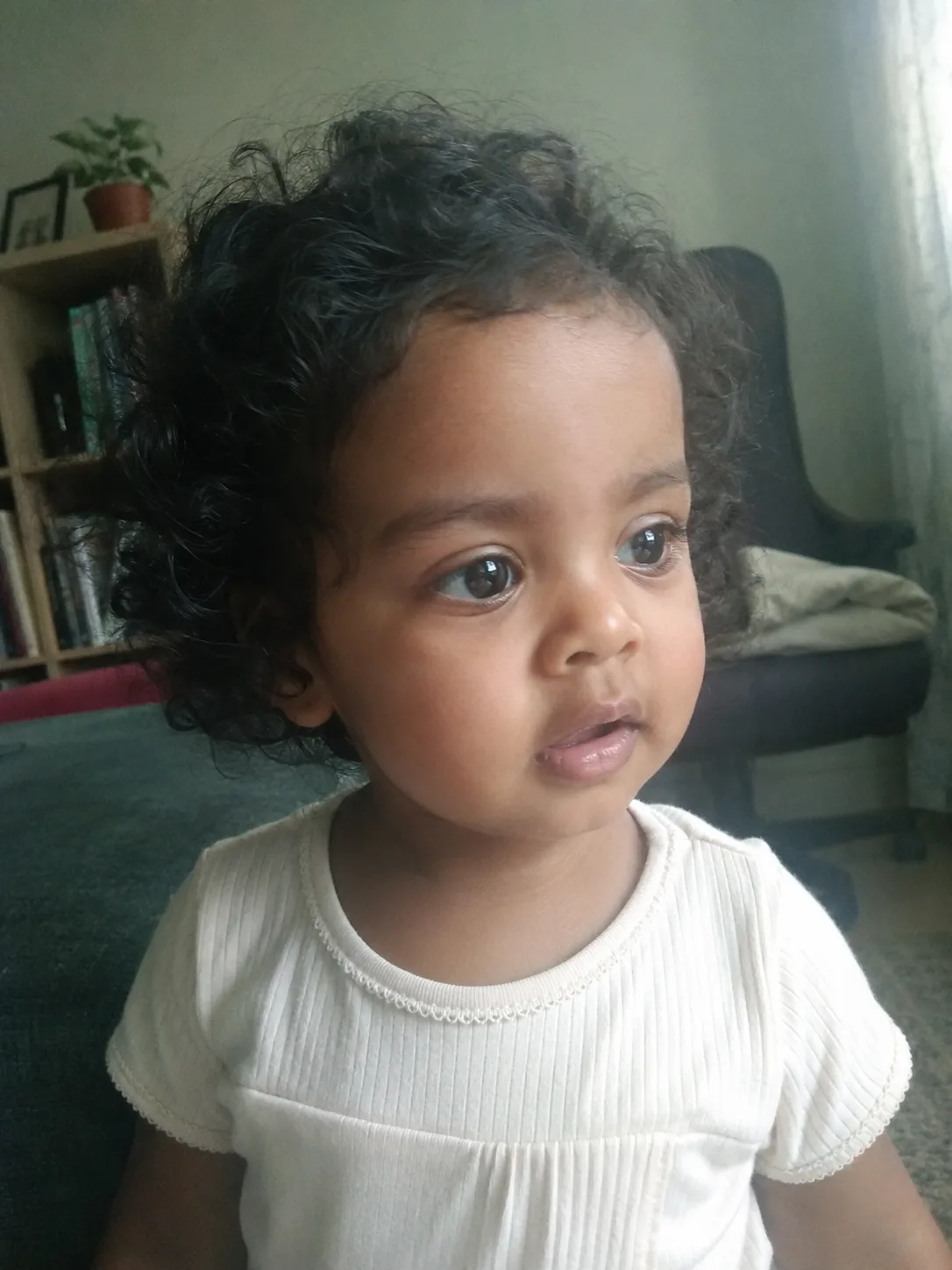
For very young babies, leaving the hair mostly alone is often the most practical hairstyle on the list. Smooth straighter or wavy hair gently into place with a soft baby-safe brush, or use your fingers to arrange curls without pulling them apart more than necessary. There are no anchor points, bands, pins, or small accessories to manage.
This works especially well while the hair is too short or uneven in length to gather comfortably. Baby hair often grows at different rates around the head, and there is no need to disguise every shorter area.
Finger-Shaped Curl Halo
Curls and coils can create their own hairstyle once they’re allowed to sit in their natural pattern. A little moisture can help with detangling, then individual curl groups can be separated and shaped gently with the fingers. The finished effect is a soft halo rather than a gathered style.
Keep the manipulation light. Repeatedly brushing curls after they’ve formed can separate the clumps and create more fluff than you intended.
This is one of the stronger choices for babies who dislike sitting still because there is no need to create a precise part or secure multiple sections.
Half-Up Top Gather
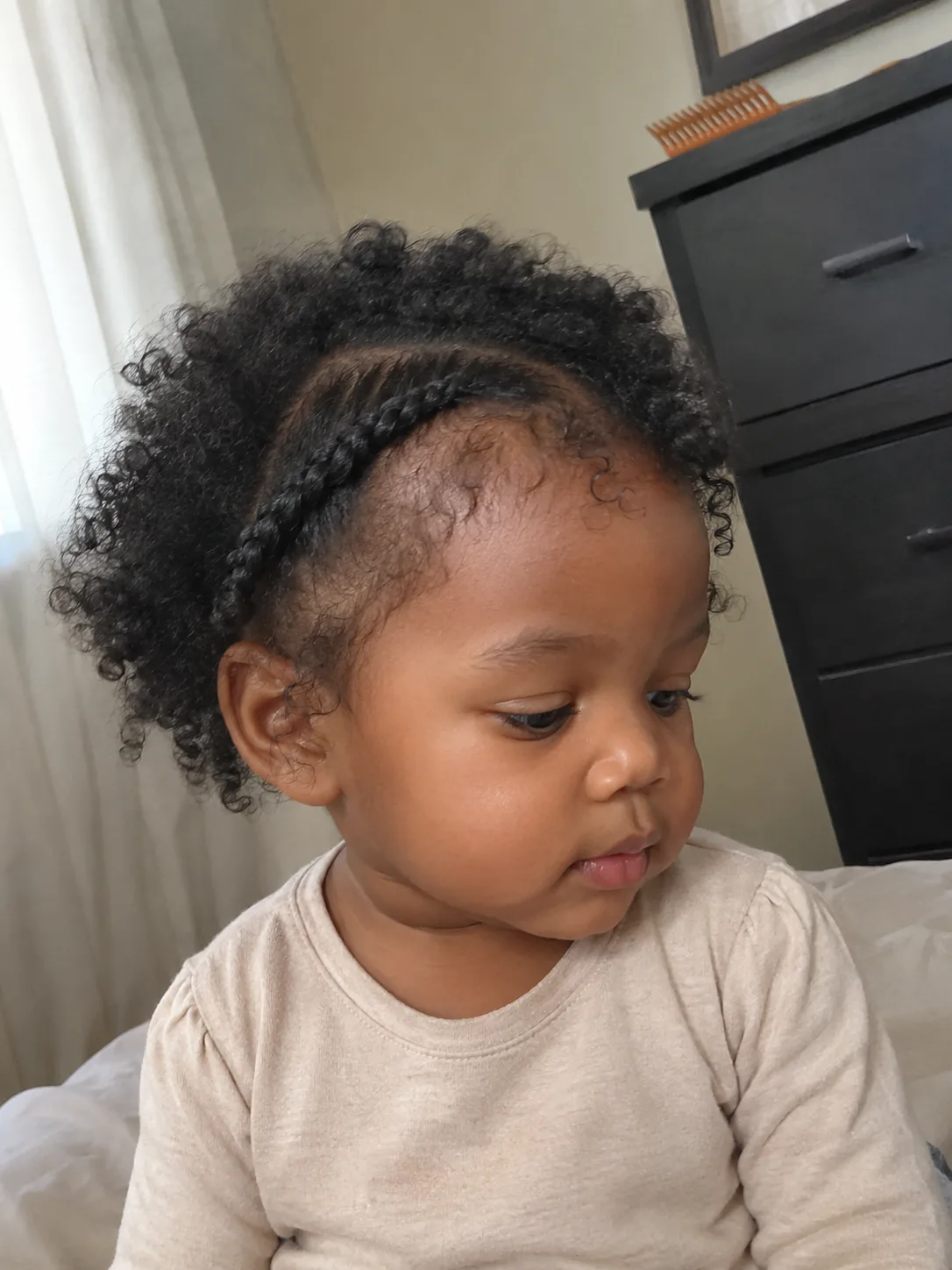
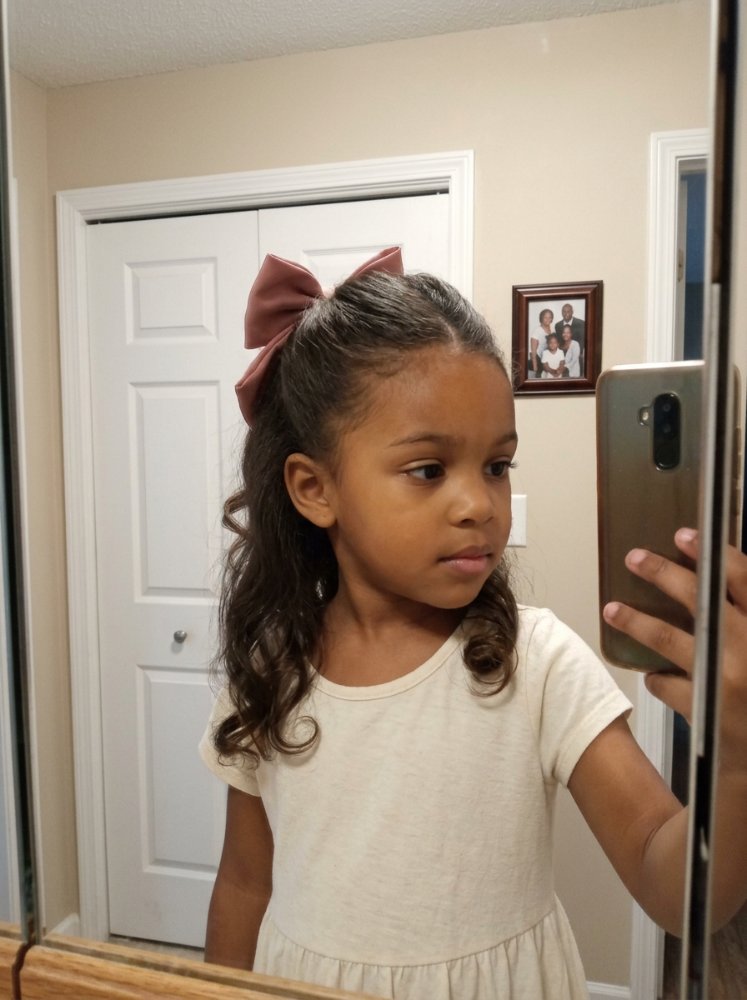
A half-up style solves a specific problem: hair around the forehead is getting in the way, but gathering the whole head would require too much stretching or pulling. Take a comfortable section from the front and upper sides, guide it toward the top, and secure it with a soft fabric-covered elastic.
The hair at the back remains loose, so short nape sections don’t have to reach the anchor.
On curls and coils, let the gathered section form a small puff instead of trying to brush it completely flat. Straighter hair can fall as a tiny ponytail.
The elastic should hold the section without indenting or pulling the scalp. If you have to keep tightening it because short hairs escape, the style is asking more of the hair than its current length allows.
Single Top Puff
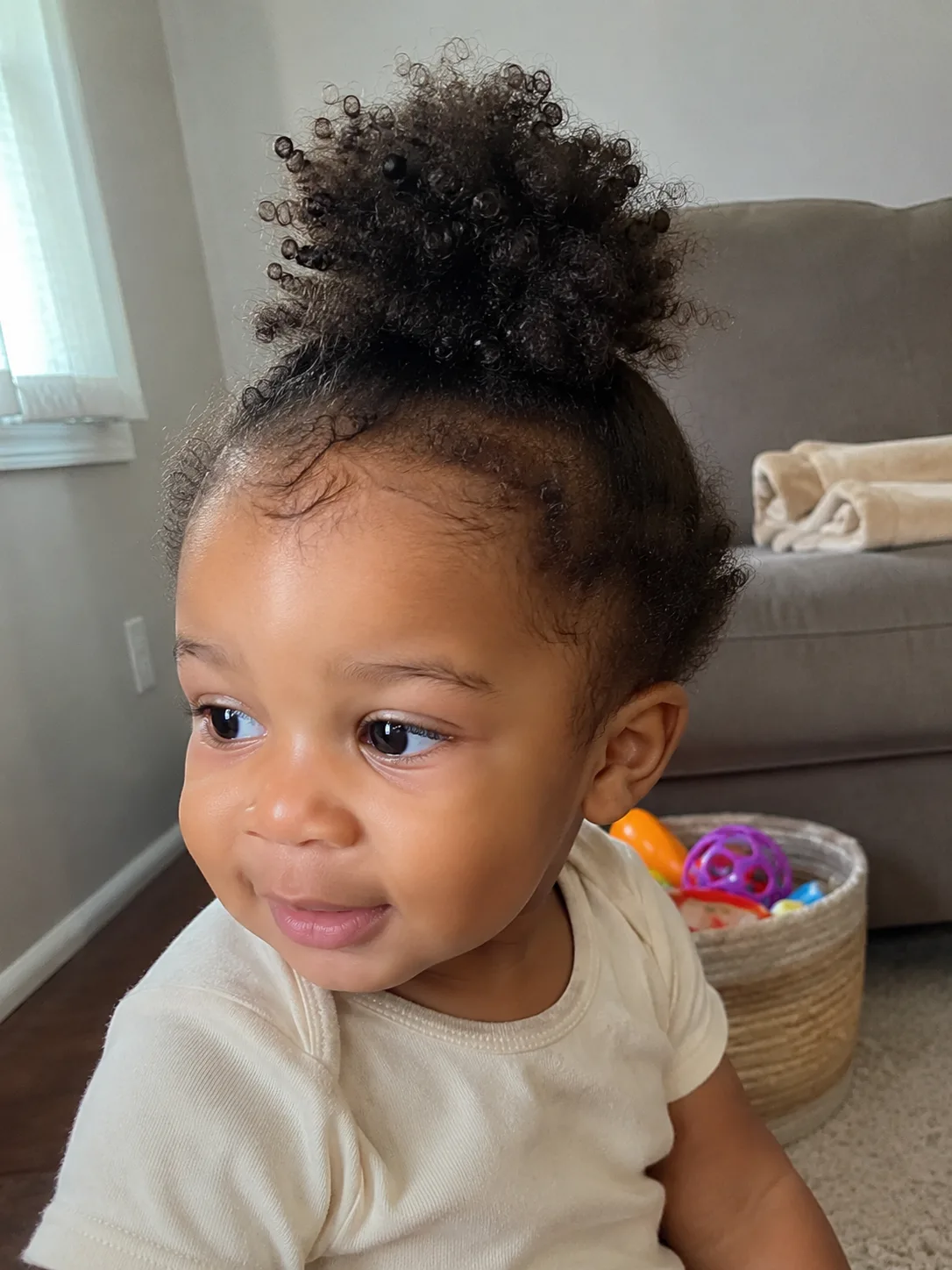
A top puff gives curly and coily hair a round, playful shape while keeping much of the length contained. It works once enough hair reaches the upper center of the head without force. Keep the perimeter soft instead of repeatedly brushing fine baby hairs toward the elastic. The puff itself can stay fluffy; perfect curl separation isn’t required for the style to look finished.
Easy Gathered Hairstyles for Longer Baby Hair
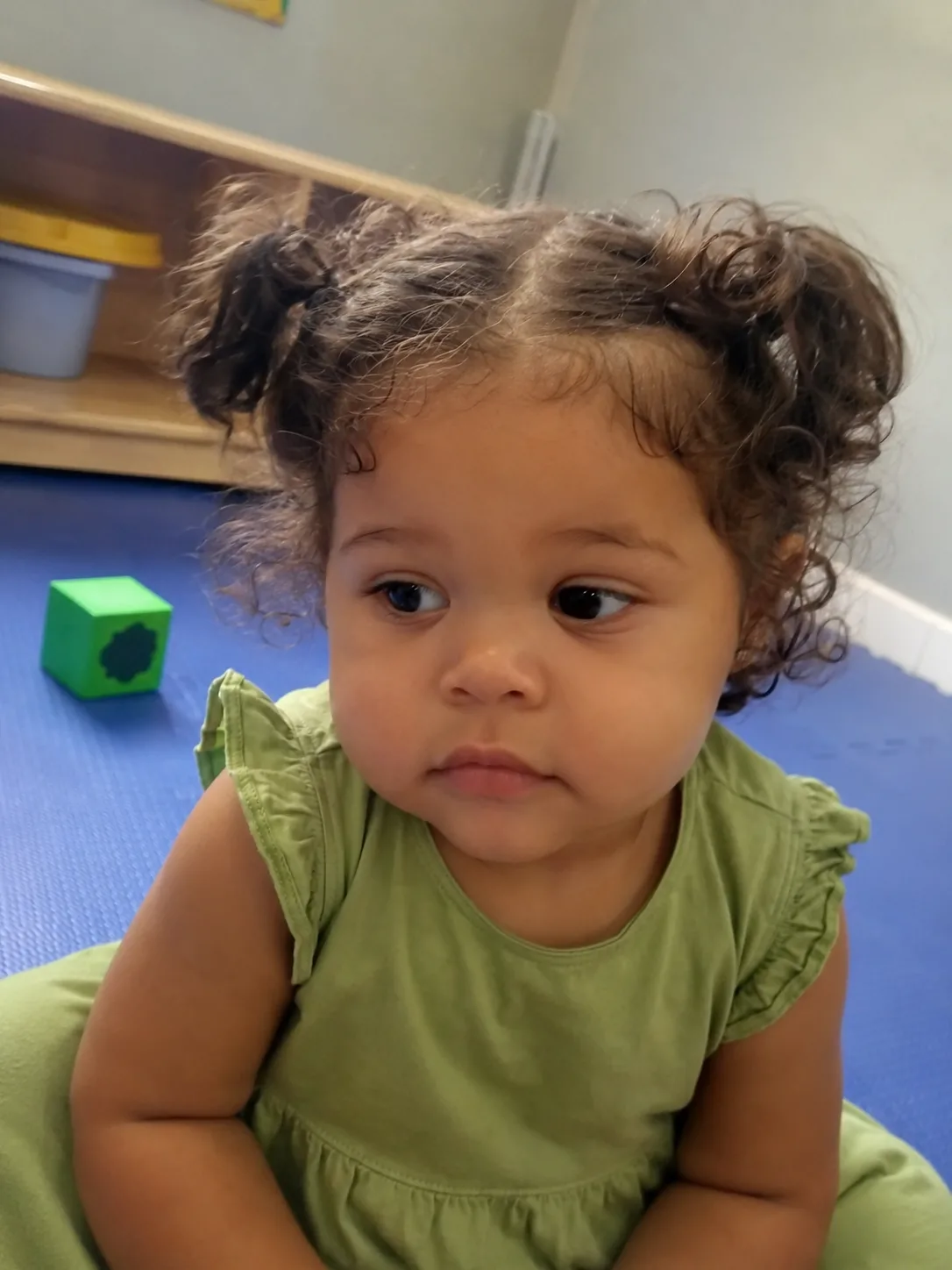
Two Side Puffs
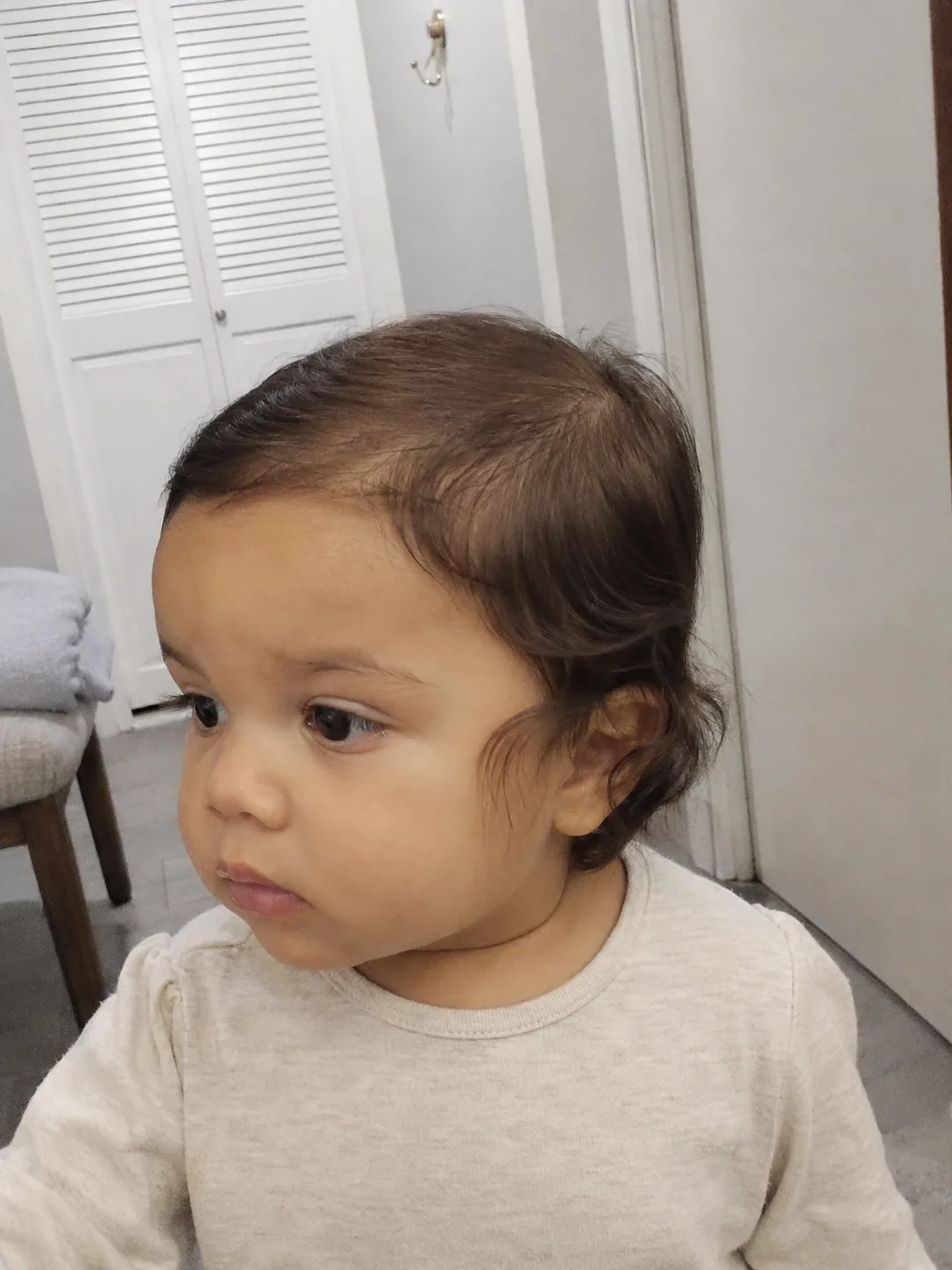
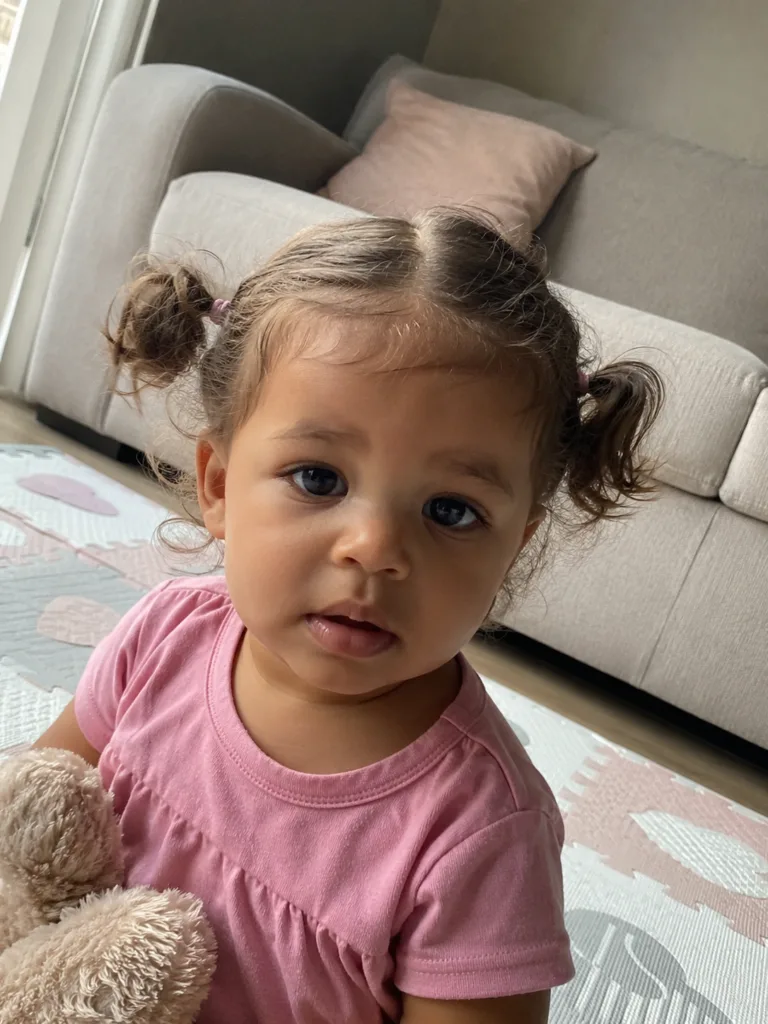
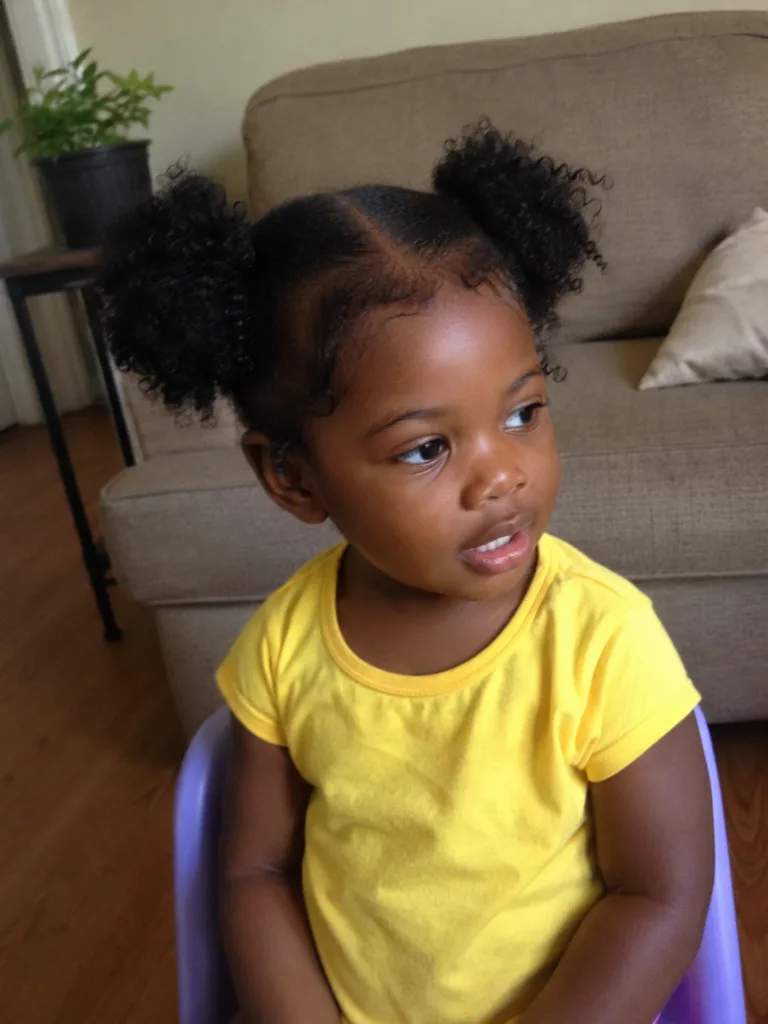
Two puffs spread the hair between separate anchors and create width on both sides of the head. They’re especially useful for textured hair that doesn’t yet reach comfortably into one central ponytail.
Part the hair into two broad sections and gather each side only as far as it naturally travels. A perfectly straight center part contributes less to the finished look than comfortable bases do.
Because both puffs are visible from the front, they can look complete even when shorter hair remains soft around the hairline.
Low Ponytail
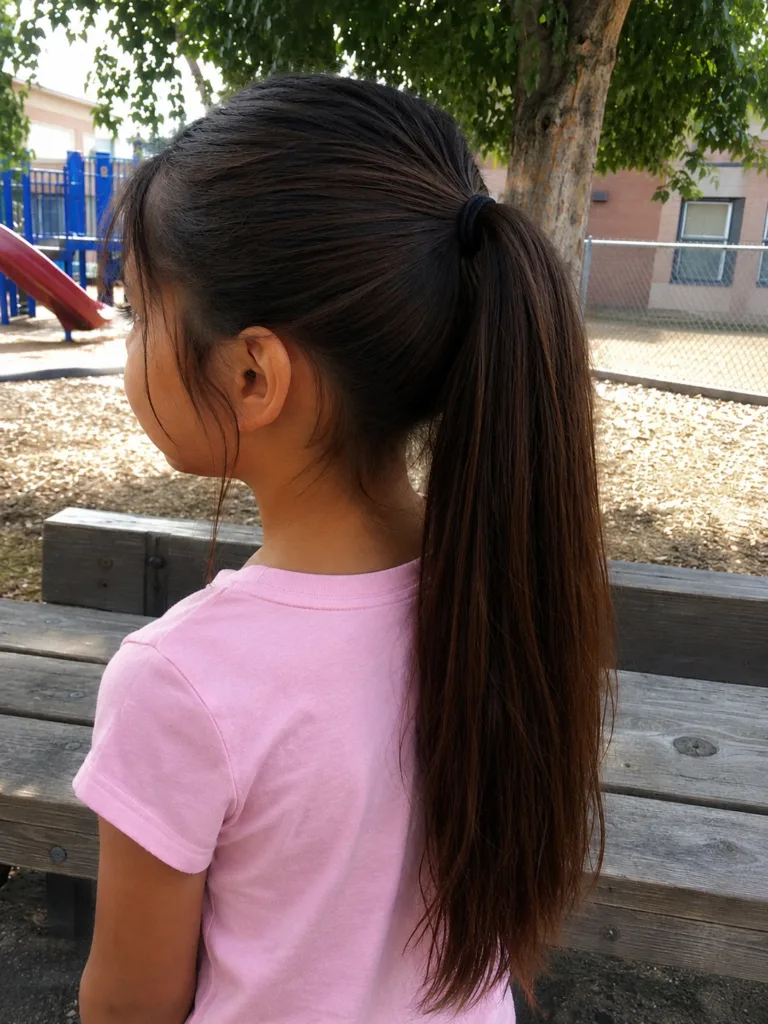
Longer baby hair often behaves better at a low anchor because the hair has less distance to travel. Brush or finger-comb the length toward the back of the head and secure it softly near the nape.
This is a practical option for straighter and wavy hair, and it can also work on stretched or naturally elongated curls. Very springy curls may resist a low ponytail until more length develops.
Keep neckline friction in mind. A ponytail that sits directly against a high collar may rub and loosen as the baby moves.
Loose Low Bun
Once a ponytail has enough length to fold back toward its base, a small low bun can keep the ends contained. Twist the ponytail gently, coil or fold it without tightening the base, and secure it in a way that doesn’t leave hard pieces pressing into the head.
The low position is more sensible than a bulky back-of-head bun when a baby spends time lying against a seat or headrest. Any style that creates a firm lump where the head rests can become uncomfortable surprisingly quickly.
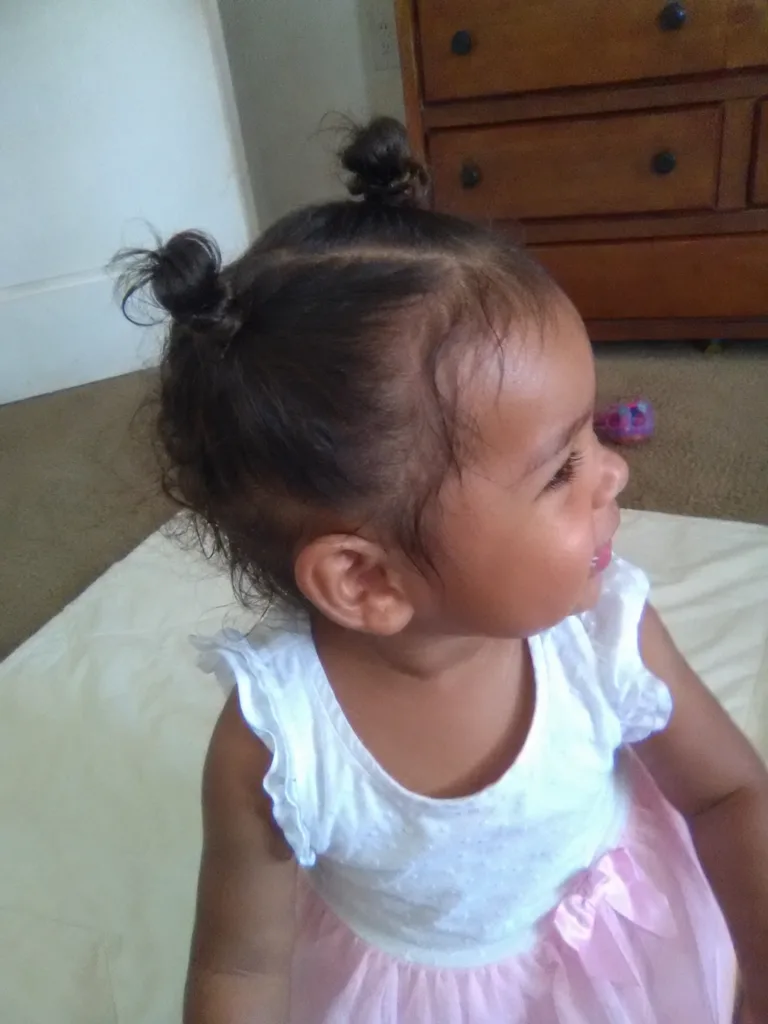
Two Mini Buns
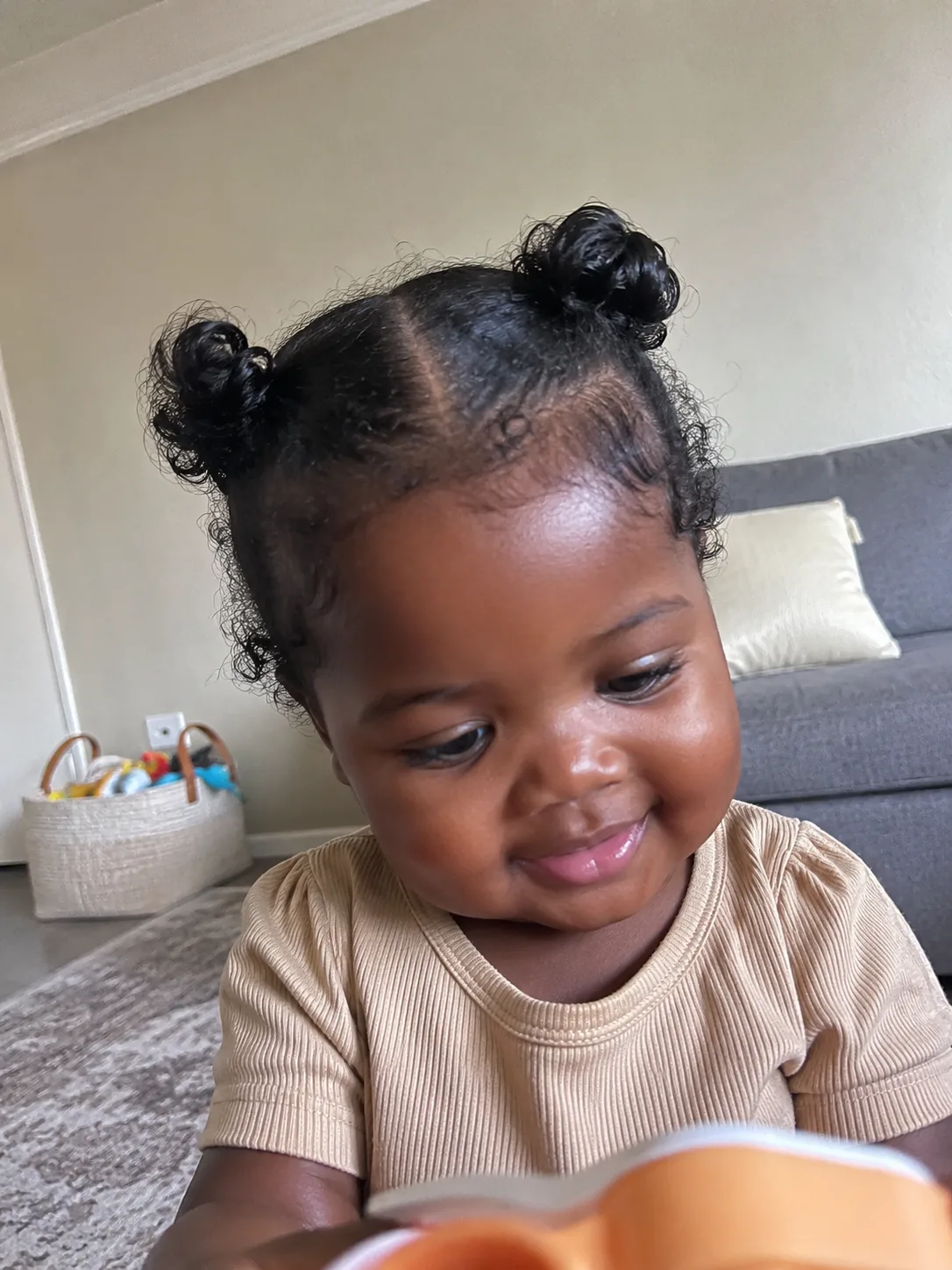
Two small buns give longer hair a tucked finish without pulling every strand toward one central point. Create two broad sections, secure each gently, then coil the free lengths around their own bases.
They’re particularly useful when the hair is long enough to wrap but still too uneven for one tidy bun.
Curls can remain visible around the surface of each bun. There is little benefit in repeatedly smoothing until every short strand disappears.
This style asks more from the hair than two puffs because the ends need enough length to wrap. A puff is the easier default whenever the bun keeps unraveling.
Center Puff Faux Hawk
Several soft puffs arranged from the front toward the back create a faux-hawk shape without braiding close to the scalp. The construction is especially useful for coily hair because each section travels only a short distance to its own elastic.
Make the sections broad enough that styling stays quick. Very tiny boxes add more manipulation and more elastics without improving the basic silhouette.
This look is worth the extra sectioning for an occasion when you want something more defined than one puff, but it creates more work at takedown than a single-anchor style.
Simple Braids and Twists for Babies With Enough Length
Single Loose Braid
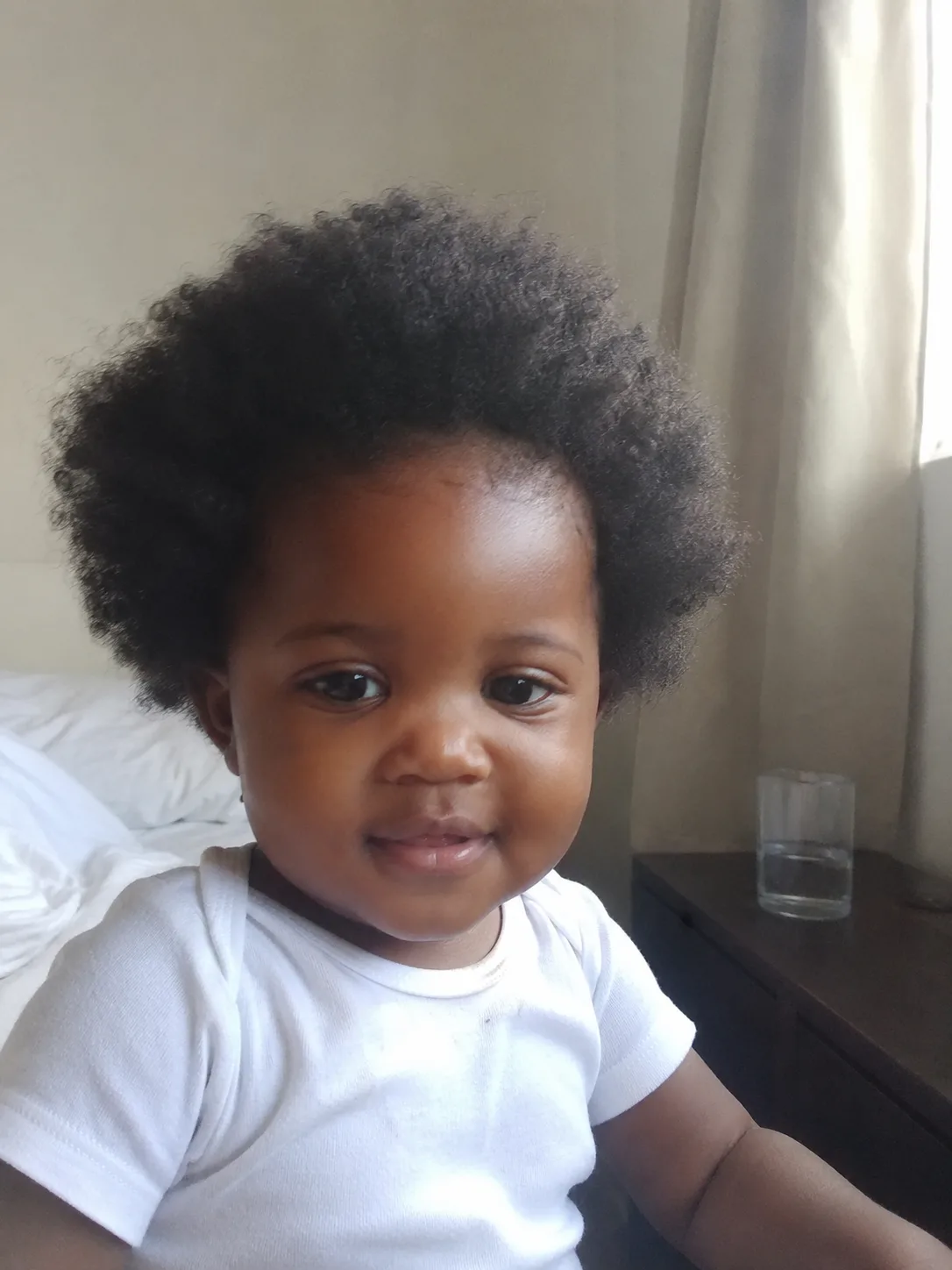
A three-strand braid is one of the simplest ways to contain longer hair without creating several scalp sections. Gather the hair low, divide the free length into three sections, and braid downward with an easy grip.
The braid should remain flexible enough to move. Pulling harder to make every crossing look tiny and precise isn’t useful on a baby’s hair, particularly around fragile perimeter strands.
A single braid is also easier to undo than a head full of small plaits.
Two-Strand Twist Pigtails
Two-strand twists are a good alternative when three-strand braiding feels unnecessarily fiddly. Divide the hair into two larger side sections. Each free tail is then split in half and twisted down to the ends.
Coily hair often holds this construction naturally. Looser textures may need a gentle end securement to keep the twist from opening.
The shape is different from two puffs: instead of leaving the ends full and rounded, the hair is elongated into two defined tails.
Chunky All-Over Two-Strand Twists
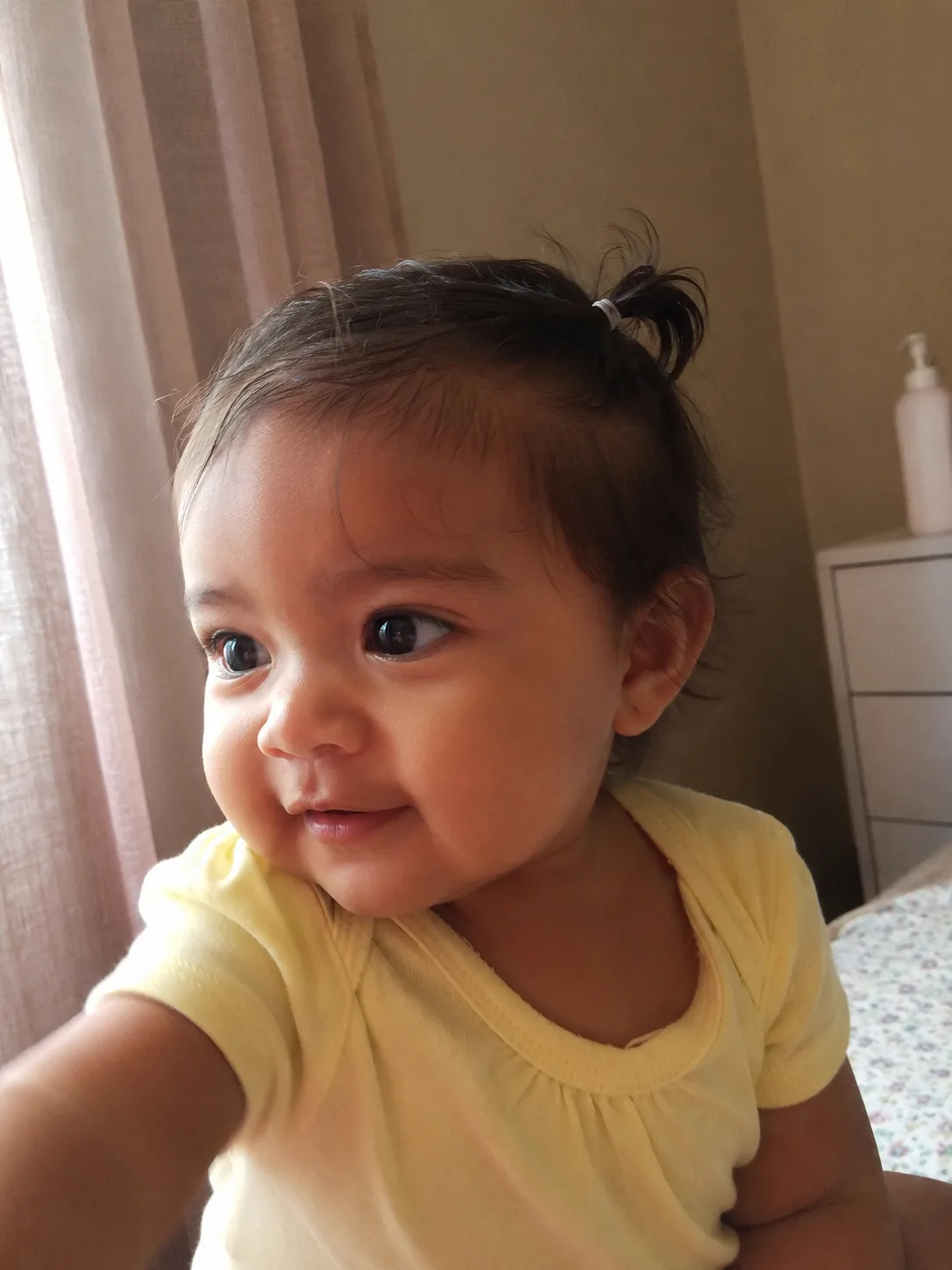
For longer natural hair, chunky twists can reduce daily detangling without turning the styling session into an exercise in tiny parting. Divide detangled hair into a modest number of comfortably sized sections, then split each section in two and twist toward the ends.
The finished twists should move freely at the roots.
Bigger sections make this style far more baby-friendly than very small twists. They also make takedown simpler because there are fewer individual sections to undo.
Texture determines how readily the ends stay together. Tightly coiled hair may hold without much assistance, while looser curls can unwind more easily.
This style earns its extra setup on hair that tangles quickly when left completely loose. It makes less sense for a baby who strongly dislikes section-by-section styling; a puff or natural curl halo asks for much less patience.
Two Loose Pigtail Braids
Two braids provide a different weight distribution from a single back braid and can be easier when shorter side sections don’t comfortably reach the center.
Divide the hair into two large sections, gather each without stretching the hairline, and braid the free lengths. Leave a little softness near the ears rather than repeatedly pulling short hairs into the base. This style is better suited to hair with enough length for a genuine braid; tiny tails secured mainly by elastics are harder work for very little benefit.
Occasion Styles That Still Keep Things Manageable
Front Twist With the Back Left Loose
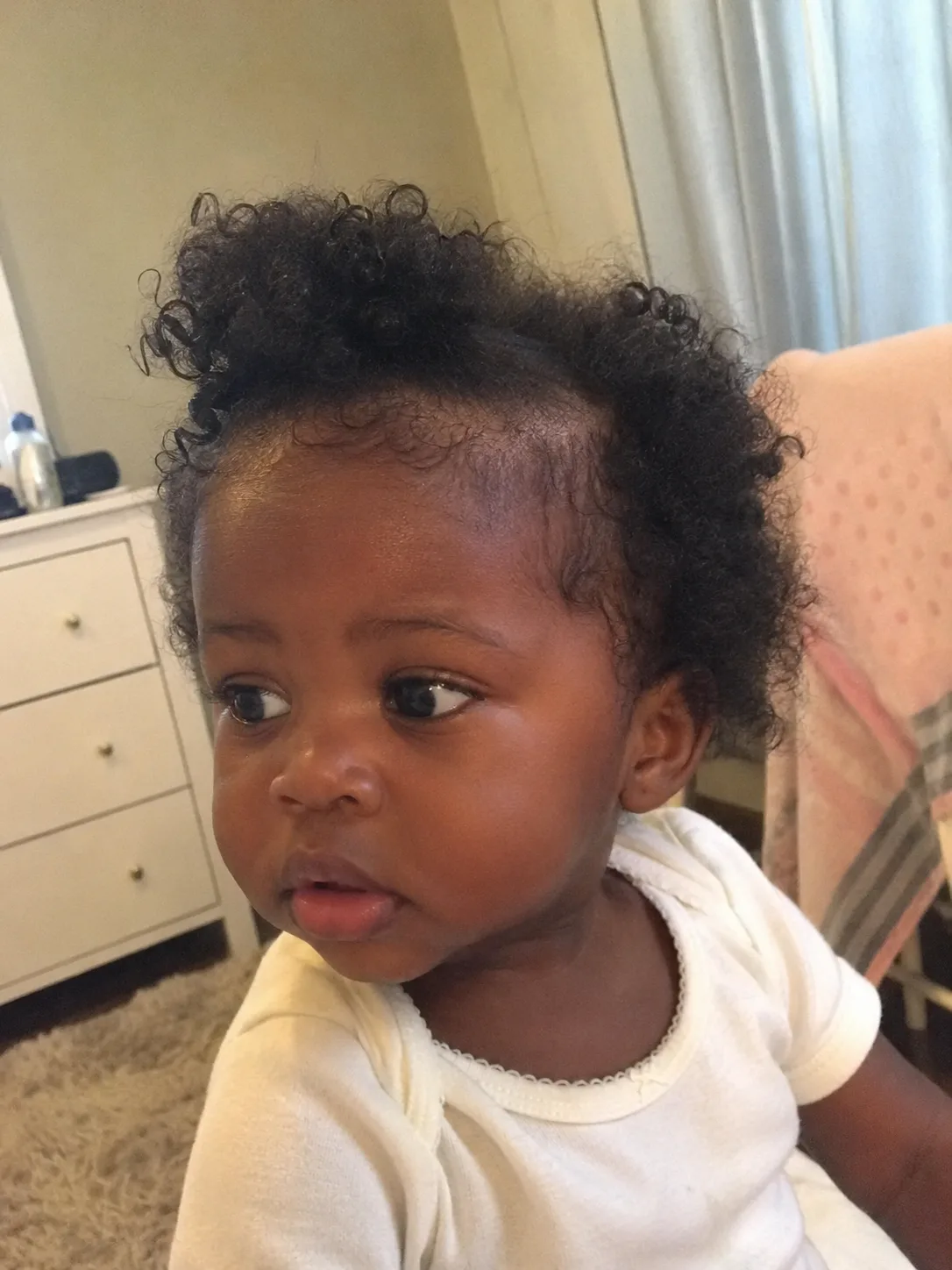
An occasion hairstyle doesn’t have to involve the entire head. Take a small but comfortable front section, make a loose two-strand twist away from the face, and join it into a half-up elastic or another larger section of hair. Leave the back natural.
This gives the front more definition while keeping most of the hair untouched.
The style works particularly well when front hair is long enough to fall into the eyes but the back is still too short for a complete updo.
Soft Puff Row
A row of broad puffs creates a more structured shape without requiring braiding technique. Divide the hair from front to back into several generous sections and secure each independently. The sections can follow the center of the head for a narrow profile or sit more evenly across the head for a fuller shape.
This is one of the more involved choices here, so save it for babies who comfortably tolerate sectioning. It is also easier to remove when each elastic is taken out separately instead of pulling several bands through the hair at once.
What Baby Hairstyle Photos Often Don’t Show
The finished photograph captures a few seconds. Daily life includes car seats, naps, rubbing against clothing, pulling at accessories, crawling, feeding, and a child who may have no interest in preserving your neat parting.
That changes which styles are genuinely simple.
A hairstyle that keeps coming apart may simply be too ambitious for the baby’s current hair length. Adding tighter elastics or more pulling rarely makes that a better idea. Moving to a half-up style, puff, or completely loose finish is usually easier.
Comfort Matters More Than How Long the Style Lasts
Baby hairstyles shouldn’t hurt during styling or afterward. Watch what happens as you gather the hair: skin shouldn’t appear pulled tightly around the base, and the baby shouldn’t need to tolerate persistent tugging for the style to stay in place.
Added hair generally isn’t worth introducing for a simple baby hairstyle. It increases weight and creates extra attachment points when the baby’s own hair can already produce plenty of useful shapes.
Accessories deserve the same restraint. Soft fabric-covered elastics are easier to work with than very hard or rough bands, but even a soft elastic can pull when wrapped too tightly. Headbands need a comfortable fit and supervision. Small beads, charms, loose clips, and detachable decorative pieces create additional concerns around babies who grab objects and put them in their mouths.
Remove hairstyle accessories before sleep unless the item is specifically intended and considered safe for that use. A loose natural style is often the most sensible nighttime setup.
Cleansing also stays simpler when the scalp remains accessible. Dense curls, twists, or gathered sections can hold moisture near the roots even after the outside feels dry, so don’t rush to cover damp hair with another tight style.
Persistent redness, sores, obvious pain, sudden shedding, or a concerning change in density deserves more attention than a styling adjustment. Stop the source of pulling or irritation and speak with a pediatric healthcare professional or dermatologist when symptoms are persistent or concerning.
Choosing the Right Simple Hairstyle for Your Baby
Start with what the hair can do comfortably today.
Very short hair needs very little styling. Finger-shaped curls or gently brushed natural hair are usually more practical than trying to capture tiny strands with bands.
Hair that reaches the top but not the nape is well suited to a half-up gather or top puff. Once more of the perimeter reaches comfortably toward an anchor, two puffs or a low ponytail become easier.
Longer curls and coils open up twists, braids, buns, and sectioned puff styles. Texture doesn’t need to be straightened to make those options work. Let shrinkage influence the final size and position of puffs, twists, and braids.
The baby’s temperament belongs in the decision too. A hairstyle that technically takes only a few steps can still be a poor choice for a child who dislikes having the hair sectioned repeatedly. One puff completed comfortably beats a more elaborate style that requires wrestling through every part.
Before finishing, check the style from the baby’s point of view:
Can the head rest comfortably against a seat or mattress?
Do the bases feel soft instead of rigid?
Are short hairline strands being left alone when they won’t reach?
Can the style be removed without pulling?
Are all loose accessories appropriate for the level of supervision?
Simple baby hairstyles work best when you can answer those questions without having to defend the hairstyle.
Related Hairstyles to Explore
FAQs
What is the easiest hairstyle for a baby with very short hair?
Leaving the hair natural is usually the easiest approach. Gently brush straighter hair into place or finger-shape curls and coils after detangling. Short baby hair doesn’t need to be stretched into elastics simply to create a visible hairstyle.
Can babies with curly or coily hair wear puffs?
Yes, once the hair has enough length to gather comfortably. Keep the base soft and let the puff retain its natural fullness. Shrinkage affects how large the puff appears, so there is no need to stretch the hair merely to make it look longer.
Are rubber bands safe for baby hairstyles?
Very tight, rough, or difficult-to-remove bands can pull and snag delicate hair. A soft fabric-covered elastic is generally a gentler styling option, provided it is secured only firmly enough to hold. Remove elastics carefully instead of dragging them through the hair.
How can I keep a baby’s hairstyle neat without making it tight?
Use broader sections, accept some soft hair around the perimeter, and choose a construction that suits the baby’s current length. A half-up gather may stay comfortable where a full ponytail keeps pulling loose, while a puff can work better than a tightly wrapped bun on shorter textured hair. Neatness doesn’t require every strand to be captured.
Hair Texture & Upkeep Style Matcher
Select your natural hair texture and daily maintenance window to get an instant styling formula and heat safety cap.
Heat Cap: 320°F (160°C)
A versatile three-strand braid beginning at the parietal ridge, securing the top half while allowing natural wave texture to flow freely around the shoulders.
Conclusion
The most useful simple baby hairstyles are the ones that match the hair’s current length and texture without demanding extra tension. For very short hair, that may mean doing almost nothing. As more length develops, half-up gathers, puffs, ponytails, loose buns, twists, and braids become realistic options.
Choose the simplest construction that solves the problem you actually have—hair in the eyes, tangling, loose length, or the desire for a slightly dressier look. A comfortable style that comes apart easily is a better everyday choice than an intricate one that only works when everything is pulled tighter.
Editorial Standards & Hair Health Guidance
Every style featured on Tress Atlas is curated with a focus on real-world wearability, scalp tension management, and cuticle preservation. When trying protective styles or tight updos, ensure perimeter hairline sections remain tension-free to avoid traction stress on delicate follicles. For heat styling, cap tools below 350°F (180°C) to prevent thermal keratin denaturation.
Scientific Sourcing: Practices aligned with the American Academy of Dermatology (AAD) on traction alopecia risk reduction and cosmetic trichology research on hair tensile strength.