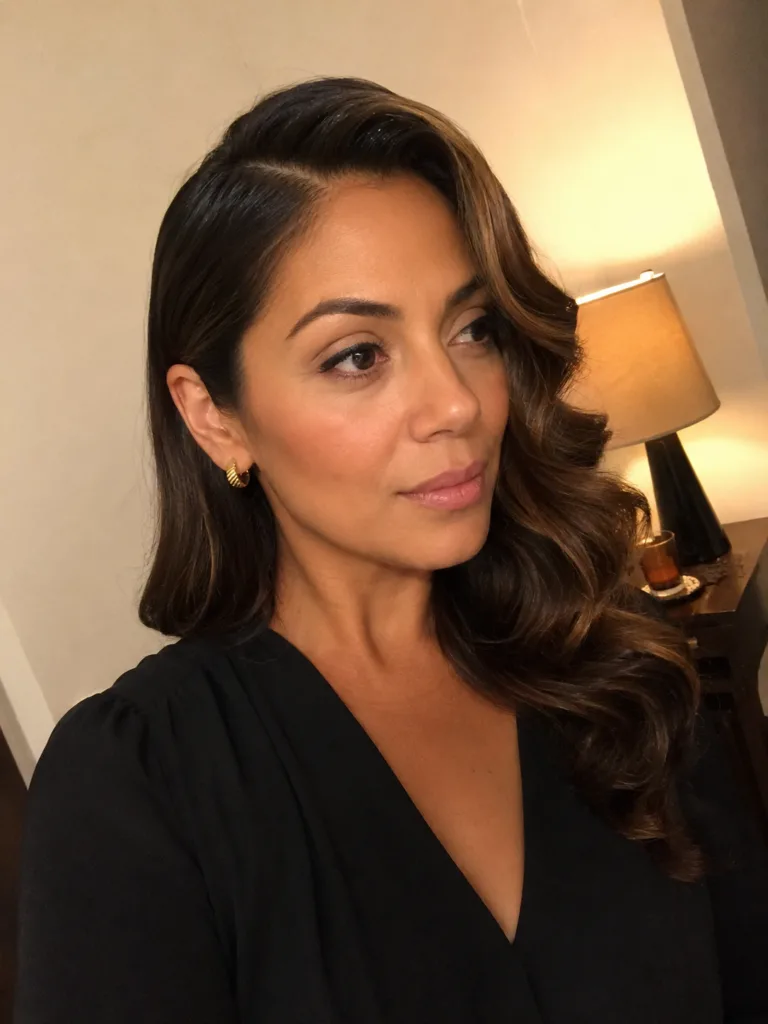
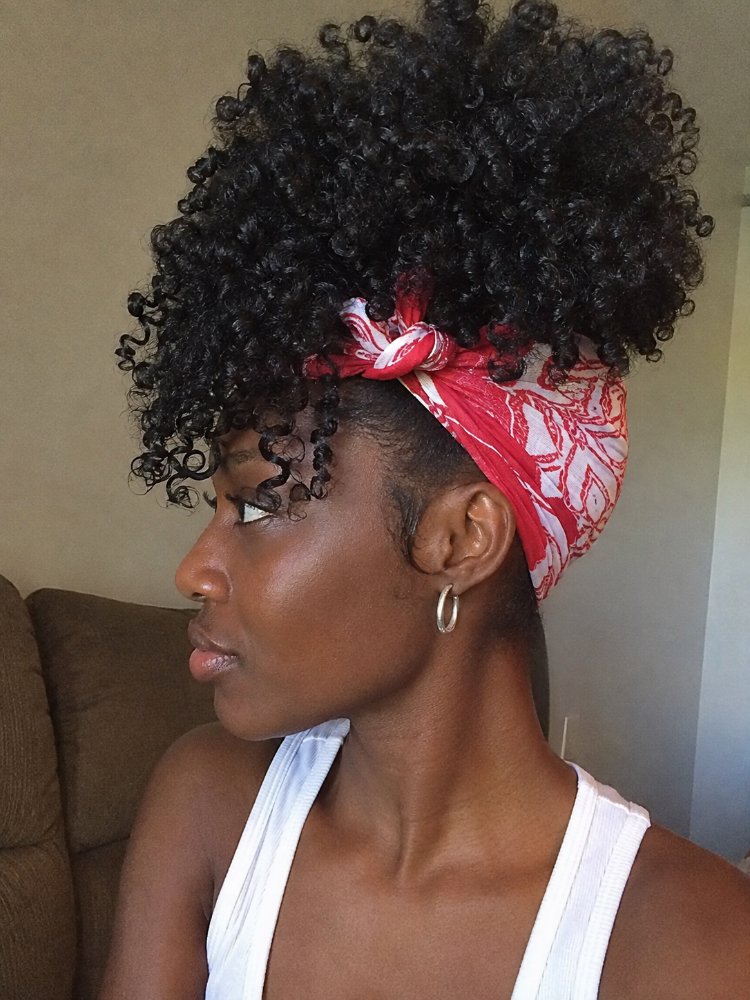
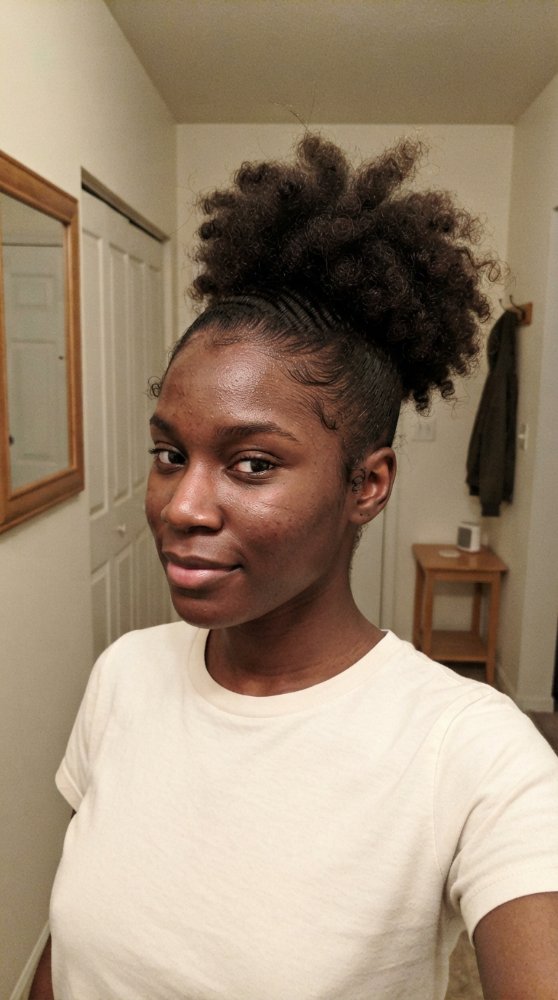
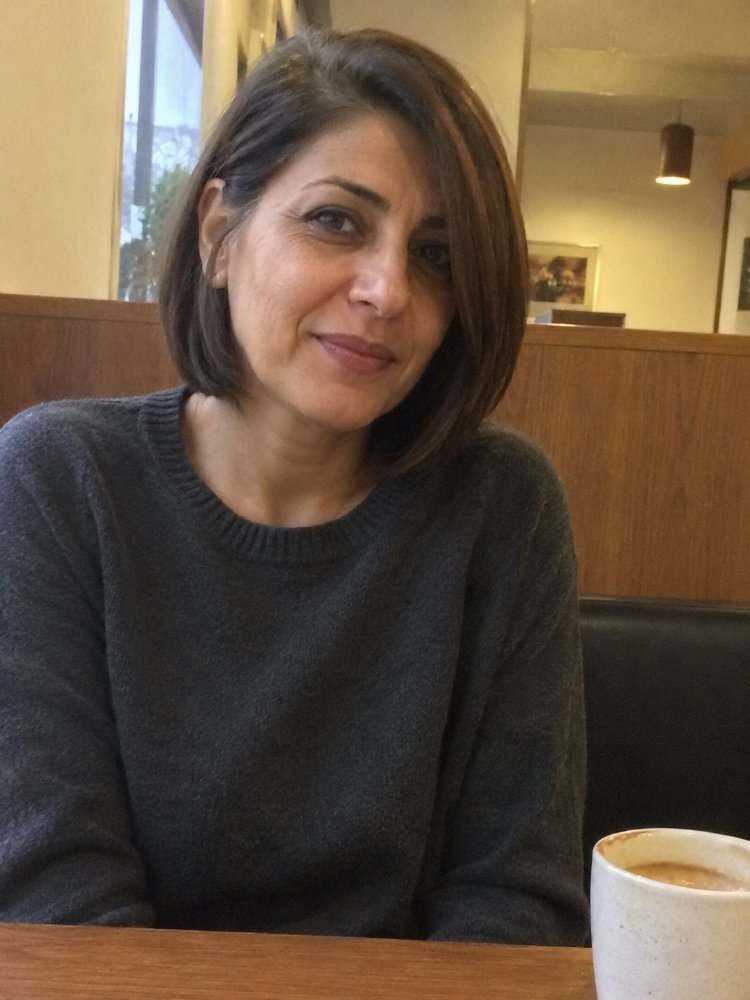
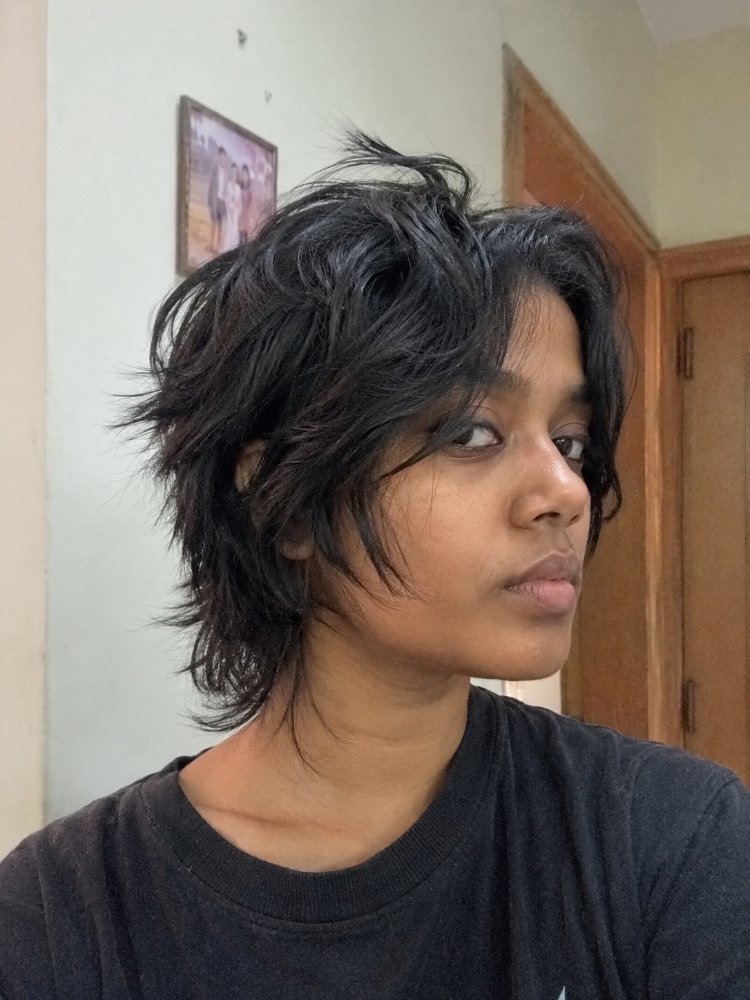
Curly Hair Aesthetic: What Changes the Look in Real Life
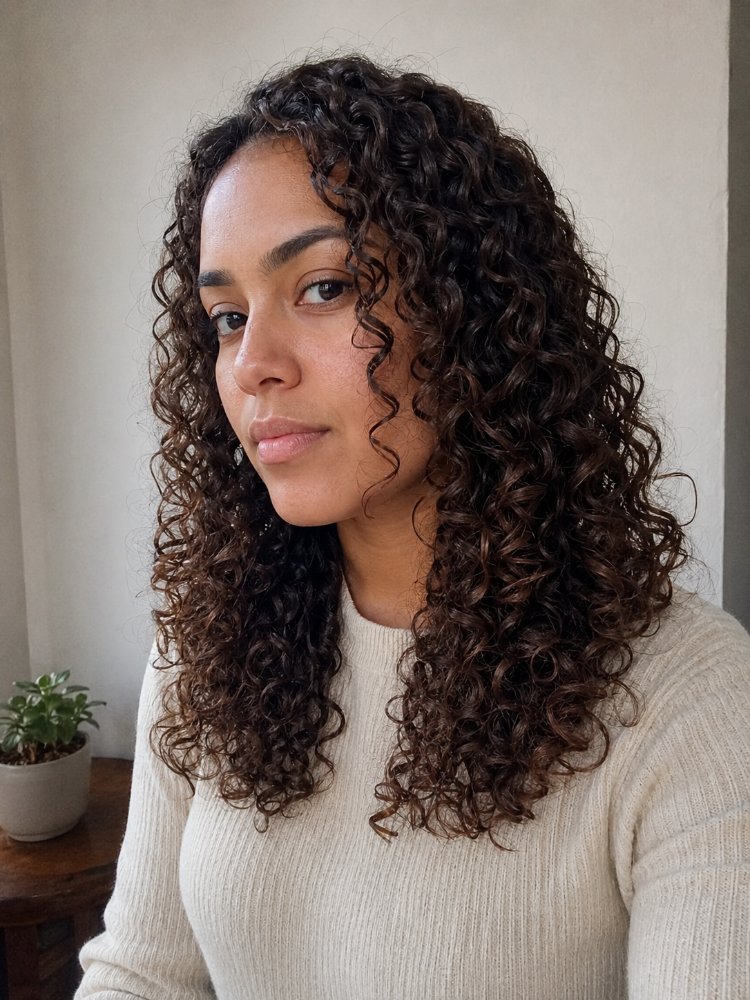
A curly hair aesthetic is less about copying one hairstyle and more about deciding how you want your curls to read: soft and airy, compact and sculpted, highly defined, deliberately fluffy, romantic, edgy, casual, or sleek through the roots with texture concentrated elsewhere.
That distinction matters because two people with a similar curl pattern can end up with completely different looks. Haircut shape, density, shrinkage, parting, drying method, and the amount of curl separation all affect the final result. Even the same head of curls can move between aesthetics depending on whether the hair is worn freshly defined, stretched, picked out, diffused, pinned up, or several days into a style.
The most useful starting point is the silhouette. Decide where you want width, how much length you want to see after shrinkage, and whether definition or volume should dominate. Everything else—from layering to product application—should support that choice.
| Desired aesthetic | Prioritize | Think carefully about |
|---|---|---|
| Soft and romantic | Movement, rounded shape, flexible definition | Over-separating curls into a very fluffy finish |
| Big and airy | Root lift, curl separation, generous width | Heavy styling that collapses volume |
| Defined and glossy | Consistent curl grouping and controlled drying | Breaking apart every curl after drying |
| Editorial and sculpted | Strong haircut geometry and deliberate placement | Assuming styling alone can create the shape |
| Relaxed and lived-in | Natural movement and softer curl separation | Expecting every curl to remain identical |
The Haircut Creates More of the Aesthetic Than Styling Does
A striking curly-hair photograph often looks like the styling is doing all the work. Look closer and the haircut usually determines where the eye goes.
A rounded curly cut creates width through the sides and allows shorter pieces to contribute lift near the crown. A longer, more perimeter-heavy shape keeps more weight toward the bottom. Strong layering can create movement and expose individual curl groups, while restrained layering leaves a fuller lower edge.
Neither approach is inherently better. They communicate different aesthetics.
Someone wanting cloud-like volume will usually get more from a shape that allows curls to rise and expand than from repeatedly trying to lift a heavy, minimally layered haircut at the roots. By contrast, a person who loves long cascading curls may find aggressive layering removes too much visible length or leaves the lower portion lighter than expected.
Shrinkage complicates the decision. A layer that looks modest while the hair is stretched can sit considerably higher in its normal curly state. The finished haircut therefore needs to be judged in the state you actually intend to wear most often.
Curly hair may be cut wet, dry, or with a combination of techniques. What matters most from a visual standpoint is that the person shaping it understands the intended finished state. A photograph of stretched hair gives different information from a photograph of fully shrunken curls.
The perimeter deserves attention too. A strong lower edge can make healthy ends appear more substantial. Heavy interior removal, especially on hair with lower density, can expose more space between curl groups. Fine strands and low density aren’t interchangeable: fine hair describes individual strand diameter, while density refers to how much hair is present overall.
Definition Versus Volume Is the Main Styling Decision
Most curly aesthetics sit somewhere on a spectrum between highly organized curl definition and expansive volume.
Defined curls stay grouped. Individual spirals, waves, or coils are easy to see, and the overall surface appears more controlled. A more voluminous finish separates some of those groups so the hair occupies additional space.
You can have both definition and volume, but maximizing one usually changes the other.
A very defined finish often starts with deliberate product distribution on wet or damp hair, followed by a drying method that minimizes unnecessary disruption. Once the curls are dry, leaving most groups intact preserves that graphic, separated look.
A larger, airier aesthetic needs more separation. Roots can be lifted once dry, and some curl groups can be gently opened so the outline expands. The amount of separation should match the look you want; taking apart every curl can quickly turn soft fullness into a much less controlled finish.
This becomes especially important with reference photos. A dense head of curls may produce dramatic width even with relatively little separation. Someone with lower density can copy the same styling steps and still get a more transparent outline because the starting amount of hair is different.
Choose the behavior you want, not just the curl pattern you see in the photograph.
Root Shape Changes the Whole Mood
Curly hair can look dramatically different depending on what happens in the first few inches around the scalp.
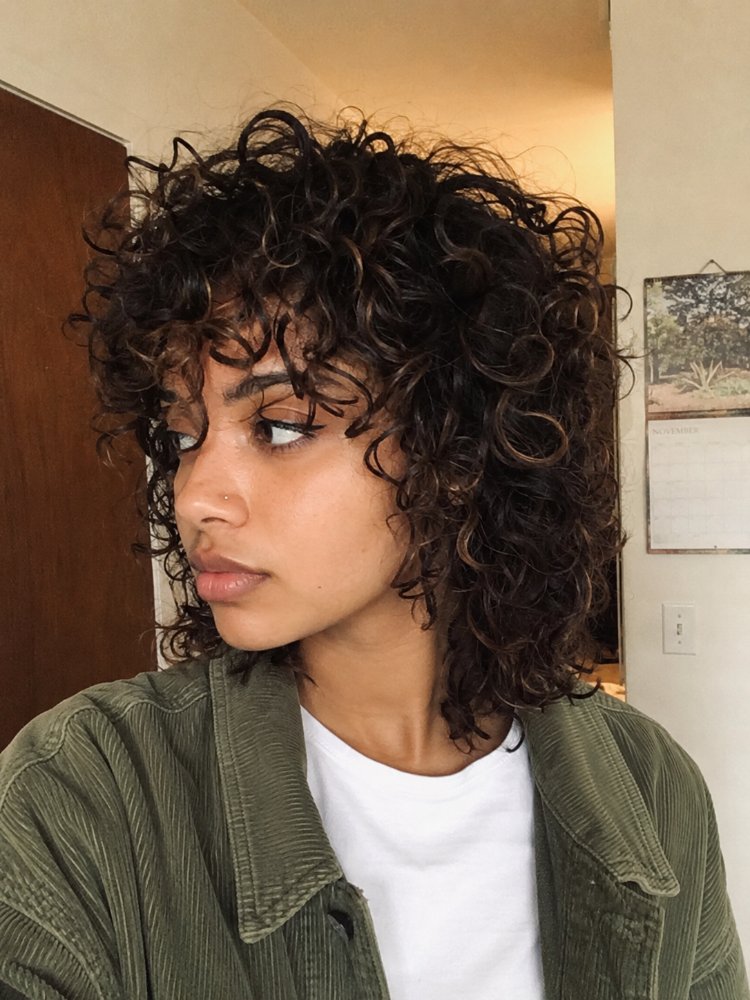
Flat roots with fuller lengths create a longer, more cascading line. Lifted roots make the hairstyle feel bigger and often visually shorten the overall shape because the hair expands upward as well as downward. A deep side part pushes more hair toward one side, while a center part creates stronger symmetry.
None of these requires changing your curl pattern.
Root placement is especially useful when you want to shift the aesthetic without changing the haircut. Drying the hair in the exact position you plan to wear it generally gives a more predictable result than trying to force fully dried roots into a completely different direction later.
A diffuser can help support root lift while preserving curl grouping. Air-drying can also work, although dense roots may take longer to dry than the outer lengths. Clips placed near the roots are another option for encouraging separation from the scalp without disturbing the ends.
Don’t treat root volume as a mandatory sign of good curly styling. Sleeker roots can be part of the design. They work particularly well when the visual focus is meant to fall on elongated lengths, a dramatic side part, defined ends, or a pinned style.
The decision is architectural: do you want the hairstyle to rise from the scalp or fall away from it?
Length Looks Different Once Shrinkage Enters the Picture
Length labels become unreliable with curly hair.
Hair that reaches well below the shoulders while stretched may sit much higher in its natural state. Two curls on the same head can also contract by different amounts, which is one reason a curly outline can look less uniform than the corresponding stretched length.
That matters for aesthetics built around a particular proportion.
A short rounded style depends heavily on where the widest point lands. A curly bob can move from jaw-focused to shoulder-skimming depending on shrinkage and styling. Longer curls may appear dramatically shorter after a wash even though no hair has been cut.
Reference photographs often hide this information. You can see where the curls finish, but you can’t necessarily see how much actual length is present.
Before choosing a cut, pay attention to both the apparent curly length and the likely stretched length required to create it. This is particularly important around bangs and face-framing pieces.
Curly fringe can remain curly. It doesn’t need to be straightened to function as fringe. Its placement simply needs to account for how the curl contracts and where you want it to sit when dry.
A softly scattered fringe tends to blend into a romantic or effortless aesthetic. A fuller, more deliberately shaped fringe has greater visual impact and becomes part of the haircut’s identity. Either version demands more attention to shrinkage than a long front section that can simply fall into the rest of the haircut.
Texture Doesn’t Need to Look Identical Everywhere
A convincing curly aesthetic rarely depends on every curl matching.
Many people naturally have more than one visible curl or wave behavior across the head. Some sections may form tighter spirals while others sit looser. The underneath can behave differently from the crown. Previous color, heat exposure, weather, condition, and styling technique can also affect grouping.
Trying to force the entire head into identical curl formation can make the routine considerably more labor-intensive.
A softer aesthetic can actually benefit from variation. Looser pieces add movement between tighter curls, especially in longer hair. A deliberately defined aesthetic may require more attention to sections that refuse to group neatly, but even then, perfect uniformity isn’t necessary for the hairstyle to look finished.
The stronger question is whether the overall shape makes sense.
One isolated loose section around the face may attract attention because of its placement, while a mix of curl sizes throughout the whole hairstyle can appear completely cohesive. Strategic attention usually works better than treating every strand as a problem to solve.
This also makes curl-pattern labels less useful as aesthetic instructions than they first appear. A label can’t tell you your density, how much your hair shrinks, whether your ends hold a curl group well, or how wide your haircut becomes after drying.
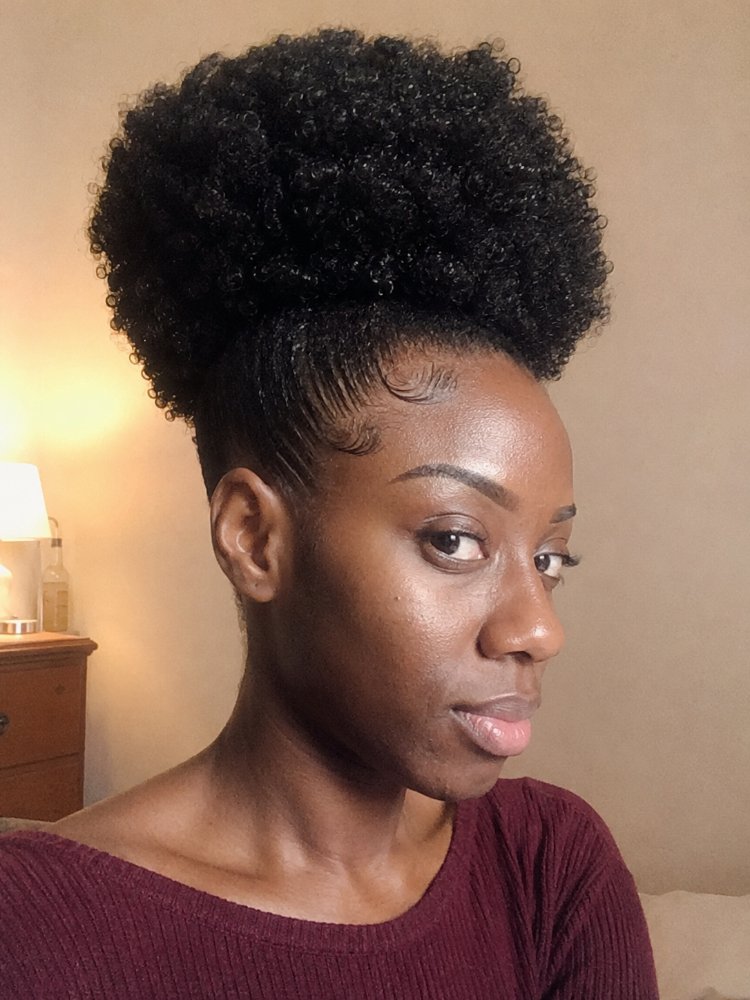
Those physical details shape the appearance you actually see.
Styling Finish Can Move the Same Curls Between Aesthetics
The haircut provides the framework, but finishing choices decide whether your curls look glossy, fluffy, soft, sculpted, casual, or dramatic.
Defined and separated
This finish emphasizes visible curl groups without making them rigid. The surface stays organized, but some curls are separated after drying to prevent the result from appearing overly compact.
It works well when you want definition with movement.
Fluffy and expanded
More separation creates width and a softer outer edge. The hair appears less segmented into individual spirals.
This is one of the strongest choices for a large, expressive curly aesthetic, especially when your haircut already supports volume. Trying to create extreme expansion from a very heavy shape is considerably more work.
Wet-look or highly controlled
A slicker surface and strongly grouped curls create a more graphic result. Roots may sit flatter while the lengths retain visible texture.
This aesthetic is more styling-dependent than a loose wash-and-wear finish because the controlled appearance relies on deliberate placement and product distribution.
Stretched curls
Stretching changes the proportions without removing texture. The hair hangs longer, often with less width and a softer curl contraction.
That makes stretching useful for people who like curly movement but prefer a more elongated outline.
Day-after texture
Freshly styled curls aren’t the only worthwhile aesthetic. After sleeping, movement, and normal handling, curls commonly become softer and less uniform. That lived-in stage can work particularly well with layered shapes because a little extra expansion emphasizes the haircut.
The practical advantage is obvious: an aesthetic that still looks good after some curl separation is usually easier to live with than one that depends on every curl staying untouched.
The Face-Framing Area Deserves Its Own Decision
Small changes around the face can alter a curly hairstyle more than changes buried at the back.
Short curls near the cheekbones create a very different impression from long front pieces that disappear into the overall length. Fringe makes the texture immediately visible from the front. A side part shifts volume toward one temple, while a centered arrangement creates a more balanced frame.
Avoid rigid face-shape rules here. The better questions involve what you want to emphasize and what you physically wear around your face.
Glasses can compete with dense curl volume at the temples. That doesn’t mean the hair has to be thinned aggressively; adjusting the direction or length of the front pieces may be enough. Earrings, collars, and necklines can also change how a hairstyle reads once you see the entire outfit rather than an isolated hair photograph.
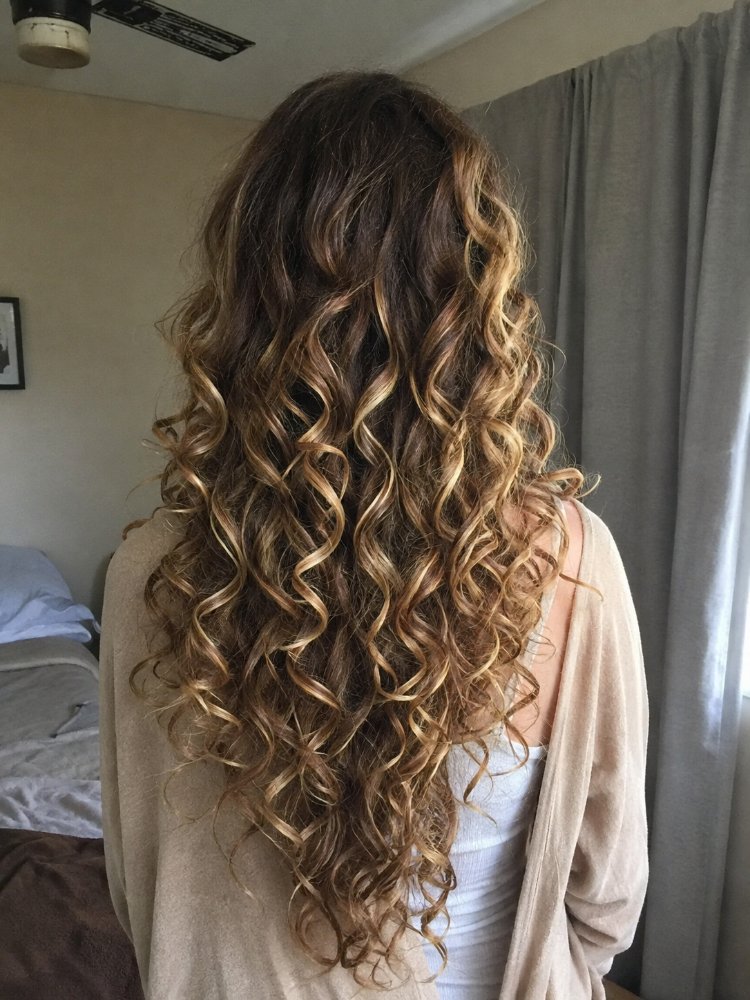
Face framing also carries more maintenance responsibility than hidden interior layers. These are the pieces you notice first when they grow, shrink differently after washing, or refuse to sit where expected.
Choose shorter face framing because you want it to remain a visible feature, not because it happens to look good in one carefully positioned photograph.
What Curly-Hair Photos Commonly Hide
A curly aesthetic can look wonderfully effortless while requiring substantial setup.
Photography freezes the moment when the volume is balanced, the part is sitting correctly, and the curls have been positioned away from the face. Real life introduces headrests, wind, humidity, coats, scarves, exercise, sleep, and repeated touching.
Volume shifts. Curls underneath become compressed. Long hair gets trapped beneath shoulder straps. A bob can turn outward where it repeatedly meets a collar. Dense roots may still feel damp after the outer curls appear dry.
Those details should influence which version of the aesthetic you pursue.
Very large, separated curls are visually striking but may change more between wash days. A highly defined finish may preserve its visual structure longer for some routines, although flattened roots and disrupted curl groups can still need attention. Shorter shapes can be quicker to refresh in sections yet more dependent on the haircut staying balanced as it grows.
Humidity is another major variable. Some hair expands quickly in humid conditions; other routines hold their grouping more successfully. Building your aesthetic around the natural direction your hair tends to move is often more practical than spending every styling session fighting for a completely different surface.
The strongest everyday aesthetic is usually one that has an attractive second state. It looks good when freshly styled and still makes sense after the curls soften.
Maintenance Should Match the Amount of Precision You Want
The more exact the aesthetic, the more you tend to notice small changes.
A sculpted short shape depends on the placement of its outline. Growth changes that outline before the hair necessarily feels long. Long layered curls usually tolerate more visual variation because the shape has more room to move.
Highly defined styling can also create a higher expectation for curl organization. A soft, voluminous aesthetic gives you more freedom to separate, fluff, and reposition sections without losing the point of the look.
At night, reducing friction can help preserve curl groups and limit unnecessary tangling. A bonnet, scarf, or smooth pillowcase can be useful depending on your hair length and preferred routine. Very long curls may be more comfortable loosely gathered rather than left underneath the head and shoulders.
Refresh only what actually needs refreshing. A flattened front section doesn’t require rebuilding the entire hairstyle. Lightly reworking visible areas while leaving well-preserved sections alone can keep the routine manageable.
Cleansing frequency should respond to your scalp, activity level, buildup, and styling products rather than a universal curly-hair schedule. The same principle applies to trims and heat. Hair condition, tools, technique, and the hairstyle you’re maintaining are more useful guides than one fixed number.
Sudden shedding, persistent scalp irritation, pain, sores, or a concerning change in density deserves more than a styling adjustment. A dermatologist or another qualified healthcare professional can assess symptoms that fall outside normal cosmetic maintenance.
Planning Your Curly Hair Aesthetic
Bring reference images to a haircut or styling consultation, but use them as visual evidence rather than instructions to copy everything.
Look separately at:
the overall outline
where the hair is widest
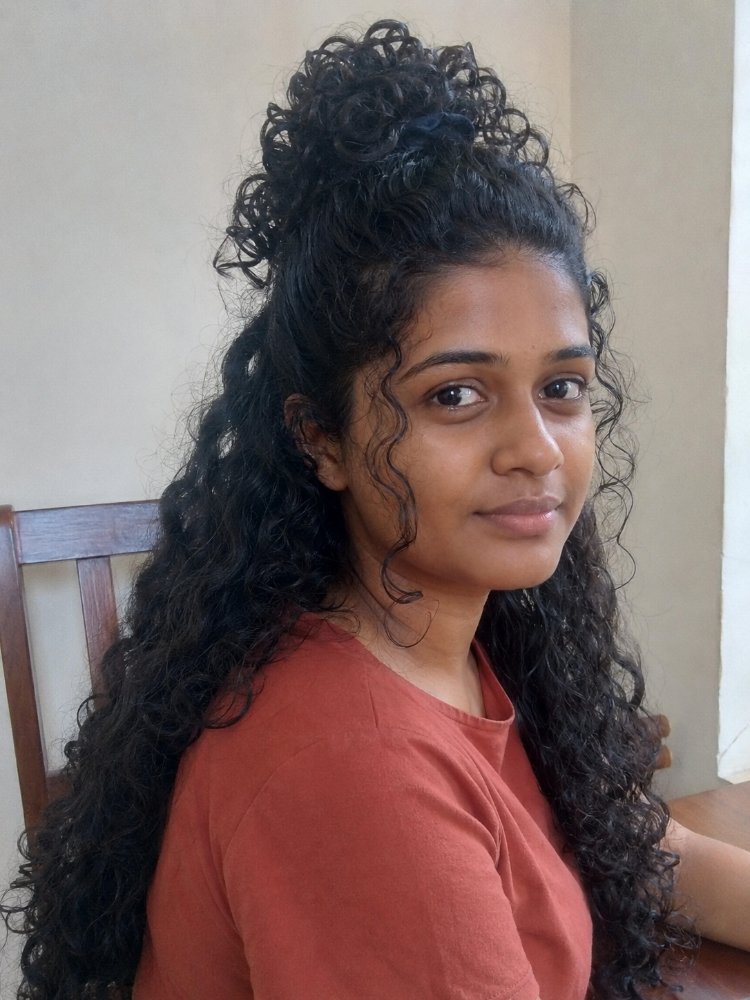
how much of the forehead is visible
whether the roots are lifted or flat
how separated the curl groups are
where the shortest visible pieces finish
whether the photograph shows natural shrinkage or stretched hair
Then compare those features with your own routine.
A dramatic rounded shape makes sense when visible width is part of what you love. Long cascading curls are the stronger choice when retaining apparent length matters more than crown lift. Highly defined curls suit a routine where careful styling and controlled drying feel worthwhile. A fluffy aesthetic is more forgiving of curl separation and changing volume.
Also decide what you don’t want. That can make a consultation considerably clearer. You may love the overall mood of a photograph but dislike the short fringe, extreme layering, flat roots, or amount of width.
You don’t need to reproduce an entire image to borrow its aesthetic.
FAQs
Can short hair still create a strong curly hair aesthetic?
Yes. Short curly hair can make the haircut itself more visible because there is less length pulling the shape downward. Rounded crops, curly pixies, compact bobs, and short layered shapes can all have distinct aesthetics. Shorter cuts are usually more sensitive to changes in outline as they grow, so the haircut matters as much as the styling finish.
How can I make curly hair look more aesthetic without changing the haircut?
Change one major styling variable at a time. Try shifting the part, increasing or reducing root lift, separating more curl groups for volume, or keeping them intact for stronger definition. Pinning back the front, stretching the lengths, or concentrating volume in a different area can also change the overall impression without removing length.
Do I need extensions to get the curly aesthetic I see online?
Not necessarily. First determine whether the feature you like is length, density, shape, or curl definition. Extensions can add length or fullness, but they also introduce attachment, weight, blending, cleansing, and maintenance considerations. A different haircut or styling finish may create the visual feature you actually want without added hair.
How can I preserve curly hair while sleeping without flattening everything?
Reduce friction and avoid trapping the curls directly beneath your head. Depending on the length, you can loosely gather the hair upward or position it so the most visible curls aren’t repeatedly compressed. A bonnet, scarf, or smooth pillowcase can help limit friction. Expect some movement by morning; refreshing the few sections that changed is usually more practical than trying to preserve every curl exactly.
Hair Texture & Upkeep Style Matcher
Select your natural hair texture and daily maintenance window to get an instant styling formula and heat safety cap.
Heat Cap: 320°F (160°C)
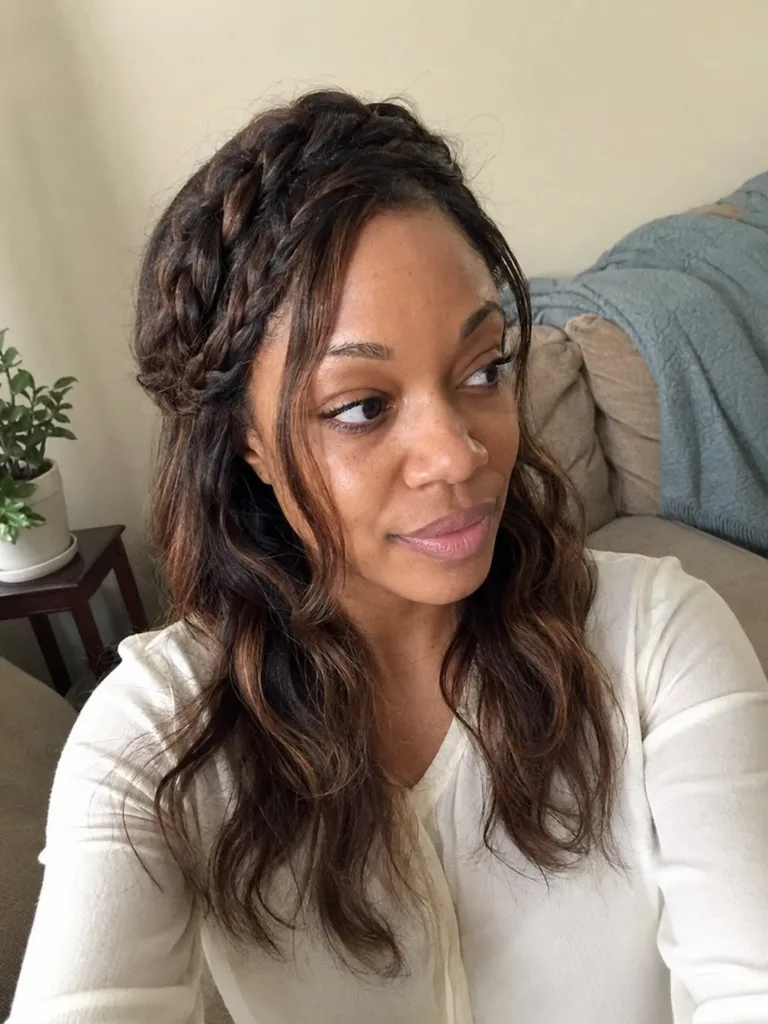
A versatile three-strand braid beginning at the parietal ridge, securing the top half while allowing natural wave texture to flow freely around the shoulders.
Conclusion
A curly hair aesthetic works best when you define the visual priority before chasing individual styling details. Decide whether you want width or length to dominate, how much curl definition you enjoy maintaining, and where you want the haircut to place its weight.
Then choose references that match those priorities as closely as possible. Pay particular attention to shrinkage, density, face-framing length, and the condition in which the curls are photographed.
The strongest choice is one whose shape still appeals to you after the perfect styling moment has passed.
Editorial Standards & Hair Health Guidance
Every style featured on Tress Atlas is curated with a focus on real-world wearability, scalp tension management, and cuticle preservation. When trying protective styles or tight updos, ensure perimeter hairline sections remain tension-free to avoid traction stress on delicate follicles. For heat styling, cap tools below 350°F (180°C) to prevent thermal keratin denaturation.
Scientific Sourcing: Practices aligned with the American Academy of Dermatology (AAD) on traction alopecia risk reduction and cosmetic trichology research on hair tensile strength.