Y2K Curly Hairstyles: Styling Guide & Cuts That Keep the Curls in the Look
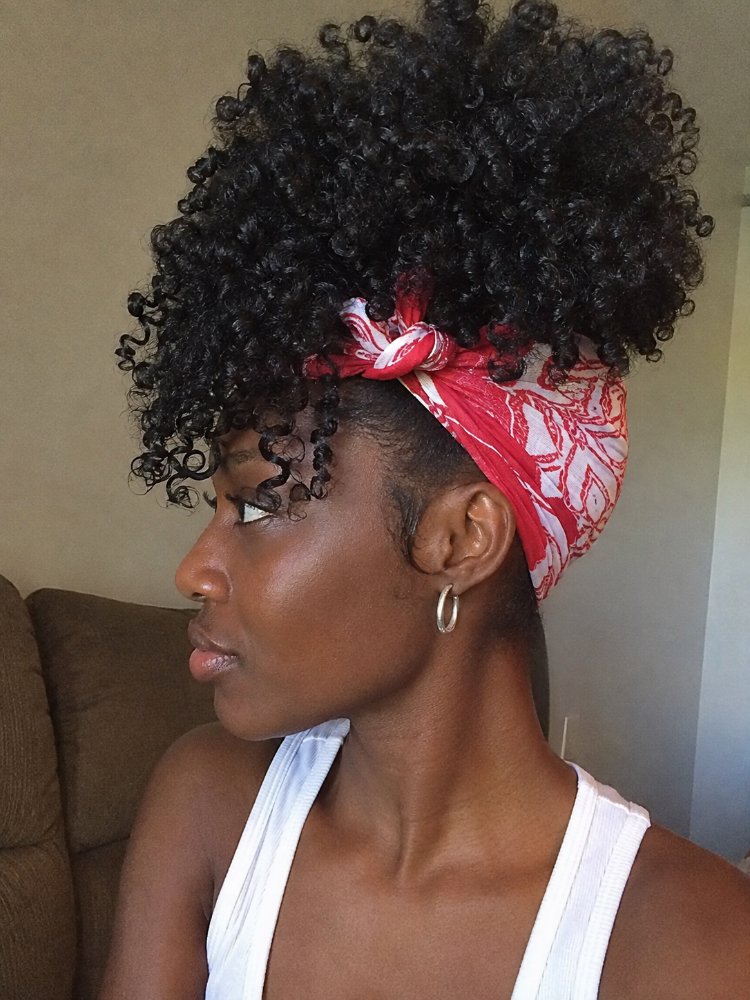
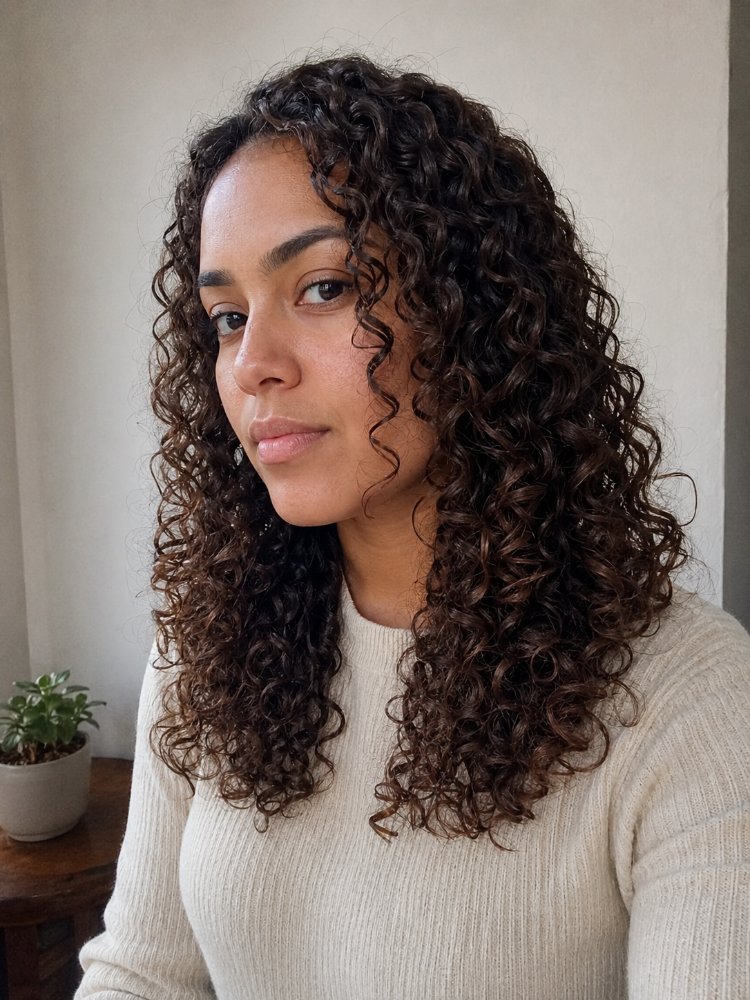
Y2K hair gets reduced to butterfly clips, zigzag parts, and two skinny pieces left around the face. Those details matter, but they aren’t enough on their own. With curly hair, the stronger question is how much of your natural volume you want
Some looks pull the curls upward into compact buns or ponytails. Others leave most of the hair loose and use tiny sections, braids, twists, clips, or sharp parting to create the Y2K effect. That second approach is often the easier starting point because you don’t have to smooth away the very texture that gives the style movement.
Shrinkage also changes what reference photos show. A ponytail that appears long on stretched hair can sit much higher and rounder in a shrunken state. Face-framing spirals may spring above the jaw instead of hanging below it. The finished shape makes more sense when you plan around the state in which you actually intend to wear your curls.
| You want | Start with | Main tradeoff |
|---|---|---|
| Mostly loose curls | Zigzag part, baby braids, or front twists | Front details need occasional resetting |
| A stronger Y2K shape | Space buns or curly pigtails | More sectioning and securing |
| Fast styling | Claw-clip twist or half-up ponytail | Less intricate detail |
| Maximum curl volume | Pineapple or pinned faux hawk | More height around the crown |
Loose Curls With Y2K Detail
Zigzag-Part Loose Curls
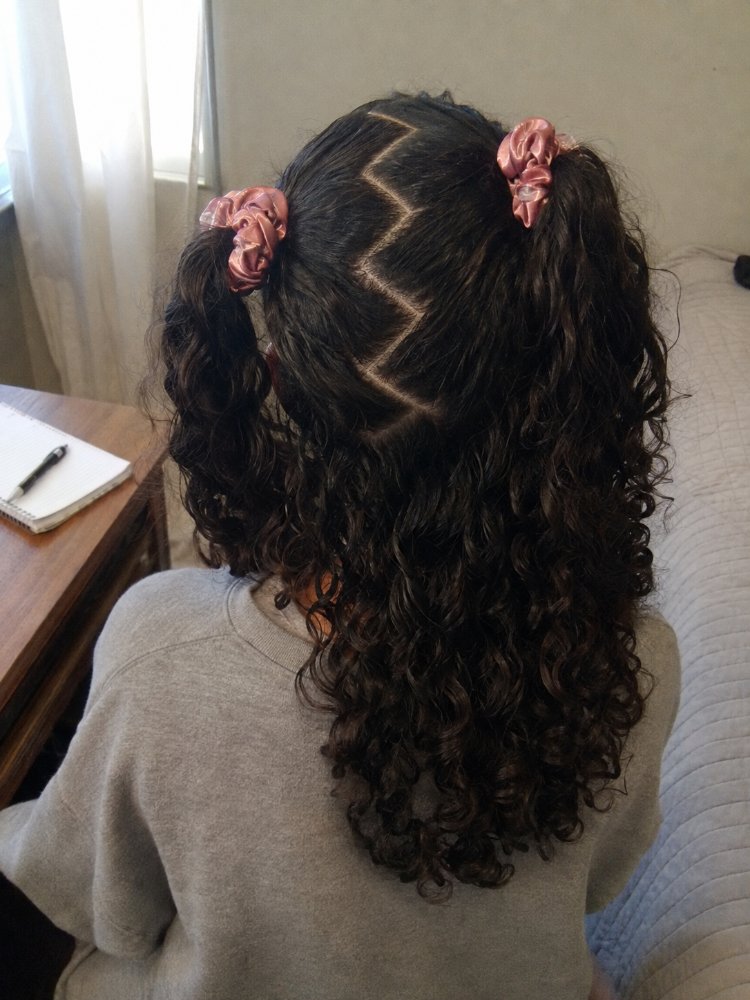
A zigzag part can shift an ordinary curly wash-and-go straight into Y2K territory without changing the rest of the hair. It works particularly well when you want your curl pattern and overall volume to remain the main feature.
The part can run through the center or sit slightly off-center. Very sharp, narrow zigzags read more graphic; a wider pattern is easier to see through dense curls. Make the part while the roots are accessible, then allow the lengths to fall where they naturally want to sit instead of separating every curl to expose the line.
This is one of the most useful choices for shorter curls because it doesn’t depend on ponytail length or enough hair for an updo.
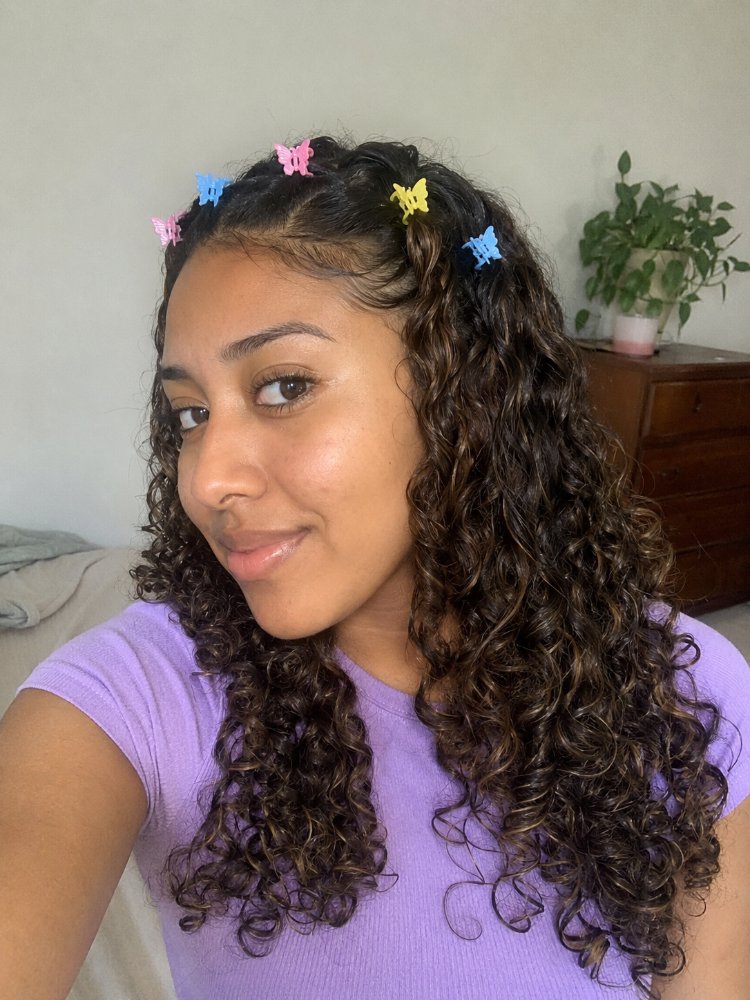
Butterfly-Clip Front Sections
Instead of scattering butterfly clips randomly through the curls, use them to build a clear shape. Small front sections can travel back from the hairline and be clipped near the top or sides of the head while the remaining curls stay loose.
The sections create separation at the front, which makes the clips visible even on fuller hair. You can keep the roots softly raised or lay the little sections closer to the scalp depending on how graphic you want the style to look.
This version works best when the clips are doing an actual construction job. Too many decorative clips buried inside dense curls can disappear visually while adding extra snag points during removal.
Baby Braids With Full Curls
Two narrow braids framing the face give loose curls a very recognizable early-2000s finish. The contrast is the appeal: most of the hair remains large and free while two slim lines hang through the front.
You can braid the sections from near the part or start slightly farther toward the temples. Leave the ends curly for a softer finish instead of forcing the entire braid into a stiff, straight shape. On highly shrunken hair, the braids may finish much shorter than they appear in a stretched reference photo.
This look is more practical than a full updo when you want Y2K detail without rebuilding your whole curl set.
Twisted Front Sections Into Loose Curls
Front twists create more structure than simple clips but less separation than baby braids. Take small sections close to the hairline, twist them back, secure them, and let the rest of the hair stay full.
The placement makes a difference. Twists running almost horizontally toward the temples give a compact, graphic result. Angling them upward opens more of the face and moves visual volume toward the crown.
This is also a useful option when you don’t want tiny loose pieces rubbing against your forehead all day.
Half-Up Styles That Keep the Volume
High Half-Up Curly Ponytail
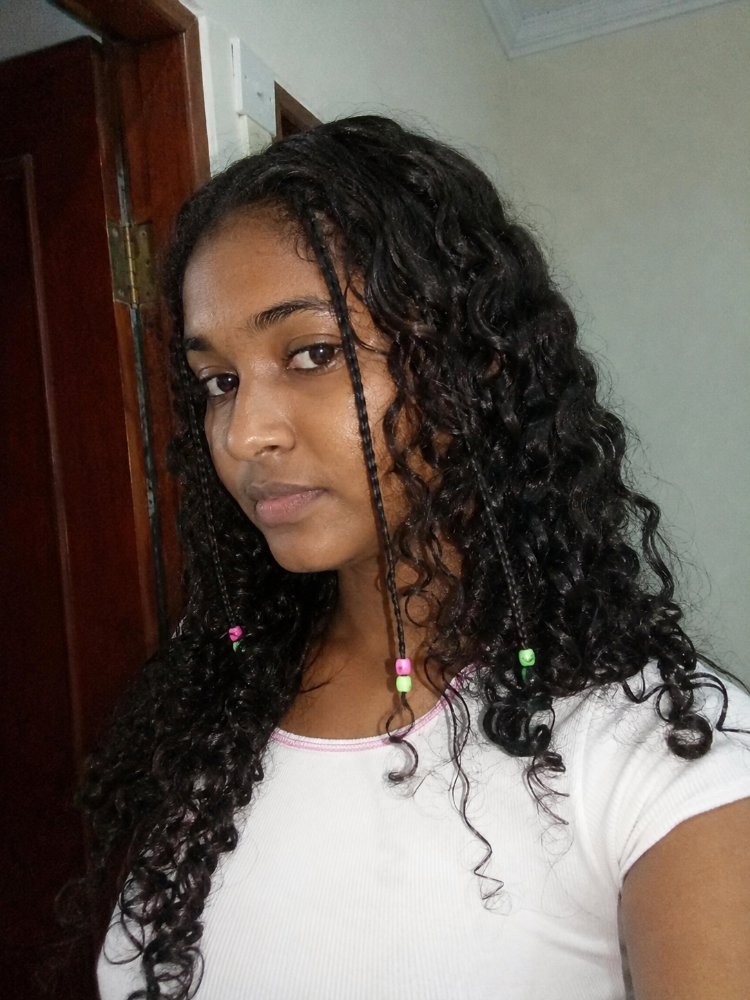
A high half-up ponytail is one of the easiest ways to get the lifted Y2K profile without gathering every curl. The top section rises from the crown while the lower curls keep the back looking full.
Avoid taking such a large top section that the bottom becomes sparse. Density matters here more than strand diameter: a very large half-up section can leave fewer curls below, even when each individual strand is thick. Fine strands and low density describe different characteristics and shouldn’t be treated as the same thing.
A fabric-covered elastic or a secure clip can hold the top section. Let a few curls sit forward rather than trying to create a perfectly smooth, flat surface around the crown.
Half-Up Double Buns
Two small buns at the top of the head with curls falling behind them have a playful Y2K shape without becoming a complete space-bun style.
The strongest version uses a relatively small amount of hair in each bun. Larger buns begin to dominate the entire silhouette and can remove too much volume from the loose section. Keep the divisions balanced enough that the back still looks deliberate from the side.
The buns can be compact coils, loosely wrapped curls, or little looped shapes. Leaving curly ends visible gives the style more movement.
Bantu-Knot Crown With Loose Curls
A few Bantu knots placed across the front or crown create a much bolder construction than decorative clips. The loose curls below them keep the style from reading as a full Bantu-knot set.
This works especially well when you enjoy visible sectioning. Clean geometric parts become part of the finished design, so don’t cover every line with surrounding curls.
Bantu knots also concentrate hair into small anchors, making comfort more important than how tiny or tight the knots appear in a photo. The sections should sit securely without persistent pulling at the scalp.
Mini Cornrows With Loose Curls
Braiding a small portion of the front or sides into cornrows creates one of the strongest texture contrasts in this list. The braided area lies close to the head while the loose curls expand behind it.
Direction matters more than adding lots of rows. Cornrows can travel back from the forehead, angle from one side toward the crown, or frame a center section of curls. The construction should make sense with where you want the loose volume to begin.
This style becomes more salon-dependent as the parting gets smaller or the design gets more intricate. A few well-placed braids usually communicate the Y2K influence without turning the front into an unnecessarily complicated installation.
Ponytails, Pigtails, and High Shapes
High Curly Ponytail With Spiral Tendrils
The high ponytail plus two deliberate front curls is practically a Y2K shorthand, but curly hair gives it more volume and a less rigid finish.
The anchor determines the overall profile. A ponytail directly at the crown creates height; moving it slightly backward lets the curls cascade instead of standing almost vertically. Separate the face-framing pieces before gathering the ponytail so you aren’t pulling them back out of a tight base afterward.
The two tendrils don’t have to match perfectly. Natural differences in curl spring can look more convincing than trying to stretch both pieces to identical lengths.
Curly Pineapple With Face-Framing Curls
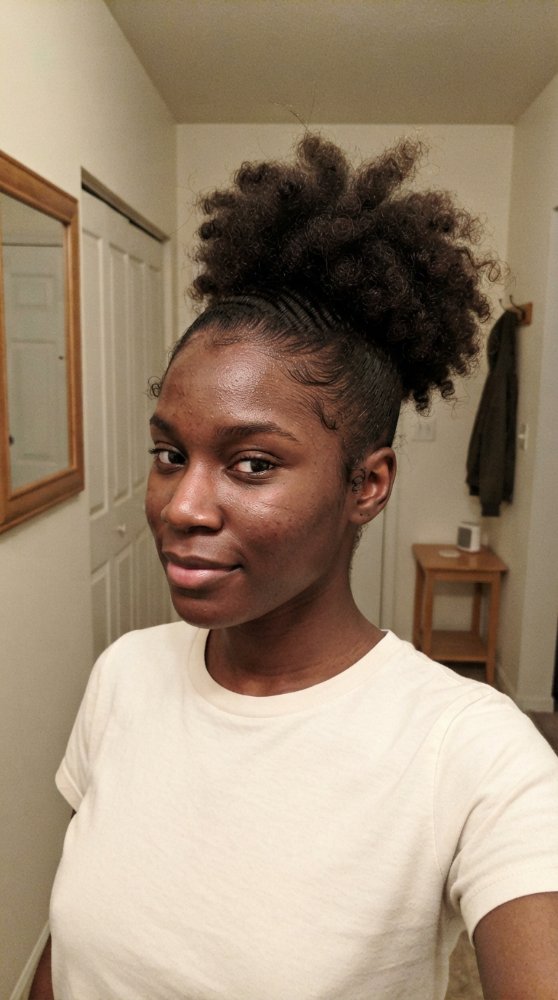
A pineapple gathers the curls high while allowing them to spread broadly rather than fall from a narrow ponytail base. Visually, it gives you a rounded cloud of curls at the top of the head.
That makes it a particularly strong choice for dense curls or coils when preserving fullness matters more than creating a long tail. Add a zigzag front part or release a couple of curls near the temples for a more specific Y2K finish.
The style can also work with shorter lengths that don’t form a conventional hanging ponytail.
Low Curly Pigtails
Low pigtails are quieter than high space buns but still carry the playful symmetry associated with Y2K styling. Each side sits near or behind the ears, allowing the curls to remain soft rather than being compressed into two tight shapes.
A center or zigzag part gives the cleanest separation. Leaving short spirals around the face keeps the style from looking overly juvenile, while curls through the pigtails provide the texture.
Glasses wearers may prefer the bases placed slightly behind the ears so elastics, curls, and glasses arms aren’t competing for the same space.
Bubble Ponytail With Curly Ends
A bubble ponytail changes the construction instead of relying on an accessory alone. Gather the hair into a ponytail, then secure additional elastics down the length and gently expand the sections between them.
Curly hair creates softer, less spherical bubbles than straight hair, which can be an advantage. You don’t need to stretch every curl smooth to make the pattern visible. Leaving the final section curly keeps some of the original texture at the end.
This option requires enough ponytail length to establish multiple sections. Shorter curls usually look stronger in a half-up ponytail, pineapple, or double-bun shape.
Curly Space Buns
Space buns are worth choosing when you want the hairstyle itself—not a clip or part—to provide the Y2K signal. Divide the hair into two high sections and build one bun on each side.
Curly hair gives you several finishes. Loosely wrapping the sections creates fuller buns with visible texture. A tighter wrap produces a more compact shape. Leaving some ends free adds spikier movement without needing to straighten those pieces.
Large, high buns place more hair at two elevated anchors, so don’t chase size by pulling the bases excessively tight. Comfortable movement matters more than making the roots appear lacquered flat.
Pinned and Clipped Updos
Claw-Clip French Twist With Curly Ends
The claw-clip twist is the practical shortcut in this group. Gather the hair low, twist it upward, secure the center with a claw clip, and allow the curls at the top to spill over.
The Y2K effect comes from the vertical twist and visible clip, while curly ends stop the hairstyle from looking overly severe. A few short pieces can remain around the face, though you don’t need the symmetrical two-tendril formula every time.
Clip size needs to match the amount of hair being held. A clip that barely closes can pinch or release sections as you move; a larger secure clip is more useful than forcing dense curls into a small accessory.
Curly Faux Hawk With Pinned Sides
For maximum height without cutting the hair, pin or secure the side sections upward and let the central curls form a ridge from front to back. The result has more attitude than a standard ponytail and works especially well with curls that naturally expand.
The sides don’t have to be flattened completely. Leaving some texture visible keeps the style connected to the rest of the hair.
This is an underrated Y2K option for anyone who likes the era’s edgier club, pop, or alternative references more than butterfly-clip sweetness. It also changes dramatically from the side, so check the profile rather than judging it only from a front-facing mirror.
Spiral-Tendril Curly Updo
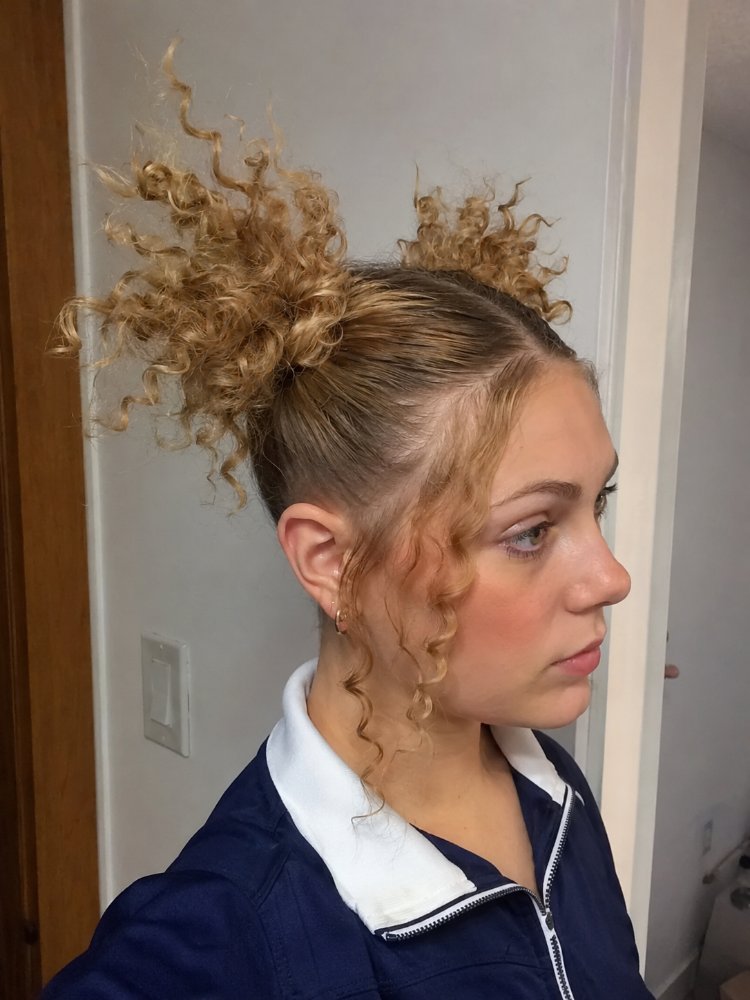
Gather most of the hair into a loose bun, twist, or pinned cluster and release several clearly chosen spiral curls around the face. This is the dressier side of Y2K hair.
The front pieces should feel deliberate. One curl near each temple plus a finer piece near the ear can create more dimension than pulling out a wide, fuzzy band around the entire hairline.
The back can stay softly textured. Trying to eliminate every bump often adds more brushing and manipulation than the style needs.
For formal wear, also check where the updo sits against a headrest, veil comb, hat, or collar. A beautiful rear shape can become awkward once another object occupies the same space.
Texture-Forward Y2K Looks
Crimp-and-Curl Mix
Mixed texture was part of the experimental appeal of Y2K hair, and the concept can be recreated without erasing every natural curl. Keep most of the hair curly while creating selected sections with a tighter, waved, or crimp-inspired surface.
The strongest placement is usually visible: a few face-framing sections, a defined lower layer, or small pieces through the top. Random texture changes throughout the whole head can become visually busy.
Heat isn’t essential to the idea. Braided setting methods can create a tighter wave pattern on selected sections, depending on the hair’s starting state and how it responds to setting. Any heat styling should be adapted to your hair’s condition, previous processing, tool design, and technique instead of following one universal temperature.
Curly Bob With Turned-Out Perimeter
A short curly bob can carry Y2K influence through its outline instead of through clips or braids. The key is a compact shape with the perimeter encouraged outward in selected areas, especially around the ends and sides.
This is more haircut-dependent than most ideas here. Layers, shrinkage, curl grouping, and the strength of the lower edge determine whether the ends can create the desired kick without the bob losing its overall shape.
Reference photos need to match your usual styling state as closely as possible. A bob photographed stretched or softly waved will sit differently once strong natural shrinkage returns. Curly cuts may be approached wet, dry, or with a combined method, but the shape ultimately needs to make sense in the state you plan to wear most often.
What Y2K Reference Photos Often Hide
The most useful reference photo isn’t necessarily the one with the prettiest accessories. Look at the underlying construction.
| Check in the photo | Why it changes your result | Decide before styling |
|---|---|---|
| Curl state | Shrinkage changes length and volume | Natural, stretched, or otherwise set |
| Front pieces | Short curls may spring much higher | Which sections stay out |
| Anchor position | Changes height and how the hair moves | High crown, back crown, or low |
| Amount gathered | Affects the volume left loose | Full updo or partial section |
| Parting | Dense curls can hide fine details | How graphic the sections need to be |
Photos also freeze the style at its most cooperative moment. They don’t show a claw clip pressing into a car headrest, small front sections getting fuzzy after repeated handling, a high ponytail moving during exercise, or curls shrinking more as humidity changes.
That doesn’t make these styles difficult. It simply means construction matters more than collecting the correct set of accessories.
Keeping Y2K Curly Styles Looking Good Without Overworking Them
Most of these hairstyles are easier to refresh when you preserve the main curl set and rebuild only the Y2K details.
A bonnet, scarf, or smooth pillowcase can reduce friction and tangling overnight. Very structured elements—baby braids, sharp front twists, little buns, or carefully separated tendrils—may still need individual attention because sleeping changes their position even when the rest of the curls remain intact.
Refresh what is visible. A fuzzy zigzag part may need the front roots reset while the back remains untouched. A half-up ponytail might only require the top section to be gathered again. Reworking the entire head every time a butterfly clip shifts usually creates more manipulation than the style deserves.
Styles using braids, cornrows, tight sections, or multiple elevated anchors should remain comfortable. Root tension, section size, added weight, friction, scalp access, and removal all affect whether an installation is a sensible choice. Persistent pain, redness, sores, irritation, sudden shedding, or a concerning change in density deserves attention rather than being treated as the price of a sleek style.
A Practical Y2K Curly Hair Checklist
Before settling on a reference photo or salon plan, decide:
- whether you want to wear your curls shrunken, stretched, or in another set state;
- how much volume you want to leave loose;
- whether the Y2K effect should come from the hairstyle construction or smaller details;
- where ponytails, buns, clips, or braids will sit during normal movement;
- which front curls can realistically reach the length shown in the reference;
- whether you want to rebuild intricate front sections between wash days;
- and which elements are actually important enough to keep.
For most people, one or two strong Y2K decisions look better than piling every signature detail into the same hairstyle. A zigzag part plus a high curly ponytail already reads clearly. Baby braids with full loose curls need little else. Space buns have enough shape to stand on their own.
FAQs
Can you do Y2K hairstyles on short curly hair?
Yes. Prioritize styles that don’t depend on hanging length, such as a zigzag part, clipped front sections, tiny twists, mini cornrows, small half-up buns, or a short curly faux hawk. A very high ponytail or bubble ponytail becomes less practical when too many sections can’t reach the anchor comfortably.
Do you have to straighten curly hair first for a Y2K look?
No. Many of the era’s recognizable details—zigzag parts, tendrils, mini braids, space buns, high ponytails, claw clips, and butterfly clips—work with visible curl texture. Stretching changes the length and surface of the result, so choose it because you want that styling state, not because Y2K hair requires straightness.
Can extensions be used for Y2K curly hairstyles?
They can, particularly when you want a longer ponytail, fuller pigtails, or added length that your current hair doesn’t provide. Attachment method, added weight, base security, and comfortable scalp access matter more than matching a reference photo exactly. Very long or dense added hair also changes how an elevated ponytail moves.
What’s the easiest Y2K curly hairstyle to maintain?
A half-up curly ponytail, zigzag-part wash-and-go, or claw-clip twist is usually more forgiving than styles with many tiny braids, multiple clips, or precise front sections. The stronger choice depends on which part of your curl set normally survives overnight: preserve that section and choose a style that only asks you to rebuild the smaller details.
Hair Texture & Upkeep Style Matcher
Select your natural hair texture and daily maintenance window to get an instant styling formula and heat safety cap.
Heat Cap: 320°F (160°C)
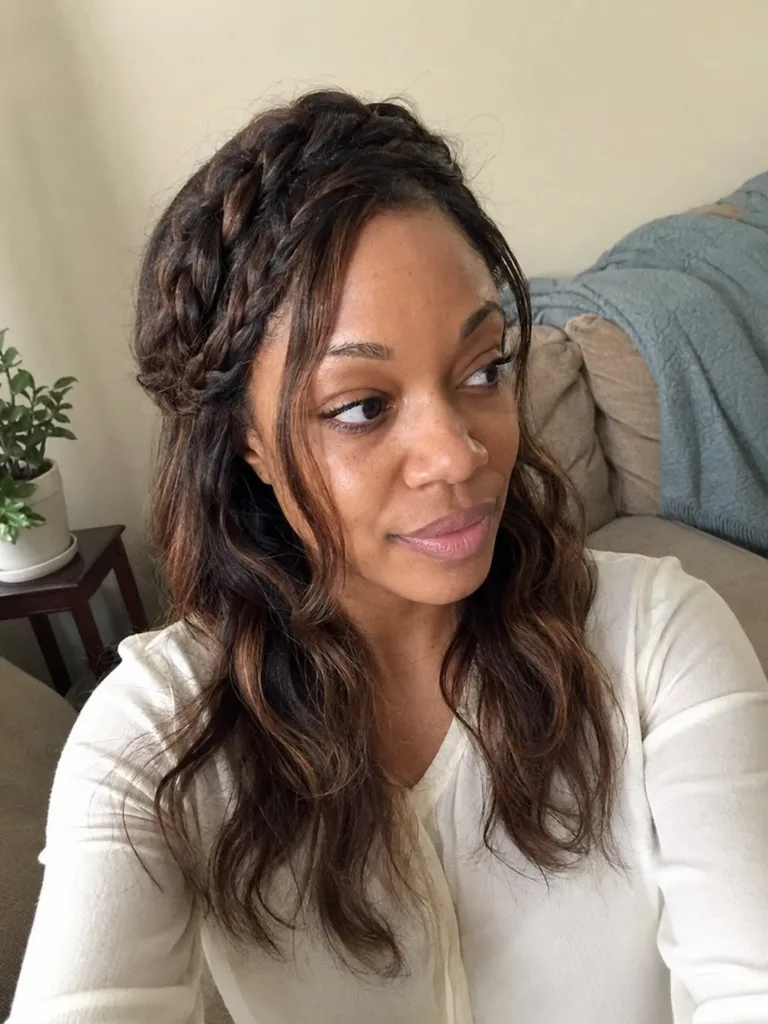
A versatile three-strand braid beginning at the parietal ridge, securing the top half while allowing natural wave texture to flow freely around the shoulders.
Conclusion
Y2K curly hairstyles work best when the 2000s reference is built around your curls instead of placed on top of them. Choose the high ponytail because you want height, the baby braids because you want contrast, or the butterfly clips because they create useful sectioning—not simply because all three belong to the same era.
For the easiest starting point, keep most of your curls loose and add one strong construction detail. Move into space buns, pinned faux hawks, structured ponytails, or more intricate braided sections when you’re comfortable with the extra sectioning and upkeep. The reference photo should tell you where you’re going; your actual curl behavior determines how you get there.
Editorial Standards & Hair Health Guidance
Every style featured on Tress Atlas is curated with a focus on real-world wearability, scalp tension management, and cuticle preservation. When trying protective styles or tight updos, ensure perimeter hairline sections remain tension-free to avoid traction stress on delicate follicles. For heat styling, cap tools below 350°F (180°C) to prevent thermal keratin denaturation.
Scientific Sourcing: Practices aligned with the American Academy of Dermatology (AAD) on traction alopecia risk reduction and cosmetic trichology research on hair tensile strength.