Straight Hair Hairstyles: Styling Guide & Cuts That Balance Shape, Hold, and Upkeep
Straight hair makes haircut lines, parting, shine, and uneven ends unusually visible. That clarity is useful, but it also means a style that looks effortless in a photograph may depend heavily on a precise perimeter, controlled flyaways, or enough density to support its shape.

The first decision is whether you want the cut itself to create the hairstyle or you prefer length that can move between ponytails, buns, braids, and loose looks. A blunt bob provides a strong identity with very little daily construction, while long layers give you more styling freedom but may need more deliberate finishing to keep the ends from looking scattered.
Strand size and density matter too. Fine hair describes individual strand diameter; low-density hair means fewer strands overall. They aren’t interchangeable. Removing a lot of interior weight from low-density hair can expose more space, while a strong, healthy perimeter can make the lower edge look more substantial.
| Your priority | Strong starting options | Main tradeoff |
|---|---|---|
| Sharp haircut shape | Blunt bob, pixie | Grow-out shows quickly |
| Length with movement | U-shaped cut, long layers | Ends need definition |
| Fast everyday styling | Low ponytail, claw-clip twist | Smooth hair may slip |
| Formal finish | French twist, low chignon | Pin placement matters |
| Visible detail | Bubble ponytail, braided ponytail | Construction takes longer |
Cuts That Give Straight Hair a Stronger Shape
Blunt Chin-Length Bob
A blunt bob uses the perimeter as the main feature, so straight hair shows the line exceptionally well. The lower edge can look dense and graphic when the ends are healthy, especially compared with heavily layered short cuts.
It is also more salon-dependent than its simplicity suggests. A small amount of unevenness becomes obvious because there is little wave or curl movement to disguise it.
Coat collars can push the back or sides outward once the bob reaches them, and natural growth gradually softens the original outline. Choose this cut when you like a deliberate edge enough to maintain the haircut rather than relying on styling to recreate its shape.
Collarbone Lob
The collarbone lob gives you much of the visual structure of a bob without removing enough length to eliminate ponytails and simple updos. It works particularly well for someone who wants straight hair to look finished when worn down but still needs flexibility for exercise, work, or warm weather.
A small amount of internal movement can prevent a dense lob from hanging like one solid block. The key is preserving enough perimeter weight that the ends still look deliberate.
Long U-Shaped Cut
Long straight hair can develop a very horizontal, heavy-looking baseline. A U-shaped perimeter softens that edge while keeping the center back long.
The effect is subtler than traditional layering. From the front, you retain substantial length; from behind, the ends form a rounded line instead of a straight shelf. It is a useful choice when you dislike noticeably layered ends but want long hair to fall with a little more movement.
Long Layers With Face-Framing Pieces
Movement becomes more visible once shorter pieces begin around the front and travel into longer lengths. On straight hair, those graduation points are easy to see, so placement matters more than simply asking for “lots of layers.”
Long layers are strongest when you actually want separation through the lengths. They can make dense hair move more freely and give blow-dried or wrapped ends more direction.
Low-density hair needs a more selective approach. Removing too much interior weight can leave the bottom looking transparent even though the haircut technically contains plenty of layers. A consultation should focus on how much perimeter you want to preserve, not only how short the front pieces should be.
Straight Shag
A shag is a bigger commitment to separation. Shorter crown layers, visible movement through the sides, and a lighter perimeter create a less compact result than a lob or long U-shaped cut.
Straight hair makes the layer structure easy to read, which is exactly the appeal for someone who wants an undone, piecey haircut. It is a poor match when your priority is a thick-looking baseline or a one-length finish.
Side-Swept Pixie
A pixie with a little extra length through the top gives straight hair somewhere to move instead of forcing every section into the same close shape.
The longer top can sweep across the forehead, lift slightly away from the scalp, or sit flatter for a sleeker finish. Hair around glasses and ears deserves attention during the haircut because even a small amount of bulk at the temples changes how comfortably frames sit.
Everyday Straight Hairstyles With Minimal Construction
Half-Up Ponytail
The half-up ponytail solves a common straight-hair problem: you can clear the front away from your face without sacrificing the movement of the lengths.
Anchor placement changes the effect. A higher section creates more lift through the crown; a lower one feels softer and keeps the profile flatter. A fabric-covered elastic can reduce harsh creasing compared with repeatedly fastening the same small section very tightly.
The style also works across several lengths, provided the upper section reaches the anchor securely.
Wrapped Low Ponytail
A low ponytail becomes considerably more finished once a small section of hair covers the elastic. That detail is especially visible on straight hair because the smooth surface makes the wrapped base easy to read.
Keep some movement at the crown when a severe slicked finish isn’t the intention. Very smooth straight hair may need enough surface grip around the elastic to stop the wrap from sliding loose.
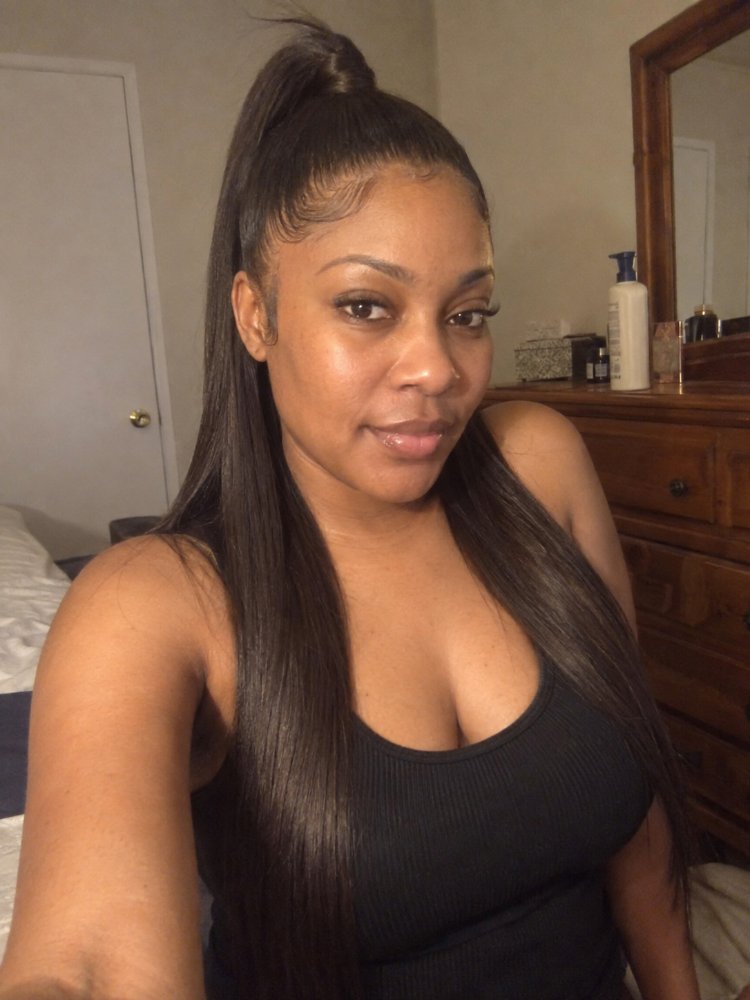
High Ponytail
Height gives straight hair immediate movement. A high ponytail swings more freely than a low one and exposes the neckline, making it useful when loose lengths feel visually heavy.
The hidden decision is the anchor. Pulling every small hairline section toward a very high point can create unnecessary stress, particularly where shorter or fragile hairs don’t reach comfortably.
Use a position that the hair reaches without aggressive pulling. Longer or very dense hair also produces more leverage at a high anchor as the ponytail moves. A slightly lower placement is often more practical when comfort matters more than maximum height.
Bubble Ponytail
Several spaced elastics transform one simple ponytail into a segmented style. Gently expanding the hair between each elastic gives the bubbles their shape.
Straight hair produces a particularly clean pattern because each section remains easy to separate visually. The style is useful on longer hair that tends to look plain in a basic ponytail, yet it doesn’t require braiding skill.
Claw-Clip French Twist
Few styles handle straight hair faster than a large claw-clip twist. Gather the lengths, rotate them upward against the back of the head, fold or tuck the remaining ends, then close the clip over the center of the twist.
The clip has to match the amount of hair it is holding. Too little grip allows slippery hair to slide; an overly small clip forces a dense section into a cramped anchor.
Braided, Twisted, and Pinned-Up Styles
Classic French Twist
The classic French twist takes the same vertical idea as a claw-clip version but replaces the visible clip with tucked ends and pins.
Straight hair creates a smooth outer surface, which makes the shape look especially clean. Pinning matters more than coating the entire hairstyle in product: the pins need to catch both the folded section and stable hair underneath. This is a stronger formal option than a claw clip when you want the construction itself to disappear.
Low Chignon

A low chignon works well when you want the hair close to the head instead of projecting from the crown. The ponytail base sits near the nape, and the lengths are folded, twisted, or wrapped into a compact shape.
Straight hair can make every crossing section visible, so decide whether you want a clean architectural bun or a softer arrangement with some looseness around the surface.
A chignon is also easier around many headrests than a large mid-back bun. Placement still matters with collars: a very low knot can rub directly against a high neckline, shifting pins and roughening the lower sections.
Sleek Mid-Level Bun
A mid-level bun gives straight hair a concentrated, simple shape without the extra leverage of a very high topknot.
Create a secure ponytail first, then twist or wrap the lengths around the base and pin the ends where they won’t spring out. The smoothness of straight hair makes uneven bumps obvious, but chasing a perfectly flat surface isn’t worth excessive brushing or tension. A small amount of natural variation won’t change the overall line.
Braided Low Ponytail
One braid running from a low ponytail is far more practical than wearing long hair loose when you want to control movement.
It also makes good use of naturally slippery straight hair: the elastic establishes the anchor before the braid begins, so you aren’t relying on the braid alone to keep the entire style in place. The finished plait can stay compact or be gently widened for more visual texture.
Rope-Twist Ponytail
A rope twist creates a completely different surface from a three-strand braid. Divide the ponytail into two sections, twist each one, then wrap the sections around each other in the opposite direction so the structure holds.
This is a useful middle ground between a plain ponytail and a detailed braid. Very silky hair may loosen at the tail, making the final elastic an important part of the construction.
Half-Up Twisted Crown
Twisting two side sections toward the back adds detail without placing all the hair into an updo. The sections can meet at the center and be secured with pins, a small elastic, or an appropriate clip.
The style is especially useful when you want softness around the back rather than the lift of a half-up ponytail. It also gives the side profile more interest because the twist remains visible above the ears.
Keep the sections proportional to your density. Taking very large pieces from low-density hair leaves much less hair loose underneath.
Straight hair can expose pins more readily than textured or heavily waved hair, so slide them beneath the twist where possible instead of placing them directly across its surface.
Finishes That Change Straight Hair Without Changing the Cut
Center-Parted Glass-Hair Finish
A center part combined with a smooth, reflective surface puts all the attention on condition, ends, and haircut precision. It is one of the least forgiving ways to wear straight hair because flyaways and an uneven perimeter remain visible.
The strongest version isn’t necessarily the flattest. Keeping a little natural lift at the roots prevents the lengths from making the crown look collapsed.
Flipped Ends
Turning only the ends outward changes the personality of a bob, lob, or longer layered cut without reshaping the whole head of hair.
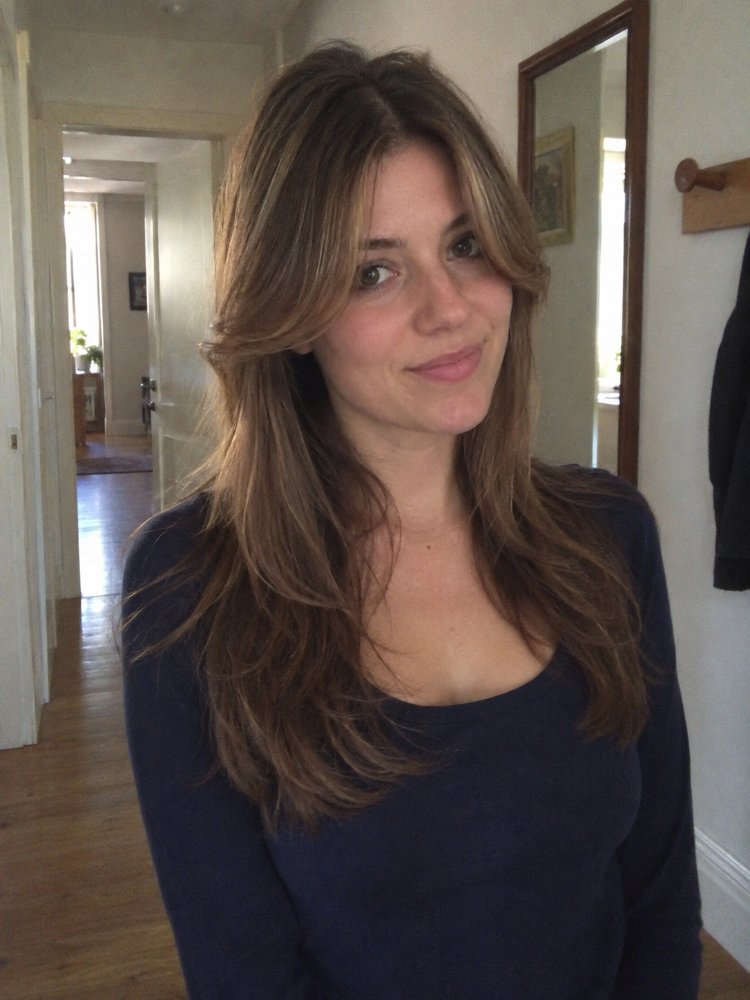
The flip is most convincing when the haircut supports it. A collarbone length often interacts naturally with shoulders and clothing, while shorter bobs create a more deliberate outward line. On very layered hair, different pieces may flip at different heights, producing a less uniform result.
Curved-Under Ends
For a quieter finish, direct the perimeter inward instead of outward. The gentle curve makes straight hair look more compact and can emphasize the lower line of a bob or lob.
This is particularly useful when completely pin-straight ends look too rigid. You still see the straight texture through the lengths; the bend is concentrated close to the bottom.
Slicked-Back Loose Hair
Pulling the front and side sections away from the face while leaving the back loose creates a strong contrast between a controlled crown and free-moving lengths.
The look works better when the hair stays secure behind or above the ears instead of repeatedly falling forward. Depending on the amount of hair being controlled, discreet pins or an internal elastic can provide more dependable structure than styling product alone.
Glasses deserve a quick test before finishing. Bulky sections sitting directly where the arms rest can make both the hairstyle and frames shift.
The same applies to movement. Turn your head, look down, and check whether the front stays where you placed it before treating the style as finished.
Softly Bent Straight Hair
You don’t have to choose between poker-straight hair and a full wave. A broad, shallow bend through selected sections adds movement while allowing the hair to remain predominantly straight.
This finish is especially useful on long layers because it separates the different lengths without creating a curly silhouette. Concentrating the bend through the mid-lengths and ends also leaves the root area simpler, which can suit anyone who prefers a straighter crown.
Choosing the Right Straight Hairstyle
A reference photo tells you what a style looks like for one moment. It rarely shows what happens after the hair meets a jacket collar, sits behind the shoulders, rubs against glasses, loses root lift, or spends several hours inside an elastic.
Match the hairstyle to the part of your routine you’re least willing to negotiate.
| Real-life need | More practical choice | More demanding choice |
|---|---|---|
| Frequent ponytails | Collarbone lob or longer | Short bob or pixie |
| Strong perimeter | Blunt bob | Heavily layered shag |
| Minimal morning styling | Low ponytail or claw clip | French twist |
| Formal events | Chignon or French twist | Loose slick-back finish |
| Low-density ends | Stronger perimeter | Heavy interior removal |
Haircut state matters as much as hairstyle choice. A blunt bob asks the haircut to do most of the visual work. A bubble ponytail or twisted crown relies much more on construction, meaning you can change the look without committing to a different cut.
Your normal hair state matters too. Naturally straight hair and hair that has been pressed or flat-ironed may look similar in a photograph while requiring very different routines. Repeated heat styling should be planned around hair condition, tool design, technique, and existing chemical history rather than one universal temperature or frequency.
Maintenance Straight Hair Makes More Visible
Straight hair tends to reveal the perimeter quickly. Split, weathered, or transparent ends interrupt an otherwise clean line, particularly on blunt cuts and highly polished finishes. Reshaping should respond to the actual condition of the ends and the haircut you want to maintain instead of following a rigid calendar.
Oil distribution can also become visible sooner because the strands lie close together and have fewer bends to interrupt movement from the scalp. That doesn’t require a universal washing schedule. Cleanse according to scalp comfort, activity, buildup, and the styling products you use.
Slippage is another practical issue. Freshly smoothed hair may escape twists, buns, and clips more easily than hair with a little surface grip. Build security into the hairstyle through the anchor, pin placement, and attachment rather than repeatedly tightening the same area.
For sleep, reducing friction can help preserve a smooth surface and limit tangling. A smooth pillowcase or comfortable hair covering may help, depending on the hairstyle. Neither repairs damaged hair or compensates for an uncomfortably tight ponytail or bun.
Most importantly, styling shouldn’t require persistent pain. A ponytail, bun, or pinned style that produces ongoing soreness, stinging, or scalp irritation needs adjusting or removing. Sudden shedding, sores, persistent irritation, or a concerning change in density is a reason to talk with a dermatologist or another qualified healthcare professional rather than trying to diagnose the problem through styling alone.
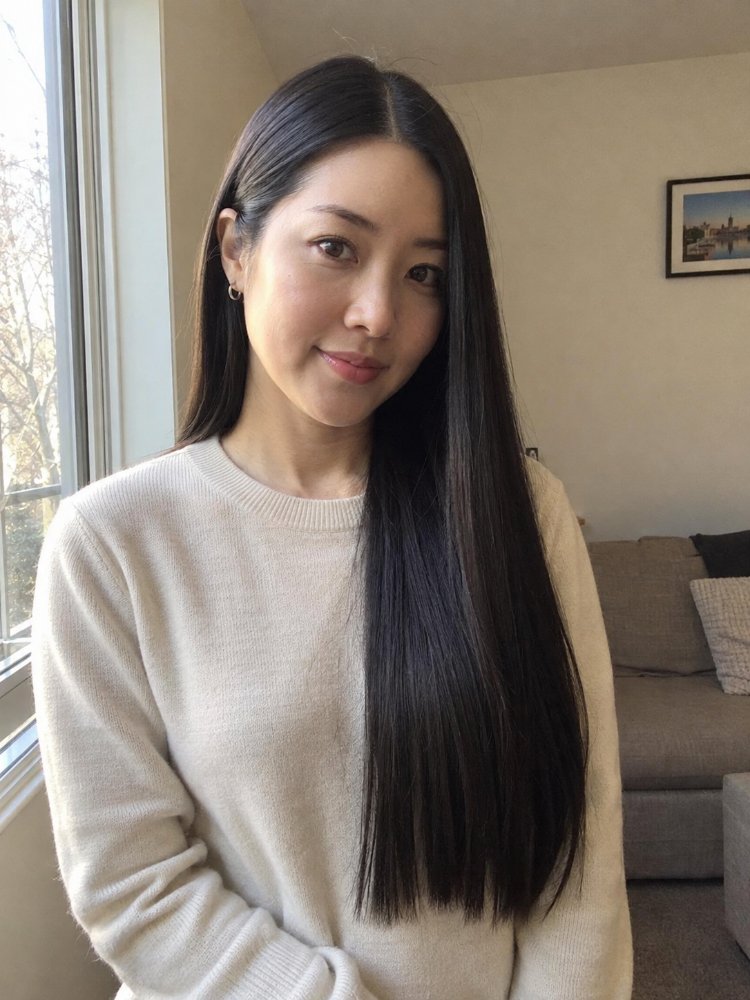
Straight Hair Consultation Checklist
Before changing your cut or choosing an event hairstyle, decide what you actually want the hair to do.
Identify the state you wear most often: naturally straight, blow-dried, pressed, or chemically straightened.
Decide whether preserving a strong perimeter matters more than creating visible layers.
Separate strand size from density when discussing fullness.
Show your stylist where you normally part your hair and where glasses sit.
Mention how often you need to tie the hair back.
Consider collars, workwear, exercise, and headrests when choosing bob or bun placement.
Discuss previous color or chemical services before adding further processing.
Test formal updos with the accessories and clothing that will be worn with them.
A photo is useful for communicating shape, but your routine determines whether that shape remains practical.
FAQs
What hairstyle makes straight hair look fuller?
A strong perimeter can make the lower edge appear more substantial when the ends are healthy, which is why blunt or lightly layered cuts are often useful for low-density-looking lengths. Haircuts redistribute existing hair; they don’t create additional follicles or true density. Heavy interior removal can expose more space when density is already limited.
Can straight hair hold buns and twists if it is very slippery?
Yes, although construction becomes important. Establish a secure base with an elastic when appropriate, cross bobby pins into stable hair beneath the visible surface, and choose clips that can comfortably contain the amount of hair you have. Excessive tightness isn’t necessary for dependable hold.
Are these hairstyles suitable for straightened natural hair?
Many are. Pressed or otherwise straightened natural hair still has its own density, strand size, condition, chemical history, and response to humidity. Choose styles based on that actual hair state and avoid treating naturally straight hair and heat-straightened textured hair as though their maintenance requirements are identical.
Which straight hairstyle is easiest to grow out?
Longer cuts with restrained layering generally change more gradually than highly precise short shapes. A blunt chin bob or pixie can lose its original outline noticeably as it grows, while a collarbone lob or long U-shaped cut usually gives you more room to adjust styling before the overall silhouette feels completely different.
Hair Texture & Upkeep Style Matcher
Select your natural hair texture and daily maintenance window to get an instant styling formula and heat safety cap.
Heat Cap: 320°F (160°C)
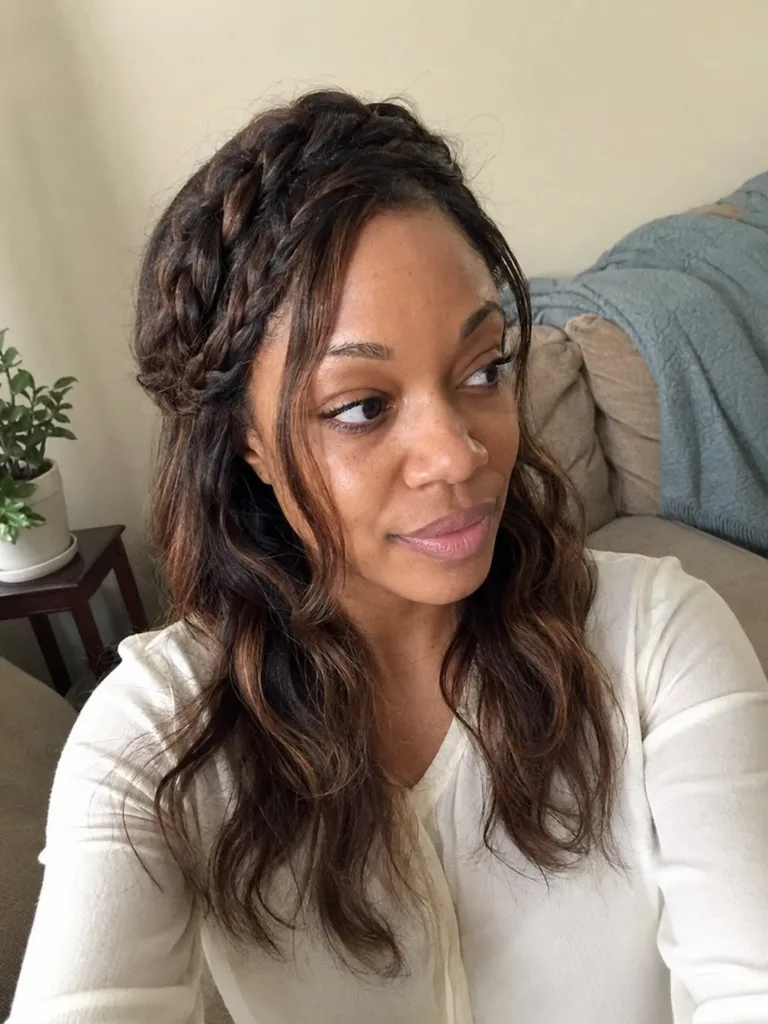
A versatile three-strand braid beginning at the parietal ridge, securing the top half while allowing natural wave texture to flow freely around the shoulders.
Conclusion
Straight hair gives you clarity: clean edges look cleaner, precise parts look sharper, and construction details are easy to see. That also makes haircut quality, end condition, and placement harder to hide.
Choose the part you want doing most of the work. A blunt bob or pixie depends on the cut. A chignon, bubble ponytail, or twisted crown depends on construction. Longer layered styles sit between the two. Once that decision matches your actual routine, the hairstyle becomes much easier to maintain.
Editorial Standards & Hair Health Guidance
Every style featured on Tress Atlas is curated with a focus on real-world wearability, scalp tension management, and cuticle preservation. When trying protective styles or tight updos, ensure perimeter hairline sections remain tension-free to avoid traction stress on delicate follicles. For heat styling, cap tools below 350°F (180°C) to prevent thermal keratin denaturation.
Scientific Sourcing: Practices aligned with the American Academy of Dermatology (AAD) on traction alopecia risk reduction and cosmetic trichology research on hair tensile strength.