Hair Styles for Toddlers: Styling Guide & Cuts That Put Comfort First
Toddler hair styles have to work beyond the photograph. A style can look adorable from the front and still be inconvenient once a child lies down for a nap, pulls on a hat, rides against a car-seat headrest, or spends the afternoon running around.
Comfort deserves priority over perfect parts or an ultra-sleek finish. Toddlers also vary enormously in hair length, density, strand size, curl pattern, shrinkage, and tolerance for styling. A child with short, fine strands needs a different approach from a toddler with dense coils that shrink close to the scalp.
For many families, the most practical starting point is a simple style with a small number of sections and soft, secure fasteners. Two puffs, two low ponytails, a loose top ponytail, or a few chunky twists can keep hair manageable without turning styling into a long process.
This guide focuses on 18 genuinely useful options, including choices for straight, wavy, curly, and coily hair. The aim isn’t to make toddler hair stay untouched at all costs. It is to find a shape that survives ordinary movement reasonably well while remaining comfortable to wear and easy to remove.
Easy Everyday Styles With Minimal Construction
Two Low Ponytails
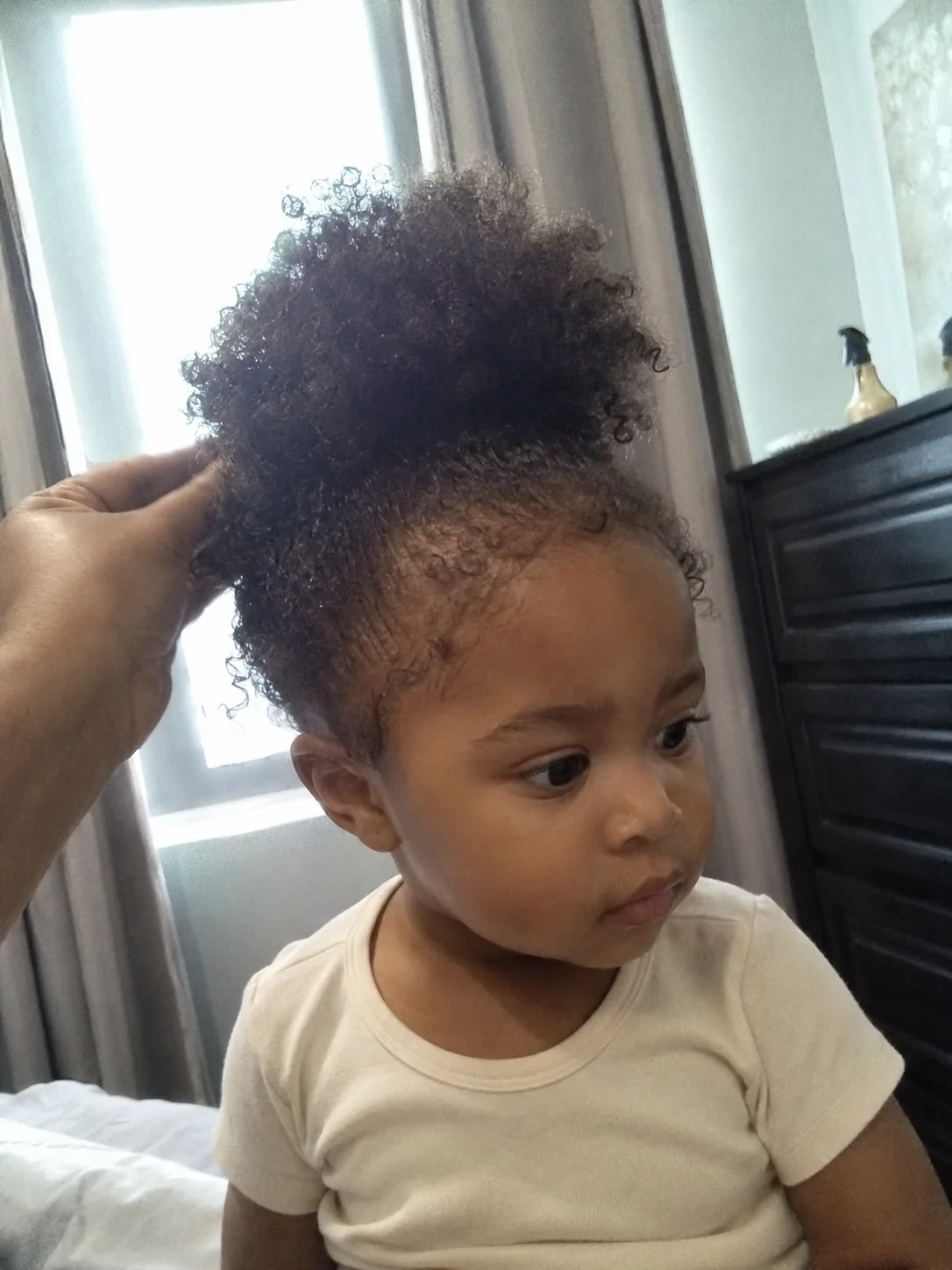
Two low ponytails are one of the strongest all-purpose toddler styles because they divide the hair without requiring elaborate sectioning. The bases sit away from the top and center-back of the head, which can make them easier around hats, car seats, and nap positions.
A center part gives the familiar symmetrical look, but the practical advantage comes from the low placement rather than the part itself. Use soft fabric-covered elastics and secure the hair firmly enough to stay together without repeatedly tightening the base.
This style works especially well on straight, wavy, stretched, or loosely curled hair. Curly and coily hair can also be gathered this way while allowing the tails to remain textured instead of brushing every curl flat.
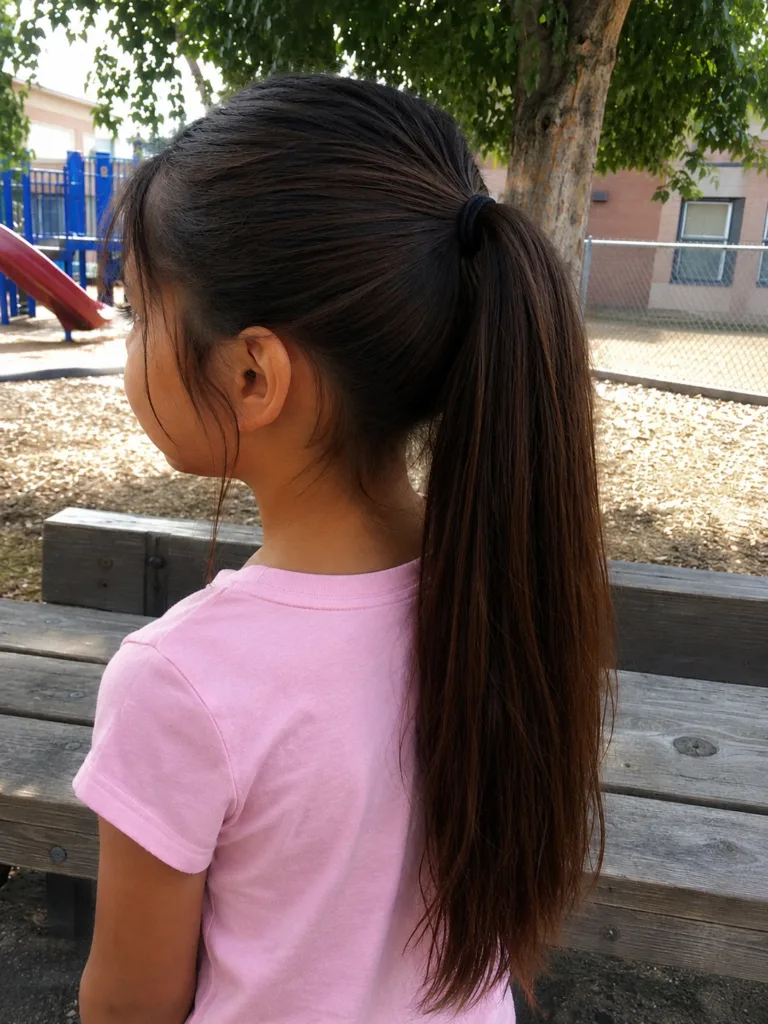
Single Low Ponytail
Some toddlers have enough length for one ponytail but little patience for multiple sections. A single low ponytail makes good use of that situation.
Brush or gently gather the hair toward the nape, smooth only as much as the child’s texture comfortably allows, and secure it with a soft elastic. Shorter pieces around the front can be left free instead of being pulled tightly toward the base.
The low position is also easier to live with than a rigid high ponytail during quiet time or naps. It won’t suit every short haircut, but once the sides comfortably reach the back, it becomes one of the quickest options available.
Loose Top Ponytail
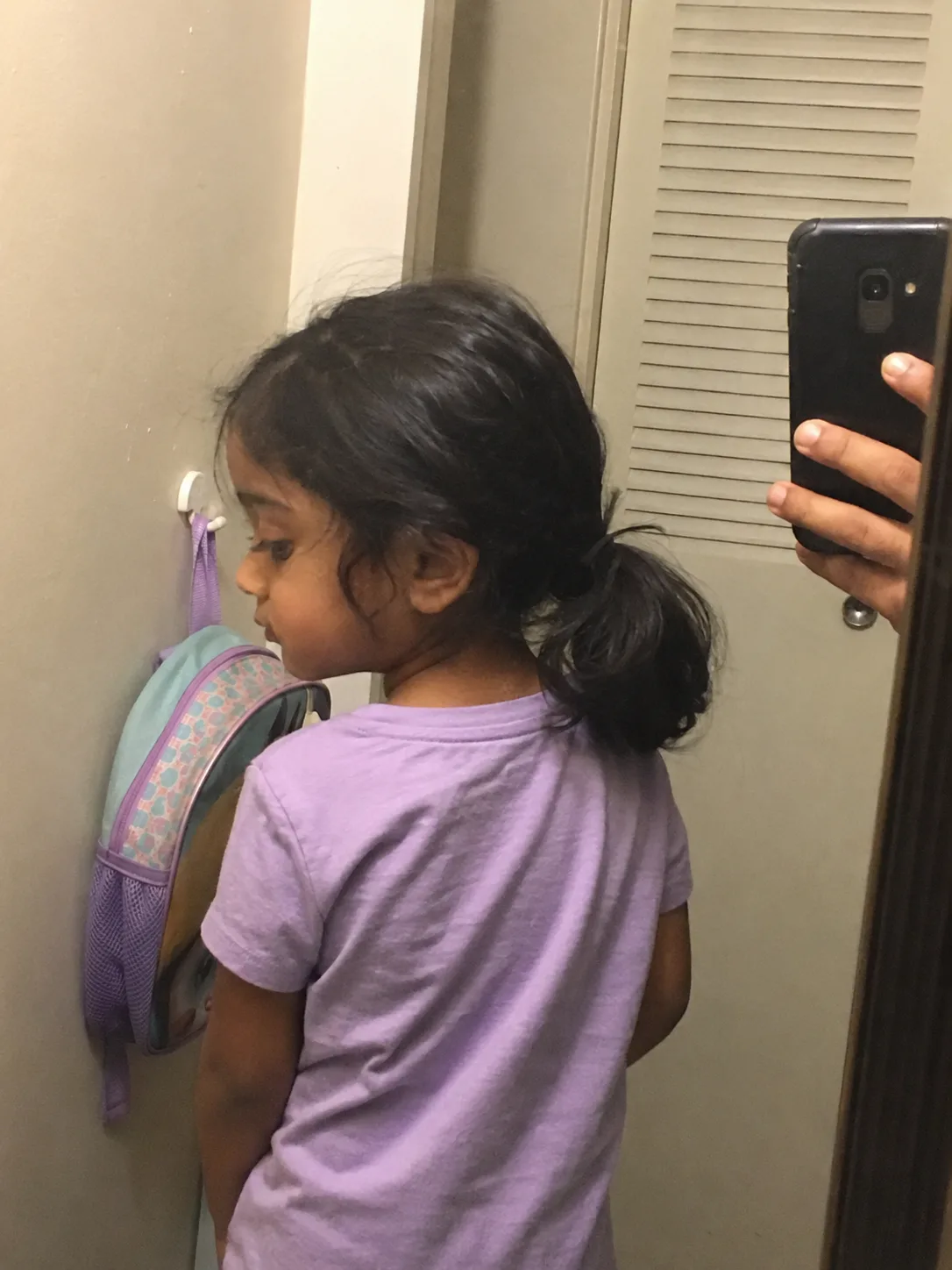
A top ponytail gives short-to-medium hair a playful shape and keeps front sections away from the eyes. It works particularly well when the back is still too short to reach one complete ponytail.
The key word is loose. Toddler hairlines don’t need to be pulled smooth for this style to look finished. Gather the reachable hair toward the upper crown, secure it gently, and allow shorter pieces at the temples or nape to stay out.
On curls, the ponytail can open into a small fountain of texture. Straight or wavy hair creates a softer, swinging tail. Because the anchor is high, check how it feels against hats and avoid placing a bulky elastic exactly where a child commonly rests their head.
Side Ponytail
A side ponytail changes the shape without adding more work. It is useful for hair that naturally falls to one side or for toddlers whose shorter front layers won’t comfortably travel all the way to the back.
Keep the anchor closer to the upper side than the delicate temple edge. Pulling fine hairs around the hairline across a long distance simply to make them reach the elastic adds unnecessary tension.
A side ponytail also gives bows or clips a natural placement, though accessories should remain secure, comfortable, and appropriate for the child’s age and supervision.
Styles That Keep the Front Clear
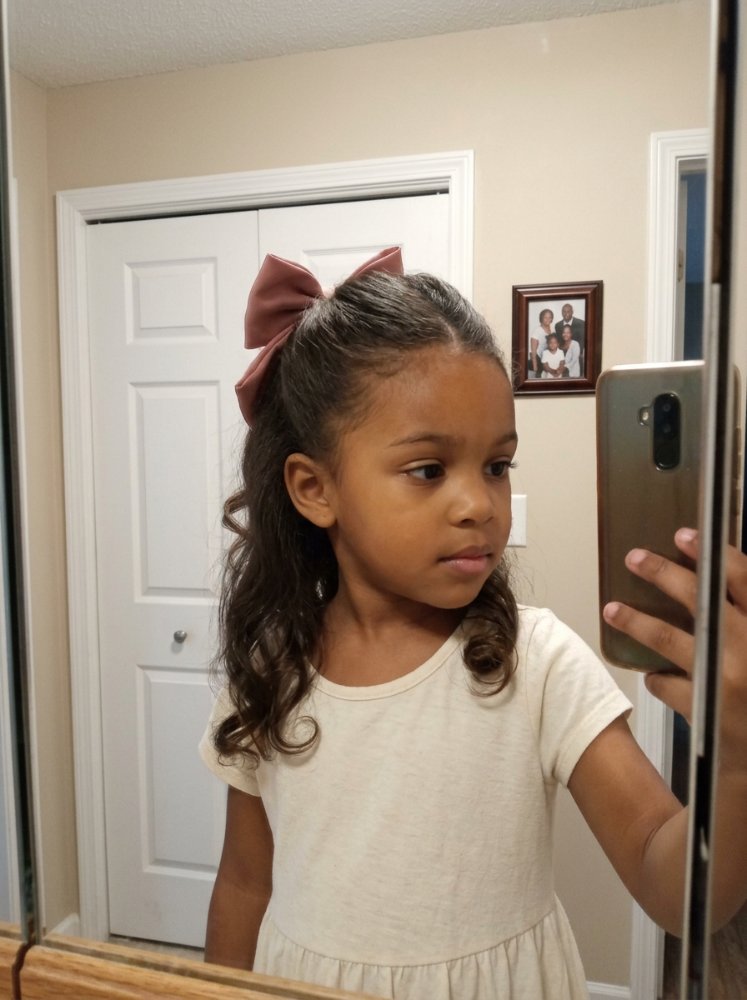
Half-Up Ponytail
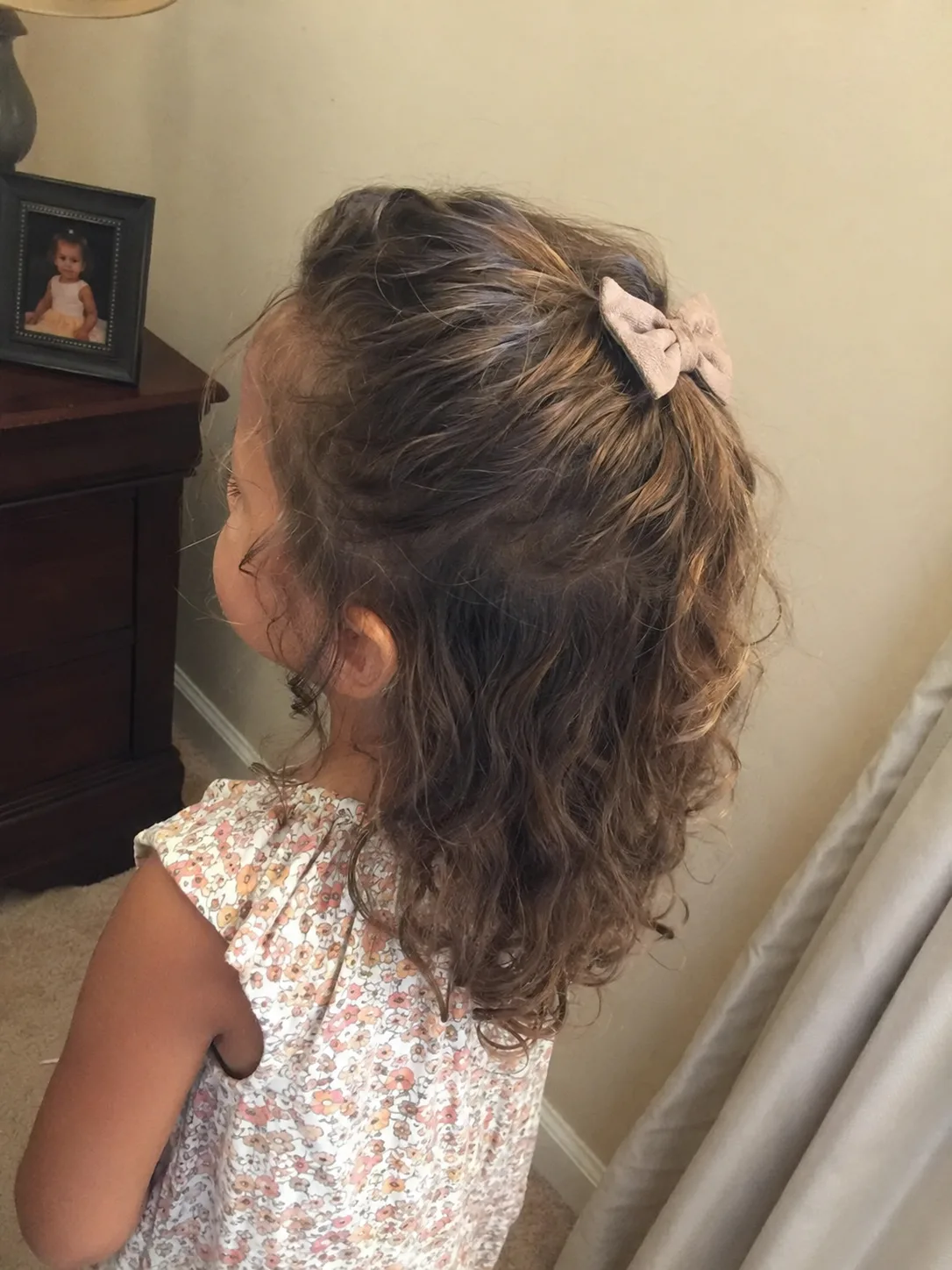
The half-up ponytail solves a common toddler problem: enough front length to fall into the eyes, but not enough overall length for a full ponytail.
Section the hair from around the temples toward the crown and gather only that upper portion. The lower hair stays loose, preserving movement and avoiding the struggle of trying to catch every short strand.
This is a particularly useful transition style while a bob, curly cut, or growing fringe is getting longer. It also leaves plenty of hair free, so tangling at the back still needs attention during brushing or detangling.
Two Front Mini Ponytails
Instead of gathering the whole head, create two small sections near the front and secure each one back from the face. The remaining hair stays loose.
This construction is useful on shorter hair because each section only has a short distance to travel. It also avoids forcing the sides and nape into elastics before they are long enough.
Keep the sections reasonably broad. Making a toddler sit through a grid of tiny ponytails adds handling and removal work without much benefit when two larger sections can accomplish the same job.
Front Braid With Loose Hair
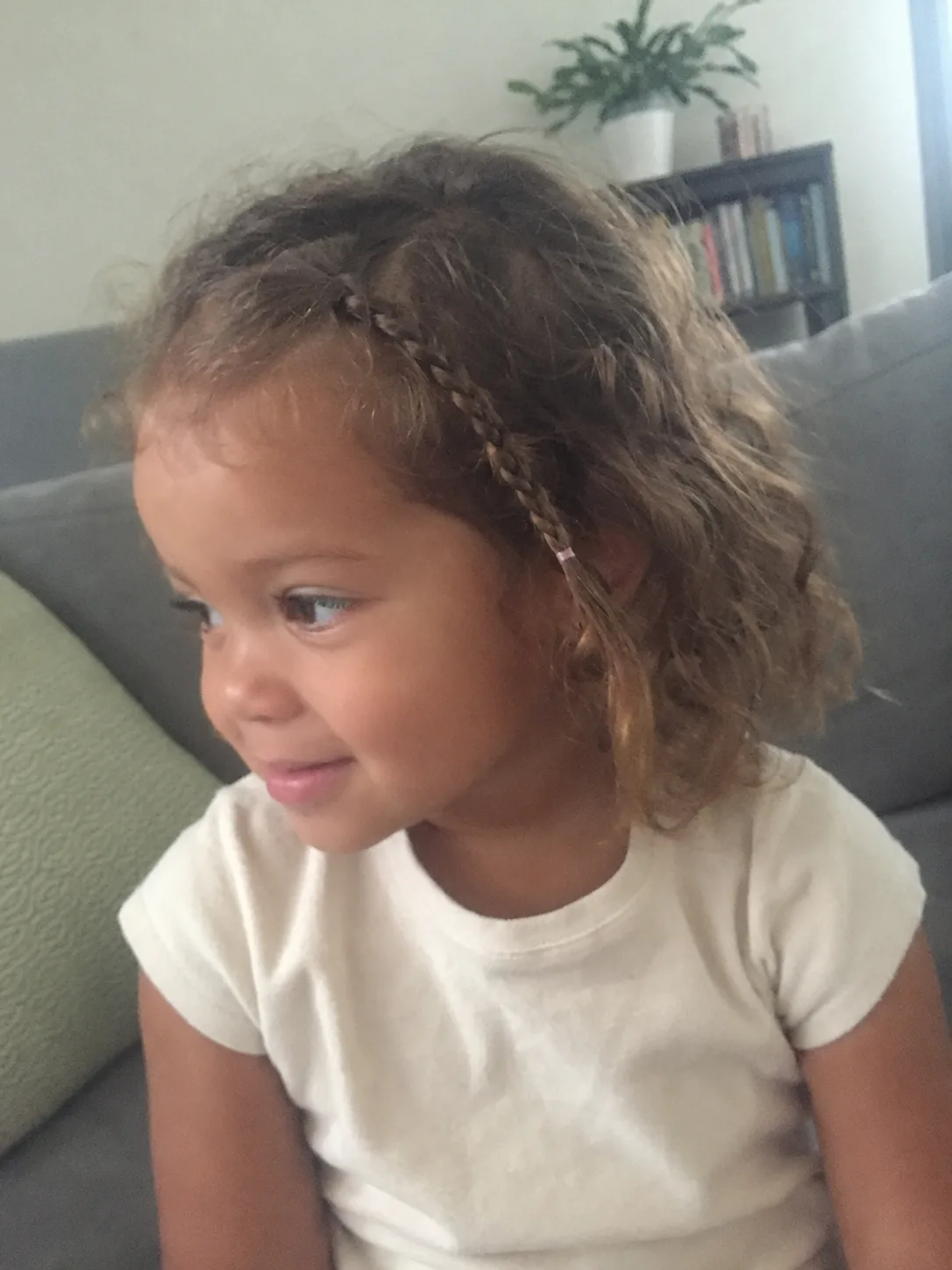
A single braid along the front or side can control a longer fringe while leaving the rest of the hair free. Compared with several small braids, one purposeful section keeps styling simpler.
The braid can travel away from the face and finish behind the ear or blend into the loose hair. The scalp should stay relaxed while the child talks, smiles, and turns their head. A crisp-looking front section isn’t worth pulling small perimeter hairs tightly into the braid.
This option works best once the front has enough length to braid without repeatedly slipping out.
Half-Up Mini Bun
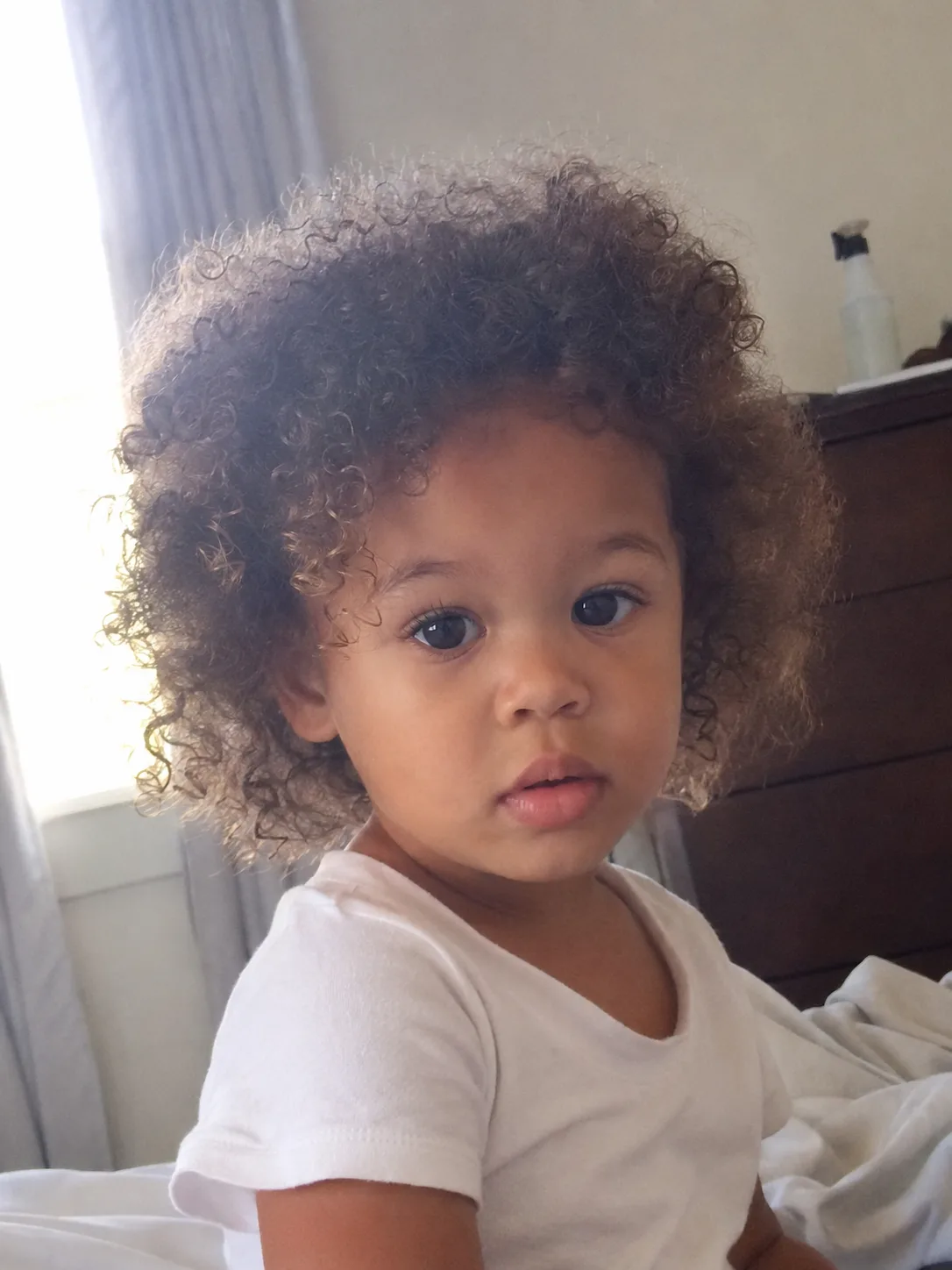
A mini bun offers more containment than a half-up ponytail. Gather the upper section, secure a ponytail, then softly wrap or fold the length around the base and pin or secure it in a child-appropriate way.
Keep the bun small and light. A large, tightly wrapped knot creates more pressure at the anchor and is also more noticeable against hats or headrests.
This is a useful special-occasion variation for toddlers with enough length through the crown, while the lower portion can remain straight, wavy, curly, or coily.
Styles That Work With Curls, Coils, and Shrinkage
Two Puffs
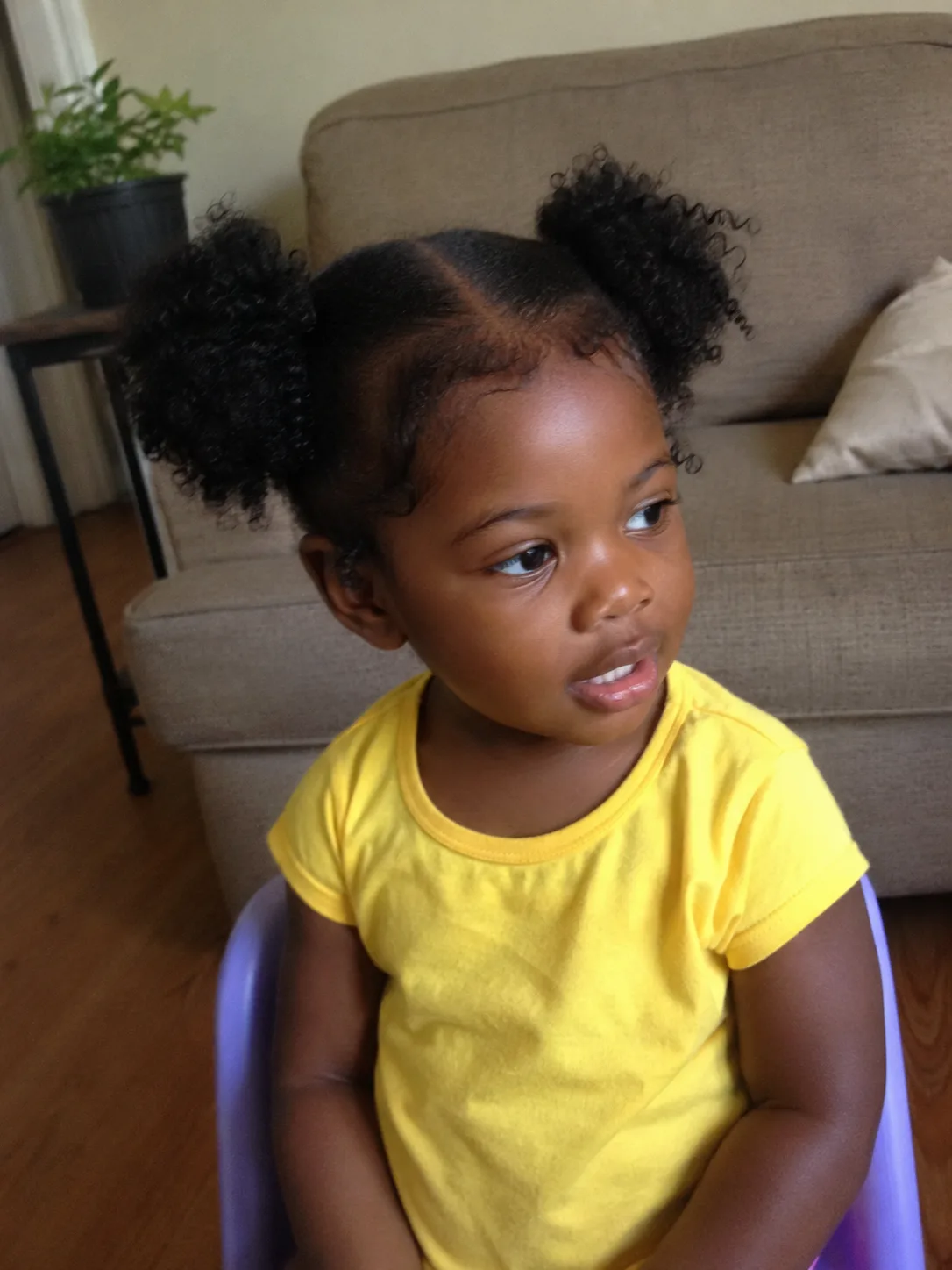
For curly and coily toddlers, two puffs are hard to beat for the combination of shape, speed, and texture visibility. A middle section separates the hair into two broad areas, and each side is gathered without needing to stretch the curls into a different texture first.
Puff size depends on actual hair length, density, shrinkage, and curl grouping. A photograph of a large puff may represent much longer hair than it appears once the hair is released.
Aim for comfortable bases and let the ends expand naturally. Repeatedly brushing the surface for an extremely slick result usually adds more manipulation than a toddler style needs.
Two puffs are the stronger choice over many tiny ponytails when styling patience is limited. Fewer sections mean fewer elastics to install and remove.
Single High Puff
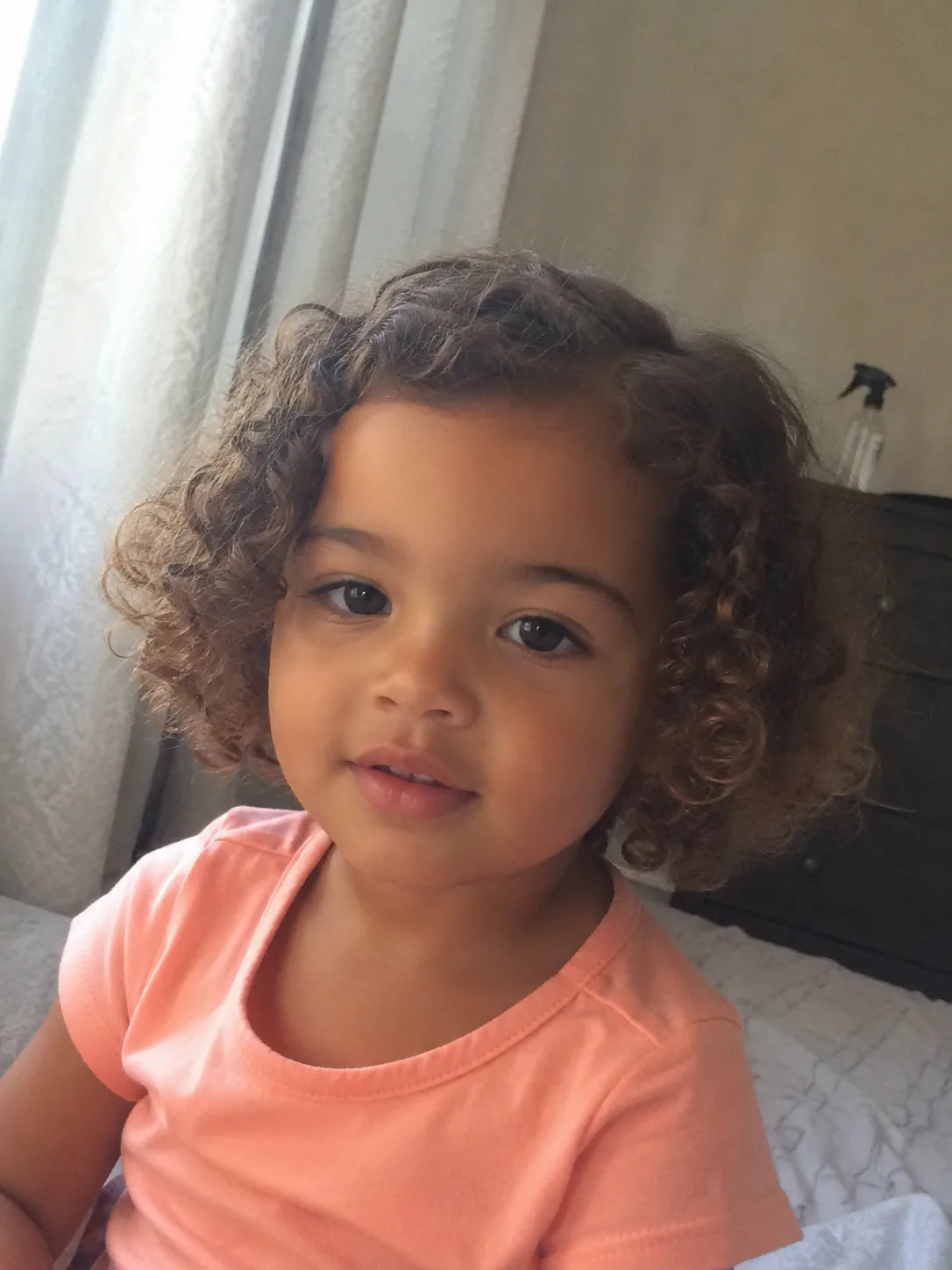
A single puff creates a rounded crown shape and leaves the natural texture as the main feature. It works well on hair that comfortably reaches upward without excessive pulling at the nape.
Rather than chasing every short edge into the base, allow smaller curls to remain around the perimeter. They can be part of the style.
High placement does make the base more noticeable during hats, hooded clothing, and reclining. For children who nap frequently during the day, two side puffs or lower placement may be easier.
Chunky Two-Strand Twists
Chunky twists are an underrated toddler option for coily and tightly curled hair because they organize the hair without requiring a large number of tiny sections.
Detangle each section gently, divide it into two pieces, and twist them around each other toward the ends. Larger sections shorten both styling and takedown compared with a head full of miniature twists. Depending on the curl pattern, the ends may naturally coil into place.
Twists also make scalp access relatively straightforward because the hair remains divided into visible sections.
They don’t need added hair to be useful. Natural-hair twists stay lighter and simplify removal, which makes them a more practical default for young children than long, heavy extension styles.
Twist-Out From Chunky Twists
A twist-out turns the preparation from the previous style into a second look. After chunky twists have been carefully undone, the hair forms more defined sections of curl or wave.
This works best as a low-manipulation styling option when the hair already handles twists comfortably. Separate only as much as needed; excessive pulling apart can turn a soft, defined result into more tangling.
The finished shape changes quickly with humidity, sleep, movement, and the child’s natural curl pattern, so a toddler twist-out is better approached as flexible textured hair than a style that must remain perfectly defined.
Two-Strand Twist Pigtails
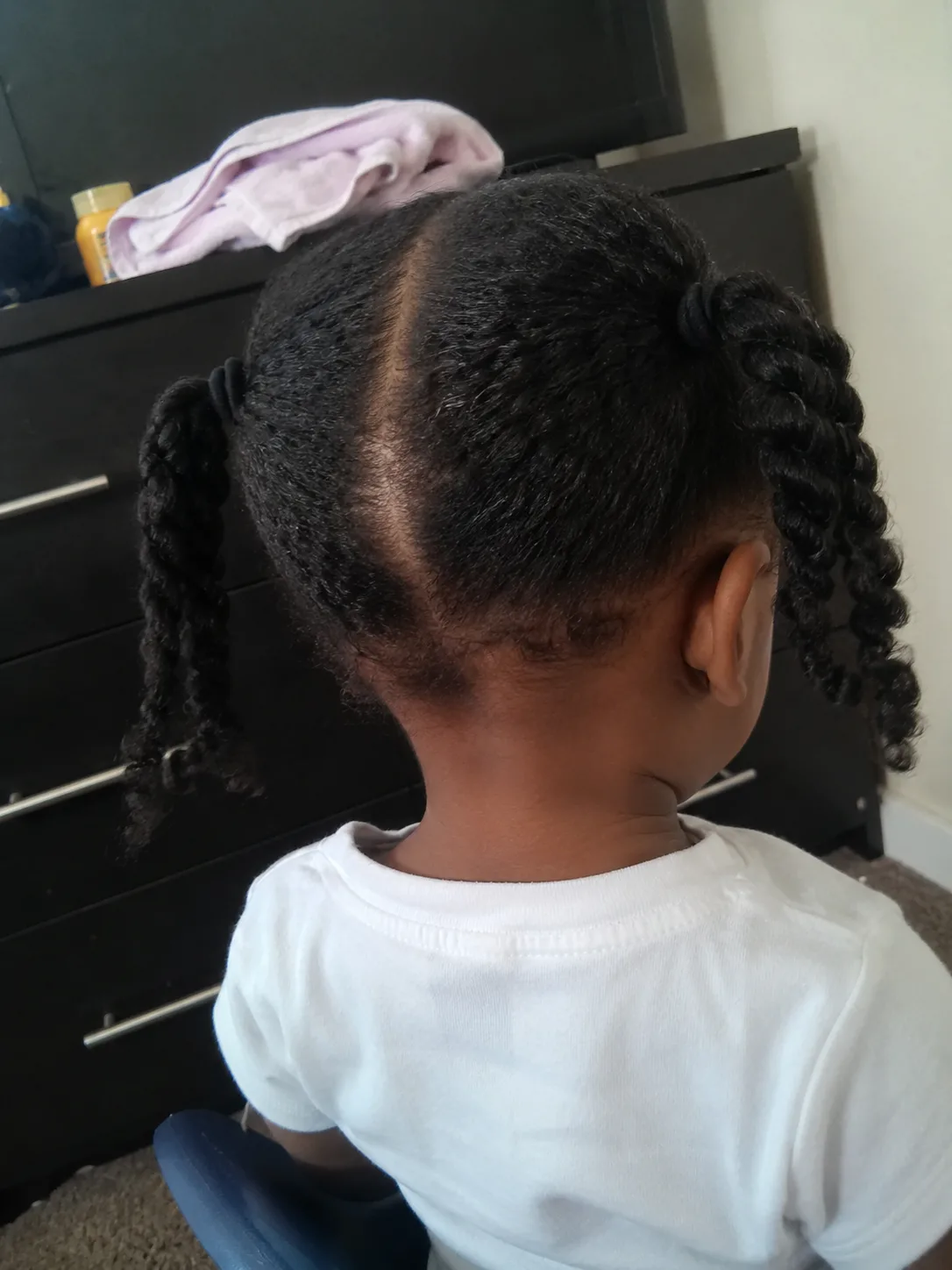
This hybrid keeps the convenience of two ponytail sections while giving the lengths more control. Create two comfortable bases, divide each tail into two pieces, and form one chunky twist on each side.
It is particularly useful when loose puffs tangle easily against clothing or during active play. The twisted tails move as compact units and can be undone without dismantling many small sections.
Keep the ponytail bases gentle; twisting the tails doesn’t require tightening the roots.
Braided Options Without Unnecessary Weight
Two Simple Braids
Two braids are practical once the hair is long enough to divide and braid comfortably. They keep loose ends contained and sit flatter than bulky buns.
The hair can be parted into two large sections, gathered loosely near each side, and braided through the length. Straight, wavy, stretched, and some curly textures may hold this construction differently, so small flyaways aren’t a sign that the style needs to be pulled tighter.
Two braids also tend to be easier to remove than multiple intricate braids. For an active toddler, that simplicity matters.
One Low Braid
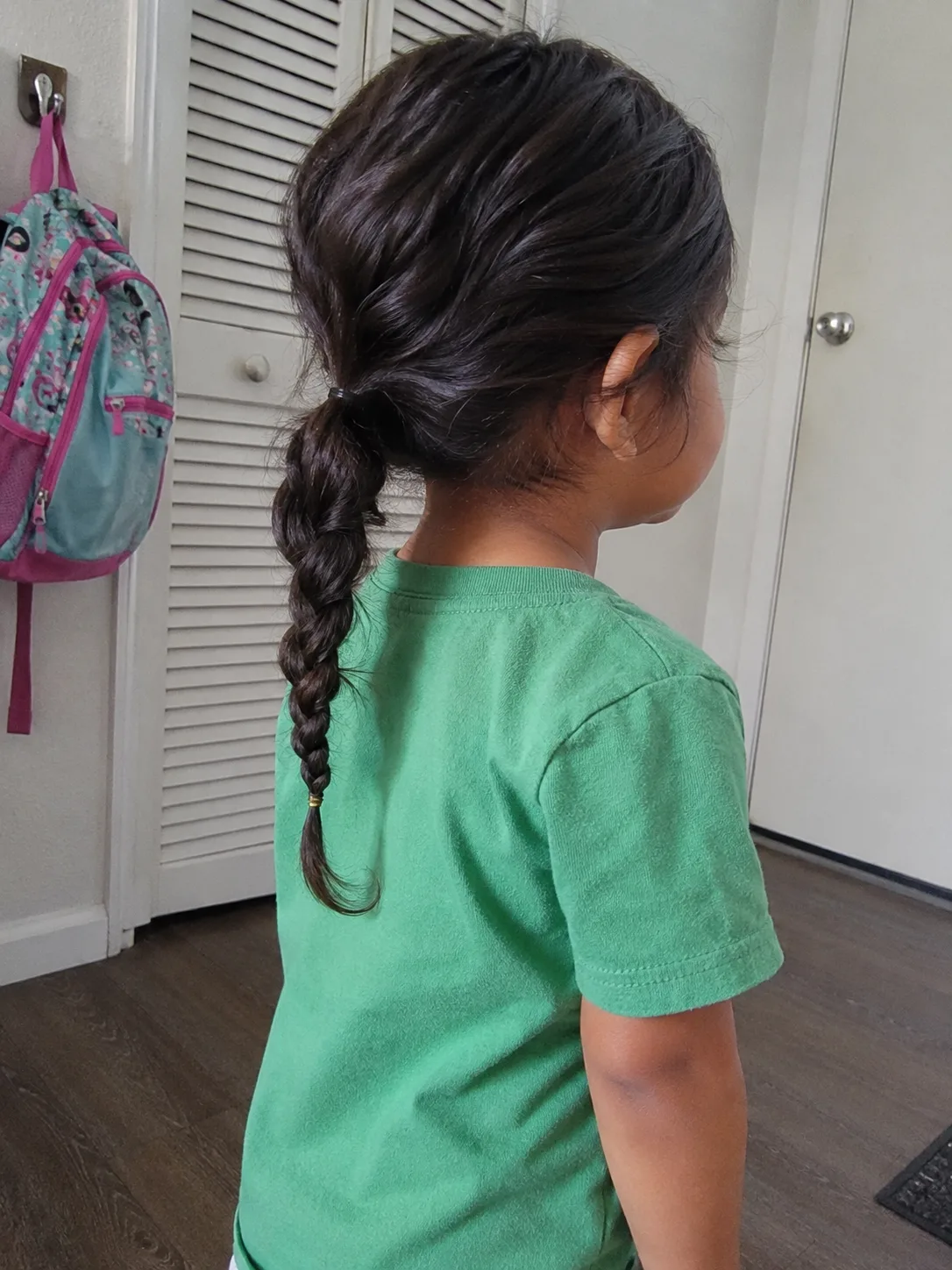
A single braid at the back works well for longer hair that tangles around shoulders, collars, or straps. Gather the hair at a comfortable low point and braid the loose length.
Compared with an elevated style, the braid keeps most of the hair’s weight lower on the head. It also makes the length easy to locate during dressing instead of having loose hair caught beneath clothing.
The braid should start where the hair naturally reaches. Forcing shorter temple or nape pieces into the base can be skipped; a few loose strands are usually the easier tradeoff.
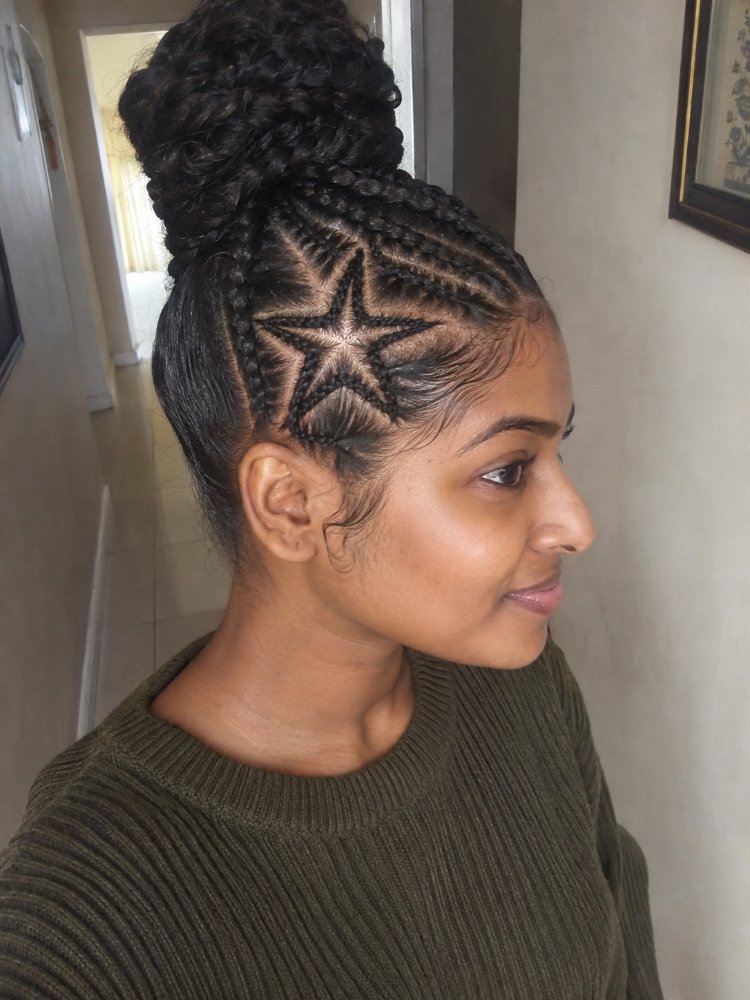
Two Flat Braids or Cornrows
Two broad scalp braids can keep textured hair contained without creating a head full of small sections. They may run from front to back or follow a gentle diagonal path.
Construction matters more than the neatness of the part. The braids should remain comfortable during normal facial movement and head turning. Toddler cornrows shouldn’t rely on pain or tightly gripped edges to stay in place.
This style can be useful for dense curly or coily hair because the broad sections reduce daily gathering. Natural hair alone is usually the simpler toddler choice; heavy added hair introduces extra weight and more complicated removal.
Playful Styles for Longer Hair
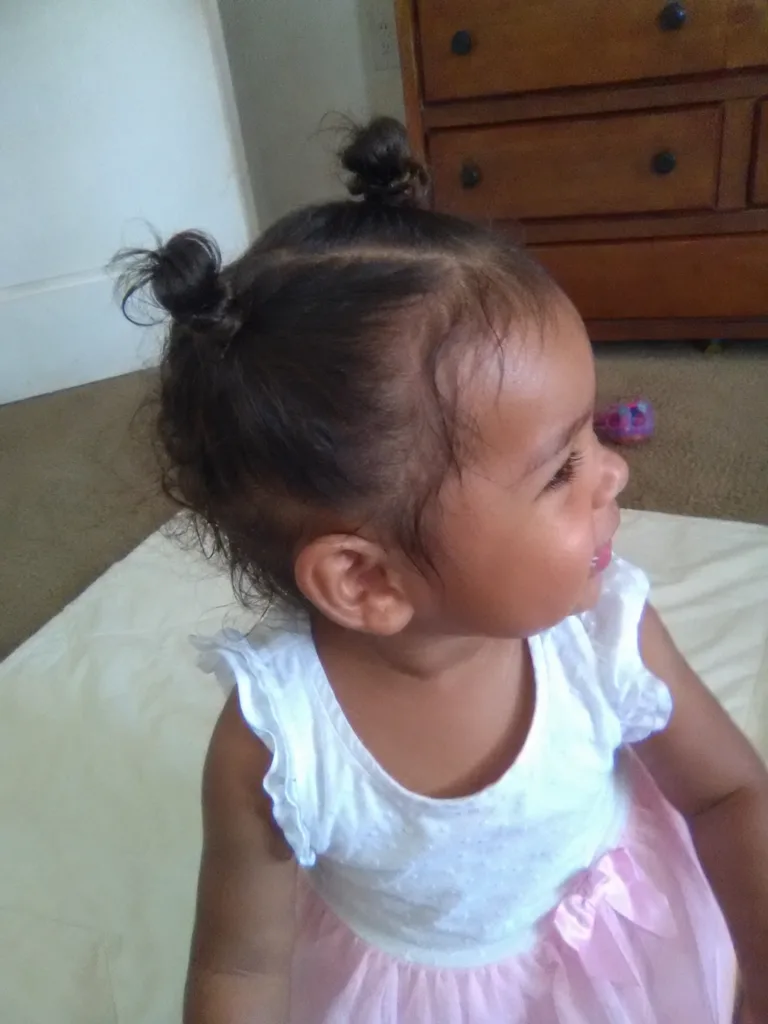
Two Low Mini Buns
Two buns give longer hair more containment than ponytails while keeping the bulk away from the center-back of the head.
Make two low ponytails, then loosely wrap or fold each tail around its base. The style is especially useful when long hair keeps dipping into food, art supplies, or jacket collars.
Tightly winding the hair into hard little knots isn’t necessary. Softer construction gives the hair somewhere to move and makes takedown easier.
For naps, consider where the buns touch the surface beneath the child’s head. Moving them slightly outward can prevent the child from lying directly on both anchors.
Bubble Ponytail
A bubble ponytail gives longer straight, wavy, curly, or stretched hair a playful segmented shape without requiring braiding skills.
Start with one comfortable ponytail. Additional soft elastics are placed down the length, with the hair between them gently expanded to create rounded sections. The bubbles can remain soft and irregular; toddler hair doesn’t need geometric precision.
Because this style uses several elastics, removal deserves patience. Take each fastener out individually instead of dragging it down the hair shaft. It is a better occasional choice for a child who tolerates elastics well than a default for hair that tangles easily around them.
What Toddler Hairstyle Photos Don’t Show
The back of the head deserves almost as much attention as the front.
A large crown bun can press against a car-seat headrest. A center-back ponytail may feel perfectly fine while a child is upright and become annoying during a nap. Beads, bulky accessories, or stiff constructions can also change how a child rests their head.
Movement exposes other issues. Long loose hair can work beneath backpack straps or coat collars, while high ponytails shift repeatedly as a toddler runs. Dense curls gathered at the roots may also need more attention to drying after washing than the visible outer hair suggests.
Photos rarely reveal takedown either. Ten tiny sections mean ten sections to undo. Many small elastics have to be located and removed. Intricate styling may therefore create more work at the end than it saves during wear.
For everyday toddler hair, simpler construction usually wins.
Comfort, Tension, and Hairline Care
A toddler hairstyle should feel comfortable from the beginning. Tight styling doesn’t need to be part of making a hairstyle neat or durable.
Pay particular attention to the fine hairs around the temples, ears, and nape. These short perimeter strands don’t have to be stretched toward a distant ponytail, braid, or puff simply because the rest of the hair reaches.
Added hair deserves extra caution in this age group. Long or dense extensions increase weight, and tiny sections can concentrate that weight over small areas. A lighter natural-hair style is usually the more practical starting point for toddlers.
Accessories should also suit the child’s age and supervision. Small removable pieces can present risks beyond hair care, so decorative items need to be selected and used appropriately.
Pain, persistent redness, sores, ongoing irritation, sudden shedding, or a concerning change in density deserves more attention than changing hairstyles. Remove or loosen a style that is causing discomfort, and seek advice from an appropriate qualified professional when symptoms are persistent or concerning.
Choosing a Style for Your Toddler’s Actual Hair
Start with the hair you have in front of you, not the hairstyle photo.
Short hair: Half-up ponytails, two front mini ponytails, small puffs, and simple accessories usually make more sense than trying to force every strand into one base.
Straight or wavy hair: Low ponytails, braids, half-up styles, mini buns, and bubble ponytails make good use of movement and length. Loose pieces can be left alone instead of repeatedly slicked back.
Curly hair: Choose styles that allow the curl pattern to remain visible. Puffs, half-up styles, and chunky twists reduce the need to brush curls into a completely smooth state.
Coily hair: Shrinkage changes visible length, sometimes dramatically. Two puffs, chunky twists, broad cornrows, and twist pigtails work with that behavior instead of assuming the hair should be stretched first.
Density matters separately from strand thickness. A toddler can have fine individual strands and still have a lot of hair, or thicker strands with lower overall density. Avoid using a hairstyle to create the illusion that hair must be fuller, sleeker, or longer than it naturally is.
A Simpler Toddler Styling Routine
Prepare everything before you start: a comb or brush suited to the child’s hair, soft elastics, clips for sectioning, and any simple styling product you already know works comfortably for the hair and scalp.
Work through tangles gently, preferably in manageable sections for curly or coily hair. Once the hair is detangled, choose the fewest sections needed to create the style. That may mean two ponytails instead of eight, or four chunky twists instead of a full head of miniature ones.
Secure the style and then check the child, not only the mirror. The base shouldn’t pull when they turn their head. Elastics shouldn’t pinch. Braids shouldn’t make the scalp look strained.
At removal, undo fasteners instead of dragging them through the hair. Separate braids and twists carefully and detangle as needed before creating the next style.
A little frizz, an uneven curl, or a short piece escaping near the ear is a normal part of toddler hair in motion.
Related Hairstyles to Explore
FAQs
What is the easiest hairstyle for a toddler who won’t sit still?
Two ponytails or a single loose ponytail are usually the most practical starting points because they require relatively little sectioning. For curly or coily hair, two puffs can provide the same simplicity while preserving the natural texture.
What hairstyles work for toddlers with very short hair?
Try a half-up ponytail, two small front ponytails, a mini puff, or simply leave the hair loose with the front gently controlled. Short hair doesn’t need to be stretched aggressively into a ponytail before enough length is available.
Should toddlers wear braids with extensions?
Natural-hair braids are generally the simpler option for toddlers. Added hair increases weight and can make installation and takedown more involved. Any braided style should prioritize broad enough sections, comfortable roots, scalp access, and easy removal rather than dramatic length.
How can I keep my toddler’s hair neat while they sleep?
Choose a style that doesn’t place a bulky anchor exactly where the head rests. Low side ponytails, broad twists, or other soft arrangements may be more comfortable than a firm bun at the center-back. A smooth sleep surface or suitable hair covering can reduce friction when the child comfortably tolerates it, but the hairstyle itself should still be loose enough to rest on.
Hair Texture & Upkeep Style Matcher
Select your natural hair texture and daily maintenance window to get an instant styling formula and heat safety cap.
Heat Cap: 320°F (160°C)
A versatile three-strand braid beginning at the parietal ridge, securing the top half while allowing natural wave texture to flow freely around the shoulders.
Conclusion
The most useful toddler hairstyles aren’t necessarily the most elaborate ones. A style earns its place when it keeps hair manageable without making play, naps, dressing, or removal harder than they need to be.
For an everyday starting point, two ponytails, two puffs, or a few chunky twists cover a surprisingly wide range of hair lengths and textures. From there, choose braids, buns, half-up styles, or playful variations according to the child’s actual length, curl behavior, and tolerance for styling.
Comfort is the final check. A slightly fuzzy style that a toddler can forget about is often a much better choice than a perfectly neat one they keep trying to pull out.
Editorial Standards & Hair Health Guidance
Every style featured on Tress Atlas is curated with a focus on real-world wearability, scalp tension management, and cuticle preservation. When trying protective styles or tight updos, ensure perimeter hairline sections remain tension-free to avoid traction stress on delicate follicles. For heat styling, cap tools below 350°F (180°C) to prevent thermal keratin denaturation.
Scientific Sourcing: Practices aligned with the American Academy of Dermatology (AAD) on traction alopecia risk reduction and cosmetic trichology research on hair tensile strength.