Summer Braid Hairstyles: Styling Guide & Cuts That Make Sense Beyond the Photo
Summer changes what makes a braid style practical. Heat increases the appeal of keeping hair off your neck, but swimming, sweat, frequent outdoor activity, hats, travel, and longer drying times can expose the weak points of an installation that looked effortless in a reference photo.
The most useful choice starts with construction. A waist-length style with dense added hair behaves very differently from shoulder-length braids made with smaller amounts of extension hair. Cornrows give easier access to much of the scalp, while tiny individual braids create a completely different takedown commitment. Updos reduce hair against the neck but concentrate more of the installation at one point.
Summer braids can reduce daily manipulation, provided the installation suits your hair and remains comfortable. Root tension, section size, extension weight, cleansing access, friction, drying, and removal all matter.
The 22 ideas below cover genuinely different constructions and daily-wear situations, from lightweight natural-hair options to fuller vacation styles.
Lightweight Braids for Hot, Active Days
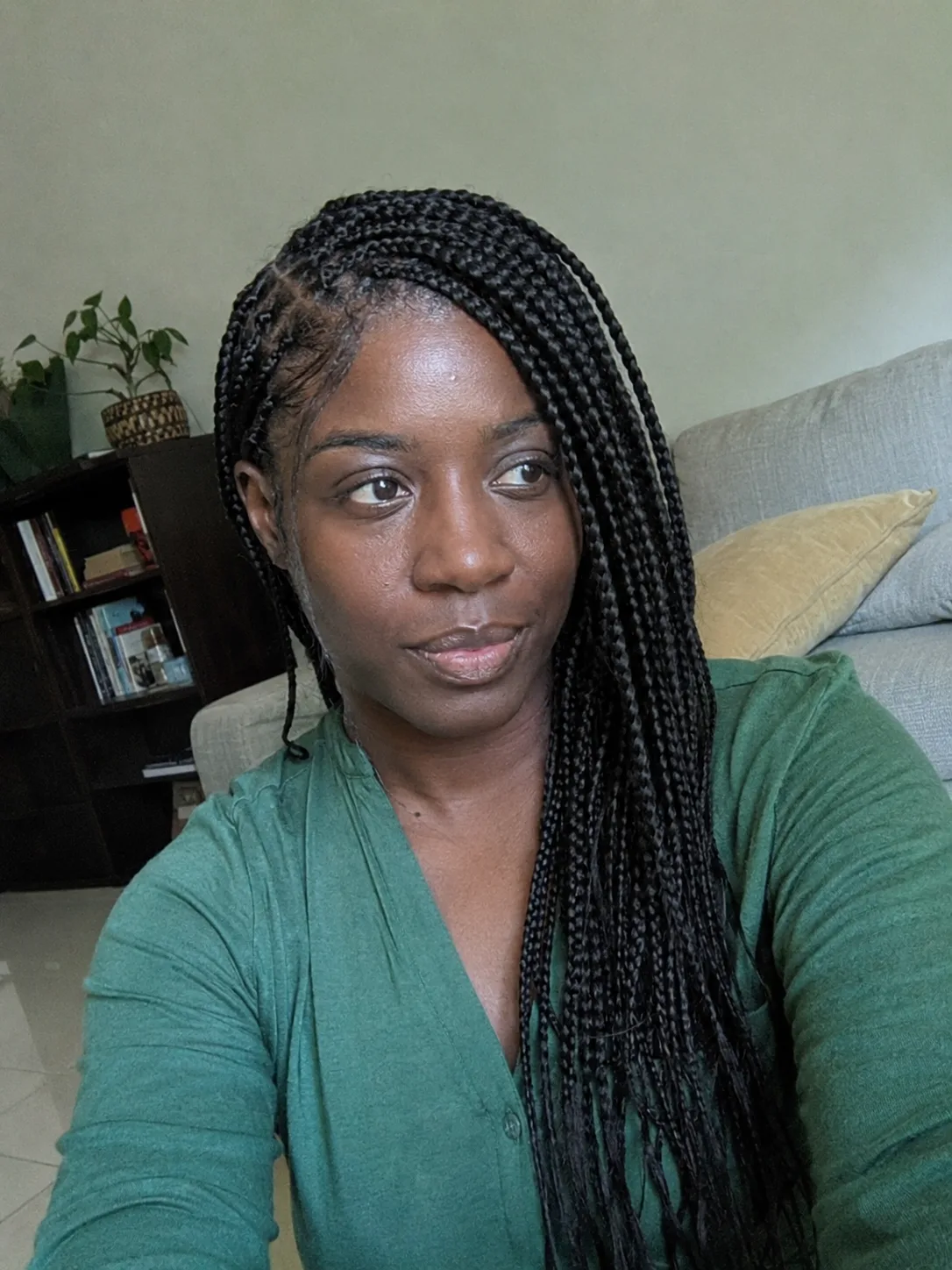
Shoulder-Length Knotless Braids
A moderate length is one of the strongest summer choices when you want individual braids without carrying a large amount of hair down your back. Knotless construction can create a flatter transition at the root, while the overall comfort still depends on section size, grip, and how much added hair is incorporated.
Shoulder-length braids are easier to move away from the face and neck than very long installations. They also create less loose length to trap beneath backpack straps, seatbelts, or crossbody bags.
The visual tradeoff is obvious: you lose some of the drama associated with sweeping waist-length braids. For an active summer routine, that can be a very worthwhile exchange.
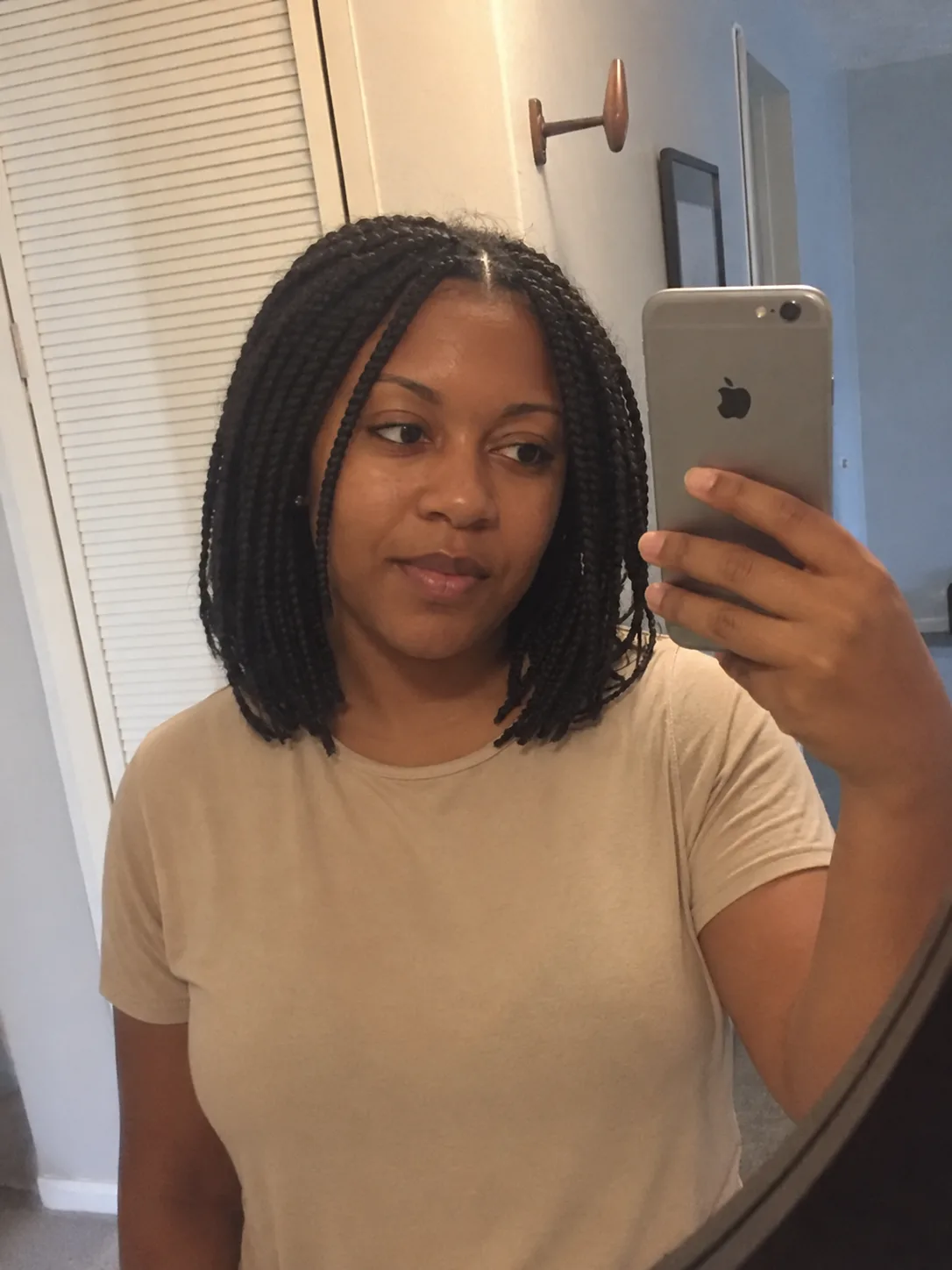
Braided Bob
A braided bob gives you a clearly defined perimeter while keeping the bulk of the style away from the upper back. The ends may sit around the jaw, neck, or shoulder area depending on the shape you choose.
This style works especially well when you like the structure of individual braids but don’t want to spend the day repeatedly pulling long lengths forward and backward. Keep the finished perimeter in mind, because collars and shoulder straps can push shorter braids outward or make them flip in different directions.
Natural-Hair Mini Braids
Mini braids use your own hair instead of relying on extension length for the final effect. They preserve more movement than many larger braided installations and can be worn loose, gathered back, or arranged into simple updos.
Shrinkage still shapes the result on curly and coily hair. The stretched length you see during braiding may shorten considerably once moisture reaches the hair. Tiny sections also increase the work involved in removal, so the smallest possible braid isn’t automatically the most practical one.
Two Feed-In Braids
Two large feed-in braids create a clean, athletic shape with very little loose hair to manage. They’re especially useful when the goal is to keep the hair contained during outdoor activity without creating dozens of individual sections.
Because the construction is simple and exposed, the placement matters. The braid path should follow comfortably from the hairline toward the back instead of relying on aggressive pulling to create a slick surface.
This is a stronger choice than long individual braids for readers who care more about freedom of movement than styling variety.
Four-to-Six Straight-Back Cornrows
Straight-back cornrows offer one of the easiest summer constructions for seeing and reaching much of the scalp. The rows travel in a predictable direction, loose length stays controlled, and the style fits easily beneath many scarves or hats when the braid bulk remains moderate.
The finished look depends heavily on the size and spacing of the rows. Larger sections create a bolder pattern, while narrower cornrows give more detail but increase the amount of parting and removal.
Braids With Better Scalp Access
Curved Feed-In Cornrows
Straight lines aren’t the only way to keep a cornrow style practical. Curved feed-in braids can sweep around the head, create a side emphasis, or direct the eye toward a low gathering point.
The appeal comes from the pattern rather than added length. That makes this style useful when you want something visually distinctive without increasing the amount of hair hanging down your back.
Exposed parts also make buildup more visible. Summer cleansing and scalp care need to fit the installation rather than being postponed because the design looks fresh.
Fulani-Inspired Braids
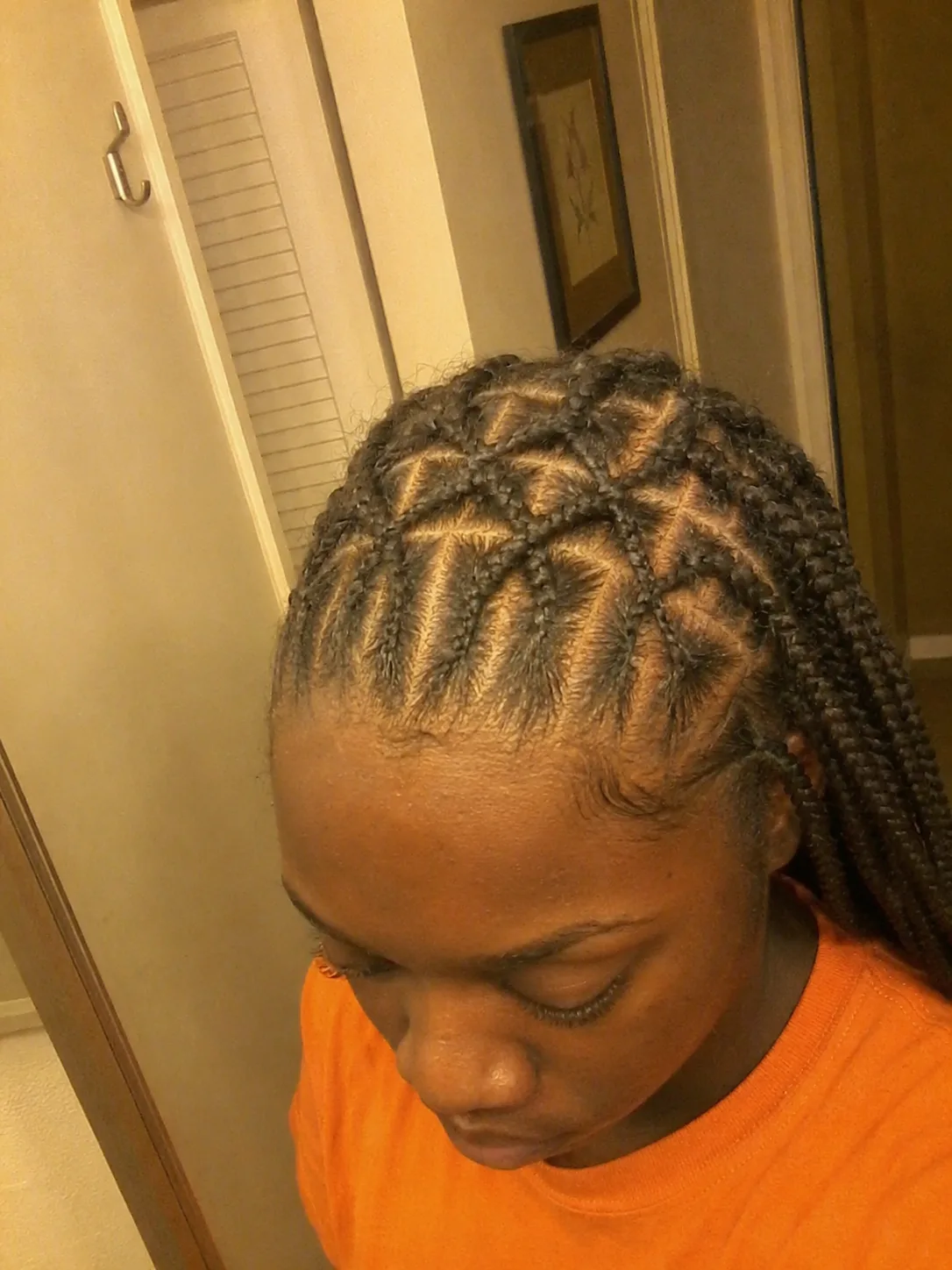
Fulani-inspired styling combines patterned cornrows with hanging braids, creating more contrast than a full head of either construction alone. The front or crown can carry the design, while the individual lengths provide movement around the sides and back.
This hybrid layout is worth choosing when a simple straight-back style feels too plain but a dense head of individual braids feels excessive. Decorative elements can be added selectively, although beads and cuffs change weight and movement, particularly around the face.
Stitch Cornrows Into a Low Bun
The visual feature here is the convergence: clean cornrow sections travel toward the nape, where the remaining length forms a compact bun. Hair stays off the shoulders, yet the bun sits lower than a crown updo and is often less intrusive against hats or car headrests.
A low anchor also changes where the bulk sits during movement. Dense or heavily extended braids can still create weight at that gathering point, so the bun should feel stable without pulling the hairline or nape.
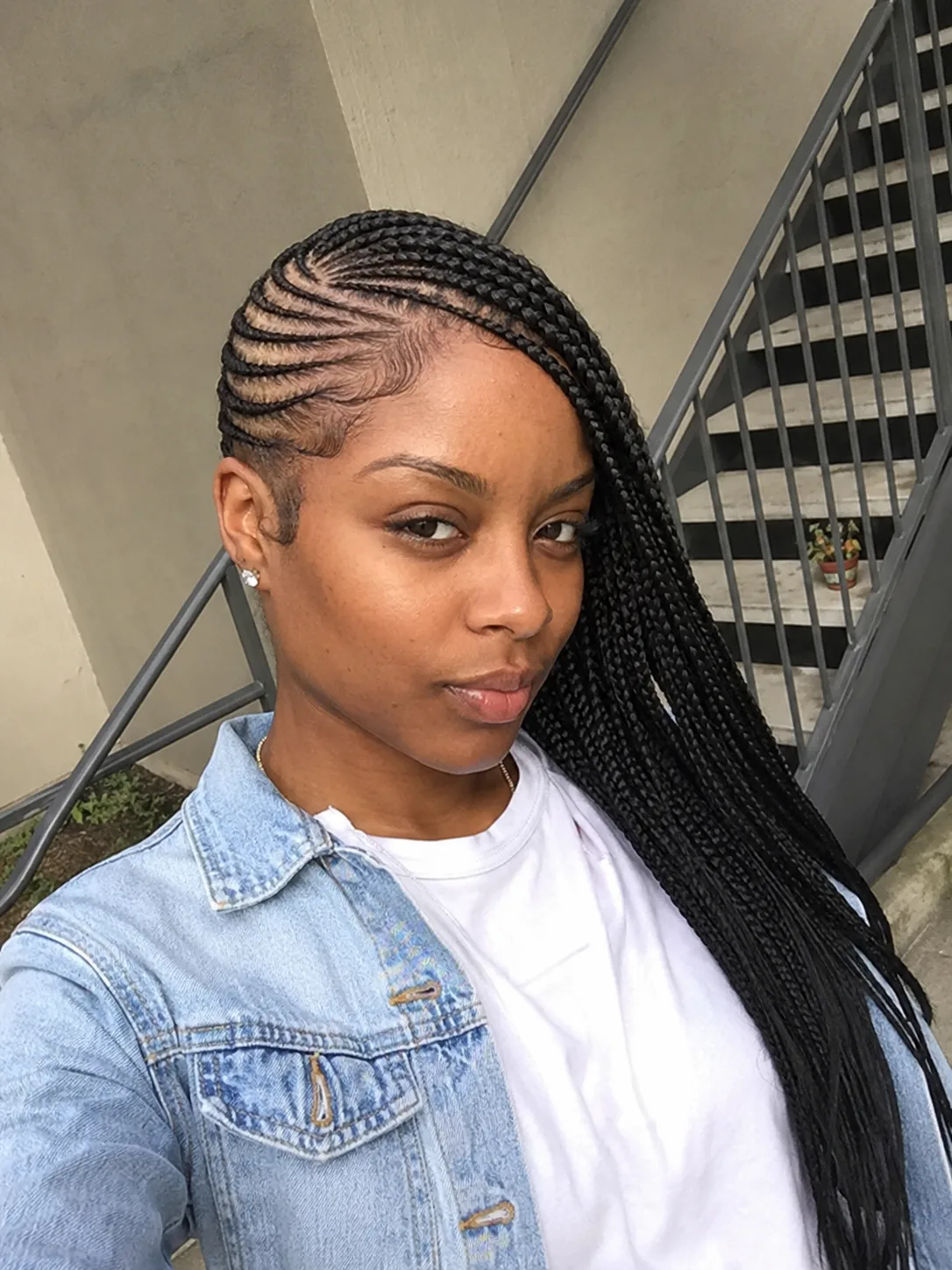
Side-Swept Cornrows With Loose Braids
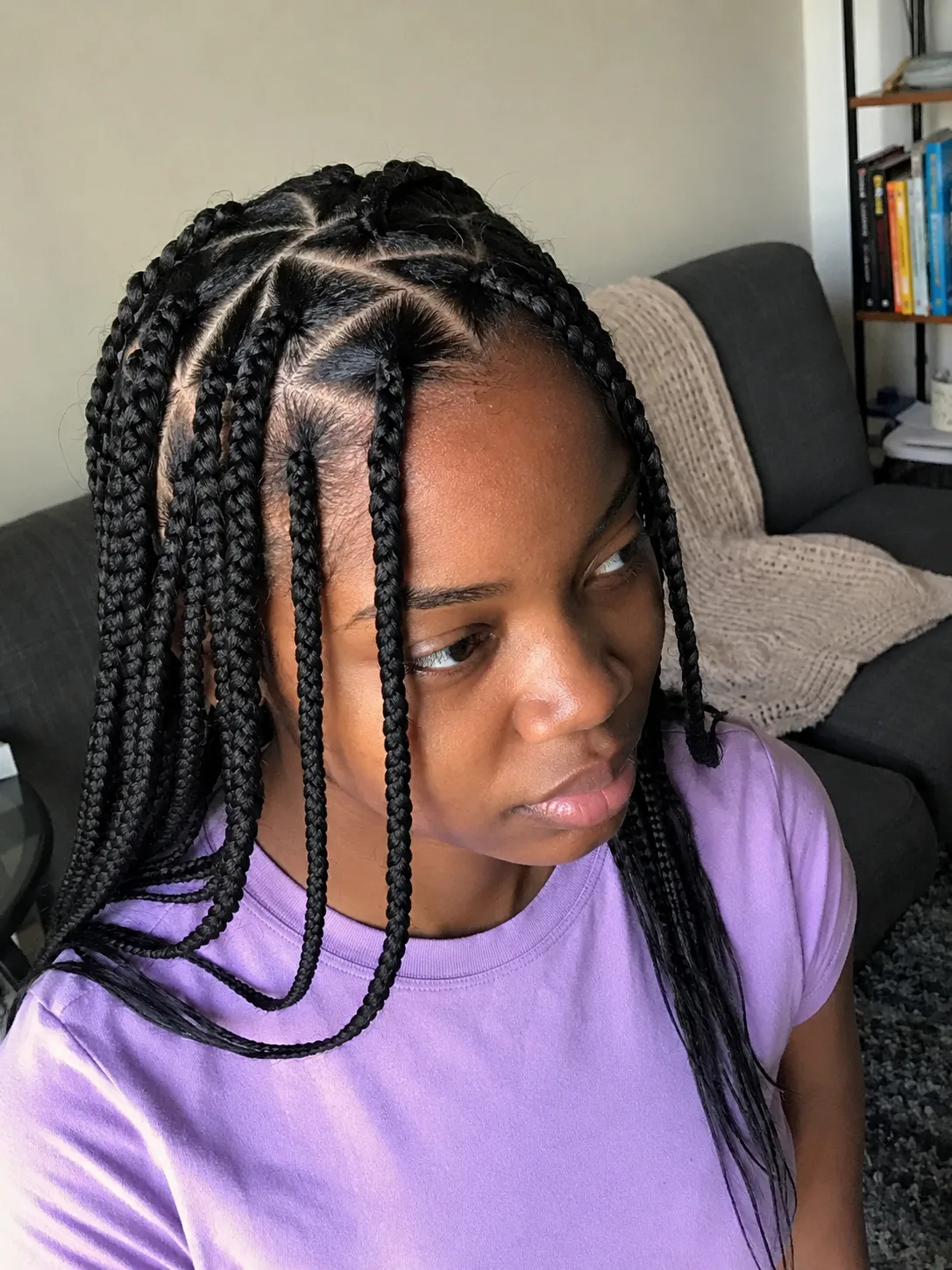
One side of the head stays close through cornrows while the opposite side carries loose individual braids. The uneven distribution gives you a stronger visual direction than centered braid styles and allows part of the scalp to remain particularly accessible.
This is more of a statement shape than a neutral everyday installation. The loose side also carries most of the movement, so consider which shoulder you naturally wear bags on and where you tend to position your hair.
Summer Braids Made for Movement
Medium Box Braids
Medium box braids remain useful because they sit between two extremes. They avoid the sheer section count of very small braids while giving you more styling flexibility than a handful of large plaits.
They can be gathered into a low ponytail, half-up style, loose bun, or simple side sweep without requiring a complicated reconstruction each morning. The important summer decision is length. Moderate lengths keep this versatile; very long, dense versions turn a flexible style into a noticeably heavier one.
Large Box Braids
Fewer, larger sections produce a bolder pattern and a much different scale from medium braids. Large box braids suit readers who want the sections themselves to be visible rather than creating a fine, highly detailed texture across the head.
The larger section doesn’t justify forcing more hair into the base. Added-hair volume and the natural-hair section should work together comfortably.
This style can also be quicker to manipulate during everyday styling because you’re handling fewer individual braids, though the exact installation and removal workload varies with the construction.
Braided High Ponytail
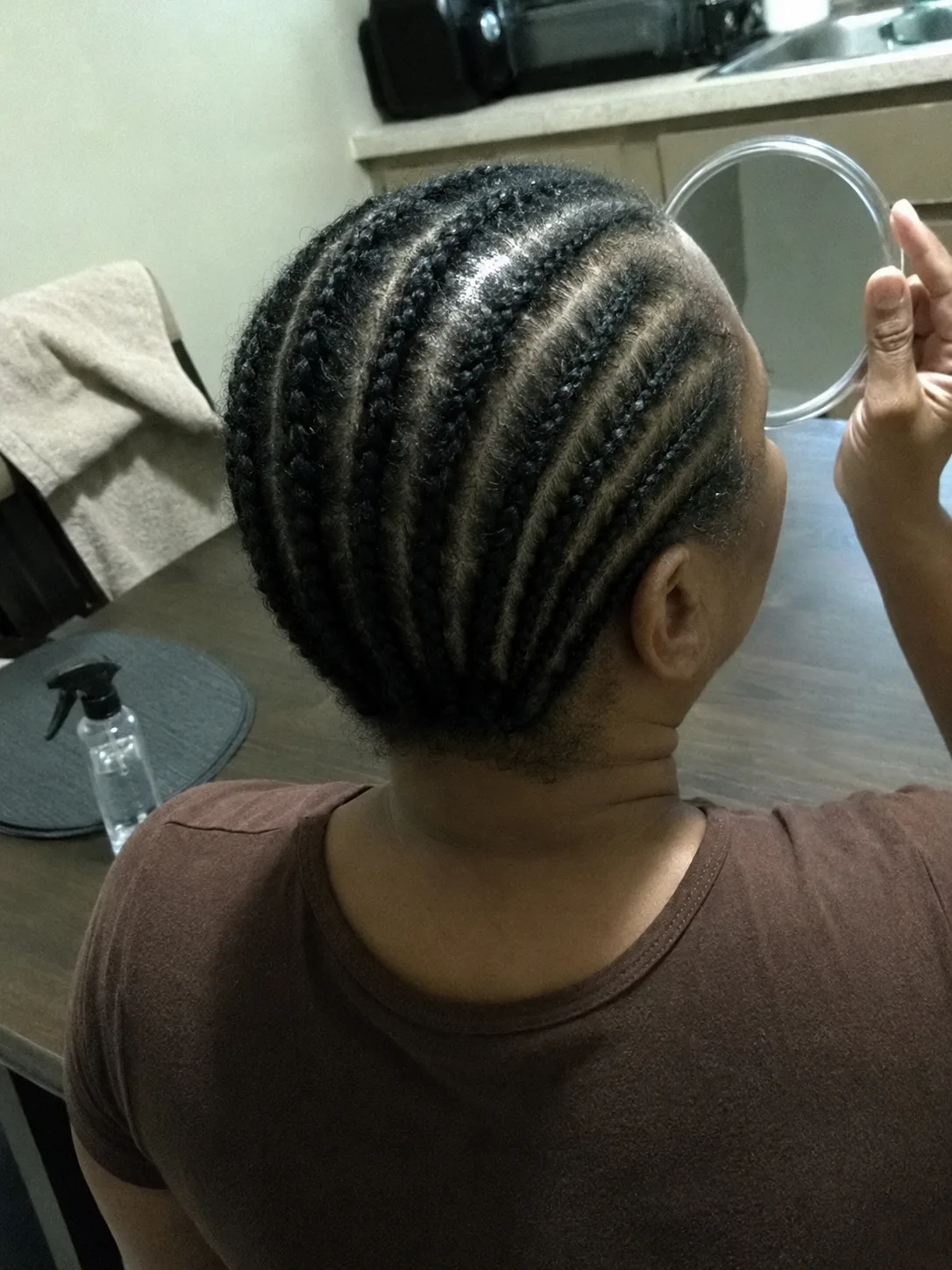
A high braided ponytail immediately clears the nape and creates a sporty, lifted shape. It works particularly well when you’re choosing the high placement for its appearance instead of repeatedly turning long loose braids into a high ponytail after installation.
High anchors concentrate movement and weight at the crown. Long extensions create more leverage as the ponytail swings, so dramatic length deserves a deliberate comfort check.
A high ponytail is a great visual choice for summer events. It is less convincing as an all-day default when the base feels strained during normal head movement.
Low Braided Ponytail
The low version changes the daily experience considerably. The braids meet closer to the nape, giving the style a quieter line and reducing the need to carry the full installation high on the head.
It also works better with many hats and visors than a crown-level gathering point. The downside appears against chairs and headrests, where a thick low base can sit directly between your head and the seat.
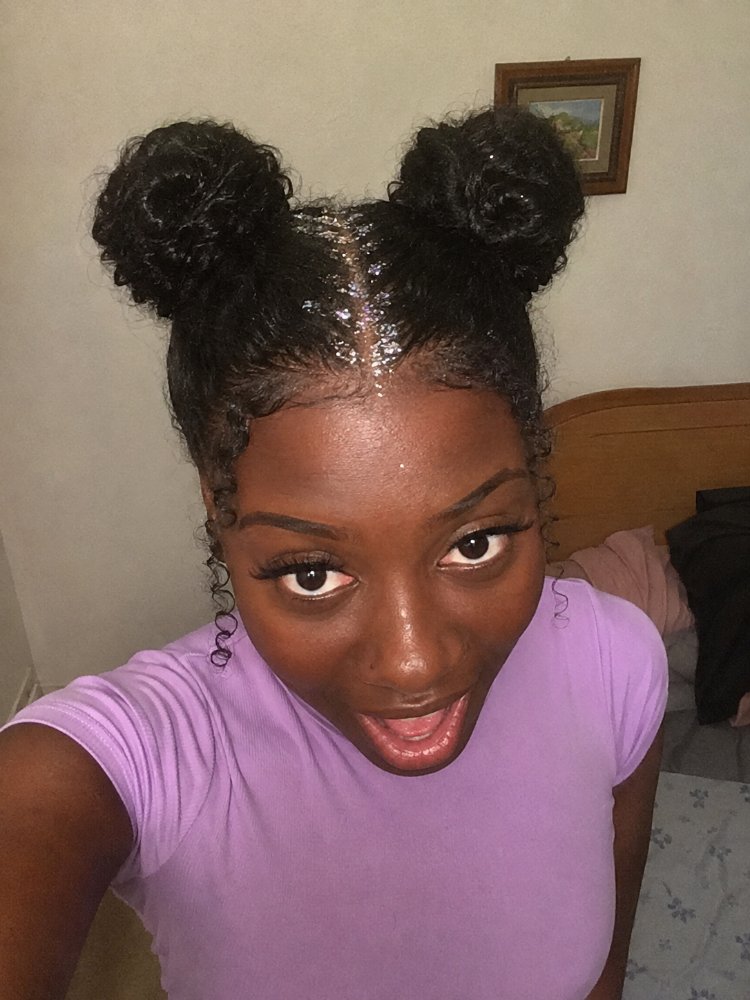
Braided Space Buns
Two braided buns split the hair between separate anchors, producing a playful shape while lifting the lengths off the neck. They can be created from braided hair that is already installed or planned as part of the style from the beginning.
Large, heavy buns change the equation. The useful version keeps each side secure enough to move without requiring repeated tightening. Pins should support the coil itself instead of depending on the perimeter hairs to hold everything in place.
Braids for Swimming, Beaches, and Travel
Straight-Back Cornrows Without Long Extensions
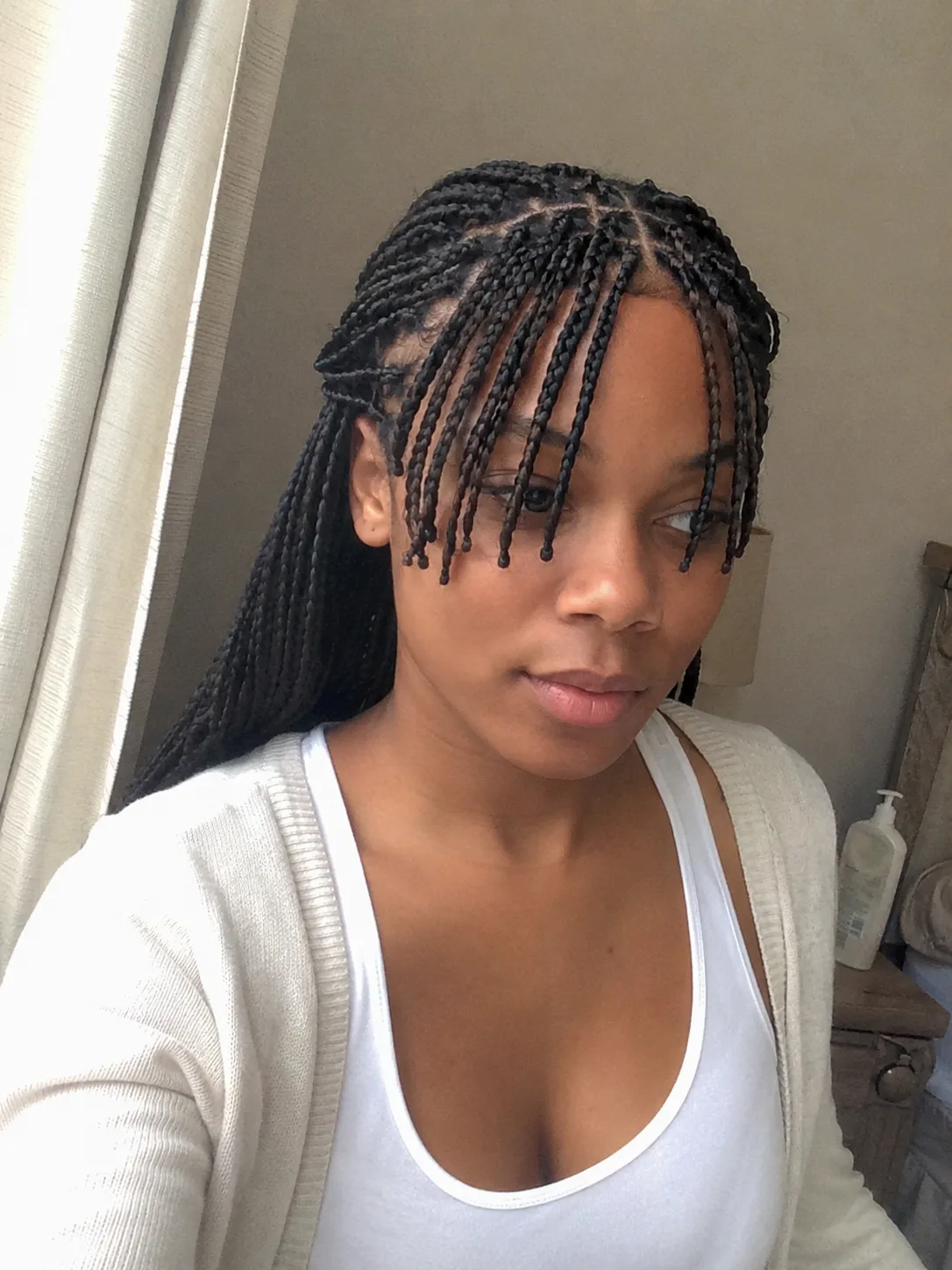
Water changes the appeal of elaborate summer hair quickly. A compact set of straight-back cornrows has very little loose length to absorb water, cling to the back, or become trapped under swimsuit straps.
The roots still need to dry thoroughly after getting wet. Surface dryness can arrive before moisture has left denser braided areas, particularly near the base.
For a swim-heavy trip, this is one of the most practical options in the article.
Moderate-Length Knotless Box Braids
This version earns its place because the emphasis is travel rather than simply appearance. Keep the individual construction but stop the length before it becomes a major piece of luggage attached to your head.
Long braids can get caught behind seatbelts, pressed against airplane seats, or trapped beneath backpack straps. Moderate lengths reduce those annoyances while keeping enough braid length for ponytails and simple buns.
After swimming, added hair still needs proper drying. Length reduction makes that job more manageable; it doesn’t eliminate it.
Braided Lob
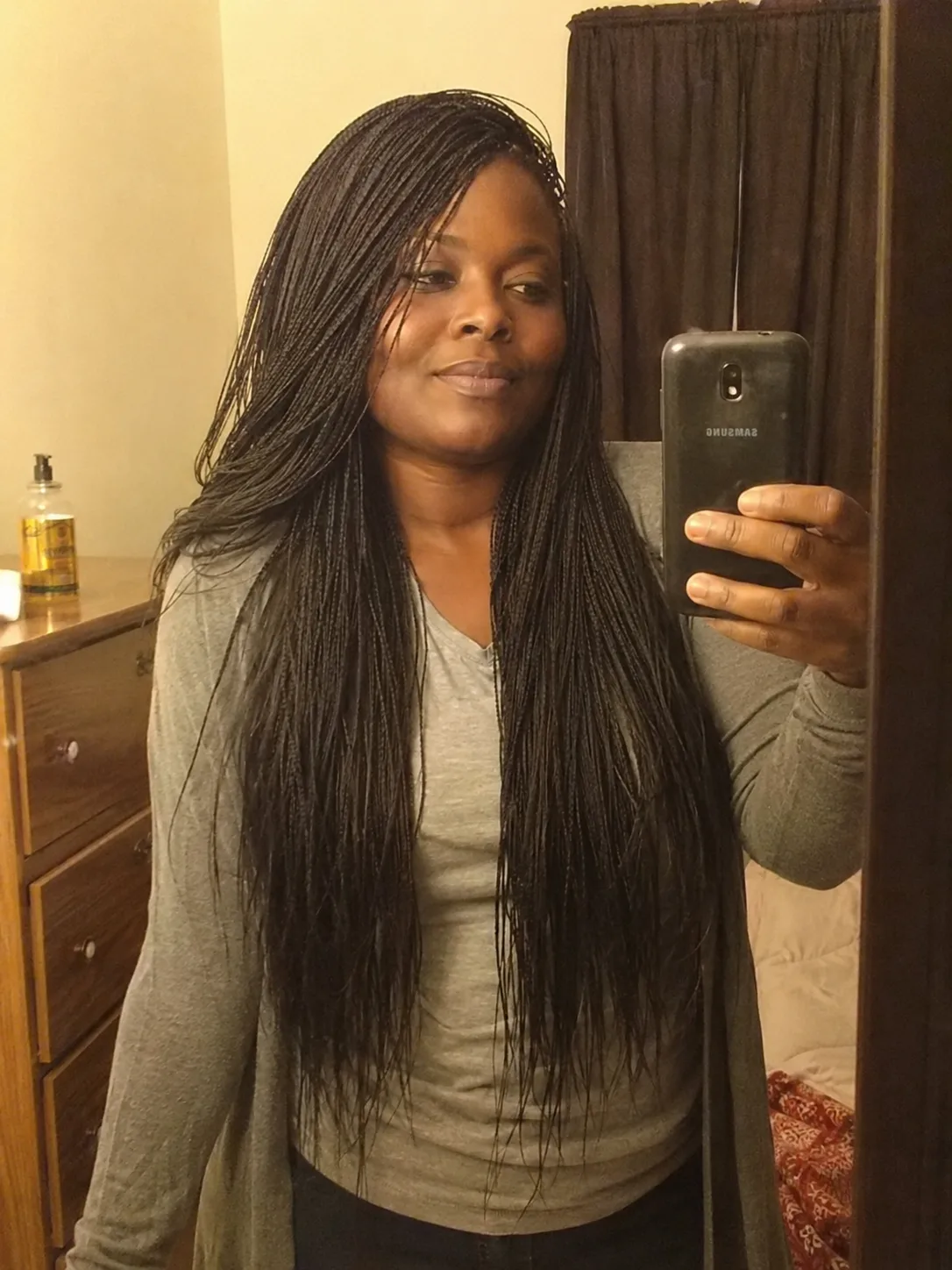
A lob sits between a short braided bob and longer shoulder-skimming styles. That extra length gives the braids more movement than a compact bob while avoiding the amount of loose hair involved in waist-length options.
The style is particularly useful for someone who wants braids to feel like a haircut. The perimeter remains part of the design, so its relationship with shoulders, straps, and summer clothing matters almost as much as the braid pattern itself.
Flat Twists With Braided Ends
Flat twists sit against the scalp through the upper portion of the style before transitioning into loose braided ends. The combination creates less visual rigidity than classic cornrows while still keeping the root area organized.
Natural curly or coily hair can also be incorporated without requiring a pressed starting state. The hair may be stretched when that makes sectioning easier, but straightening isn’t required simply because the final design is neat.
This is an underrated choice for readers who like visible texture and don’t need every root section to look identical.
Statement Summer Braids
Waist-Length Knotless Braids
Long braids create drama through movement. They swing across the back, make simple clothing feel more styled, and offer enough length for large ponytails and wrapped looks.
That length has consequences photographs rarely communicate. You reposition it before sitting down. It falls behind your back in a car. It can sit beneath straps. Once wet, the extra length carries more water and may rest against your clothing while drying.
Choose waist length because the length itself matters to you. It asks for more management than a moderate installation, and pretending otherwise defeats the point of making an informed choice.
Boho Braids With Loose Curly Pieces
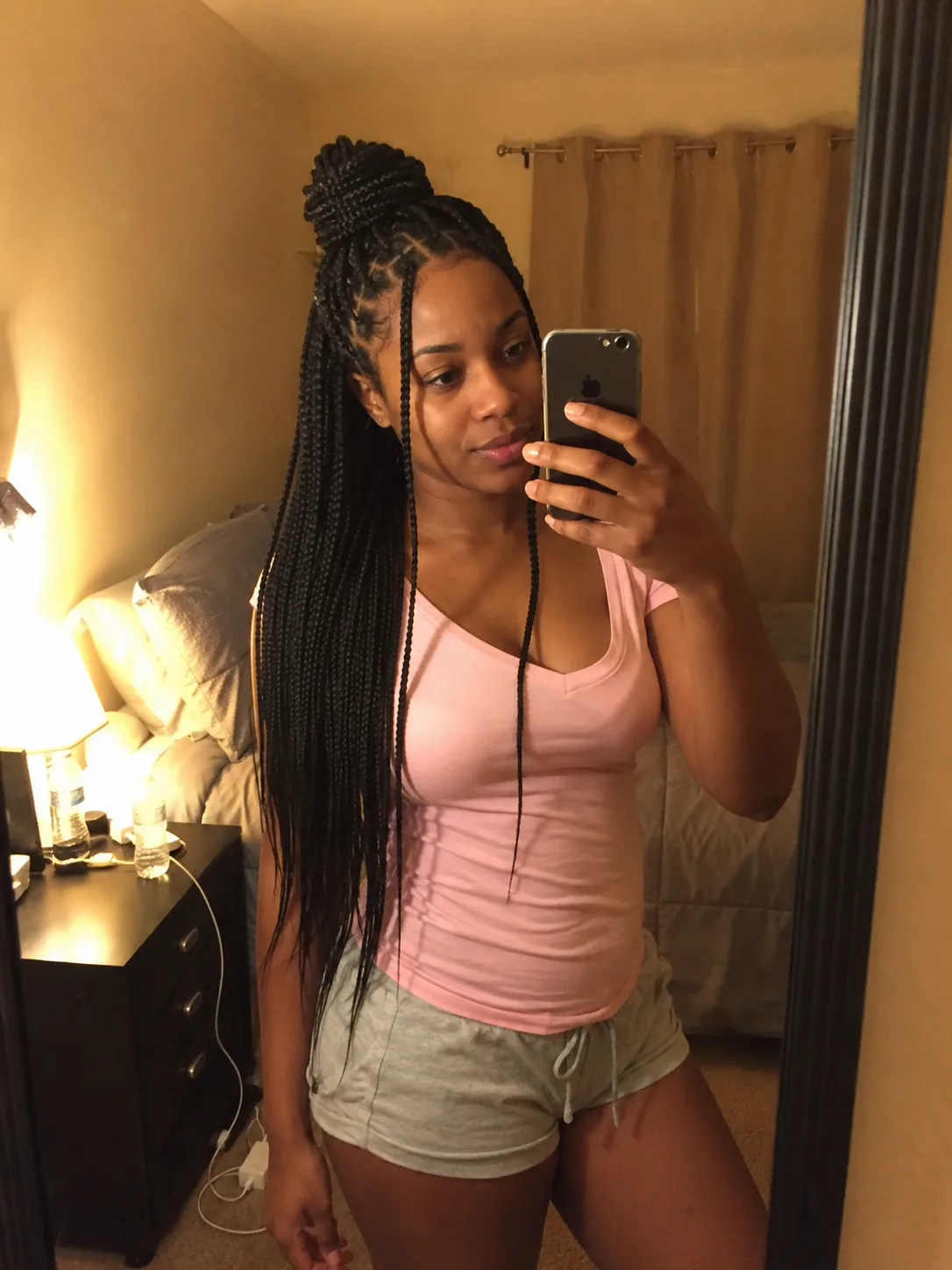
Boho braids combine braided lengths with loose curls or waves, giving the installation a softer and less uniform surface. The loose pieces are the feature, but they’re also the part most exposed to humidity, tangling, friction, and water.
This style makes more sense for a summer routine built around the appearance of loose texture than one centered on constant swimming or very low manipulation.
Loose pieces around the face and shoulders may need more frequent separation or refreshing than the braided portions. The contrast is beautiful precisely because the two textures behave differently.
Braids With Beaded Ends
Beads change more than decoration. They add movement, sound, and visible weight at the ends, giving even a straightforward braided style a stronger finish.
Shorter or moderate braid lengths tend to make the beaded detail easier to control. Very long braids plus substantial end decoration create more swinging mass during walking, exercise, and head movement.
Keep decorative weight proportionate to the braid and comfortable at the root. A summer style still has to function after the photos are taken.
Braided Crown
A braided crown wraps the construction around the head instead of leaving significant length down the back. It gives you one of the clearest ways to keep the neck open while still creating an occasion-ready style.
The crown can be built from natural hair, existing braids, or an appropriate braided section depending on the intended method. Placement matters around glasses arms and behind the ears because a bulky braid can compete for the same space.
For weddings, dinners, outdoor parties, or humid evenings, the braided crown is the strongest option here when you want an updo effect without a high bun sitting directly against the top of the head.
What Summer Photos Don’t Show
The braid pattern gets most of the attention online, but summer comfort usually depends on four less glamorous details: weight, drying, scalp access, and friction.
Added length and added density both change how an installation behaves. A long but relatively light set of braids can feel different from a shorter style packed with substantial extension hair. Wet hair increases the practical difference because water adds temporary weight and can keep dense root areas damp after the outside feels dry.
Scalp access matters more during sweaty weeks. Straight-back cornrows leave clear part lines, while dense individual braids create many more bases to work around during cleansing. Neither construction needs a rigid wash schedule. Activity, buildup, scalp comfort, drying conditions, and the installation itself should guide how you care for it.
Friction shows up everywhere in summer: hats, helmet edges, swimsuit straps, linen collars, car seats, backpack straps, and pillowcases. Look at where the braids will actually sit against those surfaces.
Choosing the Right Summer Braid Construction
Start with your real week, not your favorite reference image.
Frequent swimmers benefit from compact lengths and roots that can be reached and dried without fighting through excessive added hair. A mostly dry-land vacation gives you more freedom to prioritize long braids, loose curly pieces, beads, or elaborate patterns.
Think about the hair you already have as well. Fine strands describe strand diameter; low density describes the number of strands present. They aren’t interchangeable. Fragile areas, active breakage, or a changing hairline deserve a lighter and gentler approach rather than tighter braiding to make the style look fuller.
Your normal styling state also affects planning. Curly and coily hair may be braided while natural or stretched, depending on the construction and desired finish. Shrinkage changes the visible length of natural-hair braids once moisture reaches them. Relaxed, previously colored, or otherwise processed hair may need different handling because condition and chemical history affect how much manipulation the strands tolerate.
Bring reference photos that show more than the front view. A side profile helps reveal braid bulk around the ears. A rear view shows how far the style extends down the back. An updo reference should show where the braids gather and how much material sits at that anchor.
Keeping Braids Comfortable Through Summer
Comfort deserves more authority than an ultra-sleek root. Braids shouldn’t rely on persistent pulling to stay neat.
Check how the installation feels while turning your head, raising the braids, putting on glasses, wearing a hat, or resting against a seat. A style that only feels comfortable while you sit perfectly still is giving you useful information about its construction.
Avoid assuming labels such as knotless, crochet, natural-hair-only, or short automatically describe the tension level. Section size, added weight, attachment method, grip, and existing fragile areas determine far more about how the style feels.
Cleansing should leave enough access to remove sweat and buildup without rough handling. Drying matters just as much. Dense braided roots can retain moisture even after the free lengths appear dry, particularly after swimming or thorough cleansing.
Reduce unnecessary friction at night with a scarf, bonnet, or smooth pillow surface that accommodates the bulk of the style without forcing it into a tight position. These measures can limit tangling and rubbing, but they can’t compensate for an installation that is already excessively tight.
Persistent pain, stinging, sores, pronounced irritation, or a concerning change in shedding or density deserves attention. Loosening or removing the source of pulling may be appropriate, and ongoing or concerning symptoms should be discussed with a dermatologist or another qualified healthcare professional.
A Summer Braid Consultation Checklist
Before settling on the final style, make sure you can answer these questions:
How much loose length do you actually want to carry during hot weather?
Will you be swimming frequently or mainly keeping the style dry?
Do you want easy scalp access or maximum individual-braid styling flexibility?
Does your reference photo depend on heavy extension density?
Where will the braids sit against hats, glasses, collars, straps, and headrests?
Do you want an exposed neck, or are long lengths part of the point?
Can the roots and added hair dry adequately after cleansing?
Does the planned section size make sense for fragile or lower-density areas?
How involved will removal be once the style has worn in?
A braid style can look spectacular and still be wrong for your summer. The strongest choice is the one whose hidden work matches the weeks you actually have planned.
Related Hairstyles to Explore
- Hair styles for summer
- Easy prom hairstyles to do yourself
- Hairstyles for school
- Back to school hairstyles
FAQs
What braid hairstyle is easiest for very hot weather?
A braided bob, straight-back cornrows, or a compact braided updo keeps more hair away from the neck than extra-long loose braids. Cornrows also provide relatively direct access to the scalp, which can be useful during sweaty weather.
Are knotless braids better for summer than box braids?
The root construction is only part of the decision. Summer comfort depends heavily on braid length, overall added-hair weight, section size, scalp access, and how often the style will get wet. A moderate knotless installation may be easier to manage than very long dense braids, while well-planned box braids can also work comfortably.
What summer braids work well for natural hair without extensions?
Mini braids, flat twists with braided ends, cornrows, and braided crowns can all be created using natural hair. The visible result will reflect shrinkage, density, strand size, and the hair’s usual worn state, so a stretched installation may shorten once moisture returns.
Can I swim with braids?
Yes, but plan for what happens afterward. Rinse or cleanse as appropriate for the water exposure and your scalp needs, handle the braids gently, and allow the roots and lengths to dry thoroughly. Very long or dense added hair holds more water and becomes heavier while wet.
Should summer braids be shorter?
Shorter isn’t mandatory, but moderate lengths are easier for many active summer routines. They involve less hair to reposition, dry, keep away from straps, and manage against seats. Extra-long braids remain worthwhile when dramatic length is an important part of the look.
How do I sleep comfortably with long braids?
Gather them loosely in a position that doesn’t pull at the roots, then use a scarf, bonnet, or smooth pillow surface large enough to accommodate the style. Avoid securing a heavy bundle high on the head simply to contain it if that creates uncomfortable pressure at the base.
Which summer braid style is best for a vacation?
Match the construction to the trip. Frequent swimming favors compact cornrows or moderate-length braids, while a mostly dry sightseeing or event-focused vacation gives you more room for long knotless braids, boho texture, decorative beads, or braided updos. Travel itself matters too: very long braids spend plenty of time meeting seatbacks, bags, and straps.
Hair Texture & Upkeep Style Matcher
Select your natural hair texture and daily maintenance window to get an instant styling formula and heat safety cap.
Heat Cap: 320°F (160°C)
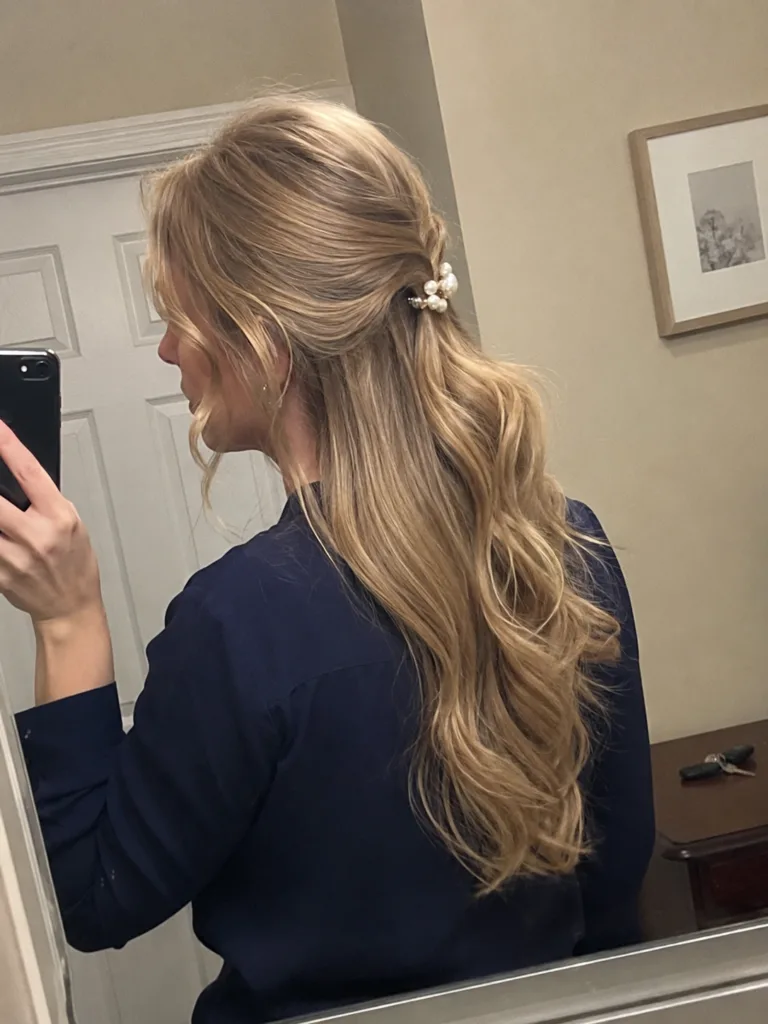
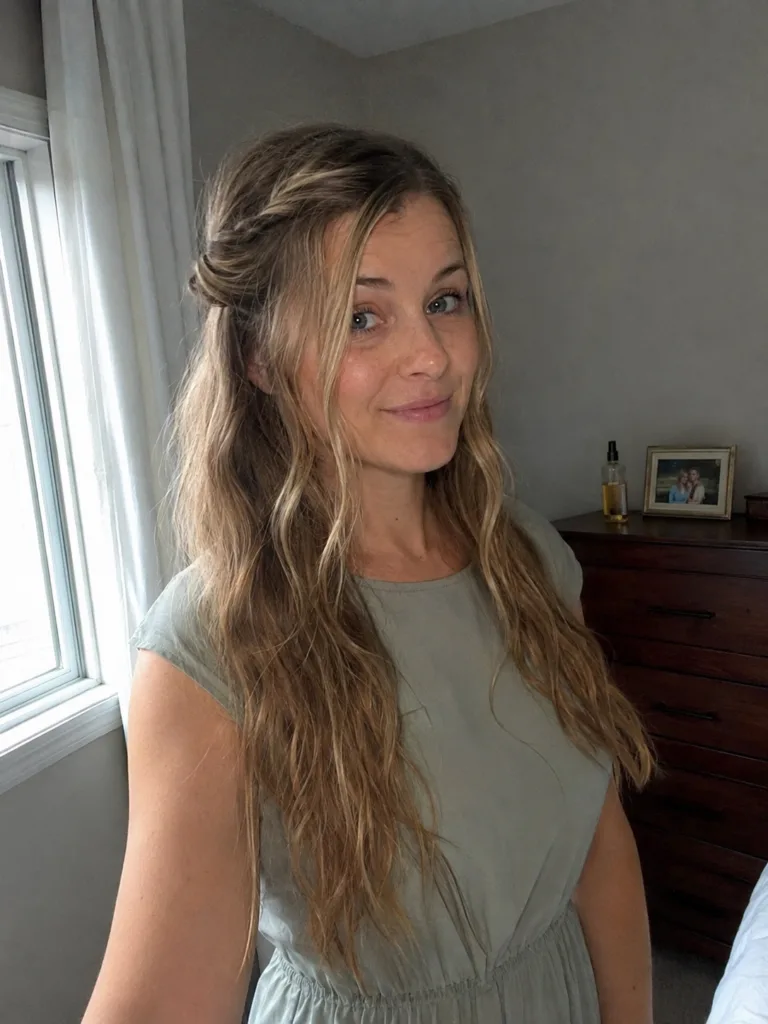
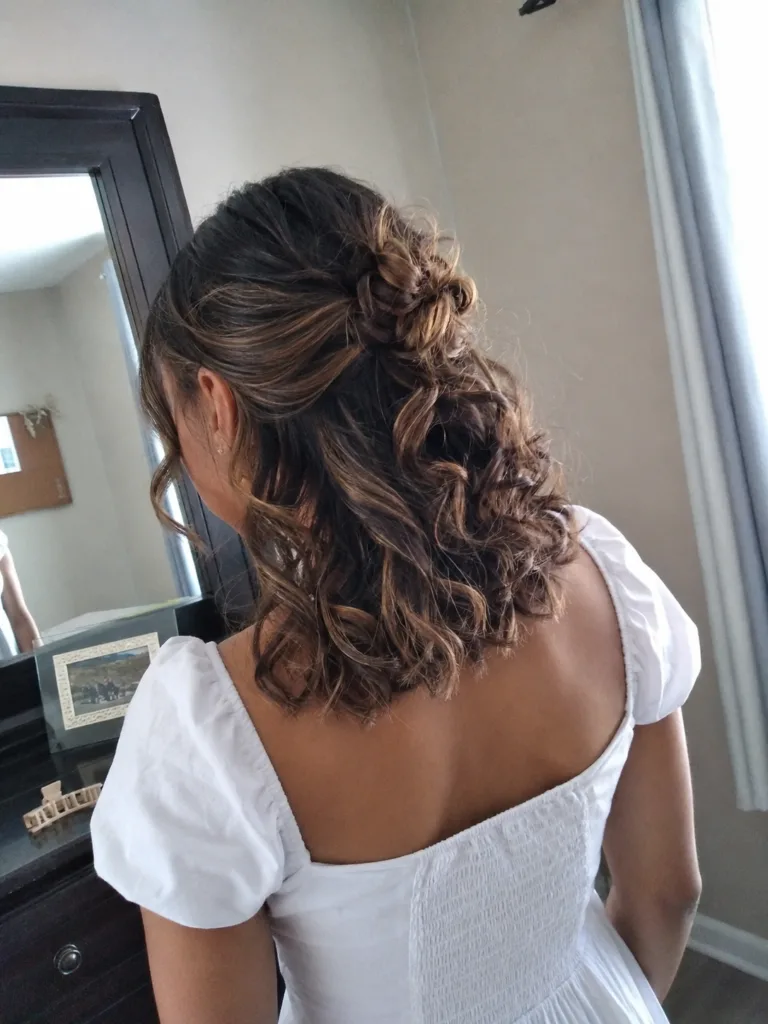
A versatile three-strand braid beginning at the parietal ridge, securing the top half while allowing natural wave texture to flow freely around the shoulders.
Conclusion
The smartest summer braid decision usually happens before you choose the pattern. Decide how much length you want to carry, how often the hair will get wet, how accessible you need the scalp to be, and whether an updo or loose installation fits your daily movement.
For the easiest all-around summer option, moderate-length braids or straightforward cornrows are difficult to beat. Choose waist-length braids, loose boho pieces, beads, or elaborate updos when their visual impact is worth the extra handling. The photograph shows the braid design; your routine determines whether you’ll still enjoy wearing it once the temperature rises.
Editorial Standards & Hair Health Guidance
Every style featured on Tress Atlas is curated with a focus on real-world wearability, scalp tension management, and cuticle preservation. When trying protective styles or tight updos, ensure perimeter hairline sections remain tension-free to avoid traction stress on delicate follicles. For heat styling, cap tools below 350°F (180°C) to prevent thermal keratin denaturation.
Scientific Sourcing: Practices aligned with the American Academy of Dermatology (AAD) on traction alopecia risk reduction and cosmetic trichology research on hair tensile strength.