Quick and Easy Hairstyles for Kids: Styling Guide & Cuts That Simplify Mornings
A hairstyle can look simple in a photo and still be a poor choice for a busy school morning. The real test is how much detangling, sectioning, smoothing, securing, and removal it requires on your child’s actual hair.
The easiest styles usually have straightforward construction and leave room for normal movement. They shouldn’t depend on tight edges, complicated parting, heavy added hair, or a perfectly smooth finish. Comfort matters more than making every strand stay exactly where you placed it.
Hair state changes the decision too. A ponytail may be almost effortless on straight or previously stretched hair but require more preparation on tightly coiled hair. A puff can be the faster choice for curls and coils because it works with the hair’s natural volume instead of asking you to flatten it.
Use the ideas below as a menu rather than a ranking. The strongest option is the one that suits the child’s hair, tolerance for styling, activities, and the amount of time you realistically have.
Fast Styles for Busy School Mornings
Low Ponytail
A low ponytail is one of the most useful styles when simplicity matters more than height or drama. Gather the hair near the nape and secure it with a fabric-covered elastic or another child-friendly tie that doesn’t need excessive wrapping to hold.
The lower placement also stays out of the way of many hats and is less likely to press directly against a headrest than a bulky bun. Leave shorter perimeter hairs alone if pulling them into the elastic requires uncomfortable tension.
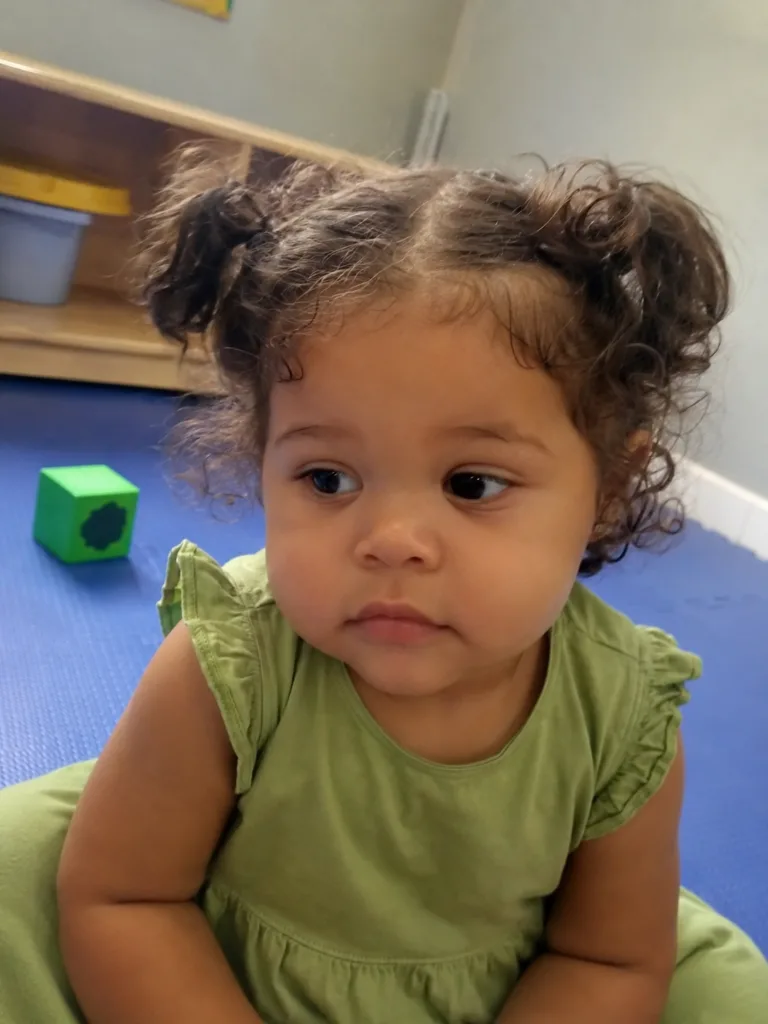
Two Low Ponytails
Two ponytails are especially helpful when one large section becomes difficult to smooth or control. A center or slightly off-center part divides the hair into manageable halves, and each side can be gathered close to the nape.
This construction also distributes the hair between two anchors instead of concentrating everything at one point.
For curls and coils, the ponytails can stay full rather than being brushed into uniform smoothness. The texture in the lengths is part of the style. Focus your detangling and smoothing on the areas that actually need to reach the elastic.
Half-Up, Half-Down Hair
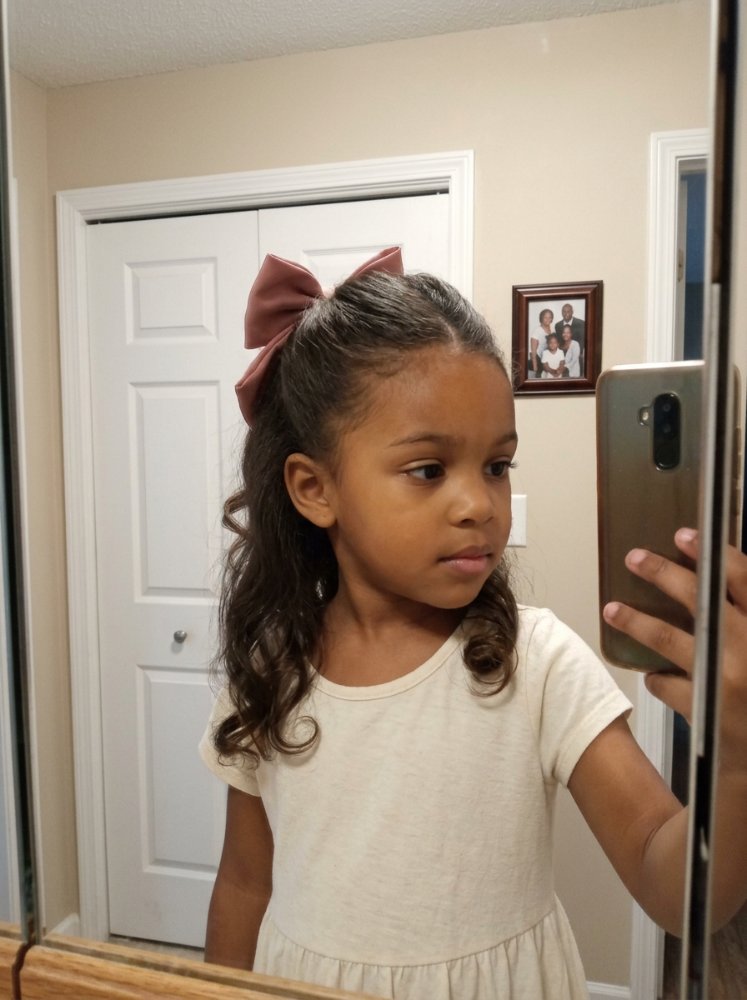
Some children dislike having all of their hair gathered. A half-up style solves the practical problem of hair falling over the face while leaving most of the length loose.
Take a section across the top or front of the head and secure it into a ponytail, small bun, or simple twist. Keep the section large enough that you aren’t creating several tiny parts during a rushed morning. This is particularly useful for straight, wavy, curly, or stretched hair that already falls freely through the back.
Simple Headband Style
A headband can do the work that multiple clips and elastics would otherwise have to do. Brush, finger-style, or gently arrange the hair away from the face, then position a comfortable headband behind the hairline.
This is an underrated option for short hair because the style doesn’t depend on enough length to form a ponytail. It also lets curls, waves, or coils keep their natural shape.
Check the pressure behind the ears, especially if your child also wears glasses or hearing devices. A stiff band occupying the same area can become irritating even when the hairstyle itself is loose.
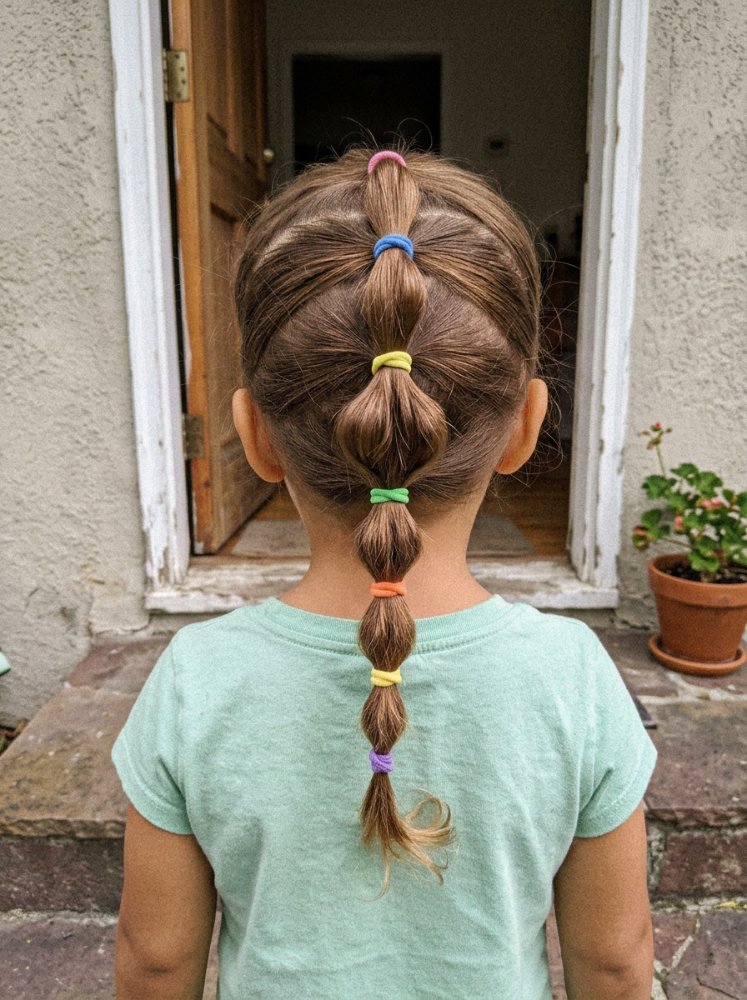
Bubble Ponytail
A bubble ponytail adds more visual interest without requiring braiding skills. Start with a normal ponytail, then place additional elastics down the length and gently expand the hair between them.
The style works most easily on hair that can be gathered and separated without extensive detangling. Keep the bubbles soft instead of cinching every elastic firmly against the hair. Removal should be considered before styling too; several snagging elastics can turn an easy morning hairstyle into an unpleasant takedown.
Quick Hairstyles for Curly, Coily, and Natural Hair
High Puff
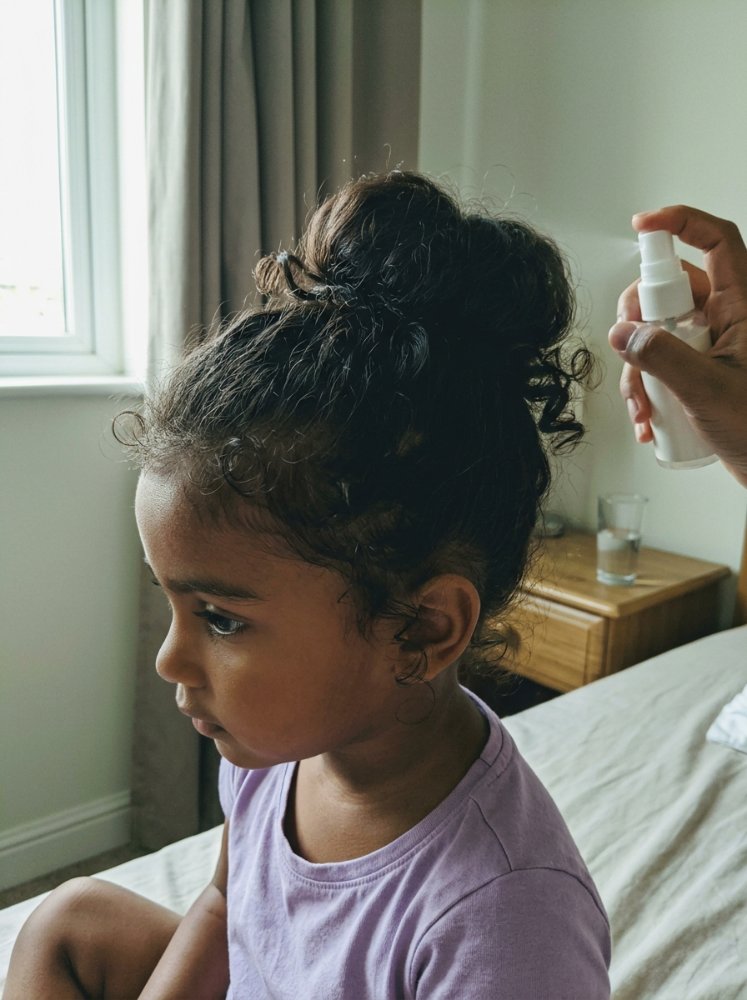
A high puff makes sense when the hair already has enough length and volume to gather upward comfortably. It uses the natural fullness of curls and coils instead of requiring them to be straightened or heavily smoothed.
The position of the base matters more than perfectly laid edges. Bring the hair toward the crown with your hands or a soft brush, secure it without forcing the perimeter, and let the puff expand naturally.
Children with significant shrinkage may have a much shorter-looking puff than a reference photo taken on stretched hair. That’s still the same basic hairstyle; the visible size and drop simply reflect a different styling state.
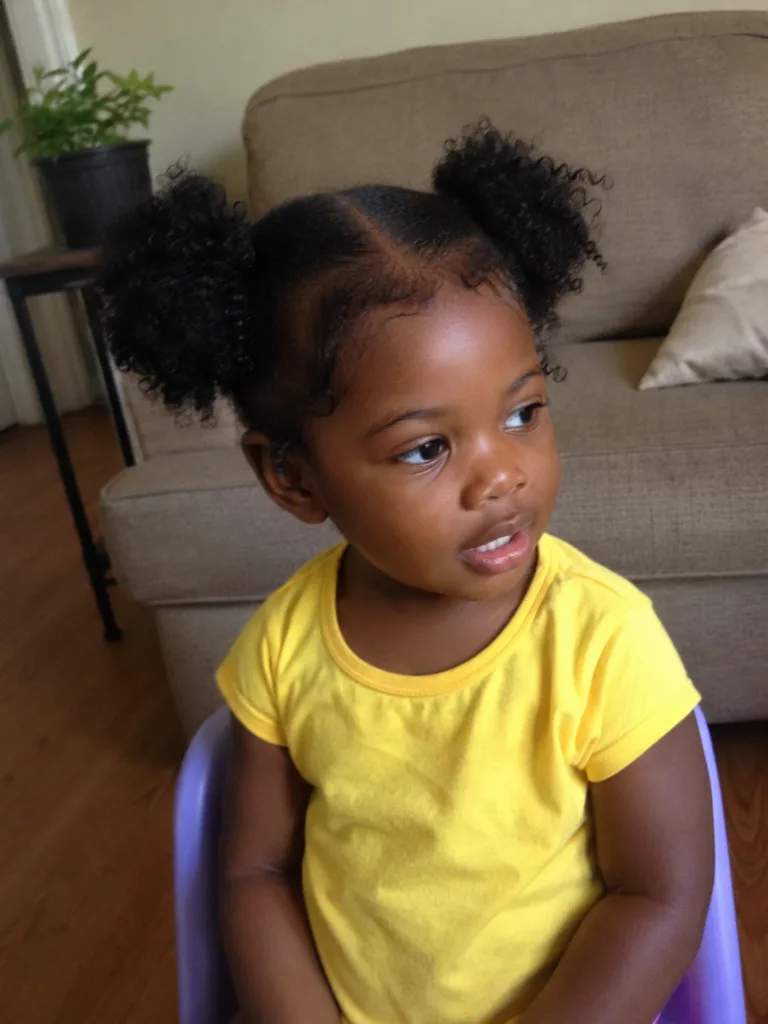
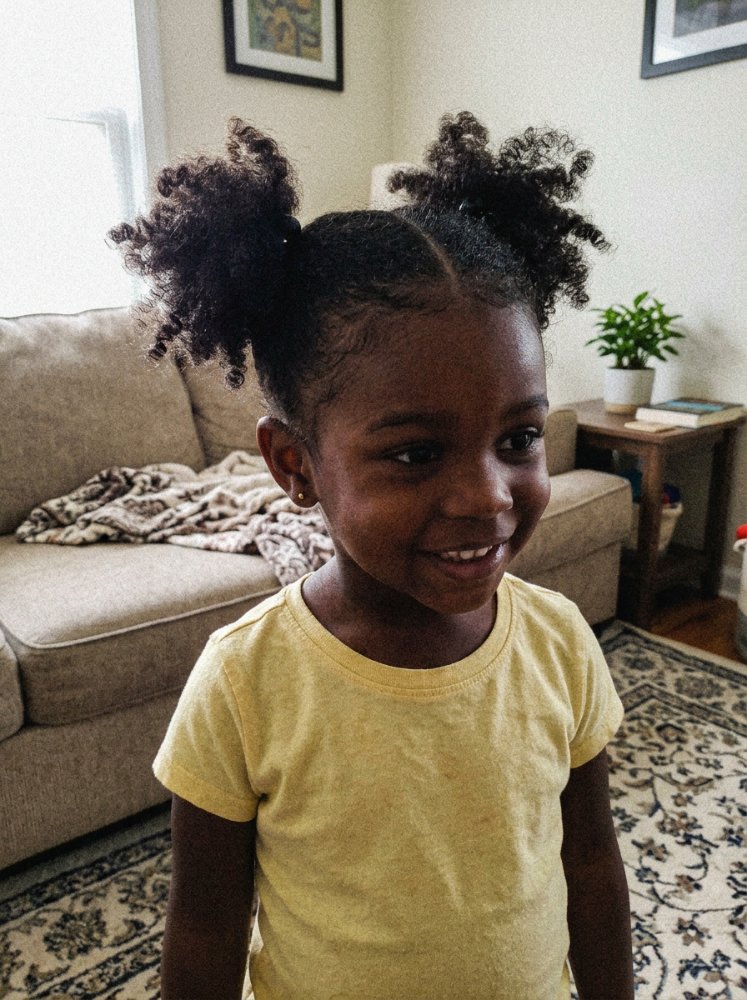
Two Puffs
For many children with coily or curly hair, two puffs are easier to control than one large puff. Divide the hair into two substantial sections and secure each one without repeatedly tightening the base.
This is also a useful choice when the child is active because the volume is divided across the head. The puffs can sit higher for a playful look or lower for easier contact with car seats and headrests.
There’s little reason to make the part elaborate on a rushed day. A clean-enough division that keeps the sections separate does the job.
Chunky Two-Strand Twists
Chunky twists take more setup than a ponytail, but they can simplify the rest of the day because the hair stays divided and contained. They’re particularly useful on natural hair that tangles quickly when left loose.
Work with manageable sections, divide each section into two pieces, and twist the strands around one another from the base toward the ends. Larger sections keep the process simpler than creating many small twists.
The hair should be detangled enough for the strands to wrap without repeated snagging. There’s no need to force every root into a tight grip. The twist can begin with a little softness at the scalp and still look neat.
Once finished, chunky twists can hang freely, be gathered loosely, or remain down for sleep with appropriate friction reduction.
Front Twists With a Loose Back
Hair constantly falling into a child’s eyes doesn’t require gathering the entire head. Create a few larger twists through the front section and leave the back loose.
This is especially useful for curls and coils because you preserve the volume through most of the hair. The front twists provide structure while the back still behaves like the child’s normal loose style.
Flat-Twisted Front With a Puff
A flat-twisted front gives more control around the forehead while a puff handles the remaining hair. It’s a stronger choice than repeatedly brushing the whole head smooth when the real problem is only the front section falling forward.
Create one or two broad front sections and flat-twist them back toward the area where the puff will sit. The remaining hair can then be gathered without reworking those sections.
Flat twisting does require more hand skill than a basic ponytail, so this belongs in the easy category mainly for someone already comfortable with the technique. A simple two-puff style is faster for beginners.
Simple Braids and Twists That Keep Length Contained
Two Basic Braids
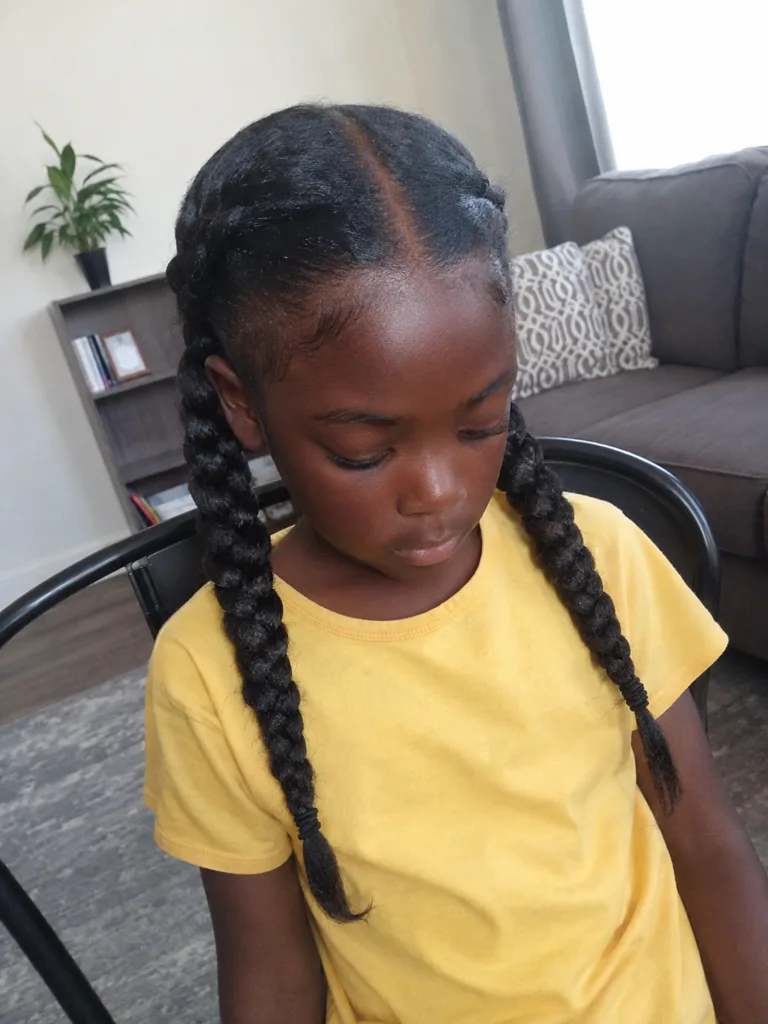
Two braids are hard to beat for children whose loose lengths tangle during school, play, or outdoor activities. Divide the hair into two sections and braid each side downward.
The style works on many hair types, although the starting preparation changes. Straight or stretched hair may need very little beyond detangling. Curly and coily hair may be easier to braid after the sections have been gently detangled and separated.
Keep the braids comfortably anchored. Pulling hard around the hairline adds discomfort without making the braid itself more skillful or attractive.
Single Side Braid
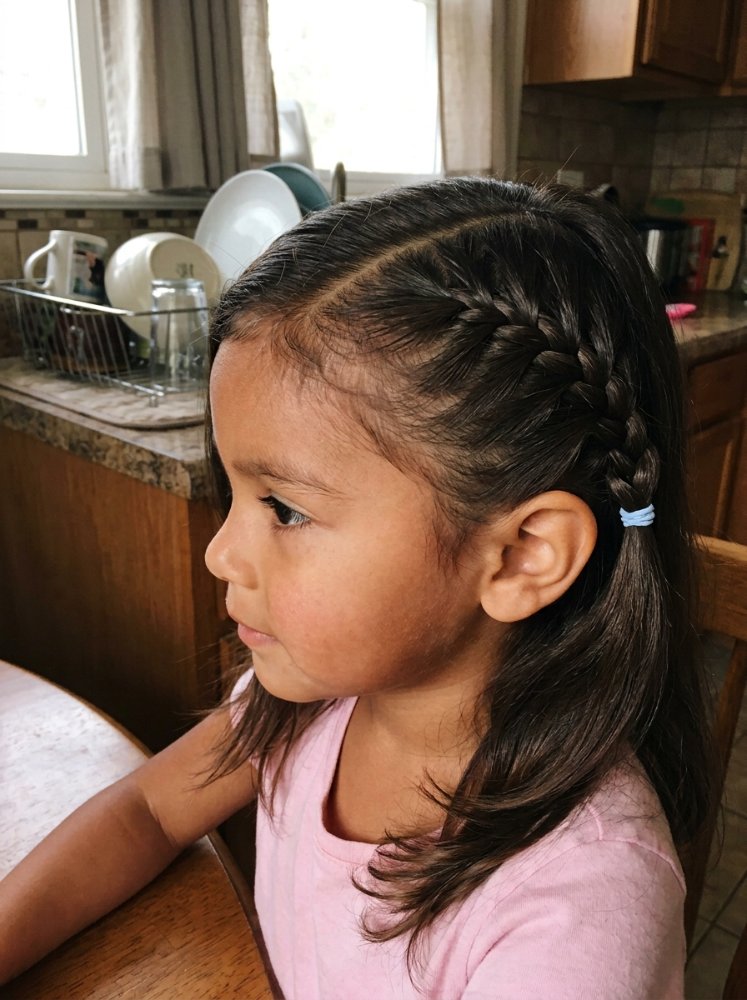
A side braid is useful when you want one contained length without creating a precise center part. Sweep the hair toward one side and braid it over the shoulder.
That placement can also make removal easier because the braid is visible and reachable. It suits medium and longer lengths particularly well, provided the hair can travel toward the side without excessive pulling across the opposite temple.
Braided Ponytail
A braided ponytail starts like an ordinary ponytail, but the loose tail is braided after the base is secured. That small construction change makes a noticeable difference during active days: the length swings as one braid instead of separating into loose strands.
It’s often more practical than a loose ponytail for hair that tangles against jacket collars, backpack straps, or seat backs.
Use a secure base without repeatedly tightening it after the braid is finished. The braid adds structure to the tail; the scalp doesn’t need extra tension to compensate.
Rope-Twist Ponytail
The rope-twist ponytail gives a similar contained effect with a different technique. Divide the ponytail into two sections, twist them, then wrap them around each other before securing the end.
This is useful for parents or caregivers who find a two-section technique easier than a three-strand braid.
The finished twist can loosen somewhat with movement, particularly on very slippery hair. That softer finish is usually easier to live with than constantly redoing the style for perfect definition. Choose another style for a highly active day if the hair escapes the twist quickly.
Easy Ideas for Short Hair and Growing-Out Lengths
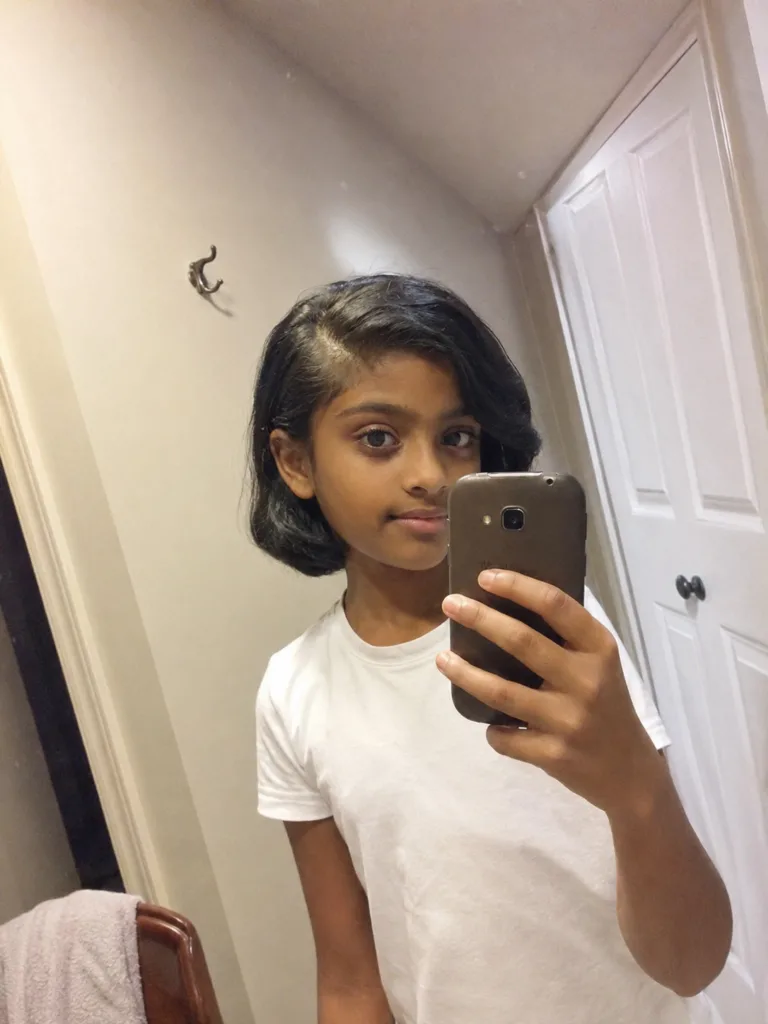
Side Clips With Hair Left Loose
Short hair often becomes harder to style when you keep trying to make it behave like long hair. Side clips solve that problem neatly.
Create a side part or simply move the front hair away from the face and secure one or both sides with smooth clips. The rest can remain loose in its natural straight, wavy, curly, or coily state.
Clip placement should feel secure without pressing sharply against the scalp. Large decorative pieces can also interfere with hats or headrests, so ordinary lightweight clips are usually the more practical everyday option.
Mini Front Twists
Growing-out bangs and shorter front sections can be twisted backward without involving the rest of the hair. Make a few broad sections near the hairline, twist them away from the face, and secure them farther back.
This works especially well when shorter pieces keep slipping out of ponytails. Instead of brushing those pieces harder toward an elastic they can barely reach, give them their own structure. The back of the hair can stay loose, form a ponytail, or be gathered into puffs depending on length and texture.
Playful Styles That Still Stay Practical
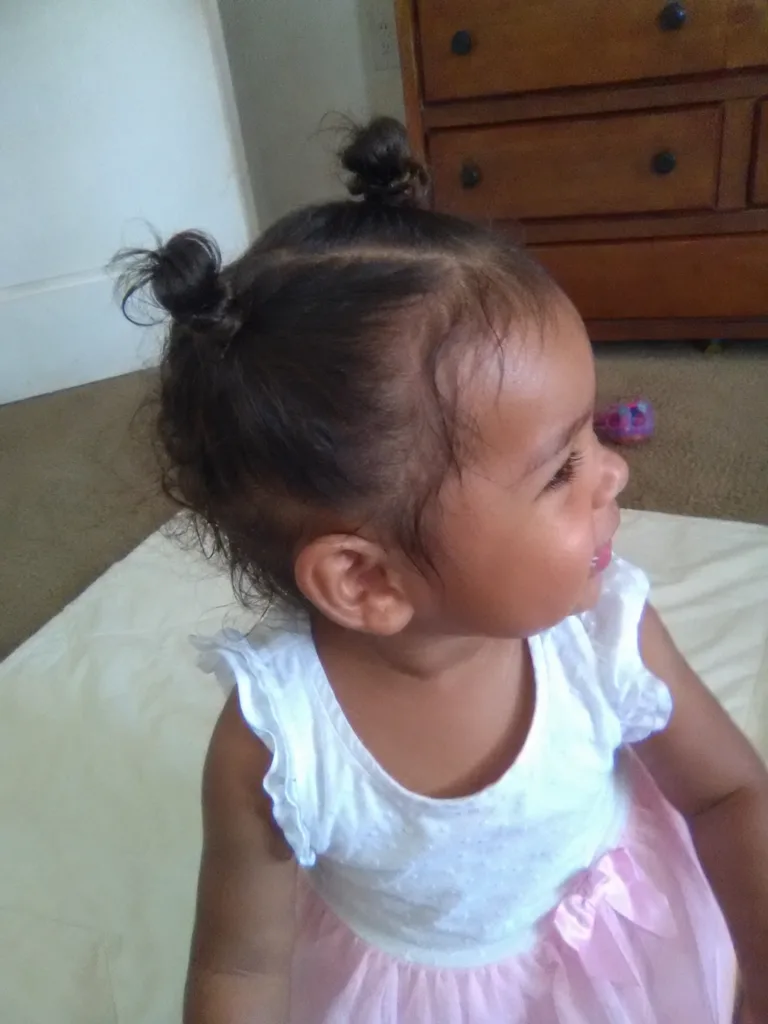
Space Buns
Space buns divide the hair into two sections and wrap each ponytail around its own base. Compared with one large high bun, the smaller shapes can be easier to balance and pin.
They also keep most of the length off the shoulders, which is handy during active play.
The buns don’t need to be tightly wound to stay recognizable. Twist or wrap each section gently and secure the ends with pins or an additional soft elastic where appropriate. Children who spend a lot of time leaning against a car seat or classroom chair may find lower buns more comfortable than buns positioned directly at the back of the crown.
Low Braided Bun
A low braided bun is the dressier option in this list, but the construction remains straightforward. Gather the hair into a low ponytail, braid the tail, then coil that braid around the base and secure it.
Braiding the length first makes the bun easier to control than trying to pin loose hair into place.
This style is useful for school events, family gatherings, or days when you want the hair fully contained without building a complicated updo.
Check the bun from the side as well as the front. A very bulky shape at the nape can compete with a high collar, hood, or headrest. Keeping the wrap compact makes the style easier to wear.
What Makes a Kids’ Hairstyle Genuinely Easy?
The number of steps only tells part of the story. A style that takes little effort to create but hurts, tangles badly, or takes ages to remove hasn’t saved much work.
Start with the hair’s current condition and state. Loose curls may need a different approach from stretched curls. Fine strands can still be very dense, while thick individual strands can exist on a lower-density head of hair. Those characteristics affect how much hair you’re gathering and how easily sections stay together.
Shrinkage also changes what is realistic. A child with long coily hair may have a much shorter visible length in its shrunken state. Stretching the hair purely to copy a longer reference photo adds an unnecessary step when a puff, twist, or other style already works beautifully on the natural length.
Comfort should stay obvious throughout the process. Children shouldn’t have to tolerate painful pulling so a hairstyle will last longer. Leave fragile or very short perimeter hairs out when reaching the elastic requires force.
Daily life matters too. Think about hats, sports, naps, headphones, glasses, car-seat headrests, hoods, and backpack straps. A beautiful style positioned exactly where something presses against the head may become annoying within the day.
Make Morning Styling Faster Without Making It Rougher
The strongest shortcut is reducing unnecessary work, not moving faster through tangles.
Detangling in appropriate sections before the morning rush can make ponytails, puffs, braids, and twists easier to construct. The method should suit the child’s texture and normal routine; there’s no need to chase perfectly smooth hair before every style.
Keep the basic tools easy to reach. A comb for parting, suitable brush or detangling tool, fabric-covered elastics, simple clips, and bobby pins cover most of the hairstyles in this guide.
Removal deserves the same care as installation. Take down clips, elastics, braids, and twists without rushing through snags. Cutting out an elastic or aggressively pulling apart a tangled section can create breakage that wasn’t caused by the hairstyle itself.
Children also need access to their scalp and hair for normal cleansing and care. A style doesn’t earn extra points simply because it can stay in place for a long time.
Pain, persistent irritation, redness, sores, sudden shedding, or a concerning change in density shouldn’t be treated as a normal consequence of hairstyling. Remove or loosen anything contributing to discomfort and seek guidance from a dermatologist or another qualified healthcare professional when symptoms are persistent or concerning.
How to Choose Between These 18 Styles
Start with the problem you need the hairstyle to solve.
A low ponytail is the practical default when the hair gathers easily and you simply need it contained. Puffs make more sense when curls or coils already provide the volume and you don’t want to spend the morning flattening it.
Choose two braids, a braided ponytail, or chunky twists when loose lengths are the bigger issue. They require a little more construction but reduce free-moving hair during the day.
For short or growing-out hair, stop treating a full ponytail as the target. Side clips, headbands, and front twists handle the pieces that actually need controlling while leaving the rest alone.
A child who strongly dislikes prolonged styling will usually do better with one or two large sections than numerous small parts. Save elaborate sectioning for occasions when both the time and the child’s patience make it reasonable.
Above all, judge easy hairstyles by the complete routine: preparation, styling, wearing, cleansing, and removal.
Related Hairstyles to Explore
- Short Hair For Kids
- Cute Hairstyles For Kids
- Hairstyles For Little Kids
- Easy prom hairstyles to do yourself
FAQs About Quick and Easy Hairstyles for Kids
What is the easiest hairstyle for a child before school?
A low ponytail, two ponytails, high puff, or headband style is usually among the simplest because each uses very little sectioning. The easiest choice depends on the hair’s length, texture, current styling state, and how readily it gathers without force.
What are easy hairstyles for kids with short hair?
Headbands, side clips, mini front twists, and small half-up sections work well because they don’t require every strand to reach one elastic. These options are particularly useful while bangs, layers, or previously shorter areas are growing.
Can kids with curly or coily hair wear these styles without straightening it first?
Yes. Puffs, two puffs, twists, braids, half-up styles, and clipped-back sections can all work with curls and coils in their natural state. Shrinkage will change the visible length and proportions, so the finished style may look different from a photo taken on stretched hair.
How can I keep a child’s hairstyle secure for sports or active play?
Contain loose lengths and reduce bulky pieces that move around. Two braids, a braided ponytail, chunky twists, or space buns can be more practical than long loose hair. Use secure but comfortable anchors, and test the style while the child moves normally rather than tightening it simply because activity is planned.
Hair Texture & Upkeep Style Matcher
Select your natural hair texture and daily maintenance window to get an instant styling formula and heat safety cap.
Heat Cap: 320°F (160°C)
A versatile three-strand braid beginning at the parietal ridge, securing the top half while allowing natural wave texture to flow freely around the shoulders.
Conclusion
Quick and easy hairstyles for kids work best when they remove unnecessary styling steps instead of demanding more control from the hair. A puff that embraces natural volume, two braids that contain long hair, or a clip that handles one awkward front section can be more useful than a complicated style built for a perfect photograph.
Choose the simplest construction that solves the day’s actual problem, keep the anchors comfortable, and consider how the style will feel during school, play, travel, and takedown.
Editorial Standards & Hair Health Guidance
Every style featured on Tress Atlas is curated with a focus on real-world wearability, scalp tension management, and cuticle preservation. When trying protective styles or tight updos, ensure perimeter hairline sections remain tension-free to avoid traction stress on delicate follicles. For heat styling, cap tools below 350°F (180°C) to prevent thermal keratin denaturation.
Scientific Sourcing: Practices aligned with the American Academy of Dermatology (AAD) on traction alopecia risk reduction and cosmetic trichology research on hair tensile strength.