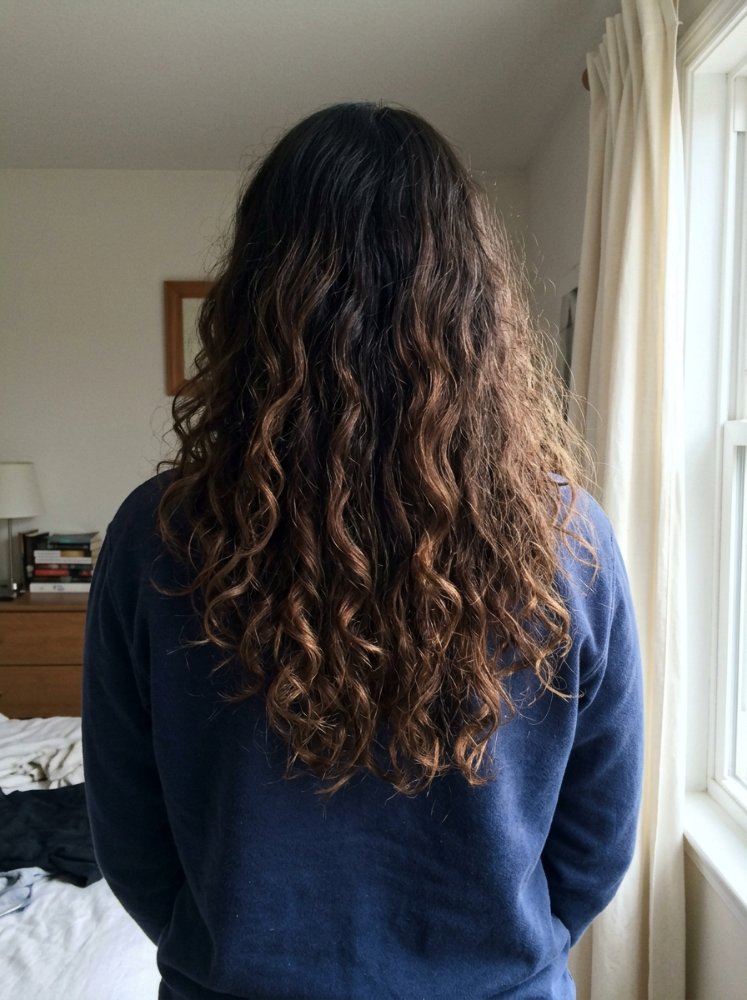
Dimensional Brunette Highlights: What Changes the Result
Dimensional brunette highlights work best when the lightness still leaves something dark to contrast against. That sounds obvious, but it’s where many brunette color plans go wrong. Too many light pieces can gradually turn rich brown hair into an overall lighter color, while highlights that are too subtle may disappear except in strong lighting.
The more useful decision is where you want the dimension to show. Some people want brightness around the face. Others want ribbons of lighter brown moving through the lengths, a softly illuminated surface, or deeper brunette roots with lighter ends. Those targets call for different placement strategies.
Your starting color matters just as much. Natural medium brown hair, permanently colored dark brown hair, previously highlighted hair, and brunette hair with scattered gray strands can all respond differently to a lightening service. Condition, porosity, texture, and previous chemical processing also affect what is realistic.
A strong dimensional brunette result usually combines three things: enough depth to keep the hair recognizably brunette, lighter pieces placed where they will actually be seen, and a tone that makes sense for the starting base. The prettiest reference photo is useful only after those decisions are clear.
What “Dimensional Brunette” Really Means
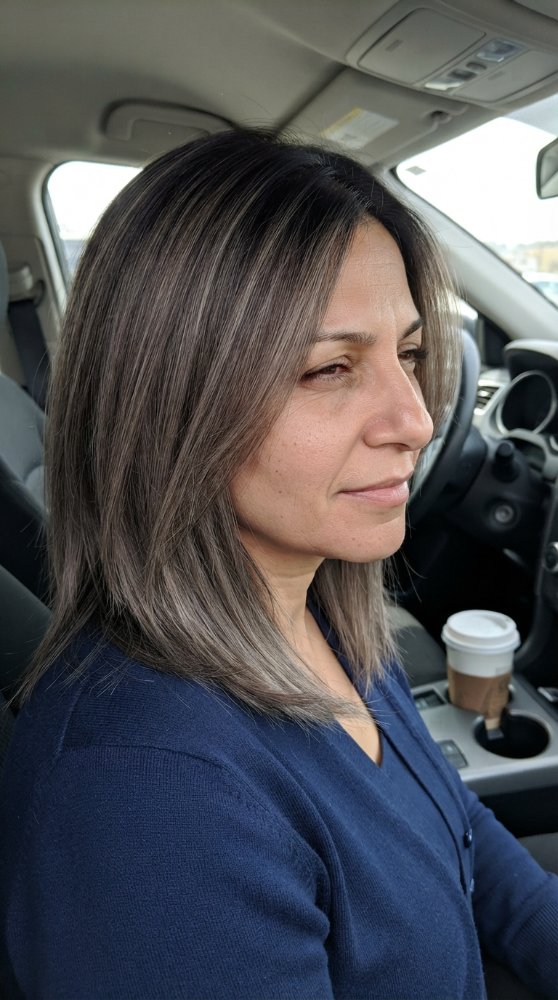
Dimension is the visible separation between darker and lighter areas of the hair.
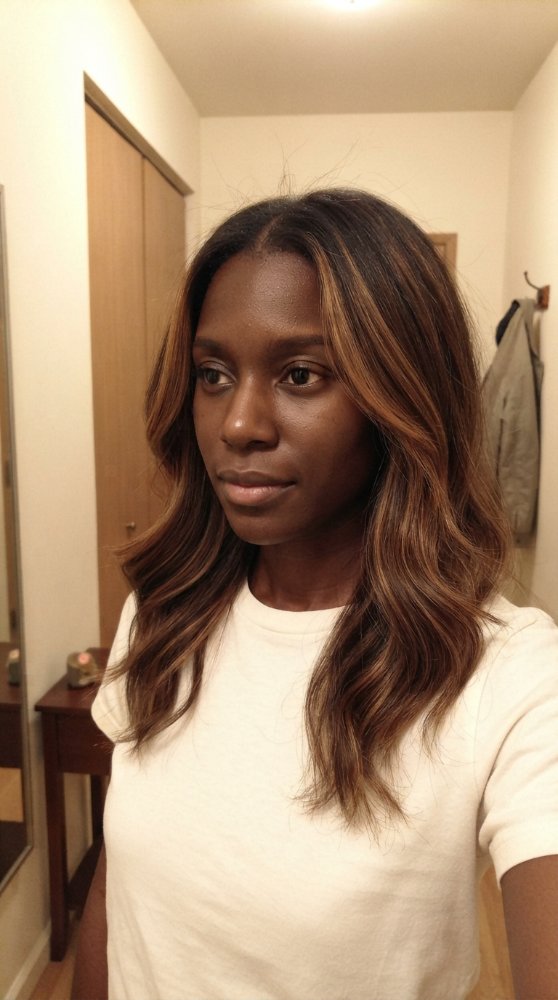
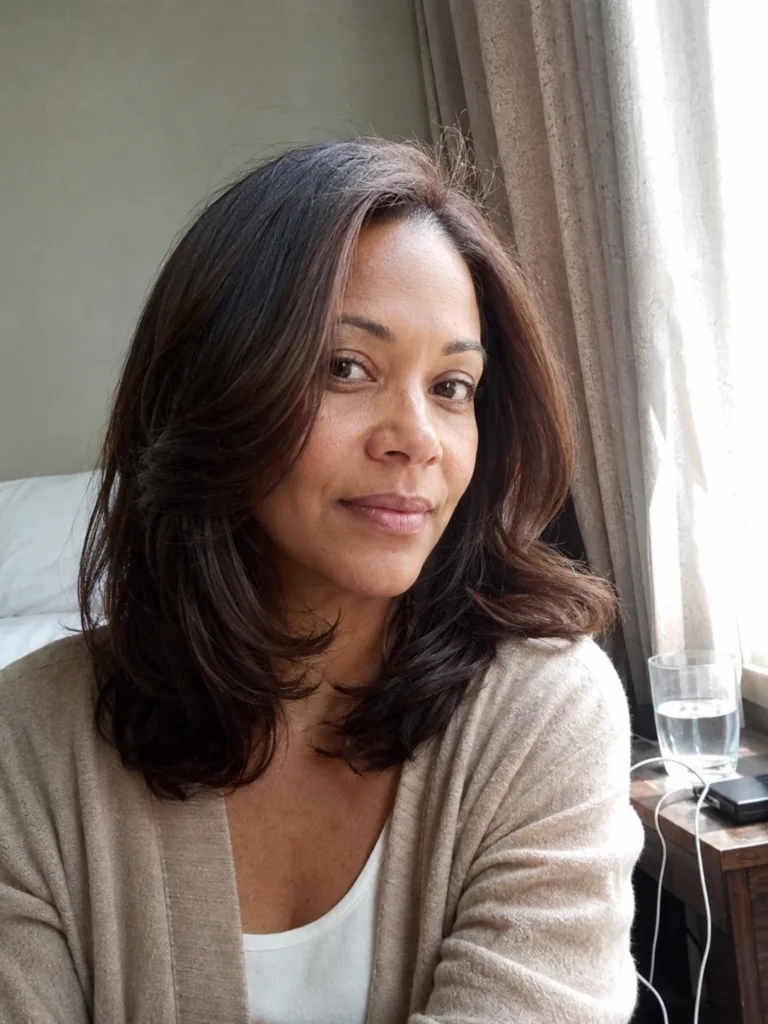
On brunette hair, that might mean a deep brown base with caramel ribbons, a medium brown foundation broken up by beige-brown pieces, or dark roots flowing into noticeably lighter ends. The contrast can be subtle or pronounced. Both can look dimensional.
The important distinction is between brightness and overall lightness. You can make selected areas noticeably brighter without trying to make the entire head lighter. That preservation of darker hair is what gives highlighted brunette color much of its depth.
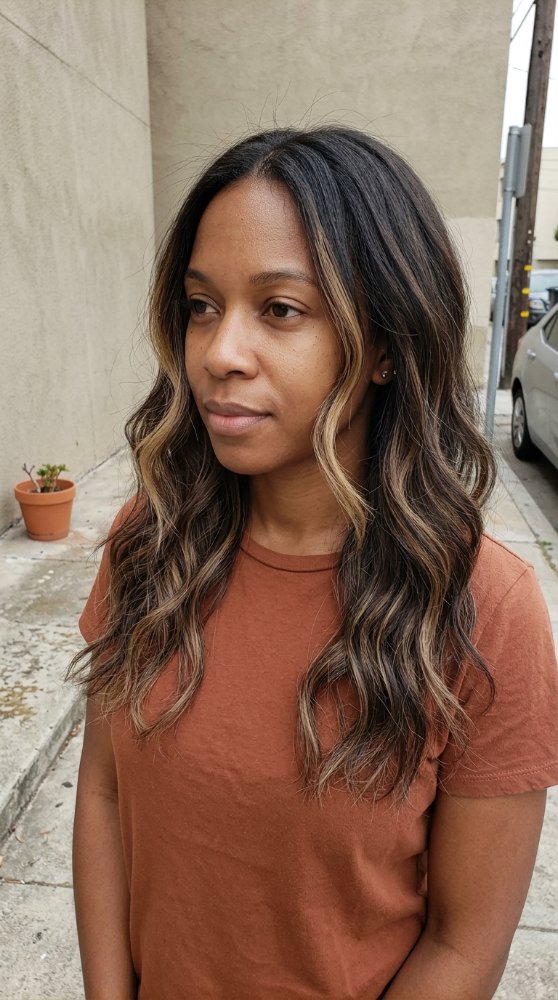
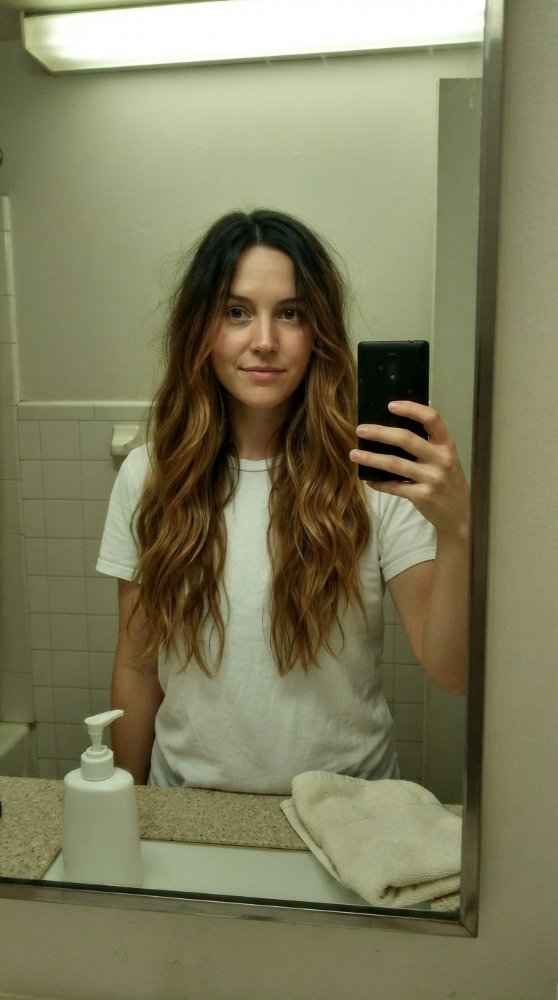
Dimension also changes with movement. Long layers can expose lighter pieces that remain partly hidden when the hair hangs straight down. Waves separate color ribbons visually. A blunt cut may show placement as stronger blocks or panels because the ends line up at a similar point.
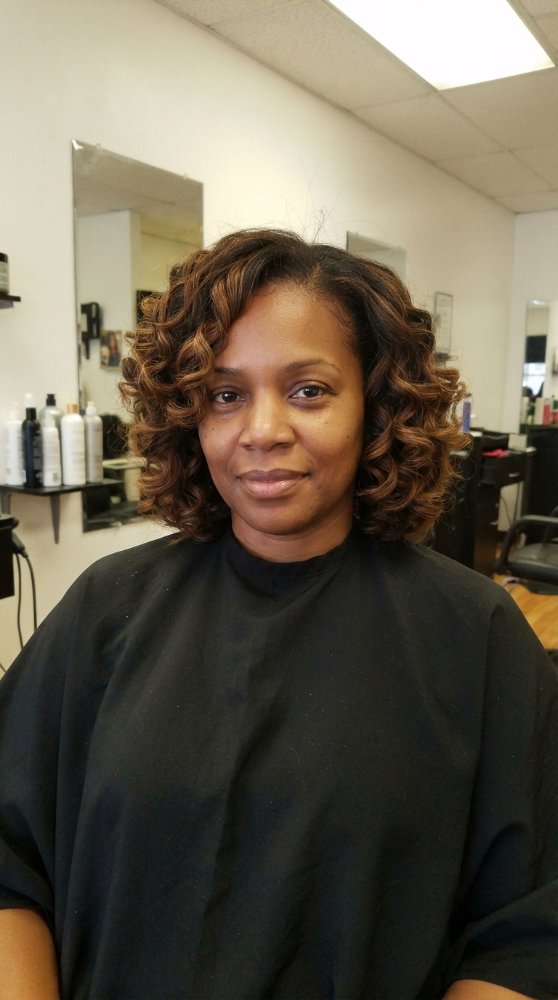
Curly and coily hair introduce another consideration: curl grouping. Highlights placed as very fine slices may visually disappear once curls form into larger clumps. Wider or strategically positioned sections can sometimes make the color easier to see in the hair’s normal worn state.
That doesn’t mean textured hair needs chunky highlights. It means placement should be planned for the way the hair actually sits, shrinks, separates, and moves.
Start With the Brunette Base You Already Have
A brunette reference photo tells you what the finished color looks like. It usually tells you very little about what the person started with.
That missing information matters.
Natural brunette hair generally gives the colorist a different starting point from hair that has repeatedly been colored dark with permanent pigment. Previously lightened hair creates another situation because some areas may already be more porous or chemically stressed than others.
A practical consultation should separate these starting states.
Permanent dark color deserves particular attention. Artificially darkened hair may require a different strategy from naturally dark hair even when both look like the same shade of brown before the service.
Existing highlights matter too. Adding fresh lightener everywhere simply because the overall color feels dull can create unnecessary overlap. Sometimes the more useful change is to deepen selected areas, refresh tone, or add brightness only where the old placement has grown out.
Hair condition can narrow the target. Transparent ends, significant breakage, or heavily processed sections may make another aggressive lightening plan a poor tradeoff. A beautiful brunette result depends on the darker and lighter sections looking healthy enough to reflect light and move together.
Decide Where You Want the Brightness
“Highlights” describes a technique category. It doesn’t tell the colorist where you want your eye to land.
Placement controls that.
Face-Framing Brightness
Lighter pieces around the face produce the quickest visible change because they sit where you see them in mirrors and photographs. The rest of the hair can stay comparatively deep.
This is a strong option for someone who wants noticeable brightness without making every section of the hair lighter. The contrast can be soft or more obvious depending on the amount of hair included and how far the light pieces are separated from the brunette base.
The practical issue is grow-out. High-contrast pieces placed close to the front hairline tend to reveal new growth more clearly than diffused brightness beginning farther from the scalp.
Ribbons Through the Mid-Lengths
Ribbon-like brunette highlights create separated streams of light that become especially visible through waves, curls, and layers.
They work well when you want movement through the body of the hair instead of concentrating all the brightness around the face. The brunette left between the ribbons is essential. Without enough separation, multiple light sections can merge visually into a much lighter overall color.
Surface Brightness
Highlights placed near the visible outer surface can give the impression of a brighter brunette without requiring equally dense lightening underneath.
This approach is useful when the goal is how the hair reads at first glance. Hair worn in ponytails, braids, half-up styles, or frequent updos may expose different layers, however, so placement should account for more than the hair-down photograph.
Brighter Ends
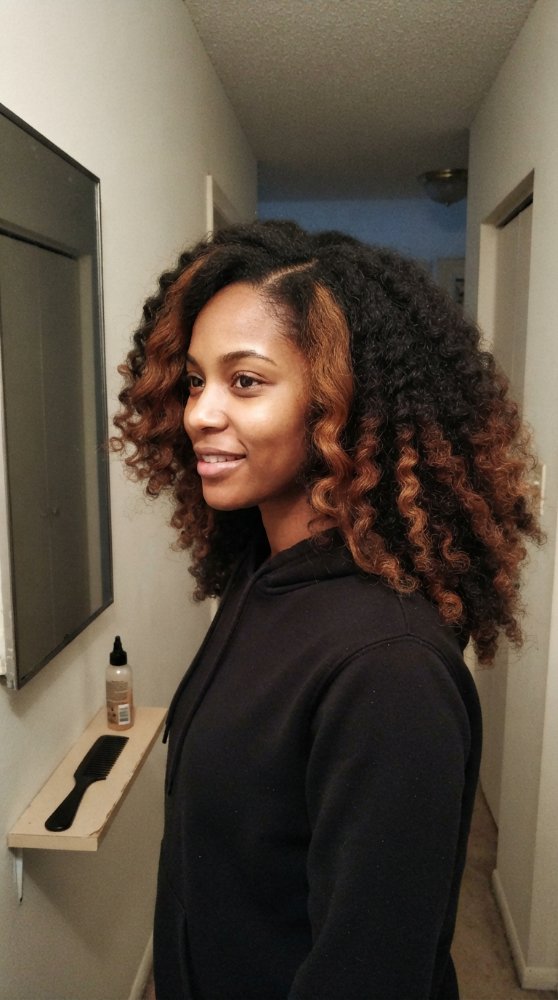
Concentrating more lightness through the lower lengths creates a brunette-to-lighter transition. The root area stays deeper, while the ends carry much of the visual brightness.
This can give the color an easier-looking grow-out because the darkest area is deliberately retained near the scalp. Existing condition becomes especially important because the oldest lengths are also the area receiving the strongest visual emphasis.
Contrast Matters More Than the Shade Name
Caramel, mocha, honey brown, beige brunette, chestnut, toffee, and chocolate are useful descriptive words. They’re much less useful when they replace a discussion about contrast.
Two people can both request caramel highlights and leave with dramatically different results.
On one brunette, the lighter pieces may sit only slightly above the base and create quiet movement. On another, substantially lighter ribbons may produce a bold striped effect. The tone family may be similar while the overall impact is completely different.
It helps to describe the contrast you want in visual terms:
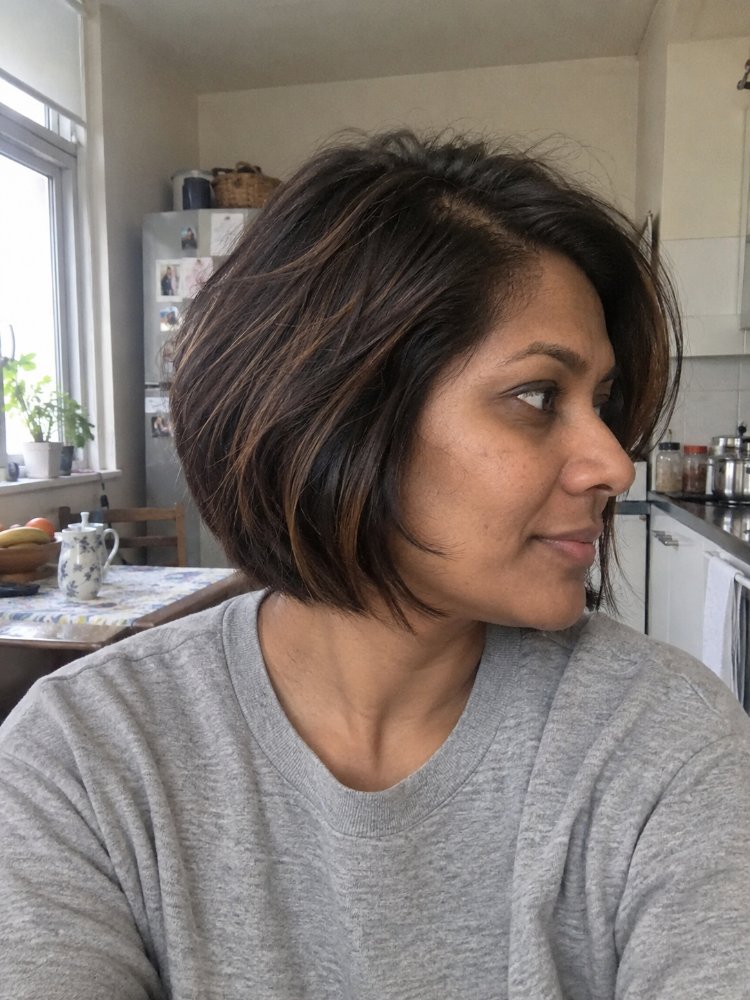
Low contrast: The highlights blend closely with the brunette base and become most noticeable in movement or bright light.
Moderate contrast: Individual lighter pieces are clearly visible while brown remains the dominant color.
Higher contrast: Bright sections stand apart from the dark foundation and become a major feature of the look.
Moderate contrast is the most versatile starting point for someone who specifically wants dimensional brunette rather than an overall lighter transformation. It leaves enough dark hair for the lighter sections to register as highlights.
Higher contrast can be beautiful, but it creates a stronger commitment to placement. A bold section in the wrong location is harder to visually ignore than a softly blended piece.
Low contrast is easier to live with when understated color is the priority. It can also disappoint anyone whose inspiration photos rely on strong studio lighting, large waves, and carefully separated sections to reveal the highlights.
Warm, Neutral, and Cooler Brunette Highlights Behave Differently
Tone changes the mood of dimensional brunette color, but it should be discussed in relation to the hair’s actual starting point.
Lightening brunette hair commonly exposes warmth. How much warmth appears, and what can realistically be refined afterward, depends on the starting depth, artificial pigment, condition, and degree of lightness reached.
Warm Brunette Dimension
Caramel, golden brown, amber, and warm chestnut directions make warmth part of the design. They can create a rich transition from a dark base because the lighter sections don’t need to look icy to look intentional.
Warm highlights are particularly effective when you want obvious movement without a stark dark-to-pale contrast.
Neutral Brunette Dimension
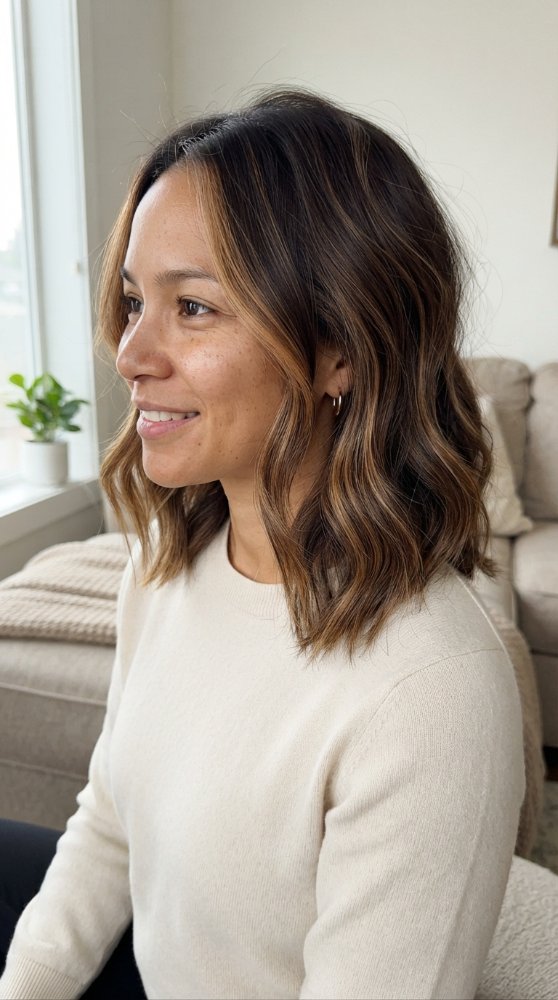
Neutral brown and beige-brown highlights sit between obviously golden and obviously cool. They suit readers who want the hair to appear lighter without making warmth or ashiness the main feature.
Neutral-looking color can still shift between warmer and cooler appearances in daylight, indoor lighting, and photographs. Hair color is reflective; it doesn’t behave like a flat paint swatch.
Cooler Brunette Dimension
Cooler beige, mushroom-brown, or ash-leaning highlights create a more muted result. The feasibility of that target depends heavily on how light the selected sections can safely become and what underlying warmth remains.
This is where reference photos can create unrealistic expectations. A very dark or artificially darkened starting base may not move directly to a pale, cool ribbon while maintaining the condition required for the finished color to look good.
A cooler goal may therefore involve a more gradual transformation or a deeper final highlight than the inspiration image suggests.
Placement Has to Work With the Haircut and Texture
Color placement doesn’t exist separately from the haircut.
A long, one-length shape gives highlighted ribbons a large uninterrupted surface. Long layers expose interior pieces and create more opportunities for light and dark sections to alternate. A bob concentrates attention near the perimeter, so the ends can make even modest color contrast look stronger.
Short hair has less distance for a gradient to develop. On a pixie or short crop, the relationship between the root, top, fringe, and sides becomes more important than a long transition through the mid-lengths.
Density changes visibility as well. Low-density hair has fewer strands overall, while fine hair refers to individual strand diameter. Those characteristics shouldn’t be treated as interchangeable. Very dense highlighting on low-density hair can reduce the amount of darker hair separating the light pieces and make the overall color appear more uniform.
Curly and coily hair should be considered in the state normally worn. Shrinkage changes where color appears to sit vertically, while curl clumps can bring several highlighted strands together into one visible ribbon.
Pressed or stretched styling can reveal placement differently from a shrunken wash-and-go. Someone who regularly switches between those states benefits from discussing both looks during the color consultation.
Chemical History Can Change the Entire Plan
This is one of the least glamorous parts of choosing highlights and one of the most important.
Colorists need an accurate picture of previous permanent color, lightening, relaxers, and other chemical services because the visible brown shade alone doesn’t show what is inside the hair.
Repeated dark color through the lengths can make a lightening target more complicated. Previously highlighted pieces may already have received substantial chemical exposure. Applying more lightener over those areas can carry a different risk from working on untouched brunette hair.
Uneven color history also creates uneven starting points. A darker band, faded mid-length, and porous light ends may each behave differently during a corrective or dimensional service.
That can make staging the smarter option.
Staging doesn’t have to mean an unfinished-looking result. One appointment can establish better placement or controlled brightness while preserving deeper areas, followed by future adjustments once the hair’s response and condition are clear.
Trying to force every brunette inspiration photo into a single-session goal places the photograph ahead of the hair in front of you.
A consultation is also the time to mention previous services that seem unrelated to the desired highlights. Hair that has been relaxed, repeatedly lightened, permanently darkened, or otherwise processed deserves a plan based on its current condition, not only the shade you want next.
What the Reference Photo Doesn’t Show
Dimensional brunette photographs are especially dependent on styling and lighting.
Large waves separate ribbons of color. Straight hair places those ribbons closer together. Bright natural light makes subtle highlights look more obvious. A darker room may make the same color appear almost solid brunette.
The photograph may also show the hair from the angle where the lightest sections are most visible.
Look beyond the shade and ask what physical features are producing the effect:
How much brunette remains? A photograph that reads as rich brown usually retains substantial dark space between the highlights.
Where is the brightest point? Around the face, at the ends, across the top, or distributed through the lengths?
How wide are the visible pieces? Tiny blended strands create a different result from broad ribbons even when their color is similar.
Where does the lightness begin? Close to the scalp produces a different grow-out from placement that deliberately starts lower.
Is the hair styled? Waves may be doing a surprising amount of work in making the dimension visible.
Bring reference images for placement and contrast, not just shade. A useful discussion might sound like, “I want to stay brunette overall, keep the root deeper, and see the brightest pieces around my face and through the ends.” That gives much clearer direction than requesting a single named brown tone.
Grow-Out and Maintenance Should Influence the Placement
Dimensional brunette highlights can be designed for very different maintenance preferences.
Brightness placed close to the scalp and hairline makes new growth more obvious. A softer transition from the root generally allows the growing brunette base to blend into the existing color more gradually.
Neither approach is inherently better. The closer placement gives a fresher, brighter effect near the face. The more diffused approach usually asks less of someone who dislikes seeing a distinct line between new growth and highlighted hair.
Tone also changes between appointments. Brunette highlights can look warmer, duller, or simply different as toner fades, the hair is washed, minerals or product buildup accumulate, and the color is viewed under changing light.
That doesn’t mean every warm shift requires more lightening. The correct response depends on what has actually changed. Sometimes tone needs refreshing. Sometimes buildup is affecting the appearance. Sometimes the warmth is part of the lightened hair’s underlying color and the desired cool target needs to be reconsidered.
At home, maintenance is mostly about preserving condition and keeping the color compatible with your normal routine. Cleansing frequency should respond to scalp needs, activity, buildup, styling habits, and the way the color behaves rather than an inflexible schedule.
Heat styling deserves similar judgment. Tool design, hair condition, technique, and repeated passes matter more than prescribing one temperature for every head of highlighted hair.
A Practical Salon Consultation Checklist
Before agreeing on the service, make sure the conversation covers:
Your natural color and any artificial brunette color currently present
Previous highlights or other lightening
Other chemical services
Areas of breakage, weak ends, or unusual porosity
The amount of brunette you want to preserve
Where you want the brightest pieces
How much contrast you actually like
Whether your reference photos are styled straight, wavy, curly, or stretched
How often you normally wear your hair in a different styling state
Whether softer grow-out matters more than brightness close to the scalp
The strongest plan may be noticeably simpler than the inspiration image. A few well-placed sections can create more usable dimension than lightening large portions of the hair without a clear reason.
Related Hairstyles to Explore
FAQs
Can dimensional brunette highlights work on very dark brown hair?
Yes, but the realistic level of brightness depends on whether the dark brown is natural or artificially colored, along with the hair’s condition and chemical history. Deep brunette hair can look dimensional with relatively modest lightness because the dark base already creates strong contrast. A very pale or cool target may require a different plan from warmer, deeper highlights.
Are dimensional highlights suitable for curly or coily hair?
Yes. Placement should account for curl grouping, shrinkage, density, and the state in which the hair is normally worn. Highlights that appear finely dispersed when hair is stretched can gather into larger visible sections once curls reform. Reference photos showing a similar styling state are more useful than photos based only on a similar curl label.
Can I get dimensional brunette highlights without becoming blonde?
Absolutely. In fact, preserving enough brown is central to many dimensional brunette looks. Ask for selective brightness and clear areas of depth rather than maximum lightness throughout the head. The lighter pieces can remain within the brown-to-caramel range or become brighter depending on the desired contrast.
What if my brunette hair has already been highlighted several times?
Existing light sections should be evaluated before more lightening is added. Some areas may need fresh brightness, while others may benefit from being left alone, toned, or visually rebalanced with deeper color. Repeatedly lightening the same lengths can be harder on already processed hair, so the new placement should account for where the previous work sits.
Hair Texture & Upkeep Style Matcher
Select your natural hair texture and daily maintenance window to get an instant styling formula and heat safety cap.
Heat Cap: 320°F (160°C)
A versatile three-strand braid beginning at the parietal ridge, securing the top half while allowing natural wave texture to flow freely around the shoulders.
Conclusion
Dimensional brunette highlights are most successful when you decide what should remain dark before deciding what should become light.
Start with your actual base and chemical history. Then choose the location of the brightness, the amount of contrast, and the tone direction. Those decisions determine whether you end up with a rich brunette carrying visible ribbons of light or a much lighter overall color with only a small amount of brown left between the highlights.
For most people seeking dimension rather than a major color transformation, preserving deliberate brunette depth and concentrating the lightness where it will be seen is the stronger starting point.
Editorial Standards & Hair Health Guidance
Every style featured on Tress Atlas is curated with a focus on real-world wearability, scalp tension management, and cuticle preservation. When trying protective styles or tight updos, ensure perimeter hairline sections remain tension-free to avoid traction stress on delicate follicles. For heat styling, cap tools below 350°F (180°C) to prevent thermal keratin denaturation.
Scientific Sourcing: Practices aligned with the American Academy of Dermatology (AAD) on traction alopecia risk reduction and cosmetic trichology research on hair tensile strength.