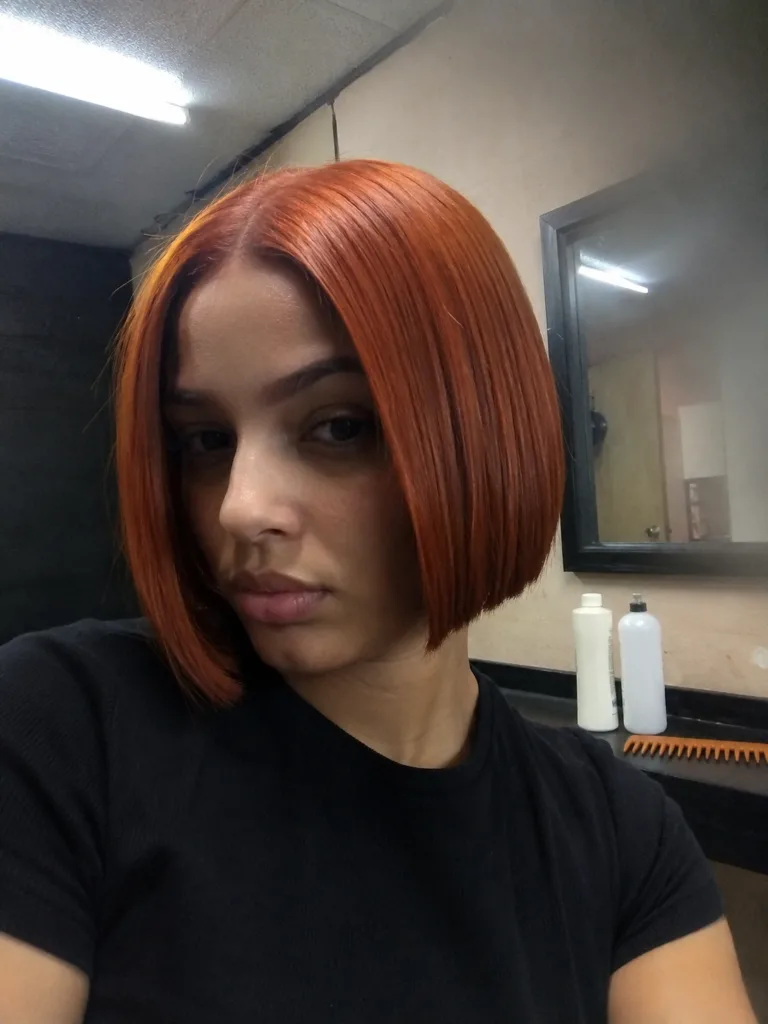
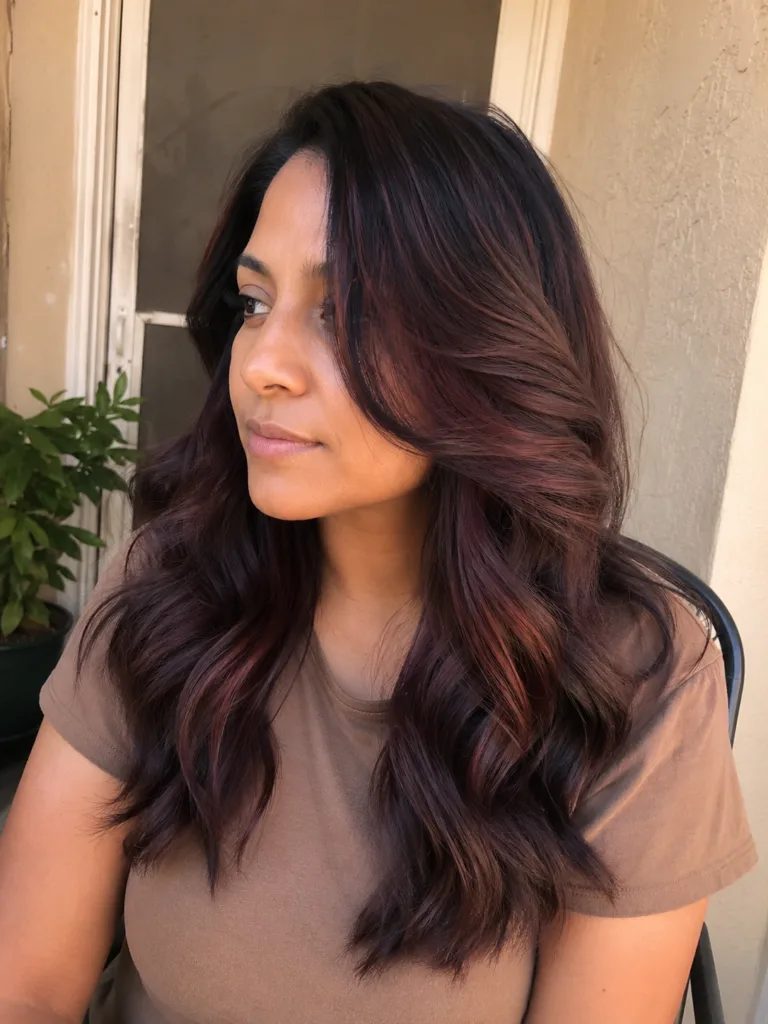
Brunette Balayage Hair: What Changes the Result
Brunette balayage looks simple in photographs: a brown base, lighter ribbons through the lengths, and a soft transition at the roots. The real decision is more specific. You’re choosing how much contrast you want, where that contrast should begin, and how much lightening your hair can reasonably support.
That matters because brunette balayage covers a wide range of results. It can mean subtle dimension that is barely lighter than the base, brighter pieces around the face, caramel movement through the mids and ends, or a much lighter effect that approaches bronde. Two people can ask for brunette balayage and leave with colors that behave very differently between appointments.
The strongest starting point for most people who want an easy-to-live-with result is moderate contrast with deliberate brightness around the areas they want noticed. It keeps the brunette identity intact while giving the hair enough dimension to make the color visible.
From there, your natural or current base, previous color, hair condition, placement, texture, and tolerance for upkeep should determine how far the transformation goes.
Brunette Balayage Is More About Placement Than a Single Shade
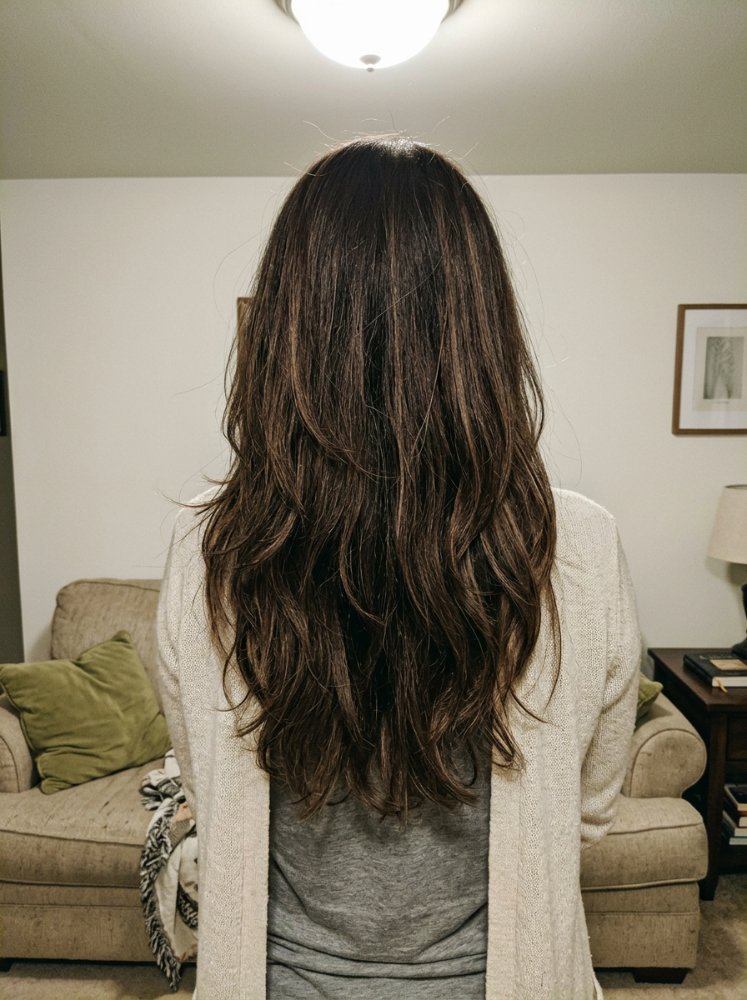
Balayage describes an approach to creating graduated lightness rather than one brunette color. The finished effect depends on where lighter pieces sit, how closely they approach the root, how much dark hair remains between them, and how bright the ends become.
A softly dimensional brunette may keep most of the hair close to the original depth. Lightness appears mainly through selected mids, ends, and pieces around the face. This is usually the easier direction for someone who wants their brown base to remain visually dominant.
Higher-contrast balayage changes the balance. More visible lightness through the lengths can make the hair look much brighter overall, even when the root stays brunette. That can be striking, but it also makes fading, warmth, dryness, and the boundary between fresh and grown-out color more noticeable.
This is why bringing only a shade name to a color consultation rarely communicates enough. A better reference shows where the brightness starts, how much brunette remains, and how light the ends appear compared with the root.
Your Starting Brunette Base Sets the Limits
The same balayage target behaves differently on medium brown hair than on very dark brunette hair.
A lighter brown starting point usually needs less visible change to create dimension. Small differences between the base and highlighted sections can already read clearly, especially on hair with movement or layers.
Dark brunette hair creates stronger contrast once lighter pieces become noticeable. That can look rich and dimensional, but there is a practical consequence: achieving a substantially lighter target may reveal warmth during the lightening process and place more demand on previously processed or fragile areas.
Natural hair and color-treated hair also need to be approached differently. Artificially darkened lengths may respond differently from untouched roots. A photograph of naturally brunette hair transformed into a bright balayage doesn’t tell you whether your previously colored lengths can follow the same path.
Chemical history matters even when the old service isn’t immediately visible. Permanent dark color, previous highlights, lightened ends, relaxing, or other chemical processing can change what is sensible to attempt.
That history should influence the target before the application begins, not become an explanation after the hair has already been pushed too far.
Decide How Brunette You Want to Stay
One of the clearest ways to plan brunette balayage is to stop thinking only about how light you want to become and decide how much dark hair you want to preserve.
That single decision changes the entire impression of the color.
A brunette-dominant result keeps substantial depth between the lighter pieces. From a distance, the hair still reads unmistakably brown. The balayage appears as movement rather than a wholesale color change. This is the practical default for someone who likes being brunette and mainly wants the color to look less flat.
A balanced result puts more brightness through the lower half while maintaining a definite brown root and interior. It photographs more clearly and gives waves, curls, and layered cuts additional separation.
A light-dominant brunette balayage moves toward bronde territory. The brunette root may remain, but the visual impression through the mids and ends becomes significantly lighter. This version can require more salon work, especially from a dark base or complicated color history.
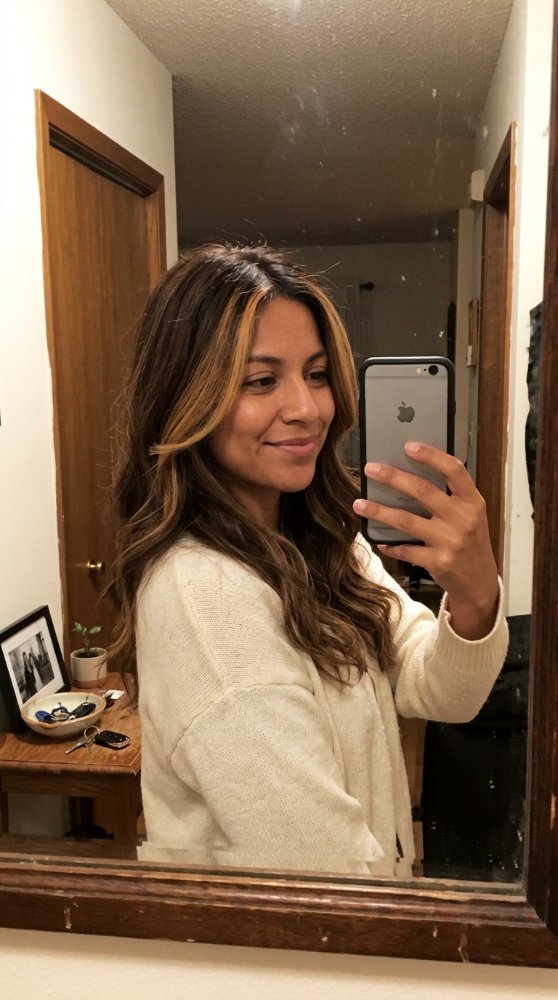
Face-framing brightness can shift any of these versions. Lighter pieces around the hairline create a bright impression without requiring the same amount of lightening across the entire head. For someone who wants a visible change with less overall transformation, that placement is often more useful than simply asking for lighter ends everywhere.
Contrast Matters as Much as the Tone
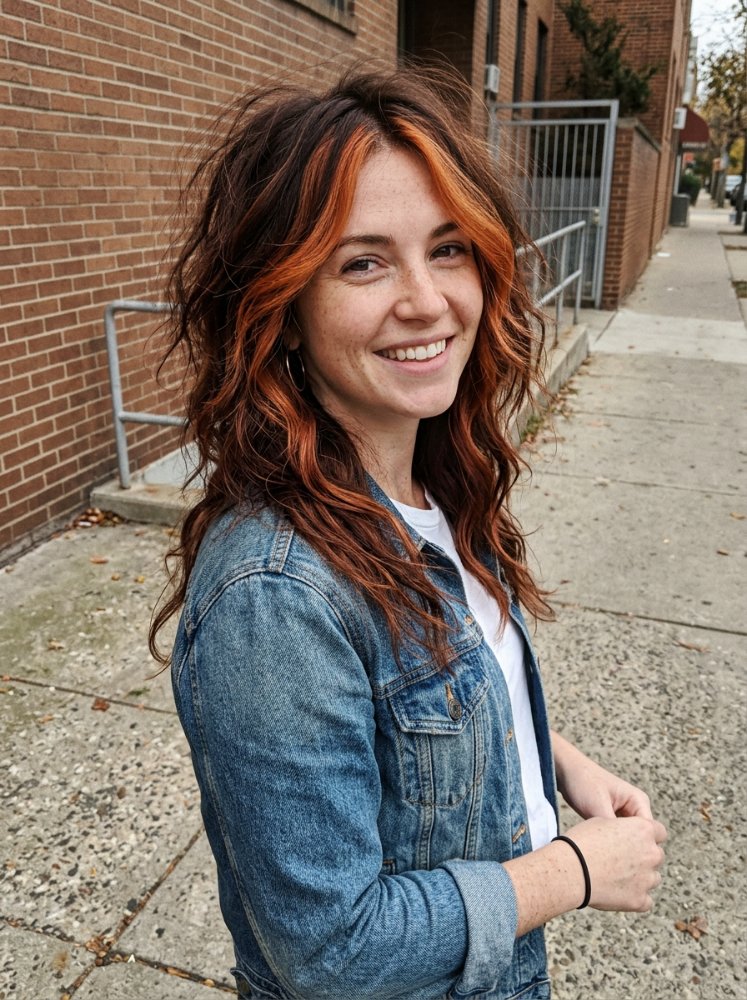
Caramel, beige, honeyed brown, cool brown, neutral brunette, and warm golden tones can all sit within the broad brunette balayage family. Yet tone alone doesn’t determine whether the result looks subtle or dramatic.
Contrast does.
A warm caramel shade only slightly lighter than the base can look understated. A cooler piece several levels brighter than the surrounding brown may appear far more dramatic, even though the tone itself sounds restrained.
There are three useful contrast directions to discuss.
Low contrast creates the most blended appearance. The lighter sections sit relatively close to the base and are often easier to integrate into a brunette look. This works especially well when dimension matters more than obvious highlighting.
Medium contrast gives the color clearer separation. You can see where the lighter ribbons travel, but the base still anchors the result. This is often the strongest middle ground for someone who wants balayage to be noticeable without letting the lightened hair take over.
High contrast makes placement part of the design. Bright front pieces, pale ends, or clearly separated ribbons stand against the brunette base. It can be beautiful, but the color becomes less forgiving as tone shifts between appointments.
Warmth deserves realistic expectations here. Brunette hair often exposes warmer underlying tones as it becomes lighter. Whether those tones are desirable depends on the target. A caramel result can use warmth deliberately; a cooler beige target may need more tonal management.
Repeatedly lightening hair simply because warmth has appeared is a poor strategy. Tone and lightness are separate problems, and the condition of the hair still sets the boundary.
Placement Changes the Face, Haircut, and Grow-Out
Balayage placement should support the haircut you actually wear.
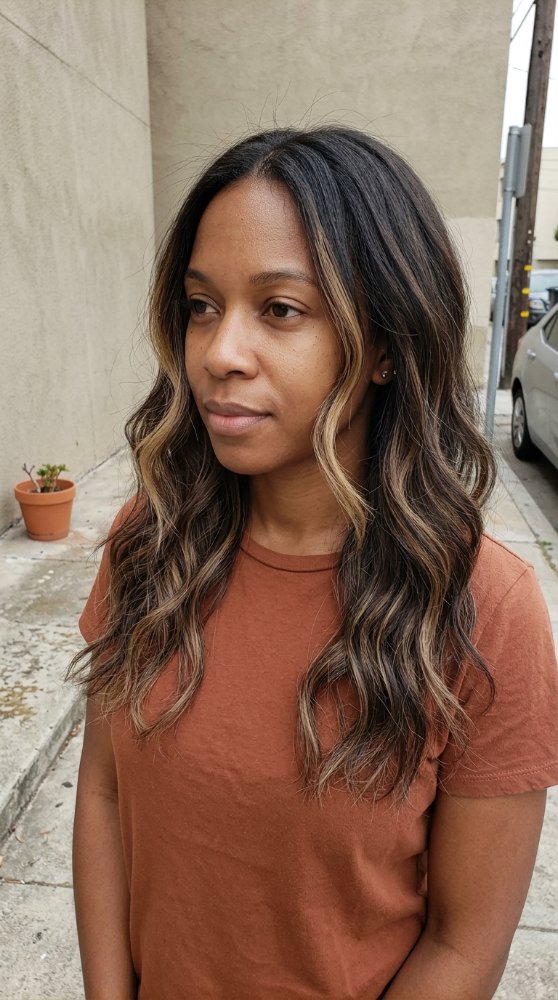
On long layers, lighter sections through the moving lengths can emphasize separation and make the layers easier to see. A heavily one-length cut behaves differently: brightness through the lower edge may become the dominant feature because there is less internal movement to break it up.
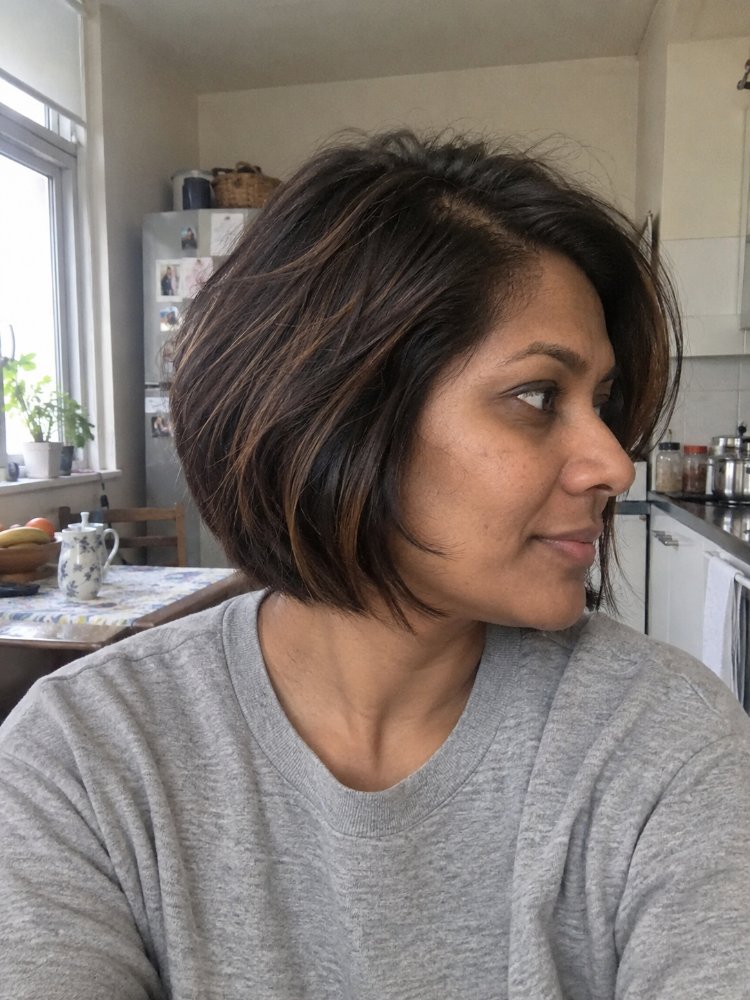
Bobs need another kind of judgment. Strong lightness concentrated only at the tips can visually separate the ends from the darker upper section. That may be exactly the graphic effect you want, but a softer transition usually integrates more naturally with a compact haircut.
Curly and coily hair introduces the question of styling state. The pattern changes where the color appears once the hair contracts, stretches, twists, or forms curl groups. Placement that looks evenly distributed on stretched hair may cluster differently when the hair is worn in its natural shape.
Shrinkage can also make lightened areas appear closer to the root than expected. A useful consultation should consider the state in which the hair is most often worn, not only the state used during the service.
Face framing deserves its own decision. Brightness close to the hairline attracts attention quickly. Keeping those pieces only moderately lighter gives a softer transition; stronger contrast makes them an obvious feature. Hair frequently worn pulled back also exposes front placement more than hair usually worn loose.
Photographs can hide all of this. They show the hair from one angle, under one lighting setup, and usually after deliberate styling. Your balayage still has to work when the hair is tied up, air-dried, curled differently, or viewed from the back.
Hair Condition Should Control How Bright You Go
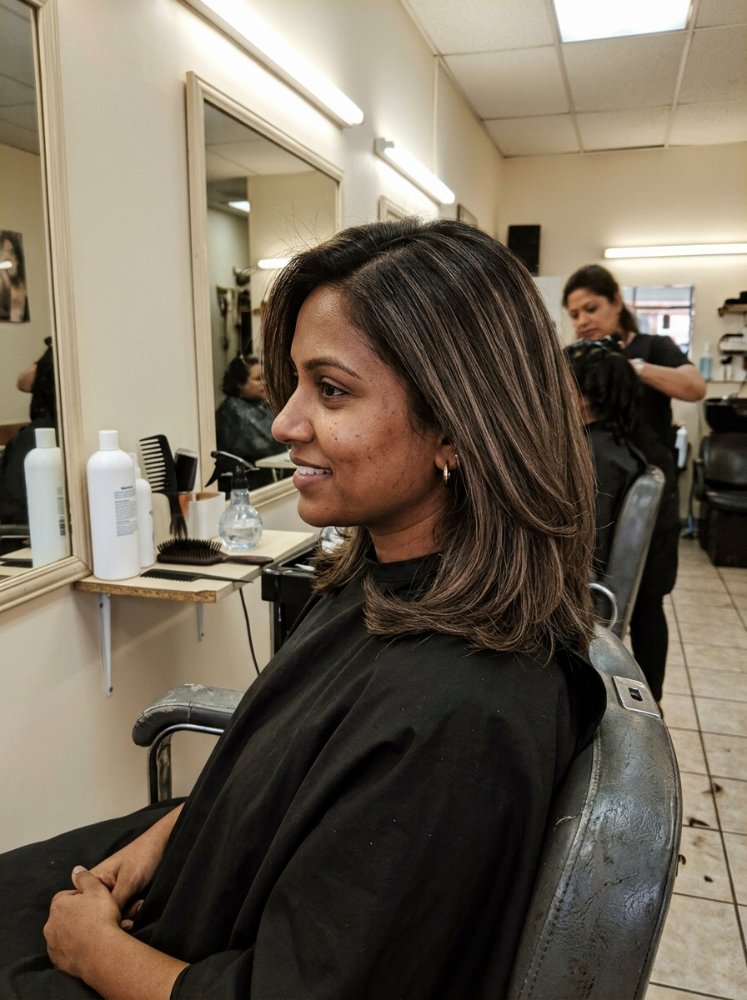
The brightest reference image is irrelevant if the route to it asks too much of the hair.
Previously lightened ends deserve particular attention because balayage commonly places brightness through areas that may already have the most chemical history. Applying additional lightening to fragile sections can increase dryness or breakage risk.
Porosity can also affect how the hair takes and loses tone. More porous areas may behave differently from stronger sections, which is one reason an apparently simple brunette-to-brighter transformation can require a more conservative plan.
Fine strands and low density should be kept separate in this discussion. Fine hair describes strand diameter; low density describes how many strands are present overall. Either can influence color planning, but they aren’t interchangeable.
Hair with fine strands may have less tolerance for aggressive repeated processing, depending on its existing condition and history. Low-density hair raises a different visual question: very light pieces against a dark base can expose more contrast at the scalp or between sections, particularly in certain partings.
Transparent or fragile ends are another reason to prioritize shape before brightness. A pale balayage won’t make a weak perimeter look fuller. Sometimes keeping more depth and improving the condition or outline of the ends creates a stronger overall result than chasing a lighter target.
A staged transformation can make more sense when the starting base is very dark, the desired result is much lighter, or previous chemical services complicate the lengths. Staging isn’t a lesser version of the result. It can be the more sensible route when maintaining usable hair quality matters more than reaching a reference photo immediately.
What Brunette Balayage Looks Like Between Salon Visits
Fresh balayage is only one phase of the color.
As the hair grows, root placement determines how noticeable that growth becomes. Diffused lightness that begins away from the scalp can grow out gradually because there is no hard line across the head. Brighter pieces taken closer to the root may make regrowth more visible.
Tone changes too. Lightened hair can become warmer or less neutral as toner fades and the hair is exposed to washing, heat styling, water, sun, and normal environmental wear. The exact direction varies with the starting hair and color work, so maintenance should respond to what you actually see.
That makes tonal upkeep different from additional lightening. Hair that has reached an appropriate brightness may simply need its tone refreshed. Continuing to lighten already-bright sections can create unnecessary processing.
The ends often tell the clearest story between appointments. They experience chemical processing along with brushing, heat, friction from clothing, and general wear. A balayage that relies heavily on pale ends asks those areas to remain visually prominent, so dryness and roughness show more readily.
Very long hair can exaggerate this issue because older sections have accumulated more history. A brighter end result is worth choosing when you genuinely want that lightness enough to maintain it.
Daily Styling Can Make the Same Color Look Completely Different
Balayage depends on light and movement, which means styling has a major effect on how much dimension you actually see.
Loose waves tend to separate light and dark sections, making contrast obvious. Straight hair shows placement more literally. Broad ribbons may look graphic, while very diffused pieces create a quieter transition.
Curls and coils break the color into smaller visible areas as the hair bends and groups. The same placement can look brighter in some curl clusters and deeper in others. This can produce beautiful dimensional movement, but it also explains why a straightened reference image isn’t a reliable preview for hair normally worn curly.
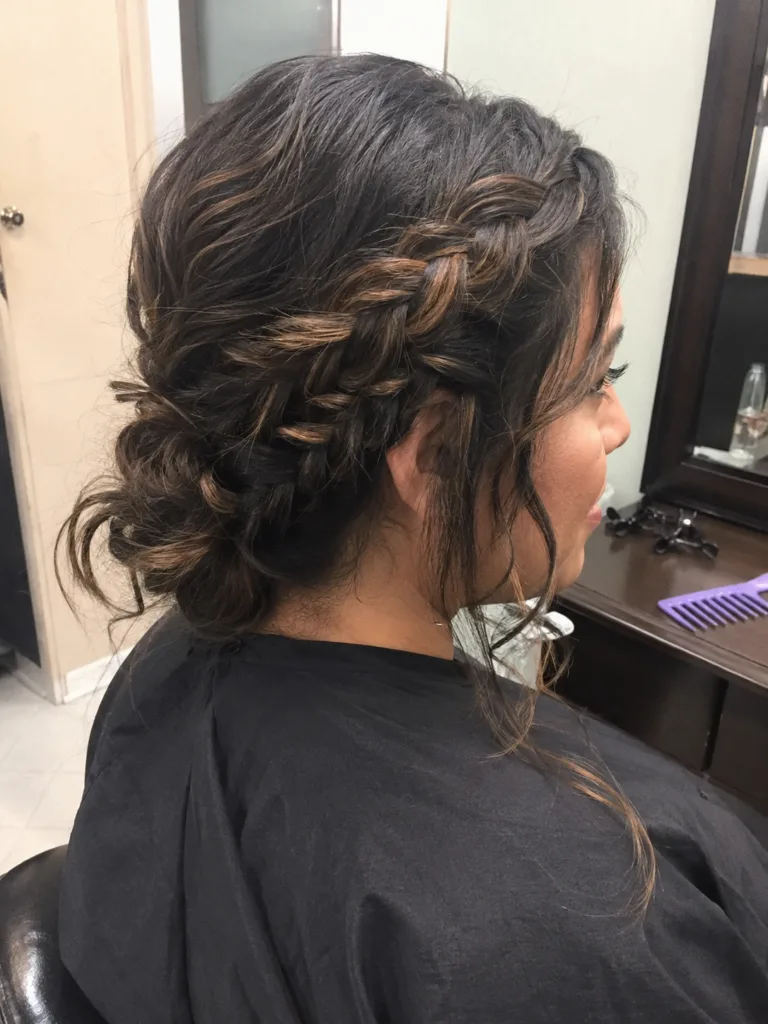
Updos reveal another side of the color. Lightened hair underneath may suddenly become prominent when the hair is twisted or pinned. A ponytail can collect lighter ends into one bright section, making the overall result look more contrasted than it does when worn down.
Think about your ordinary styling habits before choosing placement. Someone who wears hair mostly straight may care more about smooth transitions from root to ends. Someone who wears waves or curls can use separated ribbons to emphasize movement.
The color should make sense on an ordinary morning, not only after a full salon finish.
Planning the Salon Conversation
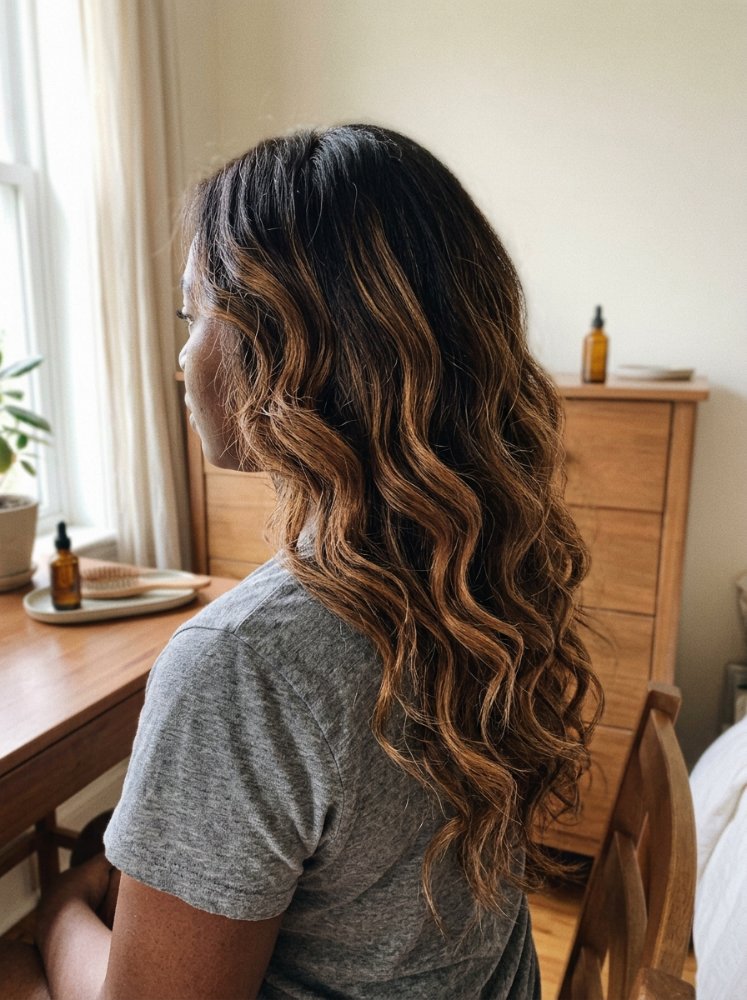
A useful brunette balayage consultation goes beyond asking for brown hair with lighter pieces.
Bring reference images, but read them critically. Look at the root depth, the amount of untouched brunette, the position of the lightest pieces, and how bright the ends become. A picture with similar starting depth and hair texture is more informative than one that matches only the shade you like.
Then establish priorities.
You might decide that keeping the hair predominantly brunette matters most. Another person may care more about a bright frame around the face. Someone else may accept more maintenance because the goal is noticeably lighter mids and ends.
It also helps to identify what you don’t want. Overly light ends, strong warm tones, chunky front sections, or brightness too close to the scalp are much easier to discuss before the service.
Chemical history needs to be accurate. Mention previous permanent color, lightening, relaxing, or other chemical services even when you believe they have mostly grown out. What sits underneath the current shade can influence the realistic route forward.
A practical consultation checklist
Decide whether you want subtle, medium, or strong contrast.
Choose whether brunette or lighter hair should dominate overall.
Identify where you want the brightest area: face frame, mids, ends, or a combination.
Show how you normally wear your hair, especially if it is curly, coily, stretched, or frequently tied back.
Share previous color and chemical history.
Discuss the condition of the ends and any already-lightened sections.
Ask how the chosen placement is expected to grow out.
Separate tonal maintenance from future lightening.
Agree on a realistic target based on the current hair rather than the reference image alone.
This conversation is more valuable than finding the perfect name for a brunette shade.
Maintaining Brunette Balayage Without Overcomplicating It
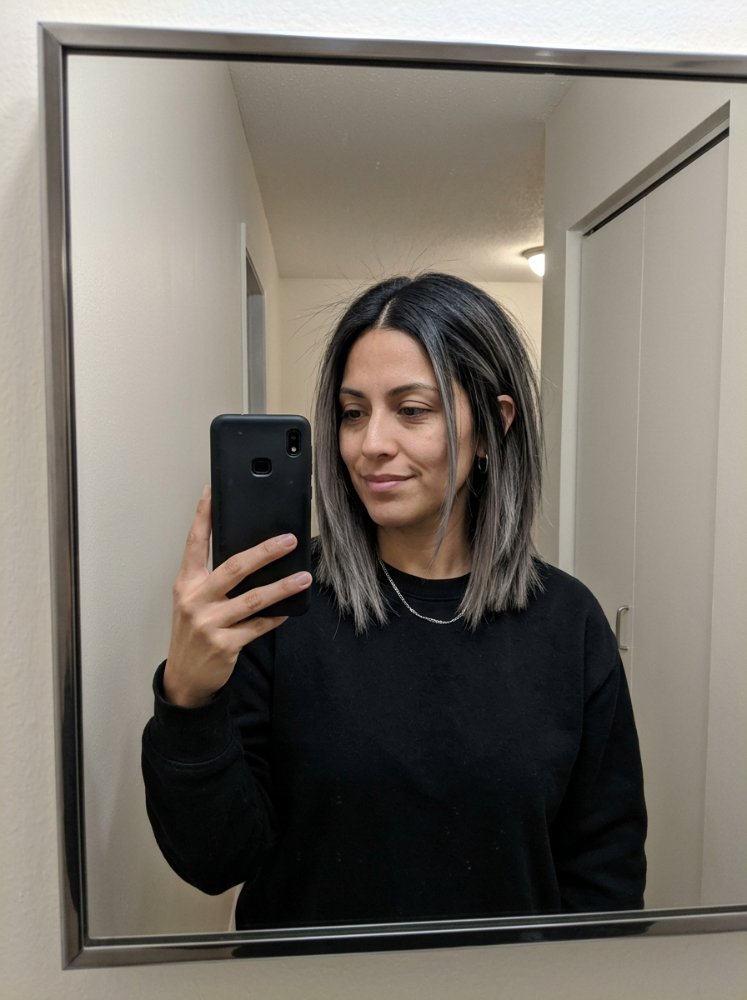
Maintenance should follow what the hair needs rather than a rigid calendar.
Color-preserving cleansing habits can help reduce unnecessary fading, while conditioner and other suitable conditioning steps matter more as lightened sections become drier or rougher. The exact routine depends on your texture, scalp needs, styling habits, and current condition.
Heat styling deserves similar judgment. There isn’t one universal temperature that suits every head of hair or every tool. Minimize unnecessary repeated passes, use tools appropriately, and adjust the routine when the lightened areas begin to feel rougher or more fragile.
Toning products can be useful when an unwanted tone develops, but they should solve a visible tonal problem. Using strongly pigmented products simply because the hair is balayaged can shift a shade you already like or leave porous areas looking uneven.
Mechanical wear matters as well. Lightened ends rubbing against clothing, tangling during sleep, or receiving repeated brushing can feel rougher over time. Reducing friction with a smooth sleep surface or hair covering may help limit tangling, although it can’t repair damaged hair.
The biggest maintenance mistake is treating every change in the color as a need for more lightener. Sometimes the hair needs tone. Sometimes it needs conditioning and gentler handling. Sometimes the correct move is leaving the lightness alone.
Related Hairstyles to Explore
FAQs
Is brunette balayage good for naturally dark brown hair?
Yes, brunette balayage can work very well on dark brown hair. The key decision is how much contrast you want. Subtle ribbons preserve more depth and generally create an easier transition, while much brighter mids and ends demand more lightening. Previous artificial color and the condition of the hair can limit how far it is sensible to go.
Can brunette balayage work on curly or coily hair?
Yes. Placement should account for curl grouping, shrinkage, and the way the hair is normally worn. Color applied or assessed only in a stretched state may sit differently once curls or coils contract. Showing your colorist your usual finished texture helps make the placement more relevant to daily wear.
What is the difference between brunette balayage and highlights?
Balayage commonly aims for graduated, strategically placed lightness with a softer transition through the root area, while traditional highlight services can create more consistent lightness from nearer the root through the lengths. Either technique can produce subtle or strong contrast depending on the placement and target, so the visible result matters more than relying on the service name alone.
Does brunette balayage always turn warm?
Lightening brunette hair can expose warm underlying tones, but the final appearance depends on the starting base, degree of lightening, chosen target, and tonal work. Warmth can be intentional in caramel or golden brunette results. Cooler targets usually require more attention to tone, and that tone can shift between appointments.
Is balayage lower maintenance than regular highlights?
It can be easier to grow out when the root transition is deliberately diffused. That doesn’t make every balayage low maintenance. Very bright ends, high contrast, prominent face-framing pieces, or a tone that needs frequent refreshing can create substantial upkeep even with a soft root.
Can previously dyed brunette hair get balayage?
Potentially, but artificial pigment changes the planning. Previously darkened hair may lift differently from untouched hair, and earlier lightened or chemically processed areas may need a more conservative approach. A complete color history helps determine whether the desired target is realistic now or better approached gradually.
How do I know whether subtle or bright brunette balayage suits me better?
Start with your tolerance for change and maintenance. Subtle balayage is the stronger choice when you want to remain clearly brunette, prefer softer grow-out, or don’t want the lightened areas to dominate. Brighter balayage makes sense when visible contrast is a priority and you’re comfortable giving the lighter lengths more attention as their tone and condition change.
Hair Texture & Upkeep Style Matcher
Select your natural hair texture and daily maintenance window to get an instant styling formula and heat safety cap.
Heat Cap: 320°F (160°C)
A versatile three-strand braid beginning at the parietal ridge, securing the top half while allowing natural wave texture to flow freely around the shoulders.
Conclusion
Brunette balayage works best when you decide what should stay dark before deciding how light everything else should become. Preserving enough brunette gives the brighter sections something to contrast against, and careful placement can create a noticeable transformation without chasing maximum lightness.
Go into the consultation knowing your preferred contrast, brightest area, usual styling state, chemical history, and tolerance for upkeep. Then let the condition of the hair set the final boundary. The most useful balayage target is one that still looks convincing after the salon waves are gone and the color becomes part of your normal routine.
Editorial Standards & Hair Health Guidance
Every style featured on Tress Atlas is curated with a focus on real-world wearability, scalp tension management, and cuticle preservation. When trying protective styles or tight updos, ensure perimeter hairline sections remain tension-free to avoid traction stress on delicate follicles. For heat styling, cap tools below 350°F (180°C) to prevent thermal keratin denaturation.
Scientific Sourcing: Practices aligned with the American Academy of Dermatology (AAD) on traction alopecia risk reduction and cosmetic trichology research on hair tensile strength.