Bridesmaid Hairstyles Half Up Half Down: Styling Guide & Cuts That Balance Style and Staying Power
Half-up half-down bridesmaid hairstyles solve a useful wedding-day problem: they keep hair away from the face without giving up the movement and softness of wearing it down. The real decision, though, is less about choosing between “curly” and “wavy” versions and more about how the upper section is built.
A small twisted section leaves most of the hair loose and airy. A braided crown creates more structure. A half-up ponytail lifts the entire outline, while a knot or bun concentrates more hair at the back of the head. Those differences affect photographs, dancing, accessory placement, comfort against chair backs, and how well the style lasts once the ceremony is over.
Texture matters too. Naturally curly or coily hair doesn’t need to be straightened before it can become a formal half-up style. Locs, braids, bobs, extensions, and stretched natural hair can all work, but they shouldn’t be treated as variations of the same construction.
For most bridal parties, the strongest approach is to coordinate one visible element—such as softness, crown placement, or accessory finish—while allowing each bridesmaid’s texture and length to determine the actual technique.
Soft Half-Up Styles That Keep Most of the Length Loose
Twisted Half-Up Hair with Loose Waves
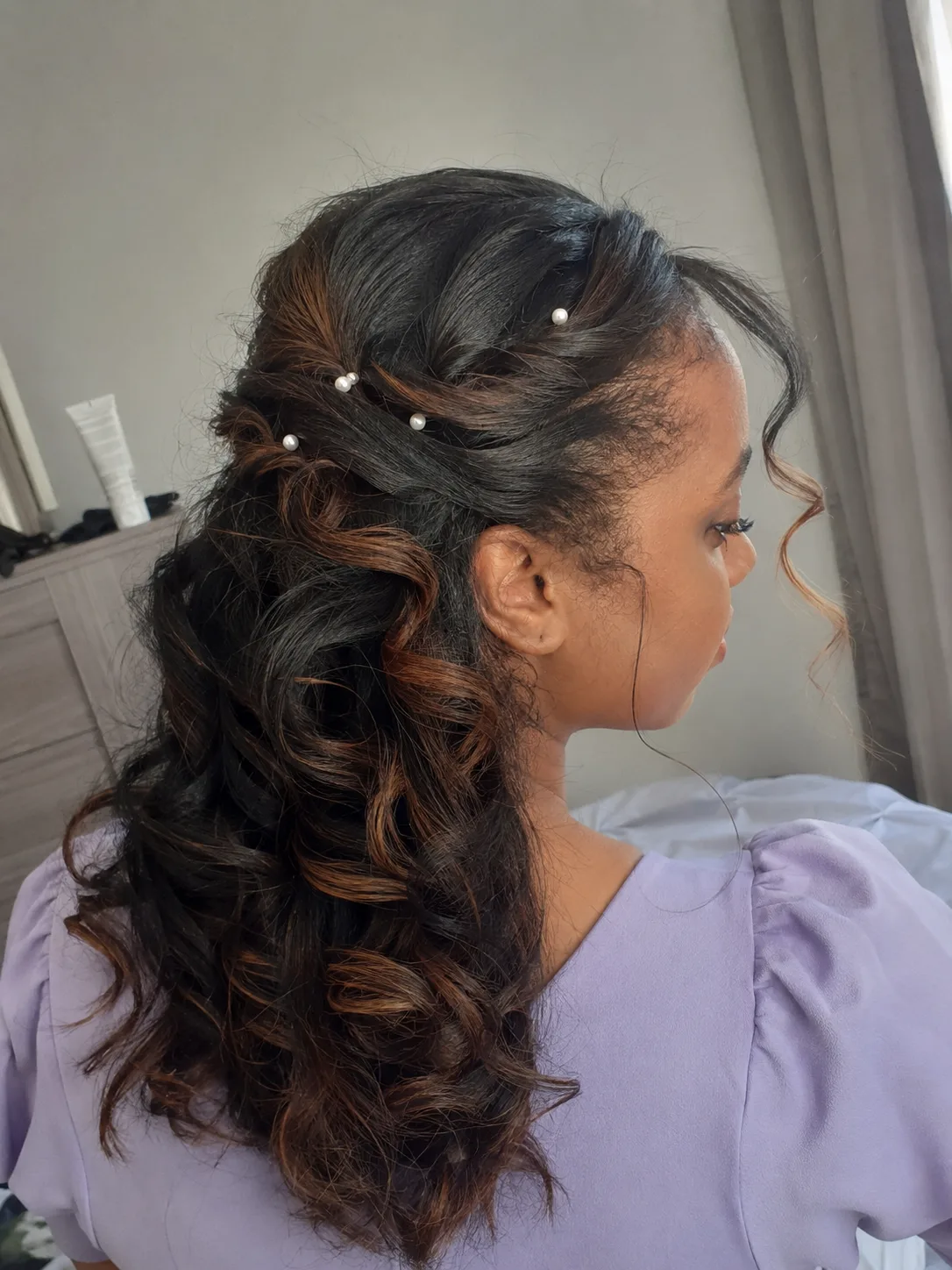
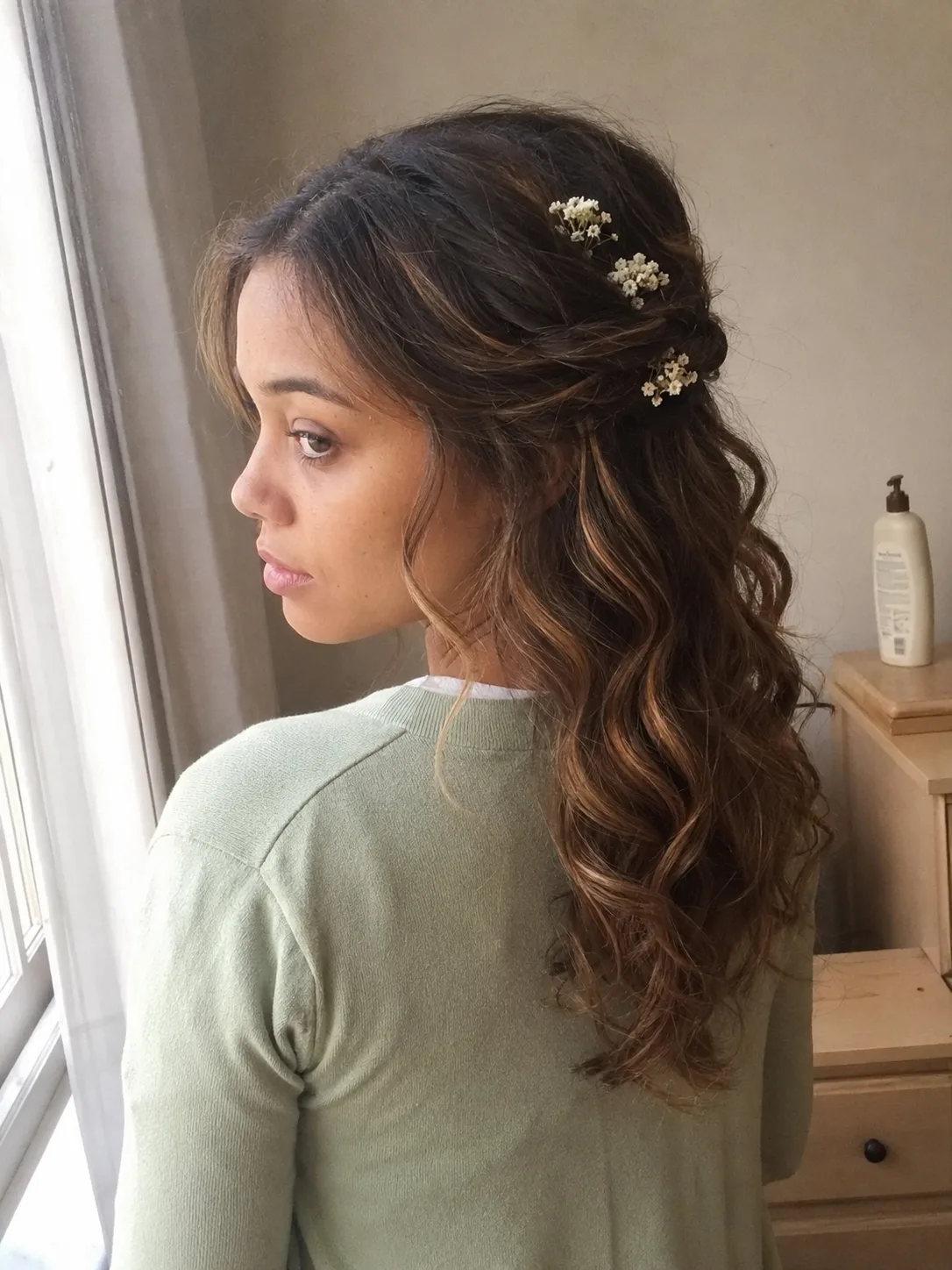
This is the practical default for a bridesmaid who wants a romantic finish without a complicated crown. Sections from each side are twisted backward and secured at the rear of the head, leaving most of the length loose. The twists create enough structure to read clearly in photographs while still allowing the waves underneath to move naturally.
It works particularly well when the dress, earrings, or neckline already provide plenty of visual detail. The hair doesn’t compete with them.
The main styling choice is how much hair goes into the twists. Very large sections can pull too much volume away from the sides and make the loose hair underneath look thin. Smaller sections keep more fullness through the lengths. On layered hair, letting shorter pieces remain soft around the face is usually more convincing than pinning every strand flat.
Soft Pinned-Back Sides
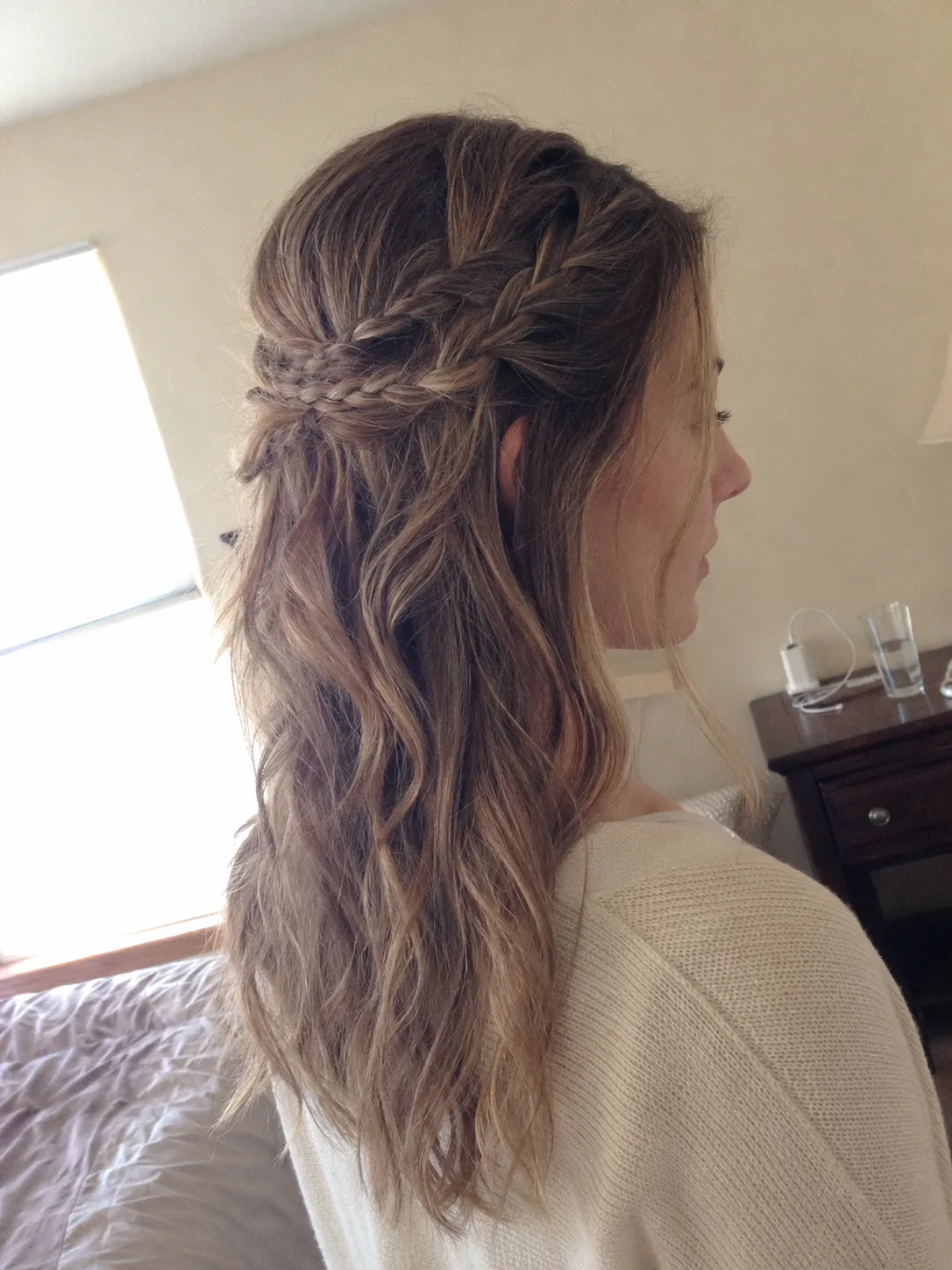
Sometimes the simplest construction is the most useful. Instead of forming a visible twist or braid, the hair above the ears is directed backward and secured discreetly underneath the surface.
That gives you an open face and clean profile without creating a strong feature at the back of the head. It’s especially useful for weddings where several bridesmaids have different hair lengths and the group needs to look related rather than identical.
The loose section can stay naturally wavy, curled, straight, or softly textured. Because there is little crown architecture, the finish depends heavily on the condition and movement of the hair left down.
Waterfall Braid with Flowing Lengths
A waterfall braid creates detail through the upper section while repeatedly releasing strands into the hair below. Visually, that makes it lighter than a full braided crown and keeps the loose lengths connected to the braid.
This is worth choosing when the hairstyle itself needs to provide some decoration. It can be particularly effective from the side, where the braid pattern is easier to see in candid photographs.
Hair with significant layering can make the released strands more difficult to keep visually clean, especially when shorter pieces sit inside the braid path. A looser, less rigid version generally works better than trying to create a highly geometric pattern on heavily layered hair.
Deep Side Part with One Side Pinned Back
A half-up style doesn’t need perfect symmetry. A deep side part with one temple section swept back creates an asymmetrical shape that can feel more editorial than a centered bridesmaid style.
The fuller side supplies movement around the face, while the pinned side exposes an earring, dress strap, or neckline. This also avoids concentrating pins directly at the center back.
It’s a useful option for shorter and medium lengths because the construction asks less of the hair. You don’t need enough length from both sides to build an elaborate rear section.
Braided and Twisted Crowns with More Structure
Double Rope-Twist Crown
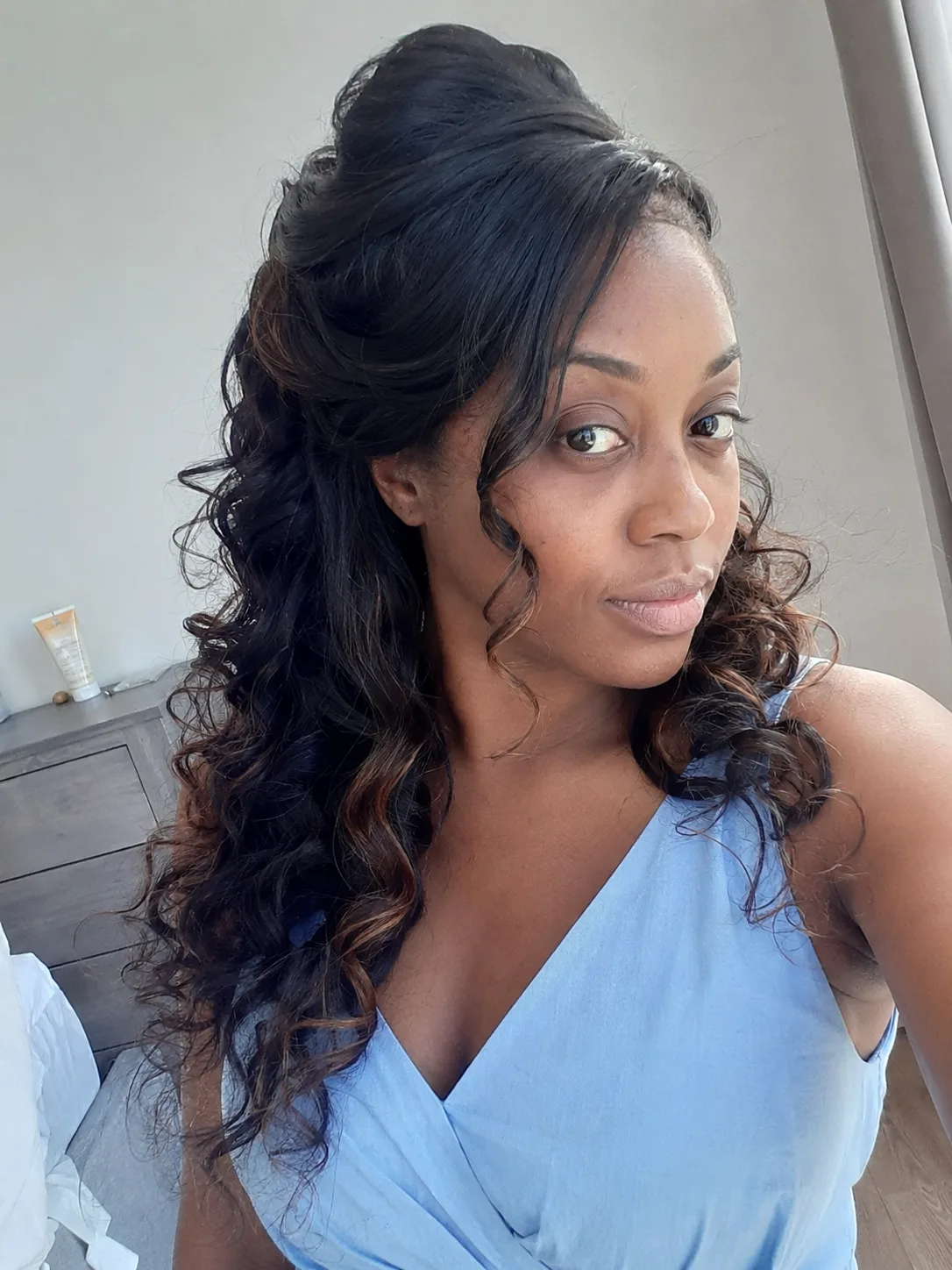
Rope twists create a cleaner, more rounded pattern than a traditional three-strand braid. Two sections travel back from the temples and meet behind the crown, creating a defined band above the loose hair.
The shape is strong enough for formal photographs without looking as heavy as a full braid. It also works with several finishes underneath: waves, curls, stretched natural hair, or smoother lengths.
Keep some flexibility at the sides. Pulling the twists extremely tight can flatten the area around the temples and make the style feel severe compared with the loose hair below.
Dutch-Braided Half Crown
A Dutch braid sits visibly on the surface, so it creates more definition than a subtle twist. That extra structure suits weddings where the bridesmaid hairstyle needs to hold its own beside a detailed dress or more dramatic accessories.
The braid can begin near each temple and travel toward the back, where the sections join above the loose lengths.
This is a stronger choice than a delicate waterfall braid when the braid itself needs to remain visible from several angles. The tradeoff is visual weight: a very thick crown can dominate the hairstyle, particularly on shorter heads of hair where there isn’t much loose length underneath to balance it.
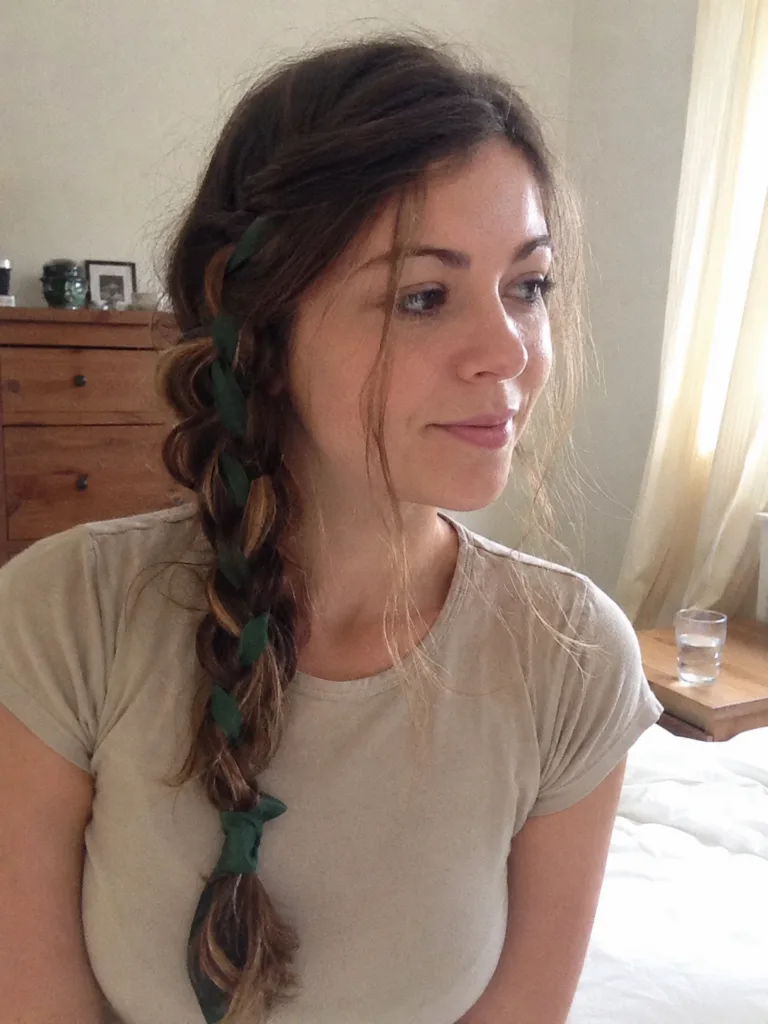
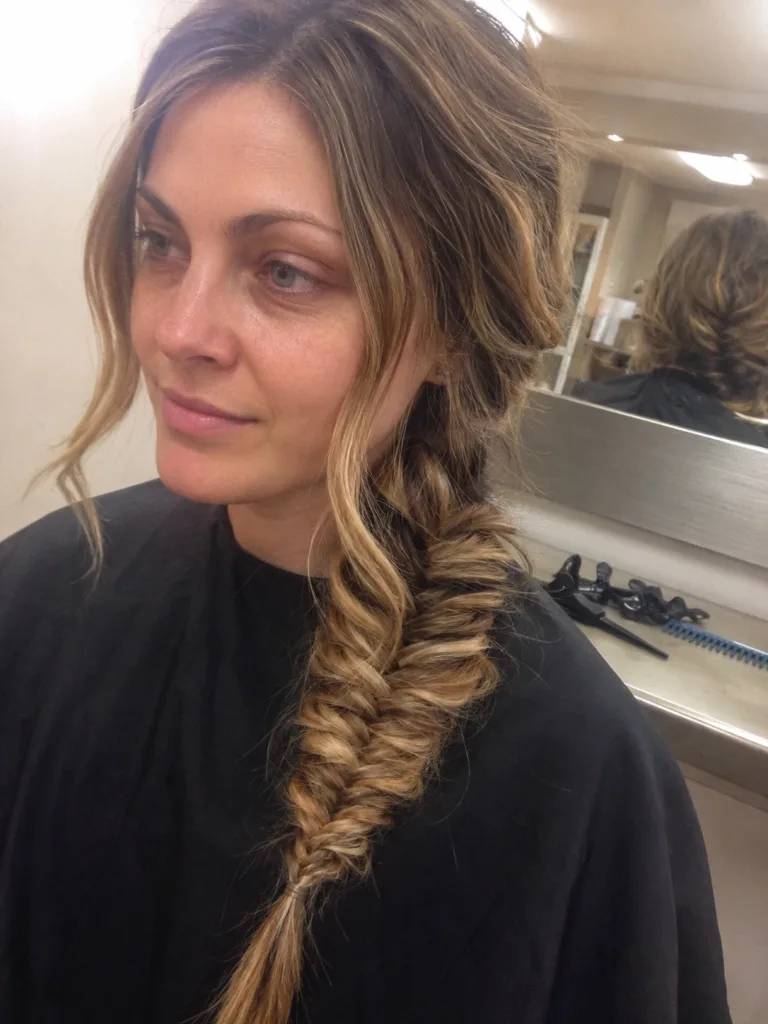
Loose Fishtail Half-Up Braid
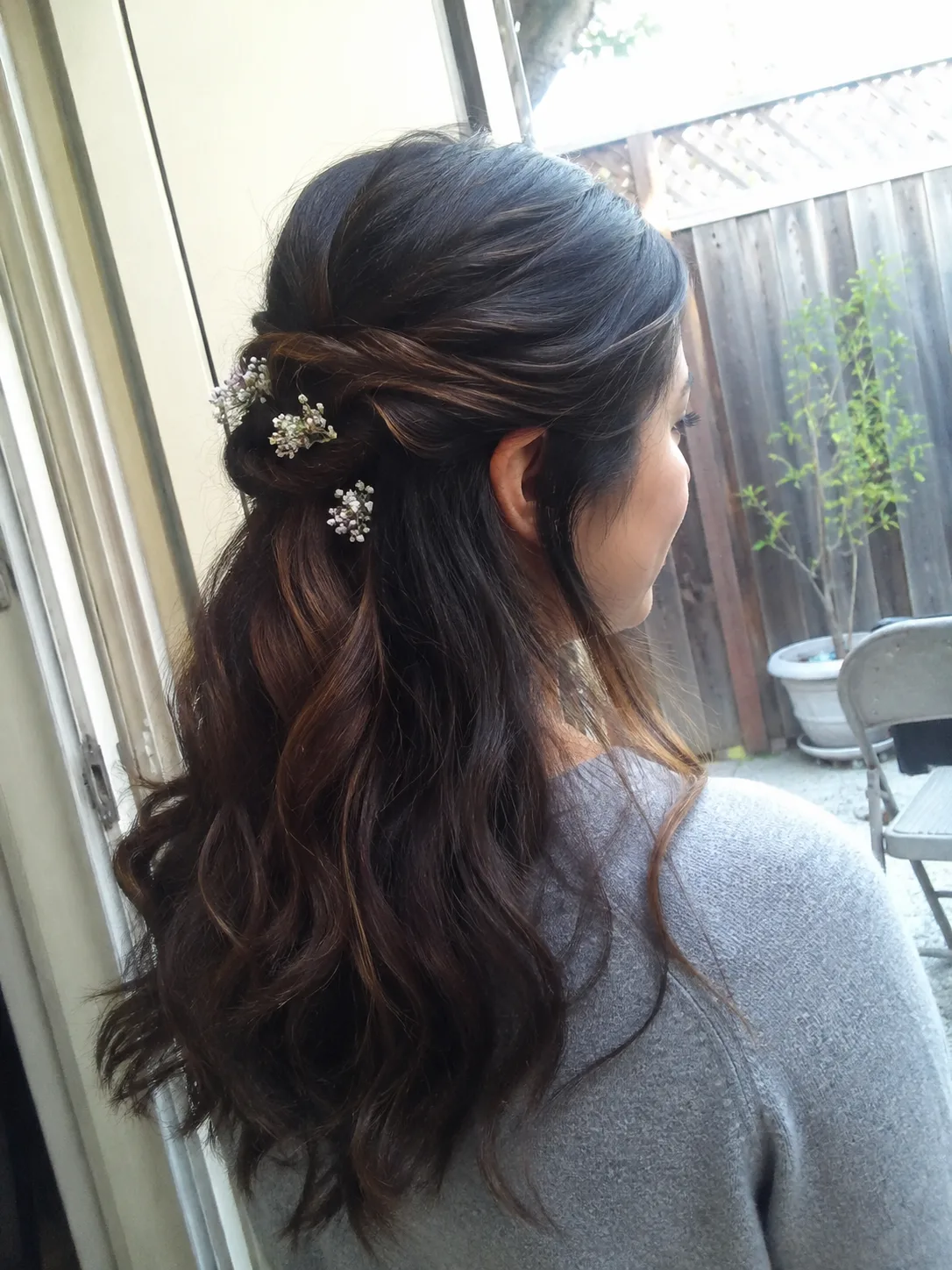
The appeal here comes from texture rather than height. Side sections feed into a fishtail braid across the back, creating a narrow woven detail over the hair left down.
A slightly expanded braid generally photographs better than an extremely tight one because the pattern is easier to read. The style works beautifully with loose waves because both elements have an irregular, flowing character.
This is less convincing on hair that has many very short layers around the crown unless those pieces can be incorporated comfortably. Forcing them into the braid tends to create more pinning than the finished look warrants.
Flat-Twist Half-Up Style for Natural Hair
Flat twists give naturally curly or coily hair a structured upper section without requiring the whole head to be stretched or pressed. The twists can travel from the sides toward the crown while the remaining hair stays curly, coily, stretched, or set according to the desired finish.
Shrinkage changes the proportions of the style, so the final shape should be considered in the state the hair will actually be worn. A reference photo showing stretched curls won’t predict the same length or volume on fully shrunken hair.
The contrast between close-to-the-head twists and fuller loose texture makes this one of the more visually distinctive options in a mixed bridal party.
Half-Up Styles with More Height
Classic Half-Up Ponytail with Soft Curls
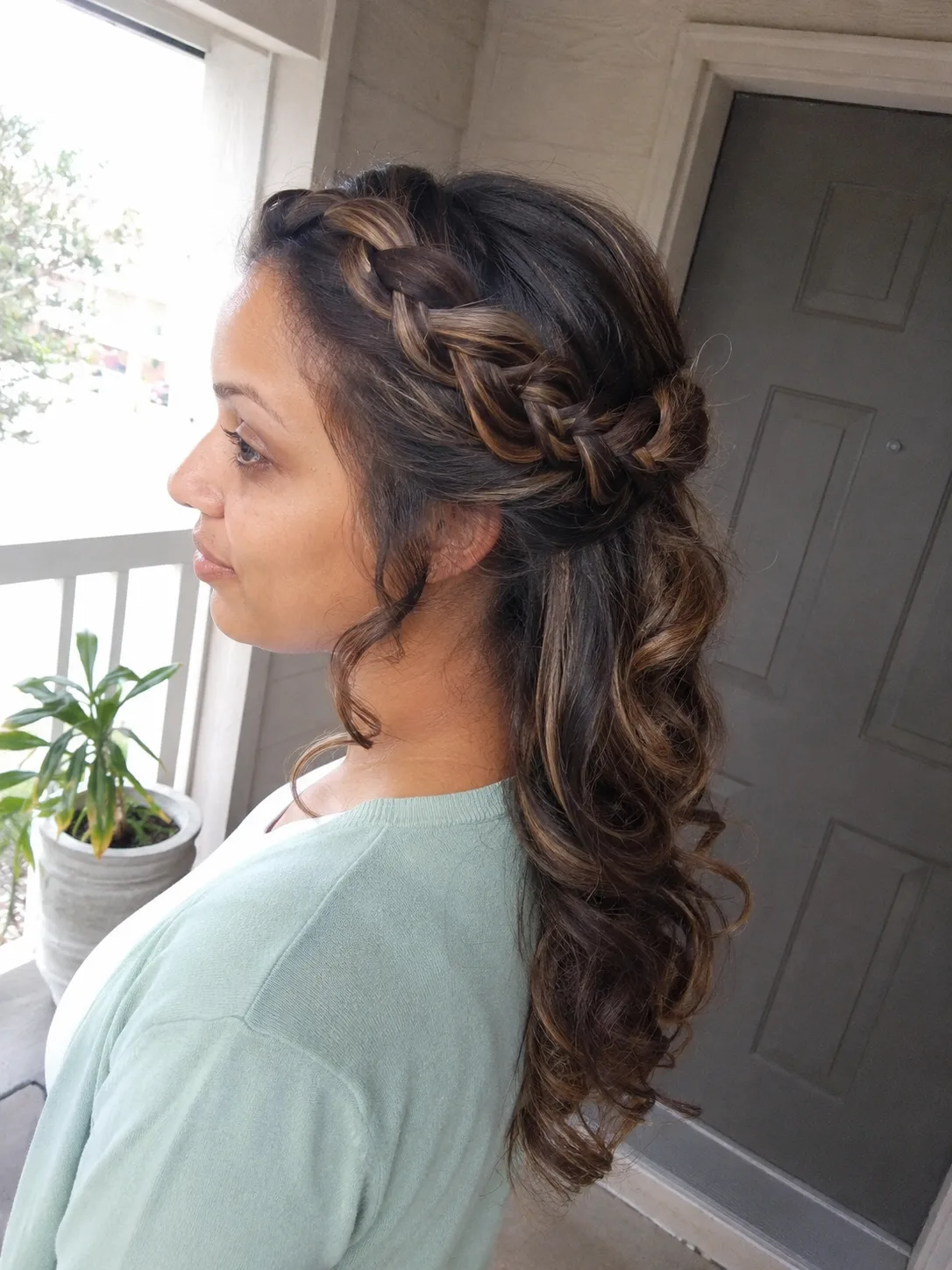
A half-up ponytail creates obvious lift by gathering a broader crown section into one anchor. Compared with pinned sides, it makes the upper half of the hairstyle feel taller and more energetic.
The loose curls can merge with the ponytail so the division between the two sections is barely visible. Wrapping a small section of hair around the elastic can keep the anchor visually clean.
Avoid treating extra tightness as extra security. A comfortable, well-positioned anchor is more useful than pulling the temple and hairline sections harder. Leave fragile or very short perimeter hairs out when they don’t need to be part of the ponytail.
High Half-Up Ponytail with Cascading Waves
Moving the anchor higher changes the personality completely. The loose hair falls from a higher point, giving the style more bounce and making long lengths appear especially prominent from the back.
This is the stronger option for a lively, modern wedding rather than a very subdued or vintage theme. It also keeps more hair away from the shoulders during dancing.
A high anchor becomes more noticeable during prolonged wear because the loose length moves from that single point. Very long or extension-heavy hair deserves particular attention to anchor comfort before the wedding day.
Half-Up Top Knot with Loose Texture
The top knot separates the two halves of the hairstyle more clearly than a ponytail does. Hair from the crown forms a small bun, while the rest stays loose.
The result feels modern and slightly less traditional than twisted bridesmaid waves. It’s especially effective with naturally textured, curly, or deliberately undone lengths because the bun doesn’t need to look rigid.
Keep the bun proportionate to the amount of loose hair. An oversized knot can make the lower section look visually disconnected. A smaller knot usually preserves the half-up balance better.
Low Half-Up Knot
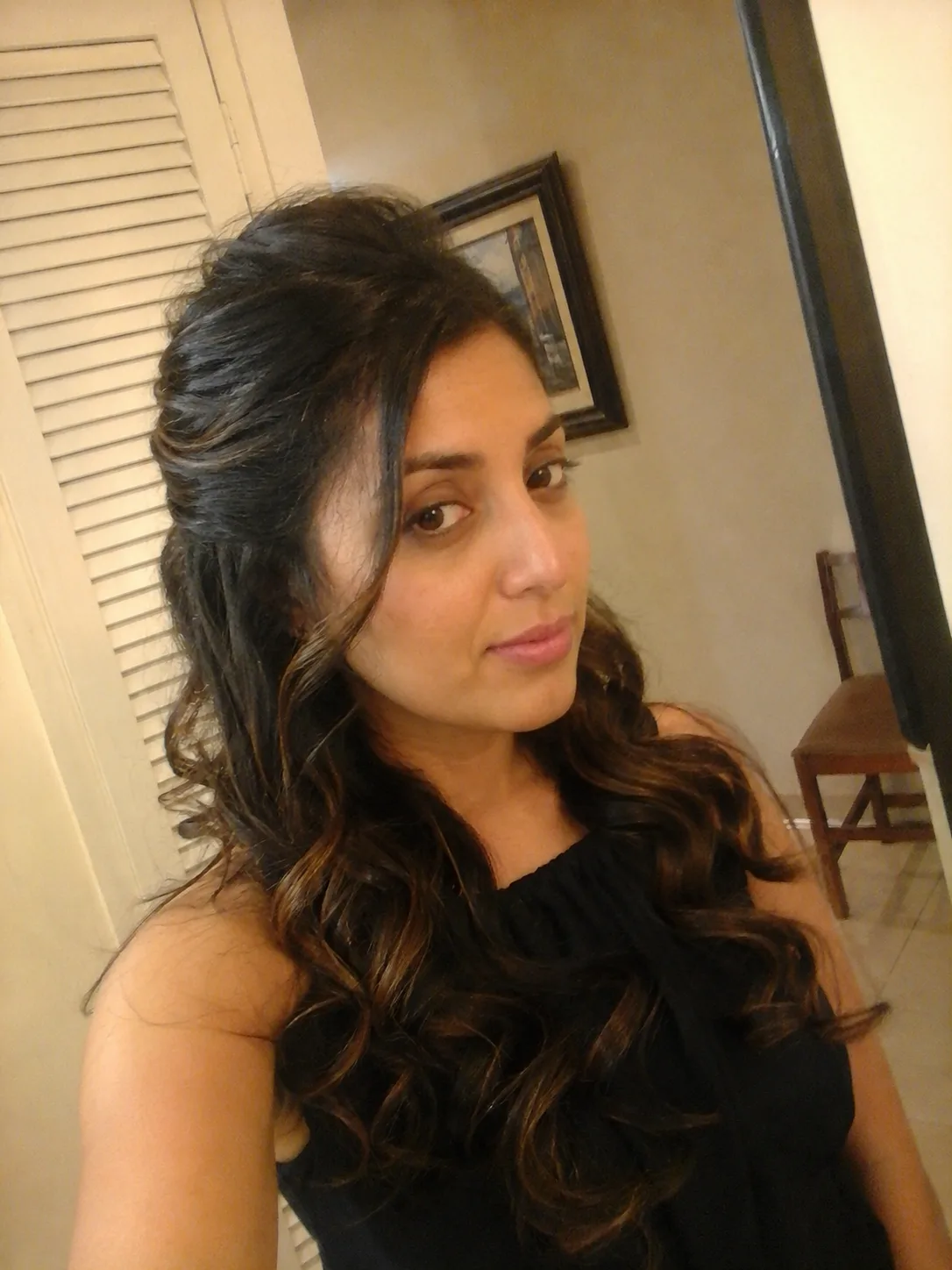
Place the knot closer to the occipital area and the whole style becomes calmer. Instead of lifting the crown dramatically, this version gathers the side sections into a compact knot with the lengths falling directly underneath.
That placement pairs well with minimalist dresses and weddings where the hairstyle should look finished without becoming a major focal point.
It also tends to interact less with the top of the head than a high bun does, which can make accessory planning simpler. Check the knot position against chair backs during a trial, especially when the knot is firm or built out enough to project from the head.
Texture-Led Bridesmaid Hairstyles
Naturally Curly Half-Up Crown
Curly hair already provides much of the movement that straight hair often needs to be styled into. The half-up section should organize that volume instead of flattening it.
Taking a moderate section from the crown and sides can expose the face while leaving plenty of curl fullness through the lower half. Bobby pins or a suitable elastic can secure the gathered portion according to the density and curl grouping.
This is a particularly strong choice when maintaining natural texture matters more than making every bridesmaid’s hair surface look identical.
Refresh the curls in the state they will be worn and assess the style after the hair is fully dry. Curl volume and shrinkage can shift the apparent height and length considerably during drying.
Defined Coils with a Sculpted Half-Up Section
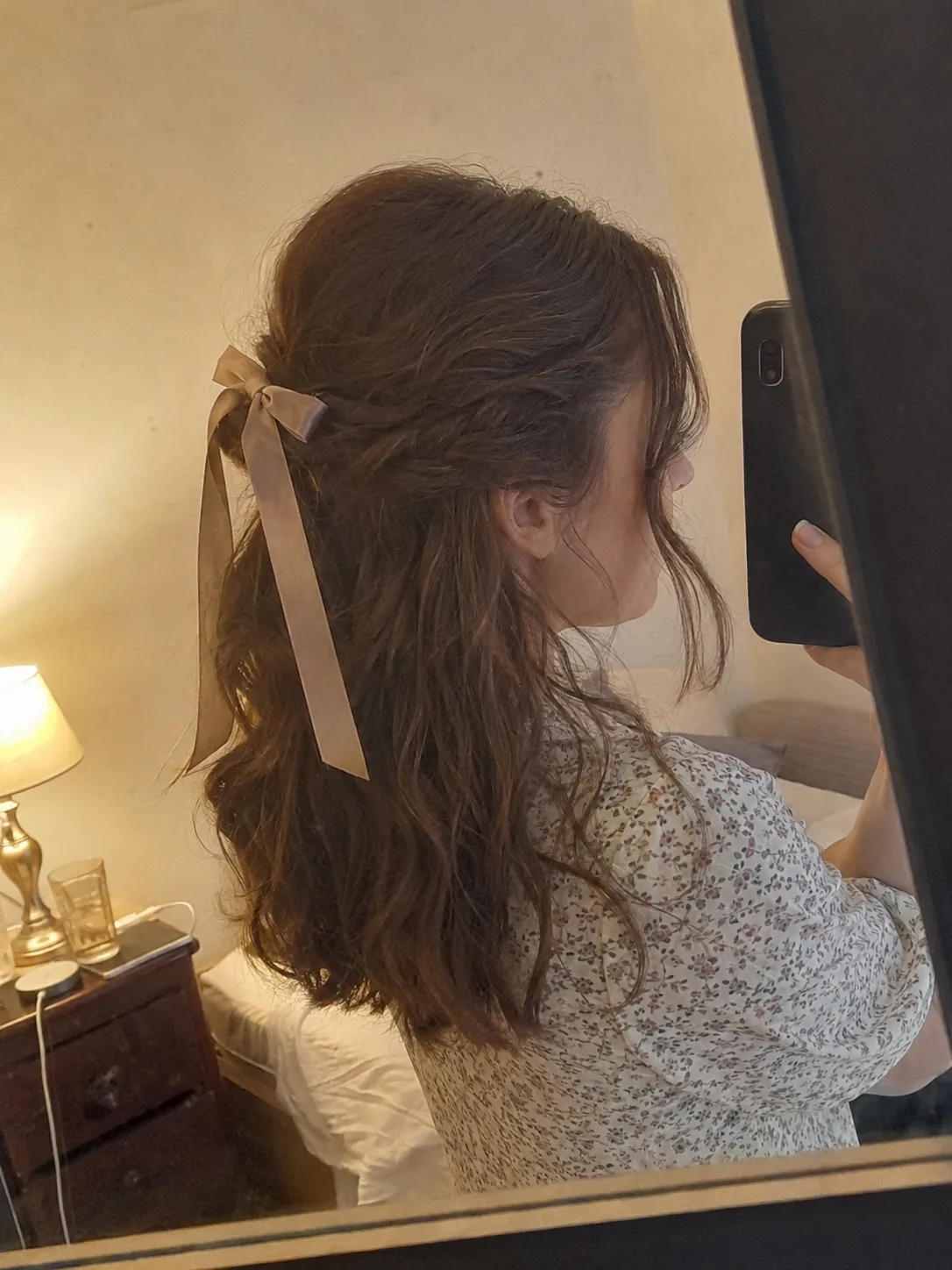
Coily hair can produce a more compact, sculptural half-up silhouette when the upper section is gathered while the remaining coils stay defined.
Instead of chasing loose waves seen in many bridal references, this version uses the spring and density of the coils as the feature. The crown can be softly lifted, gathered into a small puff, or directed backward with pins depending on length.
The strongest version preserves enough fullness at the sides to keep the head shape balanced. Pulling a very broad section tightly backward can leave the lower volume looking disconnected from the crown.
Half-Up Loc Style
Locs create their own lines and weight, which changes how a half-up style should be built. A portion can be gathered toward the back while the remaining locs fall over the shoulders or down the back.
A low-to-mid placement is often more practical than creating an unnecessarily high, dense bundle. Mature or long locs can carry substantial weight, and concentrating too much of that weight at one anchor can become uncomfortable.
Accessories should also be evaluated according to the actual size of the locs. Fine pins designed for loose hair may not be the right securing method for a thicker loc section.
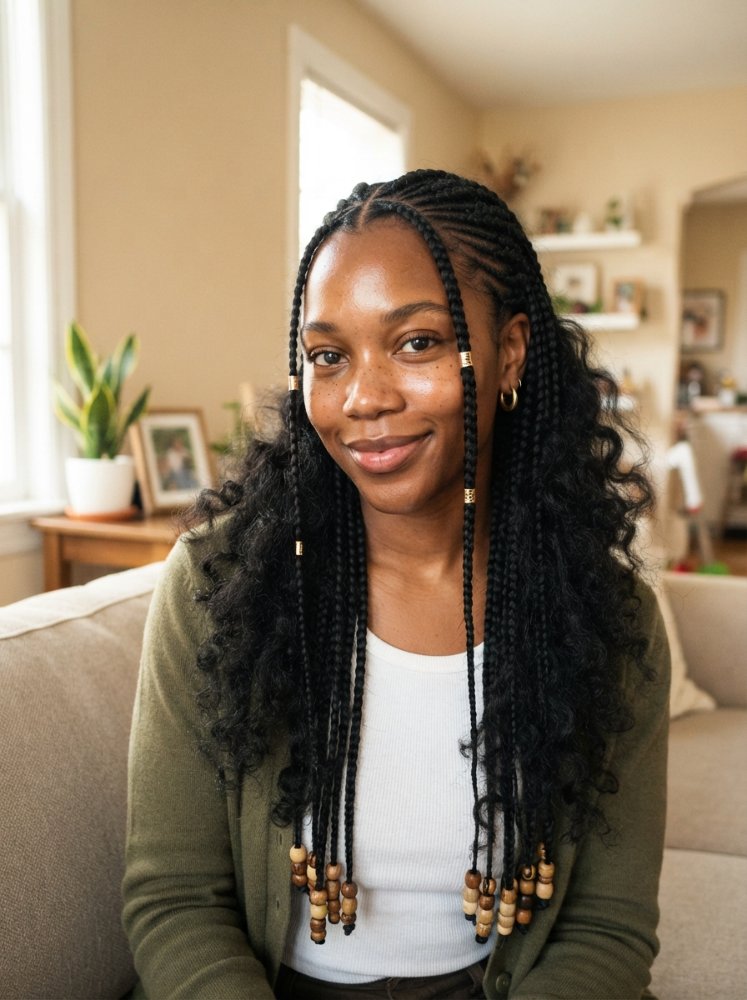
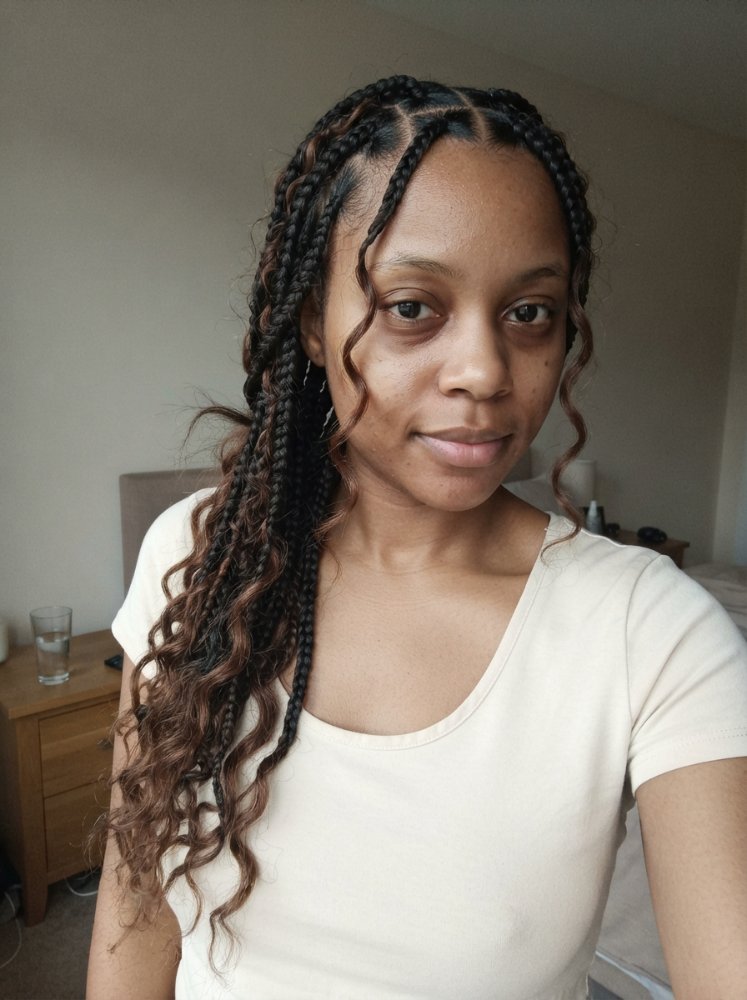
Half-Up Braids with Length Left Down
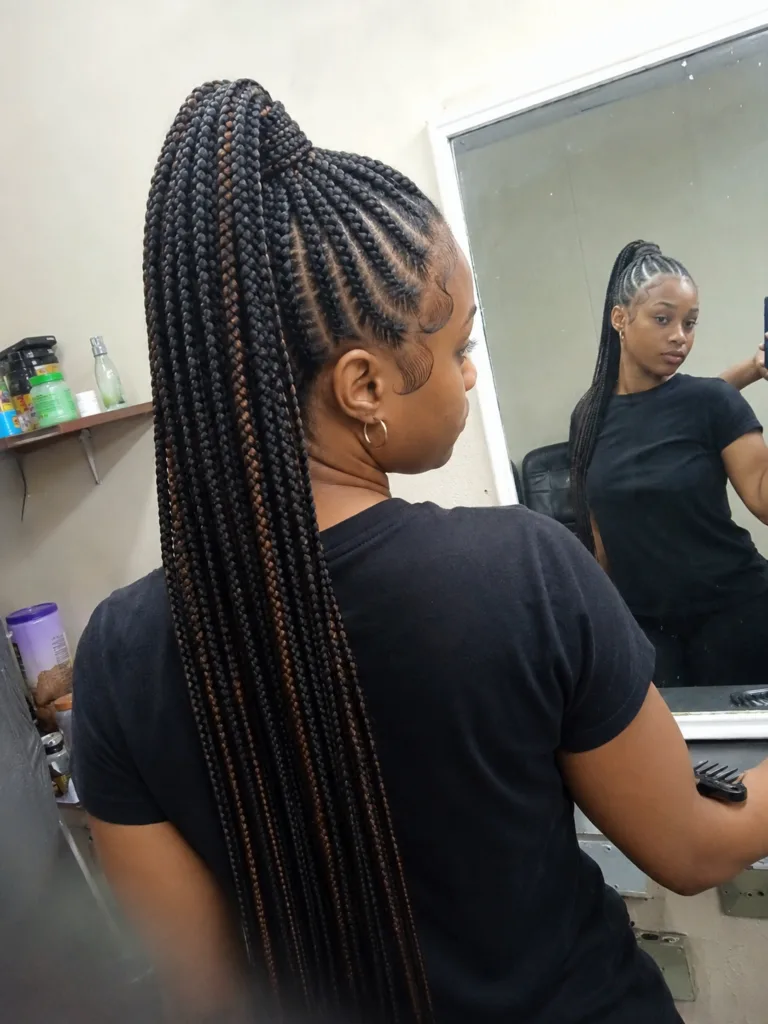
Already-braided hair can move into a half-up shape without undoing the installation. A selection of braids from the upper section is gathered backward, while the remaining braids stay loose.
This gives bridesmaids with box braids, knotless braids, or similar individual braid installations a way to coordinate with a half-up bridal-party theme without pretending their hair has the same construction as loose waves.
The amount gathered matters. Long braids create more leverage at a single anchor during movement, so a moderate half-up section is usually more comfortable than pulling a large share of the installation into a high ponytail.
Options for Shorter Hair and More Decorative Finishes
Half-Up Bob with Hidden Pins
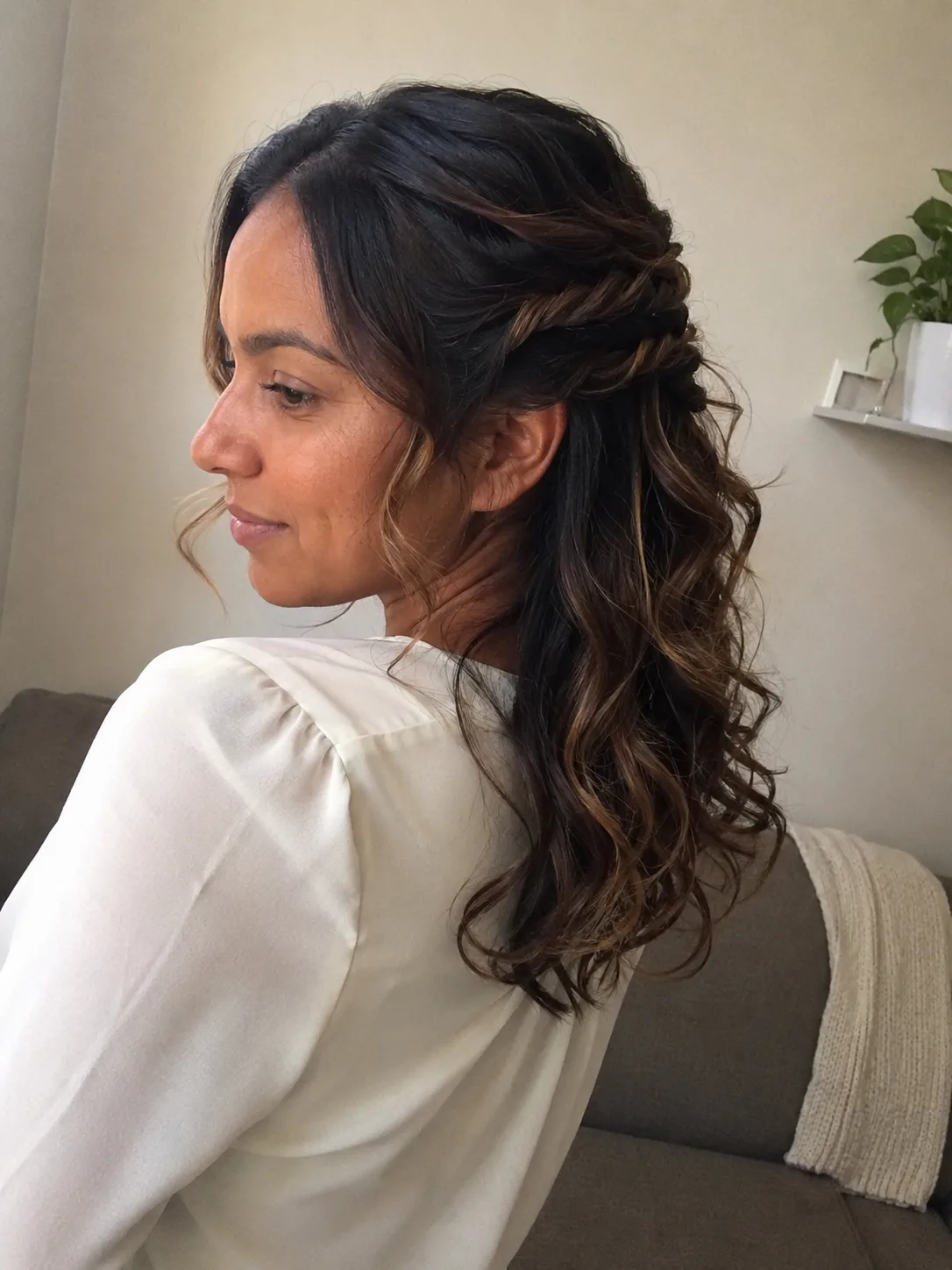
A bob doesn’t need enough length for a braid or ponytail to count as half up. Direct the temple and upper-side sections toward the back and secure them with hidden pins, leaving the lower perimeter loose.
This keeps the bob’s line visible, which is important because the perimeter is often the defining feature of the haircut.
Short layers that naturally fall around the face can stay there. Trying to force them all toward the back tends to require visible pinning and can make the style look more rigid than necessary. This is one of the most practical choices for a bridal party that includes both short and long hair.
Half-Up Twist with a Comb or Decorative Clip
A decorative comb, barrette, or clip works best when it finishes a sound hairstyle rather than becoming the only thing holding it together. Twist the side sections backward, secure the foundation appropriately, then place the accessory over or around that anchor.
This gives the style a clear focal point from the back, which works well for ceremony photos.
Accessory scale matters. A large piece can overwhelm fine strands or a narrow twist, while a very small clip may disappear into dense curls or locs. Check the hardware too: exposed edges, heavy metalwork, or a fastening mechanism that catches hair can turn a pretty detail into an irritating one over several hours.
How to Choose One Style for a Bridal Party
Matching every bridesmaid strand for strand is rarely necessary. Haircut, density, curl pattern, shrinkage, loc size, braid installation, and length all affect what a half-up style can realistically do.
A better shared plan is to choose one or two visible rules. For example, everyone might wear the upper section at roughly the same placement while keeping their natural texture. Another bridal party could coordinate around soft movement with no high buns. A third might use the same type of understated accessory while allowing twists, curls, braids, or locs underneath.
Think about the dresses as well. A high neckline already fills visual space around the neck and shoulders, so a more lifted half-up style can create breathing room. Open backs and low necklines can support longer loose lengths without the hair competing with a lot of fabric.
Earrings change the decision too. Large statement earrings benefit from at least one clear side around the face, while tiny studs allow fuller temple volume.
Most importantly, don’t choose the style only from a front-facing inspiration image. Ask to see the back. The back reveals the actual anchor, braid size, amount of hair gathered, and accessory placement—the details that determine whether the idea translates to your own hair.
Wedding-Day Hold, Comfort, and Maintenance
A bridesmaid hairstyle has to survive more than the ceremony photograph. Getting dressed, sitting in a car, hugging people, moving between indoor and outdoor spaces, dancing, and leaning against chair backs all affect the style.
A trial is useful because it reveals physical problems that photographs can’t. Check whether the anchor feels comfortable while turning the head normally. Sit against a chair. Put on the earrings planned for the wedding. Try the dress or at least consider its neckline and straps. A low knot that looks perfect from behind may press directly against a chair back; loose hair may repeatedly catch beneath a sequined strap.
Humidity also changes priorities. Hair that expands easily in moisture may benefit from embracing its natural curl or wave pattern instead of depending on an extremely smooth surface all day. That doesn’t mean every strand has to stay untouched; it means the styling plan should account for the hair’s normal behavior.
For curls and coils, complete drying matters before the final shape is judged. Dense sections near the roots can stay damp after the outer hair feels dry. For braided or loc’d hair, check that the half-up arrangement still allows reasonable access to the scalp and doesn’t concentrate unnecessary weight in one place.
Pain, stinging, or persistent irritation shouldn’t be treated as the price of formal styling. Loosen or rethink an uncomfortable anchor. Sudden shedding, sores, persistent redness, or a concerning change in density deserves attention from a dermatologist or another qualified healthcare professional.
What to Ask During the Hair Trial
Bring reference photos that show more than one angle. A useful consultation should establish the construction as well as the decorative finish.
Discuss how much hair will be gathered, where the anchor will sit, and what will happen to shorter layers around the face. Show the stylist any comb, barrette, floral piece, or other accessory you intend to wear so its weight and fastening method can be considered during the trial rather than added as an afterthought.
Also clarify the hair state you actually want. Natural curls, stretched coils, smooth blow-dried hair, and heat-styled waves all create different proportions from the same basic half-up arrangement. A reference showing a different texture or density can still be useful, but the exact volume and drape won’t necessarily transfer.
Once the style is finished, move around. Turn your head, sit down, look at it from the side, and check the back in a mirror or photograph. Wedding hair needs to make sense from more than one camera angle.
Related Hairstyles to Explore
- Bridesmaid hairstyles updo
- Formal hairstyles for long hair half up
- Half Up Half Down Hairstyles
- Celtic Hairstyles
FAQs
Can bridesmaids with different hair textures all wear half-up half-down hairstyles?
Yes. The group can coordinate the placement or overall level of formality while using different techniques. One bridesmaid might wear loose twists, another a curly crown, and another a half-up loc style. Matching construction isn’t necessary for the hairstyles to look connected.
Can you do a half-up half-down bridesmaid hairstyle on very short hair?
Often, yes. Bobs and some shorter layered cuts can use pinned-back temple sections instead of a traditional ponytail or braid. Extremely short hair may not have enough movable length for a true half-up construction, in which case coordinating through texture or accessories may make more sense.
Can extensions be used in a half-up bridesmaid hairstyle?
They can, provided the attachment method works with the planned anchor and the added length doesn’t create uncomfortable pulling. Clip-ins, sewn installations, bonded methods, and other extensions behave differently, so the stylist should know what is already in the hair before planning the crown.
Should bridesmaids get identical hair accessories?
They don’t have to. Using the same accessory can create visual continuity, but scale matters across different hair types and constructions. A comb that sits securely in dense curls may behave differently in fine loose hair. Matching metal tone, floral theme, or level of sparkle can create coordination without forcing the same hardware onto everyone.
Hair Texture & Upkeep Style Matcher
Select your natural hair texture and daily maintenance window to get an instant styling formula and heat safety cap.
Heat Cap: 320°F (160°C)
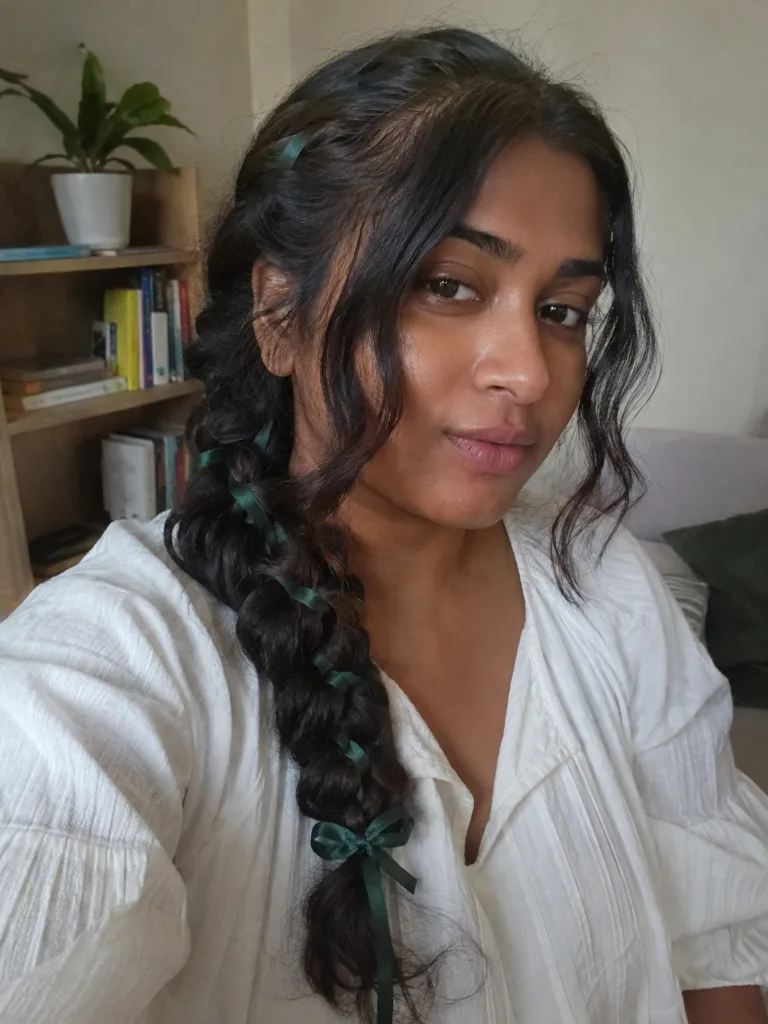
A versatile three-strand braid beginning at the parietal ridge, securing the top half while allowing natural wave texture to flow freely around the shoulders.
Conclusion
The strongest bridesmaid hairstyles half up half down start with the upper-section construction, not the curl pattern shown in a reference photo. Decide whether you want softness, visible braiding, height, a compact knot, or a texture-led crown, then adapt that idea to the hair that will actually be wearing it.
For a bridal party with varied lengths and textures, matching placement and overall formality is usually more practical than demanding identical hairstyles. Preserve what makes each person’s hair work, build a comfortable anchor, and test the result with the dress, accessories, and normal movement before the wedding day.
Editorial Standards & Hair Health Guidance
Every style featured on Tress Atlas is curated with a focus on real-world wearability, scalp tension management, and cuticle preservation. When trying protective styles or tight updos, ensure perimeter hairline sections remain tension-free to avoid traction stress on delicate follicles. For heat styling, cap tools below 350°F (180°C) to prevent thermal keratin denaturation.
Scientific Sourcing: Practices aligned with the American Academy of Dermatology (AAD) on traction alopecia risk reduction and cosmetic trichology research on hair tensile strength.