Bridesmaid Updo Hairstyles: Styling Guide & Cuts That Balance Style, Comfort, and Hold
A bridesmaid updo has to do more than look good in the first round of photographs. It needs to work with the dress neckline, stay comfortable through the ceremony and reception, survive hugging and dancing, and still look intentional from the side and back.
The biggest decision is usually where the hair sits. A low chignon creates a very different profile from a high bun, even when both are smooth and formal. Construction matters too. Braiding, twisting, rolling, pinning natural curls, or working with locs changes how much hair is compressed, where pins are concentrated, and how the style behaves after several hours of movement.
Matching every bridesmaid exactly also isn’t necessary for a coordinated bridal party. Keeping one shared feature—such as a low placement, visible texture, or clean nape—can create cohesion while allowing different densities, lengths, curl patterns, and styling states to work naturally.
Low Updos for Dresses With Strong Necklines or Back Details
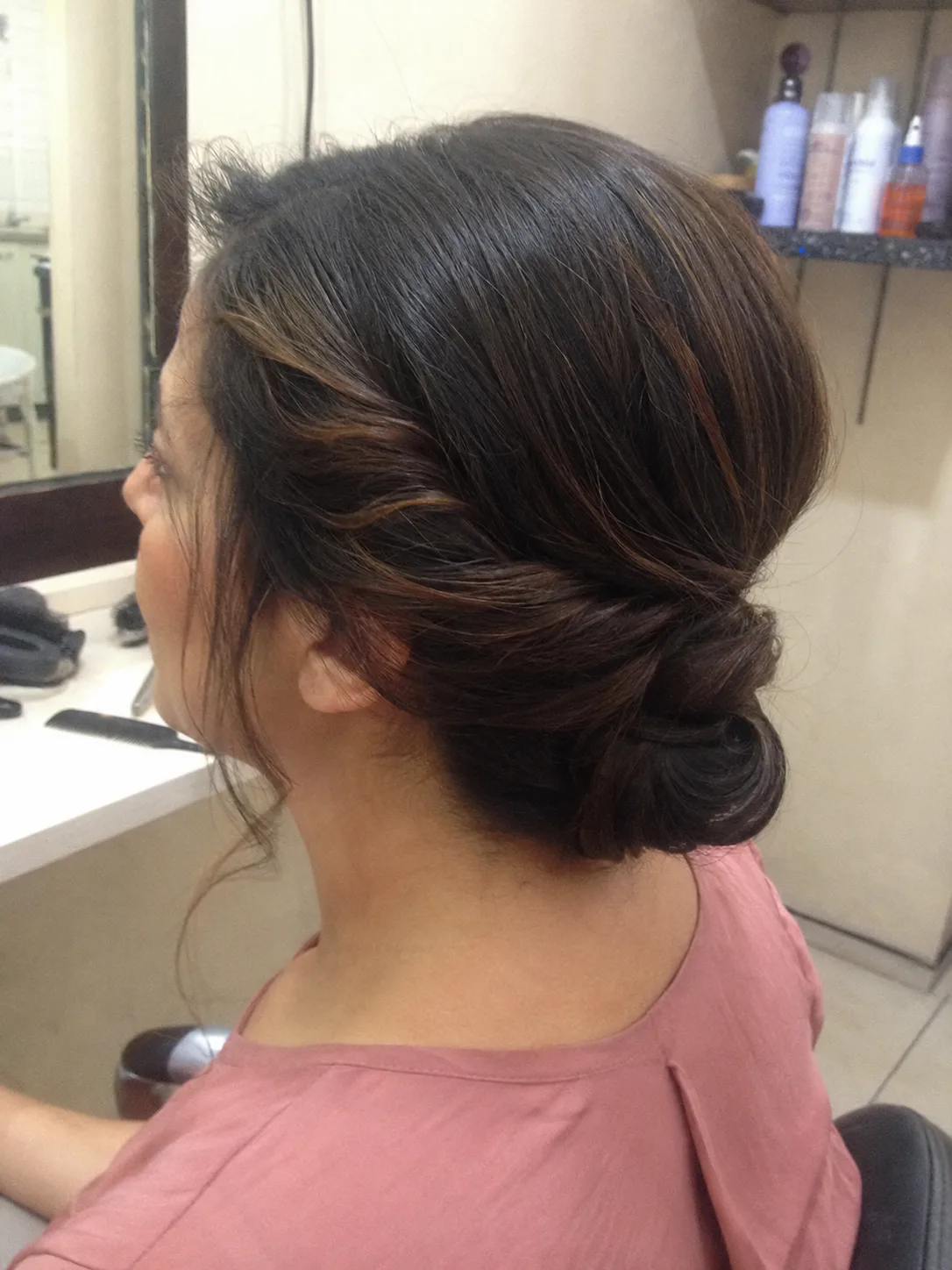
Low Twisted Chignon
A low twisted chignon is one of the most adaptable bridesmaid updos because the interest comes from the way the hair folds into the bun rather than from exaggerated height. Sections can be directed toward the nape, twisted, and pinned so the shape feels soft without becoming loose.
It works particularly well with dresses that have open backs, embellished shoulders, or higher necklines. The hair stays away from most dress detailing while still creating enough shape to register in photographs taken from behind.
Hair density changes the finished scale. Fuller hair can create a broad chignon with little extra manipulation, while lower-density hair may benefit from a more compact shape rather than excessive teasing. A smaller, well-constructed chignon generally looks more deliberate than a large bun that depends on fragile surface volume.
French Twist
For a sharper, more architectural look, the French twist is difficult to beat. The hair is gathered upward along the back of the head, folded inward, and secured so the roll creates a clean vertical line.
That upward direction makes the neck appear visually longer and keeps the bulk of the hairstyle off the dress collar. It’s especially useful when the bridal party’s clothing already has strong draping, bows, or textured fabric around the shoulders.
The French twist is more dependent on secure pin placement than a basic low bun. Very slippery hair may need enough preparation to give pins something to grip, while curly or coily hair can be smoothed, stretched, or worked with more visible texture depending on the intended finish. The reference photograph should match the styling state you actually want to wear.
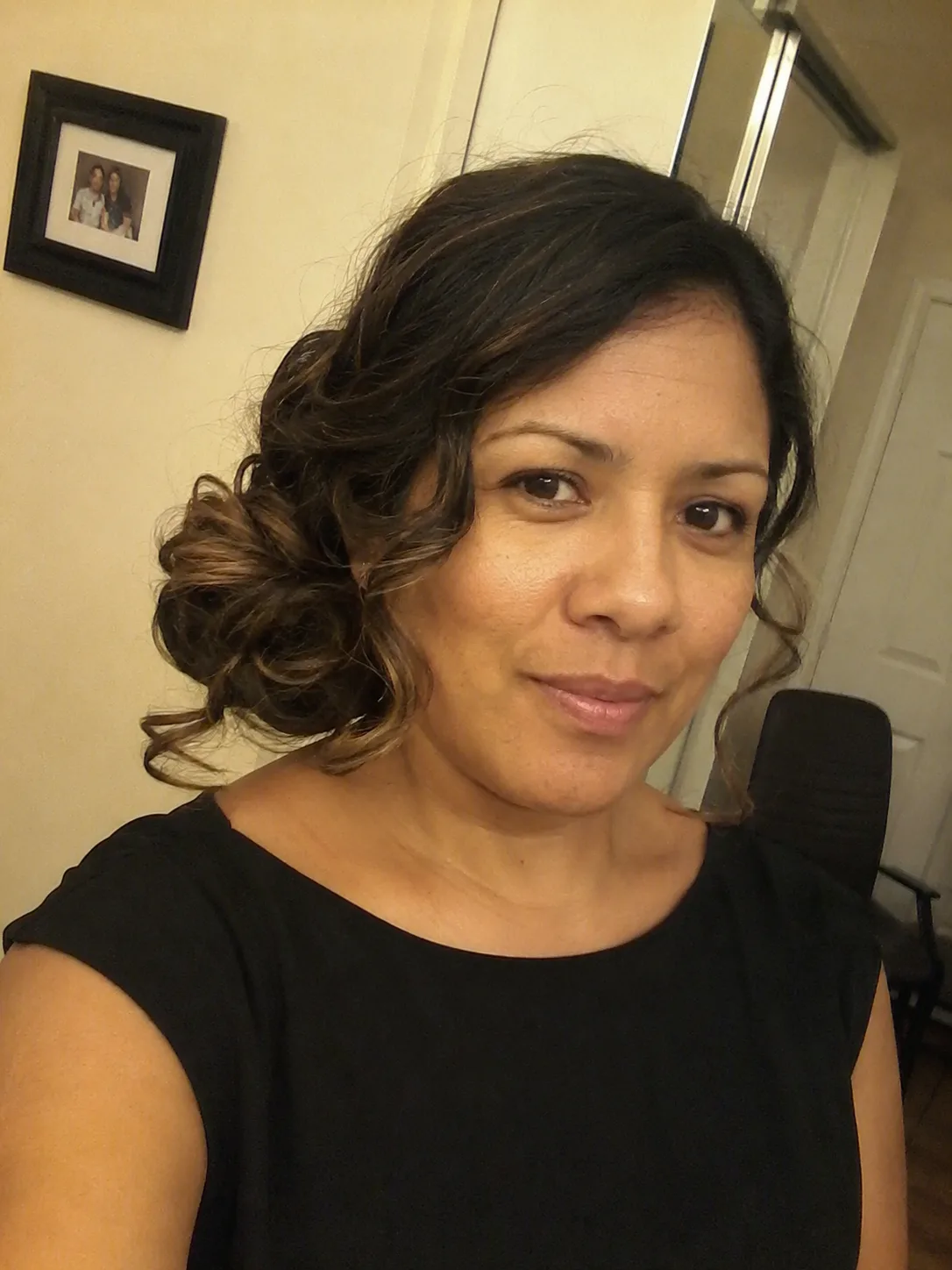
Side Chignon
Moving the bun away from the center changes the entire mood of a low updo. A side chignon feels softer and less symmetrical, with most of the visual weight sitting behind one ear.
This is a strong option for one-shoulder or asymmetrical dresses because the hairstyle can either echo the dress direction or provide balance on the opposite side. Keep earrings in mind: a large bun and a large statement earring occupying the same area can look crowded from profile angles.
Because the shape is intentionally uneven, the placement should look obvious enough to read as a design decision. A bun sitting only slightly off-center can simply appear to have shifted.
Tucked Nape Roll
The tucked nape roll keeps almost everything close to the head. Hair is directed toward the back, rolled or folded underneath, and pinned along the lower edge.
Compared with a rounded chignon, this style has less projection. That makes it an underrated choice for bridesmaids who want an updo without a large bun visible from every angle. It also works beautifully with delicate hair accessories placed above the roll because the accessory doesn’t have to compete with a lot of volume.
A strong tucked shape depends on the ends staying contained. Layers that are much shorter than the rest of the hair may require more detailed pinning around the sides.
Double Twisted Nape Buns
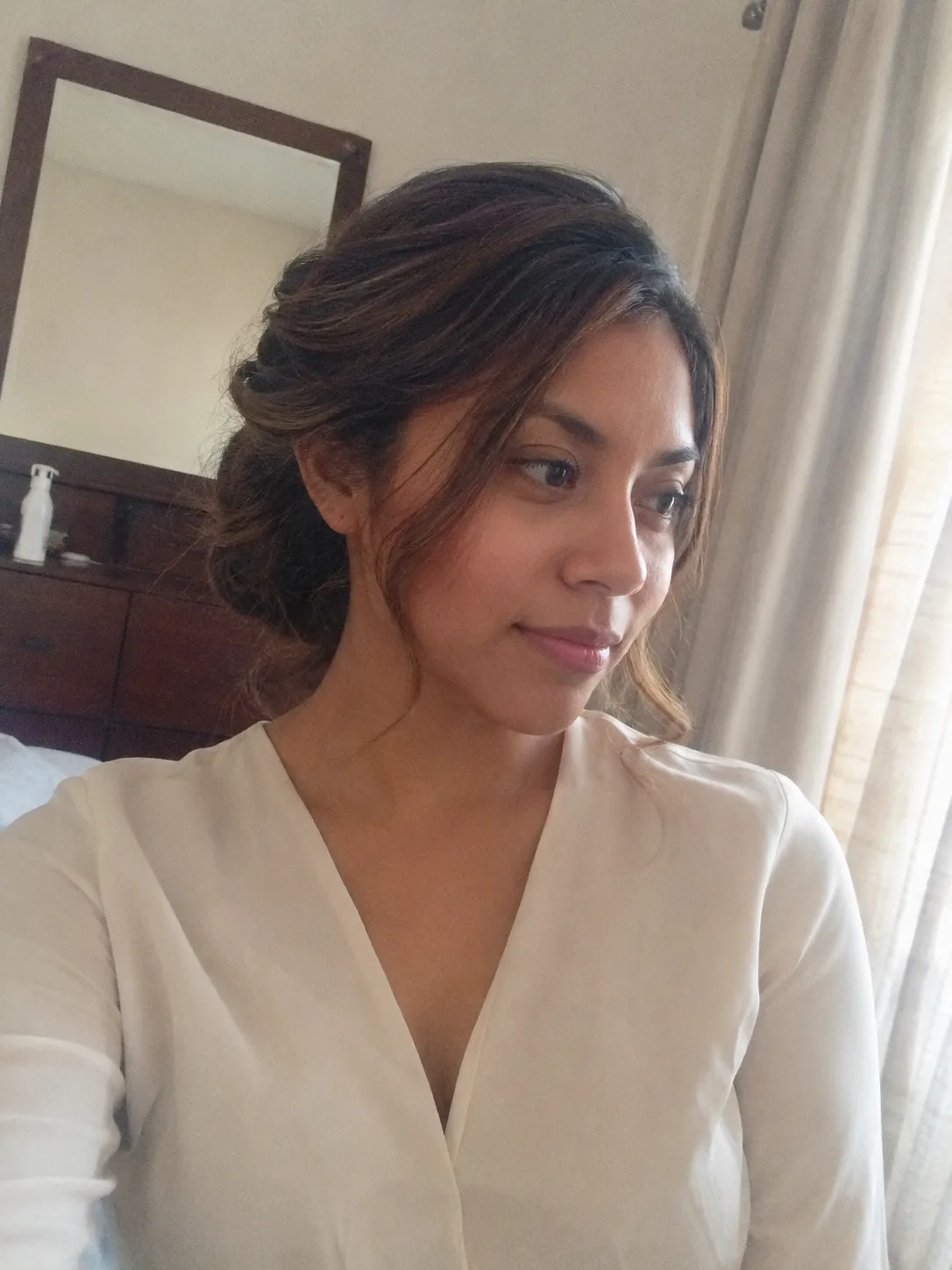
Two compact twists or buns positioned across the nape create a wider, more textured shape than a single centered bun. The construction distributes the hair into separate sections, which can be useful when one large chignon would become bulky.
The effect can lean romantic or graphic depending on how clearly the two shapes are defined. Softer twisting blends them together. Cleaner sectioning makes the double structure more obvious.
This is worth choosing when the back of the hairstyle matters as much as the front. From straight ahead, it may appear relatively simple; the detail becomes visible as the bridesmaid turns.
Buns With More Height and a Cleaner Neckline
High Textured Bun
A high bun immediately gives an updo more presence. Positioning the hair around the crown or upper back of the head clears the neck completely and creates a strong outline in group photographs.
Texture keeps the bun from looking overly severe. Instead of compressing every section into one smooth coil, pieces can be twisted, looped, or pinned so the bun has visible dimension.
Height does affect comfort. A very large bun can meet a car seat or headrest differently from a low style, and dense or added hair creates more concentrated weight at the anchor. Moderate scale is usually the more practical choice for a bridesmaid who wants height without spending the event constantly adjusting the hairstyle.
Sleek Knotted Bun
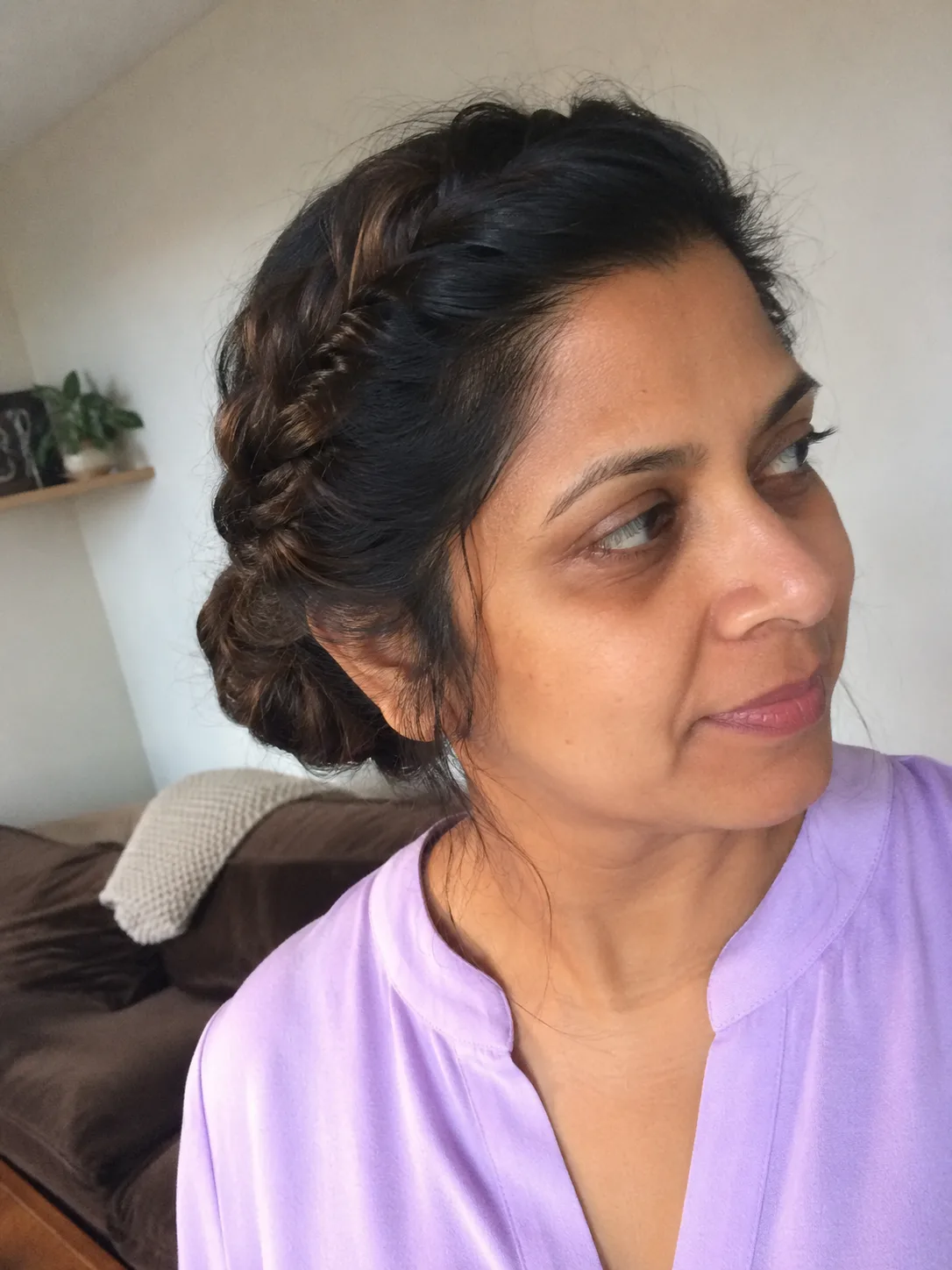
The sleek knotted bun makes sense when the dress, jewelry, or makeup already provides the drama. Hair is gathered cleanly and formed into a compact knot rather than a fluffy, expanded bun.
Its appeal comes from restraint. The ears, neckline, and facial features remain visible, and the hairstyle photographs consistently from several angles.
Surface preparation matters more here because flyaways and uneven tension are more noticeable on a simple shape. Sleek doesn’t require pulling the hair painfully tight. A controlled surface and a secure anchor can create the same visual effect without forcing delicate hairline strands into excessive tension.
Braided High Bun
Braiding the gathered length before forming the bun introduces structure without adding loose pieces around the face. The braid can be wrapped around the base so its pattern remains visible across the bun.
This is more decorative than a sleek knot but still compact enough for statement earrings, halter necklines, or dresses with busy upper-body detailing. It can also give long hair a clear construction instead of creating an oversized coil.
Very long or dense hair naturally builds a larger bun. The stylist should plan the anchor with the finished weight in mind instead of choosing the highest possible placement solely from a reference image.
Curly Top Updo
Curls don’t have to disappear inside a smooth bridesmaid bun. Gathering the hair upward and pinning defined curls individually or in small groups preserves more of the natural movement.
This approach works especially well when curl texture is part of the overall bridal-party look. The base can be controlled while the top stays dimensional, giving the hairstyle a formal outline without pressing every curl flat.
Shrinkage affects how high and wide the final shape appears, so assess the hairstyle in the state it will actually be worn. Naturally shrunken curls, stretched curls, and heat-styled curls can produce noticeably different proportions even on the same length of hair.
Braided and Twisted Bridesmaid Updos
Braided Crown Updo
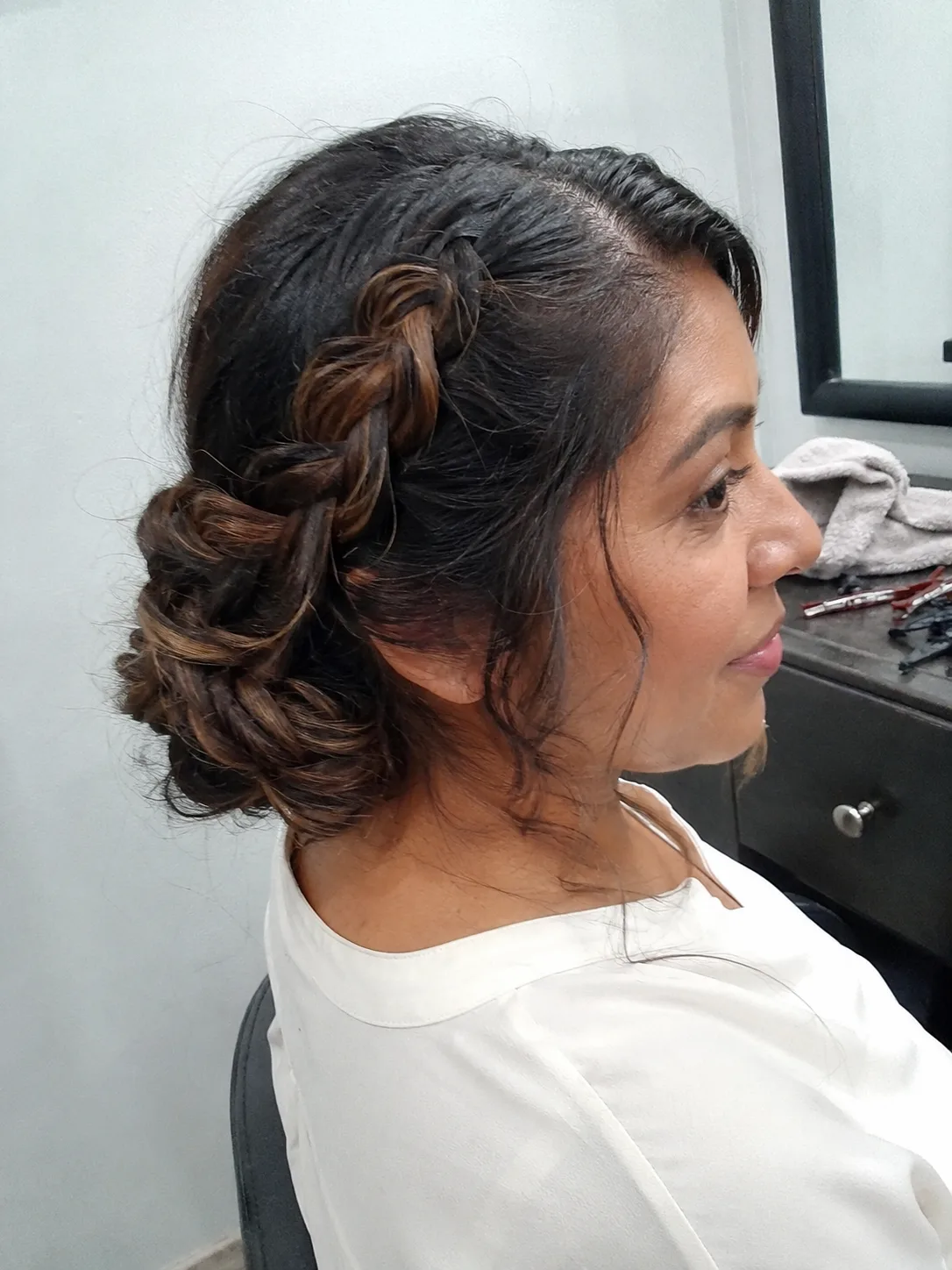
A crown braid moves the detail away from the bun entirely. The braid travels around the head and is pinned into a continuous halo, keeping the ends tucked out of sight.
It suits weddings where the desired look is romantic or softly traditional, particularly when the dress has a simpler neckline. From the front, the braid can frame the hairline; from the back, there isn’t a large separate bun competing with the dress.
The braid’s placement should leave comfortable space around the ears, especially for bridesmaids wearing glasses or larger earrings. Small shifts in braid position can make those accessories far easier to wear.
Dutch Braid Into a Low Bun
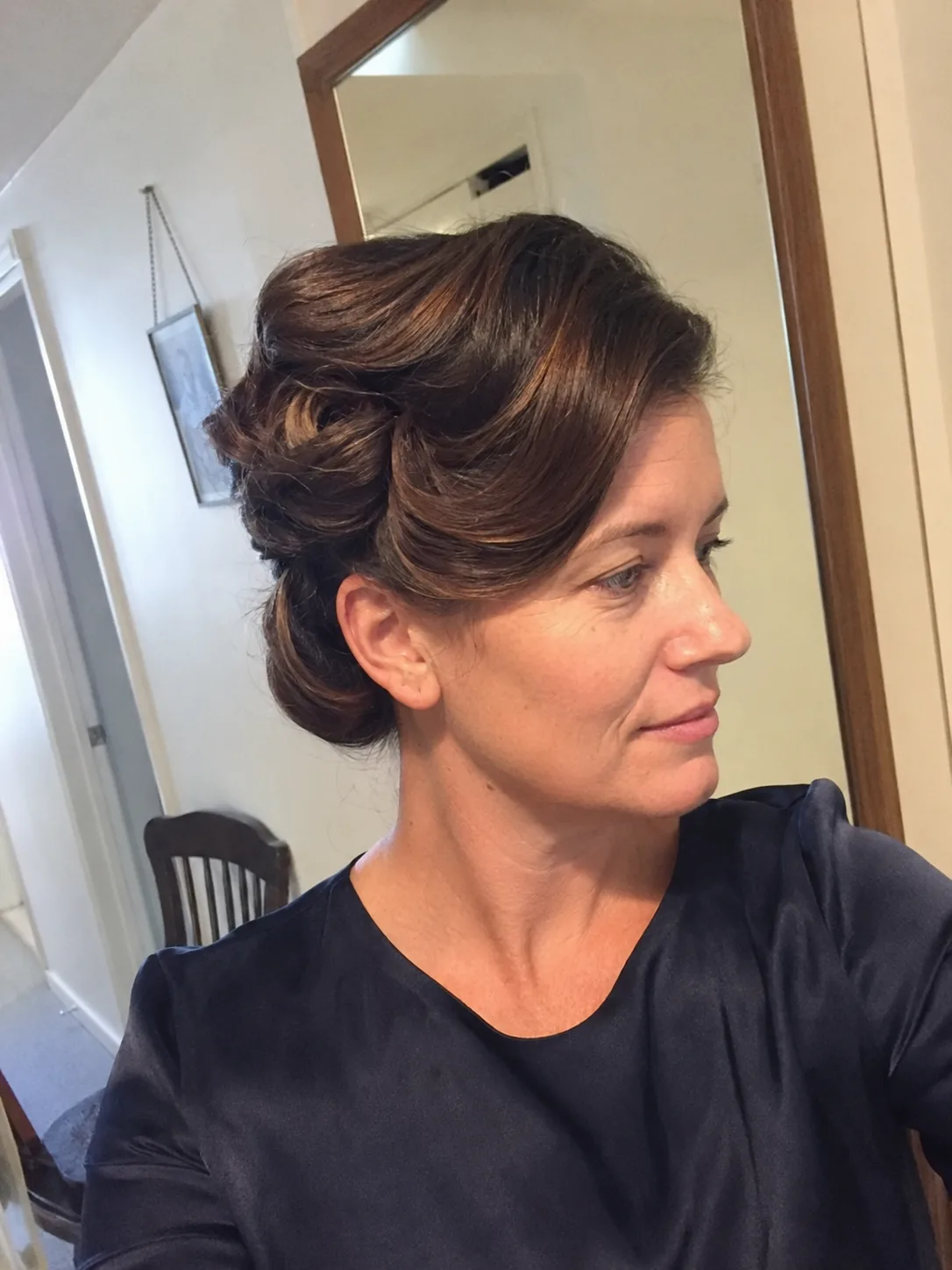
This style gives you visible detail through the crown while preserving the dependable shape of a low bun. One or more Dutch braids travel toward the nape before the remaining length is wrapped or pinned into the updo.
It’s a stronger choice than a plain chignon when photographs are likely to show the top and back of the head. The braid creates recognizable structure even from a distance.
Avoid making every section highly detailed. A pronounced braid combined with an extremely elaborate bun can make the hairstyle look busier than the dress requires.
Rope-Twist Low Updo
Rope twists create softer lines than many three-strand braids. Sections are twisted back from the sides and incorporated into a low pinned shape, giving the hairstyle movement without leaving much loose hair exposed.
This works well when the bridal party wants a romantic finish but outdoor conditions make fully loose curls or tendrils less appealing. Much of the softness is built into the construction itself.
Twists can also accommodate subtle variation among bridesmaids. One person may have more volume through the sides while another wears a tighter profile, yet the shared twisted construction keeps the group visually connected.
Flat-Twist Updo With a Curly Bun
Flat twists give natural, curly, or coily hair a defined route toward the updo. Sections can travel along the scalp toward the crown or nape, where the remaining hair forms a bun or pinned cluster of curls.
The strongest reason to choose this design is contrast. The flatter twisted sections make the fuller bun stand out without requiring the whole head to be smoothed into one texture.
Section size and direction determine where tension accumulates. The twists should feel comfortable from the start, especially where several sections meet near the bun. Hairline hairs don’t need to be captured tightly just to make the design look neat.
Cornrow-to-Bun Updo
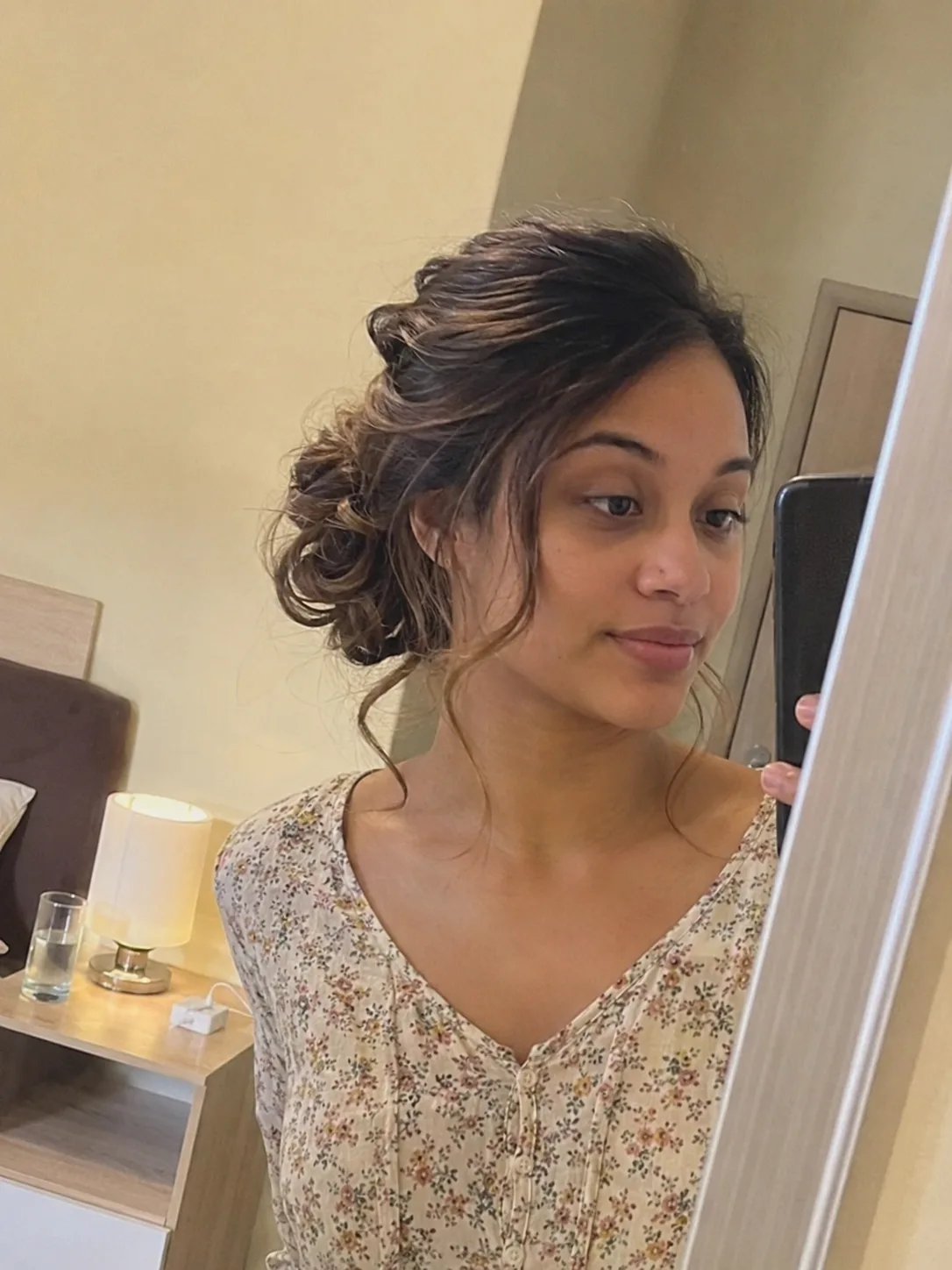
Cornrows create a more graphic route toward the anchor than flat twists. Their direction can become part of the formal design, leading the eye toward a central bun.
This option works particularly well when the bridal party wants an updo that remains clearly braided instead of mimicking a conventional chignon. The bun itself can be formed from natural hair, braids, or an appropriate added-hair construction.
Added hair changes both scale and weight. A dramatic oversized bun looks impressive in still photographs, but a lighter, proportional construction is more practical when it needs to remain comfortable through a long wedding day.
Updos That Keep Natural Texture Visible
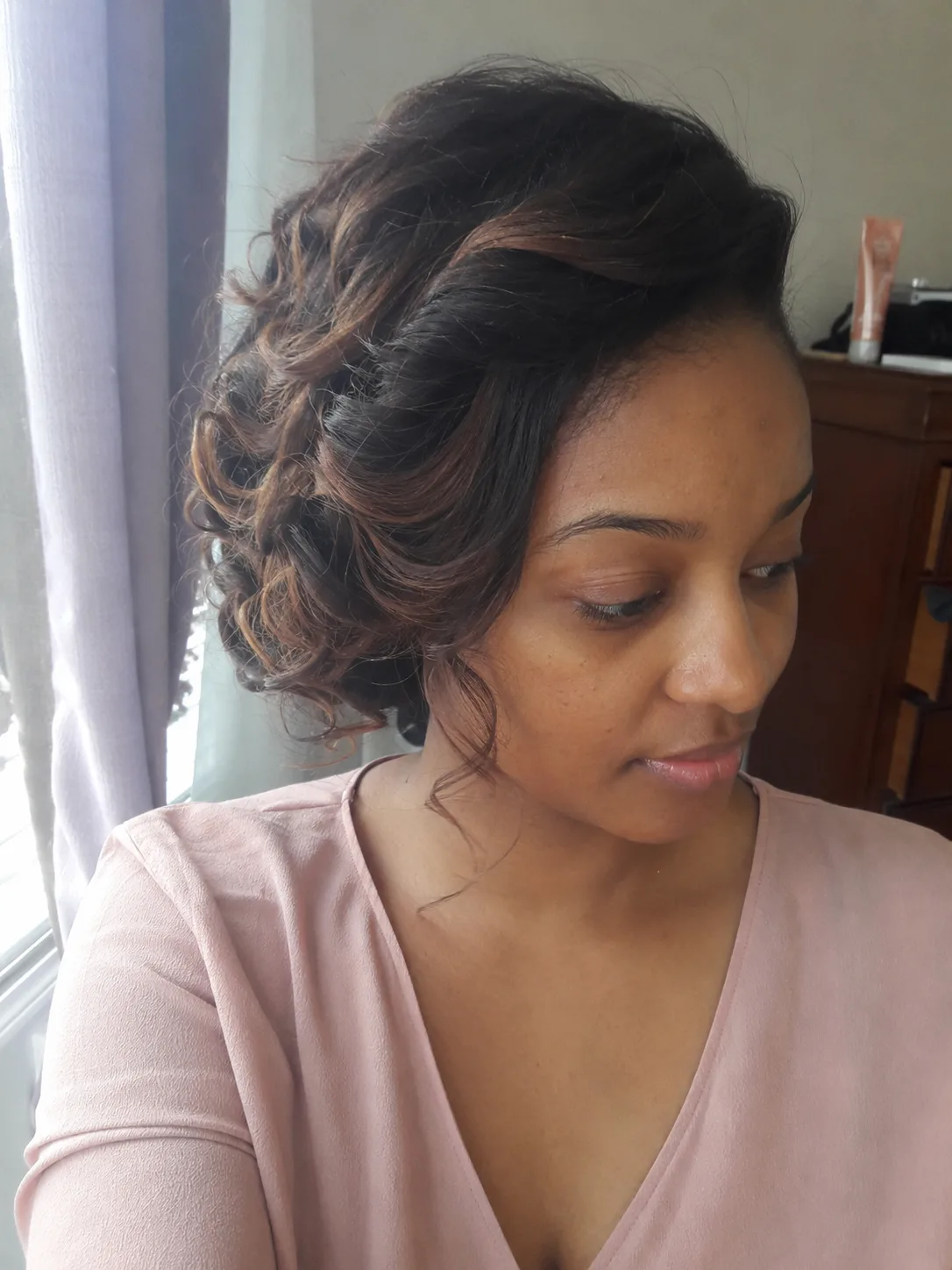
Pinned Curly Updo
For bridesmaids who want curls to remain the main visual feature, a pinned curly updo offers more freedom than forming everything into a bun. Sections are lifted and secured toward the back while individual curl groups remain visible.
It can be adjusted easily to different densities because the shape doesn’t depend on creating one identical bun size. Fuller hair can spread across a broader area; lower-density hair can stay closer to the head without needing excessive teasing to imitate someone else’s volume.
The front also has room for variation. Some bridesmaids may prefer the curls completely away from the face, while others can keep a small amount of natural framing. The group still looks coordinated when the shared feature is the pinned curly texture.
Sculpted Natural Puff Updo
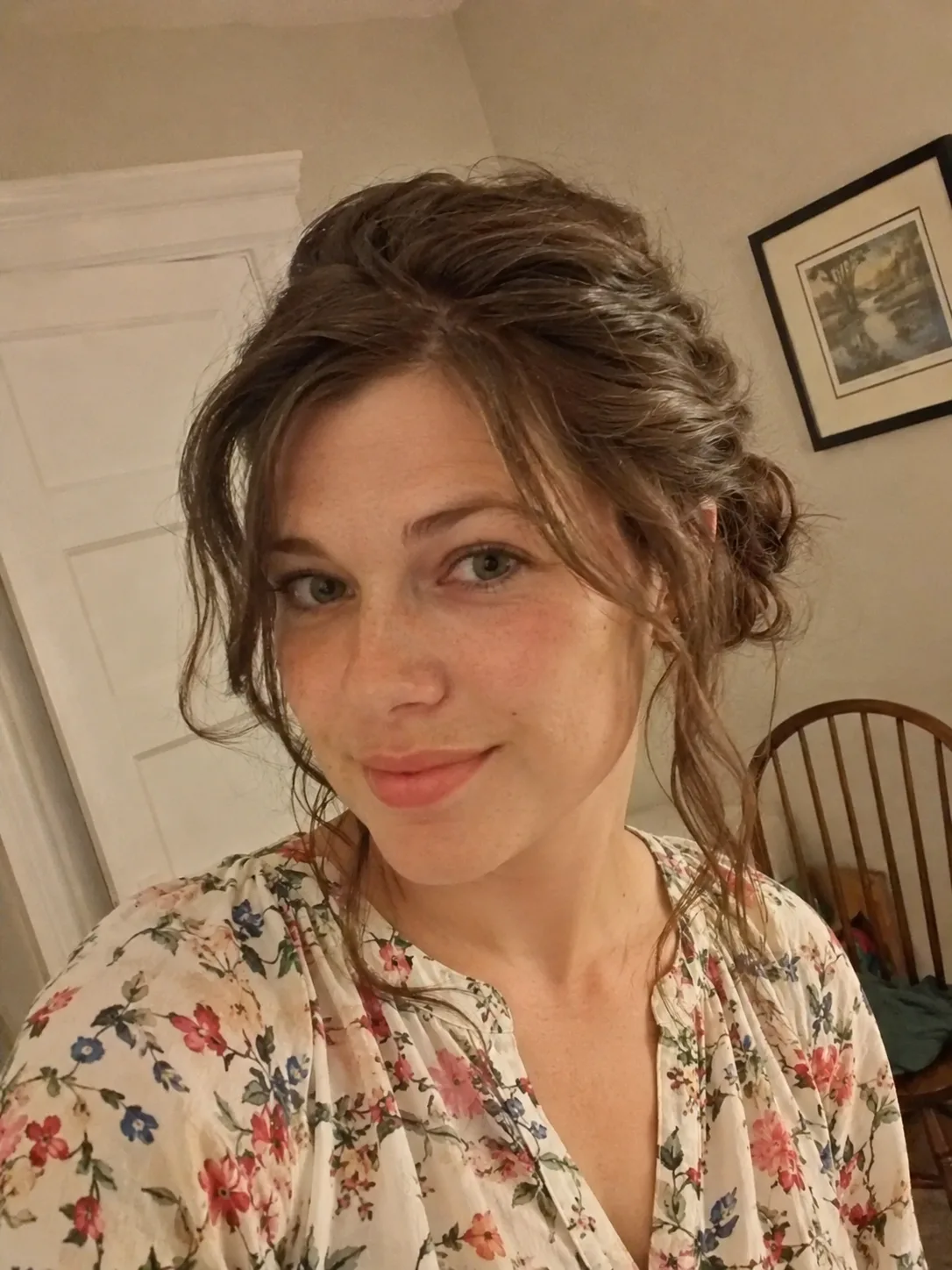
A puff placed high enough to clear the nape can function as a formal updo while preserving a full coily texture. The key is deliberate shaping around the base and perimeter so the puff reads as part of the wedding styling rather than an afterthought.
This is particularly effective for a bridal party that wants natural texture visible in photographs. There’s no need to stretch every coil to make the style formal.
Anchor comfort deserves attention because a large puff can encourage tight gathering around the perimeter. A secure style should still allow normal facial movement without pulling or stinging along the hairline.
Loc Bun or Rolled Loc Updo
Locs create their own lines and dimension, so complicated embellishment is rarely necessary. A rounded loc bun gives a strong, contained shape, while rolling and pinning the locs can create a longer form across the back of the head.
Length and individual loc weight affect what feels comfortable. Mature, longer locs concentrated into a very high point can place considerably more load at the base than a lower, broader arrangement.
A low or mid-level construction is the stronger default when comfort is the priority. It also leaves more freedom to arrange the locs without forcing every piece into a small anchor.
Faux-Bob Tucked Updo
Long hair can create the appearance of a short, softly curved bob without actually being cut. The lengths are folded underneath and secured so the outer layer forms a shorter perimeter around the jaw, neck, or shoulders.
Among bridesmaid updos, this one stands apart because the finished silhouette doesn’t immediately read as a bun. It works well for vintage-inspired weddings and for anyone who wants the neck partially exposed while keeping softness around the sides.
Layers affect how convincing the tuck looks. Shorter surface pieces may naturally blend into the faux perimeter, while very blunt, heavy lengths require a secure internal fold. This style is worth testing before the wedding because the hidden pinning carries most of the construction.
Matching Bridesmaid Updos Without Making Everyone Identical
A coordinated bridal party doesn’t require one hairstyle copied onto every person. Identical instructions can actually create less consistent results because a low chignon behaves differently on short, fine strands than it does on long, dense curls or locs.
A better approach is to choose a shared design rule.
You might keep every hairstyle low at the nape while allowing chignons, twists, and braided buns. Another bridal party could use visible natural texture across curly updos, puffs, and loc styles. A third could keep the neckline completely clear while allowing each bridesmaid to choose a high bun or pinned style that suits their hair.
Accessories can provide another point of connection. Pins, combs, flowers, or ribbons should be planned around the construction rather than inserted wherever space happens to remain. A decorative comb needs a stable area beneath it, while delicate pins may disappear inside a very textured or dimensional bun.
Also check what appears immediately behind the hairstyle. A bow, collar, cape, veil worn by the bride during photographs, or shoulder detailing can compete with a large low updo.
What Bridesmaid Updo Photos Don’t Show
The front-facing photograph is often the least useful angle for choosing an updo. Ask to see the side, back, and crown because those views reveal the actual placement and scale.
A loose-looking chignon may contain extensive internal pinning. A very full bun may depend on long hair, added hair, or a base that isn’t visible. Smooth roots in a reference image may reflect a stretched or heat-styled state that differs completely from the way you want to wear your own texture.
Real-life movement matters as well. A low, projecting bun can press into a headrest. Hair accessories positioned behind the head may catch when you’re changing clothing. Loose pieces around the temples can rub against glasses arms. A high style avoids some of those problems but places its weight farther from the nape.
Outdoor weddings add another variable. Humidity, wind, and heat can change the surface finish long before the actual pinned construction fails. A style that remains attractive with a little texture developing through the evening is often more forgiving than one whose entire effect depends on a perfectly smooth surface.
Planning the Updo With Your Stylist
Bring reference images that show more than a pretty front view. A useful consultation should establish the placement, shape, texture, and degree of softness you actually want.
Mention how your hair will arrive: natural and shrunken, stretched, straightened, braided, loc’d, or already wearing extensions. That starting state affects what construction makes sense.
The dress should be part of the discussion too. Pay attention to:
The neckline and back of the dress
Earrings or other hair-adjacent jewelry
Glasses or hearing devices
Any hair accessory supplied for the bridal party
Whether you want your natural curl or coil pattern visible
Areas of the hairline you prefer handled gently
Shorter hair doesn’t automatically rule out an updo. A tucked style, small roll, pinned curls, or carefully chosen added-hair option may create the desired outline. The better reference photograph is one with a similar starting length and density rather than a style that relies on dramatically more hair.
Comfort should be checked before the hairstyle is considered finished. Turn your head, look downward, move the jaw, and sit back normally. Pins that stab, a base that pulls, or sections that already feel painfully tight are unlikely to become more comfortable during the wedding.
Keeping a Bridesmaid Updo Looking Presentable
Most pinned updos benefit from being handled as little as possible once they’re finished. Repeatedly pushing the bun, lifting loose pieces, or testing pins can gradually disturb the structure that is holding everything together.
Carry only the touch-up items that make sense for your hairstyle. A few compatible pins may help with an escaped section, while an edge brush or small amount of appropriate styling product can refresh a deliberately smooth perimeter. Curly and textured styles may look better with minor surface change left alone instead of repeatedly trying to recreate the original finish.
Take particular care while changing clothes. Neck openings, zippers, dress straps, and jewelry can catch loose pieces or accessories. Many bridesmaid updos are strongest after the main construction is complete but before a comb or decorative pin has been disturbed.
Tightness deserves a different response from ordinary loosening. Persistent pain, stinging, sores, or significant irritation are reasons to address the source of the pulling instead of preserving the hairstyle at any cost. Concerning shedding or changes in density should be discussed with a dermatologist or another qualified healthcare professional.
Related Hairstyles to Explore
- Bridesmaid hairstyles half up half down
- Hairstyles For Puffy Frizzy Hair
- Hairstyles for women over 40
- Pink hair color ideas
FAQs
Can short hair be put into a bridesmaid updo?
Yes, depending on the cut and available length. Tucked nape styles, pinned curls, small rolls, and compact twists can create an updo effect without a large bun. Added hair is another option when appropriate, but it should be attached securely without placing excessive stress on shorter or fragile areas.
Which bridesmaid updo works well for naturally curly or coily hair?
Pinned curly updos, flat-twist styles, sculpted puffs, and textured buns are strong options because they can preserve visible curl or coil character. Decide first whether the hair will be worn shrunken, stretched, or otherwise styled, since that changes the final height and proportions.
Should all bridesmaids wear the same updo?
Usually, a shared design feature works better than exact duplication. Matching the placement, level of formality, accessory, or texture direction allows different hair lengths and states to produce a coordinated result without forcing everyone into the same construction.
How can I tell whether an updo will stay secure for dancing?
Security comes from the base, sectioning, and pin placement more than from a hard-looking surface. After styling, move your head naturally and check whether the bun or roll shifts as one unit. A secure hairstyle should feel stable without creating painful pulling around the anchor or hairline.
Hair Texture & Upkeep Style Matcher
Select your natural hair texture and daily maintenance window to get an instant styling formula and heat safety cap.
Heat Cap: 320°F (160°C)
A versatile three-strand braid beginning at the parietal ridge, securing the top half while allowing natural wave texture to flow freely around the shoulders.
Conclusion
The strongest bridesmaid updo is the one whose construction fits both the wedding aesthetic and the hair wearing it. A low chignon may be the practical default for understated formality, while braids, natural curls, locs, or a higher bun make more sense when texture or shape should be part of the look.
Choose the placement first, then decide how much texture and detail the hairstyle needs. Once those decisions are clear, matching the updo to the dress, accessories, hair state, and comfort becomes much easier.
Editorial Standards & Hair Health Guidance
Every style featured on Tress Atlas is curated with a focus on real-world wearability, scalp tension management, and cuticle preservation. When trying protective styles or tight updos, ensure perimeter hairline sections remain tension-free to avoid traction stress on delicate follicles. For heat styling, cap tools below 350°F (180°C) to prevent thermal keratin denaturation.
Scientific Sourcing: Practices aligned with the American Academy of Dermatology (AAD) on traction alopecia risk reduction and cosmetic trichology research on hair tensile strength.