Hairstyles With Hats: Complete Guide to Volume, Shape & Hat-Hair Prevention
The first decision is where the hairstyle carries its volume. Hair that stays loose through the lengths, gathers below the hat line, or uses braids and twists that tolerate compression tends to behave better than styles built around a lifted crown. Your haircut, texture, density, hat fit, and whether you plan to remove the hat later also affect the result.
A beanie and a wide-brim hat create very different problems. So do a baseball cap and a structured fedora. Instead of treating the hat as an accessory added at the end, plan the hair and hat as one look.
Loose Hairstyles That Let the Hat Do the Shaping
Loose Waves Under a Wide-Brim Hat
Loose waves are one of the easiest pairings because the visual interest sits below the brim. The hat can flatten the crown slightly without destroying the hairstyle, while the bends through the mid-lengths and ends remain visible.
Keep the root area relatively relaxed instead of building exaggerated lift before putting the hat on. A very full crown fights the hat physically and is more likely to look compressed once you remove it.
This combination is especially effective with medium to long hair because enough movement remains visible around the shoulders. On layered hair, watch shorter pieces around the face: they may flip differently after being tucked beneath the brim. Letting a few pieces fall naturally is usually easier than repeatedly repositioning them.
Straight Hair With a Clean Center or Soft Side Part
Straight hair creates a simple frame beneath structured hats, especially fedoras, rancher-style hats, and other designs with a defined brim. The cleaner surface keeps the hairstyle from competing with the hat.
Part placement matters more here than extra styling. Set the part before the hat goes on and position the hat without dragging it backward through the hair. That helps reduce random separation at the roots.
This is less forgiving if your hairstyle depends on substantial root lift. A smoother, flatter finish already expects some contact at the crown, so removing the hat produces less of a visual change.
Natural Curls Worn Loose Beneath a Roomier Hat
Loose curls can work beautifully with hats, but hat fit becomes part of the hairstyle. A crown that barely accommodates your hair may crush curl groups, increase rubbing, and make the brim sit at an unintended angle.
A roomier hat lets the curls keep more of their shape. Arrange the front first, settle the hat into position, then adjust only the curls still visible around the sides and back. Constantly pulling curls through the brim can create unnecessary frizz.
Shrinkage also changes how much hair appears below the hat. Judge the combination in the curl state you actually plan to wear rather than relying on how the same haircut looks stretched or freshly wet.
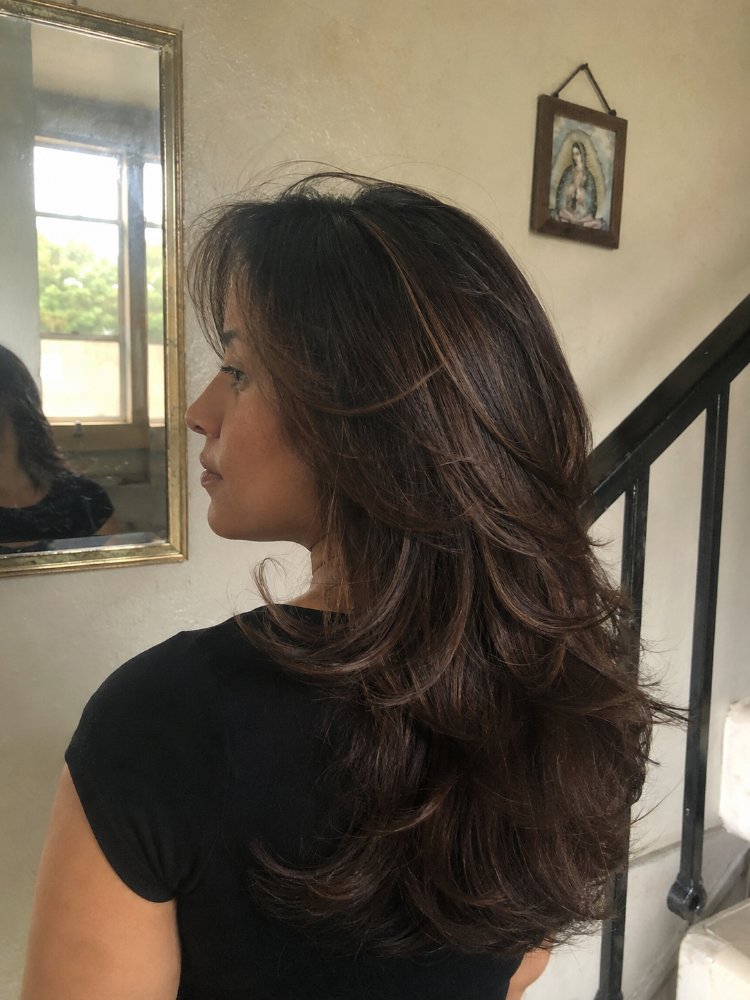
Long Layers With Face-Framing Pieces
This is a useful choice when you want the hat to look integrated into the hairstyle rather than placed on top of it. Long layers keep movement through the lower half while shorter front pieces soften the line around the brim.
The strongest version uses face-framing pieces that are long enough to behave predictably. Very short layers may keep springing beneath the hat or sticking against the temples.
For an outfit built around the hat, this is more versatile than elaborate crown styling. The haircut supplies the shape, and the hat provides the structure.
Low Styles That Avoid the Crown Completely
Low Ponytail Through a Baseball Cap
A low ponytail is the practical default for a baseball cap because the construction of the hat already provides a natural exit point at the back. The ponytail can sit through the opening or below the adjustment band, depending on the cap and your hair length.
Use a fabric-covered elastic and place the ponytail where it doesn’t force the cap upward. A bulky elastic positioned directly beneath a stiff adjustment strap can become uncomfortable surprisingly quickly.
For curly or coily hair, the tail can stay full rather than being straightened. The key decision is the base: a smooth base gives a sharper sporty look, while some natural texture around the roots makes the style softer.
Low Bun at the Nape
A bun at the nape works with hats that leave enough space at the back, including many wide-brim and structured styles. It looks finished without adding any bulk at the crown.
Position matters. A bun placed even slightly too high may collide with the back edge of the hat and tilt it forward. Building the bun lower keeps the hat seated where it belongs.
This is also a strong choice for longer hair that becomes annoying when left loose around coat collars, scarves, or shoulder straps. A compact bun keeps the lengths contained while the hat remains the focal point.
Soft Low Chignon
A low chignon is the dressier relative of the everyday nape bun. Instead of winding the hair into a tight circular shape, the hair can be folded, twisted, or pinned into a wider form near the base of the neck.
That lower horizontal placement pairs particularly well with occasion hats because it balances the visual width of a brim. Keep the chignon compact enough that it doesn’t push into the hat or compete with decorative details.
This style is more salon-dependent when the finish needs to stay especially smooth or when the hat itself has combs, clips, or internal fastening points. Those attachment details should be considered before the hair is pinned.
Low Side Ponytail
Moving the ponytail slightly to one side changes the balance without creating extra height. It works well when the hat is simple and you want more hair visible from the front.
Keep the base near the nape rather than beside the ear. A high side ponytail can press against the lower edge of many hats and pull the style off-center.
Waves, curls, twists, or a straight tail all work. The side placement is doing the visual work, so the lengths don’t need excessive styling.
Braids and Twists That Tolerate a Little Compression
Single Low Braid
A single braid is one of the most reliable hairstyles for wearing a hat all day. The crown can stay fairly flat, the lengths remain controlled, and there is no raised base for the hat to press against.
Start the braid below the point where the hat sits. French or Dutch braiding across the crown creates more texture underneath the hat and may feel bulky, whereas a simple braid beginning at the nape keeps the construction out of the way.
A looser braid gives a softer appearance; a more compact braid handles movement better. Long hair also stays away from zippers, scarf ends, and bag straps more effectively than when it’s worn loose.
Two Low Braids
Two braids distribute the hair to either side, making them particularly useful with casual hats and beanies. They also keep more of the hairstyle visible from the front than one braid running down the back.
This is an underrated option for thick or dense hair because you’re dividing the bulk rather than forcing it into one large bundle beneath the hat.
The part can be clean or relaxed, but it shouldn’t be the only feature carrying the look. The real advantage is construction: both braids begin low and leave the crown unobstructed.
Two-Strand Twists With a Hat
Long two-strand twists offer much of the control of braids while keeping a different texture through the lengths. They suit natural hair particularly well when you want the hairstyle itself to remain visible beneath a casual hat.
Twists can compress more easily than a high puff or bulky updo, but avoid stuffing a large amount of hair into a tight hat. The roots should still feel comfortable, and the hat shouldn’t create pulling around the hairline.
At the end of the day, check areas that received the most friction, usually near the brim and nape, before automatically re-twisting the entire style.
Braided Pigtails With a Baseball Cap
For a sportier result, two braided pigtails work better than trying to squeeze a high ponytail beneath the cap. Each braid drops naturally below the sides of the hat and stays contained during movement.
Begin them low enough that the cap sits flat. Positioning the bases too close to the sides of the head can create pressure where the hat band meets the hair.
This pairing is especially useful when you know you’ll be active and don’t want loose lengths repeatedly sticking to the neck or moving across the face.
Natural Hair, Locs, and Texture-Led Hat Styles
Low Puff
A low puff keeps natural texture visible while shifting the main volume away from the crown. It works best with a hat that leaves adequate room around the lower back of the head.
Gather the hair gently and leave fragile perimeter hairs out of a tight anchor if they don’t reach comfortably. A puff doesn’t need a sharply pulled hairline to look finished.
Hat choice carries more importance here than with a flat braid. A rigid back edge can compete with a large puff, while a hat with a more accommodating shape lets the hair sit naturally below it.
Short Afro With a Hat Perched Higher
A short Afro creates an entirely different relationship with a hat: instead of hiding the texture, you can allow the hair to form a soft border around the brim.
The hat needs to fit the actual volume of the hair. Pressing a small hat down until the hair is compacted isn’t a useful styling strategy, especially if it creates uncomfortable pressure.
Some flattening can occur, so this style makes more sense when you’re comfortable refreshing the shape after removing the hat. Fingers or a suitable hair pick can help restore volume without turning the process into a complete restyle.
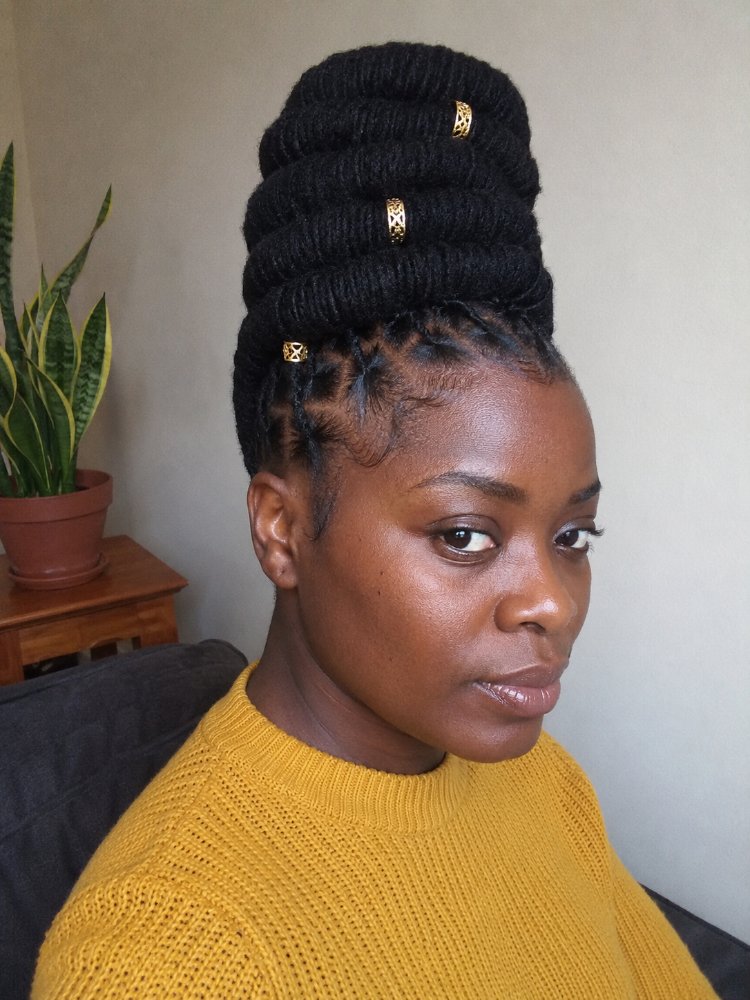
Locs Worn Down With a Hat
Locs worn loose beneath a hat create a strong vertical line that contrasts well with a horizontal brim. The construction is simple, but mature or long locs can add substantial bulk depending on their size and density.
Choose the hat around the hair instead of forcing the locs into limited space. Folding or bunching many locs beneath the crown can change the fit and concentrate pressure in specific areas.
Leaving the locs down is generally more practical than piling them into a high bun beneath a hat. It also avoids creating a raised anchor where the hat needs to sit.
Locs in a Low Ponytail
A low ponytail contains locs for a cleaner profile while leaving the top of the head free. This is especially useful with caps, outdoor hats, or situations where loose locs would keep falling forward.
The base should support the gathered hair comfortably without being cinched aggressively. Longer locs create more movement and leverage at the anchor, so lower placement usually feels more stable than a high ponytail.
With a baseball cap, check the size of the back opening before assuming the entire ponytail should pass through it. Sometimes allowing the ponytail to sit below the closure produces a better fit.
Short Hair and Hat-Friendly Cuts
Pixie Cut With Side-Swept Texture
Short hair doesn’t need an elaborate workaround for hats. A pixie with slightly longer hair through the front can create enough visible styling around the brim while keeping the crown easy to accommodate.
The important issue appears after removal. A cut styled with extreme height at the crown will lose more of its intended shape than one relying on direction, separation, or side-swept texture.
Keep the part of the pixie visible near the forehead doing most of the work. Then the hat can flatten the less-visible crown without erasing the entire hairstyle.
Short Bob Tucked Behind the Ears
A short bob gives a hat a clean lower frame, especially when the hair is tucked behind one or both ears. It suits structured hats because the haircut’s perimeter remains visible while the crown stays relatively uncomplicated.
The hidden problem is the collar. A bob that ends near the neckline may flip outward after rubbing against a coat, scarf, or jacket while the hat presses from above.
For an all-day winter outfit, a slightly smoother lower section is easier to manage than a heavily curled-under finish that needs to stay perfectly aligned. Glasses also deserve a quick check: hat pressure, tucked hair, and glasses arms all meet in the same small area around the temples.
Match the Hairstyle to the Hat
The hat shape should narrow your hairstyle choices before you start styling.
A beanie rewards hair that can tolerate broad contact across the crown. A baseball cap favors styles built around its opening and lower back edge. Wide brims give you more freedom below the hat but still need a stable, comfortable crown fit.
Also decide whether the hat stays on. For an outdoor event where you’ll wear it continuously, a little flattening underneath matters less. A commute followed by an indoor workday demands a hairstyle that can recover after removal.
What Hat Photos Often Hide
Reference photos usually capture the best angle, not the practical aftermath. Hair may have been arranged immediately before the image, and you can’t tell how it behaves after hours beneath the hat.
Friction matters most around the band and brim. Straight styles can pick up bends. Curls may separate. Short hair can change direction. Fine strands may show flattening quickly, while very dense hair can make the hat sit higher than expected. Fine strands and low density are separate characteristics, so don’t assume one automatically comes with the other.
Humidity adds another variable. Hair that expands after styling may gradually change the hat’s fit, especially with curls, coils, and frizz-prone textures.
Your easiest test is physical: put on the full combination before you actually need it. Turn your head, sit against a chair or car headrest, wear your glasses if applicable, and remove the hat once. A hairstyle that survives those ordinary movements is far more useful than one that only looks good while you’re standing in front of a mirror.
Keeping Hair Comfortable Under a Hat
Start with a clean, comfortable fit. A hat that already feels tight before the hairstyle is complete is unlikely to improve once more hair is tucked beneath it.
Avoid repeatedly forcing extra volume under the crown. Redistribute the hair, switch to a lower style, or choose a roomier hat instead. This is particularly important with braids, locs, extensions, thick twists, and high-density natural hair because the extra bulk changes how the hat contacts the scalp.
Friction deserves attention during frequent hat wear. A smooth scarf or bonnet can reduce overnight friction after the hat comes off, but it won’t undo excessive pulling or repair damaged strands.
Pay attention to your scalp rather than treating discomfort as part of keeping the style secure. Persistent pain, redness, sores, irritation, sudden shedding, or a concerning density change deserves appropriate professional assessment.
A Practical Hat-and-Hair Checklist
Before committing to the look, check these points:
Does the hairstyle place its main bulk below the hat line?
Can the hat sit in its intended position without being forced down?
Will a ponytail, bun, puff, loc bundle, or braid interfere with the back edge?
Does the hairstyle still look acceptable after the hat comes off?
Can you turn your head and lean against a headrest comfortably?
Do glasses arms fit without competing with bulky temple hair?
Will a coat collar, scarf, backpack strap, or seatbelt interfere with the visible lengths?
Does the hairline feel relaxed rather than pulled to keep everything contained?
For most people, a low style or loose texture is the safest starting point stylistically. Build upward only when you know the hat leaves room for it.
Related Hairstyles to Explore
- Hair Inspo Aesthetic
- Dimensional Brunette for women
- Slick Baddie Hairstyles
- Baddie Hairstyles Natural Hair
FAQs
What hairstyle is easiest to wear with a baseball cap?
A low ponytail is the simplest starting point because it works with the cap’s existing back construction. One or two low braids are better when you want the lengths contained. Place the base according to the opening and adjustment strap rather than forcing a ponytail through a space that’s too small.
How can I keep my hair from looking flat after wearing a hat?
Build less of the hairstyle around crown volume in the first place. Loose waves, curls, low braids, and styles with movement through the ends hide crown compression better than highly lifted roots. After removing the hat, gently separate or lift the roots with your fingers instead of immediately brushing through the entire style.
Can curly and coily hair be worn under hats without straightening it?
Yes. Loose curls, twists, low puffs, braids, and short natural styles can all work with hats. Choose a hat that accommodates your actual hair volume and shrinkage rather than compressing the texture into a smaller space. Curly face-framing pieces don’t need to be straightened to make the combination work.
What hairstyles work with hats for short hair?
Pixies, short curls, crops, and bobs all pair well with hats because they don’t require a separate ponytail or bun placement. Focus on the hair that remains visible around the forehead, ears, and neckline. A short cut that relies on extreme crown height will usually show more flattening after hat removal.
Can I wear braids or locs under a hat?
Yes, provided the hat has enough room for the installation without uncomfortable pressure. Leaving braids or locs down or gathering them low is usually easier than placing a bulky bundle at the crown. Added hair, loc size, overall density, and hat construction all change the amount of space you’ll need.
What hairstyle works best with a beanie?
Low braids, two-strand twists, loose straight hair, and relaxed waves are especially practical because a beanie makes broad contact with the crown. Natural curls can work too when the beanie has adequate room and you don’t mind refreshing the crown after removal.
Should I style my hair before choosing the hat?
For an outfit built around a particular hat, choose them together. The hat’s crown depth, brim, closure, back edge, and internal attachments can eliminate certain hairstyles before styling begins. Testing the exact combination is especially worthwhile for occasion hats or any hairstyle you need to keep presentable after the hat comes off.
Hair Texture & Upkeep Style Matcher
Select your natural hair texture and daily maintenance window to get an instant styling formula and heat safety cap.
Heat Cap: 320°F (160°C)
A versatile three-strand braid beginning at the parietal ridge, securing the top half while allowing natural wave texture to flow freely around the shoulders.
Conclusion
The strongest hairstyles with hats put the hair’s important shape somewhere the hat won’t crush it. That usually means movement through the lengths, controlled texture around the face, or a ponytail, braid, puff, bun, or chignon positioned low.
Start with the hat you’re actually wearing. Check its crown space, brim, closure, and back edge, then build the hairstyle around those physical limits. A low braid that stays comfortable and still looks good after hat removal is a better choice than an elaborate style that spends the whole day fighting the hat.
Editorial Standards & Hair Health Guidance
Every style featured on Tress Atlas is curated with a focus on real-world wearability, scalp tension management, and cuticle preservation. When trying protective styles or tight updos, ensure perimeter hairline sections remain tension-free to avoid traction stress on delicate follicles. For heat styling, cap tools below 350°F (180°C) to prevent thermal keratin denaturation.
Scientific Sourcing: Practices aligned with the American Academy of Dermatology (AAD) on traction alopecia risk reduction and cosmetic trichology research on hair tensile strength.