Braided Hairstyles to Choose by Shape, Upkeep, and Comfort: Complete Styling & Placement Guide
Braided hairstyles can look deceptively similar in photographs. In real life, the construction underneath the finished style changes almost everything: how much scalp is exposed, where weight sits, whether you can easily cleanse the roots, how the hair behaves against clothing, and what takedown involves.
The first decision is less about picking the prettiest braid and more about choosing the type of construction you actually want to live with. Individually sectioned braids move differently from cornrows. A French braid behaves differently from an extension-heavy braided ponytail. Loose curls left through boho braids create an entirely different maintenance problem from fully braided lengths.
Your normal styling state matters too. Natural, stretched, pressed, relaxed, loc’d, and previously processed hair shouldn’t be treated as interchangeable starting points. Shrinkage, density, strand size, condition, and fragile areas can change which braid design feels practical.
This guide covers 25 braided hairstyles that are meaningfully different in construction, silhouette, maintenance, or purpose.
Individually Sectioned Braids
Traditional Box Braids
Traditional box braids are built from separate sections, with added hair commonly incorporated close to the base. Their biggest advantage is movement. Unlike cornrows, the individual braids can be gathered, parted, swept over one shoulder, pinned up, or worn loose.
The base deserves as much attention as the length. Very small sections carrying disproportionately heavy extensions can feel uncomfortable even when the finished braids look neat. A balanced section-to-braid relationship is more useful than chasing an ultra-tight root.
Traditional box braids are a strong choice when versatility matters more than having the scalp pattern become part of the design.
Knotless Box Braids
Knotless box braids begin with the wearer’s own hair before added hair is incorporated gradually. Visually, this creates a flatter transition at the scalp than the more defined base of many traditional box braids.
They work especially well for someone who dislikes a bulky root and wants individual braids that fall more naturally from the section. The flatter start can also make ponytails and half-up arrangements easier to position without stacking thick knots at the base.
Comfort still depends on the braider’s grip, section size, braid density, and amount of added hair. Choose knotless construction for the root appearance and movement, not as a substitute for discussing tension.
Jumbo Box Braids
Few styles change the overall outline as quickly as jumbo box braids. Large sections and thicker braids create a graphic result with fewer individual pieces than micro or medium-sized installations.
That scale is the appeal. It also means each section may carry more hair, so the relationship between the natural section and the completed braid needs careful consideration. Extremely long, dense jumbo braids can pull noticeably during movement.
Jumbo braids are more convincing when you want the braids themselves to be a dominant visual feature. They’re less suitable when your priority is tiny parting detail or highly flexible pin-up styling.
Micro Braids
Micro braids trade bold scale for movement and detail. Their small size lets the overall mass of braids behave more like loose hair, making them easier to gather into flowing shapes without several large braids determining the outline.
The hidden commitment is section count. Small braids require detailed handling both during installation and removal, and the roots still need to be accessible enough for cleansing and drying. Takedown deserves consideration before the style goes in.
This is one of the stronger braid choices when a fine, fluid finish matters enough to justify more involved maintenance.
Bob-Length Box Braids
Length changes box braids more than a reference photo sometimes suggests. Cutting the silhouette near the jaw, neck, or shoulders removes much of the sweeping movement associated with long braids and replaces it with a defined perimeter.
That makes the ends more important. They need to sit in a way that supports the intended outline rather than flaring unpredictably around the shoulders. A bob also interacts with coat collars, necklaces, and the neckline of clothing much more than waist-length braids do.
For someone who likes individual braids but doesn’t want lengths constantly moving across the back, the braided bob is a particularly practical option.
Boho Box Braids
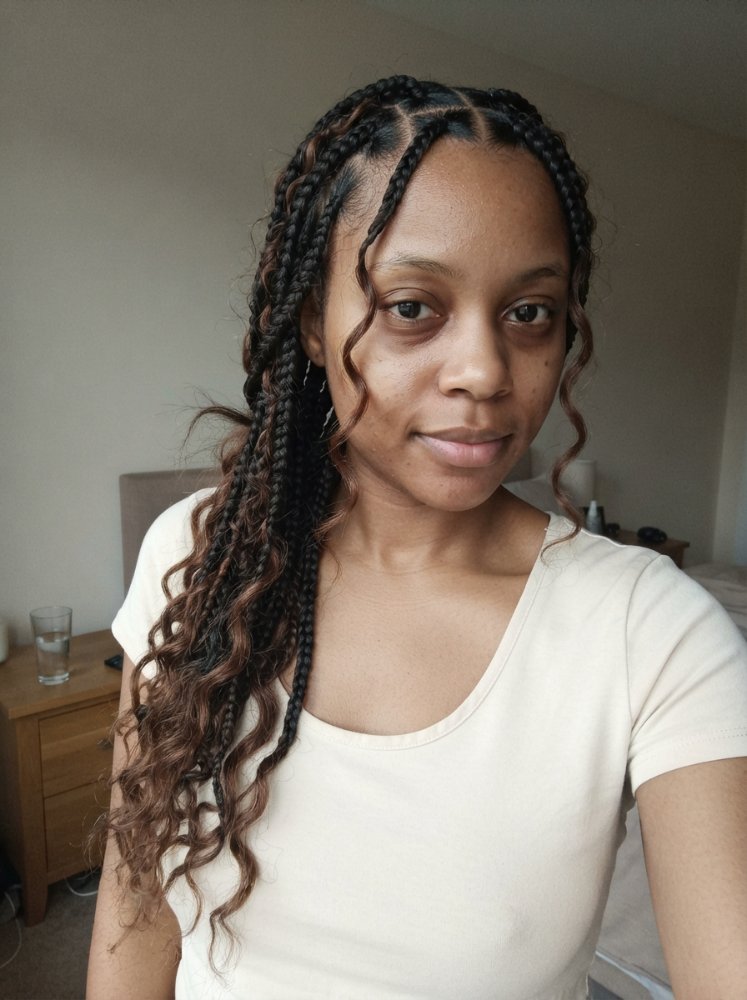
Boho box braids combine fully braided sections with loose curly or wavy pieces left visible through the lengths. That contrast creates softness and more irregular movement than standard box braids.
The loose hair is where the routine changes. Free strands can rub together, catch around neighboring braids, and become more affected by moisture and friction. Keeping every loose curl looking freshly separated usually demands more attention than maintaining completely braided lengths.
The style is worth that extra work when softness is the priority. Someone looking for the most contained, low-fuss braid surface will usually find standard box braids easier.
Cornrows and Scalp-Defined Designs
Straight-Back Cornrows
Straight-back cornrows make construction visible. The braids travel from the front toward the back, so the scalp pattern, spacing, and direction form a large part of the finished appearance.
This is one of the easiest braided looks for understanding where every section goes. It also leaves more scalp exposed than a dense field of individual braids, which can make root access straightforward.
A clean photograph can hide how firmly the front sections were gathered. Fine hairs around the perimeter don’t need to be forced into the same grip as stronger interior hair. The strongest version is secure enough to stay together while remaining comfortable during ordinary facial movement and sleep.
Feed-In Cornrows
Feed-in cornrows build thickness progressively as added hair is incorporated along the braid path. The transition can create a slimmer beginning and fuller braid through the length.
That gradual change gives the braider more control over the visual scale than starting every cornrow at maximum thickness. It’s particularly useful when the design depends on a deliberate taper from hairline to length.
Feed-in construction is more about how the braid develops than one specific pattern. Straight backs, curved designs, and ponytail arrangements can all use the method, which makes it a versatile technique rather than a single fixed silhouette.
Stitch Braids
The appeal of stitch braids is precision. Small horizontal divisions are created across the sections as the cornrows travel backward or toward another anchor, producing the repeated stitched effect visible between braid lines.
Because those divisions are exposed, parting quality becomes a major feature of the hairstyle. This isn’t the braid to choose when you want a soft, indistinct root area.
Stitch braids also benefit from realistic reference photos. A highly edited image can make every scalp line look almost architectural, while real hairlines, growth patterns, density, and texture naturally affect the geometry.
Lemonade Braids
Direction does most of the visual work in lemonade braids. The cornrows travel toward one side, creating a sweeping asymmetrical result instead of moving evenly toward the back.
That sideward flow changes daily behavior. Most of the length tends to occupy the same shoulder and side of the neck, which can be convenient if you enjoy the asymmetry and irritating if you constantly push hair away from that area.
This style earns its place through orientation, not simply because the cornrows are decorative. The side-swept construction is the defining decision.
Fulani Braids
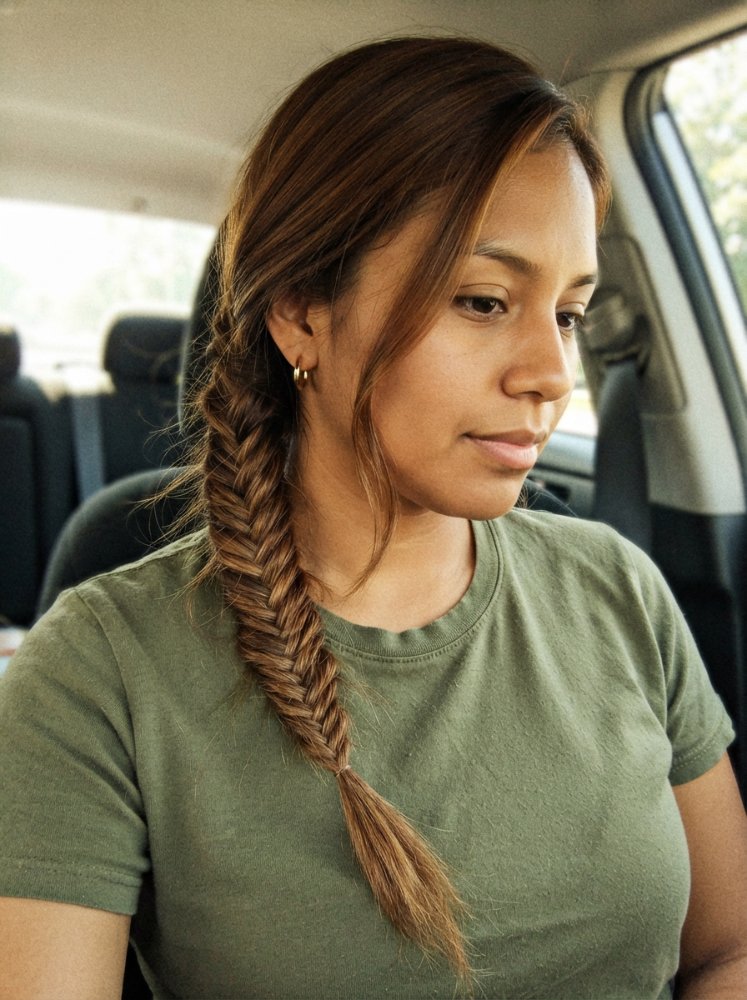
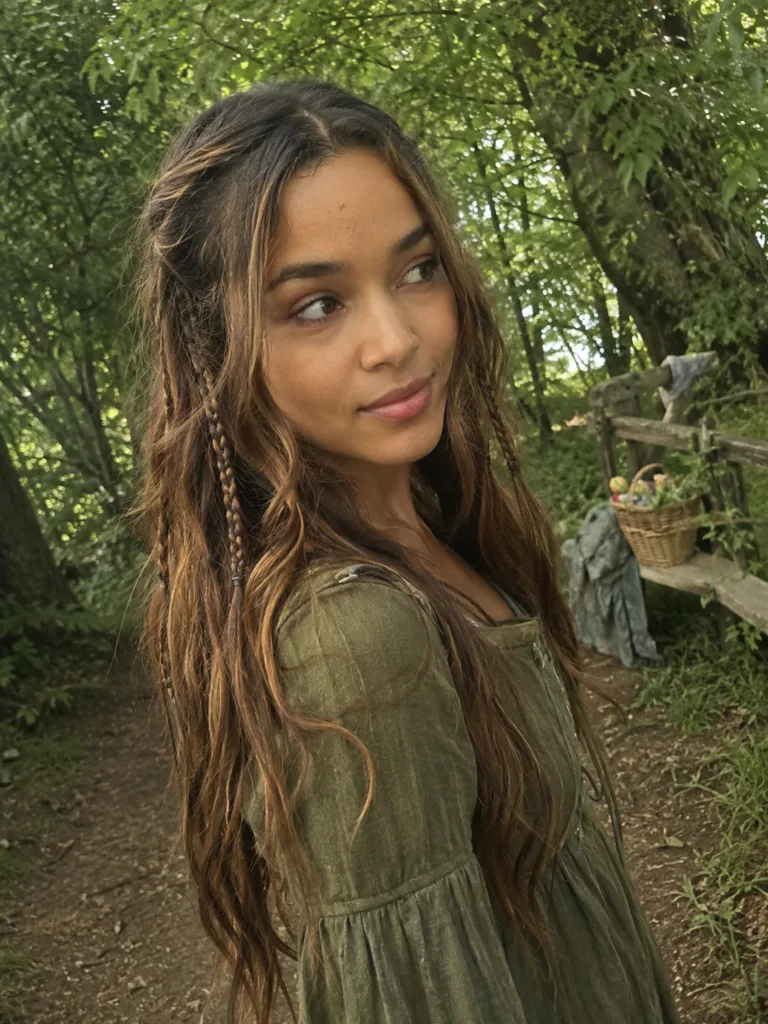
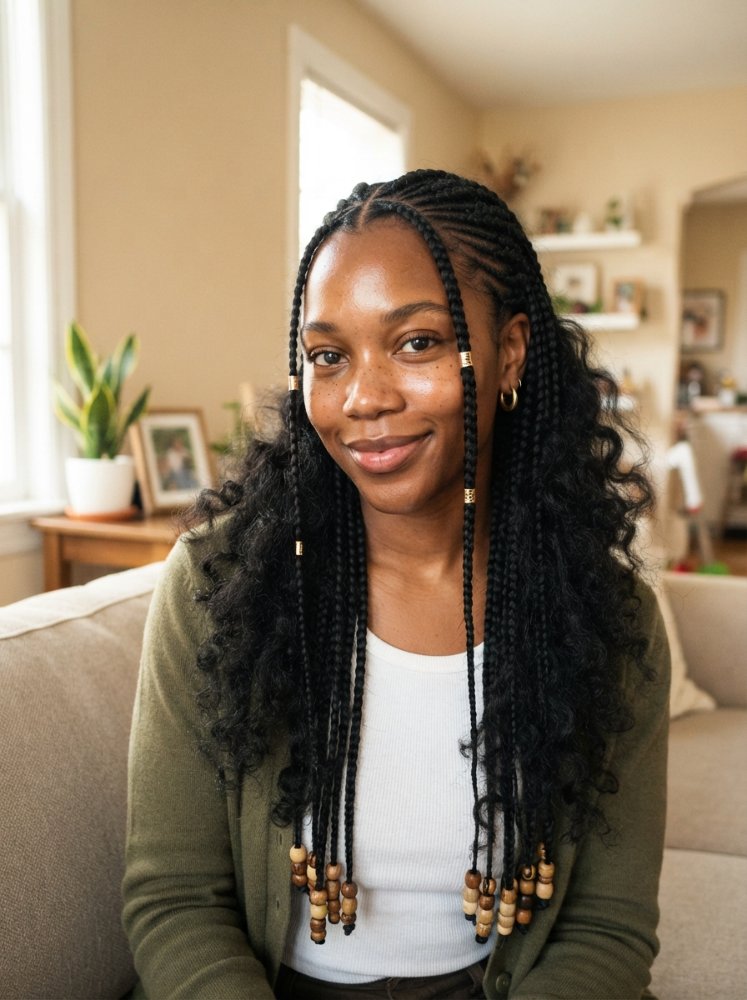
Fulani-inspired braid styles commonly combine scalp braids with hanging individual braids, creating a hybrid construction rather than one uninterrupted cornrow pattern. Details vary widely, so a reference image is useful when communicating the exact arrangement you want.
The mixture gives you two different kinds of movement in one hairstyle. The scalp-braided area stays mapped to the head while the loose braids can move, gather, and frame the face.
Avoid treating every front-cornrow-and-box-braid combination as identical. The direction of the cornrows, location of free-hanging braids, and use of decorative elements can substantially change the result.
Cornrow Ponytail
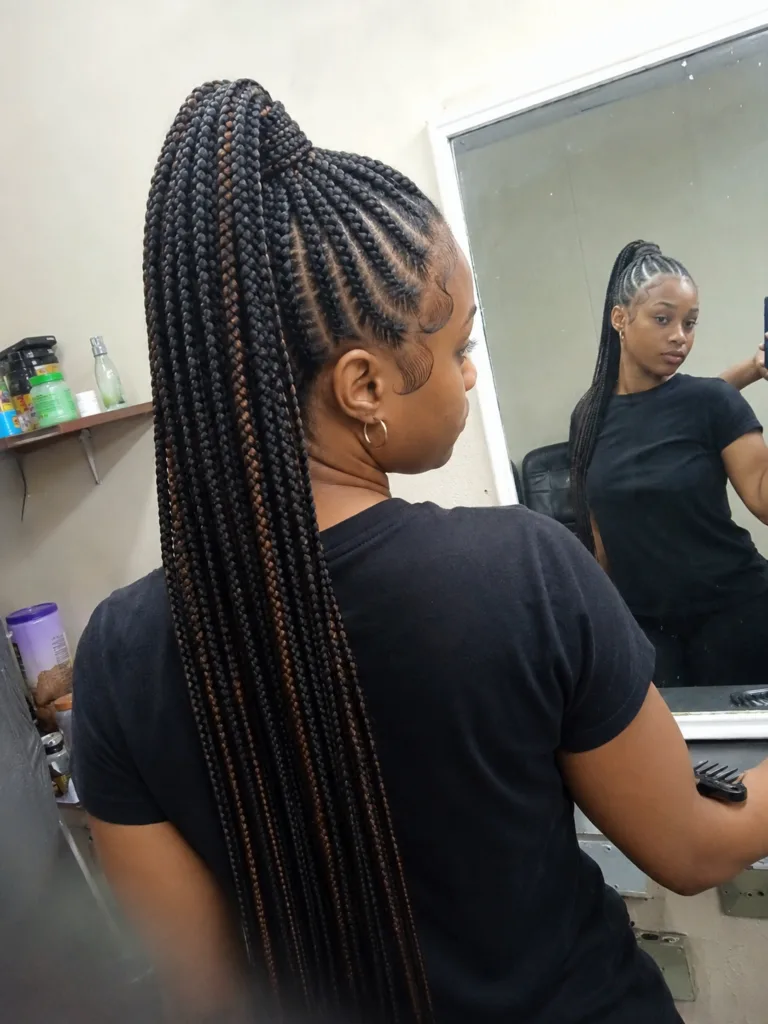
A cornrow ponytail turns the braid direction toward a shared anchor. Instead of parallel braids simply ending at the back, multiple rows travel toward the point where the ponytail begins.
That convergence is the critical construction feature. A very high anchor creates a different pull and movement pattern from a low one, particularly once added length swings behind the head. The braid paths should meet cleanly without requiring uncomfortable force at the center.
High placement delivers drama, but a moderate anchor is often easier around car seats, headrests, and long periods of sitting.
Braids Made From Loose Hair
French Braid
A French braid incorporates hair over the center as the braid develops, allowing the woven section to sit relatively close to the head. It works on many textures, although the appearance changes with curl pattern, shrinkage, stretching, layering, and strand length.
It doesn’t need glass-smooth hair to work. A softer surface can make the style look fuller and more relaxed, while a smoother starting state shows the woven pattern more sharply.
The French braid is particularly useful when you want containment without committing to an installed braid style.
Dutch Braid
The Dutch braid reverses the crossing direction used in a French braid, causing the woven structure to sit more prominently above the surrounding hair.
That raised surface makes the braid itself easier to see, especially on hair where a flatter braid might disappear into texture or darker color. Gently adjusting the outer loops after braiding can change the apparent width, provided the structure remains secure.
Choose Dutch over French when braid definition is part of the look rather than simply a way to gather the hair.
Double Dutch Braids
Two Dutch braids divide the head into separate braid paths, usually traveling from the front toward the nape. The split construction distributes the hair differently from one central Dutch braid and creates a more symmetrical outline.
They’re especially practical for active styling because each side is contained independently. Hair that would work loose from one large braid may stay more controlled when divided, depending on layer length and texture.
The center part is highly visible, so decide whether you actually enjoy that strong division before treating the style as an automatic default.
Fishtail Braid
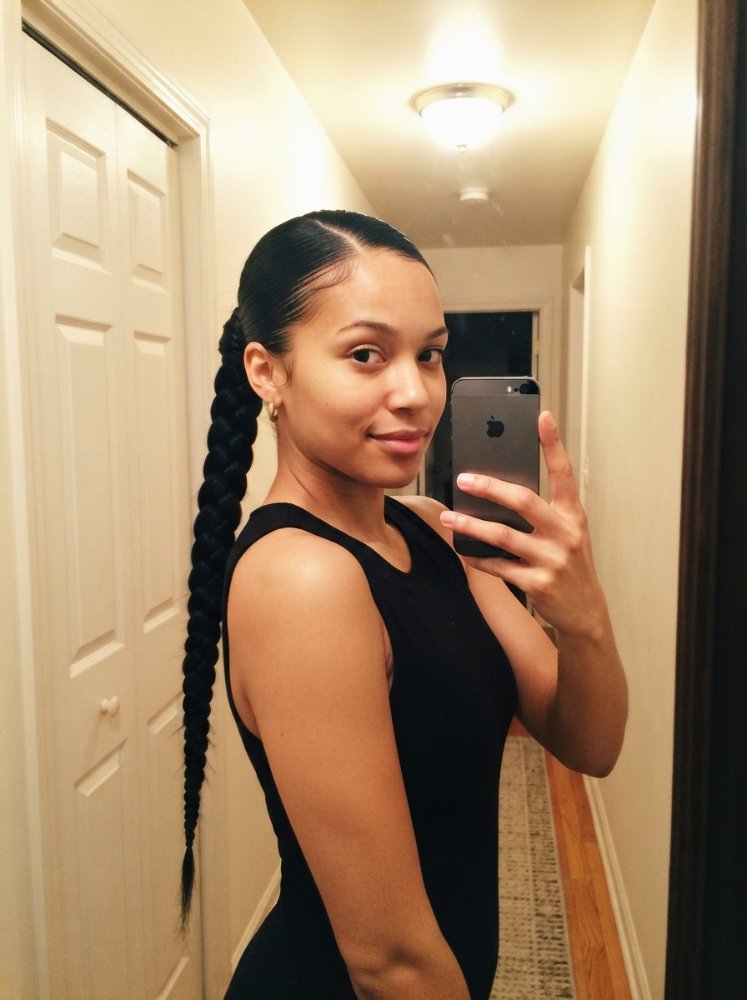
A fishtail braid gets its intricate appearance from alternating small portions of hair between two larger sections. The resulting pattern looks noticeably different from the familiar three-strand braid.
Its texture becomes clearer through the tail, making it well suited to a low ponytail or side-swept arrangement where the length can remain visible. Heavy layering can produce more escaping ends, though a looser, slightly undone finish can incorporate that irregularity instead of fighting it.
This is an excellent choice when you want visual detail without adding hair or creating a scalp-braided pattern.
Four-Strand Braid
A four-strand braid introduces an additional working section, creating a wider and more complex woven surface than a standard three-strand braid.
The technique takes more coordination, but the payoff is structural. Depending on how the sections are crossed, the braid can look flatter, rounder, or more basket-woven through the length.
It makes the most sense on hair long enough for the pattern to become visible. On a very short tail, much of the effort disappears before the weave has room to develop.
Side Braid
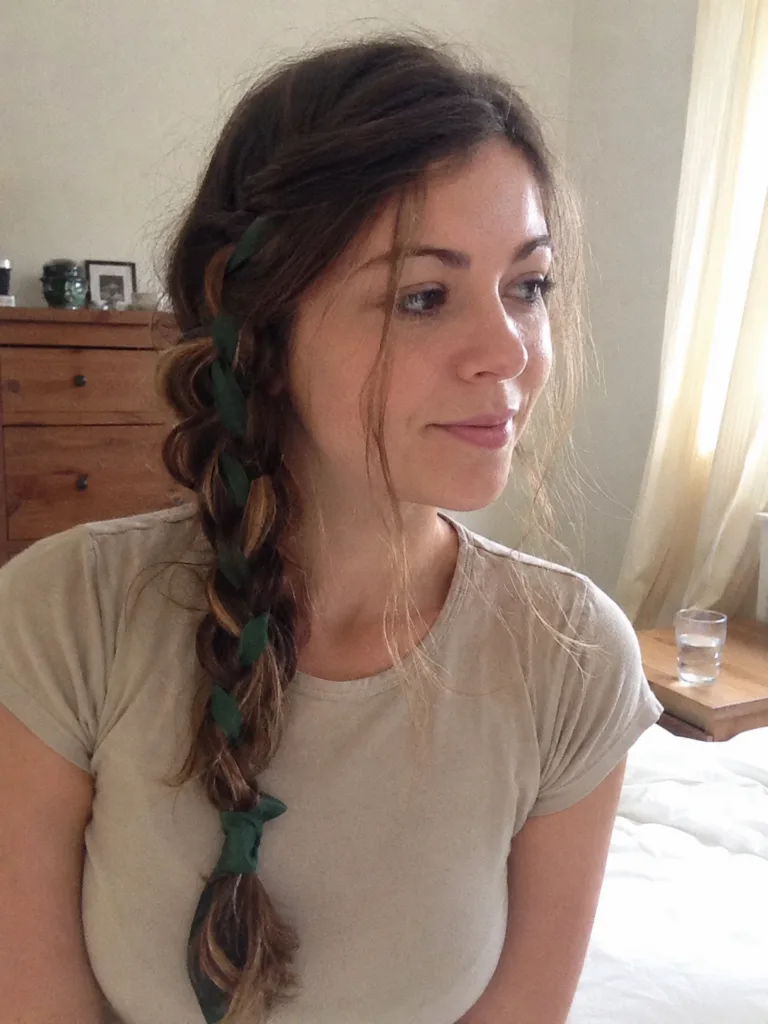
Sometimes placement is enough to change how a braid functions. A side braid brings the length over one shoulder, keeping it visible from the front and creating an asymmetrical outline without requiring scalp braiding.
It’s also easy to understand in daily life. The braid remains accessible for adjustment, and you can see the tail without turning around. Long, dense hair will still sit against one shoulder and may become trapped beneath bag straps or outerwear.
A side braid is the practical choice for someone who wants an obvious braid without the complexity of a fully mapped installation.
Braided Updos and Statement Shapes
Crown Braid
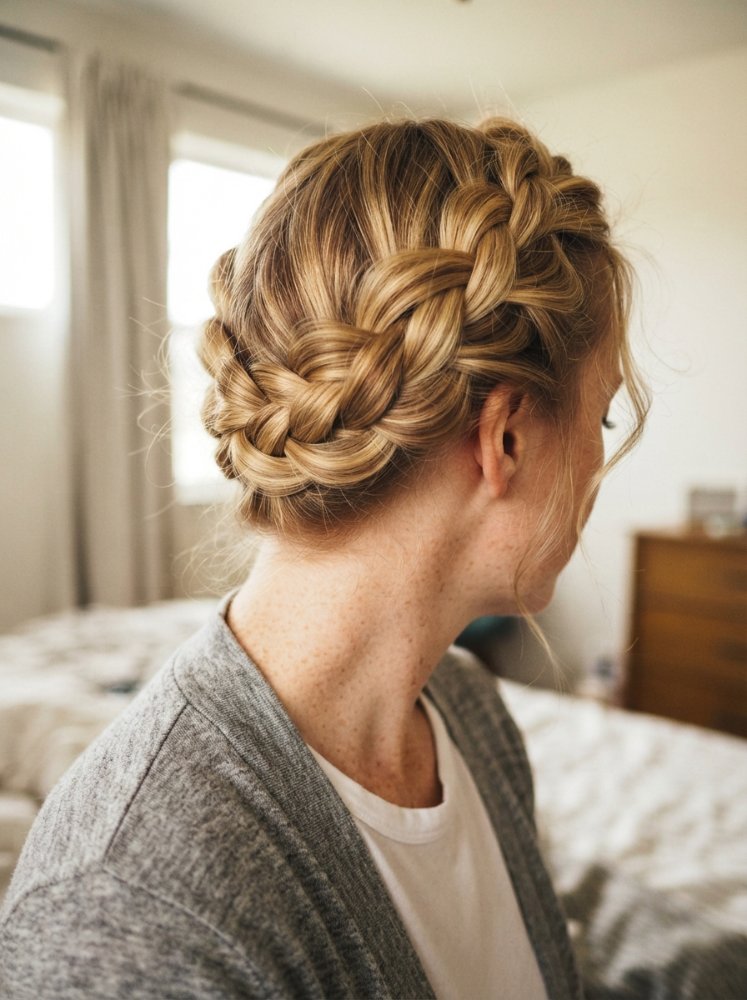
A crown braid follows the head horizontally, creating a band of braided hair around the upper perimeter. The placement makes it read more like an updo than a hanging braid.
This is a shape-first style. The braid needs to sit where it complements the intended crown line without crowding glasses arms, decorative clips, or other accessories around the temples.
Loose curls or soft pieces can remain outside the braid, but they change the finish from contained to deliberately airy. Neither version requires straightened hair.
Braided Chignon
A chignon gathers braided hair into a low pinned shape, typically near the nape. Compared with a high braided bun, the weight sits lower and the style occupies less space at the crown.
That can make it a better formal option when a hat, veil, headpiece, or simply the shape of the outfit needs room above the nape. Pin placement still matters; several pins pressing into the same small area can become uncomfortable.
A braided chignon also reveals the neckline, so the relationship between the updo and collars or jewelry becomes part of the decision.
Braided High Ponytail
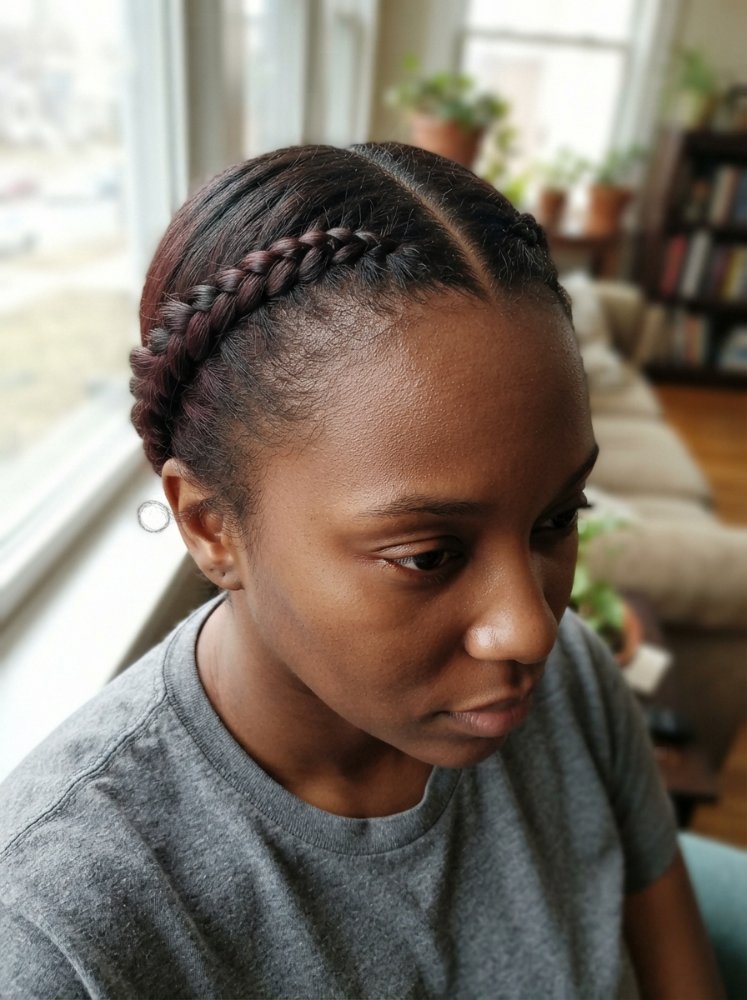
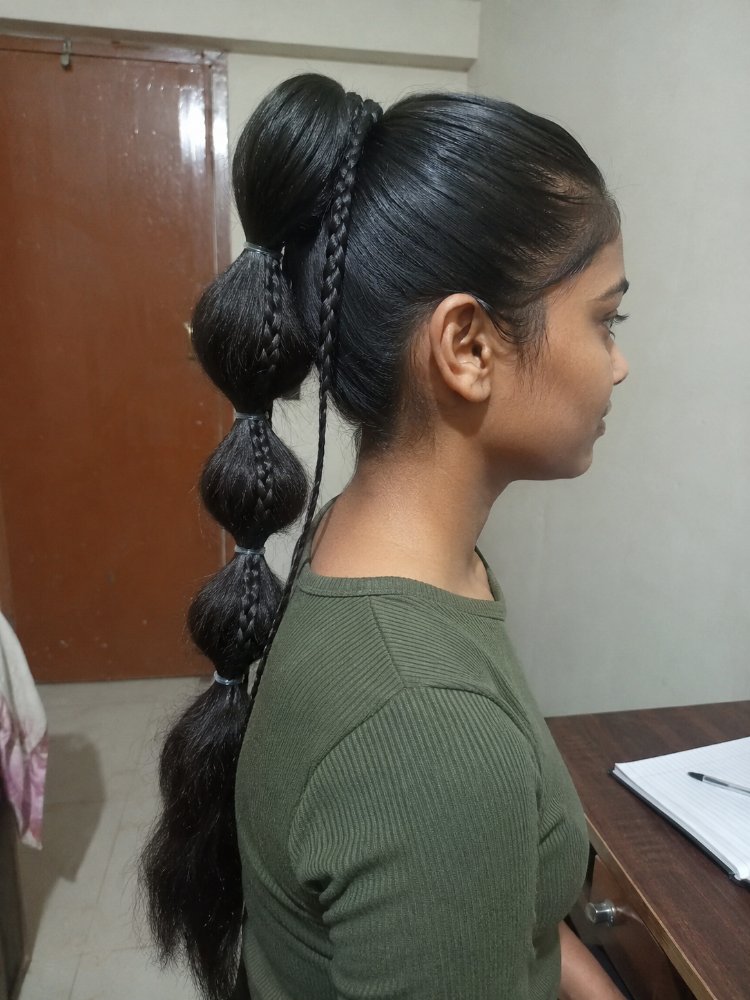
A braided high ponytail uses elevation as the main feature. The braid or braided lengths leave from an anchor near the crown, creating more swing and a stronger vertical line than a low ponytail.
Extra length increases the amount of movement at that anchor. Walking, turning the head, exercising, and sitting against a headrest all make a long tail more noticeable.
For dramatic impact, the height can be worth it. For long travel days or routines that involve a lot of seated time, a lower anchor tends to be less intrusive.
Half-Up Braided Style
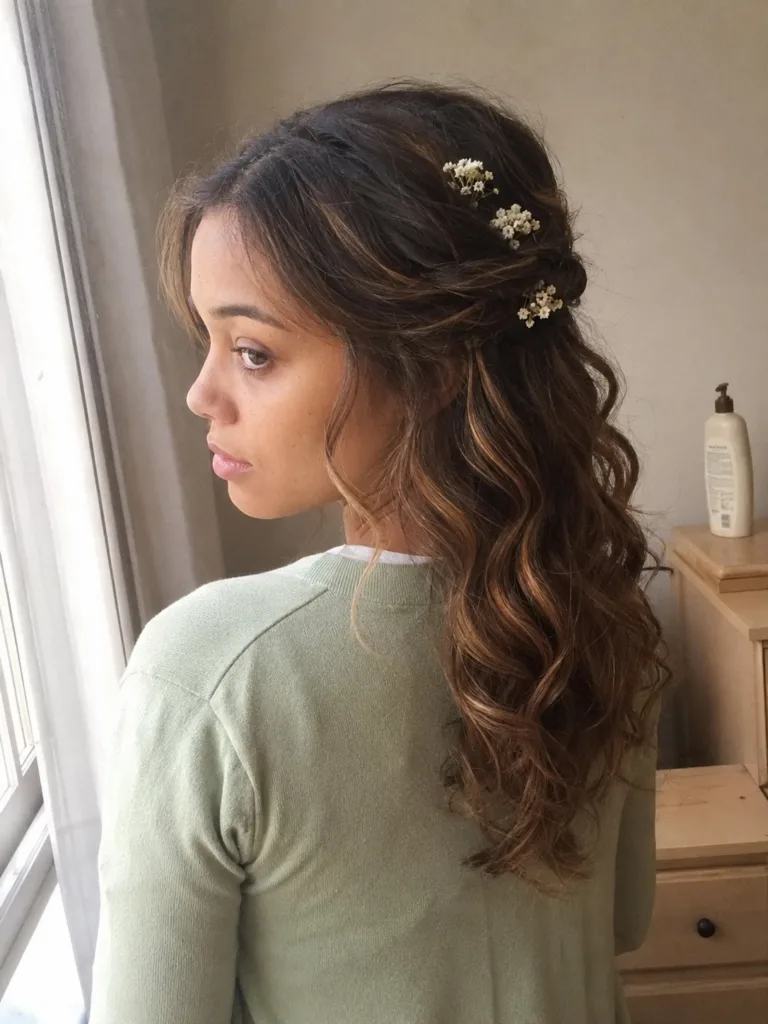
Half-up braiding solves a different problem: you get braid detail without putting every strand into the same structure. The upper section may be French braided, Dutch braided, cornrowed, or formed from smaller braids before being secured, while the lower hair stays loose.
This works particularly well when you like your natural curl, wave, or length and don’t want to hide it. The loose portion still follows its normal moisture, frizz, and detangling routine.
The balance matters visually. A very bulky braided crown over a lightweight lower section can feel top-heavy, whereas a smaller braided area leaves more of the hair’s natural movement intact.
Braided Space Buns
Braided space buns separate the hair into two distinct anchors before wrapping or pinning the braided lengths into buns. The paired shape makes them more graphic and playful than one central braided bun.
Placement can sit high, low, or somewhere between, but the two-anchor construction remains the defining feature. It also means each side needs to feel comparably secure so one bun isn’t doing more work than the other.
They’re useful for medium-to-long hair that can be divided cleanly and wrapped without excessive pulling at the sides.
Braided Loc Updo
Loc’d hair can be braided without pretending the starting material behaves like loose hair. Several locs may be grouped into braids and then pinned, gathered, or arranged into an updo.
Mature or longer locs can carry substantial weight, so high placement has a bigger physical consequence than it might on a lightweight loose-hair braid. An elaborate crown structure may also compete with headrests and require more pinning than a lower arrangement.
A lower braided loc shape is often the stronger everyday choice when comfort matters more than maximum height.
Crochet Box Braids
Crochet box braids change the installation method. The natural hair is typically prepared in a base that allows pre-braided lengths to be attached, avoiding the need to create every hanging braid directly from an individual natural-hair section.
That makes the underlying braid pattern especially important. The base controls how the finished lengths fall and how easily you can reach the scalp. A crowded foundation can make cleansing and drying more awkward even when the visible braids look simple.
Crochet box braids are worth considering when you like the appearance of individual braids but want an alternative attachment method. They still require attention to the weight of the added hair and the comfort of the base.
What Finished Braid Photos Often Hide
A braid photograph captures shape well. It rarely shows what happens after the person lies down, exercises, washes the scalp, wears a coat, or begins taking the style apart.
Maintenance Depends on the Construction
Braided hairstyles don’t share one maintenance routine because they don’t share one construction.
With cornrows, the scalp is relatively exposed, but the braid paths themselves need to dry properly after cleansing. Dense roots can remain damp even after the visible lengths feel dry. Individual extension braids create different access because you may need to work between many sections.
Boho braids introduce loose hair that can tangle against the braided lengths. Micro braids demand patience around the roots and during removal. A simple French braid may be taken down and recreated as part of a normal routine rather than treated as an installation.
Friction is another practical factor. Long braids rub against clothing, backpack straps, seatbelts, and bedding. A smooth scarf, bonnet, or pillowcase can reduce unnecessary rubbing and tangling, although it can’t correct an installation that already feels too tight.
Comfort should stay boring. Persistent pulling, pain, stinging, sores, redness, or a concerning change around the hairline deserves attention rather than being treated as the price of a neat braid. Loosening or removing the source of pulling may be appropriate, and persistent or concerning scalp or density changes are better discussed with a dermatologist or another qualified healthcare professional.
Takedown belongs in the maintenance plan from the beginning. Work carefully enough to distinguish extension hair, shed hair, tangles, and your own ends before cutting or pulling anything apart.
Choosing a Braided Hairstyle Before an Appointment or Styling Session
Start with the construction you want to manage, then choose the visual details.
Decide how much scalp you want visible. Cornrows and stitch braids make parting a major feature. Box braids place more of the visual attention on the hanging lengths.
Choose where you want the weight. Loose individual braids distribute differently from a high ponytail or braided updo that brings everything toward one anchor.
Think about your normal hair state. Shrinkage, stretching, relaxed hair, locs, previous chemical services, and fragile areas can affect preparation and handling.
Match length to your routine. Very long braids can look impressive while also spending more time against clothing, chairs, bedding, and straps.
Ask how you’ll reach the roots. The most intricate base isn’t useful if it makes your normal cleansing and drying routine impractical.
Plan the removal before committing to tiny sections. Micro braids and detailed installations demand more takedown patience than one or two large braids.
Bring reference photos that show the roots as well as the lengths. A front-facing finished photo may hide the section size, braid direction, attachment method, and anchor placement you actually need to discuss.
The strongest consultation usually comes from saying what matters most to you—lighter movement, dramatic length, scalp visibility, a low updo, loose curls, or easy access—rather than asking for a style name and assuming every version is built the same way.
Related Hairstyles to Explore
- Braided Ponytail Hairstyles
- Bridesmaid hairstyles half up half down
- Celtic Hairstyles
- Elvish Hairstyles
FAQs
Are braided hairstyles suitable for short hair?
Yes, depending on the braid and the amount of usable length. Short hair may work well with scalp braids such as cornrows, while some hanging braids or updos need more length for secure weaving and pinning. Added hair can expand the options, but the attachment still needs enough stable natural hair to support the chosen construction comfortably.
Can curly and coily hair be braided without straightening it first?
Yes. Curly and coily hair can be braided in its natural or stretched state. The right preparation depends on the braid, desired finish, shrinkage, tangling, condition, and the way the hair is normally worn. A smooth braid surface doesn’t require pressing the hair straight.
How can I tell whether added hair is making braids too heavy?
Pay attention to how the base feels during normal movement, not just while sitting still immediately after styling. A braid that repeatedly pulls at its section, makes the scalp feel sore, or becomes uncomfortable when gathered may be carrying more weight than that foundation handles well. Added length, braid thickness, section size, and high anchor placement can all influence the sensation.
Can you wash your scalp while wearing installed braids?
Scalp cleansing is possible with many installed braid styles, but access and drying vary by construction. Cornrows expose the scalp differently from dense box braids or a crochet base. Focus on reaching the scalp without rough handling and allow the roots and underlying braided areas to dry thoroughly rather than judging dryness only by the hanging lengths.
Hair Texture & Upkeep Style Matcher
Select your natural hair texture and daily maintenance window to get an instant styling formula and heat safety cap.
Heat Cap: 320°F (160°C)
A versatile three-strand braid beginning at the parietal ridge, securing the top half while allowing natural wave texture to flow freely around the shoulders.
Conclusion
The most useful way to choose between braided hairstyles is to look past the decorative details and identify the structure underneath. Box braids give individual movement, cornrows make direction and scalp design prominent, loose-hair braids offer lower commitment, and braided updos concentrate more of the hairstyle around specific anchors.
Pick the construction first. Then decide how much length, detail, softness, or height is actually worth maintaining in your daily routine.
Editorial Standards & Hair Health Guidance
Every style featured on Tress Atlas is curated with a focus on real-world wearability, scalp tension management, and cuticle preservation. When trying protective styles or tight updos, ensure perimeter hairline sections remain tension-free to avoid traction stress on delicate follicles. For heat styling, cap tools below 350°F (180°C) to prevent thermal keratin denaturation.
Scientific Sourcing: Practices aligned with the American Academy of Dermatology (AAD) on traction alopecia risk reduction and cosmetic trichology research on hair tensile strength.