Half Up Half Down Hairstyles: Complete Styling Guide for Different Textures, Shapes, and Routines
A half up half down hairstyle secures part of the hair away from the face while leaving the rest loose. The result changes with the size of the top section, anchor placement, and the way the lower lengths are worn.
Construction matters more than a single reference photo. A high ponytail adds lift and movement, a twist keeps the crown softer, and a top knot concentrates more hair overhead. Curly, coily, braided, and loc’d hair also change the balance through shrinkage, bulk, and existing weight.
Easy Half-Up Shapes for Everyday Wear
Classic Half-Up Ponytail
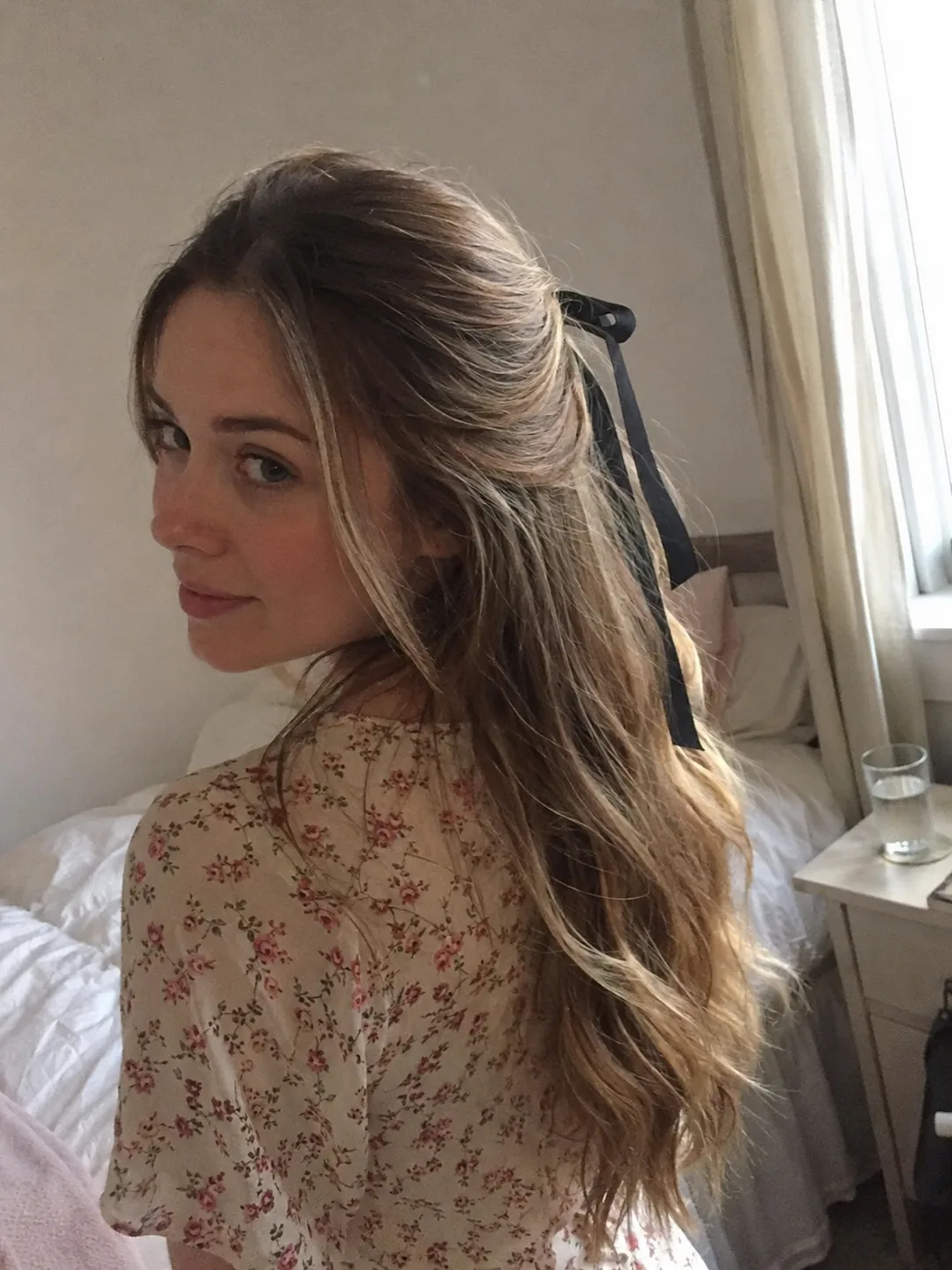
The classic ponytail is the strongest baseline because it shows exactly what half-up styling does to your proportions. Gather the front and crown into one elastic, then leave the lower lengths loose. A higher anchor creates more lift and swing; a lower anchor keeps the crown flatter and lets the loose hair do more of the visual work. This version is especially practical when you want the face cleared without committing to a bun, braid pattern, or complicated pinning.
Half-Up Top Knot
A top knot changes the upper half from a flat anchor into a rounded focal point. It works particularly well when your loose lengths already have texture or movement, because the compact bun gives the eye somewhere to land while the hair below stays soft.
The hidden decision is how much hair goes into the bun. Pulling too broad a section from the sides can make the lower half look sparse, especially on lower-density hair. A smaller crown section keeps more fullness through the back.
The bun itself can be folded, wrapped, or loosely pinned. Keep the base secure enough to stay put during normal movement without tightening it after the fact just because the knot starts to shift.
Half-Up Claw Clip
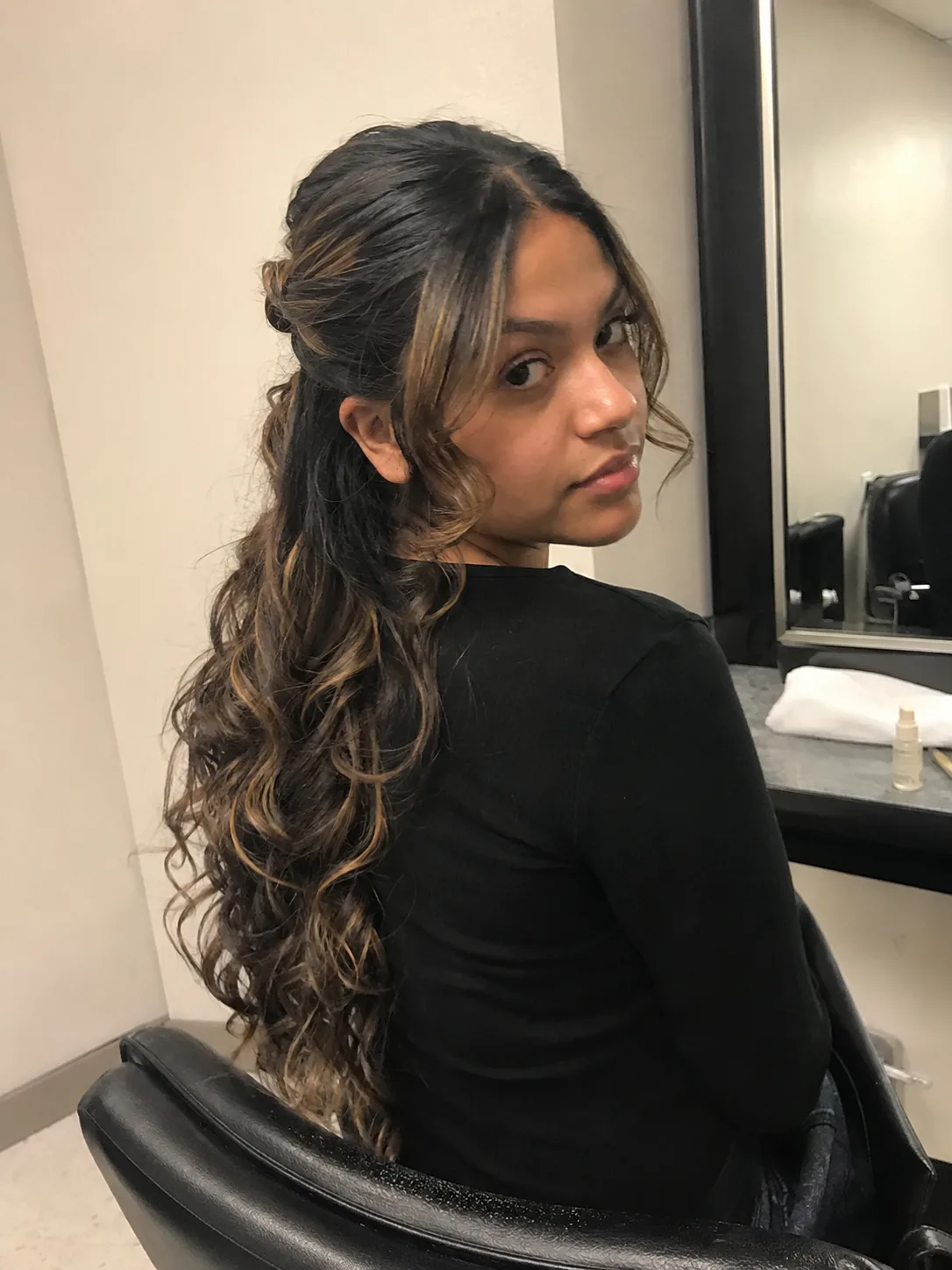
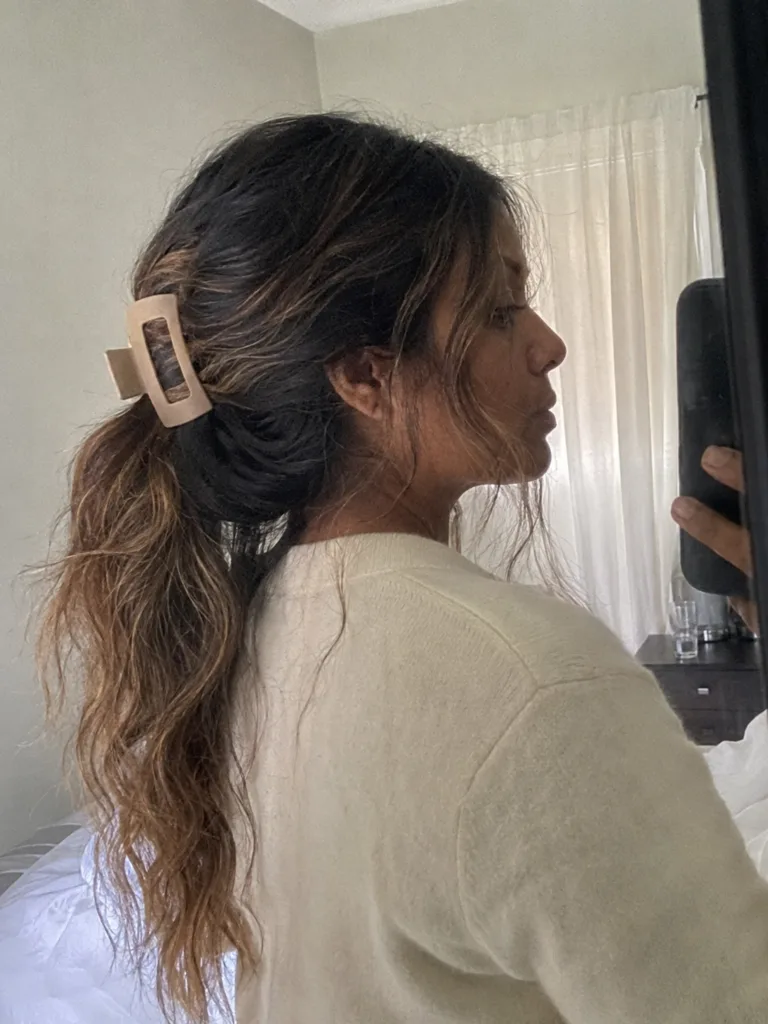
A claw clip is useful when you want a broader, flatter anchor than an elastic gives you. Twist the upper section lightly and clip it vertically or horizontally, depending on the shape of the clip and the amount of hair being held.
This is one of the easier choices for hair that resists a tiny elastic or feels bulky in a small half-up ponytail. The clip should close around the section without forcing the teeth against the scalp. Thick, dense hair often needs a larger opening; fine strands can still be high density, so judge by the actual bulk of the section rather than strand diameter alone.
Knotted Half-Up Style
A knotted half-up style looks more built-in than a ponytail because the side sections cross and tie into the design itself. The knot can sit at the center back with the loose hair flowing underneath, making it a useful choice when you want detail without a full braid. It works best on hair with enough grip to hold the crossed sections while you pin them; very slippery hair may need a small concealed elastic or extra pinning behind the knot.
Braids and Twists That Build Structure Into the Style
Double-Twist Half-Up
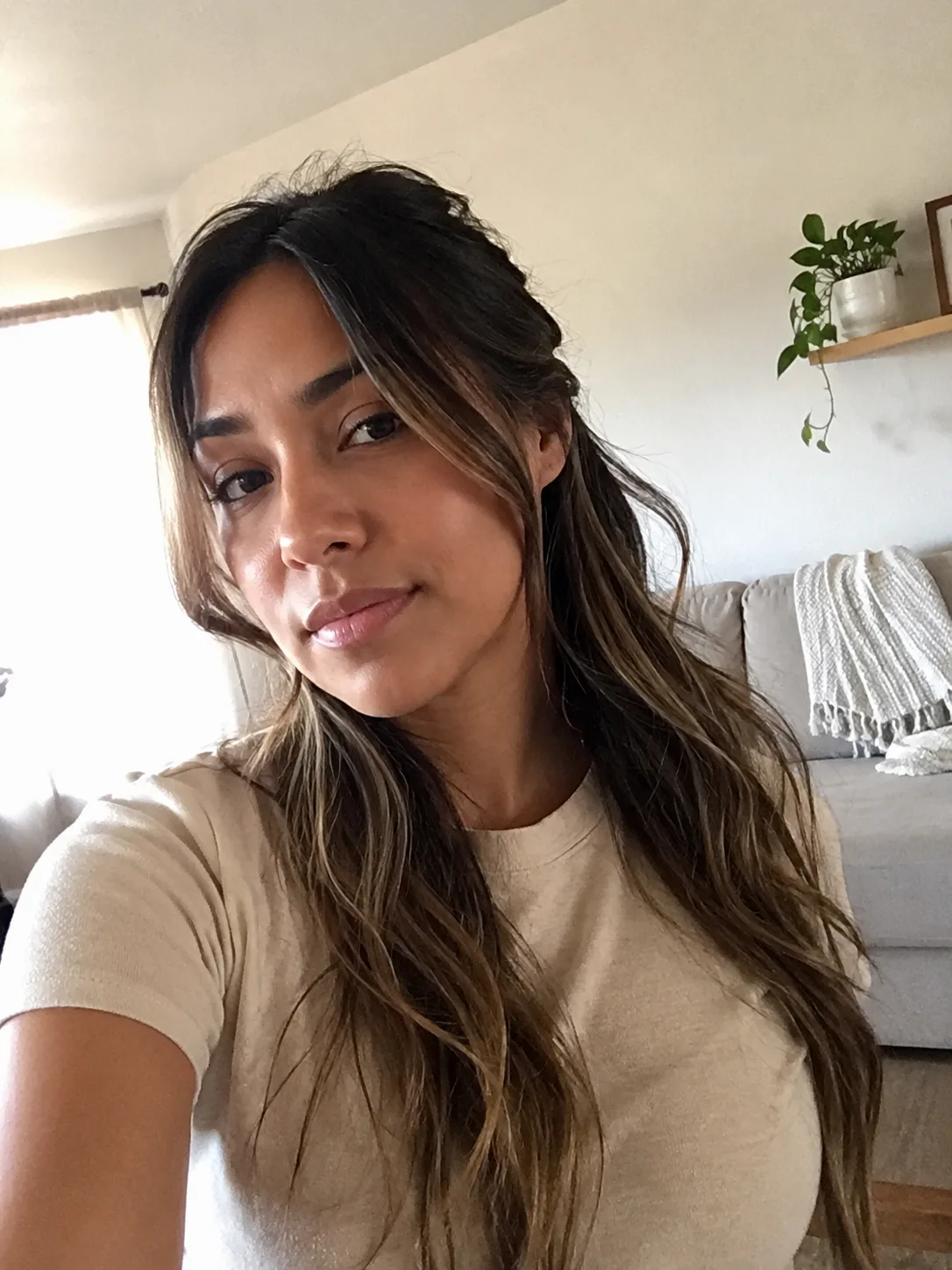
Two side twists are a strong option when you want softness around the crown without lifting a large amount of hair into one anchor. Each section rolls away from the face and meets at the back, so the front stays controlled while the crown can remain relatively flat.
This construction is forgiving on waves, curls, and coily hair because the twists don’t require every surface strand to lie perfectly smooth. Letting a little natural texture remain usually suits the style better than repeatedly brushing the same area.
The meeting point can be pinned, tied, or tucked under the opposite twist. That gives you flexibility around glasses arms, temple volume, or fragile edges because the side sections don’t need to start directly at the hairline.
Half-Up French Braid Into a Ponytail
This version earns its place when the top of the head needs more structure than a plain ponytail can provide. Start the braid near the front or crown, add hair as it travels backward, and stop where you want the ponytail to sit. The remaining braid section and gathered crown hair then become the half-up tail.
The braid directs hair toward the anchor instead of asking every strand to travel there loose, which can make the style feel more contained. Keep the convergence point neat but comfortable; several sections meeting in one spot can create more concentrated pulling than the finished photo suggests.
Half-Up Braided Crown
A braided crown keeps the center crown open and builds detail from the sides. Create one braid from each temple area, carry them backward, then overlap or pin them across each other above the loose lengths. The horizontal braid line gives a wider, softer shape than a center braid feeding into a ponytail, and it also creates a useful place to tuck pins or a small decorative comb for formal wear.
Waterfall Braid Half-Up
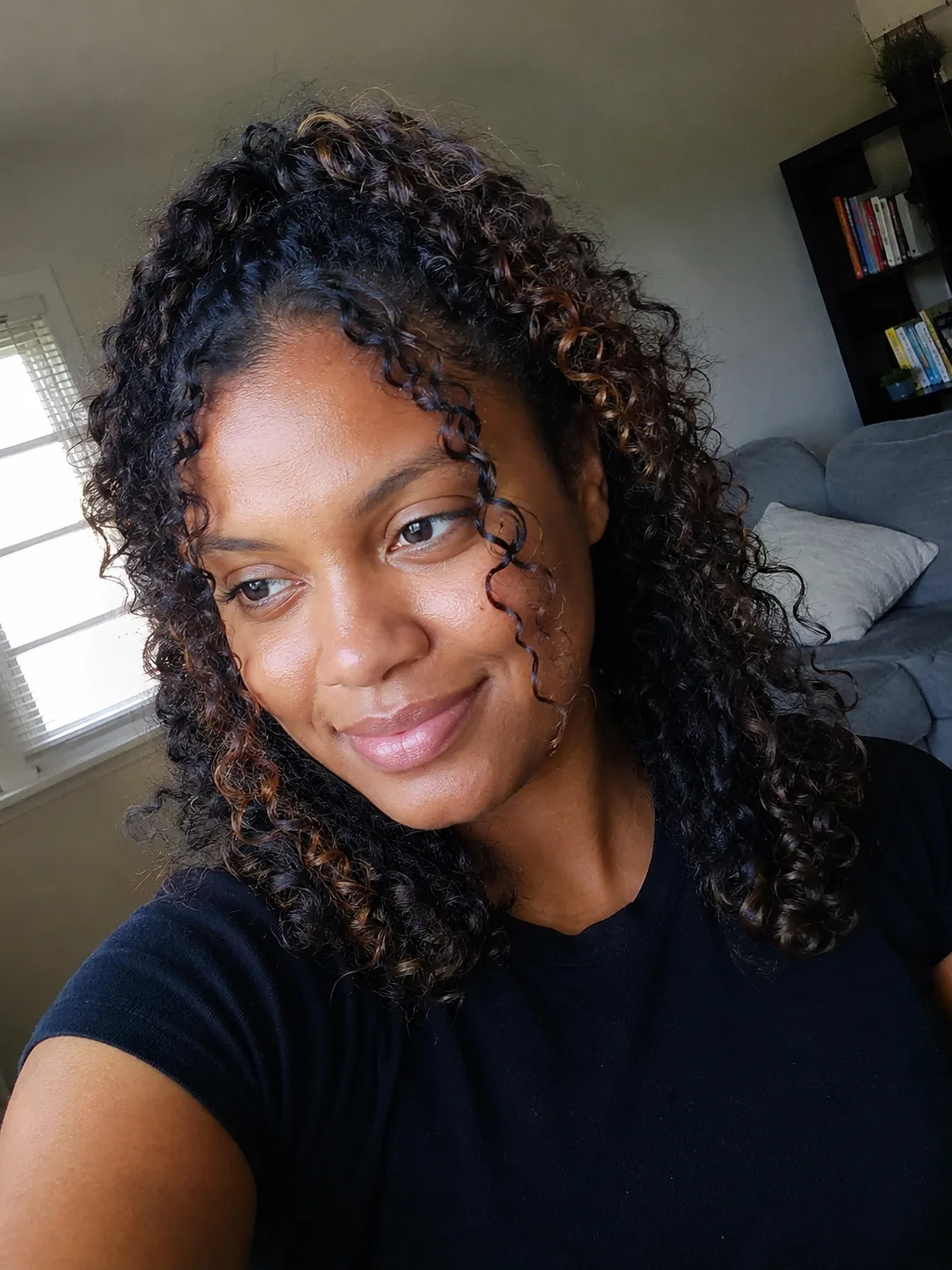
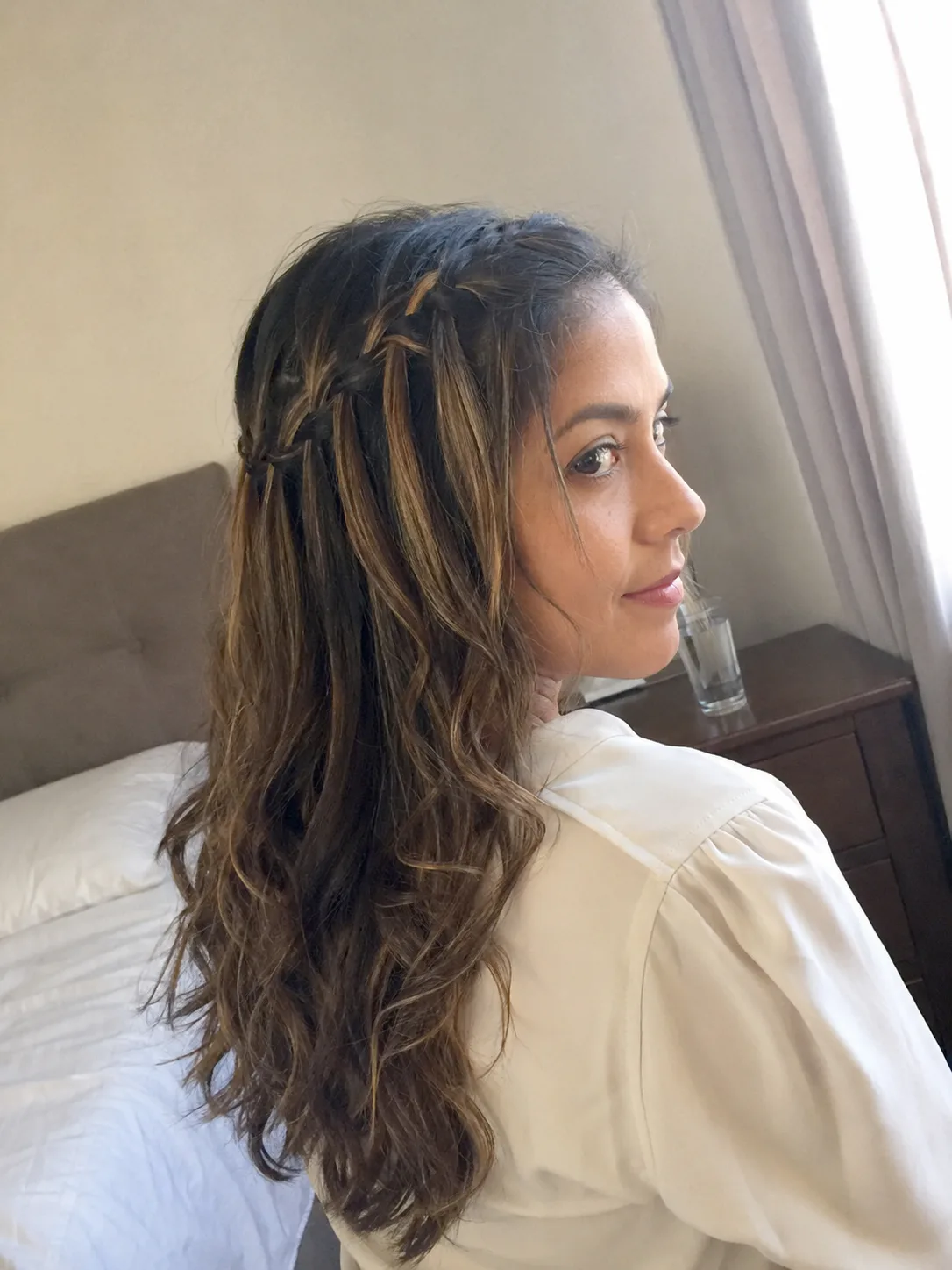
A waterfall braid lets selected sections drop through the braid as new hair is picked up, so the loose lengths remain visually connected to the upper construction. The technique reads most clearly when the braid line contrasts with the hair below, such as waves beneath a smoother braided section. Tighter curls can wear it too, though the released pieces may blend into the surrounding texture instead of appearing as separate ribbons.
Half-Up Space Buns
Space buns create two upper anchors instead of one, which gives the style a completely different silhouette from a top knot. Divide the upper hair into left and right sections, secure each side, and form a small bun while the lower half remains loose.
The style is playful, but placement decides whether it feels balanced or bulky. Dense hair can make even small upper sections produce substantial buns, so keeping more hair down preserves fullness through the back and reduces the amount of weight sitting high on the head.
On curls or coils, the buns can stay textured rather than being smoothed into compact circles. The loose lower section then carries the same texture language as the top instead of looking like a separate styling state.
Texture-Led Half-Up Hairstyles
Half-Up Puff on Coily Hair
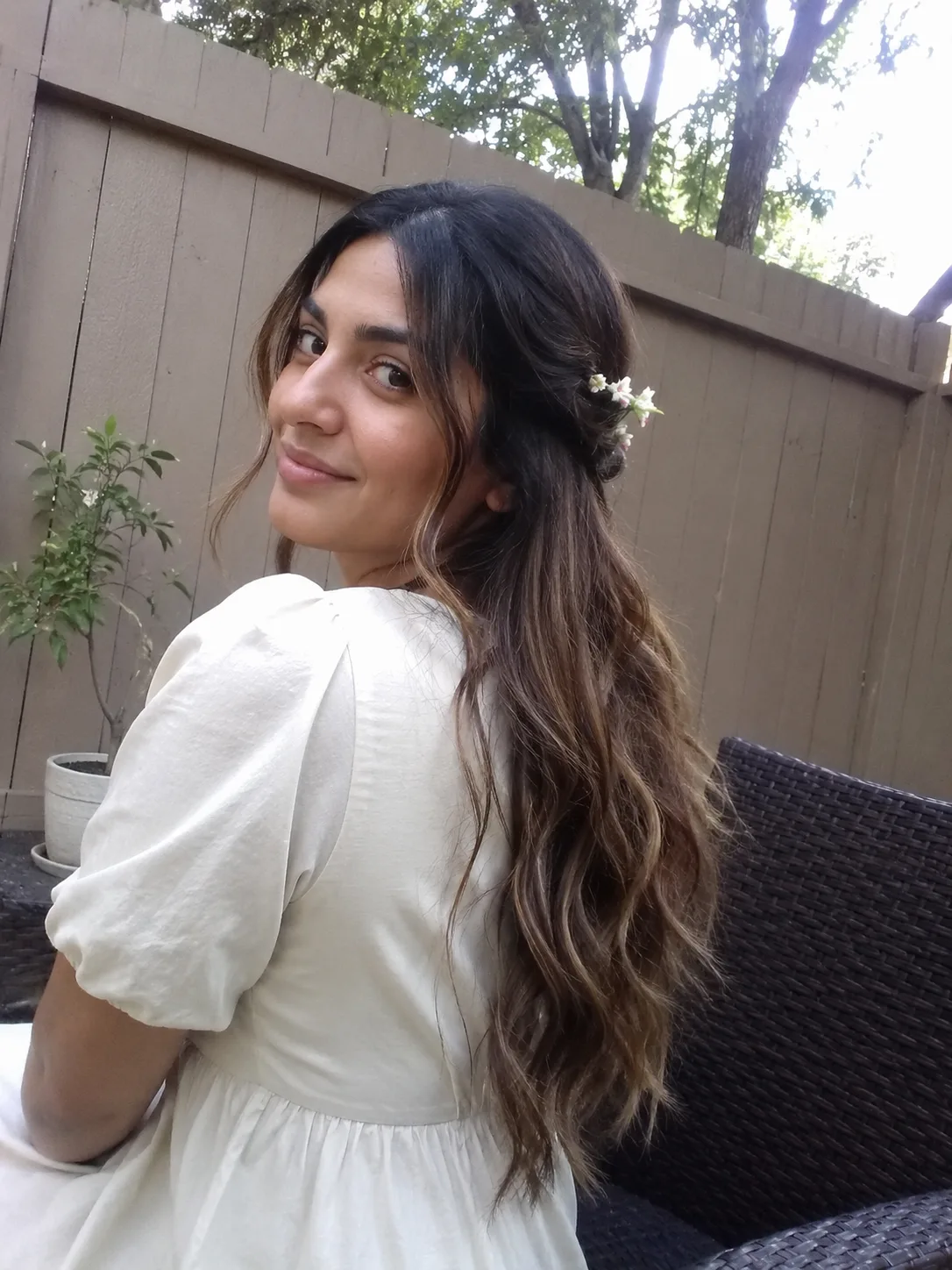
A half-up puff uses the natural expansion of coily hair as the feature. Gather the top section into a puff while leaving the lower hair shrunken, stretched, or defined in the state you actually plan to wear. This is more practical than trying to force every coil into a sleek ponytail, especially when volume is part of the intended shape. Pay attention to how the top and bottom sections shrink after moisture; they can dry into noticeably different proportions.
Half-Up Bun With Curls Down
This style works because the bun creates a compact top shape while the curls below keep width and movement. The contrast is especially useful on medium to long curly hair that feels too full around the face when completely down.
Start with curls in their usual worn state. Pulling the upper section too tightly can stretch the curl pattern at the roots and make the transition into the loose hair look abrupt.
A loosely wrapped bun often suits the texture better than a highly compressed knot. A few shorter curls around the face can remain out if they naturally fall there; there’s no need to straighten a curly fringe for the style to read as finished.
High Half-Up Curly Ponytail
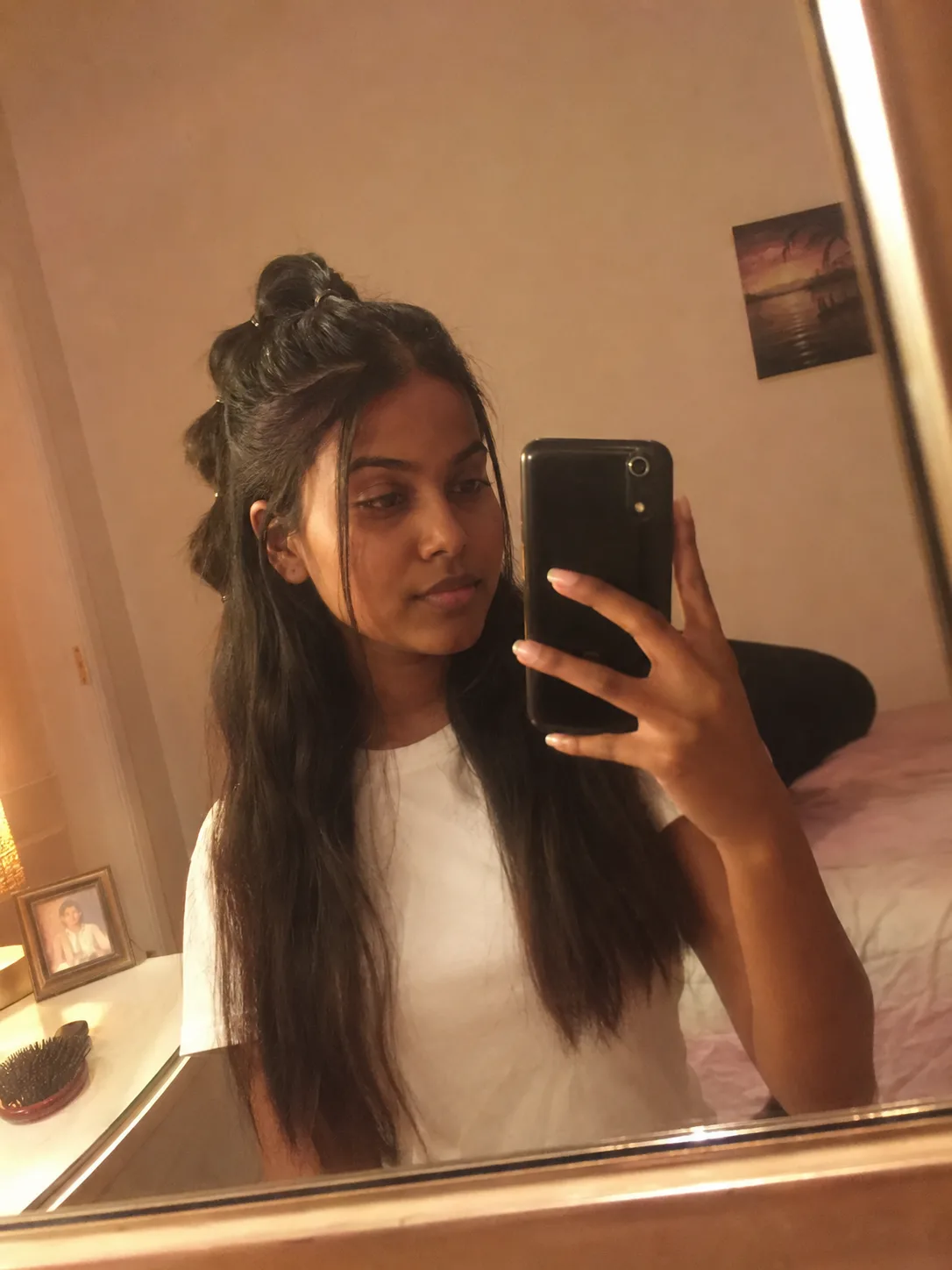
The high curly ponytail is a stronger choice than the top knot when you want the curls themselves to stay visible at the crown. The upper section is secured high enough that the tail spills over the loose hair, creating a layered effect through the back.
This works best when the ponytail has enough room to expand without swallowing the entire lower section. On very dense hair, a smaller top section can create the same lift while keeping the back from looking divided into two competing masses.
Half-Up Faux Hawk
A faux hawk uses the center line of the head as the focal point. Instead of gathering one section into a ponytail, you pin or secure several central sections upward so they form a raised ridge while the lower lengths remain loose. The result has more height and direction than a standard half-up style and can work especially well with curls or coils that already hold volume. It is a statement option, not the easiest choice for a low-profile headrest or a hat.
Structured Half-Up Tails, Braids, Twists, and Locs
Half-Up Ponytail With Box Braids or Twists
Installed braids or twists make a half-up ponytail look fuller immediately because each piece carries its own structure. Gather the upper portion toward the crown and secure it without forcing every braid from the temples into the anchor. Leaving a few front pieces free can reduce crowding around the hairline and preserve the original parting pattern.
The main practical issue is weight. Long or dense added hair creates more leverage as the ponytail moves, so a moderate amount gathered up is usually easier to live with than pulling half the installation into a very high anchor.
Half-Up Bubble Ponytail
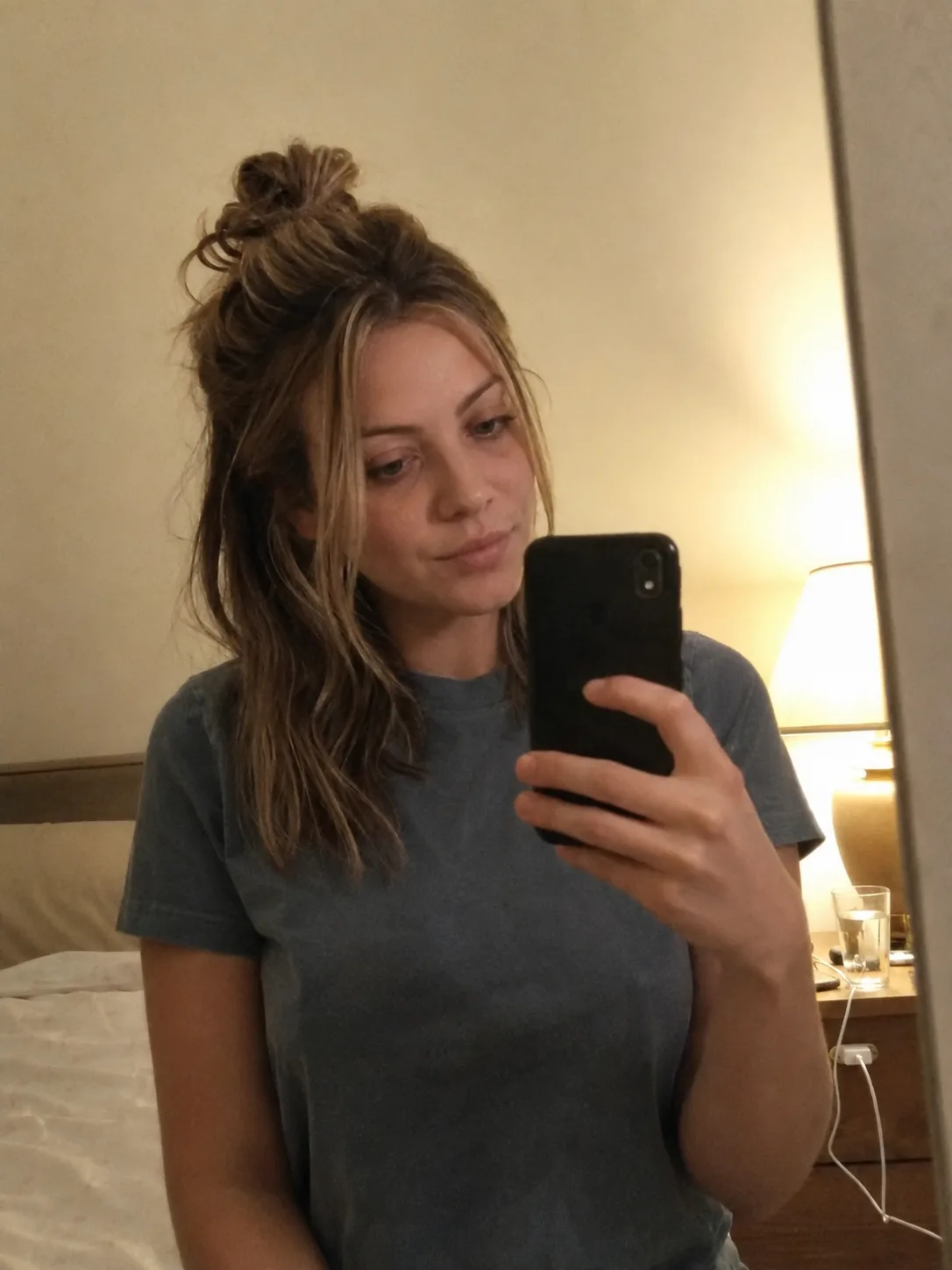
A bubble ponytail changes the tail itself rather than the base. Secure the upper section as a normal half-up ponytail, then add additional elastics down that tail and gently expand the hair between them into rounded sections.
This is most visible on straight, stretched, or softly waved hair where each bubble can separate cleanly. Curlier textures can wear it too, though the edges of each section will look softer.
The style is worth the extra elastics when you want a graphic, segmented effect without braiding. Keep each elastic snug enough to hold the section but avoid repeatedly tightening them down the shaft, particularly on fragile or already damaged hair.
Half-Up Loc Ponytail
Locs give a half-up ponytail a distinct architectural quality because the pieces remain individually defined through the tail. A lower or mid-level anchor is often more comfortable than stacking a large amount of mature loc weight high at the crown.
The lower locs stay free, so scalp access remains better than in a full updo. That can make this a useful middle ground for an event where you want the face open but don’t want every loc pinned up.
Size the gathered section by weight and comfort, not by trying to make the top and bottom halves numerically equal. The visual midpoint and the physical midpoint are rarely the same thing with locs.
Formal and Statement Half-Up Shapes
Half-Up French Twist
A half-up French twist rolls the upper section vertically before pinning it, giving you a narrow, structured center back instead of a ponytail or bun. The loose lengths fall from underneath the roll, which makes the style especially effective on smooth waves, blowouts, or curls that can sit below a cleaner crown.
This construction is more pin-dependent than an elastic style. Pins need to support the twist from inside the roll rather than sit visibly across the surface. A little crown lift can keep the profile from looking flat, but the style doesn’t require a dramatic bouffant.
Half-Up Bouffant With Soft Lengths
A bouffant is the better choice when crown height is the whole point. The upper hair is lifted and supported before being secured at the back, while the lower lengths remain loose. That creates a longer profile through the crown and a more formal, vintage-influenced finish.
The support can come from controlled backcombing, internal pinning, or the way the section is folded. Overworking fine strands to create height can leave the surface fuzzy, so use the smallest amount of manipulation that gives the shape you want.
This style photographs well from the front and side, but test it from the back too. A crown that looks elegant in a still image can feel bulky against a headrest or compete with a veil comb placed in the same area.
Choosing the Right Half-Up Construction
Start with what the upper section needs to do. A ponytail creates lift and movement, a bun makes the top compact, braids and twists control direction, and a clip spreads the anchor across a wider area.
Plan around the hair state you actually wear. Shrunken coils, defined curls, stretched hair, pressed hair, braids, twists, and locs occupy space differently. Density changes the balance too: low-density hair may look fuller with a smaller top section, while high-density hair may need a larger clip or less hair gathered. Fine strands and low density are separate characteristics; either can occur without the other.
Hold, Comfort, and Day-to-Day Wear
The upper section should stay stable during ordinary movement without stinging, throbbing, or repeated tightening. High knots and long added hair place more load around the anchor, while a claw clip spreads the hold but can feel awkward against a headrest.
Real life exposes details a mirror misses. Loose lengths can catch under coat collars or bag straps, and formal accessories may compete with the same area already holding the style. Remove rigid clips or bulky structures before sleeping on them; a smooth scarf, bonnet, or pillowcase can help reduce friction on the loose hair.
A half-up style shouldn’t hurt. Loosen or remove it if the anchor starts to sting, throb, or leave the scalp sore.
A Practical Consultation Checklist
Before styling, decide where the anchor will sit, how much hair will be gathered, and what state the loose lengths will be worn in. Then test the result by turning your head, sitting back, and moving the hair over your shoulders.
For a salon or formal appointment, bring photos that show the back as well as the front. Mention a veil, headpiece, extensions, fragile areas, recent chemical services, or scalp sensitivity before styling begins so the construction can be adjusted.
Frequently Asked Questions
Can short hair wear a half up half down hairstyle?
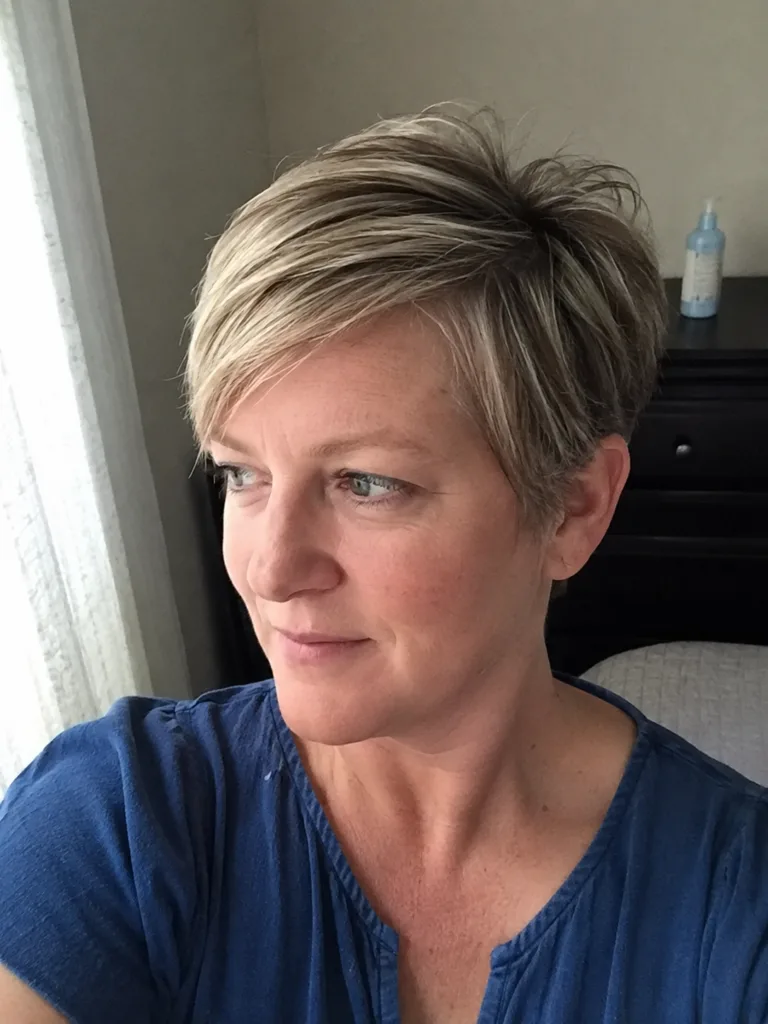
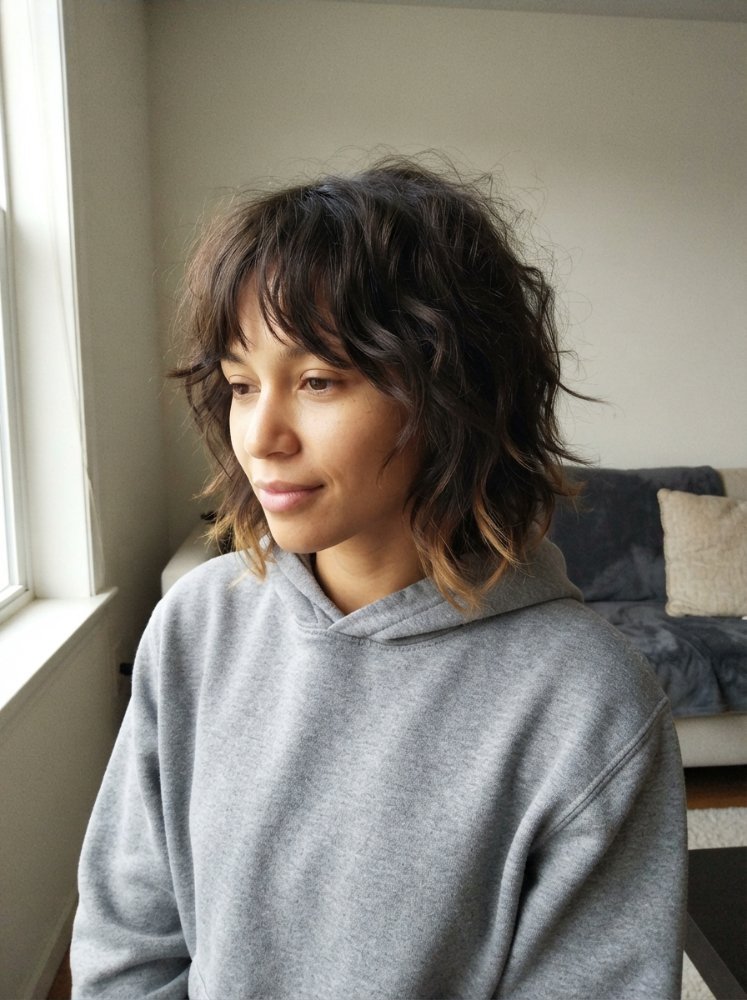
Yes, as long as the upper sections can reach an anchor point or be pinned securely. Short bobs and lobs often suit side twists, small braids, claw clips, or a compact knot better than a large ponytail. Very short layers may need pins instead of being forced into an elastic.
Do half up half down hairstyles work on natural curly or coily hair?
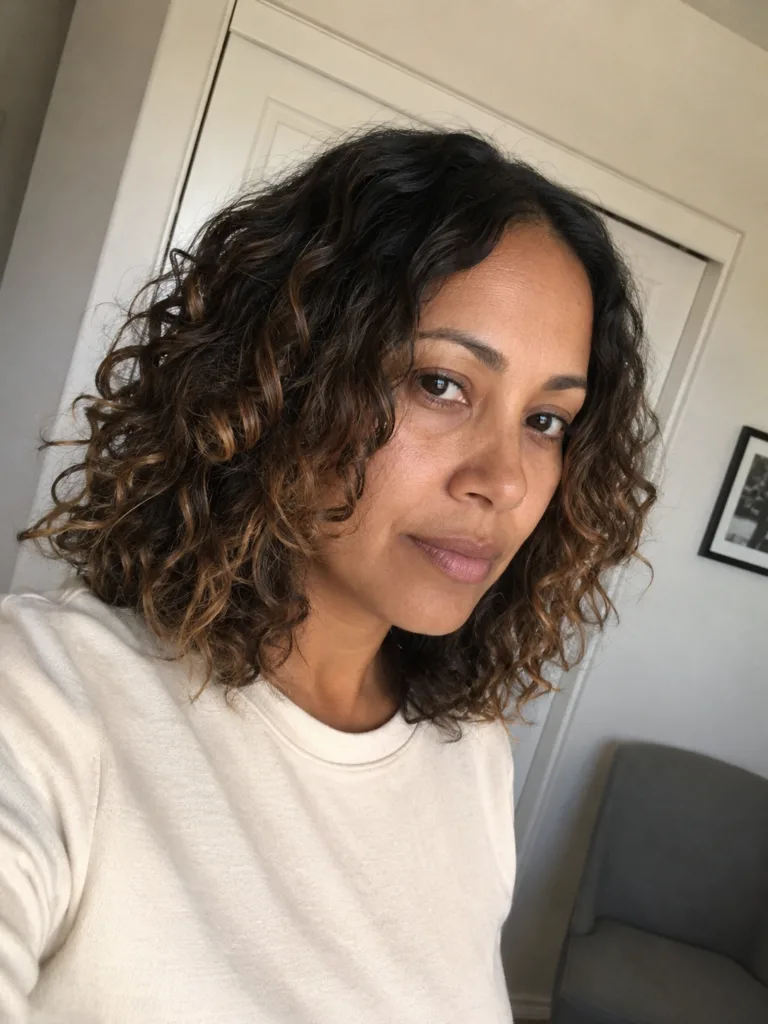
Yes. Start with the styling state you actually want to wear. Defined curls, shrunken coils, stretched hair, and pressed hair create different proportions even with a similar gathered section. Puffs, textured buns, and twist-backed styles let natural volume remain part of the design.
Can I add extensions to a half-up style?
Yes, but attachment method and added weight matter. A wrap-around ponytail, drawstring piece, or other extension needs a secure, comfortable base. Extra length and density create more movement at the anchor, so dramatic added hair is a poor tradeoff when the base already feels strained.
How do I keep a half-up style from slipping?
Match the anchor to the hair instead of tightening harder. Fabric-covered elastics, bobby pins placed across the direction of movement, a properly sized claw clip, or a little styling product can improve grip. Very smooth hair may need light texture before pinning; curls and coils may already provide enough surface grip.
Related Hairstyles to Explore
- Bridesmaid hairstyles half up half down
- Formal hairstyles for long hair half up
- Curly Hair Inspo Hairstyles
- Ponytail Hairstyles
Hair Texture & Upkeep Style Matcher
Select your natural hair texture and daily maintenance window to get an instant styling formula and heat safety cap.
Heat Cap: 320°F (160°C)
A versatile three-strand braid beginning at the parietal ridge, securing the top half while allowing natural wave texture to flow freely around the shoulders.
Conclusion
The strongest half up half down hairstyle is the one whose construction matches what your hair needs to do: a ponytail for movement, a bun for a compact top shape, braids or twists for directional control, or a clip for a wider anchor.
Judge the style from the back, in your normal hair state, and during real movement. Comfort, proportion, and usable hold matter more than copying a reference photo exactly.
Editorial Standards & Hair Health Guidance
Every style featured on Tress Atlas is curated with a focus on real-world wearability, scalp tension management, and cuticle preservation. When trying protective styles or tight updos, ensure perimeter hairline sections remain tension-free to avoid traction stress on delicate follicles. For heat styling, cap tools below 350°F (180°C) to prevent thermal keratin denaturation.
Scientific Sourcing: Practices aligned with the American Academy of Dermatology (AAD) on traction alopecia risk reduction and cosmetic trichology research on hair tensile strength.