
Pixie Haircuts: Shape, Upkeep, and What Changes the Result
Pixie haircuts look simple because there isn’t much length to hide behind. That simplicity makes the cutting decisions more visible. A small change at the crown can alter the entire profile, an overly light perimeter can expose more scalp than expected, and a fringe that looks effortless in a photograph may need daily direction to sit the same way.
The most useful way to choose a pixie is to decide where you want the haircut to carry its weight. A classic short pixie keeps the head shape close and neat. More length through the crown creates movement and styling options. A longer fringe brings attention forward and gives you something to tuck, sweep, curl, or smooth. Leaving extra length around the ears and nape produces a softer outline and a less abrupt transition from longer hair.
Texture changes the calculation too. Straight hair shows cutting lines clearly. Waves can create movement with little manipulation. Curls and coils introduce shrinkage and volume, so the haircut needs to be judged in the state you actually plan to wear.
Before choosing a reference photo, look beyond the finished styling. The better question is whether the underlying haircut will behave well during your ordinary mornings, wash days, humid weather, exercise, sleep, and grow-out.
The Main Pixie Shapes and How They Behave
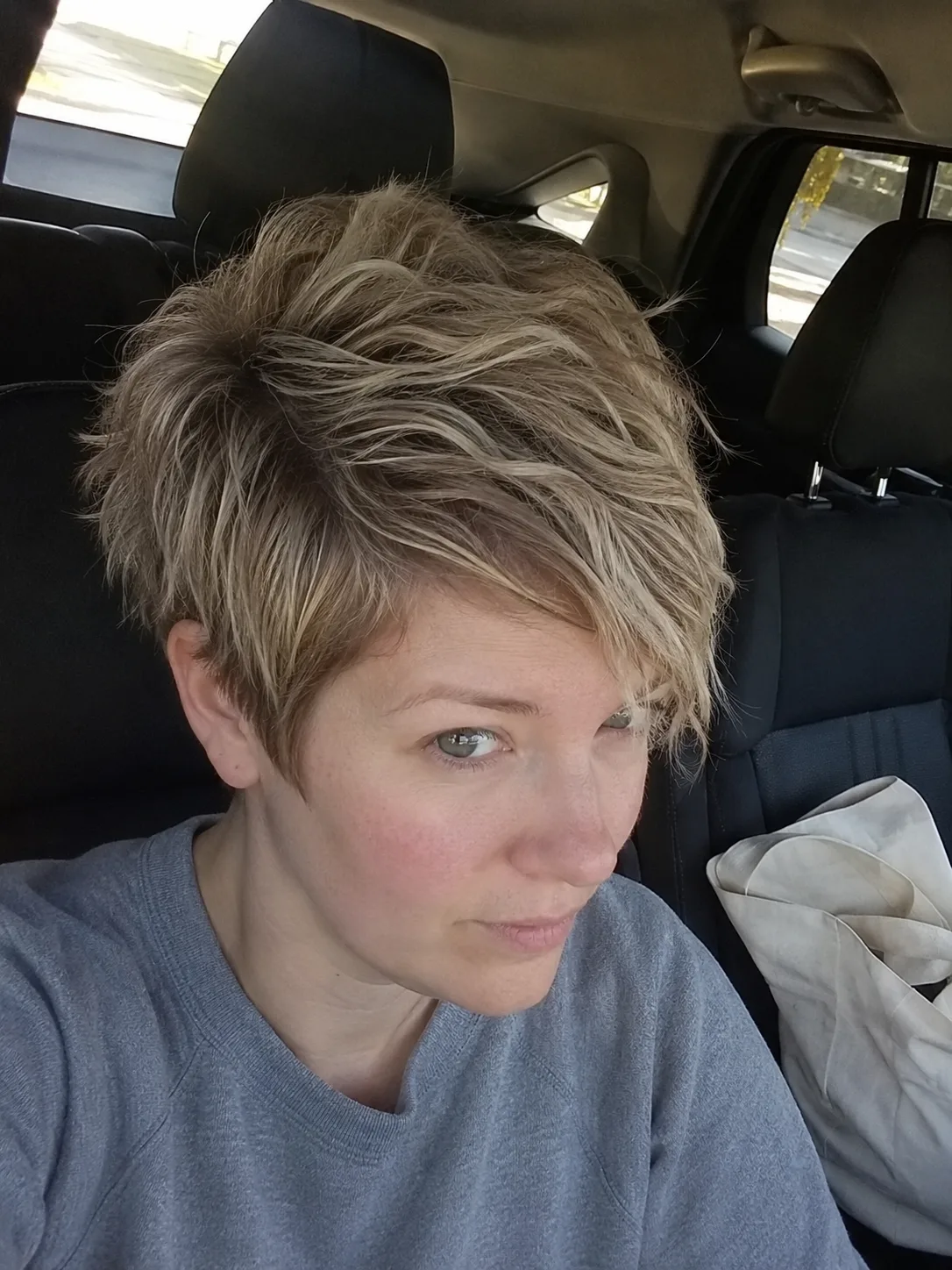
Pixie is a broad haircut category rather than one fixed shape. Two cuts can both be called pixies while requiring very different routines.
A close-cropped pixie removes much of the length through the sides and back while keeping enough hair on top to establish direction. It has a clean outline and exposes the shape around the ears, temples, and nape. Because the perimeter is so visible, changes in length become noticeable relatively quickly.
A longer pixie carries more hair through the top, front, or both. This is often the more forgiving starting point for someone making a dramatic length change. You can sweep the fringe, create a side part, encourage natural texture, or build some height at the crown. The extra length also provides more options as the cut grows.
Layered pixies distribute weight through the interior. Layers can encourage movement and prevent a longer top from sitting as one solid mass, but excessive removal is a poor tradeoff when the haircut needs a stronger-looking perimeter or when density is already low.
Then there are pixie-bob hybrids. These preserve greater length around the sides, nape, or front and can make the jump from a bob or longer haircut feel less severe. They also behave differently during grow-out because there is more hair available to blend into a short bob shape.
The strongest starting point for an uncertain first-time pixie wearer is usually a little more length than the shortest reference image. Hair can always be refined shorter once the shape has been assessed. Rebuilding removed length takes considerably more patience.
Crown Length Changes More Than You Might Expect
The crown has an outsized influence on a pixie haircut. It determines whether the cut lies close to the head, rises into a fuller profile, or collapses into a flatter shape.
Short crown layers create a compact result and can reduce the amount of hair you need to arrange each morning. They also leave less flexibility. Once hair is very short, changing its direction can become harder, particularly around growth patterns such as cowlicks.
Keeping more crown length provides material for lift, separation, waves, curls, or a smoother side-swept finish. That flexibility comes with more styling responsibility. Bed compression becomes more visible, and hair that dries in an unwanted direction may need to be dampened and reset.
The relationship between the crown and sides matters as much as the crown itself. A very full top sitting above extremely tight sides produces a stronger contrast. A graduated transition feels softer and usually grows out with fewer abrupt changes in proportion.
Reference photographs can disguise this construction because styling creates temporary volume. Ask how long the crown actually is, where the shortest internal layers sit, and whether the photographed height comes from the haircut or from blow-drying and styling.
Fringe Is a Major Commitment in a Short Haircut
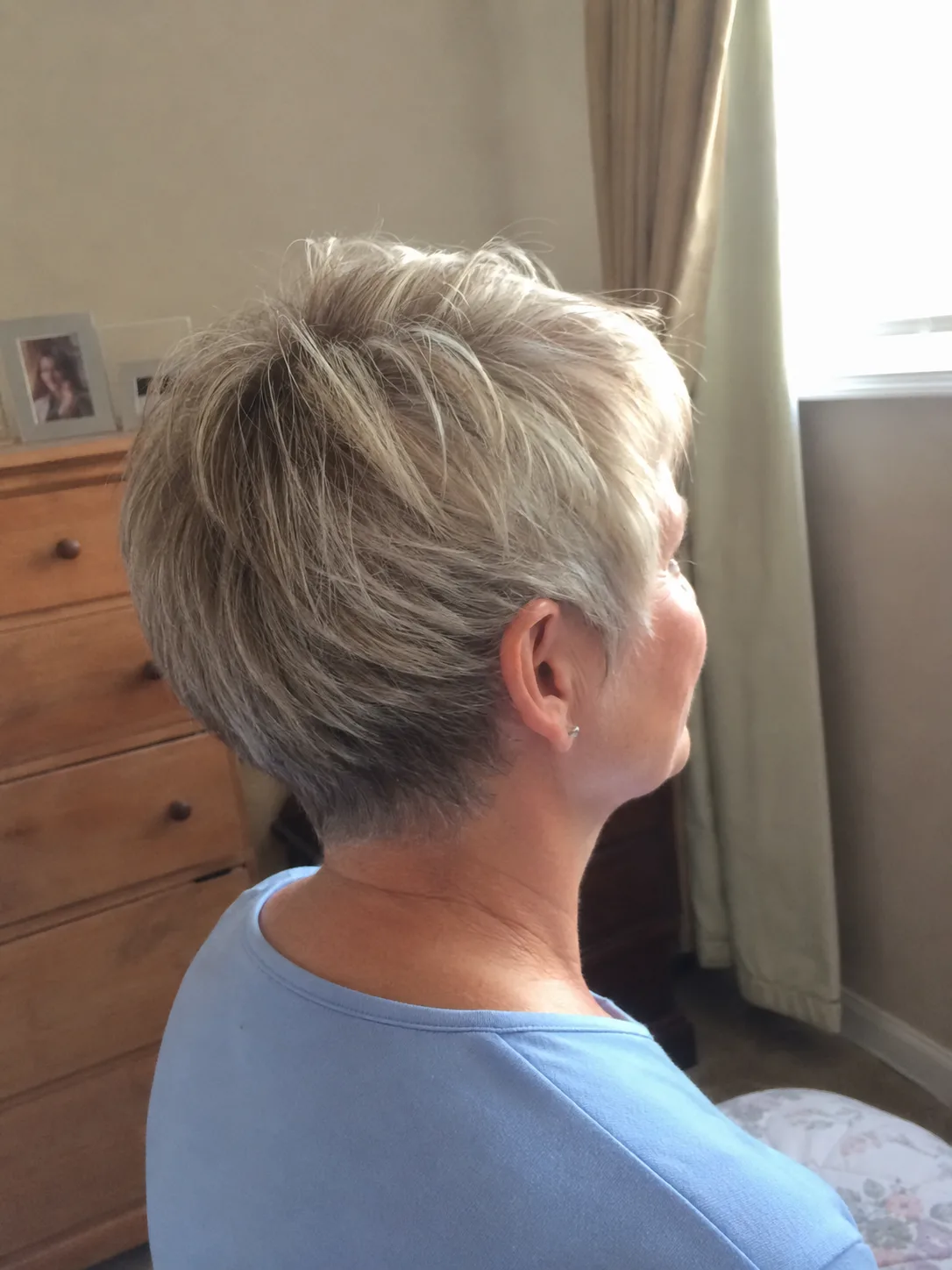
On longer hair, fringe is one feature among many. In a pixie, it can become the dominant feature.
A short fringe opens the forehead and reinforces the compact character of the cut. It works especially well when you like a visibly cropped result and don’t want hair falling toward the eyes. Because there is little length to redirect, the cutting line and natural growth pattern matter.
A long side-swept fringe is more versatile. It can soften the front of a very short cut, create an asymmetrical line, or provide enough length to tuck near the temple. It’s also more likely to need deliberate styling. Hair that separates, curls tightly, expands in humidity, or grows forward may behave differently from a sleek inspiration photo.
Curly fringe deserves to be planned as curly fringe. Straightening it simply to establish the cutting length can create a misleading result if curls are your everyday styling state. Curl pattern, spring, shrinkage, and the way individual groups sit across the forehead all affect the apparent length.
Glasses deserve consideration here as well. Longer temple pieces and side-swept fringe can overlap the arms of glasses, especially when the sides carry significant volume. That may be exactly the softness you want, but it should be visible in the haircut plan rather than discovered afterward.
Fine Strands, Low Density, and Thinning Need Different Decisions
Fine hair and low-density hair are commonly discussed as though they mean the same thing. They don’t.
Fine describes strand diameter. Someone can have very fine individual strands and still have a large number of them. Low density means there are fewer strands covering the scalp. Thinning refers to a reduction or concerning change in density, while breakage involves strands snapping along their length.
Those distinctions matter when choosing a pixie because interior weight removal changes what you see.
Fine but reasonably dense hair may respond well to strategic layering, particularly when the longer top needs movement. Removing too much can still make the cut flyaway or difficult to control, so more texture isn’t always useful.
Low-density hair usually benefits from more restraint. Heavy thinning or aggressive interior removal can expose additional space between strands. A stronger perimeter and carefully placed internal layers often make better use of the hair that is present.
A pixie cannot create actual density. What a good shape can do is distribute the existing hair in a way that makes the outline feel stronger and keeps weak or transparent areas from becoming the visual focus.
Sudden shedding or a concerning change in density belongs outside an ordinary haircut decision. A dermatologist or another qualified healthcare professional can assess changes involving the scalp or hair growth, particularly when they are accompanied by pain, redness, sores, or persistent irritation.
Curly, Coily, Wavy, and Straight Pixies Are Different Haircuts
A pixie should be designed for the state in which you expect to wear it most often.
Straight hair tends to reveal the cutting structure clearly. Short layers, graduation, disconnection, and perimeter lines are easy to see, which makes precision particularly important. Very short pieces may also stand away from the head depending on growth direction and strand behavior.
Wavy hair can give a longer pixie built-in movement. Extra length at the top often allows the wave pattern to appear more clearly, while cutting it too short may remove the bend that created the desired effect.
Curly and coily pixies need enough allowance for shrinkage. A curl that appears comfortably long while stretched or wet can settle much higher once dry. The finished shape should therefore be assessed in the state you actually wear, whether that is naturally shrunken, gently stretched, defined, or another consistent styling state.
A curly pixie also doesn’t have to be rounded. More height can be preserved through the top, the sides can be kept compact, or the front can remain longer for a directional shape. Curl grouping determines where the volume appears, so identical cutting lengths across the head won’t necessarily produce identical visual proportions.
Relaxed or otherwise chemically processed hair brings condition and previous services into the consultation. Shortening the hair may remove some compromised length, but it doesn’t reverse damage within the remaining strands. The haircut still needs to account for the condition and strength of what remains.
A Pixie Can Be Easy to Style and Still High Maintenance
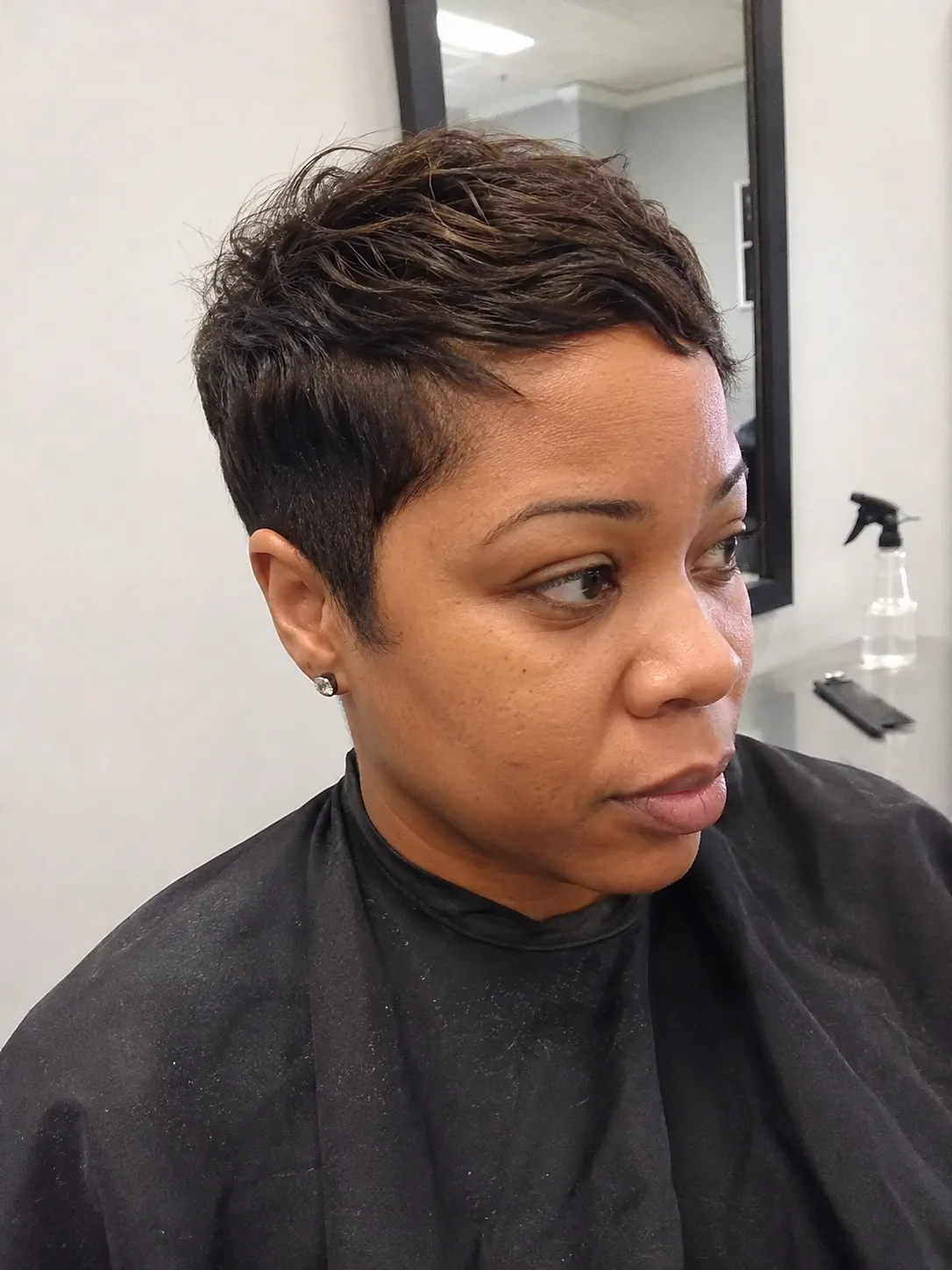
Short hair is frequently described as low maintenance. That depends on what type of maintenance you dislike.
A pixie eliminates many length-related tasks. There is less hair to detangle, less material to arrange into a ponytail or bun, and a much smaller mass of hair to manipulate. For someone tired of managing long lengths, that can feel dramatically easier.
The haircut itself is more dependent on its outline.
Once a bob grows slightly, it can still resemble a bob. A close pixie can change character more quickly because a relatively small amount of growth affects the ears, sideburn area, nape, crown, and fringe proportions. The cut may start feeling different well before the hair seems objectively long.
Daily styling can also become more visible. A section flattened during sleep has nowhere to disappear. Crown hair that separates in an unwanted direction can alter the whole profile. A longer fringe may need resetting while the rest of the haircut looks fine.
The easiest pixies are designed around how your hair already wants to move. Keeping enough length around a strong cowlick, allowing curls to settle naturally, or working with a preferred part usually saves more effort than choosing a highly controlled shape that must be reconstructed every morning.
Product quantity isn’t the deciding factor. Technique matters more. Some cuts need only water and reshaping with the fingers. Others benefit from a lightweight styling product, setting foam, or controlled blow-drying. The choice should match strand size, texture, condition, and the finish you want instead of following one universal short-hair routine.
What Grow-Out Really Looks Like
A pixie rarely grows evenly into the next convenient haircut.
The nape may start feeling bulky while the top still seems short. Hair around the ears can lose its outline. A fringe may reach a comfortable sweeping length at the same time that the sides become awkward. Curly hair can create an entirely different transition as new length changes the way curls stack.
This is where the original construction pays off.
A pixie with some retained length through the top and front offers more possibilities during grow-out. It can gradually move toward a bixie or short bob without every area needing to catch up at once. An extremely short, high-contrast pixie creates a more obvious transition because the difference between top and sides must gradually narrow.
You also don’t have to maintain the exact original shape while growing it. Strategic reshaping can clean the nape, rebalance the sides, or adjust excess bulk while preserving length in the areas that need to grow.
Avoid turning the grow-out plan into repeated removal of the very hair you’re trying to gain. Be clear about the destination. Growing toward a bob requires different reshaping from simply keeping a slightly longer pixie.
Collars matter once the back gains length. The short nape that originally sat cleanly against the neck may begin flipping where it meets a jacket or shirt collar. That behavior is physical, not evidence that the haircut has suddenly gone wrong.
What to Discuss Before the Hair Is Cut

A good pixie consultation is much more useful when the conversation moves beyond a single photograph.
Bring images for shape, but identify what you actually like in each one. It may be the long fringe in one image, the close sides in another, and the natural curl volume in a third. Expecting one haircut to reproduce several conflicting features can create confusion.
Then discuss your normal styling state. Hair that is worn naturally curly most days should be planned around its dry curl behavior. Someone who consistently wears the hair smooth has a different set of priorities. Switching between dramatically different styling states can work, but the haircut needs enough flexibility for both.
Density and strand size deserve their own discussion. Ask where weight will be removed and why. A heavily texturized interior can be useful for thick, compact hair that needs movement, while the same approach may work against a low-density perimeter.
Show how you normally wear your glasses, hearing devices, headbands, or other items that sit around the ears and temples. A beautiful piece of side length is less appealing when it constantly competes with something you use every day.
It also helps to settle five practical decisions before cutting:
How exposed you want the ears and nape

How much length you want available at the crown
Whether fringe should sit short, sweep, curl, or tuck

Which styling state should determine the finished shape
Whether you are comfortable maintaining a precise outline or prefer a softer grow-out
A front, side, and back reference is more informative than a single straight-on photograph. Many dramatic pixies rely on construction that is almost invisible from the front.
Your Home Routine Should Match the Cut
A pixie routine starts with how the hair dries. Short hair has limited weight pulling it downward, so natural growth direction becomes important. Letting the cut dry randomly and trying to force it into place afterward can create more work than directing it while damp.
Use your fingers, a brush, diffuser, or other appropriate styling tool according to the finish and texture you want. Curly and coily pixies often benefit from shaping curl groups while the hair is damp and then allowing the form to set with minimal disturbance. Smoother pixies may require directional drying so the fringe and crown settle where intended.
Sleeping changes short hair visibly. A smooth pillowcase or bonnet can reduce friction and tangling, but compression can still flatten the crown or redirect a fringe. Dampening only the affected section is often more practical than restarting the entire style.
Pay attention to the shape between salon visits rather than following a rigid calendar. Some pixies rely on a sharp nape and compact sides; others are intentionally softer and tolerate growth more easily. Your texture, growth pattern, desired outline, and destination haircut should determine when reshaping becomes worthwhile.
Related Hairstyles to Explore
- Short hairstyles with bangs
- Medium length layered haircuts
- Medium length hairstyles with bangs
- Layered Hair for women
FAQs About Pixie Haircuts

Can a pixie haircut work on very curly or coily hair?
Yes. Pixies can be shaped around curls and coils without straightening them into a conventional smooth pixie. Shrinkage, curl grouping, density, and the way the hair is normally worn should guide the length. The dry result is particularly important because stretched or wet hair can make the cut look substantially longer during the cutting process.
Is a pixie haircut a good choice for low-density hair?
It can be, provided the cutting strategy protects the visual strength of the hair that is present. Excessive interior removal may reveal more scalp, while a stronger perimeter and selective layering can create a more substantial-looking outline. A haircut changes shape and weight distribution; it cannot create new follicles or actual density.
Can I get a pixie without cutting the sides extremely short?
Absolutely. Longer pixies and pixie-bob shapes can retain hair around the ears, temples, nape, or all three. This is often a useful direction when you want short-hair proportions without an exposed, close-cropped perimeter. Keeping extra length also gives you more flexibility during grow-out.
What should I do if I want a pixie but I’m nervous about going too short?
Start by identifying the shortest area you feel comfortable exposing, then retain more length through the crown and front. A longer pixie still gives you a clearly short haircut while leaving room for adjustment after you see how your hair settles in its natural styling state. Going slightly conservative on the first cut is generally more useful than removing extra length simply to match a photograph.
Hair Texture & Upkeep Style Matcher
Select your natural hair texture and daily maintenance window to get an instant styling formula and heat safety cap.
Heat Cap: 320°F (160°C)
A versatile three-strand braid beginning at the parietal ridge, securing the top half while allowing natural wave texture to flow freely around the shoulders.
Conclusion
The most successful pixie haircut isn’t defined by how short it is. The important decisions are where the length stays, where weight is removed, how the fringe behaves, and whether the cut works with your everyday texture and growth patterns.
For a first pixie, preserving some flexibility through the crown or front is usually the more practical starting point. You still get the visual shift of short hair without committing every part of the haircut to its shortest possible version. Then judge the cut in the way you actually live with it: dry, moving, tucked around glasses, flattened after sleep, exposed to humidity, and growing beyond its freshly cut outline.
Choose the construction first. The styling photo comes second.
Editorial Standards & Hair Health Guidance
Every style featured on Tress Atlas is curated with a focus on real-world wearability, scalp tension management, and cuticle preservation. When trying protective styles or tight updos, ensure perimeter hairline sections remain tension-free to avoid traction stress on delicate follicles. For heat styling, cap tools below 350°F (180°C) to prevent thermal keratin denaturation.
Scientific Sourcing: Practices aligned with the American Academy of Dermatology (AAD) on traction alopecia risk reduction and cosmetic trichology research on hair tensile strength.