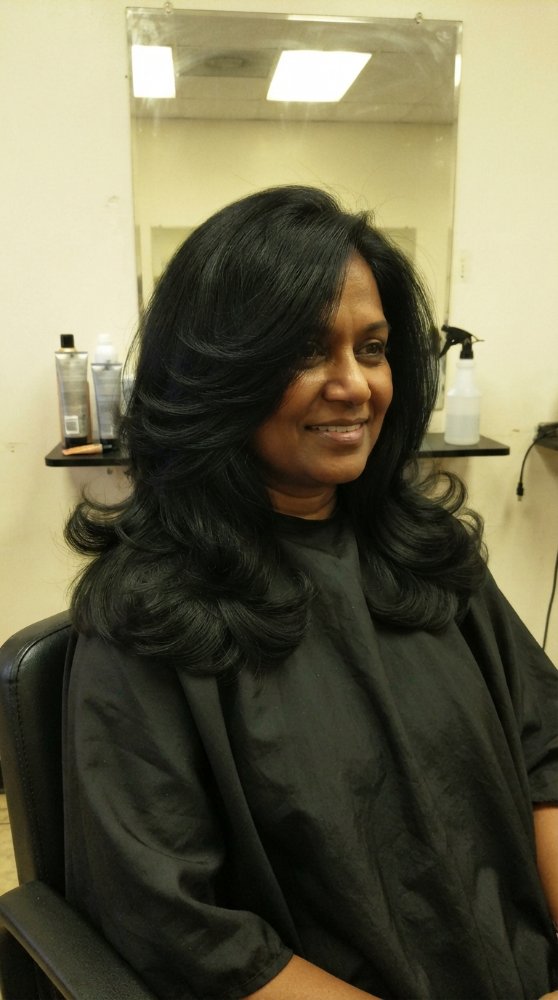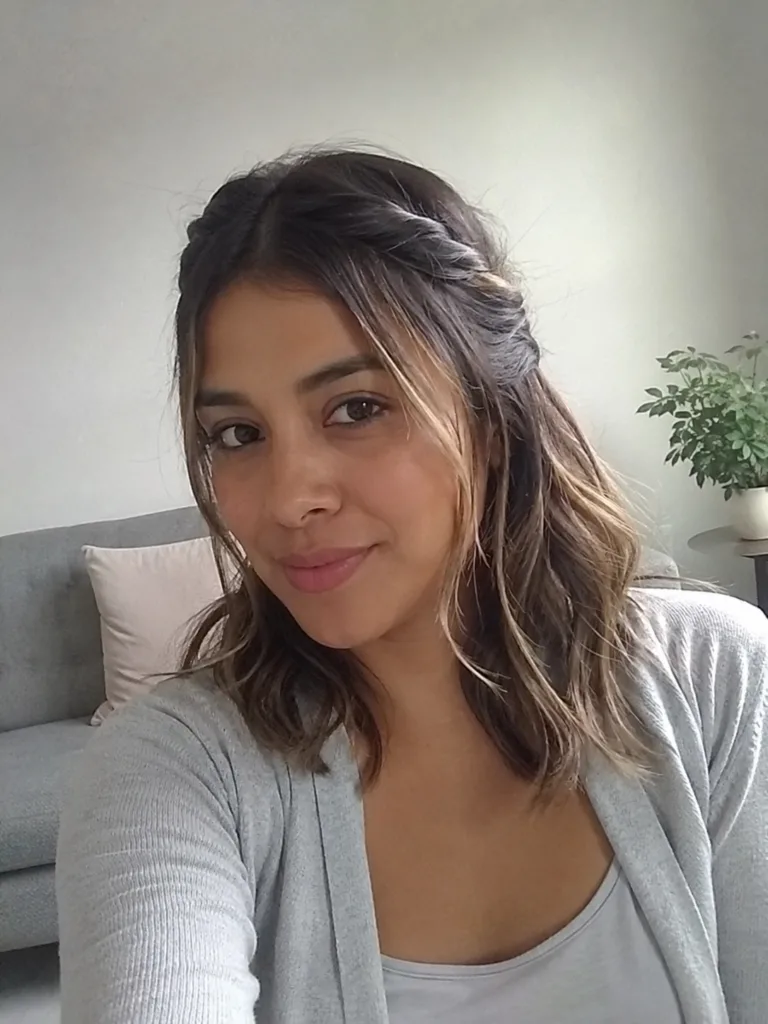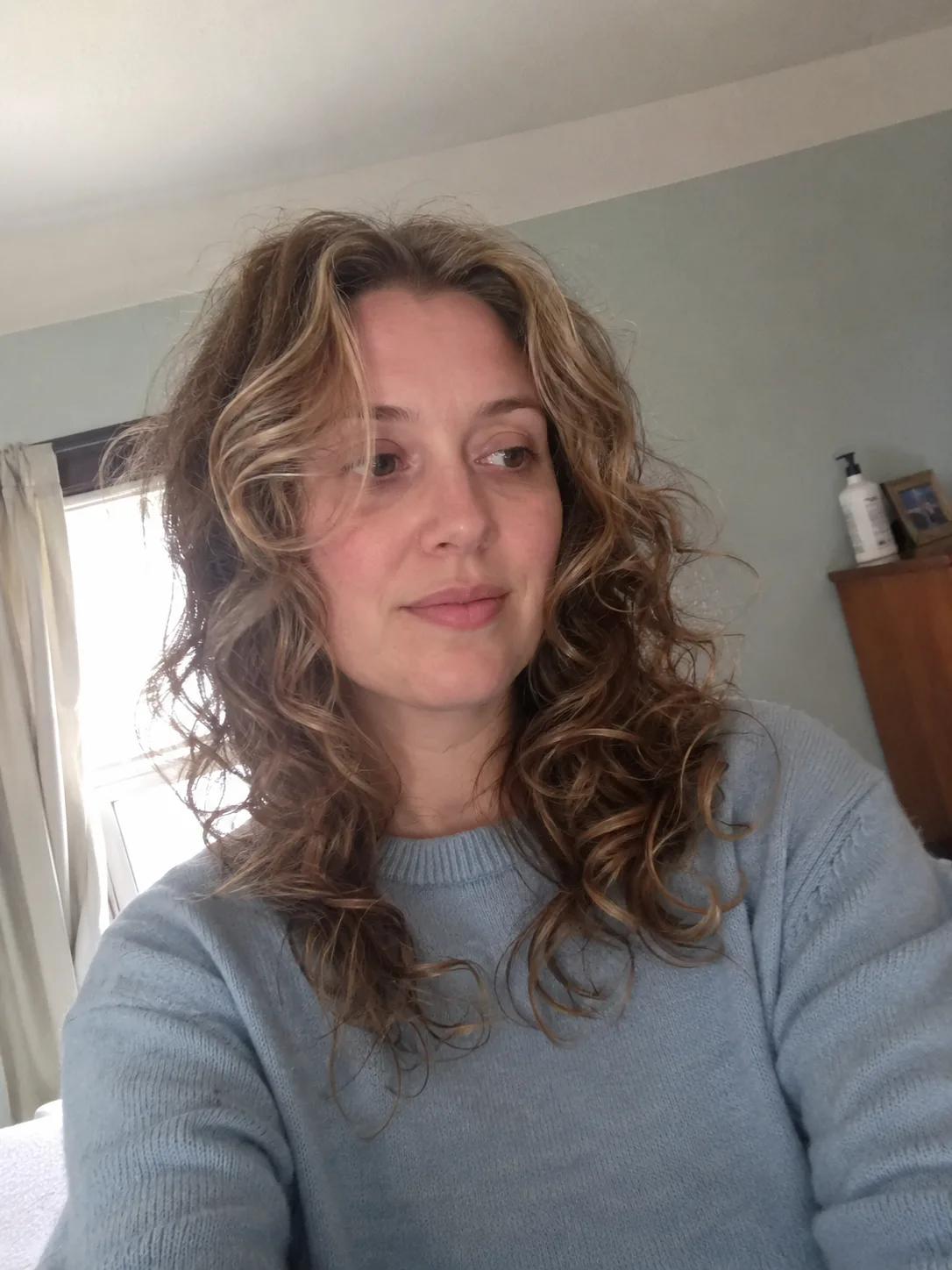
Curly Hairstyles for Medium Hair: Styling Guide & Cuts That Balance Shape and Manageability
Medium-length curly hair sits in a useful middle ground: there’s enough length for ponytails, buns, pinned styles, and visible layering, but usually less bulk and drying demand than very long curls. The catch is that “medium” can look completely different once curl pattern and shrinkage enter the picture. Hair that reaches well below the shoulders when stretched may sit close to the shoulders in its usual curly state.
That makes the haircut and the styling state more important than the measurement alone. A blunt perimeter concentrates weight toward the bottom. Shorter layers encourage expansion through the crown. A fringe changes where the eye lands. Pulling the same curls into a high puff changes both the shape and how much tension reaches the perimeter.
Before choosing a reference photo, look at where the style carries its volume and whether the photograph shows naturally shrunken curls, elongated curls, a set, or heavily defined styling. The most successful medium curly hairstyle is usually the one whose everyday behavior matches the picture you actually want to maintain.
Cuts That Change the Shape of Medium Curls
Rounded Layered Curls
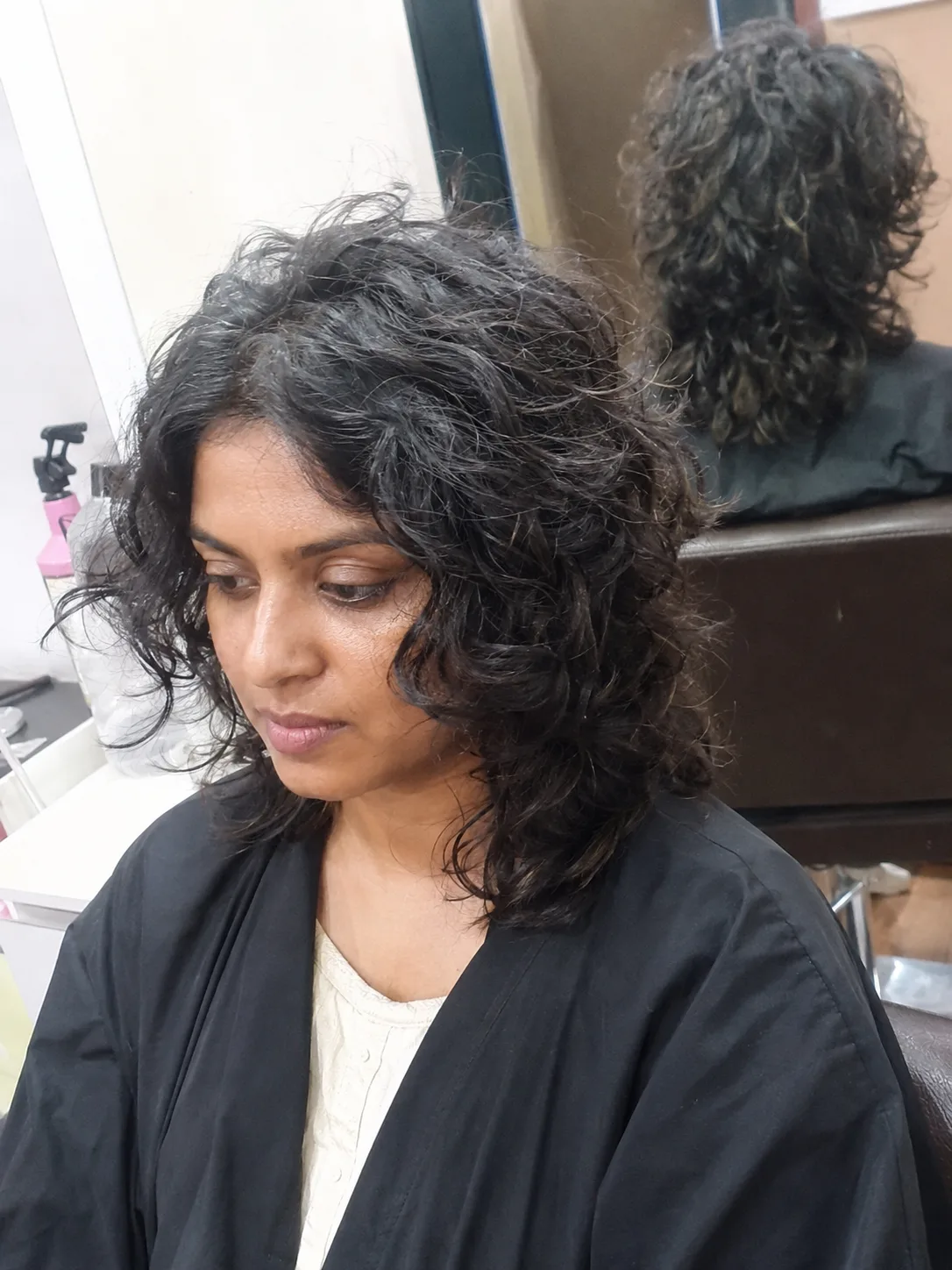
A rounded layered cut is one of the strongest choices when you want medium curls to look full from several angles rather than hanging in a narrow column. The layers remove enough weight to let curls rise around the crown and sides while leaving enough length underneath to preserve the medium silhouette.
This works particularly well when your curls naturally form visible groups and you like wearing them close to their usual shrinkage. The shape can become much less predictable when the haircut is judged only on stretched or soaking-wet hair, so your normal styling state is useful information during a salon consultation.
Density matters too. Dense hair may need thoughtful weight distribution to prevent the lower half from becoming overly bulky. Low-density hair calls for more restraint with interior removal because excessive layering can expose additional space between curl groups.
Shoulder-Length Curls With Long Layers
Long layers give medium curls movement without dramatically changing the lower perimeter. They’re a practical default for someone who wants versatility: the hair can still move easily into a ponytail or bun, while the layers stop the entire cut from behaving like one heavy block.
The visual change is quieter than a shag or strongly rounded cut. Most of the movement happens toward the ends and around the outer surface, making long layers easier to live with when you regularly alternate between loose curls, stretched styling, and tied-back hair.
This is also a useful option for curls that already have plenty of natural volume. You get separation and movement without deliberately pushing the crown much wider.
Medium Curly Shag
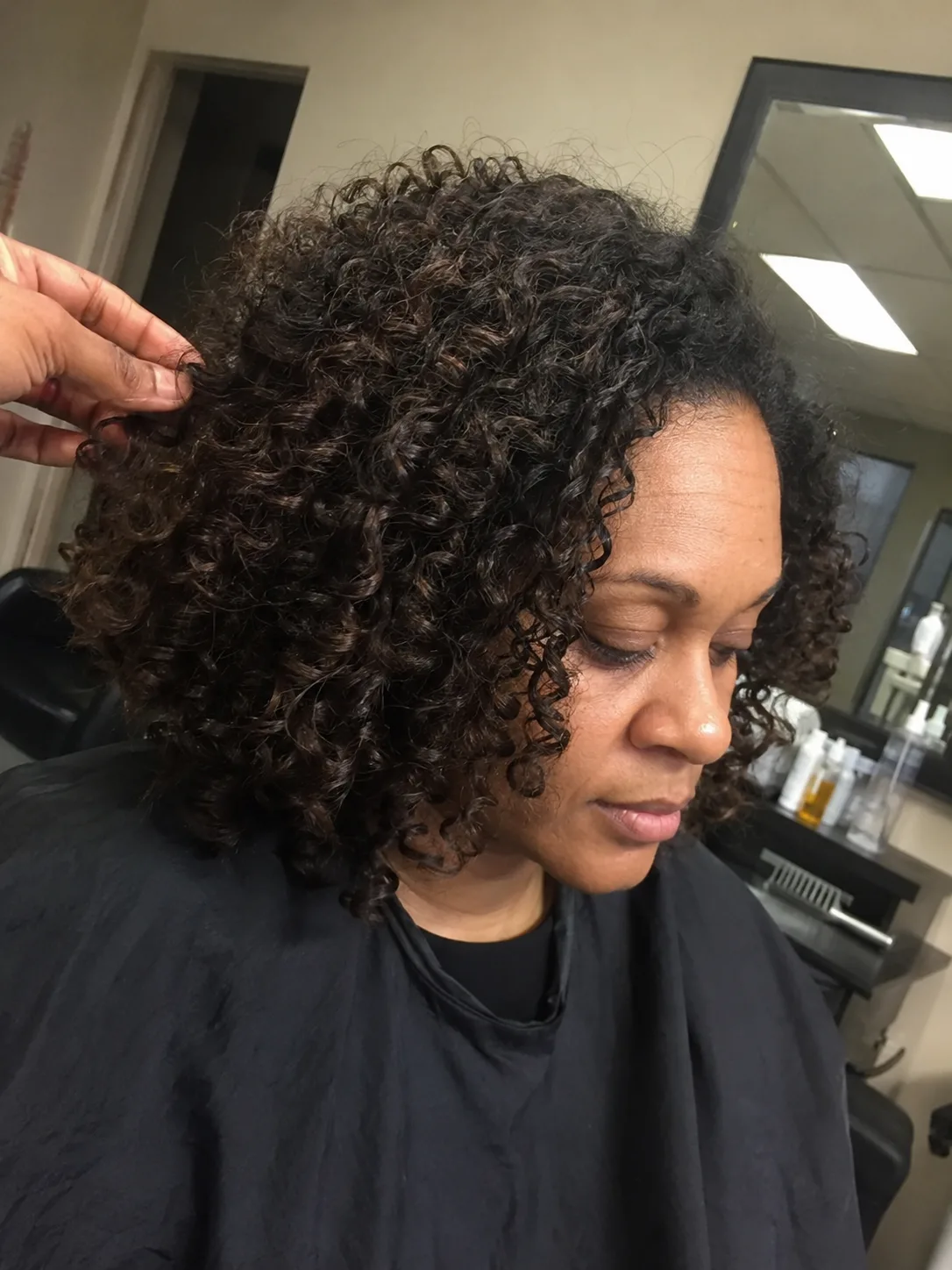
A curly shag puts the emphasis higher. Shorter crown layers, noticeable face framing, and a lighter lower section create a more broken-up outline than traditional long layering.
The style earns its place when you actually want that separation. It works especially well with curls that spring readily and with readers who prefer visible movement around the forehead, cheek area, and crown. A shag is less suited to someone whose main goal is a thick, uninterrupted lower edge.
There’s also more haircut personality built into it. That makes the shag comparatively salon-dependent: as those shorter sections grow, the balance between crown volume and length changes before the hair necessarily feels much longer.
Blunt Medium Curly Cut
A stronger perimeter keeps more visual weight at the bottom of medium-length curls. Instead of scattering the ends through numerous layers, the cut allows the lower edge to read as one substantial shape.
That can be especially useful for hair with healthy ends and a naturally moderate amount of volume. It can also make the perimeter appear more substantial in some low-density hair, although a haircut cannot create actual density.
The compromise is movement. Very dense curls may widen heavily toward the bottom when too much internal weight is left untouched. A blunt-looking finish can still involve subtle shaping; the important feature is that the perimeter remains visually strong.
Clavicle-Length Curly Lob
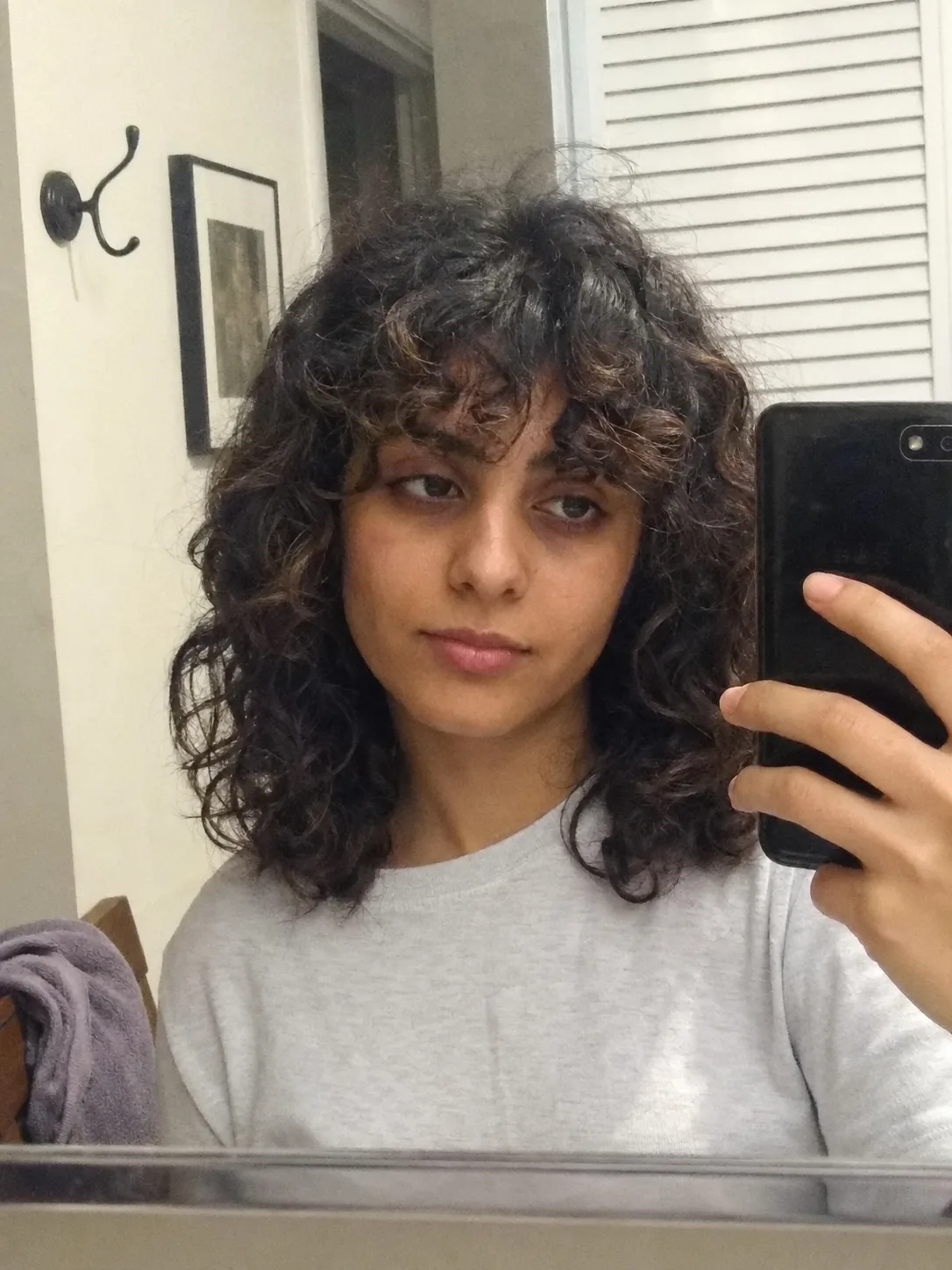
The curly lob sits close to the collarbone area in its finished curly state and gives medium hair a cleaner, more compact outline. Compared with longer shoulder-length layers, it places more attention on the ends and the area around the neck.
This length is particularly useful when long curls keep catching under shoulder bags, jacket collars, or clothing but you don’t want to move into clearly short hair. It also offers enough length for simple half-up styling and many low ponytails.
Pay attention to shrinkage before cutting. A lob planned from stretched length alone can finish substantially shorter once the curl pattern settles back into its normal state.
Styles That Put Texture at the Center
Layered Curls With a Curly Fringe
A fringe changes more than the forehead area when it becomes part of an overall layered shape. It pulls some visual weight forward, connects naturally with shorter face-framing pieces, and can make a medium cut feel more animated without sacrificing the length behind it.
Curly fringe can be worn in its natural texture. The key salon question is where it should sit once dry and normally styled, because springier sections may finish well above their wet position.
This choice creates more day-to-day involvement around the face. Fringe gets touched, slept on, separated, and exposed to forehead moisture more than the back of the hair, so a quick refresh may sometimes be needed even when the rest of the curls are still cooperating.
Defined Medium Wash-and-Go
The wash-and-go is the most direct way to let the haircut and natural curl grouping do the work. On medium hair, it can show exactly where the cut expands, where it narrows, and how the perimeter behaves without introducing an additional set pattern.
Application technique matters more than chasing maximum definition. Some hair looks better with larger curl groups and more volume; other hair benefits from stronger separation and control. Your preferred outcome should guide how much the curls are smoothed, raked, brushed, or left relatively undisturbed during styling.
Drying is part of the result. Moving the hair aggressively while it is still setting tends to disturb curl groups, while root positioning and diffuser technique can influence how much lift develops near the scalp.
Elongated Twist-Out Curls
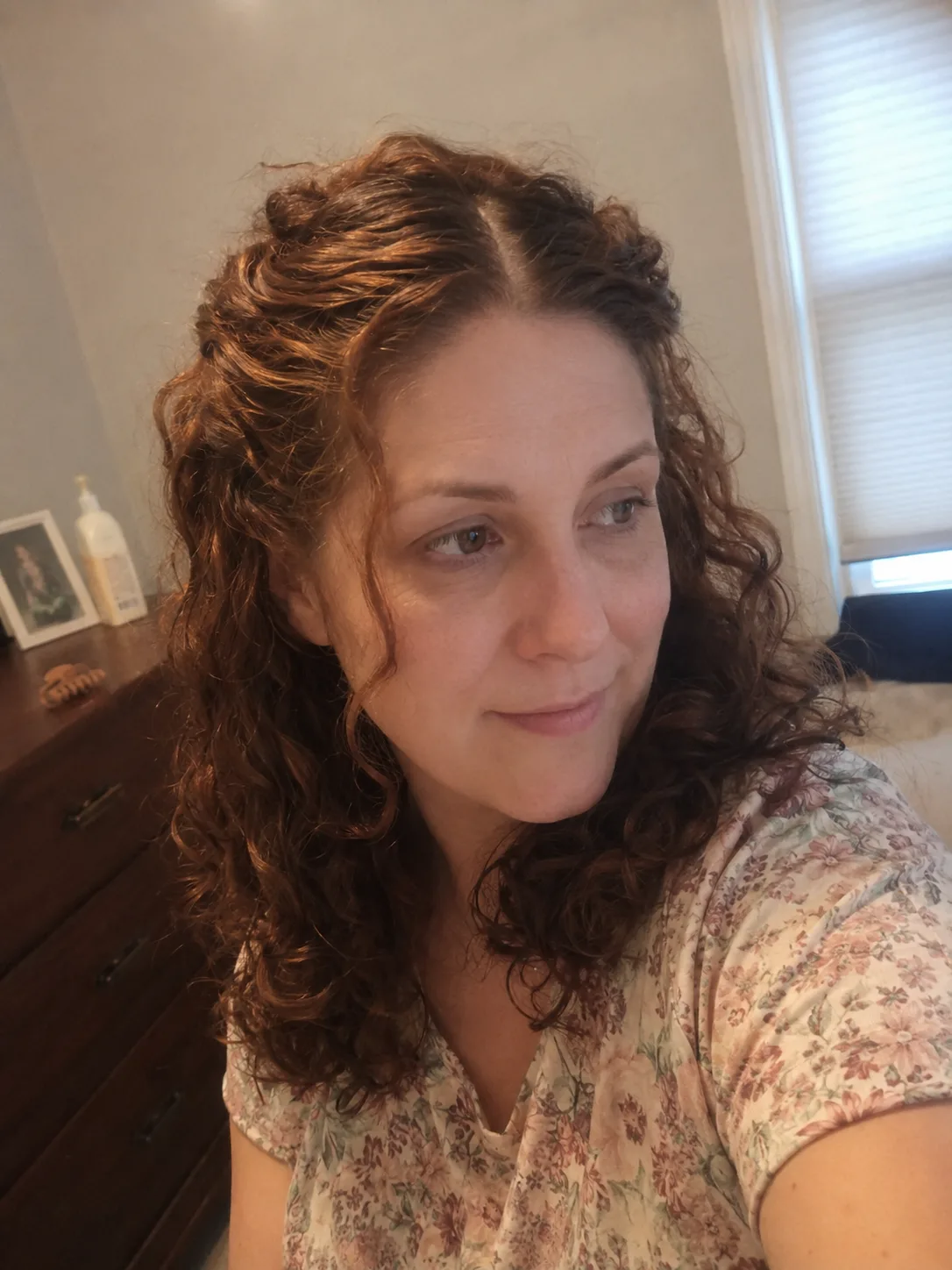
A twist-out shifts medium curly hair into a more elongated styling state. Twists temporarily organize the hair into larger sections, so the released texture often looks longer and more patterned than a shrunken wash-and-go.
This can be a better option when you want more visible length around the shoulders or when extreme shrinkage hides much of the haircut. It also changes the shape: elongated sections tend to fall downward more readily, so a highly rounded cut may appear less wide once stretched through a set.
The hair needs to be thoroughly dry before the twists are separated. Opening damp sections can blur the set and leave some areas more stretched than others.
Medium Roller-Set Curls
A roller set replaces the hair’s ordinary curl arrangement with larger, more uniform bends. On medium hair, that can create a softer, fuller finish with smoother-looking ends and more deliberate direction.
Choose this for the visible result, not because natural curls need correcting. The set is simply a different styling state. Roller size, section size, tension during wrapping, and the way the curls are separated all influence the final volume.
A roller-set finish is also less tied to the haircut’s natural shrinkage pattern. That makes it useful for occasions when you want medium curls to appear a little longer or more uniform without permanently changing the cut.
Half-Up and Pulled-Back Styles
Half-Up Curly Crown
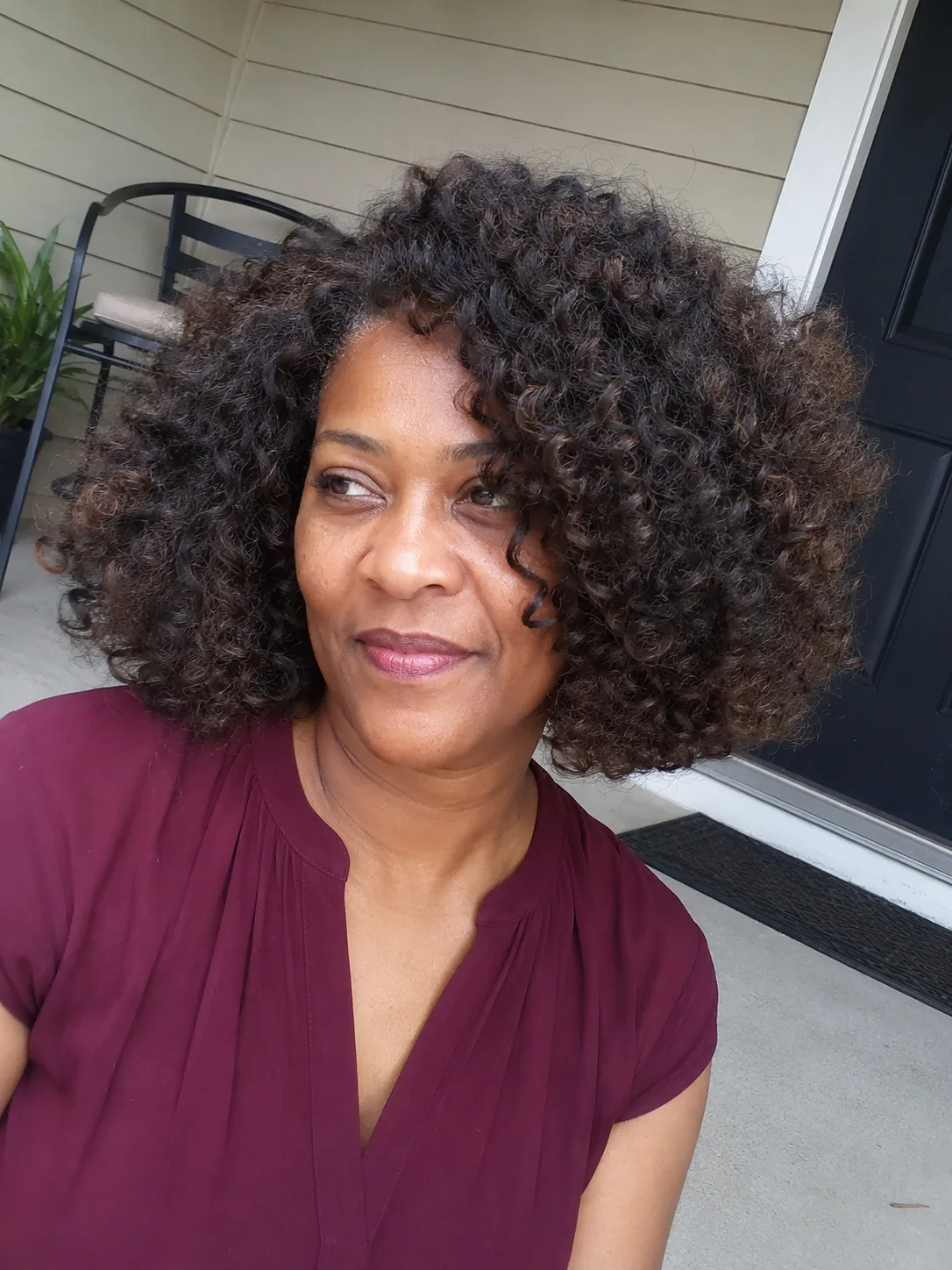
Pulling only the upper section back solves two common medium-hair problems at once: curls stay away from the face while plenty of texture remains visible through the lower half.
The stronger version of this style keeps some lift at the crown. Flattening every curl tightly toward the elastic can make the top look smaller than the loose hair below. Gather the section with your fingers, position it where the shape looks balanced, and secure it without forcing fragile perimeter hairs into the anchor.
It’s one of the easiest styles to adapt as the haircut grows. Shorter front layers can stay loose while longer crown sections join the half-up portion.
Low Curly Ponytail
Medium curls make a low ponytail particularly practical because the tail has enough length to look substantial without creating the long swing of a waist-length ponytail.
Keep some of the natural surface texture when a softer finish suits the haircut. Excessive brushing can turn a simple ponytail into a much more demanding smoothing routine, particularly on curls that readily expand when disturbed.
Placement also affects the front view. A ponytail sitting directly at the nape reads compact and understated, while positioning it slightly higher gives the tail more visibility from the front and side.
High Curly Puff
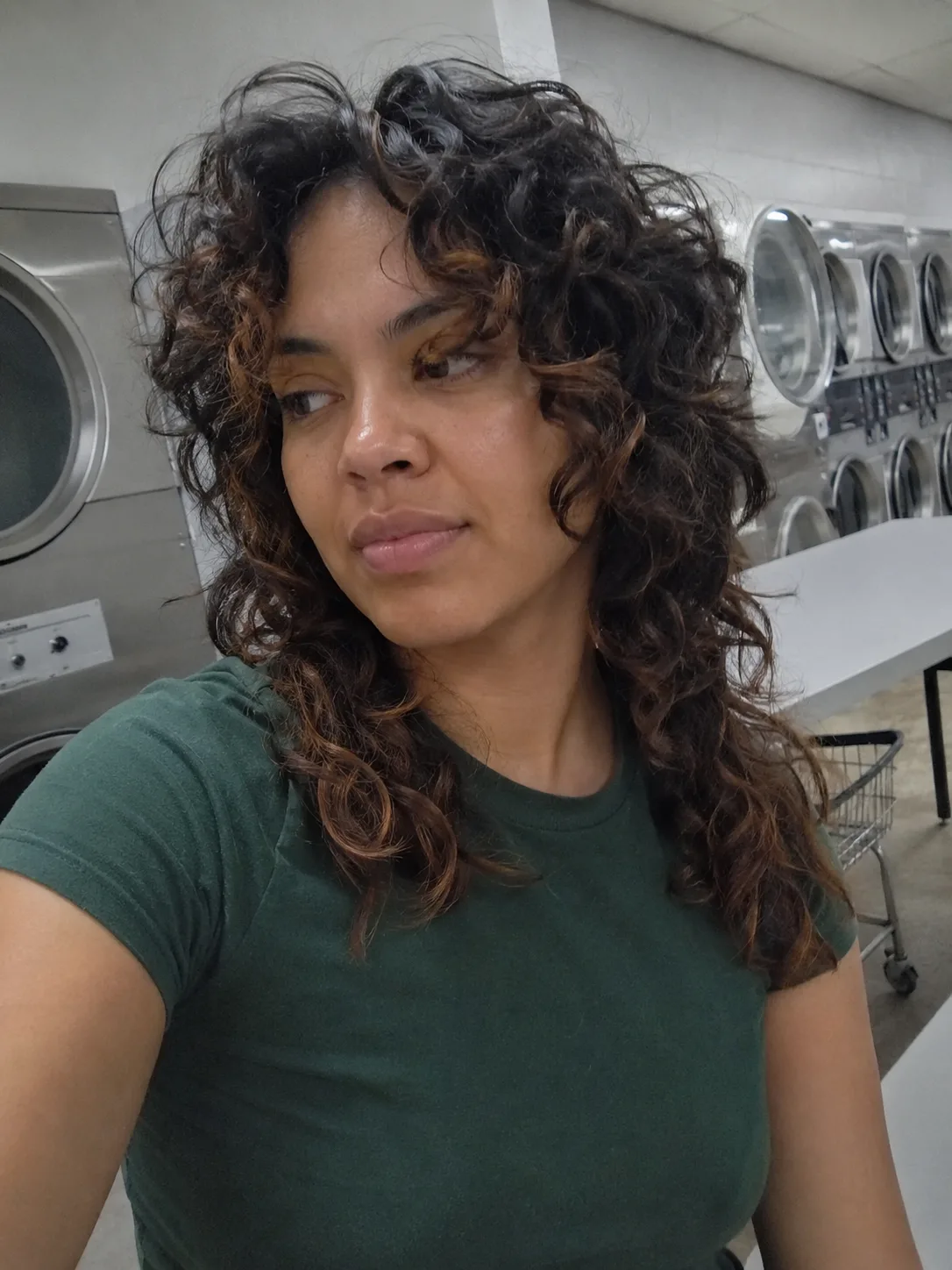
The high puff uses the hair’s natural volume as the main feature. Medium length is especially well suited because enough curl remains above the anchor to form a visible puff without needing extreme length.
Unlike a high ponytail, a puff doesn’t need every end to hang in one direction. Letting the curls expand creates the characteristic rounded top shape. A fabric-covered elastic, scarf, or another comfortable securing method can gather the base while preserving the texture above it.
Avoid pulling harder simply to make the base appear smaller. A secure style should remain comfortable during ordinary facial movement and head turning.
Low Curly Bun
A low bun is the stronger choice when you want medium curls contained instead of displayed. Gather the hair near the nape, then either loosely coil the length or pin sections around the base so the curl texture remains visible.
Medium hair often produces a smaller bun than long hair, which can work in its favor. The shape sits closer to the head, fits more comfortably beneath many hats or scarves, and creates less bulk against a headrest.
Very layered cuts may release shorter curls around the face and sides. Those pieces can remain loose rather than being repeatedly stretched toward the bun.
Two Curly Buns
Two buns divide medium hair into separate anchors, creating a completely different weight distribution from one central bun. The result can look playful and sculptural while keeping the neck clear.
A clean center part makes the construction obvious, but the real decision is bun position. Higher buns create more visible height; lower buns keep the profile closer to the head. Curl texture can remain visible through the buns instead of being brushed smooth.
This style is less convenient when many short layers fall away from each side. Forcing every small curl into an elastic usually creates more work than letting a few pieces stay free.
Pinned and Structured Looks
Side-Pinned Cascading Curls
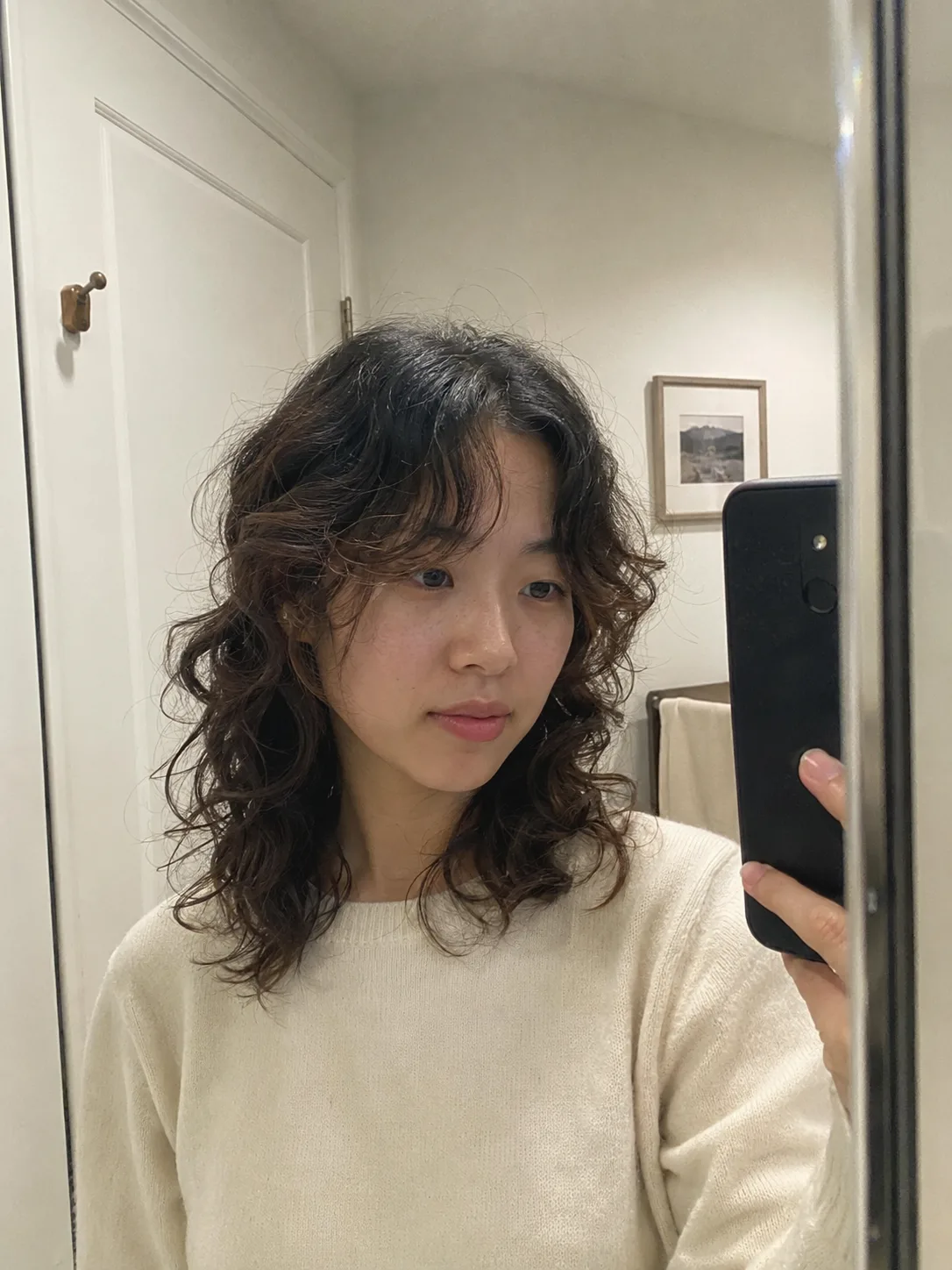
Instead of changing the whole haircut, pinning one side back creates asymmetry while leaving most of the curls loose. It works well for medium hair because the remaining length still carries enough volume to balance the exposed side.
The pin placement matters. Slide bobby pins into a stable section above or behind the ear and let the visible curls fall over or around them. Glasses wearers should check that the pin arrangement doesn’t compete with the arms of the frames.
This is one of the better dressy options when you want to preserve the natural curl pattern rather than rebuild the hair into an updo.
Flat-Twisted Crown With Loose Curls
Flat twists through the front or crown create a defined structure before releasing into loose curls through the rest of the hair. That construction makes the style meaningfully different from simply clipping the front back.
The twists can direct hair away from the face while preserving fullness through the ends. They’re useful when front sections tend to fall forward or when you want clearer separation between a styled crown and loose texture.
Section size and grip affect comfort. The scalp should remain accessible, and the twists should sit securely without stinging or producing a constant pulling sensation.
Curly Faux Bob
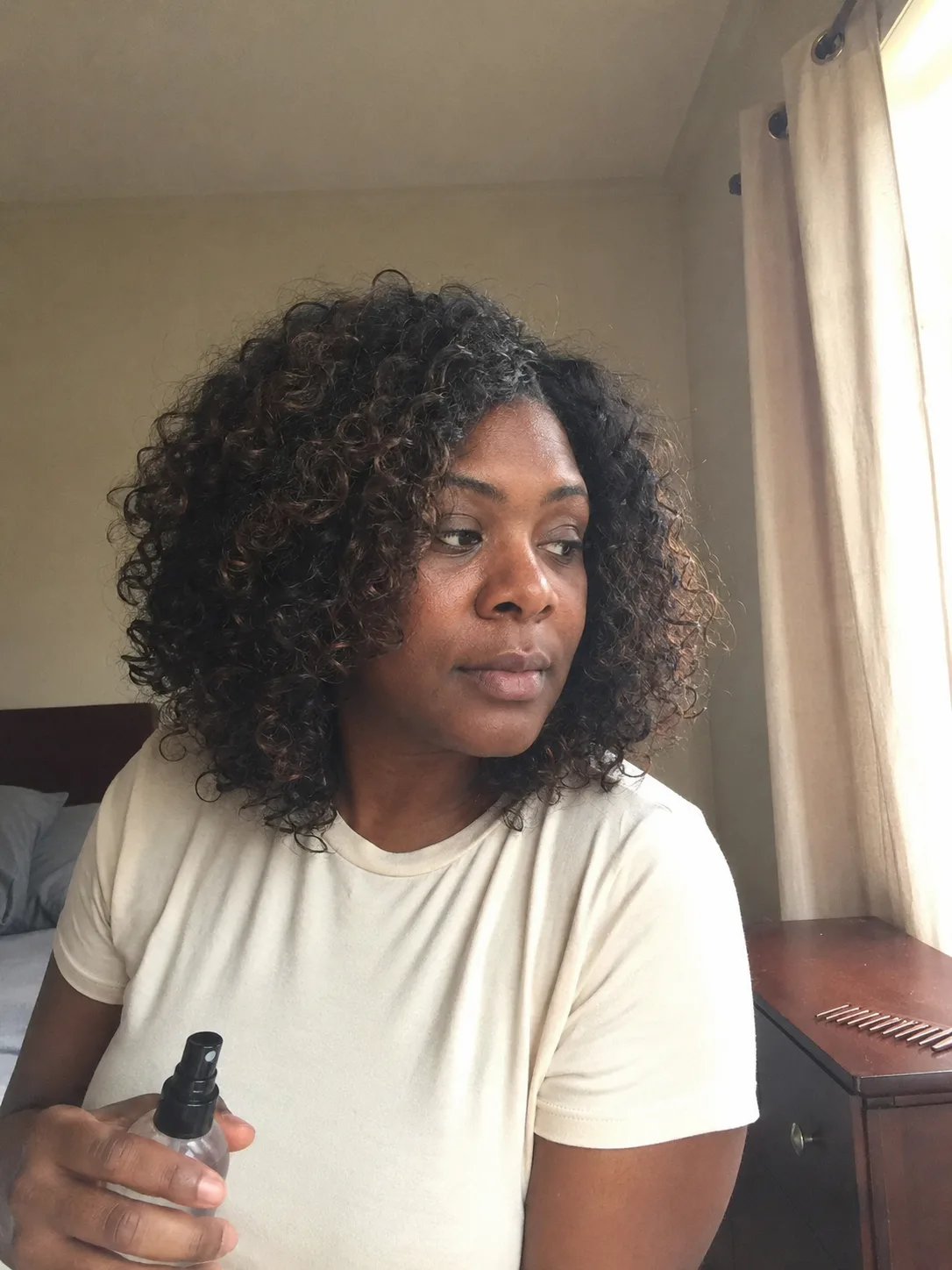
The faux bob gives medium curly hair a shorter appearance without removing the length. The ends are folded or loosely tucked underneath and secured with pins, creating a rounded shape closer to the jaw or neck.
Curls make this particularly convincing because their bends help disguise the tucked perimeter. It’s an underrated option for a formal event or for anyone considering a shorter cut who wants to explore the visual effect first.
The hidden construction is the part photographs rarely show. Medium layers that slip free may need individual pinning, and a very dense head of hair creates more material to tuck underneath. The style should still move comfortably rather than feeling tightly pinned to the scalp.
Claw-Clip Twist With Curly Ends
A claw-clip twist is one of the fastest ways to lift medium curls off the neck while keeping texture visible. Gather the hair toward the back, twist the length upward, secure the center with the clip, and allow the remaining curls to spill over the top.
It works better on medium hair than on very long, dense hair when you want a standard clip to hold most of the style without managing a large coil of excess length.
The clip itself should sit comfortably against the head. Large hardware positioned directly where your head meets a car seat, office chair, or headrest can become annoying even when the hairstyle looks effortless from the front.
Match the Style to Your Hair, Not Just the Photo
Reference images are useful for identifying shape, but they hide some of the information that determines whether a style will behave the same way on you.
First, identify the styling state. A twist-out, roller set, diffused wash-and-go, and naturally air-dried curl pattern can all produce different apparent lengths on the same head of hair. Ask yourself whether you actually want the haircut or whether you mainly want the styling technique shown in the picture.
Next, separate strand size from density. Fine strands have a small diameter. Low-density hair has fewer strands overall. You can have fine strands with high density or coarse strands with low density, and the haircut may need to treat those situations differently. Heavy interior removal is generally less forgiving where preserving a substantial-looking perimeter is the priority.
Shrinkage deserves its own discussion during a haircut consultation. Bring photographs that show the length you like in a similar curly state, then talk about where you want the hair to land once it is dry. Shoulder length on stretched hair and shoulder length on fully shrunken curls are two different targets.
What Medium Curly Hair Requires Between Style Days
Maintenance depends less on a universal schedule than on what your curls are doing. The haircut needs attention when its shape stops behaving as intended: crown layers may begin collapsing, a fringe can start falling into an unwanted position, or a once-strong perimeter may lose its line as the ends weather and grow.
At home, preserving curl grouping usually means reducing unnecessary friction. A bonnet, scarf, or smooth pillowcase can help limit tangling during sleep. Loose gathering can also keep medium curls from being crushed directly beneath the head, provided the anchor itself stays comfortable.
Refreshing should solve a specific problem. A few flattened curls may only need light re-wetting and reshaping. An entire style covered in buildup or badly tangled is a different situation and may be easier to cleanse and restyle than repeatedly layer more product over it.
Pulled-back styles deserve a comfort check. High puffs, buns, and tightly secured half-up looks concentrate force near their anchors. Repeated pulling on the same perimeter areas can contribute to breakage and, over time, traction-related hair loss. Persistent pain, stinging, sores, redness, unusual shedding, or a concerning change in density deserves attention; release the tension and talk with a dermatologist or another qualified healthcare professional when symptoms persist or concern you.
A Better Salon Plan for Medium Curly Hair
Start the conversation with the shape you want while your hair is in the state you wear most often. A person who lives in wash-and-go curls needs a different visual target from someone who usually wears twist-outs or stretched sets.
Useful consultation points include:
Where you want the dry perimeter to land
Whether crown volume or a stronger lower edge matters more
How much shrinkage changes your apparent length
Whether you regularly wear ponytails, buns, or half-up styles
Which front pieces you want long enough to tuck behind the ears
Whether you want a fringe that remains curly
How much styling effort you’re comfortable doing after wash day
Also mention previous chemical services, significant color history, or fragile areas because those factors can affect how much manipulation the hair comfortably handles.
The strongest reference photo is one that shows more than a front view. Side and back angles reveal where layers begin, how wide the cut becomes, and whether the fullness is actually created by the haircut or by styling.
Related Hairstyles to Explore
- Cute Hairstyles For Medium Hair
- Baddie Curly Hairstyles
- Simple Hairstyles For Medium Hair
- Curly hairstyles for women over 60
FAQs About Curly Hairstyles for Medium Hair
What length counts as medium for curly hair?
Medium curly hair commonly sits somewhere around the shoulder-to-upper-chest area in its finished style, but curl shrinkage makes the category flexible. The more useful description is where the dry curls actually land, because stretched or wet length may be considerably longer.
Are layers better than a blunt cut for medium curly hair?
Neither construction wins in every situation. Layers are stronger for movement, crown lift, and redistributing bulk. A blunter perimeter is useful when you want more visual weight at the bottom. Density, curl grouping, and your normal styling state should influence how much layering makes sense.
Can low-density curly hair wear layers?
Yes, but the placement deserves restraint. Too much interior removal can expose additional space between curls. Longer layers or subtle external shaping can preserve more of the perimeter while still preventing the cut from looking completely blocky.
What medium curly hairstyle is easiest to tie back?
Long layers and a clavicle-length curly lob are among the most practical because more of the hair can reach a ponytail or bun. A shag with short crown layers or very short face framing may leave more curls outside the anchor.
Can I wear bangs with medium curly hair?
Yes. Curly fringe can stay in its natural texture and can connect well with layered medium cuts. Plan the fringe according to its dry position and usual shrinkage instead of judging the length only while the hair is wet or stretched.
Which medium curly hairstyles work well for formal occasions?
Side-pinned curls, a low curly bun, a flat-twisted crown, and a faux bob all transition well into dressier styling. Consider anything else that will interact with the hair, such as a veil comb, decorative clip, glasses, or a high-backed headrest.
How do I know whether I need a haircut or just a different styling method?
Look at the problem in your usual curly state. Uneven perimeter shape, collapsed layers, or a fringe that has clearly grown past its intended position points toward haircut structure. Wanting more elongation, larger curl groups, or stronger definition may be solved through a twist-out, roller set, or different wash-and-go technique without changing the cut.
Hair Texture & Upkeep Style Matcher
Select your natural hair texture and daily maintenance window to get an instant styling formula and heat safety cap.
Heat Cap: 320°F (160°C)
A versatile three-strand braid beginning at the parietal ridge, securing the top half while allowing natural wave texture to flow freely around the shoulders.
Conclusion
Medium curly hair gives you enough length to move between loose texture and structured styles, but the haircut determines how easily those options work. Long layers are the practical default for flexibility, rounded layers make more sense when you want obvious fullness, and a shag is worth the extra shape maintenance when crown movement is the main attraction.
Before changing the cut, decide where you want the curls to sit when dry and how often you actually wear them loose. That single distinction makes it much easier to separate a hairstyle you admire in a photograph from one that will fit your everyday routine.
Editorial Standards & Hair Health Guidance
Every style featured on Tress Atlas is curated with a focus on real-world wearability, scalp tension management, and cuticle preservation. When trying protective styles or tight updos, ensure perimeter hairline sections remain tension-free to avoid traction stress on delicate follicles. For heat styling, cap tools below 350°F (180°C) to prevent thermal keratin denaturation.
Scientific Sourcing: Practices aligned with the American Academy of Dermatology (AAD) on traction alopecia risk reduction and cosmetic trichology research on hair tensile strength.