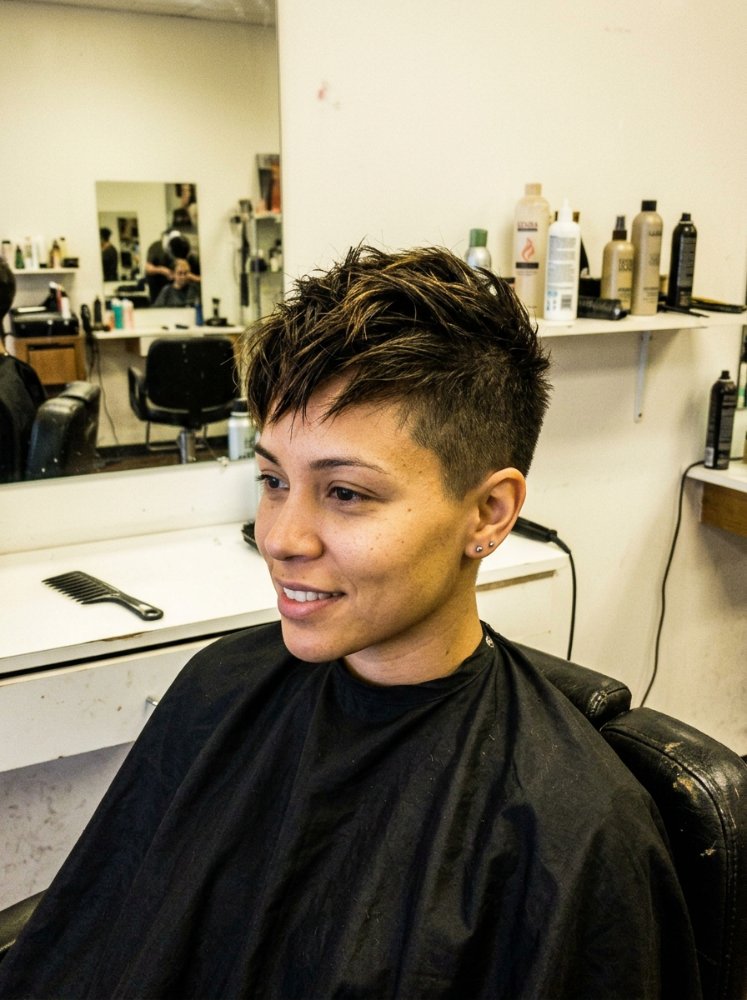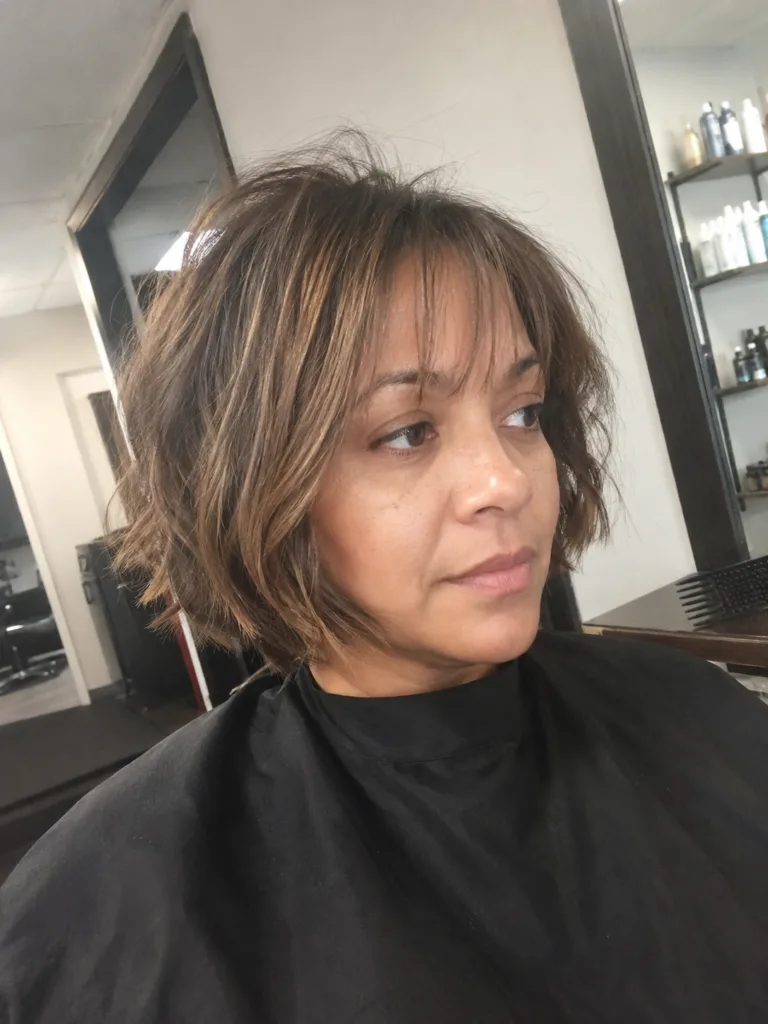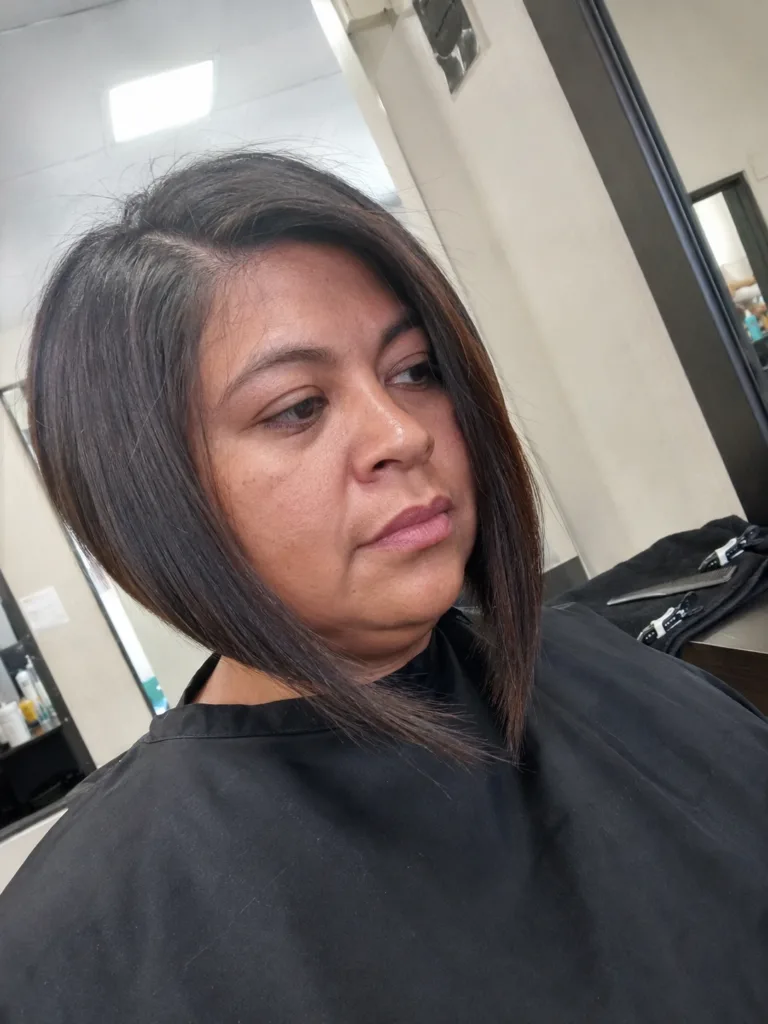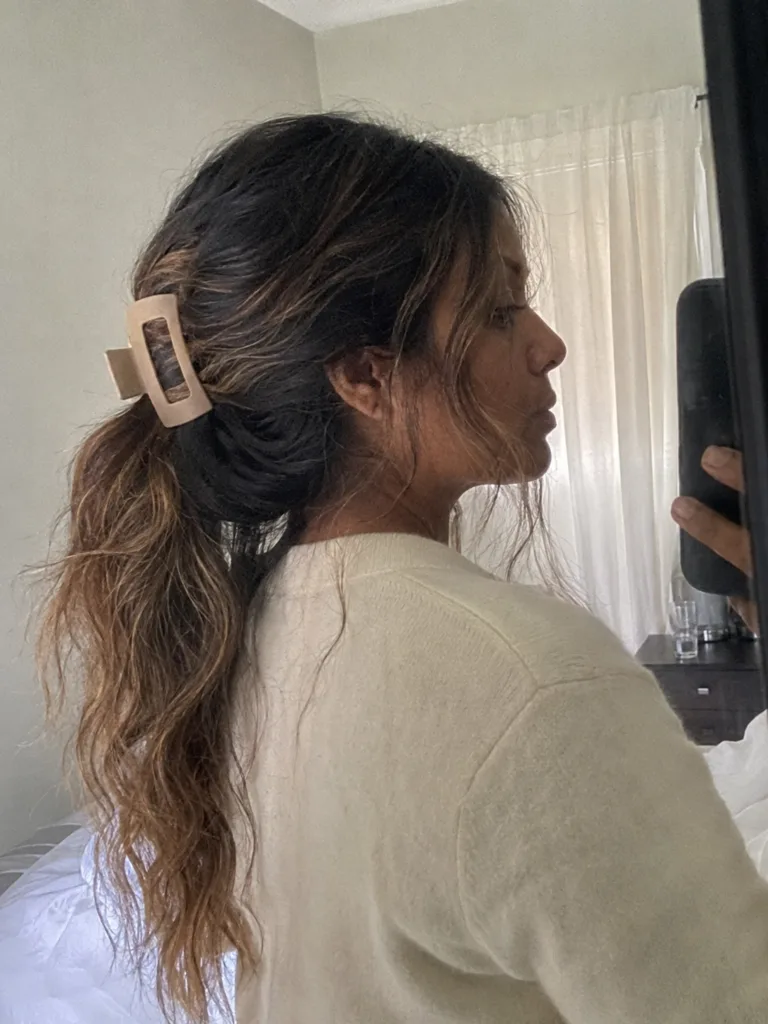
Medium Length Hairstyles with Bangs: What Changes the Result
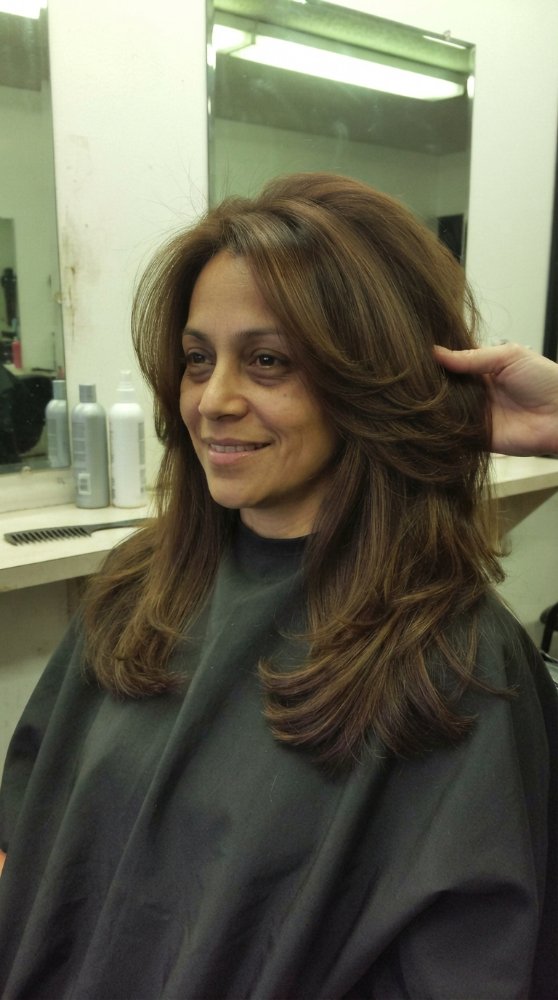
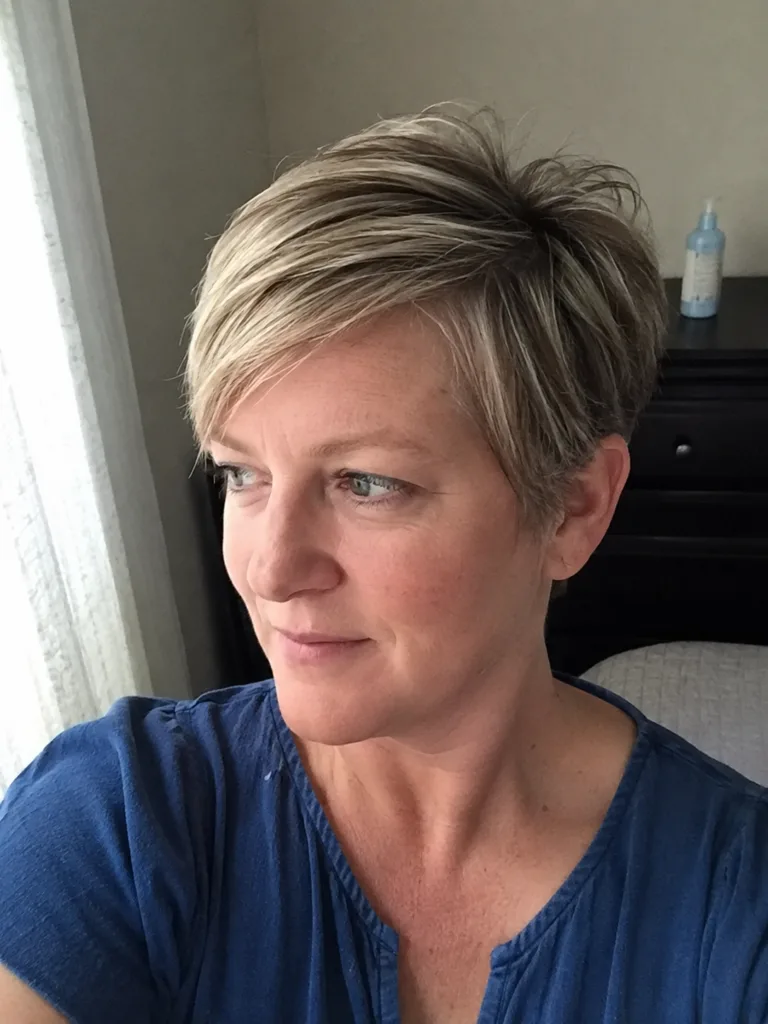
Medium length hairstyles with bangs can look dramatically different even when two cuts finish at almost the same point on the shoulders. The bigger decisions are usually happening above the perimeter: how much weight is removed, where the layers begin, how the fringe connects to the sides, and whether the haircut is designed for your natural texture or a regularly styled finish.
That makes the combination more versatile than a single reference photo suggests. You can keep the lower edge substantial and use bangs as the main feature, build movement through long layers, create a shaggy shape with a lighter perimeter, or let curls and waves provide most of the volume.
The strongest starting point for most people is a medium cut whose main shape works without the bangs. Then the fringe should support that shape instead of carrying the entire haircut. This matters because bangs grow, separate, react to humidity, and often need attention sooner than the rest of the hair.
Before choosing yours, look beyond the front view. Pay attention to what happens beside the cheeks, behind the ears, at the shoulders, and on an ordinary day when the hair hasn’t been freshly styled.
The Bang Style Changes More Than the Length
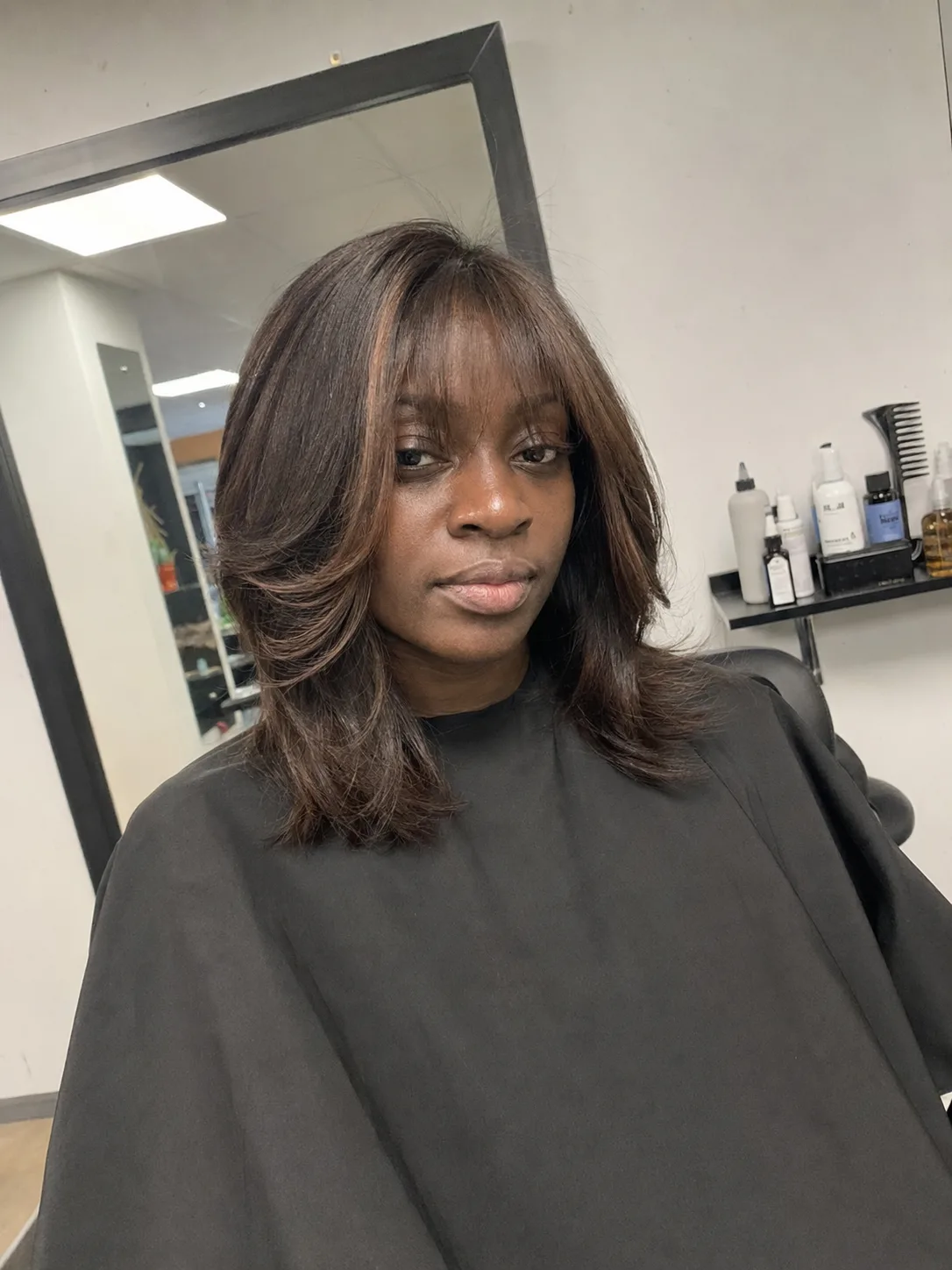
Calling a haircut “medium length with bangs” leaves a lot undecided. A dense straight-across fringe creates a very different balance from curtain bangs, even when the rest of the hair is identical.
The easiest way to narrow the choice is to decide how much separation you want between the bangs and the rest of the cut.
A blunt or fuller fringe creates a clear horizontal feature across the forehead. It draws attention toward the eyes and gives the front of the haircut a stronger graphic shape. Because the line is obvious, irregular growth, separation, and changes in styling tend to show more quickly.
Curtain bangs behave differently. Their center is shorter while the sides lengthen into the haircut, so the transition feels softer. They can be worn more open as they grow and usually integrate well with layered medium cuts. They still need styling if your growth pattern pushes the hair strongly in one direction, but the outline is more forgiving.
Wispy bangs reduce weight across the forehead and expose more skin between sections. They can suit someone who wants fringe without making the entire front of the haircut feel heavy. Very sparse bangs, however, can look weaker than expected on low-density hair because removing strands from the front leaves fewer hairs available to support the surrounding shape.
Side-swept bangs place most of the movement toward one side. They work particularly well when you already prefer an off-center part or don’t want hair sitting evenly across the forehead.
Curly and wavy bangs deserve to be treated as their own design choice rather than straight bangs waiting to be stretched. Their visible length depends on curl formation and shrinkage, and the fringe can become a major part of the overall texture pattern.
A Strong Perimeter or More Layers?
The medium-length portion of the haircut controls much of its visual weight. Two people can both have shoulder-skimming hair with bangs while one has a dense, almost bob-like lower edge and the other has layers moving through most of the cut.
A stronger perimeter keeps more hair toward the bottom. This can make healthy ends appear more substantial and gives the hairstyle a cleaner outline. It is a useful direction when the bangs already provide plenty of activity around the face and you don’t want the rest of the cut competing with them.
Long layers reduce some of that lower weight and encourage movement. They pair naturally with curtain or side-swept bangs because the fringe can continue into progressively longer pieces around the cheeks and jaw. The transition becomes part of the haircut rather than looking like bangs sitting in front of one-length hair.
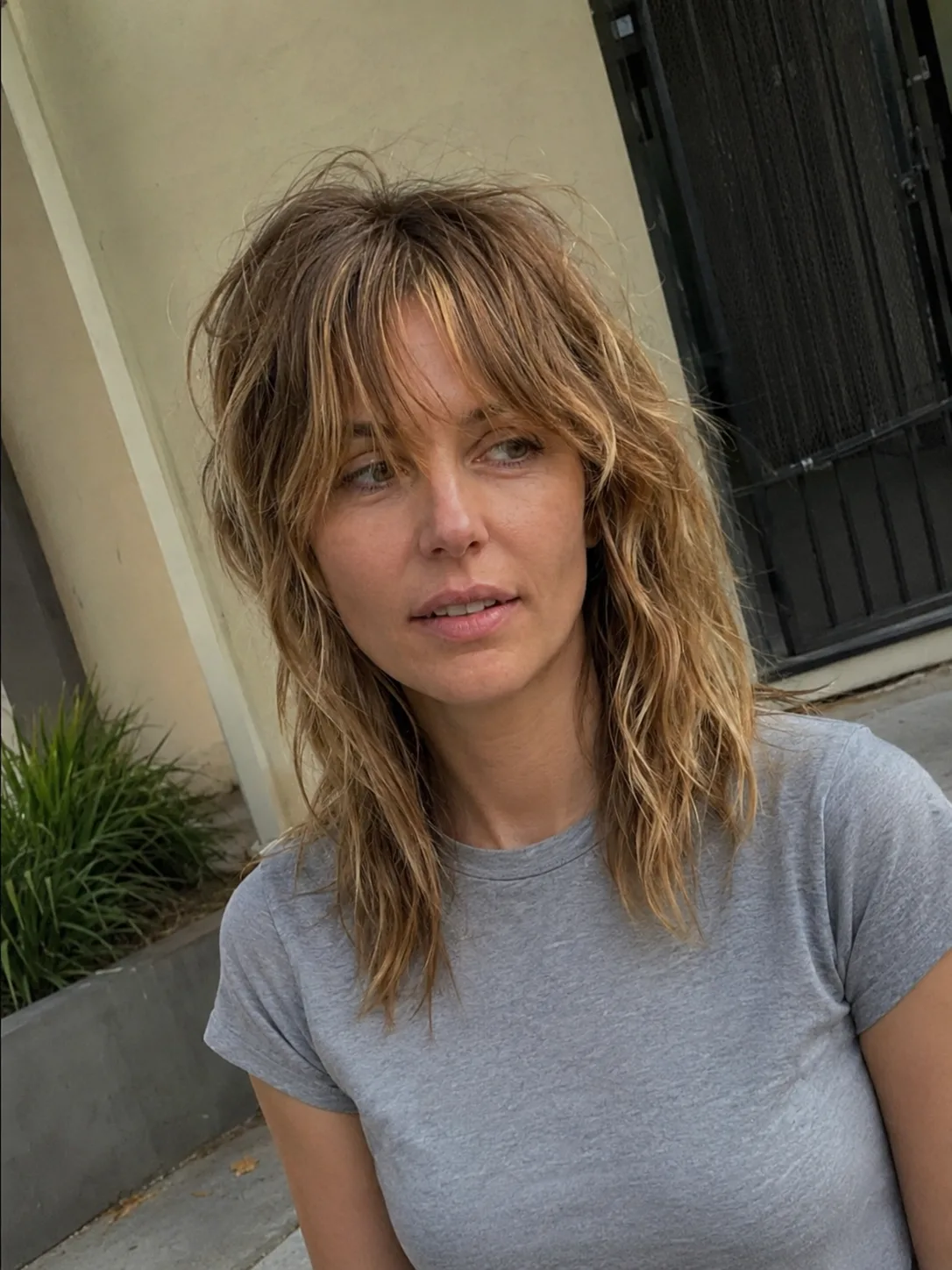
More aggressive layering shifts the emphasis upward. Shag-inspired medium cuts use shorter sections around the crown and face, allowing texture and movement to become the dominant features. The perimeter generally feels lighter, and the bangs often blend into the upper layers instead of forming a separate block.
That choice matters for low-density hair. Low density means fewer strands overall; it isn’t the same as having fine individual strands. Removing a lot of interior weight from already low-density hair can expose more space and weaken the bottom edge visually. A restrained layering plan is often the stronger option when maintaining a substantial-looking perimeter matters.
Fine strands can still be dense, and dense hair can consist of fine strands. A consultation should account for both factors rather than treating “fine hair” as shorthand for every hair-volume concern.
Shoulder Contact Can Change the Cut
Medium hair occupies an awkwardly useful zone: long enough to move around the shoulders but short enough for clothing and body position to affect its shape.
A smooth medium cut may curve neatly inward in a photograph and then flip outward where the ends meet a jacket collar. Hair tucked behind the ears can create another bend. Sleeping, scarves, hooded clothing, and repeated shoulder contact can change how a precise perimeter sits before anything is technically wrong with the haircut.
Layers respond differently. They break up the lower edge, so a little outward movement may look less disruptive. Wavy and curly cuts can absorb even more variation because the perimeter isn’t supposed to form a perfectly straight line.
This is worth discussing before choosing an extremely controlled finish. A collarbone-length cut styled sleek every morning asks more of your routine than a softer layered version designed to move.
Bangs introduce their own points of contact. Glasses arms can push longer fringe pieces away from the temples. Shorter curtain bangs may fall forward every time you look down. A heavy blunt fringe can separate after being repeatedly moved off the forehead.
Reference photos rarely show those ordinary interactions.
Your Natural Texture Should Influence the Bang Design
Straight hair tends to reveal the actual cutting line clearly, which makes fringe length and weight especially visible. A dense blunt bang can look very precise, while a small irregularity in that line may also be easier to see.
Wavy hair adds movement that can soften both the fringe and the perimeter. The practical challenge is consistency. A bang that falls near the brows after a smooth blow-dry can sit noticeably higher when the wave pattern returns. Cutting and evaluating the fringe in a state that represents how you normally wear it gives the design a more useful reference point.
Curly and coily hair requires even more attention to visible length. Shrinkage varies across a head of hair, and individual curl groups at the front may contract differently from those at the sides. A fringe can therefore appear uneven when stretched measurements were used as the main guide.
Curly bangs can remain curly. Straightening the fringe isn’t a requirement for wearing bangs with a medium curly haircut.
A curly medium cut may also be evaluated wet, dry, or with a combined approach depending on the cutting method and the desired result. The important question is whether the final shape has been assessed in the state you actually plan to wear.
Coily hair worn stretched offers another possibility. A medium-length stretched shape with a fringe will behave differently once moisture, humidity, or washing allows more shrinkage. The desired cut needs enough flexibility to accommodate that change instead of relying on one temporarily elongated state.
How Bangs Connect to the Sides Determines the Grow-Out
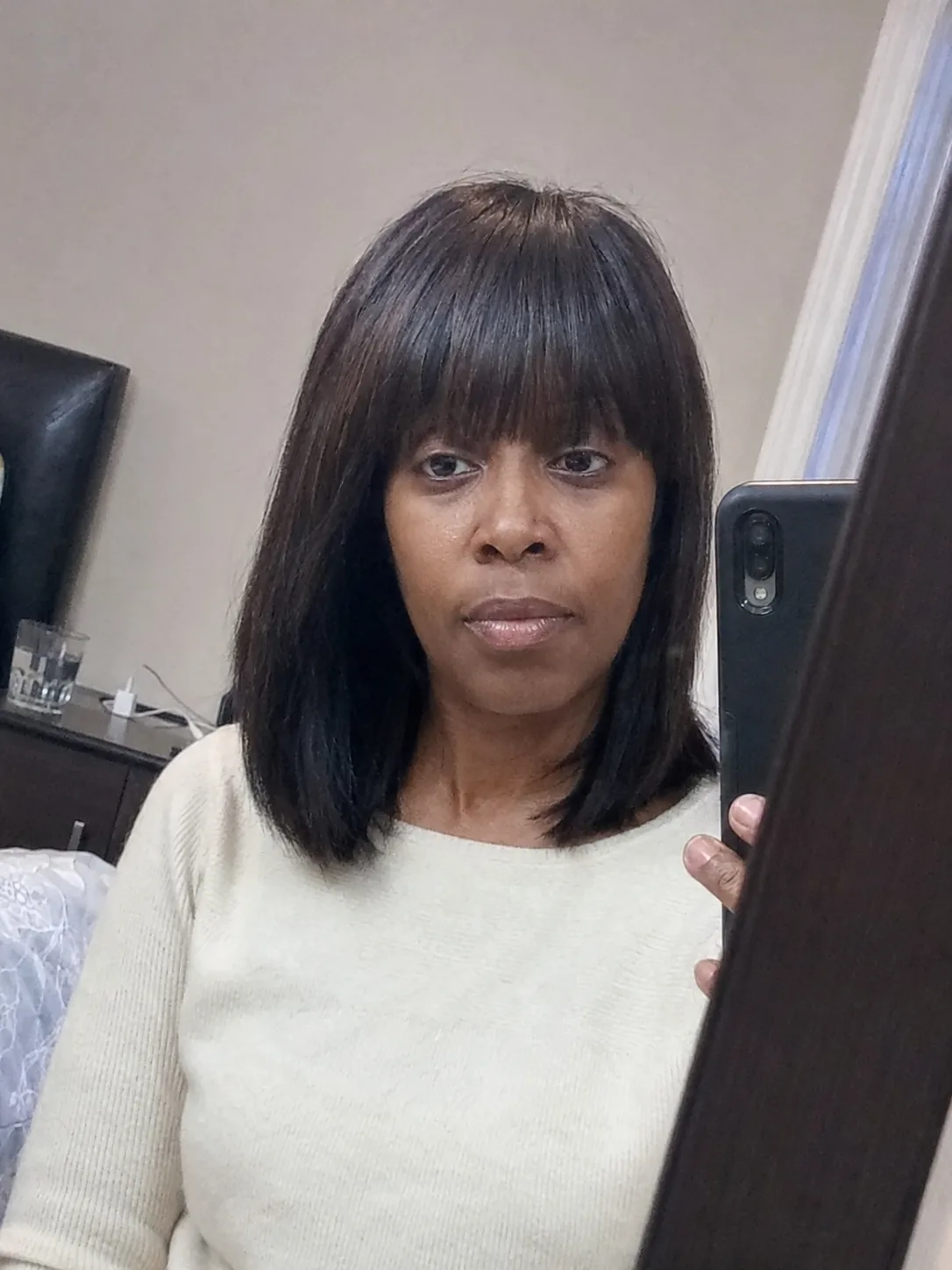
One of the least glamorous parts of getting bangs is also one of the most important: deciding what happens when they aren’t freshly cut.
A very distinct blunt fringe creates a strong separation between the front and the side sections. As it lengthens, that front line begins dropping toward the eyes and eventually needs to be redirected, pinned, parted, or reshaped.
Curtain and bottleneck-style fringes have a built-in transition. Shorter pieces around the center gradually lengthen toward the cheek area, creating a path into the rest of the haircut. That makes the change in length easier to incorporate as the fringe grows.
The connection can be too aggressive, though. Removing a large amount of hair around the temples to create dramatic face framing may leave less weight through the front corners of the haircut. This becomes particularly visible when the rest of the cut has a strong perimeter.
Ask to see the side profile of your reference cut. Front-facing images can conceal how much hair has been removed beside the face.
A useful consultation question is simple: Where does the fringe stop and the haircut begin?
A stylist should be able to show you how those pieces connect. That answer tells you more about future grow-out than the name attached to the bang style.
Bangs Require Their Own Styling Routine
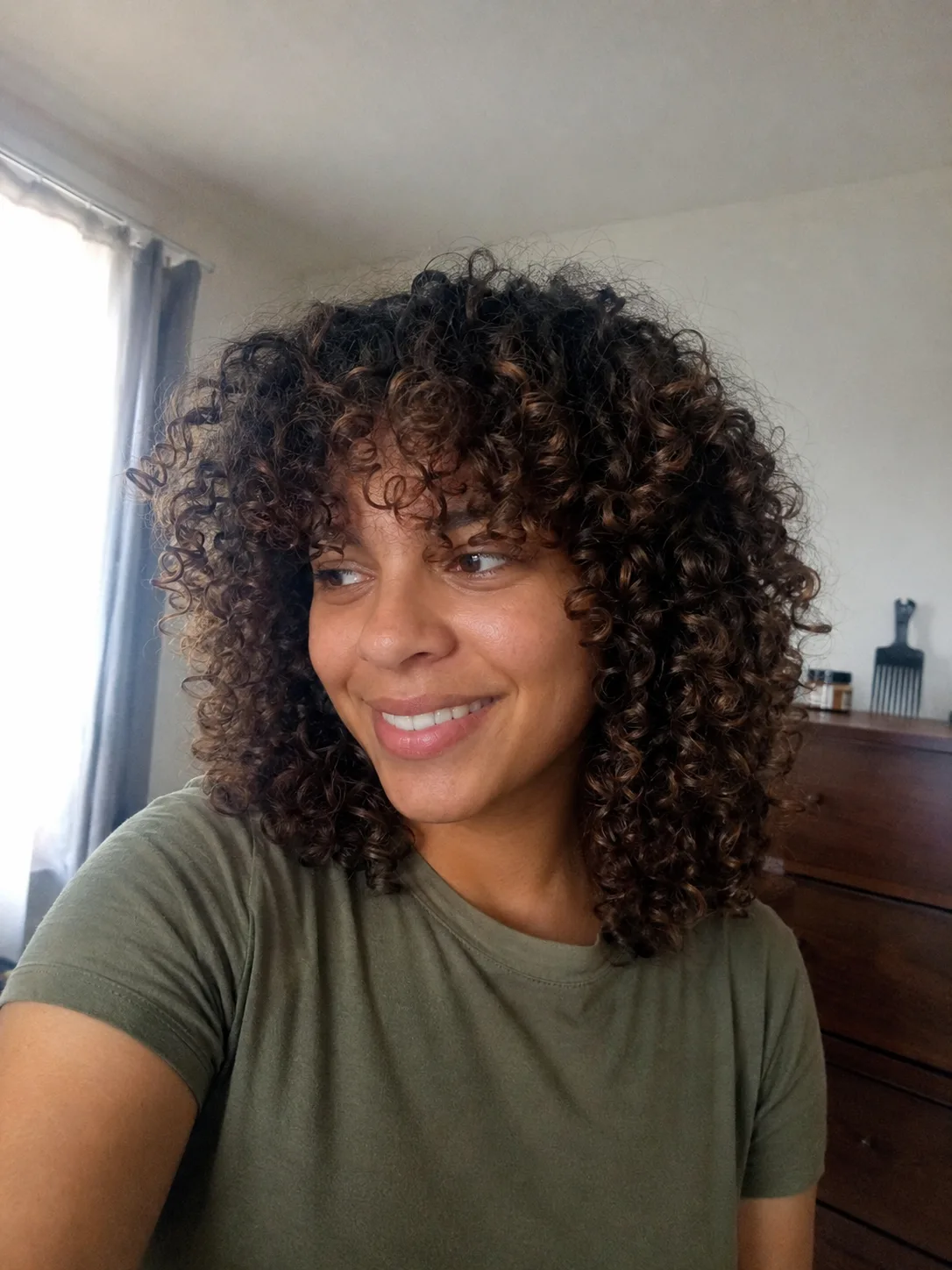
The rest of medium-length hair may tolerate an imperfect styling day. Bangs are less forgiving because they sit directly against the face and move every time you touch them.
For straighter finishes, controlling the root direction is often more important than repeatedly working the ends. Fringe that dries against a strong cowlick or preferred part can be difficult to redirect once completely set.
A blow-dryer and brush may be enough for some textures. Others work better with a diffuser, gentle finger positioning, a light styling product, or simply allowing the fringe to form according to its natural curl pattern.
Heavy product application can make a small fringe section collapse or separate. The same cream or oil that feels appropriate through long ends may overwhelm the shorter hair at the forehead.
Your skin and environment matter too. Bangs sit against sunscreen, skincare, perspiration, and natural skin oils. That contact can change their appearance before the rest of the hair looks ready for attention.
This is where fringe type becomes a routine decision. Full bangs demand a more consistent front shape. Curtain bangs can be redirected away from the center. Wispy bangs tolerate some separation because openness is already part of their design.
Someone who strongly dislikes styling the front of their hair should think carefully before choosing a dense, precision-cut fringe. A longer curtain or side-swept shape gives you more escape routes.
What Reference Photos Don’t Show
Hairstyle photos are excellent for communicating taste, but poor at revealing all the construction required to produce the image.
First, look at the styling state. A medium cut photographed after a round-brush blowout may have far more volume and curve than it does air-dried. A shag on naturally wavy hair can appear effortless because the wave pattern is doing part of the styling work. A similar haircut on straighter hair may need deliberate texture-building to resemble the photograph.
Next, study density. Thick-looking ends may come from genuinely dense hair, a strong cutting line, styling, extensions, or some combination of those factors. A haircut alone cannot create follicles or actual density.
Then examine the fringe. Has it been styled forward even though the rest of the hair parts naturally? Are the curtain sections being held away from the face for the photograph? Does the model’s hairline allow the fringe to fall in a way yours may resist?
Humidity is another missing variable. Bangs are short, light, and positioned around a warm part of the face. Hair that expands or contracts noticeably with moisture may show those changes in the fringe first.
Bring reference photos, but use them as a description of what you like: the amount of forehead coverage, the lower-edge weight, the degree of layering, the volume around the cheeks, and how much movement you want. Those details transfer more reliably than requesting an exact copy.
Planning the Salon Cut
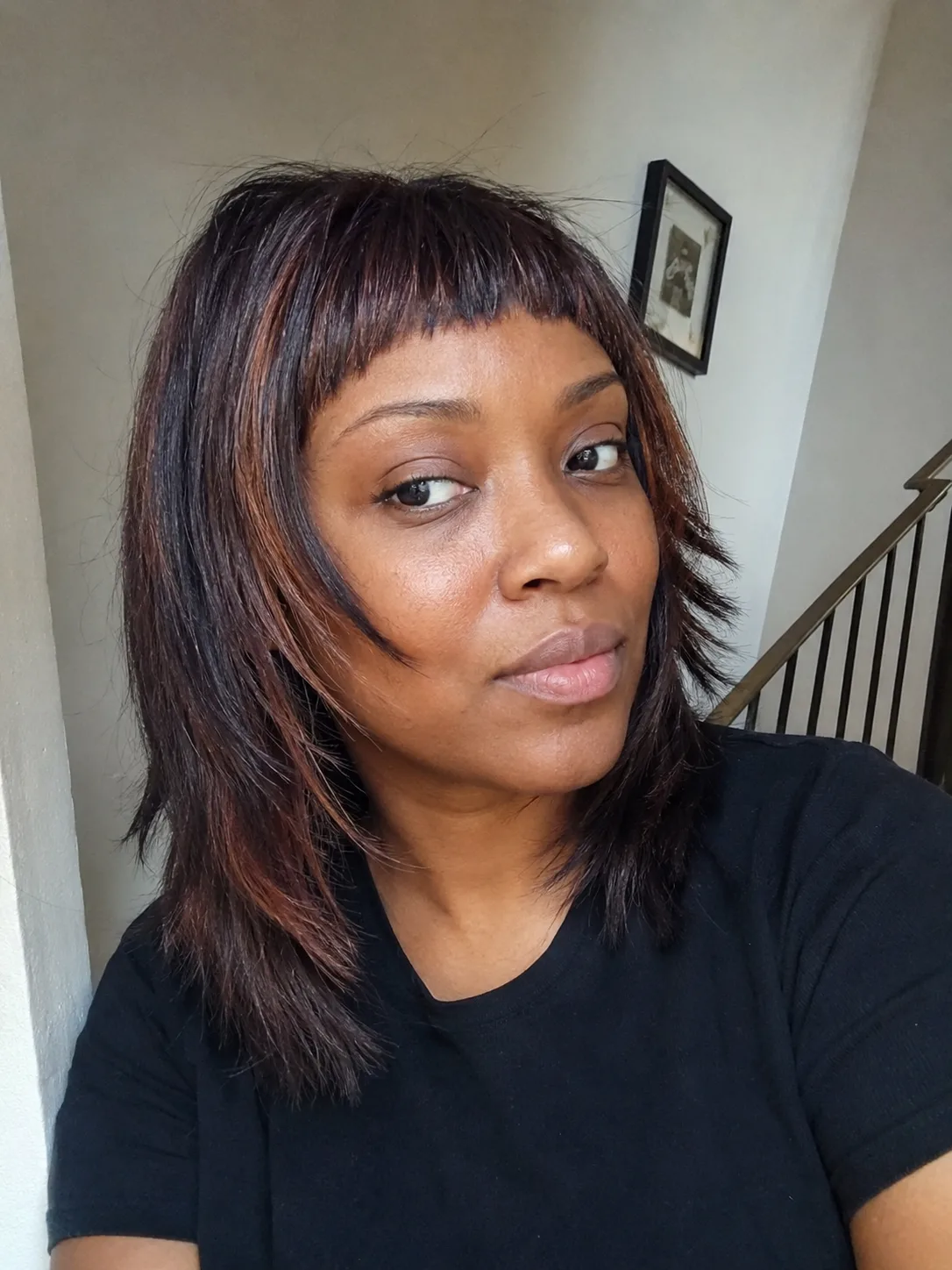
The consultation for medium length hairstyles with bangs should cover the fringe and the main haircut separately before connecting them.
Start with the medium length itself. Decide where you want the lower edge to sit in the styling state you wear most often. Shoulder contact, shrinkage, and your usual amount of bend or curl can all change the apparent length.
Then decide how substantial you want the perimeter. Someone who values fuller-looking ends may prefer restrained internal layering. Someone looking for airy movement can tolerate more weight removal.
For the fringe, discuss four practical points:
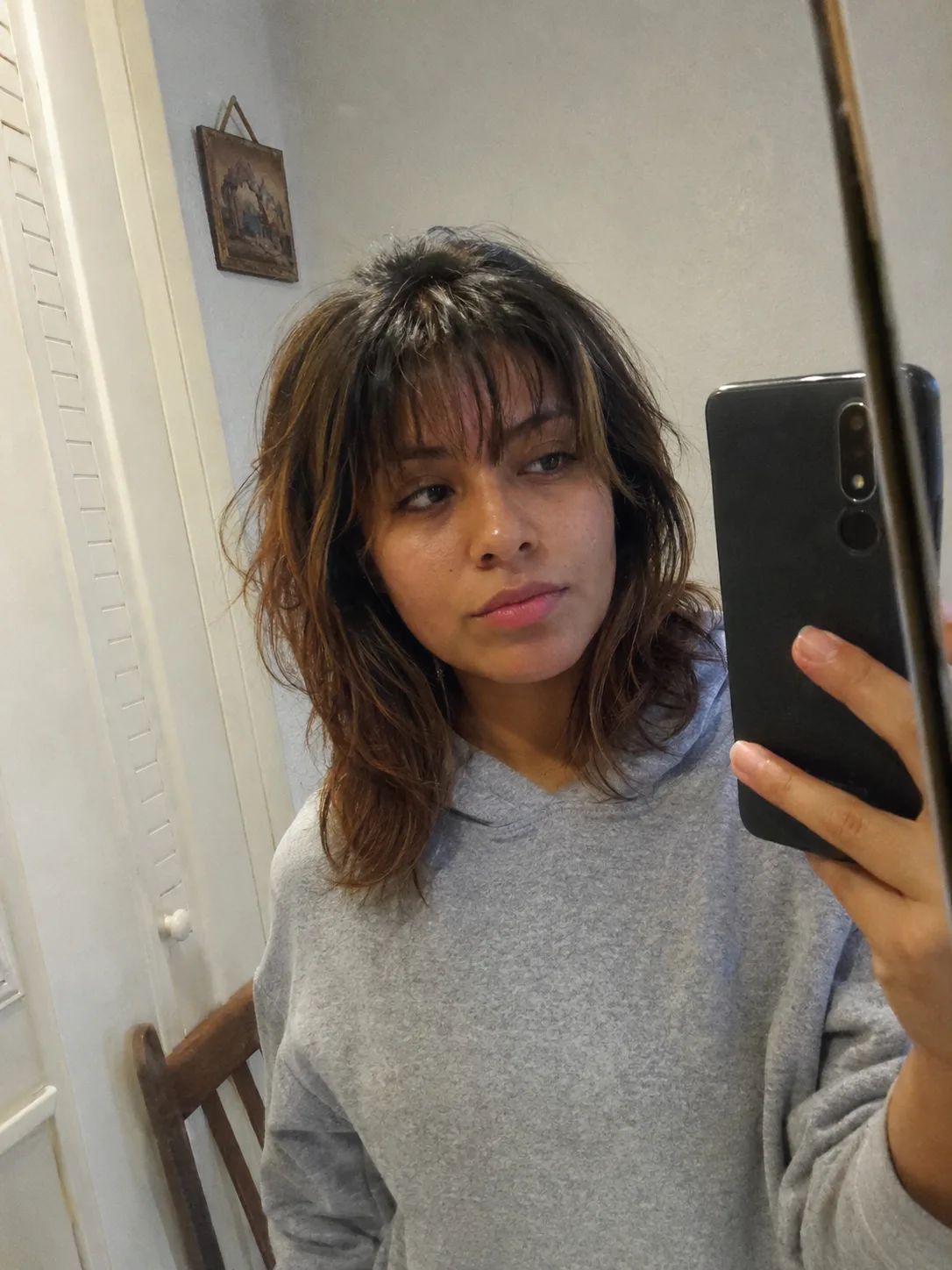
how much forehead coverage you want;
whether you need the bangs to tuck or sweep away as they grow;
how your natural growth pattern affects the front;
whether you plan to wear your natural texture or style the fringe into another state regularly.
You can also ask how the bangs will connect to the cheek and temple sections. That transition affects both the appearance of the cut and your options between reshaping appointments.
Avoid treating facial shape as a rigid rulebook. The more useful questions involve feature emphasis and everyday comfort. Do you like exposing the brows? Do you wear glasses? Would hair against the cheeks annoy you? Do you frequently tuck the sides behind your ears?
Those answers make the haircut personal without pretending one fringe belongs to one face category.
Maintenance Is Mostly About Preserving the Shape You Chose

The bangs and the rest of the haircut won’t appear to grow out at the same rate visually. A small change in fringe length can affect vision, parting, or how the hair clears the eyebrows long before the medium-length ends feel dramatically different.
This doesn’t require one universal trimming schedule. How soon you want reshaping depends on fringe length, growth, styling habits, the precision of the cut, and how comfortable you are letting the design soften.
A blunt fringe usually shows change sooner because its line is a main feature. Longer curtain bangs can often move through several styling positions as they grow.
The main haircut has a different set of signals. A strong medium perimeter may start losing its crisp outline, while a heavily layered shape can begin to feel bottom-heavy as the upper layers lengthen. Curly cuts may lose their balance when particular curl groups stop sitting where the original shape placed them.
At home, focus on preserving condition instead of chasing the freshly cut appearance with excessive heat. Choose heat use, washing, and styling according to your hair condition, tools, scalp comfort, and desired finish rather than a fixed rule meant for everyone.
Sudden shedding, persistent scalp irritation, pain, sores, or a concerning change in density falls outside ordinary haircut maintenance and deserves assessment from an appropriate qualified professional.
Related Hairstyles to Explore
- Short hairstyles with bangs
- Medium length layered haircuts
- Prom hairstyles for medium length hair
- Curly Hairstyles For Medium Hair
FAQs
Are medium length hairstyles with bangs good for fine hair?
They can be. Fine hair refers to strand diameter, so the more useful questions are how much hair you have overall and how much weight the haircut removes. Fine strands with good density can support many layered shapes. Fine, low-density hair may look stronger with a more substantial perimeter and restrained interior layering.
Can I get bangs if my hair is naturally curly?
Yes. Curly bangs can be designed to remain curly, and the visible length should account for shrinkage and the way individual curl groups behave. The finished fringe is most useful when it has been assessed in a state close to how you normally wear your hair.
Which bangs are easiest to grow out?
Longer curtain and side-swept bangs usually provide more styling flexibility because they can gradually blend into the side sections. A strong blunt fringe creates a clearer line, so its grow-out tends to be more noticeable and may require earlier reshaping or a deliberate transition into a longer fringe.
What should I do if I want bangs but I’m unsure about committing?
Start by discussing a longer fringe that can move away from the center or tuck into surrounding layers. Bring reference photos showing both freshly styled bangs and longer versions you would still be comfortable wearing. The ability to redirect the fringe matters almost as much as how it looks immediately after the cut.
Hair Texture & Upkeep Style Matcher
Select your natural hair texture and daily maintenance window to get an instant styling formula and heat safety cap.
Heat Cap: 320°F (160°C)
A versatile three-strand braid beginning at the parietal ridge, securing the top half while allowing natural wave texture to flow freely around the shoulders.
Conclusion

Medium length hairstyles with bangs work best when the fringe is treated as part of the haircut’s construction, not an accessory added at the end. Decide first how much weight you want through the medium-length perimeter, how your natural texture will behave around the shoulders, and how much daily attention you’re willing to give the front.
Then choose the bang type.
A precise full fringe is worth the extra attention when that strong line is the feature you want. Curtain or side-swept bangs are the more practical starting point when styling flexibility and easier grow-out matter more. Curly and wavy fringes should be planned around their natural movement instead of forcing them to imitate a straight reference photo.
At the salon, discuss the side connection, perimeter weight, normal styling state, and what you want the bangs to do as they lengthen. Those decisions determine whether the haircut still feels useful after the freshly styled photo is gone.
Editorial Standards & Hair Health Guidance
Every style featured on Tress Atlas is curated with a focus on real-world wearability, scalp tension management, and cuticle preservation. When trying protective styles or tight updos, ensure perimeter hairline sections remain tension-free to avoid traction stress on delicate follicles. For heat styling, cap tools below 350°F (180°C) to prevent thermal keratin denaturation.
Scientific Sourcing: Practices aligned with the American Academy of Dermatology (AAD) on traction alopecia risk reduction and cosmetic trichology research on hair tensile strength.