French Braid Hairstyles: Styling Guide & Cuts That Change More Than the Braid Pattern
French braid hairstyles can look deceptively similar in photographs. The construction may begin with the same three-strand technique, yet changing where the braid starts, where it finishes, and what happens to the remaining hair can completely alter the result.
A classic French braid gradually incorporates hair into the outer sections as those strands cross over the center. That creates a braid that sits relatively close to the head. From there, you can direct the braid toward a ponytail, wrap it around the head, roll it into a bun, or use it as a smaller accent while leaving most of the hair loose.
The most useful choice depends less on how intricate the braid looks and more on what you need it to do. A single center braid distributes the hair differently from two tight braids. A crown keeps the ends off your back, while an extra-long ponytail leaves far more hair moving behind you. Curly and coily hair also changes the visual result through shrinkage, fullness, and curl grouping.
This guide focuses on those practical differences.
| Your priority | Start with | Think about |
|---|---|---|
| Simple everyday wear | Classic French braid | How securely the nape stays contained |
| Hair away from the face | Double French braids | Comfort around the hairline |
| Formal shape | French braid chignon | Pin placement and nape bulk |
| Hair mostly down | Half-up braid or braided headband | Frizz and movement in the loose lengths |
| Natural volume | French braid into a puff | Shrinkage and anchor comfort |
Everyday French Braids With a Clear, Wearable Shape
Classic Center French Braid
The single French braid is still the strongest starting point when you want the technique itself to carry the hairstyle. The braid begins near the crown and gradually gathers the side sections until all the hair is incorporated, then continues as a regular three-strand braid through the tail. It keeps the overall shape narrow and centered, making it easier to wear with coats, bags, and casual clothing than wider braided updos. On thick or high-density hair, the finished braid can look substantial without adding extra detail.
Double French Braids
Two French braids divide the hair vertically and create a more structured result than one central braid. They’re useful for exercise, active days, or any routine where loose side sections become annoying.
Part placement changes the balance more than decorative finishing does. A clean center division gives the most symmetrical appearance, while the braid paths should still follow the natural curve of the head rather than being forced into severe angles. Keep particular attention on the hairline: catching every tiny perimeter hair creates a neater photograph but can make the style unnecessarily uncomfortable.
Side-Swept French Braid
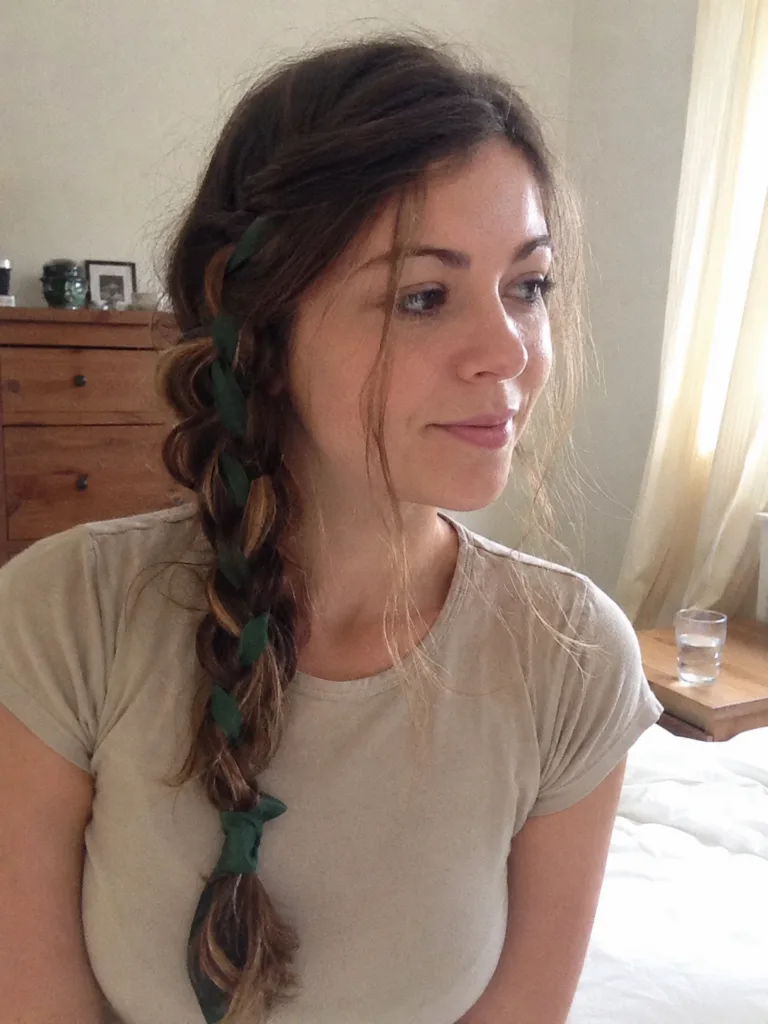
A side braid shifts the visual weight away from the center of the head, which makes it useful when a straight-back braid feels too severe. It can start above one temple and travel behind the ear before dropping over the shoulder.
Hair length matters here. Medium hair usually produces a compact side braid, while long hair creates a substantial tail that becomes part of the look. The asymmetry also makes layers more noticeable because shorter pieces may escape around the opposite side or near the nape.
Texture changes the finish without changing the basic design. Straight or stretched hair tends to show the woven pattern clearly. Waves, curls, and coils create more surface fullness and softer edges. Trying to flatten every bit of texture can turn an easy side braid into a much more demanding style.
Diagonal French Braid
A diagonal braid travels from one upper side of the head toward the opposite side of the nape. That crossing line makes it visually different from both a center braid and a simple side braid, especially from the back. It also gives you more control over where the tail lands. Direct the braid toward the shoulder when you want the length visible from the front, or finish it nearer the nape for a quieter shape.
French Braids That Finish in Ponytails or Updos
French Braid Into a High Ponytail
This style uses the braid to create interest through the crown while the remaining length stays loose in a high ponytail. It works especially well when you like the movement of a ponytail but want more structure than brushed-back hair gives you.
The important construction point is the transition. The braid needs to narrow cleanly into the ponytail area without creating a bulky ridge directly beneath the elastic. Very long or extension-heavy ponytails also place more leverage at a high anchor, so dramatic length is worth choosing only when that extra movement and weight suit the day you have planned.
Multiple French Braids Into One Ponytail
Several French braids can travel from different parts of the hairline and meet at a single ponytail. Compared with one central braid, the visible emphasis is on the convergence pattern across the scalp rather than on a long woven section. This is a stronger choice when you want the front and side views to be interesting too. The meeting point deserves careful placement because several braid paths crowding one small anchor can become bulky.
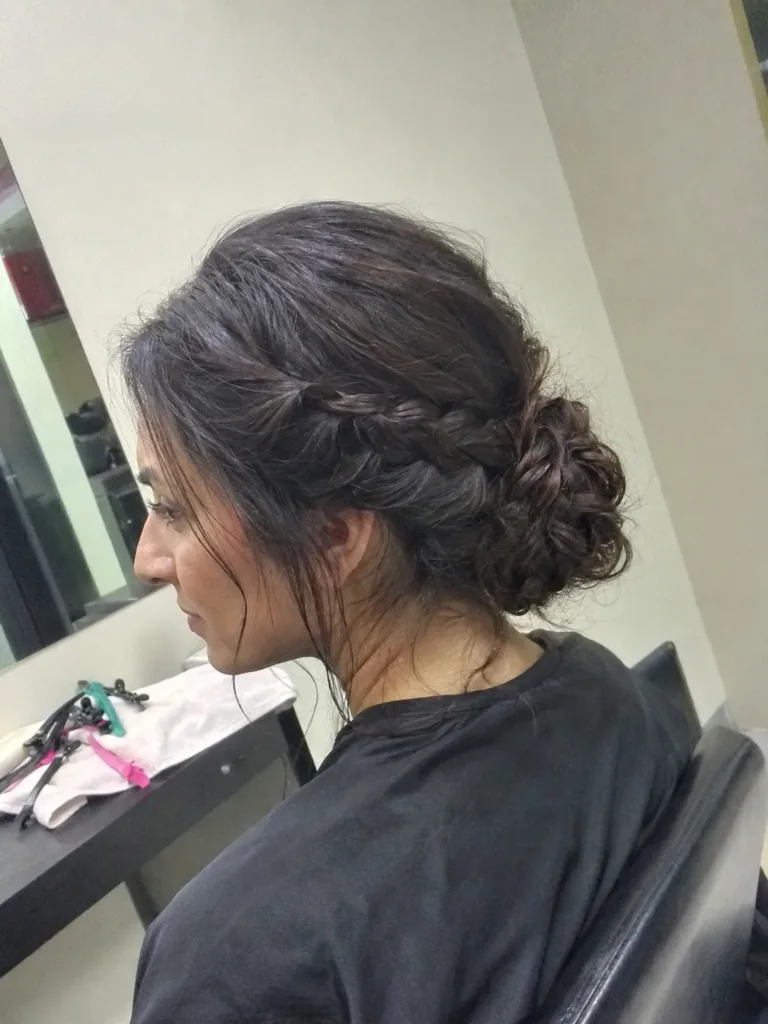
French Braid Into a Low Chignon
A low chignon transforms the loose tail of a French braid into a contained nape shape. That makes it more formal than leaving the braid hanging and more convenient around long necklaces, high collars, or occasions where you don’t want hair resting across the back.
The braid can run through the center and then be coiled or folded into the chignon. Another option is to guide it slightly sideways so the bun sits just off center. Either way, the pins need to secure the bun itself instead of relying on one tight elastic to hold everything.
Nape placement has a practical consequence that photographs rarely show. A large chignon can press against a high coat collar or headrest. Keeping the bun flatter and closer to the head is generally more comfortable when you’ll be sitting for long periods.
French Braided Crown
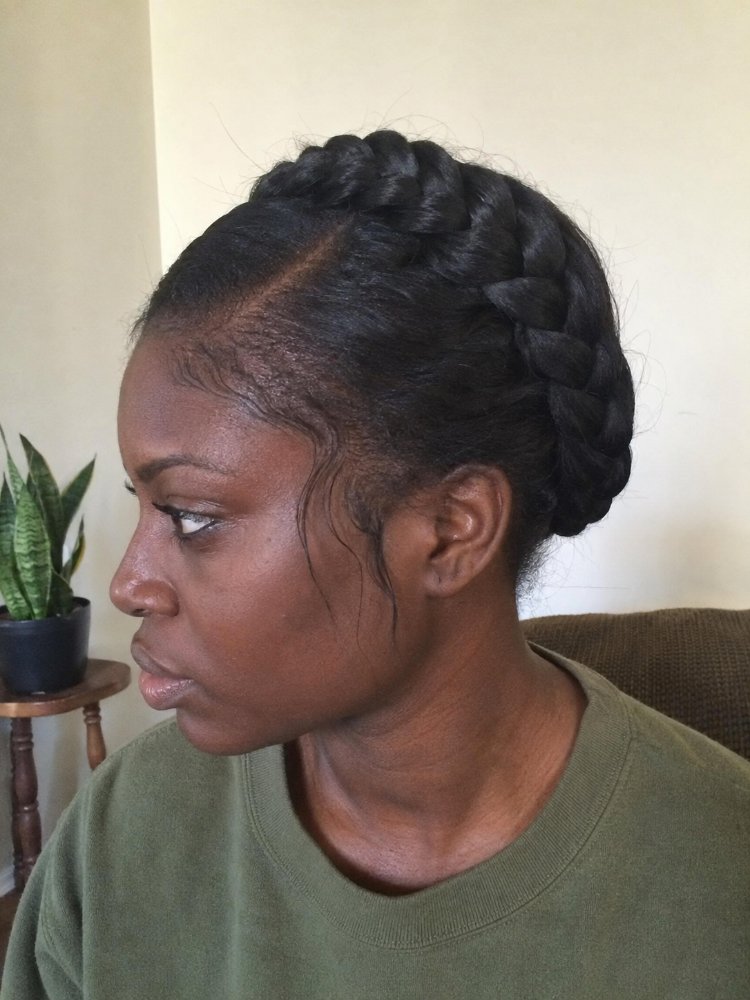
A crown braid redirects the French braid around the head instead of down the back. The finished effect frames the face and keeps the ends contained, which makes it particularly useful for events where you want an updo without a high bun.
The braid path matters more than perfect symmetry. A lower crown feels softer and sits closer to the ears, while a higher path gives a stronger halo effect. Glasses arms, earrings, and any headpiece should be considered before the braid is pinned because bulky sections directly above the ears can compete for the same space.
French Braid Hairstyles That Leave More Hair Loose
Half-Up French Braid
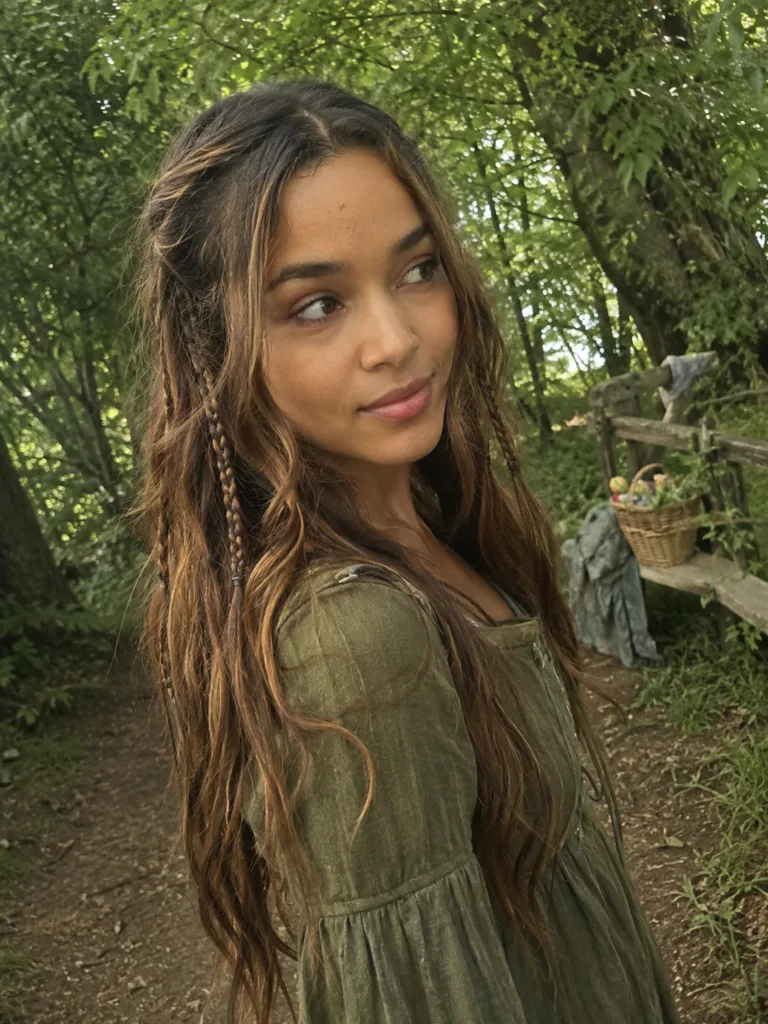
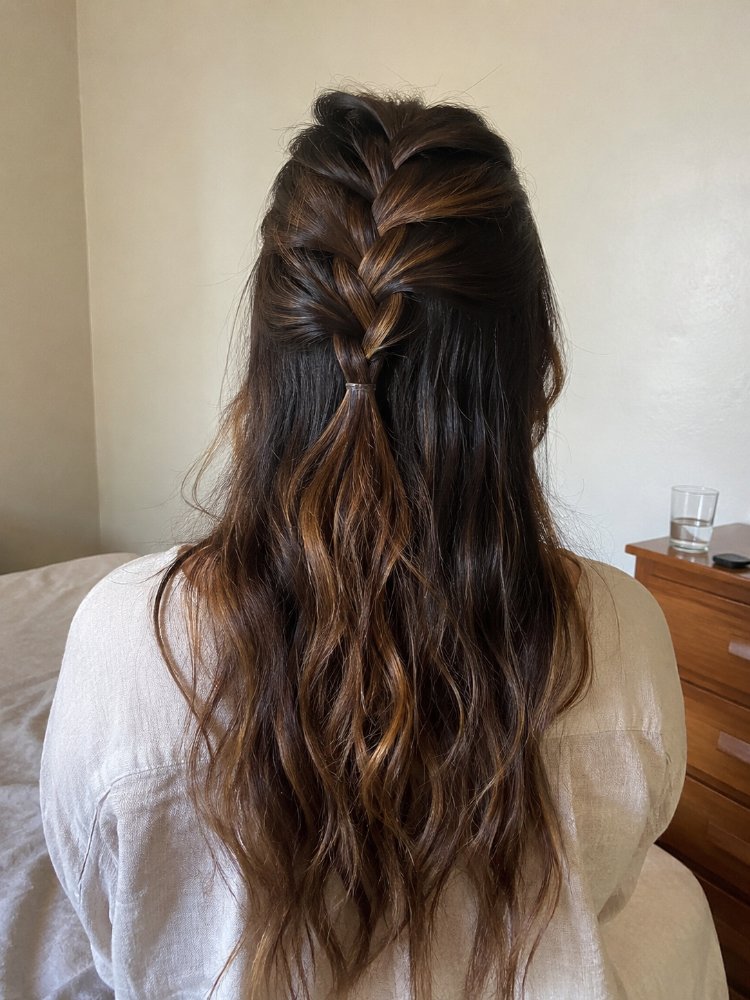
The half-up version gathers only the crown and upper-side sections, leaving the rest of the hair down. It’s one of the easiest ways to make a French braid feel less sporty and more like an everyday down hairstyle. The braid can stop at the back of the crown and be secured with an elastic or continue briefly into a small braided tail. Waves and curls beneath it provide extra contrast because the woven top stays defined while the lower lengths retain their natural movement.
French Braid Headband
A narrow French braid running from one side of the hairline toward the other functions like a built-in headband. Most of the hair remains loose, so the style works especially well when your main goal is keeping front pieces away from the face.
This is more forgiving than a full crown braid because it doesn’t require you to incorporate the entire back section. The hidden end can be pinned beneath loose hair near the temple or above the ear. Leave delicate perimeter hairs out when pulling them into the braid would require unnecessary tension.
French Braid With Loose Curls
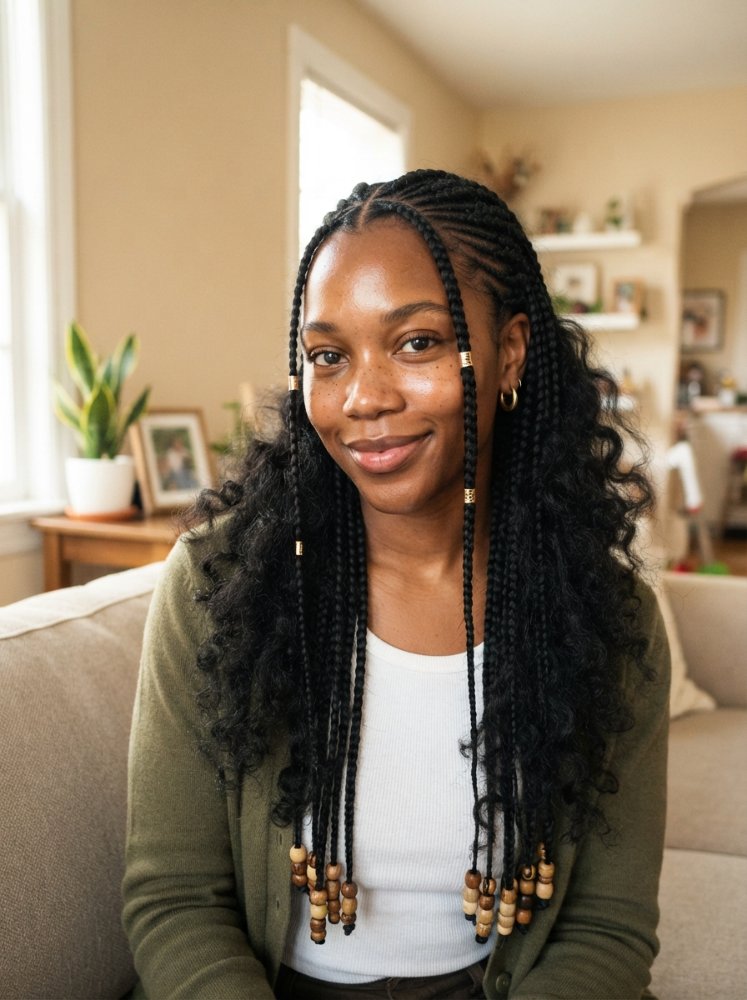
A smaller French braid can act as an accent rather than the foundation of the hairstyle. Braiding one side or a section through the crown before letting it disappear into loose curls keeps the overall shape soft while adding visible detail from the front and side.
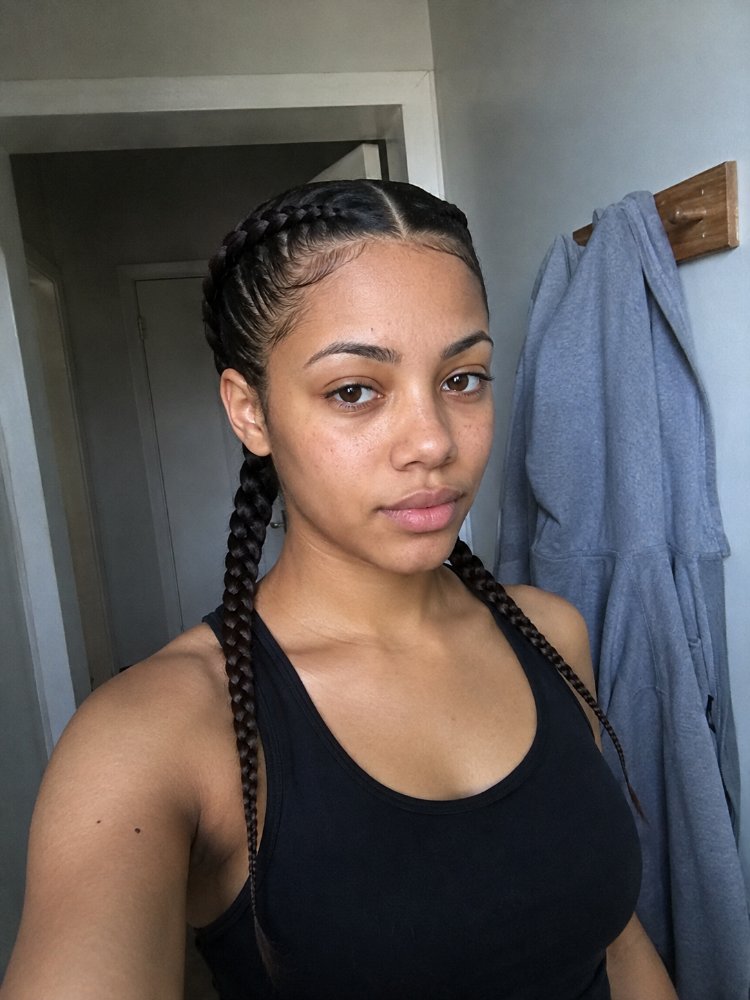
This version depends heavily on the state of the loose hair. Naturally curly hair can retain its own curl pattern, while straight or wavy hair may be styled separately depending on the finish you want. The braid doesn’t require the lower lengths to match its compact texture.
It’s also an easier formal-event choice than a fully pinned updo when you prefer movement. Just remember that the loose portion still behaves like loose hair: humidity, collars, dancing, and friction can affect it even when the braid stays secure.
French Braid Into a Half-Up Bun
Here, the upper section is French braided toward the crown and then wrapped into a small bun while the lower half remains down. The bun creates a stronger focal point than an ordinary half-up braid and lifts more hair away from the face. It works particularly well when the lower lengths have enough fullness to balance the knot at the crown. A very large top bun can overpower fine-stranded or lower-density lengths, so keeping the bun proportional usually produces the cleaner result.
Statement Shapes and Hybrid Braids
French Braid Top Knot
Braiding upward from the nape before forming a top knot flips the usual direction of a French braid. The back view becomes the main feature, with the braid leading into the bun above it.
This construction is easier when the head is positioned so the nape hair can be gathered smoothly without excessive pulling. The bun can be sleek or textured, but its size should make sense for the amount of hair available. Added hair creates more volume, though it also changes the weight at the top anchor.
Double French Braids Into Space Buns
Two French braids can finish in separate buns instead of continuing into long tails. The result has a wider, more playful outline than standard double braids, and the ends stay fully contained. Because the buns provide the final shape, there’s little reason to make every section of the braids extremely small or tight. Moderate sections also make the style easier to undo later.
French Braid Faux Hawk
A French braid faux hawk concentrates height and texture through the center while keeping the sides visually tighter. Some versions use one broad braid; others bring side sections inward before pinning or gathering the remaining length.
The strongest version is one where the center has enough width to read as deliberate volume. Pulling the sides extremely tight isn’t necessary to create that contrast. For curly or coily hair, preserved texture through the braid and tail can make the central ridge look fuller without relying on aggressive tension.
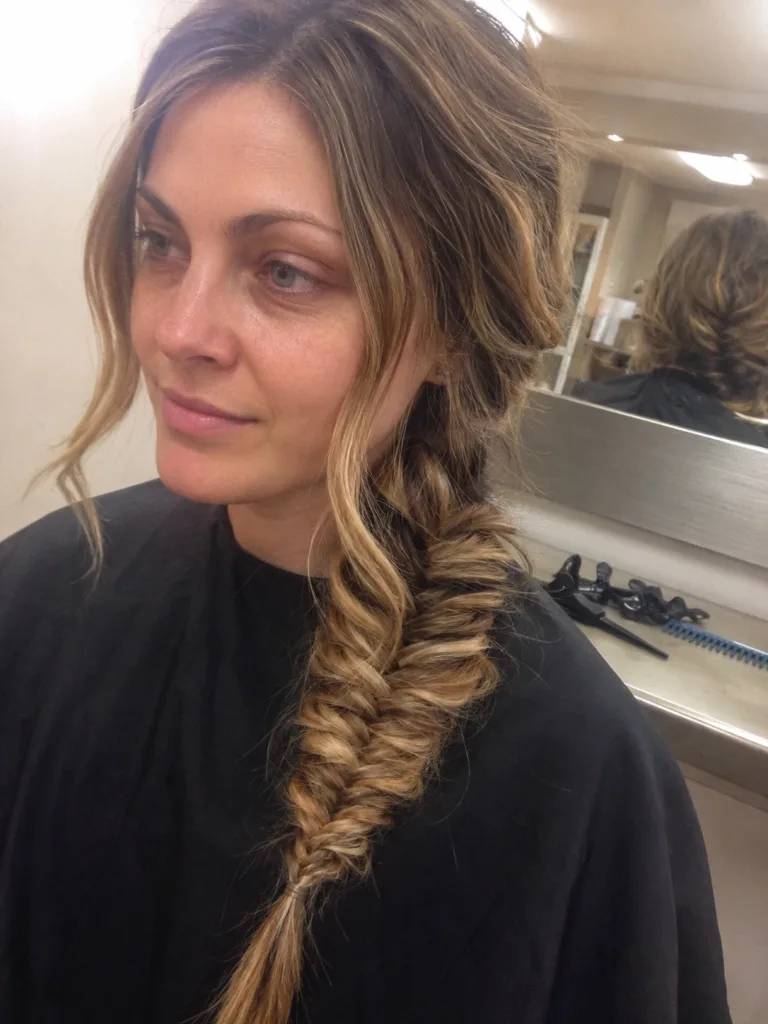
French Braid Into a Fishtail
This hybrid begins as a French braid through the scalp and switches to a fishtail once all the hair has been gathered. The change in pattern is what earns this option its place: the upper section looks broader and more integrated, while the tail becomes finer and more detailed.
It’s a good choice when a plain three-strand tail feels visually heavy on long hair. The fishtail section breaks that length into smaller visible pieces and often looks especially striking on dimensional color because different strands appear next to each other throughout the weave.
The tradeoff is handling. A fishtail tail involves smaller working sections than a regular braid, so it demands more finger control and usually takes more effort to undo. For a rushed morning, the classic tail is the more practical choice. For an event where the braid itself is the feature, the extra detail makes sense.
French Braids for Different Lengths and Textures
Tucked French Braid for Short or Medium Hair
Hair doesn’t need to reach far down the back to support a French braid. A shorter braid can gather the available length toward the nape, with the small remaining tail folded underneath and pinned. This creates the suggestion of an updo without requiring a large bun or long braided tail.
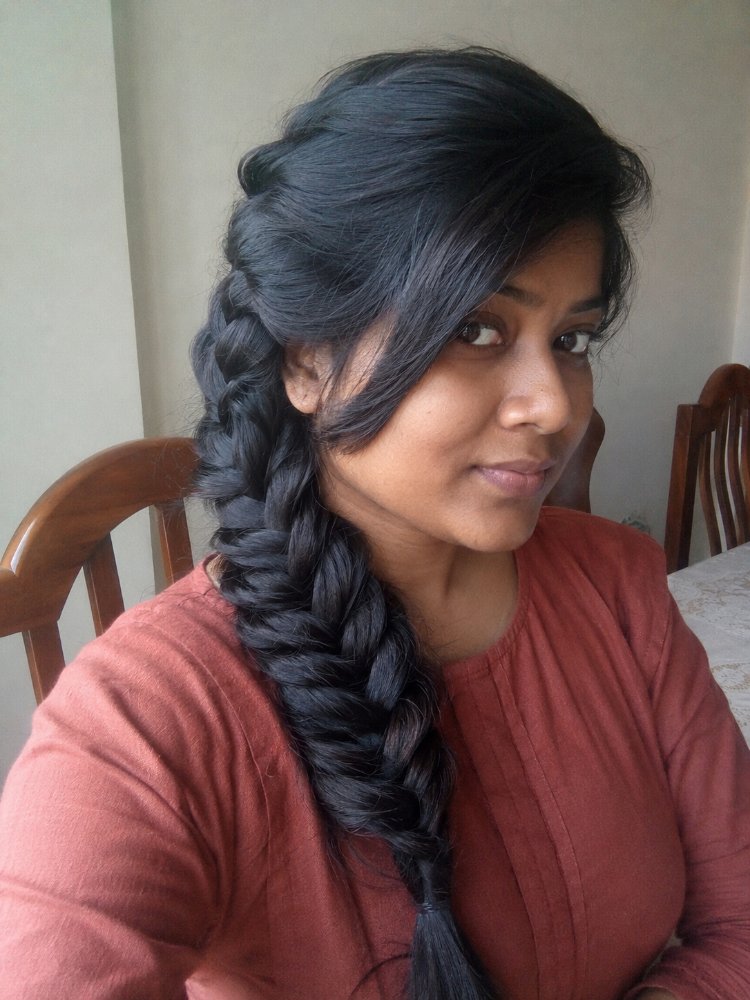
Layers are the main challenge. Shorter pieces near the ears and neckline may work loose more quickly, particularly on freshly washed, very smooth hair. A little natural texture or a light styling product can improve grip, while strategic bobby pins are more useful than repeatedly tightening the whole braid.
French Braid Into a Natural Puff
A French braid flowing into a curly or coily puff preserves two very different textures in one style: structured braiding through part of the head and natural volume at the anchor. The braid might travel from the forehead toward the crown or come upward from the nape, depending on where you want the puff to sit. Shrinkage determines how compact or expansive that puff appears, so judge the placement with the hair in the state you actually plan to wear rather than stretching solely to copy a reference photograph.
What French Braid Photos Usually Don’t Show
The clean finished image is only one part of choosing among these hairstyles. The braid’s path influences how the style interacts with daily life.
A low braid may rub against a coat collar. A high knot can press into a car or airplane headrest. Long braided tails can become trapped beneath bag straps or seatbelts. Hair left loose beneath a half-up braid still tangles and reacts to humidity. Crown braids may compete with glasses or headpieces around the temples.
The condition and density of your hair also change what you see. Fine strands describe strand diameter, while low density means there are fewer strands overall. A large braided shape created on dense hair can’t always be reproduced simply by pulling apart a braid on lower-density hair. Excessive loosening can expose more scalp without creating actual density.
Curly and coily hair brings another variable: shrinkage. A braid planned on stretched hair can sit differently once the roots encounter moisture or humidity. Neither state is inherently better. The useful reference is the state you normally wear.
| Style family | What the photo emphasizes | What you will notice in real life |
|---|---|---|
| Long French braids | Length and braid detail | More movement against clothing and straps |
| High braided updos | Lift at the crown | Headrest contact and concentrated anchor weight |
| Braided crowns | Face framing | Bulk near glasses, earrings, or headpieces |
| Half-up braids | Detailed top section | Loose lengths still need normal detangling and styling |
Comfort, Scalp Access, and Maintenance
French braiding can reduce loose-hair handling, but the construction still needs to feel comfortable. A secure braid should stay in place through normal movement without persistent pulling, stinging, or soreness.
Pay particular attention where several sections converge, such as a high ponytail or top knot. Added hair, a heavy bun, or very long lengths change the load at that anchor. Leaving fragile perimeter hairs out is often more sensible than forcing them into a perfectly clean hairline.
Scalp access also matters if you plan to keep the braid in beyond a single outing. Dense braided sections can make cleansing and thorough drying less convenient, especially near the roots. Adjust your routine according to buildup, activity, scalp comfort, and how easily the braided areas can dry rather than following a rigid wash schedule.
At night, a smooth scarf, bonnet, or pillowcase can reduce friction and help limit fuzzing. It won’t correct an uncomfortable braid. A style that hurts during ordinary movement needs loosening or removal rather than a better nighttime covering.
Persistent pain, redness, sores, stinging, or a concerning change in density deserves more attention than styling adjustments alone. Remove the source of pulling and consider talking with a dermatologist or another qualified healthcare professional if symptoms persist or concern you.
How to Choose the Right French Braid Hairstyle
Start with where you want the loose hair to go. Leaving it down points toward a headband, half-up braid, or braided-curl combination. Keeping everything contained makes the classic braid, crown, chignon, or braided buns stronger choices.
Next, consider the part of the style that you actually want people to notice. A high ponytail puts the emphasis on movement. A crown frames the face. A diagonal braid makes the back construction the feature. The natural puff version makes texture and volume more important than the length of the braid itself.
Bring reference photos to a stylist or braider, but look beyond the decorative finish. Useful consultation details include:
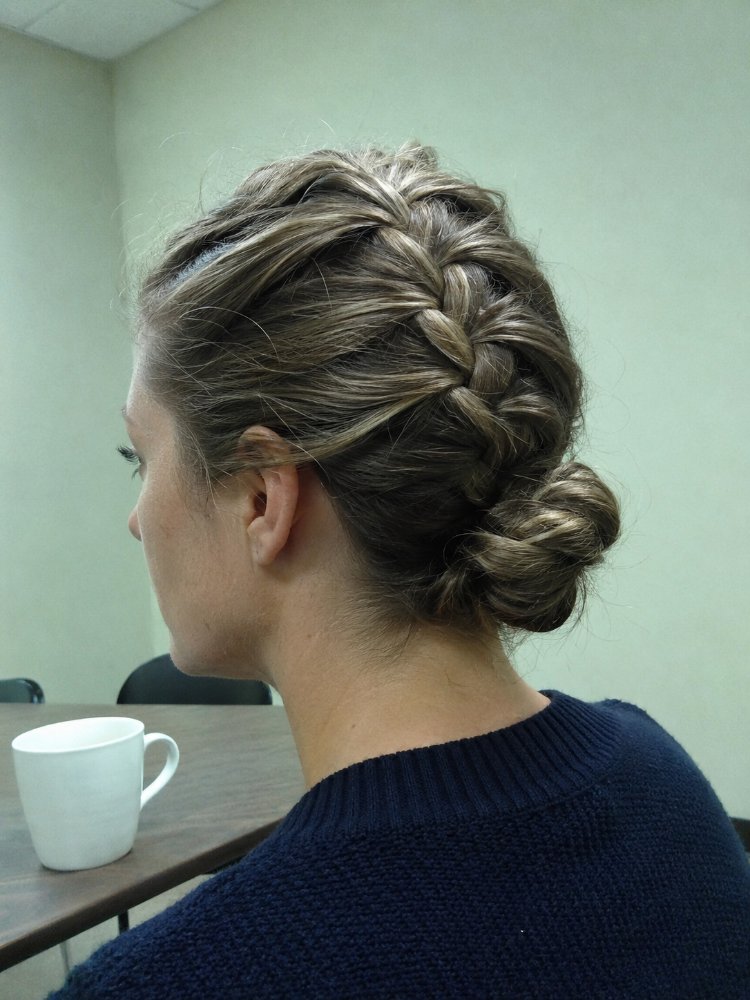
where the braid begins and ends;
whether the photo shows natural, stretched, pressed, or extension-added hair;
how much hair remains loose;
where elastics, pins, or buns create the main anchor;
whether the style needs to work with glasses, a veil, a helmet, a high collar, or regular exercise;
how easily you need to reach the scalp and undo the style.
Those decisions are more important than reproducing every small flyaway or decorative detail from the picture.
Frequently Asked Questions
Can you French braid short hair?
Yes, provided enough length can be incorporated into the braid path. Short layers may escape around the ears and nape, so a smaller French braid, half-up version, or tucked nape finish is often more practical than trying to create a long conventional tail. Bobby pins can secure pieces that are too short to reach the final section.
Do French braids work on curly and coily hair?
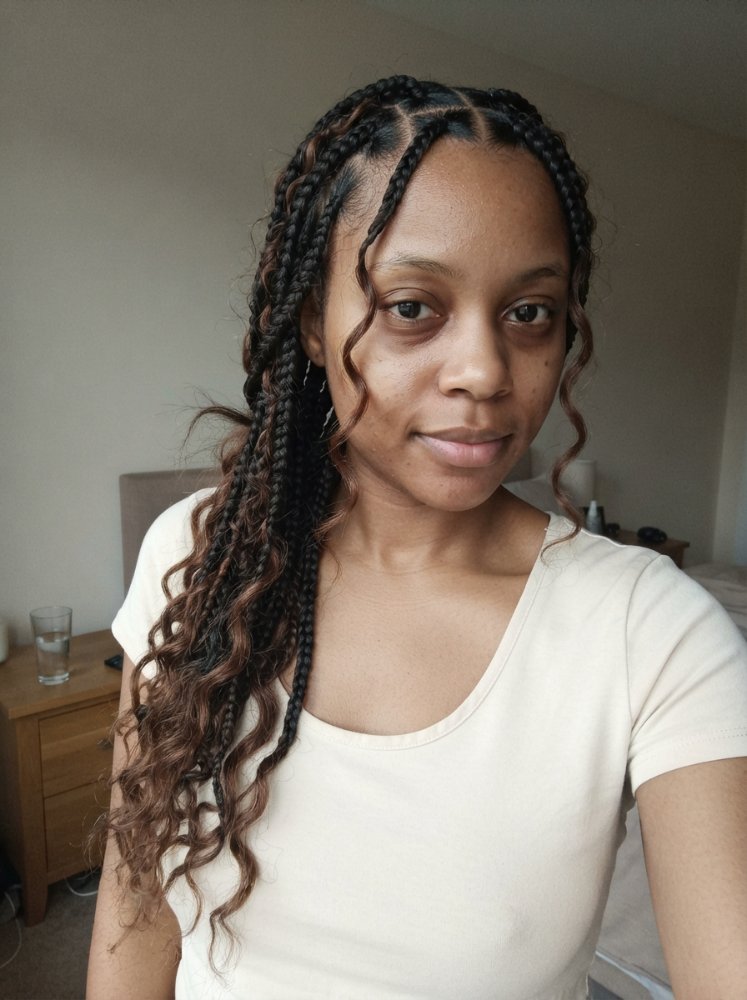
They do. French braids can be created on natural, stretched, or other appropriately prepared curly and coily hair. The braid will look different according to curl grouping, shrinkage, density, and strand size. Keeping some natural texture can give the braid a fuller surface, and curly ends can be left unbraided when that better suits the intended style.
Can extensions be added to French braid hairstyles?
Added hair can be incorporated into some French braid designs for length or fullness. The attachment method, amount of added hair, section size, and final placement all affect how the style feels. More length also creates more movement and leverage, particularly in ponytails and high buns, so the largest possible result isn’t always the most wearable one.
Why does my French braid loosen around the crown?
Loose crown sections can come from inconsistent tension, sections that are too large for the braid path, very slippery hair, or pieces being incorporated too late. Work with manageable sections and keep the braid close to the head as you add hair. Styling foam or another lightweight grip-enhancing product can help on very smooth hair, but adding more tension isn’t a good substitute for better section control.
Hair Texture & Upkeep Style Matcher
Select your natural hair texture and daily maintenance window to get an instant styling formula and heat safety cap.
Heat Cap: 320°F (160°C)
A versatile three-strand braid beginning at the parietal ridge, securing the top half while allowing natural wave texture to flow freely around the shoulders.
Conclusion
French braid hairstyles become much easier to choose once you decide what should happen after the braiding starts. A single braid is hard to beat for uncomplicated everyday wear. Crowns and chignons make more sense when you want the ends contained, while half-up braids preserve movement and a French braid into a natural puff lets curl or coil volume remain part of the design.
Choose the construction first, then decide how polished, loose, long, or elaborate you want the finish to be.
Editorial Standards & Hair Health Guidance
Every style featured on Tress Atlas is curated with a focus on real-world wearability, scalp tension management, and cuticle preservation. When trying protective styles or tight updos, ensure perimeter hairline sections remain tension-free to avoid traction stress on delicate follicles. For heat styling, cap tools below 350°F (180°C) to prevent thermal keratin denaturation.
Scientific Sourcing: Practices aligned with the American Academy of Dermatology (AAD) on traction alopecia risk reduction and cosmetic trichology research on hair tensile strength.