Back-to-School Hairstyles: Complete Styling Guide for Busy Mornings and Full School Days
A back-to-school hairstyle has to do more than look good in a morning photo. It needs to survive backpack straps, hoodie collars, headphones, outdoor weather, PE, long classroom hours, and the trip home without creating more work than the style saves.
The useful decision is how much styling you want to do each morning versus how much preparation you’re willing to put in beforehand. A low ponytail and a set of box braids solve very different problems. One gives you flexibility from day to day; the other reduces daily manipulation but makes installation comfort, scalp access, drying, and takedown more important.
Hair state matters too. Natural curls, stretched coils, locs, short cuts, and installed braids behave differently throughout a school day. Whether you’re styling your own hair or helping a child get ready, start with the routine first and choose the look second.
Easy Styles for Mornings That Start Too Early
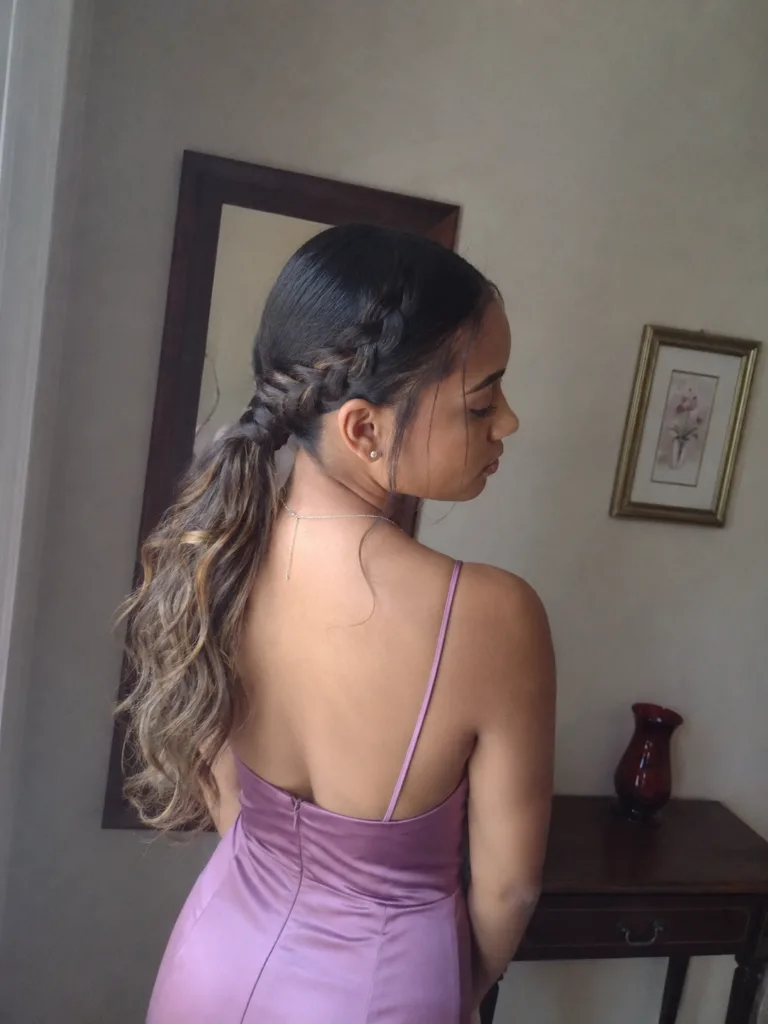
Low Ponytail
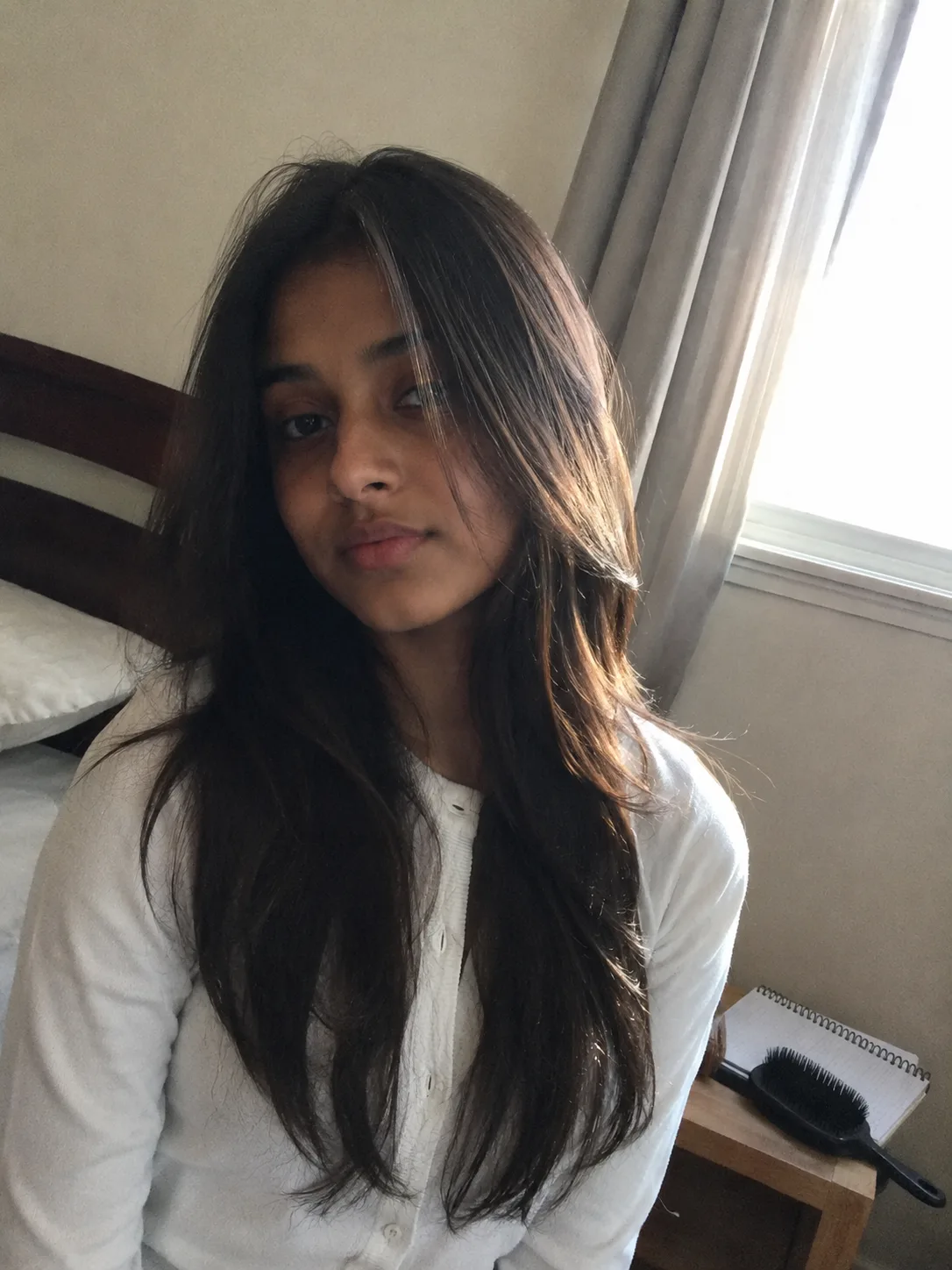
A low ponytail is one of the most useful school styles because it asks very little from the haircut underneath. Straight, stretched, wavy, curly, and relaxed hair can all work, with the surface left smooth or deliberately textured. Keep the elastic near the nape so it doesn’t compete with a backpack strap or create a hard pressure point against a headrest. A fabric-covered elastic is usually easier to reposition than a very small, tight band.
High Curly Ponytail
A high ponytail makes curls or coils the visual focus instead of trying to smooth every strand into the same finish. The top can be lightly brushed while the tail stays full, making this especially useful when preserving texture matters more than a sleek surface.
Placement deserves some thought. A very high anchor can feel more noticeable during running, jumping, or repeated head movement, particularly with long or dense hair. A slightly lower crown placement keeps much of the same lifted look while reducing how far the ponytail swings.
Bubble Ponytail
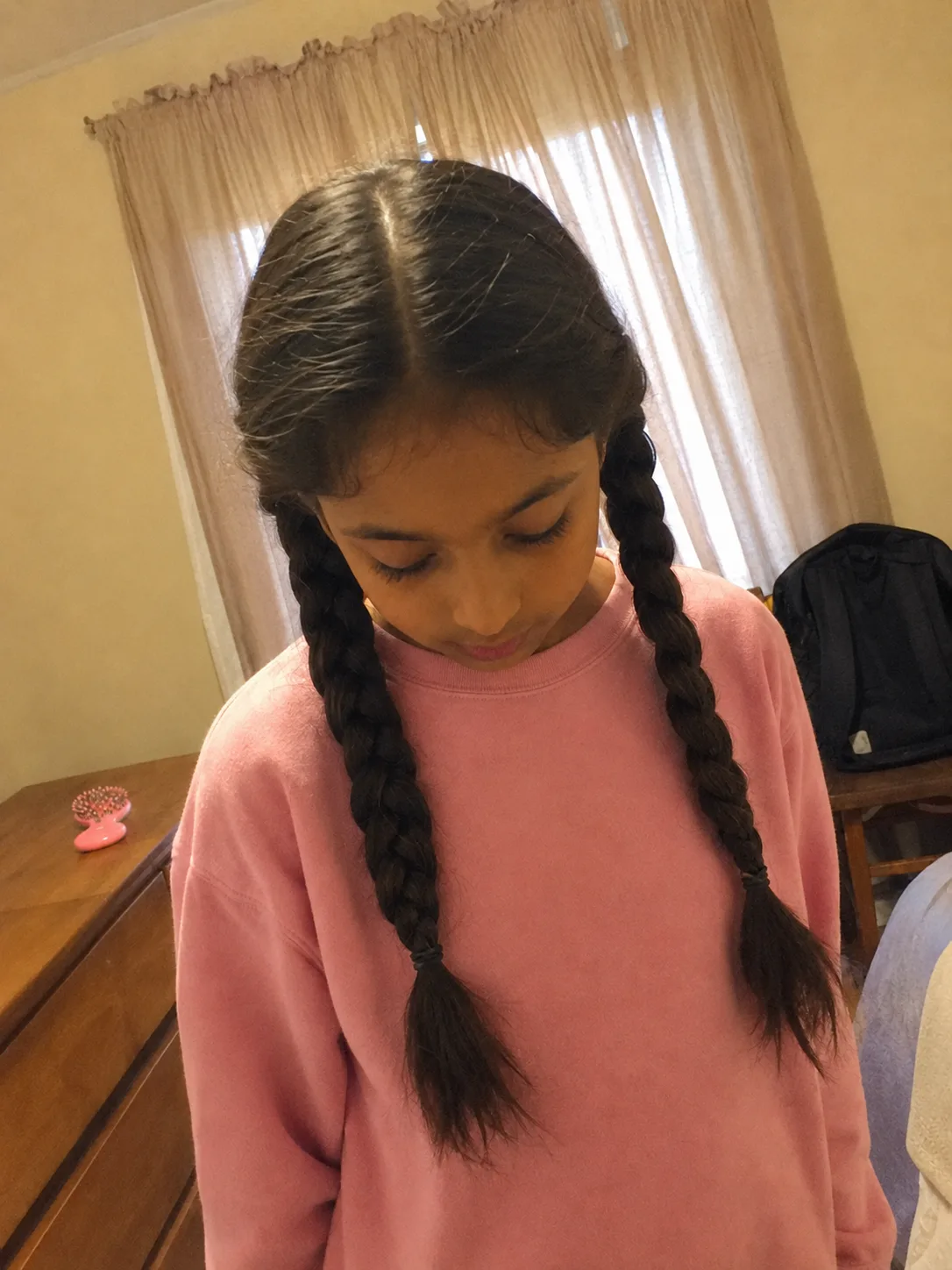
The bubble ponytail earns its place because it controls the length as well as the base. Start with a ponytail, add spaced elastics down the tail, then gently expand each section between them. It works particularly well on stretched or straighter hair that tends to fall forward over the shoulders during class. Don’t pull every elastic as tightly as possible; the bubbles need room to form, and the style looks better when the sections have some softness.
Half-Up, Half-Down Hair
Half-up hair is the stronger choice when you want length visible without spending the day pushing the front sections away from your face. The upper section can become a small ponytail, braid, twist, or bun while the rest stays loose.
The exact result depends heavily on hair state. A half-up style on shrunken curls creates height and width; the same construction on pressed or straight hair creates a longer, flatter outline. Neither needs to imitate the other.
School-day friction is what photographs tend to hide. Loose lengths can catch beneath backpack straps, rub against rough collars, or tangle more easily after outdoor activity. Longer hair may be easier to manage with the lower section loosely braided for the commute and released once you arrive.
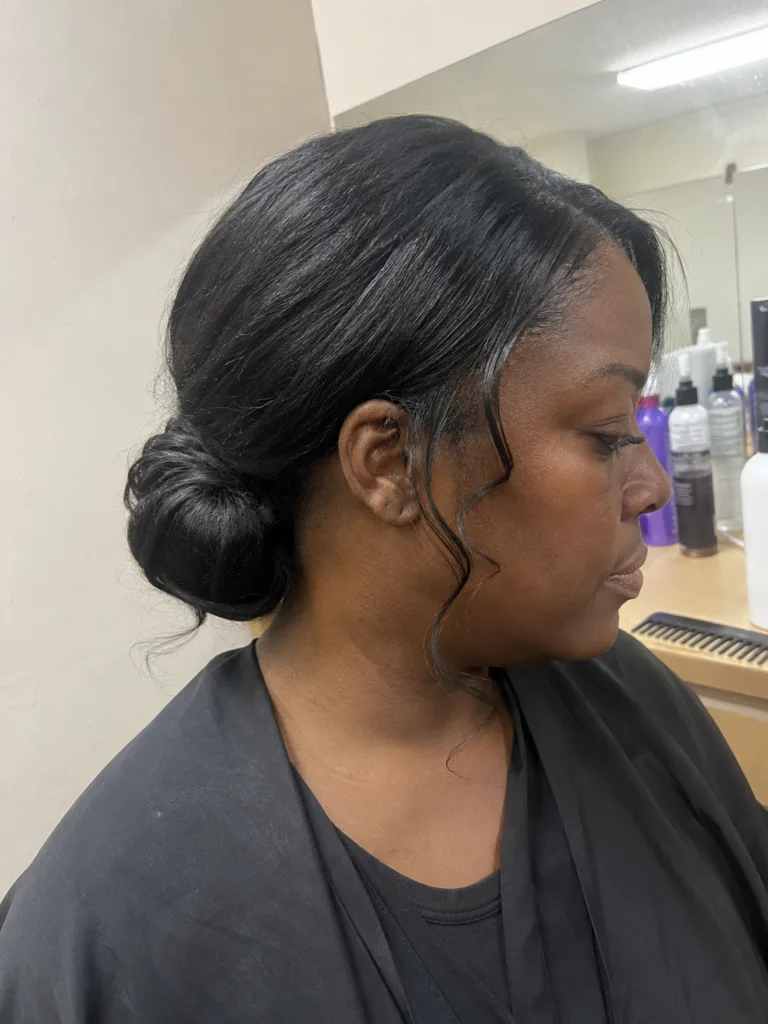
Low Bun
The low bun is more contained than a ponytail without putting the entire style high on the head. It works well with a center part, side part, or no visible part at all, and it can be built from straight, stretched, braided, twisted, or loc’d hair.
For everyday school wear, a softer base is usually more practical than chasing an ultra-tight finish. Secure the ponytail first, wrap the length around the base, and use pins where the bun actually needs support. A bun built mainly through extreme pulling at the hairline creates unnecessary tension.
Back-to-School Hairstyles That Keep Natural Texture Visible
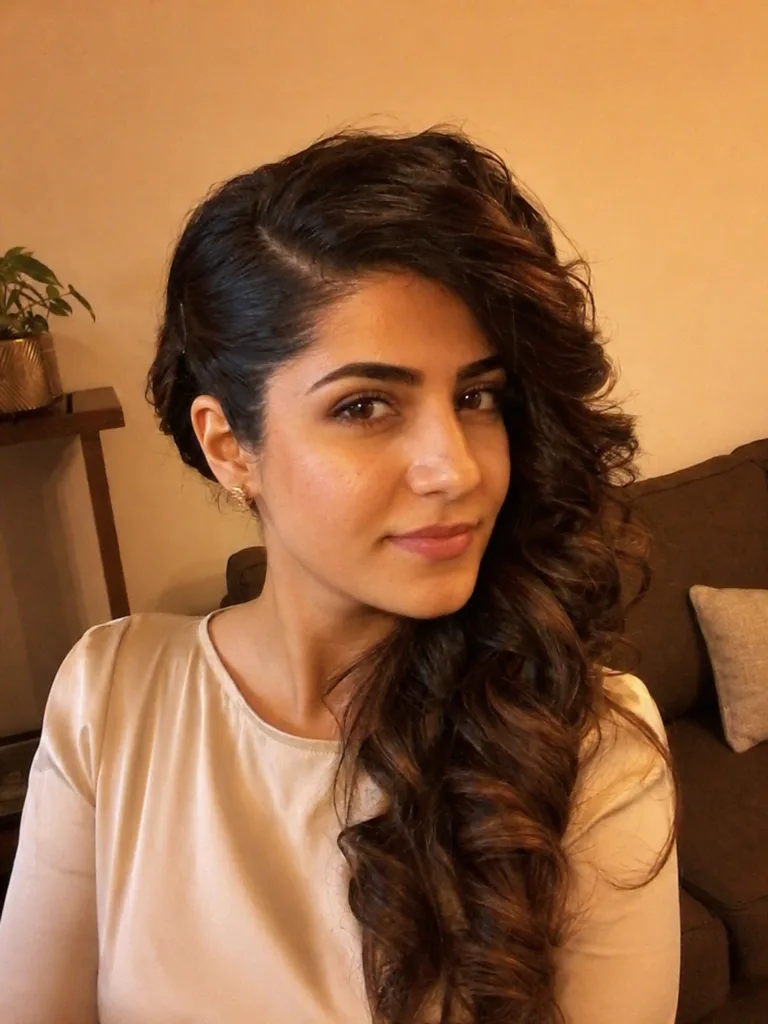
Wash-and-Go Curls or Coils
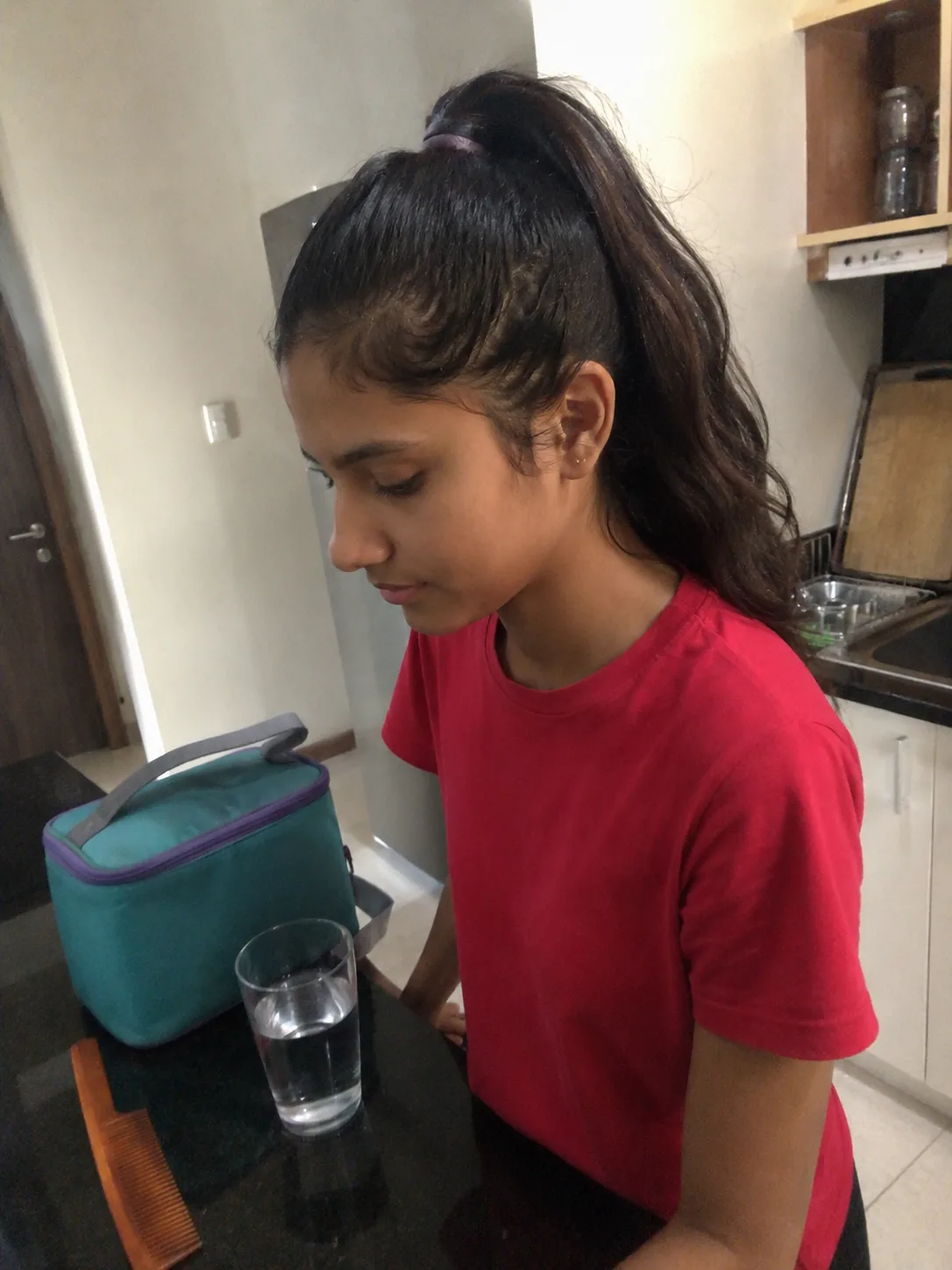
A wash-and-go makes sense for students who already like wearing their curls or coils in their natural grouping and don’t want an elaborate school-specific style. The important part is starting with a shape that behaves well after shrinkage.
Drying changes the outcome. Dense roots can remain damp after the outer hair feels dry, so rushing a heavily saturated style into a hoodie or against a seat can leave the roots compressed. Diffusing, hooded drying, or simply beginning with enough time for the hair to dry comfortably can make mornings easier.
The haircut also becomes more visible in a wash-and-go than in a bun or braid. Layers influence width and movement, while the perimeter determines how substantial the lower edge appears. Assess the shape in the curly state you normally wear rather than judging it only while wet or stretched.
Twist-Out
A twist-out offers more deliberate curl grouping than many wash-and-go routines while keeping the hair completely loose. The look can be worn full, side-parted, pinned at the temples, or gathered later in the day if needed. The main school-morning advantage is that much of the shaping happens before the hair is released. Separate only as much as necessary; excessive handling can turn a defined set into a larger, softer style before the school day has even started.
High Puff
The high puff is one of the strongest defaults for curly and coily hair because it preserves volume while getting most of the hair away from the face. It can also rescue a wash-and-go or twist-out that no longer has the definition you want to wear completely loose.
Watch the hairline during placement. The puff doesn’t need every shorter perimeter hair pulled into the base. Allowing delicate or shorter strands to remain out is often more comfortable than repeatedly brushing and stretching them toward a high anchor.
Double Puffs
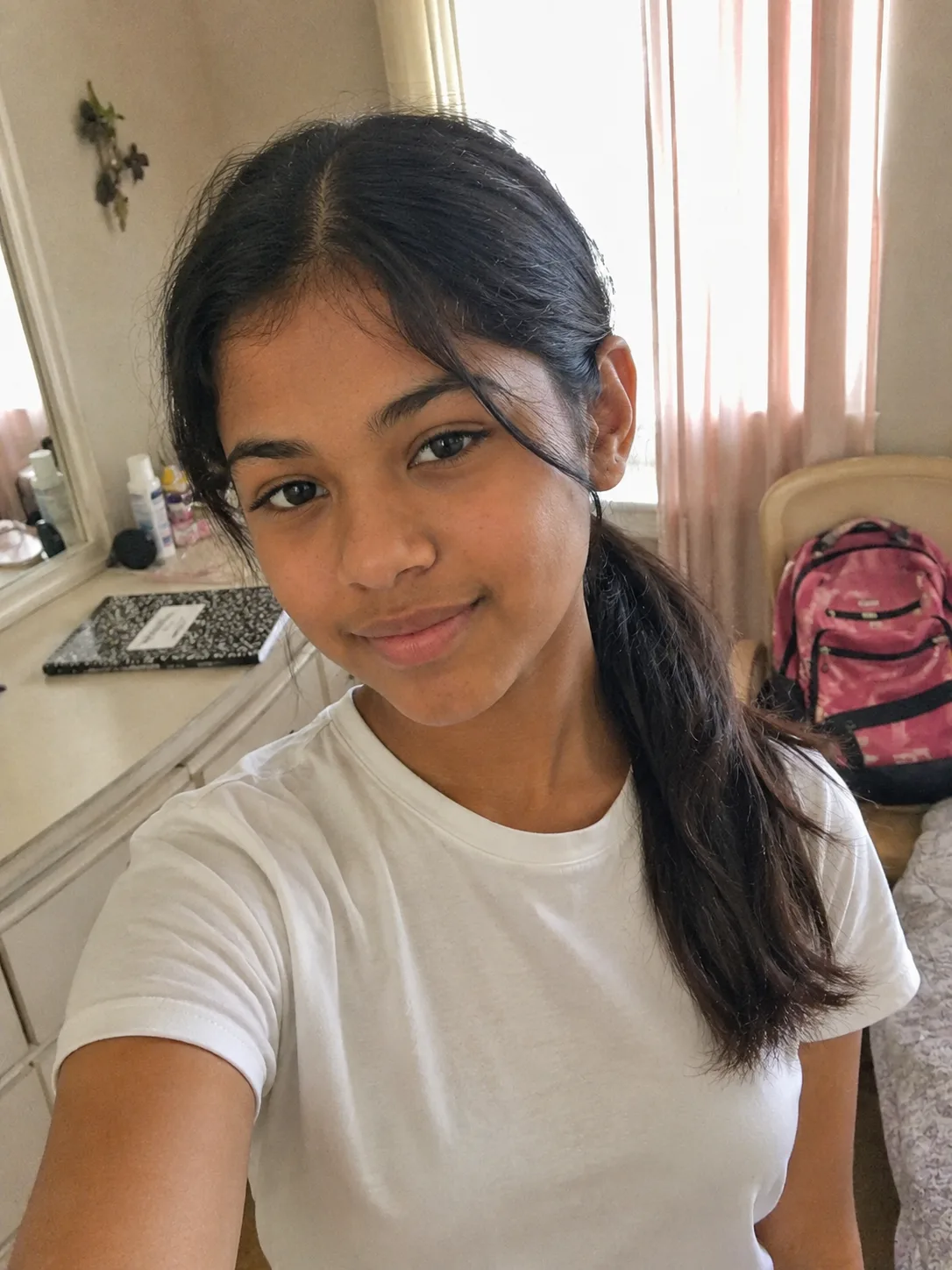
Double puffs change the entire silhouette instead of simply splitting one puff in half. The center part creates balance while the two rounded sections keep coily or curly volume visible on both sides of the head. They’re especially practical on shorter hair that can’t comfortably reach one central ponytail. Keep the bases positioned where they won’t interfere with glasses arms or sit directly beneath a helmet used for school activities.
Two-Strand Twists
Two-strand twists offer a useful middle ground between loose natural hair and a more involved braided installation. The hair remains sectioned and controlled, yet the twists can be moved into ponytails, half-up styles, buns, or left down.
Section size changes the experience significantly. Larger twists create a chunkier look and make individual sections easy to handle. Smaller twists create more movement and styling flexibility but demand more attention during takedown because there are more sections to unravel.
Comfort should guide the roots. Clean parts can look neat without being tight, and twists don’t gain extra styling value from a painful base. The hair also needs to dry properly after cleansing; sectioned hair can hold moisture at the roots longer than the visible surface suggests.
Bantu Knots
Bantu knots are worth considering when keeping loose lengths completely contained matters more than having hair hang around the shoulders. Each section is twisted and wrapped into a compact knot, creating a graphic shape that works on various natural and stretched textures. Knot size and placement can be adjusted to the amount and length of hair available. Very large knots may be awkward beneath hats or against a headrest, so everyday school comfort should influence how prominent you make them.
Half-Up Loc Style
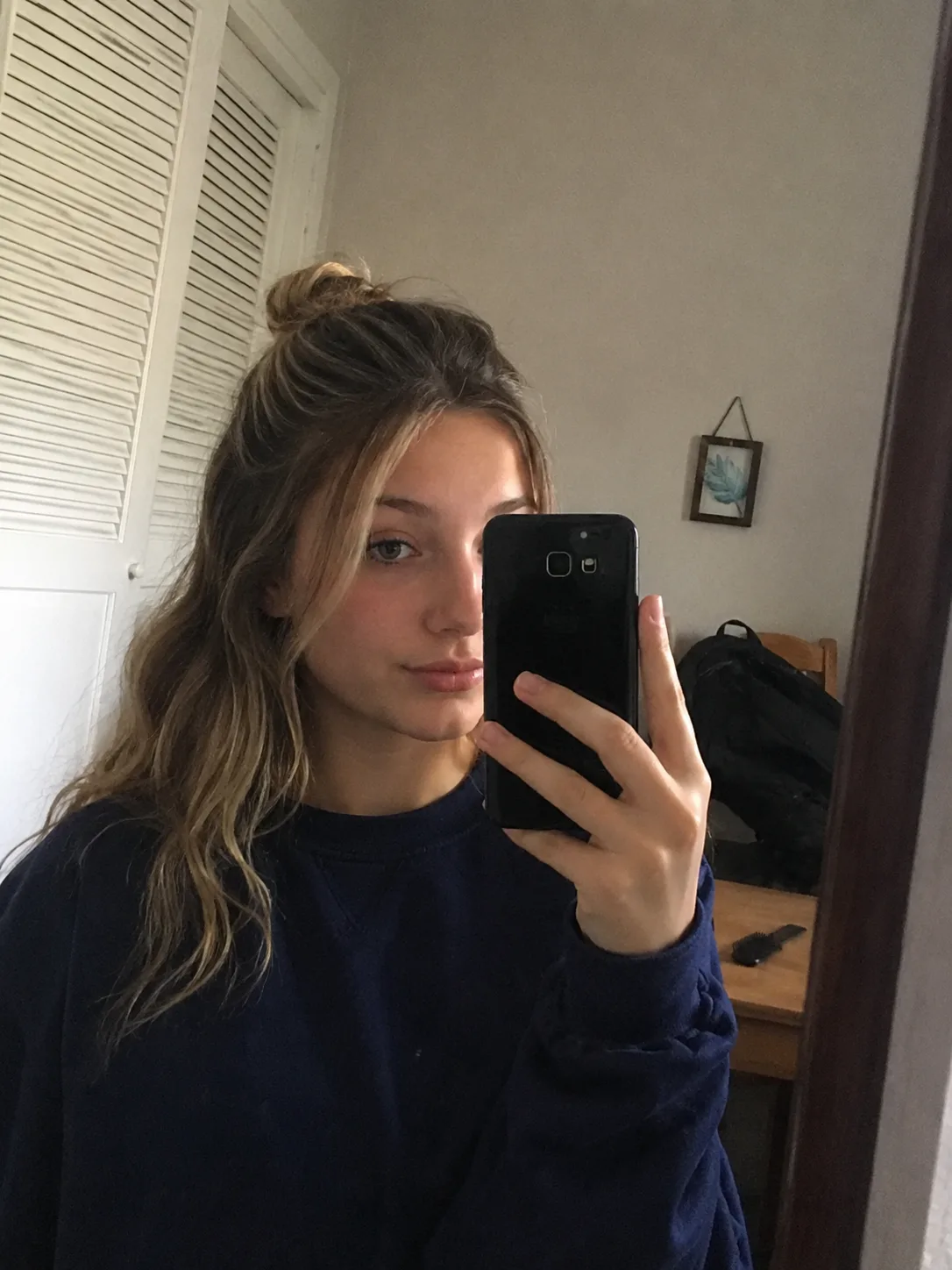
Locs don’t need an elaborate updo to feel different for the first day back. Gathering the upper portion into a ponytail or compact bun opens the face while leaving the remaining locs down, preserving both length and movement.
Mature or long locs carry more weight than short, newer locs, so the highest possible placement isn’t always the most comfortable choice. A mid-crown anchor can give the same half-up effect with less concentrated pulling. Keep glasses, headphones, and the back of the school chair in mind when choosing the exact position.
Braided and Twisted Options for Less Daily Restyling
Two French or Dutch Braids
Two braids are a practical choice for medium-to-long hair because they control the full length without concentrating everything at one ponytail base. French braids keep the braided structure closer to the surface, while Dutch braiding produces a more raised appearance.
They’re particularly useful on days involving PE or outdoor activities. The lengths stay separated and are less likely to swing across the face. The braids can also be loosened and redone without committing to a longer-term installed style.
Straight-Back Cornrows
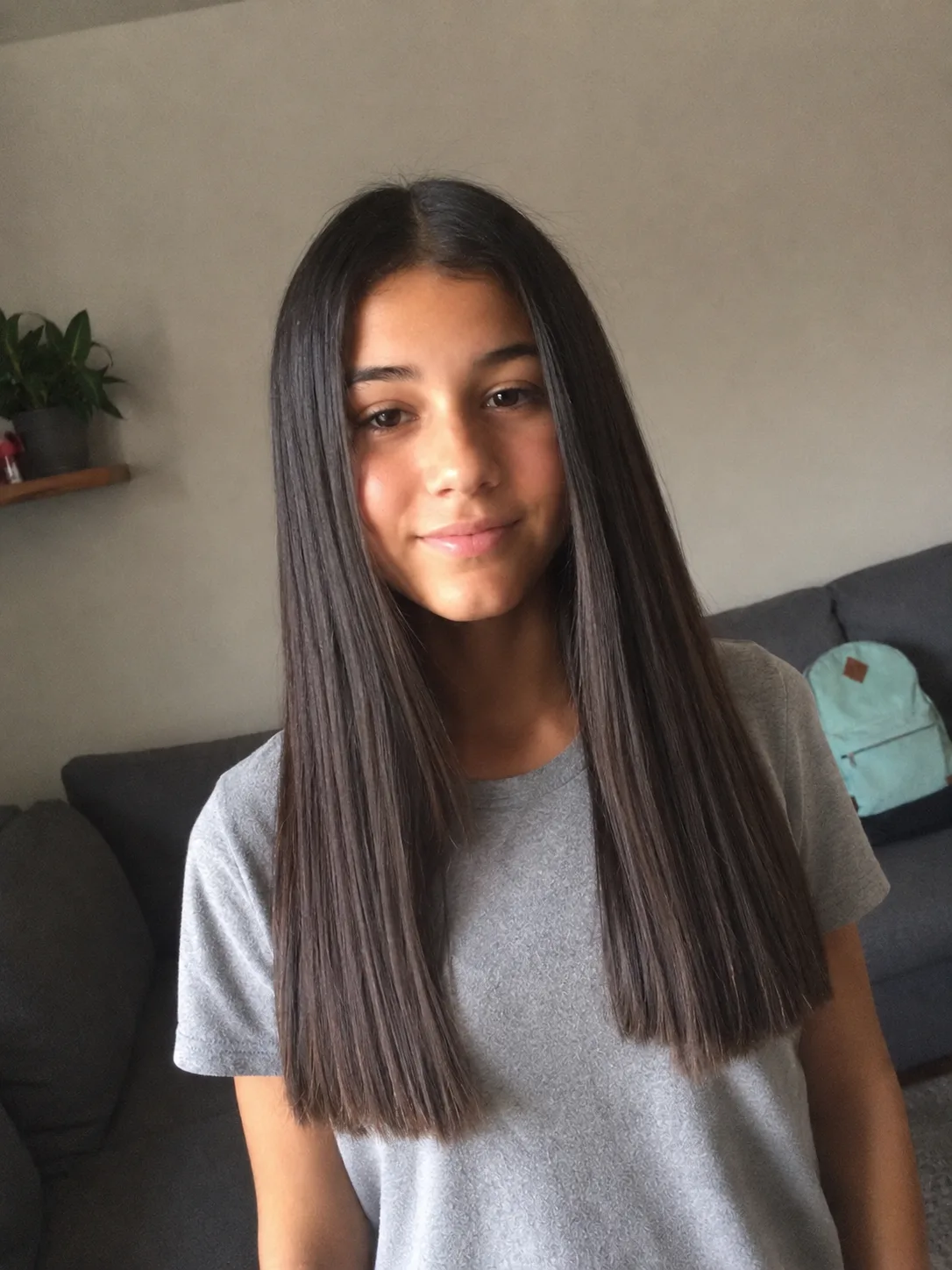
Straight-back cornrows suit school routines where minimizing loose-hair handling is a bigger priority than changing hairstyles every morning. Their direction is simple, they keep hair close to the head, and the scalp remains comparatively easy to see between rows.
Parting and braid direction are only part of the installation. Section size, the braider’s grip, hair condition, and any added-hair weight influence how the finished braids feel. A neat result should still allow normal facial movement and comfortable sleep.
Cleansing access is another advantage worth protecting. Heavy buildup at the roots defeats some of the practicality of having the hair neatly sectioned. After the scalp and braids get wet, allow the braided base to dry properly instead of judging dryness only by the ends.
Cornrow Ponytail
A cornrow ponytail directs several braids toward one anchor, giving more structure through the scalp than a regular ponytail. That convergence point makes placement important: the higher and heavier the tail, the more movement you’ll notice at the base. For school, a moderate crown or mid-back placement is often easier to live with than an extra-high, very long ponytail, especially around backpacks, sports, and bus or car headrests.
Box Braids
Box braids make sense when reducing daily combing and styling is worth a more involved installation and takedown. They can be worn loose, gathered into a low ponytail, or moved into half-up styles without rebuilding the entire hairstyle.
Length and added-hair density affect everyday practicality. Extra-long braids can become trapped beneath backpack straps or pile awkwardly behind the shoulders in a chair. A moderate length is the easier school default unless dramatic length matters enough to justify the extra repositioning and drying.
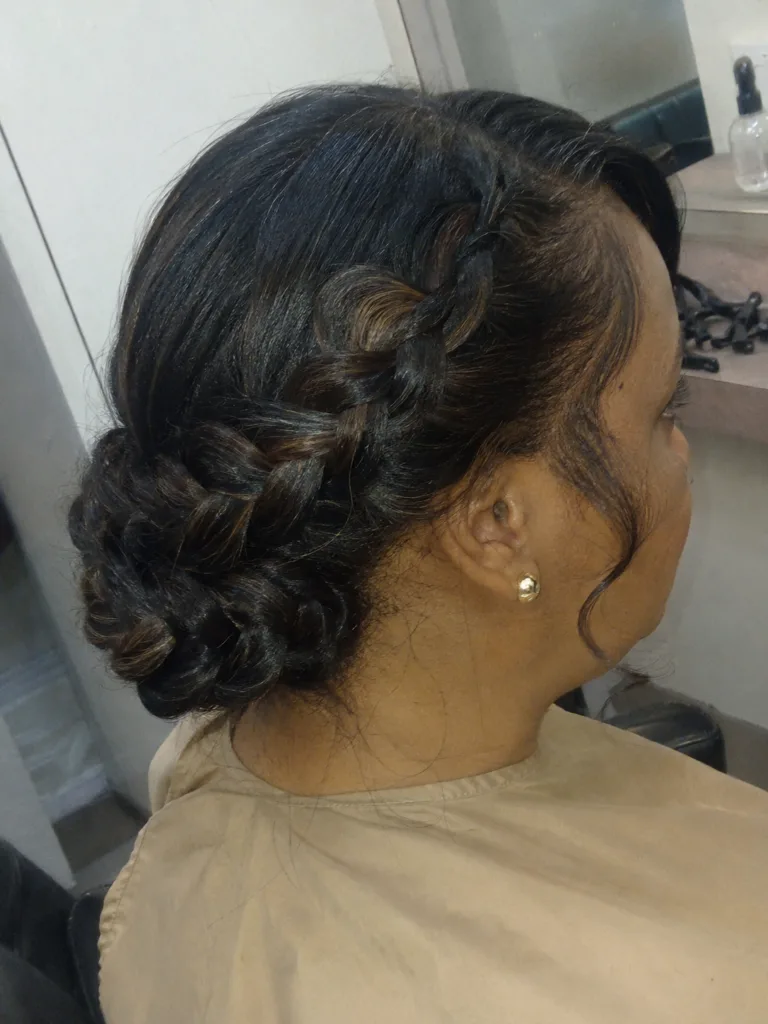
Flat-Twist Updo
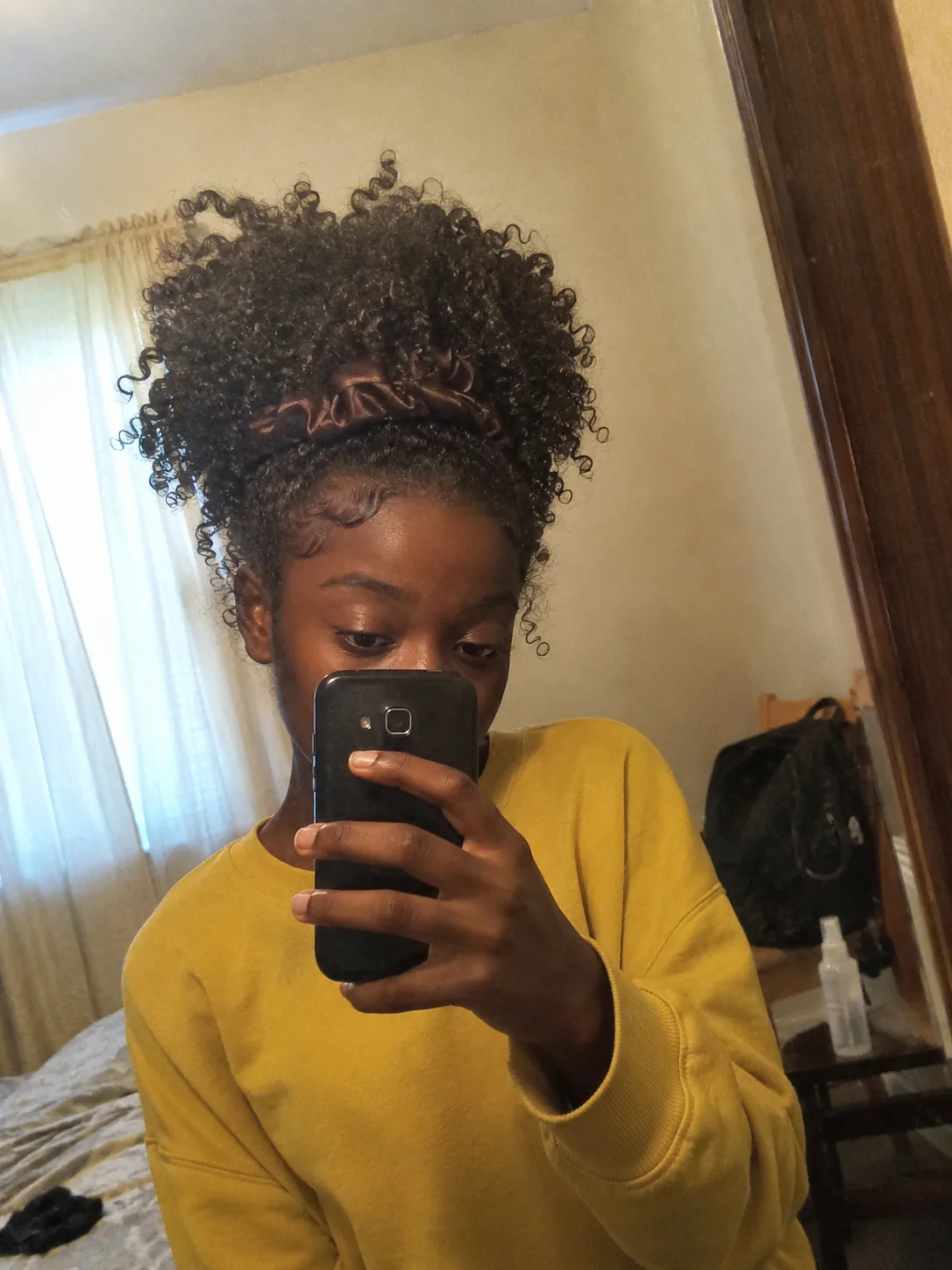
Flat twists can guide natural hair upward, backward, or toward a tucked section at the nape, giving you the containment of a braided style with a visibly different construction. An updo version is particularly useful when loose ends tend to rub against coat collars. Because flat twists sit close to the scalp, clean sectioning makes a bigger visual difference than adding lots of accessories. Keep the twist direction comfortable around the temples and hairline.
Styles That Make More Sense for PE, Recess, and Busy Days
Braided Ponytail
A braided ponytail controls the tail itself, which is the main advantage over leaving a ponytail loose. Build a comfortable ponytail first, divide or braid the length, and secure the end without repeatedly tightening the base.
This construction is useful for running and sports because the tail moves as one unit instead of spreading across the shoulders. A low or mid-height version also sits more predictably beneath caps or near helmet edges than a large high bun.
Very long or extension-heavy braided ponytails deserve extra consideration. Length creates leverage as the braid swings, and a heavy tail can turn an otherwise simple school style into something that constantly pulls at one anchor point. Lighter, moderate-length versions are the more practical choice for active days.
Double Buns
Double buns keep the ends contained while distributing the style across two anchors instead of one central bun. They’re particularly useful when the hair reaches two side sections more easily than it reaches a single high ponytail. Position them away from the exact points where helmet straps, headphones, or glasses need to sit. For younger students who rest their head during the day, smaller side placements can also be more comfortable than bulky buns directly at the back.
Half-Up Top Knot
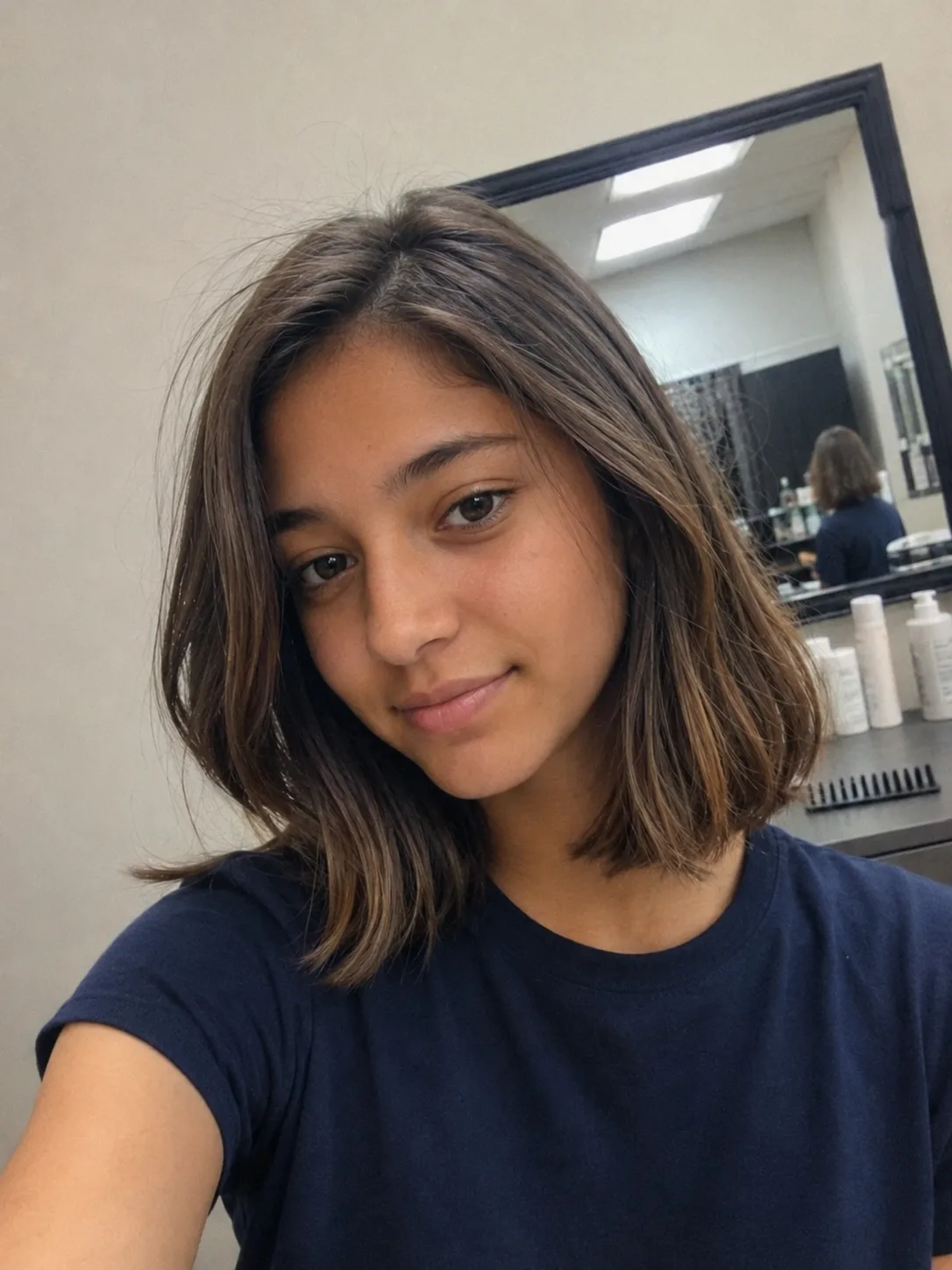
The half-up top knot is better than a full high bun when you want the face-clearing effect but don’t want to gather every strand toward the crown. The upper section is secured and wrapped, while the lower hair keeps its natural length and movement.
This style works across straight, wavy, curly, and stretched textures, but the loose lower section still needs to fit the day. For sports-heavy schedules or windy outdoor time, a half-up knot may create more tangling than it saves. On ordinary classroom days, it’s one of the easiest ways to make worn-down hair feel more structured.
Short-Hair Ideas That Don’t Depend on a Ponytail
Finger Coils
Finger coils give short natural hair individual curl definition without requiring enough length for a bun or puff. Small sections are wrapped around the finger so the coil follows the hair’s natural tendency to curve, creating a compact style with visible separation.
The result depends on the haircut beneath it. A tapered shape emphasizes the top, while a more even shape creates fullness around the head. Shrinkage can make the finished hair sit considerably shorter than the stretched section you started with.
Finger coils are also easy to underestimate from photographs. Smaller sections give a more detailed result but create more individual coils to separate or undo later. Larger sections are faster to manage and create a bolder pattern. Choose the scale according to how much maintenance you actually want after the first day.
Textured Pixie
A pixie doesn’t need to be flattened into one uniform surface for school. Leaving controlled movement through the top while keeping the sides closer to the head gives short hair shape without relying on ponytails, clips, or added hair. Straight, relaxed, wavy, and naturally curly pixies can all use this idea differently.
The haircut carries most of the work, so reshaping becomes more important than adding styling tricks once the outline starts changing. A short cut may lose its crisp perimeter before it feels noticeably longer. Styling products can direct the top, but they can’t replace the structure of the cut underneath.
What School-Day Photos Don’t Show
The best back-to-school hairstyle is often the one that behaves well after the first hour.
A hairstyle can look perfectly comfortable from the front while hiding a large bun pressing into the back of a chair. Long braids can look effortless while repeatedly getting caught beneath a backpack. A very smooth ponytail can photograph beautifully even though the base is tighter than the wearer wants to tolerate all day.
These details are more useful than choosing a style solely because it survives until dismissal.
How to Choose the Right Back-to-School Hairstyle
Start with the hair as it will actually be worn. Natural, shrunken hair has different reach and volume from stretched hair. A press changes how the hair moves but doesn’t change its density. Braided, twisted, loc’d, relaxed, and extension styles each create their own maintenance needs.
Then consider the school routine. A student who spends most of the day in classrooms has different practical needs from someone moving between sports practice, outdoor activities, and classes. Headphones, glasses, helmets, uniform collars, and backpack straps can all rule out placements that seemed fine while standing in front of a mirror.
Morning capacity matters just as much. A beautiful twist-out isn’t a convenient school style for someone who dislikes resetting or refreshing loose texture. Box braids aren’t a shortcut if the installation weight, drying, or takedown doesn’t fit the routine. The low ponytail remains popular for a reason: it can be adjusted in minutes and completely changed the next day.
For children, comfort deserves priority over how long a hairstyle might last. Tight edges, heavy added hair, or a style that hurts during ordinary movement aren’t worthwhile tradeoffs for an extra-neat appearance.
Maintenance Between School Mornings
Preserving a hairstyle usually takes less effort than rebuilding it. A bonnet, scarf, or smooth pillowcase can reduce overnight friction for many textures and styles, although the best option depends on the construction and what stays comfortably in place.
Loose curls may need reshaping only in areas that flattened overnight rather than complete restyling. Braids and twists benefit from keeping the scalp accessible for normal cleansing and from allowing the roots to dry thoroughly after they get wet. Ponytail and bun wearers can vary placement instead of repeatedly pulling the same areas toward the same anchor.
Pay attention to comfort. Repeated pulling deserves correction, especially around the hairline and other fragile areas. Pain, persistent irritation, sores, sudden shedding, or a concerning change in density is a reason to stop treating the issue as an ordinary styling inconvenience and talk with a dermatologist or another qualified healthcare professional.
Related Hairstyles to Explore
- Hairstyles for school
- Children Hairstyles For School
- Easy prom hairstyles to do yourself
- Hairstyles for wedding guest
FAQs
What is the easiest hairstyle for a busy school morning?
A low ponytail, high puff, or low bun is usually the most practical starting point because each can be created without complicated sectioning. The easiest choice depends on hair length and state. Short natural hair may be quicker in finger coils or a shaped wash-and-go than in a style that requires stretching it toward an elastic.
Which back-to-school hairstyles work well for curly or coily hair?
Wash-and-go styles, twist-outs, puffs, double puffs, two-strand twists, finger coils, flat twists, and cornrows can all work. Choose according to the curl or coil pattern, shrinkage, density, condition, and whether the hair is being worn shrunken or stretched.
Are braids a good protective style for school?
Braids can reduce daily manipulation and keep the hair contained, but their benefits depend on the installation. Root tension, section size, added-hair weight, friction, scalp access, drying, and removal all matter. A braid style that feels excessively tight or heavy is a poor tradeoff even when it looks neat.
How can I keep a school hairstyle neat during sports?
Containment helps more than excessive tightness. Braided ponytails, two braids, cornrows, and double buns limit loose lengths during movement. Place buns and ponytails where they don’t interfere with helmets or other required equipment, and make sure the style remains comfortable during normal head movement.
What hairstyles work for very short hair?
Finger coils and textured pixie styling are strong options because neither depends on gathering the hair into a ponytail. Short curls can also be worn in a defined wash-and-go. With short hair, the haircut’s outline and weight distribution usually affect the finished result more than accessories do.
Should a back-to-school hairstyle last several days?
It doesn’t need to. Some students prefer styles such as twists, cornrows, or braids because they reduce daily restyling, while others value the freedom to change a ponytail, puff, or loose style from one morning to the next. Choose longevity only when the installation, cleansing, drying, comfort, and eventual takedown also fit the routine.
Hair Texture & Upkeep Style Matcher
Select your natural hair texture and daily maintenance window to get an instant styling formula and heat safety cap.
Heat Cap: 320°F (160°C)
A versatile three-strand braid beginning at the parietal ridge, securing the top half while allowing natural wave texture to flow freely around the shoulders.
Conclusion
Back-to-school hairstyles work better when you choose for the entire day instead of the first-day photo. A low ponytail or puff gives you flexibility, while twists, cornrows, and braids trade some of that flexibility for less daily manipulation. Loose curls preserve movement and texture but ask you to account for weather, friction, and refresh needs.
Before deciding, picture the hairstyle with the actual school routine: backpack on, headphones in place, PE included, and several hours spent sitting at a desk. The option that still feels manageable in that version of the day is the one worth starting school with.
Editorial Standards & Hair Health Guidance
Every style featured on Tress Atlas is curated with a focus on real-world wearability, scalp tension management, and cuticle preservation. When trying protective styles or tight updos, ensure perimeter hairline sections remain tension-free to avoid traction stress on delicate follicles. For heat styling, cap tools below 350°F (180°C) to prevent thermal keratin denaturation.
Scientific Sourcing: Practices aligned with the American Academy of Dermatology (AAD) on traction alopecia risk reduction and cosmetic trichology research on hair tensile strength.