Hair Dye Inspo Ideas: Styling Guide & Cuts That Change More Than Just the Shade
The most useful hair dye inspo does more than give you a color name to show at the salon. It helps you decide how much of your hair you want to change, how visible you want the grow-out to be, and how much maintenance you’re willing to build into your routine.
A dark brunette gloss and a lavender pastel may both look dramatic in photographs, but they ask very different things from the hair underneath. Placement matters just as much. A bright blonde panel around the face behaves differently from all-over blonde, while a vivid underlayer can deliver a strong color moment without putting the same demand on every strand.
Your starting base matters too. Natural depth, existing artificial color, previous lightening, porosity, condition, and other chemical services all affect what is realistically achievable. A reference photo should therefore be treated as a visual target, not a guaranteed one-session result.
Use these ideas to narrow down the result you actually want before you start discussing shades.
Deep Brunette Hair Dye Inspo
Espresso Brunette
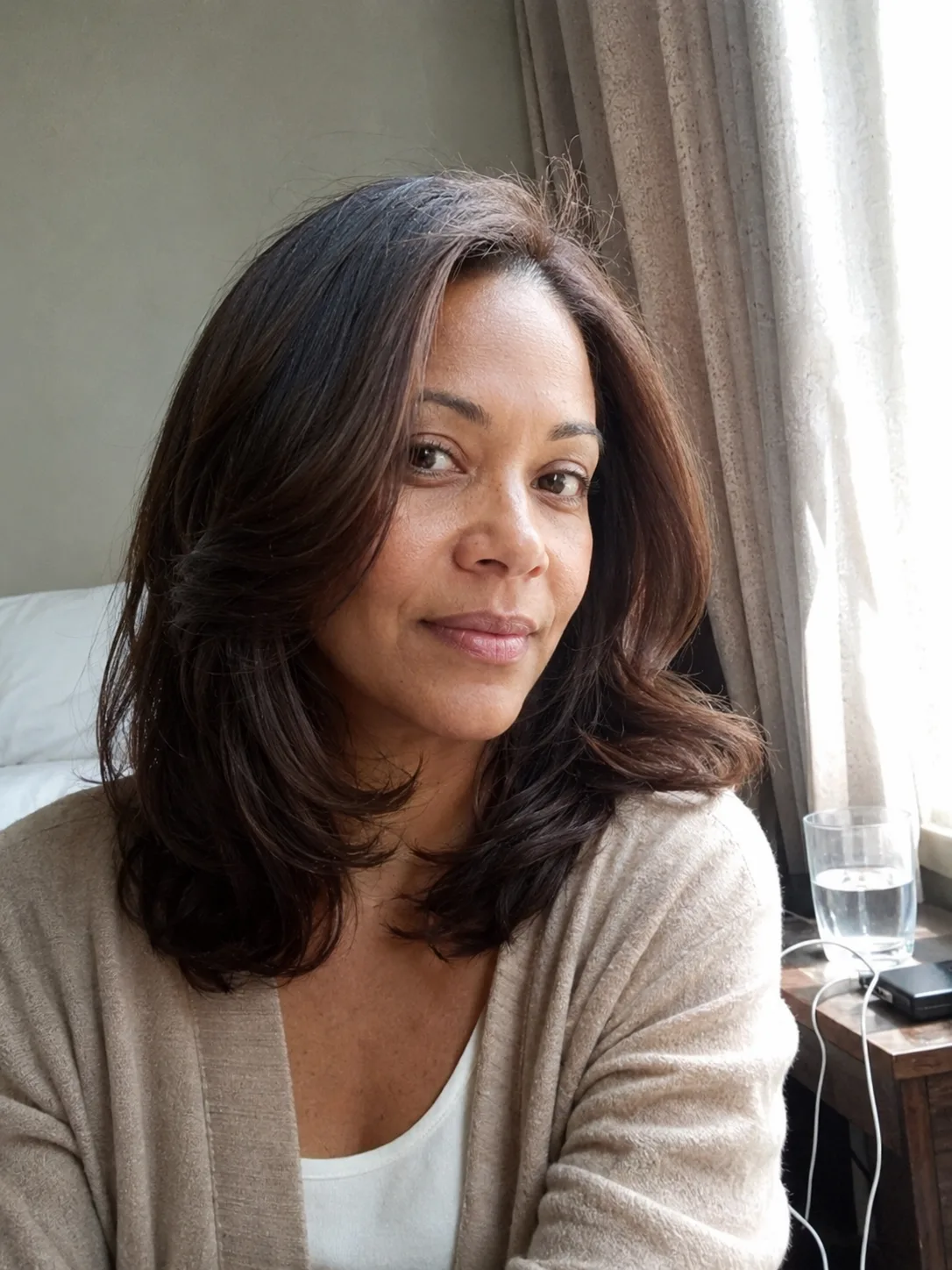
Deep espresso works particularly well when you want your hair to look richer without turning color placement into the main feature. The visual effect comes from an even, dark brunette surface with enough tonal softness to keep movement visible.
This is a stronger choice than flat-looking near-black when you still want curls, layers, or waves to show their definition. On very dark natural hair, the shift may be subtle; on lighter or previously colored hair, achieving a deep brunette can create a much more obvious transformation.
Remember that going darker can affect future lightening plans. Permanent artificial dark pigment may need to be addressed before a later blonde transformation, so mention future color ambitions during your consultation instead of treating the darker shade as an isolated decision.
Soft Black With a Cool Sheen
For maximum depth, soft black creates a clean, graphic result without needing highlights or several visible tones. It can make a blunt bob look sharper, give long straight hair a stronger outline, and create striking contrast against bright clothing or makeup.
The important decision is whether you truly want hair that reads black rather than very dark brown. Those two targets can look similar indoors yet noticeably different in daylight. Existing artificial color and future lightening plans deserve particular attention before committing to a very deep result.
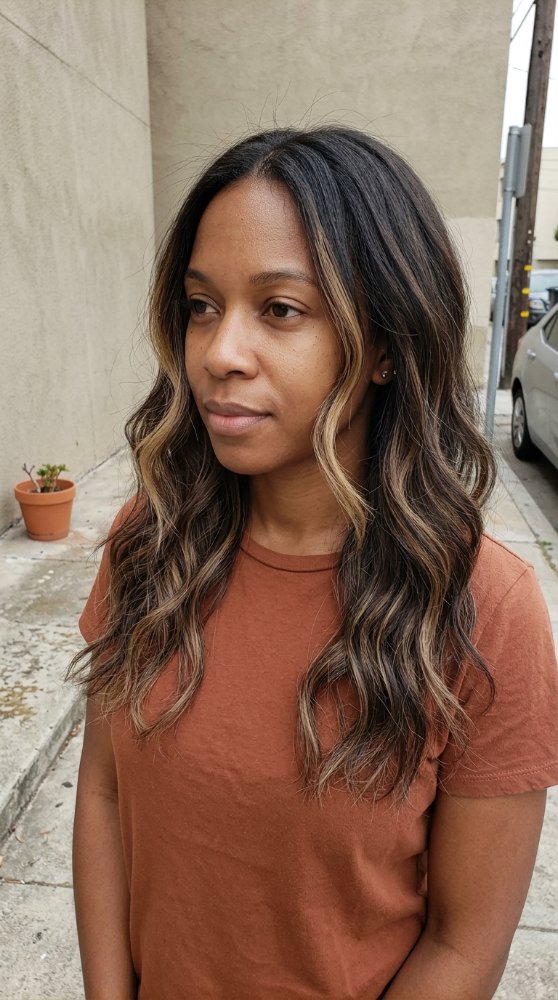
Chocolate Brown With Ribbon Highlights
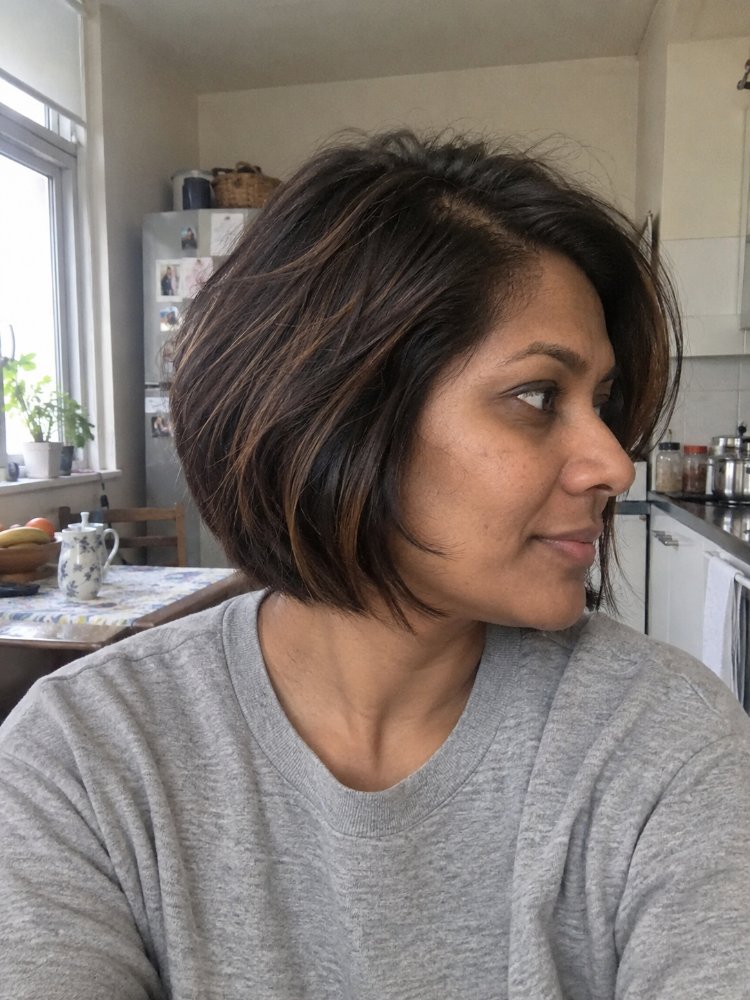
Ribbon highlights are useful when solid brunette feels too uniform but traditional fine highlighting sounds busier than you want. Broader pieces of lighter brown move through the base, becoming especially visible around bends, curls, and layered sections.
The placement can be adjusted to suit the haircut. Longer layers can carry ribbons through the mid-lengths, while a bob may need more deliberate spacing so the highlights don’t collect into a striped-looking perimeter.
This is one of the easier inspiration photos to personalize because the contrast can move from restrained to bold without changing the basic construction. Ask yourself whether you want people to notice the brown dimension first or the highlight pattern first.
Mushroom Brown Balayage
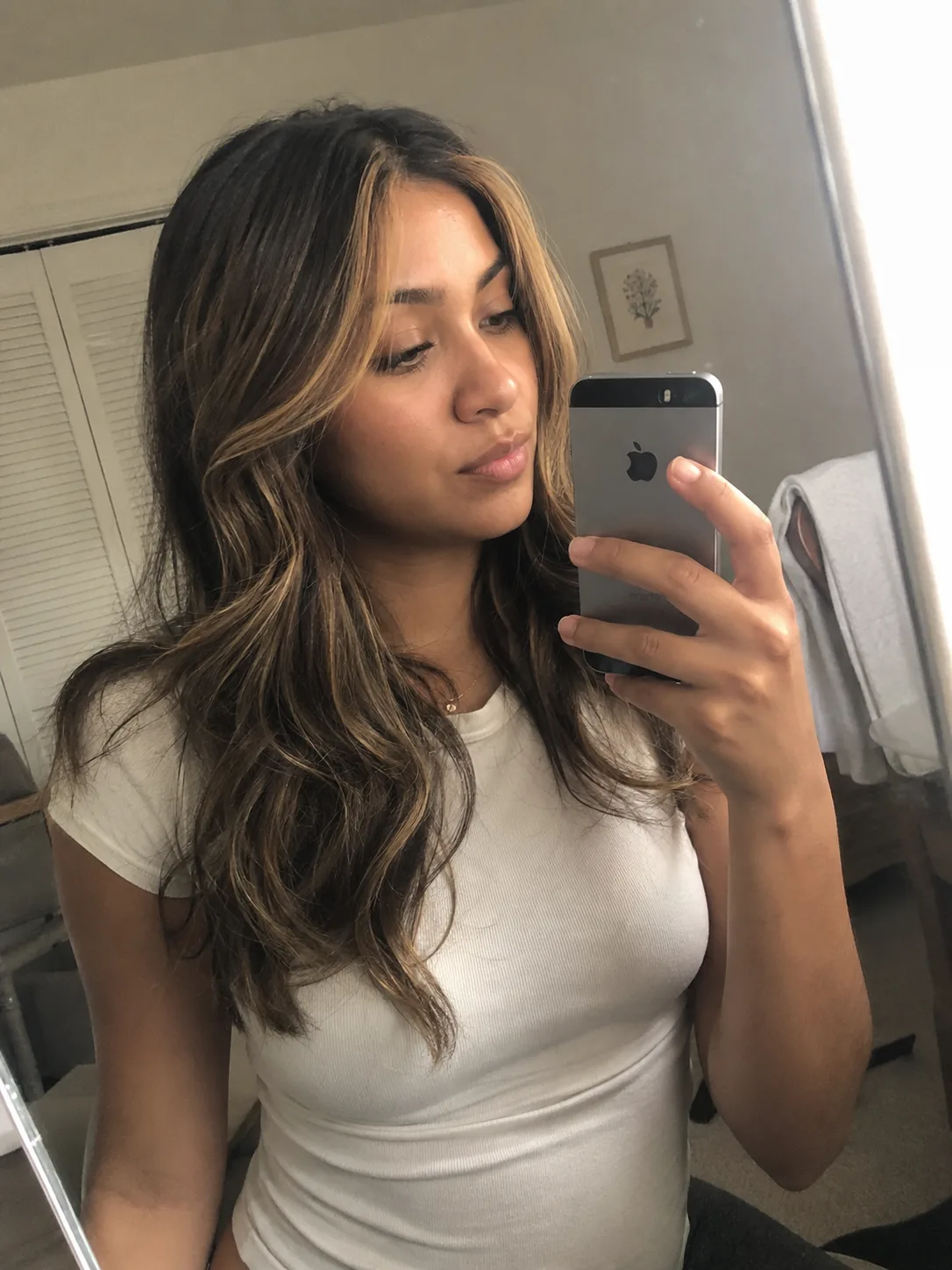
Mushroom brown sits in a cooler, muted part of the brunette family. It works best as inspiration for someone drawn to taupe, ash-brown, and softly smoky tones rather than golden warmth.
Balayage placement keeps the roots visually deeper while the cooler brown becomes more apparent through the lengths. The effect is quieter than high-contrast blonde balayage and can look especially dimensional on waves.
Cool brunette targets can drift warmer as color fades or underlying warmth becomes more visible. That makes tone maintenance a bigger part of this choice than the understated photograph may suggest.
Chestnut Brown With a Warm Face Frame
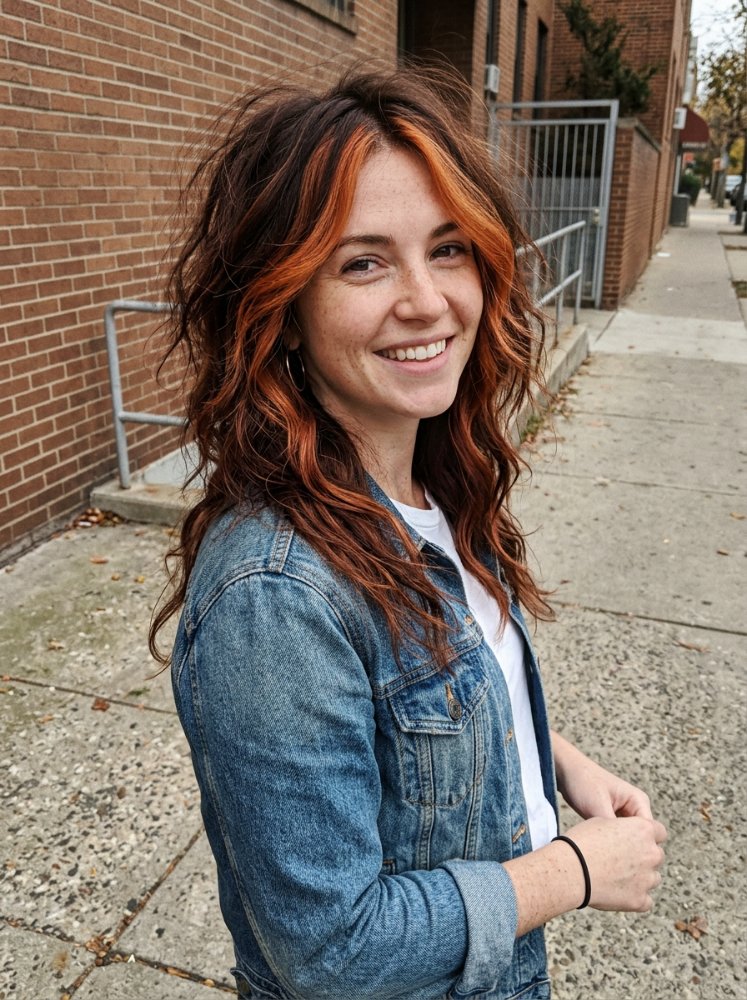
A chestnut base gives brunette hair a warmer direction without taking it all the way into obvious copper. Add slightly brighter warmth around the face and the color gains a clear focal point.
This is particularly useful when you like your existing brunette depth and don’t want extensive lightening throughout the back of the hair. The front pieces carry much of the visible change.
Keep the face frame proportionate to the haircut. A very broad bright section can dominate a short bob, while longer layered hair can support a wider area of color without making the front look disconnected.
Blonde and Bronde Ideas With Different Levels of Contrast
Honey Bronde Balayage
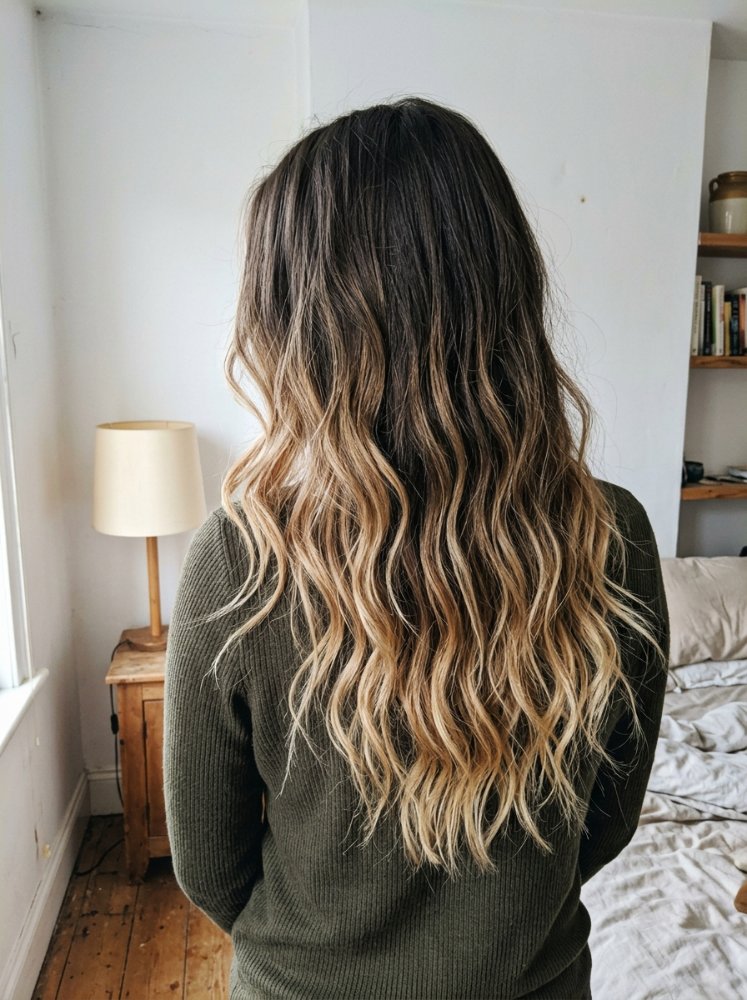
Bronde occupies the useful middle ground between brunette and blonde. Honey bronde keeps plenty of brown visible while introducing golden lighter sections through the lengths.
This is a practical direction for someone who likes blonde movement but doesn’t want the roots to read fully blonde. Balayage placement can preserve depth near the scalp, which also makes the grow-out visually softer than a solid light color.
The finished warmth should be intentional. Hair that starts very dark or contains artificial pigment may reveal strong warm stages during lightening, so your condition and color history determine how close a particular inspiration photo is as an immediate target.
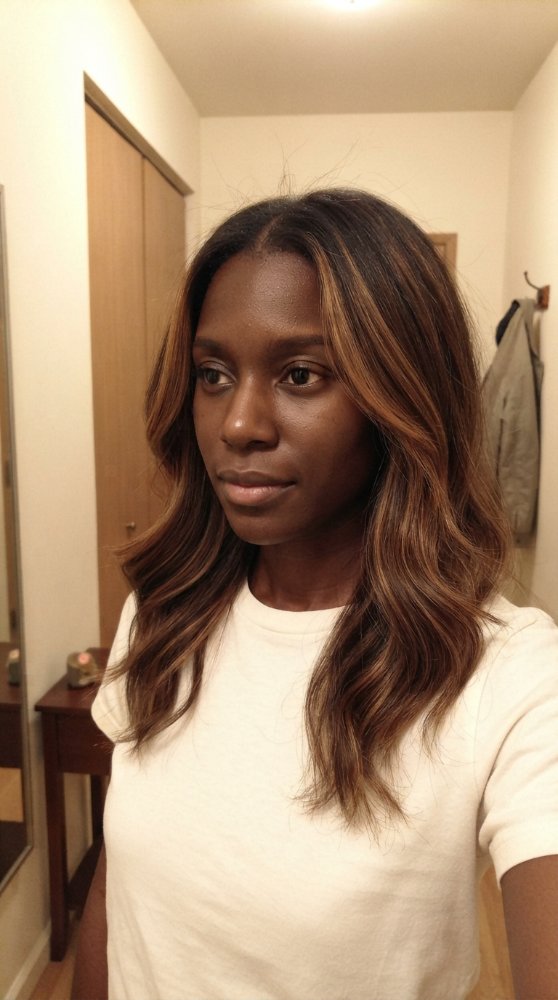
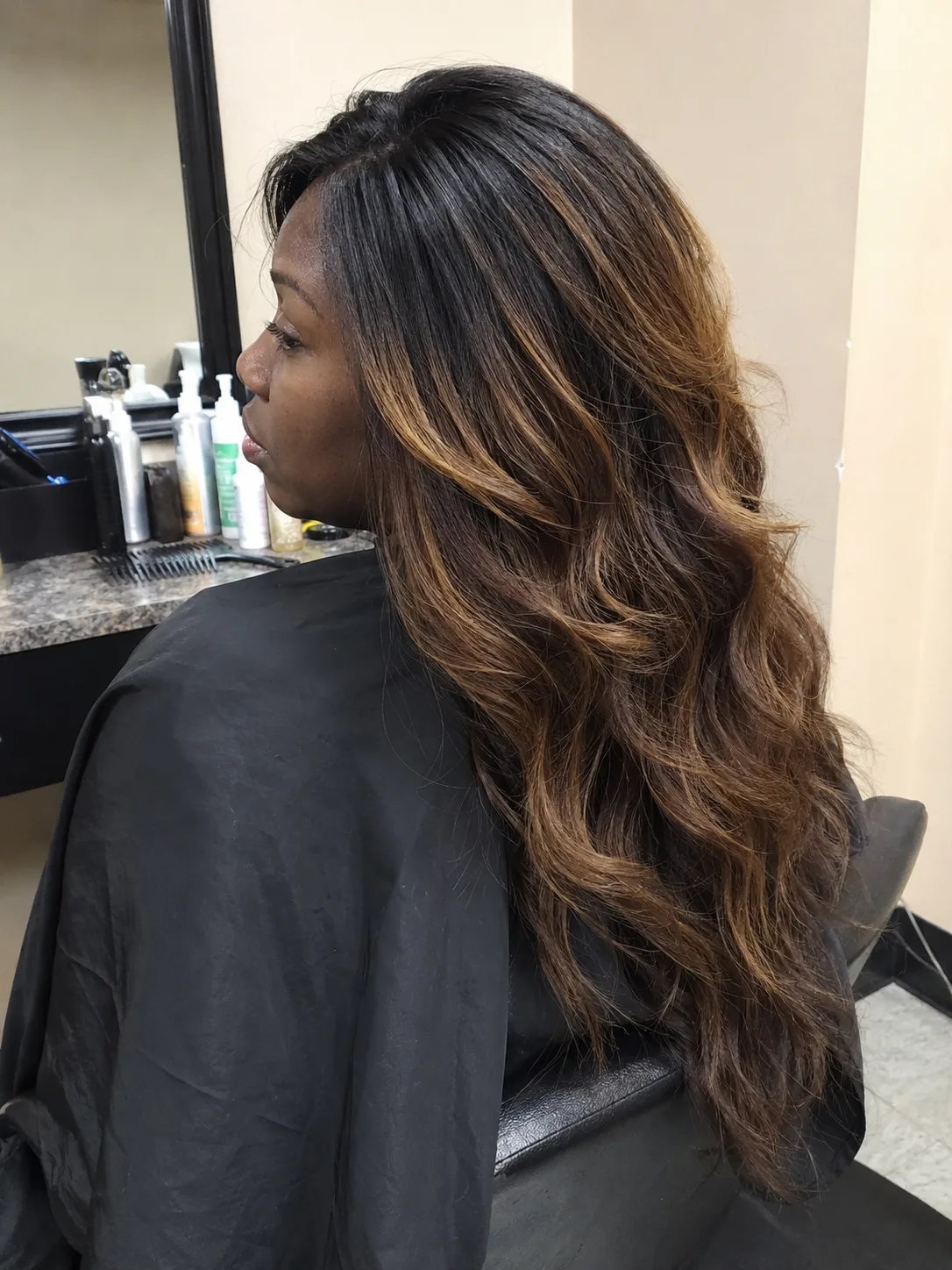
Caramel Melt on Dark Brunette
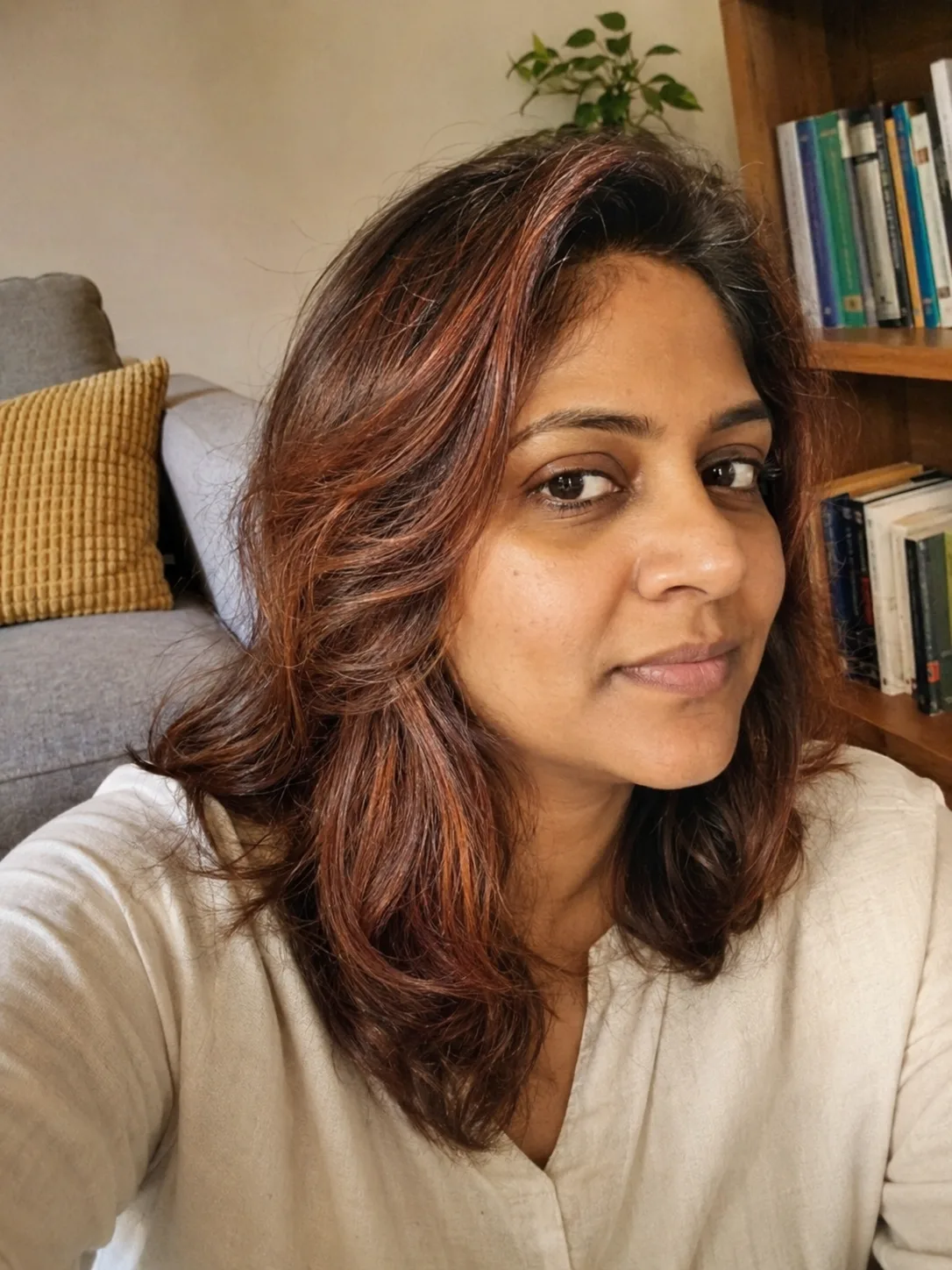
Caramel creates more obvious warmth and contrast against a dark base than many bronde looks. The color tends to look strongest where several lighter pieces gather through the mid-lengths and ends, with a more blended transition higher up.
Curly and wavy hair can show this type of placement especially clearly because different sections become visible as the hair bends. Shrinkage changes where those lighter pieces appear in the finished shape, so curly and coily hair should be assessed in the state you normally wear it.
A caramel melt is worth the extra lightening only when you actually want warmth to remain part of the look. Someone constantly trying to neutralize every trace of gold may be happier choosing a cooler target from the beginning.
Beige Blonde With a Shadowed Root
A deeper root gives beige blonde some breathing room. Instead of trying to make every visible strand equally light from scalp to ends, the root area stays darker before transitioning into softer neutral blonde.
That construction makes the hairstyle look dimensional even when it’s worn straight. It also changes the way new growth appears because the color already contains deliberate depth near the scalp.
Beige should still be chosen in relation to what the hair can realistically support. Previously lightened lengths may respond differently from untouched roots, and repeated lightening simply to chase a paler reference image can work against the condition needed for the blonde to look good.
Bright Blonde Face Frame
A bright face frame concentrates the lightest color where it will be seen most. The rest of the hair can remain brunette, bronde, or a deeper blonde, creating a dramatic shift without making every section equally light.
This placement is especially effective with curtain fringe, face-framing layers, ponytails, and tucked-behind-the-ear styles. Pulled-back hair exposes the contrast clearly.
The front hairline can also be a delicate area, particularly where strands are already fine, fragile, or previously processed. Let condition influence how bright and wide the section becomes rather than assuming the biggest possible money piece will produce the strongest result.
High-Contrast Blonde Color Blocks
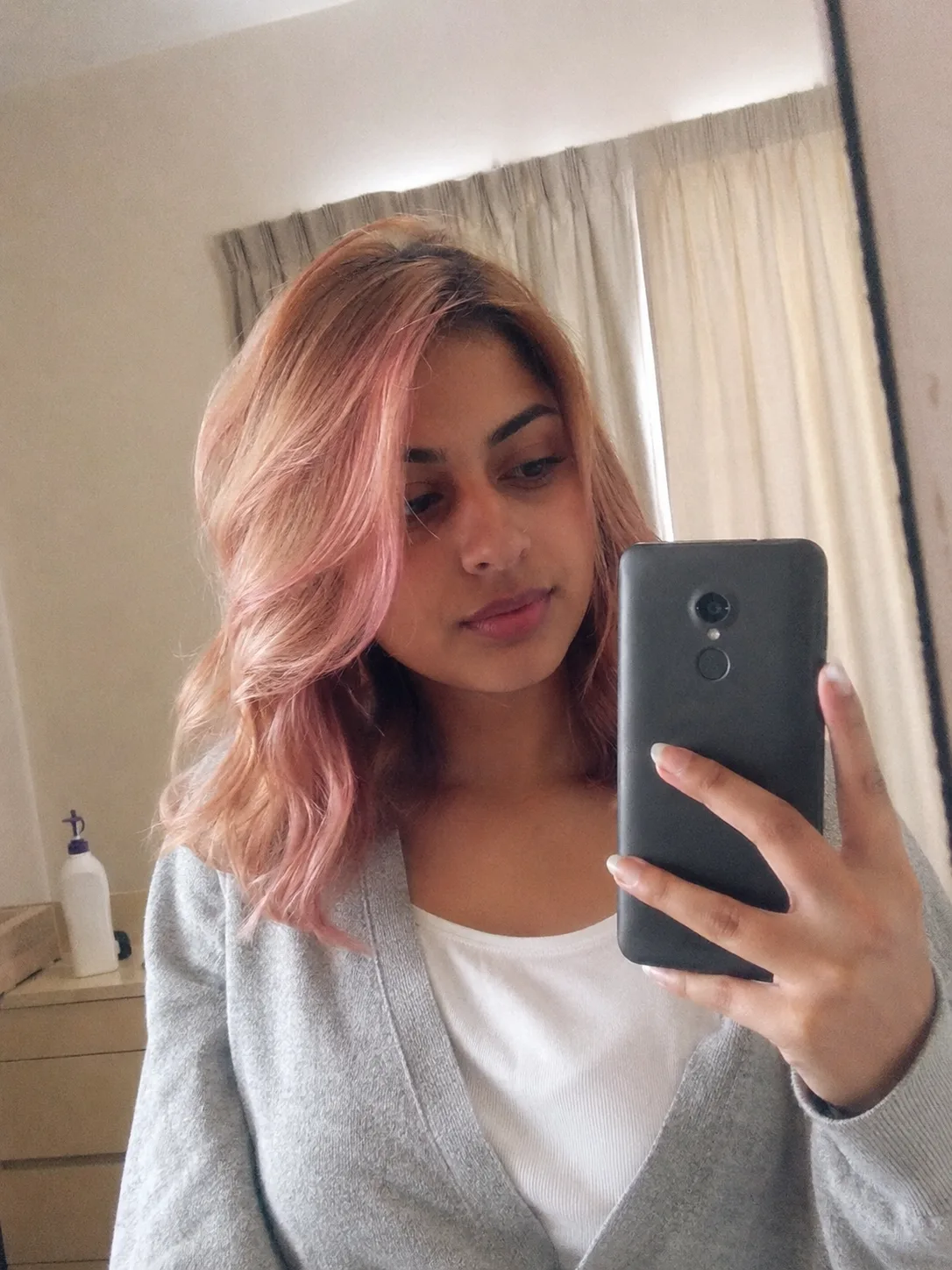
Chunkier blonde panels deliberately reject a seamless blend. Darker hair remains clearly visible beside lighter sections, creating a graphic pattern that moves as the hair is parted or styled.
The effect depends heavily on placement. A large panel beneath the top layer can flash through movement, while sections placed near the temples or fringe remain visible much more consistently.
This is one of the strongest options in the list when you want placement itself to be part of the hairstyle. Choose it because you enjoy contrast, not because you’re hoping it will eventually resemble conventional blended highlights.
Copper, Auburn, and Red-Toned Hair Dye Inspo
Full Copper
Few natural-looking color families make as immediate a statement as an all-over copper. The entire head participates in the change, so there’s nowhere for the shade to hide.
Bright copper is strongest on hair that has enough visible warmth and lightness to support the target. A dark starting base may require more transformation than the final photograph reveals, especially if old artificial color is present.
Copper also changes visibly as it fades. Someone who enjoys watching the tone move from vivid to softer and warmer may find that easier to live with than a person who expects the day-one shade to remain visually unchanged.
Cinnamon Copper Balayage
Cinnamon copper uses warmth as dimension rather than making the whole head the same orange-red family. Brunette depth remains visible between warmer sections, giving the result a darker foundation than full copper.
This approach is particularly attractive on layered, curly, and wavy hair because the lighter warmth appears at different heights as the hair moves.
It can also be a more flexible transition for someone unsure about committing to a completely copper root area. The natural or deeper base still plays a major role in the final look.
Deep Auburn Brunette
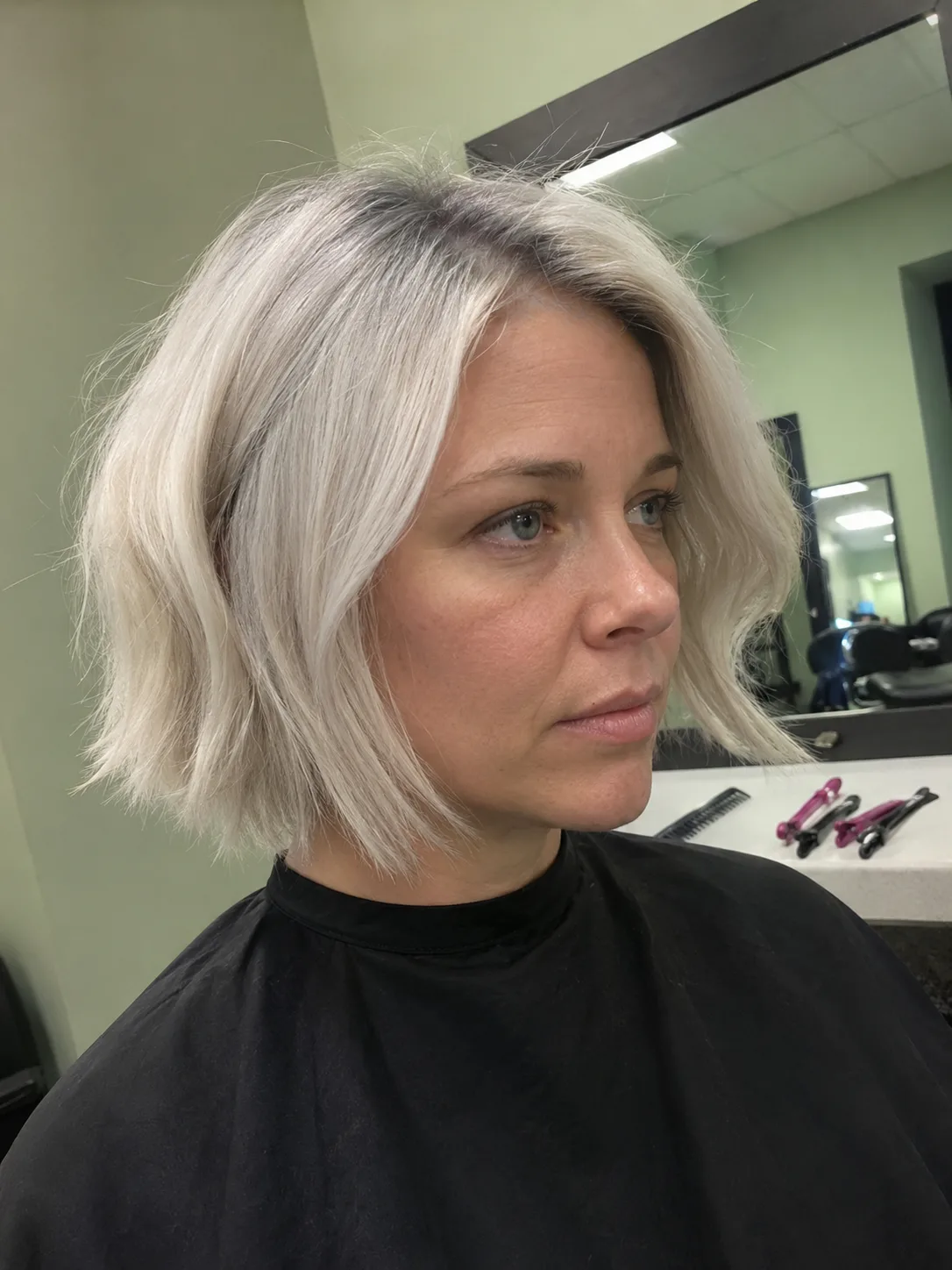
Auburn lives closer to brown than bright copper does. In lower light, it can read as rich brunette; direct light reveals more red warmth.
That subtle shift is the reason to choose it. Auburn suits someone who wants red to emerge through the hair rather than dominate immediately from across the room.
Starting depth changes the visible result substantially. A very dark base may produce a much deeper interpretation than a medium-brown starting point, so compare inspiration photos taken in more than one lighting condition before settling on the target.
Cherry Cola Brunette
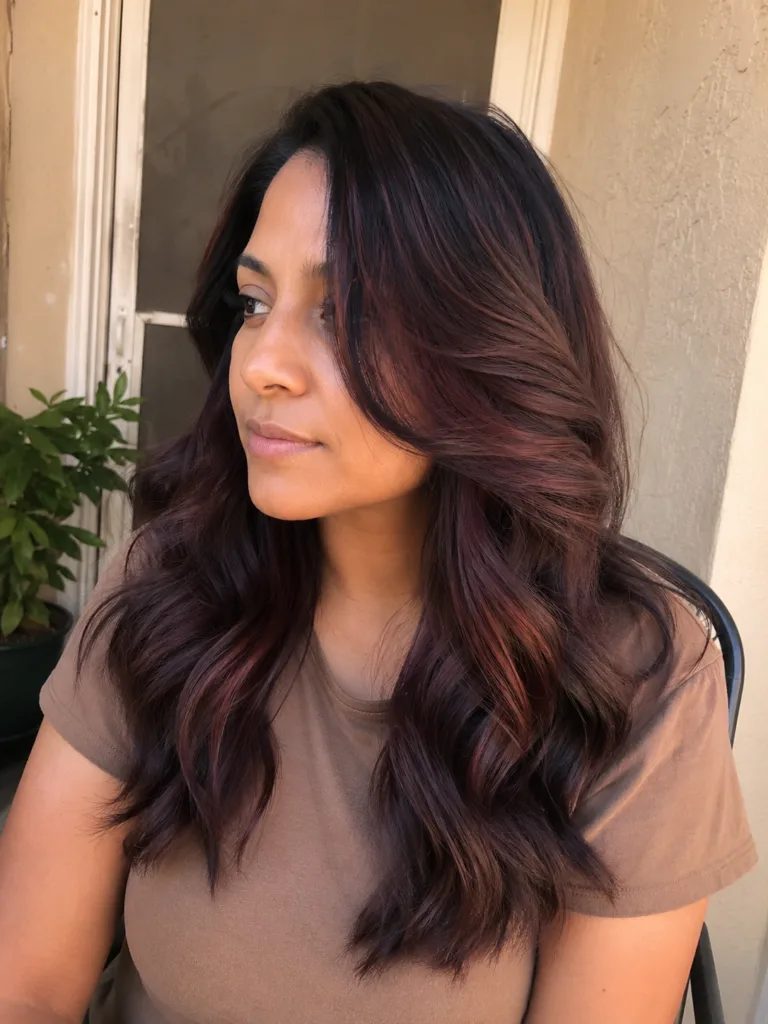
Cherry-cola color pushes brunette toward cooler red and berry tones instead of orange copper. The brown base keeps it dark, while the red becomes more apparent where light hits the surface.
It looks particularly strong on smooth waves and curls because each bend catches a slightly different amount of red.
This shade family is a smart option for someone who wants obvious color without moving toward blonde. It still requires a conversation about artificial pigment and future changes; a rich red-brown today can influence what is possible during a later lightening service.
Burgundy Ombré
Burgundy ombré keeps the darkest color closer to the scalp and shifts into wine-red through the lower lengths. Unlike all-over burgundy, the design has an obvious vertical transition.
Longer hair gives that transition more space, but medium lengths can carry it too when the blend begins high enough to be visible. Very short cuts provide less room for a true dark-to-burgundy progression.
The placement is useful for anyone who wants the color concentrated away from the scalp. The ends, however, may already be the oldest or most processed part of the hair, so their condition deserves attention before using them as the brightest area.
Rose Brown
Rose brown takes brunette in a softer pink direction. The overall impression is muted and wearable compared with a saturated hot pink, but the rosy cast is still deliberate.
This shade is especially interesting for someone who likes creative color yet wants the finished hair to remain grounded in brown. It can range from barely rosy to clearly pink-brown depending on the starting base and target.
Photographs of rose brown vary dramatically with lighting, so collect references that show the shade indoors as well as in daylight. A dusty neutral rose and a bright berry brunette shouldn’t be treated as the same target.
Dark Creative Colors That Keep Some Depth
Smoky Plum
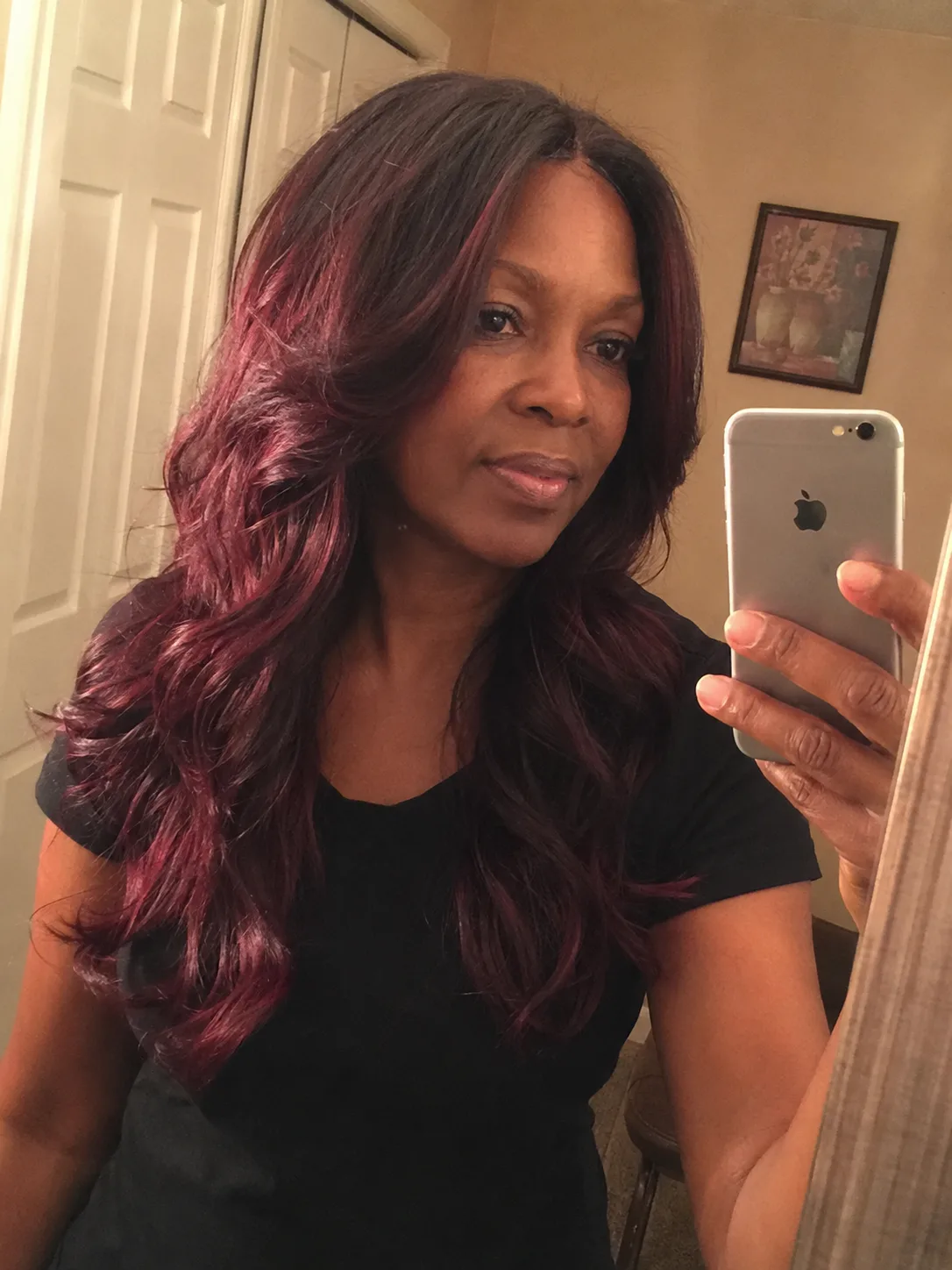
Plum combines violet-red color with enough depth to stay moody rather than neon. On dark hair, it may reveal itself most strongly under brighter light; on a lighter starting base, the purple can become substantially more visible.
This makes plum a useful creative direction when you want something outside traditional brunette without immediately moving into pastel territory.
Decide how purple you want the hair to read before your appointment. A reference that looks nearly brunette in shade and visibly violet in sun represents a different goal from a saturated purple result under ordinary indoor lighting.
Midnight Blue-Black
Midnight blue-black relies on subtle blue reflect against a very dark background. From a distance the hair can appear black, while direct light exposes the cooler cast.
The restrained version is more about sheen than obvious blue sections, which makes it quite different from teal or cobalt creative color.
Very dark artificial pigment can complicate future lightening. This is therefore better inspiration for someone genuinely comfortable staying on the deeper side for a while than someone already imagining a pale blonde transformation next.
Teal Peekaboo Underlayer
A teal underlayer hides much of the creative color beneath the top section of hair. It becomes visible through movement, half-up styles, braids, tucked sections, and ponytails.
That conceal-and-reveal effect is the whole point. You can keep the surface closer to your natural or preferred everyday shade while introducing a much stronger color underneath.
Teal usually needs an appropriate underlying lightness to appear bright and clean. Hair condition and previous pigment determine what level of contrast is realistic. Underlayers also deserve proper drying and detangling attention; being hidden doesn’t make those strands maintenance-free.
Magenta Color-Block Panels
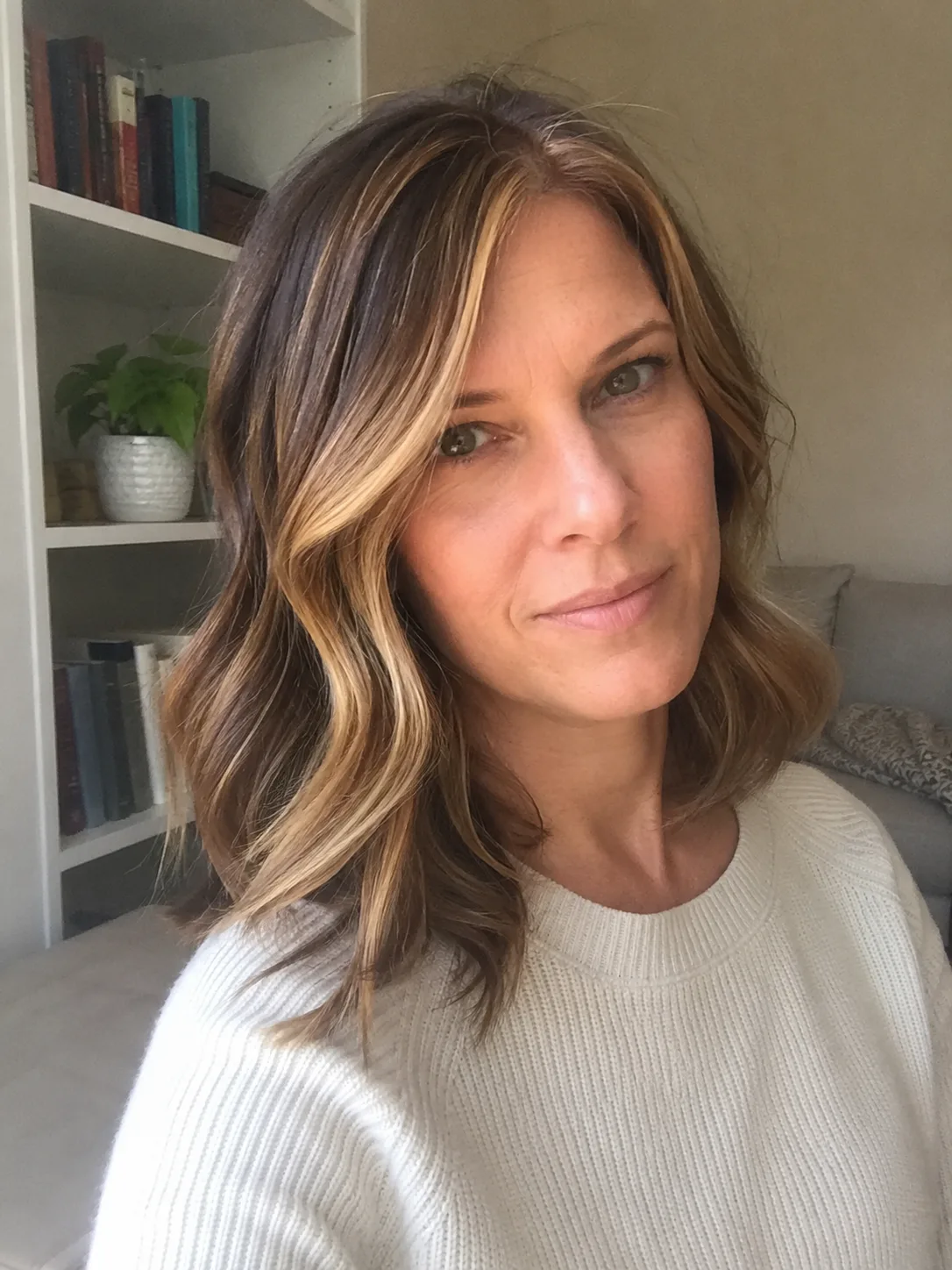
Magenta works especially well as a deliberately isolated panel because saturation gives it enough visual strength to stand beside dark brunette or black hair.
Place the panel where you want the attention. A front piece becomes part of nearly every hairstyle, while a side or interior panel appears and disappears as the hair moves. Changing the part can alter the composition dramatically.
This is more practical than all-over vivid color for someone who wants a concentrated statement, but the selected section may still require significant pre-lightening depending on the target and starting base.
Pastels and High-Lightness Color Ideas
Lavender
Lavender offers one of the clearest examples of a final color photograph hiding the work underneath. Pale purple generally depends on a sufficiently light, suitable base; putting lavender dye over dark hair won’t create the same pastel result seen on pre-lightened inspiration photos.
The condition of the hair therefore matters as much as the purple shade itself. Previously lightened hair may have areas with different porosity, which can affect how evenly a delicate tone appears and fades.
Lavender is strongest as inspiration when you value the pale finish enough to accept that the underlying lightness is part of the project, not an invisible technical detail.
Peach Pastel Melt
Peach sits between pink and orange, giving pastel hair more warmth than lavender or silver. A melt can keep the root slightly deeper before moving into soft peach through the lengths.
The warm direction makes this visually different from an icy pastel, even at a similar level of lightness.
Pastels tend to make the condition and porosity of lightened hair particularly visible because there isn’t much depth to disguise unevenness. Bring references that show the peach intensity you like; barely tinted blonde and saturated pastel peach create very different impressions.
Placement-First Creative Hair Dye Inspo
Hidden Rainbow Underlayer
The hidden rainbow is less about choosing one shade and more about constructing a concealed multi-color section. The surface remains comparatively conventional, while lifting or moving the upper hair exposes several vivid colors underneath.
This is the most technically ambitious placement on the list because several colors need enough separation to remain visually distinct. How those colors interact during cleansing and fading also deserves consideration.
It works especially well for someone who enjoys styling the hair in ways that deliberately reveal the underside. Worn down and still, much of the work may stay hidden.
A restrained surface with a highly expressive interior is the appeal. Decide whether that occasional reveal feels exciting or frustrating before choosing a design whose most dramatic feature isn’t visible all the time.
Dip-Dyed Vivid Ends
Dip-dyed ends create a sharp or softly blended color change close to the perimeter while leaving the root area largely untouched. Pink, blue, purple, red, or another vivid shade can all work; the defining feature is where the color sits.
This is one of the clearest creative options for someone who doesn’t want new growth to become the central maintenance issue.
The ends are also the portion of long hair most likely to have accumulated previous weathering, heat exposure, or chemical history. Transparent or fragile ends may not be the strongest canvas for repeated lightening. In that case, improving the perimeter or changing the target may make more sense than forcing a vivid result onto compromised hair.
Smoky Silver Gray Blending
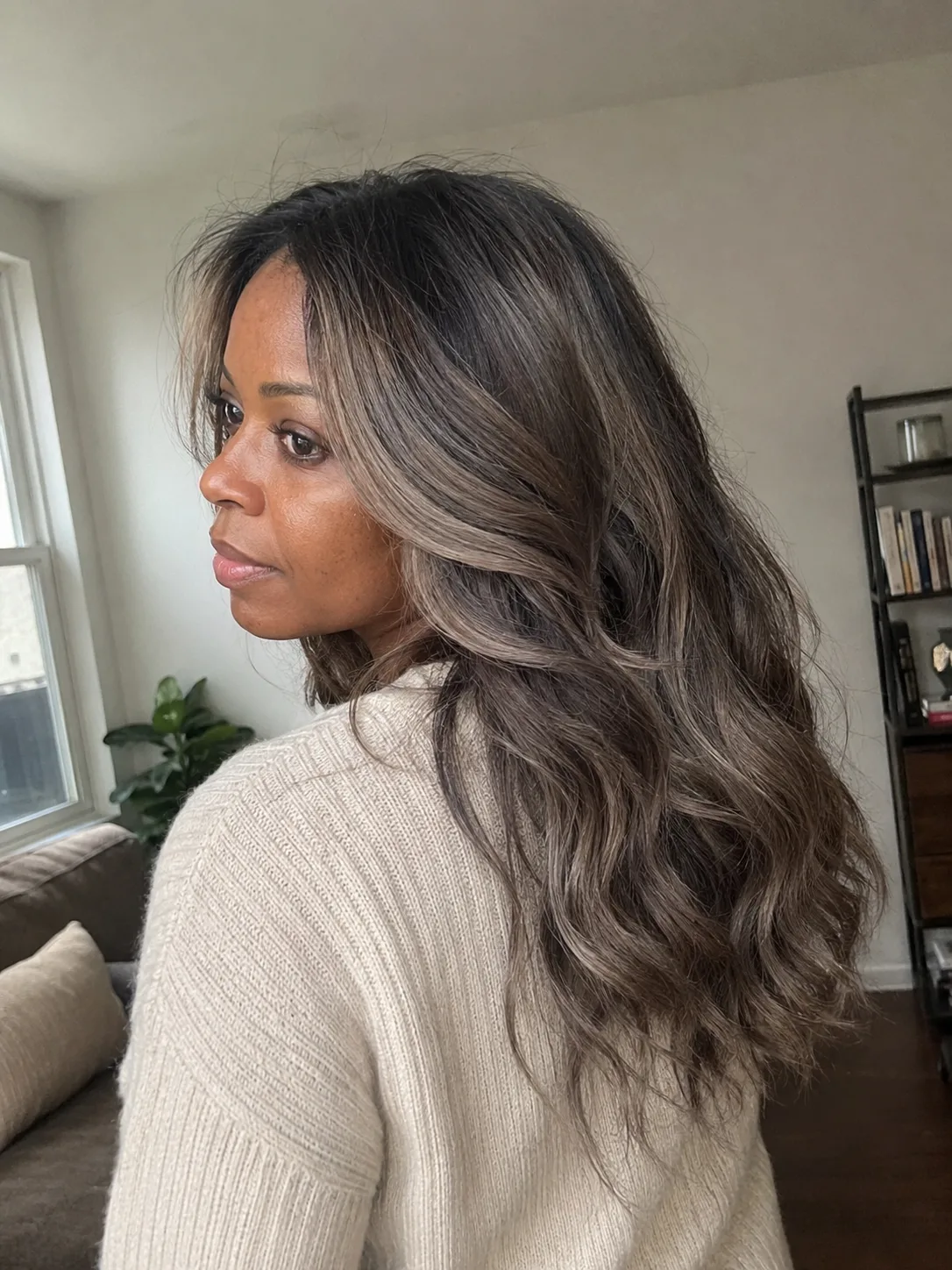
Silver-gray inspiration can work very differently for someone with naturally graying hair than for someone trying to create silver on fully pigmented hair. Existing gray strands contain less pigment, but gray describes pigment loss rather than a particular texture or condition.
For naturally gray hair, strategic cooler pieces can help connect brighter silver areas with darker pigmented sections. The aim may be blending rather than completely covering what is already growing in.
Creating a pale smoky silver on darker pigmented hair is a different transformation because the underlying hair may need substantial lightening before the cool target is visible. Previous permanent color can make the route more complicated.
This is a good example of why one reference image can represent two very different salon plans. Bring photos of the color pattern you like and be clear about whether you want to emphasize natural gray, soften the contrast of grow-out, or create an intentionally silver result.
How to Narrow 25 Ideas Down to One
Start by deciding where you want the change to live. All-over brunette, copper, or black makes the new shade part of the entire hairstyle. A face frame puts attention at the front. Balayage moves the change into the lengths. Underlayers and dip-dyed ends leave much more of the root area visually untouched.
Then choose your acceptable level of contrast. Mushroom brown and subtle chestnut sit relatively close to brunette territory. Blonde blocks, vivid underlayers, and magenta panels make the placement obvious on purpose.
Your starting hair is the third filter. Natural dark hair, previously lightened hair, permanently darkened hair, relaxed hair, and hair with other chemical history shouldn’t be treated as interchangeable canvases. Condition and porosity can change the safest route as well as the final appearance.
One useful consultation question is: What part of this photograph do I actually love?
It may be the shade, but it might instead be the dark root, bright face frame, warm dimension, hidden panel, or contrast between two colors. Identifying that feature makes it much easier to adapt an inspiration image to your own hair.
What Hair Dye Photos Usually Don’t Show
A finished photograph captures a moment. It rarely tells you what the hair looked like before the service, whether artificial pigment had to be addressed, or whether the target required more than one stage.
Lighting also changes color dramatically. Auburn may look brunette indoors and fiery outside. Blue-black can look nearly neutral until light catches it. Beige blonde can appear cooler or warmer depending on the environment and camera processing.
Texture changes visibility too. Straight hair shows color placement in broad uninterrupted areas. Waves break those areas into ribbons. Curls and coils can reveal different pieces as they shrink and group together, so placement should be evaluated in the styling state you normally wear.
The photograph also can’t tell you how the color will look several washes later. Reds, vivid colors, cool brunettes, and toners can all shift visually as they fade. Choose a color whose softer stages you can tolerate, not only one whose fresh salon photograph you love.
Plan the Color Around the Hair You Already Have
Chemical history deserves a straightforward conversation before a major change. Mention permanent color, previous lightening, relaxers, and other chemical processing even when the hair currently looks healthy.
Hair that has already been lightened through the lengths doesn’t behave exactly like untouched new growth. Porosity can vary from area to area. A dramatic blonde or pastel target may therefore require a different plan from the one suggested by a single inspiration photograph.
Fine strands and low density also describe different things. Fine hair has a smaller strand diameter; low-density hair has fewer strands overall. Neither term automatically tells you whether a particular color is suitable, but both can influence how the finished hair looks and how conservative the processing plan should be.
With curly or coily hair, take shrinkage into account when choosing placement. A highlight positioned to sit near the cheek on stretched hair may land elsewhere once the curls return to their usual shape. Color planning works better when the stylist understands how you actually wear your hair.
Maintenance Should Influence the Inspiration You Save
Color maintenance isn’t only about how frequently you visit a salon. Think about what happens between appointments.
All-over color makes new growth part of the visual change. Balayage and ombré usually leave more depth near the root. Vivid panels may fade into noticeably different shades, while pastel colors can lose saturation quickly enough that you need to enjoy the softer version too.
Cleansing routine, swimming, frequent heat styling, sun exposure, and the condition of the hair all influence how the color behaves. There isn’t one wash schedule or product category that suits every dyed head of hair.
You also don’t need to keep chasing brightness with more lightener when the issue is simply an unwanted tone. Color correction, toning, refreshing pigment, and additional lightening solve different problems. Let the actual condition and visible result determine the next step.
Sudden shedding, scalp pain, sores, persistent irritation, or a concerning change in density is separate from ordinary color maintenance. Those symptoms are worth discussing with a dermatologist or another qualified healthcare professional rather than trying to diagnose the problem through a dye routine.
A Better Salon Consultation Checklist
Before committing to your favorite hair dye inspo, be ready to discuss:
Your current natural and artificial color
Previous lightening or other chemical services
The styling state you wear most often
The lightest and darkest parts of the reference you want to keep
Whether you prefer blended or obvious placement
How much visible root change bothers you
Whether you expect to go significantly lighter or darker again later
Any areas that already feel fragile or behave differently from the rest of your hair
Bring more than one photograph when possible. One image can show the overall tone, another the placement, and another the level of contrast you prefer. The photographs don’t need to depict identical hair; their job is to make your priorities clearer.
A good target is one that still makes sense after your starting color, condition, chemical history, and preferred upkeep are taken into account.
Related Hairstyles to Explore
FAQs
What hair dye color is easiest to try if I don’t want a drastic change?
A brunette shift close to your existing depth is usually a more restrained starting point than high-contrast blonde or vivid color. Chocolate ribbons, chestnut warmth, mushroom brown, or a subtle espresso direction can change the appearance without making lightness the main feature. Your existing artificial color still affects what is practical.
Can I use blonde or pastel hair dye inspo if I have naturally dark hair?
Yes, but treat the image as a target rather than proof that the same result can be produced directly on dark hair. Bright blonde and pale pastel shades generally depend on sufficient underlying lightness. Artificial dark pigment, previous processing, and hair condition can change whether the transformation is appropriate in one stage or better approached differently.
Which hair dye ideas grow out with less obvious root contrast?
Balayage, ombré, hidden underlayers, dip-dyed ends, and some shadow-root designs keep more of the original or deeper color near the scalp. They tend to make the root transition less central than a dramatically different all-over color. Placement still needs to be adapted to your haircut and natural base.
Does curly or coily hair need different color placement?
It often benefits from placement planned around the way the curls or coils actually sit. Shrinkage, curl grouping, density, and the usual styling state affect which colored pieces remain visible. Assessing the finished pattern on hair worn close to its normal state helps prevent strategically placed highlights from disappearing into the shape.
Hair Texture & Upkeep Style Matcher
Select your natural hair texture and daily maintenance window to get an instant styling formula and heat safety cap.
Heat Cap: 320°F (160°C)
A versatile three-strand braid beginning at the parietal ridge, securing the top half while allowing natural wave texture to flow freely around the shoulders.
Conclusion
The strongest hair dye inspo choice is rarely the shade you like in isolation. Decide whether you want an overall transformation, dimensional lightness, a bright focal point, or creative color that appears only through certain sections of the hair.
Then compare that visual goal with your current base, chemical history, condition, and willingness to maintain the result. A well-chosen espresso brunette can be more transformative than poorly matched blonde, while a single magenta panel may deliver more personality than coloring the entire head.
Save the photos that capture the placement and contrast you want, not merely an appealing color name. That gives you a much clearer starting point for deciding what your own version of the look should be.
Editorial Standards & Hair Health Guidance
Every style featured on Tress Atlas is curated with a focus on real-world wearability, scalp tension management, and cuticle preservation. When trying protective styles or tight updos, ensure perimeter hairline sections remain tension-free to avoid traction stress on delicate follicles. For heat styling, cap tools below 350°F (180°C) to prevent thermal keratin denaturation.
Scientific Sourcing: Practices aligned with the American Academy of Dermatology (AAD) on traction alopecia risk reduction and cosmetic trichology research on hair tensile strength.