Hairstyles Over Locs: Complete Styling & Technique Guide
Hairstyles over locs let you temporarily change the visible texture, length, or overall shape of your hair while keeping your existing locs underneath. The term is commonly used for services such as box braids, knotless braids, twists, crochet styles, and other installations worked over existing locs.
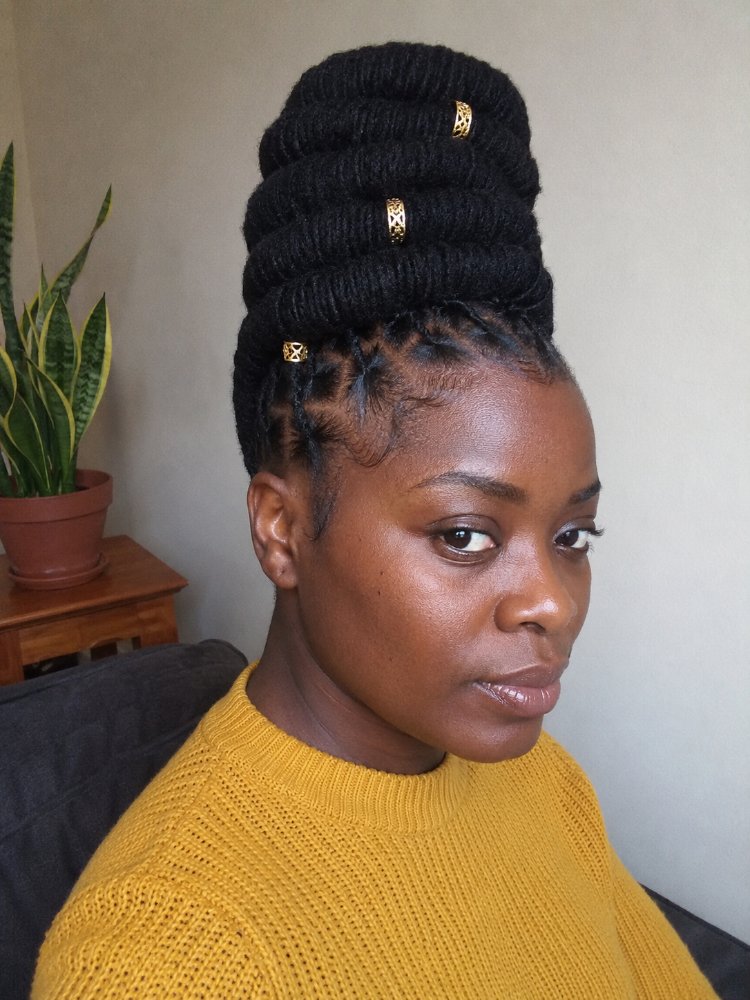
The biggest decision isn’t simply which style looks good in a photo. Your loc thickness, length, maturity, density, and current condition determine how much hair can be tucked away comfortably. Added hair then introduces another variable: weight.
A style that looks light and fluid on loose natural hair may become much fuller over locs because the installation has to accommodate hair that’s already formed into locs. That extra bulk can be attractive, but it changes how braids fall, how wigs sit, how quickly the roots dry, and how much pulling you feel around the perimeter.
| Style family | Visible result | Main consideration |
|---|---|---|
| Braids over locs | Defined individual braids | Root bulk and added-hair weight |
| Twists over locs | Softer, fuller texture | How securely locs stay enclosed |
| Crochet styles | Loose curls or textured volume | Foundation thickness and scalp access |
| Wigs and hairpieces | Maximum visual change | Keeping the base flat without excessive compression |
Braided Hairstyles Over Locs
Classic Box Braids Over Locs
Box braids are one of the clearest ways to make locs temporarily read as loose-hair braids. Existing locs are incorporated into individual braided sections and concealed with braiding hair, producing the familiar separated box-braid finish.
Medium-to-large sections are often the more practical direction because every loc already contributes thickness. Trying to create an extremely tiny braid over a comparatively substantial loc can produce an awkward mismatch between the base and the finished braid.
Length deserves equal attention. A dramatic long braid carries both the loc underneath and the added hair around it, so the final installation can feel more substantial than conventional box braids. A moderate length is the stronger default when comfort and easy movement matter more than maximum drama.
Knotless Braids Over Locs
Knotless braids appeal to readers who want a smoother transition at the root and less of the obvious knot associated with traditional extension braids. Over locs, however, the technique still needs enough room to accommodate the existing loc at the base.
The finished result tends to work better when the braid size makes sense for the loc underneath. Forcing a chunky loc into an unusually slim braid creates unnecessary bulk and makes the root harder to disguise cleanly. Choose the finished braid size from your actual loc structure, not from a loose-hair reference photo.
Boho Braids Over Locs
The loose curls scattered through boho braids change where your eye lands. Instead of scrutinizing every braid for perfect uniformity, the curly pieces add softness, movement, and an intentionally less rigid outline.
That makes boho construction useful when completely concealing every bit of loc texture would otherwise require a lot of added hair.
The loose pieces bring their own maintenance, though. They can tangle against the braid lengths, clothing, and one another. The style makes the most sense when you’re comfortable separating and caring for those loose fibers without repeatedly tugging on the braided base.
Fulani-Inspired Braids Over Locs
Fulani-inspired arrangements combine visible scalp braiding at the front with hanging braids, curls, or another finish behind. Crochet variations over locs are also seen in current styling work.
This is more construction-dependent than ordinary individual braids because the front pattern has to work with the placement of your locs. A reference image created on loose hair may show narrow cornrows or intricate parting that can’t be copied literally without forcing your locs into unsuitable sections.
A simplified front pattern is often more convincing than squeezing in every decorative row from the inspiration picture.
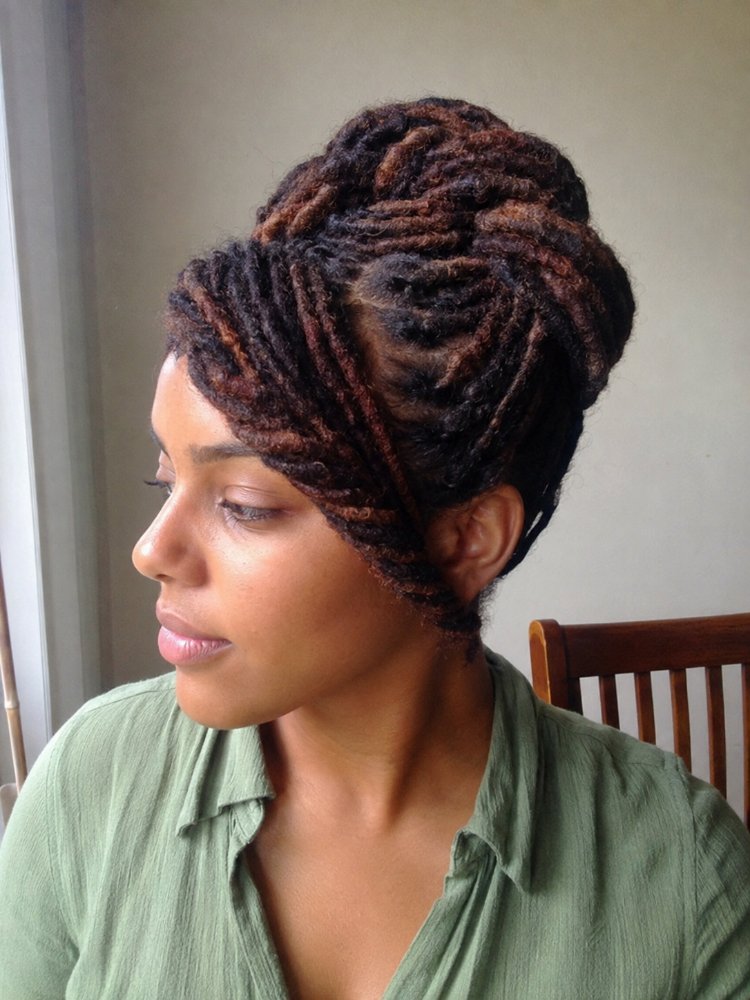
Braided Bob Over Locs
A bob trades dramatic extension length for a compact shape around the jaw, neck, or shoulders. That shorter outline can make an over-loc braid installation easier to reposition throughout the day and keeps long extension hair away from backpack straps and seatbelts.
The catch is visual density. Short braids don’t have a long vertical line to disperse their fullness, so thick locs underneath can make the bob appear rounder or wider than expected. Decide whether you want that substantial shape before focusing on the exact stopping point.
Twists and Soft-Texture Styles
Marley or Havana Twists Over Locs
Marley and Havana-style twists are a useful alternative when you want a softer, rope-like finish rather than the sharper separation of box braids. The textured extension hair also works visually with a fuller base, so the installation doesn’t depend on every section looking extremely slim.
This is one of the stronger choices for locs that would make delicate braids look disproportionately small. Keep the finished length and added-hair density sensible so the style gains texture without becoming unnecessarily heavy.
Passion Twists Over Locs
Passion twists introduce bends, loops, and a slightly undone texture. That irregularity is an advantage over locs because the finished style doesn’t rely on perfectly smooth, identical ropes.
Construction still matters. A stylist has to keep each loc contained without repeatedly squeezing or twisting it just to achieve a narrow section.
The looser finish also creates more surface friction than a smooth braid. Clothing, scarves, and sleeping can disturb the curly texture, so passion twists suit someone who likes a lived-in finish as much as the freshly installed version.
Smooth Rope Twists Over Locs
Rope twists create a cleaner, more uniform line than passion or Marley twists. Their appeal is simplicity: consistent twisted lengths give the hair plenty of movement without the extra loose curls of boho styling.
That cleaner finish can also expose construction problems more quickly. A very bulky root followed by an unexpectedly skinny twist is noticeable. Matching the twist diameter to the loc beneath it produces a more balanced result.
This look is worth choosing when you want the visual effect of long twists but prefer fewer free curls to detangle and separate.
Crochet and Full-Coverage Options
Curly Crochet Hair Over Locs
Curly crochet gives you a dramatic texture change without requiring every visible length to be individually braided. The locs are arranged into a foundation, and crochet hair creates the outer layer.
The main limitation is the base. Long or thick locs still have to go somewhere. Packing them tightly against the scalp just to imitate an ultra-flat loose-hair crochet foundation can make the finished style uncomfortable. Fuller curls are often more forgiving because they visually accommodate a little more foundation volume.
Half-Up, Half-Down Crochet Over Locs
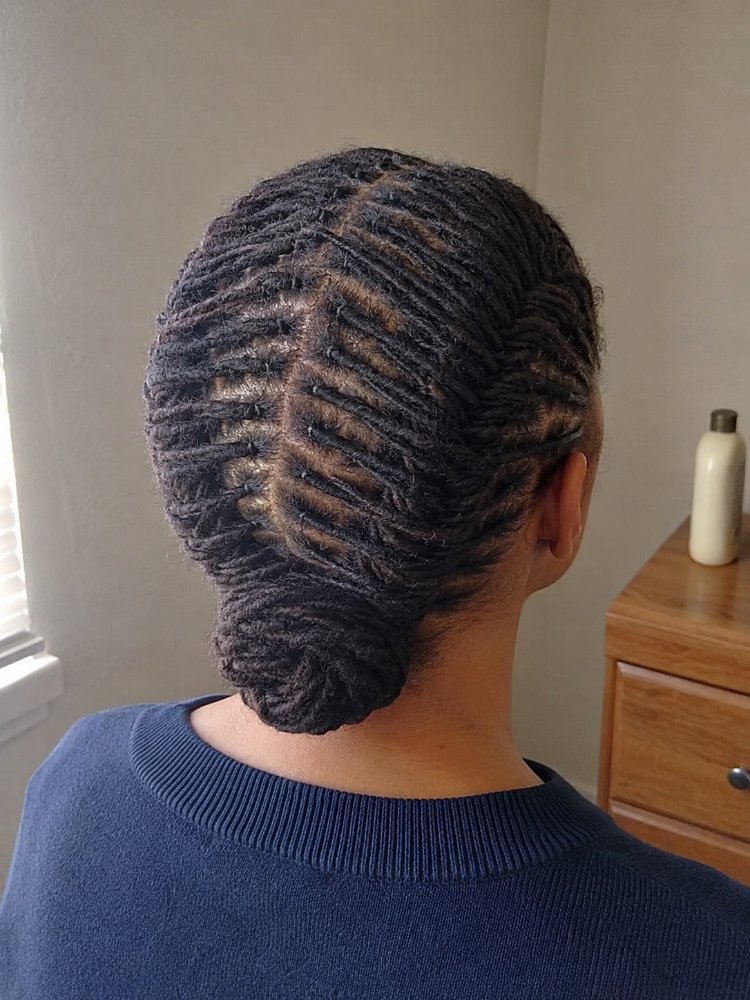
A half-up crochet style divides the visual weight instead of sending every curl downward. The upper section adds height while loose crochet hair stays through the back, creating a very different outline from an all-down installation.
The upper section needs thoughtful placement. A large amount of added hair gathered high on top of locs can become cumbersome during ordinary movement.
A moderate crown section usually preserves the half-up effect without turning the top portion into the heaviest part of the style. Check how it feels against a car seat or headrest before deciding that higher is automatically better.
Layered Curly Crochet Over Locs
Layers help a dense crochet installation move instead of hanging as one large block. Shorter curls near the face and upper sections can also prevent all the volume from accumulating at the ends.
This option makes particular sense when your loc foundation already creates substantial fullness. The visible hair can be shaped around that volume instead of trying to hide it under an unusually flat exterior.
The strongest version preserves enough fullness to conceal the base while removing bulk only where the crochet hair itself allows it.
Faux-Loc Overlay
Covering existing locs with a different faux-loc finish can temporarily change their apparent length, diameter, texture, or color without altering the locs themselves. Visually, this works well for someone who loves locs but wants a noticeably different loc look for a while.
It is also easy to overbuild. Your own loc already forms the core, so wrapping substantial additional fiber around every section creates a much thicker and potentially heavier result. A faux-loc overlay is most convincing when the proposed diameter accounts for what’s underneath.
Wigs, Weaves, and Hairpieces Over Locs
Curly Wig Over Locs
A curly wig is one of the most dramatic transformations because the existing loc texture can disappear completely from view without every loc being individually wrapped in extension hair.
The foundation determines whether the wig looks natural. The priority is distributing the locs evenly rather than stacking them into one bulky area at the back or crown.
Curly wigs are especially forgiving of slight base volume because the outer texture already has body. Very sleek, flat styles tend to reveal foundation irregularities more readily. Avoid solving that problem by pulling the locs excessively tight beneath the cap.
Headband Wig Over Locs
A headband wig removes some of the pressure to create an invisible front hairline. The band covers the transition, while the locs underneath are arranged into a reasonably even base.
That makes it one of the more practical options for occasional style changes, particularly when you’re less interested in recreating a lace-front effect. The important fit question is still circumference and internal space. A wig that only fits after the locs are compressed aggressively is the wrong base-and-wig combination.
Wrapped Ponytail Over Locs
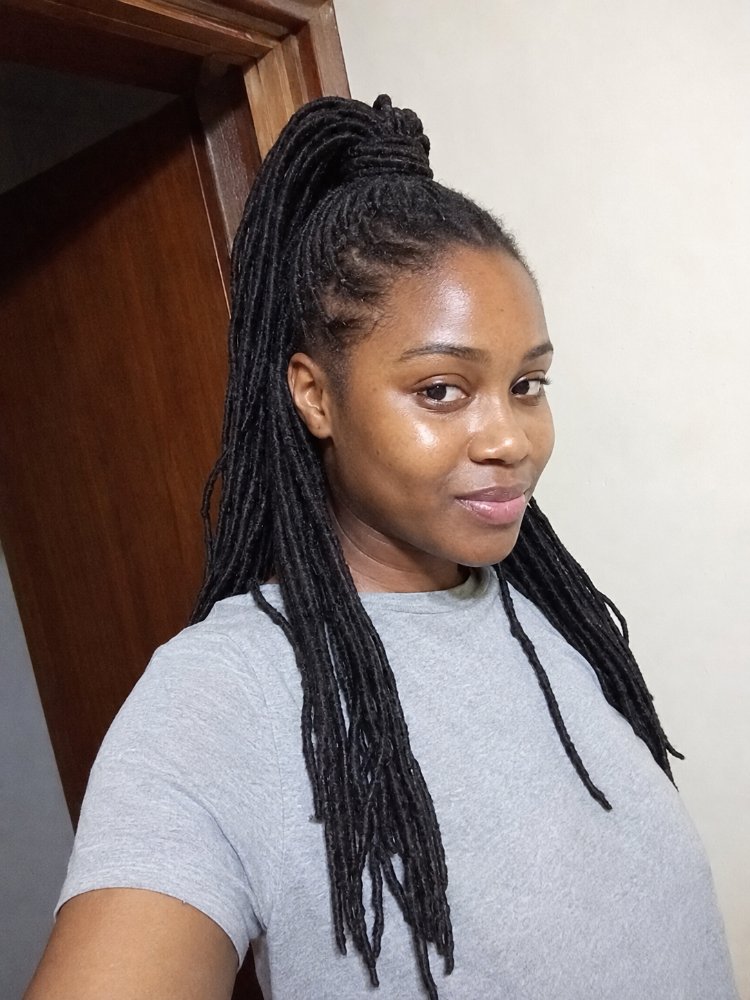
A ponytail attachment gives you a completely different shape without covering the entire head. The locs can be gathered into the base, with a drawstring or wrap-style hairpiece creating the visible tail.
This option works best when the anchor itself is comfortable. Long locs packed into a small high base plus a long extension ponytail can create a surprising amount of concentrated weight.
A lower or mid-height placement is often the more practical starting point. You still get the extended ponytail effect, while the base has less distance to swing during walking and head movement.
What Reference Photos Usually Hide
A photograph shows the outer hair. It rarely tells you how much existing loc length has been tucked beneath it, how many layers are sitting at the root, or whether the wearer found the installation comfortable after several hours.
Those hidden details matter more with styles over locs than with many ordinary extension services.
| Look at | Why it changes the result | Ask before installation |
|---|---|---|
| Loc diameter | Controls how slim the outer braid or twist can realistically be | Will this section size accommodate my locs? |
| Loc length | More length must be incorporated or concealed | Where will my loc ends sit? |
| Added hair | Changes bulk, movement, and load | Can we reduce unnecessary fullness? |
| Foundation | Affects wig and crochet smoothness | How will my locs be distributed underneath? |
Starter locs deserve extra consideration. They are still developing their structure, and elaborate over-loc styling may ask more of the roots and forming locs than a mature, stable set. A stylist or loctician who can assess the actual locs in front of them is more useful here than copying a technique from a photo.
Very thick or long locs change the calculation in another direction. The style may still be completely workable, but trying to make the finished installation look as narrow as one created over tiny locs can require too much compression or added material.
Weight, Tension, and Scalp Access
Styles over locs combine two structures: your existing locs and whatever is being placed around or above them. That makes restraint more useful than excess.
Your roots shouldn’t have to carry an unnecessarily dense installation just because a reference image uses very long extensions. Repeated pulling from tight braids, extensions, ponytails, and other tension-heavy styles is associated with traction alopecia, and pain is a clear reason to have a tight style loosened or removed.
Pay particular attention to the hairline and nape. Those areas don’t need to be forced into every braid or high anchor solely to create a perfectly smooth perimeter.
Scalp access matters too. Think about how you’ll cleanse your scalp and how the roots will dry once water reaches the foundation. A dense crochet or wig base can feel dry on the outside while moisture remains closer to the scalp.
Persistent pain, stinging, redness, sores, sudden shedding, or a concerning change in density deserves more than another styling adjustment. Remove or loosen the source of tension and talk with a dermatologist or another qualified healthcare professional when symptoms are persistent or concerning.
Planning a Styles-Over-Locs Appointment
Bring reference photos for the visible result, then spend just as much time discussing what’s underneath.
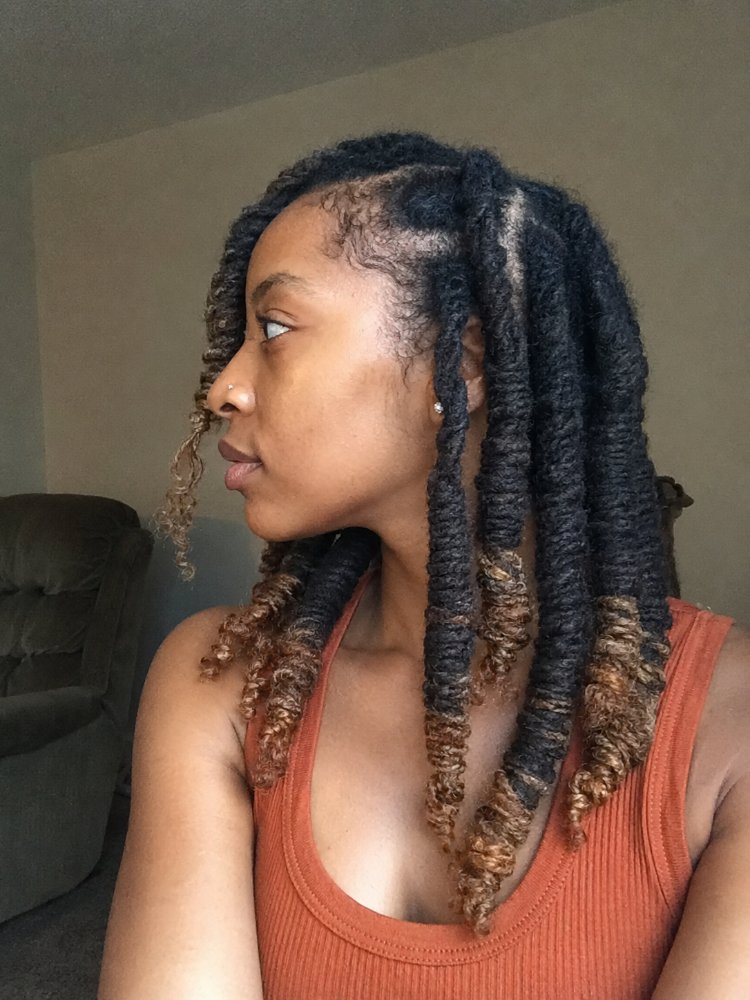
A useful consultation should cover:
- Whether your locs can fit comfortably inside the proposed braid or twist size
- Where long loc ends will be positioned
- How much added hair is actually needed
- Whether your hairline can remain looser than the rest of the installation
- How you’ll reach the scalp for cleansing
- How the style will be removed without cutting or unraveling your locs
Also ask whether the stylist regularly works over locs. Familiarity with ordinary knotless braids, crochet, or wig foundations doesn’t necessarily show how someone will manage a head of established locs inside that construction.
The more complicated the concealment method, the less useful it is to improvise during takedown. Know which parts are your own locs, where added hair begins, and how attachments or wrapping hair were secured before scissors go anywhere near the style.
FAQs
Can you put braids over locs without damaging them?
Braids can be installed over locs, but the condition of your locs, root tension, section size, added-hair weight, and removal method all matter. A braid shouldn’t require painful pulling or an unrealistically tiny section to conceal the loc underneath. Comfort during normal head movement is more important than making the root look exceptionally flat.
Can starter locs be covered with braids or twists?
Some styling methods may be possible, but starter locs need more caution because they’re still forming. Manipulation, added weight, and the way the loc is enclosed can affect how manageable the installation is. Have the locs assessed in their current stage rather than assuming a technique used over mature locs will translate directly.
Are wigs easier to wear over locs than braids?
They can be easier for someone who wants a temporary transformation without wrapping every loc individually. The challenge shifts to the foundation: the locs need to be distributed so the wig fits without excessive pressure or obvious lumps. Fuller or textured wig styles tend to accommodate a little more base volume than extremely sleek shapes.
How do you take down a hairstyle installed over locs?
Start by identifying exactly where your own loc ends and the added hair continues. Remove attachments, wrapping hair, braids, or crochet pieces carefully instead of cutting based on the apparent length of the extension. Takedown becomes especially important when the loc is fully enclosed and can’t be seen through the outer style.
Hair Texture & Upkeep Style Matcher
Select your natural hair texture and daily maintenance window to get an instant styling formula and heat safety cap.
Heat Cap: 320°F (160°C)
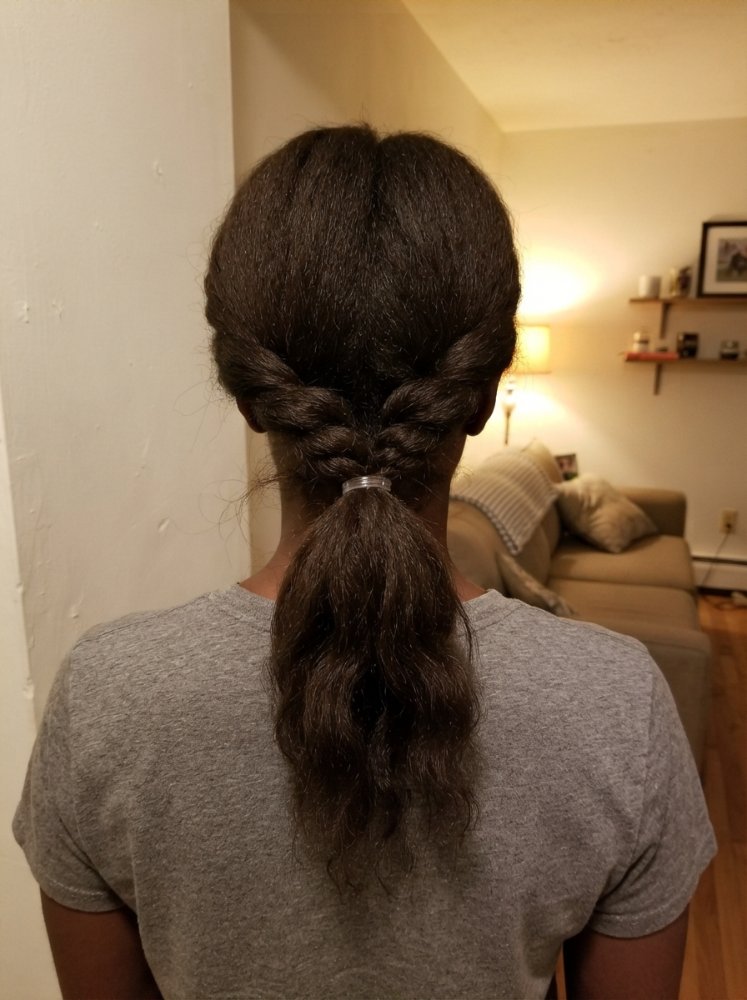
A versatile three-strand braid beginning at the parietal ridge, securing the top half while allowing natural wave texture to flow freely around the shoulders.
Conclusion
The most convincing hairstyles over locs work with the structure you already have. They don’t require thick locs to behave like loose strands or long locs to disappear into an impossibly small foundation.
Box braids and twists give the clearest individual transformation. Crochet works well when you want loose texture and can accommodate a fuller base. Wigs offer the biggest temporary change without wrapping each loc, while ponytail attachments make sense when you only want to alter the overall shape.
Choose the outer hairstyle after deciding how your locs will fit underneath it. That one construction decision affects the bulk, comfort, movement, scalp access, and eventual takedown far more than a small change in parting or finish.
Editorial Standards & Hair Health Guidance
Every style featured on Tress Atlas is curated with a focus on real-world wearability, scalp tension management, and cuticle preservation. When trying protective styles or tight updos, ensure perimeter hairline sections remain tension-free to avoid traction stress on delicate follicles. For heat styling, cap tools below 350°F (180°C) to prevent thermal keratin denaturation.
Scientific Sourcing: Practices aligned with the American Academy of Dermatology (AAD) on traction alopecia risk reduction and cosmetic trichology research on hair tensile strength.