Hairstyles With Bandanas: 5 Illustrated Looks & Complete Styling Guide
A bandana can do three very different jobs in a hairstyle: hold hair away from your face, become part of the hairstyle’s construction, or simply add a strong visual line around the head. The most successful look starts by deciding which job you actually want it to do.
That matters because a folded bandana worn like a narrow headband behaves nothing like a full kerchief tied over the crown. One leaves most of the haircut visible; the other changes the whole outline of the style. A bandana woven through a braid adds bulk and color through the length, while one tied around a ponytail mainly changes the anchor point.
Hair length, texture, density, and your usual styling state also affect the result. A smooth bandana can slide on very silky hair. Dense curls may give it more grip but need enough room underneath to avoid flattening the shape you wanted to keep. Braids and locs bring their own considerations because a tightly tied scarf can add pressure over already secured roots.
These 22 hairstyles with bandanas cover genuinely different constructions, from hair-down looks to ponytails, buns, braids, curls, locs, and cropped cuts.
| Your priority | Good starting style | Main thing to consider |
|---|---|---|
| Keep hair off the face | Rolled bandana headband | Grip near the temples |
| Make the bandana the focus | Full kerchief | How much crown hair stays visible |
| Add detail to an updo | Bandana-wrapped bun | Bulk around the base |
| Show texture | Curly puff or pineapple | Preserving volume |
| Build the scarf into the style | Bandana-woven braid | Even fabric placement |
Hair-Down Bandana Styles
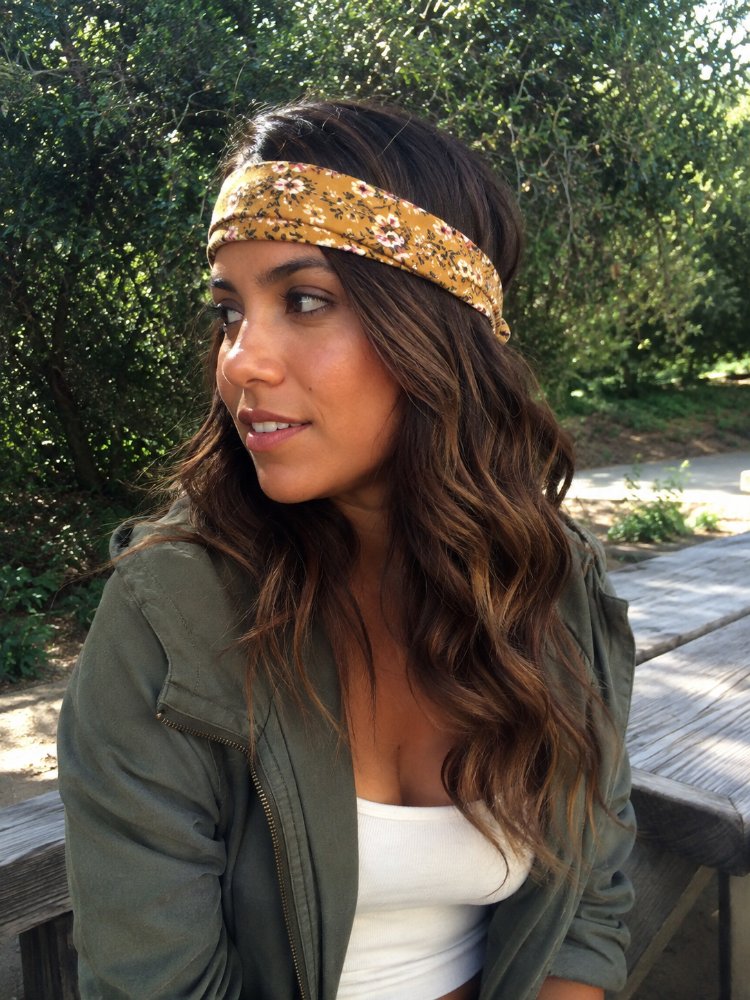
Loose Waves With a Rolled Bandana Headband
Loose waves are one of the easiest places to start because the bandana adds structure without requiring an updo. Fold the fabric into a narrow strip, place it behind or just over the hairline, and tie it underneath the hair at the nape.
Keep some movement around the face instead of forcing every strand beneath the bandana. That gives the waves room to frame the cheeks and keeps the look from becoming too rigid. Hair that slips easily may need the bandana positioned slightly farther back, where there’s more texture for it to grip.
The back of the style matters more than the front photo suggests. A large knot underneath long hair can create a noticeable bump, especially when you lean against a chair or headrest. A flatter knot or smaller fold is usually more comfortable for extended wear.
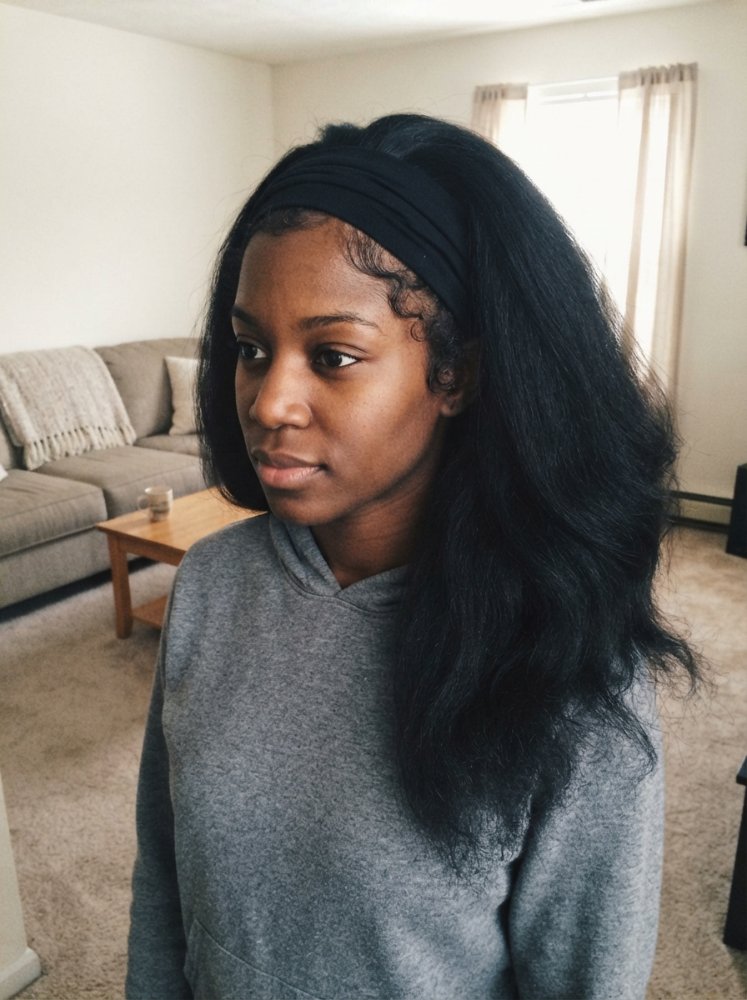
Full Kerchief Over Straight Hair
A full kerchief creates a much stronger graphic shape than a narrow headband. Fold the bandana into a triangle, place the long edge across the front or upper crown, and tie the ends behind the head while leaving the lengths loose.
Straight or stretched hair keeps the contrast crisp because the fabric sits against a relatively smooth surface. The strongest version leaves the lower lengths visible so the style still reads as hair-down rather than a full hair covering.
This is especially useful on days when the roots aren’t the part of your hairstyle you want to feature. The tradeoff is less crown volume, since the bandana covers and lightly compresses that area.
Bandana Tied Under a Bob
A bob benefits from a bandana placement that doesn’t hide its perimeter. Run a folded bandana over the top of the head and tie it underneath the hair near the nape, leaving the bob free to swing over the knot.
This works particularly well when the cut has a defined lower edge. Tying the bandana over the outside of a jaw-length bob can interrupt that line; hiding the knot underneath keeps the haircut itself in view.
Collars can complicate the back. A bob already tends to flip where it meets jackets and higher necklines, and a bulky bandana knot adds another contact point. Keep the fold fairly compact if the hairstyle needs to sit neatly against clothing.
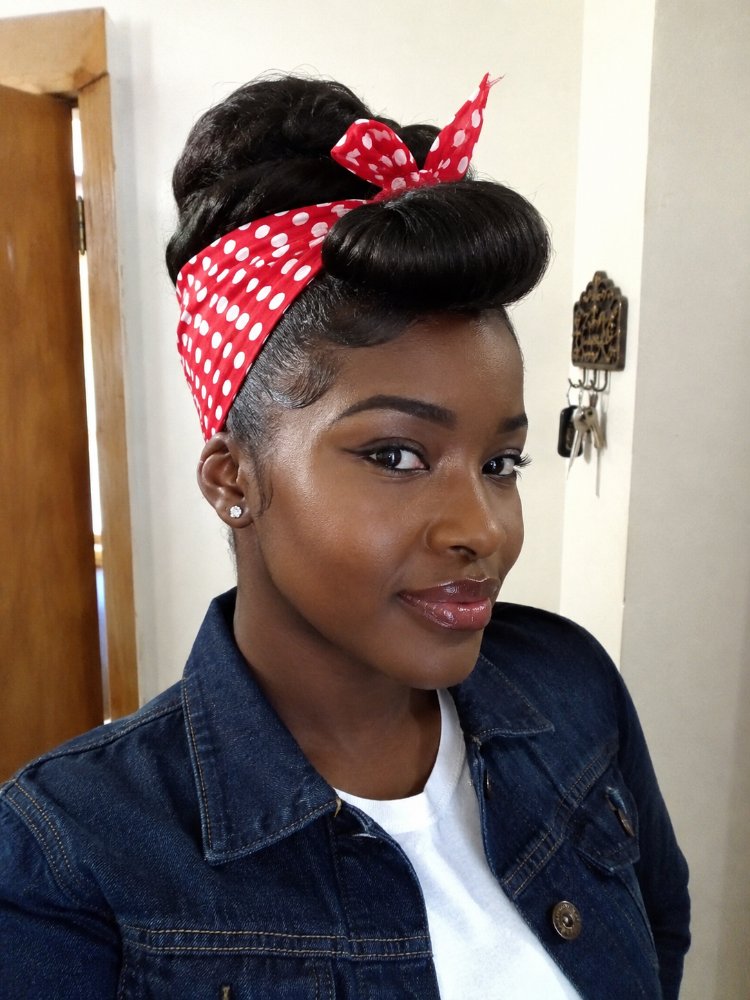
Retro Bandana With the Knot on Top
Moving the knot from the nape to the top changes the entire mood of the hairstyle. Roll the bandana into a strip, bring it up from underneath the hair, and tie the ends above the crown or slightly off center.
The style works with waves, curls, or a smooth blowout, but the visible knot becomes part of the silhouette. A larger bow gives a playful effect; a smaller knot keeps the look cleaner and lets the hair carry more of the visual weight.
This placement is less comfortable under close-fitting hats and may press against sunglasses placed on top of the head. It’s a better choice when the bandana itself is meant to be seen.
Full Bandana Turban With Tucked Ends
For maximum coverage, wrap the bandana around the crown and tuck or tie the ends so little fabric hangs loose. The hair can remain contained underneath or show slightly at the front and nape.
Unlike a simple kerchief, this arrangement makes the fabric responsible for most of the outer shape. It can be useful for keeping shorter layers contained or creating a strong accessory-led look on days when you don’t want to style every section individually.
Avoid pulling the wrap tightly just to keep it secure. Placement, fabric grip, and sensible tucking give better hold than excessive pressure around the hairline.
Ponytails and Half-Up Styles
Low Ponytail With a Bandana Bow
A low ponytail keeps the bandana away from the hairline entirely. Secure the ponytail first, then tie the bandana around the elastic so the fabric decorates the base without being responsible for holding the hair.
This is a practical choice for fine strands because you can keep the actual anchor simple instead of relying on tightly wrapped fabric. Fine describes strand diameter, though; someone with fine hair may still have plenty of density.
Let the bandana ends hang down with the ponytail or tie a compact bow for less movement.
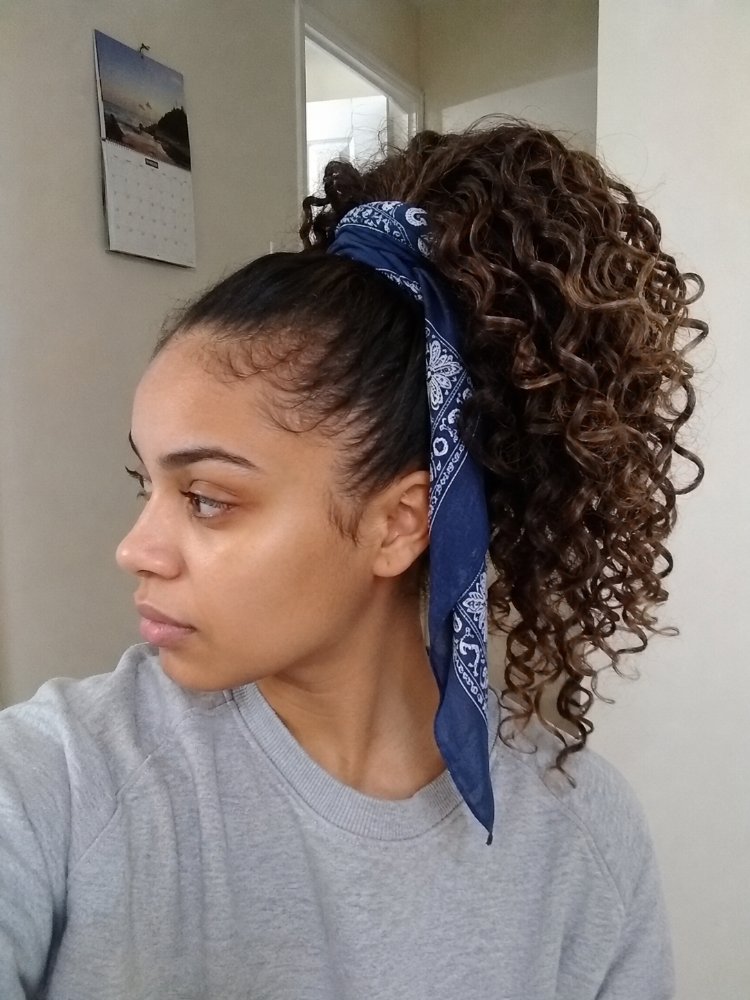
High Ponytail With a Bandana at the Base
A high ponytail gives the accessory more visibility. The bandana sits around the base, so the color is visible from the front and sides while the ponytail creates height behind it.
Secure the hair with an elastic before adding the fabric. That separation matters: the elastic handles the hold, while the bandana handles the appearance. Asking soft fabric to support a heavy ponytail can lead to slipping and repeated tightening.
Long or dense ponytails already create more movement at a high anchor. Keep the bandana knot compact so it doesn’t add unnecessary bulk at the same point.
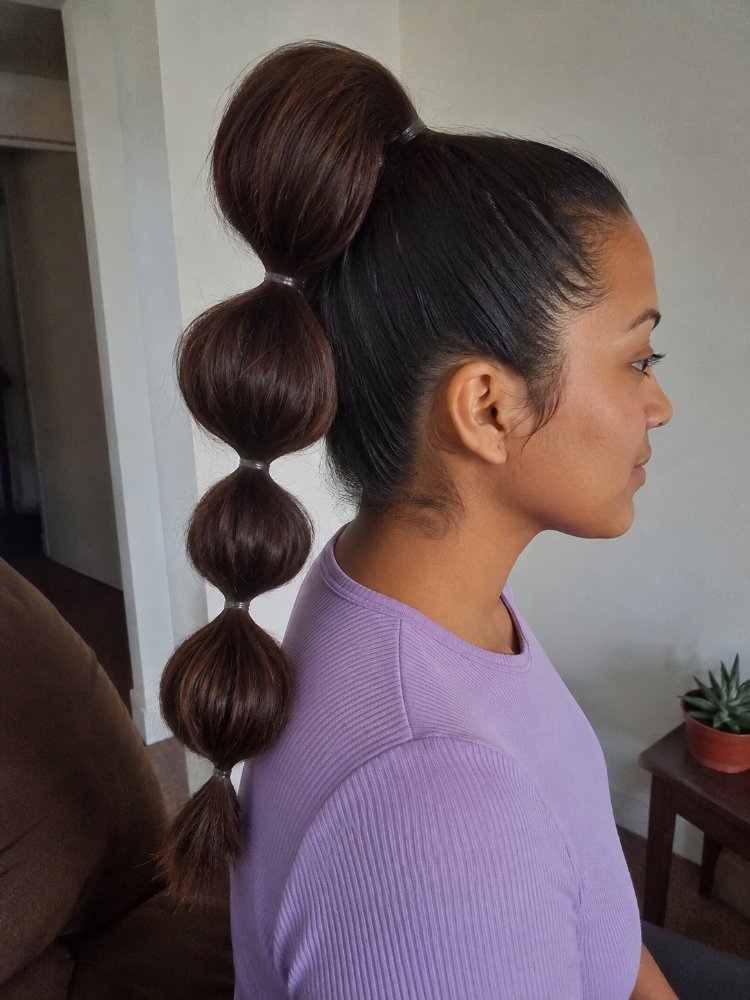
Bubble Ponytail With a Bandana Base
A bubble ponytail gives you more architecture through the length than a standard pony. Start with a secure ponytail, create spaced sections along the tail with additional elastics, and gently expand each section.
The bandana belongs at the main base rather than between every bubble. One clear fabric detail keeps the style from becoming visually crowded.
This is a stronger choice than a plain ponytail when you want the back view to matter. The bubbles make the length part of the design, so medium and longer hair show the construction most clearly.
Half-Up Ponytail With a Bandana
A half-up ponytail keeps most of the hair loose while clearing the front and crown. Gather the upper section, secure it, then wrap the bandana around that smaller anchor.
The placement gives curls and waves more room to stay visible than a full ponytail. It also works well with straight hair when you want crown lift without committing to a complete updo.
Keep the sectioning appropriate to your density. Pulling a very large top section into a small anchor can make the sides look unnecessarily flat.
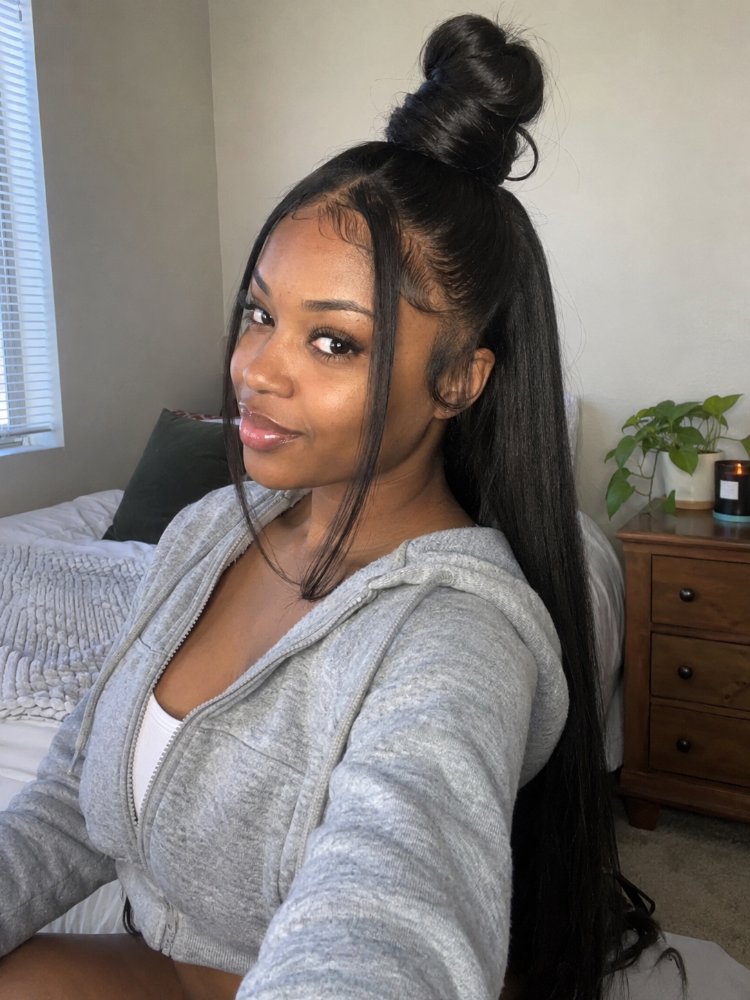
Half-Up Bun With a Bandana
The half-up bun shifts the visual focus higher than a half ponytail. Gather the top section, twist or wrap it into a small bun, pin or secure it, then place the bandana around the base.
This style earns the extra construction when you want the crown to have a definite focal point. Hair below the bun stays loose, so texture remains part of the finished look.
A very large bandana can overwhelm a small bun. Folding the fabric narrower keeps the proportions balanced and prevents the accessory from hiding the construction you just created.
Buns, Tucks, and Updos
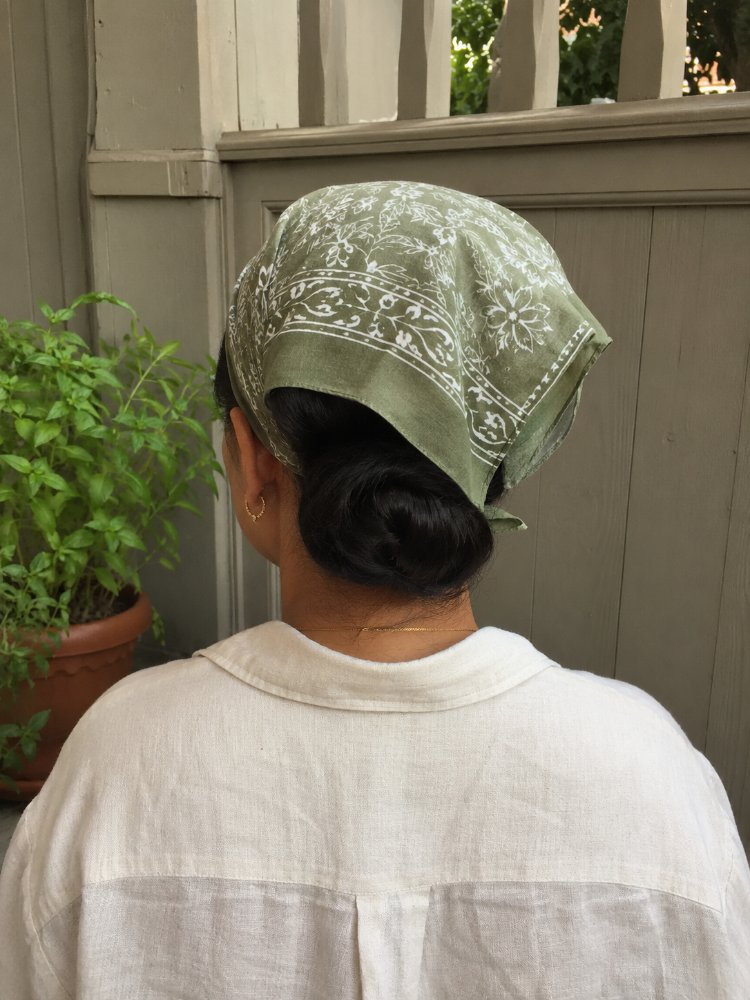
Low Bun Wrapped With a Bandana
A low bun gives the bandana a clean, compact anchor. Form the bun first, then tie the folded scarf around its base.
This placement works particularly well when comfort matters. The bun sits away from the crown, and the accessory remains concentrated near the nape instead of pressing across the forehead or temples.
The hairstyle is also easier to pair with glasses because there’s no bandana fabric competing with the arms near the ears.
High Top Knot With a Bandana Base
A top knot turns the accessory into a visible ring around the highest point of the hairstyle. Build and secure the knot first, then wrap the bandana around its base.
This is worth choosing when height is the point. A loosely constructed top knot can give the fabric something to frame without looking overly tight or compact.
Think about headrests before making the bun very large. A top knot is usually less intrusive against a seat than a bulky bun directly at the back of the head, but a large knot can still become tiring during long periods of sitting.
Tucked Chignon Beneath a Bandana
A chignon gives the bandana a more refined role. Gather the hair low, roll or tuck the lengths inward, secure them with pins, and run a folded bandana around the head so it meets close to the chignon.
The scarf shouldn’t replace the pins. Let the internal structure support the hair while the bandana adds a defined line around the style.
This works especially well when you want most ends hidden. Compared with a loose bun, the tucked construction produces less movement at the nape and keeps the lower shape more controlled.
Messy Bun With a Wide Bandana Headband
A messy bun and wide bandana solve different problems. The bun gets the lengths off the neck, while the broad band keeps shorter front pieces contained.
Leave some softness in the bun instead of compressing it into a tight knot. The width of the bandana already creates a strong horizontal area across the head, so extra height and movement in the bun keep the proportions from looking flat.
This is one of the more useful options for casual wear because perfection isn’t required. A few loose pieces can remain part of the style instead of becoming something you repeatedly tuck back under the fabric.
Braids With Bandanas
Bandana Woven Into a Three-Strand Braid
Here the bandana stops being an accessory placed on top of the hairstyle and becomes part of its construction. Secure one end near the base of the braid, incorporate the fabric with a section of hair, and braid downward.
Use a narrow fold so the bandana doesn’t overpower the hair sections. Keeping gentle, consistent tension helps the fabric stay visible instead of disappearing unevenly inside the braid.
The ends can be tied together near the bottom or the remaining fabric can hang beside the braid. Check the attachment point before relying on the scarf through a full day of movement; the hair tie or pinning should provide the real security.
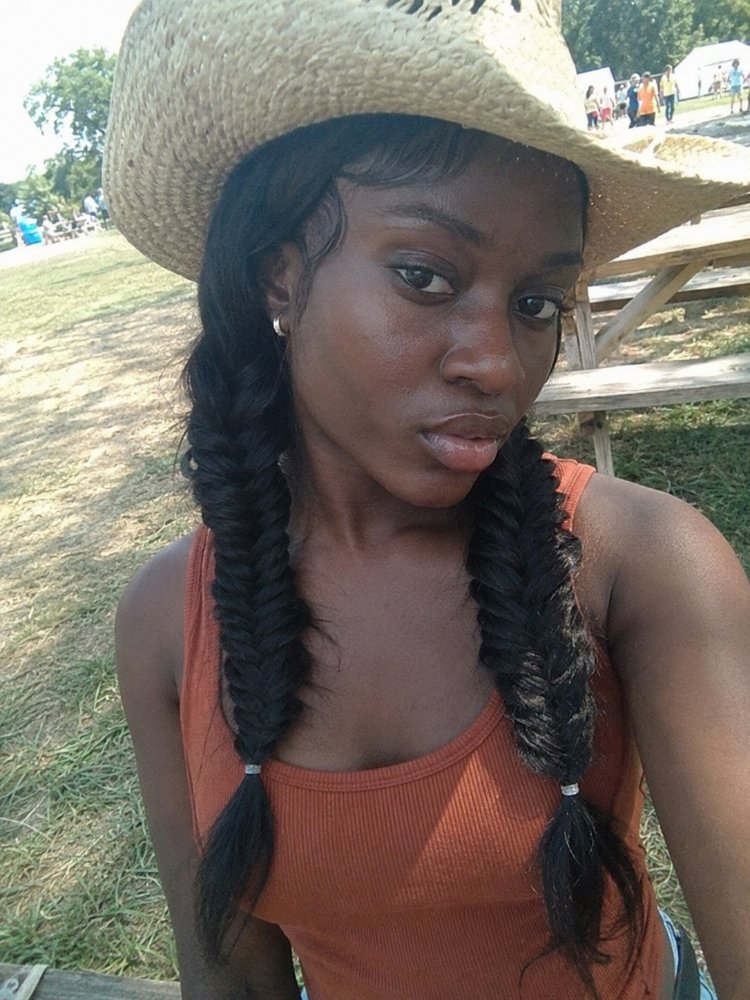
Two Braids With a Bandana Across the Crown
Two braids create symmetry, while a bandana across the crown joins the look visually. Part the hair, create one braid on each side, then place a folded bandana behind the hairline or farther back toward the crown.
This gives more face-framing control than a single back braid. It also leaves the individual braid construction clear, since the fabric isn’t woven through the lengths.
For curly or coily hair, the braids can begin from a stretched or natural state according to the result you want. Stretching changes the visible length and smoothness; it isn’t a requirement for wearing the style.
Bandana Braided Into One Side Braid
A side braid puts both the hair and fabric where they can be seen from the front. Sweep the lengths over one shoulder, attach the folded bandana near the braid’s starting point, and work it into the braid.
This is more visually dramatic than a centered back braid because the fabric runs down beside the face and neckline.
Keep loose bandana ends in mind around bags, jacket zippers, and seatbelts. Long tails move with the braid and can catch more easily than a compact knot.
Braided Crown With a Bandana Underneath
A braided crown already provides a strong line around the head, so the bandana works best as a secondary layer. Wrap or pin the braid around the crown, then position a narrow bandana beneath or just behind the braided section.
This creates two distinct textures without asking the scarf to hold the braid in place.
The look is more construction-heavy than a simple bandana headband and tends to work better when the braid has enough length to travel around the head securely. Shorter hair may need a different braided arrangement or added hair, which changes the attachment and weight considerations.
Bandanas With Curls, Braids, Locs, and Short Hair
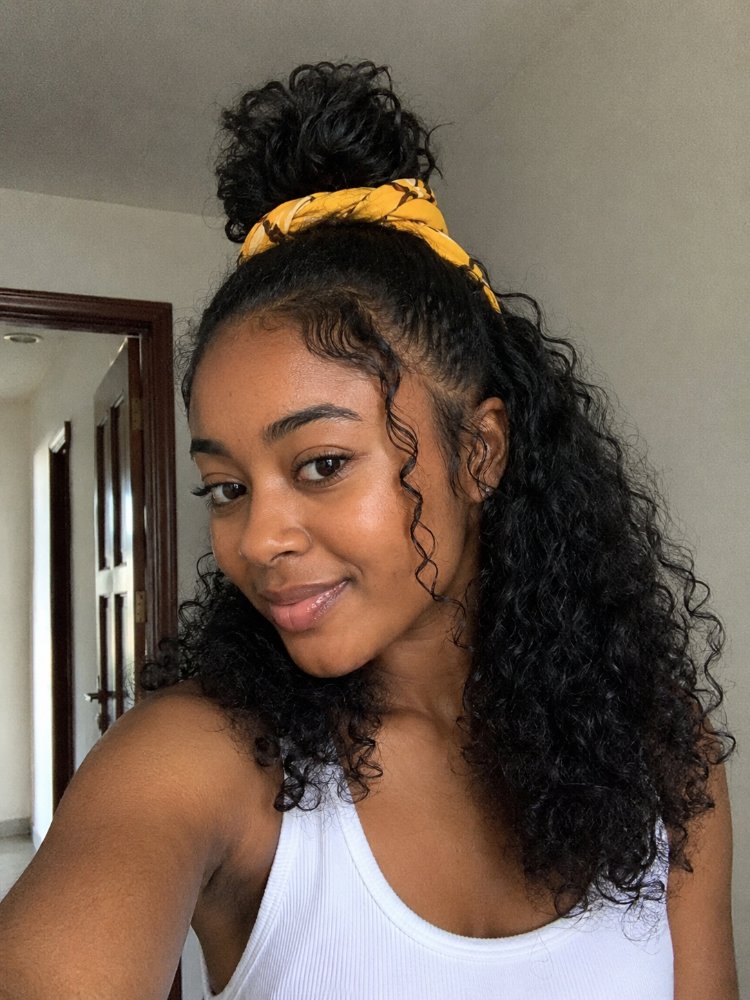
Curly Puff With a Bandana Headband
A puff leaves the texture exposed while the bandana defines the front of the style. Gather the hair into a comfortable puff, then place a folded bandana around the front and sides.
The fabric can cover the transition between smoother roots and fuller curls, which makes it useful when you want the puff itself to remain the focal point.
Avoid using the bandana to force the puff tighter. The puff’s own base should control the placement. The fabric only needs enough tension to stay put.
Pineapple Updo With a Bandana
A pineapple gathers curls high and forward, creating a very different result from a rounded puff. Secure the curls loosely near the top of the head and wrap a bandana around the lower portion of the style.
The strongest version keeps plenty of curl volume above the fabric. Pulling the bandana too far upward can compress the curls and reduce the height that makes the pineapple distinctive.
This can also work as a relaxed at-home arrangement, though a bulky top section may interfere with hoods or close-fitting hats.
Box Braids With a Bandana Wrap
Box braids give a bandana plenty of visual contrast because the fabric sits against clearly separated braided lengths. A folded wrap can sit behind the hairline, across the crown, or around a gathered section.
A broad headband works well when you want to keep front braids away from the face without rebuilding the installation into another style. Tie the fabric securely enough to stay in place but leave the underlying braids comfortable.
Braided styles deserve particular attention to existing tension. Added fabric shouldn’t make roots feel tighter, and heavy braids gathered under a very small bandana anchor can concentrate more weight than wearing them down.
Locs With a Wide Bandana
A wide bandana can hold selected locs back while leaving most of their length loose. It can also sit underneath a loose high gathering, depending on the length and weight of the locs.
Mature or long locs can carry substantial weight, so the strongest version usually lets the bandana organize the front rather than asking it to support the entire style. Keep the fabric broad enough to distribute contact comfortably.
Scalp access still matters. A wrap that’s easy to loosen or remove makes cleansing and drying simpler than one repeatedly tied in a hard-to-reach knot beneath dense locs.
How to Choose the Right Bandana Hairstyle
The easiest decision is to start with how much of your hair you want visible.
A narrow folded bandana leaves the haircut and texture largely unchanged. It works well with waves, bobs, curls, ponytails, and puffs because the hair remains the main feature. A full kerchief or turban makes the fabric much more dominant and can cover the roots, crown, or most of the head.
Updos create another decision: should the bandana support the style or decorate it? Decoration is usually the more practical approach. Secure your ponytail, bun, braid, or chignon with the appropriate elastic or pins first, then add the fabric. That gives you better control over hold without repeatedly tightening the bandana.
| Hair or styling state | Bandana approach | Useful adjustment |
|---|---|---|
| Short or cropped | Narrow headband or top knot | Keep enough haircut visible |
| Straight or stretched | Kerchief or narrow fold | Position for better grip |
| Curly or coily | Puff, pineapple, or wide band | Protect crown volume |
| Braided | Head wrap or gathered base | Avoid adding root pressure |
| Loc’d | Wide band or loose gathering | Account for length and weight |
Fabric size also changes what is possible. A smaller bandana works better for narrow headbands, ponytail ties, and braid accents. More fabric gives you enough coverage for kerchiefs, wider wraps, and turban-style arrangements, though it also creates larger knots.
Pay attention to where that knot lands. A knot at the nape can press into a headrest. One above the crown can interfere with hats or sunglasses. Side knots are visible and decorative but may compete with earrings or glasses.
Keeping a Bandana Style Comfortable and Neat
Start with secure hair rather than an overtight bandana. Ponytails, buns, and braids should hold their own shape before the fabric goes on.
Smooth fabrics can shift, especially over straight or freshly smoothed hair. Repositioning the bandana slightly farther back may improve grip. Bobby pins can also secure the fabric discreetly near the sides without requiring a harder knot.
Curly and coily textures need room. A bandana pulled firmly across the crown can flatten curls at the roots, while a looser, wider placement lets the volume continue above or behind it.
Pay attention to dampness as well. Hair covered by fabric should be allowed to dry properly after washing, swimming, or heavy sweating. Dense roots can stay damp even after exposed lengths feel dry.
Bandanas also accumulate oils, sweat, and styling product from direct contact with the hairline and scalp. Wash the fabric as needed for your routine and let it dry fully before putting it back on.
Persistent pain, stinging, sores, irritation, sudden shedding, or a concerning change in density deserves more attention than a styling adjustment. Remove or loosen anything creating pressure and speak with a dermatologist or another qualified healthcare professional when symptoms persist or concern you.
FAQs
Can you wear a bandana with short hair?
Yes. Pixies, crops, and short bobs can work especially well with narrow folded bandanas because the accessory creates a strong line without requiring enough length for a ponytail or bun. Keep the bandana proportionate so it doesn’t hide the entire haircut unless full coverage is the look you want.
Do bandana hairstyles work on curly and coily hair?
They do. Puffs, pineapples, loose curls, braids, and headband styles all pair well with bandanas. Decide first whether you want to preserve volume or contain it. A narrow band leaves more curl visible, while a wider wrap covers more of the crown and changes the overall shape.
How do I stop a bandana from slipping?
Hair texture, fabric texture, and placement all affect grip. Try placing the bandana slightly farther back from a very smooth hairline, use a narrower fold, and secure the sides discreetly with bobby pins when needed. Tying the fabric increasingly tight is usually a poor fix because it can become uncomfortable without solving the underlying placement problem.
Can I wear a bandana with box braids or locs?
Yes. A wide band can hold front braids or locs away from the face, while a narrow bandana can work as an accent. Let the installation or loc style support its own weight. Avoid forcing heavy lengths into a small, tight anchor simply to fit beneath the fabric.
Should a bandana go over or under your hair?
Both placements work. Under-the-hair ties keep the knot less visible and suit loose waves, bobs, and narrow headbands. Tying above the hair makes the knot, bow, or scarf ends part of the design. Your comfort, haircut, and how much fabric you want visible should decide the placement.
Can you sleep in a bandana hairstyle?
A daytime bandana isn’t always the most comfortable sleep setup, especially when the knot sits at the back or side of the head. Remove bulky accessories before bed and use a sleep arrangement that reduces friction without creating pressure. The hairstyle underneath may also need to be loosened depending on how it was secured.
Hair Texture & Upkeep Style Matcher
Select your natural hair texture and daily maintenance window to get an instant styling formula and heat safety cap.
Heat Cap: 320°F (160°C)
A versatile three-strand braid beginning at the parietal ridge, securing the top half while allowing natural wave texture to flow freely around the shoulders.
Conclusion
The strongest hairstyles with bandanas treat the fabric as part of the design instead of adding it after the hairstyle is finished. A narrow headband highlights the hair. A kerchief changes the crown. A ponytail tie emphasizes the anchor, while a woven bandana becomes part of the braid itself.
Start with the hairstyle you already want to wear, then decide how much visual space the bandana should take up. For the easiest everyday option, a rolled bandana with loose hair, a low ponytail, or a curly puff gives you plenty of impact without asking the fabric to do the structural work.
Editorial & Hair Health Note
When securing bandanas and headscarves, avoid excessive hairline tension which can lead to mechanical breakage along fragile perimeter hairs. For further guidance on protective styling and scalp comfort, explore our Braided Hairstyles Guide and Hairstyles by Texture. Scientific standards aligned with the American Academy of Dermatology (AAD) hair care and breakage prevention guidelines.
Editorial Standards & Hair Health Guidance
Every style featured on Tress Atlas is curated with a focus on real-world wearability, scalp tension management, and cuticle preservation. When trying protective styles or tight updos, ensure perimeter hairline sections remain tension-free to avoid traction stress on delicate follicles. For heat styling, cap tools below 350°F (180°C) to prevent thermal keratin denaturation.
Scientific Sourcing: Practices aligned with the American Academy of Dermatology (AAD) on traction alopecia risk reduction and cosmetic trichology research on hair tensile strength.