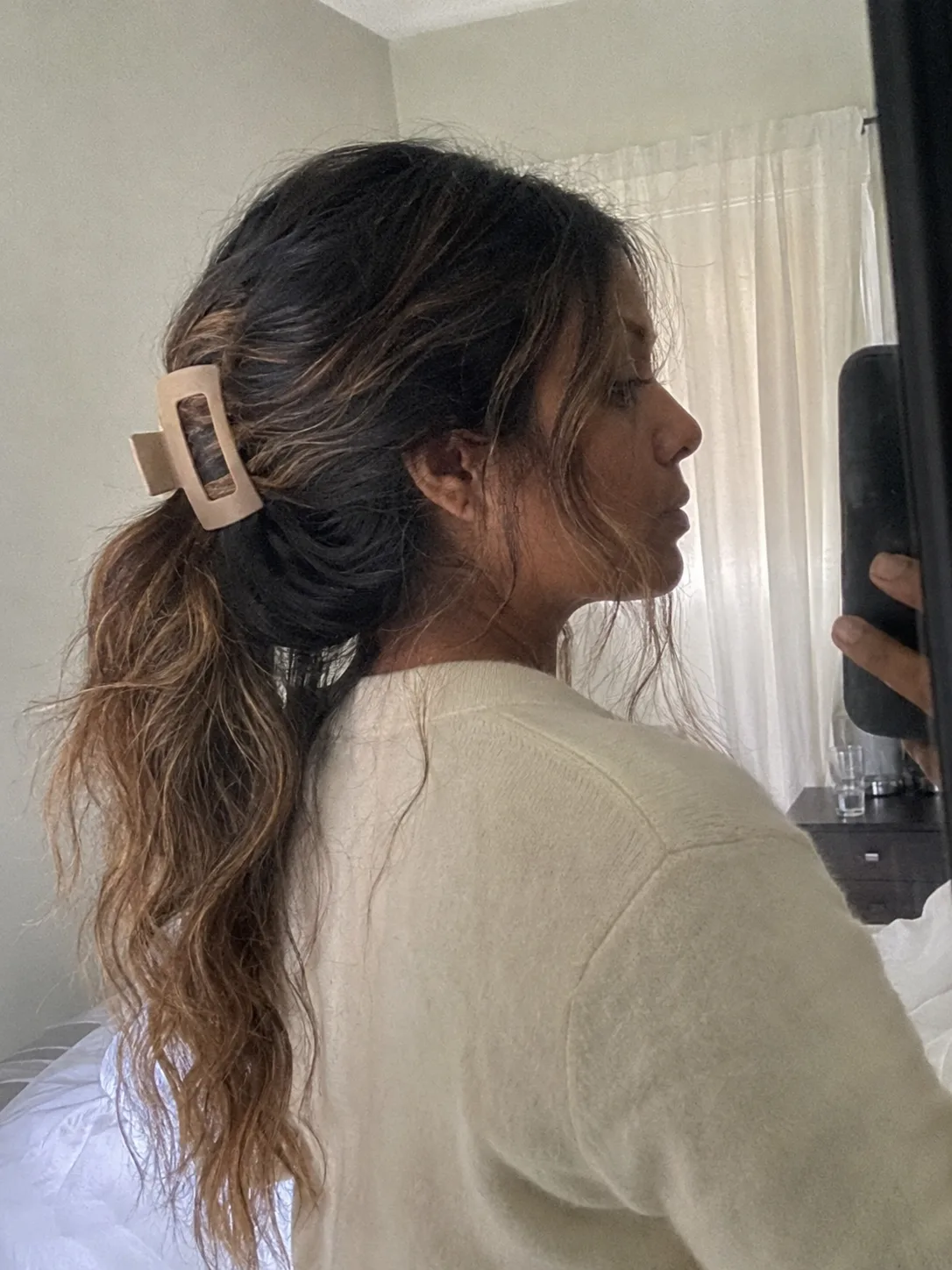
Ponytail Hairstyles: Styling Guide & Cuts That Change More Than the Height
A ponytail looks simple until you start deciding where the base should sit, how much of your natural texture should remain visible, and what you want the tail itself to do. A smooth high ponytail creates a completely different balance from a full curly ponytail, even before you introduce braids, twists, extensions, or extra crown volume.
The anchor matters because it controls both appearance and everyday behavior. A low ponytail sits differently against a coat collar. A high, long extension moves more during exercise and can press against a headrest when you sit back. Braided sections that travel toward one point also behave differently from loose hair gathered with an elastic.
Texture deserves equal attention. Natural curls and coils don’t need to be straightened to make a ponytail look finished, while stretched or pressed hair creates a narrower base and a different fall through the tail. Density affects fullness; strand fineness describes individual hair diameter. Those aren’t interchangeable concerns.
Use the finished photograph as inspiration, then look past it. The most useful ponytail is the one whose construction still makes sense after you consider your normal styling state, hairline, daily movement, scalp access, and willingness to restyle the base.
Sleek Ponytails Where Placement Does Most of the Work
Classic Mid-Height Ponytail
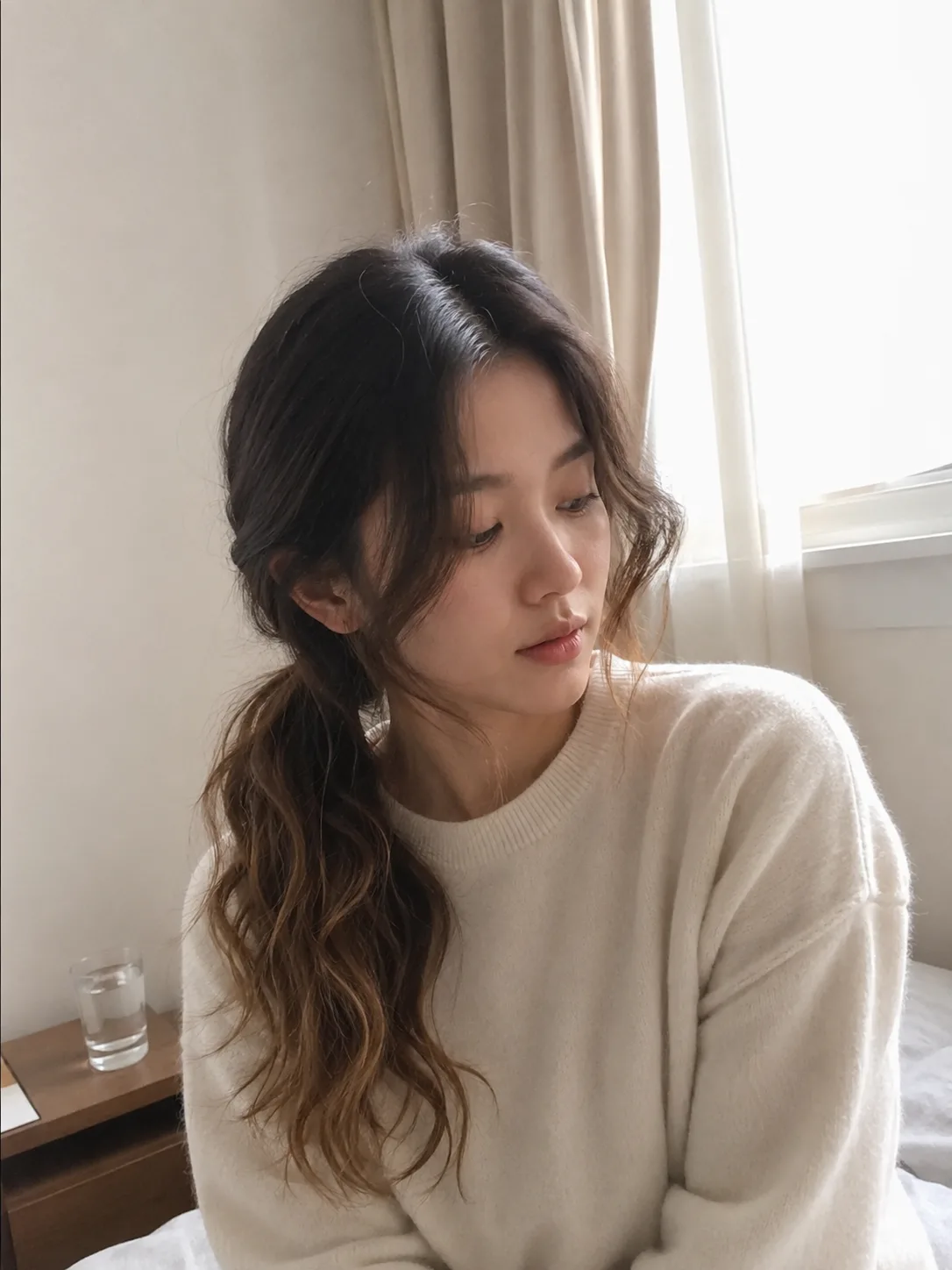
The mid-height ponytail is the practical reference point for almost every other version. The base usually sits around the back of the head rather than directly at the crown or nape, so the tail falls outward without creating the extreme lift of a high ponytail. It works especially well when you want your length to remain visible but don’t want the base dominating the hairstyle.
This is also one of the easier options to adapt to straight, stretched, wavy, or curly hair. A fabric-covered elastic can secure the base, while a small section of hair wrapped around it changes the finish without changing the underlying construction.
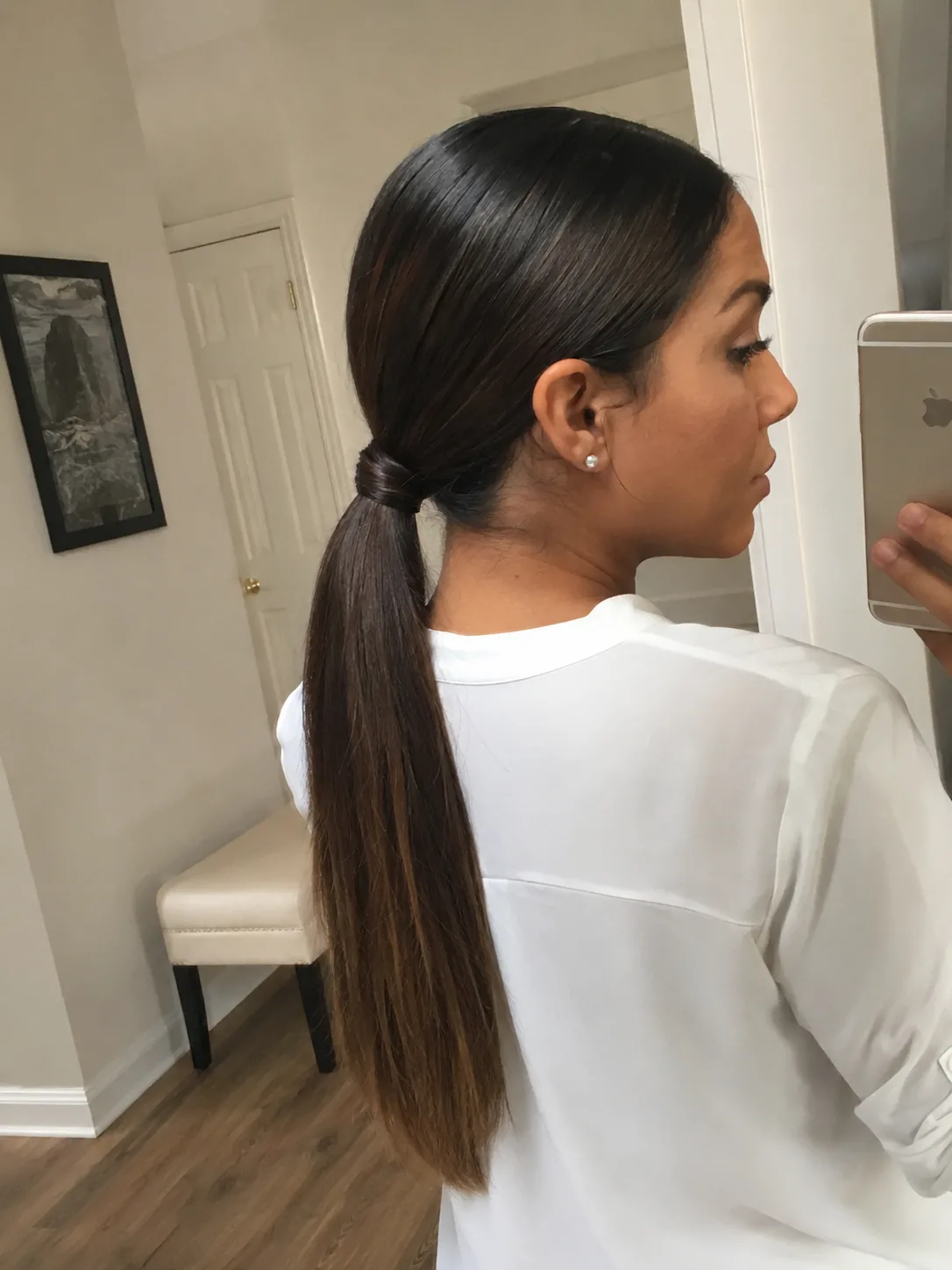
Low Nape Ponytail
A low ponytail pulls the visual emphasis downward. It tends to feel quieter and more compact than a crown-level style, making it a strong choice for understated outfits, workwear, or occasions where a very high tail would compete with the neckline.
The hidden issue is clothing. A base placed directly at the nape can rub against high collars, scarves, or heavy outerwear. That contact may disturb a smooth finish and repeatedly shift the ponytail.
Low placement works particularly well with a clean center part, a side part, or no visible part at all. Those details change the mood, but the important feature is still the low anchor and the way the tail hangs close to the back.
High Sleek Ponytail
Height creates immediate lift around the face and makes the ponytail itself much more noticeable. Straight or smoothly stretched lengths produce the narrowest, most graphic version, while curls at the ends soften it.
This style asks more from the base than the classic mid-height ponytail. Long or dense hair creates more leverage as the tail swings, and very long added hair increases that effect further. Pulling harder isn’t a useful substitute for building a secure, comfortable anchor.
A high ponytail is worth the extra effort when height is genuinely part of the look. For a routine built around long periods against a headrest, helmets, or vigorous exercise, a slightly lower anchor is often easier to live with.
Side Ponytail
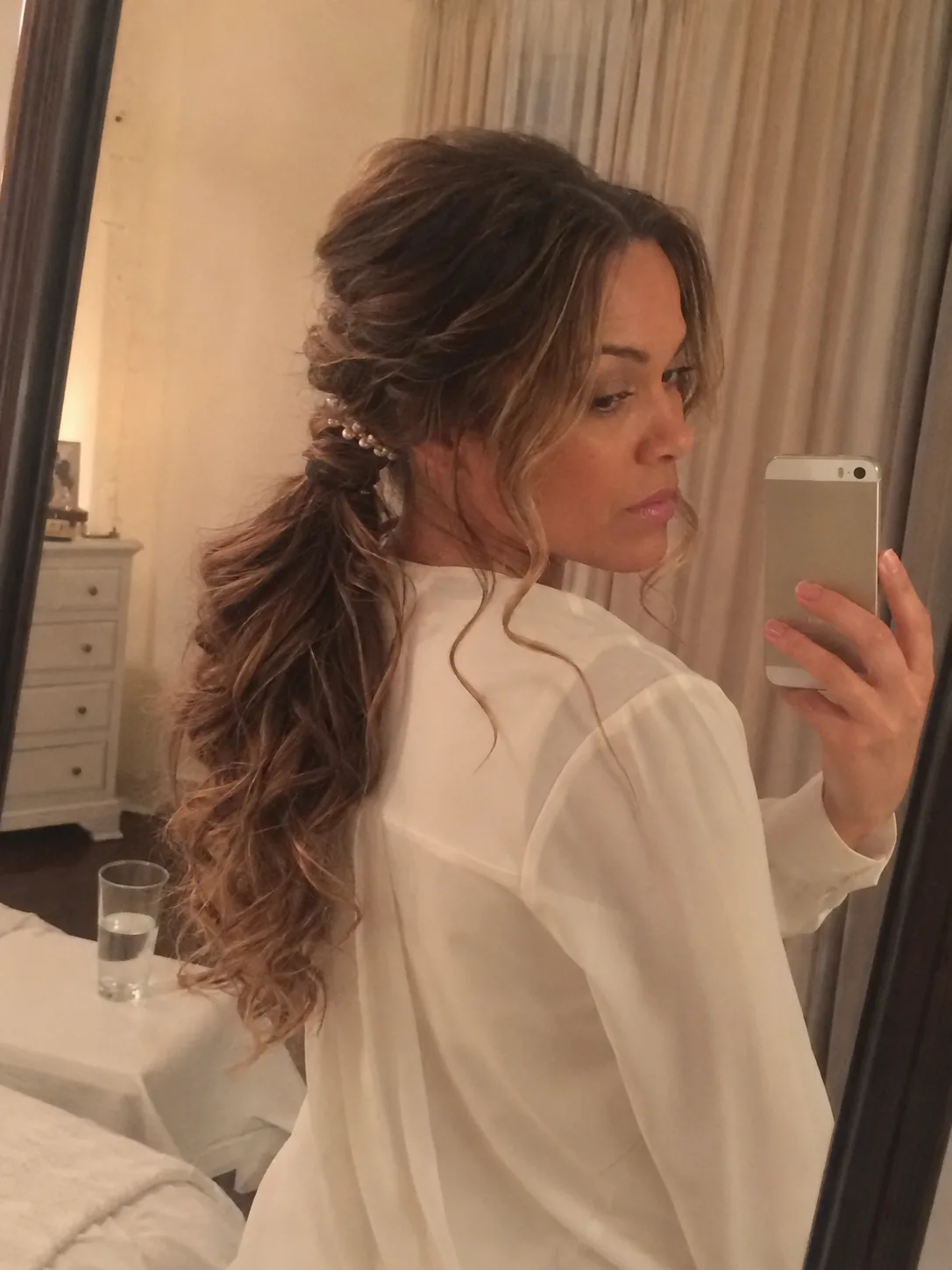
Moving the anchor off-center changes the entire outline without requiring elaborate technique. The tail becomes visible from the front, which makes curls, waves, braids, or length more prominent in photographs.
A side ponytail also brings the hair into contact with the shoulder and clothing more often. Longer lengths may sit underneath bag straps or rub against textured fabrics. That makes it particularly effective as an occasion style, where the asymmetry can do most of the visual work without adding extra accessories.
Crown-Volume Ponytail
A crown-volume ponytail separates lift from tightness. Instead of flattening every strand from hairline to elastic, the top section keeps some height before the hair reaches the base.
That extra space is useful when a completely slick surface feels too severe for the result you want. It can also prevent the hairstyle from relying solely on ponytail height to create presence.
The volume should come from shaping and preparation, not aggressive pulling at the roots. Hair can be directed backward while preserving some elevation through the crown, then secured once the profile looks balanced from the side. This ponytail pairs especially well with waves or a softly curled tail because both parts of the hairstyle carry movement.
Ponytails That Let Texture Lead
Curly Ponytail
Defined curls make the tail itself the focal point. The base can be smooth, lightly controlled, or left textured depending on how much contrast you want between the front and the back.
Shrinkage changes the apparent length, so the ponytail seen on stretched curls may sit very differently after the hair returns to its usual curl pattern. Judge the placement in the state you actually plan to wear.
This is one of the strongest choices for keeping natural curl character visible instead of turning the ponytail into a straight-hair style with curled ends added afterward.
Coily Puff Ponytail
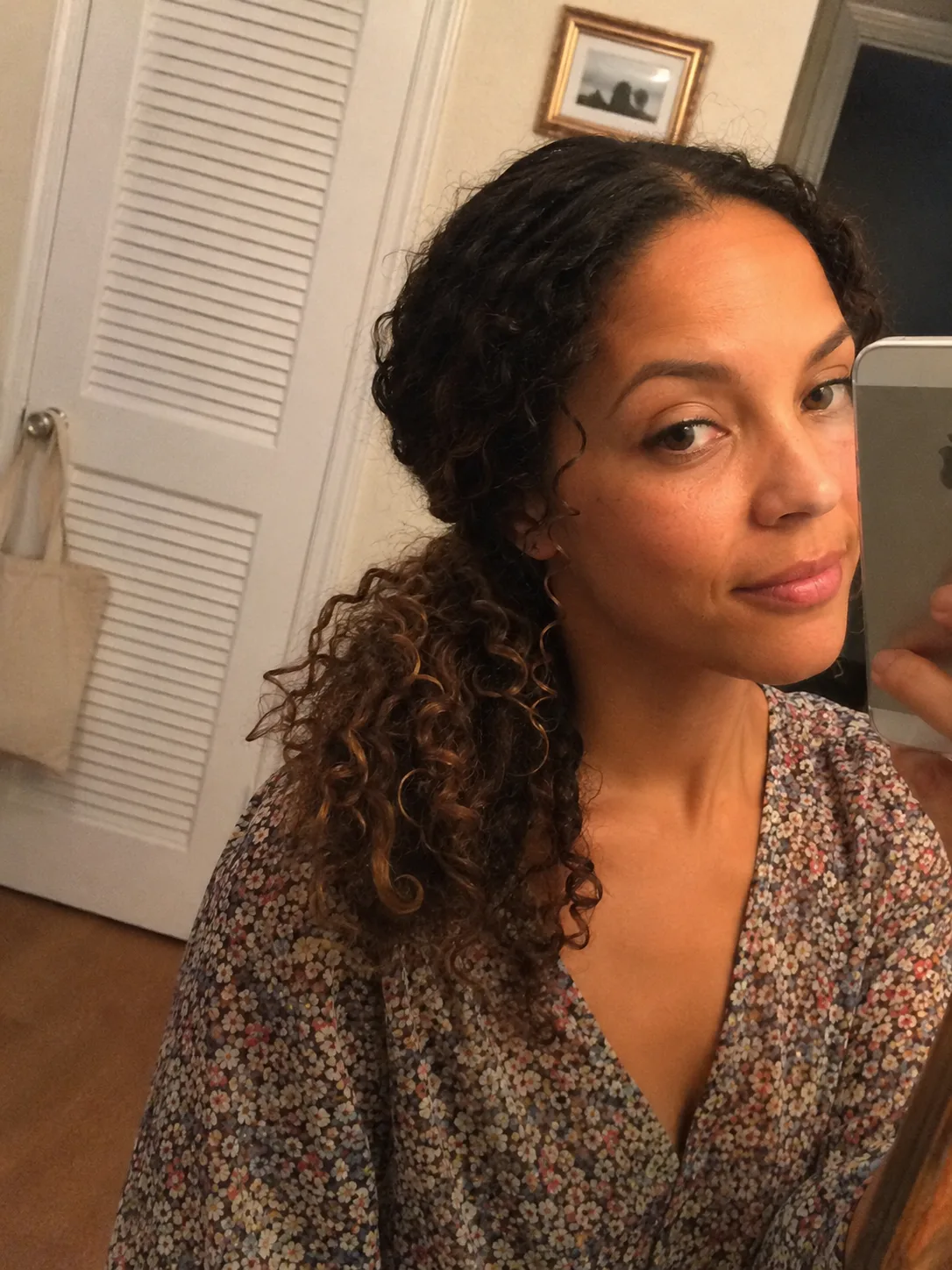
A coily puff creates a rounded, compact mass instead of a long hanging tail. That change in silhouette gives it its own identity even though the hair is still gathered toward one point.
The puff can sit higher, centrally, or closer to the nape according to the amount of visible lift you want. The perimeter doesn’t need to be pulled flat to make the shape read clearly.
Shrinkage is part of the result. Stretching the hair first creates a larger or more elongated puff, while a shrunken state produces tighter projection around the anchor. Neither version represents greater density; they simply distribute the existing hair differently.
Stretched Natural Ponytail
Stretched hair creates a useful middle ground between a fully shrunken ponytail and a pressed one. The tail shows more visible length, while texture and body remain present.
This style is especially effective when you want a fuller base and longer-looking tail without requiring a glass-smooth finish. Stretching methods should suit your hair’s condition and routine; the styling state matters more than forcing a particular technique.
Soft Wavy Ponytail
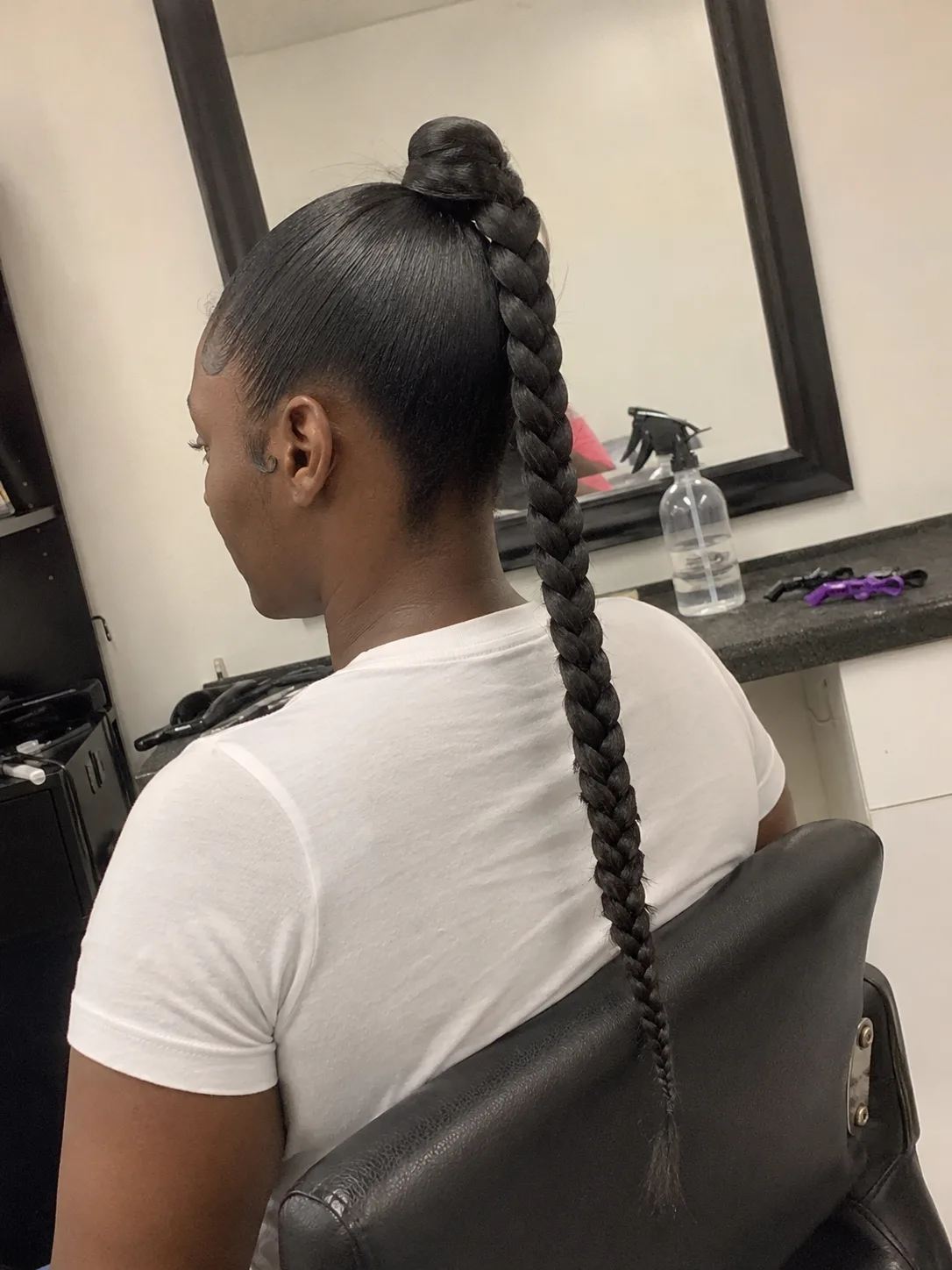
Loose waves turn a basic gathered style into something softer through the lengths. The movement is distributed down the tail instead of concentrated in a curly end section.
A mid or low anchor usually gives those waves room to fall instead of projecting sharply away from the head. Some separation between wave sections keeps the tail from appearing like one solid curled piece.
The stronger choice here is restraint. Excessive smoothing at the base can make a softly waved tail look disconnected from the rest of the hairstyle. Keeping a little movement around the crown often produces a more coherent result.
Braids, Twists, and Sections That Rebuild the Tail
Bubble Ponytail
The bubble ponytail replaces one continuous tail with a sequence of rounded sections. Elastics placed down the length create the divisions, and each section is gently expanded to produce the bubble shape.
This construction works with natural length or added hair. The result is more architectural than a standard ponytail, yet it doesn’t require braiding skill.
Consistency matters more than perfect symmetry. Sections that gradually change size can still look deliberate, while over-tightening every elastic tends to make the tail rigid. The bubbles need enough room to expand.
Rope-Twist Ponytail
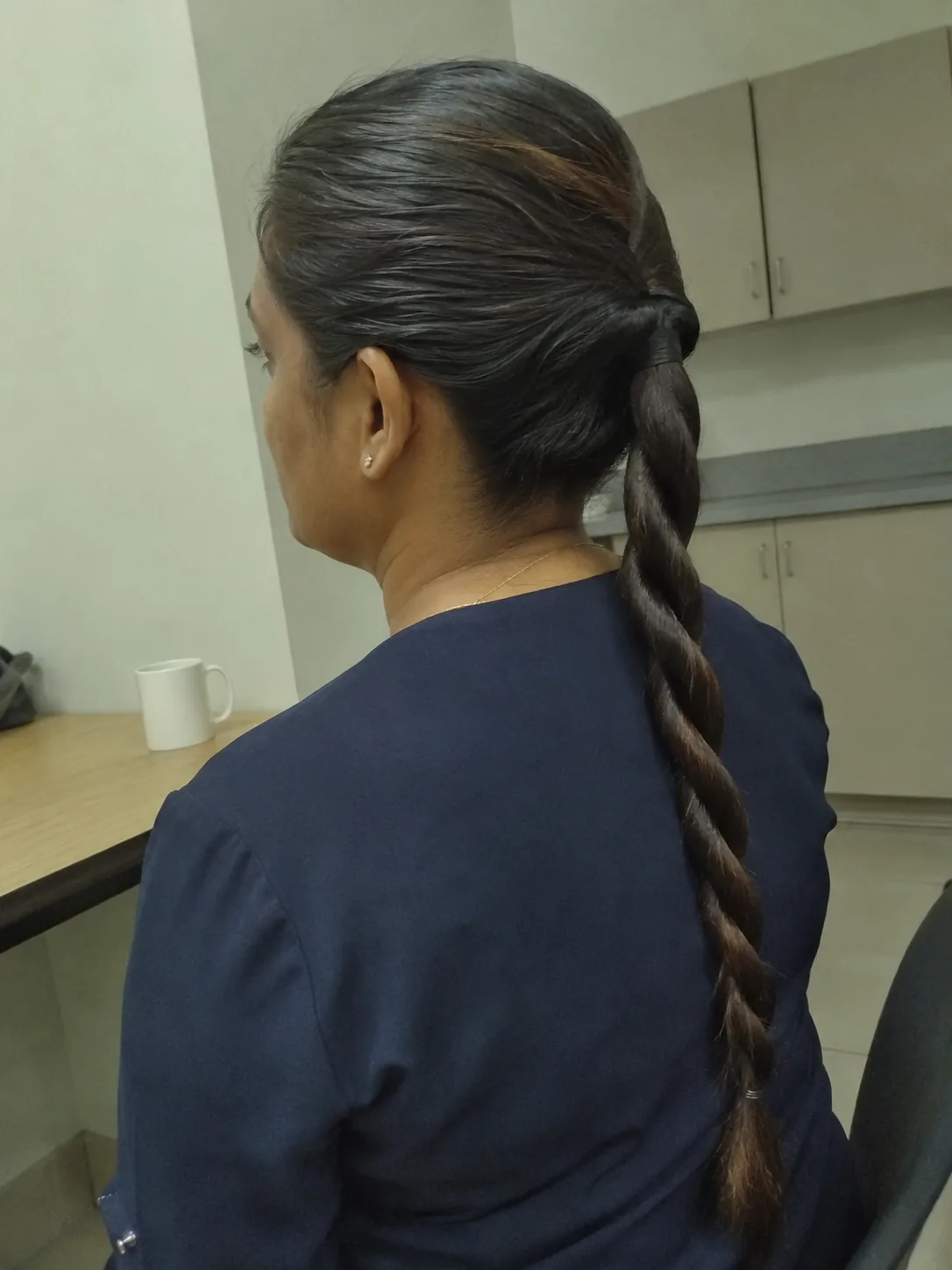
Two sections twisted around each other create a rope-like tail with a clean spiral pattern. It is visually simpler than a multi-strand braid and usually reads best when the sections remain clearly defined from the base to the ends.
A rope twist is a good option when an ordinary loose tail feels unfinished but a detailed braid feels busier than you want. It also keeps the length collected, which can reduce loose strands moving across clothing during the day.
Three-Strand Braided Ponytail
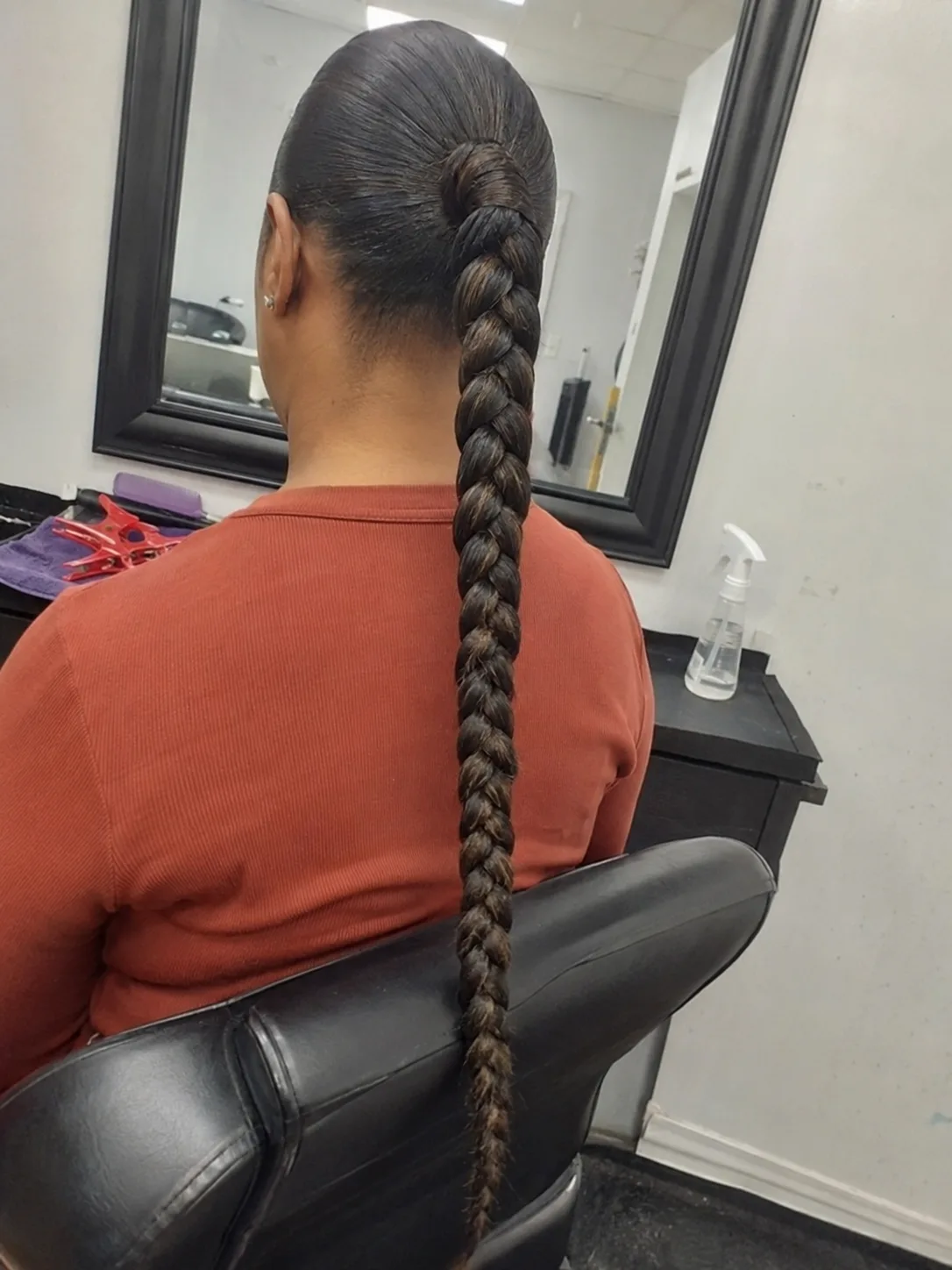
Gathering the hair first and braiding the entire ponytail produces a very different result from wearing loose lengths. The tail becomes narrower, more contained, and less likely to spread across the shoulders or back.
The braid can remain firm and compact or be gently expanded for a fuller appearance. A wider braid usually emphasizes texture and volume, while a tighter plait creates a cleaner line.
This is one of the more practical ponytails for active days because the hanging length stays organized. A very high anchor paired with a long, heavy braid creates more movement at the base, so the placement still deserves attention.
Fishtail Ponytail
A fishtail construction creates finer, more intricate crossing through the tail than a standard braid. The visual interest comes from the weave itself, making extra decoration largely optional.
It rewards enough length for the pattern to become visible. Expanding the outer edges makes the braid appear broader and more textured, while keeping it compact gives a sharper finish.
The technique takes more manipulation than a basic three-strand braid, so it makes the most sense when the tail is meant to be a visible feature rather than a quick way to contain the hair.
Cornrow-to-Ponytail Style
Cornrows can replace the smooth loose-hair base entirely. Individual braided sections travel toward a shared anchor, where the remaining hair continues into a loose, braided, or extension ponytail.
The convergence area is the important construction point. Several braids meeting at one position create a much more structured base than hair gathered with an elastic.
That structure makes this option visually strong from every angle because the scalp pattern becomes part of the hairstyle. Section size, braid direction, added-hair weight, and root comfort need to work together. A neat pattern isn’t worth forcing through pain or excessive tension.
Flat-Twist Ponytail
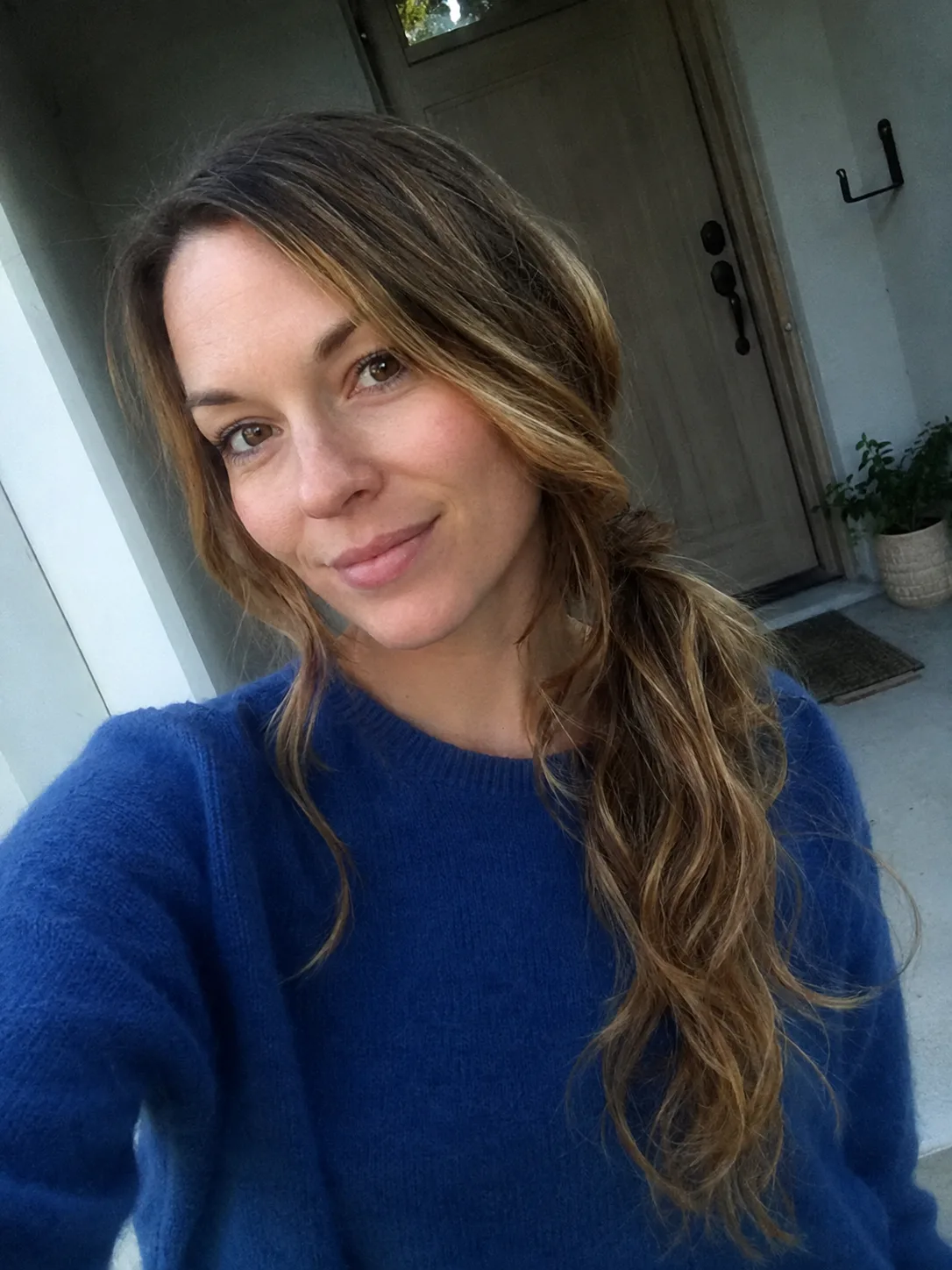
Flat twists create softer raised lines across the scalp than many cornrow patterns. The twists can travel straight backward, curve from the sides, or form larger directional sections before joining the ponytail.
This is particularly attractive on natural textured hair because the base retains visible texture even though the hair is organized close to the scalp.
The tail can remain curly, coily, twisted, or stretched. Keeping some relationship between the texture of the base and the tail usually makes the finished style feel more connected.
Braided Crown Into a Ponytail
Instead of sending every braid directly toward the ponytail base, a crown braid frames part of the head before feeding into or meeting the gathered hair. The braid becomes a structural border while the tail supplies movement.
This works well for dressier styling because detail is visible from the sides before the eye even reaches the ponytail. It also gives shorter front sections a clear role in the hairstyle instead of requiring every strand to travel directly into one elastic.
A crown braid occupies more physical space than a flat slicked section. Glasses arms, decorative pins, or headpieces can compete with that raised detail around the temples, so accessory placement is worth checking before the style is finished.
Added-Hair Ponytails and Attachment Choices
Drawstring Ponytail
A drawstring ponytail changes the construction by attaching a ready-made hairpiece over a prepared base, commonly a small bun or secured ponytail. Drawstrings, combs, or clips may help hold the attachment depending on its design.
This route is useful when you want a noticeable change in length, curl pattern, or fullness without styling every strand of the tail from your own hair.
Attachment comfort deserves more attention than the front-view photograph. A heavy hairpiece concentrated over a small base can feel very different after prolonged movement. The attachment should stay secure without scraping, pinching, or requiring your natural hair to be pulled excessively tight underneath it.
Wrap-Around Extension Ponytail
A wrap-around ponytail uses an attachment designed to fasten around an existing ponytail or small base, with a separate strip of hair often wrapping around the connection.
Its main advantage is the clean transition between your base and the extension. The wrap disguises the attachment while allowing the tail to hang freely.
This is a stronger option than piling multiple decorative elements around the elastic when a seamless base is the priority. Match the base placement to the amount of length and movement being added; an extra-long extension feels very different at the crown than it does lower on the head.
Braided Extension Ponytail
Here, added hair becomes part of one long braid extending from the ponytail base. The result is narrower and more controlled than a loose extension ponytail but can still create dramatic length.
Construction at the anchor matters because the braid acts as a single moving unit. Greater length and density create more leverage as it swings.
A moderate-length braid is often the more practical choice for travel, long seated periods, or frequent movement. Extra length earns its place when the dramatic line of the braid is central to the outfit or occasion.
Hybrid Ponytails That Change the Overall Shape
Half-Up Ponytail
Only the upper section is gathered, leaving the rest of the hair down. That makes the half-up ponytail fundamentally different from a full ponytail: it lifts hair away from the face without removing the volume and movement through the lower lengths.
Curly and coily hair can create especially strong contrast between the raised upper section and the loose hair below. Straight and wavy hair produce a more elongated profile.
Section depth changes the result considerably. Taking too much hair into the ponytail can leave the lower section looking sparse, particularly on lower-density hair. A smaller upper section often preserves better balance.
Stacked Ponytail
Two ponytails placed vertically can create the appearance of a longer, fuller fall. The upper ponytail hides part of the lower base, allowing both sections to read as one extended shape from a distance.
This technique is most convincing when the texture and direction of both tails blend naturally. Curls and waves tend to disguise the separation especially well because overlapping movement breaks up the join.
It is an underrated option for creating visual length without attaching an extension. The drawback appears during close inspection or vigorous movement, when the two bases can become easier to see.
Folded Loop Ponytail
Instead of pulling the hair completely through the elastic on the final pass, part of the length remains folded into a loop. The ends may hang free, wrap around the base, or become part of the design.
The result sits between a ponytail and a compact bun. It is shorter, less swingy, and often easier around collars or seatbacks than a full loose tail.
This works particularly well when you want hair contained without creating a formal bun. Healthy ends remain more visible when they are deliberately left out, so the lower perimeter becomes part of the finished appearance.
Choosing the Ponytail by Construction, Not Just the Photo
The easiest way to narrow these styles is to decide what you want the base and tail to do separately.
A sleek high ponytail is mainly about lift. A low ponytail emphasizes a compact outline. Curly and coily ponytails let natural texture supply much of the shape. Braids and twists organize the tail into a defined structure. Attachments create changes in length or fullness that your natural ponytail may not provide in its current state.
Then consider your routine. Long loose tails move across jackets, backpacks, seatbelts, and chair backs. Low bases can meet collars. Large hairpieces add weight exactly where they attach. Cornrows and flat twists change scalp access compared with a loose ponytail that can be removed at the end of the day.
Hair condition should also change the plan. Fragile or broken perimeter hairs don’t need to be forced into a tight base to make the ponytail look neat. Shorter pieces can be softly incorporated, left free, or handled with a gentler construction.
For low-density hair, heavy internal manipulation around the base can expose more scalp than expected. Fine strands may need a different securing approach even when overall density is high. Looking at both factors gives you better information than simply describing the hair as thin.
Maintenance, Comfort, and the Base of the Ponytail
Most ponytail problems start at the anchor. The elastic, wrap, braid convergence, or attachment has to control the hair while still allowing normal movement without persistent pulling.
A ponytail should feel secure rather than painful. Repeated tight styling can contribute to traction-related hair loss, particularly where pulling is concentrated around vulnerable areas. Persistent pain, stinging, sores, broken hairs around the hairline, sudden shedding, or a concerning density change deserves more attention than another layer of styling product. Loosen or remove the source of tension, and talk with a dermatologist or another qualified healthcare professional when symptoms persist or concern you.
Maintenance also changes according to styling state. A loose removable ponytail gives straightforward access to the scalp and lengths. Cornrowed or flat-twisted bases require cleansing and drying around sections. Added hair can extend drying needs because the attachment, natural base, and added lengths may hold moisture differently.
At night, reducing friction can help preserve the surface of the style. A smooth scarf, bonnet, or pillowcase may reduce tangling and rubbing, but it can’t correct an uncomfortable base. Very long ponytails may also need to be repositioned so you aren’t lying directly on the anchor or repeatedly trapping the length underneath your body.
Before an event, test the ponytail with everything that will physically interact with it. Sit against a chair. Put on the coat. Try the glasses, veil, hat, or headpiece. Turn your head fully. A style that photographs beautifully from the front can become irritating once a comb presses into the base or a dense tail is trapped between your back and a seat.
Related Hairstyles to Explore
FAQs
Can short hair be worn in a ponytail?
Yes, provided enough hair reaches the intended anchor comfortably. A lower base usually collects shorter lengths more easily than a high one. Hair that doesn’t reach can remain softly loose instead of being forced into the elastic. Drawstring or wrap-around attachments can add a visible tail once the natural hair has been prepared into a suitable secure base.
Do curly or coily ponytails need a smooth base?
No. Curly and coily ponytails can keep visible texture from the hairline through the tail. Smoothing is a styling choice, not a requirement for a finished appearance. Working with the hair in its usual shrunken or stretched state also gives you a more realistic idea of where the ponytail will sit and how much length will show.
How can I make a ponytail look fuller without adding extensions?
Texture, placement, and construction can all change the appearance of fullness. Curls and waves spread the tail visually, a stacked ponytail can create more apparent length and volume, and gently expanding a braid or bubble ponytail increases its width. None of these techniques creates actual density; they redistribute or visually enlarge the hair already present.
Which ponytail is easiest for exercise?
A moderate-height ponytail with the length braided or otherwise contained is often easier to manage than a very high, extra-long loose tail. The hair moves less across the shoulders and back, while the anchor doesn’t need to sit at the highest point of the crown. Your preferred exercise, hair length, helmet use, and scalp comfort can change that choice.
Hair Texture & Upkeep Style Matcher
Select your natural hair texture and daily maintenance window to get an instant styling formula and heat safety cap.
Heat Cap: 320°F (160°C)
A versatile three-strand braid beginning at the parietal ridge, securing the top half while allowing natural wave texture to flow freely around the shoulders.
Conclusion
The most useful way to choose among ponytail hairstyles is to look beyond high, medium, or low placement. Decide whether you want loose movement, natural texture, a compact braid, visible scalp design, or added length first. Then choose an anchor that supports that construction comfortably.
For everyday versatility, a mid-height ponytail is hard to beat. Curly and coily ponytails are stronger when texture deserves to remain part of the design, while braided and twisted versions make sense when you want the length contained. Extensions are worth the extra construction when added length or fullness is central to the result.
Take your preferred reference photo into the planning stage, but pay equal attention to the base, your normal styling state, and what the ponytail will touch once you start moving through the day.
Editorial Standards & Hair Health Guidance
Every style featured on Tress Atlas is curated with a focus on real-world wearability, scalp tension management, and cuticle preservation. When trying protective styles or tight updos, ensure perimeter hairline sections remain tension-free to avoid traction stress on delicate follicles. For heat styling, cap tools below 350°F (180°C) to prevent thermal keratin denaturation.
Scientific Sourcing: Practices aligned with the American Academy of Dermatology (AAD) on traction alopecia risk reduction and cosmetic trichology research on hair tensile strength.