18 Cross Country Hairstyles That Stay Secure While You Run
A good cross country hairstyle has a harder job than simply keeping hair out of your eyes. It has to handle repeated movement, sweat around the hairline and nape, changing weather, and enough time on your feet for a minor annoyance to become a major distraction.
The most practical styles control two things: where the hair is anchored and how much loose length is allowed to swing. A very high ponytail is quick, but a long tail can whip from side to side. A braid controls that movement. A low bun controls it even more, although the placement has to stay comfortable rather than pulling tightly at the roots.
Hair texture and styling state matter too. Straight hair that slips from an elastic behaves differently from shrunken coils, stretched natural hair, locs, or an installed braid style. The right cross country hairstyle is the one that stays secure without requiring painful tension to do it.
| Your priority | Strong starting option | Think about |
|---|---|---|
| Least movement | Low braided bun | Keep the base comfortable |
| Fast styling | Low ponytail | Long lengths can still swing |
| Control short layers | Front braids plus ponytail | Avoid pulling tiny edge hairs |
| Curly or coily volume | Puff | Choose a gentle anchor |
| Long braids or locs | Low bun or low ponytail | Weight becomes more noticeable while running |
Simple Styles for Runners Who Want a Fast Start
1. Low Ponytail
The low ponytail is one of the easiest cross country hairstyles to live with because the anchor sits close to the head. That usually means less bouncing than a very high ponytail, especially with long or dense hair. Gather the hair near the nape with a fabric-covered elastic and keep the base secure enough to hold without cranking it tighter every time it loosens.
Long hair can still brush the upper back or catch against clothing. Braiding the tail is the better version when that movement becomes distracting.
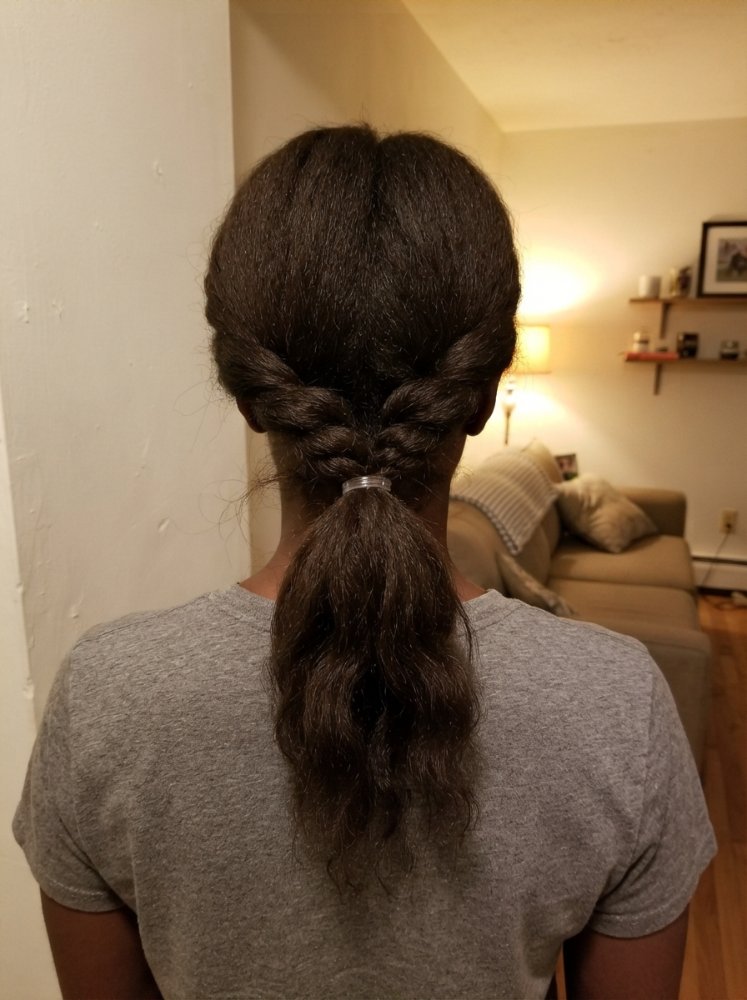
2. Mid-Height Braided Ponytail
Braiding the ponytail solves the biggest weakness of a standard pony: the loose length. Start with a ponytail around the middle-back of the head, braid from the elastic downward, and secure the end.
This is particularly useful for long hair because the braid moves as one section rather than hundreds of loose strands. It also keeps sweaty hair from spreading across the neck and shoulders.
Placement deserves some experimentation. Higher anchors create more noticeable movement, while very low placement may rub against a shirt collar. Somewhere between those extremes is often the easiest running position.
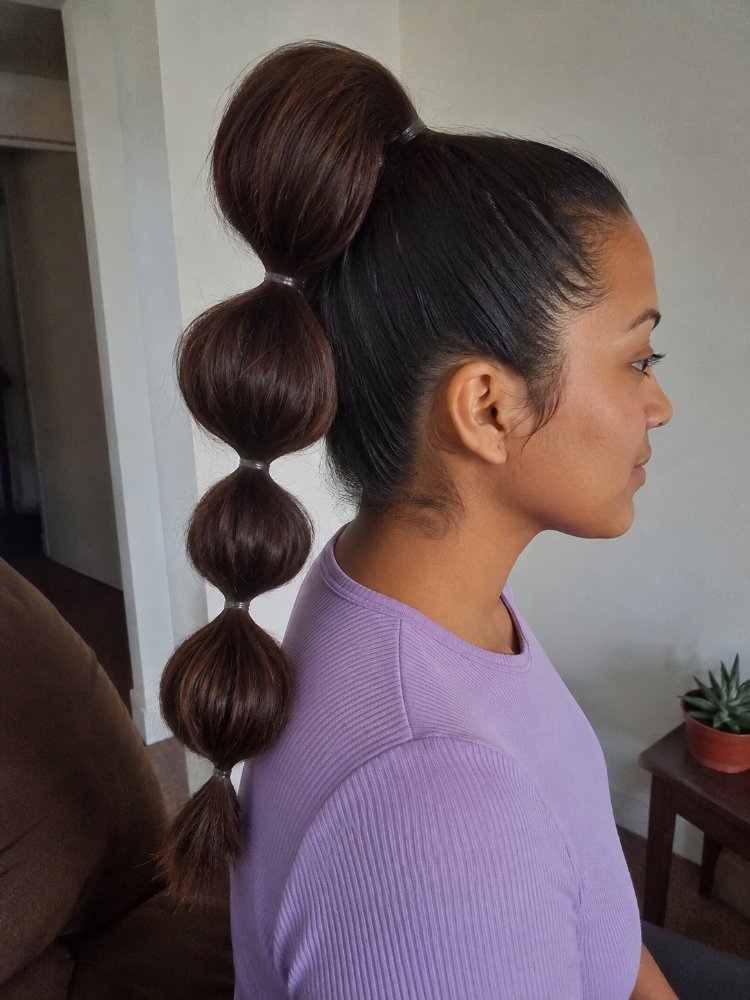
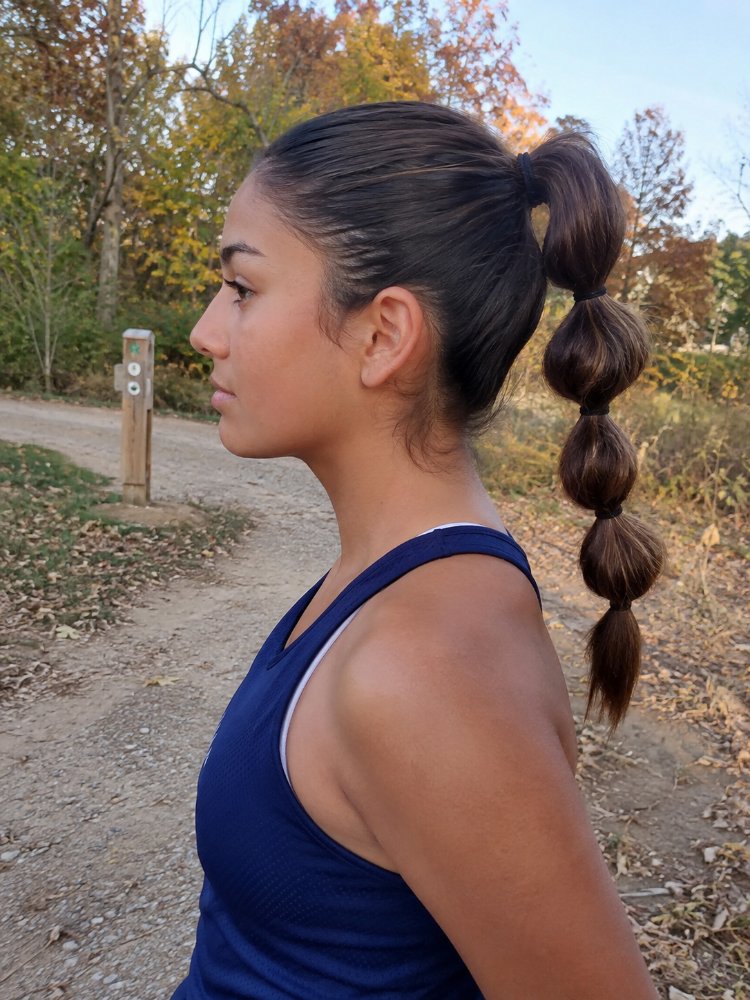
3. Bubble Ponytail
A bubble ponytail gives you control without requiring a traditional braid. Secure the initial ponytail, then add additional elastics down the length so the hair is divided into rounded sections.
The segmented construction prevents a long ponytail from spreading as much during a run. It can also work well on layered hair that gradually escapes from a normal braid.
Keep the elastics secure rather than extremely tight. Every additional tie creates another point of compression, so this style works better when the sections are comfortably held from the beginning.
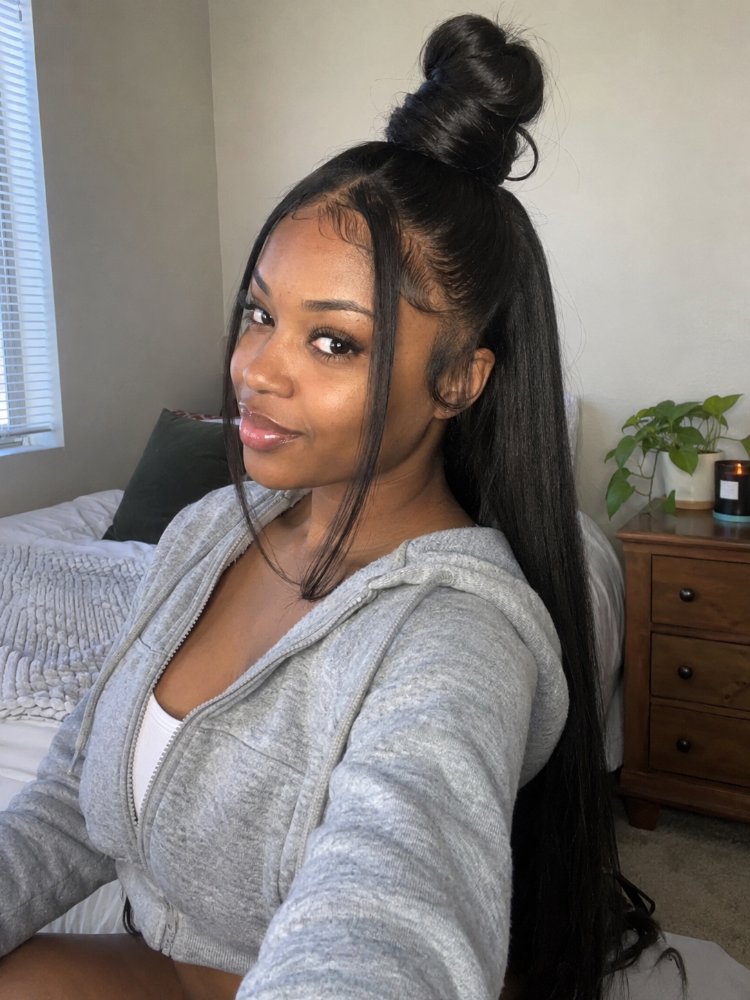
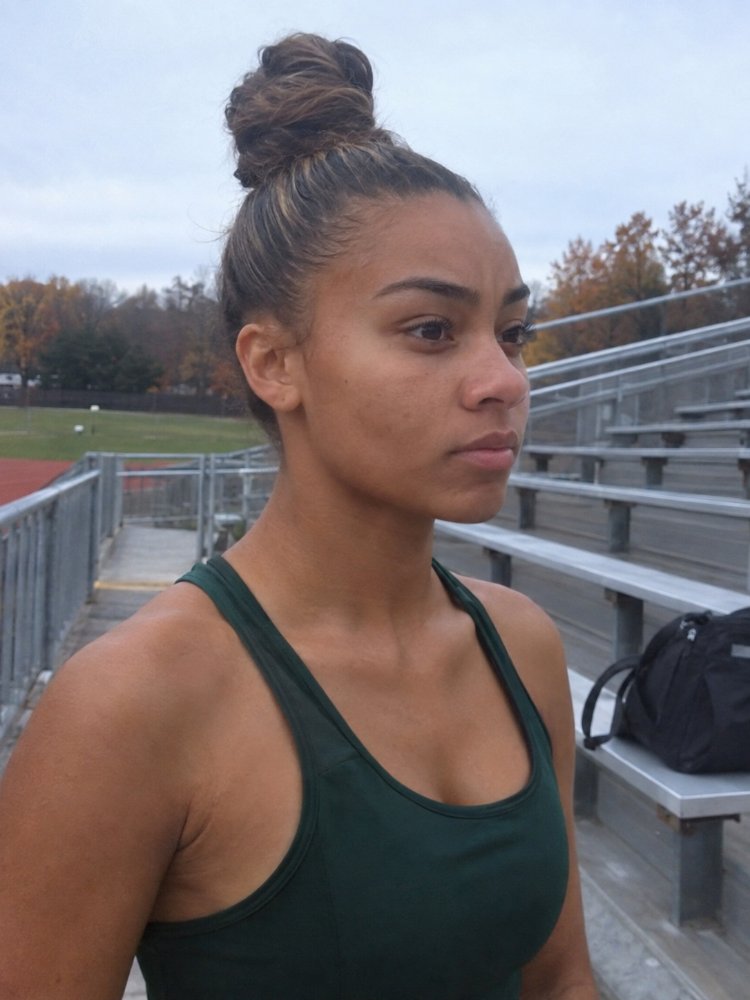
4. High Bun
For runners who hate feeling hair on the neck, a compact high bun removes almost all loose movement. Twist or wrap the ponytail close to its base and secure it with an elastic and pins as needed.
Height changes the experience considerably. A giant topknot has more leverage and can wobble with every stride. A smaller bun positioned toward the crown usually feels more stable.
This is a stronger choice for moderate-length hair than an oversized bun built from very long, heavy hair. The more mass you stack high on the head, the more securely the base has to support it.
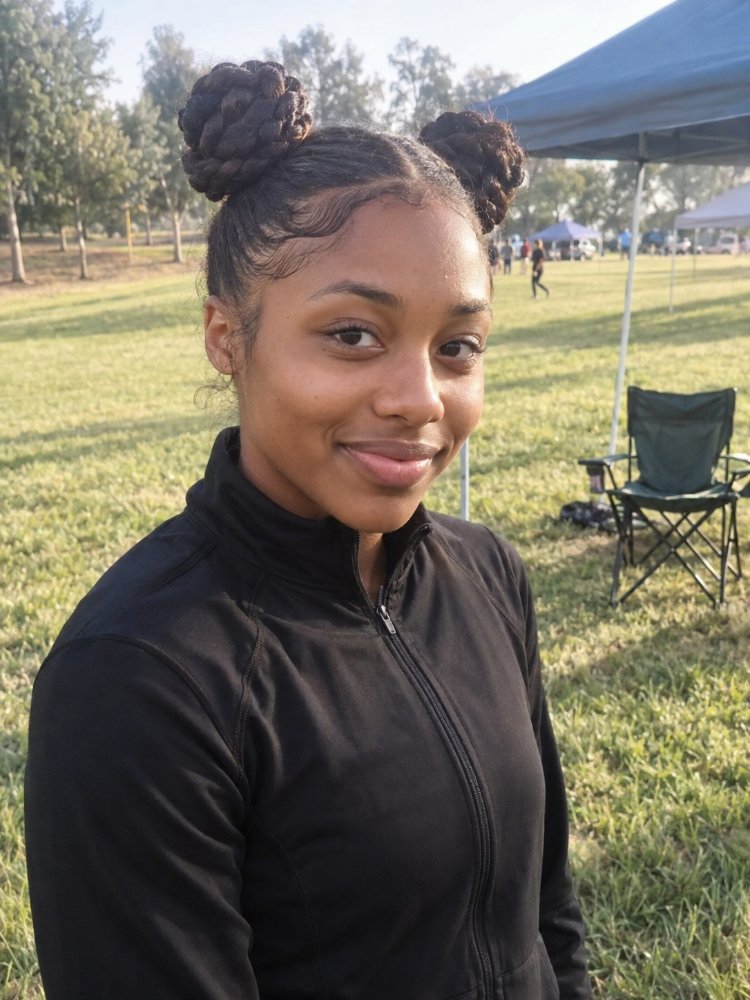
5. Low Braided Bun
Few styles control long hair as efficiently as a low braided bun. Make a low ponytail, braid the length, then wrap the braid around its base and pin or secure it in place.
The braid keeps shorter pieces contained while the bun eliminates most swinging. It is especially practical for long, dense hair when a ponytail becomes irritating after the first part of a run. Position the bun so it clears the neckline of your top rather than repeatedly rubbing against it.
Braids That Reduce Bounce
6. Single Center Braid
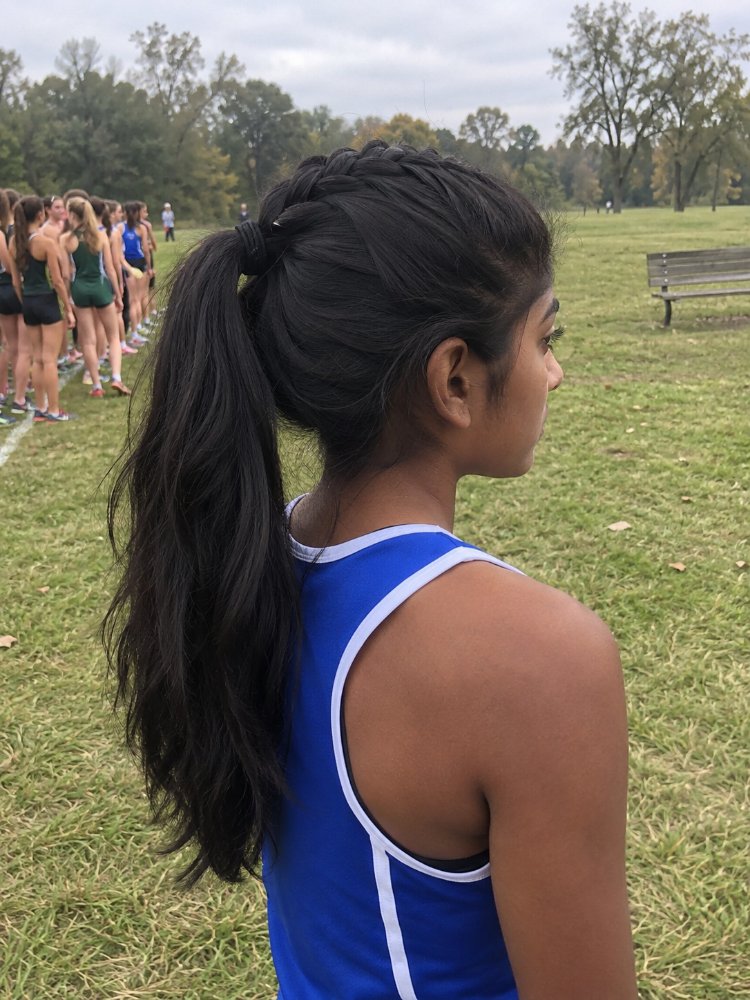
A French or Dutch-style center braid distributes the hair along the scalp before continuing into one braid down the back. That construction makes it much more stable than gathering everything at a single elastic.
This is a useful option for runners with medium or long hair who dislike the concentrated pull of a ponytail. The scalp section controls shorter layers, while the braided length keeps the ends from flying around.
The braid should feel secure during head movement without producing stinging or persistent pulling at the hairline. A neat braid doesn’t need to be painfully tight to survive a run.
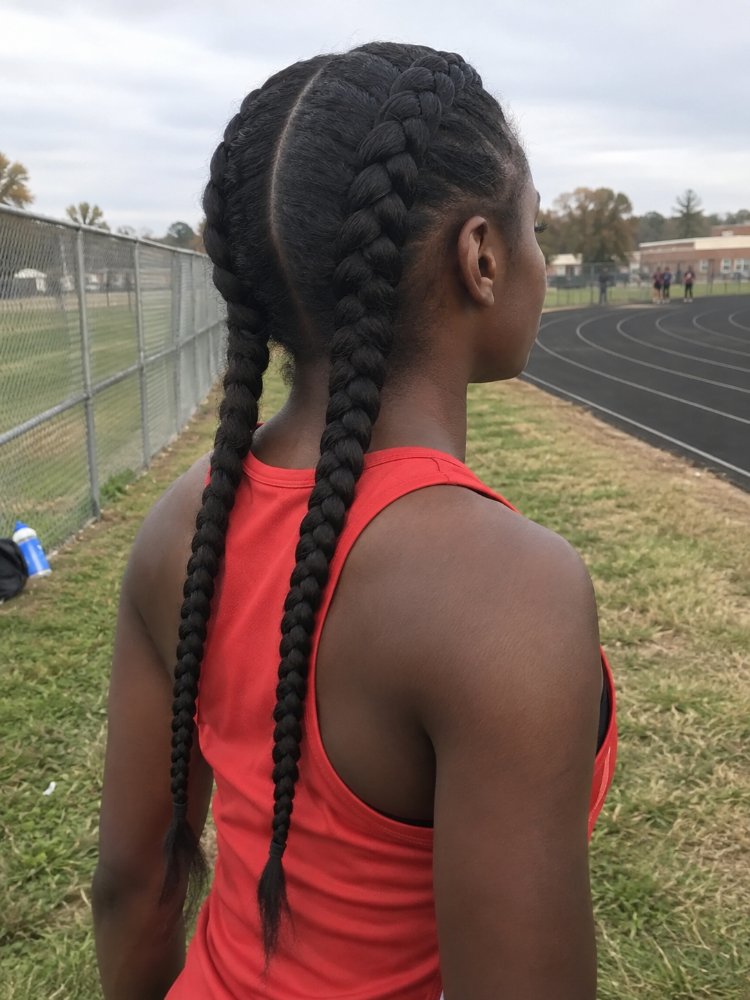
7. Double Braids
Splitting the hair into two French or Dutch braids is one of the strongest choices for long runs. Each side contains less hair than one large center braid, and the style distributes the weight instead of concentrating everything at one point.
Double braids are also useful for layered cuts because the two smaller sections can capture pieces that would work loose from one large braid. They fit easily beneath many headbands because the crown stays relatively flat.
For thick or very long hair, the lower braid lengths may still hit the shoulders. Bringing the ends forward can keep them from repeatedly bouncing against the back.
8. Side Braid Into a Low Ponytail
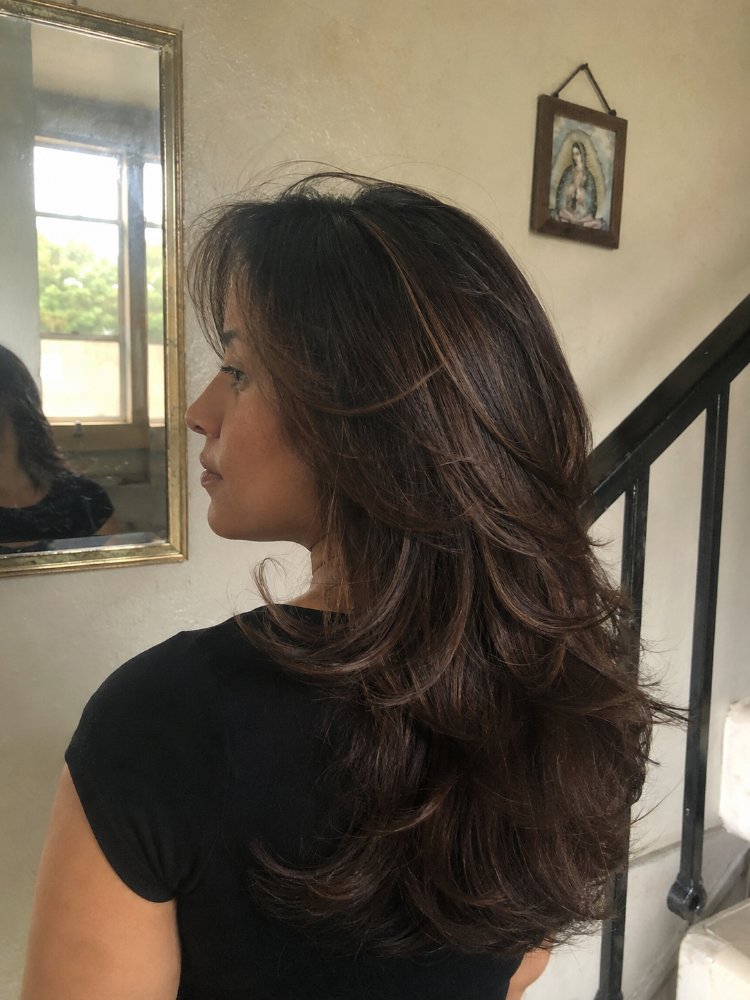
Shorter front layers are often the real problem during a run, not the full length. A side braid can gather those pieces first and then feed into a low ponytail at the back.
This construction gives you targeted control without braiding the entire head. It’s useful for growing-out bangs, face-framing layers, or hair that repeatedly slips from a headband around one temple.
The ponytail can stay loose or be braided depending on length. That makes this one of the more adaptable options for runners whose haircut changes frequently.
9. Mini Front Braids With a Ponytail
Two small braids near the front hairline can keep stubborn pieces away from the face while the rest of the hair goes into a regular ponytail. Unlike a full pair of scalp braids, most of the hair remains quick to style.
This works particularly well when sweat causes small front sections to curl, separate, or stick to the forehead. Direct the braids backward toward the eventual ponytail so they become part of the anchor.
Leave very fine or fragile hairs around the perimeter alone when they don’t comfortably reach. Forcing every short strand into a tight braid creates more pulling than the style needs.
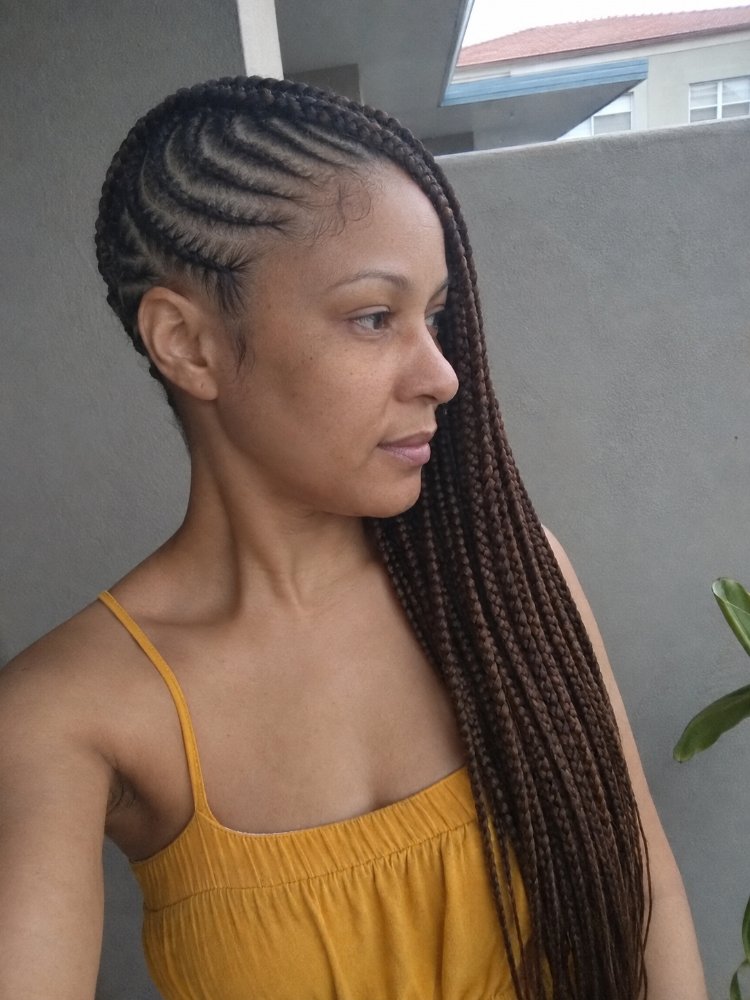
10. Cornrows Into a Low Ponytail or Bun
Cornrows provide excellent movement control because the hair remains close to the scalp before the lengths are gathered at the back. The finished shape can feed into natural hair, braided lengths, a ponytail, or a compact bun.
The construction matters more than how sharp the parting looks. Sections should remain comfortable during facial movement and head turning, and added hair increases the total weight the roots have to support.
A low finish is particularly practical for running because it avoids placing a heavy bundle high on the head. After sweaty runs, scalp access and thorough drying become part of maintaining the style.
Cross Country Hairstyles for Curly, Coily, and Natural Hair
11. High Puff
A high puff keeps curls and coils off the neck without requiring you to straighten or heavily manipulate the texture. Gather the hair toward the crown with a soft elastic, band, or other comfortable puff method and allow the ends to remain full.
This style is fastest on hair that already has enough length to gather easily. Trying to force short perimeter hairs upward tends to create unnecessary tension.
A very large puff can bounce more than the photograph suggests. Moving the anchor slightly lower can improve stability while preserving the same rounded shape.
12. Low Puff
The low puff is the more practical sibling of the high puff for runners who prioritize stability. Hair is gathered near the nape, leaving the curl or coil pattern visible through the ends without placing the anchor high on the head.
It works especially well on stretched natural hair or curls that gather comfortably toward the back. Shrunken hair may create a shorter, denser puff, which changes the appearance but not the basic construction.
Because the ends remain loose, expect some contact with the neck on longer textures. A low puff is still easier to redo quickly than a detailed braided style.
13. Flat Twists Into a Puff
Flat twists can solve the problem of loose front and side sections while leaving a puff at the back. The twists travel toward the anchor, containing hair close to the scalp before the remaining length is gathered.
This is a stronger choice than repeatedly smoothing curls backward with a tight band when you want more structured control around the face. The twists can also follow the hair’s natural styling state without requiring a pressed finish.
Keep the convergence area comfortable. Several sections meeting at one anchor can concentrate pulling if each twist has been installed too tightly.
14. Two-Strand Twists Gathered Back
Existing two-strand twists are easy to adapt for running. Gather them into a low ponytail, divide them between two low sections, or wrap longer twists into a compact bun.
The advantage is simple: the hair is already organized into separate units, so you don’t have to restyle the full texture before every run.
Longer or denser twists make a low anchor particularly useful. They carry more mass than loose hair of the same apparent outline, and a bouncing high ponytail can become distracting during repeated strides.
After a sweaty workout, give the roots enough airflow to dry instead of immediately covering damp hair for an extended period.
15. Mini Braids Gathered Low
Mini braids give you tremendous control over loose strands, but the running configuration should stay simple. A low ponytail or low bun keeps the installed lengths together without repeatedly repositioning them.
This style is worth considering for runners who already wear mini braids as part of their normal routine. Installing a complex long-term style solely to solve one race-day problem usually creates more work than choosing a simpler braid or ponytail.
Pay attention to added-hair weight when extensions are involved. Long braids feel different during running because every stride moves that length behind you.
Short Hair, Layers, and Locs
16. Headband With a Pinned-Back Bob or Pixie
Short hair doesn’t always need an elastic. A sports headband can control the hairline while bobby pins or small clips secure longer sections around the temples.
The strongest setup addresses the pieces that actually fall forward. A short bob may only need the front tucked and pinned, while a grown-out pixie may need control around both temples and the crown.
Sweat can reduce the grip of a style that depends heavily on smoothness, so choose placement that works with the haircut’s natural direction. Trying to flatten every short piece is rarely necessary.
17. Half-Up Mini Ponytail for Short or Layered Hair
A half-up ponytail works when the front and crown are long enough to gather but the lower hair isn’t. It keeps the pieces most likely to fall into the eyes contained without demanding enough length for a full ponytail.
This option leaves hair around the nape loose, so it’s better for a short cut than for shoulder-length hair that will repeatedly stick to the neck. Curly and wavy hair can keep its natural volume through the lower section.
A headband can provide extra control without changing the basic style.
18. Low Loc Ponytail or Loc Bun
Long locs are often more comfortable for running when they’re gathered low. A low ponytail controls the direction of the locs while a low bun removes most of the swinging length.
Mature or lengthy locs can place substantial weight at an anchor, which makes an oversized high bun less appealing for sustained running. A lower position usually requires less fighting against movement.
The bun itself should remain compact enough to stay clear of the shoulders and neckline. Secure it using a method that doesn’t sharply bend or compress the same locs every time.
Scalp comfort still comes first. A style that feels increasingly tight as you move needs adjustment, even if it looks perfectly secure.
What Race Photos Don’t Show
Cross country hairstyles are usually photographed before the hardest part begins. The fresh ponytail looks smooth. The braids haven’t absorbed sweat. The hairline is dry. Nobody is showing you what the hairstyle feels like while running uphill with a wet neck and strands hitting the same spot for several kilometres.
Movement changes the practical ranking.
A long, loose ponytail looks simple but has considerable swing. Braiding that tail makes it quieter. Wrapping it into a bun removes even more movement. On the other hand, every step toward a highly contained style adds construction and may concentrate more force at the anchor if the base is overtightened.
Weather changes things too. Humidity may bring out curls and flyaways around the hairline. Rain adds water weight, particularly to dense hair, braids, twists, and locs. Hot conditions make scalp access and post-run drying more important.
You don’t need a hairstyle that looks untouched at the finish line. You need one that stays out of the way without becoming the thing you’re thinking about while you run.
| Hair situation | More practical choice | Less useful choice |
|---|---|---|
| Very long loose hair | Braided ponytail or low braided bun | Loose high ponytail |
| Short front layers | Mini front braids or headband | Constantly tightening one elastic |
| Curly or coily hair | Puff, twists, or flat-twist finish | Forcing every edge into the anchor |
| Long locs or installed braids | Low ponytail or compact low bun | Large high bundle |
| Movement bothers you | Braids or buns | Long loose lengths |
Sweat, Tension, and Post-Run Hair Care
A cross country hairstyle shouldn’t depend on excessive tightness. Running adds repeated movement to whatever tension is already present at the roots. Pain, stinging, or a hairline that feels aggressively pulled are signs to loosen or redo the style.
This matters especially with tight braids, heavy extensions, dense twists, and long locs. Repeated sustained pulling can contribute to traction-related hair loss over time. Persistent scalp pain, sores, redness, sudden shedding, or a concerning change in density deserves attention from a dermatologist or another qualified healthcare professional.
Sweat creates a different maintenance issue. The roots can remain damp even after the lengths feel dry, particularly with dense hair or installed styles. Give the scalp airflow after running and avoid trapping persistently damp roots beneath a scarf, bonnet, or other covering immediately afterward.
Your cleansing routine should respond to sweat, buildup, scalp comfort, and the hairstyle you’re wearing rather than following one rigid schedule. A runner with loose hair can usually access the scalp more easily than someone wearing cornrows, mini braids, or dense twists.
Friction is worth watching as well. Long braids, ponytails, or locs can rub repeatedly against shirt collars, jackets, backpack straps, and the upper back. Gathering the length higher or wrapping it into a low bun can reduce that contact without adding another complicated styling step.
How to Choose Your Cross Country Hairstyle
Start with the annoyance you want to eliminate.
Hair in your eyes: Prioritize front control. Double braids, mini front braids, flat twists, or a headband address the problem closer to its source.
A ponytail bouncing against your back: Braid the tail or turn it into a bun. This usually makes a bigger difference than simply tightening the elastic.
A hot, sweaty neck: High puffs and compact buns lift the hair away from the nape. Keep the anchor comfortable.
Heavy braids, twists, or locs: Move the bundle lower and reduce unnecessary swinging. A low ponytail or compact bun is usually more practical than stacking substantial length high on the crown.
Short hair escaping everywhere: Work with the haircut. Secure the front and temple areas first rather than trying to force hair that can’t comfortably reach a full ponytail.
Try your intended style during a regular training run before relying on it for an important meet. Turn your head, accelerate, bend forward, and notice where the hair shifts. A style can feel perfectly secure while standing in front of a mirror and become distracting once the body is moving continuously.
The simplest successful setup is usually the one worth keeping.
Cross Country Hairstyle Checklist
Before heading out, check the style in motion rather than judging it only by appearance:
Turn your head fully in both directions and check for pulling.
Jog in place and notice whether the ponytail, bun, braids, or locs bounce excessively.
Make sure pins and clips don’t press uncomfortably against the scalp.
Keep fragile or very short perimeter hairs out of an anchor they can’t comfortably reach.
Consider whether loose lengths will rub against your neck, collar, or back.
After a sweaty run, loosen the style when practical and let damp roots dry thoroughly.
Redo a style that hurts instead of making it tighter to stop movement.
Frequently Asked Questions
What is the best hairstyle for long hair during cross country?
A braided ponytail or low braided bun is a strong starting point. Both control the long length better than a loose ponytail. Choose the braided ponytail when you want something fast to redo and the bun when minimizing movement matters more.
How can I keep short hair out of my face while running?
Focus on the front rather than trying to gather the entire haircut. A sports headband, strategically placed bobby pins, small front braids, or a half-up mini ponytail can control longer fringe and temple sections while leaving the shortest hair alone.
Can I run cross country with box braids, twists, or locs?
Yes, provided the installation and running configuration are comfortable. Longer or denser lengths create more movement and weight, so gathering them into a low ponytail or compact bun is often easier than wearing a high swinging style. Scalp access and drying after sweaty runs also deserve attention.
Should I sleep in the same hairstyle I use for running?
It depends on the construction. A running style built around a firm ponytail or bun may create pressure you don’t need overnight. Loosening or changing the anchor can reduce prolonged pulling, while a smooth scarf, bonnet, or pillowcase may help limit friction according to your hair and normal routine.
Conclusion
The most useful cross country hairstyle isn’t necessarily the most elaborate one. Movement control matters more. A braid usually beats a loose tail when bouncing is the problem, while a compact bun is stronger when you want the length almost completely out of the way.
Choose the lowest-effort style that controls your specific trouble spots without requiring painful tension. Test it while actually running, adjust the anchor if it shifts or pulls, and pay attention to how your scalp and hair feel after the workout.