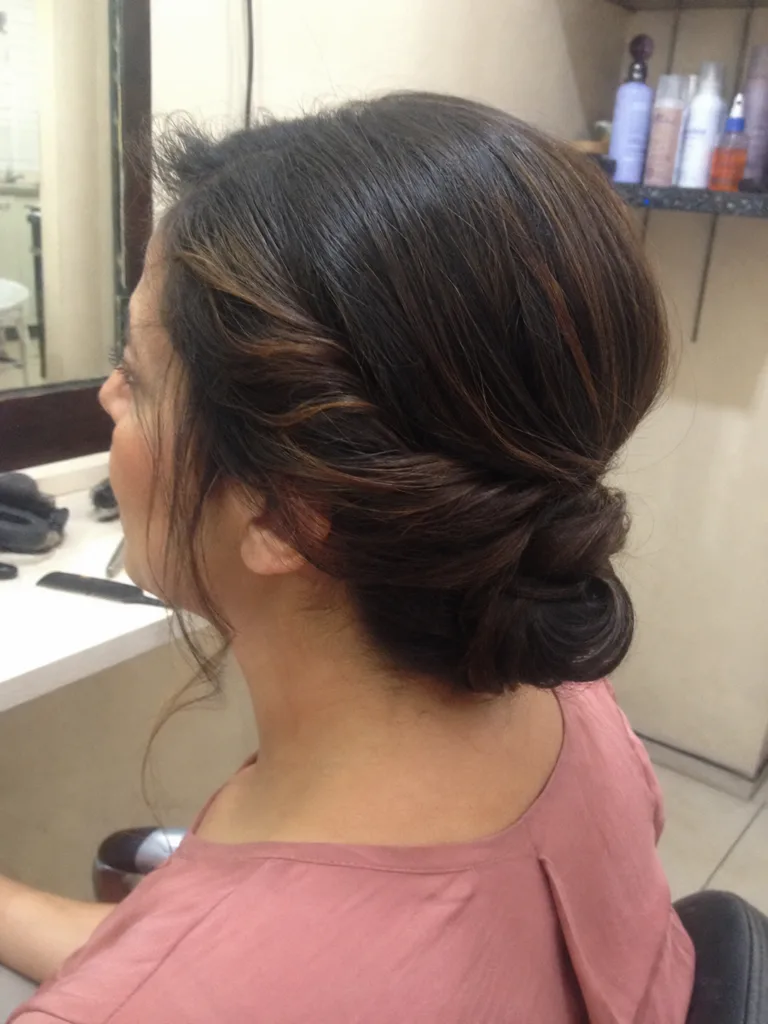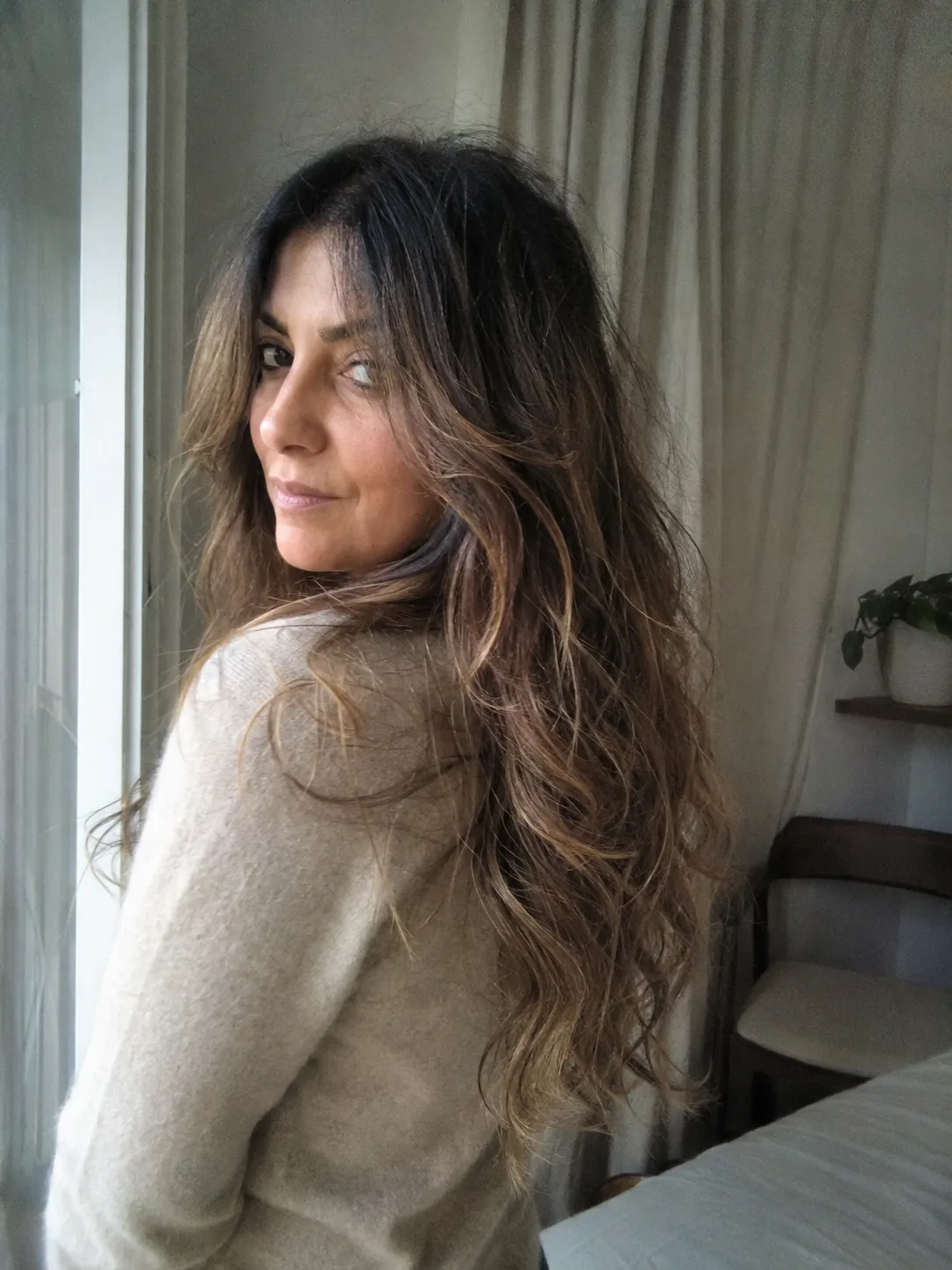
Hairstyles for Puffy, Frizzy Hair: Styling Guide & Cuts That Work With Your Volume
Puffy, frizzy hair usually becomes frustrating when the hairstyle depends on keeping every strand flat. The easier approach is to choose a shape that gives the volume somewhere useful to go.
That can mean rounded layers that distribute fullness, a braid that gathers expanding lengths, or an updo that still looks good after humidity softens the surface. Your natural texture matters too. Wavy hair that expands after air-drying behaves differently from tightly coiled hair with significant shrinkage, and neither should be treated like straight hair with a few flyaways.
Frizz itself also isn’t a haircut diagnosis. It can be part of your natural texture, appear with humidity, become more visible after brushing, or accompany dryness and damage. The hairstyles below focus on controlling the overall shape without requiring perfectly smooth hair.
Haircuts That Give Puffy Hair a Clearer Shape
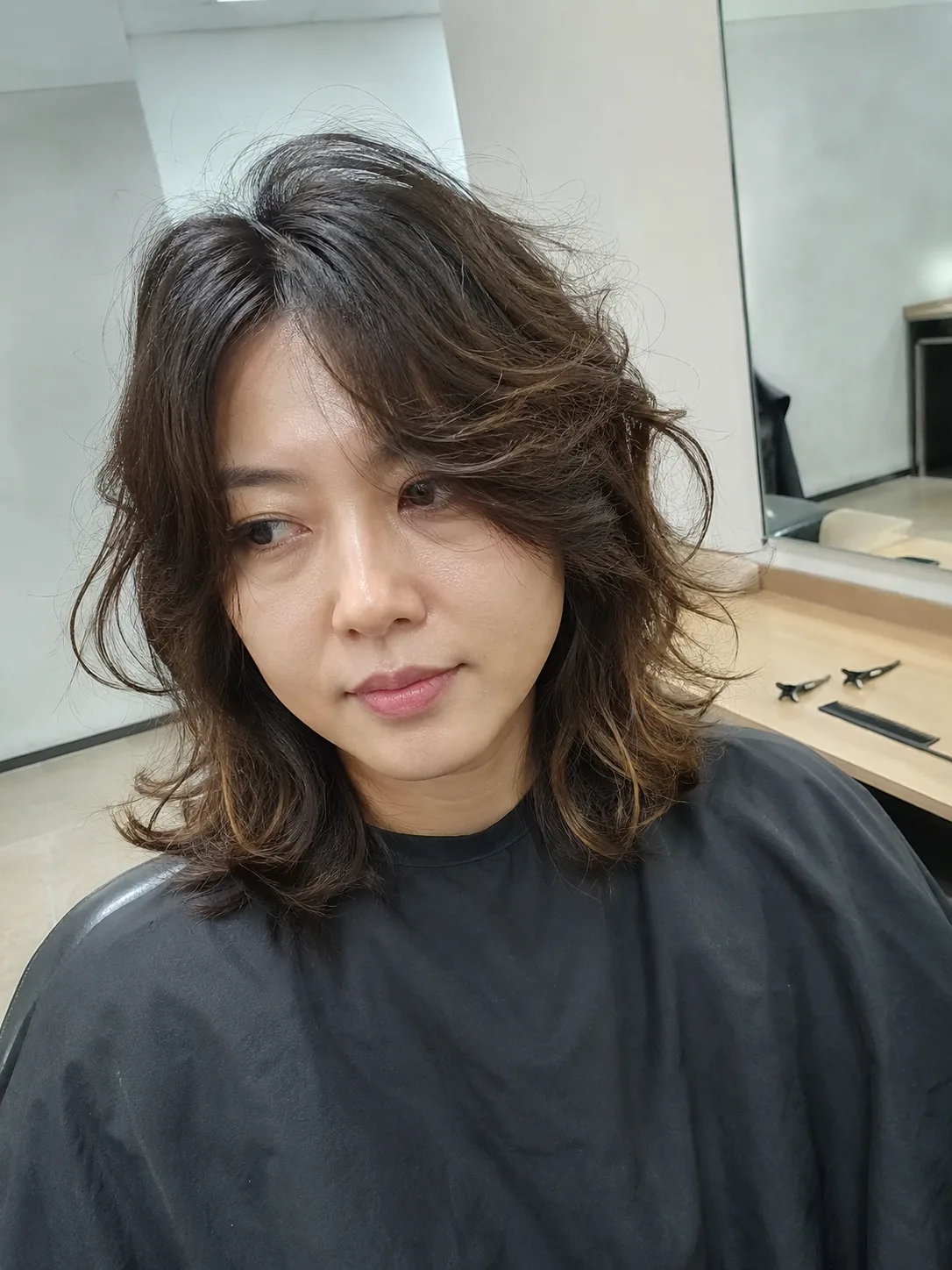
Rounded Shoulder-Length Layers
Rounded layers are one of the strongest choices when your hair naturally becomes full through the sides and ends. Instead of trying to make that fullness disappear, the cut distributes it around the head so the outline looks balanced from the crown to the perimeter.
Curl and wave patterns need to be considered in the state you normally wear them. A shape cut around stretched hair can sit much shorter or wider once curls shrink back. The same principle applies to coily hair with substantial shrinkage.
Ask for enough layering to move the bulk without hollowing out the interior. Excessive thinning or aggressive interior removal can leave the ends looking scattered, particularly when density is already low. The useful result is a rounded shape with movement, not layers added simply because the hair feels thick.
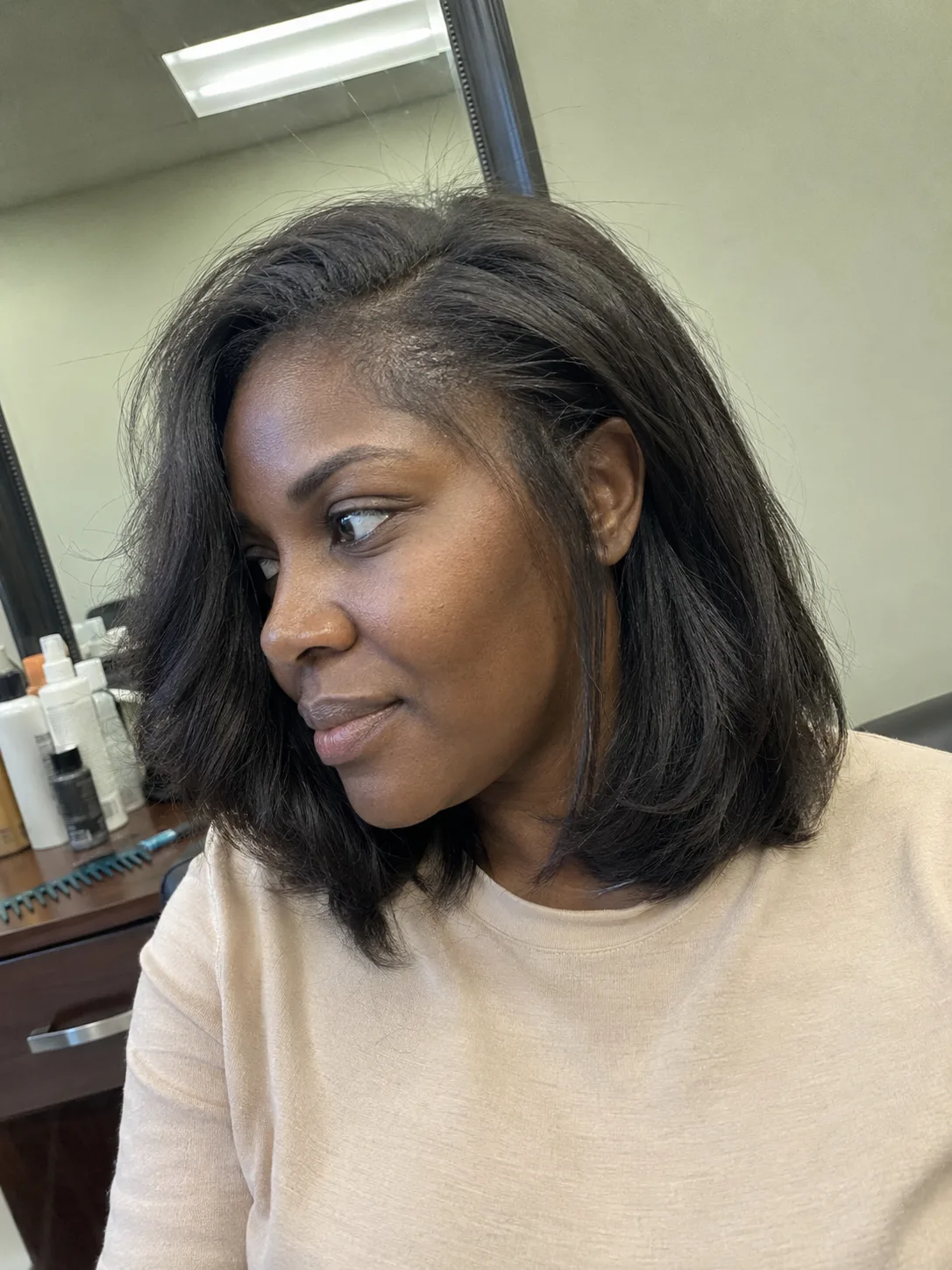
A Strong, Textured Bob
A bob gives expanding hair a defined perimeter, which can make natural puffiness look much more purposeful. Jaw-length and longer versions can work especially well when the ends have enough weight to form a recognizable line.
This cut becomes less forgiving when the interior is heavily thinned. A stronger lower edge usually gives frizzy hair more visual structure, while subtle internal shaping can prevent the sides from becoming overly triangular.
Long U-Shaped Layers
Keeping your length doesn’t require carrying one heavy block of hair all the way to the ends. A U-shaped perimeter with restrained long layers can preserve length while allowing full hair to move more freely.
This is a particularly practical direction for wavy or curly hair that grows outward as well as downward. Longer layers retain enough weight to limit excessive springing while preventing the bottom section from doing all the work.
Very short layers around the crown create a different result. They can boost height and texture, which is useful only when you’re comfortable with additional volume near the top.
A Soft Shag
A shag makes frizz part of the design. The broken-up perimeter, shorter crown pieces, and movement around the face all suit hair that refuses to stay perfectly uniform.
That freedom comes with a bigger haircut decision. A shag creates considerably more visible volume around the crown than long, conservative layers. On curly and coily hair, shrinkage can exaggerate those shorter sections, so reference photos should match the texture and styling state you actually plan to wear.
Fringe can be incorporated without straightening it. A curly or wavy fringe may sit higher after drying and vary from one wash day to the next. This is also one of the more salon-dependent choices in the list: the placement of the layers matters more than simply asking for a lot of texture.
Half-Up Styles and Ponytails That Keep Some Fullness
Half-Up Claw-Clip Style
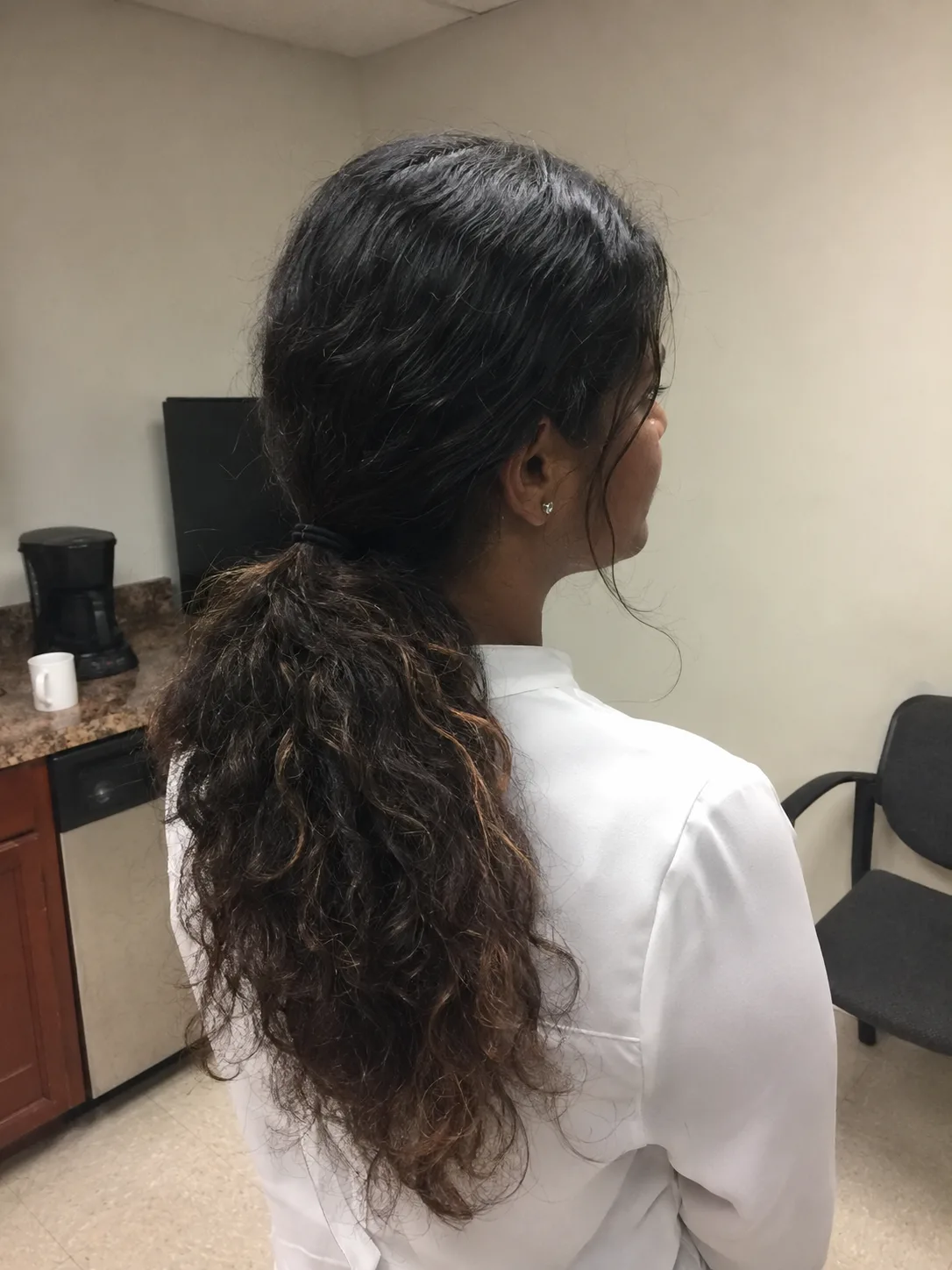
A claw clip solves one of the most common problems with puffy hair: too much volume around the face while you still want to wear the length down. Gather the crown and upper side sections loosely, twist them once, and secure them at the back. Leaving the lower hair free means you don’t have to flatten the entire head to make the style look finished. Choose a clip large enough to hold the actual density of your hair without forcing the teeth shut.
High Puff
For naturally curly and coily hair, a high puff turns expansion into the main feature. The roots are gathered upward while the ends stay full, giving the style a strong shape without requiring the curls or coils to become smooth.
The base should feel secure without forcing every short hair around the perimeter into the elastic. A fabric-covered elastic, soft band, or another comfortable anchor can gather the bulk while allowing fragile edge areas to sit naturally. This is more practical than a slick ponytail when preserving texture matters more than achieving a glassy surface.
Low Textured Ponytail
A low ponytail is an underrated option for hair that gets larger as the day goes on. Keep some natural lift through the crown, gather the hair near the nape, and let the ponytail retain its wave, curl, coil, or soft frizz. Because the style doesn’t depend on a completely smooth surface, humidity changes it less dramatically than a tightly slicked finish. It also avoids concentrating a long, heavy tail high on the head.
Pineapple Ponytail
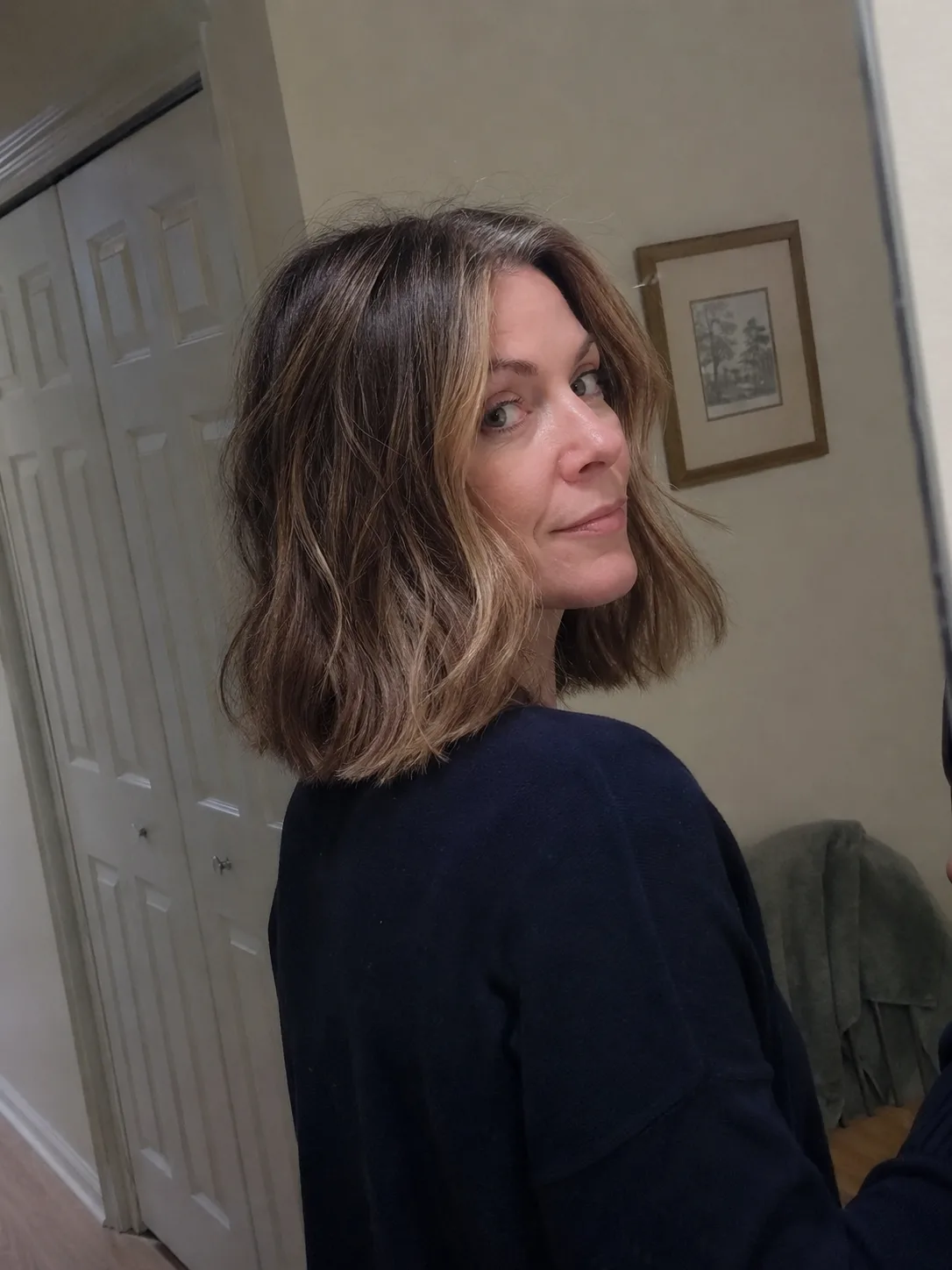
The pineapple is especially useful for curls and coils because it gathers the hair high while keeping much of the pattern loose. It can function as a casual daytime style as well as a way of keeping the lengths away from the neck.
The placement needs to suit your actual hair length. Shorter curls may fall around the crown like a puff, while longer hair can cascade forward. Avoid repeatedly pulling the same hairline sections tightly upward; a softer base preserves the relaxed character of the style.
Braids and Twists That Keep Expanding Lengths Together
Two Loose Dutch Braids
Two Dutch braids distribute the hair between two sections, making them useful when one large braid feels bulky. They also contain shorter layers and surface frizz more effectively than an open ponytail.
The best version for puffy hair doesn’t need a severely slicked starting point. Work with manageable sections, braid toward the nape, and allow the braid itself to have some fullness. Setting foam or another styling product suited to your hair can help with grip if needed, but product choice should follow your texture and buildup tolerance.
Comfort matters around the temples and hairline. Braids that sting, pull during facial movement, or leave the scalp sore are too tight. Looser construction is particularly important where shorter or more fragile hairs meet the braid.
A Single Low Braid
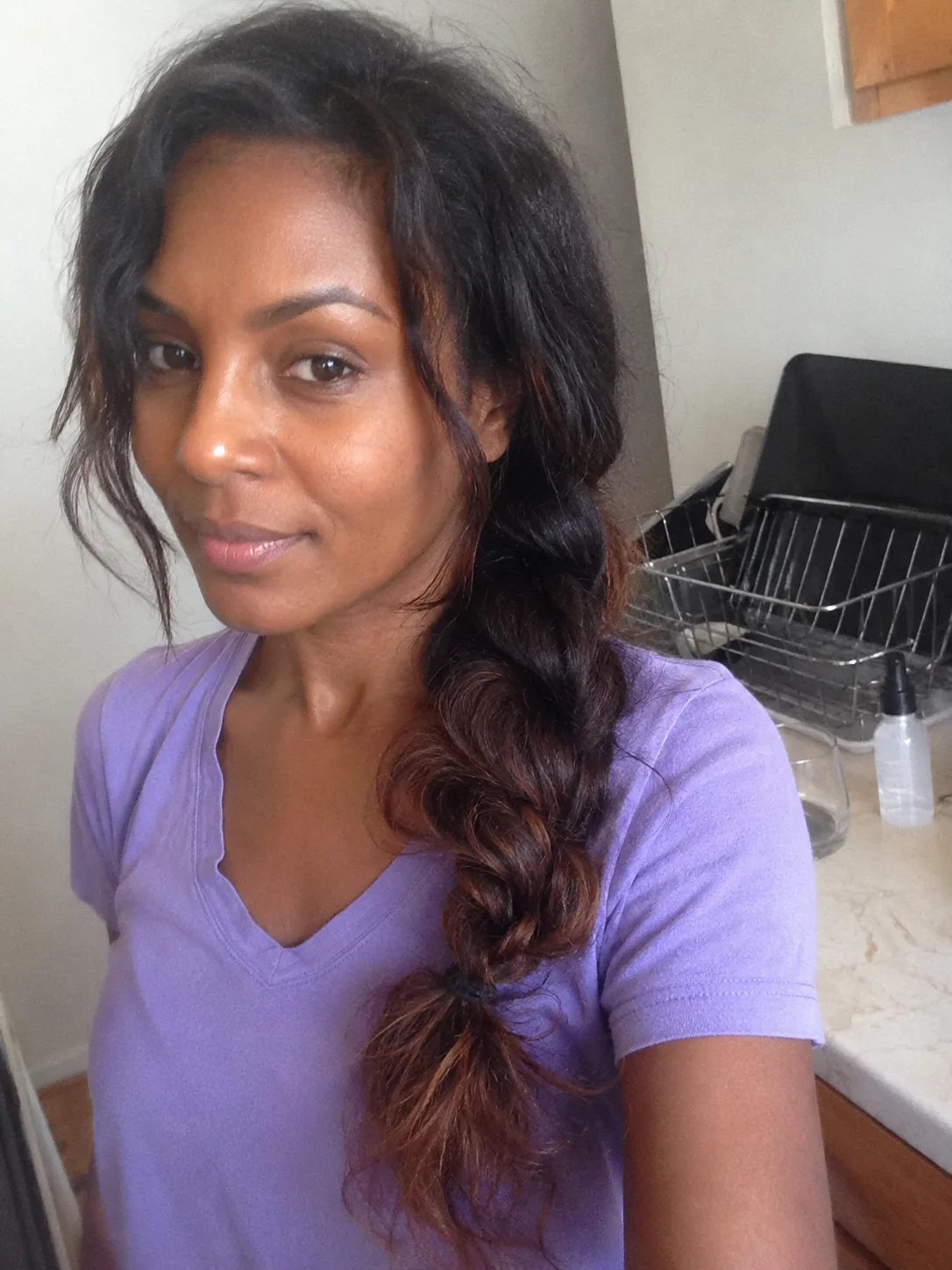
One low braid is the simplest containment style in this list. It gathers volume without requiring detailed parting, and a little surface frizz doesn’t change the overall shape. Start at the nape and keep the braid firm enough to stay together without pulling the roots backward. Thick, expanding hair often produces a substantial braid on its own, so there’s no need to flatten the lengths first unless a smoother result is your preference.
Chunky Two-Strand Twists
Two-strand twists give curly and coily hair definition while keeping individual sections contained. Larger twists are especially useful when you want a style that feels textured rather than tightly controlled.
They also give you more scalp access than very small, densely packed sections. Parting can be clean or softly defined depending on the finish you prefer. Twisting stretched hair will produce a different look from twisting hair in a more shrunken state, so decide whether length or compact volume matters more before you start.
Braided Crown
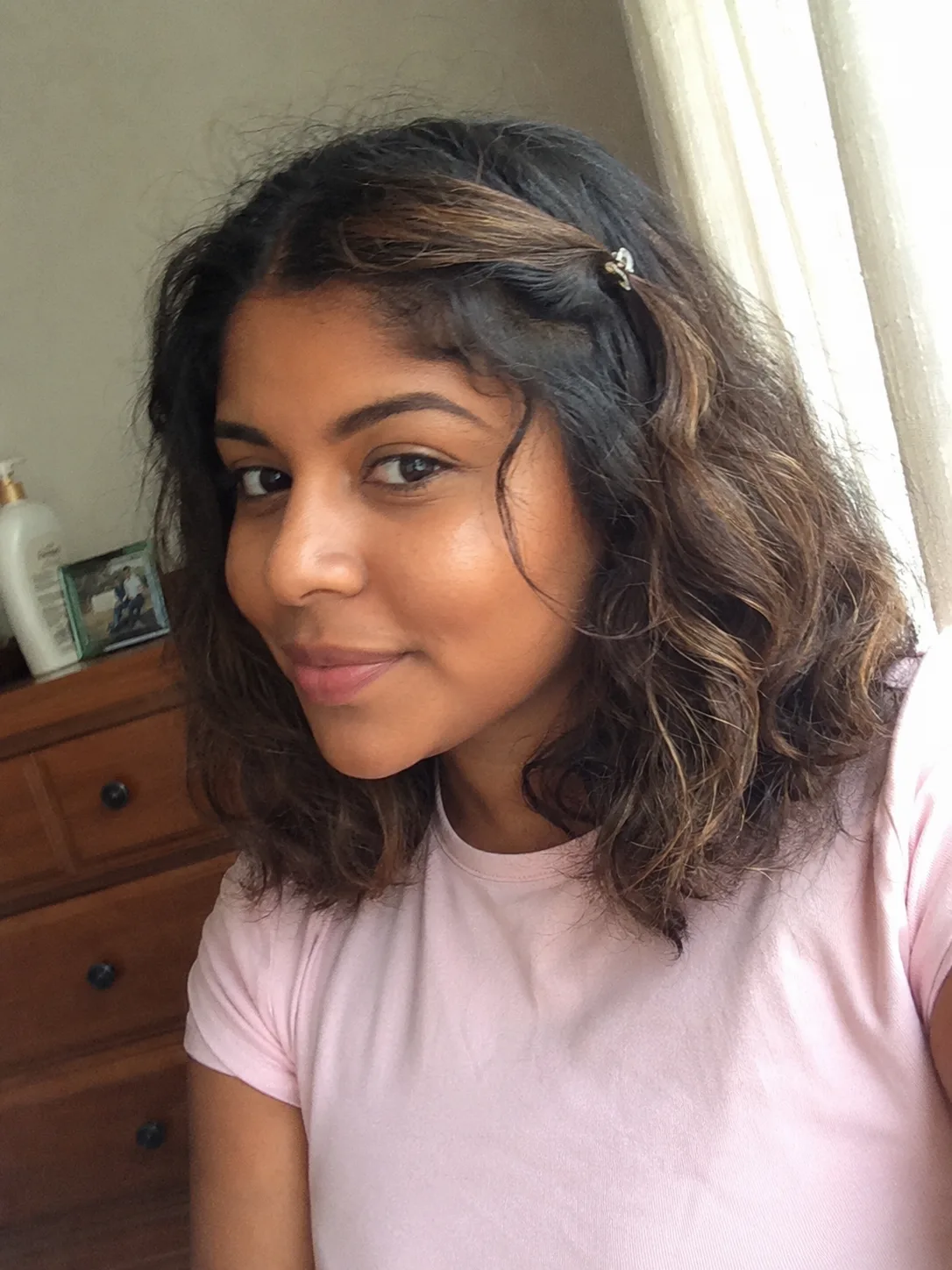
A crown braid moves the bulk of the hair away from the neck and distributes it around the head. It works well for an event or humid day because the visible result doesn’t rely on loose lengths staying perfectly defined.
You can create the shape with braids that travel around the head or by pinning longer braids into a halo. Bobby pins should support the braid rather than dig into the scalp. On very dense hair, the finished crown can feel substantial, so keeping the braid soft and well-supported is more comfortable than making the base progressively tighter.
Updos That Don’t Depend on Perfectly Smooth Hair
Loose Low Bun
A low bun is probably the most practical all-around updo for puffy, frizzy hair. The style gathers expanding lengths while allowing softness at the crown and around the face, so a humid afternoon doesn’t immediately destroy the finish.
Start with a low ponytail or gather the hair directly at the nape. Twist or fold the lengths into the shape your hair naturally allows, then secure the bun with pins or an elastic. Wavy hair can form a loose coil, while curly and coily hair may produce a fuller, more textured bun.
Pay attention to collars as well as mirrors. A bun positioned directly against a thick coat collar can be pushed upward or rubbed throughout the day. Moving it slightly higher or keeping the base compact can make the style easier to wear.
High Textured Bun
A high bun works best when you want the hair completely off your neck and don’t mind visible volume at the crown. Gather the hair upward, create a secure base, and wrap or pin the lengths without trying to compress every bit of texture. A fuller bun usually suits puffy hair better than a tiny, severely pulled knot because the proportions make sense with the amount of hair being gathered.
Soft French Twist
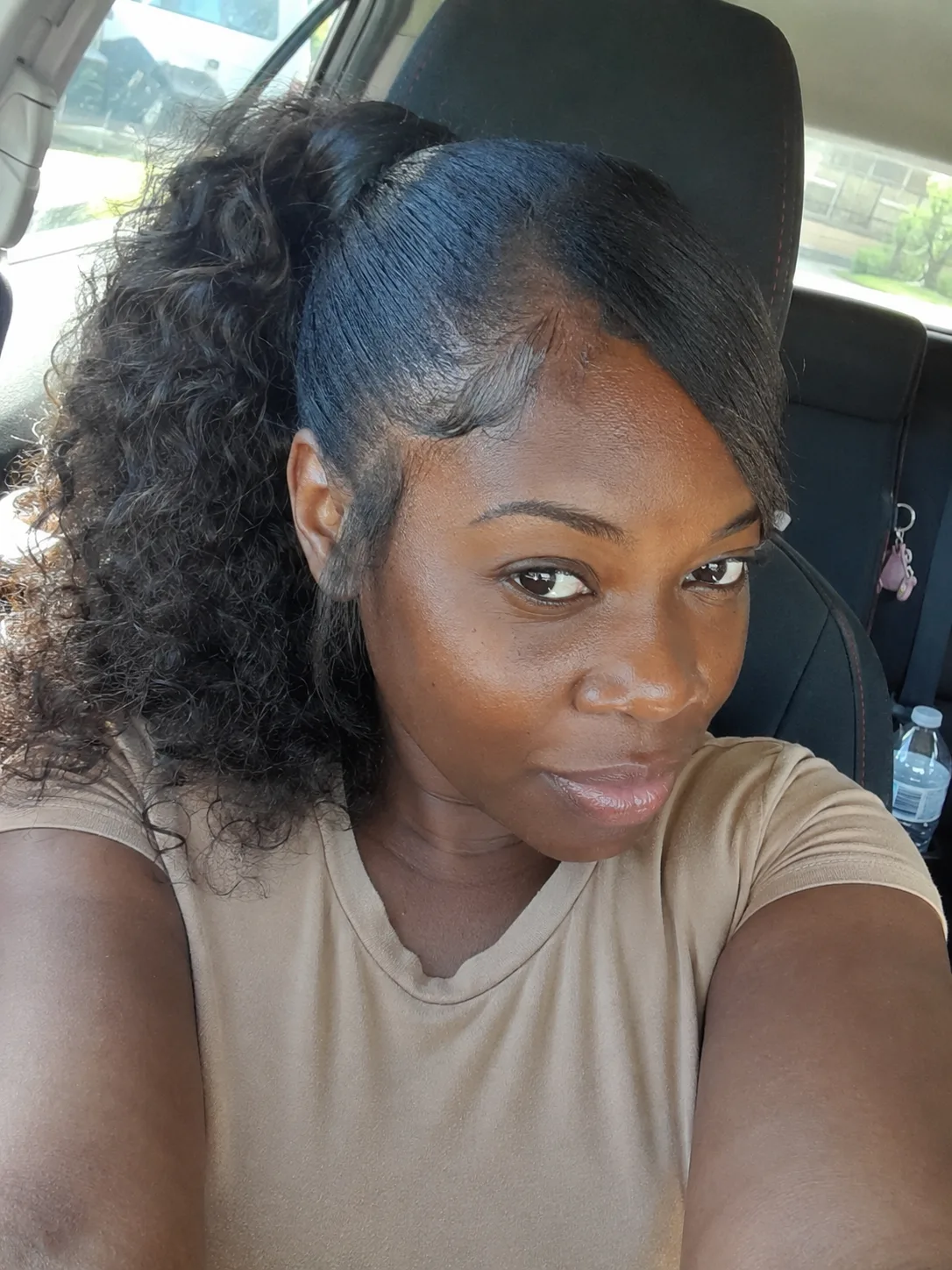
A French twist gives frizzy hair a more structured outline without demanding a slick surface. Hair is directed toward the back, folded vertically, and pinned along the seam, leaving the crown as smooth or textured as you prefer.
This style benefits from good pin placement more than excessive tension. Thick or highly textured hair may create a broader twist than the narrow versions seen in photos. That extra width isn’t a problem; trying to compress a large amount of hair into an unnaturally small roll usually makes securing it harder.
Styles That Let Frizz Become Part of the Finish
Rounded Wash-and-Go
A wash-and-go can be a hairstyle rather than merely a drying method when the haircut supports the finished shape. Defined curls mixed with a little halo frizz can still form an attractive rounded outline. Focus on how the hair sits as a whole instead of inspecting every individual strand. Curl definition products, diffusing, air-drying, or a combination can all produce different results, so use the method that suits your texture, condition, and preferred amount of volume.
Deep Side Part With Pinned-Back Side
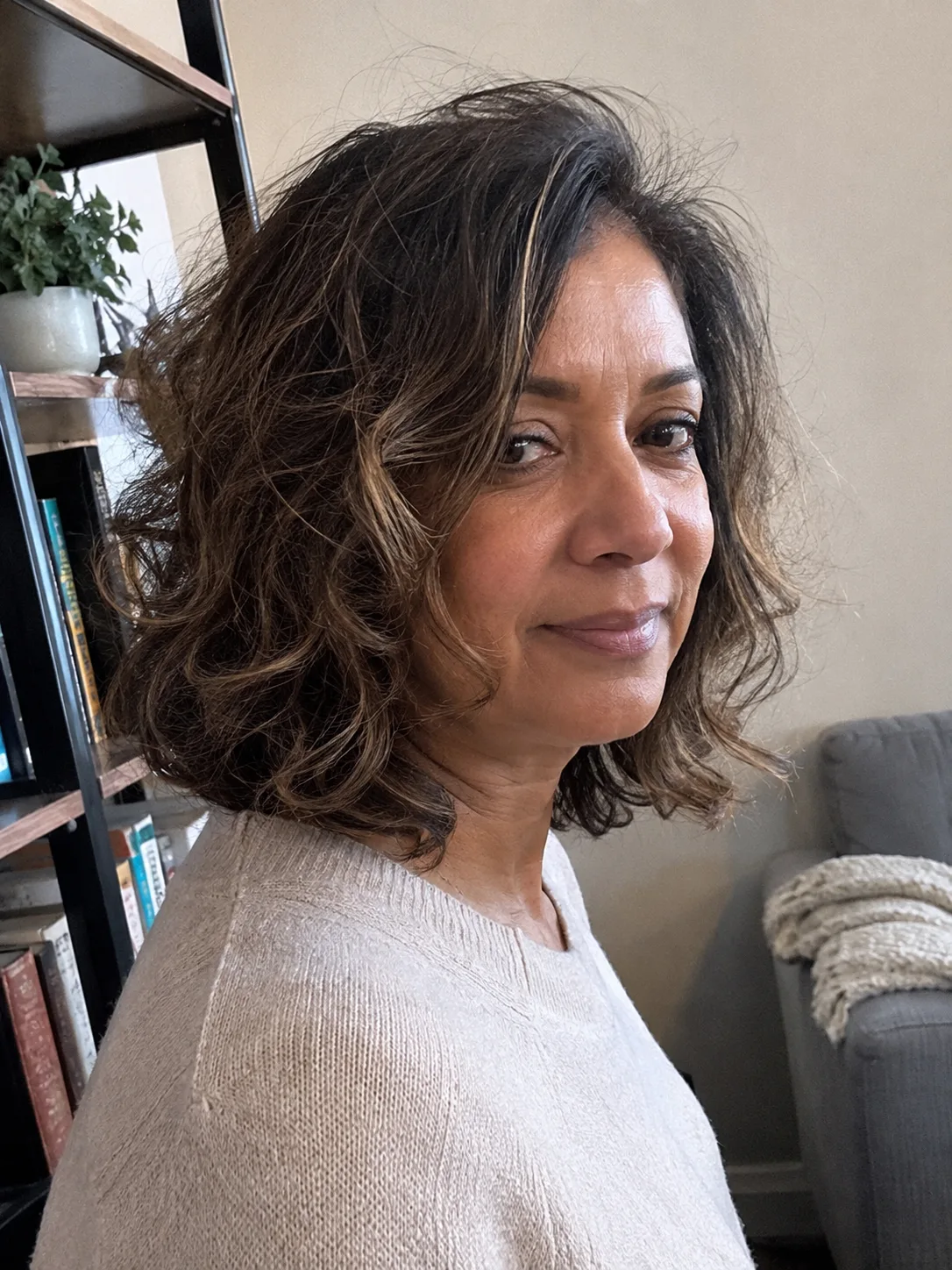
Uneven distribution can make full hair look more deliberate. A deep side part moves much of the volume toward one side, while the opposite side is tucked behind the ear or secured with bobby pins.
This is useful for waves and curls that resist symmetrical styling. The fuller side can remain expansive, giving the style movement without requiring a full updo. Glasses matter here: bulky pinned sections directly above the ear can compete with the arms of the frames, so place the pins slightly higher or farther back when needed.
Soft Roller Set
A roller set gives puffy hair a different kind of fullness: more organized curves with smoother alignment through the lengths. It’s a good choice when you want to wear your hair down but prefer a shaped wave or curl pattern over your usual air-dried texture. The tradeoff is maintenance. Humidity, sleep, and repeated handling can loosen the set, making this less forgiving than a braid or bun for long, active days. Avoid forcing excessive heat merely to make the surface perfectly smooth.
Choosing a Style Based on How Your Hair Behaves
The appearance of frizz tells you less than what the hair actually does after styling. Notice where it expands, which sections shrink most, and how much manipulation you’re willing to repeat.
Density and strand size also change the decision. Fine strands can exist in very dense hair, while coarse strands can exist at lower density. A stylist shouldn’t remove large amounts of interior hair simply because the overall style looks puffy. Heavy thinning can expose more gaps or weaken the appearance of the perimeter where density is already limited.
For curly or coily hair, bring reference photos that show a similar styling state. A stretched haircut photographed immediately after styling may give little information about how the same shape behaves after shrinkage. Ask how the layers will sit when you wear the hair naturally, especially around the crown and front.
Frizz Control Without Fighting Your Hair Every Morning
The most sustainable hairstyle is one that still looks acceptable after your hair moves.
Start by deciding which areas genuinely need control. You may want a smoother hairline with full curls behind it, a contained nape with a soft crown, or defined curl groups surrounded by some natural frizz. Trying to make every section equally smooth usually creates more work than improving the overall shape.
Avoid dry brushing curls and coils purely to chase neatness unless a brushed-out texture is the intended finish. Detangling and styling methods should suit your hair’s condition and pattern. Some hair responds well to styling products with hold; other hair becomes weighed down or accumulates buildup quickly.
Nighttime friction can also change the result. A smooth pillowcase, bonnet, or scarf may help reduce tangling and surface friction, though none of these can repair damaged strands. Updos and braids should be released or repositioned when they consistently create discomfort.
Pay attention to changes that go beyond ordinary frizz. Sudden shedding, persistent scalp pain, sores, redness, irritation, or a concerning change in density deserves more attention than another styling technique. A dermatologist or another qualified healthcare professional can assess symptoms that persist or concern you.
What to Discuss Before Your Next Haircut
For puffy hair, the salon conversation should focus on behavior rather than the word frizz alone.
Explain how you normally wear your hair: natural, diffused, stretched, pressed, relaxed, or otherwise styled. Mention whether the sides expand, the crown goes flat, the ends become triangular, or short layers shrink more than expected. Those details tell a stylist much more than asking for a haircut that removes puffiness.
Also be clear about your routine. A shag that looks excellent after detailed styling may be a poor match when you mostly air-dry and leave the hair alone. Long layers are easier for readers who want flexibility, while a strong bob gives the perimeter more responsibility for the finished shape.
Most importantly, decide whether you want less volume or simply better-positioned volume. Those are two different haircut goals.
Related Hairstyles to Explore
FAQs
What is the easiest hairstyle for very puffy, frizzy hair?
A loose low bun is one of the easiest starting points because it gathers the lengths without depending on a perfectly smooth crown. A single low braid is similarly practical when you want the hair contained but still flexible. For curls and coils, a high puff can be easier when you prefer to keep your natural volume visible.
Should frizzy hair be layered or kept one length?
Both can work, but they create different shapes. Layers redistribute weight and can prevent all the fullness from collecting at the bottom. A stronger one-length perimeter gives the ends more visual weight. Hair that already has low density may look less substantial after aggressive layering, so the amount and placement of layers matter as much as the label.
Can I wear these hairstyles with naturally curly or coily hair?
Yes. High puffs, two-strand twists, braids, rounded cuts, half-up styles, and textured buns all adapt well to curly and coily hair. Account for shrinkage and choose the hairstyle based on the state in which you normally wear your hair. A stretched version and a fully shrunken version of the same style can look dramatically different.
How can I keep a hairstyle neat during exercise without making it very tight?
Choose containment over extreme tension. A low braid, two braids, pineapple, or secure bun can keep the lengths out of the way while allowing the base to remain comfortable. Your style shouldn’t sting or pull sharply during movement. After heavy sweating, consider scalp comfort, cleansing needs, and complete drying rather than repeatedly tightening the same style.
Hair Texture & Upkeep Style Matcher
Select your natural hair texture and daily maintenance window to get an instant styling formula and heat safety cap.
Heat Cap: 320°F (160°C)
A versatile three-strand braid beginning at the parietal ridge, securing the top half while allowing natural wave texture to flow freely around the shoulders.
Conclusion
The most useful hairstyles for puffy, frizzy hair give volume a clear place in the finished shape. Rounded layers organize it, braids and twists contain it, and loose buns or puffs work with it instead of demanding a perfectly smooth surface.
Before changing your haircut or reaching for another smoothing step, decide what actually bothers you: width at the sides, uncontrolled ends, hair around your face, shrinkage, or a style that collapses as soon as humidity rises. Choose the hairstyle around that specific problem, and your natural fullness becomes much easier to work with.
Editorial Standards & Hair Health Guidance
Every style featured on Tress Atlas is curated with a focus on real-world wearability, scalp tension management, and cuticle preservation. When trying protective styles or tight updos, ensure perimeter hairline sections remain tension-free to avoid traction stress on delicate follicles. For heat styling, cap tools below 350°F (180°C) to prevent thermal keratin denaturation.
Scientific Sourcing: Practices aligned with the American Academy of Dermatology (AAD) on traction alopecia risk reduction and cosmetic trichology research on hair tensile strength.