Beach Hairstyles for Long Hair: Styling Guide & Cuts That Work Beyond the Photo
Beach hairstyles for long hair have to solve a problem that photographs rarely show: long hair behaves very differently once wind, saltwater, humidity, sunscreen, wet fabric, and repeated tying enter the picture.
A style that looks effortless while dry may become heavy after swimming. Loose waves can photograph beautifully but turn into a knot-prone mass in strong wind. A high bun gets the hair off your shoulders, yet its position may feel awkward against a beach chair or under a hat.
The most practical choice depends on what your beach day actually involves. For frequent swimming, a low braid or two secure braids usually creates less loose movement to manage. For a mostly dry day, half-up styles let you keep the length visible without having every front section blowing across your face. Curls and coils often benefit from styles that preserve their grouping instead of repeatedly brushing them smooth.
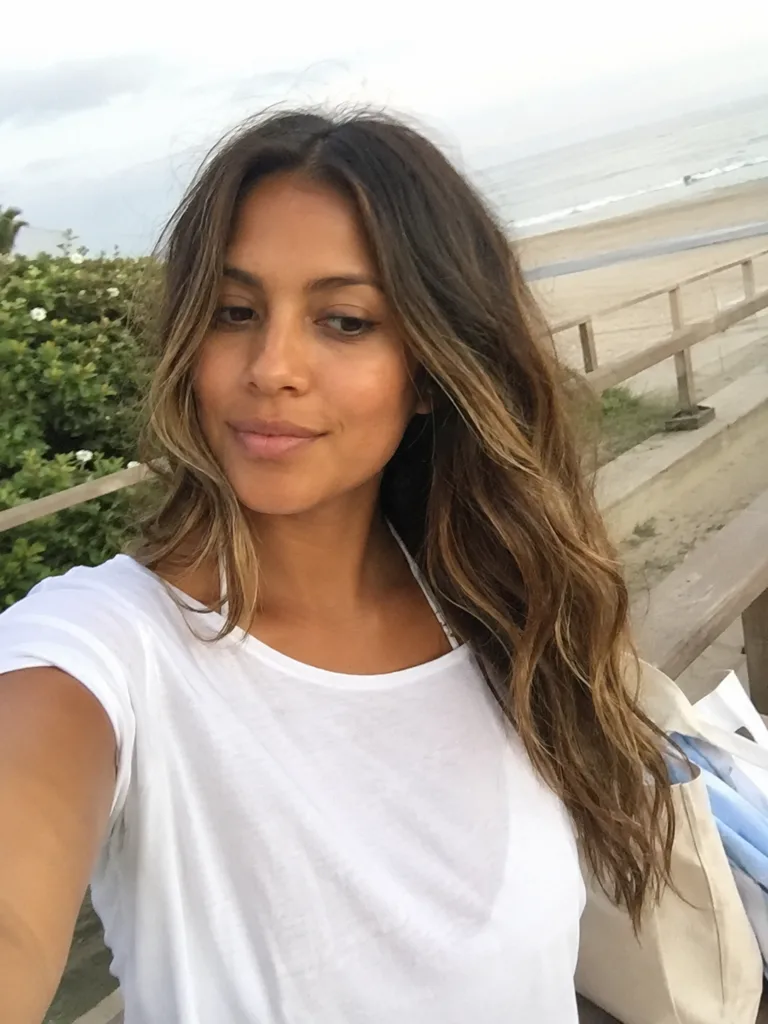
Long Hair Left Mostly Down
Keeping long hair visible works best when the beach day is more about walking, lounging, or taking photos than repeated swimming. A little structure around the crown or hairline can make a major difference without hiding the length.
Air-Dried Natural Texture With the Front Secured
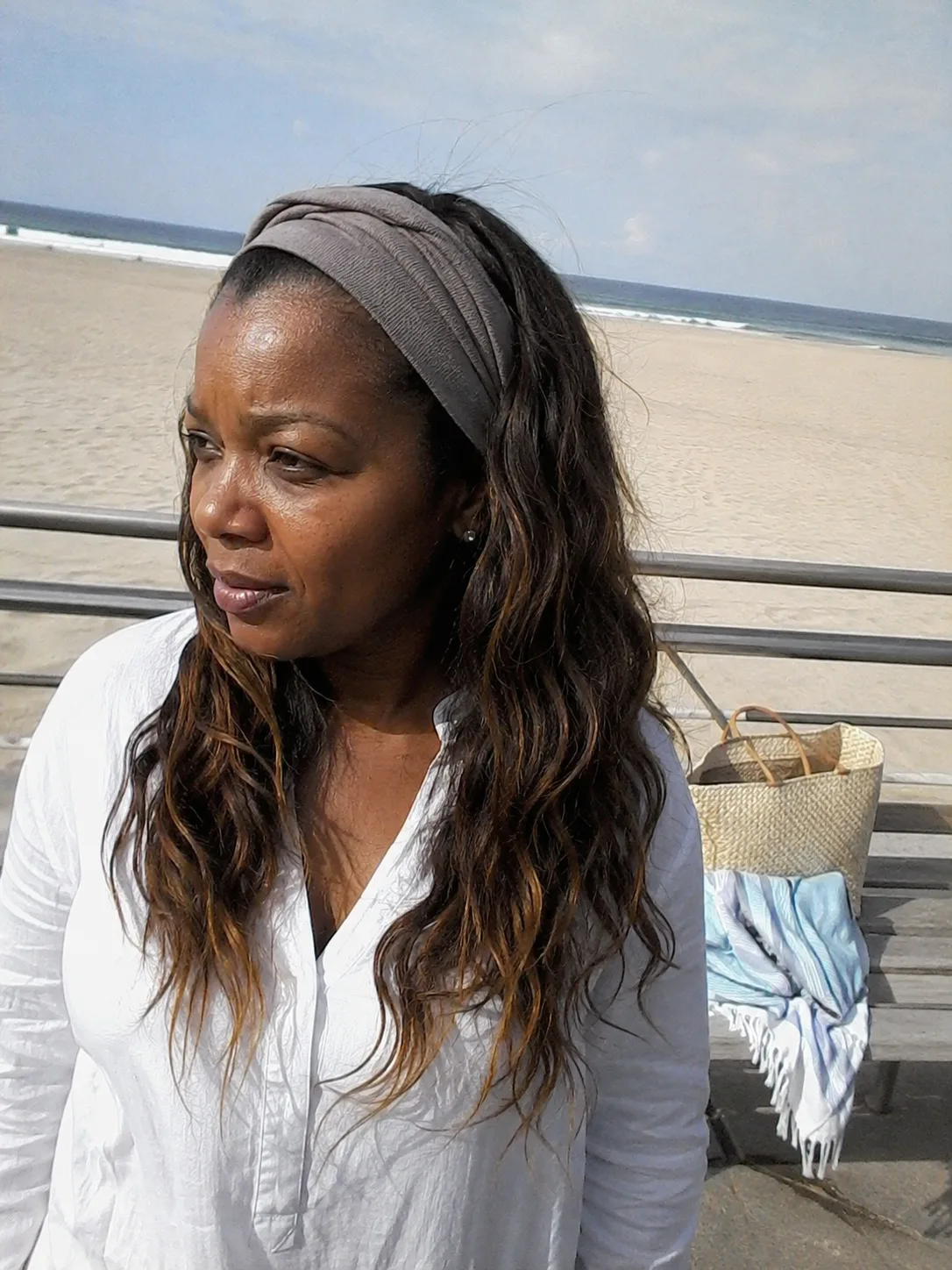
The simplest beach hairstyle may be the one your hair naturally forms after drying. Waves can stay wavy, curls can keep their curl pattern, and straighter textures can retain their natural movement. Pinning or gently securing the sections near your face keeps them away from sunscreen and lip products while leaving most of the hair loose.
This is a stronger choice for a calm, mostly dry beach day than for hours in the water. Wind has access to almost every strand, so long hair that tangles easily will usually be easier to manage in a more contained style.
Half-Up Rope Twist
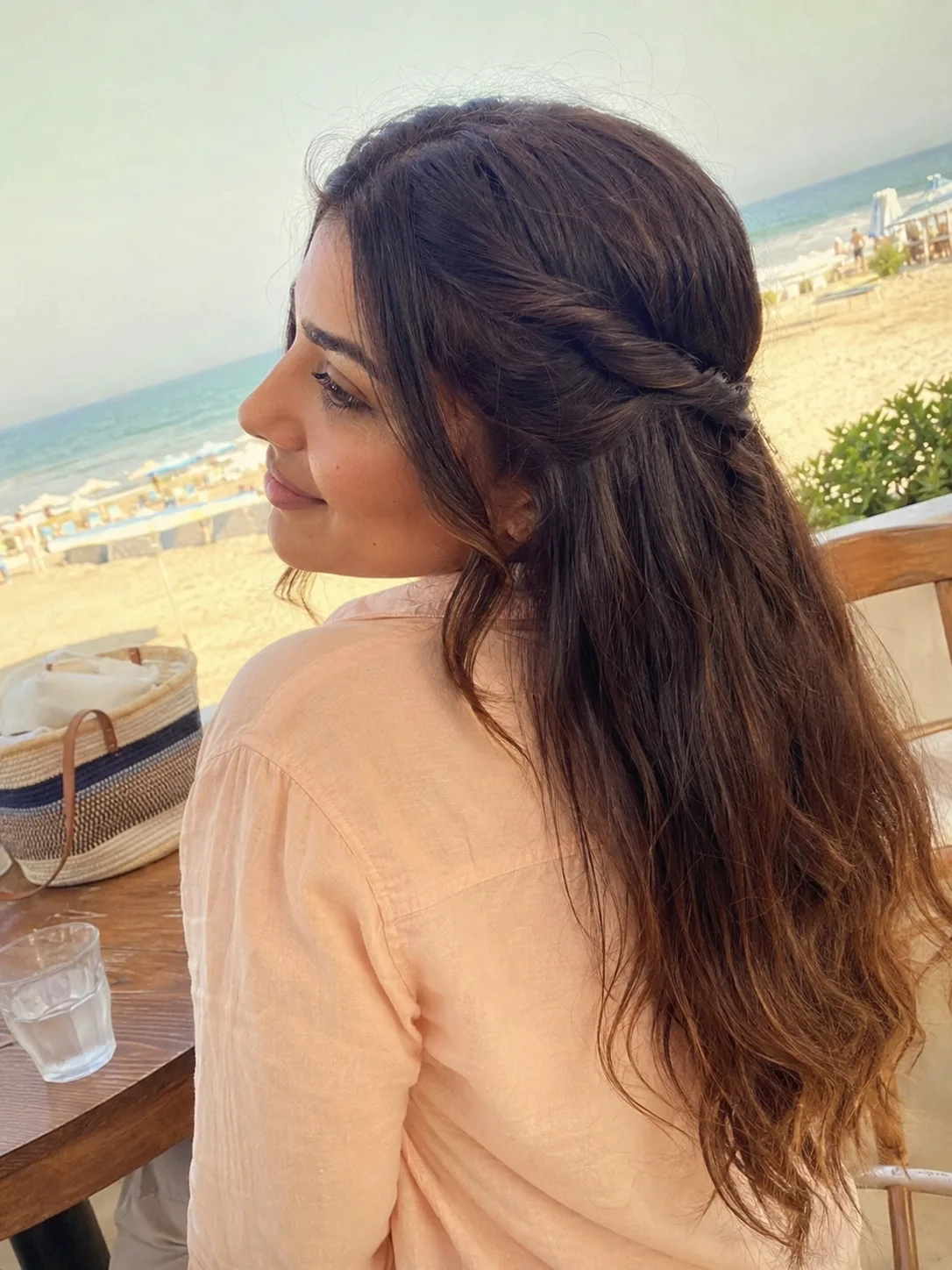
A half-up rope twist offers more control than completely loose hair without turning the style into a full updo. Take sections from each side, twist them back, and secure them together behind the crown.
The twist creates enough structure to hold shorter front layers away from your face while the lower lengths remain free. It also avoids the bulk that a large half-up bun can create, making it useful with hats that have some crown room or for anyone who wants a softer profile from the side.
Half-Up Bun
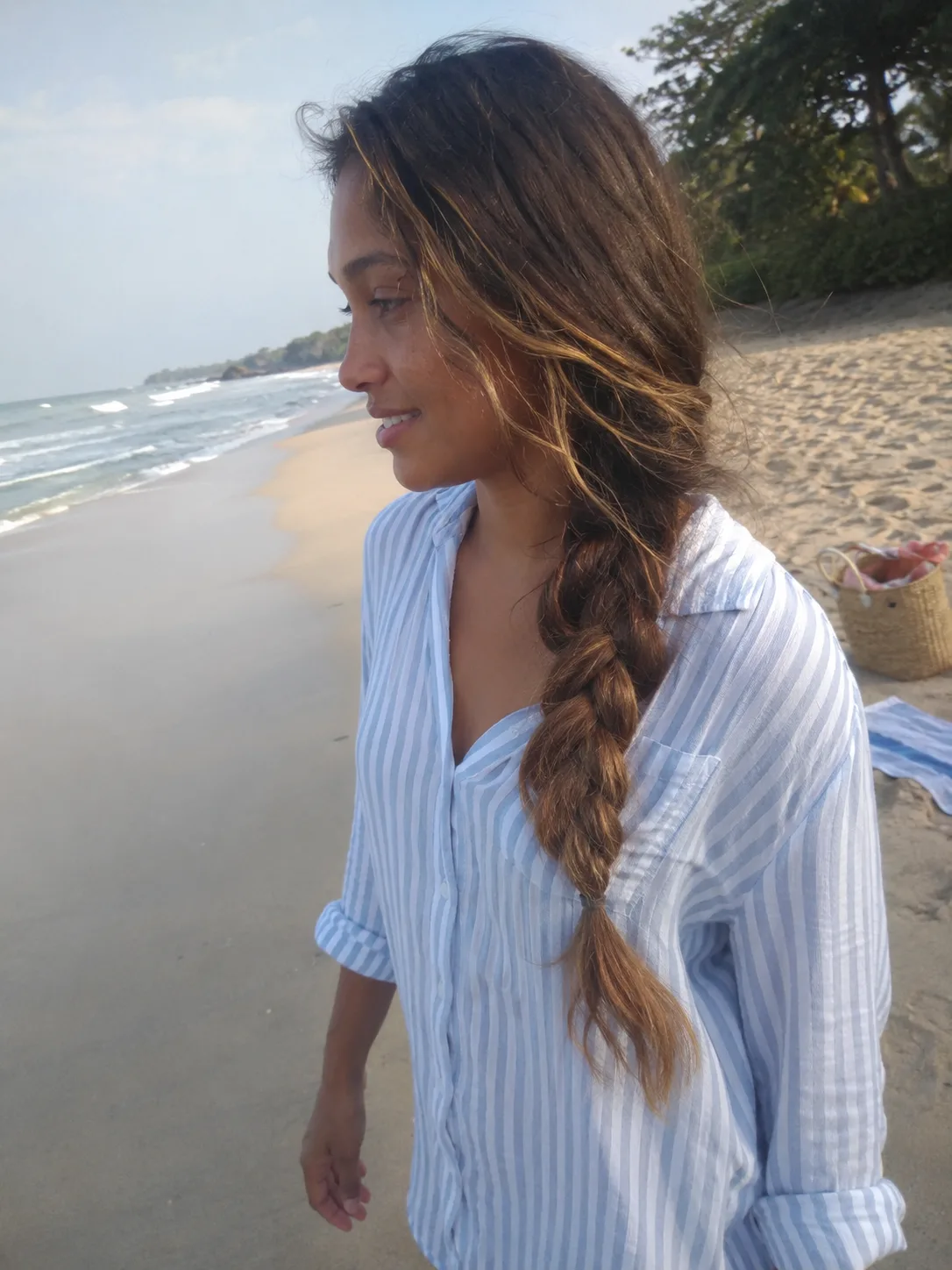
A half-up bun makes sense when you want the look of long hair but don’t want its full volume around your face.
The upper portion is gathered at the crown or slightly below it and formed into a compact bun, while the lower hair stays loose. Thick or high-density hair can create a substantial bun even from half the head, so placement matters. A slightly lower anchor tends to interfere less with wide-brim hats and beach-chair headrests.
Curly and coily hair doesn’t have to be smoothed flat to make this style work. Leaving the roots and lower lengths textured creates a very different result from a sleek half-up bun and avoids unnecessary manipulation simply to copy a straight-haired reference photo.
Half-Up Braided Crown
A braided half-up style gives the front of the hair more structure than a simple twist. Sections from the temples travel backward as braids and meet across the rear of the head, leaving the rest of the length down.
This is worth choosing when you want the braid itself to be visible in photos. It takes more preparation than a basic half-up twist, but the horizontal detail remains noticeable even when the lengths become wavier or less defined in humidity.
Braids That Control Long Length
Braids earn their place at the beach because they reduce the amount of hair moving independently. Construction matters, though. A loose decorative braid behaves differently from two firm braids designed to stay together through swimming.
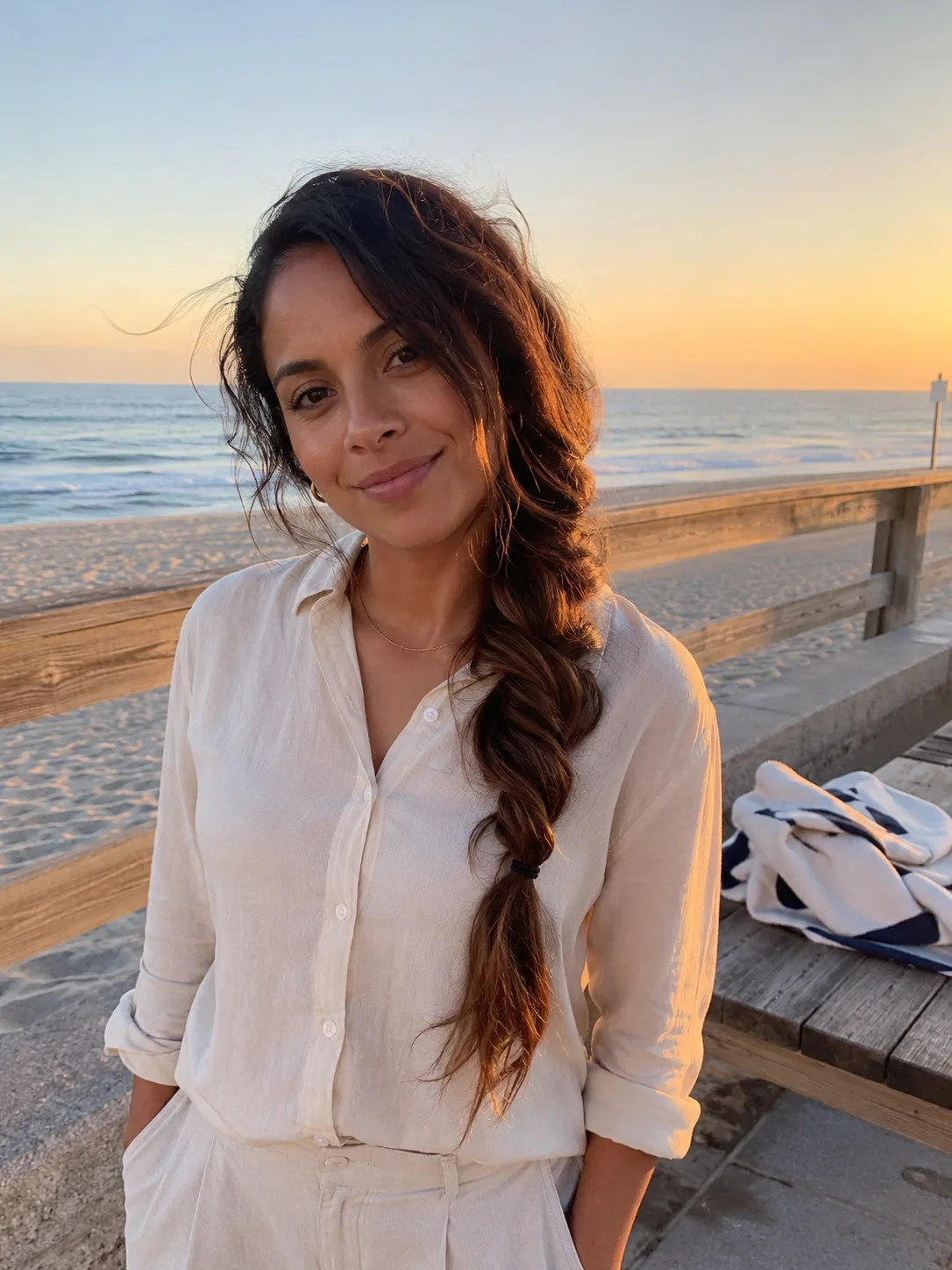
Single Low Three-Strand Braid
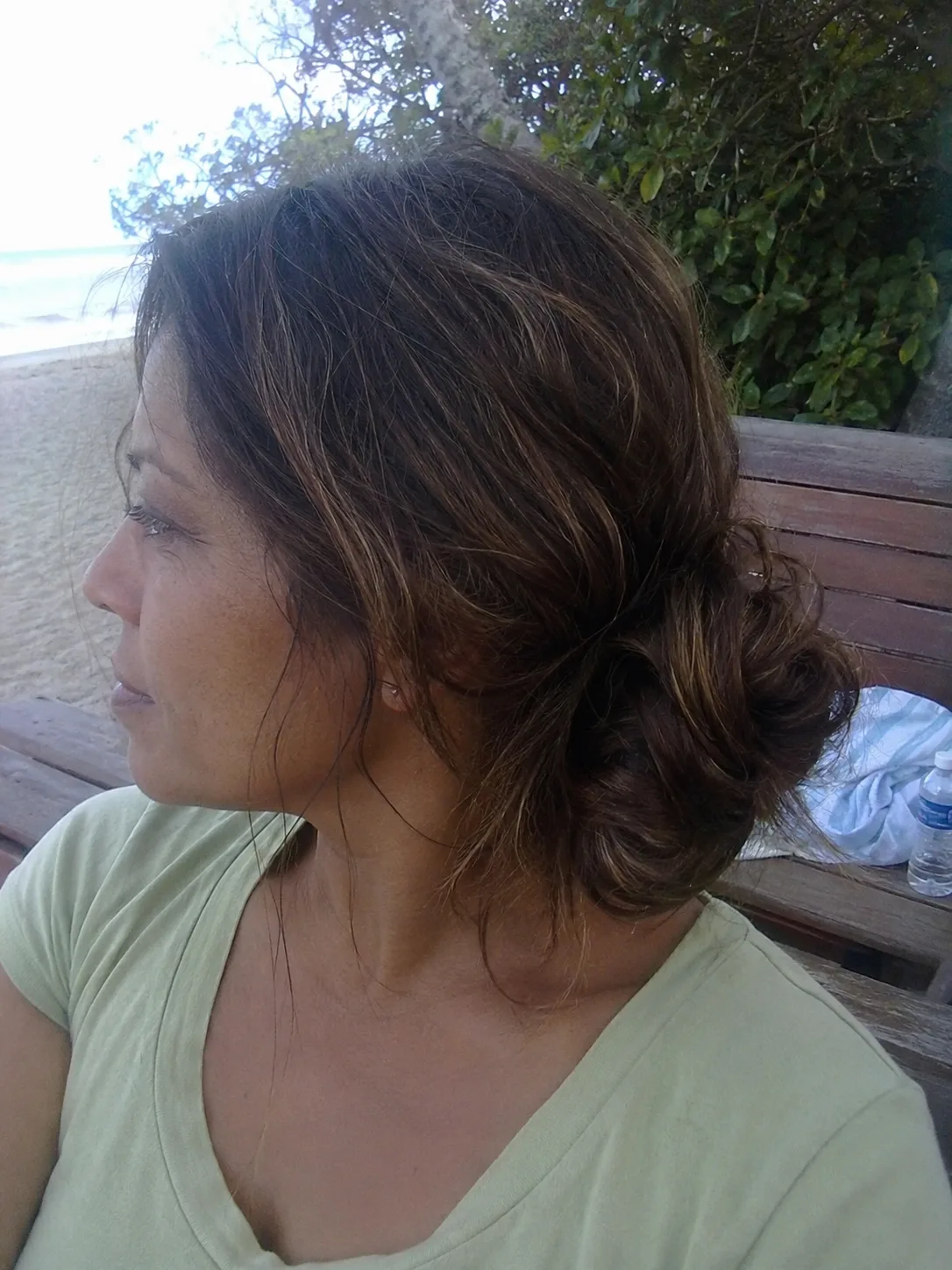
For an active beach day, the basic low braid is difficult to beat. It gathers the full length without concentrating everything high on the head, and it can sit comfortably beneath many hats.
A three-strand braid also remains straightforward to undo when the hair is damp. That matters with very long hair: elaborate braiding can become much less appealing once saltwater, sand, or tangled ends are involved.
Leave the braid secure enough to keep its shape but comfortable at the scalp. There is little benefit in pulling the roots tightly when the actual containment happens through the braided length.
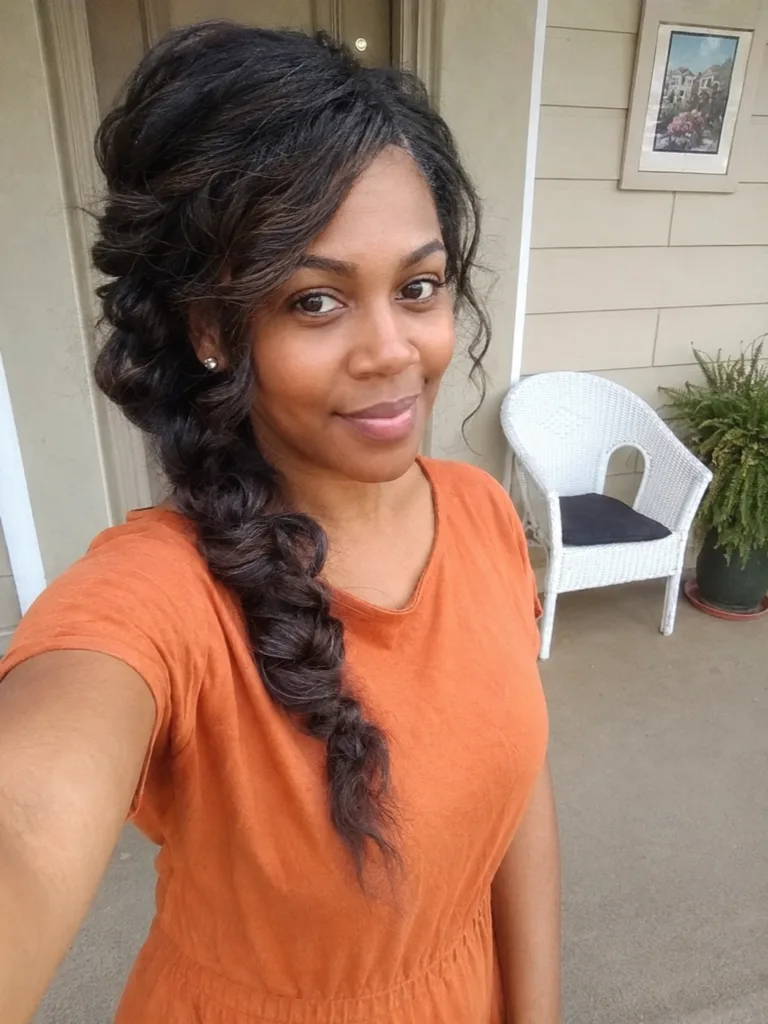
Fishtail Braid
The fishtail braid is a better match for a beach-photo day than for continuous swimming. Its many small crossings create a detailed, slightly undone surface that works especially well when you want the braid itself to be a feature.
Long hair shows the construction beautifully because there is enough length for the pattern to develop. The same construction can loosen more visibly than a conventional three-strand braid, particularly after repeated movement. Choose it because you like the woven texture, not because you need the most secure option available.
Rope Braid
Two sections twisted around each other create one of the cleanest ways to contain long hair. A rope braid has a strong spiral shape, which distinguishes it from the flatter pattern of a three-strand or fishtail braid.
It works particularly well on hair that already gathers easily into a ponytail. The two sections need to be twisted in a way that keeps the rope from immediately unwinding, and the end should be secured with an elastic that doesn’t slide away from the tapered portion.
A little looseness through the rope can look good on a dry beach day. For swimming, a more compact construction is easier to keep together.
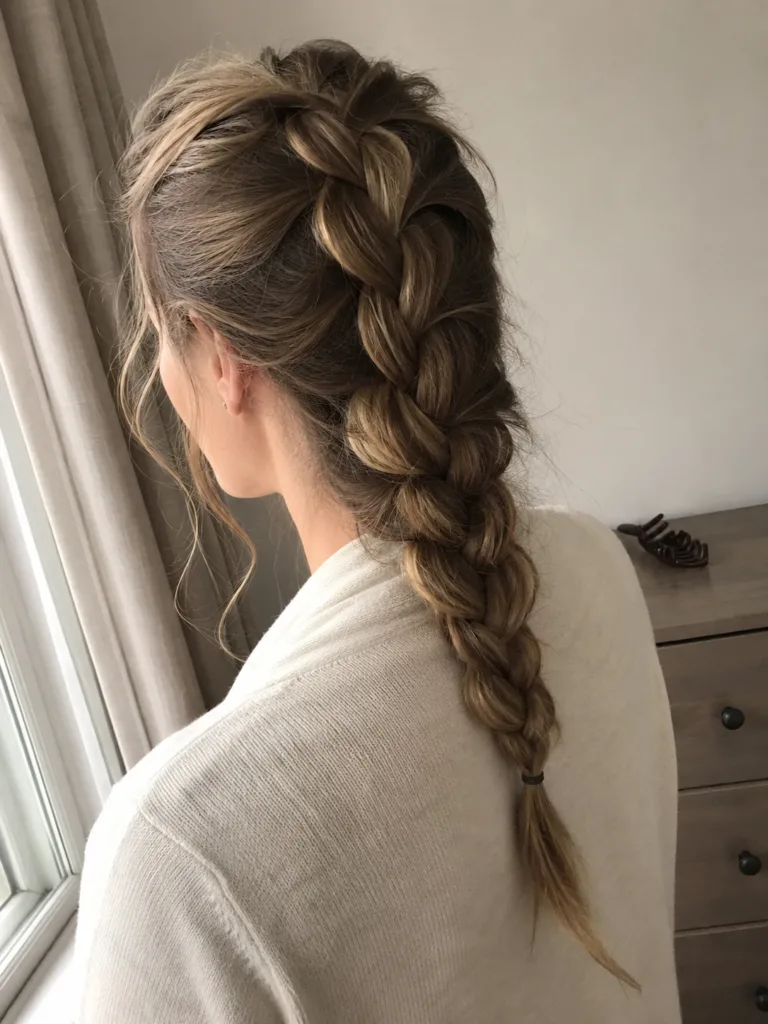
Double Dutch or French Braids
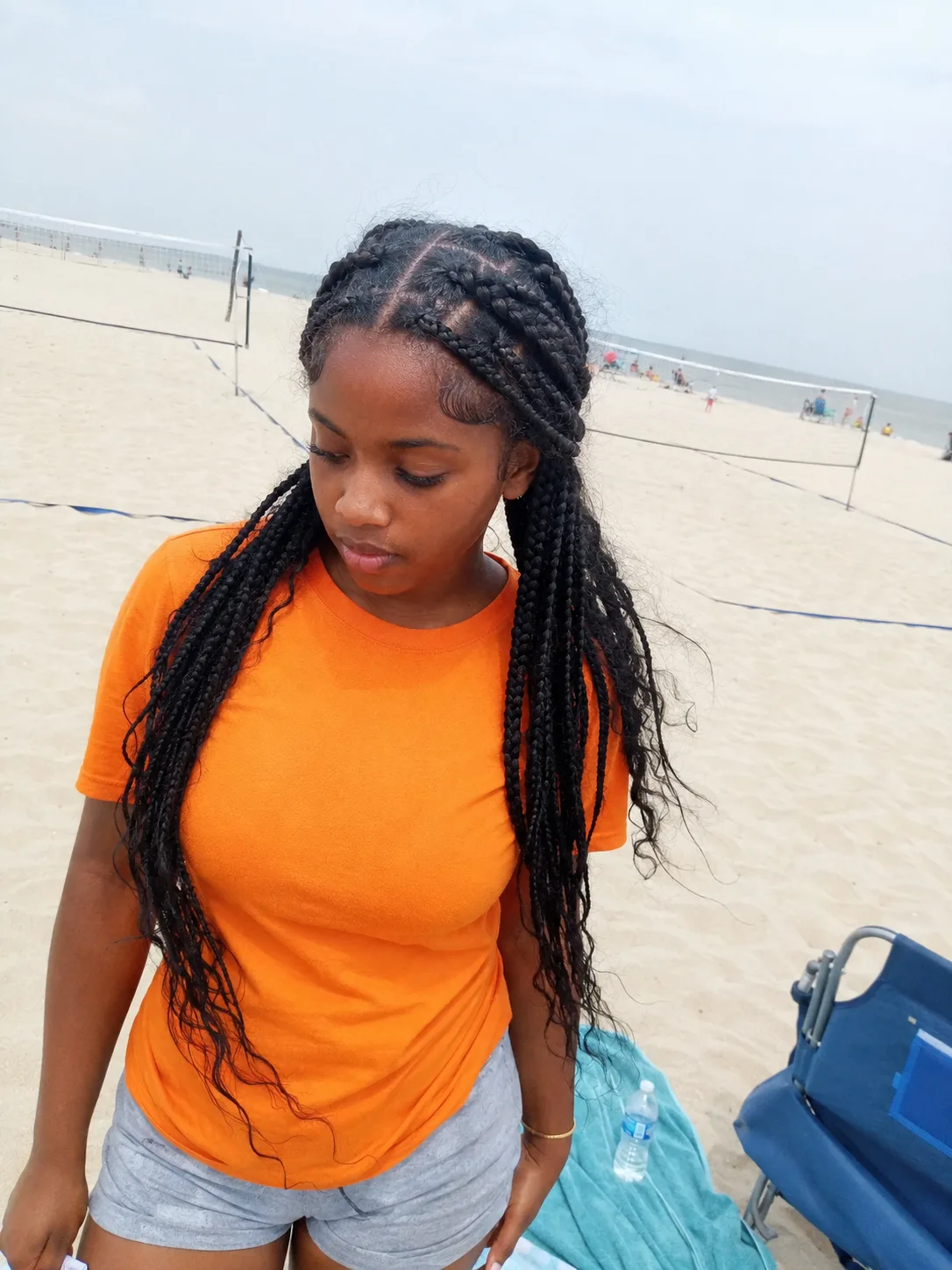
Two braids distribute the hair across both sides of the head instead of directing all of it toward one low anchor. That makes them especially practical for swimming, paddleboarding, windy walks, and other beach activities where loose lengths quickly become annoying.
Dutch braids place the braid visually above the surrounding hair; French braids create a more integrated surface. Either construction can continue through the full length.
Comfort at the hairline matters more than making every section look ultra-tight. The braid should stay secure through normal head movement without pulling fragile perimeter hairs into an uncomfortable position.
Chunky Two-Strand Twists
Long natural, curly, or coily hair can be divided into several substantial two-strand twists instead of being forced into one smooth ponytail or braid. The twists keep much of the hair grouped while preserving its textured styling state.
Larger sections also make the style easier to undo than a head full of very small twists. After swimming, pay attention to the roots and interiors of dense sections during drying; the outside can feel dry before the denser hair within the twist has fully dried.
Ponytail-Based Styles Without a Basic Ponytail
A plain ponytail works, but long hair gives you several more useful constructions. Changing what happens along the tail can reduce movement, showcase texture, or create a style that survives wind better than completely loose lengths.
Flat Twists Into a Low Ponytail
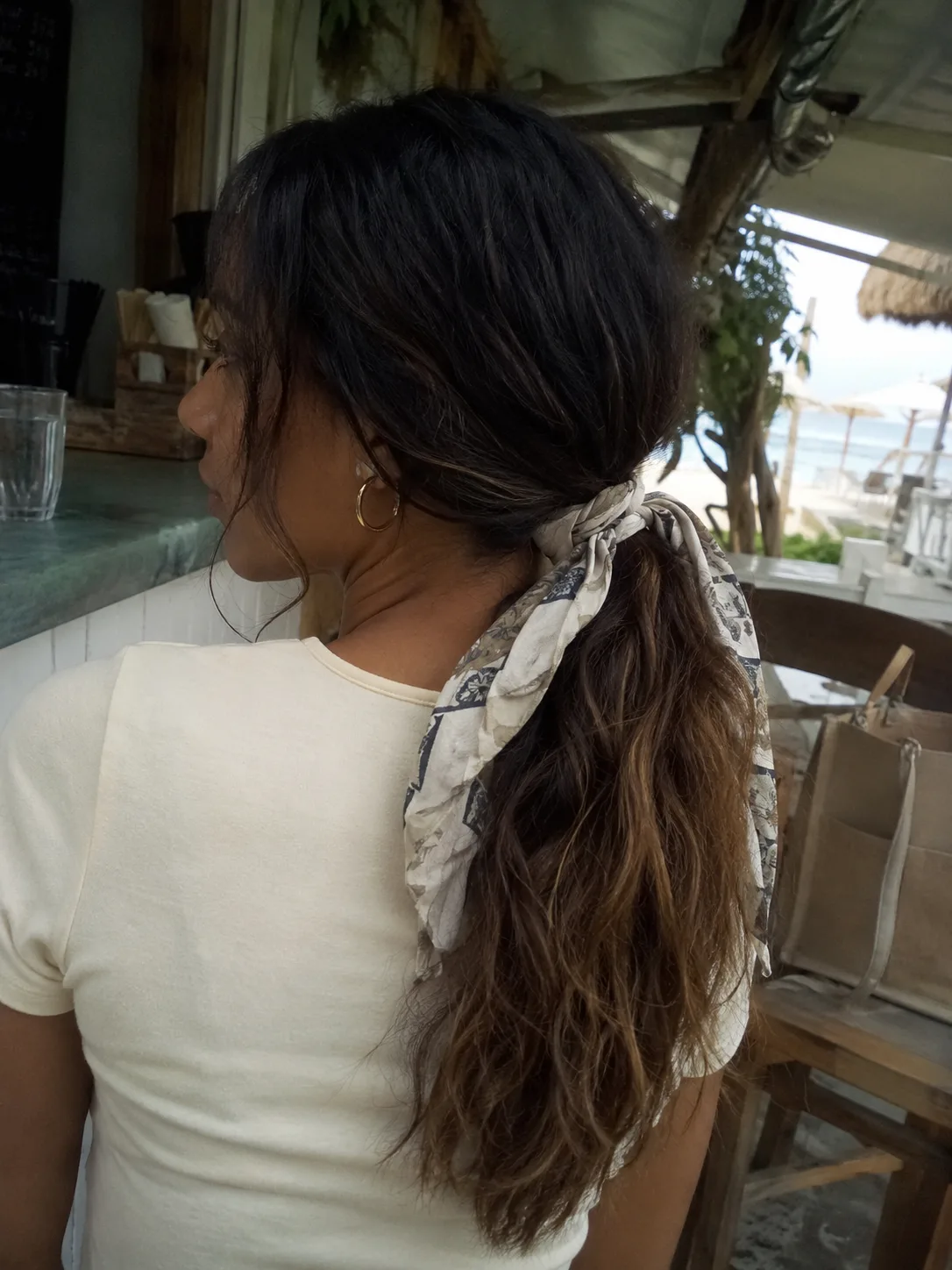
Flat twists along the front or sides can direct hair toward a low ponytail while keeping the hair around the face contained. This is particularly useful for textured hair when you want scalp-based structure without braiding the entire length.
The ponytail itself can remain curly, coily, stretched, or braided. That flexibility is the main attraction: the front stays organized while the ends retain more volume.
Keep the twists comfortable around the temples and hairline. A beach hairstyle has to move with you; tight roots aren’t necessary for a neat result.
Bubble Ponytail
A bubble ponytail controls long hair in stages. Instead of letting the full ponytail swing as one loose section, additional elastics divide the length into rounded segments.
The style is especially effective on long, relatively dense hair because each bubble has enough hair to create visible volume. Fine strands can still work, but strand diameter and overall density affect how full the sections appear.
Use elastics that release without excessive snagging, particularly after the hair has been exposed to water. Removing several small elastics from tangled wet hair deserves more care than pulling out one ponytail holder.
Braided Ponytail
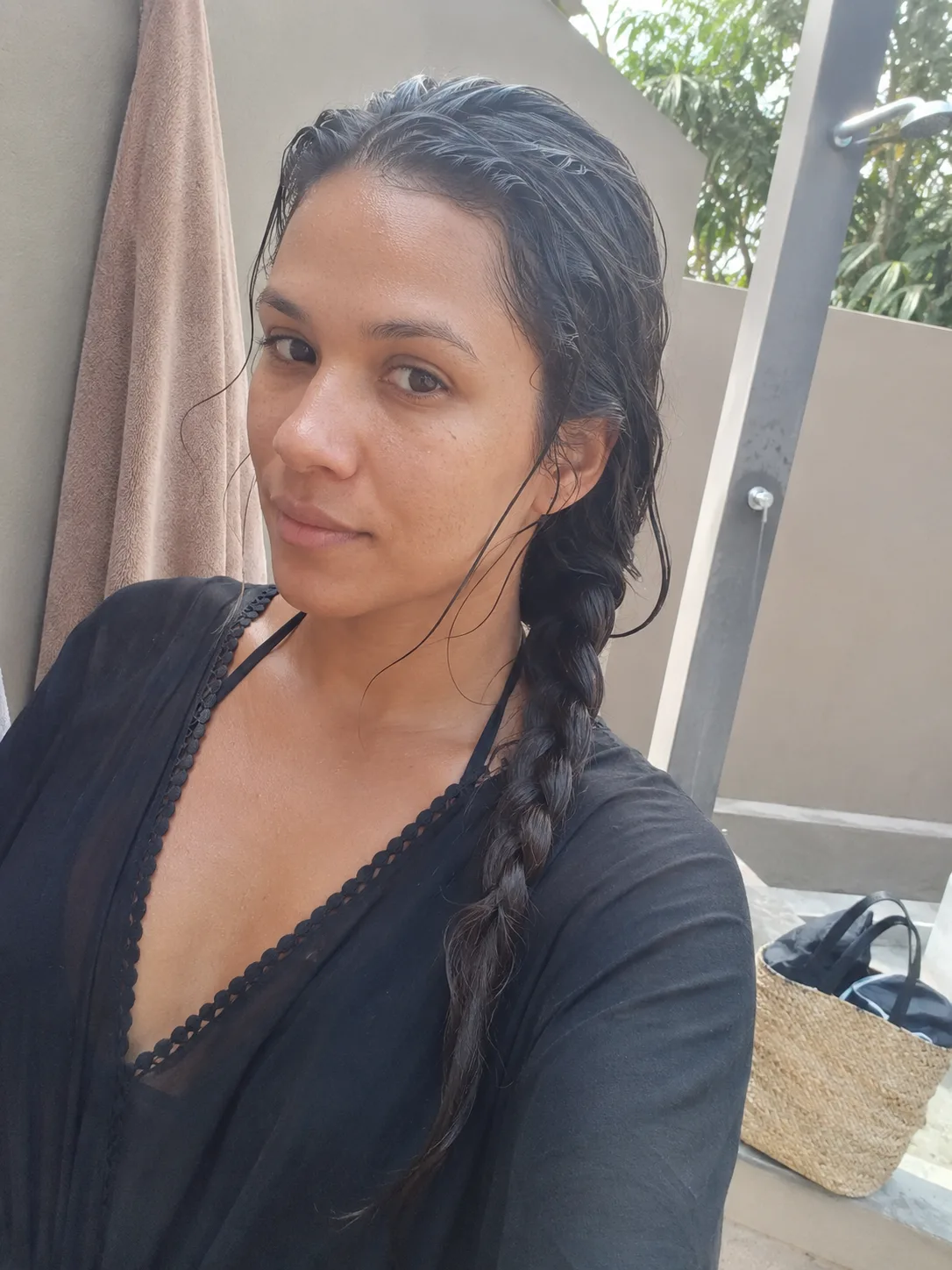
A braided ponytail combines the fast setup of a ponytail with the containment of a braid. Gather the hair first, then braid the free length from the base toward the ends.
This construction is useful when wind is the bigger problem than scalp-level flyaways. The hair above the elastic remains relatively simple, while the long tail can’t separate into hundreds of moving strands.
A high braided ponytail creates more swing and leverage during movement than a lower one. For a long day involving swimming or reclining, a mid-to-low anchor is usually the more practical choice.
Pineapple Puff for Long Curls and Coils
Trying to stretch every curl into a conventional sleek ponytail can create far more work than the beach requires. A pineapple-style puff gathers long curls or coils high while allowing their ends to remain full and visibly textured.
It is most useful for a mostly dry day because the loose curl ends are still exposed to wind and water. The style does, however, keep much of the length off the back and shoulders.
Very long curls may fall forward or to one side rather than creating a compact puff. Let the actual length determine the shape instead of repeatedly tightening the base in an attempt to reproduce a shorter-haired version of the style.
Buns and Updos That Clear the Shoulders
Hair resting against a wet swimsuit, backpack strap, or sunscreen-covered shoulders can become inconvenient quickly. Updos solve that problem, but the position and compactness of the bun change how comfortable they feel.
Low Twisted Bun
A low twisted bun is the practical default for anyone who wants long hair fully contained without placing a large mass of hair at the crown. Gather the hair near the nape, twist the length, then coil and pin or secure it into a bun.
Its low position works with many hats and leaves the upper head relatively flat. On the other hand, a very low bun can sit directly against the neck or the top edge of a swimsuit. Moving it slightly upward can fix that without turning it into a high bun.
Wet hair also becomes heavier. Avoid relying on a few pins that already feel strained while the hair is dry.
High Braided Bun
Braiding the ponytail before wrapping it into a bun gives a high updo more internal structure. The braid keeps the length together, so fewer loose sections need to be tucked repeatedly as wind picks up.
This style suits a beach-to-evening plan particularly well because the bun can look deliberate even after the surrounding hair has developed some humidity or flyaways.
Very long or dense hair creates a larger bun and more weight at a high anchor. That may be worth it for the visual height, but it is less appealing for long periods against a chair or while wearing a hat.
Double Buns
Splitting the hair into two buns changes both the silhouette and the way the hair’s weight is distributed. They can sit high for a playful look or lower toward the back of the head for less crown bulk.
This style is especially helpful when one large bun becomes difficult to secure because of length or density. Each side handles only part of the hair.
Keep the parting as simple or defined as you like; the practical difference comes from having two separate anchors. Curly, coily, wavy, and straight textures can all retain their natural surface instead of being flattened into the same finish.
Crown Braid Updo
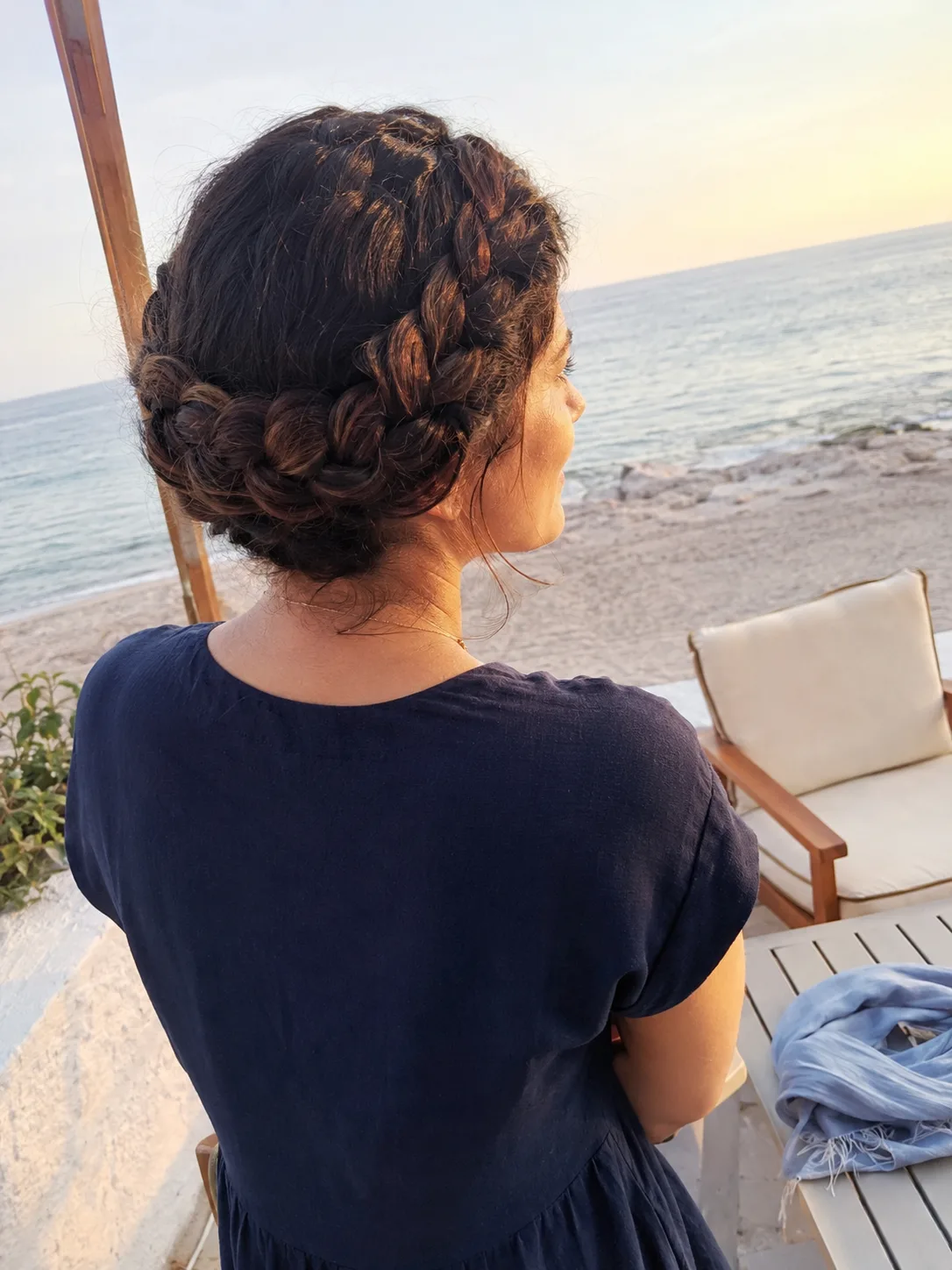
A crown braid moves the length around the head instead of letting it hang down the back. That makes it one of the strongest options here for keeping long hair completely away from shoulders and swimsuit straps while still showing visible braid detail.
The construction can begin as one long braid that is wrapped and pinned, or as braids that travel around the head. The exact method depends on length and braiding skill.
This updo deserves a little more preparation than a basic beach braid. Secure pins so they hold the braid without digging into the scalp, and test the style by turning and tilting your head before leaving home.
It also transitions easily beyond the beach. A slightly softened crown braid can still look appropriate with a sundress or evening outfit without rebuilding the hair from scratch.
Claw-Clip French Twist
Not every beach style needs braiding. A large claw clip can gather long hair into a vertical twist, giving you a quick way to lift the lengths off your neck while keeping the look relaxed.
The clip has to match the amount of hair it is expected to hold. Very thick, very long, or high-density hair may overwhelm a smaller clip, leaving the ends falling out or the clip under constant pressure.
This is better for lounging and walking than for swimming. Hard clips can also be uncomfortable against a chair, so the style is most useful when you want hair up temporarily and expect to take it down easily.
Choosing the Style by What Usually Goes Wrong
Your most useful clue may be the problem you already know long hair gives you. Someone whose hair tangles badly in wind needs a different beach strategy from someone whose main concern is preserving curl definition.
The hairstyle should also match your normal styling state. Naturally curly or coily hair may shrink substantially after getting wet, so the dry reference photo isn’t always a useful predictor of where a ponytail, braid, or loose section will sit after swimming. Stretched or pressed hair will behave differently again once exposed to water and humidity.
Length alone doesn’t tell you how heavy a style will feel. Density, strand size, water absorption, and whether added hair is present all affect the finished construction.
What Saltwater, Wind, and Wet Hair Change
The beach creates friction from several directions at once. Wind moves the lengths against one another. Wet hair rests against swimsuit fabric and towels. Sunglasses, hats, straps, and clothing repeatedly contact the same sections.
Containment helps most when tangling is the problem. A braid keeps strands grouped, while a bun removes much of the length from the back altogether. There is still a downside to keeping soaking-wet hair packed into a dense bun: the outer surface can begin feeling dry while the interior remains damp. Loosening the style when practical gives dense hair more access to air.
Be gentle during takedown. Hair that feels rough or tangled after swimming doesn’t benefit from aggressive brushing from roots to ends. Work through the ends first using the method that suits your texture and usual detangling routine.
Tightness deserves attention as well. Braids, ponytails, buns, twists, and extension styles should remain comfortable during ordinary movement. Pain, persistent stinging, sores, or ongoing scalp irritation are reasons to loosen or remove the source of tension. Concerning shedding or density changes are better discussed with a dermatologist or another qualified healthcare professional than diagnosed from a hairstyle alone.
A Beach Hairstyle Checklist Before You Commit
Before choosing one of these looks, consider the entire day rather than the first photograph.
Will you swim? More swimming usually favors contained lengths over loose decorative styling.
Will you wear a hat? Keep bulky buns and high anchors away from the area the crown needs.
Does your hair tangle easily in wind? A braid or twist can save considerable detangling later.
How does your hair change when wet? Shrinkage, curl reversion, added weight, and reduced definition may alter the shape.
Will you be reclining or driving afterward? A large bun or hard clip at the back of the head can become uncomfortable against a headrest.
Can the roots dry properly? Dense braids, twists, and compact wet buns need enough access for thorough drying.
Can you remove the style without a battle? Elaborate doesn’t always mean practical at the end of a sandy, windy day.
For a swim-heavy beach trip, a simple low braid or double braids are the strongest starting points. For a relaxed day spent mostly dry, half-up styles give long hair far more visual presence. Choose the crown braid or braided bun when the hairstyle also needs to carry you into an evening plan.
Related Hairstyles to Explore
FAQs
What is the easiest beach hairstyle for very long hair?
A single low three-strand braid is one of the easiest options because it contains the length, requires relatively simple construction, works with many hats, and is straightforward to undo. A low twisted bun is another good choice when you want the hair completely off your back.
What beach hairstyles work well for long curly or coily hair?
Half-up styles, chunky two-strand twists, flat twists into a ponytail, pineapple puffs, braids, and textured buns can all work. Keep the hair in the styling state that makes sense for your texture instead of assuming it needs to be straightened or heavily smoothed first. Shrinkage after swimming can change the finished length and placement.
Should I braid long hair before swimming?
Braiding can be useful because it reduces the amount of loose hair moving and tangling in the water. A simple braid is often easier to manage than a very elaborate installation. Keep the scalp comfortable, and remember that dense braided sections still need to dry thoroughly afterward.
Can I use hair extensions for a beach hairstyle?
Yes, but added length changes the practical equation. Extensions can increase weight, movement, drying demands, and takedown work, especially after swimming. Attachment method, root tension, scalp access, and the condition of your own hair matter more than calling a style protective. For an active water-heavy trip, moderate added length is usually easier to live with than an extremely long, dense installation.
Hair Texture & Upkeep Style Matcher
Select your natural hair texture and daily maintenance window to get an instant styling formula and heat safety cap.
Heat Cap: 320°F (160°C)
A versatile three-strand braid beginning at the parietal ridge, securing the top half while allowing natural wave texture to flow freely around the shoulders.
Conclusion
The strongest beach hairstyle for long hair depends on what happens after you leave the mirror. Wind, swimming, hats, wet weight, tangles, drying, and the ride home all affect whether a beautiful style remains convenient.
A low braid is the practical all-rounder for an active day. Half-up styles make more sense when keeping your length visible matters most. Buns and crown braids earn their extra construction when you want every inch of hair off your shoulders.
Pick the style around your beach plans first. The photograph will take care of itself.
Editorial Standards & Hair Health Guidance
Every style featured on Tress Atlas is curated with a focus on real-world wearability, scalp tension management, and cuticle preservation. When trying protective styles or tight updos, ensure perimeter hairline sections remain tension-free to avoid traction stress on delicate follicles. For heat styling, cap tools below 350°F (180°C) to prevent thermal keratin denaturation.
Scientific Sourcing: Practices aligned with the American Academy of Dermatology (AAD) on traction alopecia risk reduction and cosmetic trichology research on hair tensile strength.